Xiamen University
Xiamen, China (Mainland) · Urban
CHINA'S MOST BEAUTIFUL CAMPUS
Xiamen University Admissions Guide for International Students
Perched on the subtropical coast of Fujian Province, Xiamen University blends sea-view campuses, a century-old overseas-Chinese legacy, and genuine academic excellence in economics, marine science, and chemistry. For international students seeking a top-20 Chinese research university without the stratospheric competition of Beijing or Shanghai, XMU is one of the most compelling choices in Asia.
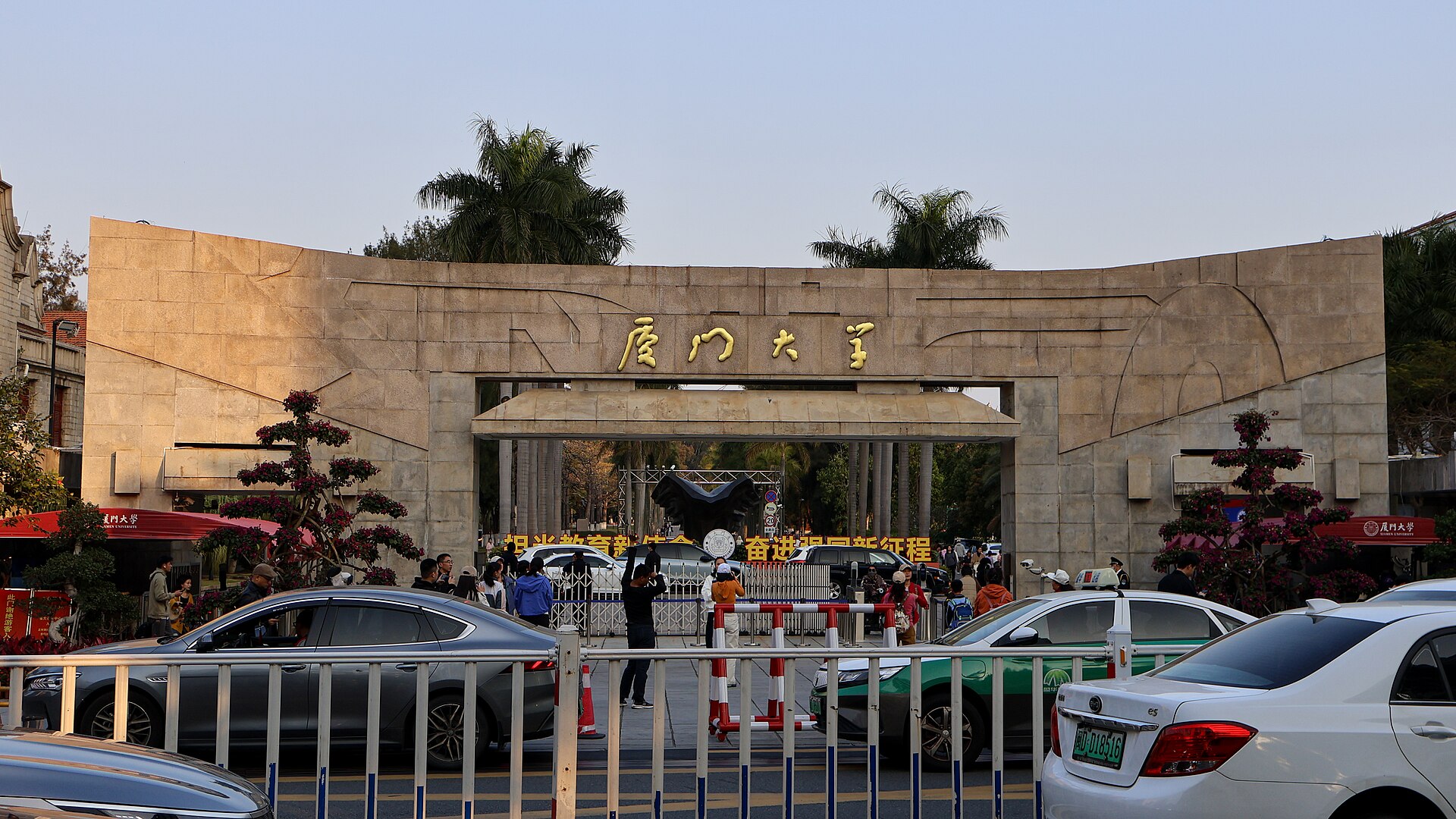
Founded in 1921 by philanthropist Tan Kah Kee, Xiamen University (XMU) is one of China's most storied and internationalised universities, ranked among the nation's elite Project 985 and Double First-Class institutions. Its coastal Siming and Xiang'an campuses are consistently celebrated as the most scenic in China — a genuine draw for students who want world-class academics in an environment that feels more like a resort island than a concrete megacity.
Campus
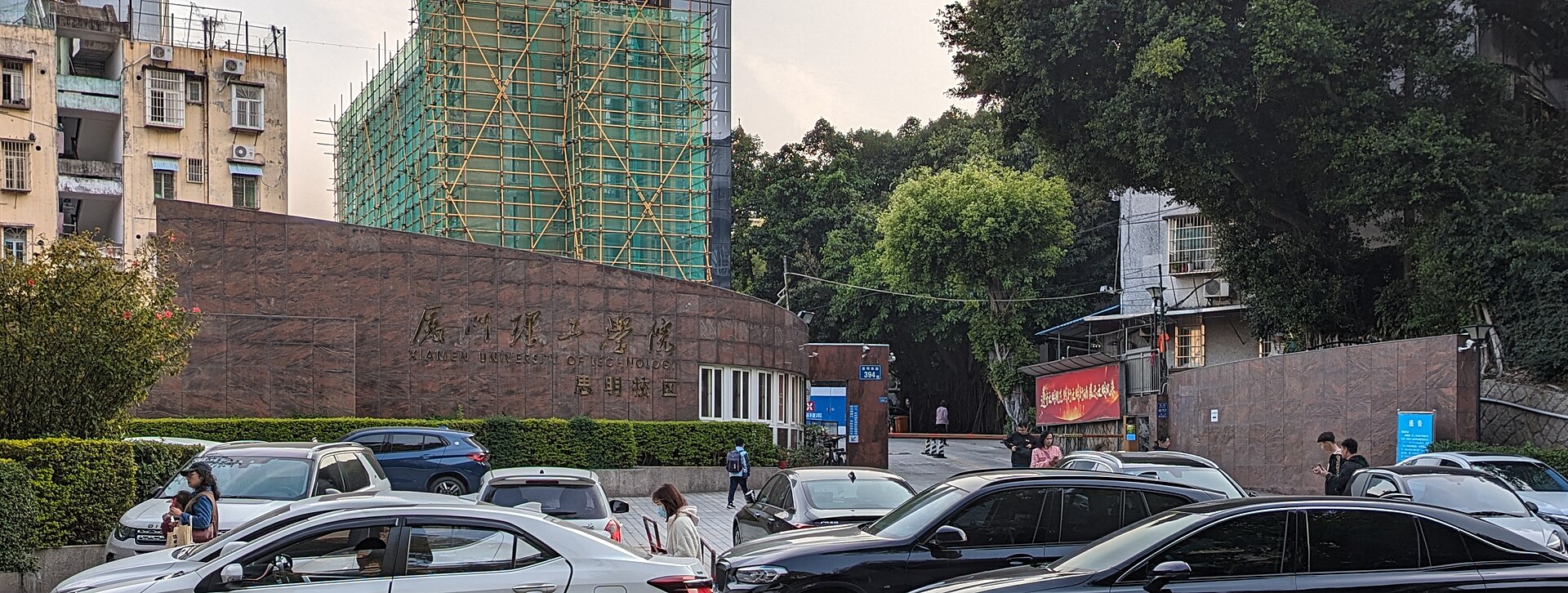
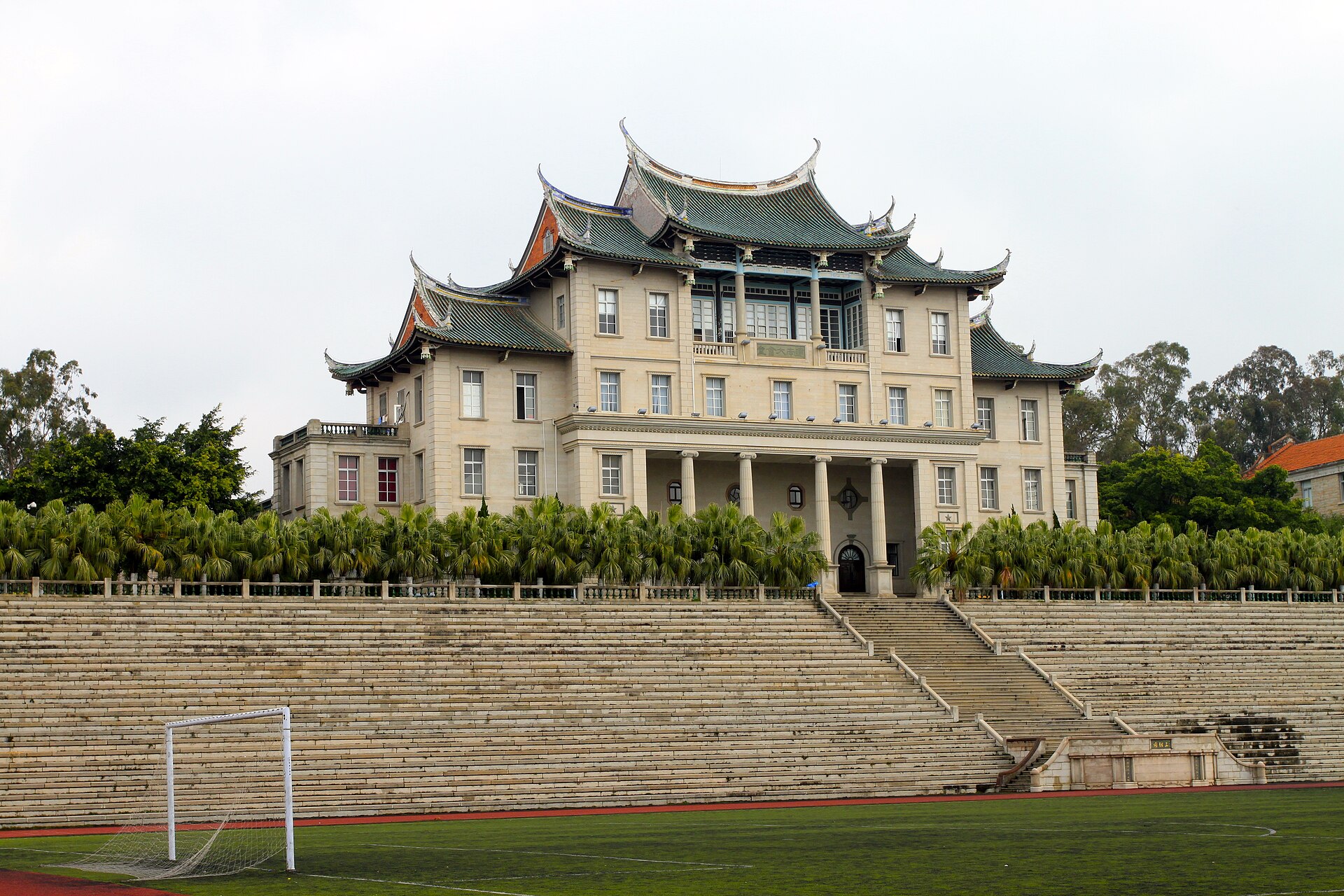
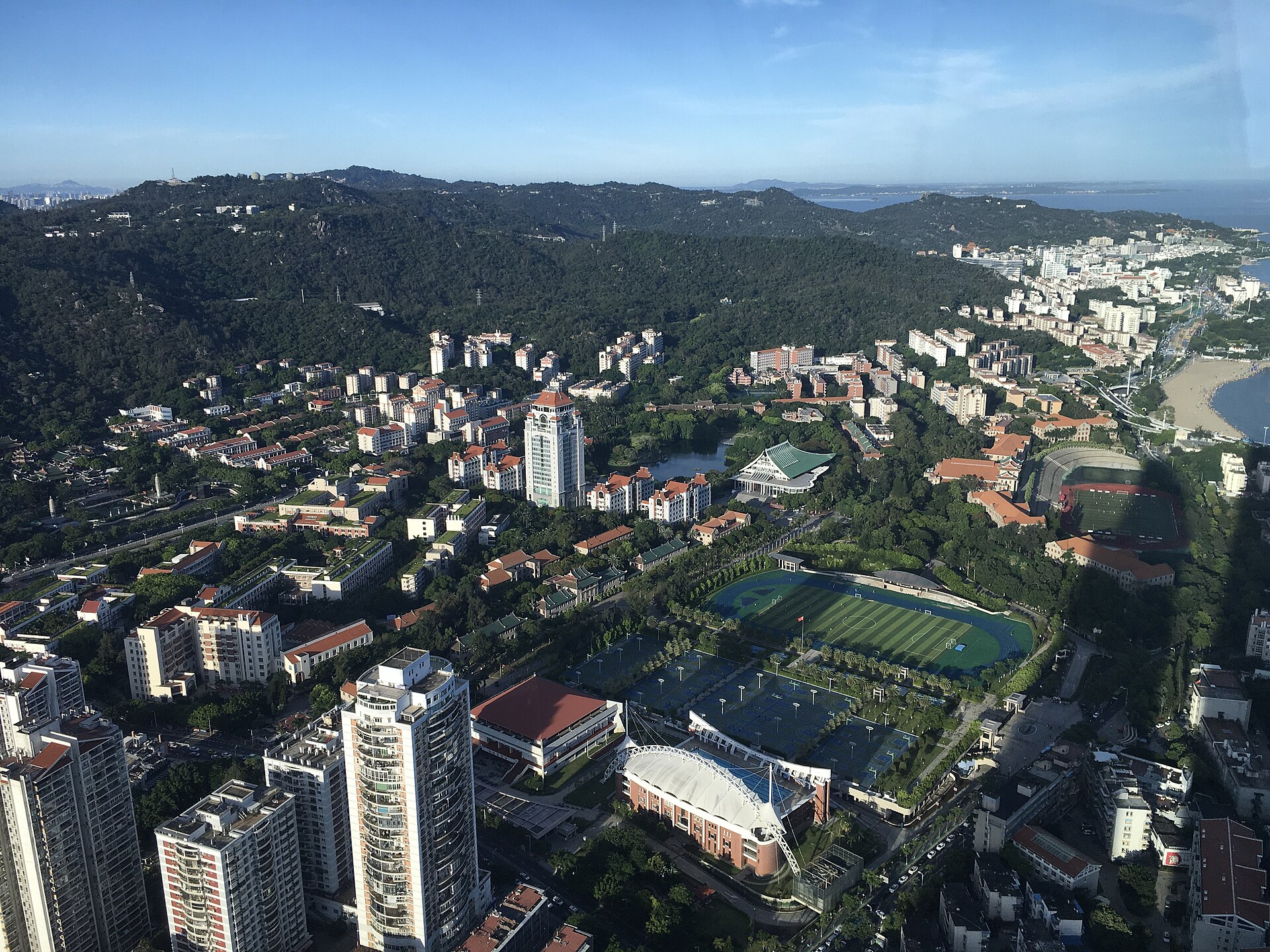
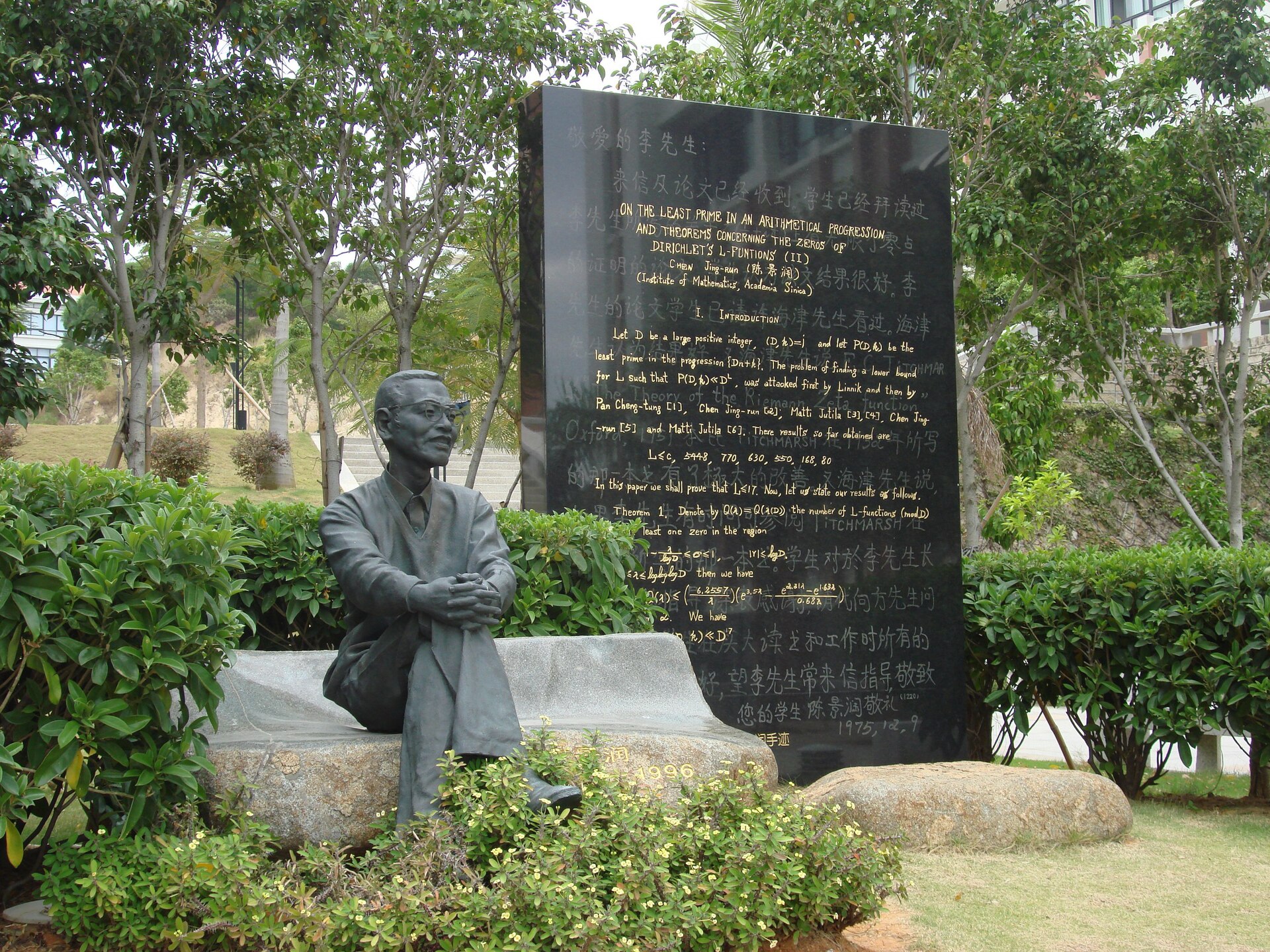
Xiamen University — campus in pictures
Real, freely-licensed photographs of the campus (via Wikimedia Commons).

WHY XMU
Why Xiamen University — Prestige, Beauty, and Outward-Looking Culture
Xiamen University is not just ranked — it is genuinely different from other elite Chinese universities in culture, setting, and international openness. Here is what sets it apart.
SELECTIVITY
Acceptance Rate and Admissions Profile
Xiamen University's international student admissions are moderately selective — significantly more accessible than China's most competitive institutions (Peking, Tsinghua, Fudan) while still maintaining meaningful academic standards. The acceptance rate for international applicants reflects XMU's goal of attracting genuinely prepared students, not maximum volume.
Admission is primarily grades-based. Students who present a strong secondary transcript, meet the English language minimums, and provide clear and genuine motivation for their chosen programme are well-positioned. The international student office reviews applications holistically but academic attainment is the primary filter.
AT A GLANCE
Quick Facts
HOW TO APPLY
What Your Application Consists Of
Xiamen University uses its own online application system (application.xmu.edu.cn) rather than a centralised national portal. The application is straightforward but document-heavy — prepare originals and certified translations well in advance.
ADMISSIONS PRIORITIES
What Xiamen University Looks For
XMU's international student admissions are primarily merit-based, with academic attainment as the cornerstone. Beyond grades, the admissions committee looks for students who have a genuine reason for choosing XMU and China.
DEADLINES
Application Deadlines and Intake Rounds
Xiamen University's international student admissions typically operate on a single annual intake (September start). Applications open in late autumn/winter and close in spring. Scholarship applications often have earlier deadlines than general admissions — check each scholarship's specific window. The dates below are indicative based on the 2026 cycle; always confirm the current year's deadlines on the official admissions portal.
All deadlines are approximate and change each academic cycle. Verify exact dates for your intake year at admissions.xmu.edu.cn before applying. Scholarship and self-funded application tracks may have different portals and document requirements.
| Track | Opens | Deadline | Decision |
|---|---|---|---|
| Chinese Government Scholarship (CSC) | January | April (approx.) | June–July |
| MOFCOM Scholarship | January | May (approx.) | June–July |
| XMU University Programme (self-funded) | December 1 | February 15 | March–May |
| ASEAN-China Young Leaders Scholarship | January | April (approx.) | June–July |
| General Self-Funded Intake | December | May (approx.) | Rolling / May–June |
CAMPUS LIFE
Student Life in Xiamen
Xiamen University occupies two main campuses — the historic Siming campus (undergraduate focus, adjacent to Nanputuo Temple and Zhongshan Road) and the newer Xiang'an campus (graduate research, biomedical and marine science clusters). Both offer a level of natural beauty unusual for a major research university.
The city of Xiamen itself is among China's most liveable: subtropical climate, clean air, low crime, and a cosmopolitan café and food culture shaped by its history as a treaty port and overseas-Chinese hub. Gulangyu Island — a pedestrianised UNESCO World Heritage Site five minutes by ferry — is essentially XMU's backyard. The cost of living is significantly lower than Beijing or Shanghai while the quality of urban life is comparable.
CAREER OUTCOMES
Career Outcomes and Graduate Prospects
XMU's graduate employment rate stands at 92%, reflecting the strength of its degree programmes and the regional economy of Fujian Province and the wider Pearl River Delta corridor.
Starting salaries for XMU graduates reflect Chinese domestic salary norms. International graduates who remain in China enter a market where tech, finance, and trade companies in Fujian and the Yangtze River Delta actively recruit from XMU's economics, accounting, and STEM departments. For international students returning to their home countries, an XMU degree — from a Project 985 / Double First-Class institution — carries weight particularly in Southeast Asia, South Asia, and Africa where recognition of Chinese elite university credentials has grown substantially. Graduate students in marine science, materials science, and chemistry benefit from XMU's strong research partnerships with national laboratories and industry.
Salary data reflects average starting salaries for domestic-market roles. Salaries in other markets vary considerably by country, field, and individual.
FAQ
Frequently Asked Questions
Do I need to speak Mandarin to study at Xiamen University?+
Not necessarily. XMU offers dedicated English-medium degree programmes at undergraduate, master's, and doctoral levels for international students. However, many popular programmes are still taught in Chinese. Always verify the language of instruction for your specific programme before applying. Some Mandarin proficiency will help significantly with daily campus life even in English-medium programmes.
Is XMU a good university internationally?+
Yes — Xiamen University is ranked #235 globally (QS 2025) and #18 nationally, and it holds membership in both Project 985 and China's Double First-Class designation. Its economics, chemistry, accounting, and marine science programmes are among the strongest in China. The degree is well-recognised in Asia and increasingly acknowledged in global academic and professional contexts.
Can international students apply for scholarships?+
Yes. Multiple scholarship tracks are available: the Chinese Government Scholarship (CSC Bilateral Programme), MOFCOM, ASEAN-China Young Leaders Scholarship, Fujian Provincial Government Scholarship, and XMU's own institutional awards. Scholarship applications typically open in January and have deadlines in April–May. You must apply for scholarships during your application — retroactive scholarship applications are not accepted.
What is the campus like?+
Xiamen University's Siming campus is one of the most scenic in China — forested hillsides, colonial-era architecture, and direct sea views toward the Taiwan Strait. The newer Xiang'an campus hosts graduate research facilities including marine science and biomedical laboratories. The city of Xiamen itself is subtropical, clean, and highly liveable.
How competitive is admission for international students?+
XMU's acceptance rate for international applicants is approximately 35%, making it moderately selective — more accessible than Peking University, Tsinghua, or Fudan, but still a university with academic standards. Competitive candidates typically present a GPA of 3.0 or above (on a 4.0 scale) and an IB score of 33 or higher where applicable.
When should I apply?+
If you are applying for scholarships, begin your application in December–January for the following September intake — scholarship windows close as early as February (for XMU's own programme) or April–May (for CSC and government scholarships). Self-funded applicants have more flexibility, but early applications are processed faster and improve your housing allocation.
What visa do I need to study in China?+
You will need an X1 (long-term study) or X2 (short-term study) visa to study at XMU. The university will issue a JW202 form and Admission Notice after your application is accepted — these are the key documents you will need to apply for your visa at the nearest Chinese embassy or consulate.
Is Xiamen a safe city for international students?+
Xiamen is consistently ranked among China's safest and most liveable cities. Its compact size, established expat community, and relatively high standard of public services make it a comfortable environment for international students, including those coming to China for the first time.
ACADEMIC EXPECTATIONS
Academic Standards at Xiamen University What International Students Need to Know
Xiamen University's academic culture combines the rigour of China's elite research university system with a genuine openness to international students. Preparation, subject mastery, and language readiness are the three pillars of success here.
XMU is a serious research university — its faculty are active researchers with national and international publication records, and the academic expectations in its strongest programmes (economics, chemistry, marine science, law) are comparable to regional peers in Singapore and Hong Kong. International students who arrive with strong foundational knowledge in their field, solid English or Mandarin proficiency, and a willingness to adapt to a Chinese academic environment will thrive. Those who underestimate the workload or rely solely on their international-student status will struggle.
ACADEMIC PROFILE
What Academic Profile Gets You In
XMU does not publish a rigid standardised admissions index. What matters most is your overall academic record from secondary school or university, combined with English or Mandarin proficiency and a genuine statement of purpose. For competitive programmes (Economics, Finance, Chemistry), aim significantly above the minimum GPA threshold.
TEST POLICY
Standardised Tests at Xiamen University
XMU does not require SAT, ACT, or GRE/GMAT as a standard admission criterion for international students. Standardised tests are optional. The primary measures of academic fitness are your secondary school or university transcripts, the strength of your academic record in relevant subjects, and your English or Mandarin language certification.
If you have strong SAT or ACT scores, you may include them to supplement your application — particularly for English-medium undergraduate programmes. However, the absence of these scores will not disadvantage you. The university's admissions review is primarily based on grades and transcripts.
Graduate applicants to specific research programmes may be asked to demonstrate relevant academic background through portfolio work, research proposals, or a virtual interview with their intended supervisor — not through standardised tests.
TESTS STRATEGY
SAT, ACT, and Other Standardised Tests
Since XMU does not require SAT or ACT, students from the US and elsewhere applying on their high school record should focus their preparation energy on achieving the strongest possible grade in their final-year curriculum (IB, A-Levels, national board exams) and on the English language requirements.
IB & A-LEVELS
How XMU Reads IB, A-Level, and International Qualifications
Xiamen University explicitly accepts international qualifications including the IB Diploma, A-Levels, AP courses, and national board examinations from a wide range of countries. There is no conversion formula published officially — the admissions team reviews each application and converts qualifications against their internal equivalency table.
SUBJECT PREPARATION
Subject Rigour and Preparation by Field
Choosing your secondary school subjects strategically is essential for XMU applicants — especially for programmes with heavy quantitative or scientific demands.
ENGLISH LANGUAGE
English Language Requirements
For English-medium programmes, proof of English proficiency is mandatory unless you are a native English speaker or have graduated from a secondary or tertiary institution where English is the sole language of instruction.
Minimum scores are the floor, not the target. For competitive programmes, aim for IELTS 6.5–7.0 or TOEFL 90+ to present a stronger academic profile.
| Test | Minimum Score | Notes |
|---|---|---|
| IELTS Academic | 6.0 overall | No individual band requirement published; check programme-specific page |
| TOEFL iBT | 80 | Internet-based test; paper-based and ITP scores not accepted |
| Duolingo English Test | Not published | Verify with XMU admissions whether DET is accepted for your programme |
| Native-speaker exemption | N/A | Citizens of UK, US, Canada, Australia, NZ, Ireland may be exempt; confirm with admissions |
| English-medium graduate exemption | N/A | Applicants whose undergraduate degree was taught entirely in English may apply for exemption |
YEAR-BY-YEAR ROADMAP
Building Your Profile from Grade 9 to Application
Planning your XMU application over four years — rather than rushing in Grade 12 — maximises both your academic results and the quality of your personal statement.
COMMON PITFALLS
Academic Mistakes to Avoid
- Assuming Chinese universities do not have rigorous academics — XMU's flagship programmes in economics, chemistry, and marine science operate at a high international standard.
- Neglecting the language requirement — both English (for English-medium tracks) and Chinese (for Chinese-medium programmes) certifications must be in hand before application deadlines.
- Applying to a Chinese-medium programme without sufficient Mandarin — classroom instruction, examinations, and group work will be entirely in Chinese, and the academic content will be inaccessible without it.
- Waiting until April or May to apply — scholarship windows close months earlier, and late applications lose priority for dormitory allocation.
- Choosing a programme based on brand rather than fit — XMU's economics and marine science departments are exceptional; a weaker department at a famous-name university may serve you less well.
- Submitting unverified or un-translated documents — all documents in languages other than Chinese or English must be officially translated and, where required, notarised before submission.
- Overlooking the physical health examination requirement — all international students entering China on a student visa must complete this form; without it your visa application will stall.
COST & AID
The True Cost of Studying at Xiamen University Accessible Fees, Multiple Scholarships
Xiamen University is among the most affordable elite research universities in Asia. Annual tuition for international students starts at approximately USD 3,800 — a fraction of comparable institutions in Singapore, Hong Kong, or the United States — and scholarship coverage is genuinely substantial.
China's public university tuition for international students is regulated and significantly lower than market rates in English-speaking countries. Combined with XMU's layered scholarship ecosystem — from the Chinese Government Scholarship (which covers full tuition, accommodation, and a living stipend) to partial institutional grants — the effective cost of an XMU degree can be reduced dramatically. The key is applying for scholarships early and understanding the different tracks.
COST BREAKDOWN
Annual Cost Estimates
All figures below are in USD and represent approximate annual costs for international students. Exchange rate fluctuations will affect actual costs — all fees are set in Chinese Yuan (RMB) and converted here for reference.
These are estimated annual costs. Actual costs depend on your programme, accommodation choice, and lifestyle. All amounts are approximate and converted from Chinese Yuan; verify current RMB-denominated fees with the admissions office.
| Component | Estimated Cost Usd | Notes |
|---|---|---|
| Tuition (annual) | ~$3,800 | Varies slightly by programme and level |
| On-campus accommodation | Included in COA | Single/double rooms in international dormitories |
| Living expenses (annual) | ~$5,200 | Food, transport, personal expenses |
| Total Cost of Attendance | ~$9,600 | Tuition + accommodation + living (annual estimate) |
| Application fee | $60 | One-time, non-refundable |
FINANCIAL AID
Financial Aid for International Students
Approximately 25% of international students at Xiamen University receive some form of financial support — one of the higher aid rates among Chinese public universities for international applicants.
Aid at XMU primarily takes the form of scholarships rather than loans or work-study programmes. Scholarship coverage ranges from partial tuition waivers (institutional and provincial awards) to fully comprehensive packages covering tuition, accommodation, and a monthly living stipend (Chinese Government Scholarship). Need-based grants in the Western sense are not the primary mechanism — merit and origin-country criteria drive most scholarship awards.
International students are not eligible for Chinese domestic student financial aid programmes. All aid available to international students comes through scholarship tracks described below.
SCHOLARSHIPS
Named Scholarships Available to International Students
XMU students have access to a rich layered scholarship ecosystem. Apply to every track you are eligible for — awards are stackable in some cases and non-competitive applications are processed in arrival order.
AFFORDABILITY
Net Cost Reality
Even without a scholarship, Xiamen University is among the most affordable elite universities in Asia. The total annual cost of attendance of approximately USD 9,600 compares favourably with full-price tuition alone at universities in Singapore (USD 30,000+), the UK (USD 25,000+), or Australia (USD 28,000+).
The Xiamen cost-of-living advantage is real and significant. Accommodation on campus, local food, and city transport are inexpensive by any international comparison. A student living carefully in Xiamen can manage total monthly expenses (outside tuition) in the range of RMB 2,500–4,000 (approximately USD 350–550). The city's public transport, cycling culture, and affordable fresh-food markets make self-catered living genuinely comfortable.
Self-funded students should budget for the full cost of attendance plus an initial settlement fund (first-semester deposits, visa costs, travel). Students receiving the full CSC scholarship will have tuition, accommodation, and a living stipend covered entirely — the out-of-pocket cost is primarily travel, personal items, and optional activities.
HOW TO SECURE FUNDING
Steps to Maximise Your Scholarship Chances
COST FAQs
Cost and Aid FAQs
How much does it cost to study at Xiamen University as an international student?+
The total estimated annual cost of attendance is approximately USD 9,600, comprising roughly USD 3,800 in tuition and USD 5,200 in living and accommodation costs. This makes XMU one of the most affordable elite research universities in Asia.
Is the Chinese Government Scholarship (CSC) competitive?+
Yes, the CSC is competitive — particularly in countries with high demand for China scholarships such as Pakistan, India, Indonesia, and several African nations. Country quotas apply and strong academic records are essential. However, XMU also has its own institutional scholarship track which can be applied for independently of the CSC.
Can I work part-time to offset living costs?+
International students in China are permitted to work part-time in limited circumstances under the student visa regulations. However, off-campus employment requires additional work authorisation, and restrictions apply. Check with the XMU International Office for current regulations before making part-time work part of your financial plan.
Are there scholarship opportunities for postgraduate students specifically?+
Yes — the CSC, MOFCOM, ACYLS, and XMU Marine Scholarship all include master's and doctoral tracks. Graduate scholarship packages are typically more comprehensive than undergraduate packages and often include a research stipend in addition to tuition and accommodation.
Is the Xiamen Tan Kah Kee Scholarship available?+
As of the most recent information available, this scholarship has been suspended. Verify current status with the XMU Admissions Office before including it in your funding plan.
Are all fees in Chinese Yuan or US dollars?+
XMU fees are denominated in Chinese Yuan (RMB). USD amounts are approximate conversions and will vary with the exchange rate. Budget in RMB when planning your finances — use the Bank of China rate as a reference.
APPLICATION & STATEMENT
Applying to Xiamen University The Personal Statement and Study Plan
Xiamen University does not use the US Common Application or UK UCAS system. There are no supplemental essay prompts in the American sense. Instead, your application hinges on two written documents: a Personal Statement and (for graduate applicants) a detailed Study Plan. Both deserve serious attention.
Chinese university applications are often misunderstood as purely grade-based — but at XMU, the personal statement and study plan carry real weight in the admissions decision, particularly for competitive programmes and scholarship applications. A generic, perfunctory statement can sink an otherwise strong academic application. A specific, genuine, and well-argued statement can tip a borderline case in your favour.
OVERVIEW
What Written Materials Are Required
The XMU application requires at least one major written document; graduate applicants typically need two. Both are submitted through the online application portal (application.xmu.edu.cn).
Xiamen University does not publish fixed essay prompts. Unlike US supplemental essays with specific questions, these are free-form documents. The guidance below applies to all applicants regardless of country of origin.
PERSONAL STATEMENT
Writing Your Personal Statement
Your personal statement is your opportunity to speak directly to the XMU admissions committee as a person — not just a set of grades. The best XMU personal statements are specific, honest, and forward-looking.
STUDY PLAN
Writing Your Study Plan (Graduate Applicants)
The Study Plan is the graduate equivalent of the undergraduate personal statement — but with a tighter focus on academic and research specifics. It replaces vague aspiration with concrete academic purpose.
TOPIC SELECTION
Choosing What to Write About
The most common failure mode in XMU personal statements is choosing a topic that could apply to any university anywhere in the world. The documents that stand out are specific to the applicant AND specific to XMU and China.
STRATEGY
Application Strategy for XMU
Because XMU uses a free-form personal statement rather than prescribed prompts, you have more control — and more responsibility — over what you present. Use this flexibility to your advantage.
COMMON MISTAKES
Personal Statement Mistakes to Avoid
- Writing a generic statement about 'wanting to study in China' without explaining why XMU specifically and why this programme specifically.
- Failing to mention any specific faculty, research centre, or programme characteristic that makes XMU the right fit for your academic goals.
- Using machine translation or AI-generated text without meaningful revision — these are easily identified and reflect poorly on your genuine language proficiency.
- Padding the statement with biographical detail (family background, childhood) that does not connect to academic motivation or programme fit.
- Overstating research experience or academic achievements — Chinese universities verify documents, and misrepresentation has serious consequences.
- Ignoring the Study Plan requirement for graduate applications — submitting a personal statement in place of a proper study plan signals a lack of understanding of graduate-level expectations.
- Leaving the personal statement to the last moment — rushed statements read as rushed, and revision time is what separates good from excellent.
APPLICATION FAQs
Application and Statement FAQs
Does Xiamen University have specific essay prompts like US universities?+
No. XMU does not use the Common Application or any prescribed prompt system. You submit a free-form personal statement and (for graduate students) a study plan. There are no short-answer questions or supplemental prompts. This gives you full flexibility — and full responsibility — over your narrative.
How long should my personal statement be?+
XMU does not publish a strict word limit for the personal statement. Aim for 600–1,000 words — long enough to make a genuine argument for your candidacy, short enough to read clearly without padding. Graduate study plans should be somewhat longer: 800–1,500 words is appropriate.
Should I write my personal statement in English or Chinese?+
Write in the language of your intended programme. If you are applying to an English-medium programme, write in English. If you are applying to a Chinese-medium programme, writing your personal statement in Chinese (if you are proficient) demonstrates your language ability directly.
Can I mention specific professors in my application?+
Yes, and for graduate applicants it is strongly encouraged. Identifying a potential supervisor whose research aligns with your interests — and demonstrating in your study plan that you understand their work — signals genuine academic preparation. Some doctoral programmes at XMU expect you to have made contact with a potential supervisor before applying.
Is there an interview as part of the XMU application?+
Not as a universal requirement. However, some graduate programmes and scholarship tracks may include a virtual interview with faculty. If invited for an interview, treat it as a substantive academic conversation — prepare to discuss your study plan, your research interests, and your reasons for choosing XMU in depth.
Do I need to write a separate scholarship essay?+
Some scholarship tracks, particularly the CSC, require a separate scholarship application form or justification statement in addition to the standard XMU application documents. Check the requirements for each scholarship track you are applying to — the XMU Admissions Office and the Chinese Embassy Education Office in your country are the authoritative sources.
Can I apply to multiple programmes simultaneously?+
XMU's application system typically allows applicants to list a first and second programme preference. If applying to multiple programmes, ensure your personal statement and study plan are appropriately tailored — or at minimum do not contain programme-specific details that would be wrong for one of the options.
Courses — schools, degrees & intake
84 degrees across 29 groupings.
School of Economics · 6 degrees
Economics
Finance
Financial Engineering
International Economics and Trade
Public Finance
Taxation
School of Management · 9 degrees
Business Administration
Accounting
Financial Management
Marketing
Human Resource Management
Tourism Management
Management Science
Electronic Commerce
Auditing
School of Law · 1 degrees
Law
School of Journalism and Communication · 4 degrees
Journalism
Communication
Advertising
International Journalism and Communication
College of Chemistry and Chemical Engineering · 5 degrees
Chemistry
Chemical Engineering and Technology
Chemical Biology
Chemistry Metrology and Technology
Energy Chemistry
School of Informatics · 4 degrees
Computer Science and Technology
Artificial Intelligence
Software Engineering
Communication Engineering
School of Electronic Science and Engineering · 4 degrees
Electronic Information Engineering
Electronic Information Science and Technology
Integrated Circuit Design and Integrated System
Microelectronic Science and Technology
School of Aerospace Engineering · 5 degrees
Aircraft Design and Engineering
Aircraft Power Engineering
Mechanical Design and Manufacturing and Automation
Measuring and Control Technology and Instruments
Automation
School of Architecture and Civil Engineering · 3 degrees
Architecture
Civil Engineering
Urban and Rural Planning
College of Ocean and Earth Sciences · 2 degrees
Marine Science
Marine Technology
College of the Environment and Ecology · 2 degrees
Environmental Science
Ecology
School of Life Sciences · 2 degrees
Biological Science
Biotechnology
School of Medicine · 3 degrees
Clinical Medicine (MBBS)
Preventive Medicine
Medical Laboratory Technology
School of Pharmaceutical Sciences · 1 degrees
Pharmacy
School of Mathematical Sciences · 3 degrees
Mathematics and Applied Mathematics
Statistics
Information and Computational Science
College of Physical Science and Technology · 2 degrees
Physics
Astronomy
College of Materials · 1 degrees
Materials Science and Engineering
College of Energy · 2 degrees
New Energy Science and Engineering
Energy Storage Science and Engineering
College of Foreign Languages and Cultures · 5 degrees
English
Japanese
Spanish
French
Russian
School of International Relations · 1 degrees
International Politics
School of Public Affairs · 2 degrees
Administrative Management
Politics and Administration
School of Sociology and Anthropology · 2 degrees
Sociology
Anthropology
School of History and Cultural Heritage · 2 degrees
History
Archaeology
Department of Philosophy · 1 degrees
Philosophy
Department of Chinese Language and Literature · 2 degrees
Chinese Language and Literature
Chinese Language
College of Arts · 3 degrees
Art
Music Performance
Musicology
School of Film · 1 degrees
Theater, Film, and Television Literature
Institute of Creativity and Innovation · 3 degrees
Environmental Design
Visual Communication Design
Digital Media Art
Chinese International Education College · 3 degrees
Chinese Language (Education)
Chinese Language (Trade)
Chinese Language (Culture)
Want your real chances at Xiamen University?
Create a free TYCHR account for your personalised admit-chance, a shortlist you can track, exact entry requirements, and essay + counselling help.