Vrije Universiteit Amsterdam
Amsterdam, Netherlands · Urban
VU AMSTERDAM · NETHERLANDS
Vrije Universiteit Amsterdam Admissions Guide for International Students
Vrije Universiteit Amsterdam — VU Amsterdam — is a comprehensive public research university sitting at the heart of Amsterdam's Zuidas business district, one of Europe's most dynamic knowledge and financial hubs. Founded in 1880 on principles of academic freedom and social engagement, VU has grown into a globally respected institution ranked #220 in QS and #138 in THE world rankings, known for its strengths in medicine, psychology, earth sciences, economics, and artificial intelligence. For international students, VU Amsterdam offers a genuinely international campus — 20% of its 31,000 students come from abroad — with a growing portfolio of English-taught bachelor's and master's programmes, research-led teaching, and direct access to Amsterdam's world-class career ecosystem. If you want rigorous academics combined with a city that is cosmopolitan, liveable, and professionally connected, VU Amsterdam belongs on your shortlist.
Campus
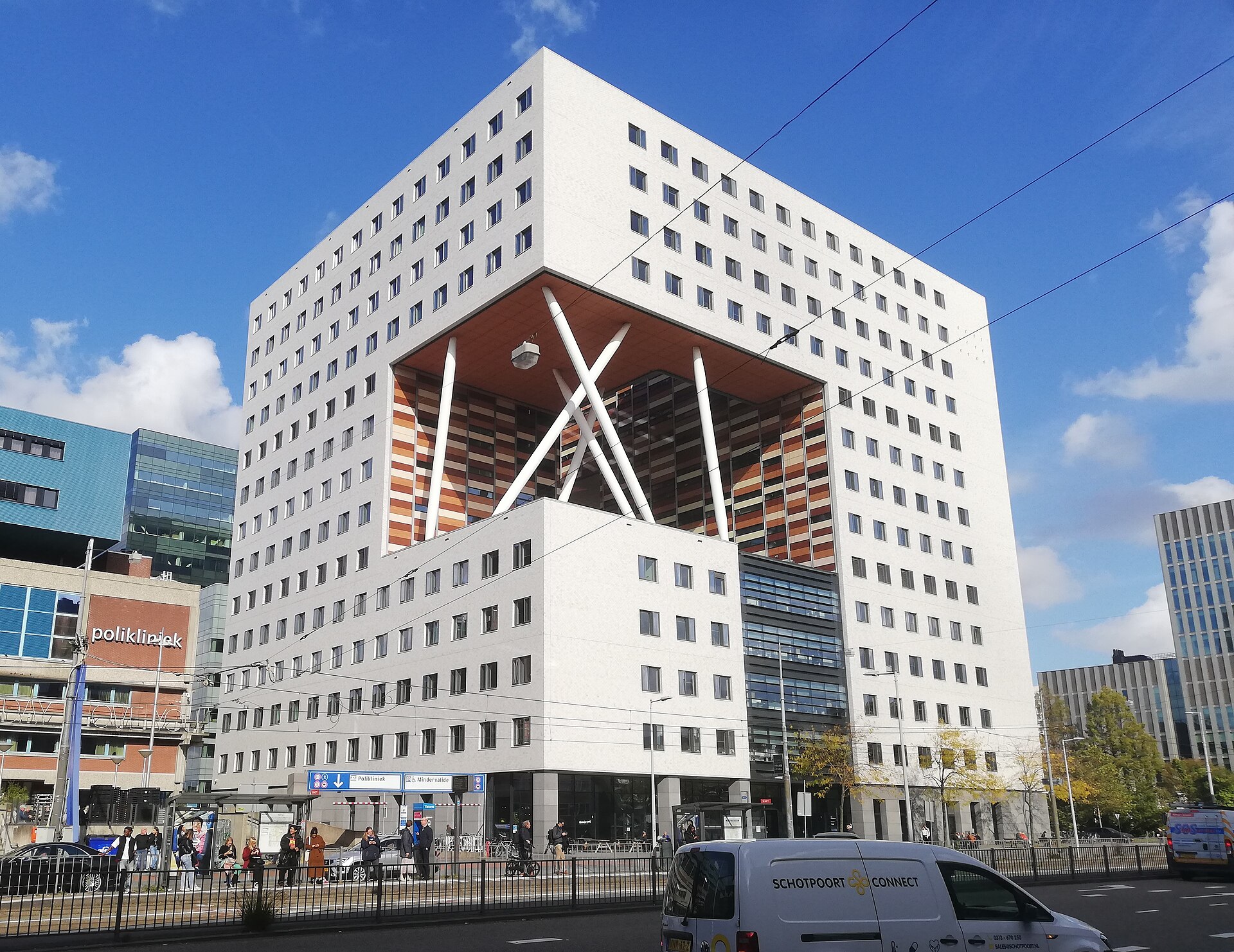
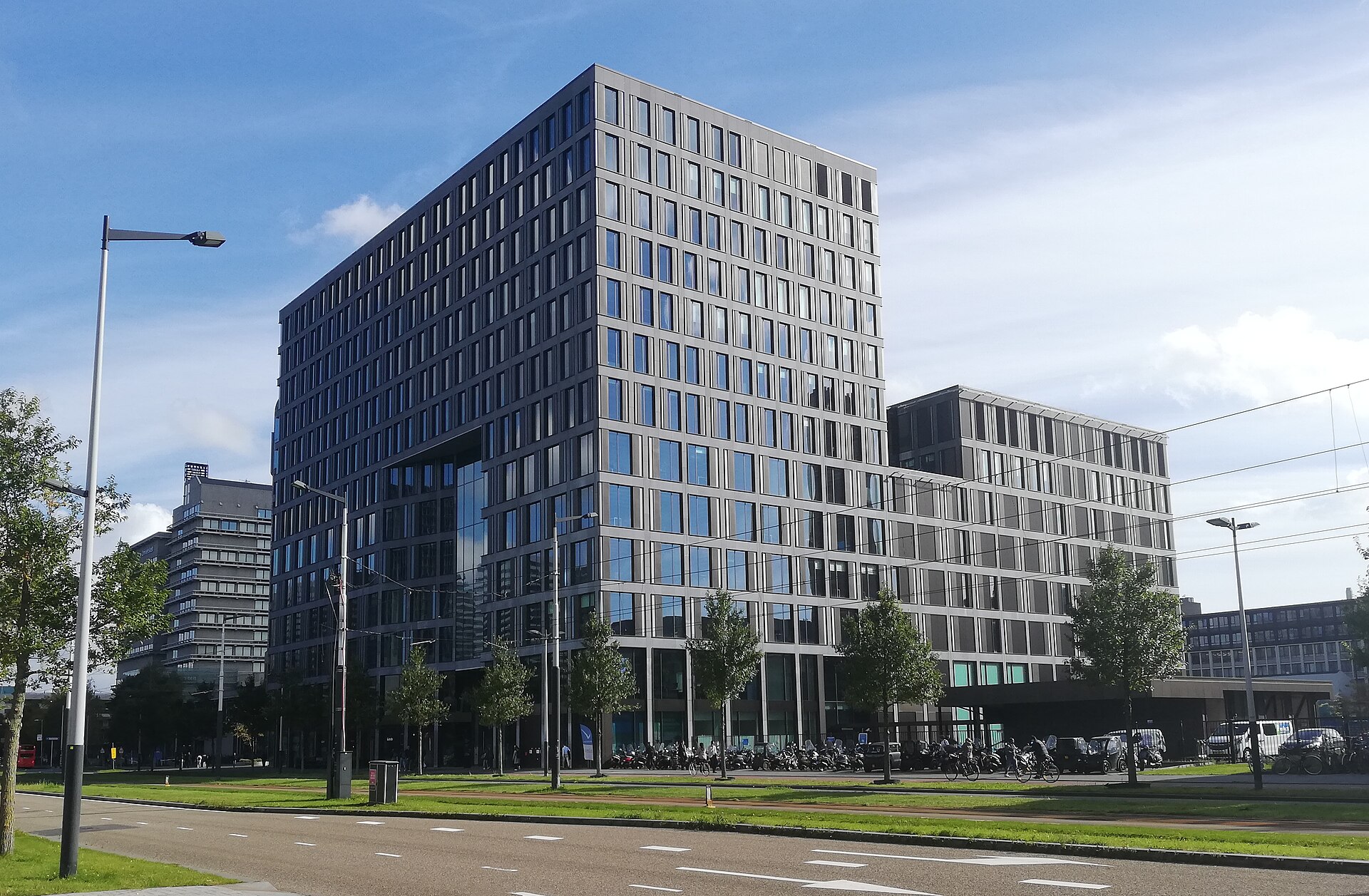
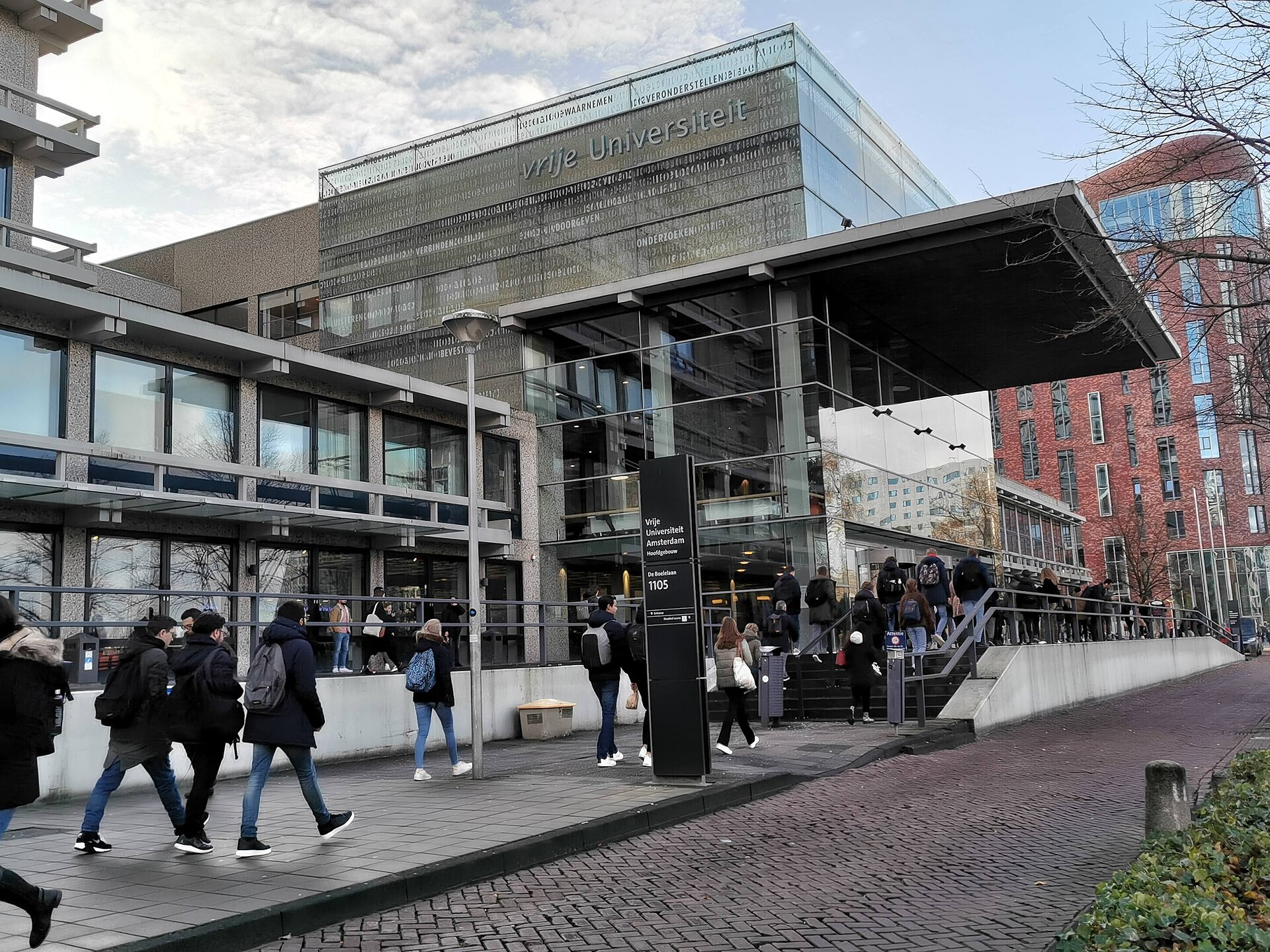
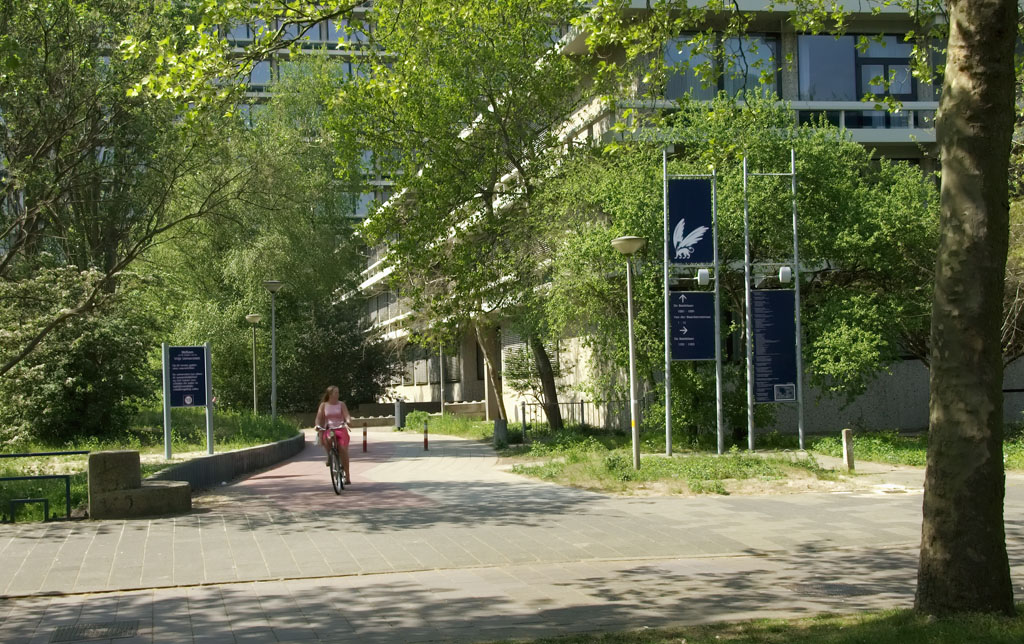
Vrije Universiteit Amsterdam — campus in pictures
Real, freely-licensed photographs of the campus (via Wikimedia Commons).
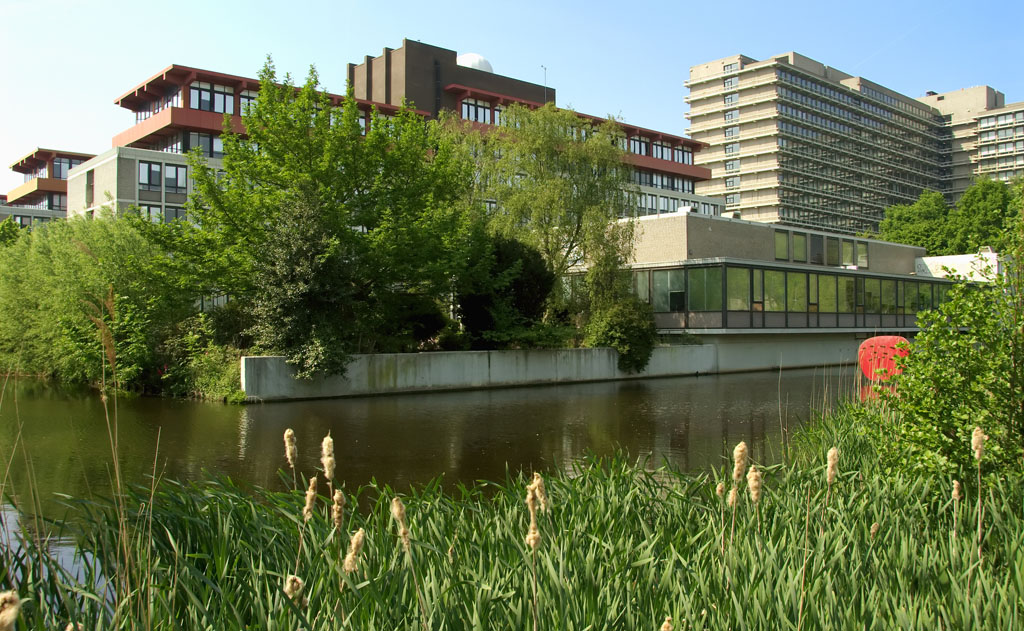
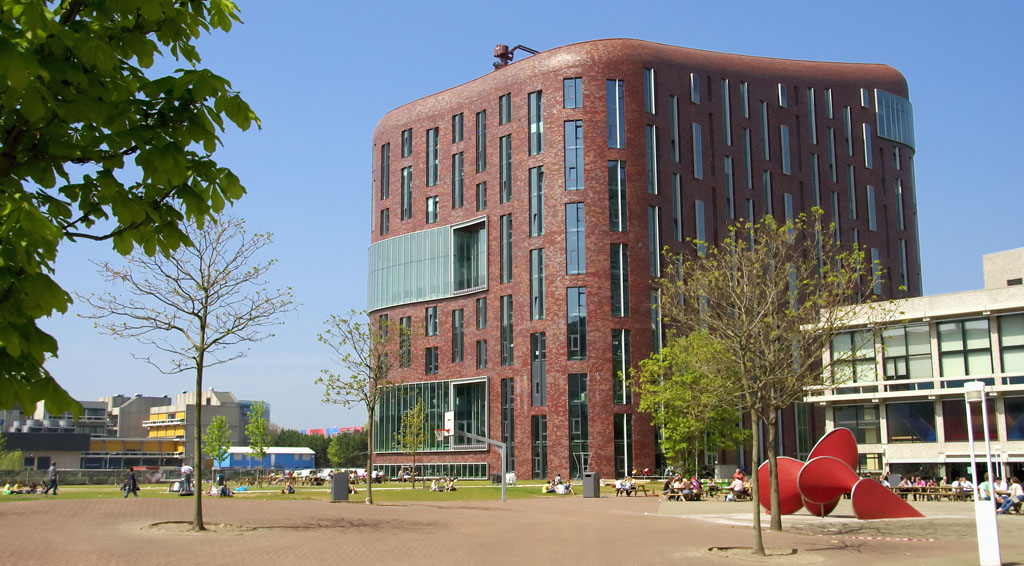
Why VU Amsterdam — Research, Location & a Values-Driven Education
VU Amsterdam is not just another large European university. Its distinctive blend of societal purpose, world-class research infrastructure, and prime urban location makes it stand out for internationally mobile students seeking both academic depth and real-world impact.
ADMISSIONS SELECTIVITY
How Selective Is VU Amsterdam?
VU Amsterdam has an overall acceptance rate of approximately 14%, though selectivity varies significantly by programme. Some popular programmes — notably Psychology and certain business tracks — operate under a numerus fixus (enrolment cap), where places are strictly limited and not all qualified applicants gain entry. Other programmes admit all students who meet the entry requirements, making admission far more accessible. Understanding which regime applies to your target programme is the most important first step in planning your application. For international students applying from IB Diploma programmes, VU expects a competitive IB score. The indicative benchmark in the facts data is 32 points, though individual programmes may set their own requirements — and competitive programmes with numerus fixus will expect scores toward the higher end of the scale.
QUICK FACTS
VU Amsterdam at a Glance
APPLICATION COMPONENTS
What Your VU Amsterdam Application Consists Of
Applying to VU Amsterdam differs significantly from the US Common App or UK UCAS model. Applications are submitted through Studielink, the Dutch central application portal. The exact components depend on your programme, but most bachelor's applications for international students involve the following elements.
ADMISSION CRITERIA
What VU Amsterdam Looks For
VU Amsterdam admissions at bachelor's level are primarily academic — your secondary school results, predicted grades (for IB students), and your qualification's alignment with programme prerequisites are the primary filters. For programmes without a numerus fixus, meeting the academic threshold is typically sufficient. For competitive limited-enrolment programmes, additional selection criteria come into play.
DEADLINES & APPLICATION TIMELINE
Key Dates for International Applicants
The Dutch academic year starts in September. International students must plan their applications well in advance — especially for programmes with numerus fixus (limited enrolment), which have an early Studielink deadline of 15 January. Confirm all dates on the official VU Amsterdam programme page or via Studielink, as they may shift year to year.
Deadlines above are indicative based on standard Dutch university practice. Always verify the exact deadline for your specific programme on vu.nl and studielink.nl before applying.
| Milestone | Deadline | Notes |
|---|---|---|
| Studielink registration (numerus fixus programmes) | 15 January | Hard deadline; late registrations not accepted |
| Studielink registration (open programmes, non-EU/EEA) | 1 April (indicative) | Confirm per programme; some close earlier |
| Studielink registration (open programmes, EU/EEA) | 1 May (indicative) | Confirm per programme |
| Document upload & English test scores | As notified post-registration | VU will send a checklist after Studielink registration |
| Academic year starts | Early September | All bachelor's programmes follow standard Dutch academic year |
STUDENT LIFE
Life at VU Amsterdam
VU Amsterdam's campus sits in Zuidas — a modern, walkable district in Amsterdam's south that blends gleaming corporate towers with cafes, parks, and student-friendly spaces. The campus itself is compact and easy to navigate, with the main building, library, sports facilities, and faculty buildings within close proximity. Amsterdam as a city is one of the best student cities in Europe. It is safe, bicycle-friendly, culturally rich, and internationally oriented — home to world-class museums (Rijksmuseum, Van Gogh Museum, Stedelijk), a thriving music and arts scene, and a deeply multicultural population. English is spoken almost universally, making daily life accessible from day one. VU Amsterdam has numerous student associations, sports clubs, debate societies, cultural groups, and faculty-specific student unions. The VSNU and VU student council provide strong student representation. Housing in Amsterdam is genuinely competitive — international students are strongly advised to begin their search early and register with housing services before or immediately upon receiving an offer.
CAREER OUTCOMES
Graduate Outcomes & Career Prospects
VU Amsterdam graduates enter a strong job market, supported by the university's Zuidas location and its deep ties with the Amsterdam business, health, and public-sector ecosystem. The employment rate of 88% reflects both the quality of VU's education and Amsterdam's position as a European economic hub. The average starting salary for VU graduates is approximately $45,000 USD (equivalent), which is competitive for the Dutch and broader European market. Key sectors where VU graduates are well-represented include healthcare and life sciences (bolstered by the Amsterdam UMC connection), business and consulting (via the Zuidas corporate network), technology and data science, law, and academic research. VU's Career Centre provides internship matching, CV workshops, job fairs, and alumni networking. Amsterdam's status as the European headquarters for hundreds of multinationals — including KPMG, Deloitte, Booking.com, Netflix, and Adyen — makes it an exceptional city to launch a career in Europe.
FAQS
Frequently Asked Questions
Is VU Amsterdam the same as the University of Amsterdam?+
No — they are two separate universities. The University of Amsterdam (UvA) and VU Amsterdam both operate in the city and collaborate extensively, but they are distinct institutions with different histories and cultures. VU was founded in 1880 by theologian and statesman Abraham Kuyper on Protestant values of academic freedom; today it is a secular, publicly funded research university. Some joint programmes exist between the two.
Which VU bachelor's programmes are taught fully in English?+
VU Amsterdam offers a growing number of English-taught bachelor's programmes. These include International Business Administration, Artificial Intelligence, Liberal Arts & Sciences, Computer Science, Earth Sciences, Biomedical Sciences, and several others. Many other programmes are taught in Dutch. Always verify the language of instruction on the official programme page before applying — this is critical for non-Dutch speakers.
What is a numerus fixus and does it affect me?+
A numerus fixus is a programme-specific enrolment cap. When demand exceeds places, a lottery or selection procedure is used to determine who is admitted. Popular VU programmes such as Psychology are typically numerus fixus. If you apply for a numerus fixus programme, you must register via Studielink by 15 January. Missing this deadline means you cannot be considered for September entry.
Do I need to speak Dutch to study at VU Amsterdam?+
For English-taught programmes, Dutch is not required for academic study. However, day-to-day life in Amsterdam is far easier with at least basic Dutch, and some administrative processes may require it. Most Amsterdam residents speak English well. VU offers Dutch language courses for international students who wish to learn.
What are the English language requirements?+
For English-taught programmes, VU Amsterdam requires IELTS ≥ 6.5 overall or TOEFL iBT ≥ 92. Individual programmes may set higher requirements. Students who completed their secondary education entirely in English (in an English-speaking country or in an English-medium IB school) may be exempt — check with the admissions office.
Is there financial aid available for non-EU international students?+
Unlike US universities, VU Amsterdam does not offer wide-scale need-based financial aid for international students. Scholarships are available — most notably the Holland Scholarship and the VU Fellowship Programme for master's students — but these are competitive and cover only a portion of costs. Most non-EU students fund their studies through personal savings, family support, or external funding such as government scholarships from their home country.
Can I work while studying in the Netherlands?+
Non-EU/EEA students on a student visa in the Netherlands are permitted to work up to 16 hours per week during the academic year and full-time during official university holidays. This can help offset living costs. Amsterdam's economy is large enough to offer part-time opportunities in hospitality, retail, research assistance, and tutoring.
How hard is it to find housing in Amsterdam?+
Very hard. Amsterdam has one of Europe's tightest student housing markets. VU works with housing providers to offer some international student accommodation, but supply is limited and the application process is competitive. You should register for housing immediately after receiving your admission offer — ideally in parallel. Private rentals through platforms like Kamernet, HousingAnywhere, and Facebook groups are options but tend to be expensive.
ACADEMICS AT VU AMSTERDAM
Academic Expectations for International Students Research-Led, Societally Engaged
VU Amsterdam is a full-spectrum research university with 7 faculties covering medicine, social sciences, sciences, law, humanities, earth and life sciences, and business. The academic culture is rigorous but collaborative — VU's educational philosophy, 'A Broader Mind,' positions students as active contributors to knowledge, not passive recipients. For international students from IB, A-Level, or other international curricula, VU Amsterdam has established recognition procedures for most major qualifications. Entry requirements vary by programme: some are open to all qualified applicants, while competitive programmes (especially numerus fixus ones) demand strong grades and evidence of genuine academic motivation. Research opportunities are integrated into programmes from early on — a hallmark of a university that takes its research mission seriously at the undergraduate level.
ACADEMIC PROFILE
What Grades Do You Need?
VU Amsterdam's academic entry requirements are primarily based on your secondary school qualification. The university translates your grades into Dutch equivalents and compares them to programme-specific thresholds. For IB students, the indicative minimum is 32 points, though this varies by programme — and competitive limited-enrolment programmes will expect scores well above this threshold.
STANDARDISED TESTS
SAT, ACT & Standardised Tests
VU Amsterdam operates within the Dutch higher education system, which does not use the US SAT or ACT as part of its admissions criteria. Your secondary school qualification — IB Diploma, A-Levels, or national school-leaving certificate — is the primary credential evaluated. There is no advantage to submitting SAT or ACT scores; VU Amsterdam has a test-optional policy not because it is following the US trend, but because these tests are simply not part of the Dutch admissions framework. The only standardised tests that matter for VU Amsterdam are English language proficiency tests (IELTS or TOEFL) for non-native English speakers applying to English-taught programmes. Invest your preparation time in performing well in your IB Higher Level subjects rather than SAT/ACT preparation.
ENGLISH LANGUAGE TESTS
English Proficiency Requirements
English language proficiency is required for all English-taught programmes if your prior education was not in English. VU Amsterdam accepts both IELTS Academic and TOEFL iBT. Note that TOEFL Home Edition is generally not accepted — check with VU if in doubt. Take your test well before the application deadline so your scores arrive in time.
| Test | Minimum | Notes |
|---|---|---|
| IELTS Academic | 6.5 overall | Minimum per-band requirements may apply; check programme page |
| TOEFL iBT | 92 total | TOEFL Home Edition acceptance — verify with VU |
| Cambridge C1/C2 | Accepted (verify) | Check with VU admissions for Cambridge acceptance policy |
| Exempt | N/A | Education fully in English may exempt you — confirm with admissions office |
IB & A-LEVELS
How VU Amsterdam Reads IB & A-Level Results
VU Amsterdam is experienced in evaluating IB Diploma results and converts them to the Dutch grading scale for comparison against programme thresholds. The IB Diploma is a fully recognised qualification in the Netherlands. For IB students, VU Amsterdam looks at both the total diploma points and the subject-level performance at Higher Level (HL). Most programmes require specific HL subjects that align with the discipline — for example, Mathematics HL and a science HL for technical programmes, or Mathematics HL for economics and business. Minimum overall diploma scores are programme-specific; the indicative benchmark is 32 points, but selective programmes will expect higher scores.
SUBJECT PREPARATION
Building the Right Academic Foundation
Your IB or A-Level subject choices are your most important pre-application decision at VU Amsterdam. Unlike US admissions, which value breadth and extracurricular richness, Dutch university admissions focus primarily on whether you have the right academic preparation for your chosen discipline.
ENGLISH REQUIREMENTS
Meeting the Language Bar
Non-native English speakers applying to English-taught programmes must demonstrate proficiency through an approved test. Take the test early — scores typically need to be submitted before the document upload deadline, which follows your Studielink registration. Below is a summary of key minimums.
Always confirm English requirements on the specific programme page at vu.nl — some programmes set higher minimums.
| Component | Minimum | Note |
|---|---|---|
| IELTS Academic | 6.5 | Overall band; individual skill bands may have sub-requirements |
| TOEFL iBT | 92 | Total score; check if TOEFL Home Edition is accepted |
| Previous English Education | Exempt (verify) | Education fully in English may waive the requirement |
BUILDING YOUR PROFILE
Year-by-Year Roadmap to VU Amsterdam
Unlike US admissions, VU Amsterdam does not evaluate extracurriculars, essays about your life story, or teacher recommendations as core application criteria. But that does not mean you should coast — choosing the right subjects, building genuine intellectual depth, and developing your motivation narrative are all crucial.
COMMON PITFALLS
Academic Mistakes That Cost Applicants Their Place
- Choosing the wrong IB maths course — taking AI SL when your programme requires AA HL can make you ineligible regardless of your total IB score.
- Missing the 15 January Studielink deadline for numerus fixus programmes — there are no exceptions or late-entry options once this deadline passes.
- Assuming all VU programmes are taught in English — many are in Dutch. Verify the language of instruction before you invest effort in an application.
- Underestimating housing urgency — failing to register for accommodation immediately upon receiving an offer can leave you without a place to live.
- Submitting an IELTS Home Edition or TOEFL Home Edition without confirming VU accepts it — not all versions of these tests are accepted.
- Writing a motivation letter that is generic — for numerus fixus programmes, a vague statement about 'loving people' or 'being curious' is insufficient. Your motivation letter must be specific, substantive, and programme-focused.
- Not checking programme-specific prerequisites — the VU admission page for your specific programme may list requirements not visible on general international student pages.
COST & FINANCIAL AID
The Real Cost of Studying at VU Amsterdam Honest Numbers for International Students
VU Amsterdam is a Dutch public university, which means tuition fees are regulated — but non-EU/EEA students pay considerably more than EU/EEA students. Even so, international tuition at VU is substantially lower than comparable-ranked universities in the US or UK. The challenge for most non-EU students is less tuition and more the high cost of living in Amsterdam, one of Western Europe's most expensive cities. Proper financial planning before you arrive is essential.
COST BREAKDOWN
Annual Costs at a Glance
The figures below are annual estimates from VU Amsterdam's facts data. Tuition is the non-EU institutional rate; living costs reflect Amsterdam's urban market. All figures are in USD equivalents and should be verified on the official VU website as exchange rates and fee schedules change annually.
EU/EEA students pay the Dutch statutory tuition fee (wettelijk collegegeld), which is a fraction of the international fee. If you hold EU/EEA status, your cost picture is dramatically different. All figures should be verified at vu.nl — exchange rates and fees change annually.
| Item | Annual | Notes |
|---|---|---|
| Tuition (non-EU/EEA international) | ~$16,000 USD | Programme fees vary; check specific programme |
| Total Cost of Attendance | ~$30,000 USD | Tuition + living; an annual estimate |
| Cost of Living (Amsterdam) | ~$15,000 USD | Housing, food, transport, personal expenses |
| Application Fee | ~$100 USD | Non-EU/EEA applicants; one-time |
FINANCIAL AID
Does VU Amsterdam Offer Need-Based Aid to Internationals?
VU Amsterdam does not operate a large-scale, needs-blind financial aid programme for international students of the kind found at elite US universities. There is no equivalent of Harvard's income-based grant system. Most international students fund their studies through a combination of: • Personal and family savings • Home-country government scholarships (e.g. national merit programmes) • Dutch government-linked scholarships (Holland Scholarship, Nuffic programmes) • VU-specific scholarships (primarily for master's students) • Part-time work (non-EU students may work up to 16 hours per week) If full financial need is a barrier, the Netherlands may be less accessible than a US institution with a strong no-loan policy — but for students with partial funding needs, the combination of lower tuition than the US/UK and targeted scholarships makes VU Amsterdam viable.
SCHOLARSHIPS
Scholarships for International Students at VU Amsterdam
Several scholarships are available for non-EU/EEA students studying at VU Amsterdam, though competition is strong. Below are the main funding routes — confirm current availability, amounts, and deadlines on the official VU website, as scholarship programmes change from year to year.
AFFORDABILITY REALITY
Is VU Amsterdam Financially Accessible?
Compared to top-ranked US and UK universities, VU Amsterdam offers better value for money in terms of tuition. The non-EU tuition of approximately $16,000 USD per year is well below what you would pay at comparable-ranked institutions in the United States or the United Kingdom — and the degree quality and research environment are world-class. The real financial challenge is Amsterdam's cost of living. Housing, in particular, is expensive and scarce. Expect to budget carefully for accommodation (student housing via VU providers if you can secure it will be cheaper than the private market), transport (cycling is the norm and cheap), food, and health insurance (required in the Netherlands). For a realistic three-year bachelor's budget (non-EU student): approximately $90,000–$100,000 USD in total costs (tuition + living). For a one-year master's: approximately $30,000 USD. These are manageable figures for many international families, and targeted scholarships can reduce them further.
FUNDING STRATEGY
How to Fund Your VU Amsterdam Education
COST FAQS
Frequently Asked Questions: Cost & Aid
Does VU Amsterdam offer need-blind or no-loan financial aid like US universities?+
No. VU Amsterdam does not operate a US-style need-blind or no-loan financial aid programme for international students. Most funding comes through competitive scholarships rather than need-based institutional grants.
What is the difference in tuition between EU and non-EU students?+
EU/EEA students pay the Dutch statutory tuition fee (wettelijk collegegeld), which for 2025–26 is a few thousand euros per year — approximately a quarter to a fifth of the non-EU institutional fee. If you have EU/EEA status, your costs are dramatically lower.
Can I get a student loan in the Netherlands as an international student?+
EU/EEA students may access the Dutch student finance system (Dienst Uitvoering Onderwijs, DUO) under certain conditions. Non-EU/EEA students generally cannot access Dutch student loans. Check the DUO website for eligibility rules relevant to your situation.
Is the VU Fellowship Programme available for bachelor's students?+
The VU Fellowship Programme is primarily aimed at master's students. For bachelor's students, the main external scholarship option is the Holland Scholarship. Check vu.nl for any new bachelor's-level funding initiatives.
Do I need health insurance in the Netherlands?+
Yes. All residents in the Netherlands — including international students — are required to have health insurance. EU/EEA students may be covered by their home country's scheme; non-EU students typically need to purchase a Dutch health insurance policy or an international student health plan recognised in the Netherlands. Budget for this as a fixed annual cost.
APPLICATION & MOTIVATION LETTER
Writing Your Motivation Letter for VU Amsterdam Netherlands Application System: No US-Style Essays
VU Amsterdam uses the Dutch application system — there is no Common App, no Coalition App, and no UCAS. You apply via Studielink, the Netherlands' central university application portal. There are no US-style 'supplemental essays' or 650-word personal narratives about your life journey. What does matter enormously for competitive and numerus fixus programmes is your motivation letter — a focused, professional document that explains why you want to study this specific programme, at this specific university, and what you intend to do with the knowledge. For open-admission programmes, a motivation letter may not be required at all. Understanding which category your programme falls into is your first task.
APPLICATION OVERVIEW
How the VU Amsterdam Application Works
Unlike US universities where the essay is central to the admissions experience, VU Amsterdam's application is primarily academic-credentials-based, especially for open (non-numerus fixus) programmes. The overall structure is as follows.
MOTIVATION LETTER
What Your Motivation Letter Should Cover
VU Amsterdam does not publish standardised essay prompts in the US sense. Your motivation letter is a professional academic document, typically 500–1,000 words, that VU Amsterdam programme committees use to assess your fit. While specific requirements vary by programme, the following areas are universally expected in a strong motivation letter for VU Amsterdam.
STRATEGY
How to Think About the Motivation Letter
The VU Amsterdam motivation letter is fundamentally different from a US Common App personal statement. It is not a story about who you are as a person, your challenges, your family background, or a formative emotional experience. Admissions committees at Dutch universities are not primarily interested in your character arc — they want to know that you have made an informed, intellectually grounded decision to pursue this specific programme. Think of it as a professional academic cover letter: clear, specific, forward-looking, and evidence-based. It should demonstrate: 1. Knowledge of the programme — you have read the curriculum, you understand the core themes, you know what distinguishes it. 2. Academic preparation — your prior education qualifies you and prepares you intellectually, not just on paper. 3. Clarity of purpose — you know why this programme, why VU, why now, and where it takes you. Length is typically 500–1,000 words unless the programme specifies otherwise. Proofread for language errors — a poorly written motivation letter from a candidate applying to an English-taught programme sends a damaging signal about your actual language proficiency.
PROGRAMME-SPECIFIC CONSIDERATIONS
Tailoring Your Application by Programme Type
WRITING APPROACH
How to Write a Motivation Letter That Gets You In
The most common failure in VU Amsterdam motivation letters from international students is generic enthusiasm where specificity is required. Here is how to approach it differently.
COMMON MISTAKES
What Kills a VU Amsterdam Application
- Writing a US-style personal narrative instead of a professional academic motivation letter — VU admissions are not looking for your life story.
- Using generic phrases ('I am passionate about...', 'I want to make a difference...') without any concrete, programme-specific content to back them up.
- Not researching the specific programme — a motivation letter that could apply to any business school or any psychology department anywhere in the world will not impress VU.
- Ignoring the 15 January Studielink deadline for numerus fixus programmes — this error is unrecoverable.
- Submitting a letter with spelling or grammatical errors in a programme you are claiming strong English proficiency for.
- Applying to a Dutch-taught programme you cannot study in — always verify the language of instruction.
- Not connecting your IB subject choices to the programme — if your HL subjects do not align with the programme's prerequisites, your letter will not save you.
- Treating the motivation letter as optional for competitive programmes — for numerus fixus selection, it is a critical differentiator.
APPLICATION FAQS
Frequently Asked Questions: Application & Motivation Letter
Does VU Amsterdam use the Common App or UCAS?+
No. VU Amsterdam uses Studielink — the Dutch central university application portal — as the starting point for all applications. After Studielink registration, VU sends further instructions via its own online application system.
Is a motivation letter required for all programmes?+
No — for open (non-numerus fixus) programmes where all qualified applicants are admitted, a motivation letter may not be required. For programmes with numerus fixus or additional selection, a motivation letter is typically required and is a key factor in the decision. Always check the specific requirements for your programme on vu.nl.
How long should the motivation letter be?+
Typically 500–1,000 words, unless the programme specifies otherwise. Quality and specificity matter far more than length. A focused, specific 600-word letter will outperform a padded 1,200-word one. Follow any word or page limits given in the programme's application instructions.
Can I apply to multiple programmes at VU Amsterdam?+
Via Studielink, you can apply to more than one programme. However, you should write a separate, tailored motivation letter for each programme — reusing the same letter across different fields is immediately apparent and will weaken your application.
What is the numerus fixus selection procedure?+
It varies by programme. Some use a weighted ranking based on secondary school grades (decentrale selectie). Others use a partial lottery for candidates who meet the threshold. Some programmes include additional selection rounds such as an aptitude test, interview, or group exercise. Check the specific procedure on your programme's admissions page at vu.nl.
Do I need to write in Dutch or English?+
For English-taught programmes, write your motivation letter in English. For Dutch-taught programmes, write in Dutch (which also demonstrates your language competency). If in doubt, follow any language instructions on the programme's application page.
Are interviews required?+
Some competitive programmes at VU Amsterdam include an interview as part of the selection procedure, but this is programme-specific. Health sciences, law, and some business programmes may have interview components. Check the admissions page for your specific programme to know what to expect.
When will I receive an admissions decision?+
For numerus fixus programmes, selection results are typically communicated by late April or May, ahead of the Studielink acceptance deadline (1 May). For open programmes, offers may come on a rolling basis after your documents are complete. Always track communication from VU's admissions office promptly.
Courses — schools, degrees & intake
15 degrees across 5 groupings.
School of Business and Economics · 3 degrees
Economics and Business Economics
International Business Administration
Econometrics and Operations Research
Faculty of Science · 5 degrees
Artificial Intelligence
Business Analytics
Computer Science
Mathematics
Biomedical Sciences
Faculty of Behavioural and Movement Sciences · 2 degrees
Psychology
International Bachelor Psychology
Faculty of Social Sciences · 1 degrees
Communication Science
Faculty of Humanities · 4 degrees
Philosophy, Politics and Economics
Literature and Society
History and International Studies
Philosophy
Want your real chances at Vrije Universiteit Amsterdam?
Create a free TYCHR account for your personalised admit-chance, a shortlist you can track, exact entry requirements, and essay + counselling help.