University of York
York, United Kingdom · Suburban
RUSSELL GROUP · YORK, ENGLAND
University of York Admissions Guide for International Students
Nestled inside a lakeside parkland campus in one of England's most beloved historic cities, the University of York combines Russell Group research pedigree with a genuinely collegiate, human-scale environment. Founded in 1963 and modelled on Oxford's residential college system, York punches well above its size — ranked among the top 150 universities globally and top 20 in the UK — making it one of the most rewarding but often underrated choices for ambitious international students.
This guide walks you through every stage of your York application: what the university really looks for, how to navigate UCAS as an international applicant, how to fund your degree, and how to craft a UCAS personal statement that stands out. Whether you are a Computer Science student eyeing York's world-class department or a history scholar drawn by the city's Roman and Viking layers, this is your authoritative starting point.
Campus
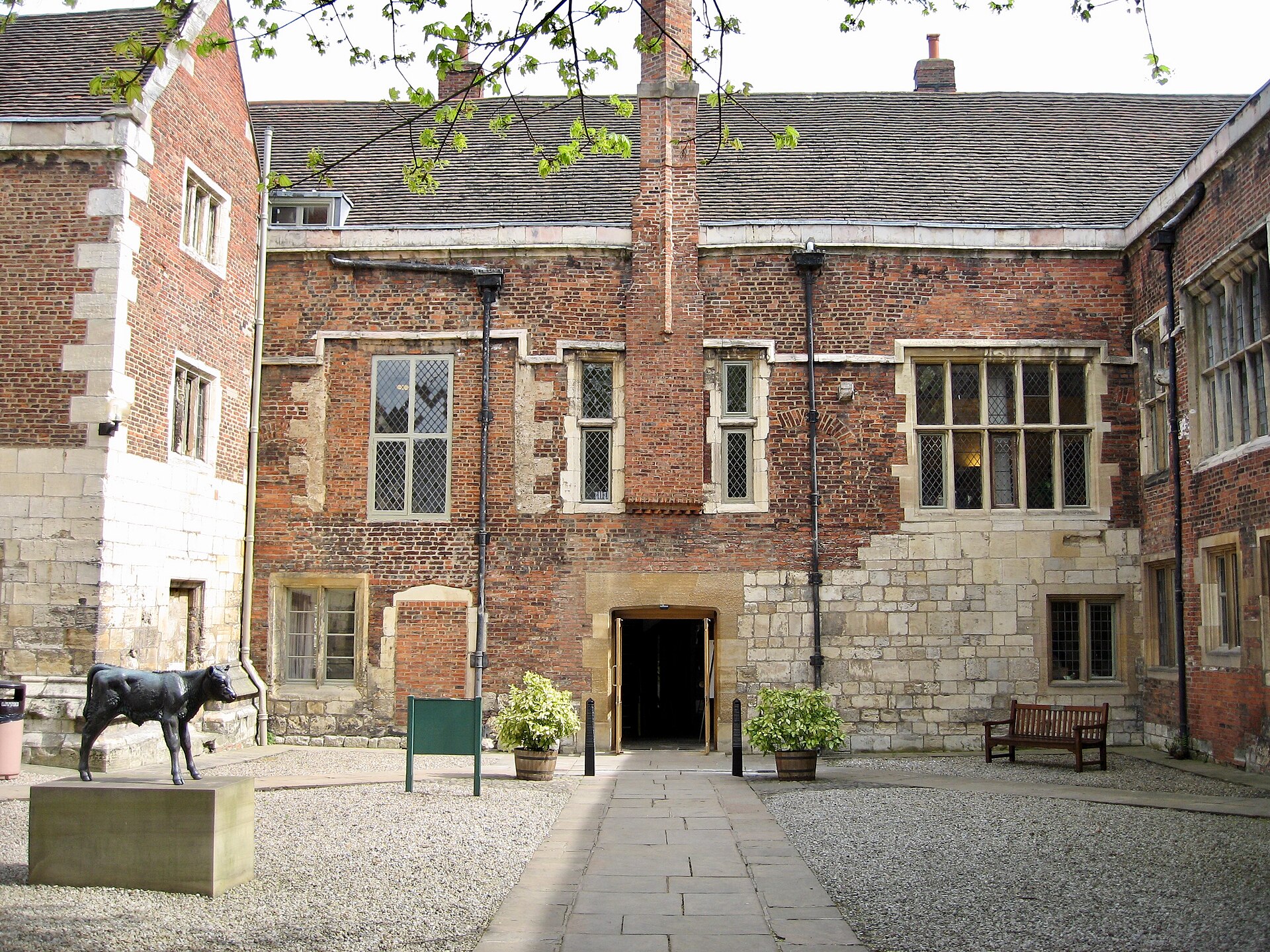
University of York — campus in pictures
Real, freely-licensed photographs of the campus (via Wikimedia Commons).





Why Choose York — Research, Community & Historic City
York offers a rare combination that is hard to find elsewhere: the research muscle and employer recognition of a Russell Group university, set inside a compact, collegiate campus in a city that students consistently vote among the UK's best places to live. Here is what makes it distinctive for international applicants.
SELECTIVITY
How Selective Is York?
With an acceptance rate of around 87%, the University of York is moderately selective by UK Russell Group standards — not as restrictive as Oxford, Cambridge, or Imperial, but still demanding strong academic credentials and a compelling personal statement for competitive programmes. Computer Science, Law, Medicine (Hull York Medical School), and Psychology attract the most competitive applicant pools.
Acceptance rates vary significantly by programme. Competitive courses (CS, Law, Medicine) may be substantially more selective than the university-wide figure. Strong subject-specific preparation and a focused personal statement matter most.
QUICK FACTS
University of York at a Glance
APPLICATION COMPONENTS
What Your York Application Consists Of
All undergraduate international applicants apply through UCAS — the UK's centralised university application system. Unlike US applications, there is no institution-specific portal; you submit one application that goes to up to five universities simultaneously. Here is every component of a strong York application.
ADMISSIONS PROFILE
What York Is Really Looking For
York makes offers primarily on the basis of academic achievement and potential. Because the application arrives through UCAS, the personal statement and reference are the main qualitative signals the admissions team has — making both critically important, especially for competitive programmes.
DEADLINES & ROUNDS
UCAS Deadlines for York Applications
All undergraduate applications to York go through UCAS. There is no Early Decision or Early Action system in the UK — UCAS operates on a single-round deadline model, with Clearing as a late-stage option for remaining places.
UCAS opens for applications in September each year. York will typically reply to applications submitted before the main deadline by 13 May 2026. International students are encouraged to apply well before the January deadline to allow time for visa processing after receiving an offer.
| Round | Deadline | Notes |
|---|---|---|
| Medicine (HYMS) | 15 October 2025 | Hull York Medical School — UCAT required |
| All other courses | 29 January 2026 | Main UCAS deadline for equal consideration |
| Late applications | 30 June 2026 | Considered if places remain; not guaranteed |
| Clearing | Autumn 2026 | Remaining places; York Global Clearing Scholarship available |
CAMPUS & CITY LIFE
Life at York
The main Heslington campus is a self-contained, award-winning parkland site with two large lakes, extensive green spaces, and wildlife habitats — a genuinely beautiful place to spend three or four years. A second Heslington East campus hosts the Computer Science, Theatre, Film and Television, and Electronics departments. The city of York sits just a 20-minute cycle or bus ride away.
The University of York operates on a distinctive collegiate model: every undergraduate student belongs to one of nine residential colleges — Alcuin, Constantine, Derwent, Goodricke, Halifax, James, Langwith, Vanbrugh, and Wentworth. Your college is your social home, your welfare network, and your competitive unit for inter-college sports and events. This system creates a sense of community that larger UK universities struggle to replicate.
EMPLOYABILITY
Career Outcomes for York Graduates
For international students, York's Careers team provides specialist support on Graduate Route visas (which allow two years of post-study work in the UK), Skilled Worker visa pathways, and connecting with employers who actively recruit international graduates. York also has campuses in Mumbai and Thessaloniki/Athens, providing international graduates with connections in multiple markets.
York's Russell Group membership opens doors across virtually every sector. The Career and Placement Service runs year-round employer events, internship fairs, CV clinics, and one-to-one coaching. Key sectors recruiting York graduates include finance (Edinburgh, London), technology (York's tech ecosystem is growing), law, healthcare, public policy, academia, and the creative industries.
FAQs
University of York — Frequently Asked Questions
Do I apply to York directly or through UCAS?+
All undergraduate applicants — including international students — apply through UCAS (ucas.com). York's UCAS institution code is Y50. You can list up to five universities on a single UCAS application. Hull York Medical School has code H75.
What IB score do I need for York?+
A typical IB offer from York is around 35 points, though this varies by programme. Competitive courses like Computer Science or Law may require higher predicted scores. Always check the specific course entry requirements on York's official course finder.
Is the University of York part of the Russell Group?+
Yes. York is one of the 24 members of the Russell Group, the UK's consortium of leading research-intensive universities. This carries significant weight with graduate employers in the UK and internationally.
What support does York offer once I arrive?+
York provides an International Student Welcome, pre-sessional English courses, visa and immigration guidance, a peer buddy programme, college-based welfare teams, and a dedicated international careers platform. The You@York portal gives confirmed offer-holders access to pre-arrival resources and Visit Days.
Can I get a scholarship as an international undergraduate at York?+
Yes. York offers several scholarships specifically for international undergraduates, including the International Undergraduate Achievement Scholarship (up to £10,000 in year one) and the Dean's Global Excellence Scholarship (full year-one tuition discount). Check the international scholarships page regularly as opportunities open and close.
What is York's collegiate system?+
Every York undergraduate belongs to one of nine residential colleges. Your college provides accommodation, a social network, welfare support, and competitive sports and events. This system gives York the community feel of a small university despite its overall size of 20,000 students.
How far is York from London?+
York is approximately 320 kilometres north of London on the East Coast Main Line. Direct trains run regularly and reach London King's Cross in under two hours, making York both a distinctive northern city experience and easily connected to the capital for internships and travel.
Does York require a UKAT or admissions test?+
Medicine applicants to Hull York Medical School must sit the UCAT. Most other York undergraduate programmes do not require a pre-admission test. Some mathematics-intensive programmes may reference problem-solving preparation, but this is generally advisory rather than a formal requirement.
ACADEMIC EXPECTATIONS
Academic Standards at York What International Students Need to Know
York is a research-intensive Russell Group university where academic rigour is expected from day one. Tutorials, seminars, and independent research form the backbone of undergraduate study. International students should expect a challenging but well-supported academic environment — and should come prepared.
Unlike many universities that grade primarily through end-of-year exams, York typically combines continuous assessment, seminar participation, essays, lab reports, and exams. Students are expected to read widely, engage critically with primary sources, and contribute to discussions. The academic transition from secondary school — wherever you studied — can be steep; planning your preparation before arrival is essential.
ENTRY STANDARDS
Academic Profile of Admitted Students
These are indicative benchmarks. Individual course offers are set by department and may be higher or lower. Always verify the specific course entry requirements on the York course finder.
STANDARDISED TESTS
York's Policy on Standardised Tests
If you have strong SAT or ACT scores (particularly in subject-relevant sections), you may mention them in your personal statement as additional evidence of academic ability, but they will not substitute for the required qualification. The only required admissions assessments at York are the UCAT for Medicine and potentially subject-specific interviews or tests for some competitive programmes.
York operates a test-optional policy for standardised tests like the SAT or ACT — these US-focused examinations are not required for admission and are not a standard part of UK university applications. The primary academic signal is your IB Diploma, A-Levels, or equivalent national qualification.
IB, A-LEVELS & EQUIVALENTS
How York Reads International Qualifications
York welcomes students from virtually every national education system and has experience assessing a wide range of international qualifications. The IB Diploma is well-understood and highly regarded; A-Levels (for students in systems that offer them, such as the British curriculum) are the 'home' standard.
IB DIPLOMA
IB Students: Positioning Your Application
IB students should pay close attention to which HL subjects their chosen York programme considers required or preferred. A Computer Science applicant with HL Maths Analysis & Approaches is a much stronger candidate than one who took HL Maths Applications & Interpretation. Similarly, sciences at HL are expected for Biology, Chemistry, and related degrees. The Extended Essay provides excellent personal statement material — if yours is in a relevant subject, highlight what you investigated and learned.
York is very familiar with IB Diploma applicants and makes conditional offers based on predicted total scores plus specific HL grades. A score of 35 is the typical threshold — equivalent to roughly AAABB at A-Level. For competitive programmes, offers may be set higher (up to 37–38 for courses like Medicine at HYMS).
SUBJECT PREPARATION
Subject Preparation by Discipline
York's departmental admissions teams are specialists. Here is what genuinely strong preparation looks like in York's most popular subjects for international applicants.
ENGLISH LANGUAGE
English Language Requirements
Applicants whose first language is not English must provide evidence of English proficiency before enrolment. York accepts several tests. Minimum scores below are for standard undergraduate entry; some programmes (particularly Education) set higher thresholds.
If your qualifications were delivered entirely in English (e.g. IB in English, international British school), York may waive the language test requirement. Check with the admissions office for your specific situation.
| Test | Overall | Notes |
|---|---|---|
| IELTS Academic | 6.5 | No individual band below 6.0 |
| TOEFL iBT | 87 | Check individual component minimums |
| Duolingo English Test | 120 | Accepted alongside IELTS/TOEFL |
| PTE Academic | Accepted | Verify specific score on course page |
| Pre-sessional English | Available | If just below threshold, York offers pre-sessional courses |
YEAR-BY-YEAR ROADMAP
Building Your York Application: Grade 9 to Offer
COMMON MISTAKES
Academic Application Pitfalls to Avoid
- Applying to courses whose subject requirements your HL choices do not meet — always verify on the course page before applying
- Submitting predicted grades lower than the conditional offer threshold — if predicted grades are borderline, discuss with your school coordinator before applying
- Overlooking the English language requirement — allow 3–6 months to achieve the required IELTS or TOEFL score if you have not already
- Writing a personal statement that is the same for a Law course and a Computer Science course — in UCAS, your single statement goes to all five choices, so write for your subject, not multiple subjects
- Leaving the UCAS application until late January — this risks rushed references and gives less time for visa processing after a conditional offer
- Ignoring programme-specific admissions tests — UCAT for Medicine must be booked and sat well before the October deadline
TUITION & FUNDING
Understanding the Cost of a York Degree for International Students
A University of York education is a significant financial commitment for international students. Annual international tuition is approximately $33,000, with total cost of attendance around $49,000 per year once living expenses are included. The good news: York offers named scholarships specifically for international undergraduates, and the city of York is substantially more affordable than London, Edinburgh, or Bristol.
This section provides a transparent breakdown of costs, explains York's scholarship landscape, and guides you through the steps to secure the best available funding before your first term begins.
ANNUAL COST ESTIMATE
Annual Cost Breakdown
All figures are annual estimates for 2026/27 entry. International student tuition is set by York and varies slightly by programme. Costs below are in USD equivalents based on published data — verify current GBP figures on York's official fees pages.
York city is significantly more affordable than London for day-to-day living. Students benefit from a compact campus that reduces transport costs, and many necessities are within walking or cycling distance.
| Item | Annual Usd | Notes |
|---|---|---|
| International Tuition | ~$33,000 | Varies by programme; check course page |
| Campus Accommodation | Included in COA | College rooms vary; self-catered typical |
| Living Costs (food, transport, personal) | ~$14,000 | York is more affordable than London |
| Total Cost of Attendance | ~$49,000 | Annual estimate, all-in |
| UCAS Application Fee | ~$35 | Paid once to UCAS, not to York |
FINANCIAL AID
Does York Offer Financial Aid to International Students?
International students are expected to demonstrate sufficient financial means as part of the UK Student Visa application — you must show you can cover tuition and living costs for your first year of study. This makes proactive scholarship applications critical: apply for every named award you qualify for before your offer is confirmed.
University of York does not operate a US-style need-blind financial aid system for international undergraduates. There is no automatic needs-assessment programme that covers a substantial portion of tuition based on family income. The primary financial support mechanisms available to international students are competitive merit scholarships and discounts offered by York directly.
Some international students may be eligible for home country government sponsorships, bilateral scholarships (such as Chevening for postgraduates — limited at undergraduate level), or their home country's overseas study grant programmes. Research these opportunities in your home country before applying.
NAMED SCHOLARSHIPS
Scholarships for International Undergraduates at York
York offers several scholarships specifically targeting international undergraduate students. These are competitive and awarded on the basis of academic excellence or specific circumstances. Apply as early as possible — places are limited and deadlines change annually.
Additional departmental and faculty-level scholarships may be available. Check individual department pages and the general international scholarships page, which York updates as awards open and close throughout the year.
NET COST REALITY
What Does a York Degree Actually Cost?
York's location in York rather than London provides a practical financial advantage: student accommodation, food, and entertainment cost significantly less than in the capital. Students on careful budgets consistently report York's cost of living as manageable relative to the academic and social experience on offer.
Without a scholarship, a three-year York undergraduate degree for an international student costs approximately $147,000 in total (tuition only) or around $147,000–$160,000 all-in over three years at today's rates. This is meaningfully less than US private university costs (~$320,000+ at elite schools) and comparable to or below other Russell Group universities in more expensive cities.
Currency fluctuations affect the USD equivalent of GBP tuition. Always budget in GBP and verify current fees directly with York's finance office.
HOW TO FUND YOUR DEGREE
Steps to Secure Funding Before You Arrive
COST FAQs
Cost & Aid Frequently Asked Questions
Is York need-blind for international students?+
No. York does not operate a need-blind financial aid policy for international undergraduates. Financial support is primarily through competitive merit scholarships. You must demonstrate sufficient funds as part of the UK Student Visa application.
Can I work part-time to offset living costs?+
Yes. UK Student Visa holders are permitted to work up to 20 hours per week during term time and full-time during vacations. Many York students supplement their income through part-time work — York city offers opportunities in hospitality, retail, and university support roles.
Is York cheaper than London for an international student?+
Yes, significantly. York city accommodation, food, and entertainment costs are meaningfully lower than London. This makes York's total cost of attendance more manageable even where tuition fees are similar to London universities.
How do I apply for the International Undergraduate Achievement Scholarship?+
Visit York's international scholarships page (york.ac.uk/study/undergraduate/fees-funding/international/scholarships/) and follow the application instructions when the scholarship window opens. Some awards are automatically considered upon application; others require a separate form.
Are there scholarships for students from specific countries?+
York periodically runs region-specific scholarships (e.g. for Indian students or Norwegian students via Lånekassen). These open and close based on funding cycles. Check the scholarships page and email international@york.ac.uk for the most current information.
What is the UCAS application fee?+
The UCAS application fee is approximately £27.50 (roughly $35 USD) and is paid once to UCAS — not to York. This single fee covers applications to all five universities you list.
UCAS PERSONAL STATEMENT
The UCAS Personal Statement York's Application & Statement Guide
Unlike US universities with supplemental essays and Common App prompts, UK university applications via UCAS centre on a single personal statement. From the 2026/27 cycle, UCAS has moved to a structured three-question format. This is your primary opportunity to persuade York — and your other four UCAS choices — that you are the right student for your chosen subject.
This guide explains the UCAS personal statement system, the new 2026 three-question format, what York's admissions team looks for in a strong statement, and how to craft a response that goes beyond generic interest claims to demonstrate genuine intellectual passion and readiness for university-level study.
APPLICATION SYSTEM
How UK University Applications Work
This means your personal statement must be written for your subject, not for a specific university. If you are applying to Computer Science at York, UCL, Edinburgh, Bristol, and Manchester, your statement must speak to Computer Science — not to why any particular city or campus appeals to you.
You apply to University of York (and up to four other UK universities) through UCAS — the Universities and Colleges Admissions Service — at ucas.com. There are no institution-specific essay portals, no Common App supplements, and no 'Why York?' essays in the US sense. The application has one central personal statement shared across all five universities you apply to.
From 2026/27, UCAS has replaced the traditional free-form 4,000-character personal statement with a structured format of three specific questions. This is a significant change — read the new format carefully before drafting.
THE 2026/27 FORMAT
The New UCAS Three-Question Personal Statement
From the 2026/27 UCAS cycle, the personal statement comprises three structured questions rather than a single open-ended essay. These questions are the same for all applicants across all UK universities. Answer each honestly, specifically, and with evidence from your actual experience.
STRATEGY
Approaching the UCAS Statement as an International Applicant
A second important difference: your statement covers all five UCAS choices simultaneously. If you are applying to the same subject at all five universities, this is straightforward. If you are hedging between related subjects (e.g. Computer Science and Mathematics), choose the subject you are most committed to and write for that — splitting your personal statement between two subjects almost always weakens both.
The biggest difference between UCAS and US applications is audience. Your UCAS personal statement goes to subject-specialist academics, not a generalised admissions committee. The Computer Science department at York will read your CS personal statement with expert eyes. Generic enthusiasm statements are immediately visible; specific, informed engagement with the discipline is immediately impressive.
International students often write personal statements that are too focused on personal biography and cultural background. While context is valuable, UK admissions teams primarily want to see subject engagement and intellectual readiness. Lead with the subject, let your background add colour rather than dominate.
SECTION STRATEGY
Making the Most of Each Section
TOPIC SELECTION
What to Write About — and What to Avoid
The most common mistake in UCAS personal statements is choosing topics that sound impressive rather than topics that are genuinely yours. York's readers have seen hundreds of statements describing 'a lifelong passion for science' or 'watching the news and becoming interested in economics.' These openings are immediately forgettable.
AVOID THESE MISTAKES
Common Personal Statement Pitfalls
- Writing a personal statement that tries to serve two different subjects (e.g. Economics and Business) — split the focus and you weaken both cases
- Copying or closely paraphrasing online sample statements — UCAS uses similarity detection software and universities compare submissions
- Writing the statement at the last minute — strong statements typically go through five or more drafts over several months
- Focusing entirely on extracurriculars and barely mentioning the academic subject itself
- Leaving the 'other circumstances' field blank when contextual information is genuinely relevant to your academic record
- Using vague enthusiasm language ('I am passionate about…', 'I have always loved…') without any specific evidence to back it
- Writing about career goals without connecting them back to genuine intellectual interest in the subject
- Submitting without having a teacher or school counsellor review the final draft for tone, accuracy, and errors
ESSAY FAQs
Personal Statement Frequently Asked Questions
How long is the UCAS personal statement?+
Under the new 2026/27 three-question format, the personal statement has separate word/character limits per question rather than one combined limit. Check the UCAS website for the current character counts for each of the three questions — they changed with the new format.
Can I write different personal statements for different universities?+
No. The UCAS personal statement is a single document submitted once and shared with all five universities on your application. You cannot customise it per institution. This is why writing for your subject — not for a specific university — is essential.
Does York interview applicants?+
Most York undergraduate programmes do not conduct formal interviews. Exceptions include Medicine at Hull York Medical School, which uses Multiple Mini Interviews (MMIs). Some departments may occasionally request additional information. Check your specific course page.
Should I mention York by name in my personal statement?+
No — avoid naming any specific university in your personal statement. The same statement goes to all five of your UCAS choices. Mentioning York by name could weaken your application at the other four universities.
How important is the personal statement relative to grades?+
For most York programmes, grades (predicted or achieved) are the primary filter. If your grades comfortably meet the offer threshold, the personal statement and reference become the differentiating factors. For very competitive programmes where many applicants are at threshold, a compelling statement can be decisive.
What does York specifically look for in a statement?+
York's admissions readers are subject specialists who look for: genuine engagement with the discipline beyond the school curriculum, clear motivation for the specific subject, evidence of academic potential, and writing that is honest and specific rather than generic and boastful.
When should I start writing my personal statement?+
Start drafting in June or July of your Year 13 (final school year), aiming to have a strong draft ready by September when UCAS opens. This gives you time for multiple reviews and revisions before the October (Medicine) or January (all other courses) deadlines.
Courses — schools, degrees & intake
92 degrees across 22 groupings.
York Management School · 10 degrees
Accounting and Finance (BSc)
Actuarial Science (BSc)
Business and Management (BA/BSc)
Business and Society (BA)
Business of the Creative Industries (BA)
Economics (BSc)
Economics and Econometrics (BSc)
Economics and Finance (BSc)
Economics and Management (BSc)
Marketing (BSc)
Department of Computer Science · 3 degrees
Computer Science (BSc/MEng)
Data Science (BSc/MSci)
Computer Science and Mathematics (BSc)
Department of Electronic Engineering · 6 degrees
Electronic Engineering (BEng/MEng)
Electronic and Computer Engineering (BEng/MEng)
Electronic and Electrical Engineering (BEng/MEng)
Biomedical Engineering (BEng)
Robotic Engineering (MEng)
Medical Engineering (MEng)
Department of Mathematics · 3 degrees
Mathematics (BSc/MMath)
Mathematics and Finance (BSc)
Mathematics and Management (BSc)
Department of Physics · 4 degrees
Physics (BSc/MPhys)
Physics with Astrophysics (BSc/MPhys)
Theoretical Physics (BSc/MPhys)
Physics with Philosophy (BSc)
Department of Chemistry · 4 degrees
Chemistry (BSc/MChem)
Chemistry with Digital Methods (BSc/MChem)
Biological and Medicinal Chemistry (BSc/MChem)
Green Chemistry and Sustainable Processes (BSc/MChem)
Department of Biology · 8 degrees
Biology (BSc/MBiol)
Biochemistry (BSc/MBiochem)
Biomedical Sciences (BSc/MBiomedSci)
Genetics (BSc/MBiol)
Neuroscience (BSc/MSci)
Ecology (BSc/MBiol)
Molecular Cell Biology (BSc/MBiol)
Immunology and Infectious Disease (BSc/MSci)
Department of Environment and Geography · 5 degrees
Environmental Science (BSc/MEnv)
Ecology and Conservation Biology (BSc/MSci)
Physical Geography and Environment (BSc/MEnv)
Human Geography and Environment (BA)
Environment, Economics and Ecology (BSc/MEnv)
Department of Psychology · 3 degrees
Psychology (BSc/MSci)
Psychology in Education (BSc)
Social Psychology (BA)
School of Law · 4 degrees
Law (LLB)
Law and Criminology (LLB)
International Human Rights Law (LLB)
Criminology (BA)
Department of History · 3 degrees
History (BA)
History of Art (BA)
Curating and Art History (BA)
Department of Archaeology · 4 degrees
Archaeology (BA/BSc)
Bioarchaeology (BSc)
Historical Archaeology (BA)
Heritage and Archaeology (BA)
Department of English and Related Literature · 2 degrees
English Literature (BA)
English Literature and Language (BA)
Department of Language and Linguistic Science · 6 degrees
English Language and Linguistics (BA)
Linguistics (BA/BSc/MSci)
French Studies (BA)
German Studies (BA)
Spanish Studies (BA)
Italian Studies (BA)
Department of Philosophy · 3 degrees
Philosophy (BA)
Philosophy, Politics and Economics (BA/BSc)
Language, Logic and Communication (BSc)
Department of Politics · 3 degrees
Politics (BA)
International Relations (BA)
Politics with International Relations (BA)
Department of Sociology · 2 degrees
Sociology (BA)
Criminology and Sociology (BA)
Department of Social Policy and Social Work · 5 degrees
Social and Public Policy (BA)
Criminal Justice and Social Policy (BA)
Social Work (MSocW)
Childhood Studies (BA)
Global Development (BA)
Department of Education · 1 degrees
Education (BA)
School of Arts and Creative Technologies · 6 degrees
Music (BA)
Music Production and Sound Recording (BA)
Theatre: Writing, Directing and Performance (BA)
Digital Media, Culture and Communication (BA)
Interactive Media (BSc)
Architecture (BA)
Hull York Medical School · 5 degrees
Medicine (MB BS)
Nursing (Adult) (BSc/MNurs)
Nursing (Mental Health) (BSc/MNurs)
Nursing (Child) (BSc/MNurs)
Midwifery (BMid)
Interdisciplinary and Liberal Arts · 2 degrees
Liberal Arts (BA)
Biotechnology (BSc/MBiol)
Want your real chances at University of York?
Create a free TYCHR account for your personalised admit-chance, a shortlist you can track, exact entry requirements, and essay + counselling help.