University of Wollongong
Wollongong, Australia · Suburban
AUSTRALIA · QS #167 · TOP 1% GLOBALLY
University of Wollongong Admissions Guide for International Students
The University of Wollongong (UOW) is a dynamic public research university located on Australia's beautiful South Coast, just 80 km south of Sydney. Founded in 1975 and ranked in the top 1% of universities worldwide, UOW is celebrated for its strong graduate employment outcomes, world-class engineering and health programs, and one of Australia's most welcoming international communities — with 30% of its student body coming from overseas.
Whether you are drawn by UOW's reputation in engineering and computing, its thriving health sciences faculty, or the vibrant coastal lifestyle of Wollongong, this guide walks you through everything an ambitious international student needs to know: entry requirements, costs, scholarships, and how to put your best application forward in Australia's direct, grades-first admissions system.
Campus
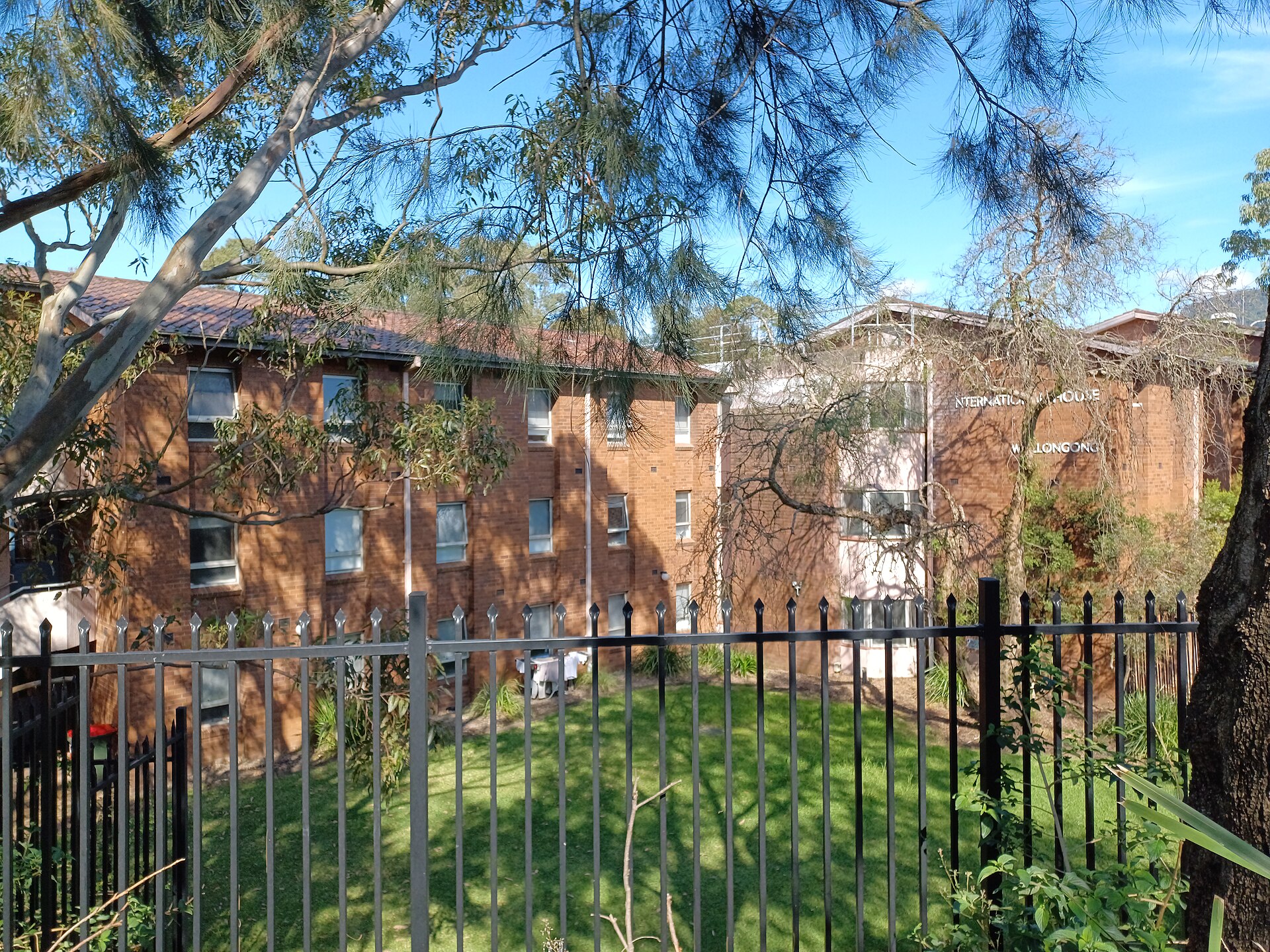
University of Wollongong — campus in pictures
Real, freely-licensed photographs of the campus (via Wikimedia Commons).





WHY UOW
Why Choose UOW — Rankings, Outcomes & Coastal Campus Life
UOW offers an exceptional combination of research depth, employment-focused teaching, and an international campus culture that makes it one of Australia's most compelling universities for students from around the world.
SELECTIVITY
UOW Acceptance Profile
UOW offers competitive, merit-based admissions with an overall acceptance rate of around 30%. Unlike highly selective research universities, UOW focuses on matching students to programs where they will genuinely succeed — this means selectivity varies significantly by faculty and degree. High-demand programs in medicine, nursing, and engineering have more competitive entry; others remain accessible to well-prepared international applicants.
The most important entry criterion is your academic record from your home country qualification — whether that is the IB Diploma, A-Levels, a national school-leaving certificate, or a completed year of university study. UOW recognises a wide range of international qualifications and assesses each applicant against program-specific entry requirements published on Course Finder.
QUICK FACTS
University of Wollongong at a Glance
HOW TO APPLY
What Your Application Consists Of
UOW uses a direct, grades-first admissions system — there are no application essays or personal statements required for standard undergraduate programs. Your application is assessed primarily on your academic record and English language proficiency.
ADMISSIONS PROFILE
What UOW Looks For
UOW's admissions process is transparent and merit-based. The university evaluates international applicants against program-specific Academic Entry Requirements (AER) that map your home qualification to the equivalent Australian Year 12 standard.
For most programs, the two deciding factors are: (1) your overall academic achievement in your final school qualification, and (2) meeting English language proficiency requirements. For IB Diploma holders, a total score of 30+ is the general undergraduate threshold, though competitive programs such as Engineering and Computer Science may expect higher scores — particularly in relevant HL subjects. Prior study at a recognised university may also fulfil entry requirements or reduce degree length through credit transfer.
INTAKES & DEADLINES
When to Apply
UOW offers two main annual intakes — February (Session 1) and July (Session 2). Some programs also offer November/December starts. As a general rule, submit your application at least four months before your intended intake to allow time for assessment, offer acceptance, and student visa processing.
There is no application fee at UOW, making it cost-free to apply. The application process is completed entirely online through UOW Apply or via an authorised education agent.
HDR (research degree) applications are accepted year-round, but scholarship applications for HDR programs close in May of the year prior to your intended start date. Always verify exact closing dates on the Course Finder entry for your chosen program.
| Intake | Apply_by | Notes |
|---|---|---|
| Session 1 (February) | ~October (4 months prior) | Main intake; largest course availability |
| Session 2 (July) | ~March (4 months prior) | Good availability; most programs open |
| Session 3 (November, select programs) | ~July (4 months prior) | Limited programs; check Course Finder |
CAMPUS & CITY LIFE
Life at UOW
Wollongong is one of Australia's most underrated cities for international students — affordable, safe, and beautiful. Sitting between dramatic coastal cliffs and the Pacific Ocean, the city offers beaches, rainforest national parks, and a thriving café and cultural scene, all at a fraction of the cost of Sydney or Melbourne.
UOW's main campus is a self-contained green precinct with modern lecture theatres, cutting-edge laboratories, a sports hub, and a vibrant student union. On-campus and nearby student accommodation is available, and Sydney is just 80 minutes away by train — offering all the cultural, internship, and employment opportunities of a global metropolis.
CAREER OUTCOMES
Where UOW Graduates Go
UOW's focus on industry-connected teaching translates into strong employment outcomes for its graduates. With 85% of graduates in employment or further study after completing their degree, UOW consistently ranks among Australia's best universities for graduate outcomes.
UOW's location in the Illawarra region — a hub for advanced manufacturing, technology, healthcare, and environmental industries — combined with its proximity to Sydney, gives students access to a diverse range of employers. Engineering and computing graduates are in particularly high demand. Average starting salaries for UOW graduates sit at approximately USD 43,000 (AUD equivalent varies with exchange rates), with earnings growing significantly in the first five years of employment.
Stats
Cards
FAQs
Frequently Asked Questions
Is UOW a good university for international students?+
Yes. UOW is ranked #167 globally (QS 2025), sits in the top 1% of world universities, and has one of the largest international student communities in Australia — 30% of students come from overseas. Its graduate employment rate of 85% and strong alumni network make it an excellent choice.
Does UOW accept the IB Diploma?+
Yes. UOW explicitly recognises the IB Diploma. A minimum total score of 30 is the general undergraduate entry threshold, though competitive programs may require higher scores. IB subject prerequisites may also apply — check the specific course on Course Finder.
Do I need to write essays to apply to UOW?+
No. UOW uses a direct, grades-first admissions system. There are no personal statements or application essays required for standard undergraduate programs. Your academic record and English proficiency are the primary assessment criteria.
How much does it cost to apply to UOW?+
The application fee is AUD 0 — there is no cost to apply to UOW. This is one of the advantages of the Australian direct application system.
When should I apply for the February intake?+
Apply at least four months before your intended intake — so approximately October for a February start. However, applying earlier gives you more time for offer acceptance, accommodation arrangements, and student visa processing.
Can I work while studying at UOW?+
Yes. International students on a student visa in Australia are generally permitted to work up to 48 hours per fortnight during study periods, with unlimited hours during scheduled breaks. Always check the latest Australian Department of Home Affairs conditions on your specific visa.
What are UOW's strongest programs?+
UOW is particularly well regarded for Engineering (materials, civil, electrical), Computer Science, Nursing and Health Sciences, Business and Commerce, Environmental Science, and Psychology. It also has a strong reputation in Education and Law.
Is Wollongong safe for international students?+
Wollongong is consistently rated one of Australia's safest and most liveable regional cities. Its compact size, strong international student community, and proximity to Sydney make it an excellent base for overseas students.
ACADEMIC EXPECTATIONS
Academic Profile for International Applicants Grades-Based, Program-Specific Entry
UOW's admissions are transparent and merit-based: your secondary school results determine your eligibility, with each program publishing specific Academic Entry Requirements on Course Finder. There are no surprise tests, hidden interviews, or ambiguous holistic reviews for most programs.
As an international student, you will be assessed against equivalent Australian Year 12 standards. UOW's international admissions team is experienced with qualifications from over 130 countries, including the IB Diploma, UK A-Levels, Indian boards, US High School Diploma, and South-East Asian national certificates.
ENTRY BENCHMARKS
Academic Entry Benchmarks
The following benchmarks apply to general undergraduate entry at UOW. Competitive programs — particularly those in Engineering, Computing, and Health Sciences — may require higher scores in relevant subjects.
SAT and ACT scores are not part of the standard Australian admissions process. UOW does not publish SAT/ACT bands because it does not use these tests for undergraduate entry.
TEST POLICY
Standardised Tests at UOW
UOW's test policy is listed as 'optional' in the context of international standardised tests such as the SAT and ACT — however, this reflects the Australian norm: these tests are simply not part of the admissions process. UOW does not require or consider SAT or ACT scores for undergraduate admission.
The key 'test' for international students at UOW is the English language proficiency test (IELTS, TOEFL iBT, PTE Academic, Cambridge, or OET). This is a firm requirement for most international applicants. Your home-country academic qualification — IB, A-Levels, national board, etc. — is what determines academic entry eligibility.
IB · A-LEVELS · INTERNATIONAL QUALIFICATIONS
How UOW Reads International Qualifications
UOW's international admissions team is well versed in assessing qualifications from around the world. Here is how the most common international credentials are handled.
SUBJECT PREPARATION
Academic Preparation by Faculty
The subjects you study in your final years of school matter at UOW, especially for competitive programs. Here is what each major faculty looks for.
ENGLISH LANGUAGE
English Proficiency Requirements
English proficiency is a firm admission requirement for most international students at UOW. The minimum scores below apply to standard undergraduate programs; some faculties (Education, Health Sciences) require higher bands.
Students who have completed a minimum of two years of senior secondary or tertiary study conducted entirely in English at a recognised institution may be eligible for an English language exemption. Confirm with the UOW admissions team.
| Test | Minimum | Notes |
|---|---|---|
| IELTS Academic | 6.5 overall | Minimum 6.0 in each sub-score for most programs |
| TOEFL iBT | 86 total | Sub-score minimums vary by program |
| Duolingo English Test | 110 | Check program-specific acceptance |
| PTE Academic | 58.0 overall | Accepted; equivalent to IELTS 6.5 |
| Cambridge (C1 Advanced / C2 Proficiency) | 176 overall | Accepted; check program-specific cutoffs |
| OET | B in each component | Accepted for health-related programs |
PREPARATION ROADMAP
Building Your Academic Profile: Year 9–12
COMMON MISTAKES
Academic Application Pitfalls to Avoid
- Applying too close to your intake date — always apply at least 4 months in advance to allow time for visa processing.
- Assuming your English proficiency will be waived — always take an accepted test unless you have clear evidence of exemption eligibility.
- Not checking program-specific prerequisites on Course Finder before applying — general minimums may not apply to your chosen course.
- Submitting unofficial or poorly translated transcripts — all academic documents must be official certified copies with professional English translations.
- Forgetting that some programs (Medicine via MD pathway, Nursing) have additional requirements beyond academic grades — check each course carefully.
- Delaying student accommodation applications — on-campus residences fill quickly, particularly for the February intake.
- Not applying for scholarships early — major UOW scholarships have their own deadlines that often precede offer acceptance.
COST & FINANCIAL AID
Understanding the True Cost of UOW For International Students
Australia's universities operate a transparent fee-for-service model for international students. UOW does not receive government subsidised places for international undergraduates, so fees reflect the full cost of delivery. The good news: Wollongong's cost of living is significantly lower than Sydney or Melbourne, and UOW offers a competitive range of merit scholarships that can substantially reduce your investment.
All figures below are drawn from UOW's published fee schedules and converted to USD for reference. Actual AUD costs depend on the AUD/USD exchange rate at the time of payment. Always confirm current fees on UOW's official website before applying.
ANNUAL COSTS
Annual Cost Breakdown (International Students)
The following are annual estimates in USD based on available data. Tuition varies by faculty — Engineering and Medicine programs are typically at the higher end of the range.
USD figures are indicative conversions. All fees are published in AUD on UOW's official website. Living costs in Wollongong are approximately 20–30% lower than equivalent costs in Sydney.
| Component | Annual_usd | Notes |
|---|---|---|
| Tuition & Fees | ~USD 24,000 | Varies by program; Engineering/Health may be higher |
| Total Cost of Attendance | ~USD 39,000 | Includes tuition, living, and incidentals |
| Living Costs (Wollongong) | ~USD 17,000 | Accommodation, food, transport, personal expenses |
| Application Fee | USD 0 | No application fee at UOW |
FINANCIAL AID
Financial Aid for International Students
As a public Australian university, UOW does not operate a need-blind or need-based financial aid model for international students comparable to US universities. There is no central financial aid fund for international undergraduate students.
The primary form of financial support available to international students at UOW is merit-based scholarships. These are awarded competitively based on academic achievement, and some are specifically targeted at students from particular regions or disciplines. Additionally, international students in Australia are permitted to work part-time (up to 48 hours per fortnight during term), which many students use to supplement their finances.
There is no equivalent of US need-based aid (FAFSA-style) for international students at Australian universities. Plan your finances based on the full cost of attendance before applying.
SCHOLARSHIPS
Scholarships for International Students
UOW offers a range of merit-based scholarships specifically for international students. Specific scholarship names, values, and eligibility criteria are published on UOW's official scholarships portal and are updated annually — always verify current offerings before applying.
Historically, UOW has offered scholarships covering partial tuition reductions (typically 10–25% of tuition fees) for high-achieving international students entering undergraduate programs. Additionally, the Australian Government offers the Australia Awards scholarships programme, which may fund full degrees for students from eligible developing countries.
Scholarship values, names, and eligibility criteria change year to year. Verify all details on UOW's official scholarships page and apply well in advance of your intended intake.
AFFORDABILITY
Putting UOW's Cost in Perspective
Compared to equivalent-ranked universities in the US or UK, UOW offers strong value for money — particularly when Wollongong's lower cost of living is factored in. Total annual costs of approximately USD 39,000 compare favourably to many US universities of similar global standing where costs can exceed USD 75,000–80,000 per year.
The city of Wollongong offers significantly lower rental and living costs than Sydney or Melbourne. Students sharing accommodation can find rooms at well below the Sydney equivalent. On-campus residential options, while competitive, are also priced accessibly. International students are permitted to work part-time during semester and full-time during holidays, giving opportunities to offset living expenses.
Australia's temporary graduate visa (Subclass 485) allows eligible international graduates to remain in Australia to work for one to four years after completing their degree, depending on their field of study. This post-study work right is a significant financial and career benefit that adds long-term value to an Australian degree.
HOW TO FUND YOUR DEGREE
Steps to Secure Funding
COST FAQs
Cost & Scholarship FAQs
How much does UOW cost for international students per year?+
The total estimated cost of attendance for an international student at UOW is approximately USD 39,000 per year, including tuition (~USD 24,000) and living costs (~USD 17,000). Actual costs vary by program and exchange rate — always verify current AUD fees on UOW's website.
Is there an application fee to apply to UOW?+
No. UOW does not charge an application fee for international students.
Does UOW offer scholarships to international students?+
Yes. UOW offers merit-based scholarships to international students, typically covering partial tuition. Exact scholarship names, values, and eligibility are published on UOW's scholarships portal and are updated each year.
Can international students work in Australia while studying?+
Yes. International students in Australia on a student visa are permitted to work up to 48 hours per fortnight during study periods and unlimited hours during scheduled holiday breaks. This is an important source of income for many international students.
What is OSHC and is it compulsory?+
Overseas Student Health Cover (OSHC) is mandatory health insurance for all international students in Australia holding a student visa. It is a condition of your visa. UOW can help you arrange OSHC during enrolment.
Is Wollongong cheaper to live in than Sydney?+
Yes, significantly. Rental costs, food, and transport in Wollongong are notably lower than Sydney. This makes UOW one of the more cost-effective choices among Australia's top research universities — without sacrificing access to Sydney, which is just 80–90 minutes away by train.
Can I get a scholarship without applying separately?+
Some UOW scholarships are awarded automatically based on your academic results at the time of admission. Others require a separate application. Check each scholarship's conditions carefully on UOW's scholarships portal.
APPLICATION & PERSONAL STATEMENT
Applying to UOW — No Essays Required
Australia operates a grades-first, direct admissions system. The University of Wollongong does not require personal essays or statements for standard undergraduate admission. Your application is assessed on your academic record, English proficiency, and relevant qualifications — not a written personal narrative.
This guide explains UOW's application process in full, what documentation makes the strongest impression, and how to write a compelling statement if you are applying for a scholarship or a course that requests one (such as medicine, creative arts, or HDR research degrees).
APPLICATION OVERVIEW
How UOW Admissions Actually Works
Unlike US universities (Common App + supplements) or UK universities (UCAS personal statement), Australian universities — including UOW — do not require applicants to submit written essays as part of the standard admissions process.
You apply directly through UOW Apply, submit your academic transcripts and English test results, and receive an offer based on whether you meet the program's Academic Entry Requirements. This makes the Australian system faster, clearer, and far less stressful for applicants — but it also means your academic performance carries all the weight.
WHEN WRITING IS REQUIRED
When You Will Need a Written Statement
While UOW's standard admissions process does not require essays, written statements become important in two specific contexts: scholarship applications and HDR (research degree) applications.
AUSTRALIAN SYSTEM
Understanding the Australian Admissions Difference
If you are an international student familiar with the US Common App or UK UCAS process, the Australian system feels refreshingly simple. There is no personal statement, no list of extracurricular activities, no teacher recommendations, and no admissions interview for most programs. Your degree offer is fundamentally an academic offer.
This simplicity is a genuine advantage for strong academic students who may not have had access to the same extracurricular opportunities as peers in the US or UK system. At UOW, what you studied and how well you did is what gets you in. The system is transparent, and decisions are typically returned within two to four weeks of submitting a complete application.
The Australian system does not mean personal qualities do not matter — it means they are assessed differently. Scholarship applications, competitive programs, and research degrees do give you an opportunity to tell your story. But for standard undergraduate entry, let your grades speak for you.
APPLICATION STRATEGY
Making Your Application as Strong as Possible
Even without essays, there are strategic choices that will strengthen your UOW application.
IF WRITING IS REQUIRED
How to Frame Your Story for Scholarships
If you are applying for a UOW scholarship that requires a supporting statement, use this as your opportunity to provide context that your grades cannot — without embellishing or fabricating.
COMMON MISTAKES
Application Mistakes to Avoid
- Applying too late — submit at least four months before your intended intake to allow time for visa processing and accommodation arrangements.
- Submitting an incomplete application — missing one document halts your entire application until it is resolved.
- Forgetting to apply for scholarships separately — scholarship deadlines are often before or soon after your course application and require a separate process.
- Assuming all programs have the same entry requirements — check each program individually on Course Finder.
- Neglecting Overseas Student Health Cover (OSHC) — this is a legal requirement for your student visa and must be arranged before you can enrol.
- Not contacting a potential HDR supervisor before applying for a research degree — most offers depend on supervisor agreement.
- Submitting academic documents that are not officially certified or lack professional English translations.
APPLICATION FAQs
Frequently Asked Questions
Does UOW require a personal statement?+
No. The University of Wollongong does not require a personal statement or application essay for standard undergraduate admission. Admissions are based on your academic results and English proficiency.
Is there a UCAS-style application for Australian universities?+
No. Unlike the UK (UCAS) or the US (Common App), Australia does not have a single centralised application platform. You apply directly through each university's own portal. UOW's application portal is UOW Apply.
What documents do I need to apply?+
Certified copies of your academic transcripts and certificates (with professional English translations if not in English), a valid English proficiency test result, and a copy of your passport. Some programs may require additional materials.
Will a personal statement help my application?+
For a standard undergraduate application at UOW, no — personal statements are not part of the assessment process. However, for scholarship applications or competitive programs (creative arts, HDR), a well-written statement is important.
How long does it take to get an offer from UOW?+
Standard coursework applications typically receive a decision within two to four weeks of submitting a complete application. Research degree applications take approximately six weeks.
Can I apply through an education agent?+
Yes. UOW has a global network of authorised education agents who can assist international students with the application process. This is a legitimate and commonly used pathway, particularly for students navigating complex visa and documentation requirements.
Do I need to take the UCAT to study medicine at UOW?+
UOW does not offer an undergraduate MBBS degree. Medical study in Australia is typically pursued at the graduate level through an MD (Doctor of Medicine) program after completing an undergraduate degree. Check UOW's Faculty of Science, Medicine and Health for current medical and health science pathway options.
Courses — schools, degrees & intake
40 degrees across 5 groupings.
Faculty of Arts, Social Sciences and Humanities · 13 degrees
Bachelor of Arts
Bachelor of Arts (Honours)
Bachelor of International Studies
Bachelor of Arts in Western Civilisation
Bachelor of Psychological Science
Bachelor of Psychological Science (Honours)
Bachelor of Arts (Psychology)
Bachelor of Criminology
Bachelor of Social Science
Bachelor of Social Work
Bachelor of Public Health (Honours)
Bachelor of Communication and Media
Bachelor of Creative Arts
Faculty of Business and Law · 6 degrees
Bachelor of Business
Bachelor of Business Analytics
Bachelor of Economics and Finance
Bachelor of Professional Accounting
Bachelor of Laws
Bachelor of Business Information Systems
Faculty of Engineering and Information Sciences · 5 degrees
Bachelor of Engineering (Honours)
Bachelor of Engineering Technology
Bachelor of Computer Science
Bachelor of Information Technology
Bachelor of Computational Technology
Faculty of Science, Medicine and Health · 13 degrees
Bachelor of Science
Bachelor of Environmental Science (Honours)
Bachelor of Marine Science
Bachelor of Mathematics
Bachelor of Medical and Health Sciences
Bachelor of Medical Biotechnology (Honours)
Bachelor of Medicinal Chemistry (Honours)
Bachelor of Pre-Medicine, Science and Health
Bachelor of Nursing
Bachelor of Nutrition and Dietetics (Honours)
Bachelor of Nutrition Science
Bachelor of Exercise Science
Bachelor of Exercise Science and Rehabilitation
School of Education · 3 degrees
Bachelor of Education - The Early Years
Bachelor of Primary Education
Bachelor of Secondary Education
Want your real chances at University of Wollongong?
Create a free TYCHR account for your personalised admit-chance, a shortlist you can track, exact entry requirements, and essay + counselling help.