University of Warsaw
Warsaw, Poland · Urban
POLAND'S PREMIER RESEARCH UNIVERSITY
University of Warsaw Admissions Guide for International Students
Poland's largest and top-ranked university, the University of Warsaw sits at the heart of one of Europe's most dynamic capitals. Founded in 1816 and ranked #1 nationally, it combines 200 years of academic tradition with a fast-growing portfolio of English-medium degrees — at some of the lowest tuition levels in the EU. For ambitious international students, UW offers a rare combination: genuine research depth, a vibrant cosmopolitan city, and an affordable pathway into the European academic and professional ecosystem.
Campus
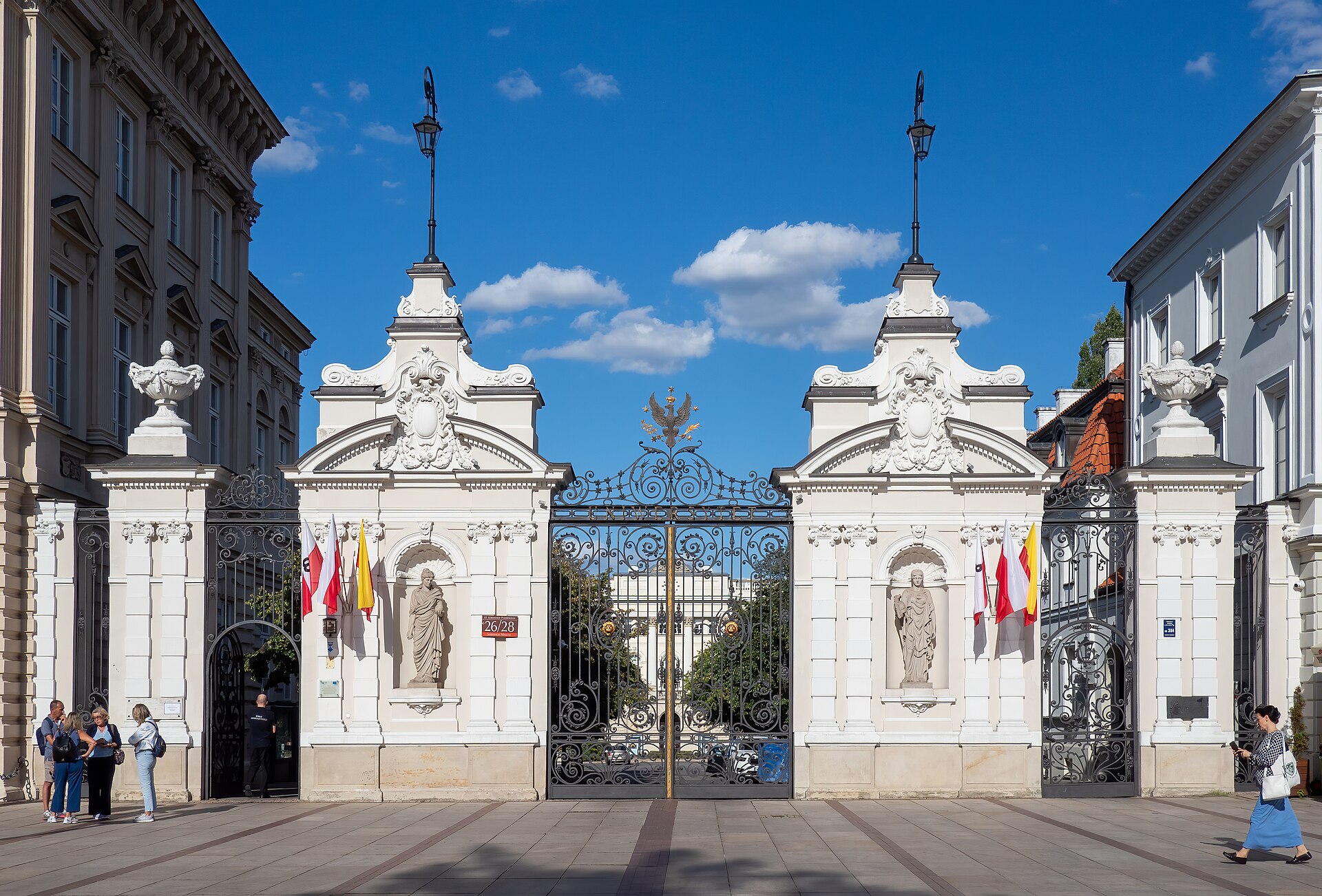
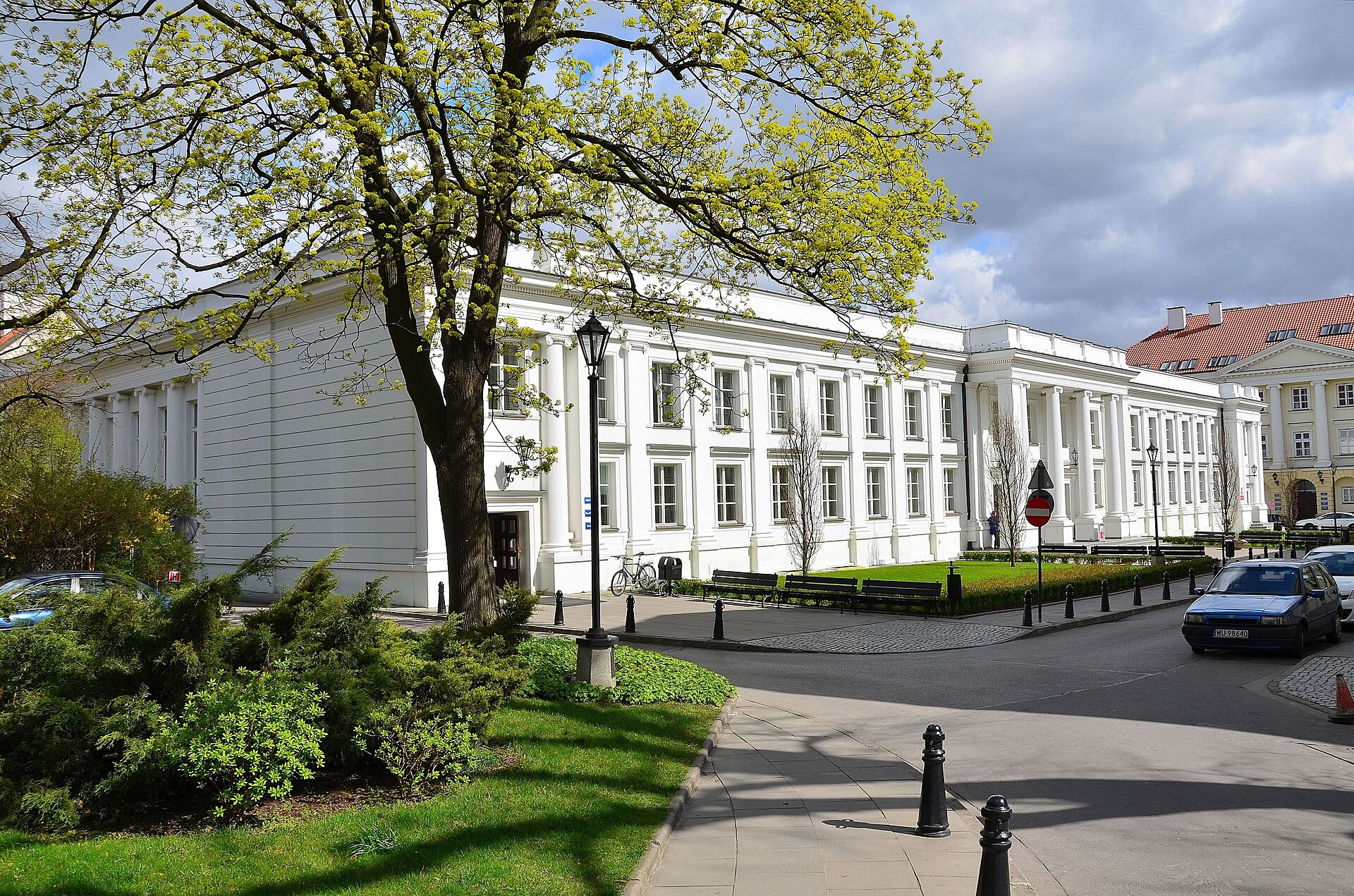
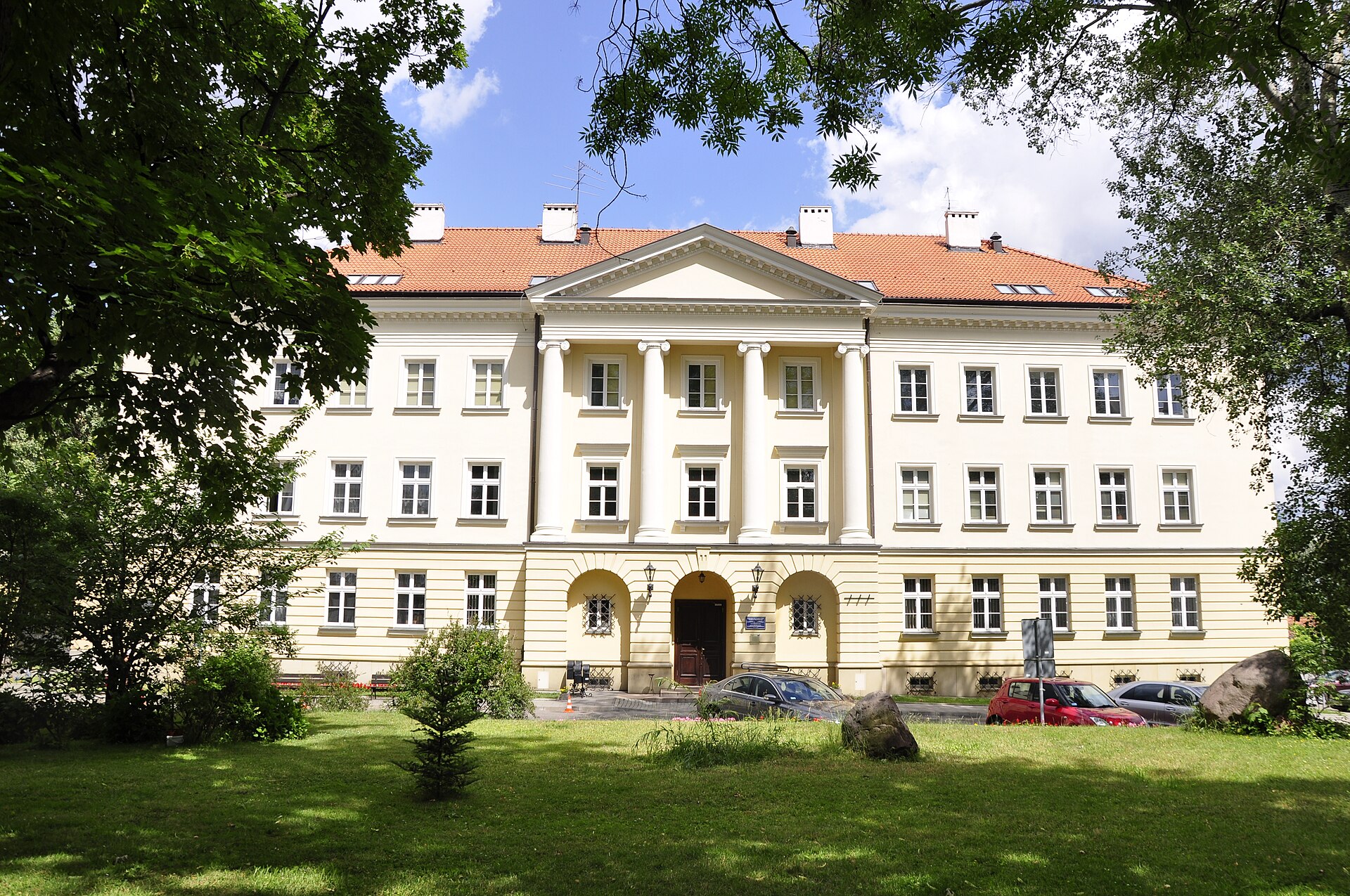
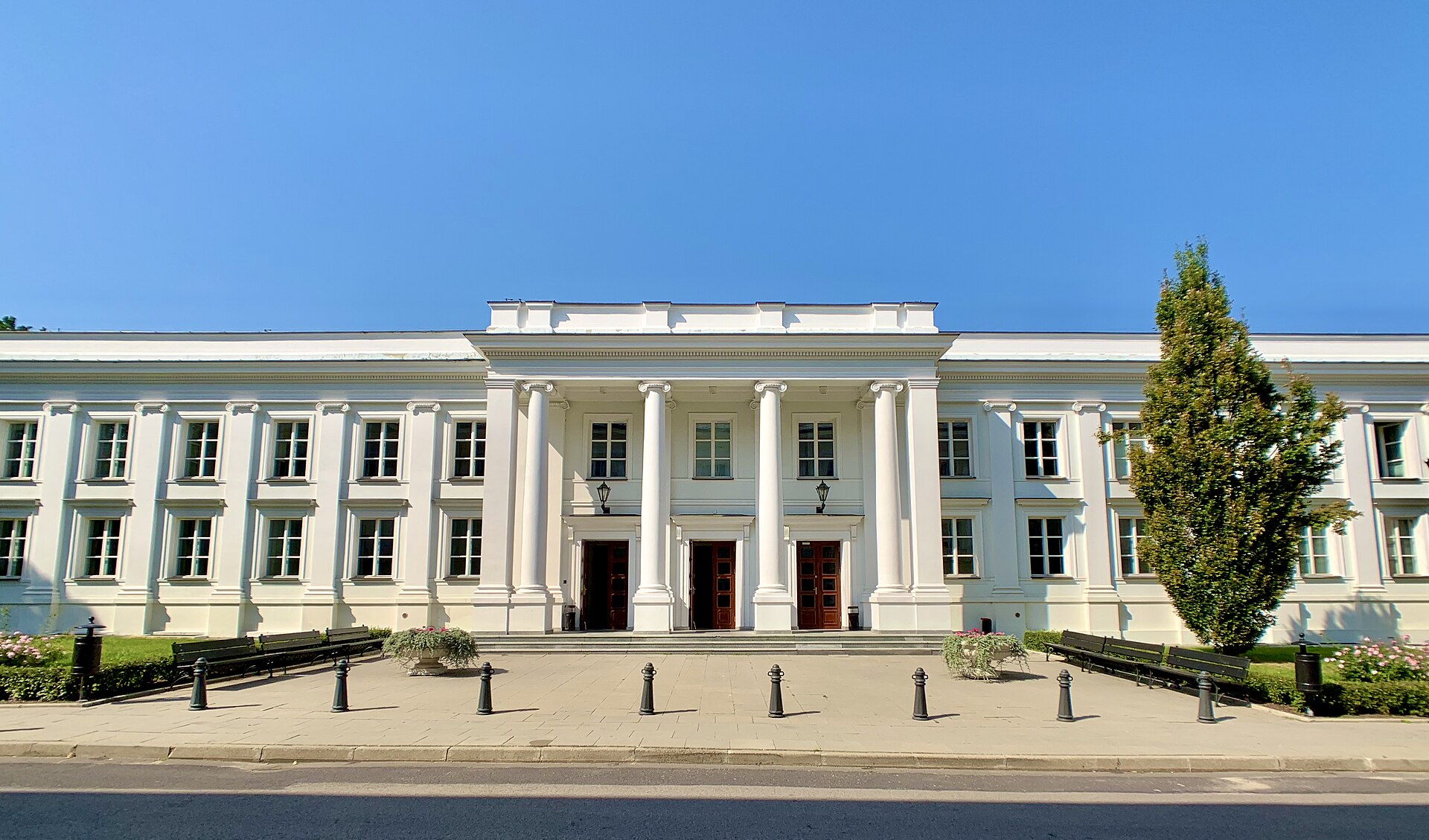
University of Warsaw — campus in pictures
Real, freely-licensed photographs of the campus (via Wikimedia Commons).
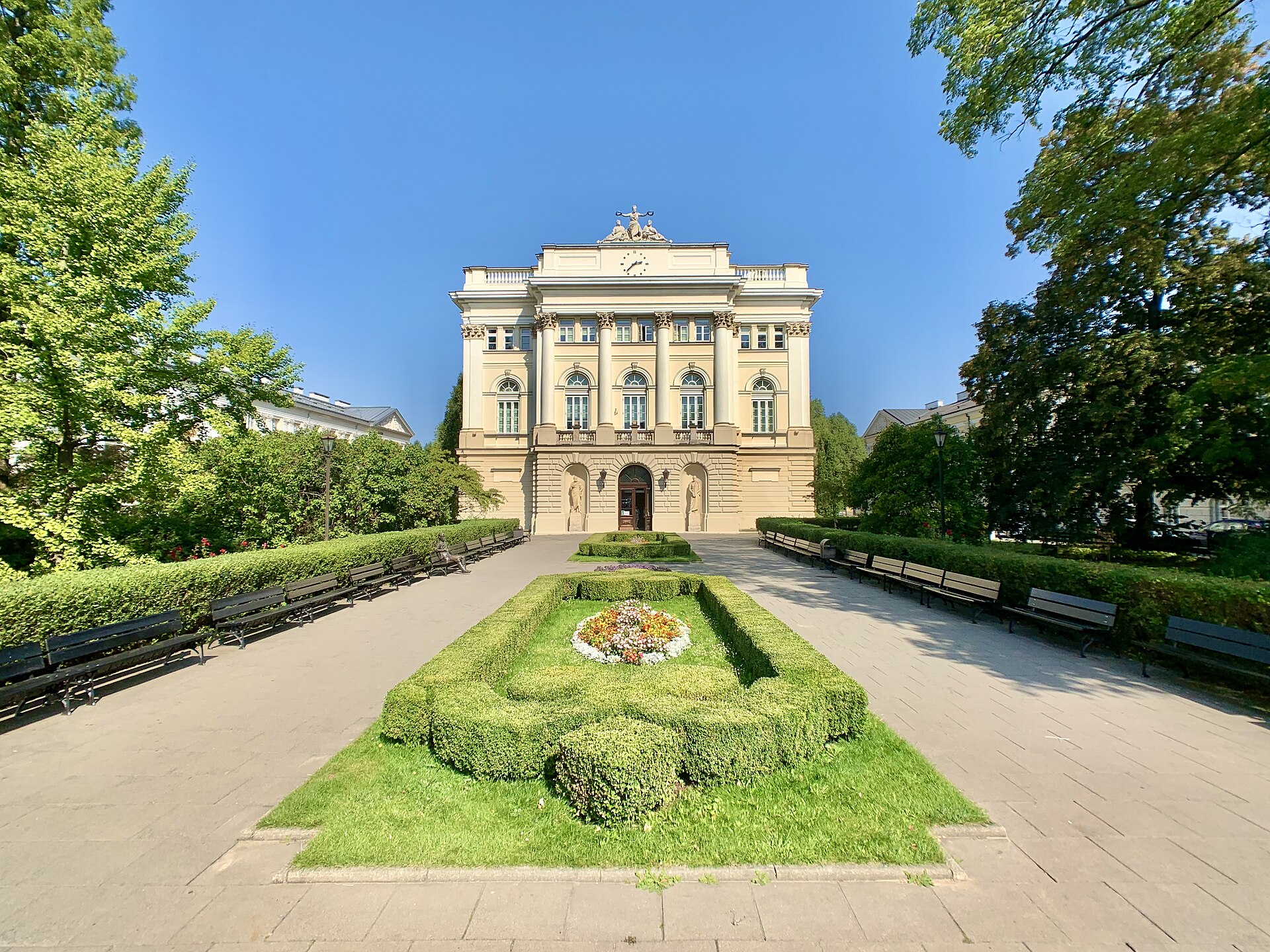
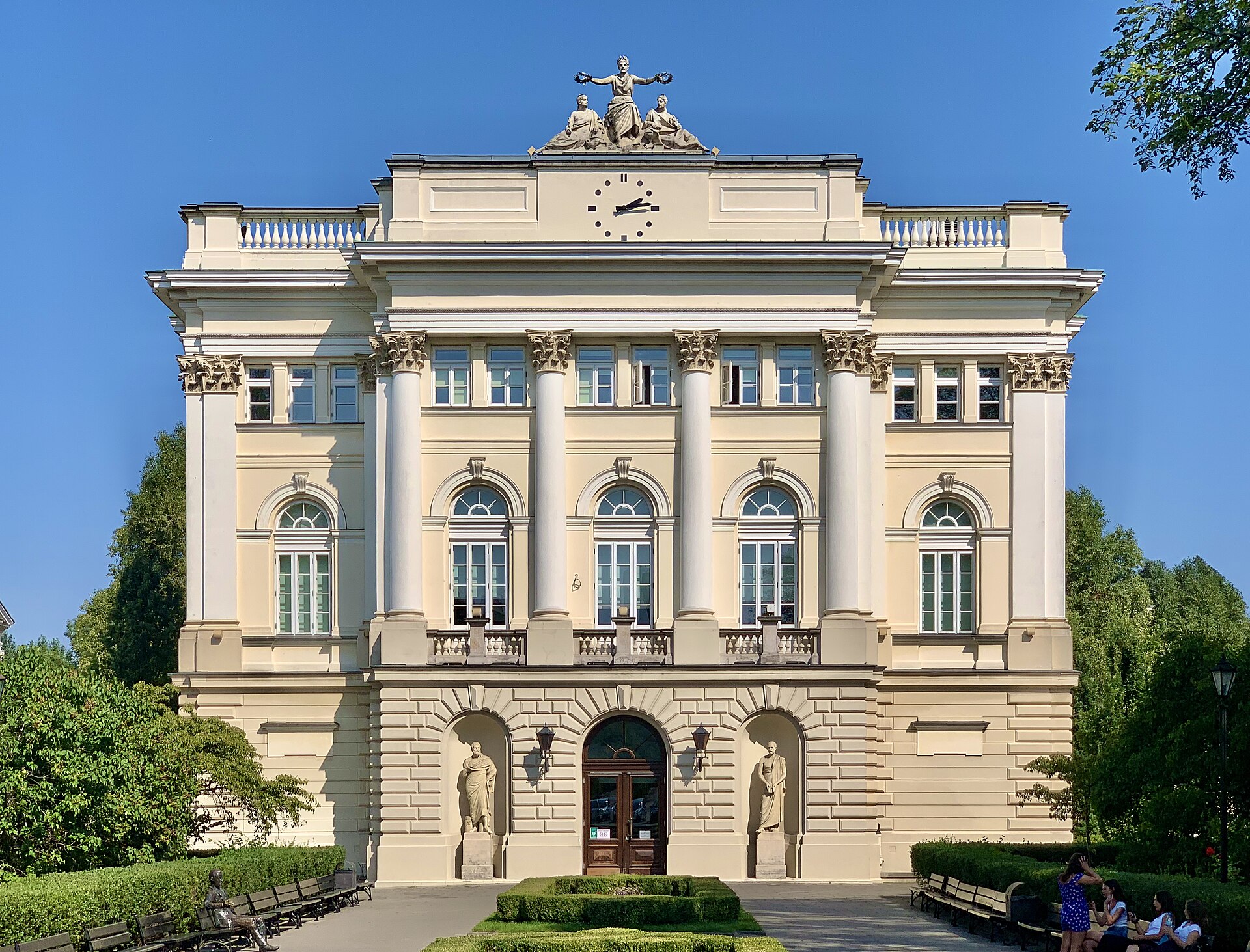
Why University of Warsaw — Excellence, Affordability & European Access
The University of Warsaw is not simply Poland's largest university — it is its intellectual flagship, a member of the elite 4EU+ Alliance alongside Paris, Milan, Heidelberg, Copenhagen, Geneva, and Prague. For international students, it offers a genuinely global academic environment at a fraction of what comparable European universities charge.
SELECTIVITY
Acceptance Rate & Admissions Profile
The University of Warsaw admits roughly half of all applicants across its full programme portfolio, but selectivity varies sharply by discipline. High-demand English-taught programmes — particularly Economics, Psychology, International Relations, and Law — are considerably more competitive. Admission is primarily merit-based on secondary-school grades and, for some programmes, an oral examination; there are no standardised test requirements.
For competitive English-taught programmes, a score of 32+ IB points is a reasonable benchmark. Some faculties — particularly Psychology and Economics — recruit well above this floor. Always check the specific programme's admission rules on the IRK portal.
AT A GLANCE
University of Warsaw — Quick Facts
APPLICATION COMPONENTS
What Your Application Consists Of
University of Warsaw uses its own online recruitment portal (IRK — Internet Recruitment of Candidates) for all applications. The process is direct — no intermediary like UCAS or Common App. Here is what you will typically need.
ADMISSIONS PHILOSOPHY
The Profile UW Admits
Unlike holistic US-style admissions, the University of Warsaw's process is primarily academic merit-based. The key differentiators are your secondary school results and, for programmes with competitive enrolment, your performance in any required oral examination.
DEADLINES & CALENDAR
Application Deadlines & Key Dates
University of Warsaw recruits on an annual cycle for October entry. The IRK portal opens for registration in the spring, with applications closing in early summer. Results for the majority of programmes are typically announced in July. Always verify exact dates on the IRK portal, as they differ by programme and admission round.
Dates above are indicative based on the typical UW recruitment calendar. Always confirm the current cycle's exact deadlines on the official IRK portal.
| Phase | Period | Notes |
|---|---|---|
| IRK Portal Opens | Spring (approx. April–May) | Registration opens; candidates select programmes and begin uploading documents |
| Application Deadline | Early summer (approx. June–July) | Varies by programme; check IRK for your specific course deadline |
| Oral Exams (if required) | June–July | Online arrangements available for international candidates |
| Results Announced | ~11 July (most programmes) | Results published in individual IRK accounts; some programmes may differ |
| Enrolment & Document Submission | July–September | Admitted students submit original documents and complete enrolment formalities |
| Academic Year Begins | October | Autumn semester start; Pre-Welcome Days held for international students |
CAMPUS & CITY LIFE
Student Life in Warsaw
The University of Warsaw's historic main campus runs along Krakowskie Przedmieście, Warsaw's Royal Route — one of the most beautiful and culturally rich streets in Central Europe. The city itself is a revelation: rebuilt from wartime devastation into one of Europe's most energetic capitals, Warsaw combines a flourishing arts and food scene with serious economic ambition.
CAREER OUTCOMES
Graduate Employment & Career Prospects
University of Warsaw graduates enter the workforce with a nationally recognised degree and the backing of Poland's most extensive alumni network. Warsaw's position as Central Europe's business capital means strong on-campus recruiting from both Polish and multinational employers.
Stats
Cards
FREQUENTLY ASKED QUESTIONS
University of Warsaw — FAQs for International Students
Do I need to speak Polish to study at University of Warsaw?+
No — if you enrol in one of UW's 40+ fully English-taught programmes, you do not need Polish to complete your degree. That said, learning basic Polish will significantly enrich your daily life in Warsaw. The university offers Polish language courses for international students.
Is my IB Diploma accepted?+
Yes. The IB Diploma is recognised by the University of Warsaw. A benchmark of 32 or more total points is a general indicator of competitiveness, though requirements vary by programme. Your subject choices and HL grades will also be assessed.
How competitive is it to get into English-taught programmes?+
Overall acceptance is around 50%, but the most popular English-medium programmes — Economics, Psychology, International Relations — are significantly more competitive. Strong grades (IB 34+ or A-Level equivalent) and meeting all language requirements are important for these.
Is there an oral examination I need to take?+
Some programmes require an oral examination as part of the selection process. For international applicants, online oral exams can usually be arranged. Check the specific admission rules for your chosen programme on the IRK portal.
How do I apply — is there a central system like UCAS?+
University of Warsaw uses its own IRK (Internet Recruitment of Candidates) portal. You apply directly to UW — there is no intermediary system. You can apply to multiple programmes through the same IRK account.
Can I get financial aid or a scholarship as an international student?+
Financial aid is limited for non-EU international students, but some scholarships are available. The Polish government's Ignacy Łukasiewicz Scholarship Programme and the Polish National Agency for Academic Exchange (NAWA) offer opportunities for international students. EU citizens may have access to additional support. Aid covers approximately 10% of costs on average.
What is the cost of living in Warsaw compared to other European cities?+
Warsaw is one of the more affordable major European capitals. Annual living costs (accommodation, food, transport, personal expenses) are estimated at around $8,000 USD — significantly lower than cities like Paris, Amsterdam, or Stockholm, but with a comparable quality of life and city experience.
Does UW offer summer or pre-sessional programmes for international students?+
Yes — through its 4EU+ Alliance membership, UW participates in joint summer schools and intensive programmes with partner universities. The Welcome Point also runs Pre-Welcome Days each autumn to help international students settle in before the semester starts.
ACADEMIC EXPECTATIONS
Academic Preparation for University of Warsaw
University of Warsaw is a serious research university, and its English-taught programmes attract academically strong international cohorts. The admissions process is grade-led — your secondary school results are your primary calling card. This section covers what you need academically, how your qualifications are assessed, and how to build the strongest possible profile from Years 9 to 12.
Unlike US universities, UW does not use SAT or ACT scores in its admissions decisions. Standardised tests like the IB Diploma, A-Levels, and other internationally recognised leaving certificates are the primary academic credentials evaluated. The test policy is 'test-blind' for US-style standardised tests — your time is better spent on your IB or A-Level grades.
ACADEMIC PROFILE
Admissions Academic Profile
UW assesses academic credentials based on secondary school qualifications. For IB Diploma students, a minimum of 32 points provides a baseline, but competitive programmes attract higher scores. For students with other international qualifications, UW converts grades using recognised equivalency frameworks.
TEST POLICY
Standardised Tests at UW — Test-Blind Admissions
The University of Warsaw does not use US-style standardised tests (SAT, ACT) in any part of its admissions decisions. The process is entirely grade- and qualification-based. If you are spending time preparing SAT or ACT for a UW application, redirect that energy to your IB, A-Level, or national leaving certificate performance — that is what matters here.
This test-blind approach is standard across Polish and most continental European universities. The focus is on the academic performance your secondary school has assessed over multiple years — a more holistic and sustained measure than a single test sitting.
SAT / ACT
SAT & ACT — Not Required at UW
University of Warsaw is fully test-blind with respect to SAT and ACT. No score submission is required, accepted, or used in admissions for undergraduate or graduate programmes. If you are applying to UW alongside US universities, you may continue SAT/ACT preparation for those applications — but it will not strengthen or weaken your UW application.
Should I submit my SAT or ACT score to UW?+
No. UW does not accept or consider SAT or ACT scores. They play no role in admissions decisions for any programme.
What standardised credentials do matter for UW?+
Your secondary school leaving certificate — IB Diploma, British A-Levels, Polish Matura, or your country's equivalent — is what UW uses to assess your academic preparation. For English-taught programmes, an English language proficiency test (IELTS/TOEFL/Duolingo) is also required.
IB DIPLOMA & A-LEVELS
How IB, A-Level & International Qualifications Are Assessed
University of Warsaw has well-established processes for evaluating international secondary school qualifications. The IB Diploma is widely recognised and well understood by UW admissions teams, making it an excellent credential for international applicants.
SUBJECT PREPARATION
Subject Rigour Expected by Programme
UW expects you to have studied subjects that prepare you directly for your chosen field. Below are the subject emphases most relevant to UW's most popular English-taught programmes.
ENGLISH REQUIREMENTS
English Language Requirements for UW
All candidates for English-taught programmes who are non-native English speakers must demonstrate English proficiency. The following are the minimum thresholds required; competitive programmes may expect higher.
English requirements apply to English-taught programmes. If you are applying to a Polish-medium programme, Polish language proficiency will be required instead. UW also offers Polish language courses for international students.
| Test | Minimum | Notes |
|---|---|---|
| IELTS Academic | 6.0 | Overall band; no individual band below 5.5 (verify with specific programme) |
| TOEFL iBT | 80 | Internet-based total score |
| Duolingo English Test | 105 | Overall score |
| Exemption — Native Speakers | N/A | Citizens of native English-speaking countries (UK, US, Australia, Canada, etc.) are typically exempt |
| Exemption — Previous English-medium Study | N/A | Students who completed secondary or higher education entirely in English may be exempt — confirm with admissions office |
YEAR-BY-YEAR ROADMAP
Building Your Academic Profile — Year 9 to 12
For a UW-competitive application, the focus is singular: academic excellence in your secondary school programme. Here is how to build toward a strong application year by year.
COMMON PITFALLS
Academic Mistakes to Avoid
- Applying to a competitive English-taught programme without meeting the English language minimum — this is an automatic disqualification.
- Overlooking subject-specific requirements: some programmes require specific subjects in your leaving certificate. Check the IRK portal carefully for each programme's admission rules.
- Waiting too long to gather and translate official documents — certified translations take time and must be submitted in the correct format.
- Assuming the overall acceptance rate (around 50%) applies equally to all programmes — top English-taught programmes can be significantly more selective.
- Not preparing for an oral examination where required — this is a real selection component for several programmes and deserves genuine preparation.
- Applying only to one programme — the IRK portal allows multiple applications; a strategic spread across UW's programmes is advisable for international students.
- Ignoring Polish language basics — while your programme is in English, day-to-day life in Warsaw will go more smoothly with even elementary Polish.
COST & FINANCIAL AID
Honest Costs for International Students at UW
University of Warsaw is one of the most affordable routes into a top-300 QS research university in the European Union. Annual tuition for English-taught programmes is approximately $3,300 USD — a fraction of what equivalent degrees cost in the UK, Netherlands, or Scandinavia. Combined with Warsaw's comparatively low cost of living, UW represents exceptional value for international students seeking a rigorous European education.
That said, international students (non-EU) generally pay higher fees than EU citizens, and financial aid for non-EU students is limited. Going in with clear financial planning is essential. The numbers below are drawn from official data — plan around them, not around assumptions.
COST BREAKDOWN
Annual Cost Estimates — International Students
The following are annual cost estimates for non-EU international students enrolled in English-taught programmes. All figures are in USD equivalents.
EU/EEA citizens may be eligible for lower or waived tuition in certain programme categories. All figures are approximate USD equivalents — actual costs are denominated in Polish zloty (PLN) and will vary with exchange rates.
| Item | Annual Cost | Notes |
|---|---|---|
| Tuition (English-taught programmes) | ~$3,300 USD | Per academic year; exact fee varies by programme |
| Cost of Living (Warsaw) | ~$8,000 USD | Accommodation, food, transport, personal expenses |
| Total Cost of Attendance | ~$11,300 USD | Tuition + living costs combined |
| Application Fee | ~$20 USD | One-time, non-refundable; paid via IRK portal |
FINANCIAL AID
Financial Aid Policy for International Students
Financial aid availability for non-EU international students at the University of Warsaw is limited. The university's internal aid programme covers approximately 10% of costs on average. The primary scholarship opportunities for international students come through external Polish and EU government programmes rather than from the university directly.
EU citizens studying at UW have access to a broader range of support mechanisms, including EU student mobility programmes. Non-EU students should plan primarily from personal or family resources, supplemented by any external scholarships they can secure before arrival. The cost structure at UW — with tuition around $3,300 USD and living costs lower than Western European cities — means the total financial burden is significantly below comparable European institutions, reducing (though not eliminating) the aid imperative.
SCHOLARSHIPS
Scholarship Opportunities for International Students
The following scholarship programmes are available to international students applying to or enrolled at University of Warsaw. Given the modest tuition levels, even partial scholarships can effectively cover most or all of your education cost.
NET PRICE REALITY
What UW Actually Costs — An Honest View
At approximately $11,300 USD total annual cost of attendance (tuition plus living), University of Warsaw is one of the most affordable top-300 QS institutions in Europe. Compare that to the Netherlands ($15,000–$22,000), UK ($30,000+), or Australia ($35,000+) for a comparable calibre of research university.
Warsaw's cost of living is the engine of this affordability. Student dormitory accommodation is significantly cheaper than equivalent European capitals. Public transport is excellent and inexpensive. Food, social activities, and daily expenses are all below the Western European average. For a three-year bachelor's degree, a total spend of $33,000–$40,000 USD (tuition + living, all three years) is a realistic planning figure for non-EU students without scholarships — less than one year at many UK or Australian universities.
UW does not operate a 'need-blind' or 'meets full need' financial aid policy for international students in the way some US institutions do. Plan your finances conservatively and explore NAWA and Polish government scholarship opportunities proactively.
STEP-BY-STEP
How to Fund Your Degree at UW
FAQs — COST & AID
Cost & Financial Aid FAQs
How much is tuition at UW for international students?+
Approximately $3,300 USD per year for English-taught programmes. Exact fees vary by programme and are denominated in Polish zloty (PLN), so actual USD cost will fluctuate with exchange rates.
Is UW affordable compared to other European universities?+
Yes — UW is among the most affordable top-300 global research universities. Total annual cost of attendance (tuition + living) is approximately $11,300 USD, compared to $25,000–$50,000 at comparable UK, Dutch, or Scandinavian universities.
Does UW offer need-based financial aid to international students?+
Direct financial aid from UW for non-EU international students is limited — it covers approximately 10% of costs on average. The main funding pathways are through external programmes such as NAWA scholarships or Polish government bilateral agreements.
Are there merit scholarships for outstanding international applicants?+
Some faculty-level grants and research positions exist for high-achieving students, but these are not centralised or systematically advertised. NAWA scholarships have a merit component and are the most accessible external merit-based route.
Do EU students pay the same fees as non-EU students?+
EU/EEA citizens often have access to different fee arrangements and may be eligible for additional student support mechanisms under EU regulations. If you are an EU citizen, confirm your fee status directly with UW admissions.
Can I work while studying in Warsaw to offset costs?+
Non-EU students with a valid student residence permit in Poland are generally permitted to work. Warsaw has a healthy job market for English-speaking students, particularly in international companies and the tech sector. Check your specific visa conditions and ensure work does not conflict with your study commitments.
APPLICATION & STATEMENT
How to Apply to University of Warsaw — No Essays, But Your Grades Tell Your Story
University of Warsaw does not use US-style application essays or supplemental prompts. Admissions are primarily merit-based on your secondary school results. That said, some programmes require an oral examination — and for a small number of disciplines, a short motivation statement may be requested. This tab tells you what the application process actually involves, and how to present yourself as strongly as possible.
If you have been researching US universities alongside UW, you may be expecting a personal essay and supplemental questions. That is not how Polish university admissions works. At UW, your grades speak loudest. However, the oral examination — where required — is your opportunity to demonstrate intellectual depth and genuine subject passion. Prepare for that, not for a 650-word Common App essay.
WHAT TO SUBMIT
Application Components — What UW Actually Asks For
University of Warsaw uses the IRK (Internet Recruitment of Candidates) portal for all applications. The process is direct and document-based. Here is an honest summary of what you will and will not need to write.
MOTIVATION LETTER GUIDANCE
Writing a Motivation Letter for UW (Where Required)
If your programme requests a motivation letter, think of it as a focused professional statement — not a personal narrative. UW admissions staff are reading hundreds of applications; concision, clarity, and subject-specific reasoning are what distinguish good motivation letters.
ORAL EXAMINATION
Preparing for the UW Oral Examination
The oral examination is the closest thing UW has to a 'holistic' assessment — it is your opportunity to demonstrate subject knowledge, intellectual curiosity, and ability to think on your feet. For international applicants, online oral exams are typically available.
Preparation is straightforward: read deeply in your chosen field. For Economics and Finance, be comfortable discussing basic micro and macroeconomic concepts, current financial markets, and Polish and European economic context. For International Relations, have informed views on contemporary geopolitics and understand how international institutions operate. For Psychology, be familiar with the scientific method in behavioural research and be able to discuss why psychology appeals to you with intellectual depth rather than generic interest.
The oral examination is conducted in English for English-taught programme candidates. It is not a formal interview in the HR sense — it is an academic conversation. Engage with it as such: be curious, be specific, and show that you have actually engaged with the subject beyond your school curriculum.
PROGRAMME-SPECIFIC STRATEGY
Strategy by Programme Type
Different UW programmes have different selection emphases. Here is how to direct your preparation.
IF WRITING A STATEMENT
How to Approach Your Motivation Letter Topic
If a motivation letter is required, the question of 'what to write about' is simpler than in US admissions: focus entirely on your academic and intellectual journey in the relevant field, not on personal life narrative.
- Lead with academic substance: what aspects of the discipline have you engaged with deeply through coursework, independent reading, or academic projects?
- Be specific to University of Warsaw: mention the programme's structure, faculty research areas, or UW's 4EU+ Alliance connections — demonstrate you have done your research.
- State your goals clearly: what do you plan to do with this degree? Be realistic and specific (career in international finance, academic research, law practice in an EU context, etc.).
- Keep it concise: 1–2 pages maximum. European universities value precision; a concise, well-argued letter outperforms a long narrative.
- Do not restate your CV: your grades and qualifications speak for themselves in your documents. Use the letter to add context and intellectual depth, not to list achievements already visible elsewhere.
- Have a native or near-native English speaker proofread: clarity and correctness of expression matter, particularly for language and humanities programmes.
COMMON MISTAKES
Application Mistakes to Avoid
- Expecting a personal essay and not preparing for an oral examination — this is the real 'interview' at UW for programmes that require it.
- Writing a generic motivation letter that could apply to any university — if you mention UW by name, say something specific and accurate about its programme or research.
- Treating the oral exam as a formality — for competitive programmes like Psychology and Economics, it is a genuine selection differentiator.
- Not confirming whether your specific programme requires a motivation letter or oral exam via the IRK portal — requirements vary by department and can change each cycle.
- Submitting documents without certified translations — all official documents in languages other than Polish or English must be professionally translated and certified.
- Missing the IRK application window — the portal opens in spring and closes in early summer. Missing the deadline means waiting a full year.
- Writing an overly personal or emotional motivation letter — UW admissions teams respond to academic reasoning, not personal storytelling.
FAQs — APPLICATION & STATEMENT
Application FAQs
Does University of Warsaw require a personal essay like US universities?+
No. UW does not use US-style application essays. Admissions are primarily based on your secondary school grades. Some programmes require a motivation letter and/or oral examination — check the specific requirements for your programme on the IRK portal.
What is the IRK portal and how do I use it?+
IRK (Internet Recruitment of Candidates) is UW's online application system, accessible at irk.oferta.uw.edu.pl. You create an account, select your programme(s), upload required documents, pay the application fee, and track your results — all in one place.
How should I prepare for an oral examination?+
Study the foundational concepts and current debates in your chosen field. Review any specific topic areas listed in the programme's admission requirements on the IRK portal. Practice explaining ideas clearly in English. Oral exams are academic conversations — show curiosity and depth, not just memorised facts.
Can I take my oral examination online?+
Yes. UW can typically arrange online oral examinations for international candidates who cannot travel to Warsaw. Contact the relevant faculty admissions office or the central admissions team at admission@uw.edu.pl to arrange this in advance.
Is a motivation letter required for all UW programmes?+
No — most bachelor's programmes at UW do not require a motivation letter. Some master's programmes and certain competitive undergraduate programmes do. Check the specific programme requirements on the IRK portal. Do not assume you need one; equally, do not assume you do not.
What language should my motivation letter be in?+
For English-taught programmes, write your motivation letter in English. Ensure it is carefully proofread — language quality is an indirect signal of your communication skills, which matter for any UW programme taught in English.
How long should a motivation letter be?+
Typically 1–2 pages (approximately 400–800 words). Be concise. European academic culture values precision and clarity over length. A focused, well-reasoned 500-word letter will generally outperform an unfocused 1,000-word one.
Courses — schools, degrees & intake
69 degrees across 25 groupings.
Faculty of Economic Sciences · 4 degrees
Economics
Finance and Accounting
Econometrics and Data Science
Finance, International Investment and Accounting
Faculty of Management · 6 degrees
Business and Management
Business Finance and Accounting
Management
Digital Business
Global Management
International Business Program
Faculty of Political Science and International Studies · 4 degrees
Political Science
International Relations
European Politics and Economics
Social and Public Policy
Faculty of Mathematics, Informatics and Mechanics · 3 degrees
Mathematics
Computer Science (Informatics)
Bioinformatics and Systems Biology
Faculty of Physics · 2 degrees
Physics
Astronomy
Faculty of Chemistry · 1 degrees
Chemistry
Faculty of Biology · 3 degrees
Biology
Biotechnology
Environmental Protection
Faculty of Geography and Regional Studies · 2 degrees
Geography
Spatial Management
Faculty of Geology · 2 degrees
Geology
Applied Geology
Faculty of Law and Administration · 2 degrees
Law
Administration
Faculty of Medicine · 1 degrees
Medicine
Faculty of Psychology · 1 degrees
Psychology (Unified Master's)
Faculty of Sociology · 2 degrees
Sociology
Social Policy
Faculty of Applied Social Sciences and Resocialisation · 2 degrees
Applied Sociology and Social Anthropology
Resocialisation and Penology
Faculty of History · 2 degrees
History
Archival Studies and Records Management
Faculty of Archaeology · 1 degrees
Archaeology
Faculty of Philosophy · 2 degrees
Philosophy
Cognitive Science
Faculty of Polish Studies · 2 degrees
Polish Studies
Comparative Literature
Faculty of Applied Linguistics · 1 degrees
Applied Linguistics
Faculty of Modern Languages · 9 degrees
English Studies
German Studies
French Studies
Spanish Studies
Italian Studies
Iberian Studies
Hungarian Studies
Scandinavian Studies
Intercultural Communication
Faculty of Journalism, Information and Book Studies · 3 degrees
Journalism
Information Science and Library Studies
Book Studies and Publishing
Faculty of Education · 2 degrees
Pedagogy
Special Education
Faculty of Culture and Arts · 2 degrees
Cultural Studies
Arts Management
Faculty of Asian and African Cultures · 9 degrees
Arabic Studies
Chinese Studies
Japanese Studies
Korean Studies
Hebrew Studies
Indian Studies (Indology)
Iranian Studies
Turkish Studies
African Studies
Faculty of Artes Liberales · 1 degrees
Liberal Arts (Artes Liberales)
Want your real chances at University of Warsaw?
Create a free TYCHR account for your personalised admit-chance, a shortlist you can track, exact entry requirements, and essay + counselling help.