University of Vienna
Vienna, Austria · Urban
AUSTRIA'S OLDEST UNIVERSITY
University of Vienna Admissions Guide for International Students
Founded in 1365, the University of Vienna is the oldest university in the German-speaking world and one of Europe's great research institutions. With 89,000 students, 30% of whom come from abroad, it is a truly international academic community at the heart of one of the world's most livable cities. For ambitious international students, Vienna offers a rare combination — world-class research depth, remarkably low tuition, and a cultural capital that has shaped philosophy, music, and science for centuries.
Whether you are drawn by the university's legacy in psychology (Sigmund Freud taught here), economics (Ludwig von Mises and Joseph Schumpeter), or quantum physics (Erwin Schrödinger), studying in Vienna places you at the intersection of a 660-year intellectual tradition and a forward-looking European research agenda.
Campus
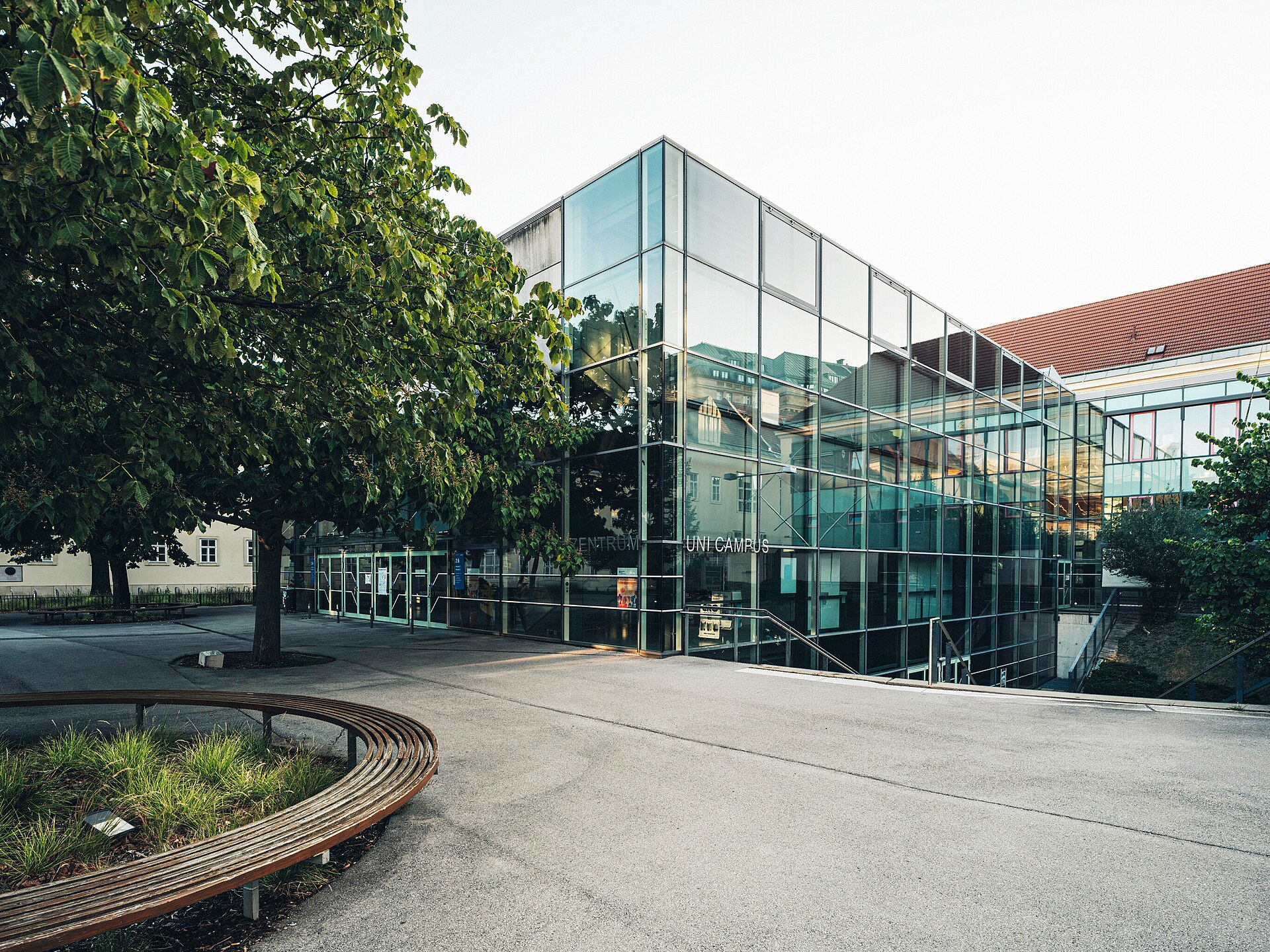
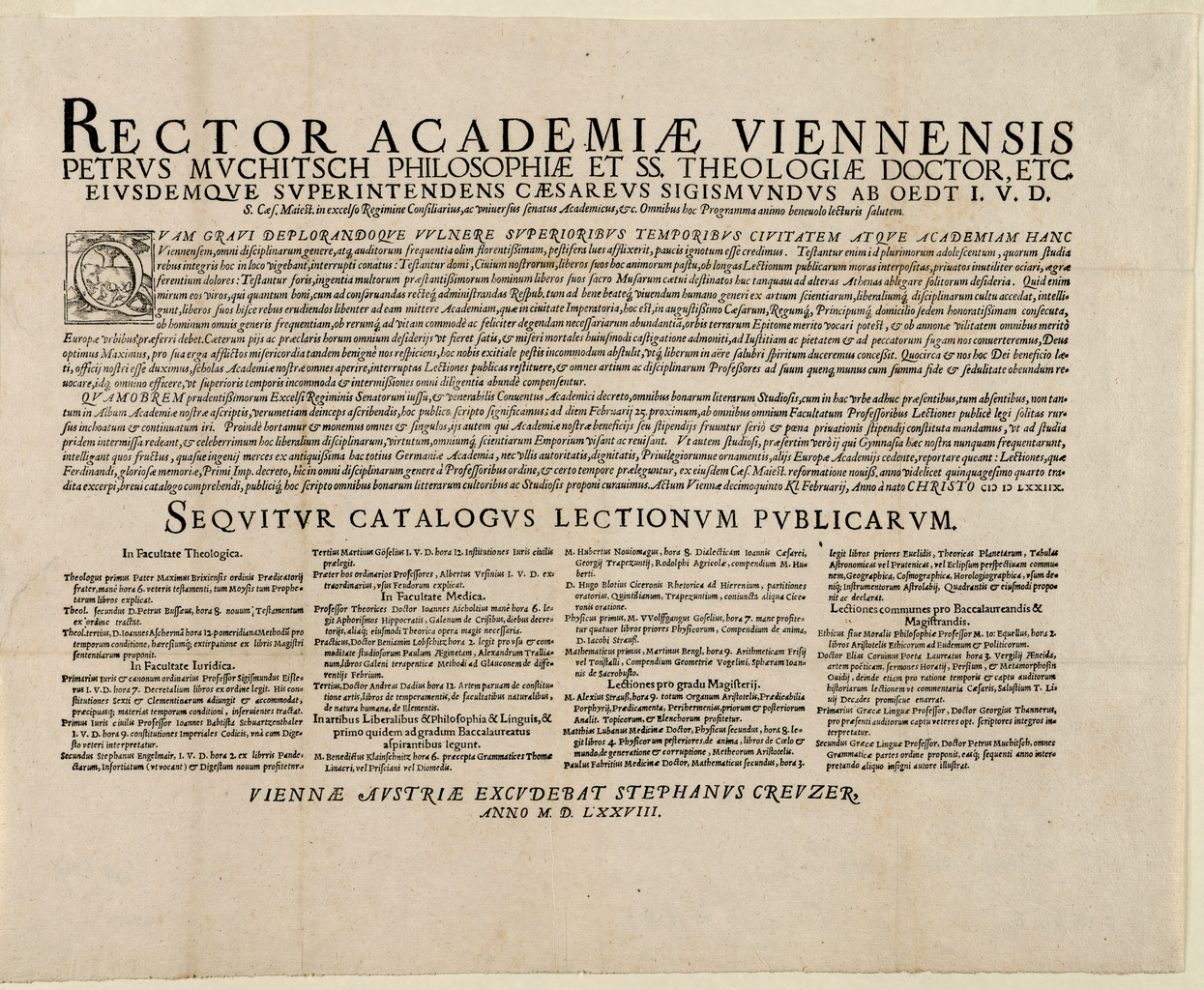
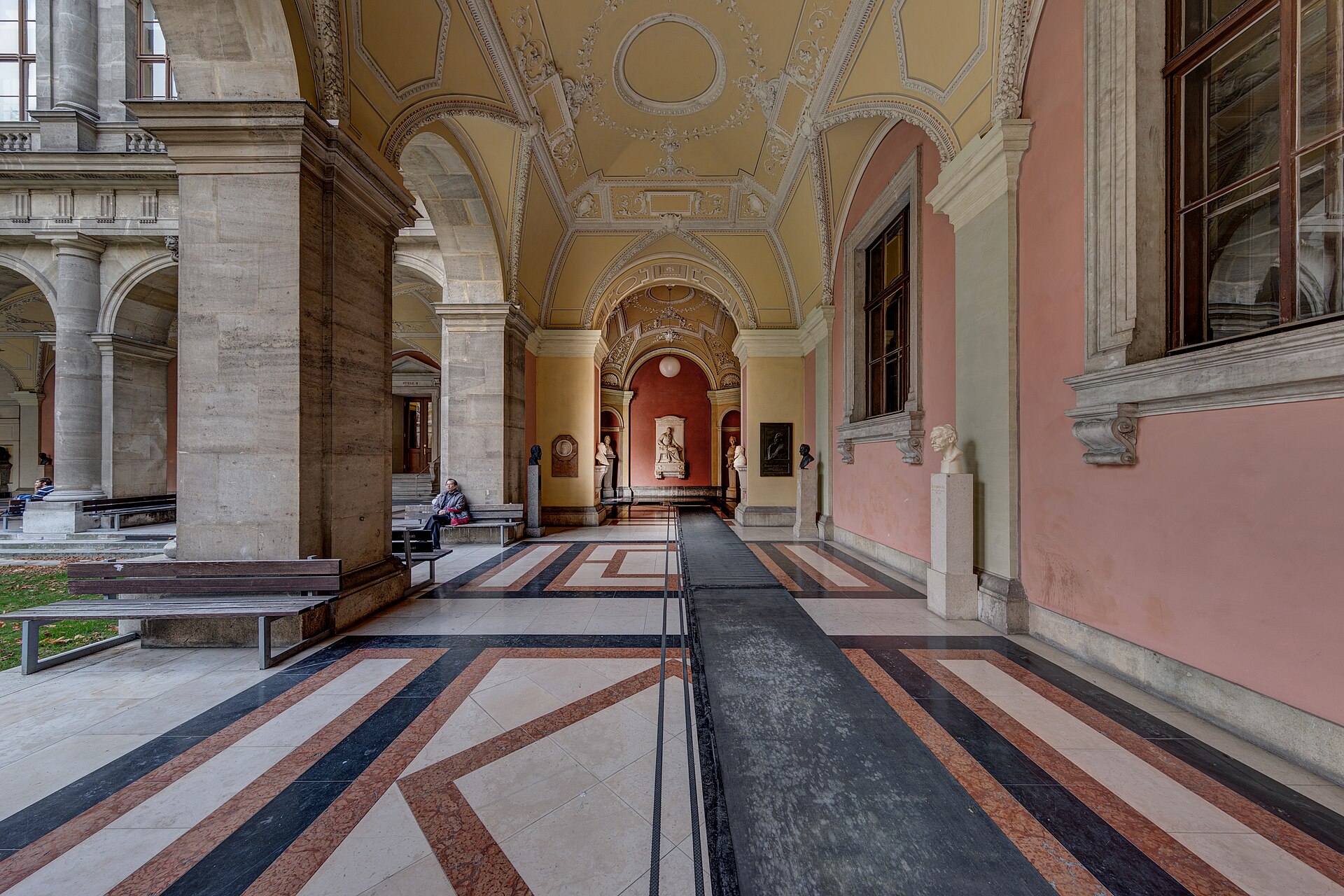
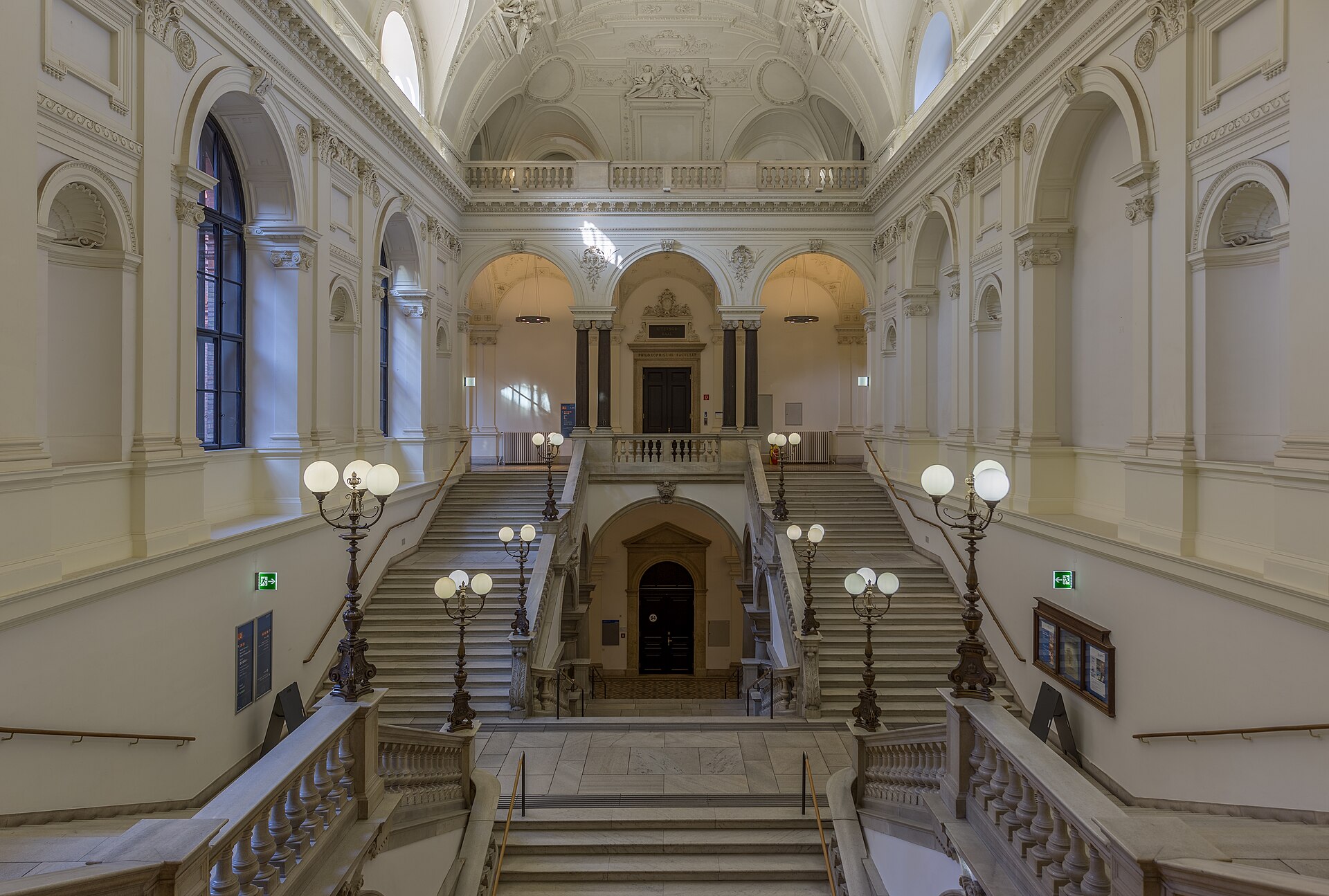
University of Vienna — campus in pictures
Real, freely-licensed photographs of the campus (via Wikimedia Commons).

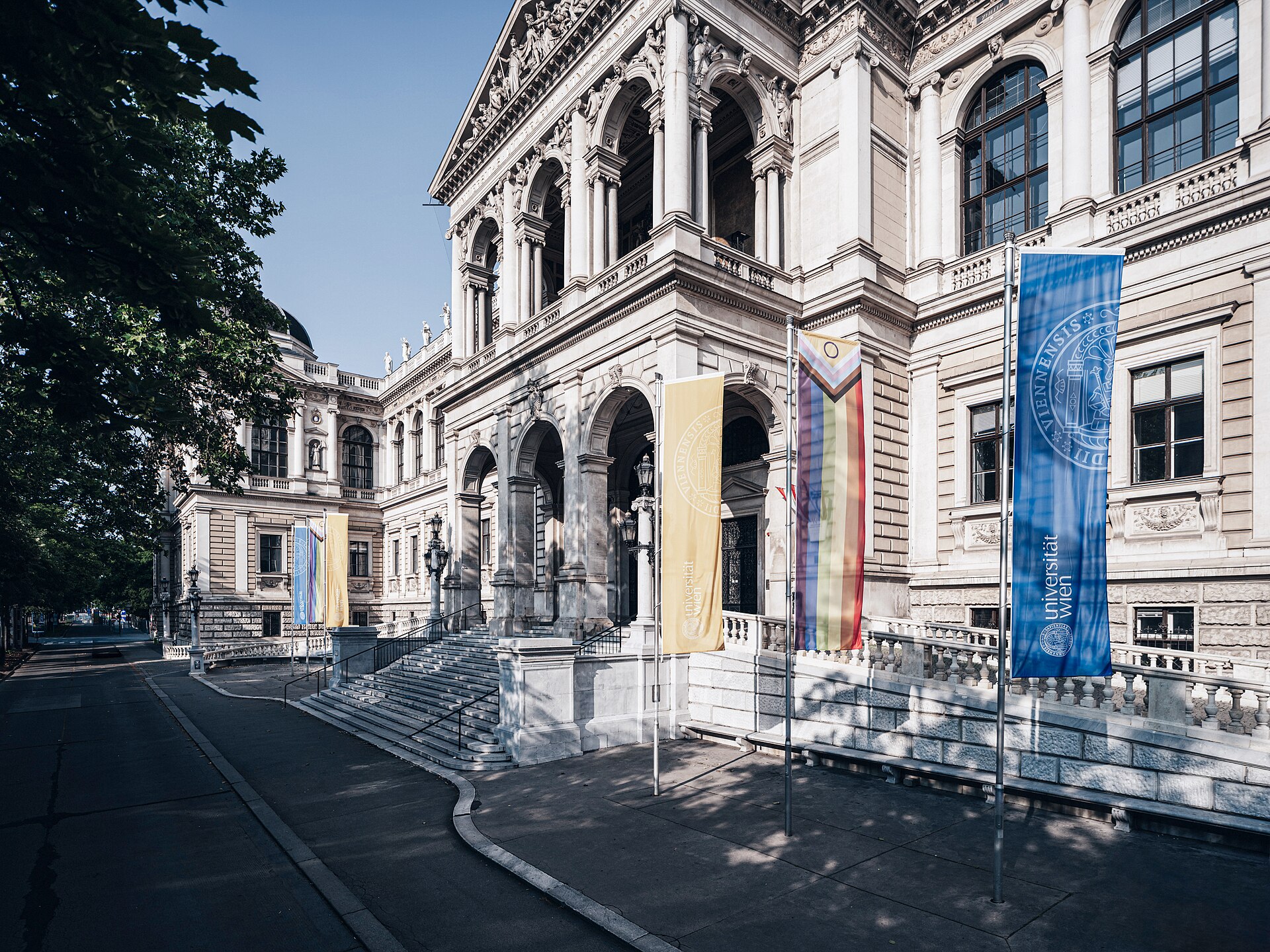
WHY VIENNA
Why Choose the University of Vienna
Europe's oldest German-language university combines extraordinary history with genuine research excellence, a cosmopolitan student body, and one of the world's lowest tuition costs for the calibre of institution on offer.
SELECTIVITY
Admissions at a Glance
The University of Vienna operates on an open-access model for most bachelor's programmes (where applicants hold a qualifying school-leaving certificate), but selectivity varies by programme type. Some degree programmes — including popular fields such as psychology, business, and sport science — require entrance exams or selection procedures that can be highly competitive. International students should research whether their chosen programme is access-restricted before applying.
For access-restricted programmes (psychology, business, sport science, and others requiring entrance exams), seats are limited and competition among applicants can be intense. Check the official programme page to confirm whether your chosen degree is open-access or restricted.
QUICK FACTS
University of Vienna At a Glance
APPLICATION COMPONENTS
What Your Application Consists Of
The University of Vienna uses a direct online application system (u:space). Unlike US or UK systems, there is no centralised portal such as Common App or UCAS. The components vary depending on whether your programme is open-access or access-restricted (entrance exam / selection procedure).
ADMISSIONS PROFILE
What the University of Vienna Looks For
Because the University of Vienna is primarily a European public university with open access at bachelor's level, admission for most programmes is qualification-based rather than holistic. The key question is: does your secondary qualification give you the right to study at university in your home country, and does it meet the programme's language and subject prerequisites?
APPLICATION DEADLINES
Application Windows 2026/27
The University of Vienna has distinct application windows for EU/EEA citizens and for third-country nationals (everyone else). Non-EU students have earlier deadlines to allow time for document verification and visa processing. All deadlines below are for the 2026/27 academic year — always verify on the official admissions page as dates update annually.
Third-country nationals must apply significantly earlier than EU students. If you need a student visa for Austria, factor in Austrian embassy processing times (typically 6–10 weeks) on top of the application window.
| Applicant Type | Semester | Window | Notes |
|---|---|---|---|
| Third-Country Nationals (non-EU/EEA) | Winter 2026/27 | 22 June – 3 August 2026 | Standard bachelor's and master's programmes |
| Third-Country Nationals (non-EU/EEA) | Summer 2027 | 16 November 2026 – 7 January 2027 | Standard bachelor's and master's programmes |
| All applicants | Winter 2026/27 | 2 March – 4 May 2026 | Entrance exam programmes (Psychology, Sport Science, etc.) |
| All applicants | Winter 2026/27 | 2 March – 7 April 2026 | Master's selection procedures |
| EU/EEA/Switzerland | Winter 2026/27 | 22 June – 5 September 2026 | Standard bachelor's and master's programmes |
STUDENT LIFE
Life in Vienna and On Campus
Vienna combines the grandeur of an imperial capital with the energy of a modern university city. The main university building on the Ringstraße — the magnificent neo-Gothic Hauptgebäude — sits at the symbolic heart of European intellectual life.
With 89,000 students, the University of Vienna's student body is one of the most diverse in Europe. Student organisations span politics, culture, entrepreneurship, and sport. The Vienna Philharmonic, the Kunsthistorisches Museum, the Opera House, and some of Europe's best coffee-house culture are all minutes from campus.
CAREER OUTCOMES
Graduate Careers & Outcomes
University of Vienna graduates enter a wide range of professions, benefiting from the university's strong standing in European academic and professional networks.
Vienna itself is an important hub for international organisations — the United Nations (UNIDO, IAEA, UNODC have their headquarters here), major European banks, consulting firms, and a growing tech and startup sector. Humanities, law, and social science graduates frequently pursue careers in public policy, EU institutions, journalism, and NGOs. STEM and life science graduates benefit from Austria's strong pharmaceutical, environmental, and technology sectors.
Austria is a member of the EU and the Schengen Zone. EU/EEA graduates may work freely across 30+ countries. Non-EU graduates should research the Austrian Red-White-Red Card scheme, which offers a points-based route to post-study work permits.
FAQs
Frequently Asked Questions
Do I need to speak German to study at the University of Vienna?+
For most bachelor's programmes, yes — German is the language of instruction. You will need at least a B2 level (DSH-1 or equivalent) to be admitted to a German-taught programme. However, a growing number of master's programmes are taught entirely in English. Always check the language of instruction for your specific programme on u:find (the course directory).
Is the University of Vienna free for international students?+
Not entirely free, but remarkably affordable. Non-EU (third-country) students pay a tuition supplement that amounts to approximately €1,500 per academic year (around USD 1,570 based on current rates), plus a student union and infrastructure contribution. This is dramatically lower than tuition at comparable universities in the UK, Australia, or North America.
Does the University of Vienna accept the IB Diploma?+
Yes. The IB Diploma is recognised as a qualifying university entrance certificate. A score of approximately 32 is typically sufficient for access, though programmes with entrance exams or selection procedures apply their own additional criteria. If your IB does not include the prerequisite subjects for your chosen programme, you may be required to sit a supplementary entrance exam.
How do I apply as a non-EU student?+
You apply online through u:space (the university's student portal). Submit your application during the designated window for third-country nationals (which closes earlier than the EU window). You must upload your school leaving certificate, proof of language proficiency, certified translations of all non-German/English documents, and proof of legalisation. Detailed requirements are on the official admissions page.
Are there scholarships specifically for international students?+
The Austrian government, through OeAD (Austria's Agency for Education and Internationalisation), offers several scholarship programmes for incoming international students, including the Ernst Mach Grant and government scholarships within bilateral exchange agreements. The university itself does not widely advertise blanket merit scholarships for undergraduates; most aid at bachelor's level is through national-government bilateral agreements. Verify current offerings on the OeAD and university websites.
What programmes does the university offer in English?+
A significant and growing number of master's programmes are English-taught, particularly in the natural sciences, computer science, and some social sciences and humanities. Bachelor's programmes are almost entirely taught in German. Use the u:find course directory on the official website to filter by language of instruction.
Do I need a visa to study in Vienna?+
EU/EEA and Swiss citizens do not need a visa. All other students require a student visa (Type D) and a residence permit. Apply at the Austrian embassy or consulate in your home country well before your studies begin — processing typically takes 6–10 weeks. You must show proof of admission, financial means, and valid health insurance.
Is the University of Vienna a good choice for postgraduate study in English?+
Increasingly yes. The university has expanded its English-medium master's offering and is a member of LERU (League of European Research Universities). For research-oriented master's and doctoral programmes, working closely with a supervisor is key — many professors are internationally mobile and communicate in English. Vienna is a particularly strong destination for philosophy, life sciences, quantum physics, law, and social sciences.
ACADEMICS
Academic Expectations for International Applicants
The University of Vienna is a research-intensive institution whose academic standards match those of any leading European university. For international students, meeting the admission requirements is only the beginning — succeeding academically means engaging seriously with rigorous course content, often in German, within a highly autonomous study culture.
Unlike many Anglophone universities, Vienna does not heavily structure independent study time. Students are expected to take initiative — attending lectures, forming study groups, visiting office hours, and organising their own revision. International students who thrive here are self-directed, intellectually curious, and resilient.
ACADEMIC PROFILE
Entry Benchmarks
Admission is primarily qualification-based. The key benchmarks below come from the university's published data.
SAT and ACT scores are not required or used in the Austrian admissions process. Your secondary school qualification and language certificates are the decisive documents.
STANDARDISED TESTS
Test Policy
The University of Vienna does not use SAT, ACT, or equivalent standardised tests as part of its admissions process. This is standard across Austrian and most European public universities. The relevant tests are language proficiency certificates — proving your competency in the language of instruction for your chosen programme.
For German-taught programmes: German language certificates such as DSH (Deutsche Sprachprüfung für den Hochschulzugang), TestDaF, ÖSD Zertifikat C1, or the Goethe-Zertifikat C1/C2 are accepted. For English-taught programmes: IELTS Academic or TOEFL iBT results are required (see thresholds in the English Requirements section below).
Some nationalities are exempt from language tests if their schooling was conducted in the language in question. Verify your specific situation on the official admissions site.
ENTRANCE EXAMS
Programme-Specific Entrance Exams
While there are no SAT/ACT requirements, some of the university's most popular programmes require dedicated entrance examinations (Aufnahmeverfahren or Eignungsverfahren). These are programme-specific and highly competitive.
IB & A-LEVEL
How IB, A-Levels & International Qualifications Are Assessed
The University of Vienna assesses international qualifications for equivalence with the Austrian Matura (secondary school leaving certificate). The IB Diploma and A-Levels are both accepted. The key question is whether your qualification grants university entrance rights in your home country, and whether it includes prerequisite subjects for your chosen programme.
If your qualification is not directly equivalent to the Austrian Matura, you may be admitted conditionally and required to pass Ergänzungsprüfungen (supplementary exams) — typically in German language or subject prerequisites — during your first semesters.
SUBJECT PREPARATION
Academic Preparation By Field
What you study in secondary school matters significantly for how smoothly you transition into your programme at Vienna.
LANGUAGE REQUIREMENTS
English & German Language Requirements
Language requirements at the University of Vienna depend entirely on the language of instruction for your programme. Verify the specific requirement for your degree on the official admissions portal.
Native speakers of English or German, or students who completed their secondary education entirely in the respective language, may be exempt. Provide official documentation and check with the StudiesServiceCenter.
| Test | Minimum | Notes |
|---|---|---|
| IELTS Academic | 6.5 overall | For English-taught programmes |
| TOEFL iBT | 88 | For English-taught programmes |
| DSH | DSH-1 or DSH-2 | For German-taught programmes (most bachelor's) |
| TestDaF | TDN 4 (in all sections) | Widely accepted alternative to DSH |
| ÖSD Zertifikat | C1 level | Accepted for German-taught programmes |
| Goethe-Zertifikat | C1 level | Accepted for German-taught programmes |
PROFILE BUILDING
Building Your Profile for Vienna Year by Year
The University of Vienna rewards students who start planning early — especially around German language study. Here is a sensible four-year roadmap.
COMMON PITFALLS
Academic Mistakes to Avoid
- Applying without the required German language certificate for a German-taught programme — your application will be rejected regardless of your other qualifications.
- Missing the earlier application deadline for third-country nationals and applying in the EU window — non-EU applications submitted after the third-country deadline are not processed.
- Underestimating the entrance exam for Psychology, Sport Science, or other restricted programmes — these are genuinely competitive and require dedicated preparation.
- Assuming your national qualification is automatically equivalent to the Austrian Matura — get a preliminary assessment from the admissions office before committing to Vienna.
- Not factoring in Austrian visa processing time — embassy queues and documentation requirements can add 2–3 months to your timeline.
- Choosing a German-taught programme without sufficient German skills, expecting to 'pick it up' — the academic German used in lectures and written assessments is demanding even for competent speakers.
- Neglecting to check whether specific master's programmes have already closed their selection procedure window by the time you apply.
COST & AID
Understanding the Cost of Studying in Vienna
The University of Vienna is one of the most affordable Top 130 universities in the world. As an Austrian public institution, it charges minimal tuition — even for non-EU students. The major cost of a Vienna education is living expenses in one of Europe's finest cities, not tuition.
For students from high-cost countries like the United States, United Kingdom, or Australia, the total cost of a Vienna education will appear startlingly low. For students from emerging economies, Vienna's cost of living — while manageable by Austrian standards — requires thoughtful budgeting. Scholarships and EU bilateral agreements can further reduce the net cost for eligible students.
COST BREAKDOWN
Annual Cost Estimates (USD)
All figures below are annual estimates. Tuition and fees figures are from university data; living cost estimates reflect Vienna averages. Exchange rates vary — always verify in EUR on official sources.
EU/EEA and Swiss citizens pay the student union contribution only (no tuition supplement), making Vienna effectively tuition-free for EU students. All figures are approximate USD equivalents — official amounts are set in EUR.
| Component | Annual Usd | Notes |
|---|---|---|
| Tuition (non-EU/third-country students) | ~$1,570 | University fee supplement per academic year |
| Student union & infrastructure contribution | Included in above | ÖH contribution and student services levy |
| Cost of Living (Vienna) | ~$14,000 | Rent, food, transport, personal expenses |
| Total Cost of Attendance (estimated) | ~$18,000 | Tuition + living; excludes travel and health insurance |
| Application Fee | ~$160 | One-time, paid on application |
FINANCIAL AID
Financial Aid for International Students
As an Austrian public university, the University of Vienna does not operate a large institutional financial-aid programme for international undergraduates in the way that US private universities do. Aid is primarily available through government-level bilateral agreements and external scholarship bodies.
The primary source of external funding for incoming international students is the Austrian Agency for Education and Internationalisation (OeAD), which administers government scholarships and bilateral exchange grants on behalf of the Austrian Federal Ministry of Education, Science and Research. These are awarded to students from specific partner countries under bilateral agreements between Austria and their home country government.
Students from countries that do not have a bilateral agreement with Austria should look carefully at their own government's outbound scholarship programmes (such as national merit scholarships, Commonwealth scholarships, or home-country government grants) as these can be applied to study in Austria.
SCHOLARSHIPS
Scholarships & Funding Routes
While the University of Vienna does not publish a universal merit scholarship open to all international applicants, several named funding routes are available. Verify current details and open application windows on the OeAD and university websites, as amounts and eligibility change annually.
AFFORDABILITY
Is Vienna Genuinely Affordable?
The University of Vienna is one of the strongest value propositions in international higher education. The total annual cost — roughly $18,000 all-in — is comparable to living costs alone at many UK, Australian, or North American universities, where tuition adds a further $25,000–$55,000 on top.
Vienna's public transport network is excellent and extremely affordable (annual student pass). The city has abundant student-oriented accommodation, a thriving food scene with inexpensive options, and free or reduced-admission access to most major museums for students. Students who budget carefully and access student discounts can manage well within the $14,000 annual living cost estimate.
Health insurance is mandatory for residence permit holders. EU students are covered under EHIC. Non-EU students must arrange private health insurance or join the Austrian social insurance scheme — factor this cost into your budget.
HOW TO FUND YOUR STUDY
Steps to Secure Funding
COST FAQs
Frequently Asked Questions — Cost & Aid
What does a non-EU student actually pay in tuition?+
Approximately €726.72 per semester (around USD 785), totalling roughly USD 1,570 per academic year. This figure is set by the Austrian university system and applies to non-EU/EEA students without specific exemptions. EU/EEA students pay only the student union (ÖH) contribution, which is significantly less.
Are there any tuition fee waivers available?+
In some cases, students under bilateral scholarship agreements between Austria and their home country may have fees covered by the scholarship. Additionally, students who exceed standard study duration may face different fee structures. Consult the university's finance office for your specific situation.
How much does student housing cost in Vienna?+
Student dormitory rooms in Vienna typically cost €300–€600 per month depending on location and amenity level. Private flat-sharing (WG) can range from €400–€700+ per month. Applying early to OeAD student residences is strongly advised as demand is high.
Can I work while studying in Vienna?+
EU/EEA students may work without restriction. Non-EU students on a student residence permit are permitted to work up to 20 hours per week. Austria has a minimum wage, and part-time work — especially in hospitality, retail, or university-affiliated roles — can meaningfully supplement your budget.
Is there need-based financial aid from the university itself?+
The University of Vienna does not operate a large institutional need-based aid fund for international students comparable to major US private universities. External scholarships (OeAD, bilateral government programmes) are the primary support available to non-EU students.
APPLICATION & STATEMENT
Applying to Vienna — No US-Style Essays
The University of Vienna uses a direct application system — there is no Common App, no UCAS, no Coalition Application. For most bachelor's programmes, your school-leaving certificate and language proof are the decisive documents. At master's level, a motivation letter becomes important for programmes with formal selection procedures.
This section guides you through the application process honestly: what you write, when, and how to present yourself most effectively for Vienna's academic culture — which rewards intellectual seriousness, clarity of purpose, and German-language commitment.
APPLICATION SYSTEM
How the Application Works
Austria is not part of any centralised university application portal. All applications go directly to the University of Vienna through u:space, its student management system. The process is qualification-based: you either have the qualifying certificate and language proficiency or you do not.
MOTIVATION LETTER
The Motivation Letter (Master's Selection Procedures)
For master's programmes with formal selection procedures, the motivation letter is the primary written piece you submit. There is no standardised prompt — each faculty specifies what it wants, typically asking why you want to study this programme at the University of Vienna, what you have done academically that prepares you, and what you intend to do after graduating.
WRITING YOUR STATEMENT
How to Write an Effective Motivation Letter
The motivation letter for a Vienna master's programme is closer to a graduate-school statement of purpose than a US Common App personal statement. Vienna faculties value academic rigour and intellectual precision over narrative storytelling.
Open with a clear statement of what you want to study and why. Move immediately to your academic preparation: what courses, thesis work, or research you have done that directly equips you for this programme. Discuss your specific intellectual interests within the field — ideally referencing work being done at the University of Vienna (professors, research groups, centres) that aligns with your aims. Close with a brief, grounded statement of your professional or academic goals after graduation.
Motivation letters in the German academic tradition are more formal and less personal than US personal statements. Avoid the 'personal narrative' opening (the story of a childhood moment that sparked your interest in economics, for example). Lead with academic substance.
ADDITIONAL DOCUMENTS
Other Required Documents
Beyond the motivation letter, master's selection procedures typically require the following supporting materials.
WHAT TO EMPHASISE
What Makes a Strong Motivation Letter for Vienna
University of Vienna faculty are research-active academics embedded in European scholarly culture. The following qualities distinguish strong applications at master's level.
COMMON MISTAKES
Application Mistakes to Avoid
- Expecting a US-style application process and submitting a personal narrative essay when the faculty wants an academic motivation letter.
- Writing a generic statement that could apply to any European university — Vienna faculty can tell when an applicant has not researched the specific programme.
- Applying for a German-taught master's programme without the required German language certificate — your application will be rejected at the document-check stage.
- Missing the master's selection procedure deadline (typically early April) by applying in the main window (June–August) — selection procedures run on a separate, earlier timeline.
- Submitting uncertified document translations or documents without the required apostille — this is one of the most common reasons for application rejection.
- For PhD applications, contacting the admissions office before finding a willing supervisor — the supervisor relationship must be established first.
- Underestimating the importance of a polished, well-structured motivation letter for competitive master's programmes — in the absence of other differentiating factors, this document matters considerably.
APPLICATION FAQs
Frequently Asked Questions — Application & Essays
Do I need to write a personal essay for bachelor's admission at the University of Vienna?+
For most bachelor's programmes, no. Admission is based on your school-leaving certificate and language proficiency. No personal essay or personal statement is required. The exception is programmes with entrance exams or selection procedures, where a written test or motivation letter may be part of the process.
What should I include in a motivation letter for a Vienna master's programme?+
Focus on: (1) Why this specific programme and why at Vienna — be precise about research groups or professors that interest you; (2) Your relevant academic background and preparation; (3) Specific intellectual interests within the field; (4) Your intended next step after the degree. Keep it to 1–2 pages, formal, and structured.
Should my motivation letter be in German or English?+
Write in the language of instruction of your programme. German-taught programmes: write in German. English-taught programmes: English is expected and appropriate. A motivation letter in German that contains significant errors may work against you in a German-taught programme — if your German is not yet strong, consider English-medium programmes instead.
Can I apply for both bachelor's and master's at the same time?+
You should apply to the degree level you currently qualify for. If you are completing an undergraduate degree abroad and want to enter a master's programme at Vienna, ensure you will have graduated before the start of the semester and that your degree is assessed as equivalent to an Austrian bachelor's.
Does the University of Vienna interview applicants?+
Interviews are not standard for bachelor's admission. Some master's selection procedures and doctoral programmes may include an interview (either in-person or online). If an interview is part of your programme's selection process, it will be stated in the programme's official selection procedure documentation.
How do I apply for a PhD at the University of Vienna?+
First, identify a faculty member whose research aligns with your interests and reach out directly with a research proposal and your CV. If a supervisor agrees to take you on, you then proceed with the formal application through u:space. Doctoral admission without a confirmed supervisor is not possible.
Courses — schools, degrees & intake
58 degrees across 17 groupings.
Faculty of Law · 2 degrees
Law (Diploma Programme)
International Legal Studies (Bachelor)
Faculty of Business, Economics and Statistics · 4 degrees
Business Administration (Bachelor)
International Business Administration (Bachelor)
Economics (Bachelor)
Statistics and Data Analytics (Bachelor)
Faculty of Computer Science · 3 degrees
Computer Science (Bachelor)
Business Informatics (Bachelor)
Mathematical Foundations of Data Science (Bachelor)
Faculty of Mathematics · 1 degrees
Mathematics (Bachelor)
Faculty of Physics · 3 degrees
Physics (Bachelor)
Astronomy (Bachelor)
Meteorology (Bachelor)
Faculty of Chemistry · 3 degrees
Chemistry (Bachelor)
Pharmacy (Bachelor + Master)
Nutritional Sciences (Bachelor)
Faculty of Earth Sciences, Geography and Astronomy · 2 degrees
Geography (Bachelor)
Earth Sciences (Bachelor)
Faculty of Life Sciences · 2 degrees
Biology (Bachelor)
Molecular Biology (Bachelor)
Faculty of Psychology · 1 degrees
Psychology (Bachelor)
Faculty of Social Sciences · 5 degrees
Political Science (Bachelor)
Sociology (Bachelor)
Social and Cultural Anthropology (Bachelor)
Mass Media and Communication Science (Bachelor)
Transcultural Communication (Bachelor)
Faculty of Historical and Cultural Studies · 7 degrees
History (Bachelor)
History of Art (Bachelor)
Musicology (Bachelor)
European Ethnology (Bachelor)
Ancient History and Studies in Classical Antiquity (Bachelor)
Classical Archaeology (Bachelor)
Jewish Studies (Bachelor)
Faculty of Philological and Cultural Studies · 18 degrees
German Philology (Bachelor)
English and American Studies (Bachelor)
Romance Studies (Bachelor)
Slavonic Studies (Bachelor)
Scandinavian Studies (Bachelor)
Classical Philology (Bachelor)
Byzantine Studies and Modern Greek Studies (Bachelor)
Hungarian and Finnish Studies (Bachelor)
Japanology (Bachelor)
Sinology (Bachelor)
Korean Studies (Bachelor)
Oriental Studies (Bachelor)
Languages and Cultures of South Asia and Tibet (Bachelor)
African Studies (Bachelor)
Egyptology (Bachelor)
Linguistics (Bachelor)
Comparative Literature (Bachelor)
Theatre, Film and Media Studies (Bachelor)
Faculty of Philosophy and Education · 2 degrees
Philosophy (Bachelor)
Education (Bachelor)
Faculty of Catholic Theology · 2 degrees
Catholic Theology (Diploma Programme)
Religious Education (Bachelor)
Faculty of Protestant Theology · 1 degrees
Protestant Theology (Diploma Programme)
Faculty of Islamic Theology · 1 degrees
Islamic Theology (Bachelor)
Sport Science Centre / Faculty of Life Sciences · 1 degrees
Sport and Human Movement Science (Bachelor)
Want your real chances at University of Vienna?
Create a free TYCHR account for your personalised admit-chance, a shortlist you can track, exact entry requirements, and essay + counselling help.