← All universities

University of the Witwatersrand

Johannesburg, South Africa · Urban

PublicCoedResearch
Acceptance
35.0%
QS World
#265
Tuition/yr
$6,500
Students
40,000
Founded
1922

JOHANNESBURG · SOUTH AFRICA · FOUNDED 1922

University of the Witwatersrand Admissions Guide for International Students

Wits — Africa's foremost research university — sits at the heart of Johannesburg, the continent's most dynamic economic city. Home to four Nobel laureates and the fossilised origins of humanity, Wits offers international students world-class research, unmatched African industry connections, and a distinctly affordable pathway to a globally respected degree. If you want rigour, relevance, and a real stake in Africa's future, Wits belongs at the top of your list.

Campus

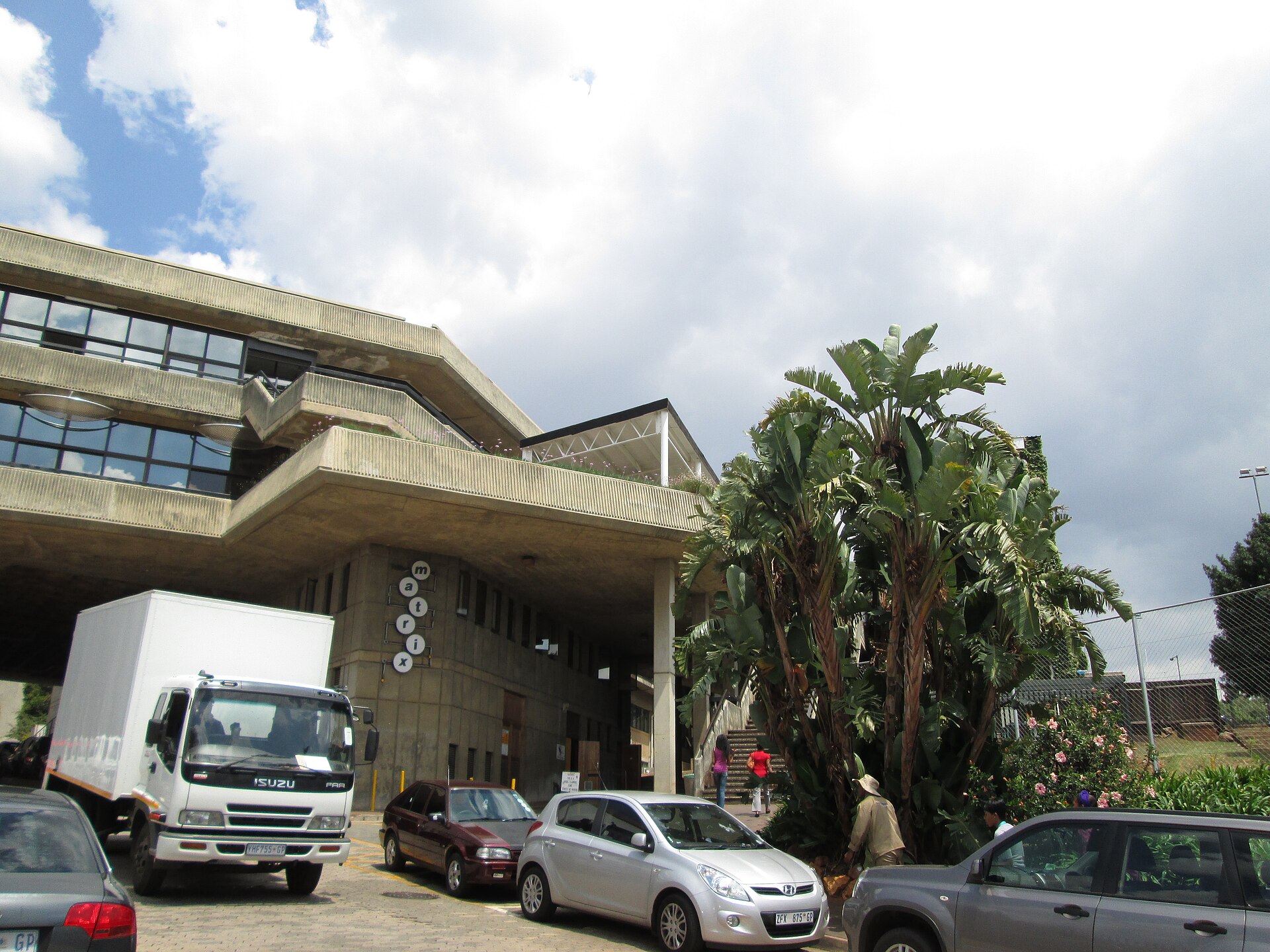
University of the Witwatersrand — campus in pictures

Real, freely-licensed photographs of the campus (via Wikimedia Commons).
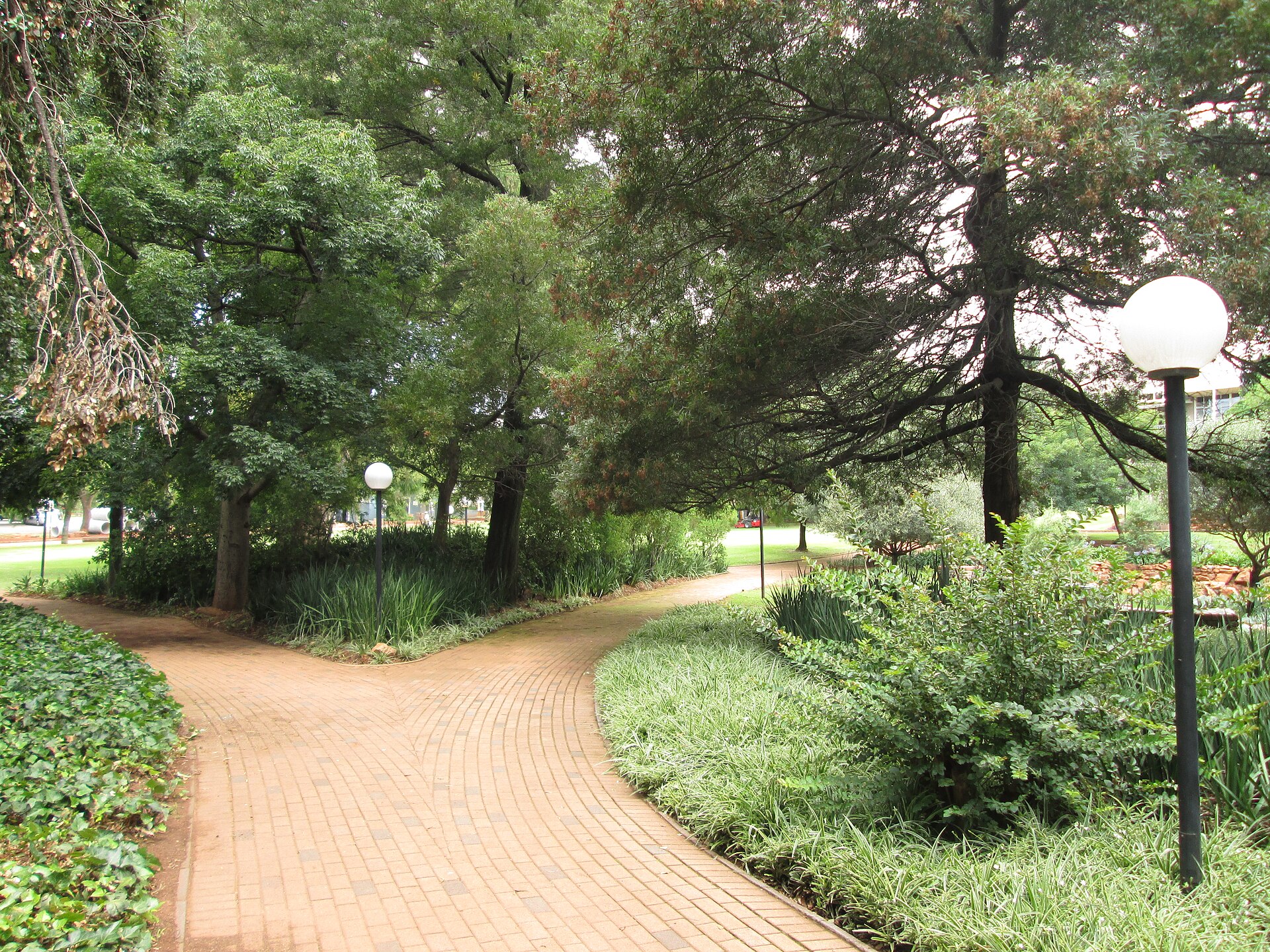
Gavin Reilly Green, West Campus
Gavin Reilly Green, West CampusHeather Elke · CC BY-SA 4.0 · via Wikimedia Commons
Student Union Building
Student Union BuildingHeather Elke · CC BY-SA 4.0 · via Wikimedia Commons
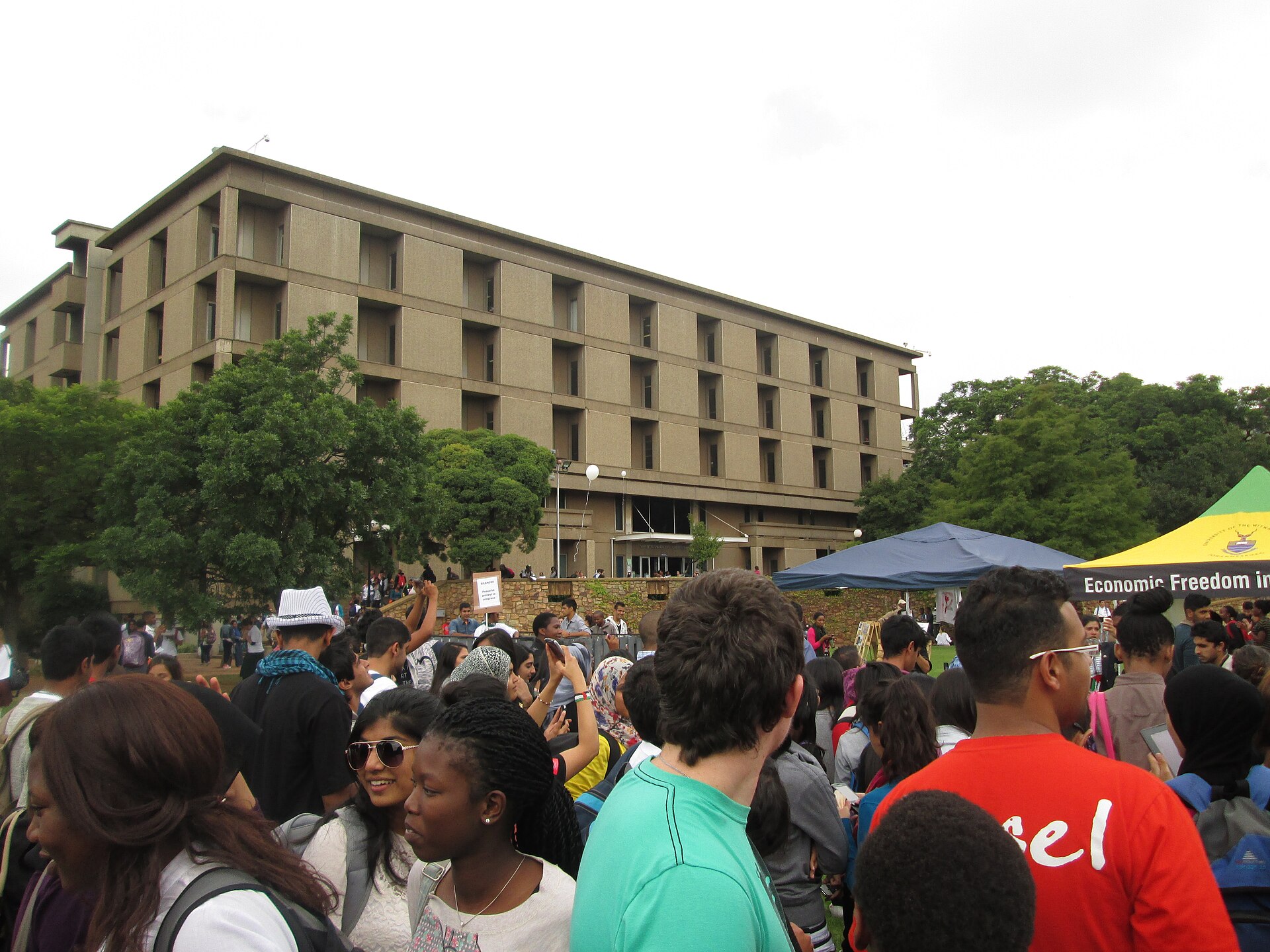
Wartenweiler behind packed Library Lawns
Wartenweiler behind packed Library LawnsHeather Elke · CC BY-SA 4.0 · via Wikimedia Commons
The Great Hall, part of Robert Sobukwe Block, was officially opened in 1940 and has since become the iconic ceremonial heart of Wits.
The Great Hall, part of Robert Sobukwe Block, was officially opened in 1940 and has since become the iconic ceremonial heart of Wits.Chante Schatz · CC BY-SA 4.0 · via Wikimedia Commons
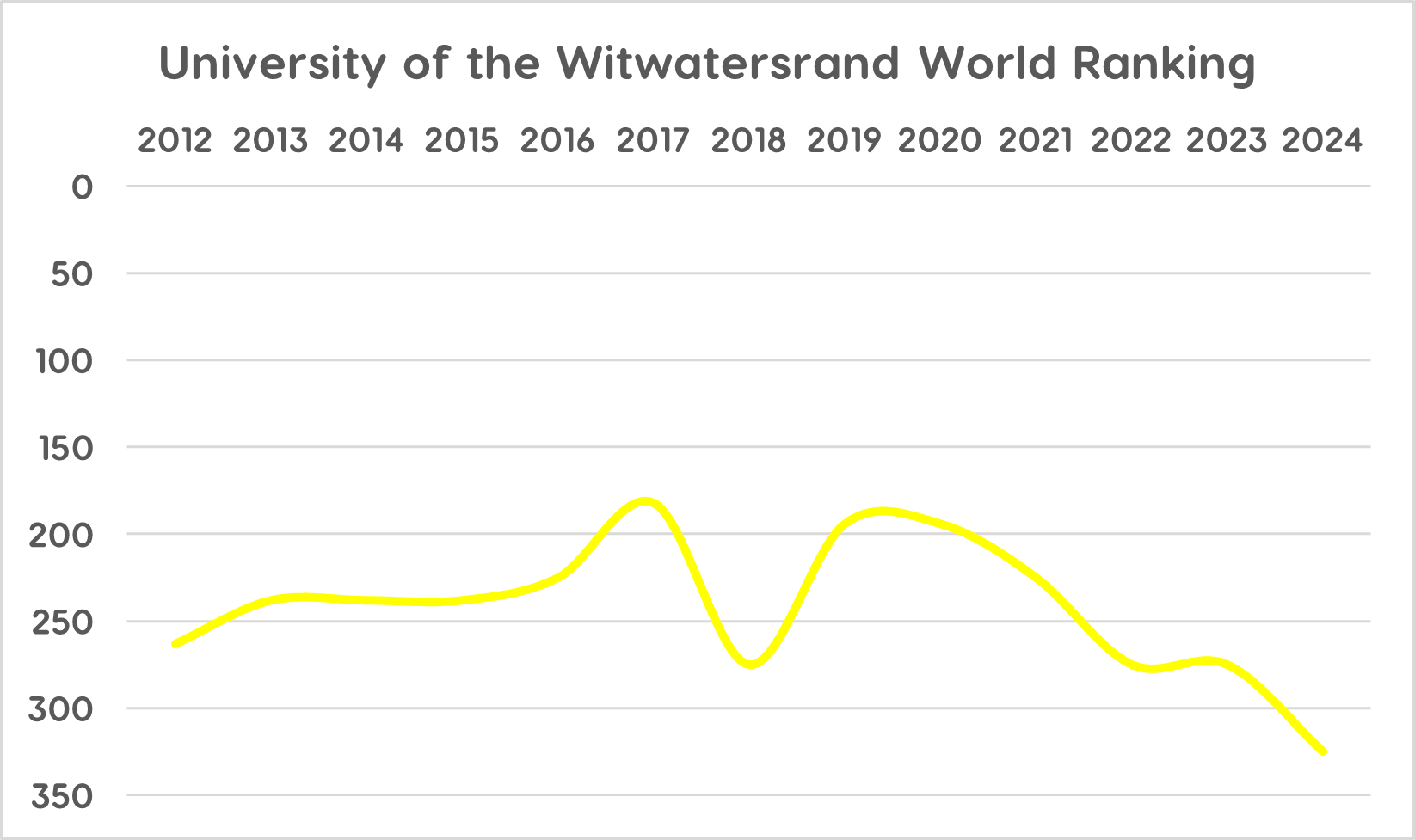
University of the Witwatersrand World Ranking
University of the Witwatersrand World RankingTapticInfo · CC BY-SA 4.0 · via Wikimedia Commons
Origins Centre and M1 highway
Origins Centre and M1 highwayHeather Elke · CC BY-SA 4.0 · via Wikimedia Commons

Why Choose Wits — Africa's Research Powerhouse

Wits is not merely South Africa's second-ranked university — it is the institution that has most consistently shaped African science, law, medicine, and public life for over a century. For international students, it offers genuine global standing at a fraction of the cost of comparable research universities.

1Continental Research Leadership
Ranked #265 globally (QS) and #2 in South Africa, Wits punches far above its weight in mining engineering, actuarial science, medicine, and the basic sciences. Four alumni and faculty have been awarded the Nobel Prize — more than any other African university.
2Johannesburg's Economic Engine
Johannesburg is the financial capital of Africa — home to the continent's largest stock exchange, the headquarters of global mining companies, and a booming tech sector. A Wits degree plugs you into these networks from day one through internships, industry-linked research, and alumni spanning every African economy.
3Cradle of Humankind Access
Wits holds the world's most significant collection of hominin fossils, with exclusive research access to the Sterkfontein Caves UNESCO World Heritage Site. If you study anthropology, palaeontology, geology, or evolutionary biology, nowhere else on Earth offers this laboratory.
4Own Private Teaching Hospital
The Wits Donald Gordon Medical Centre is one of the few universities globally to own and operate a private hospital as a clinical training environment. Medical, nursing, and health-science students gain elite clinical exposure unavailable at peer institutions.
5Exceptional Affordability
Annual tuition for international students is approximately USD 6,500 — a fraction of comparable universities in the UK, Australia, or North America — with a total cost of attendance around USD 14,500 per year. Merit and need-based financial aid is available to further reduce this.
6Diverse, Cosmopolitan Campus
With 40,000 students from across Africa and the world, Wits is one of the most culturally diverse universities on the continent. International students make up 8% of the community, drawn from over 100 countries and creating a genuinely global learning environment.

SELECTIVITY

Acceptance Rate & Admissions Profile

Wits is selective for a large public research university, admitting approximately 35% of all applicants. Admission to high-demand programmes — Medicine, Actuarial Science, Law, and Engineering — is significantly more competitive. Academic performance in senior school (Grade 11–12 equivalents) is the primary determinant of admission.

Wits does not use the SAT, ACT, or any standardised admissions test — admission is entirely grades-based. International qualifications (IB Diploma, A-Levels, AP, and national matriculation certificates) are assessed by the Wits Matriculation Board or SAQA to determine equivalency to the South African National Senior Certificate. Competitive programmes such as Medicine, Dentistry, Actuarial Science, and Law typically require top-decile performance in your school-leaving qualification.

~35%
Overall acceptance rate
32+
IB Diploma benchmark
3.0
Min GPA equivalent
#2
National rank
https://www.wits.ac.za/internationalstudents/

QUICK FACTS

Wits at a Glance

1922
Founded
40,000
Total students
8%
International students
17:1
Student:faculty ratio

WHAT YOU NEED TO APPLY

Components of the Wits Application

Wits uses a direct online application — there is no Common App, UCAS, or third-party platform. Everything is submitted through the Wits self-service portal.

Online Application Form
Complete the Wits online application at wits.ac.za/applications/. You will specify your programme of choice and provide personal details. The application fee is USD 30 (approximately ZAR 550).
Academic Transcripts
Certified copies of your most recent school transcripts (Grade 11 results at minimum; final Grade 12/Year 13 results when available). These are the single most important document in your file.
Qualification Equivalency Assessment
International qualifications are assessed by the Wits Matriculation Board (undergraduate) or SAQA — South African Qualifications Authority (postgraduate) to confirm equivalency to South African standards. Submit your IB results, A-Level certificates, or national matriculation transcripts.
English Proficiency Evidence
If English is not your primary medium of instruction, submit IELTS (min 6.5 overall) or TOEFL iBT (min 80). Students who completed schooling in English typically qualify for a waiver — confirm with the admissions office.
Passport Copy
A certified copy of your valid passport, required for both the application and later for international student clearance at the International Students Office.
Proof of Medical Aid / Health Insurance
All international students at Wits must be registered with a South African medical aid or comprehensive international health insurance plan before clearing at the ISO. This is a registration requirement, not an admissions one, but factor it into your planning early.
https://www.wits.ac.za/internationalstudents/

ADMISSIONS PHILOSOPHY

What Wits Looks For

Wits is a grades-first institution for undergraduate entry. Unlike US selective universities, there are no holistic essays or extracurricular reviews at the undergraduate level — your school performance determines your place. That said, strong candidates share several characteristics.

Academic Excellence in Relevant Subjects
Programme-specific subject requirements are strictly enforced. Engineering requires strong Mathematics and Physical Science; Medicine demands top scores in Life Sciences and Chemistry; Actuarial Science expects near-perfect Mathematics. Research these requirements per programme before applying.
Consistency Across Years
Wits assesses Grade 11 results for early provisional admission and Grade 12 final results for final offers. A strong upward trajectory (or sustained excellence) signals academic readiness. A single poor year can jeopardise an offer even with strong overall performance.
Language Competence
All teaching at Wits is in English. Students whose schooling was not primarily in English must demonstrate proficiency. International students who meet the IELTS 6.5 / TOEFL 80 threshold are well placed — higher scores strengthen your profile for competitive programmes.
Research & Intellectual Curiosity (Postgraduate)
Postgraduate applicants, especially for research degrees, are assessed on academic transcripts, a research proposal, and — critically — supervisor fit. Contact a prospective supervisor before applying; securing an academic sponsor significantly improves your chances of admission and funding.

APPLICATION TIMELINE

When to Apply

Wits typically opens undergraduate applications in April–May for the following academic year (intake is January). Applications are considered on a rolling basis and programmes close when full — apply early. The information below reflects the typical calendar; always verify exact dates on the official site as they change annually.

All dates are approximate and subject to annual revision. Always confirm at wits.ac.za and contact the admissions office directly for programme-specific deadlines.

RoundPeriodNotes
Applications OpenApril – MayFor the following January intake
Early Application RecommendedBy JulyCompetitive programmes (Medicine, Law, Engineering) fill fast
Typical Closing DateSeptember – OctoberVaries by faculty; some close earlier
Provisional Offers (Grade 11)October – NovemberConditional on final Grade 12 / IB results
Final ConfirmationDecember – JanuaryAfter final results submitted; 75% tuition deposit due

CAMPUS LIFE

Living and Studying in Johannesburg

Wits sprawls across seven campuses in Johannesburg's Parktown and Braamfontein districts — vibrant, walkable urban neighbourhoods minutes from the CBD. The city itself is Africa's most economically significant metropolis, a place of enormous energy, cultural diversity, and opportunity.

On campus, students have access to three libraries (including the historic William Cullen Library), multiple sports facilities, a dedicated student village, and a rich programme of arts events through the Wits Art Museum and student theatre. The Student Representative Council and over 100 registered student societies cover everything from debating and robotics to cultural associations representing Wits's multinational student body.

Accommodation
Wits operates several on-campus residences in Parktown and Braamfontein. First-year students and international students are given priority for residence placement. Apply for accommodation simultaneously with your academic application — places fill very quickly.
The City of Johannesburg
JoBurg (as locals call it) is Africa's financial capital — home to the Johannesburg Stock Exchange, multinational headquarters, a burgeoning tech and start-up scene in Sandton and Maboneng, world-class museums, and a restaurant and arts culture that rivals any global city. The social and professional network you build here is pan-African in scope.
Sports & Wellness
Wits fields competitive national-level teams in rugby, soccer, athletics, swimming, and many other codes. The Wits Sport facilities include a 50m swimming pool, athletics track, and multiple sports courts. Student wellness services and counselling support are available on campus.
Arts & Culture
The Wits Art Museum houses a significant collection of African art. The School of Arts runs student performances in drama, music, and fine arts throughout the year. Johannesburg's own arts calendar — from the Turbine Art Fair to live jazz in Melville — enriches student life beyond campus.

CAREER OUTCOMES

Where Wits Graduates Go

Wits graduates enjoy an employment rate of approximately 85%, reflecting strong demand from South African and international employers across engineering, finance, healthcare, law, and technology. The university's location in Johannesburg — Africa's commercial centre — gives graduates immediate proximity to the continent's most significant employers.

Mining engineering and actuarial science graduates from Wits are among the most sought-after in their respective fields globally — both disciplines were built on Johannesburg's gold-mining heritage and remain world-class. Medical graduates enter a respected healthcare system with opportunities across Africa and internationally. Law graduates feed directly into top South African firms and constitutional bodies. For international students who wish to work in Africa after graduation, a Wits network of 200,000+ alumni across the continent is an unmatched asset.

International students planning to work in South Africa post-graduation should investigate Critical Skills Work Visas and the Graduate Work Visa pathway. Confirm visa eligibility with South African Home Affairs well before graduation.

85%
Graduate employment rate
~USD 18,000
Avg starting salary

FAQS

Frequently Asked Questions

Do I need to take the SAT or ACT to apply to Wits?+

No. Wits does not use the SAT, ACT, or any standardised admissions test. Admission is based entirely on your school-leaving qualifications (IB Diploma, A-Levels, national matriculation, etc.), which are assessed against South African NSC equivalency standards.

My country has a different school-leaving certificate. Will it be accepted?+

Yes — Wits has an established process for evaluating international qualifications through its Matriculation Board (undergraduate) and SAQA (postgraduate). Submit your official transcripts and certificates; the university will advise on equivalency and any bridging requirements.

When does the Wits academic year start?+

The Wits academic year begins in January (southern hemisphere calendar). There is no September intake — plan accordingly if you are currently in a northern-hemisphere school system completing exams in May/June.

Is English the language of instruction?+

Yes, all teaching and assessment at Wits is conducted in English. If English was not your primary medium of instruction, you must provide IELTS (minimum 6.5 overall) or TOEFL iBT (minimum 80).

Can I apply while still in my final year of school?+

Yes, and this is strongly recommended. Wits issues provisional conditional offers based on your Grade 11 / Year 12 interim results, conditional on achieving specified grades in your final school-leaving examinations. Final offers are confirmed once results are received.

What visa do I need to study at Wits?+

You will need a South African Study Permit (not a tourist visa). Applications are submitted to the South African embassy or VFS Global centre in your home country. The ISO Office at Wits will guide you through the process after receiving your admission offer.

Is on-campus housing available for international students?+

Yes. Wits operates several student residences and prioritises international students for placement. Apply for accommodation alongside your academic application — do not wait for an offer before applying, as spaces are limited and allocated competitively.

What are the strongest programmes at Wits for international students?+

Wits is globally recognised in Mining Engineering, Actuarial Science, Medicine and Health Sciences, Law, Architecture, and the basic sciences (Physics, Chemistry, Earth Sciences). The humanities and social sciences benefit from Johannesburg's unique political and cultural context. Drama and Fine Arts students gain access to one of Africa's most vibrant arts scenes.

ACADEMIC EXPECTATIONS

What Wits Expects Academically From International Students

Wits is an academically rigorous research university where intellectual standards are genuinely high. Entry requirements vary significantly by programme — Medicine and Actuarial Science demand near-perfect school performance, while other programmes are more accessible. Understanding programme-specific requirements is essential before you apply.

Unlike many US or UK universities, Wits places almost all admissions weight on academic grades from your senior school years. There are no holistic essays, no extracurricular portfolios, and no interviews at the undergraduate level for most programmes. Your marks are your application — so optimising academic performance in the subjects relevant to your chosen programme is the single most important thing you can do.

ACADEMIC BENCHMARKS

Academic Profile — What the Numbers Say

The IB Diploma minimum of 32 points reflects the university-wide threshold; high-demand programmes set their own — typically higher — requirements. For Medicine, an IB score well above 35 with strong HL Biology and Chemistry is expected. For Actuarial Science, near-perfect Mathematics HL is essentially required. Always check the specific programme's minimum entry requirements on the Wits website, as they differ from the university-wide floor.

32
IB Diploma minimum
3.0+
GPA equivalent
~35%
Overall acceptance rate
265
QS World Ranking

TEST POLICY

Standardised Tests at Wits

Wits is test-blind for admissions purposes. SAT and ACT scores are not accepted, considered, or required — not even as supplementary evidence. This is a meaningful distinction from US and some UK institutions. Admission decisions are based entirely on school-leaving examination results.

This policy benefits students from countries where access to SAT/ACT preparation is limited. If you have strong school marks, you are competing on a genuinely level field. Conversely, if your school marks are weak, there is no standardised test score that can compensate — make sure your Grade 11 and 12 (or IB/A-Level) performance is your priority.

SAT / ACT
Not required, not accepted, not considered. Wits is fully test-blind for undergraduate admissions.
IB Diploma
Fully accepted and well understood by the Wits Matriculation Board. The minimum is 32 points overall; individual programmes have higher subject-specific requirements. Higher Level results in relevant subjects carry the most weight.
A-Levels (UK / Cambridge International)
Accepted and assessed by the Matriculation Board. Competitive equivalency standards apply — A and A* grades in relevant subjects are expected for selective programmes.

QUALIFICATION EQUIVALENCY

How Your Qualifications Are Assessed

Wits does not assess international qualifications in a vacuum — they are formally evaluated through the South African Matriculation Board (undergraduate) or SAQA (postgraduate) to determine equivalency to the South African National Senior Certificate (NSC).

1Submit Your Official Transcripts
Upload certified copies of your Grade 11 transcripts (for provisional assessment) and final school-leaving certificates (for final assessment) to the Wits application portal.
2Matriculation Board Assessment
The Wits Matriculation Board evaluates your international qualification against the NSC benchmark. You will receive a provisional exemption (or a list of conditions to meet) — this is a standard step, not a special hurdle.
3Programme-Specific Subject Check
Beyond overall points, each programme checks whether you have studied the required subjects to the required level. Engineering requires Mathematics and Physical Science; Health Sciences require Life Sciences and Chemistry. Verify programme prerequisites carefully.
4Offer Issued
Once assessment is complete and you meet the programme requirements, a conditional or unconditional offer is issued through the self-service portal.
https://www.wits.ac.za/internationalstudents/

IB & A-LEVELS

IB Diploma and A-Levels at Wits

Wits has long experience assessing IB and A-Level qualifications — both are well-regarded pathways for international students.

IB Diploma — Overall Score
The university-wide minimum is 32 points. For competitive programmes, expect the effective minimum to be higher — aim for 35+ for Engineering and Commerce, and 38+ for Medicine and Actuarial Science. Theory of Knowledge and Extended Essay results contribute to your total and should not be neglected.
IB Subject Requirements
Programme subject prerequisites apply to IB students just as they do to any other applicant. Higher Level Mathematics is typically required for Engineering, Actuarial Science, Computer Science, and Sciences. Higher Level Biology and Chemistry are expected for Medicine. Standard Level may suffice for some humanities programmes.
A-Levels
Three A-Levels are the standard expectation. High grades (A/A*) in subjects relevant to your intended programme are expected for competitive courses. Cambridge International A-Levels are the most common pathway for international applicants outside South Africa.
AP Courses
Advanced Placement courses are assessed individually. If you are following an AP curriculum, contact the Wits Matriculation Board to confirm how your specific course and grade combination will be evaluated. Strong AP scores in relevant subjects generally support your application.

SUBJECT PREPARATION

Subject Rigour by Programme Area

The subjects you study and the grades you achieve in them matter enormously at Wits. Here is what each major discipline expects.

Engineering & Mining
Strong Mathematics and Physical Science are non-negotiable — aim for the highest possible grades. Mathematics HL (IB) or A-Level Mathematics at A/A* is the standard benchmark. Additional sciences strengthen your application further.
Medicine, Dentistry & Health Sciences
Top grades in Biology/Life Sciences and Chemistry are essential — these programmes are among the most competitive on campus. IB applicants should take both subjects at Higher Level. The road to Medicine at Wits is very competitive; plan your academics from Grade 10 onwards.
Actuarial Science & Commerce
Mathematics is the central subject — near-perfect performance is expected. Accounting, Economics, and Statistics are complementary subjects that demonstrate quantitative aptitude. Actuarial Science at Wits is internationally accredited by the Actuarial Society of South Africa.
Law
There are no specific required subjects for law entry at Wits, but strong English Language, History, and any social science subjects demonstrate analytical readiness. Entry is competitive and grades across the board matter.
Arts, Humanities & Social Sciences
Entry requirements are typically less restrictive by subject, though overall academic performance still matters. Strong English proficiency, critical writing ability, and engagement with your chosen field of study set strong candidates apart.
Computer Science & Information Technology
Mathematics is required — Higher Level or equivalent. Physical Science is advantageous. Programming experience before arrival is not formally required but is practically beneficial given the pace of Wits computer science programmes.

ENGLISH PROFICIENCY

English Language Requirements

All instruction at Wits is in English. International students whose schooling was not primarily in English must demonstrate proficiency through a recognised test.

English proficiency requirements may be waived for applicants who completed their secondary schooling at an English-medium institution. Contact the International Students Office to confirm eligibility for a waiver.

TestMinimumNotes
IELTS Academic6.5 overallNo individual band below 6.0 (verify per programme)
TOEFL iBT80Internet-based total score
Duolingo English TestNot specifiedConfirm acceptance directly with admissions
English-medium schoolingWaiver possibleStudents who completed ≥3 years in English-medium schools may apply for an exemption
https://www.wits.ac.za/internationalstudents/

YEAR-BY-YEAR PLAN

Building Your Academic Profile for Wits

Because Wits admission is grades-based, your strategy is straightforward but demands sustained discipline across your entire senior school career.

1Grade 9–10: Choose the Right Subjects
Select subjects that align with your intended programme — prioritise Mathematics and Sciences for engineering, medicine, and actuarial science. Avoid early subject choices that close off options. Take the hardest Mathematics track available to you.
2Grade 11: Perform at the Highest Level
Wits issues provisional offers based on Grade 11 results. These results are your first formal application document. Aim to achieve your target grades in Grade 11 — a weak Grade 11 year can result in a rejection or a lower-priority programme offer.
3Apply Early — Before You Have Final Results
Open your Wits application as soon as the portal opens (typically April–May of your final school year). Submit Grade 11 transcripts to secure a provisional offer. Competitive programmes fill before closing dates.
4Grade 12 / IB Year 2: Maintain and Improve
Final offers are based on your Grade 12 / IB final results. Maintain the performance that earned your provisional offer — a significant drop can result in withdrawal of the conditional offer. Particularly protect your performance in programme-specific subjects.
5Post-Results: Submit Promptly and Confirm
Once final results are available (November for IB; December for many other systems), submit them to Wits immediately. Pay the required 75% tuition deposit to confirm your place, and simultaneously apply for your South African Study Permit and accommodation.

COMMON MISTAKES

Academic Pitfalls to Avoid

  • Applying without checking programme-specific subject prerequisites — you may be disqualified even if your overall grade is strong
  • Underperforming in Grade 11 and assuming you can recover in Grade 12 — provisional offers are based on Grade 11, and a weak set of results may result in outright rejection or a lower programme
  • Neglecting IB Theory of Knowledge and Extended Essay — these contribute to your IB total score and are assessed as part of your qualification
  • Applying late — competitive programmes (Medicine, Actuarial Science, Law) routinely close before the official application deadline because they fill on a rolling basis
  • Confusing the university-wide minimum (IB 32) with the actual competitive minimum for selective programmes — the effective floor for Medicine or Actuarial Science is considerably higher
  • Forgetting to arrange an English proficiency test if your schooling was not in English — this can delay or block your admission even after receiving an offer
  • Assuming you can apply for a Study Permit after arrival in South Africa — you must hold a valid Study Permit before you enter the country to study

COST & AFFORDABILITY

The Real Cost of Studying at Wits For International Students

Wits offers one of the most compelling value propositions in global higher education: a QS top-300 research university, in Africa's economic capital, at a cost of attendance of approximately USD 14,500 per year. Compared to comparable institutions in the UK, Australia, or North America, the cost differential is dramatic.

South African Rand fluctuates against major currencies — for international students paying in USD, GBP, or EUR, Wits's fees represent exceptional value. Financial aid, merit scholarships, and external bursaries can reduce the net cost further. The key upfront requirement is that 75% of annual tuition must be paid before registration each year.

COST BREAKDOWN

Annual Cost Estimates (International Students)

All figures are approximate annual estimates in USD, based on available data. Actual costs in ZAR will vary with exchange rates. Tuition fees also vary by faculty — Science and Engineering typically cost more than Humanities.

Tuition is quoted here in USD for planning purposes. Wits fees are denominated in South African Rand (ZAR) and will vary with exchange rate movements. Always confirm current ZAR fees at wits.ac.za/study-at-wits/student-fees/.

ComponentEstimate UsdNotes
Tuition (annual)~USD 6,500Varies by faculty; figures from facts file
Cost of Living (annual)~USD 8,000Accommodation, food, transport, personal
Total Cost of Attendance~USD 14,500Annual all-in estimate
Application Fee~USD 30One-time, non-refundable
Medical Aid / Insurance~USD 500–1,200Required; South African medical aid or international coverage
Study Permit~USD 60–100South African DHA fee; varies by country
https://www.wits.ac.za/study-at-wits/student-fees/

FINANCIAL AID

Financial Aid for International Students

Wits offers need-based financial assistance, with average aid covering approximately 20% of costs for recipients. The primary financial aid mechanism is the FASO (Financial Aid and Scholarships Administration) office, which coordinates both university-funded and externally-sponsored bursaries.

Most South African government financial aid (including NSFAS — the National Student Financial Aid Scheme) is restricted to South African citizens and permanent residents. International students are therefore primarily dependent on university merit awards, faculty bursaries, and external sponsor funding. Despite these constraints, Wits does administer externally-funded bursaries where international students can compete.

WRAF — Wits Registration Assistance Fund
Provides limited assistance with registration costs (not full tuition) for students in financial need. Household income must be below ZAR 600,000 per annum. Available to qualifying international students on a case-by-case basis.
External Corporate Bursaries
Wits administers a number of corporate-funded bursaries including SASOL, Eskom, and Vodacom bursaries, among others. These are typically tied to specific programmes (Engineering, Sciences) and may require work-back commitments. Availability and international eligibility vary year to year — contact FASO directly.
Postgraduate Research Funding
Wits maintains a live postgraduate funding database for master's and doctoral students. Research supervisors often hold external grants that can fund postgraduate researchers. International postgraduate students should approach potential supervisors directly before applying — funding discussions are commonly part of supervisor conversations.
AFRETEC Funding
Wits participates in the AFRETEC (African Engineering and Technology Network), which may offer fellowship and research funding opportunities for African international students in technology and engineering disciplines. Verify current availability at wits.ac.za/afretec/.
https://www.wits.ac.za/study-at-wits/financial-aid-and-scholarships-administration/

SCHOLARSHIPS

Scholarships Available to International Students

Dedicated scholarships specifically for international undergraduates at Wits are limited; the strongest scholarship opportunities exist at the postgraduate level and through external bodies. The guide below identifies the most relevant routes — always verify current availability with FASO.

This section reflects general scholarship routes; specific scholarship names, amounts, and eligibility should always be verified directly with Wits FASO (011 717-1566/69) and on the official financial aid pages, as availability changes annually.

Merit Awards (Faculty-Based)
Individual faculties — particularly Engineering and Health Sciences — administer merit-based awards for high-achieving students. Contact the faculty's student finance liaison after receiving your admission offer to inquire about available awards for the upcoming year.
Government-to-Government Scholarships
Several African governments (and some outside Africa) have bilateral scholarship agreements that fund study at South African universities including Wits. Check whether your home country's Ministry of Education or relevant government body offers such a scheme — these often fund full tuition and living costs.
Commonwealth Scholarship Commission
Citizens of Commonwealth countries may be eligible for Commonwealth Scholarships for postgraduate study in South Africa. These are administered through national nominating bodies — apply via your home government, not directly through Wits.
African Development Bank Scholarships
The African Development Bank and affiliated bodies periodically offer scholarships for African students at top African universities. Wits is a recognised institution for these awards. Check the AfDB website and Wits FASO for current availability.
https://www.wits.ac.za/study-at-wits/financial-aid-and-scholarships-administration/

NET COST REALITY

Understanding the Net Cost

At roughly USD 14,500 per year all-in, Wits is among the most affordable top-300 global research universities in the world. For comparison, equivalent-ranked universities in the UK typically charge GBP 25,000–35,000 in tuition alone for international students; in Australia, AUD 35,000–45,000. The Wits value proposition is exceptional even without financial aid.

The critical planning factor is the 75% upfront payment requirement — you must pay 75% of annual tuition plus registration and accommodation fees before your registration is confirmed each year. This is not a payment plan but a lump-sum requirement at the start of each academic year. International families should factor this into their budgeting. If you receive a bursary or scholarship, ensure it is confirmed in writing before relying on it for this payment.

Currency Advantage
Wits fees are denominated in South African Rand. For students from countries with stronger currencies (USD, GBP, EUR, AED), the exchange rate provides significant purchasing power. Johannesburg's cost of living is also substantially lower than equivalent cities in Europe, North America, or Australia.
Part-Time Work
International students on a Study Permit in South Africa are generally permitted to work part-time during the academic year (confirm the current terms of your study permit with South African Home Affairs). Johannesburg's labour market offers casual and part-time work opportunities, particularly in the service sector and tutoring.

ACTION PLAN

How to Fund Your Wits Education

1Apply to Wits First
Secure your admission offer before finalising funding plans. An offer letter strengthens all scholarship applications and is required for many bursary processes.
2Contact FASO Immediately After Offer
Email or call Wits FASO (011 717-1566) to ask about current faculty bursaries, merit awards, and externally-funded opportunities open to international students in your programme. Act immediately — award cycles close quickly.
3Check Government Scholarships in Your Home Country
Investigate whether your home government funds study at South African universities. Many African nations and several Gulf states have such programmes. Your home country's Ministry of Education or national scholarship body is the starting point.
4Research the AfDB, Commonwealth, and Sector-Specific Bodies
If you are African and studying engineering, health, or a development-related field, check African Development Bank and Commonwealth scholarships. These are competitive but fully funded and legitimate.
5Plan for the 75% Upfront Requirement
Whether or not you receive aid, you must be able to pay 75% of tuition plus accommodation before your first registration. Ensure your family budget accommodates this. If your scholarship does not pay before registration, request confirmation of the award in writing to present to Student Finance.
6Postgraduate Students: Talk to Your Supervisor
Research supervisors at Wits routinely have access to NRF (National Research Foundation) grants and external research funding. Before submitting your postgraduate application, contact potential supervisors — a funded supervisor position is the strongest financial outcome for a postgraduate international student.

COST FAQS

Frequently Asked Questions on Cost & Aid

How much does it cost per year as an international student at Wits?+

Approximately USD 14,500 per year all-in, including tuition (USD 6,500), living costs (USD 8,000), and the application fee (USD 30 one-time). Medical aid and study permit fees add approximately USD 600–1,300 additionally.

Can international students access NSFAS?+

No. NSFAS (National Student Financial Aid Scheme) is restricted to South African citizens and permanent residents. International students are not eligible.

Is there any financial aid specifically for international students?+

Yes, though limited at the undergraduate level. Faculty-based merit awards, select external corporate bursaries administered through FASO, government-to-government scholarship schemes, and Commonwealth/AfDB opportunities are the primary routes. Contact FASO directly for current availability.

Why do I need to pay 75% of tuition before registration?+

Wits requires all students — not just international ones — to pay 75% of annual tuition fees before completing registration each year. This is a South African university-sector norm. It is a lump sum, not a payment plan. Plan your budget accordingly.

Does Wits offer payment plans?+

Wits has banking partnerships with Absa, Nedbank, Standard Bank, FNB, and FUNDI that offer student loan products. These are commercial loans, not university grants. Contact Student Finance for current loan-partner terms.

Is Johannesburg affordable for a student on a tight budget?+

Relatively yes by global standards. On-campus accommodation and meal options are available at student-subsidised rates. Public transport (Rea Vaya BRT, Gautrain for regional travel) provides affordable mobility. Students who live on campus and manage budgets carefully can live very comfortably within the USD 8,000 annual living estimate.

APPLICATION & PERSONAL STATEMENT

Applying to Wits — No US-Style Essays Required

Wits uses a direct online application system — not Common App, UCAS, or Coalition. For most undergraduate programmes, there are no application essays, personal statements, or supplemental writing required. Admission is based primarily on your academic qualifications. This guide explains the application process, the limited contexts where written statements matter, and how to present yourself effectively.

Understanding the South African direct-application system will save you significant time and prevent you from over-preparing for requirements that don't exist at Wits — or under-preparing for the ones that do.

APPLICATION SYSTEM

The Wits Application System — What It Actually Is

Wits is a South African public research university that admits students through a direct online portal (wits.ac.za/applications/). The system is grades-first, not holistic. For the vast majority of undergraduate programmes, no personal statement or motivation letter is required.

Direct Online Application
You apply directly through Wits — there is no Common App, UCAS, or centralised South African portal equivalent for undergraduates. Create an account on the Wits self-service portal, complete the application form, and upload your documents.
Grades-Based Assessment
Your senior school academic record is the primary — often the sole — assessment criterion. The admissions process is fundamentally different from US holistic review: no essays, no teacher recommendations, no activity list for most programmes.
Where Written Statements Appear
Some competitive or creative programmes may request a motivation letter or personal statement as part of a supplementary application. Architecture, Drama, Fine Arts, and some postgraduate programmes are the most likely to require written or portfolio submissions. Always check the specific programme requirements.
Postgraduate Applications
Postgraduate research degree applicants typically submit a research proposal alongside their transcripts. This is the closest Wits comes to a written 'essay' requirement — and it is substantively different from a personal statement; it is a focused academic document outlining your proposed research area and methodology.

WHERE WRITTEN WORK MATTERS

Programmes That May Require Written Submissions

The following programme areas are most likely to require a motivation letter, portfolio, or statement. Always confirm current requirements on the specific faculty/programme page at wits.ac.za.

VERIFY WITH FACULTYArchitecture — Portfolio & Motivation
Official Text: Architecture applicants may be required to submit a portfolio of creative work and/or a written motivation for study. Requirements vary by year — confirm with the Wits School of Architecture and Planning.
Strategic Guide: If a portfolio is required, include work that demonstrates spatial thinking, drawing ability, and creative problem-solving — not just finished pieces. A written motivation should be specific: why architecture, why Wits, why Johannesburg (Africa's built-environment market is among the most dynamic in the world). Be concrete, not generic.
Source: https://www.wits.ac.za/architecture/
VERIFY WITH FACULTYDrama — Audition / Personal Statement
Official Text: The Wits School of Arts may require an audition and/or written statement for Drama applicants. Requirements are set per intake — confirm with the School of Arts directly.
Strategic Guide: If a written statement is required for Drama, focus on your relationship with performance, specific productions or work that has shaped your thinking, and why you want to study at a university embedded in Johannesburg's extraordinary theatre scene. Specificity and genuine passion carry far more weight than generic enthusiasm.
Source: https://www.wits.ac.za/arts/
REQUIRED FOR RESEARCH DEGREESPostgraduate Research Proposal
Official Text: Applicants to research-based master's and doctoral programmes must submit a research proposal outlining the intended research question, methodology, and theoretical framework. The proposal is assessed by potential supervisors for fit and academic rigour.
Strategic Guide: Your research proposal is the most important document in a postgraduate application at Wits. It should demonstrate that you understand the existing body of knowledge in your field, articulate a specific and original research question, and propose a credible methodological approach. Before submitting, share a draft with a potential supervisor — their feedback can be decisive. A strong proposal that aligns with a faculty member's current research agenda dramatically improves both your chances of admission and your likelihood of securing research funding.
Source: https://www.wits.ac.za/study-at-wits/

THE APPLICATION IN PRACTICE

How to Navigate the Wits Application

For most international undergraduates applying to Wits, the written component of your application is minimal to non-existent. Here is how to make sure the parts that do matter are executed correctly.

The Wits application form includes standard demographic and academic information fields. Your most powerful 'statement' is the accuracy and completeness of your academic record submission. Certified transcripts, official qualification certificates, and proof of English proficiency (where required) should be meticulously prepared — errors or delays in document submission are the most common cause of processing delays and missed offers.

Get Your Documents Certified Early
Certified copies of transcripts and certificates must be authenticated — a photocopy alone is not sufficient. Know your country's certification process (notarisation, apostille, or consular verification) and start this process well before the application deadline.
Secure English Proficiency Scores in Advance
IELTS and TOEFL test dates fill quickly and results take 1–3 weeks. Book your test at least 6–8 weeks before the application deadline if you need one. Do not leave this to the last month of the application window.
For Competitive Programmes: Contact Admissions Directly
For Medicine, Actuarial Science, Law, or any programme with a low acceptance rate, contact the faculty's admissions office (not just the central admissions line) early in the cycle. Ask whether there are any supplementary requirements, interviews, or selection procedures you need to prepare for — these are not always prominently advertised.

IF A STATEMENT IS REQUIRED

Writing an Effective Motivation Letter for Wits

If your programme does require a motivation letter or personal statement, the South African university convention is more formal and concise than the US college essay tradition. Think of it as a professional cover letter for your academic career, not a personal narrative.

Open with Programme Specificity
State clearly what you want to study at Wits and why — specifically. Generic openers ('I have always been interested in X') are weak. Reference specific faculty research, unique programme components (e.g., clinical exposure via Wits Donald Gordon Medical Centre, Sterkfontein Caves access for earth science students), or industry partnerships relevant to your field.
Demonstrate Academic Preparation
Connect your school subjects and results to your programme choice. For Medicine: 'My Higher Level Biology and Chemistry IB results reflect sustained commitment to the sciences underpinning medicine.' For Actuarial Science: reference your mathematics performance and any relevant competitions or projects.
Connect to Johannesburg and Africa
Wits is an African institution with a specific social mission. Demonstrating awareness of the African context — why studying in Johannesburg, not London or Toronto, makes sense for your goals — signals genuine commitment and strengthens your statement.
Be Concise and Formal
A Wits motivation letter is typically one page (400–600 words). It should be formally structured: an introduction, a body explaining your academic background and programme fit, and a conclusion linking your ambitions to what Wits specifically offers. Avoid overly personal anecdotes unless they are directly relevant.

POSTGRADUATE APPLICANTS

Choosing and Framing Your Research Proposal

For postgraduate research degrees, the research proposal is your most important submission. Choosing the right topic and framing it well is the difference between a successful application and a delayed one.

Align With Faculty Research Strengths
Research Wits faculty publications in your area. Identify two or three potential supervisors whose current work intersects with your interests. Proposals that clearly fit within an active research cluster are more likely to be accepted — and more likely to attract funding.
Be Specific, Not Ambitious
A proposal that promises to 'investigate the entire field of X' is weaker than one that proposes a focused, bounded question with a credible methodology. Reviewers assess feasibility, not ambition. Show that you have understood the literature and identified a genuine gap.
Mining, Health, and Urban Studies Strengths
Wits has particular depth in mining engineering research (including sustainability and safety), health sciences (HIV/AIDS, non-communicable diseases, maternal health), and urban studies tied to Johannesburg's unique post-apartheid city dynamics. Proposals in these areas connect to some of the university's strongest supervisory capacity.

COMMON MISTAKES

Application Pitfalls to Avoid

  • Assuming Wits uses Common App, UCAS, or a centralised South African portal — it does not. Apply directly at wits.ac.za.
  • Over-preparing US-style personal essays when the programme you are applying to does not require one — spend that time on your academic record instead
  • Submitting uncertified or improperly authenticated documents — this is a common delay cause for international applicants
  • Waiting until final school-leaving results to apply — Wits issues provisional offers on Grade 11 results; applying early is essential for competitive programmes
  • For postgraduate applicants: submitting a research proposal without first contacting a potential supervisor — supervisor fit is central to the assessment
  • Failing to research programme-specific requirements, including supplementary applications or portfolios, that exist outside the main application form
  • Not accounting for the Study Permit timeline — South African Study Permit processing can take 4–8 weeks or more; apply immediately after receiving your admission offer

APPLICATION FAQS

Frequently Asked Questions on the Application

Do I need to write a personal essay or statement to apply to Wits?+

For most undergraduate programmes, no. The Wits direct application is grades-based with no formal essay requirement. Some creative and competitive programmes (Architecture, Drama) may have supplementary requirements — always check the specific programme page.

Does Wits require teacher recommendations or reference letters for undergraduates?+

Teacher recommendations are not part of the standard undergraduate application. Postgraduate research applications may require academic references — confirm with the specific faculty.

Can I apply to multiple programmes simultaneously?+

Yes. The Wits application allows you to specify your programme choices. You can typically indicate a first and second choice. Confirm the maximum number of choices permitted when completing your application form.

How do I apply to Wits as an international student?+

Apply online through the Wits self-service portal at wits.ac.za/applications/. Upload certified copies of your school transcripts, qualification certificates, passport, and English proficiency results (if required). Pay the USD 30 / approximately ZAR 550 application fee.

I am applying for a postgraduate research degree. How important is the research proposal?+

Extremely important. The research proposal is the primary document on which postgraduate research applications are assessed. Before finalising it, identify a potential supervisor and request informal feedback on your proposed topic. A strong supervisor endorsement can be decisive.

Is there an interview as part of the Wits admissions process?+

Interviews are not standard for undergraduate admissions at Wits. Some postgraduate programmes and certain health science selection processes may include an interview or selection assessment — confirm with the relevant faculty when applying.

When should I apply to Wits?+

As early as possible once the portal opens, typically April–May of the year prior to your intended January enrolment. Competitive programmes fill on a rolling basis and close before the official deadline. Do not wait for your final school results before applying.

Courses — schools, degrees & intake

81 degrees across 5 groupings.

Faculty of Commerce, Law and Management · 17 degrees

BCom - Accounting

BachelorsEntry IB Diploma minimum 32 pointsDeadline 2026-09-30

BAccSc - Accounting Science

BachelorsEntry IB Diploma minimum 32 points (competitive; strong Mathematics required)Deadline 2026-09-30

BCom - Applied Development Economics

BachelorsEntry IB Diploma minimum 32 pointsDeadline 2026-09-30

BCom - Financial Sciences

BachelorsEntry IB Diploma minimum 32 pointsDeadline 2026-09-30

BCom - General

BachelorsEntry IB Diploma minimum 32 pointsDeadline 2026-09-30

BCom - Insurance and Risk Management

BachelorsEntry IB Diploma minimum 32 pointsDeadline 2026-09-30

BEconSc - Economic Science

BachelorsEntry IB Diploma minimum 32 points (Mathematics HL recommended)Deadline 2026-09-30

BCom - Economics

BachelorsEntry IB Diploma minimum 32 pointsDeadline 2026-09-30

BCom - Finance

BachelorsEntry IB Diploma minimum 32 pointsDeadline 2026-09-30

BCom - Human Resource Management

BachelorsEntry IB Diploma minimum 32 pointsDeadline 2026-09-30

BCom - Information Systems

BachelorsEntry IB Diploma minimum 32 pointsDeadline 2026-09-30

BCom - Management

BachelorsEntry IB Diploma minimum 32 pointsDeadline 2026-09-30

BCom - Marketing

BachelorsEntry IB Diploma minimum 32 pointsDeadline 2026-09-30

BCom - Politics, Philosophy and Economics (PPE)

BachelorsEntry IB Diploma minimum 32 pointsDeadline 2026-09-30

LLB - Bachelor of Laws

BachelorsEntry IB Diploma minimum 32 pointsDeadline 2026-09-30

BA with Law

BachelorsEntry IB Diploma minimum 32 pointsDeadline 2026-09-30

BCom with Law

BachelorsEntry IB Diploma minimum 32 pointsDeadline 2026-09-30

Faculty of Engineering and the Built Environment · 14 degrees

BSc(Eng) - Aeronautical Engineering

BachelorsEntry IB Diploma minimum 32 points (Mathematics HL and Physics required)Deadline 2026-09-30

BAS - Architectural Studies

BachelorsEntry IB Diploma minimum 32 pointsDeadline 2026-09-30

BEngSc (BME) - Biomedical Engineering

BachelorsEntry IB Diploma minimum 32 points (Mathematics HL required)Deadline 2026-09-30

BSc(Eng) - Chemical Engineering

BachelorsEntry IB Diploma minimum 32 points (Mathematics HL and Chemistry required)Deadline 2026-09-30

BSc(Eng) - Civil Engineering

BachelorsEntry IB Diploma minimum 32 points (Mathematics HL and Physics required)Deadline 2026-09-30

BSc(CS) - Construction Studies

BachelorsEntry IB Diploma minimum 32 pointsDeadline 2026-09-30

BSc(Eng) - Electrical Engineering

BachelorsEntry IB Diploma minimum 32 points (Mathematics HL and Physics required)Deadline 2026-09-30

BSc(Eng) - Industrial Engineering

BachelorsEntry IB Diploma minimum 32 points (Mathematics HL required)Deadline 2026-09-30

BSc(Eng) - Information Engineering

BachelorsEntry IB Diploma minimum 32 points (Mathematics HL required)Deadline 2026-09-30

BSc(Eng) - Mechanical Engineering

BachelorsEntry IB Diploma minimum 32 points (Mathematics HL and Physics required)Deadline 2026-09-30

BSc(Eng) - Metallurgy and Materials Engineering

BachelorsEntry IB Diploma minimum 32 points (Mathematics HL and Chemistry/Physics required)Deadline 2026-09-30

BSc(Eng) - Mining Engineering

BachelorsEntry IB Diploma minimum 32 points (Mathematics HL and Physics required)Deadline 2026-09-30

BSc(PS) - Property Studies

BachelorsEntry IB Diploma minimum 32 pointsDeadline 2026-09-30

BSc(URP) - Urban and Regional Planning

BachelorsEntry IB Diploma minimum 32 pointsDeadline 2026-09-30

Faculty of Health Sciences · 12 degrees

MBBCh - Medicine and Surgery

BachelorsEntry IB Diploma minimum 32 points (highly competitive; Biology and Chemistry required)Deadline 2026-07-31

BDS - Dental Science

BachelorsEntry IB Diploma minimum 32 points (Biology and Chemistry required)Deadline 2026-07-31

BPharm - Pharmacy

BachelorsEntry IB Diploma minimum 32 points (Chemistry and Biology required)Deadline 2026-07-31

BHSc - Biokinetics

BachelorsEntry IB Diploma minimum 32 pointsDeadline 2026-09-30

BHSc - Biomedical Sciences

BachelorsEntry IB Diploma minimum 32 points (Biology and Chemistry required)Deadline 2026-09-30

BCMP - Clinical Medical Practice

BachelorsEntry IB Diploma minimum 32 pointsDeadline 2026-09-30

BHSc - Health Systems Sciences

BachelorsEntry IB Diploma minimum 32 pointsDeadline 2026-09-30

BNurs - Nursing

BachelorsEntry IB Diploma minimum 32 pointsDeadline 2026-09-30

BHSc - Nursing Systems Science

BachelorsEntry IB Diploma minimum 32 pointsDeadline 2026-09-30

BSc(OT) - Occupational Therapy

BachelorsEntry IB Diploma minimum 32 pointsDeadline 2026-07-31

BOHSc - Oral Health Sciences

BachelorsEntry IB Diploma minimum 32 pointsDeadline 2026-07-31

BSc - Physiotherapy

BachelorsEntry IB Diploma minimum 32 pointsDeadline 2026-07-31

Faculty of Humanities · 12 degrees

BA - Bachelor of Arts

BachelorsEntry IB Diploma minimum 32 pointsDeadline 2026-09-30

BA Digital Arts

BachelorsEntry IB Diploma minimum 32 pointsDeadline 2026-09-30

BAFT - Film and Television

BachelorsEntry IB Diploma minimum 32 pointsDeadline 2026-09-30

BAFA - Fine Arts

BachelorsEntry IB Diploma minimum 32 pointsDeadline 2026-09-30

BMus - Bachelor of Music

BachelorsEntry IB Diploma minimum 32 points; audition requiredDeadline 2026-09-30

BA - Theatre and Performance

BachelorsEntry IB Diploma minimum 32 pointsDeadline 2026-09-30

BEd - Foundation Phase Teaching

BachelorsEntry IB Diploma minimum 32 pointsDeadline 2026-09-30

BEd - Intermediate Phase Teaching

BachelorsEntry IB Diploma minimum 32 pointsDeadline 2026-09-30

BEd - Senior Phase and Further Education and Training

BachelorsEntry IB Diploma minimum 32 pointsDeadline 2026-09-30

B Audiology

BachelorsEntry IB Diploma minimum 32 pointsDeadline 2026-09-30

B Social Work

BachelorsEntry IB Diploma minimum 32 pointsDeadline 2026-09-30

B Speech - Speech-Language Pathology

BachelorsEntry IB Diploma minimum 32 pointsDeadline 2026-09-30

Faculty of Science · 26 degrees

BSc - Actuarial Science

BachelorsEntry IB Diploma minimum 32 points (Mathematics HL required; competitive)Deadline 2026-09-30

BSc - Applied Bioinformatics

BachelorsEntry IB Diploma minimum 32 pointsDeadline 2026-09-30

BSc - Applied Chemistry

BachelorsEntry IB Diploma minimum 32 points (Chemistry HL recommended)Deadline 2026-09-30

BSc - Applied Ecology and Global Change

BachelorsEntry IB Diploma minimum 32 pointsDeadline 2026-09-30

BSc - Archaeology

BachelorsEntry IB Diploma minimum 32 pointsDeadline 2026-09-30

BSc - Astronomy and Astrophysics

BachelorsEntry IB Diploma minimum 32 points (Mathematics HL and Physics recommended)Deadline 2026-09-30

BSc - Biochemistry and Cell Biology

BachelorsEntry IB Diploma minimum 32 points (Biology and Chemistry recommended)Deadline 2026-09-30

BSc - Biodiversity in a Changing World

BachelorsEntry IB Diploma minimum 32 pointsDeadline 2026-09-30

BSc - General

BachelorsEntry IB Diploma minimum 32 pointsDeadline 2026-09-30

BSc - Chemistry

BachelorsEntry IB Diploma minimum 32 points (Chemistry HL recommended)Deadline 2026-09-30

BSc - Chemistry with Chemical Engineering

BachelorsEntry IB Diploma minimum 32 points (Chemistry and Mathematics HL required)Deadline 2026-09-30

BSc - Computational and Applied Mathematics

BachelorsEntry IB Diploma minimum 32 points (Mathematics HL required)Deadline 2026-09-30

BSc - Computer Science

BachelorsEntry IB Diploma minimum 32 points (Mathematics HL recommended)Deadline 2026-09-30

BSc - Environmental Studies

BachelorsEntry IB Diploma minimum 32 pointsDeadline 2026-09-30

BSc - Genetics and Developmental Biology

BachelorsEntry IB Diploma minimum 32 points (Biology recommended)Deadline 2026-09-30

BSc - Geographical and Archaeological Studies

BachelorsEntry IB Diploma minimum 32 pointsDeadline 2026-09-30

BSc - Geography

BachelorsEntry IB Diploma minimum 32 pointsDeadline 2026-09-30

BSc - Geological Sciences

BachelorsEntry IB Diploma minimum 32 pointsDeadline 2026-09-30

BSc - Geospatial Sciences

BachelorsEntry IB Diploma minimum 32 pointsDeadline 2026-09-30

BSc - Mathematical Sciences

BachelorsEntry IB Diploma minimum 32 points (Mathematics HL required)Deadline 2026-09-30

BSc - Mathematics

BachelorsEntry IB Diploma minimum 32 points (Mathematics HL required)Deadline 2026-09-30

BSc - Microbiology and Biotechnology

BachelorsEntry IB Diploma minimum 32 points (Biology recommended)Deadline 2026-09-30

BSc - Physics

BachelorsEntry IB Diploma minimum 32 points (Mathematics HL and Physics recommended)Deadline 2026-09-30

BSc - Physics and Finance

BachelorsEntry IB Diploma minimum 32 points (Mathematics HL required)Deadline 2026-09-30

BSc - Physics and Philosophy

BachelorsEntry IB Diploma minimum 32 points (Mathematics HL and Physics recommended)Deadline 2026-09-30

BSc - Physics, Ecology and Sustainability

BachelorsEntry IB Diploma minimum 32 points (Mathematics HL and Physics recommended)Deadline 2026-09-30

Want your real chances at University of the Witwatersrand?

Create a free TYCHR account for your personalised admit-chance, a shortlist you can track, exact entry requirements, and essay + counselling help.