University of the Philippines Diliman
Quezon City, Philippines · Urban
THE NATIONAL UNIVERSITY OF THE PHILIPPINES
University of the Philippines Diliman — Admissions Guide for International Students
The University of the Philippines Diliman (UP Diliman) is the country's most prestigious and selective public university, spread across a leafy 493-hectare campus in Quezon City. Ranked #336 globally (QS 2025) and #1 nationally, UP Diliman offers internationally competitive programmes in engineering, sciences, social sciences, mass communication, and the arts at a fraction of what peer institutions in the region charge. For international students seeking a rigorous, English-medium education in Southeast Asia — at one of the lowest tuition costs in the world — UP Diliman is a compelling choice.
International students make up roughly 1% of the student body, which means you will enter a deeply Filipino academic environment and leave with a degree recognised across the region and beyond. Admission is qualification-based — SAT, IB Diploma, or GCE A-Levels — with no US-style essay supplements, making the path clear but competitive.
Campus
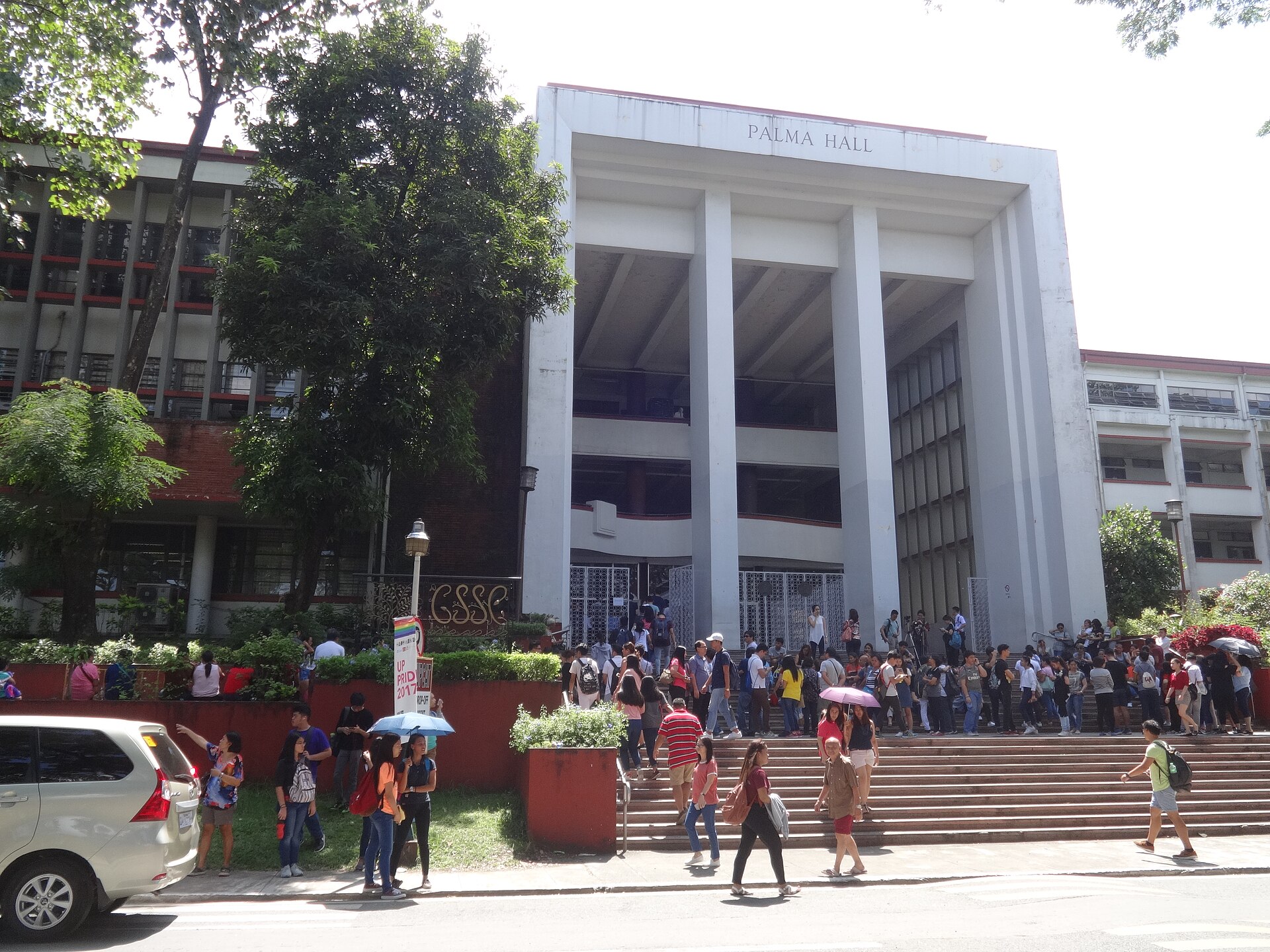
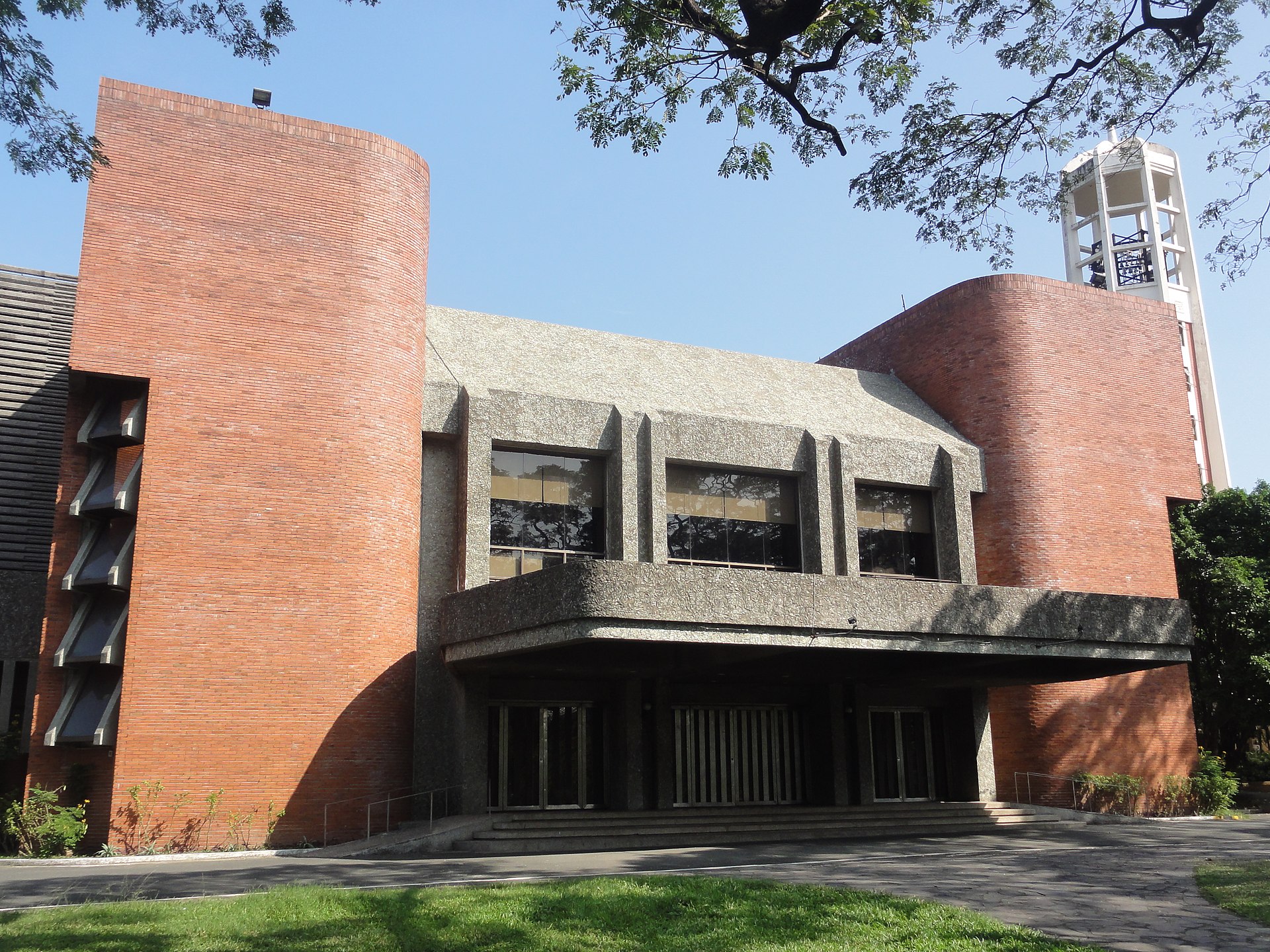
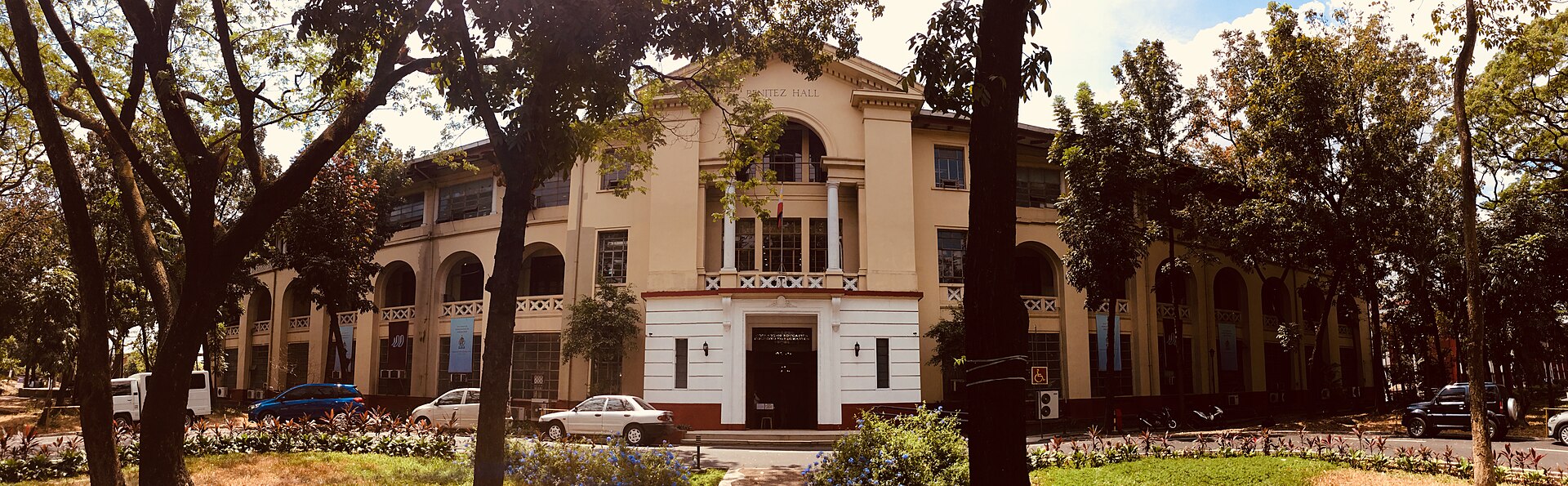
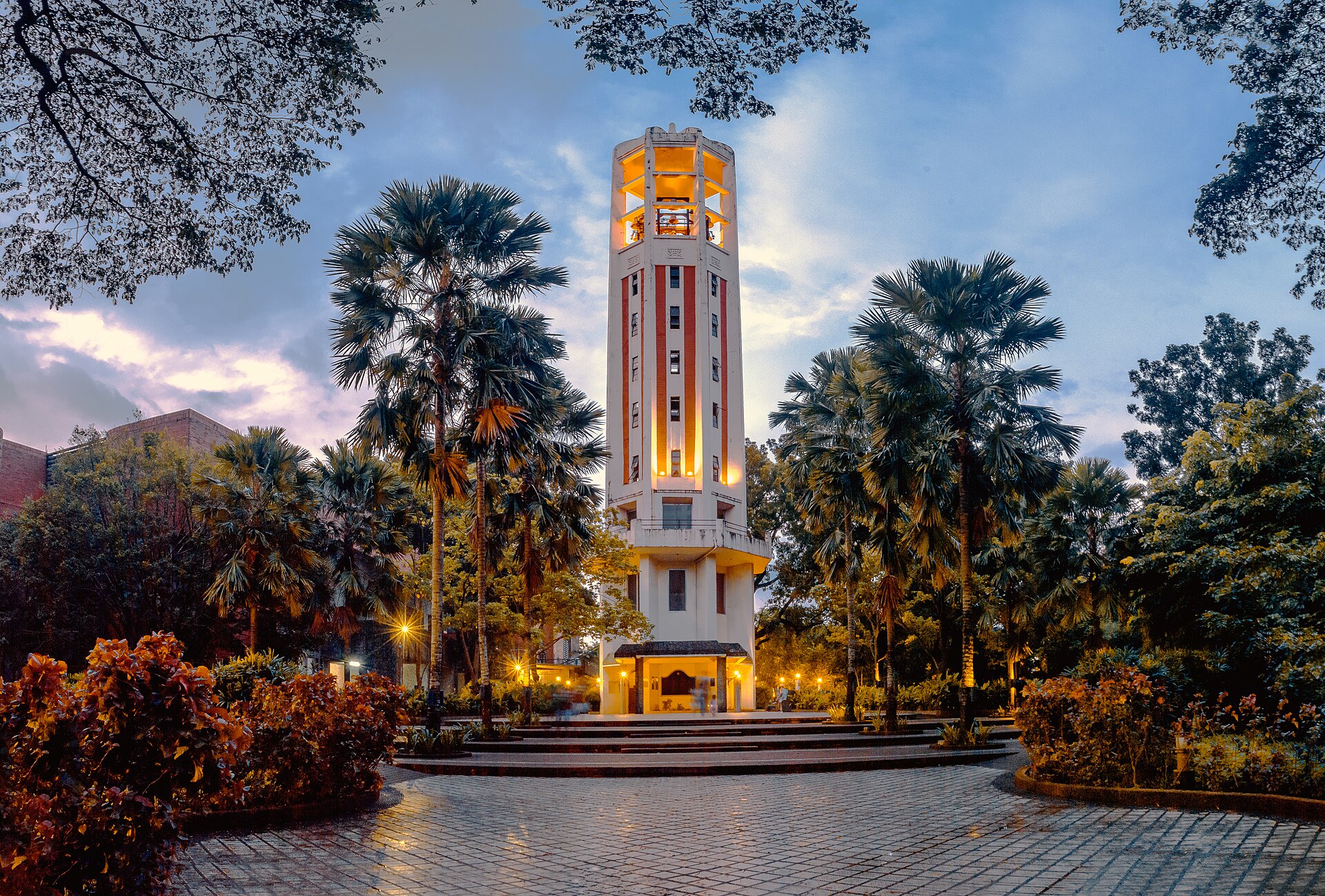
University of the Philippines Diliman — campus in pictures
Real, freely-licensed photographs of the campus (via Wikimedia Commons).
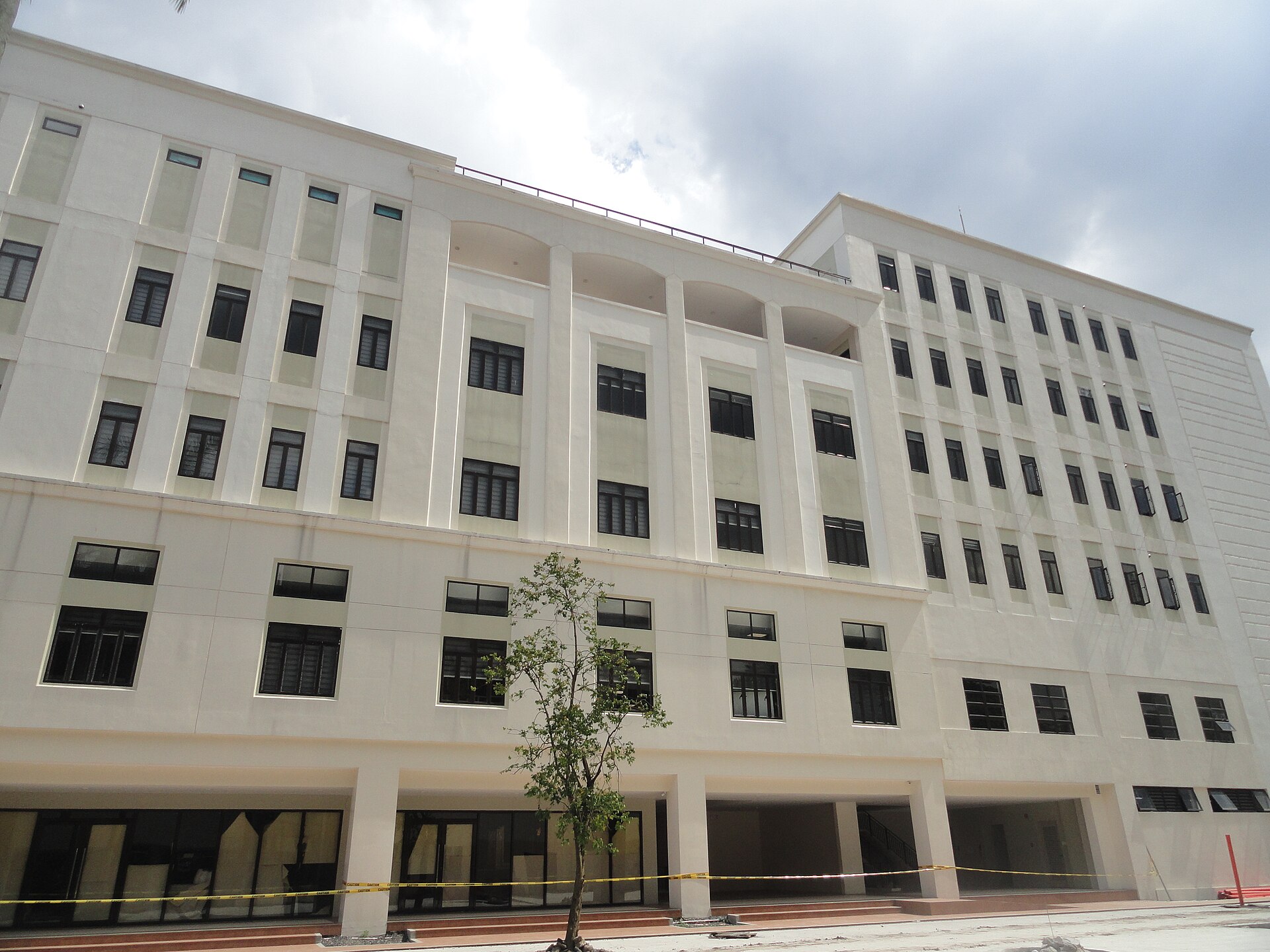
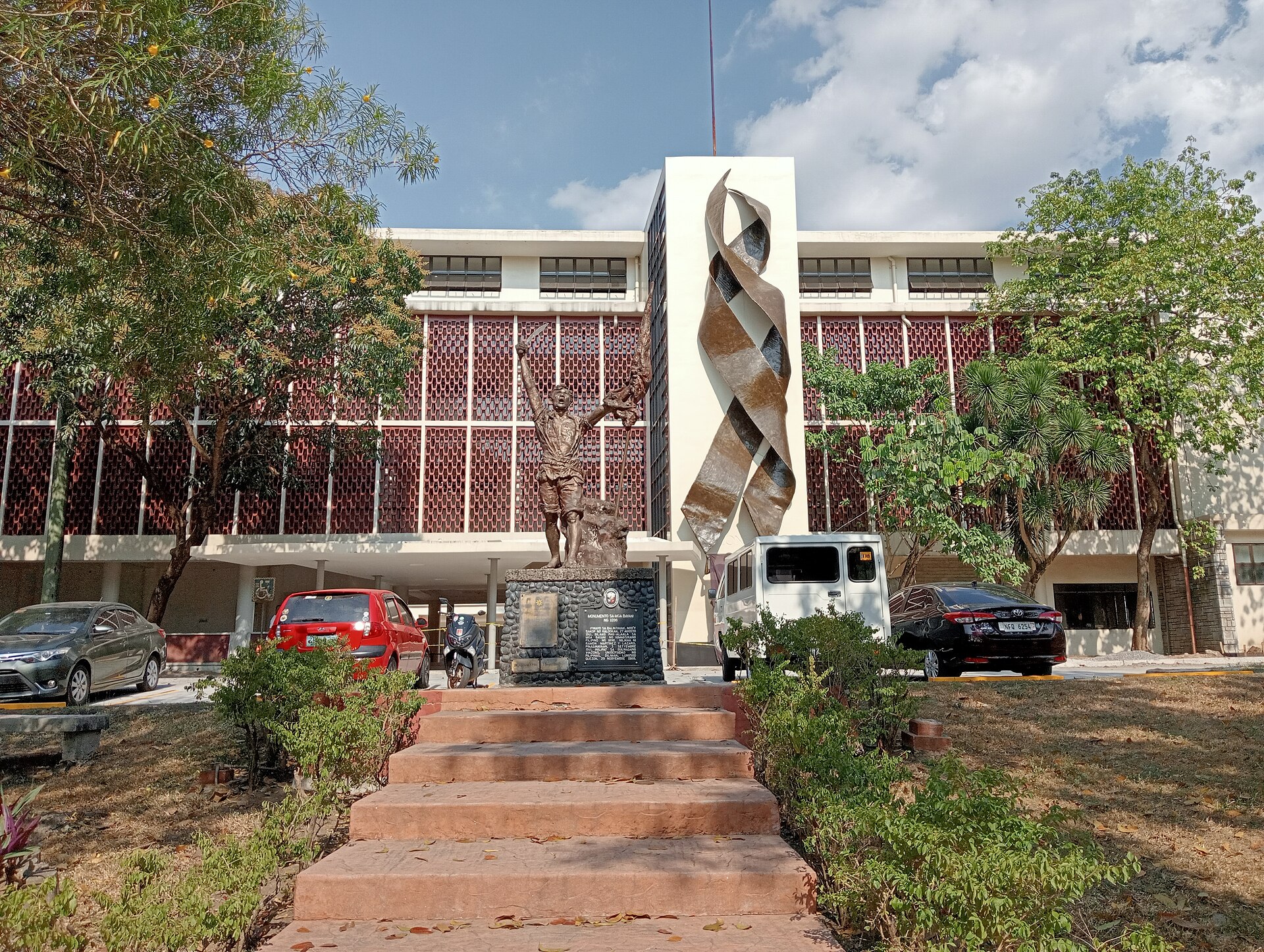
WHY UP DILIMAN
Why Choose UP Diliman Southeast Asia's Premier Public University
For ambitious international students looking beyond the usual destinations, UP Diliman offers a rare combination: genuine academic rigour, a storied national institution, and a cost structure that makes the investment realistic without scholarship.
SELECTIVITY
How Selective Is UP Diliman?
UP Diliman is the most selective university in the Philippines. Domestic students compete for limited slots through the UP College Admission Test (UPCAT). International students have two pathways: automatic admission through verified academic qualifications, or sitting the UPCAT itself. In all cases, fewer than one in five applicants secures a place.
For international students, the automatic admission route via SAT, IB, or GCE A-Levels is distinct from the UPCAT pool. Meeting the stated minimums (SAT 1270, IB Diploma, or GCE with 2 O-Levels + 3 A-Levels) does not guarantee admission to your preferred college or programme — some colleges maintain higher internal thresholds, and programme slots are limited. Competitive applicants typically present scores meaningfully above the floor.
AT A GLANCE
UP Diliman Quick Facts
WHAT YOU NEED TO APPLY
Application Components for International Students
UP Diliman's foreign undergraduate application is direct and qualification-focused. There are no centralised common applications or supplemental essay portals. All documents are submitted to the UP Office of Admissions.
WHAT UP DILIMAN VALUES
The Profile They Admit
Unlike highly holistic US institutions, UP Diliman's international undergraduate admissions process is primarily qualification-driven. However, understanding what the university community values gives context for which programmes are realistic for you.
APPLICATION TIMELINE
Deadlines and Application Window
UP Diliman admits foreign undergraduate students only for the first semester (August–December). There is no second-semester intake for international freshmen. Applications must be filed at least four months prior to registration, which means submitting all documents by approximately April 15 each year.
Confirm exact dates for your application cycle on the official UP admissions site or by emailing upcollegeapplications.oadms@up.edu.ph — dates may shift slightly each year.
| Milestone | Timing | Notes |
|---|---|---|
| Application Opens | October–November (prior year) | Forms and requirements available from UP Office of Admissions |
| Application Deadline | April 15 (annually) | All documents must be received by this date |
| Admission Decision | May–June | Official notice of admission sent by UP Office of Admissions |
| Visa Application | June–July | Apply for Philippine 9(f) student visa at a Philippine embassy/consulate |
| First Semester Registration | July–August | Exact dates published in the UP Academic Calendar |
CAMPUS LIFE
Student Life at UP Diliman
The Diliman campus is one of the largest and most beautiful in Southeast Asia — a 493-hectare forested urban campus that functions as a self-sufficient community within Quezon City.
AFTER GRADUATION
Career Outcomes
A UP Diliman degree is the most recognised credential in the Philippines across virtually every sector. Employers in banking, government, media, engineering, and the tech industry consistently recruit from UP Diliman above all other local institutions.
For international students, the degree has strong regional recognition across ASEAN — particularly in Singapore, Hong Kong, and other markets that actively recruit Filipino professionals. Many international graduates use UP Diliman as a springboard to graduate programmes at top universities in the US, UK, and Australia. UP alumni networks span the Philippine Senate and House, the Supreme Court, top Philippine corporations, major NGOs, and the country's leading media organisations. International students who build relationships across these networks during their studies leave with career advantages that extend well beyond graduation.
Starting salary figures reflect the Philippine domestic job market. International students who return to their home countries or work in Singapore/Hong Kong/Gulf markets typically earn significantly more.
FREQUENTLY ASKED QUESTIONS
UP Diliman — International Student FAQs
Can international students apply to any programme at UP Diliman?+
Most undergraduate programmes are open to foreign applicants. However, some programmes have limited slots for non-Filipino students, and a few professional programmes (e.g., Law, some health science tracks) may have nationality restrictions. Contact the specific college and the UP Office of Admissions to confirm availability for your intended course.
Is the UPCAT required for international students?+
Not necessarily. International students who meet the automatic admission criteria — Redesigned SAT minimum 1270, IB Diploma, or GCE with 2 O-Level + 3 A-Level passes — can apply directly without sitting the UPCAT. Those who do not meet these criteria may opt to take the UPCAT as an alternative pathway.
Is there a second-semester intake for foreign freshmen?+
No. UP Diliman only admits foreign undergraduate freshmen for the first semester (which begins in August). Ensure all application documents reach the Office of Admissions by approximately April 15 of your intended entry year.
Are all programmes taught in English?+
Yes. English is the primary medium of instruction for all undergraduate programmes at UP Diliman. Filipino is also used in general education courses — including a required Filipino language subject — but academic coursework is conducted in English.
How does UP Diliman compare to other Southeast Asian universities?+
UP Diliman is ranked #336 globally (QS 2025) and #1 in the Philippines. It competes in the same regional tier as Mahidol University (Thailand), Universitas Indonesia, and similar national flagships. For programmes like Computer Science, Engineering, and Social Sciences, it is among the top public options in Southeast Asia.
What is campus safety like?+
The UP Diliman campus has its own Campus Security Office and access gates. The campus environment is generally considered safe, though as with any large urban area, normal precautions apply off campus. The university provides orientation for foreign students on local safety and navigation.
Can I work while studying at UP Diliman?+
Philippine student visa (9f) regulations generally restrict full-time work for foreign students. Part-time on-campus student assistantships (student assistants, or SAs) are sometimes available and are typically exempt. Check current Bureau of Immigration rules and consult the Office of International Linkages upon arrival.
Is there a dedicated international student office?+
Yes. The Office of International Linkages (OIL) at UP Diliman supports foreign students from pre-arrival through graduation, including visa guidance, orientation, and integration support. Contact: updio@up.edu.ph.
ACADEMIC EXPECTATIONS
Academics at UP Diliman What International Students Need to Know
UP Diliman's academic environment is rigorous, research-oriented, and deeply embedded in Filipino intellectual tradition. The university operates on a semester system with a heavy general education core — all students, regardless of major, take courses in Filipino language, Humanities, Social Sciences, Natural Sciences, and Mathematics before their major subjects fully take over. Understanding what this demands of you before you arrive is essential.
ADMISSIONS BENCHMARKS
Academic Profile for International Applicants
These are the benchmarks derived from the university's official automatic-admission criteria and facts data. Meeting the floor does not guarantee your programme of first choice — many colleges set higher internal thresholds.
TEST POLICY
Standardised Test Policy
UP Diliman's approach to standardised testing for international students is qualification-flexible rather than strictly test-optional in the US sense.
International applicants gain automatic admission consideration by presenting one of three qualifying credentials: (1) Redesigned SAT score of at least 1270, (2) IB Diploma, or (3) GCE results with at least 2 O-Level passes and 3 A-Level passes. These are not optional supplements to your application — they are the primary evidence of academic preparedness for one admissions pathway. The alternative is to sit the UPCAT (UP College Admission Test), which is the exam used for domestic applicants. There are no ACT-specific provisions listed in the foreign admission guidelines.
SAT AND TESTING STRATEGY
Standardised Tests for UP Diliman Applicants
If the SAT is your chosen qualifying credential, strategy matters beyond merely clearing the floor.
IB AND A-LEVEL
IB Diploma and A-Level Applicants
Both IB and GCE A-Level qualifications are explicitly accepted as automatic admission credentials at UP Diliman — an important recognition that these programmes are well regarded internationally.
SUBJECT PREPARATION
Academic Preparation by Programme Area
UP Diliman's 18 colleges have distinct academic emphases. International applicants should arrive with strong preparation in their chosen area.
ENGLISH PROFICIENCY
English Language Requirements
English is the medium of instruction at UP Diliman. International students from non-English-medium secondary schools must demonstrate English proficiency before enrolment.
IELTS 5.5 is a minimum floor, not a competitive benchmark. Given that all instruction is in English and academic writing demands are high, aiming for IELTS 6.5+ will ensure you can keep pace with coursework comfortably.
| Test | Minimum | Notes |
|---|---|---|
| IELTS Academic | 5.5 | Academic (not General Training) band required |
| TOEFL iBT | 61 | Internet-based TOEFL; confirm with admissions office |
| TOEFL PBT | 500 (paper-based) | Older paper-based format; verify current acceptance |
| Duolingo English Test | Not specified | Not listed in official guidelines — verify before relying on this |
| Exemption | N/A | Students from English-medium secondary schools may be exempt — confirm with admissions |
YEAR-BY-YEAR ROADMAP
Building Your Academic Profile — Grade 9 to 12
COMMON PITFALLS
Academic Mistakes to Avoid
- Applying with only the minimum SAT 1270 for a competitive programme like Engineering or Computer Science — floors are eligibility thresholds, not competitive scores.
- Assuming the ACT is equivalent to the SAT for automatic admission — it is not listed in the official guidelines; verify first.
- Missing the April 15 deadline — UP Diliman has no second-semester intake for foreign freshmen, so a missed deadline means waiting a full year.
- Submitting uncertified or non-translated documents — all foreign-language records require certified English translations with three photocopies.
- Underestimating the Filipino language requirement — all UP Diliman undergraduates take Filipino-language general education courses regardless of nationality. Some preparation or at least openness to the language is helpful.
- Ignoring the visa process timeline — obtaining a Philippine 9(f) student visa takes time and requires a prior admission letter; start the process the moment you receive your acceptance.
- Choosing a programme without verifying portfolio or audition requirements (Fine Arts, Architecture, Music) — these are additional requirements separate from your academic qualification credentials.
COST AND FINANCIAL AID
Cost of Attendance at UP Diliman One of the Most Affordable Research Universities in Asia
As a public national university, UP Diliman offers some of the lowest tuition in Asia for international students. The full annual cost of attendance — tuition, housing, food, transport, and incidentals — is well under USD 6,000, making it accessible even without significant scholarship support.
Philippine public universities operate a Socialized Tuition System (STS) for domestic students, but international (non-resident foreign) students pay a fixed international rate. Even at international rates, the total annual cost compares favourably with community colleges in many countries. This is not a marketing claim — it is a genuinely exceptional value proposition for a nationally ranked research university.
ANNUAL COST ESTIMATE
Cost of Attendance Breakdown (Annual, USD)
All figures from the university facts file. Exchange rate fluctuations affect USD equivalents — costs are denominated in Philippine Pesos and converted at approximate rates.
These are estimates in USD for planning purposes. Actual costs are billed in Philippine Pesos (PHP). Confirm current tuition rates with the UP Office of the University Registrar before the academic year begins.
| Component | Annual Usd | Notes |
|---|---|---|
| Tuition and Fees | ~$2,000 | International (non-resident) rate; subject to academic year confirmation |
| Cost of Living (Housing, Food, Transport) | ~$3,600 | Estimate for Quezon City; varies with lifestyle |
| Total Cost of Attendance | ~$5,800 | All-in estimate per facts file |
| Application Fee | $30–$50 | $30 direct foreign admission; $50 if taking UPCAT |
FINANCIAL AID
Financial Aid for International Students
UP Diliman does offer limited financial assistance to international students, but the majority of aid is reserved for Filipino nationals. International students should plan their finances assuming full-pay status and treat any scholarship as a supplement.
The facts data indicates an average aid percentage of approximately 30% for students who receive aid. However, this figure primarily reflects the domestic Socialized Tuition System (STS) and does not represent a typical international student experience. For international students, the most reliable external funding sources are government-to-government scholarships from home-country governments, ASEAN mobility programmes, and UP's own international linkage scholarships (which are limited in number). Given the already very low base cost, even partial scholarship coverage makes UP Diliman exceptionally affordable.
Always verify current international scholarship availability directly with the Office of International Linkages at UP Diliman: updio@up.edu.ph
SCHOLARSHIPS
Scholarship Opportunities for International Students
There are several scholarship channels worth exploring. Confirm availability and eligibility directly with the relevant office — scholarship programmes change each cycle.
THE REAL COST PICTURE
Affordability: What the Numbers Mean in Practice
USD 5,800 per year total cost of attendance puts UP Diliman among the most affordable degree options available to international students anywhere in the world from a ranked research university.
To put this in context: the average cost of a year at a mid-tier private university in the Philippines itself is often higher than UP Diliman's international rate. Compared to Singapore, Hong Kong, Australia, or the UK — other major study destinations in the Asia-Pacific region — UP Diliman's all-in annual cost is typically 5–10x lower. Students choosing UP Diliman often do so knowing they can complete a four-year degree for less than the cost of a single year at many regional peer institutions. The practical implication: self-funded international students can attend UP Diliman without taking on significant debt, often supported by moderate family savings or a part-time income.
Cost of living in Quezon City is moderate by Asian capital standards. Students who live modestly (shared accommodation, public transport, campus canteen meals) can live well within the $3,600 annual estimate.
HOW TO FUND YOUR STUDIES
Steps to Secure Funding for UP Diliman
COST FAQs
Cost and Aid — Frequently Asked Questions
Is tuition really only USD 2,000 per year for international students?+
Yes — approximately. UP Diliman is a public national university with state-subsidised tuition. The international (non-resident foreign student) rate is significantly higher than the domestic socialized rate, but still very low by global standards. Confirm the exact current PHP tuition with the Office of the University Registrar, as the USD equivalent fluctuates with exchange rates.
Do international students qualify for the Socialized Tuition System (STS)?+
No. The STS is reserved for Filipino nationals. International students pay the foreign student rate, which is fixed and not means-tested.
Are there merit scholarships I can apply for before arrival?+
A limited number of externally funded and bilateral scholarships exist. The most reliable route is to check with your home country's education ministry and with the UP Office of International Linkages (updio@up.edu.ph) before applying.
What is the typical monthly cost of living in Quezon City?+
Based on the $3,600 annual estimate in the facts data, the implied monthly budget is approximately $300 USD. Shared off-campus accommodation, public transport (jeepney, MRT), and campus canteen meals make this feasible, though students with more lifestyle expenses should budget more.
Are there student jobs available to international students?+
Philippine student visa regulations generally restrict paid work off-campus. On-campus student assistantships (SAs) may be available and are sometimes exempt. Check with the Bureau of Immigration and the Office of International Linkages for current rules.
APPLICATION AND DOCUMENTS
Applying to UP Diliman — A Qualification-Based Direct Application
UP Diliman does not use a US-style Common Application or require supplemental essays. International undergraduate admission is qualification-based: your SAT score, IB Diploma, or GCE A-Level results are the primary admissions evidence. This tab guides you through presenting your application package as strongly as possible — and explains the limited but important written components that do matter.
Unlike most of the universities you may be researching simultaneously, UP Diliman will not ask you to write personal essays about a meaningful challenge or a community you belong to. Admission rests on your academic credentials and documents. What matters is that your paperwork is complete, accurate, certified, and submitted on time.
THE APPLICATION SYSTEM
How International Students Apply
The UP Diliman foreign undergraduate application is a direct, document-based process managed by the UP Office of Admissions.
International freshmen apply by submitting UP Form 3.1 (the official undergraduate admission application) alongside your academic qualification evidence (SAT scores, IB Diploma certificate, or GCE results), official secondary school transcripts, and an English proficiency test result if required. There are no online portals analogous to Common App or UCAS — you apply directly to UP. The application window opens roughly in October–November of the year prior to your intended entry, with a firm April 15 deadline for first-semester (August) intake. There is no second-semester intake for foreign freshmen.
Some graduate programmes at UP Diliman do require a Statement of Purpose or research proposal as part of the application. The guidance below is focused on undergraduate (freshmen) international admission — graduate applicants should consult the relevant college directly.
WRITTEN COMPONENTS
Written Components in the UP Diliman Application
The undergraduate foreign admission does not include a personal essay requirement. However, written communication matters in the following contexts.
DOCUMENT STRATEGY
Making Your Application Package as Strong as Possible
In a qualification-based system, your 'essay strategy' is your document strategy. Here is how to make your package work for you.
AFTER ADMISSION
After You Are Admitted — What Comes Next
Once you receive an admission letter, several important steps follow. These are not optional — missing them can forfeit your slot.
PROGRAMME FIT
Choosing the Right Programme at UP Diliman
Your programme selection is the closest equivalent to 'topic choice' in this system — it shapes your entire degree and is difficult to change after admission.
UP Diliman has 18 colleges offering programmes across science, engineering, social science, arts, and professional fields. Your first-choice programme should reflect genuine interest and academic preparation, not prestige perception. For example, if your A-Level or IB subjects are strongest in Humanities and Social Sciences, applying to Engineering because it sounds impressive is likely to result either in non-admission or significant academic struggle. Conversely, if you are a strong mathematician with physics preparation, Computer Science or Engineering at UP Diliman offers a genuinely rigorous track that alumni have used to enter graduate programmes and tech careers across Asia, North America, and Europe.
Changing your degree programme (known as a 'shifting' application at UP) is possible but competitive. Getting the right programme match from the start is significantly better than shifting later.
COMMON APPLICATION MISTAKES
Mistakes That Sink UP Diliman Applications
- Missing the April 15 deadline — there is no second-semester intake; you will wait a full year.
- Submitting unofficial or non-sealed transcripts — UP requires official documents with three certified copies.
- Failing to provide certified English translations for non-English documents.
- Assuming the ACT is equivalent to the SAT for automatic admission — verify with admissions before assuming.
- Selecting a programme without checking internal college thresholds — some programmes have de facto higher score requirements than the universal minimum.
- Not starting the Philippine 9(f) student visa process immediately after admission — visa processing takes time and missing the registration window forfeits your slot.
- Missing Bureau of Immigration annual reporting requirements after arrival — non-compliance can jeopardise your student status.
- Applying to graduate programmes without a strong, specific Statement of Purpose aligned with faculty research — graduate admission at UP is more holistic than undergraduate and the SOP carries real weight.
APPLICATION FAQs
Application Process — Frequently Asked Questions
Does UP Diliman require application essays for international undergraduate applicants?+
No. Undergraduate foreign admission is qualification-based (SAT, IB, or GCE A-Levels), not essay-based. There are no personal statement or supplemental essay requirements for freshman undergraduate applicants.
Where do I get UP Form 3.1?+
The form is available from the UP Office of Admissions. Contact them at upcollegeapplications.oadms@up.edu.ph or check the official admissions page at https://upd.edu.ph/admissions/foreign-admission/ for the current form and instructions.
Can I apply online, or does everything need to be mailed?+
The current process requires physical submission of original or certified documents. Check the official admissions page for any updates to online submission options, as processes evolve. For certainty, email the Office of Admissions to confirm current submission method before the deadline.
What if my IB or A-Level results are not available before April 15?+
Submit a predicted grade letter from your school or IB coordinator alongside your application. Final results will typically be needed before your formal enrolment in July–August.
Can I change my programme after admission?+
Changing programmes ('shifting') is possible but competitive and not guaranteed. Apply to the programme that genuinely fits your background and interests rather than banking on a shift after admission.
Is a personal interview required?+
The official foreign admission guidelines do not list a personal interview as a standard requirement for undergraduate admission. Some colleges (particularly Fine Arts, Music, or Architecture) may have audition or portfolio review components — check directly with the target college.
What is the typical response timeline after submitting my application?+
Based on the April 15 application deadline and August semester start, admission decisions are typically communicated in the May–June window. Confirm this timeline with the Office of Admissions when you submit your application.
Courses — schools, degrees & intake
75 degrees across 18 groupings.
College of Arts and Letters (CAL) · 12 degrees
Art Studies
Comparative Literature
Creative Writing
English Studies: Language
English Studies: Literature
European Languages
Filipino
Linguistics
Malikhaing Pagsulat
Philippine Studies
Speech Communication
Theatre Arts
College of Fine Arts (CFA) · 6 degrees
Art Education
Art History
Industrial Design
Painting
Sculpture
Visual Communication
College of Human Kinetics (CHK) · 3 degrees
Physical Education
Sport Science
Sports Studies
College of Media and Communication (CMC) · 4 degrees
Broadcast Communication
Communication Research
Film
Journalism
College of Music · 1 degrees
Music
Asian Institute of Tourism (AIT) · 1 degrees
Tourism
Cesar E.A. Virata School of Business (VSB) · 3 degrees
Business Administration
Business Administration and Accountancy
Business Economics
School of Economics (SE) · 1 degrees
Economics
National College of Public Administration and Governance (NCPAG) · 1 degrees
Public Administration
College of Architecture (CAUP) · 3 degrees
Architecture
Building Technology
Landscape Architecture
College of Engineering (COE) · 11 degrees
Chemical Engineering
Civil Engineering
Computer Engineering
Electrical Engineering
Electronics Engineering
Geodetic Engineering
Industrial Engineering
Materials Engineering
Mechanical Engineering
Metallurgical Engineering
Mining Engineering
College of Home Economics (CHE) · 7 degrees
Clothing Technology
Community Nutrition
Family Life and Child Development
Food Technology
Home Economics
Hotel, Restaurant and Institutional Management
Interior Design
College of Science (CS) · 8 degrees
Applied Physics
Biology
Chemistry
Computer Science
Geology
Mathematics
Molecular Biology and Biotechnology
Physics
School of Statistics · 1 degrees
Statistics
School of Library and Information Studies (SLIS) · 1 degrees
Library and Information Studies
College of Social Sciences and Philosophy (CSSP) · 8 degrees
Anthropology
Applied Psychology
Geography
History
Philosophy
Political Science
Psychology
Sociology
College of Education (ColEd) · 2 degrees
Elementary Education
Secondary Education
College of Social Work and Community Development (CSWCD) · 2 degrees
Community Development
Social Work
Want your real chances at University of the Philippines Diliman?
Create a free TYCHR account for your personalised admit-chance, a shortlist you can track, exact entry requirements, and essay + counselling help.