University of Surrey
Guildford, United Kingdom · Suburban
GUILDFORD, UNITED KINGDOM
University of Surrey Admissions Guide for International Students
The University of Surrey has built a reputation that goes well beyond its leafy Guildford campus: a world-leading 5G/6G Innovation Centre, the UK's leading placement-year programme, the internationally celebrated Tonmeister music-recording degree, and a brand-new veterinary school. For international students seeking a rigorous UK education that directly translates into career success, Surrey offers an unusually strong return on investment.
With 35% of its 16,500 students coming from outside the UK, Surrey has the infrastructure and culture to make international students genuinely thrive — not just academically, but professionally. This guide walks you through every stage of the application journey as a non-UK student applying through UCAS.
Campus
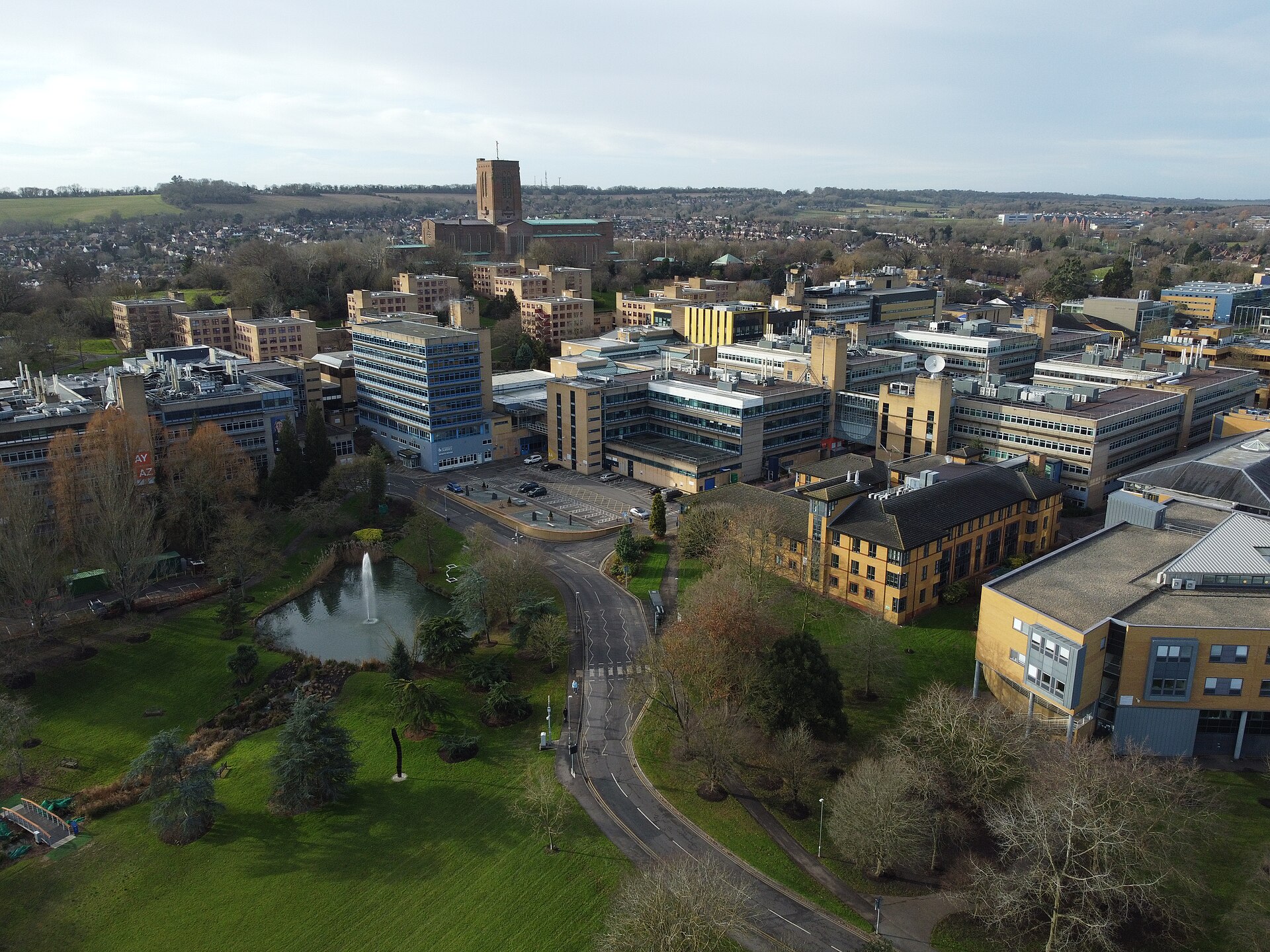
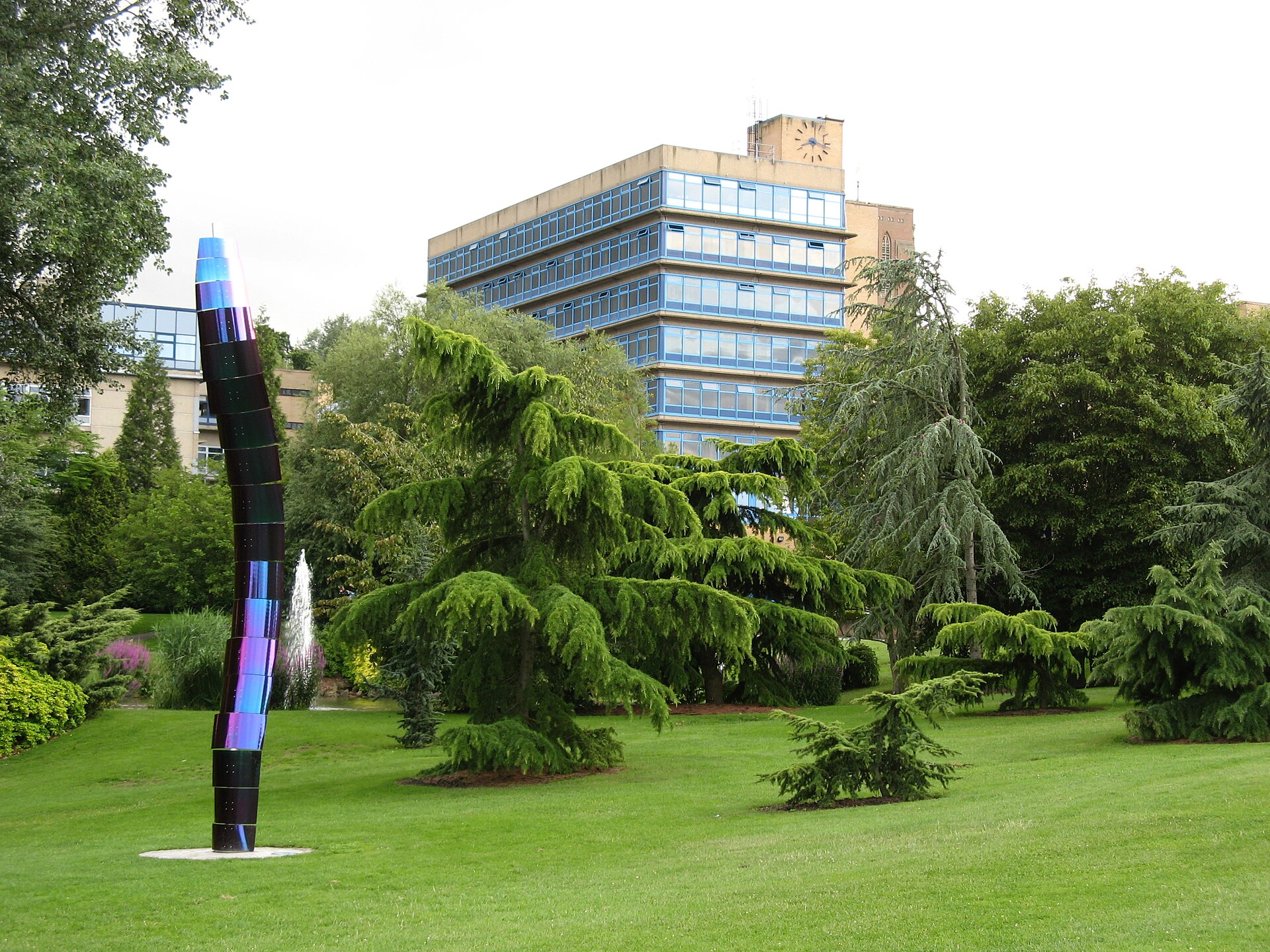
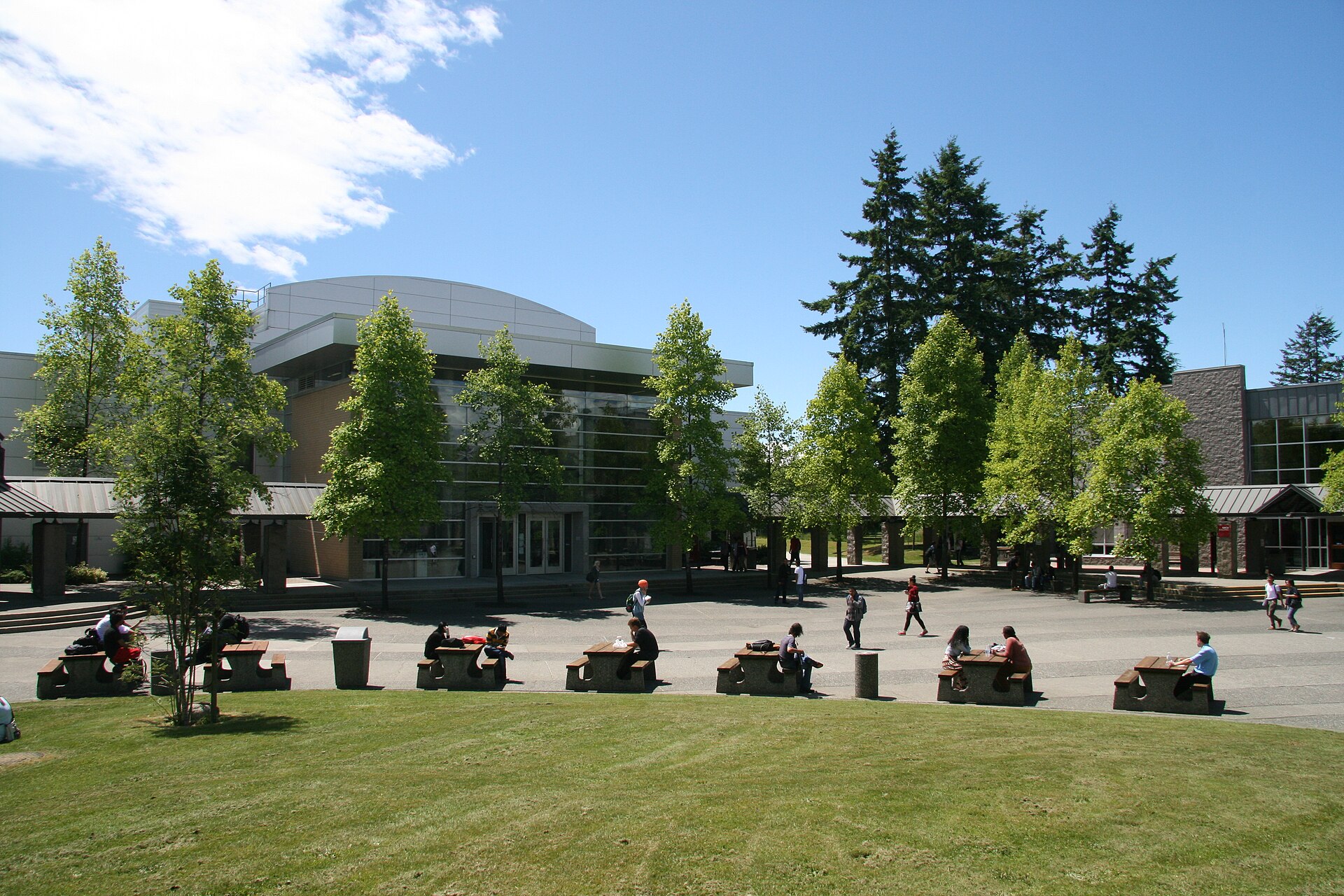
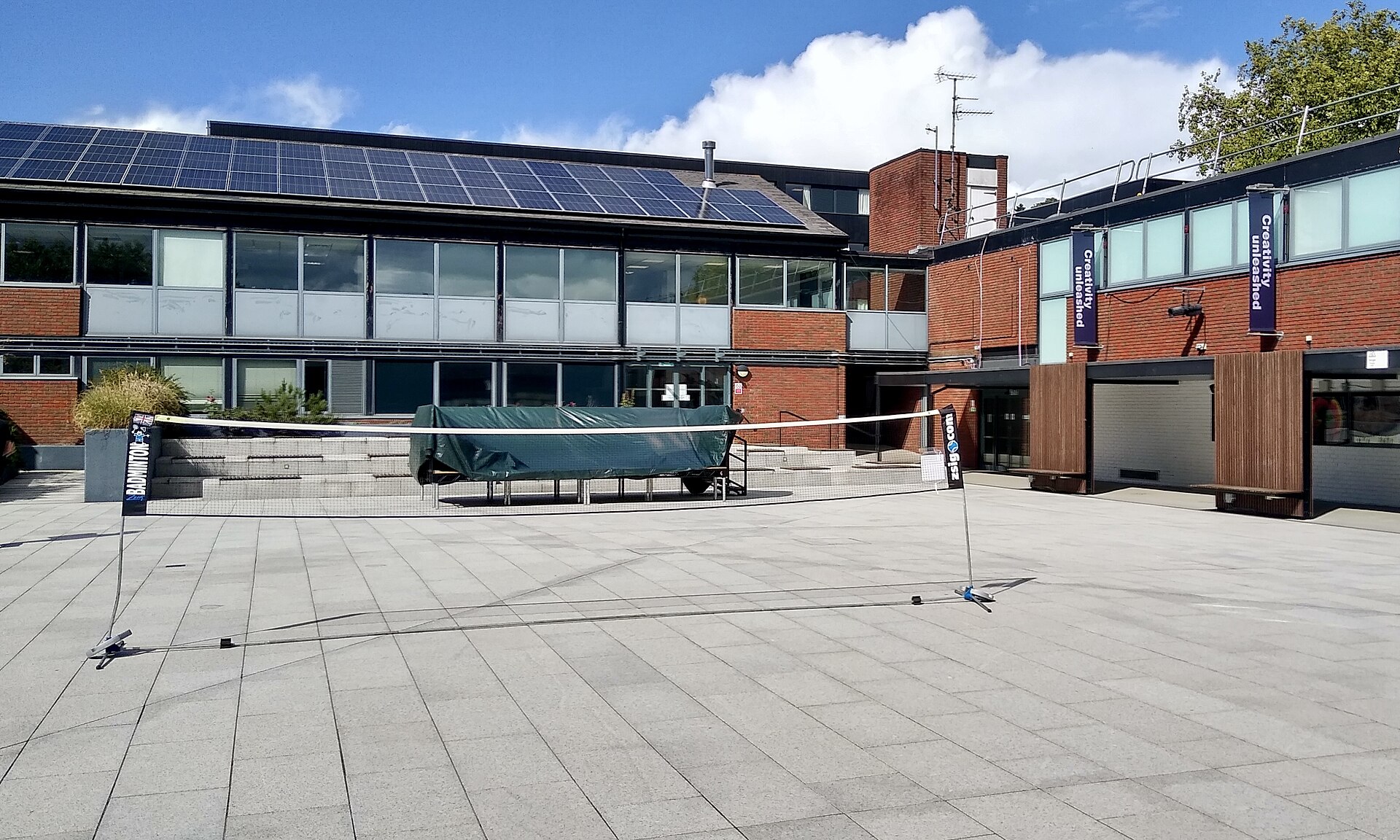
University of Surrey — campus in pictures
Real, freely-licensed photographs of the campus (via Wikimedia Commons).


WHY SURREY
Five reasons ambitious international students choose University of Surrey
SELECTIVITY
Understanding Surrey's Acceptance Profile
With an acceptance rate around 70%, Surrey is moderately selective — meaning a well-prepared international student with a solid academic record has a genuine chance of admission. However, acceptance rates vary significantly by course: Veterinary Medicine and Medicine are far more competitive than the university-wide average, while Engineering and Business admit a larger proportion of applicants.
Surrey evaluates applicants holistically through UCAS, but academic achievement is the primary filter. Your predicted grades, school reference, and personal statement all matter. Surrey makes conditional offers based on A-Level or IB score predictions, so your academic trajectory through Years 12 and 13 is crucial.
AT A GLANCE
University of Surrey — Quick Facts
APPLICATION COMPONENTS
What your Surrey application consists of
Surrey accepts international undergraduate applications through UCAS (Universities and Colleges Admissions Service). The application has five core components.
ADMISSION PROFILE
The profile Surrey admits
Surrey's admissions approach is firmly academic-first: predicted grades in A-Levels, IB Diploma, or equivalent qualifications are the primary filter. But your personal statement and school reference also matter — particularly for competitive and health science courses.
DEADLINES
UCAS Application Key Dates
International students apply through UCAS on the same timeline as UK students. The critical deadline for most Surrey courses is the January Equal Consideration Deadline. Applications submitted after this date are considered only if places remain.
Verify Veterinary Medicine's specific UCAS deadline directly on the Surrey course page — it may fall under the October deadline. UCAS dates are set by UCAS, not Surrey, and may shift slightly by cycle.
| Stage | Date | Notes |
|---|---|---|
| UCAS application opens | September (year before entry) | Platform opens for 2026 entry applications |
| Oxford / Cambridge / Medicine / Vet deadline | 15 October | Does NOT apply to most Surrey courses; Vet at Surrey — verify on course page |
| Equal Consideration Deadline | 29 January | UCAS deadline for most Surrey courses — all applications treated equally before this date |
| UCAS Extra opens | February | If you hold no offers; add a 6th choice one at a time |
| Clearing | July – September | Remaining places after A-Level / IB results day; Surrey participates in Clearing |
CAMPUS & CITY
Student Life at Surrey — Guildford and Beyond
The University of Surrey has a compact, self-contained campus on Stag Hill overlooking Guildford Cathedral. It feels like a genuine campus university — unusual for a UK institution — with accommodation, sports facilities, library, and student union all within walking distance.
Guildford itself is one of England's most affluent county towns: safe, walkable, with a thriving high street, independent food scene, and easy access to the Surrey Hills Area of Outstanding Natural Beauty. The direct train to London Waterloo runs every 15–30 minutes, making both the capital and Heathrow easily accessible.
CAREERS
Graduate Outcomes — Employment and Beyond
Surrey's 94% graduate employment or further study rate is among the strongest in the UK. This is not accidental: the Professional Training year (placement year) is the engine behind Surrey's employment outcomes, and it is available in the majority of undergraduate programmes.
Surrey graduates enter industries including aerospace and defence (Rolls-Royce, Airbus, BAE Systems), finance (JP Morgan, KPMG, Deloitte), technology (Amazon, Microsoft, BT), hospitality (Hilton, Accor, Four Seasons), healthcare, and the creative industries. The Surrey Research Park — 100+ companies on the university's doorstep — frequently hires Surrey graduates directly.
FAQS
Frequently Asked Questions — University of Surrey
Do international students apply through the same system as UK students?+
Yes. All undergraduate applicants — regardless of nationality — apply through UCAS (ucas.com). There is no separate Surrey international application portal for undergraduate courses.
Is the Professional Training (placement) year available to international students?+
Yes, and it is one of Surrey's key selling points for international students. You work in the UK for 12 months on a Student visa, gaining paid UK work experience before your final year. This is a legal work route under your student visa conditions.
What IB score do I need for Surrey?+
The university-wide minimum is 33 IB Diploma points, but competitive programmes require higher. Business, Engineering, and Computer Science typically expect 33–36; Medicine and Veterinary Medicine are significantly more competitive and have additional interview requirements. Always check the specific course entry requirements on Surrey's website.
Is Surrey in London?+
No — Surrey is in Guildford, about 30 miles southwest of central London. Guildford is a prosperous market town with a strong student community. Direct trains to London Waterloo take approximately 35 minutes, so London is very accessible.
Does Surrey offer guaranteed accommodation for international students?+
Surrey guarantees accommodation for all first-year international students who apply before the deadline and accept Surrey as their Firm choice on UCAS. Most first-years live on campus — a significant advantage for international students arriving without local contacts.
What makes the Tonmeister degree unique?+
The BSc in Music and Sound Recording (Tonmeister) at Surrey is one of the few programmes in the world that combines musical performance training with technical audio engineering and acoustics science. Graduates work at the BBC, Abbey Road Studios, major film production companies, and game audio studios. It is regarded internationally as one of the most prestigious qualifications in music technology.
How many universities can I apply to through UCAS?+
You can list up to five university course choices on a single UCAS application. All five receive your application at the same time — there is no 'early decision' penalty for listing Surrey alongside other universities.
What visa do I need to study at Surrey?+
Most international students require a UK Student visa (formerly Tier 4). Surrey is a UKVI-licensed sponsor and will issue your Confirmation of Acceptance for Studies (CAS) once you accept your place. Begin the visa process as soon as you receive your unconditional offer.
ACADEMICS
Academic Expectations at University of Surrey
Surrey is a research-active university where undergraduate students are expected to engage deeply with their discipline — not just to attend lectures but to read widely, apply concepts critically, and often contribute to real research projects. The placement year further demands that students arrive in the workforce ready to contribute from day one.
For international students, particularly those from IB Diploma, A-Level, or equivalent qualification backgrounds, Surrey's academic culture rewards independent thinking, laboratory or studio practice, and the ability to synthesise knowledge across disciplines. Understanding what Surrey expects — and preparing accordingly from Year 10 onwards — makes a significant difference to both your application and your performance once enrolled.
ACADEMIC PROFILE
Entry Standards — What Surrey Expects
Surrey's offers are expressed as IB Diploma points or A-Level grades (e.g., ABB or 33 IB points). Check the specific course entry requirements on Surrey's course finder — requirements vary considerably by programme.
TEST POLICY
SAT, ACT, and Standardised Tests
Surrey's undergraduate admissions use UCAS — the UK's centralised admissions system — which is not built around SAT or ACT scores. For the vast majority of Surrey courses, SAT and ACT scores are neither required nor considered.
Surrey evaluates international students on the qualifications of their home education system: IB Diploma, A-Levels, US High School Diploma (with strong GPA and AP/SAT may help contextualise), Canadian secondary qualifications, Indian board exams (CBSE/ICSE with high percentages), and many others. Surrey publishes equivalencies for most major international qualifications on its website.
If you hold a US High School Diploma without A-Levels or IB, contact Surrey's admissions team directly. A strong GPA plus SAT scores may be considered alongside AP course performance.
INTERNATIONAL QUALIFICATIONS
Which qualifications Surrey accepts
Surrey accepts a wide range of international qualifications. Here are the most relevant to TYCHR students:
IB STUDENTS
IB Diploma — Reading Your Application
For IB students, Surrey's conditional offers are stated in total Diploma points (e.g., '33 IB Diploma points'). Some courses also specify minimum scores for particular Higher Level subjects — for instance, Engineering courses typically require HL Mathematics: Analysis and Approaches or Applications and Interpretation, often at grade 5 or 6.
Extended Essay and Theory of Knowledge are included in the 33-point minimum. CAS is expected as standard. Your personal statement should complement your IB subject choices: if you're applying for Computer Science, your HL Mathematics and any CS or physics background should be woven into your subject motivation narrative.
Surrey distinguishes between HL and SL subjects for course-specific requirements. Verify the exact subject requirements for your intended course before submitting your UCAS application — selecting subjects in Year 11/12 with your target university in mind is critical.
ACADEMIC PREPARATION
Subject Rigour — What to build in each area
ENGLISH REQUIREMENTS
English Language Minimum Standards
As a UK university, Surrey requires evidence of English proficiency for all students whose first language is not English. The minimums below are university-wide; some courses (particularly Medicine and Nursing) require higher scores.
Students who need to improve their English before starting can take a Surrey Pre-Sessional English course on campus. This is a structured programme that, if passed, guarantees direct entry to your undergraduate degree without a separate IELTS test.
| Test | Minimum | Notes |
|---|---|---|
| IELTS Academic | 6.5 overall | Minimum 5.5–6.0 in each component; check course-specific requirements |
| TOEFL iBT | 88 overall | Component minimums apply; check course page |
| Duolingo English Test | 115 | Accepted for most courses; verify for Medicine/Vet |
| Pearson PTE Academic | Verify on Surrey website | PTE may be accepted — confirm on the admissions page |
YEAR-BY-YEAR PLAN
Building a Competitive Surrey Application: Year 9 to 13
COMMON MISTAKES
Academic Application Mistakes to Avoid
- Applying to Veterinary Medicine without documented animal/veterinary work experience — this is effectively disqualifying at most UK vet schools including Surrey.
- Not checking course-specific Higher Level subject requirements before selecting IB options in Year 11 — changing HL choices mid-IB is complex.
- Waiting until January to start writing your UCAS personal statement — the three-question format requires careful thought and multiple drafts.
- Submitting a personal statement that is generic and could apply to any university, rather than one that demonstrates specific knowledge of your chosen subject.
- Overlooking the Pre-Sessional English programme — if your IELTS is borderline, this route saves you from resitting the test and delaying your application.
- Not reading Surrey's country-specific entry requirements for your national qualification — the admissions team will assess your GPA or board exam percentage against published equivalencies.
- Underestimating the competitive nature of Medicine and Veterinary Medicine applications at Surrey — these programmes should be treated at the same level of preparation as applying to Russell Group universities.
FEES & FUNDING
The Real Cost of Surrey — for International Students
International students at Surrey pay significantly higher tuition fees than domestic UK students. The key to making Surrey financially viable is the combination of merit scholarships (particularly the Vice-Chancellor's Future Leaders Award), the paid Professional Training year (which can recover a significant portion of total costs), and living in Guildford rather than London.
Surrey is transparent about its international fees. The numbers in this guide come from the university's published facts. Costs are stated in USD for TYCHR's global audience — check Surrey's website for GBP figures and currency-adjust for your planning.
COST BREAKDOWN
Annual Cost Estimates — International Students
All figures below are annual estimates in USD. Exchange rates fluctuate; verify GBP tuition on Surrey's fees page each year.
Tuition fees for Veterinary Medicine and Medicine programmes at Surrey are substantially higher than the typical international undergraduate rate. Confirm exact programme fees on the Surrey course page before applying.
| Component | Annual_usd | Notes |
|---|---|---|
| Tuition fees | $30,200 | International undergraduate; varies by course (Medicine/Vet higher) |
| Accommodation | Included in COA | On-campus options vary by room type; check Surrey accommodation fees |
| Living costs (food, transport, personal) | $15,000 | Guildford is lower cost than London; includes books and daily expenses |
| Total estimated cost of attendance | $45,200 | Tuition + accommodation + living; annual estimate |
| Application fee | $36 | UCAS application fee (one-time; covers up to 5 university choices) |
FINANCIAL AID
Financial Support for International Students
Surrey does not operate a US-style needs-blind financial aid programme for international undergraduates. The university's international financial support comes primarily through competitive merit scholarships — awarded on the basis of academic achievement — rather than need-based grant aid.
The average aid amount from scholarships is approximately 10% of fees for recipients. This means most international students fund their education through personal or family resources, government sponsorships from their home country, external scholarships (Chevening, Commonwealth, government programmes), and where possible, the income from the paid Professional Training year. Surrey's Scholarships and Bursaries team can advise on external funding opportunities.
If you are receiving a government scholarship from your home country (e.g., MOFAT from South Korea, Malaysian Government scholarships, Indian government awards), Surrey regularly works with sponsored students and has processes to facilitate direct billing.
SCHOLARSHIPS
Named Scholarships for International Students
The following scholarships are offered directly by the University of Surrey. Amounts are in GBP as published; convert to USD for planning purposes.
AFFORDABILITY
Making Surrey Financially Viable
Surrey's total cost of attendance (~$45,200/year) places it at the more affordable end of UK research universities for international students, when compared with counterparts in London. The key financial levers for international students are:
First, merit scholarships can reduce Year 1 tuition by up to £7,500 if you qualify for the Vice-Chancellor's Future Leaders Award. Second, the paid Professional Training year (typically Year 3 of a 4-year programme) can generate meaningful income — 60% of placements pay between £20,000–£40,000 for the year — effectively recovering a year's living costs. Third, choosing Guildford over London saves significantly on accommodation and transport. Surrey's on-campus accommodation guarantee for first-year internationals removes the cost and stress of flat-hunting in an unfamiliar city.
The Professional Training year income is not guaranteed — it depends on placement, employer, and sector. However, even modestly paid placements cover living costs and reduce the financial burden of the degree overall.
FUNDING ROADMAP
How to Fund Your Surrey Education: Step by Step
COST FAQs
Frequently Asked Questions — Fees and Funding
Can I work while studying at Surrey?+
Yes. On a UK Student visa, you are typically permitted to work up to 20 hours per week during term time and full-time during vacations. Surrey's careers service can help you find part-time work. This supplements your budget but should not be relied upon as a primary funding source.
Does the tuition fee differ by programme?+
Yes. The $30,200 figure in this guide is a general international undergraduate rate. Programmes like Veterinary Medicine and Medicine have substantially higher fees. Always verify the exact fee for your specific course on the Surrey programme page.
Is the Vice-Chancellor's Future Leaders Award automatic?+
It is based on academic performance and is reviewed as part of the admissions process for self-funded international students. The exact criteria and whether it requires a separate application should be confirmed directly with Surrey's Scholarships team.
Do I need to pay the UCAS application fee separately from Surrey?+
Yes. UCAS charges a single application fee (~£28 as of recent cycles) to apply to up to five UK universities through their system. This is separate from any university-specific fees.
Does Surrey offer payment plans for tuition?+
Surrey typically allows tuition to be paid in two instalments per academic year. Details on instalment plans are confirmed once you have accepted your place. Contact the Finance team for current arrangements.
Are living costs in Guildford similar to London?+
Guildford is significantly more affordable than central London for accommodation and transport — but it is still a prosperous, relatively expensive UK city. The $15,000 annual living cost estimate in this guide covers accommodation, food, travel, and personal expenses. Budget carefully and use the university's cost of living calculator for current figures.
UCAS PERSONAL STATEMENT
The UCAS Application — Writing Your Personal Statement
Surrey is a UK university, and UK universities do not use the US Common Application or require supplemental essays. Instead, all applicants submit a single UCAS application with one personal statement — now structured as three distinct questions. This is your one piece of extended written communication with every university on your UCAS list simultaneously.
This guide covers the 2026 UCAS three-question personal statement format. Preparing a genuinely compelling set of responses for Surrey (and your other UCAS choices) requires strategic thinking about subject passion, skills evidence, and future plans — not a generic character dump.
HOW IT WORKS
The UCAS Three-Question Personal Statement Format
From 2026 entry, UCAS replaced the traditional single personal statement essay with a structured three-question format. Each question has a character limit and is read by every university you apply to. You do NOT write separate supplements for each university — one set of responses goes to all five of your UCAS choices.
This creates a fundamentally different challenge from the US model: your responses must be strong enough to impress Surrey, while not being so institution-specific that they don't work for your other four choices. The solution is to focus on your subject and your journey — not on any one university.
THE THREE QUESTIONS
UCAS 2026 Personal Statement Question Framework
The following outlines the three-question framework introduced by UCAS for 2026 entry. Verify exact wording, character limits, and any updates directly on the UCAS website before writing.
STRATEGY
Writing for UK Universities — The Academic-First Approach
The biggest mistake international students make on UCAS personal statements — particularly those who also apply to US universities — is importing the US college essay style. UK universities, including Surrey, are not looking for personal growth narratives, vulnerability, or storytelling techniques borrowed from the Common App.
Surrey's admissions tutors read personal statements primarily to answer one question: does this student know what they are applying to study, and do they have the intellectual preparation to succeed in it? A personal statement heavy on sports captaincy anecdotes and light on subject knowledge will not impress a Surrey course director. Lead with the subject, anchor everything to your academic curiosity, and treat extracurricular activities as evidence of broader skills — not as the main story.
If you are applying to both UK and US universities, you will need to write genuinely different materials. Your UCAS personal statement (subject-focused, evidence-based, concise) and your Common App personal statement (more personal, narrative-driven, character-focused) are distinct documents serving different audiences.
BY SUBJECT AREA
Personal Statement Angles by Surrey Programme
TOPIC SELECTION
What to Write — and What to Avoid
The most effective UCAS personal statements share a common characteristic: specificity. The admissions tutor should be able to identify your subject after reading the first two sentences.
COMMON MISTAKES
UCAS Personal Statement Mistakes to Avoid
- Writing a personal statement in US Common App style (personal narrative, emotional arc, lack of subject focus) — UK admissions tutors want academic engagement, not a coming-of-age story.
- Not addressing all three UCAS questions with sufficient depth — treating one as an afterthought creates an unbalanced application.
- Exceeding character limits — UCAS imposes strict character limits per question. Proofread within the UCAS system, not just in Word.
- Padding with generic qualities like 'teamwork', 'leadership', and 'communication skills' without concrete evidence from subject-relevant contexts.
- Using ChatGPT or AI to write the statement without heavy editing — UK universities and Surrey are experienced at detecting AI-generated writing, and a bland, over-structured statement raises flags with experienced admissions readers.
- Ignoring the third question (future plans) — UK universities DO care about your career direction, especially for vocational courses like Engineering, Vet, Nursing, and Hospitality.
- Submitting before getting a trusted teacher or counsellor to review all three responses — an external reader will catch logical gaps and tone issues that you cannot see yourself.
- Applying to Vet Medicine without addressing work experience in your application — Surrey and all UK vet schools view this as a near-disqualifying omission.
FAQs
UCAS Personal Statement Frequently Asked Questions
Does Surrey read the UCAS personal statement carefully?+
Yes, particularly for competitive courses like Veterinary Medicine, Medicine, Law, and Tonmeister. For less competitive courses, predicted grades are the primary filter — but the personal statement can still tip a borderline decision, especially when your grades are at the threshold of Surrey's offer conditions.
Can I write different personal statements for each university?+
No. UCAS sends a single set of personal statement responses to all universities you apply to. This is a fundamental difference from the US system. Your three responses must work for all five of your UCAS choices simultaneously.
Does Surrey conduct interviews?+
Most Surrey undergraduate courses do not include interviews. Exceptions include Veterinary Medicine (Multiple Mini Interview), Medicine, and some health science programmes. Check your specific course page for interview requirements.
How long should each UCAS personal statement response be?+
UCAS sets character limits for each of the three questions. Check the current limits on the UCAS website (ucas.com) — these are set by UCAS, not Surrey, and may be updated each cycle. Use close to the full character allowance for each question.
Should I mention the placement year in my personal statement?+
Yes — if it is genuinely relevant to your career plans or your choice of Surrey. Mentioning that you are attracted to the professional training model and connecting it to your specific career aspirations shows that you understand what Surrey's degree actually involves and why you want it specifically.
What if I am applying for a joint honours degree (e.g., Business and French)?+
Address both subjects in your personal statement — ideally showing how they complement each other and why the combination appeals to you professionally or intellectually. Avoid splitting your statement 50/50 mechanically; find the thematic connection between your two subjects.
When should I start writing my UCAS personal statement?+
Start drafting in July or August before your final year (Year 13). UCAS opens in September, and the Equal Consideration Deadline is 29 January. Aim to submit in November or December — strong, early applications are processed without disadvantage, and you reduce last-minute stress.
Courses — schools, degrees & intake
97 degrees across 13 groupings.
School of Arts, Humanities and Creative Industries · 18 degrees
English Literature BA (Hons)
English Literature and Creative Writing BA (Hons)
English Literature and French BA (Hons)
English Literature and Spanish BA (Hons)
Modern Languages (French and Spanish) BA (Hons)
Media and Communication BSc (Hons)
Games Art BA (Hons)
Games Design BSc (Hons)
Creative Music Technology BMus (Hons)
Music BMus (Hons)
Music and Sound Recording (Tonmeister) BMus (Hons) / BSc (Hons)
Film Production and Broadcast Engineering BEng (Hons)
Acting BA (Hons)
Actor-Musician BA (Hons)
Applied and Contemporary Theatre BA (Hons)
Musical Theatre BA (Hons)
Theatre BA (Hons)
Theatre Production BA (Hons)
School of Social Sciences · 16 degrees
Criminology BSc (Hons)
Criminology and Psychology BSc (Hons)
Criminology and Sociology BSc (Hons)
Criminology with Forensic Investigation BSc (Hons)
Sociology BSc (Hons)
Politics BSc (Hons)
International Relations BSc (Hons)
Politics and Economics BSc (Hons)
Politics and International Relations BSc (Hons)
Politics and Sociology BSc (Hons)
Law LLB (Hons)
Law (Law and Technology Pathway) LLB (Hons)
Law (Law, Environment and Sustainability Pathway) LLB (Hons)
Law (Philosophy, Politics and Law Pathway) LLB (Hons)
Law with Criminology LLB (Hons)
Law with International Relations LLB (Hons)
Surrey Business School · 15 degrees
Accounting and Finance BSc (Hons)
Business Economics and Data Analytics BSc (Hons)
Business Management BSc (Hons)
Business Management and French BSc (Hons)
Business Management and Spanish BSc (Hons)
Business Management and Modern Languages BSc (Hons)
Business Management with Business Analytics BSc (Hons)
Business Management with Entrepreneurship and Innovation BSc (Hons)
Business Management with Human Resource Management BSc (Hons)
Business Management with Marketing BSc (Hons)
International Business Management BSc (Hons)
Economics BSc (Hons)
Economics and Finance BSc (Hons)
Economics and Mathematics BSc (Hons)
Financial Mathematics BSc (Hons)
School of Chemistry and Chemical Engineering · 5 degrees
Chemical Engineering BEng (Hons) / MEng
Chemistry BSc (Hons) / MChem
Chemistry with Forensic Investigation BSc (Hons) / MChem
Medicinal Chemistry BSc (Hons) / MChem
Pharmaceutical Sciences BSc (Hons) / MSci (Hons)
School of Computer Science and Electronic Engineering · 7 degrees
Computer Science BSc (Hons) / MEng
Computer Science and Artificial Intelligence BSc (Hons) / MEng
Computer Science and Cyber Security BSc (Hons)
Computer and Internet Engineering BEng (Hons) / MEng
Electrical and Electronic Engineering BEng (Hons) / MEng
Electronic Engineering BEng (Hons) / MEng
Electronic Engineering with Artificial Intelligence BEng (Hons) / MEng
School of Engineering · 6 degrees
Aerospace Engineering BEng (Hons) / MEng
Astronautics and Space Engineering BEng (Hons) / MEng
Biomedical Engineering BEng (Hons) / MEng
Civil Engineering BEng (Hons) / MEng
Mechanical Engineering BEng (Hons) / MEng
Spacecraft Engineering BEng (Hons) / MEng
School of Mathematics and Physics · 7 degrees
Mathematics BSc (Hons) / MMath
Mathematics with Data Science BSc (Hons) / MMath
Mathematics and Physics BSc (Hons) / MMath / MPhys
Physics BSc (Hons) / MPhys
Physics with Astronomy BSc (Hons) / MPhys
Physics with Nuclear Astrophysics BSc (Hons) / MPhys
Physics with Quantum Computing BSc (Hons) / MPhys
School of Biosciences · 9 degrees
Biochemistry BSc (Hons) / MSci (Hons)
Biological Sciences BSc (Hons)
Biomedical Science BSc (Hons) / MSci (Hons)
Food Science and Nutrition BSc (Hons)
Microbiology BSc (Hons)
Nutrition BSc (Hons)
Nutrition and Dietetics BSc (Hons)
Sport and Exercise Science BSc (Hons)
Veterinary Biosciences BSc (Hons)
School of Health Sciences · 6 degrees
Healthcare Practice BSc (Hons)
Midwifery (Registered Midwife) BSc (Hons)
Nursing Studies (Registered Nurse Adult Nursing) BSc (Hons)
Nursing Studies (Registered Nurse Children and Young People Nursing) BSc (Hons)
Nursing Studies (Registered Nurse Mental Health Nursing) BSc (Hons)
Paramedic Science BSc (Hons)
School of Medicine · 1 degrees
Medicine (Graduate Entry) BMBS
School of Psychology · 1 degrees
Psychology BSc (Hons)
School of Veterinary Medicine · 1 degrees
Veterinary Medicine and Science BVMSci (Hons)
School of Hospitality and Tourism Management · 5 degrees
International Airline and Airport Management BSc (Hons)
International Event Management BSc (Hons)
International Hospitality and Tourism Management BSc (Hons)
International Hospitality Management BSc (Hons)
International Tourism Management BSc (Hons)
Want your real chances at University of Surrey?
Create a free TYCHR account for your personalised admit-chance, a shortlist you can track, exact entry requirements, and essay + counselling help.