University of Southern Denmark
Odense, Denmark · Suburban
SDU ADMISSIONS GUIDE
University of Southern Denmark — Where Robotics, Medicine & Nordic Innovation Meet
The University of Southern Denmark (SDU) is one of Denmark's five comprehensive universities, headquartered in Odense — the birthplace of Hans Christian Andersen and the global epicentre of collaborative robotics. Founded in 1966 and spread across seven campuses, SDU combines world-class research in medical science, robot systems engineering, and journalism with a famously inclusive Nordic campus culture that makes international students feel at home from day one.
With 27,000 students, 15% of whom are international, and a QS ranking of 335 globally, SDU punches above its size in research impact and graduate employment. If you are considering a public European research university that offers genuine interdisciplinary depth, strong industry partnerships in both Denmark and Southern Jutland's cross-border German region, and access to Denmark's outstanding welfare-state quality of life, SDU belongs on your shortlist.
Campus
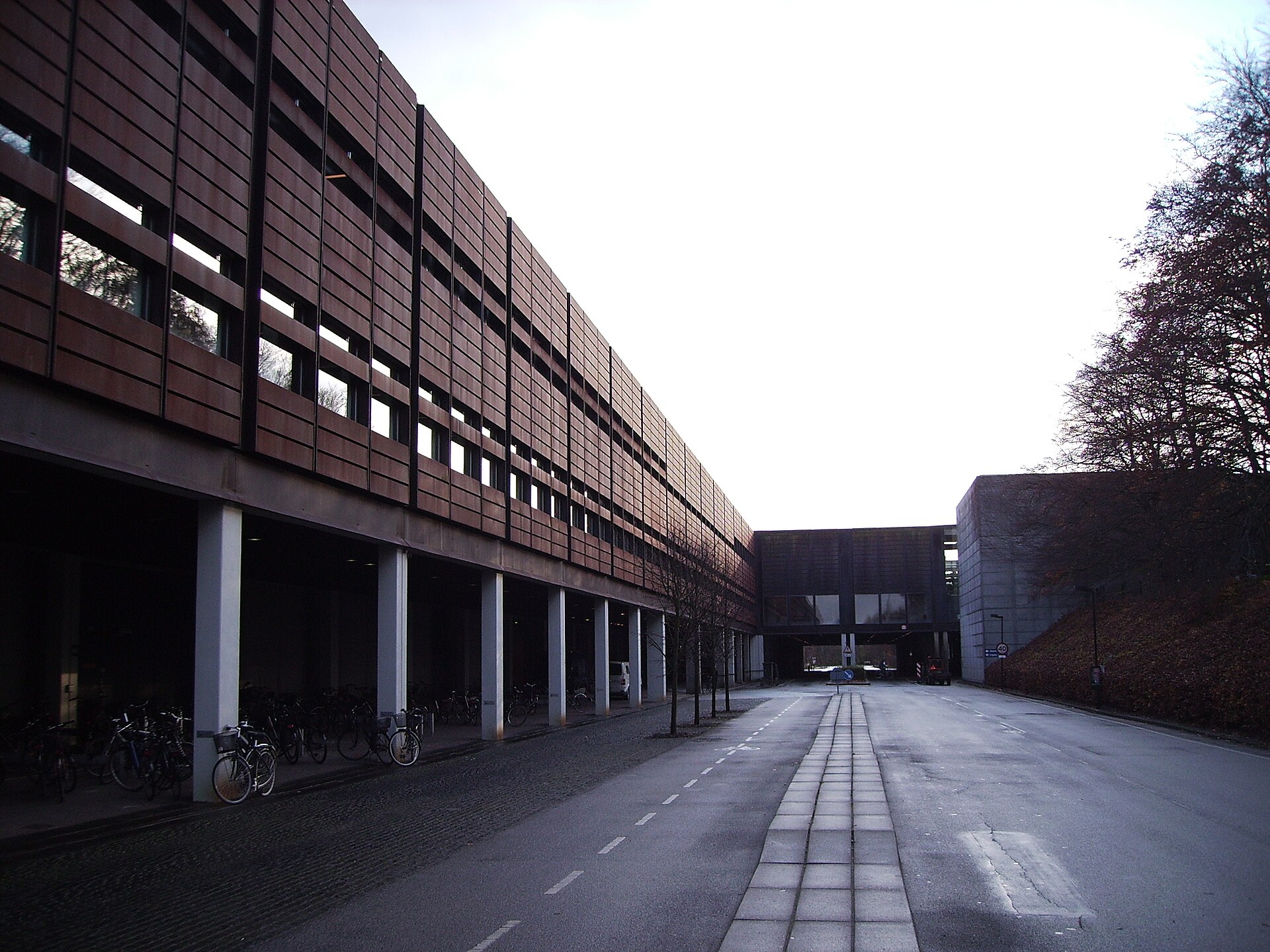
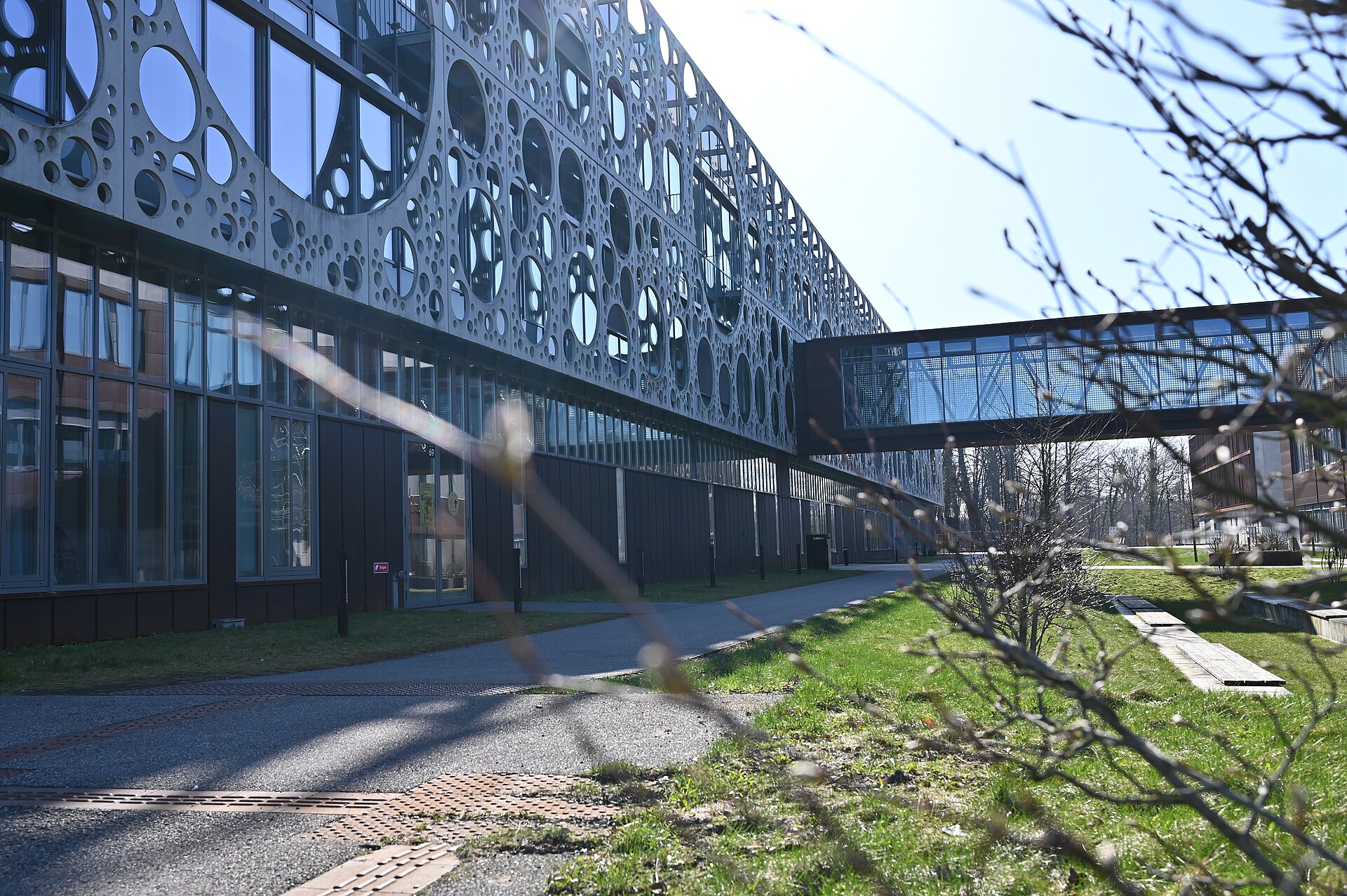
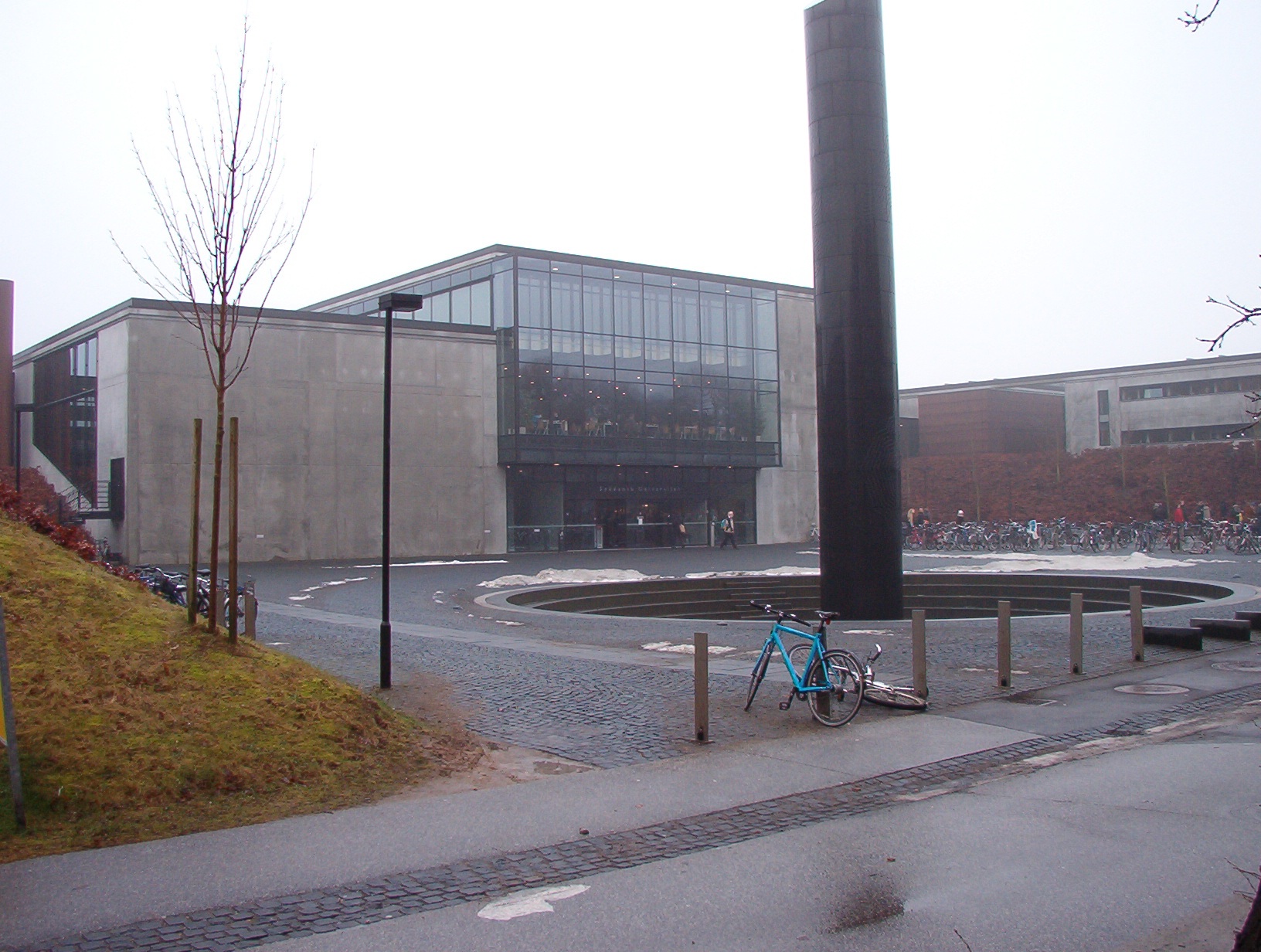
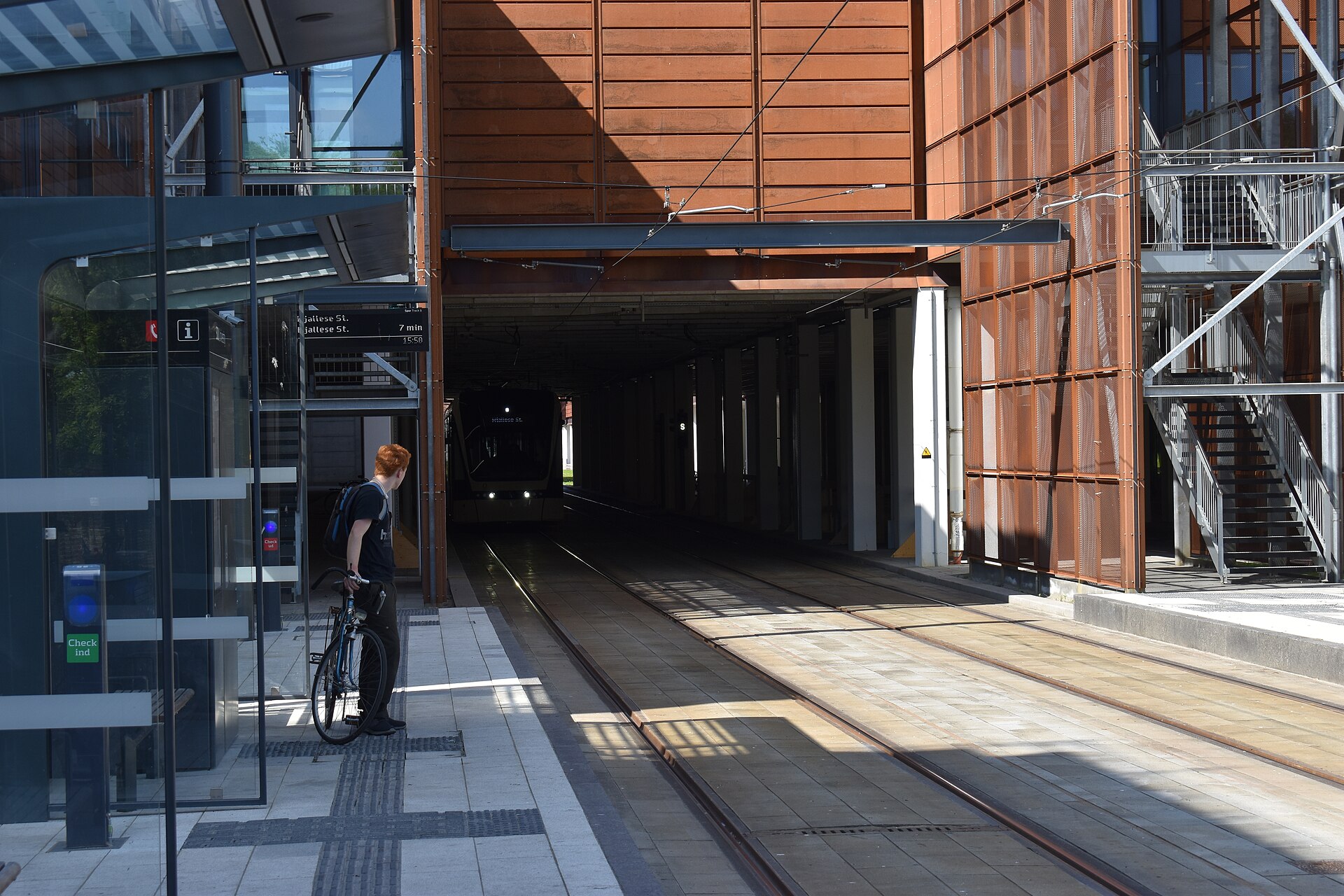
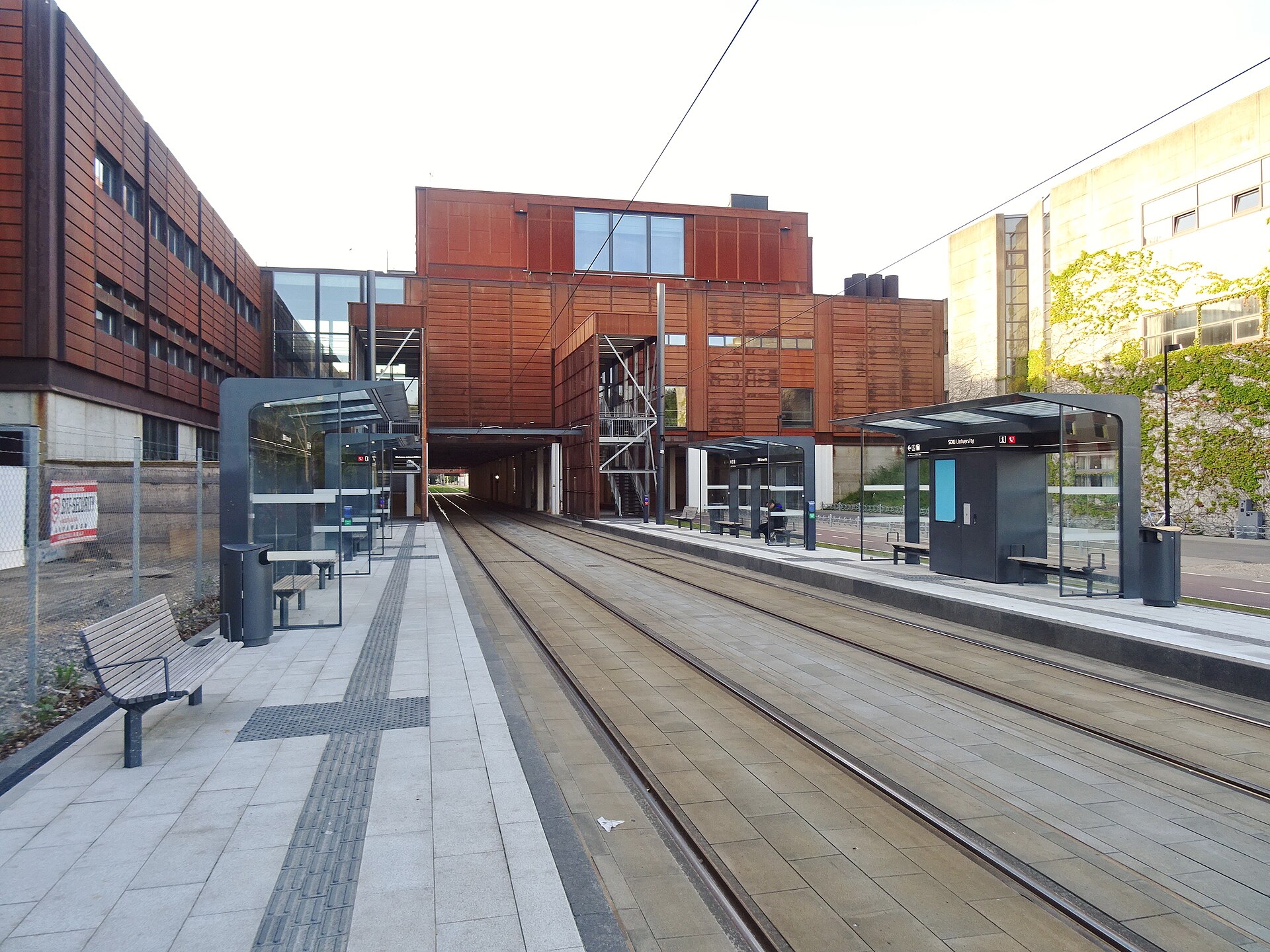
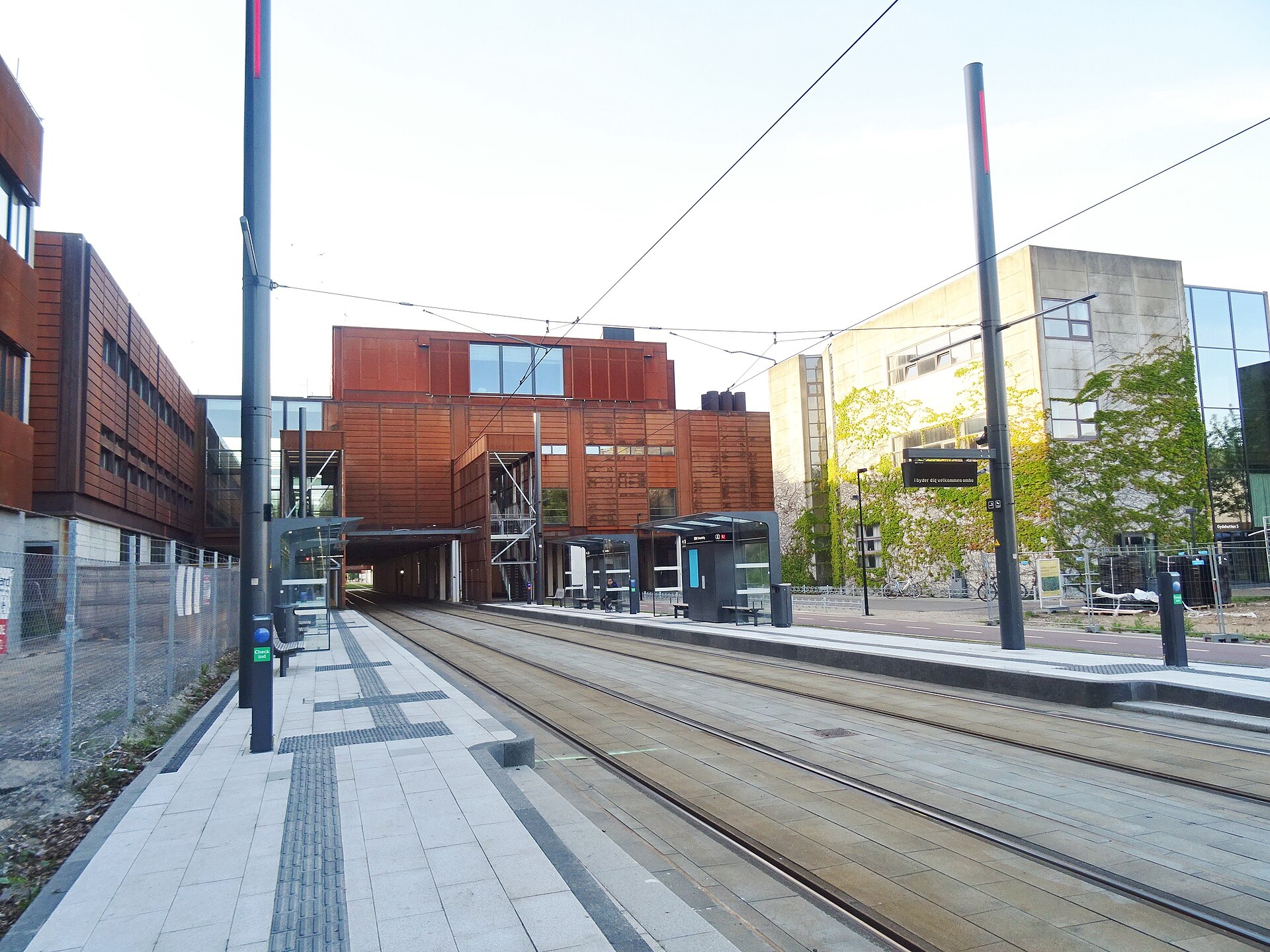
University of Southern Denmark — campus in pictures
Real, freely-licensed photographs of the campus (via Wikimedia Commons).
WHY SDU
Five Reasons to Choose University of Southern Denmark
SELECTIVITY
Who Gets In — Acceptance Profile
SDU admits approximately 55% of applicants across all programmes, but selectivity varies enormously by subject. Medicine, Robot Systems Engineering, and certain business programmes are far more competitive than the overall figure suggests. The admissions process uses two official quotas and, for most international bachelor applicants, requires sitting the uniTEST aptitude test.
For bachelor's programmes, SDU uses Quota 1 (grade-point average from secondary school) and Quota 2 (which factors in the uniTEST aptitude score plus other qualifications). The university recommends that all applicants — including those with strong grades — apply through Quota 2, as competition through Quota 1 alone can be intense for popular programmes. For master's programmes, the benchmark is a relevant bachelor's degree at EQF Level 6 with a strong academic record.
QUICK FACTS
SDU at a Glance
APPLICATION COMPONENTS
What Your Application Must Include
SDU applications are submitted through Danish national portals — optagelse.dk for bachelor's programmes and DANS for master's programmes. There are no open-ended personal essays in the US sense; the application is documentation-driven with specific aptitude testing for bachelor applicants.
ADMISSION PROFILE
The Students SDU Admits — What Admissions Looks For
SDU selects students who demonstrate both academic capability and the potential to contribute to a collaborative, interdisciplinary learning environment. The university values intellectual curiosity, the ability to work across cultural and disciplinary boundaries, and a genuine connection to their chosen field.
DEADLINES
Application Deadlines by Level & Residency
SDU uses different portals and timelines for bachelor's and master's programmes. Non-EU/EEA students (fee-paying) typically have earlier deadlines than EU/EEA/Swiss students (non-fee-paying). Below are the primary deadlines for international applicants.
Deadlines are strict — SDU does not accept late applications. Apply well in advance to allow time for document apostilles, certified translations, and English test sittings. Exchange and visiting students follow separate deadlines set by the International Office.
| Level | Portal | Intake | Deadline | Decision |
|---|---|---|---|---|
| Bachelor's — All applicants | optagelse.dk | September | 15 March (noon CET) | July |
| Master's — Non-EU/EEA (fee-paying) | DANS | September | 1 February | By 10 June |
| Master's — EU/EEA/Swiss (non-fee-paying) | DANS | September | 1 March | By 10 June |
| Master's — Non-EU/EEA (fee-paying) | DANS | February | 1 September | By November |
| Master's — EU/EEA/Swiss (non-fee-paying) | DANS | February | 15 October | By November |
STUDENT LIFE
Life at SDU and in Odense
SDU's main campus in Odense has a striking architectural presence mixing engineering labs, health science facilities, a major university hospital next door, and humanities buildings under one roof. On-campus life includes dozens of student associations (studenterforeninger), sports facilities, an active student council (SDU's KampusKlubben), and an international student network that organises social events, city tours, and cultural exchanges throughout the year.
Odense is Denmark's third-largest city — compact, green, and deeply liveable. It is famously bikeable, with an extensive cycling infrastructure that lets most students go car-free. The city centre is walkable, with a lively food and café scene, a historic cobblestone old town, and easy access to the beautiful beaches and forests of the island of Funen.
CAREER OUTCOMES
Where SDU Graduates Go
For international graduates who wish to remain in Denmark, the country offers a favourable post-study work visa framework. Denmark's 'jobsøgningsopholdstilladelse' (job-seeker's residence permit) allows qualified graduates to stay and look for work after their studies. The SDU Career Centre provides job-search support, CV workshops, and employer networking events specifically aimed at international students navigating the Danish labour market.
SDU graduates enter the labour market with strong employment outcomes, benefiting from Denmark's tight link between universities and industry.
Denmark's graduate employment rate is among the highest in Europe, and SDU alumni benefit from the country's strong social contract between higher education and the labour market. In robotics and engineering, graduates feed directly into Odense's automation cluster — companies like Universal Robots, Mobile Industrial Robots (MiR), and Blue Ocean Robotics actively recruit from SDU. Medical graduates join Odense University Hospital, one of Denmark's leading teaching hospitals. Business and economics graduates enter consulting, finance, and public-sector roles in both Denmark and Northern Europe. Journalism alumni are prominently represented in Danish public broadcasting and major Nordic media.
FAQ
Frequently Asked Questions
Do I need to speak Danish to study at SDU?+
Not if you enrol in an English-taught programme. SDU offers multiple English-taught bachelor's programmes and approximately 50 master's programmes in English. However, learning Danish significantly improves your daily life, social integration, and job prospects in Denmark — SDU offers free Danish language courses for international students.
What is the uniTEST and do all international bachelor applicants sit it?+
The uniTEST is a general aptitude test used by Danish universities for Quota 2 admission. It assesses reasoning and problem-solving rather than subject knowledge. SDU recommends that all international bachelor applicants apply through Quota 2 (which includes the test), even if their grades would qualify for Quota 1, as competition for spots is often more manageable through Quota 2. The test is taken online, and you are invited after submitting your application through optagelse.dk.
How much does it cost to study at SDU as a non-EU student?+
Non-EU/EEA students pay programme-specific tuition fees. Based on the available data, annual tuition for international (non-EU) bachelor's and master's students typically falls in the range of EUR 14,000–17,000 per year depending on the programme. EU/EEA/Swiss students pay no tuition fees at all. Check the exact fee on your specific programme page at sdu.dk before applying.
Can international students work while studying in Denmark?+
Yes. Non-EU students with a Danish student residence permit can typically work up to 20 hours per week (and full-time during June, July, and August). EU/EEA citizens have unrestricted work rights. Denmark's active student job market, especially in Odense and Copenhagen, means many SDU students find part-time work.
Is there accommodation available for international students?+
SDU does not guarantee accommodation but assists in connecting students with student housing organisations. Odense is significantly more affordable than Copenhagen. It is advisable to apply for housing as soon as you accept your offer, as demand can outstrip supply during peak intake periods.
What English test scores does SDU require?+
For English-taught programmes, SDU requires a minimum IELTS Academic score of 6.5 overall or a TOEFL iBT score of 88. Certain exemptions apply — for example, if your previous degree was taught in English at a recognised institution, or if you are a native English speaker from a country on SDU's exemption list. Check the exact requirements for your programme.
Does SDU offer scholarships to international students?+
SDU offers a limited number of scholarships for non-EU international master's students, primarily to offset tuition fees. These are typically awarded after admission, not in the initial application. There is no large-scale scholarship programme comparable to those at some US universities. External funding sources — including Erasmus+, the Danish Government Scholarships, and bilateral agreements — are worth exploring. Verify current offerings at sdu.dk/en/uddannelse/kandidat.
Can I transfer credits from another university?+
SDU can in some cases recognise prior academic work for credit transfer (merit transfer — 'meritoverflytning'). This is assessed case by case by the relevant faculty. It is most relevant for master's applicants who have completed postgraduate coursework elsewhere. Contact the specific programme's study board before applying to get a preliminary assessment.
ACADEMIC PROFILE
Academic Expectations at SDU — What International Students Need to Know
SDU is a comprehensive research university with high academic standards, particularly in its science, health, engineering, and business faculties. For international students, the Danish university tradition combines structured coursework with significant self-directed study, project-based learning, and close faculty contact — a pedagogy that rewards initiative and independent thinking.
SDU teaching style reflects the broader Danish higher-education philosophy: fewer contact hours than many Asian or British systems, with an expectation that students engage deeply with readings, participate actively in seminars, and take ownership of their own learning. Group projects are common across all faculties, reflecting Denmark's collaborative professional culture.
ENTRY BENCHMARKS
Academic Profile of Admitted Students
The figures below are drawn from SDU's published data and facts. For most programmes, strong performance in relevant subjects matters more than overall score. Medicine and a handful of engineering programmes are considerably more competitive than SDU's overall average.
For the IB Diploma, an overall score of 31 is the typical benchmark, but competitive programmes such as Medicine (Medicin) require significantly higher scores. Subject-level performance in Biology, Chemistry, and Mathematics is reviewed separately for health-science applicants. Always check the current grade requirements published on each programme's page at sdu.dk.
TEST POLICY
SDU's Approach to Standardised Tests
SDU is test-blind with respect to SAT, ACT, and similar national standardised tests from other countries' systems. These scores are neither required nor considered in admission decisions. The exception is the uniTEST (for bachelor's Quota 2 applicants), which is SDU's own aptitude assessment — an entirely different type of instrument from the SAT/ACT.
UNITEST
The uniTEST Explained — Denmark's Aptitude Assessment for Bachelor's Applicants
The uniTEST is a general academic aptitude test used by Danish universities for Quota 2 admissions. It measures cognitive skills relevant to university study, not accumulated factual knowledge.
IB & INTERNATIONAL QUALIFICATIONS
How SDU Evaluates Your IB Diploma & International Qualifications
SDU accepts a wide range of international secondary qualifications, including the IB Diploma, A-Levels, Abitur, Baccalauréat, and many national systems. Each is assessed against the Danish grading scale (karakterskala) for Quota 1 purposes, or alongside the uniTEST for Quota 2.
SUBJECT PREPARATION
Subject Preparation for SDU's Strongest Programmes
ENGLISH REQUIREMENTS
English Language Requirements
All English-taught programmes at SDU require proof of English proficiency unless an exemption applies. The table below shows the minimum scores required for English-taught programmes.
Exemptions from the English test requirement apply if: your previous degree was taught entirely in English at a recognised institution; you are a native speaker from a country on SDU's exemption list (UK, Ireland, USA, Canada, Australia, New Zealand, and selected others); or you hold a secondary school leaving certificate from an English-medium system. Always check your specific programme's English requirements page at sdu.dk.
| Test | Minimum | Notes |
|---|---|---|
| IELTS Academic | 6.5 overall | No individual band below 6.0 in most programmes |
| TOEFL iBT | 88 total | Accepted by all English-taught programmes |
| Duolingo English Test | Not confirmed | Verify with SDU — not listed in current published requirements |
| Cambridge C1 Advanced / C2 Proficiency | Grade B or above | Generally accepted; confirm with specific programme |
STRATEGY
Building Your Academic Profile — Year by Year
COMMON MISTAKES
Academic Application Pitfalls to Avoid
- Assuming a 55% acceptance rate means SDU is 'easy to get into' — Medicine and Robot Systems Engineering are far more competitive than this average implies.
- Applying through Quota 1 only and skipping the uniTEST — SDU itself recommends all applicants use Quota 2 for better chances.
- Missing the March 15 noon deadline by even one minute — optagelse.dk closes to the second and will not accept late submissions.
- Submitting unverified transcripts — SDU requires stamps and signatures; unofficial documents delay and may invalidate your application.
- Overlooking that Medicine is predominantly taught in Danish — non-Danish speakers should research language requirements before applying and consider Danish-language preparation programmes.
- Sending a generic motivation letter for master's programmes — admissions committees across all SDU faculties read hundreds of applications; a letter that could fit any European university is easily identified and ranks poorly.
- Underestimating the Danish academic workload — fewer contact hours does not mean less work. SDU expects extensive independent reading, group project participation, and self-directed study that surprises students accustomed to more structured systems.
- Not checking programme-specific prerequisites — SDU's 50+ master's programmes each have distinct entry requirements. What qualifies you for one programme may not qualify you for another within the same faculty.
COST & FINANCIAL AID
Understanding the True Cost of Studying at SDU as an International Student
The University of Southern Denmark operates on a strongly tiered fee model: EU/EEA/Swiss students pay no tuition fees whatsoever, while non-EU students pay programme-specific fees. Whether SDU is affordable for you depends almost entirely on your residency status. Odense's relatively low cost of living compared with Copenhagen makes a significant positive difference for all students.
Denmark is an expensive country by global standards, but Odense is meaningfully cheaper than the capital. Student housing, transport, and food costs are manageable on a student budget, especially for those who take advantage of student canteens and the city's flat, bikeable layout. For non-EU students, the total annual cost — tuition plus living — requires careful financial planning before you apply.
ANNUAL COST ESTIMATE
Annual Cost Breakdown (2024–25 Estimates)
All figures below are annual estimates in USD. Tuition is drawn from SDU's published data; living costs from the facts file. Exchange rates may affect these figures.
These are estimates. Always verify current tuition fees on your specific programme page at sdu.dk, as fees vary across programmes and are updated annually. Living costs depend heavily on accommodation type and personal spending habits.
| Item | Usd Estimate | Notes |
|---|---|---|
| Tuition (non-EU/EEA students) | $14,200 | Varies by programme; some higher |
| Tuition (EU/EEA/Swiss students) | $0 | No tuition fees under Danish law |
| Cost of living (Odense) | $13,000 | Rent, food, transport, personal |
| Total cost of attendance (non-EU) | $28,500 | Tuition + living combined estimate |
| Application deposit (non-EU master's) | $110 approx. | €200 deposit; deducted from tuition if enrolled |
FINANCIAL AID
Financial Aid Policy for International Students
Approximately 10% of the cost of study may be offset through SDU scholarships and external grants on average, based on the available data. This means non-EU students should plan to self-fund the majority of their costs. The Erasmus+ programme provides mobility grants for students from participating countries doing part of their studies at SDU, but this does not apply to full-degree international students from non-European countries.
SDU's financial aid picture for non-EU international students is limited compared with many US or UK universities. The Danish system is designed around the premise that EU/EEA students attend free, and that non-EU students pay tuition fees that partially offset costs. There is no large-scale need-based grant programme for international students.
SCHOLARSHIPS
Scholarships and External Funding Options
Beyond SDU's own limited institutional scholarships, international students have several credible external funding routes to explore. Verify current availability on official sources before applying.
AFFORDABILITY REALITY
The Net-Price Reality for Non-EU Students
Students who secure even partial scholarship support can bring the net cost down meaningfully. Danish student jobs (studiejobs) are available and legal on a student visa, which many international students use to supplement their income during the academic year. However, visa conditions must be checked before committing to a work schedule — non-EU students typically have a weekly hour limit during term time.
For non-EU students without a scholarship, studying at SDU requires self-funding approximately $28,500 per year (tuition plus living). This is substantially less expensive than comparable-quality UK or US institutions but remains a significant commitment. Odense's affordable rent — student rooms typically cost significantly less than Copenhagen — and Denmark's excellent public infrastructure (no need for a car, excellent public transport) help keep living costs manageable.
SDU does not operate a no-loan or no-student-debt policy for international students. There are no institutional loan programmes for non-EU internationals. Financial planning must be based on your own resources, scholarships secured, and part-time income.
FUNDING STRATEGY
How to Fund Your SDU Degree — A Step-by-Step Approach
COST FAQ
Cost & Aid — Frequently Asked Questions
Is SDU free for EU students?+
Yes. Citizens of EU/EEA member states and Switzerland pay no tuition fees at SDU under Danish higher education law. This makes SDU one of the most cost-effective high-quality research universities in Europe for EU students.
How much do non-EU students pay in tuition at SDU?+
Tuition for non-EU students at SDU master's programmes typically ranges from EUR 6,000 to EUR 8,500 per semester, amounting to approximately EUR 12,000–17,000 annually. Bachelor's programme fees vary by programme. The equivalent in USD is approximately $14,200 annually at recent exchange rates. Always check the exact fee on your specific programme page.
Is there a large financial-aid programme for non-EU international students?+
No. SDU does not operate a large-scale need-based financial aid programme for non-EU international students comparable to those at some US or UK institutions. Institutional scholarships exist but are limited in number. Most non-EU students fund their studies through personal savings, home-country scholarships, or part-time work.
What does living in Odense cost?+
Estimated annual living costs in Odense for a student are approximately $13,000, covering shared student housing, food, local transport (usually by bicycle), and personal expenses. This is lower than Copenhagen, making SDU's main campus an affordable choice within Denmark.
Are there student jobs available in Odense for international students?+
Yes. Odense's growing tech and robotics sector employs English-speaking students in internships and part-time roles. Non-EU students on a study residence permit can typically work up to 20 hours per week during the semester. Pay in Denmark is higher than in most other European countries due to the Danish wage model.
APPLICATION & MOTIVATION
Applying to SDU — The Danish Application System Explained
The University of Southern Denmark does not use a US-style essay-based application system. There is no Common App personal statement, no supplemental essays, and no 650-word 'why us' prompt. Instead, the Danish application process is documentation-driven for bachelor's programmes and motivation-letter-focused for master's programmes. This guide explains what is actually required — and how to present your strongest case.
For bachelor's applicants, admission through optagelse.dk is built around academic grades, the uniTEST aptitude score (Quota 2), and official documentation. For master's applicants, many programmes require a motivation letter (motivationsbrev) — a structured document that plays a role somewhat similar to a US application essay, but with different expectations. Understanding these differences is essential for international students accustomed to the US or UK systems.
SYSTEM OVERVIEW
How SDU Applications Work — No Supplements, Just Documentation
MOTIVATION LETTER
The Motivation Letter — SDU's Primary Written Component
The motivation letter (motivationsbrev) is required by most SDU master's programmes. It is not a standardised prompt — each programme's requirements differ, and you should always read the specific guidance on your programme's page at sdu.dk. Below is a description of what motivatation letters at Danish universities typically require.
These are descriptions of the typical components of an SDU motivation letter, not verbatim programme prompts. Always check the specific requirements on your programme's page at sdu.dk before writing. Some programmes have word limits; others specify sections they want addressed. Follow programme-specific instructions precisely.
LETTER STRATEGY
Writing the SDU Motivation Letter — The Danish Tone and Style
The motivation letter should typically be between one and two pages (unless the programme specifies otherwise). Structure it logically: your academic background and how it qualifies you, your specific motivation for this programme at SDU, and your goals after graduation. Use clear paragraphs with topic sentences. Avoid vague superlatives ('I have always had a passion for…') — ground every claim in a specific example or piece of evidence.
Danish academic culture prizes directness, precision, and intellectual honesty. The tone that works in a US personal essay — personal narrative, emotional arc, storytelling — is less effective in a Danish motivation letter. The Danish style is closer to a well-structured academic cover letter: clear, specific, professionally toned, and evidenced.
You are writing for a committee of academics, not an admissions reader trained in narrative evaluation. Demonstrate that you understand what this master's programme actually covers and why you are academically ready for it. The most common failure in SDU motivation letters is generic content that could apply to any programme at any university.
PROGRAMME-SPECIFIC MATERIALS
Beyond the Motivation Letter — Programme-Specific Requirements
TOPIC & CONTENT ADVICE
What to Write About — and What to Avoid
The most effective SDU motivation letters share a common quality: they are specific to the SDU programme, not to 'studying in Denmark' or 'pursuing a master's degree in general'. The weakest letters are those that could be submitted to ten different universities without changing a word.
COMMON MISTAKES
Motivation Letter Mistakes That Cost Applicants
- Writing a generic letter that could fit any university — the single most common and damaging mistake in Danish university applications.
- Using US-style personal narrative as the primary approach — emotional arcs and childhood anecdotes are rarely effective in Danish academic motivation letters.
- Exceeding the word or page limit — Danish academic culture values precision and the ability to be concise. Following format instructions exactly is itself a demonstration of competence.
- Submitting the same letter to multiple SDU programmes — if you are applying to more than one programme, each letter must address that specific programme's content and your specific fit for it.
- Failing to proofread for academic English — a motivation letter with grammatical errors or awkward phrasing signals poor preparation. Have it reviewed by a native English speaker or professional editor before submission.
- Not specifying your research or career direction — vague future plans ('I want to work in sustainability') are less compelling than specific goals ('I aim to join a Scandinavian clean-energy consultancy and contribute to the Danish government's 2030 decarbonisation transition plan').
- Applying to a Danish-taught programme without Danish language preparation — always verify the language of instruction before applying and be honest with yourself about your language readiness.
- Leaving the portfolio or reference requirement for the last minute — external reference writers and portfolio preparation take time. Factor these into your application timeline, especially if you need international references.
APPLICATION FAQ
Application & Statement — Frequently Asked Questions
Does SDU require a personal essay like a US university?+
No. SDU's bachelor's applications are documentation-based (grades + uniTEST). Master's applications require a motivation letter, which is a professional academic document, not a narrative personal essay. The genre and tone are quite different from the US Common App personal statement.
How long should my motivation letter be?+
Most SDU programmes specify a length — follow it precisely. Where no length is specified, one to two pages of well-structured, specific content is appropriate. Longer is not better in the Danish system. A concise, specific letter that demonstrates clear programme knowledge is more effective than a long, general one.
Can I apply to multiple SDU programmes?+
Yes, but you should tailor your motivation letter for each programme separately. A single letter submitted to multiple programmes within SDU will be identifiable as generic and will weaken all applications. Each programme's motivation letter should address that programme specifically.
Do I need to know Danish to apply or study?+
Not for English-taught programmes. However, note that some SDU programmes — including Medicine and some engineering programmes — are taught in Danish. Always verify the language of instruction on the programme page before applying.
What is the uniTEST and how does it relate to the application?+
The uniTEST is an aptitude test for bachelor's Quota 2 applicants. It is not a written essay — it tests reasoning ability (verbal, numerical, abstract). You sit it online by invitation after submitting your optagelse.dk application. It is separate from any written statement and does not involve creative writing.
Are there interviews as part of SDU admission?+
Interviews are not a standard part of SDU's undergraduate or most master's admissions processes. Some highly competitive or specialist programmes may conduct interviews in specific circumstances — verify on the programme page. If an interview is required, you will be informed after the initial document review.
Can I get feedback on my motivation letter from SDU before submitting?+
SDU admissions staff can sometimes answer specific questions about what a programme expects, but they do not pre-review draft motivation letters. You can contact the programme's study board or admissions contact (listed on each programme page) with specific questions about requirements. Use TYCHR's counselling support to get your motivation letter reviewed before submission.
Is the motivation letter more important than my grades for master's admission?+
Grades are the primary filter — if your academic record does not meet the programme's minimum requirements, no motivation letter will compensate. Among qualified applicants, the motivation letter becomes the differentiator. Think of it as: grades get you in the room, the motivation letter determines whether you get the offer.
Courses — schools, degrees & intake
56 degrees across 5 groupings.
Faculty of Humanities · 14 degrees
American Studies
Danish Language and Literature
English
Philosophy
History
Journalism
Literary Studies
Media Studies
Classical Antiquity
Religious Studies
German
European Studies
Design Culture with Fashion and Business
Design Culture with Space and Aesthetics
Faculty of Science · 7 degrees
Applied Mathematics
Biochemistry and Molecular Biology
Biology
Biomedicine
Physics
Chemistry
Mathematics
Faculty of Business and Social Sciences · 12 degrees
Business Administration (HA)
Business Administration and Law (HA jur.)
International Business Communication
Negot – Business and Languages
Social Studies
Political Science
Economics
Economics and Business Administration
International Business Administration, Language and Culture
Market and Management Anthropology
Library Science, IT and Communication
Digital Design with Interaction Studies and IT
Faculty of Health Sciences · 9 degrees
Medicine
Audiology
Audiology and Speech-Language Pathology
Pharmacy
Public Health Science
Sports and Health Science
Clinical Biomechanics (Chiropractic)
Medicinal Chemistry
Psychology
Faculty of Engineering · 14 degrees
Artificial Intelligence
Computer Science
Electronics
Interactive Technology Engineering
Mechanical Engineering
Mechatronics
Software Engineering
Engineering, Innovation and Business
Robot Technology
Energy Systems
Building Technology
Product Development and Innovation
Game Development and Learning Technology
Health and Welfare Technology
Want your real chances at University of Southern Denmark?
Create a free TYCHR account for your personalised admit-chance, a shortlist you can track, exact entry requirements, and essay + counselling help.