University of Southern California
Los Angeles, United States · Urban
USC ADMISSIONS GUIDE FOR INTERNATIONAL STUDENTS
University of Southern California — Where Hollywood Meets Silicon Valley Meets the World
The University of Southern California is the most powerful media, entertainment, and technology university on earth — sitting in the heart of Los Angeles, the world's entertainment capital and one of the most dynamic cities for global business and innovation. Founded in 1880, USC is California's oldest private research university: a place where future filmmakers, engineers, business leaders, and communicators converge under a single roof and a single identity — the Trojan Family.
For international students, USC offers something genuinely rare: a world-class research university embedded in a global city, with the most connected alumni network in entertainment and media, a fiercely collaborative campus culture, and real pathways into the industries that shape global culture. This guide covers everything you need to navigate USC's admissions process — from academic benchmarks to essays to financial planning — with honesty about what USC actually looks for and expects.
Campus
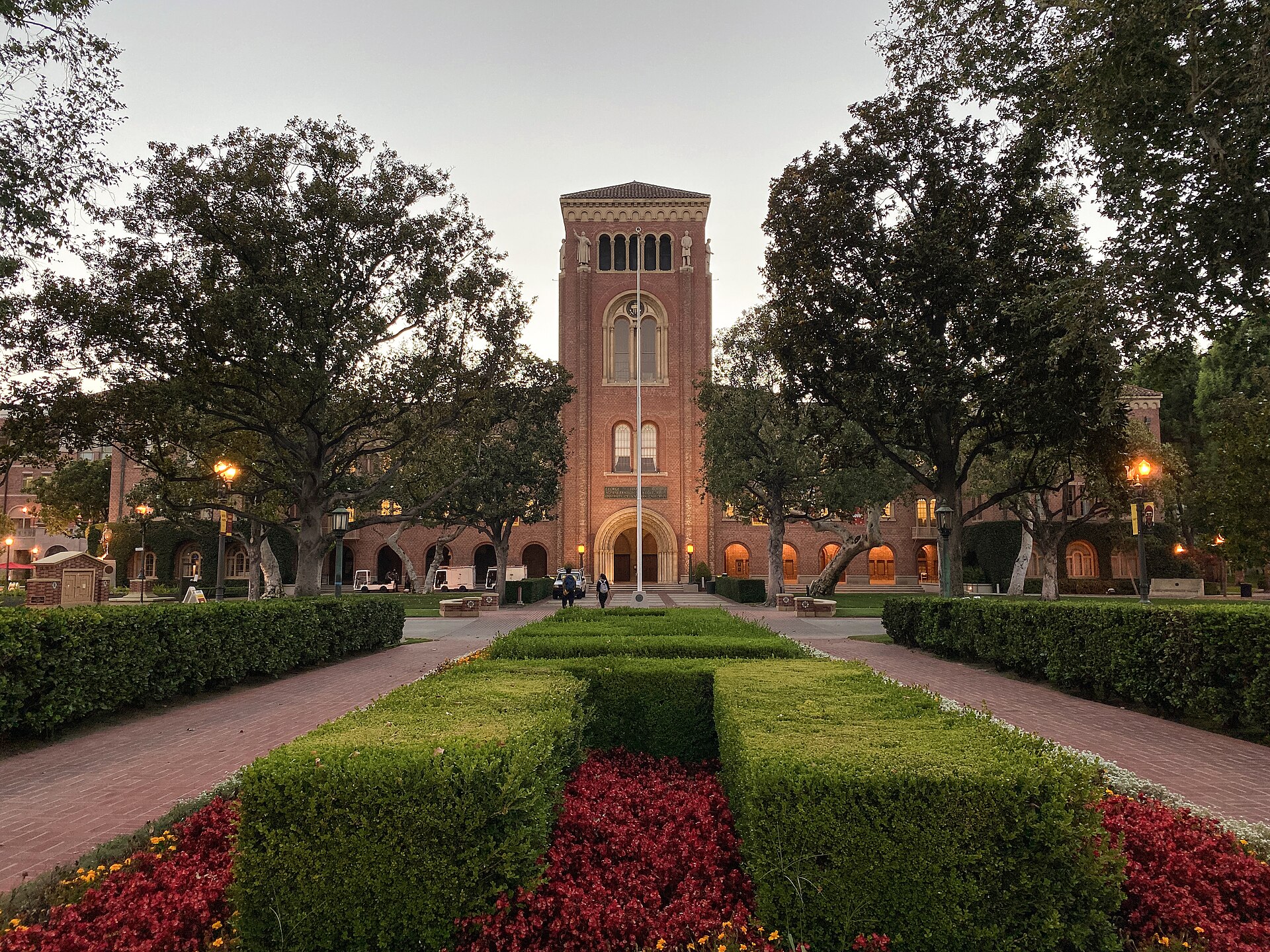
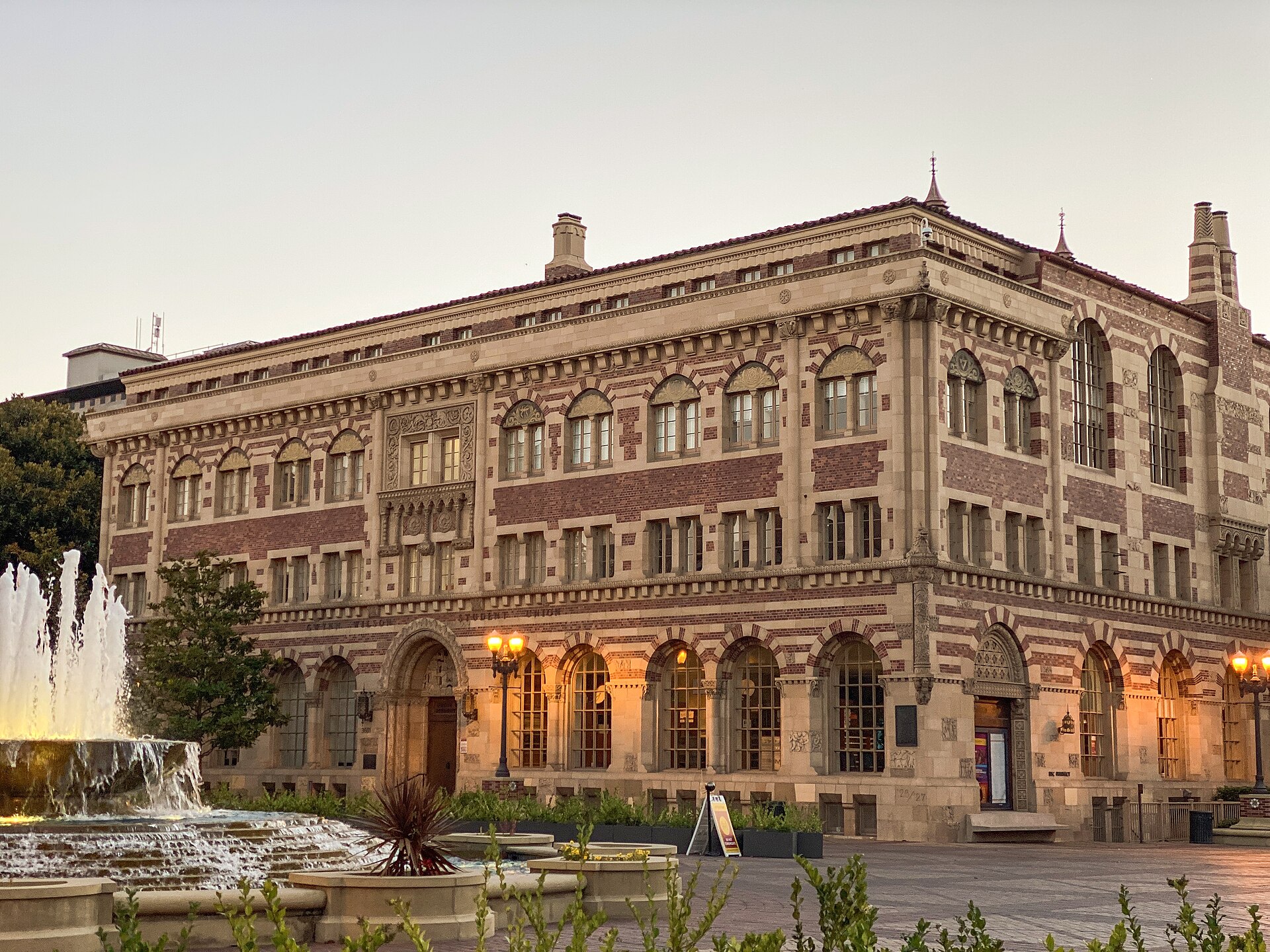
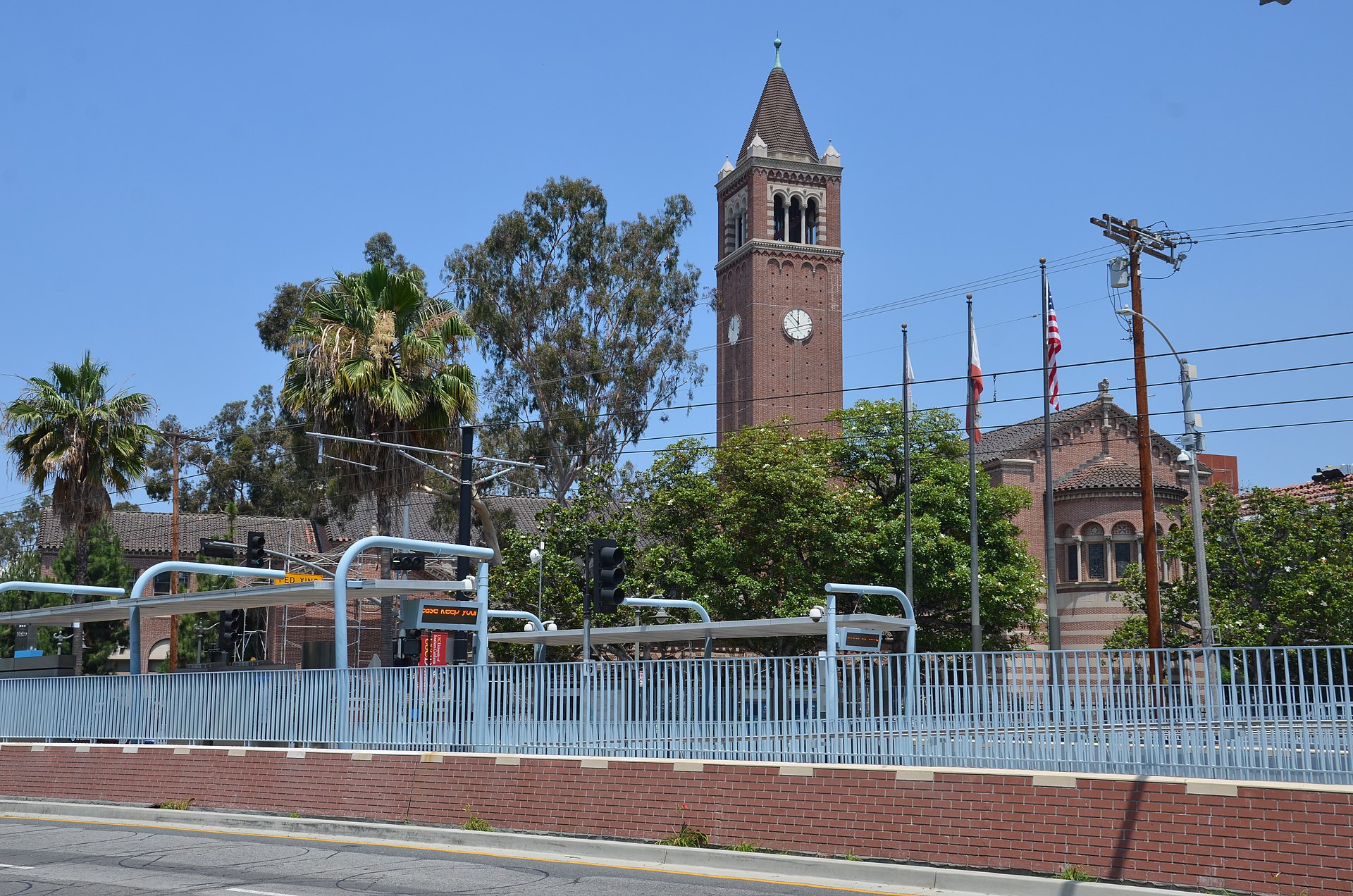
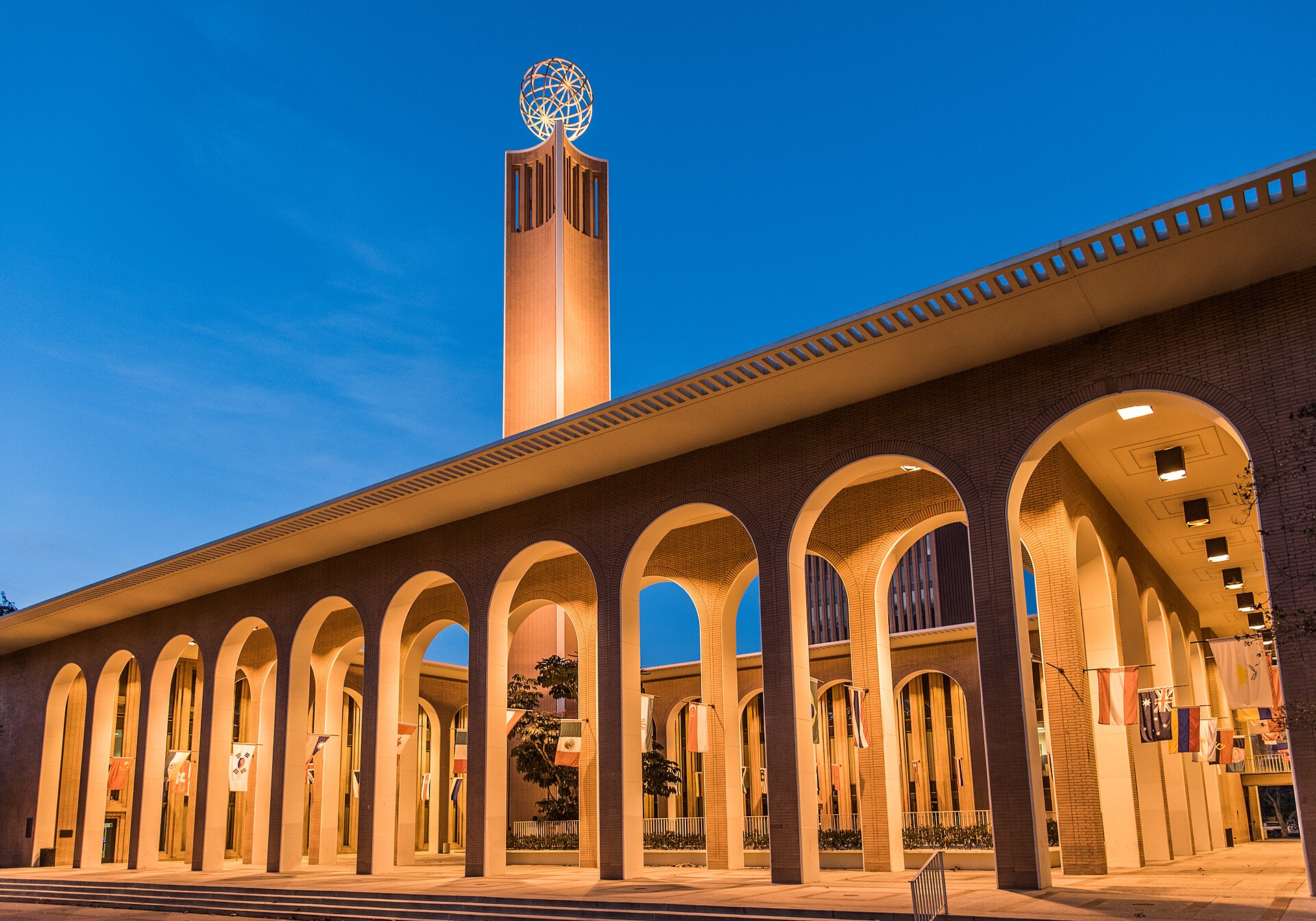
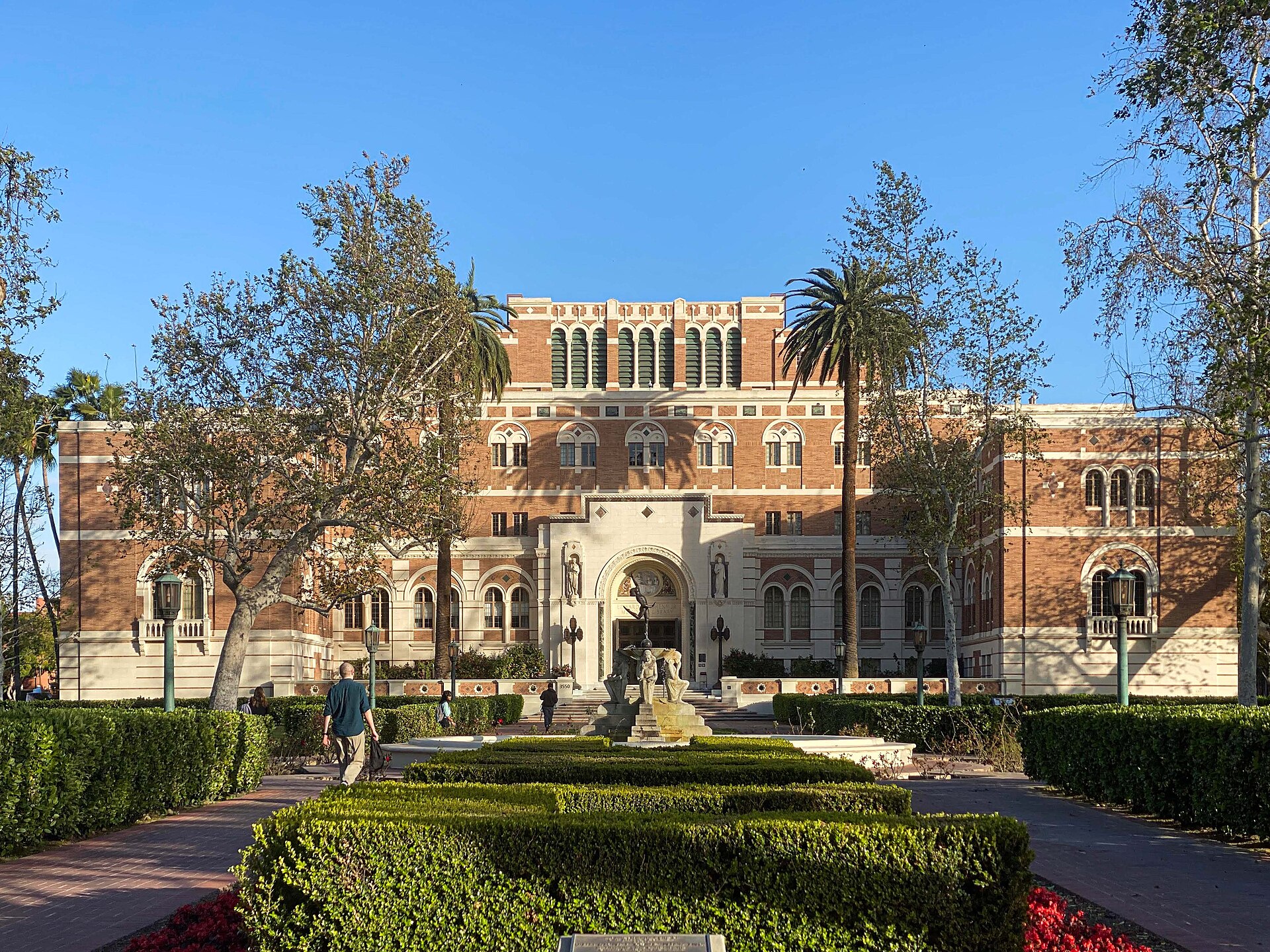
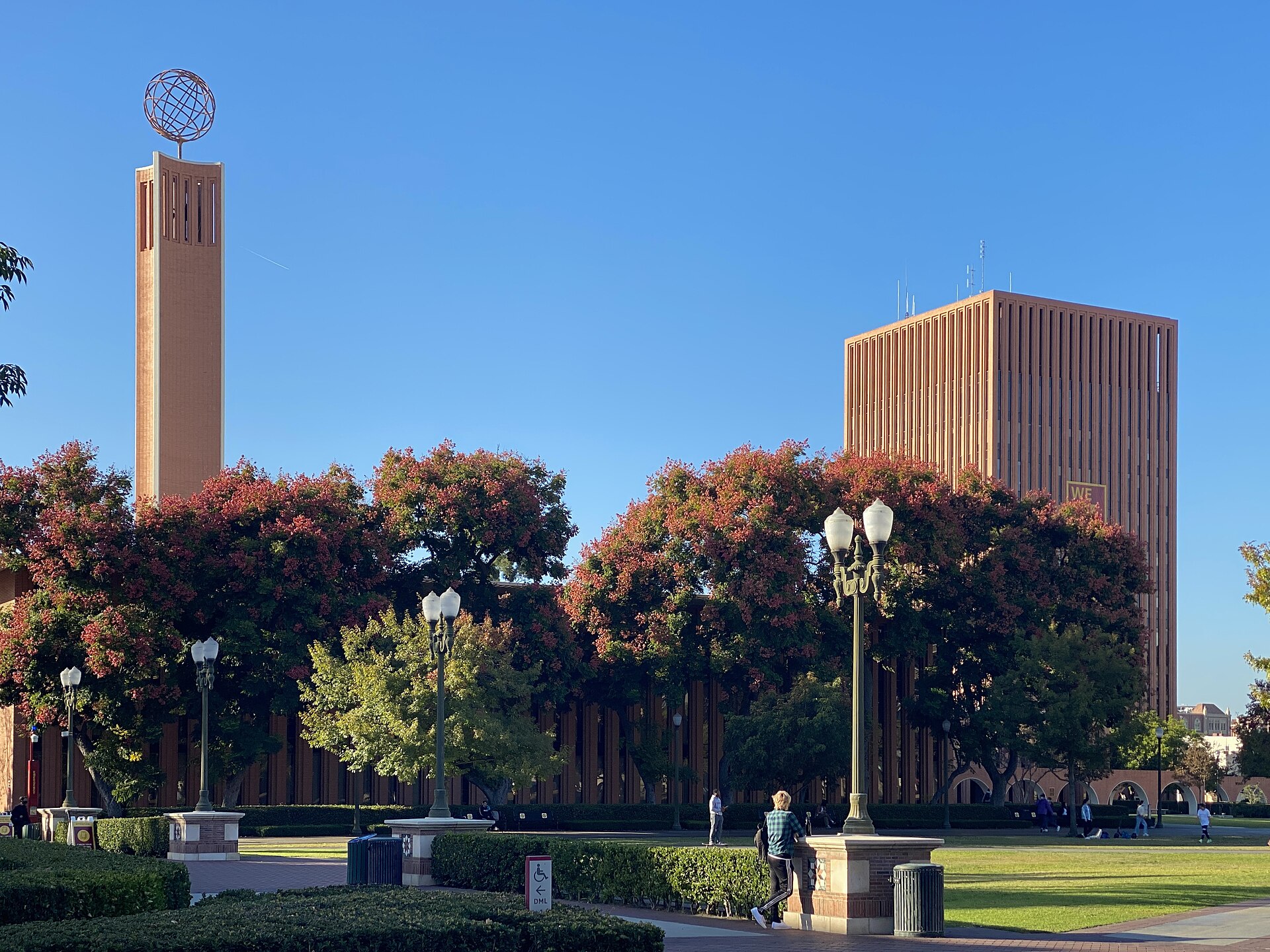
University of Southern California — campus in pictures
Real, freely-licensed photographs of the campus (via Wikimedia Commons).
WHY USC
Five Reasons to Choose USC — Beyond the Rankings
USC is not just a highly ranked private university — it is the home of the world's most prestigious film school, one of the US's most powerful business networks, a top-10 engineering school, and 48,000 students united by one of the strongest campus identities in American higher education. For international students who want both elite academics and real-world industry access, USC is singular.
SELECTIVITY
USC Acceptance Rate — Understanding the Real Competition
USC is highly selective, admitting fewer than 10% of applicants. But understanding USC's selectivity requires looking beyond the headline number: USC enrolls 48,000 students across undergraduate and graduate programs, making it one of the largest private research universities in the US — with genuine capacity at every school. The competition at SCA's film production program is different from the competition for a general business seat at Marshall, which is different again from Viterbi engineering.
Program-specific acceptance rates vary significantly. The School of Cinematic Arts, Thornton School of Music, and the World Bachelor in Business program are substantially more selective than university-wide averages. Always research acceptance rates for your specific program.
AT A GLANCE
USC Quick Facts
APPLICATION COMPONENTS
What the USC Application Consists Of
USC uses the Common Application exclusively. Every first-year applicant submits the same core materials, with additional school-specific supplements required by programs in Cinematic Arts, Music, Architecture, Art and Design, Dance, Dramatic Arts, and the Iovine and Young Academy.
HOLISTIC REVIEW
What USC Admissions Actually Looks For
USC's admissions process is genuinely holistic — each application is read by multiple reviewers who evaluate the complete person, not just grades and scores. The process is designed to identify students who will contribute to USC's academic community and go on to shape their professional fields. For international students especially, context matters: USC's admissions staff are experienced readers of international transcripts from IB, A-Level, CBSE, Gaokao, and other systems.
APPLICATION DEADLINES
USC Application Rounds & Deadlines
USC offers three main application pathways for first-year students. Early Decision is binding. Early Action is non-binding and non-restrictive — you can apply EA to multiple schools simultaneously, unlike restrictive early action at schools such as Harvard or Stanford. Performing Arts programs have an earlier Regular Decision deadline of December 1.
International students applying for financial aid (merit scholarships) should note separate financial aid deadlines: EA November 15, RD February 3. USC does not accept spring admission applications except for current USC students.
| Round | Deadline | Notification | Notes |
|---|---|---|---|
| Early Decision | November 1 | Mid-December | Binding commitment; merit scholarship eligible |
| Early Action | November 1 | Late January | Non-binding, non-restrictive; merit scholarship eligible |
| Regular Decision — Performing Arts | December 1 | April 1 | Kaufman Dance, Dramatic Arts, Thornton Music; audition/portfolio required |
| Regular Decision — All Other Majors | January 10 | April 1 | Most undergraduate programs |
CAMPUS LIFE
Student Life at USC — Los Angeles as Your Campus
USC's University Park campus sits in the heart of Los Angeles — two miles from downtown, eight miles from Santa Monica beaches, and minutes from the cultural institutions, film studios, tech companies, and restaurants that make LA one of the most stimulating cities in the world for creative and ambitious people.
On campus, USC's residential community is one of the strongest in the US — with 93% of first-year students living on campus in dedicated residential colleges. The university houses more than 800 student organisations spanning academic, cultural, professional, artistic, and athletic interests. Greek life is active, with USC hosting one of the largest Greek systems among private universities. USC's rivalry with UCLA defines much of the athletic and social calendar.
CAREER OUTCOMES
Life After USC — The Trojan Network in Action
USC graduates benefit from one of the most active alumni networks in American higher education — 470,000 living alumni who share a culture of actively helping fellow Trojans. In entertainment, media, and technology, this network is unequaled anywhere. The phrase 'Fight On' is both a cheer and a professional signal.
Stats
Cards
FAQs
Frequently Asked Questions — USC Admissions
Is Early Action or Early Decision better for international students at USC?+
Early Action is typically the better choice for international students. EA is non-binding and non-restrictive — you can apply to other universities simultaneously — and it still makes you eligible for merit scholarship consideration with a late-January decision. ED is binding, which means if admitted, you must enrol and withdraw all other applications. For international students who may need to compare financial packages or have other constraints, EA is strategically preferable.
Does USC offer need-based financial aid to international students?+
No. USC does not offer need-based financial aid to international students. The financial support you submit with your application demonstrates your ability to cover the full cost of attendance — this is a condition of admission, not optional documentation. International students may compete for merit-based scholarships, which are awarded based on academic achievement, leadership, and talent, not financial need.
What is the Trojan Family, and does it actually matter?+
The Trojan Family refers to USC's alumni culture of active mutual support — a genuine phenomenon that USC graduates consistently describe as differentiating. In entertainment and media industries especially, the Trojan network operates as a first-degree professional connection: USC alumni actively hire, mentor, and collaborate with other USC alumni. For international students building professional networks in the US from scratch, this culture is a meaningful asset.
How does USC's test-optional policy work for international students?+
USC's test-optional policy applies equally to international applicants. You may choose not to submit SAT or ACT scores, and USC will not penalise your application for the omission. However, submitting strong scores (SAT 1550+, ACT 35) adds a positive academic signal. For international students from systems with less familiar grading scales, a strong standardised test score can provide useful additional academic context for the admissions reader.
Does USC consider demonstrated interest?+
USC does not formally track demonstrated interest — visiting campus or attending events does not directly affect your admission decision. However, USC's supplement essays ask specifically why you want to attend USC and how you will engage with your specific program. The specificity of your response — demonstrating real knowledge of USC's programs, faculty, and resources — is evaluated as part of the holistic review.
How selective is USC's School of Cinematic Arts compared to the overall university?+
Substantially more selective. The SCA film production and screenwriting programs are among the most competitive arts programs in the world — more selective than the university-wide acceptance rate suggests. Admission requires a creative portfolio submitted through SlideRoom and a Kira Talent interview. Academic qualifications alone are insufficient; evidence of creative vision and practice is essential.
Can international students work in the US after graduating from USC?+
Yes. International students on F-1 visas are eligible for Optional Practical Training (OPT) — 12 months of work authorisation in the US after graduation, extendable to 36 months for STEM graduates. USC's Career Center and the international student office provide dedicated support for navigating post-graduation employment as an international student. The LA job market's concentration in STEM-adjacent fields (tech, entertainment technology, biotech) makes OPT extension particularly accessible for many USC graduates.
What GPA do I need to be admitted to USC?+
USC publishes a minimum GPA of 3.7 for consideration. In practice, competitive admitted students have GPAs substantially above this minimum — typically 3.9+ unweighted. Course rigour matters as much as GPA: a 3.9 in challenging IB HL or A-Level courses is weighted more favourably than a 4.0 in easier coursework. USC evaluates GPA in the context of your school's curriculum and grading norms.
USC ACADEMIC REQUIREMENTS
Academic Profile for USC — What the Numbers and the Transcript Actually Need to Show
USC is a highly selective research university that admits students with strong academic records in rigorous curricula — but it is not purely a numbers school. The admissions process evaluates the coherence of your academic profile with your intended major, the challenge level of your coursework relative to what's available at your school, and the trajectory of your performance over time.
For international students, USC's admissions team is experienced with IB, A-Level, CBSE, Gaokao, French Baccalaureate, and other international curricula. Your transcript will be read by someone who understands your system — which means there is no advantage in trying to convert your grades to American equivalents. Present your authentic record in context.
ACADEMIC BENCHMARKS
USC Academic Profile — Admitted Class Data
These are the data points from USC's admitted class. They establish the competitive range but do not function as minimum thresholds — USC makes holistic decisions and some admitted students fall below these bands in one dimension while significantly exceeding them in others.
TEST POLICY
USC Test-Optional Policy — The Strategic Reality
USC is test-optional for all applicants, including international students. Applicants who do not submit SAT or ACT scores are not penalised. However, test-optional does not mean test-irrelevant: strong scores provide a positive academic signal, and for international students whose transcripts may be less familiar to US admissions readers, a strong test score can add useful context.
Tychr's general guidance: if your SAT is above 1500 or your ACT is above 33, submit. Below these thresholds, the decision depends on the overall strength of your academic profile. International students with scores above the middle 50% band (SAT 1550+, ACT 35+) should almost always submit — the additional academic signal strengthens the application.
USC accepts official scores from College Board (SAT code: 4852) or ACT (code: 0470) only. Self-reported scores are not accepted.
SAT & ACT
SAT and ACT at USC — Data, Strategy, and Submission Guidance
USC's admitted class SAT middle 50% is 1450–1550, and ACT middle 50% is 32–35. These bands represent the 25th to 75th percentile of admitted students — which means 25% of admitted students are below the 25th percentile band and 25% are above the 75th percentile band.
IB / A-LEVEL / AP
IB, A-Level, and AP at USC — Benchmarks and What USC Expects
USC reads international transcripts contextually. The IB benchmark in the facts file is 36 points — but this is a competitive benchmark for admission, not a minimum. Admitted international students' IB scores vary depending on the program applied to and the overall strength of the application.
SUBJECT PREPARATION
Academic Preparation by Intended Major — What USC Expects
USC requires a minimum of three years of high school mathematics including Advanced Algebra II as a baseline. Beyond this minimum, competitive admitted students demonstrate preparation specific to their intended program.
ENGLISH PROFICIENCY
English Language Requirements for International USC Applicants
All international applicants whose primary language of instruction is not English must demonstrate English proficiency through an approved examination. USC's minimum scores are among the highest of any US university — the average TOEFL score for admitted USC international students exceeds 111.
International students may also submit supplementary interviews (Duolingo, InitialView, Vericant) to strengthen the English proficiency component of their application. These are optional but can positively differentiate applications where English proficiency is a question.
| Test | Minimum | Notes |
|---|---|---|
| TOEFL iBT | 100 | Avg admitted student: 111+; 20+ per section required |
| IELTS | 7.0 | Academic module only |
| Duolingo English Test | 130 | Students admitted with DET only must take International Student Exam on arrival |
| Cambridge C1 Advanced | 185 | 169+ per skill |
| PTE Academic | 68 | Pearson Test of English |
| SAT EBRW | 650 | Satisfies English proficiency if submitted |
| ACT English | 27 | Satisfies English proficiency if submitted |
PROFILE DEVELOPMENT ROADMAP
Building Your USC-Ready Profile — Grade 9 to 12
Admission to USC is the outcome of four years of deliberate academic and extracurricular development. The strongest USC applications tell a coherent story — academic preparation, extracurricular depth, and essays that all point in the same direction.
COMMON PITFALLS
Academic Application Mistakes USC Applicants Make
Items
- Applying to SCA without a portfolio — a film production application without creative work submitted through SlideRoom is not competitive regardless of grades or test scores.
- Choosing easier courses to protect GPA — USC's review explicitly evaluates course rigour. A 4.0 in straightforward courses is weighted less favourably than a 3.9 in IB HL or A-Level courses.
- Submitting below-average test scores thinking test-optional protects you — a score below the 25th percentile band (SAT 1400, ACT 31) adds a negative signal if submitted. Under these thresholds, withholding is typically better.
- Neglecting the English proficiency requirement — international students who don't have TOEFL/IELTS scores early in Grade 12 risk missing deadlines, especially for ED/EA (November 1).
- Misunderstanding the financial documentation requirement — USC requires proof of sufficient funds as a condition of admission for international students. This is not optional and must be dated within the past year.
- Applying to the wrong school within USC — admissions criteria, competitiveness, and essay requirements differ significantly across USC's schools. Research your specific program, not just USC overall.
- Treating the 'Why USC' component generically — USC's supplement specifically asks why USC and why your intended major. Responses that could apply to any university (rankings, 'great opportunities', 'diverse campus') are evaluated very unfavourably compared to responses that demonstrate specific knowledge of USC's programs, faculty, and resources.
Faqs
Can I change my major after applying to USC?+
Students are admitted to specific schools within USC (Viterbi, Marshall, SCA, etc.), not to a general liberal arts college. Changing majors within the same school is generally possible; changing schools (e.g., from Viterbi to Marshall) requires an internal transfer process and is not guaranteed. Apply to the school and program that genuinely reflects your intentions.
Does USC consider grade trends?+
Yes. An upward grade trajectory is viewed positively — a student who improved from moderate to strong performance across three years tells a different and more compelling story than one whose grades have plateaued. Conversely, a declining grade trend in Grade 11 or 12 raises questions and should be addressed in the additional information section of the application if there is context that explains it.
COST & FINANCIAL AID
The Real Cost of USC for International Students — No Need-Based Aid, But Merit Scholarships Are Open to All
USC is an expensive private university in one of the most expensive cities in the United States. For international students specifically, there is one essential fact to understand before applying: USC does not offer need-based financial aid to international applicants. Every international student admitted to USC is expected to demonstrate sufficient funds to cover the full cost of attendance.
This does not mean financial support is impossible — USC offers merit scholarships that international students can and do receive. But the planning horizon is different from universities that meet full demonstrated need for all students. This section gives you an honest, numbers-grounded picture of what USC costs and what support is realistically available to international students.
ANNUAL COST ESTIMATE
USC Cost of Attendance for International Students — Annual Estimates
The figures below are from USC's official cost data. All values are annual (per academic year) estimates for undergraduates. Actual costs vary by housing choice, meal plan, and personal spending.
The total cost of attendance of approximately $99,139 per year is the figure international students must demonstrate they can cover through the Financial Statement of Personal or Family Support required with the application. Four-year total cost estimate exceeds $390,000 before accounting for any merit aid received.
| Component | Annual | Notes |
|---|---|---|
| Tuition | $73,260 | Fixed undergraduate tuition rate |
| Total Cost of Attendance | $99,139 | Includes tuition, housing, meals, fees, books, personal |
| Estimated Living Costs | $21,000 | Housing, food, personal expenses in Los Angeles |
| Application Fee | $85 | Non-refundable; fee waivers available |
FINANCIAL AID FOR INTERNATIONALS
Financial Aid Policy for International Students at USC
USC is need-blind in admissions for domestic US students, meaning domestic applicants' financial circumstances do not affect their admission decisions. For international students, USC is need-aware — and more importantly, does not offer need-based financial aid to international applicants.
This is one of the most important distinctions to understand before applying to USC as an international student. Unlike Harvard, Princeton, or MIT — which offer full need-based financial aid to international students — USC's international student aid is limited to merit-based awards. The financial documentation you submit with your application is not a financial aid form; it is a verification that you have sufficient funds to cover your education independently.
International students needing financial support should consider whether USC's cost structure is manageable before investing significant time in the application. There is no path to need-based support once enrolled.
MERIT SCHOLARSHIPS
Merit Scholarships at USC — What International Students Can Access
USC offers merit scholarships open to all admitted students, including internationals, based on academic achievement, leadership, talent, and other criteria. Scholarship awards range from a few thousand dollars per year up to full tuition. Over 1,000 students receive merit scholarships of $10,000 or more annually.
AFFORDABILITY REALITY
What USC Actually Costs — An Honest Assessment for International Families
At a cost of attendance exceeding $99,000 per year, USC is among the most expensive universities in the United States. For international students without need-based aid eligibility, the four-year total cost exceeds $390,000 before accounting for any merit scholarships received.
This is a meaningful financial commitment. Families considering USC for an international student should have a clear financial plan before submitting the application — not as a bureaucratic requirement, but because the financial reality of USC without aid is genuinely significant. If a merit scholarship is essential to making USC feasible, research the typical range and competitiveness of USC merit awards before applying, and consider whether applying ED (which signals first-choice commitment and may strengthen scholarship consideration) is appropriate for your circumstances.
USC's exceptional employment outcomes — 90% employment within six months at an average starting salary of $70,000 — mean the long-term return on a USC education is strong. However, $390,000+ in family expenditure over four years is a major commitment that deserves careful financial planning.
SECURING FUNDING
Steps to Fund Your USC Education as an International Student
COST FAQs
Frequently Asked Questions — Cost and Aid at USC
If I cannot afford USC, should I still apply?+
Only if you have a realistic path to covering the cost. USC does not offer need-based aid to international students, and merit scholarships are competitive — not guaranteed to any applicant. Applying to USC without a clear financial plan is not advisable. Consider universities that offer need-based aid to international students (Harvard, Princeton, MIT, Yale) if financial aid is essential to your ability to attend.
What does the Financial Statement of Personal or Family Support need to include?+
A signed declaration from the financial sponsor (family member, sponsor, or the student themselves), accompanied by bank statements, investment account statements, education loan approvals, or other financial documentation showing sufficient funds — typically one year of costs as a minimum — dated within the past year. USC's international student office provides the specific form.
Can I get a student loan as an international student?+
US federal student loans are not available to international students. Private US student loans require a creditworthy US citizen or permanent resident co-signer — which most international students do not have. Education loans from your home country's banking system, if available, can be used to satisfy the financial documentation requirement.
Does receiving a USC merit scholarship affect my visa status?+
Merit scholarships are institutional grants that do not affect F-1 visa status or eligibility. They are applied directly to your tuition and fees and reduce the amount your family needs to pay. They do not change your immigration status or work authorisation as an F-1 student.
Are there separate aid deadlines for international students?+
For the small number of programs where international students can receive institutional support, financial aid deadlines align with application deadlines: EA November 15, RD February 3. However, since USC does not offer need-based aid to international students, the most relevant deadline for internationals is when to have financial documentation prepared — ideally before your chosen application deadline.
USC ESSAYS
Why Essays Matter Especially at USC The 'Why USC / Why Your Major' Question Is Not Optional
USC is one of the few highly selective universities that admits students to specific schools — Viterbi, Marshall, SCA, Annenberg — not to a general college. This means your essays must do two things simultaneously: tell your story compellingly as a person, and make a specific, credible case for why you and this specific program at USC are the right match.
Generic essays that could have been written for any university are the most common and most damaging mistake USC applicants make. USC's admissions staff read thousands of applications per cycle. The essays that are remembered — and that tip decisions — are specific: they demonstrate real knowledge of USC's programs, specific professors or research groups, particular resources or opportunities that USC uniquely offers, and a clear account of how the student will engage with them.
ESSAY STRUCTURE
USC's Application Writing Requirements — Overview
USC uses the Common Application. The writing requirement consists of the Common App personal statement (650 words) and USC's own writing supplement, which includes both longer essays and shorter 'quick take' responses. The supplement is the primary vehicle for demonstrating fit with USC and your intended program specifically.
Total writing submitted to USC is substantial — plan to spend serious time on the supplement, particularly the short responses, which are harder to write well than the longer essays. The activities list (up to 10 activities) also functions as a writing component and should be treated with the same care as the essays themselves.
USC's essay prompts are updated annually and should be verified directly from the Common App platform or USC's official admissions website at the start of each application cycle (August 1). The 2026–2027 cycle prompts should be confirmed at https://admission.usc.edu before drafting.
ESSAY PROMPTS
USC Writing Supplement — Essay Types and Approach
USC's writing supplement has historically included a primary essay asking applicants to describe how they plan to pursue their academic interests at USC (typically 250–300 words), and a set of shorter 'quick take' responses (typically 150–200 words each) on topics including what you bring to campus, meaningful activities, and personal background. Exact prompt wording and word counts change by application cycle — verify current prompts at https://admission.usc.edu or via the Common App platform before writing.
Current-cycle prompt text could not be verified at the time of this guide's authoring. All essay writing should begin from the official USC prompts retrieved directly from the Common App or USC's official admissions site for your application cycle. The strategic guidance below applies to the types of questions USC consistently asks.
PERSONAL STATEMENT STRATEGY
Writing a USC-Ready Common App Personal Statement
The personal statement is evaluated in the context of everything else in your application. At USC, where your supplement will address 'Why USC / Why your major' directly, the personal statement should work on a different axis — revealing who you are as a person, thinker, and future Trojan.
USC admissions officers describe the review process as trying to 'get to know you' — 'remember, there's a person on the other end of your application.' This guidance is more literal than it sounds. The essays that work best at USC tend to be ones where a distinctive voice comes through: a student who sounds like an actual person, with actual opinions and specific memories, rather than a carefully constructed image of an applicant.
International students specifically: do not over-translate your experience into American terms. An essay about your family's tradition of community service in your home country, written specifically and honestly, is more compelling than an essay that generalises the same experience into universal language that loses its texture. USC's international diversity means your authentic cultural context is an asset, not something to apologise for or smooth over.
SUPPLEMENT STRATEGY
Winning the USC Supplement — School by School
Because USC admits to specific schools, the strategy for the supplement differs depending on which school you're applying to. The 'Why USC' component needs to be school-specific — not just university-specific.
TOPIC SELECTION
Choosing Your Essay Topics — What Works and What Doesn't at USC
Topic selection is where most students lose before they write a single sentence. The question is not 'what story is most impressive?' but 'what story does only I have — and what does it reveal about how I will contribute to USC?'
COMMON MISTAKES
The Most Common USC Essay Mistakes
- Writing a generic 'Why USC' essay that could apply to any top university — the single most common and damaging mistake in USC applications.
- Spending all your essay preparation time on the personal statement and neglecting the short 'quick take' responses, which are harder to write well and equally important.
- Using the personal statement to list achievements that are already visible in the activities section — the essay should add information that isn't elsewhere in the application.
- Applying to SCA with academic essays only and no portfolio — SCA's SlideRoom submission is not optional, and a film production application without creative work is not reviewed as competitive.
- Describing how much you want to do things at USC without demonstrating that you have already been doing them — 'I hope to' is less compelling than 'I have, and I want to continue by...'
- Using ChatGPT or AI tools to write the essays without substantial revision — AI-generated essays tend toward generic formulations that admissions officers recognise immediately. Voice and specificity cannot be outsourced.
- Treating the activities list as a bureaucratic form — each activity entry (including the description) is read carefully. Under-described activities that could be significant are a missed opportunity.
ESSAY FAQs
Frequently Asked Questions — USC Essays
How important are the essays relative to grades at USC?+
Both matter, but the function is different. Grades and test scores establish baseline eligibility — they tell USC you can handle the academic work. Essays determine fit — whether you belong at USC specifically, whether you will contribute to the community, and whether your narrative is coherent with your intended program. For borderline academic profiles, strong essays can tip the decision; for strong academic profiles, weak essays can cost an admission.
Should I address my international background in my essays?+
Not necessarily — and not just because you're international. If your international background is genuinely central to who you are and what you'll bring to USC, yes — make it specific and concrete. But do not write about your international background as if it is inherently interesting. What about your specific experience, culture, or perspective is distinctive? That distinction is the essay — not the fact of being from another country.
How specific should my 'Why USC' essay be?+
Specific enough that it would need substantive edits to apply to a different university. Name the program, specific courses if you've researched them, particular research opportunities, named faculty whose work aligns with your interests, or USC-specific resources (SCA's industry connections, Marshall's proximity to entertainment companies, Viterbi's collaboration with LA's tech sector). Specificity signals genuine research and genuine interest.
Can I apply to multiple USC schools and write multiple supplements?+
You can indicate a first and second choice major on your application, and USC's supplement typically asks you to address both choices. However, if your first and second choices are in entirely different schools (e.g., SCA and Marshall), the coherence of the application may be weaker than applying with a clear primary focus. SCA applicants requiring a SlideRoom portfolio must submit separate SlideRoom applications for each SCA program they're applying to.
Does USC read all the quick take / short answer responses carefully?+
Yes. Short answers are read by the same admissions officers who read your transcript and personal statement. A strong personal statement paired with weak short responses suggests that the essay preparation was uneven — which raises questions about authenticity. Treat each short response as seriously as the main essay.
What is USC's policy on submitting additional materials?+
USC discourages unsolicited additional materials beyond what the application requires. Do not send portfolios, recommendation letters, or supplementary documents unless they are specifically required by your program (SCA's SlideRoom, Music's audition, Architecture's portfolio, etc.). Additional materials sent without being requested are rarely reviewed and can create administrative complications.
Courses — schools, degrees & intake
109 degrees across 12 groupings.
USC Dornsife College of Letters, Arts and Sciences · 58 degrees
African American Studies
American Popular Culture
American Studies and Ethnicity
Anthropology
Anthropology (Visual Anthropology)
Applied and Computational Mathematics
Archaeology and Heritage Studies
Art History
Asian American Studies
Astronomy
Behavioral Economics and Psychology
Biochemistry
Biological Sciences
Biophysics
Chemistry
Chicano/Latino Studies
Classics
Cognitive Science
Comparative Literature
Computational Linguistics
Computational Neuroscience
Creative Writing
Earth Sciences
East Asian Languages and Cultures
Economics
Economics and Data Science
Economics/Mathematics
English
Environmental Science and Health
Environmental Studies
Environmental Systems Science
French
Gender and Sexuality Studies
Geological Sciences
Global Studies
History
Human Biology
International Relations
International Relations and the Global Economy
Linguistics
Mathematics
Middle East Studies
Neuroscience
Philosophy
Philosophy, Politics and Economics
Physics
Physics/Computer Science
Political Science
Psychology
Quantitative Biology
Religion
Sociology
Spanish
Health and Human Sciences
Human Security and Geospatial Intelligence
Intelligence and Cyber Operations
Narrative Studies
Political Economy
USC Marshall School of Business · 6 degrees
Business Administration (BS)
World Bachelor in Business (BS)
Business of Cinematic Arts (BS)
Artificial Intelligence for Business (BS)
Business of Innovation (BS)
Real Estate Finance and Development (BS)
USC Leventhal School of Accounting · 2 degrees
Accounting (BS)
Accounting and Finance (BS)
USC Viterbi School of Engineering · 11 degrees
Aerospace Engineering (BS)
Artificial Intelligence (BS)
Astronautical Engineering (BS)
Biomedical Engineering (BS)
Chemical Engineering (BS)
Civil Engineering (BS)
Computer Science (BS)
Electrical Engineering (BS)
Environmental Engineering (BS)
Industrial and Systems Engineering (BS)
Mechanical Engineering (BS)
USC Annenberg School for Communication and Journalism · 3 degrees
Communication (BA)
Journalism (BA)
Public Relations and Advertising (BA)
USC School of Cinematic Arts · 5 degrees
Film and Television Production (BFA)
Cinema and Media Studies (BA)
Animation and Digital Arts (BFA)
Writing for Screen and Television (BFA)
Media Arts and Practice (BA)
USC School of Dramatic Arts · 6 degrees
Dramatic Arts (BA)
Acting for Stage and Screen (BFA)
Musical Theatre (BFA)
Theatrical Design (BFA)
Sound Design (BFA)
Stage Management (BFA)
USC Thornton School of Music · 11 degrees
Choral Music (BM)
Classical Guitar (BM)
Composition (BM)
Jazz Studies (BM)
Keyboard Studies (BM)
Music Industry (BM)
Music Technology (BM)
Popular Music (BM)
Strings (BM)
Vocal Arts and Opera (BM)
Winds and Percussion (BM)
USC Roski School of Art and Design · 3 degrees
Art (BA)
Art (BFA)
Design (BFA)
USC Glorya Kaufman School of Dance · 1 degrees
Dance (BFA)
USC Iovine and Young Academy · 1 degrees
Arts, Technology, and the Business of Innovation (BS)
USC School of Architecture · 2 degrees
Architecture (BArch)
Architectural Studies (BS)
Want your real chances at University of Southern California?
Create a free TYCHR account for your personalised admit-chance, a shortlist you can track, exact entry requirements, and essay + counselling help.