University of Southampton
Southampton, United Kingdom · Suburban
RUSSELL GROUP · QS TOP 100
University of Southampton Admissions Guide for International Students
The University of Southampton is one of the UK's leading research universities — a founding Russell Group member ranked in the global top 100 by QS, renowned worldwide for electronics, oceanography, and engineering. For international students with a serious interest in applied science, technology, or the sea, Southampton offers elite-level research access within a welcoming, cosmopolitan campus city on England's south coast.
With 30% of its student body from outside the UK and a proven track record of turning graduates into high-impact professionals, Southampton combines world-class research infrastructure with genuinely international student support. This guide covers every step of applying as an international student — entry requirements, UCAS, scholarships, and what Southampton's admissions team actually looks for.
Campus
University of Southampton — campus in pictures
Real, freely-licensed photographs of the campus (via Wikimedia Commons).
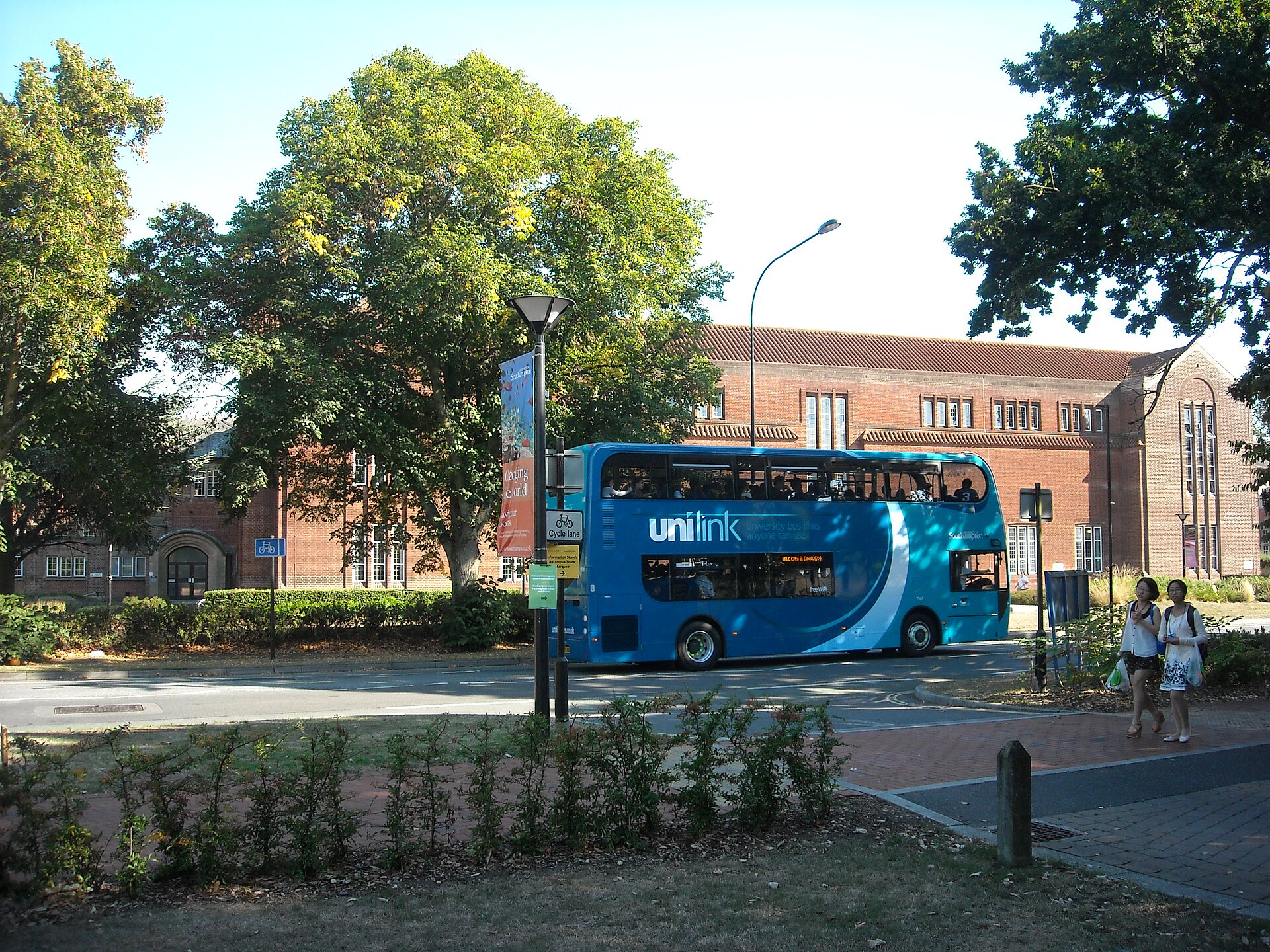
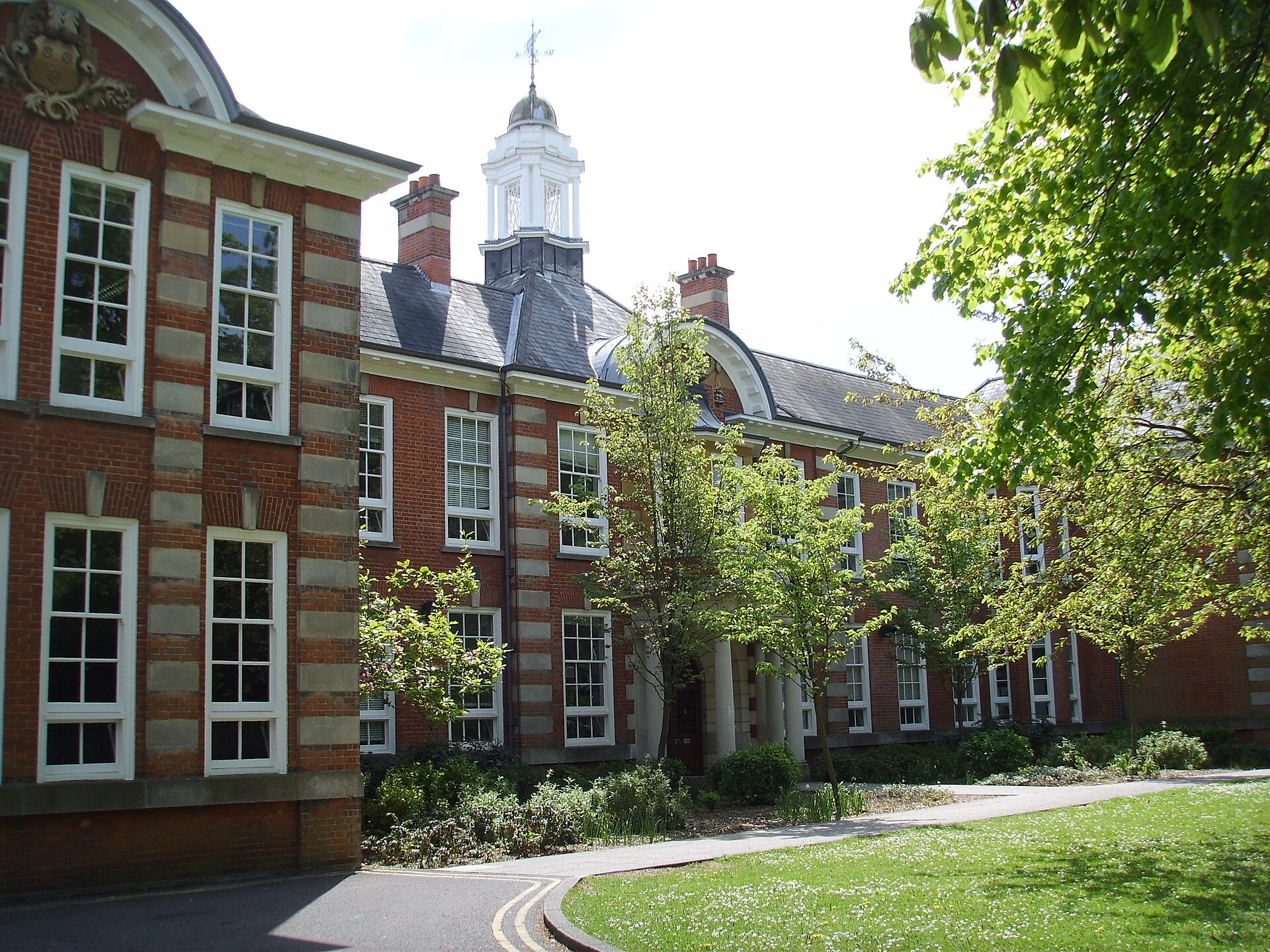

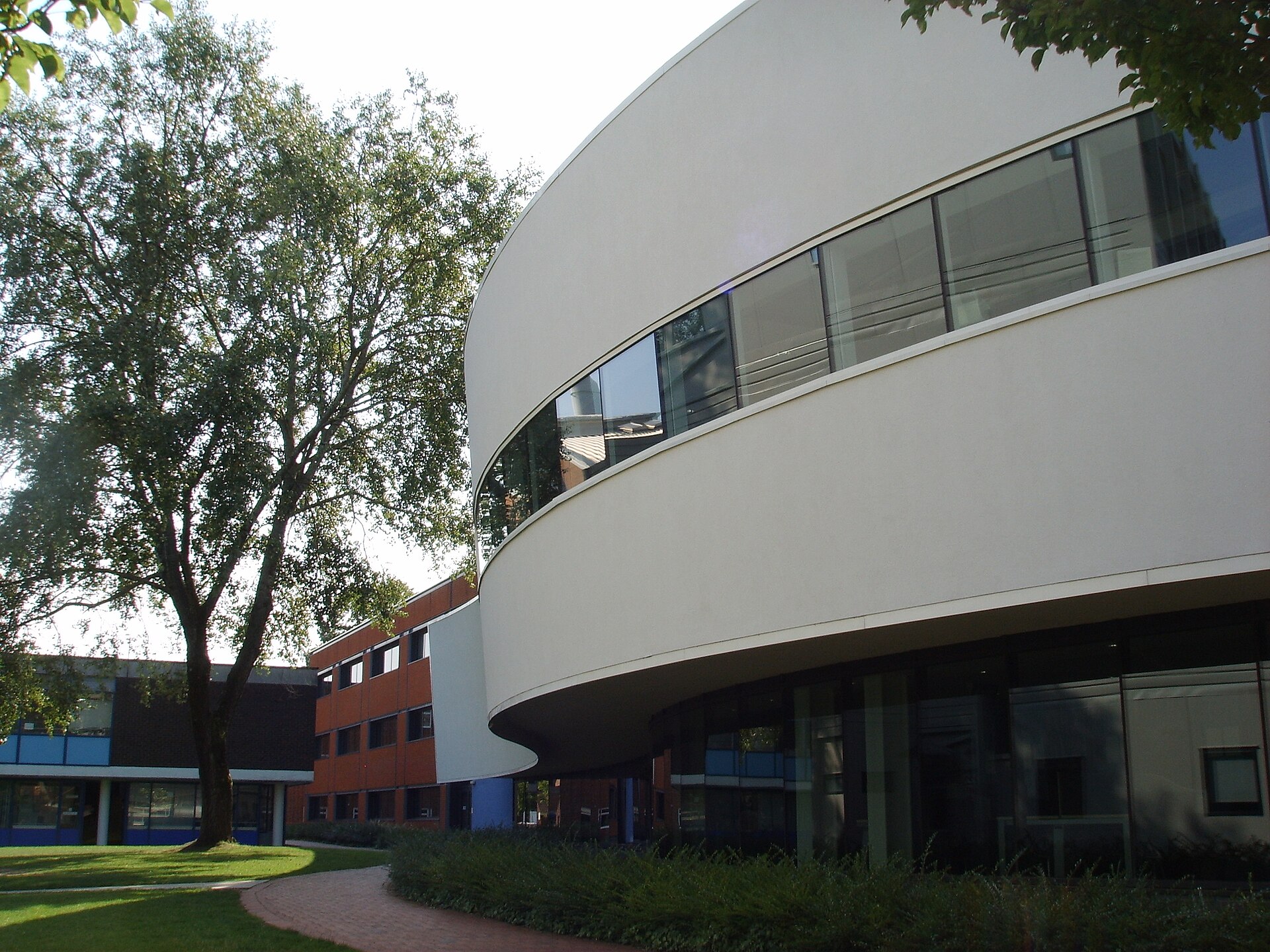


Why Choose Southampton — Research, Reputation & Global Reach
Southampton is not just a good university — it is a specialist powerhouse in several fields where it genuinely leads the world. International students who choose Southampton for the right reasons tend to thrive here.
Southampton Acceptance Rate & Entry Profile How Selective Is It?
The University of Southampton has an overall acceptance rate of approximately 62%, which is competitive for a Russell Group university without being hyper-selective. Acceptance rates vary considerably by course: Medicine and Aeronautics are among the most competitive, while some Engineering and Social Science programmes admit a higher proportion of applicants. Offers are conditional on A-Level grades or IB points achieved — meeting the offer is the key threshold.
Southampton at a Glance Key Facts
How to Apply to Southampton — UCAS Application Components
All undergraduate applications to the University of Southampton are made through UCAS (Universities and Colleges Admissions Service) — the single gateway for all UK undergraduate admissions. There is no supplemental application, no secondary essays, and no direct application portal for most undergraduate programmes.
What Southampton Admissions Officers Look For Beyond Grades
Southampton's admissions process is primarily grade-focused — conditional offers are made based on predicted A-Level grades or IB points, and offers are confirmed when results are achieved. However, for competitive courses and borderline applications, your personal statement and reference carry real weight.
Application Deadlines & UCAS Timeline When to Apply
All undergraduate applications to UK universities follow the UCAS cycle. Southampton does not operate US-style Early Decision or Early Action rounds — all applications are reviewed together after the main UCAS deadline.
Deadlines are for 2026 entry. Always verify on ucas.com for the cycle you are applying in.
| Round | Deadline | Notes |
|---|---|---|
| UCAS Opens | September 2025 | Applications for 2026 entry open |
| Oxford/Cambridge & Medicine Deadline | 15 October 2025 | Early deadline for Oxford, Cambridge, Medicine, Dentistry, Veterinary Science |
| Main UCAS Deadline | 29 January 2026 | Deadline for all other undergraduate courses at Southampton |
| UCAS Extra Opens | February 2026 | For applicants with no offers yet — can add additional choices |
| Decisions Released | March–May 2026 | Southampton sends decisions through UCAS Track |
| UCAS Clearing | August 2026 | Remaining places offered after A-Level results day (mid-August) |
Student Life at Southampton Campus, City & Community
Southampton's main Highfield campus is a self-contained, suburban campus set across 150 hectares of parkland just north of the city centre — compact enough to walk across in 15 minutes, diverse enough that most students rarely need to leave it. The university also operates campuses at Avenue, Boldrewood Innovation Campus (engineering and marine science), and the Waterfront Campus at the National Oceanography Centre.
Graduate Outcomes & Career Prospects What Happens After Southampton
Southampton consistently ranks among the UK's top universities for graduate employability. The strong outcomes reflect both the university's research partnerships with major employers and the practical, skills-focused nature of many of its programmes.
Stats
Cards
Frequently Asked Questions Southampton Admissions FAQs
Do I apply directly to Southampton or through UCAS?+
All undergraduate applications are made through UCAS (ucas.com). You apply to Southampton as one of up to five choices on a single UCAS form. Southampton's UCAS code is S27. There is no direct application for undergraduate programmes.
What IB score do I need for Southampton?+
IB requirements vary by course, typically ranging from 30 to 36 points. The IB band in Southampton's published data is around 34 points overall, with specific Higher Level subject requirements depending on your programme. Check the individual course page on southampton.ac.uk for exact requirements.
Does Southampton accept the SAT or ACT?+
Southampton primarily evaluates international students on their national qualifications (IB Diploma, A-Levels, or country-specific equivalents). SAT/ACT scores are not a standard part of the UCAS process and are not required or routinely used for undergraduate admissions. Your IB or A-Level predicted grades are the primary academic evidence.
Is Southampton good for Medicine?+
Southampton has a well-regarded Medicine programme. It requires the UCAT admissions test, competitive GCSE grades, and strong predicted A-Level grades (typically A*AA including Chemistry and Biology). Medicine applicants must apply by the 15 October UCAS deadline — not the January deadline.
Can international students get scholarships at Southampton?+
Yes. Southampton offers a range of merit-based scholarships for international undergraduate students, including the International Undergraduate Scholarship and subject-specific awards in Engineering, Electronics & Computer Science, Physics, Chemistry, and the Arts & Humanities. Amounts vary and not all scholarships publish fixed award values — check the official scholarships page for current offerings and deadlines.
Is Southampton well-connected to London?+
Yes. Southampton Central station has direct trains to London Waterloo taking approximately 80 minutes. The city also has Southampton Airport with direct flights across Europe. For most international students, Southampton's location provides easy London access without London's cost of living.
What is the new UCAS personal statement format for 2026 entry?+
For 2026 entry onwards, UCAS replaced the open personal statement with three structured questions: (1) Why do you want to study this course?, (2) How have your qualifications prepared you?, and (3) What have you done outside education to prepare? Total limit is 4,000 characters with a minimum of 350 characters per answer.
Does Southampton guarantee accommodation for international first-years?+
Yes. Southampton guarantees a place in university accommodation for all first-year students who apply by the accommodation deadline (typically June). International students are strongly advised to apply for accommodation as soon as they have accepted their offer.
ACADEMIC REQUIREMENTS
Southampton Academic Requirements — The Honest Breakdown for International Students
Southampton makes conditional offers based on your predicted grades and reviews final results when they arrive. Understanding what grades you need — and how your international qualification is read — is the foundation of a successful application.
Unlike US universities with holistic admissions and no grade thresholds, Southampton (like all UK universities) issues specific conditional offers: achieve ABB, AAB, or A*AA at A-Level, or the IB equivalent, and your place is confirmed. Meeting your offer conditions is the single most important academic goal for any Southampton applicant.
Typical Academic Profile of Admitted Students What the Numbers Show
Southampton sets course-specific entry requirements rather than university-wide thresholds. The IB points requirement in Southampton's published admissions data is approximately 34 points overall — but this varies from around 30 points for some programmes to 36 or 38 for the most competitive courses. A-Level requirements range from ABB to A*AA depending on the course.
Test Policy for International Applicants SAT, ACT & Admissions Tests
Southampton's admissions process is qualification-based, not test-based in the US sense. The SAT and ACT are not part of the standard UCAS process for undergraduate admissions and are not required or requested. International students are assessed on their national secondary qualifications — IB Diploma, A-Levels, or country-recognised equivalents.
IB Diploma & A-Level Requirements at Southampton How Your Qualifications Are Read
Southampton is experienced in evaluating both the IB Diploma and A-Levels for international applicants. Conditional offers are made in terms of the qualification you are studying.
Subject Preparation by Programme Area What to Study Before You Apply
Southampton's most competitive programmes expect specific subject combinations. Choosing the right A-Level or IB HL subjects from Year 12 is critical for keeping your options open.
English Language Requirements IELTS, TOEFL & Duolingo
International students whose first language is not English are required to demonstrate English proficiency. Southampton accepts IELTS Academic, TOEFL iBT, and Duolingo English Test. Requirements are set at a level that ensures students can engage fully with lectures, seminars, and written assessments from Day 1.
Medicine, Law, and some other professional programmes may require higher IELTS scores (e.g. 7.0 or 7.5 overall). Always verify the requirement on your specific course page. Students who have completed their previous degree in English at a recognised institution may be exempt.
| Test | Overall Score | Component Minimum | Notes |
|---|---|---|---|
| IELTS Academic | 6.5 | No component below 6.0 (for most courses) | Most common test for international applicants |
| TOEFL iBT | 92 | Varies by component | Widely accepted; Southampton's ETS code is 9155 |
| Duolingo English Test | 120 | Check specific course requirements | Accepted for most programmes |
Building Your Academic Profile A Year-by-Year Guide
For international students targeting Southampton, the academic preparation starts well before the UCAS application opens in September of Year 13. Here is a practical ladder.
Common Academic Mistakes to Avoid What Costs Applicants Their Place
- Choosing A-Level or IB subjects without checking the specific Southampton course requirements — some programmes have non-negotiable subject requirements.
- Submitting a UCAS application with grades predicted below the stated offer range — Southampton will typically reject or ask for additional information.
- Applying for Medicine without sitting the UCAT — without a UCAT score you will be automatically rejected from the medical programme.
- Missing the 15 October UCAS deadline for Medicine or Dentistry — late applications for these programmes are not considered.
- Underestimating the English language requirement — applying without meeting the minimum IELTS/TOEFL score will result in a conditional offer that cannot be confirmed without a qualifying test result.
- Assuming 'test-optional' means tests are irrelevant — Southampton does not use the US test-optional system. SAT/ACT are simply not part of the UCAS process.
- Applying to a programme your subject combination does not support — always verify the 'Entry Requirements' section of the specific course page before applying.
FEES & FUNDING
Cost of Studying at Southampton — What International Students Pay
As a public UK research university, Southampton charges international students fees that are higher than domestic fees but substantially lower than comparable research universities in the United States or Australia. Understanding the full cost of attendance — and what funding exists to offset it — is essential planning for every international applicant.
International students at Southampton pay international tuition fees set per programme, with living costs in a relatively affordable UK city. A range of merit scholarships exist to partially offset fees, though large need-based bursaries comparable to US Ivy-style aid are not available. Planning your financing before you apply is strongly advised.
Annual Cost Breakdown Tuition, Living & Total
The following figures represent approximate annual costs for international undergraduate students at the University of Southampton. All values are in USD based on published data and should be verified at current exchange rates. Tuition varies by programme — science and engineering courses are typically at the higher end of the range.
All figures are annual estimates in USD based on available published data. Exchange rates fluctuate — confirm GBP amounts on the official Southampton fees page before making financial decisions. Tuition fees are fixed for the duration of your programme once you enrol.
| Item | Amount | Notes |
|---|---|---|
| International Tuition (annual, approx.) | ~$34,290 | Varies by course; verify on course page |
| Cost of Living (Southampton city, annual) | ~$15,000 | Accommodation, food, transport, personal |
| Total Estimated Cost of Attendance | ~$50,000 | Full year including all living expenses |
| Application Fee (UCAS) | ~$35 | Paid to UCAS, not Southampton directly |
Financial Aid for International Students What's Available & What Isn't
The University of Southampton does not operate a large-scale need-based financial aid programme comparable to US universities. There is no application for need-based aid equivalent to the US CSS Profile or FAFSA. International students are not eligible for UK student loans. The primary forms of funding available to international students at Southampton are merit-based scholarships offered directly by the university, and external scholarships from government or third-party funders.
Named Scholarships for International Students What Southampton Offers
Southampton offers a range of subject-specific and general merit scholarships for international undergraduate students. Scholarship values are not published as fixed amounts across all programmes — check the scholarships page on southampton.ac.uk for current award values and application deadlines. The following scholarships have been confirmed as offered to international undergraduates.
Southampton vs. Other Options How Affordable Is It Really?
For international students from high-purchasing-power countries, Southampton's cost of attendance is significant but substantially below comparable institutions in the US, Canada, or Australia for a research university of similar standing. The key affordability advantage is Southampton's location: living costs in Southampton city are considerably lower than London, Edinburgh, or Bristol, with none of the budget pressure of a capital city campus.
A rough comparison: studying at a similar-ranked US university (e.g. University of Rochester or Case Western Reserve) would typically cost $70,000–$85,000 per year before any aid. Southampton's all-in cost of approximately $50,000 per year represents a meaningful saving over three years (UK undergraduate degrees are three years, not four). For students from countries where three-year UK degrees are recognised by employers and graduate schools, this is a material financial advantage. The absence of large-scale need-based aid is the significant caveat — applicants who would qualify for substantial need-based aid at a US university may find a US education more affordable despite higher sticker prices.
How to Fund Your Southampton Education A Step-by-Step Approach
Cost & Funding FAQs
Can international students work while studying at Southampton?+
Yes. Most international students on a UK Student Visa are permitted to work up to 20 hours per week during term time and full-time during vacation periods. On-campus jobs, research assistant positions, and the SUSU student union offer legitimate part-time work for enrolled students. Confirm your specific visa conditions before accepting employment.
Does Southampton offer any no-loan or full-fee scholarships?+
No full-ride or no-loan scholarship equivalent to the US need-blind system exists at Southampton for international undergraduates. The scholarships available are partial, merit-based awards. Full funding, where available, typically comes from external sources such as Chevening or home-government scholarships.
Are tuition fees fixed for the duration of my programme?+
Yes. Once you are enrolled on a programme, tuition fees are typically fixed for the duration of that programme at the rate that applied in your year of entry. This provides cost certainty across your three or four years of study.
What are the living costs in Southampton compared to London?+
Southampton's cost of living is significantly lower than London. Average student accommodation costs are lower, eating out and groceries are more affordable, and transport costs are more manageable. The Southampton city average is considerably below the London student budget, making it a financially sensible choice for UK study.
Is the UCAS application fee the only upfront cost?+
The UCAS application fee (approximately £28.50 / ~$35 USD) is paid when you submit your application. If you receive and accept an offer, you will need to pay a tuition fee deposit to confirm your place — typically several hundred to a few thousand pounds depending on the programme. Check the Southampton admissions pages for the current deposit amount.
UCAS PERSONAL STATEMENT
The UCAS Personal Statement — Your Application to Southampton
The University of Southampton uses the UCAS application system. There are no supplemental essays, no Common App, and no university-specific writing prompts. Your single, structured personal statement — submitted through UCAS to all universities you apply to — is the primary piece of writing that determines whether Southampton (and your other choices) see you as a strong candidate beyond your grades.
From 2026 entry onwards, the UCAS personal statement moved from a single open-ended essay to three structured questions totalling 4,000 characters. This guide explains exactly what Southampton looks for in each section and how to write a personal statement that stands out in the Russell Group context.
The UCAS Application — No Supplements, Three Questions
UCAS is the single gateway for all UK undergraduate applications. You write one personal statement that goes to every university on your UCAS form (up to five choices). Southampton cannot see the other universities on your form. The new 2026 format breaks the personal statement into three structured questions — each with a minimum character count and a shared total of 4,000 characters.
The Three UCAS Personal Statement Questions What You Must Answer
From 2026 entry, every UCAS applicant answers these three questions. Southampton's admissions readers evaluate your responses to assess subject passion, academic preparation, and personal qualities — without any additional writing required from you.
Writing Your UCAS Personal Statement Strategy for the New Format
The three-question format introduced for 2026 changes how you should plan and draft your personal statement. The open essay previously allowed students to set their own structure; the three questions now create a defined architecture that you must work within strategically.
The most common mistake in the new format is treating each question as equal. They are not. For most competitive courses at Russell Group universities including Southampton, Question 1 (Why this subject?) carries the most weight with admissions officers because it directly assesses subject motivation — the primary thing they are evaluating in a personal statement. Give Question 1 the most substantive, specific content you have. Question 2 should clearly connect specific parts of your academic record to specific course demands — do not just list subjects, explain the connection. Question 3 allows you to show dimensionality beyond the classroom, but keep it relevant to your chosen field rather than using it as a general activities list.
Total character count: 4,000. With a minimum of 350 per question, you have approximately 3,250 characters to distribute strategically across the three sections after meeting minimums. Most strong personal statements allocate around 1,800–2,000 characters to Question 1, 1,000–1,200 to Question 2, and 800–1,000 to Question 3 — but this varies by field and personal story.
What Southampton Specifically Wants Advice from Southampton's Admissions Team
Southampton's Head of Admissions has published specific guidance on what they look for in personal statements. These points reflect what your statement will be evaluated against.
Choosing What to Write About Topic Strategy for Strong Applicants
The most effective UCAS personal statements are those where the writer has thought carefully about what uniquely demonstrates their suitability for this specific subject — not what sounds impressive in general, but what is genuinely relevant and specifically theirs.
Common Personal Statement Mistakes What Undermines Strong Applications
- Opening with a generic line such as 'I have always been fascinated by...' or a famous quote — admissions officers at every university read these and they signal a lack of original thought.
- Writing about extracurriculars in Question 1 (Why this course?) instead of focusing on subject-specific intellectual engagement — the questions are structured for a reason; answer what is being asked.
- Using all 4,000 characters on Question 1 and leaving only the minimum 350 for Questions 2 and 3 — all three answers are read together, and a structurally unbalanced statement reads as unplanned.
- Mentioning 'University of Southampton' by name — since one personal statement goes to up to five universities, any university-specific reference becomes immediately obvious and awkward for the others.
- Listing A-Level or IB subjects you are studying without explaining what you have learned — describing the content you have covered is far stronger than listing subject names.
- Fabricating or exaggerating work experience — admissions officers are experienced readers; implausible or superficially described experience undermines credibility.
- Submitting without having it read by at least two people — Southampton's guidance specifically recommends multiple proofreaders. Spelling and grammar errors in a personal statement signal carelessness that is difficult to overlook.
Personal Statement FAQs UCAS Writing Questions Answered
Does my personal statement go to all five universities, including Southampton?+
Yes. Your UCAS personal statement is identical for every university on your form. Southampton cannot see which other universities you are applying to, and the other universities cannot see Southampton. Write for the subject — not for any one university.
Should I mention Southampton by name in my personal statement?+
No. Since the same statement goes to all five universities, naming any single university is visible to all others. Discuss the course, the subject, and the kind of opportunities you are looking for — not the specific institution.
How important is the personal statement compared to grades for Southampton?+
For most courses, grades come first. Southampton makes conditional offers based on predicted grades, and the personal statement is evaluated to confirm course suitability and subject passion. For borderline applications — where predicted grades are at the boundary of the offer range — the personal statement can be decisive. For Medicine, where nearly all applicants have excellent grades, the statement is relatively more important.
What is the new UCAS personal statement format for 2026 entry?+
Three structured questions replacing the previous single open essay. Q1: Why this course? Q2: How have your qualifications prepared you? Q3: What have you done outside education to prepare? Total limit 4,000 characters, minimum 350 per question.
Can I use the EPQ or Extended Essay in my personal statement?+
Yes, and Southampton specifically recommends referencing your EPQ (Extended Project Qualification) or IB Extended Essay if relevant to your course. A well-chosen EPQ in a related subject demonstrates research ability and intellectual independence well beyond standard coursework.
When should I start writing my personal statement?+
Aim to have a solid draft by September of Year 13 (Upper Sixth). This allows time for review, revision, feedback from teachers and counsellors, and submission well before the January deadline — or the October deadline if you are applying to Medicine.
Does Southampton conduct personal statement interviews?+
Most Southampton programmes do not interview. Medicine is the main exception, where shortlisted applicants are invited to a Multiple Mini Interview after the UCAT stage. If you are applying for Medicine, prepare for the MMI format — it assesses situational judgement, communication, and clinical reasoning, not subject knowledge recall.
Courses — schools, degrees & intake
122 degrees across 9 groupings.
School of Engineering · 18 degrees
Acoustical Engineering
Acoustical Engineering (MEng)
Aeronautics and Astronautics
Aeronautics and Astronautics (MEng)
Aeronautics and Astronautics / Aerodynamics (MEng)
Aeronautics and Astronautics / Spacecraft Engineering (MEng)
Biomedical Engineering
Biomedical Engineering (MEng)
Biomedical Engineering (Mechanics and Materials)
Biomedical Engineering (Mechanics and Materials) (MEng)
Chemical Engineering
Chemical Engineering (MEng)
Civil Engineering
Civil Engineering (MEng)
Civil Engineering with Architectural Design (MEng)
Maritime Engineering
Mechanical Engineering
Mechanical Engineering (MEng)
School of Electronics and Computer Science · 22 degrees
Aerospace Electronic Engineering
Aerospace Electronic Engineering (MEng)
Artificial Intelligence
Artificial Intelligence (MEng)
Computer Engineering
Computer Engineering (MEng)
Computer Science
Computer Science (MEng)
Computer Science with Artificial Intelligence (MEng)
Computer Science with Cyber Security (MEng)
Creative Computing
Electrical Engineering
Electrical Engineering (MEng)
Electrical and Electronic Engineering
Electrical and Electronic Engineering (MEng)
Electronic Engineering
Electronic Engineering (MEng)
Electronic Engineering with Artificial Intelligence (MEng)
Electronic Engineering with Computer Systems (MEng)
Electronic Engineering with Nanotechnology (MEng)
Electronic Engineering with Photonics (MEng)
Electronic Engineering with Wireless Communications (MEng)
School of Physics and Astronomy · 3 degrees
Physics and Astronomy
Physics and Astronomy (MPhys)
Astrophysics with Year Abroad (MPhys)
Southampton Business School · 16 degrees
Accounting and Finance
Accounting and Taxation
Business Analytics
Business and Artificial Intelligence
Business Entrepreneurship
Business Management
Business Management and Accounting
Business Management and Human Resource Management
Finance and Financial Technology
International Business
Economics
Economics and Accounting
Economics and Actuarial Science
Economics and Business Management
Economics and Finance
Economics with Data Science
Southampton Law School · 3 degrees
Law
European Legal Studies
International Legal Studies
Faculty of Environmental and Life Sciences · 24 degrees
Biochemistry
Biochemistry (MSci)
Biology
Biology (MSci)
Biology and Marine Biology
Biology and Marine Biology (MSci)
Biomedical Sciences
Biomedical Sciences (MSci)
Chemistry
Chemistry (MChem)
Chemistry (Digital Methods and Computational Modelling)
Chemistry (Digital Methods and Computational Modelling) (MChem)
Chemistry with Medicinal Chemistry
Chemistry with Medicinal Chemistry (MChem)
Chemistry with Year-Long Industry Experience (MChem)
Earth Sciences
Earth Sciences (MSci)
Environmental Geoscience
Environmental Geoscience (MSci)
Environmental Science
Geology
Geology (MSci)
Geography
Human Geography
Faculty of Medicine · 3 degrees
Audiology
Audiology (MSci)
Cardiac Physiology (Healthcare Science)
Faculty of Arts and Humanities · 27 degrees
Ancient History
Ancient History and History
Archaeology
Archaeology and Ancient History
Archaeology and Anthropology
Archaeology and History
English
English Language and Linguistics
English Language and Literature
English and History
English and Modern Languages
English with Creative Writing
Fashion Design
Fashion Marketing with Management
Film Studies
Film and English
Film and History
Film, TV and Digital Media
Fine Art
Games Design and Art
Graphic Communication
History
History and Modern Languages
Language, Culture and Communication
Music
Philosophy
French
Faculty of Social Sciences · 6 degrees
Criminology
Criminology and Psychology
Education
Education and Psychology
Politics and International Relations
Psychology
Want your real chances at University of Southampton?
Create a free TYCHR account for your personalised admit-chance, a shortlist you can track, exact entry requirements, and essay + counselling help.