University of Science and Technology of China
Hefei, China (Mainland) · Urban
ADMISSIONS GUIDE · C9 LEAGUE · HEFEI, CHINA
University of Science and Technology of China — China's Elite Science Powerhouse
Founded in 1958 by the Chinese Academy of Sciences, USTC is among the most research-intensive universities on the planet — ranked #57 globally by Times Higher Education and consistently #1–2 in Asia on the Nature Index. Its 7:1 student-to-faculty ratio and deep ties to the Chinese Academy of Sciences give undergraduates and graduate students rare proximity to world-leading science. If your ambitions lie in physics, quantum information, computer science, mathematics, or materials research, USTC belongs at the top of your list.
For international students, USTC offers a selective but genuinely affordable pathway into China's premier research ecosystem. Tuition runs roughly USD 3,600 per year, and Chinese Government Scholarships cover full costs for eligible applicants. The university is small by Chinese standards — around 16,000 students — creating an intimate, research-first culture that distinguishes it from China's larger flagship universities.
Campus
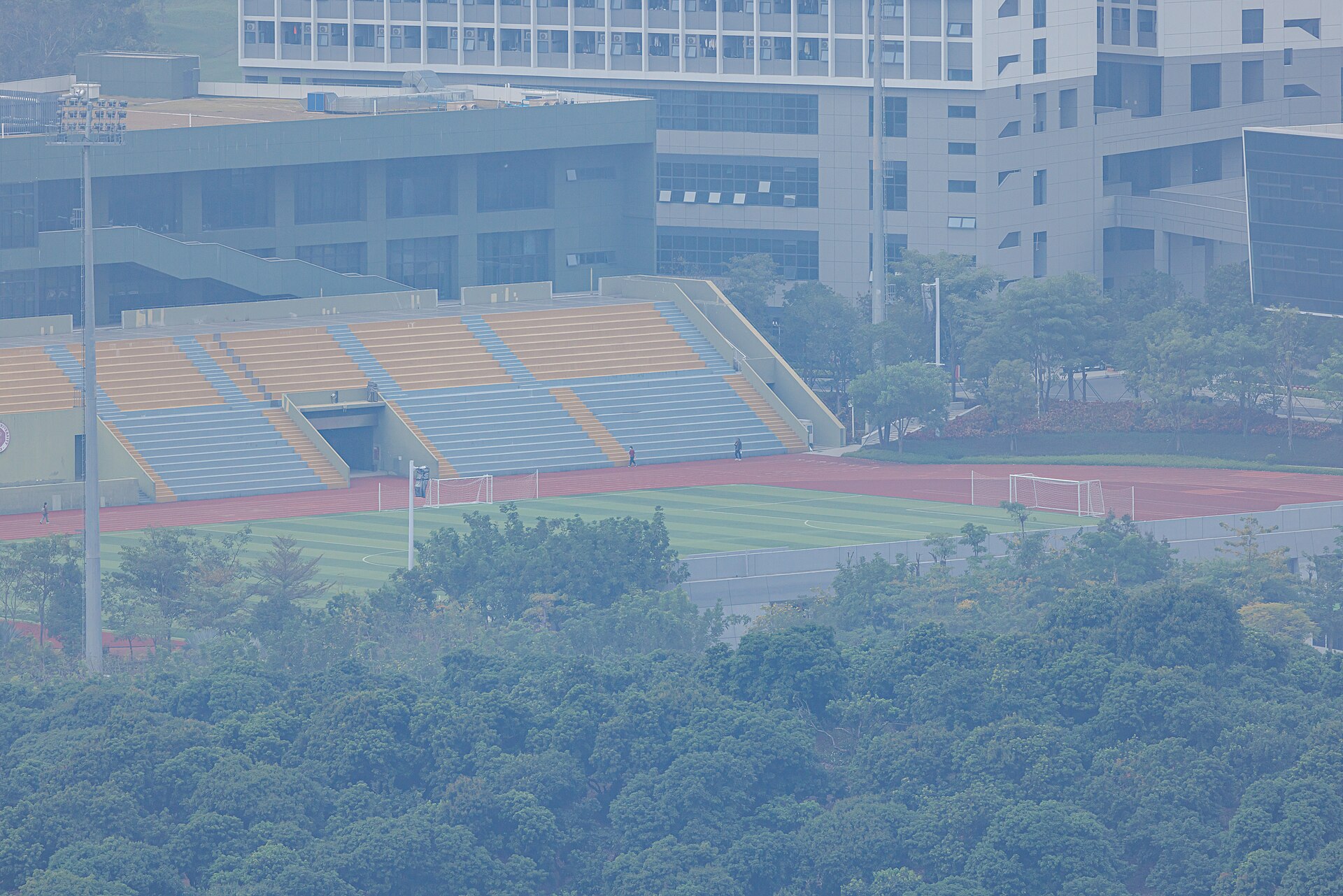
University of Science and Technology of China — campus in pictures
Real, freely-licensed photographs of the campus (via Wikimedia Commons).
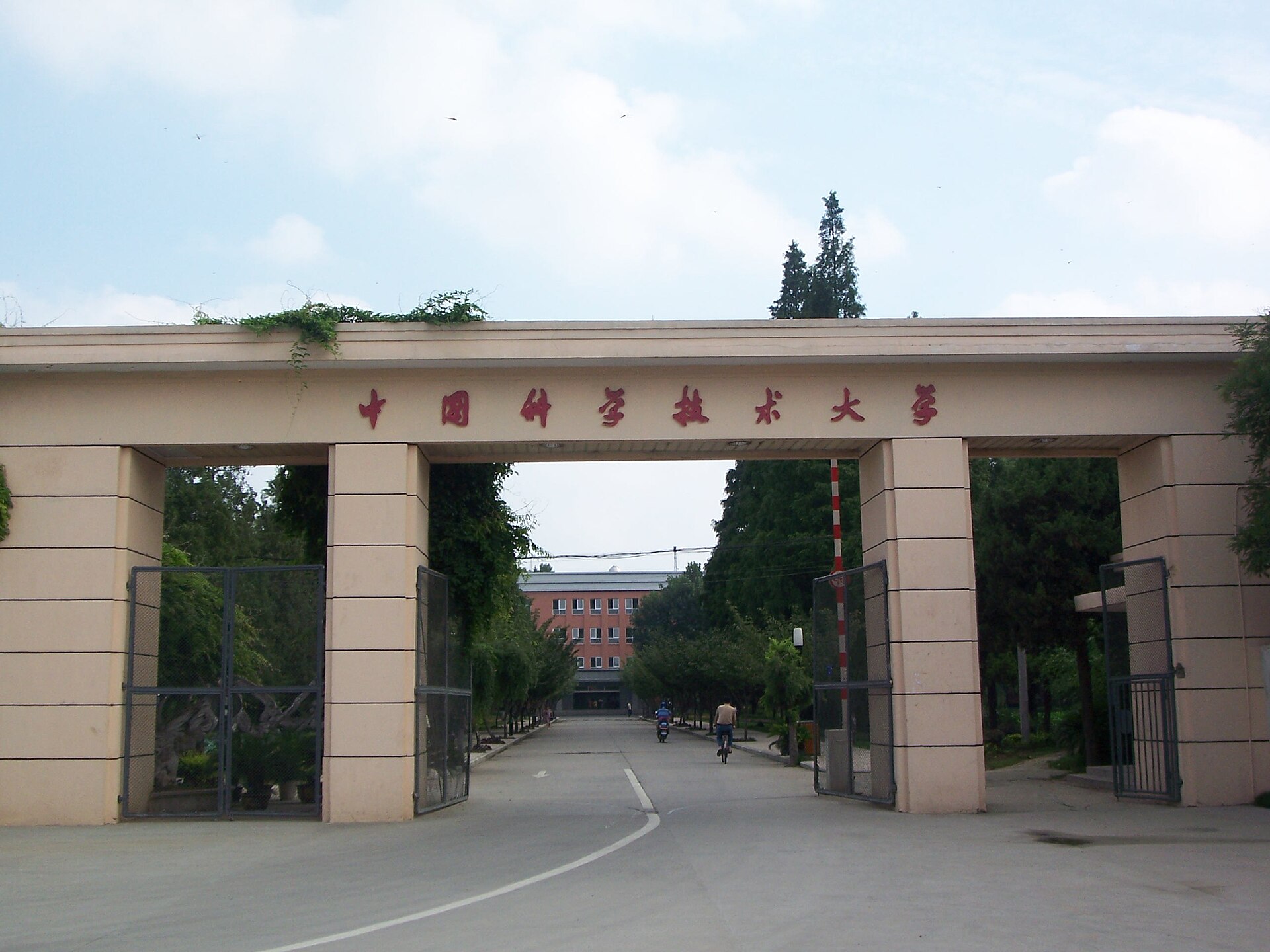
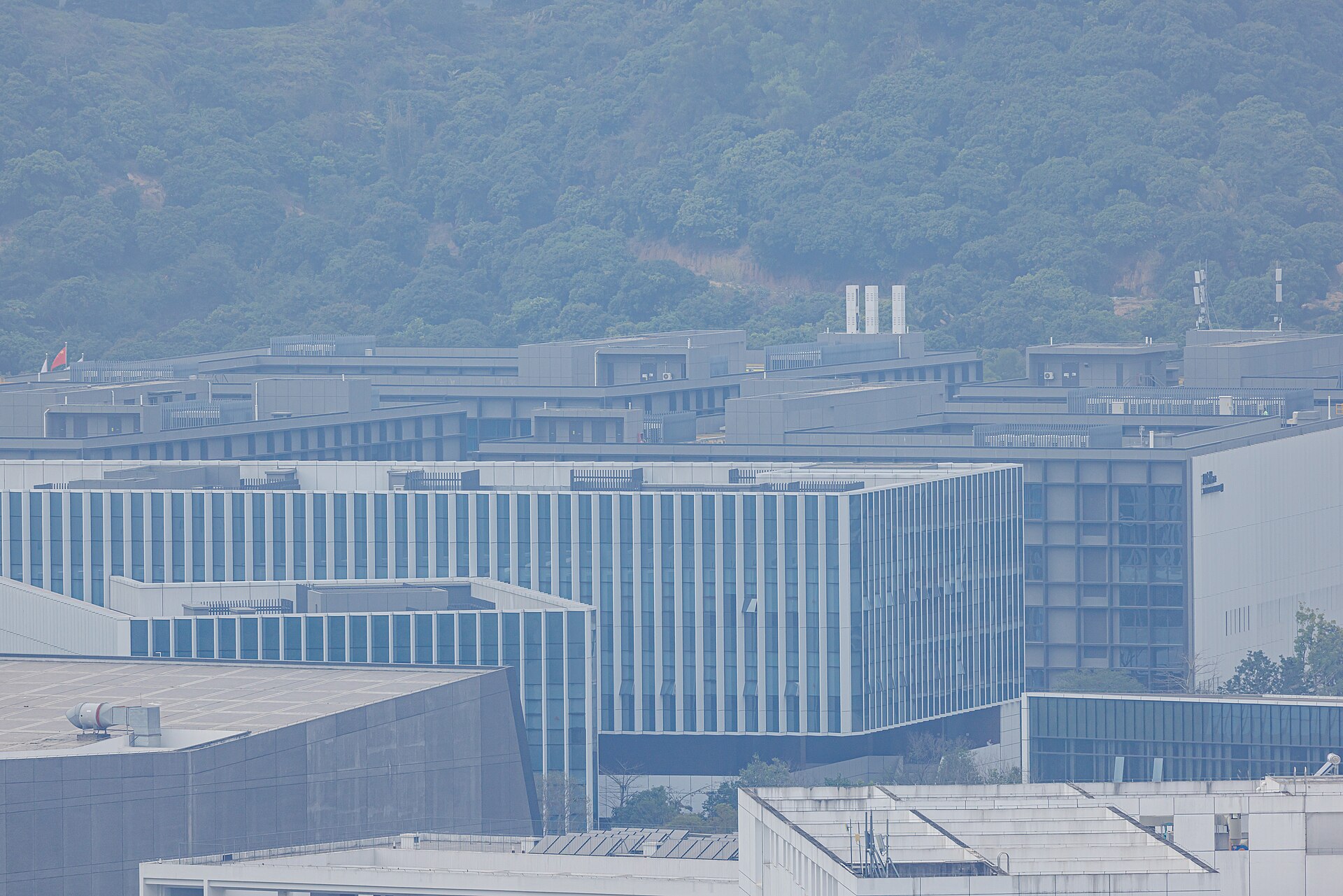
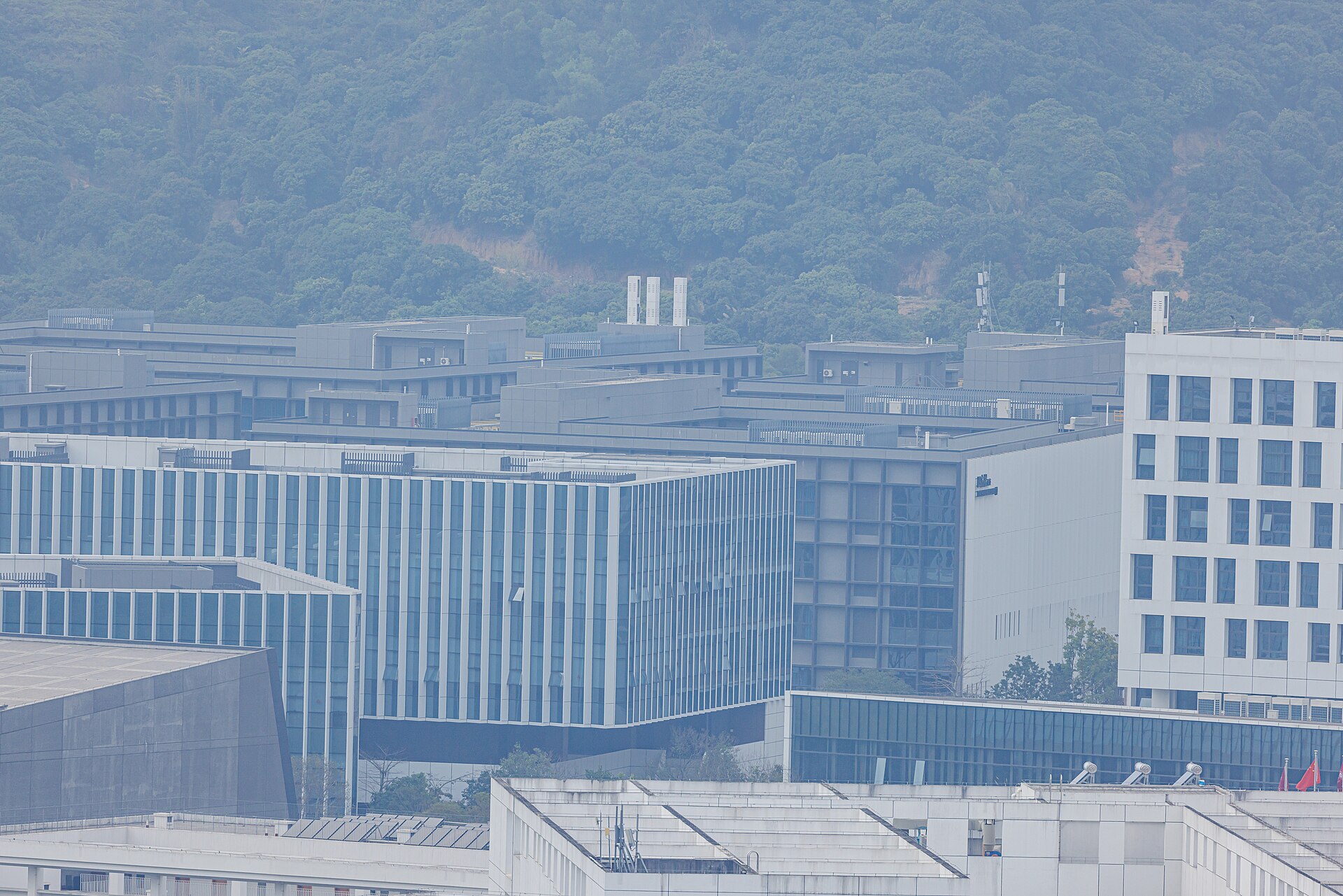

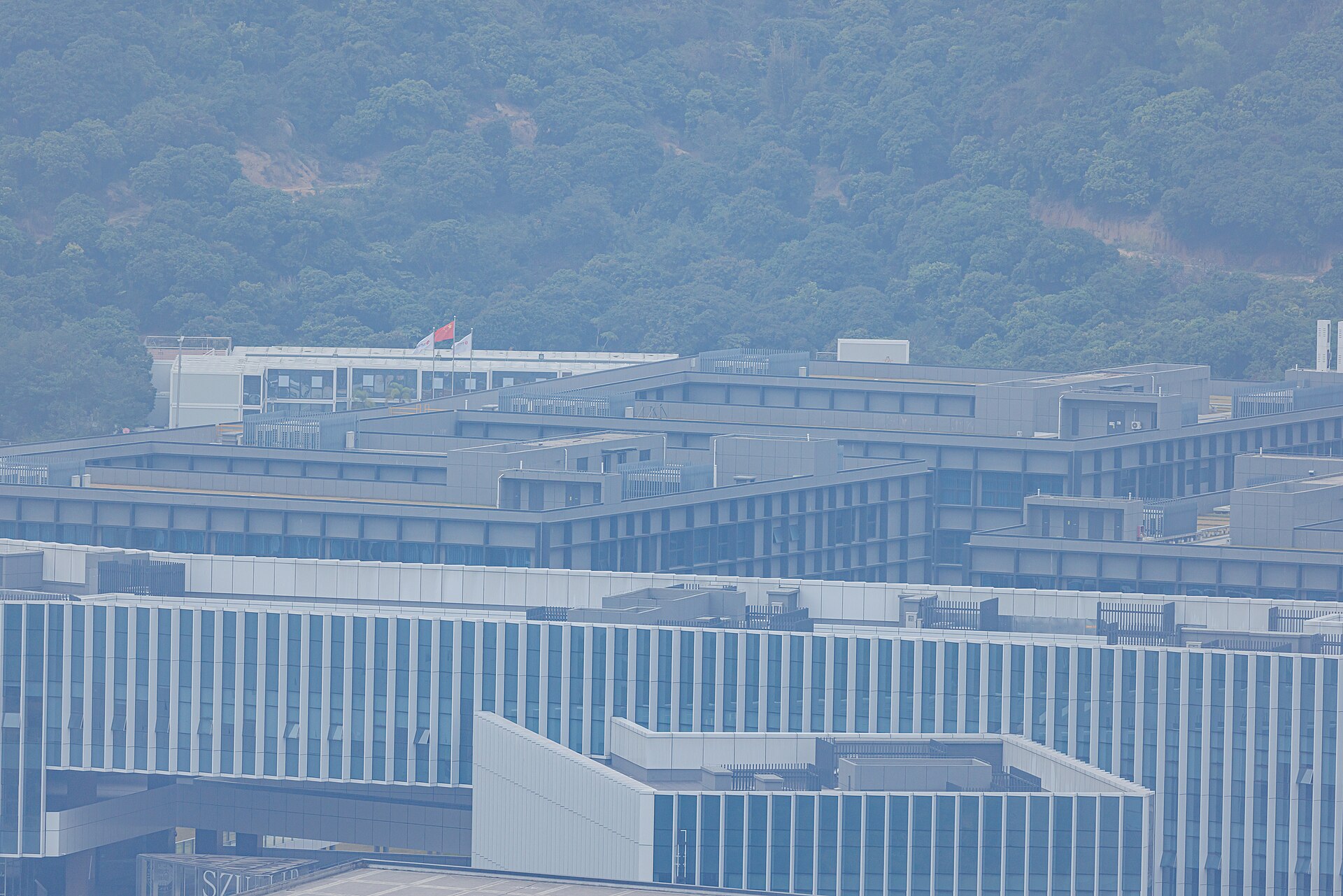
Why USTC — Research Depth, Elite Network & Unbeatable Value
USTC is not the most famous Chinese university outside China, but among scientists and engineers it commands immense respect. Its alumni include leading researchers at top institutions worldwide and its faculty have produced quantum computing breakthroughs that made global headlines.
SELECTIVITY
How Selective Is USTC?
USTC is highly selective by any global standard. The university's domestic admission profile is among the most competitive in China — it selects a small, elite cohort each year. For international applicants, competition is meaningful, particularly for funded positions and the most popular programmes in physics and computer science.
USTC does not publish a single unified acceptance rate for international applicants — the process is programme-specific and scholarship-dependent. The overall figure in our data (approximately 5%) reflects the highly competitive nature of admission, especially for funded places. Underfunded self-funded spots may be somewhat less competitive, but the academic bar remains high regardless.
AT A GLANCE
USTC Quick Facts
Stats
Items
APPLICATION COMPONENTS
What the USTC Application Requires
USTC accepts international students through its own admissions portal and through the Chinese Government Scholarship (CGS/CSC) programme. The documents required are consistent across routes, though the scholarship application adds extra forms.
WHAT USTC VALUES
The Profile USTC Admits
USTC is above all a science and technology institution. It selects students who demonstrate genuine intellectual curiosity in the natural sciences, exceptional technical preparation, and the disposition to engage seriously with research. Unlike broadly liberal-arts-oriented universities, USTC values depth over breadth.
For undergraduate admissions, strong performance in mathematics, physics, and chemistry is the clearest signal. For graduate and doctoral admissions, research experience — publications, lab work, academic competitions — matters enormously. USTC faculty take on graduate students who can contribute to active research groups, so alignment between your background and a supervisor's work is a key admission factor.
APPLICATIONS & DEADLINES
Application Timeline
USTC operates on a spring intake (September start) for most programmes. The Chinese Government Scholarship (CSC) route has an earlier deadline than the self-funded route. Always verify current deadlines on the official portal — these shift annually.
Deadlines below are indicative based on recent cycles. Confirm exact dates at study.ustc.edu.cn and the CSC scholarship portal (csc.edu.cn) for the current cycle.
| Route | Application Open | Deadline | Decision | Notes |
|---|---|---|---|---|
| CSC Scholarship (Type A/B) | February | Mid-March (indicative) | June–July | Apply via CSC online system; must nominate USTC as host |
| USTC Self-funded | February | May–June (indicative) | June–August | Apply via study.ustc.edu.cn directly |
| Exchange / FuSEP Programme | Varies by partner | Rolling; contact OIC | Rolling | Only for students at USTC partner universities |
CAMPUS & CITY
Student Life in Hefei
USTC's main campus and newer East Campus sit in Hefei, the capital of Anhui Province. Hefei has emerged as one of China's fastest-growing innovation cities — home to major technology companies, national laboratories, and a fast-expanding startup ecosystem. The cost of living is substantially lower than Beijing, Shanghai, or Shenzhen, making it one of the most affordable major Chinese cities for students.
Campus life at USTC is academically intense. The culture is research-driven and competitive — most students spend significant time in laboratories, seminars, and study groups. Student societies span technical clubs (Programming Association, Robotics Club, Linux User Group, AI Club), arts (Symphony Orchestra, Student Chorus, Ballroom Dance Federation), and sports (basketball, tennis, badminton, Dragon Boat Association, Skateboard Club). The university hospital, dining centres, and sports facilities are all on-campus. International students form a relatively small community — roughly 3% of the total — so proactive engagement with the university's international office (OIC@ustc.edu.cn) and with Chinese peers is important for building a social network.
OUTCOMES
Careers & Graduate Outcomes
USTC graduates are disproportionately represented in global scientific research and technology leadership. The 90% employment rate within six months of graduation reflects both China's strong demand for STEM graduates and USTC's specific reputation among employers.
Graduate-school placement is USTC's most celebrated outcome channel. Alumnus and alumni networks thread through the physics, chemistry, computer science, and materials departments of MIT, Caltech, Stanford, ETH Zurich, Cambridge, and nearly every major Asian research university. For students who stay in China, USTC graduates are sought after by Alibaba, Tencent, Huawei, ByteDance, state-owned research institutes, and CAS-affiliated laboratories. The median entry-level salary in the facts data is approximately USD 18,000 per year — a figure that is contextually competitive within the Chinese market and typical for academic or research-adjacent roles.
Stats
Cards
FAQS
Frequently Asked Questions
Does USTC teach in English?+
Many doctoral programmes and some master's programmes are available in English, particularly in physics, computer science, and materials science. Most undergraduate programmes are taught in Chinese. If you are applying as an undergraduate international student, plan to develop Chinese language proficiency (HSK Level 4 minimum is commonly required). Always verify the language of your specific target programme on the admissions page.
What is the Chinese Government Scholarship (CSC) and does USTC accept it?+
Yes. The Chinese Government Scholarship (CGS), administered by the China Scholarship Council (CSC), covers full tuition, accommodation, monthly stipend, and medical insurance for eligible international students at USTC. It is highly competitive. Applications go through your home country's Chinese embassy or the CSC online portal, with USTC listed as the host institution. Apply early — CSC deadlines typically fall in March.
Is USTC worth considering if I want to stay in academia internationally?+
Yes, emphatically. USTC alumni are well represented in top PhD programmes worldwide. The university's Nature Index ranking (#2–3 globally among universities) reflects real research output. Faculty supervisors have strong international connections, and letters of recommendation from USTC professors carry real weight in global PhD admissions — particularly in physics, quantum information, chemistry, and computer science.
How do international students typically communicate day-to-day on campus?+
Mandarin Chinese is the dominant language of daily life on campus. English is used in international seminars, some graduate courses, and with the international office. International students who do not already speak Chinese are strongly encouraged to enrol in the university's Chinese language programme. Making a serious effort with the language dramatically improves the USTC experience.
Is an interview required for admission?+
Not always, but PhD applicants especially may be interviewed by their prospective supervisor via video call. Contacting a potential supervisor BEFORE submitting your application — sharing your CV and research interests — is strongly recommended and is standard practice in Chinese graduate admissions. A professor who agrees to supervise you significantly strengthens your application.
How safe is Hefei for international students?+
Hefei is generally considered safe by both Chinese and international standards. Crime affecting international students is rare. The campus is self-contained with on-campus services. Students should register with their home country's embassy upon arrival and familiarise themselves with local emergency contacts.
Can I transfer credit to or from USTC?+
USTC participates in exchange agreements with select partner universities, enabling semester-length exchanges for enrolled students. Full credit-transfer admission from another Chinese university is uncommon. Contact the Office of International Cooperation (OIC@ustc.edu.cn) for guidance on your specific situation.
ACADEMIC STANDARDS
Academic Expectations at USTC — A Different League of Science
USTC selects students who are genuinely exceptional in mathematics and the natural sciences. The institution's culture is research-driven and intellectually demanding — this is where China sends its most talented science students, and where international applicants must bring comparable credentials.
For international students, the academic bar is high and the environment is immersive. Lectures in Chinese-medium programmes move fast; the workload is substantial; and the expectation is that students engage actively in research by their second or third year. Coming in with strong foundations — particularly in calculus, physics, and programming — is not optional; it is essential.
ACADEMIC PROFILE
What Academic Credentials Does USTC Expect?
USTC evaluates applicants primarily on academic record. Unlike US universities, co-curricular involvement is secondary — the depth and quality of your academic performance in STEM subjects is the dominant signal.
A minimum GPA of 3.0/4.0 is noted in our data, but in practice, competitive applicants for funded positions carry GPAs significantly above this floor. Strength in core STEM subjects — particularly mathematics and physics — matters far more than breadth. If your transcript shows strong grades in advanced mathematics and science alongside weaker performance in humanities, that is a less problematic profile than the reverse.
TEST POLICY
Standardised Tests at USTC
USTC's test policy is listed as optional for international standardised tests (SAT/ACT). This reflects the fact that USTC — as a Chinese university — does not rely on US college entrance tests as a primary admission criterion. Academic transcripts, language tests (IELTS/TOEFL or HSK), and research background are the primary signals.
International students are not expected to submit SAT or ACT scores. If you have strong scores, you may include them as supplementary evidence of mathematical ability, but they are not required and not weighted heavily in the Chinese admissions context. The relevant standardised tests are English proficiency exams (IELTS/TOEFL) for English-medium programmes, and HSK (Chinese proficiency) for Chinese-medium programmes.
RELEVANT TESTS
Which Standardised Tests Actually Matter
For USTC, the relevant standardised assessments differ substantially from those required by US or UK universities.
IB · A-LEVELS · OTHER QUALIFICATIONS
How USTC Reads International Qualifications
USTC accepts a wide range of international secondary qualifications for undergraduate admission, including IB Diploma, UK A-Levels, US High School Diploma with AP results, and national equivalents.
The IB band is not published in our verified facts data, so no specific IB score benchmark can be stated. In general, USTC expects academic results competitive with those required by top-ranked universities in each applicant's home country. For IB applicants, strong Higher Level scores in mathematics and at least one science (Physics, Chemistry, or Biology HL) are important signals. For A-Level applicants, A or A* grades in relevant STEM subjects are expected. For applicants from national education systems (Indian boards, Chinese Gaokao-equivalent, European Abitur, etc.), the university assesses performance relative to the scale of the qualification.
If your qualification is not listed on the USTC admissions site, contact OIC@ustc.edu.cn to request a formal equivalency assessment before applying.
SUBJECT PREPARATION
Subject-Level Preparation That Matters
USTC courses are demanding from the first week. The following subject areas are most critical to perform in before entry.
ENGLISH REQUIREMENTS
English Language Requirements
English requirements apply specifically to English-medium graduate programmes. Most undergraduate programmes require Chinese (HSK), not English.
Native English speakers or graduates of English-medium institutions may apply for exemption. Always confirm with your target school or programme coordinator.
| Test | Minimum Score | Notes |
|---|---|---|
| IELTS | 6.0 overall | No individual band below 5.5 typically; confirm with programme |
| TOEFL iBT | 80 | Accepted for English-medium graduate programmes |
| Duolingo English Test | Not specified | Not confirmed as accepted; verify with OIC@ustc.edu.cn |
| HSK (Chinese Proficiency) | Level 4 (undergrad) / Level 5 (some grad) | Required for Chinese-medium programmes — the majority of USTC offerings |
YEAR-BY-YEAR PLAN
Building Your USTC Profile: Year 9 to Year 12
AVOID THESE PITFALLS
Common Academic Application Mistakes
- Applying to Chinese-medium programmes without adequate HSK preparation — most international students underestimate the language demand of USTC coursework.
- Writing a vague personal statement with generic language about 'passion for science' rather than connecting your background to specific research groups or questions at USTC.
- Skipping the step of contacting a prospective PhD supervisor before submitting — in the Chinese graduate system, supervisor alignment is a key factor in admission.
- Submitting SAT/ACT scores expecting them to compensate for weak transcripts — USTC puts transcripts and academic performance far above US-style test scores.
- Underestimating the pace of USTC's undergraduate curriculum — students who arrive underprepared in calculus or physics can find the first semester extremely difficult.
- Applying only to the most famous programmes (Physics, CS) without exploring equally excellent options in Chemistry, Materials Science, or Mathematics where competition may be somewhat less extreme.
- Missing CSC scholarship deadlines — the March deadline comes earlier than most universities' own deadlines and missing it eliminates the primary funding route.
COST & FINANCIAL AID
The Real Cost of Attending USTC — One of the Best Value Propositions in Global Science
USTC is among the most affordable top-100 global universities for international students. Tuition is approximately USD 3,600 per year, and when combined with the Chinese Government Scholarship, many students pay essentially nothing. Understanding the funding landscape is the most important financial step in your application.
Hefei is substantially cheaper than Beijing, Shanghai, or Shenzhen. A student living on campus — covering accommodation, meals, local transport, and modest personal expenses — can expect total living costs of around USD 3,500 per year. The combined cost of attendance (tuition plus living) runs to approximately USD 7,500 annually before any scholarships are applied.
COST BREAKDOWN
Annual Cost Estimates (Self-Funded, International)
All figures are approximate annual estimates in USD. Actual costs depend on programme, lifestyle, and exchange rates. Source: USTC facts data.
Exchange rate fluctuations affect USD equivalents. Always check current RMB tuition figures directly with USTC.
| Component | Estimated Cost Usd | Notes |
|---|---|---|
| Tuition (international students) | ~3,600 | Per academic year; varies by programme |
| On-campus accommodation | ~1,500–2,000 | Included in cost-of-living estimate |
| Living costs (meals, transport, personal) | ~3,500 | Hefei is one of China's most affordable major cities |
| Application fee | 80 | One-time, non-refundable |
| Total estimated cost of attendance | ~7,500 | Annual all-in estimate, before scholarships |
FINANCIAL AID
Financial Aid for International Students
USTC does not operate a US-style need-based financial aid system for international students. The primary funding mechanisms are competitive merit scholarships — the Chinese Government Scholarship (CSC) being the most significant.
The Chinese Government Scholarship (CGS, Type A) covers full tuition, on-campus accommodation, medical insurance, and a monthly living stipend (amounts vary by level: undergraduate, master's, PhD). It is administered by the China Scholarship Council (CSC) and is highly competitive. USTC also offers its own institutional scholarship (sometimes referred to as the USTC Presidential Scholarship or School Scholarship) for applicants of exceptional academic merit who are not covered by the CSC route. Average aid percentage data is not available in our verified facts data for USTC; the aid picture is scholarship-driven rather than need-based.
SCHOLARSHIPS
Key Scholarships to Apply For
These are the principal funding routes for international students at USTC. Verify current award amounts and conditions on the official scholarship pages — amounts and terms change annually.
AFFORDABILITY
The Net Price Reality
Even without scholarship funding, USTC is remarkably affordable by global standards. An annual all-in cost of approximately USD 7,500 (tuition + living) compares favourably with essentially every peer institution in the UK, US, Australia, or Singapore.
For context: the same level of research quality at a US R1 university would cost USD 60,000–80,000 per year for international students. At USTC, students access equally competitive research infrastructure, equally distinguished faculty, and arguably superior research-to-student ratios at a fraction of the cost. The trade-off is language environment, distance from home, and the requirement to adapt to a very different academic and social culture. For students who can navigate these factors, USTC offers genuinely exceptional value.
Self-funded students should budget conservatively and plan for currency exchange costs, visa fees, and health insurance. Funded students (CSC) should confirm stipend amounts for their specific level with the programme coordinator.
HOW TO FUND YOUR DEGREE
Step-by-Step: Securing Funding for USTC
COST FAQs
Frequently Asked Questions on Cost & Aid
Is the Chinese Government Scholarship (CSC) hard to get for USTC?+
Yes — it is competitive, particularly for physics and computer science positions. Strong academic transcripts, a compelling study plan, and (for graduate applicants) prior contact with a supervisor who supports your application significantly improve your chances. Do not assume the scholarship is automatic; prepare your application as carefully as you would for a top PhD programme anywhere in the world.
Can I work part-time to support myself?+
International students on a student visa in China are generally permitted to work on campus (e.g. as teaching assistants or research assistants) with appropriate approval. Off-campus work requires a work permit and is subject to restrictions. Research assistant and teaching assistant positions within USTC are the most accessible form of supplementary income.
Are there scholarships specifically for IB graduates or high-school students?+
Not specifically targeted at IB graduates. USTC's scholarships are merit-based and open to all international qualifications. Strong overall academic records — regardless of whether they come from IB, A-Level, or other systems — are what matter. There is no IB-specific bonus or deduction.
How much does a CSC stipend actually cover in Hefei?+
A PhD stipend of approximately RMB 3,500/month (roughly USD 480–500/month at current rates) covers modest living costs in Hefei comfortably. Accommodation is covered separately through the scholarship. With careful budgeting, most CSC-funded PhD students at USTC can live without financial stress, unlike students at more expensive Chinese cities.
Does USTC offer fee waivers for students from developing countries?+
The CSC and Belt and Road scholarships are the primary mechanisms for students from lower-income countries. USTC also participates in some bilateral scholarship programmes between China and specific countries. Contact OIC@ustc.edu.cn with your nationality and programme of interest for specific guidance.
APPLICATION WRITING
Writing for USTC — No US-Style Essays, But Writing Still Matters
USTC is a Chinese public university. It does not use the Common Application, UCAS, or any US/UK supplemental essay system. There are no optional essay prompts or word-limited short answers. Instead, the written components that matter are a Study Plan (for undergraduates) or a Research Statement / Personal Statement (for graduate applicants). These are substantive documents — and they are where most international applicants either distinguish themselves or fade into the generic pool.
This guide frames honest, specific advice for the written materials USTC actually requires. If you are reading advice elsewhere that references 'Common App supplements' or 'Why USTC' short essays in a US-style format, disregard it — that framework does not apply here.
WHAT WRITING USTC REQUIRES
The Written Components: What and Why
USTC's international admissions system is primarily document-based. The written components are evaluated as part of the overall application file. They are not scored on a rubric the way US essays are, but they are read — particularly by graduate supervisors who use them to assess fit and seriousness.
UNDERGRADUATE WRITING
The Undergraduate Study Plan: How to Write It
The undergraduate study plan is your primary opportunity to distinguish yourself as an applicant in the absence of interviews or supplemental essays. Treat it seriously.
The best undergraduate study plans share several characteristics. First, they are specific: they name the programme, mention USTC's specific research strengths relevant to their interest (quantum information, materials science, synchrotron radiation physics), and make a credible argument for why USTC is the right environment for this applicant's goals. Second, they are honest: they acknowledge if the applicant is learning Chinese and demonstrate awareness of the linguistic environment. Third, they demonstrate genuine academic maturity — the student has engaged with actual science at a level beyond what most secondary-school applicants show. Avoid: 'I have always loved science since I was young.' Aim for: a clear account of what you have studied, what excited you, what research or project work you have done, and what you intend to do with a USTC education.
- Open with your strongest academic moment or achievement — not a childhood anecdote
- Name the specific programme and explain its fit with your background
- Reference USTC's actual strengths that are relevant to you (Pan Jianwei's lab, NSRL, Hefei National Lab)
- Describe any research experience, Olympiad participation, or advanced study honestly
- State your career or graduate-school aspiration concretely
- If applying to a Chinese-medium programme, acknowledge your language preparation and study plan
- Close with a forward-looking statement that connects your goals to what USTC specifically offers
GRADUATE WRITING
The Graduate Research Statement: A Different Standard
For master's and PhD applicants, the research statement is scrutinised far more carefully than the undergraduate study plan. It may be read by your prospective supervisor before they agree to take you on — treat it as a professional document.
A strong USTC graduate research statement does the following: it describes your undergraduate research experience in specific, substantive terms (not 'I assisted in a lab' but 'I contributed to a project studying X using method Y, which produced result Z'); it identifies a research question or area you want to pursue at USTC; it names specific faculty members and their research programmes that align with your interests; and it explains concisely why USTC is the right environment for this work.
THE MOST IMPORTANT STEP
Contacting a Supervisor Before You Apply
In the Chinese graduate admissions system — and at USTC specifically — reaching out to a potential supervisor before submitting your application is not just helpful, it may be decisive. This is perhaps the most important action a graduate applicant can take.
Chinese PhD admissions are more supervisor-mediated than US or UK systems. A faculty member who agrees to supervise you can advocate for your application internally. An application without any faculty contact is a cold application competing against candidates who already have a relationship in place. How to do this well: identify 2–3 faculty members whose recent publications you have actually read. Email them a brief, professional note — your name, your undergraduate institution and degree, one specific paper of theirs you found interesting and why, and a concise statement of what you want to work on. Attach your CV. Do not mass-email; personalise each message. Be patient — response rates vary but a genuine, specific email will be read.
- Search the school-specific pages on en.ustc.edu.cn for faculty in your area
- Read at least two recent papers by each faculty member you contact
- Write a personalised, professional email — not a copy-paste template
- Attach a 1-2 page CV highlighting research experience
- Ask if they are taking students for the upcoming intake year
- If they reply positively, note this in your research statement and application
CHOOSING YOUR ANGLE
What to Write About (and What to Avoid)
The question of what to write in your study plan or research statement is ultimately a question of self-knowledge and strategic presentation. USTC reviewers read many documents — what gets attention is specificity and authentic intellectual engagement.
AVOID THESE MISTAKES
Common Writing Mistakes for USTC Applications
- Submitting a generic personal statement that mentions 'passion for science' without specifying which science, which questions, or which USTC research group.
- Naming a supervisor in your application without having read their work or attempted contact — if asked about it, you must be able to discuss it.
- Applying to Chinese-medium programmes without addressing the language question — reviewers notice when applicants appear unaware of the linguistic demands.
- Writing a research statement focused entirely on your home country's educational system without explaining how it prepares you for graduate research at USTC.
- Copying or heavily paraphrasing sample statements found online — USTC faculty will recognise generic structures immediately.
- Underestimating the length of a substantive research statement — a PhD application with a 300-word 'research interest' note looks insufficiently serious.
- Ignoring the CSC scholarship motivation letter as a formality — this letter is part of the scholarship evaluation and deserves careful attention.
APPLICATION WRITING FAQs
Frequently Asked Questions on Writing for USTC
Does USTC have a 'Why USTC' essay like US universities?+
Not in the US supplemental essay sense. However, the study plan and research statement both implicitly require you to explain why you are choosing USTC. Embed this naturally and specifically — not as a separate prompt answer, but woven into your account of your research interests and goals.
Should I write my study plan in English or Chinese?+
For English-medium programmes, write in English. For Chinese-medium undergraduate programmes, writing in Chinese signals language readiness and is often preferred — if your Chinese is strong enough to do so well. If your Chinese is at an intermediate level, writing in English and noting your language progress is the safer choice. Poorly written Chinese is worse than fluent English.
How long should the undergraduate study plan be?+
USTC typically specifies 500–1,000 words for undergraduate study plans. Stay within this range. Quality matters far more than length — a focused 600-word plan is better than a diffuse 1,200-word one.
Do letters of recommendation matter more than the personal statement at USTC?+
For graduate admissions especially, strong letters from research supervisors who can speak to your scientific ability often carry more weight than the personal statement alone. Strong personal statement plus strong recommendation letters is the ideal combination. A weak letter and a strong personal statement is a harder sell.
Can I apply to more than one programme at USTC?+
Typically applicants apply to one primary programme per application. Some school-level applications allow preference ordering. Check the current application portal for the specific structure for your level (undergraduate/master's/PhD).
I do not have research experience. Can I still apply and write a compelling statement?+
Yes, particularly at the undergraduate level. Emphasise academic rigour, Olympiad experience, independent projects, or substantive coursework that demonstrates scientific depth. Be honest — do not manufacture experience. A clear articulation of genuine scientific curiosity and readiness to learn is more convincing than vague claims about research 'experience' that amounts to a one-week school visit.
Courses — schools, degrees & intake
40 degrees across 12 groupings.
School of Mathematical Sciences · 3 degrees
Mathematics
Computational and Applied Mathematics
Statistics and Applied Mathematics
School of Physical Sciences · 6 degrees
Physics
Modern Physics
Optics and Optical Engineering
Astronomy
Engineering and Applied Physics
Quantum Information Science
School of Chemistry and Materials Science · 5 degrees
Chemistry
Chemical Physics
Materials Science and Engineering
Polymer Science and Engineering
Applied Chemistry
School of Earth and Space Sciences · 7 degrees
Space Physics
Atmospheric Science
Solid Earth Geophysics
Geochemistry
Environmental Science and Engineering
Planetary Science
Space Science and Technology
School of Engineering Science · 3 degrees
Engineering Science (Theoretical and Applied Mechanics)
Nuclear Science and Technology
Safety Science and Engineering
School of Information Science and Technology · 5 degrees
Electronic Science and Technology
Automation
Electronic Information Engineering
Information and Communication Engineering
Cybersecurity (Information Security)
School of Computer Science and Technology · 2 degrees
Computer Science and Technology
Artificial Intelligence
School of Software Engineering · 2 degrees
Software Engineering
Digital Media Technology
Division of Life Sciences and Medicine · 4 degrees
Biological Sciences
Basic Medicine
Clinical Medicine
Biomedical Engineering
School of Management · 1 degrees
Management Science and Engineering
School of Humanities and Social Sciences · 1 degrees
Science and Technology History
School of Public Affairs · 1 degrees
Public Administration
Want your real chances at University of Science and Technology of China?
Create a free TYCHR account for your personalised admit-chance, a shortlist you can track, exact entry requirements, and essay + counselling help.