University of Rochester
Rochester, United States · Suburban
UNIVERSITY OF ROCHESTER — ROCHESTER, NY
University of Rochester Admissions Guide for International Students
Founded in 1850, the University of Rochester is a private research powerhouse in upstate New York where the guiding philosophy is deceptively simple: there are almost no required courses. The famous Open Curriculum — anchored by just one mandatory writing seminar — is not a loophole; it is an invitation to design your own intellectual journey across 160+ majors, a world-class music conservatory, and one of the most intensive undergraduate research programmes at any American university. With 22% of students from outside the United States and a 10:1 student-faculty ratio, Rochester offers elite access in a community small enough to know your professors personally.
Campus
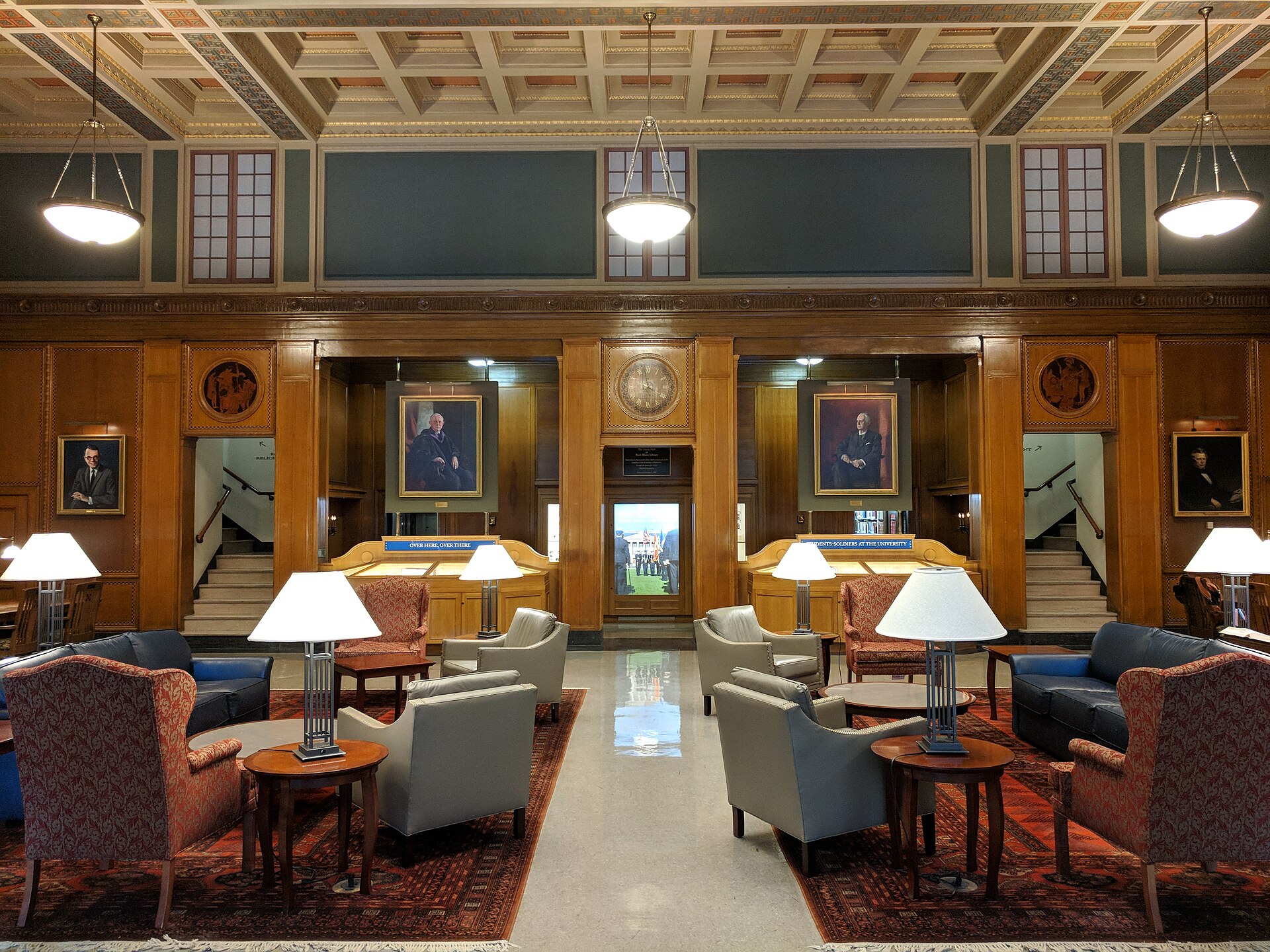
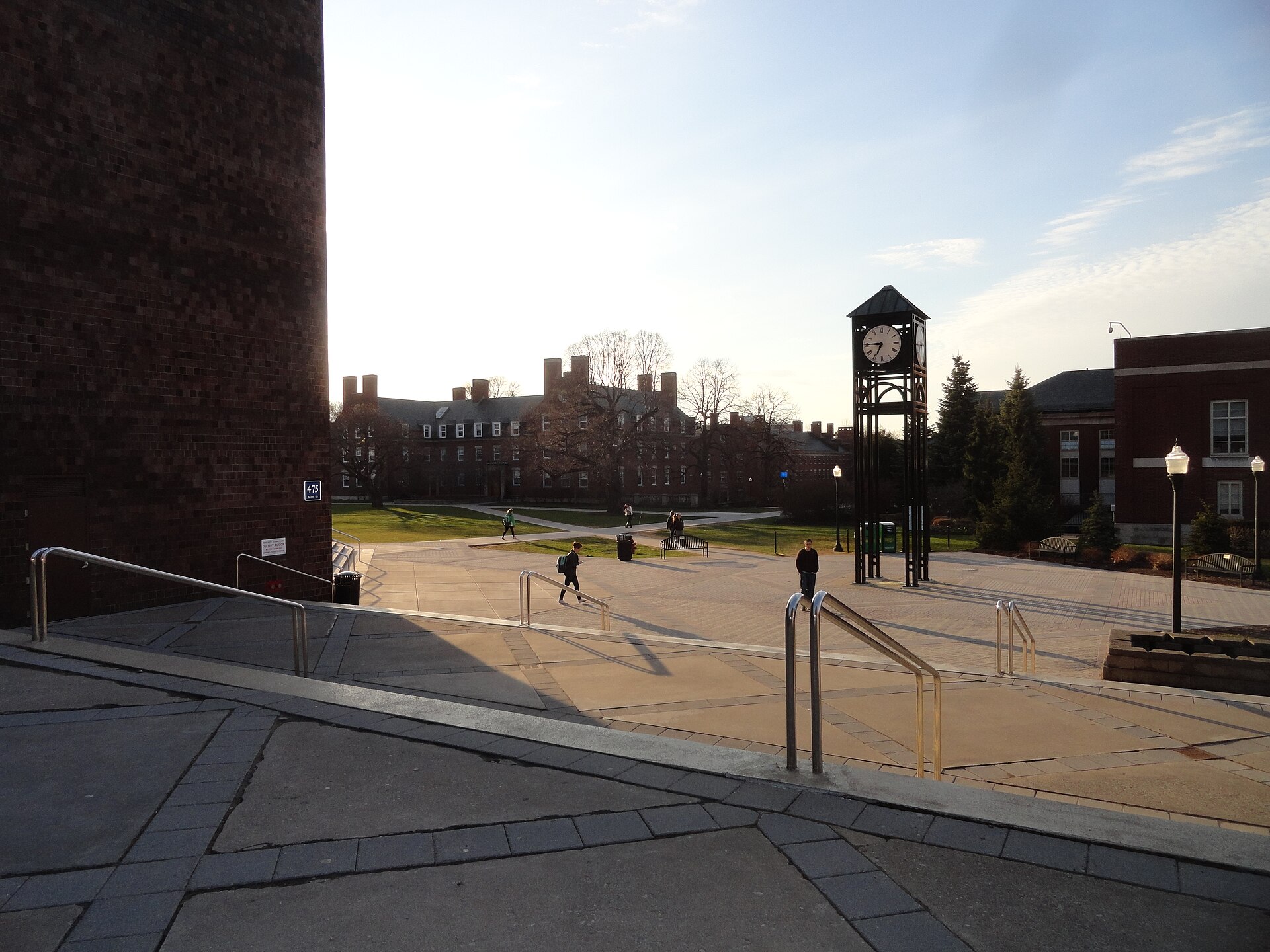
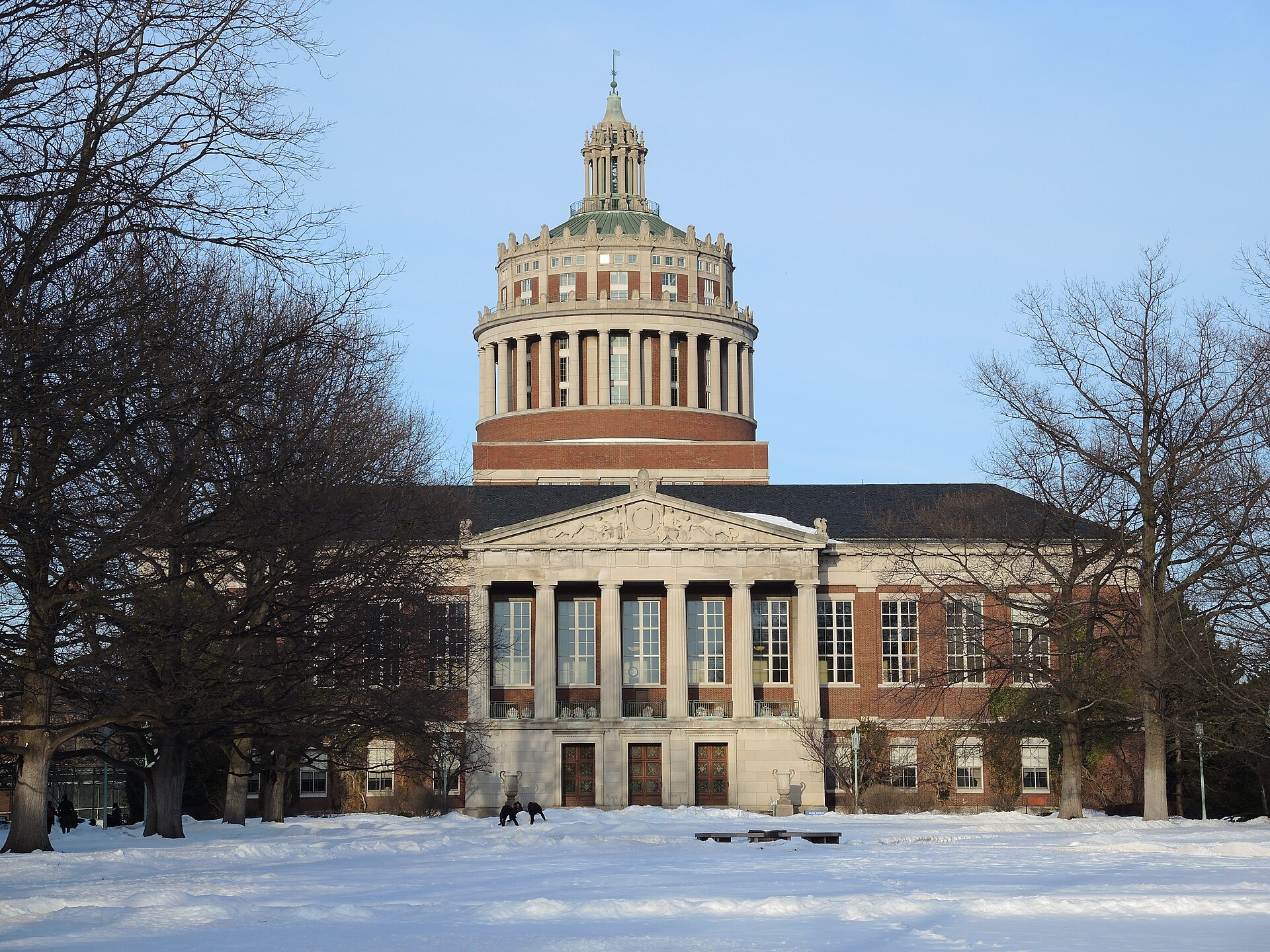
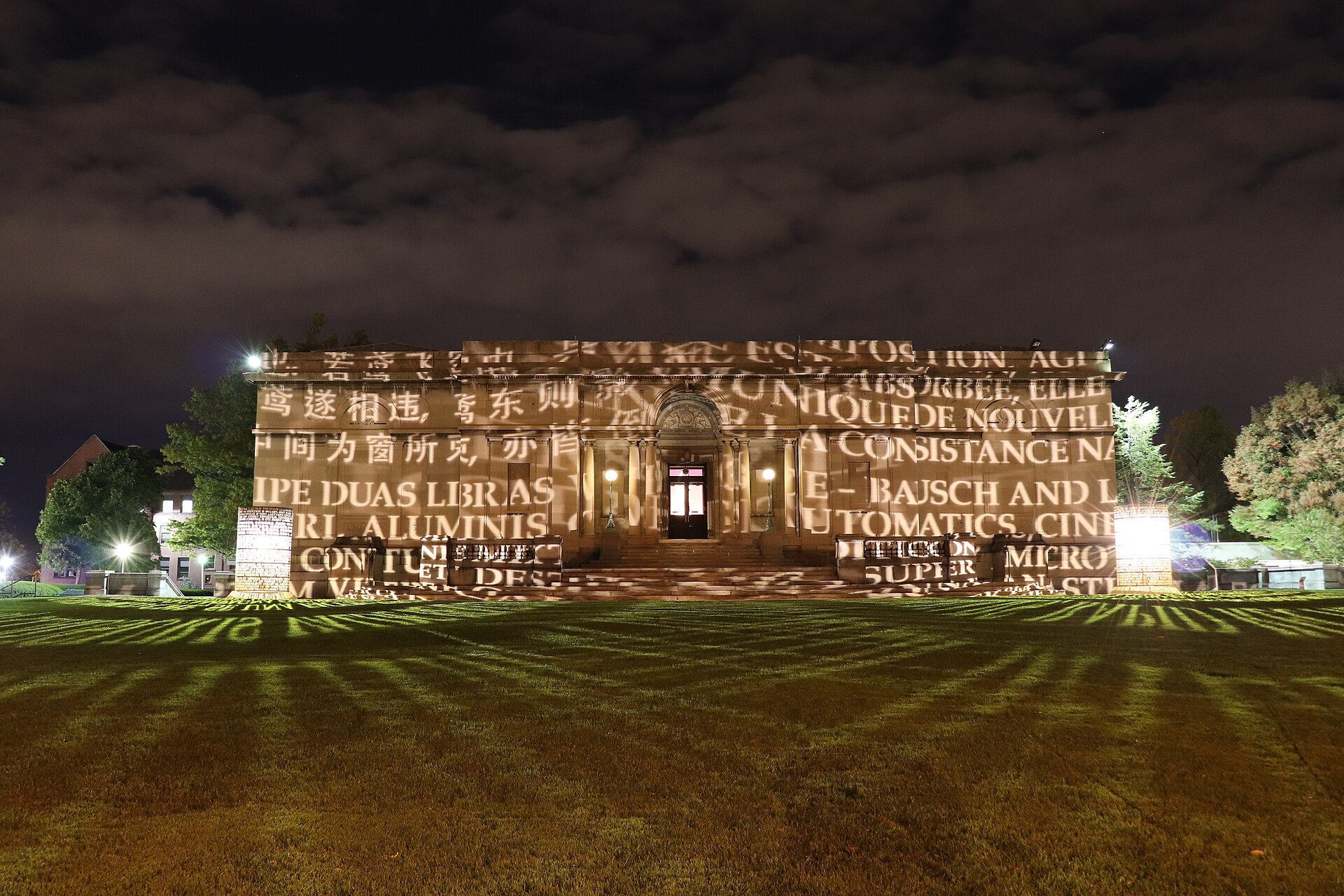
University of Rochester — campus in pictures
Real, freely-licensed photographs of the campus (via Wikimedia Commons).

WHY ROCHESTER
Six Reasons to Choose University of Rochester
SELECTIVITY
Acceptance Rate & Admitted Profile
Rochester admits approximately 36% of applicants — moderately selective by top-50 US private standards, but highly competitive in practice because the applicant pool self-selects strongly. The university uses a holistic review process: academic excellence matters enormously, but intellectual curiosity, demonstrated fit with the Open Curriculum, and authentic personal narrative carry real weight in close-call decisions.
QUICK FACTS
Rochester at a Glance
APPLICATION COMPONENTS
What Your Application Consists Of
ADMISSION PROFILE
The Student Rochester Actually Admits
Rochester is looking for students who don't wait to be told what to study. The Open Curriculum only works if you are genuinely curious and self-directed — students who succeed here have usually already shown that quality before they arrive.
DEADLINES
Application Rounds & Key Dates
Rochester offers Early Decision I, Early Decision II, and Regular Decision rounds. ED is binding — if admitted, you withdraw all other applications. International students may apply in any round; applying ED is not required but can signal strong demonstrated interest.
All deadlines are for fall entry unless stated. CSS Profile deadlines apply to international students seeking need-based aid.
| Round | Deadline | Notification | Css Profile |
|---|---|---|---|
| Early Decision I | 1 November | Mid-December | 1 November |
| Early Decision II | 5 January | Early February | 5 January |
| Priority Scholarship | 1 December | Late February | 5 January |
| Regular Decision | 5 January | 1 April | 5 January |
| Spring Semester | 15 October | 1 December | On file at application |
STUDENT LIFE
Life at Rochester & in the City
Rochester is a mid-size city on the southern shore of Lake Ontario — home to a nationally recognised arts scene (the Rochester Philharmonic, the George Eastman Museum, numerous galleries), affordable living, and a vibrant food culture rooted in Italian, Puerto Rican, and other immigrant communities. The campus itself is green, compact, and self-contained enough to feel like a genuine community. All first- and second-year students are required to live on campus, which helps build the tight-knit academic culture Rochester is known for. Upper-year students typically move into university-affiliated housing or nearby off-campus apartments. With 250+ clubs and organisations — from the Society of Physics Students to the Caribbean Students Association — and Eastman recitals and open mic nights woven into the social calendar, there is a rhythm to campus life that international students often describe as surprisingly warm for a research university.
CAREER OUTCOMES
What Rochester Graduates Go On to Do
Rochester's Gwen M. Greene Center for Career Education & Connections connects students with internships, employers, and graduate school pathways from the first year. The university's deep ties to Rochester's health-sciences, optics, and technology industries create on-campus internship pipelines that are unusually accessible for undergraduates.
Stats
Cards
FAQS
Frequently Asked Questions
Is the University of Rochester test-optional for international students?+
Yes. Rochester's test-optional policy applies to all applicants, including internationals. You are not penalised for not submitting SAT/ACT scores. However, if your scores are competitive (within or above the middle 50% band of 1410–1530 SAT / 31–34 ACT), submitting them can strengthen your application.
Does Rochester give financial aid to international students?+
Yes — and this is relatively rare among highly-ranked US privates. Rochester extends need-based grant aid to international undergraduates who submit the CSS Profile by the relevant deadline. No FAFSA is required. Aid is determined by demonstrated financial need.
How does the Open Curriculum actually work?+
The only mandatory course is a first-year Mastery of Written Communication seminar. Beyond that, you choose all your courses. You must complete the requirements for your major(s) and two thematic Clusters (each a set of three courses around a connected theme — you can choose from 250+ pre-built Clusters or design your own). Everything else is genuinely open.
What is a Cluster?+
A Cluster is a set of three courses united by a common theme — for example, 'The Scientific Approach,' 'Art History,' or 'Poverty, Public Policy, and Development.' You complete two Clusters; they can be close to your major or completely outside it. You can even design your own with faculty approval.
Can international students work on campus?+
Yes. F-1 visa holders are eligible for on-campus employment of up to 20 hours per week during term and full-time during breaks. After graduation, STEM-designated programmes qualify for 24-month STEM OPT extension (on top of the standard 12 months of OPT).
Is Rochester's location a disadvantage for job recruiting?+
Less than you might expect. Rochester has a significant concentration of health-tech, optics, and advanced manufacturing employers, and the Gwen M. Greene Center actively brings national and international employers to campus. New York City is a 6-hour drive, and the university runs NYC-based career treks for finance and media careers.
What is the Eastman School of Music, and can non-music students access it?+
Eastman is a fully integrated, world-class music conservatory that is part of the University of Rochester. Any undergraduate can take Eastman courses. Students who want a dual degree (e.g., a BS from the College + a BM from Eastman) apply to both schools simultaneously — a demanding but achievable combination.
What is REMS — the Rochester Early Medical Scholars programme?+
REMS is a combined BA/MD pathway that guarantees a place in the University of Rochester School of Medicine & Dentistry to selected undergraduates, conditional on maintaining academic standards and completing specified requirements during their undergraduate years. It is applied for through the undergraduate application and is extremely competitive.
ACADEMICS
What Academic Life at Rochester Looks Like for Internationals
Rochester's academic culture is collaborative, research-focused, and deliberately interdisciplinary. The Open Curriculum means you are not handed a roadmap — you build one. International students who thrive here tend to be self-directed, willing to explore well outside their primary field, and eager to work directly with faculty rather than sitting in the back of a large lecture hall.
ADMITTED PROFILE
Academic Benchmarks for Admitted Students
TEST POLICY
Test-Optional at Rochester
Rochester has a confirmed test-optional policy for all applicants. If you do not submit SAT or ACT scores, you will not be disadvantaged. Admissions officers are trained to evaluate applications holistically without test scores, placing greater weight on your transcripts, curriculum rigour, essays, and recommendations. If you do submit scores, they are read in context — a 1480 from a student at an underfunded school in a developing country reads differently than a 1480 from a student at a fee-paying international school. Rochester acknowledges this explicitly. International students with genuinely strong scores (at or above the middle 50%) should typically submit them; those with scores below the middle 50% should apply test-optional.
SAT & ACT
Reading Your Test Score in Context
Rochester's admitted SAT range is 1410–1530 (middle 50%) and the ACT range is 31–34. Scores in these bands support your application; scores well above them can be a positive signal, particularly in competitive programmes like Optical Engineering or pre-med. Scores below the 25th percentile are unlikely to add value and may be best omitted under the test-optional policy. International students who sat national exams (Gaokao, JEE, KCSE, Tawjihi, NCEA, etc.) are not required to convert those to SAT equivalents. If you have a US standardised test score that is competitive, include it. If not, let your curriculum and grades speak for themselves.
IB / A-LEVEL / AP
How Rochester Reads International Qualifications
Rochester is familiar with and welcoming of every major international curriculum. There is no conversion chart — admissions officers evaluate your record in the context of what your school offers and how your classmates performed. For IB Diploma candidates, a predicted score of 36 or above puts you in the competitive range. Strong HL grades (6 or 7) in subjects relevant to your intended area are particularly valued. Rochester does give advanced credit for strong IB scores — students who score 5 or above on HL exams can receive credit for relevant courses, which can accelerate your path through your degree or allow you to take more electives. For A-Level students, 3 A-grades or above (AAB minimum, A*AA for the most competitive programmes) is generally expected. A-Level students are often admitted with advanced standing. AP students scoring 4 or 5 can similarly receive credit. If you are taking an Indian board (CBSE / ISC), national Chinese curriculum, or another system, Rochester has experience evaluating those transcripts and you should apply without concern.
SUBJECT PREPARATION
Academic Rigour Rochester Expects
ENGLISH PROFICIENCY
English Language Requirements
All international students whose secondary schooling was not primarily conducted in English must submit an English proficiency test. Rochester accepts TOEFL, IELTS, and the Duolingo English Test.
A waiver may be requested if you are a native English speaker or completed 3+ years of secondary school with English as the language of instruction.
| Test | Minimum | Notes |
|---|---|---|
| TOEFL iBT | 100 | No sub-score minimum stated; aim for balanced sections |
| IELTS Academic | 6.5 | Overall band; aim for no sub-score below 6.0 |
| Duolingo English Test | 120 | Increasingly accepted; combine with strong application |
PROFILE BUILDING
Grade-by-Grade Roadmap to Rochester
COMMON MISTAKES
Academic Pitfalls International Applicants Make
- Underloading your curriculum in Grade 12 after submitting predicted grades — Rochester verifies with your final transcript.
- Submitting a below-average SAT/ACT score because you feel you 'must' include it — Rochester is test-optional and means it.
- Applying for Eastman without an audition portfolio — Eastman is a separate application and requires its own submission.
- Missing the CSS Profile deadline — without it, you cannot receive need-based aid, even if your financial need is significant.
- Treating the IB Extended Essay or TOK as boxes to check rather than intellectual opportunities — these are exactly what Rochester admissions officers are looking for evidence of.
- Failing to get an English proficiency waiver (or test) early — TOEFL/IELTS must be submitted well before your application deadline to arrive in time.
- Listing activities without explaining impact or leadership — quality and depth beat quantity every time.
COST & AID
Understanding the True Cost of a Rochester Education
Rochester's sticker price is significant — as with most US privates — but the university extends need-based grant aid to international students, which meaningfully reduces costs for eligible families. Understanding how aid works, what you need to file, and what scholarships exist is essential before assuming Rochester is out of reach.
COST BREAKDOWN
Annual Cost Estimates (Before Aid)
The figures below are from the facts file and represent approximate annual costs. Actual billed amounts vary by programme and year.
All figures are estimates and subject to annual increases. Verify current-year rates on the Rochester Student Financial Services website.
| Component | Annual Cost Usd | Notes |
|---|---|---|
| Tuition | $66,000 | All undergraduate programmes |
| Cost of Attendance (total) | $88,000 | Tuition + housing + meals + fees + personal |
| Cost of Living | $18,000 | Housing + meals + personal expenses |
| Application Fee | $50 | One-time, non-refundable |
FINANCIAL AID
Need-Based Aid for International Students
Rochester provides need-based grant aid to international undergraduates — a genuinely rare policy among highly-ranked US universities. Aid is not a loan and does not need to be repaid. Average grant aid covers approximately 55% of the cost of attendance for those who receive it, though the actual award depends on your family's demonstrated financial need as assessed through the CSS Profile. The university does not require the FAFSA from international students. Instead, the CSS Profile (administered by College Board) is the primary financial documentation required. Some families will also need to submit supporting documents through the College Board's IDOC service. Rochester offers a limited number of CSS Profile fee waivers for high-need students — contact the financial aid office to request one.
SCHOLARSHIPS
Named Scholarship Opportunities
Rochester offers a small number of named merit and need-based scholarships. International students are considered for the Meliora Scholarship automatically; other awards have specific eligibility criteria.
Named scholarships are limited. The majority of international students who receive substantial aid at Rochester receive need-based grants through the CSS Profile process, not named merit awards.
AFFORDABILITY
Net Price Reality for International Families
At $88,000 in total cost of attendance, Rochester requires significant financial planning. However, the university's commitment to meeting demonstrated need — including for international students — means the net price can be substantially lower than the sticker price for families with documented financial need. Families with household incomes in the upper-middle and high range (and assets to match) should plan for significant out-of-pocket contribution. Families with lower or middle incomes who can document their financial situation clearly through the CSS Profile may receive substantial grant aid. Rochester is not need-blind for international students (financial need is a factor in the admission decision), so families in challenging financial circumstances should be aware that this may affect outcomes, particularly in highly-competitive applicant pools.
HOW TO APPLY FOR AID
Funding Application Step by Step
COST FAQS
Frequently Asked Questions on Costs & Aid
Does Rochester offer full scholarships to international students?+
The Alan and Jane Handler Scholarship is a full-support award, but it is extremely competitive and requires a non-relative nomination. The Meliora Scholarship ($10,000–$35,000) is available to all admitted students. For most international students, the primary source of significant funding is need-based grant aid through the CSS Profile.
Is Rochester need-blind for international applicants?+
No. Rochester is need-aware for international undergraduate applicants. This means that your demonstrated financial need may be a factor in the admission decision, particularly when the class is nearly full. It does not mean that all needy applicants are rejected — many receive both admission and substantial aid — but it is a factor to be aware of.
What is the average net price after aid for international students?+
The facts file indicates that average aid covers approximately 55% of the cost of attendance for those who receive it. At a $88,000 cost of attendance, this implies an average net price of approximately $39,600 annually for aided students. Your actual net price depends entirely on your family's demonstrated financial need.
Can I work part-time to help cover costs?+
Yes. F-1 students are eligible for on-campus employment of up to 20 hours per week during term. After graduation, STEM-designated programmes qualify for a 24-month STEM OPT extension. Work-study positions on campus are common and often align with academic interests.
Are there external scholarships for international students going to Rochester?+
Yes. Many international students supplement Rochester grants with scholarships from home-country governments (e.g., AAUW, Fulbright pre-doctoral awards, national ministries of education), private foundations, and regional funds. Rochester's financial aid office can provide guidance, but the search is primarily your responsibility.
ESSAYS
The Rochester Supplement: Why Every Word Counts
Rochester's supplemental essay is short — just 250 words — which makes it both deceptively simple and unforgiving. Because the prompt is explicitly about the Open Curriculum and Rochester's specific co-curricular landscape, generic essays are immediately obvious to readers who review thousands of applications. This is the most important document you control in your application, and it should reflect genuine, specific knowledge of this university.
ESSAY OVERVIEW
What Essays Rochester Requires
Rochester uses the Common Application or Coalition for College Application. International students complete the same application as domestic students. The essay requirement has two components: 1. The Common App Personal Essay (650 words maximum) — one essay responding to any of the seven Common App prompts, shared with all Common App schools. 2. The University of Rochester Supplemental Essay (250 words) — one short essay responding to a Rochester-specific prompt about your vision for your time at the university. There are no additional supplements, no 'Why Rochester' diversity essays, and no video submissions required for standard undergraduate admission (Eastman applicants submit a separate audition portfolio).
ESSAY PROMPTS
The 2026–27 Rochester Prompts
PERSONAL ESSAY STRATEGY
Making the Common App Essay Work for Rochester
The Common App Personal Essay should be drafted independently of your Rochester supplement — its job is to reveal who you are as a person and student, not to explain why you want to attend Rochester. That said, the two essays should complement each other: if your personal essay covers a moment of intellectual discovery (a science experiment, a piece of music, a philosophical argument), your supplement can then project that curiosity forward into specific Rochester experiences. For international students, the personal essay is also an opportunity to contextualise your background. Rochester is genuinely internationally diverse — you do not need to exoticise your culture or background to stand out. What you need is to make Rochester readers understand what drives you. The essay should feel personal, specific, and written in your own voice — not translated from another language into formal English, and not polished by a parent, tutor, or AI into smoothness that erases your personality.
SUPPLEMENT STRATEGY
How to Ace the 250-Word Rochester Supplement
TOPIC SELECTION
Choosing What to Write About
For the Common App essay, the strongest topics for Rochester are those that reveal intellectual character — curiosity, cross-disciplinary thinking, persistence through a challenging problem, or a moment when you discovered a genuine passion. Stories about community service, sports victories, or adversity are not wrong, but they need to reveal something about your mind and intellectual direction, not just your character. For the Rochester supplement, your topic is essentially given to you by the prompt: your academic + co-curricular vision for Rochester. The 'topic selection' is actually 'how deeply do you know Rochester?' — the answer requires pre-application research. Browse the department pages of your intended major, look at faculty research interests, explore the list of available Clusters (the university posts them online), and spend time on the student life pages to find organisations that genuinely interest you. The more specific you are, the better.
COMMON MISTAKES
Essay Pitfalls to Avoid
- Using AI tools (ChatGPT, etc.) to draft or heavily polish your essays — Rochester explicitly discourages this and says it 'stifles an applicant's authentic voice.'
- Writing a supplement that would work with any university by just replacing the name — the prompt demands Rochester-specific specificity.
- Not referencing the Open Curriculum or Clusters at all in the supplement, which directly asks about Rochester's academic flexibility.
- Writing about why Rochester is prestigious or highly-ranked rather than why it specifically fits your academic and personal interests.
- Exceeding 250 words — the word limit is firm and exceeding it signals poor editing judgment.
- Submitting a first draft — 250 words requires more editing than a 650-word essay, not less. Each sentence must earn its place.
- Making the Common App essay and the Rochester supplement thematically identical — they should complement, not duplicate, each other.
- Translating an essay written in another language verbatim — write directly in English (or have a fluent English speaker help you revise for voice, not content).
ESSAY FAQS
Essays — Frequently Asked Questions
How important is the Rochester supplemental essay relative to grades and test scores?+
Very important. At 36% acceptance rate, many applicants have strong grades and test scores. The supplemental essay is often the deciding factor in close-call decisions because it is the clearest signal of whether a student has genuinely engaged with Rochester's unique academic model. A weak or generic supplement can cost an academically strong applicant their place.
Can I write my essays in my first language and translate them?+
Your essays must be submitted in English. You may draft in your first language if that helps, but the submitted version must be in fluent English. Mechanical translation is immediately apparent to readers. Write in the language you think in, or have a fluent English-speaking mentor help you refine — not rewrite — your draft.
What happens if I use AI to write my essays?+
Rochester explicitly discourages AI use and warns that it 'often stifles an applicant's authentic voice.' AI-generated essays are detectable by experienced readers and risk undermining your entire application. Use AI for research and brainstorming, but write your essays yourself.
Do I need to address the Open Curriculum specifically in my supplement?+
Yes — the prompt says 'our academic flexibility,' which is a direct reference to the Open Curriculum. Ignoring this central feature of Rochester's identity is a significant miss. At minimum, engage with what academic flexibility means to you and how you plan to use it.
Can my supplement mention multiple schools within Rochester (e.g., both the College and Eastman)?+
Yes, if it is genuine. If you are applying to the College, you can mention Eastman courses you hope to take or joint ensembles you want to participate in. If you are applying for a dual-degree, both applications are read — each should address that specific school's culture while acknowledging the connection.
How do I research Rochester specifically enough to write a good supplement?+
Start with the academic catalogue to find your intended major's specific courses and concentration tracks. Then search the Cluster catalogue for thematic clusters that connect to a second interest. Visit the department page of one or two faculty members whose research intersects your goals. Browse student organisations via the Campus Life directory. Fifteen to twenty minutes in each of these areas gives you enough material for a compelling 250-word essay.
Courses — schools, degrees & intake
75 degrees across 3 groupings.
School of Arts & Sciences · 59 degrees
Anthropology
Applied Mathematics
Archaeology, Technology and Historical Structures
Art History
Astronomy
Biochemistry
Bioethics
Biology
Biotechnology
Black Studies
Brain and Cognitive Sciences
Business
Cell and Developmental Biology
Chemistry
Classical Civilization
Classics
Comparative Literature
Computational Biology
Computational Linguistics
Computer Science
Dance
Digital Media Studies
East Asian Studies
Economics
English
Environmental Geology
Environmental Science
Environmental Studies
Epidemiology
Film and Media Studies
Financial Economics
Gender, Sexuality, and Women's Studies
Geological Sciences
Health Policy
Health Psychology
Health, Behavior, and Society
History
International Relations
Jewish Studies
Latin American, Caribbean, and Latinx Studies
Legal Studies
Linguistics
Literary Translation
Materials Science
Mathematics
Microbiology
Modern Languages and Cultures
Molecular Genetics
Music
Neuroscience
Philosophy
Physics
Political Science
Psychology
Religion
Statistics
Theater
Visual and Cultural Studies
Writing Studies
Hajim School of Engineering & Applied Sciences · 10 degrees
Aerospace Engineering
Audio and Music Engineering
Biomedical Engineering
Chemical Engineering
Data Science
Electrical and Computer Engineering
Engineering Science
Environmental Engineering
Mechanical Engineering
Optical Engineering
Eastman School of Music · 6 degrees
Applied Music — Classical Performance (BM)
Composition (BM)
Jazz Studies & Contemporary Media (BM)
Music Education (BM)
Music Creation and Technology (BM)
Music Theory (BM)
Want your real chances at University of Rochester?
Create a free TYCHR account for your personalised admit-chance, a shortlist you can track, exact entry requirements, and essay + counselling help.