University of Pretoria
Pretoria, South Africa · Urban
SOUTH AFRICA'S RESEARCH POWERHOUSE
University of Pretoria Admissions Guide for International Students
Africa's most prolific research university, the University of Pretoria (UP) combines rigorous academics with one of the continent's richest campus cultures. Founded in 1908 in South Africa's administrative capital, UP has grown to over 53,000 students across seven campuses — and since 1997 has produced more research outputs annually than any other South African institution. For international students seeking a globally ranked, English-medium African university, UP offers exceptional value, unique programmes, and a gateway into the Sub-Saharan professional network.
Campus
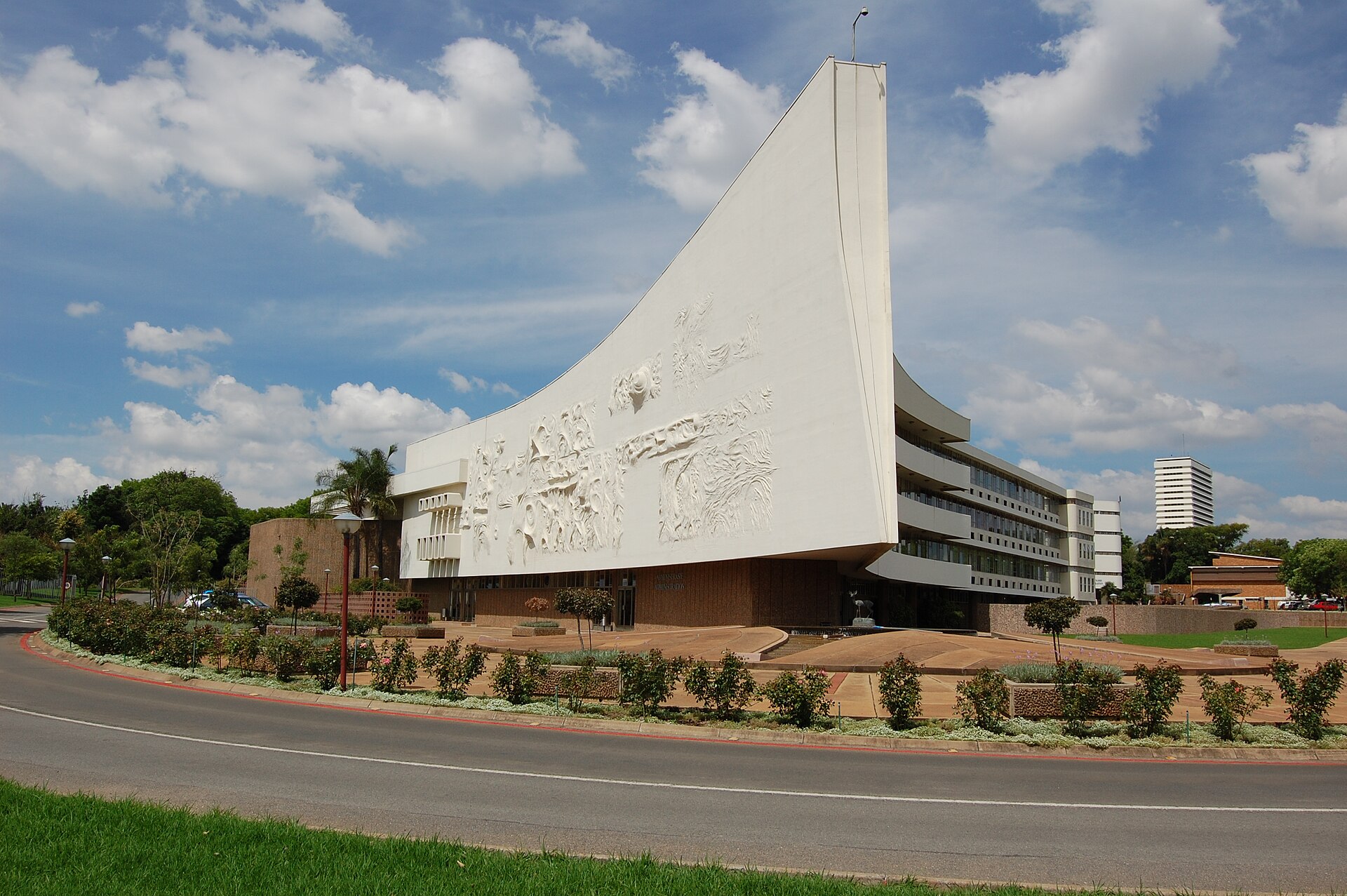
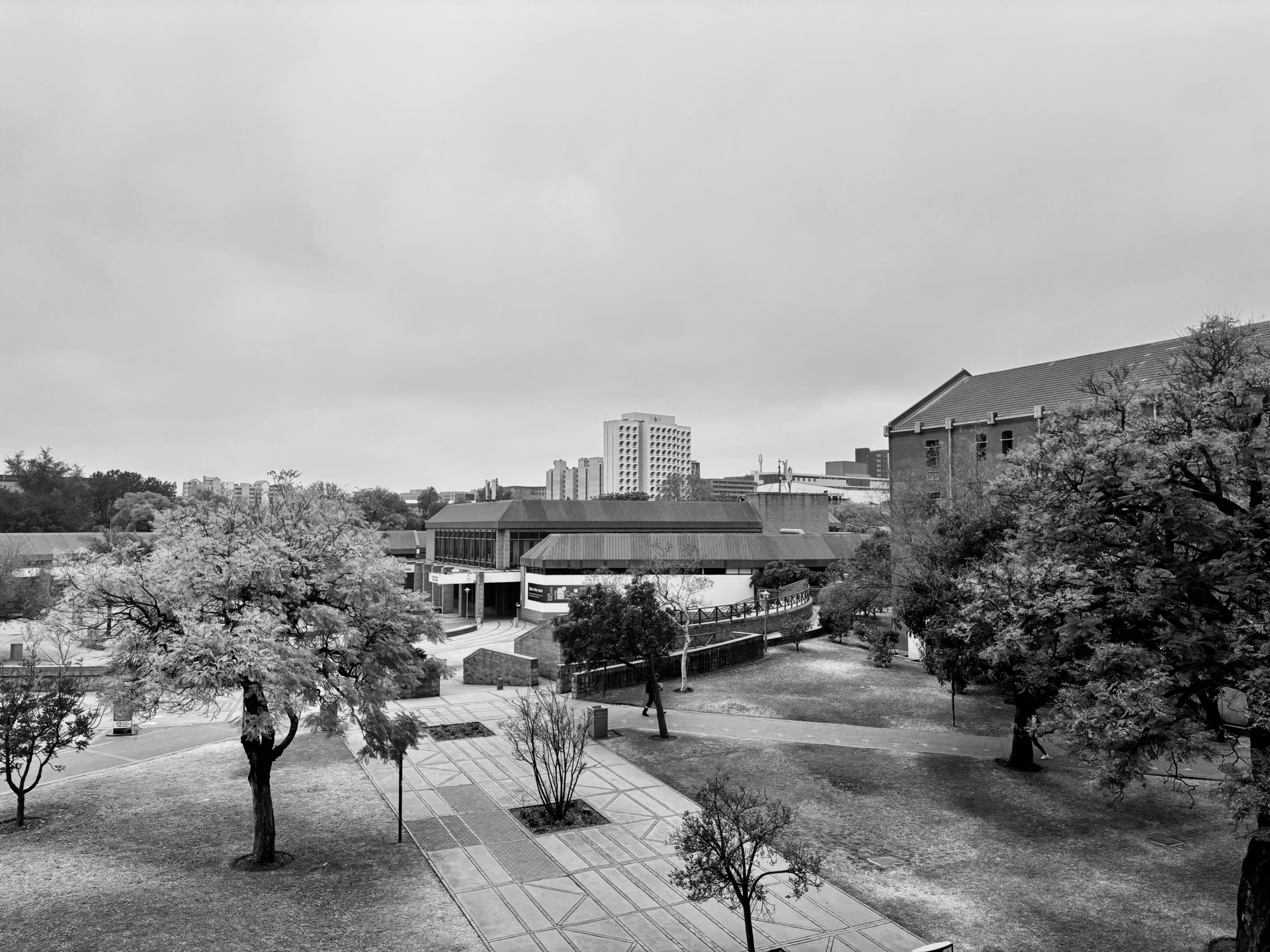
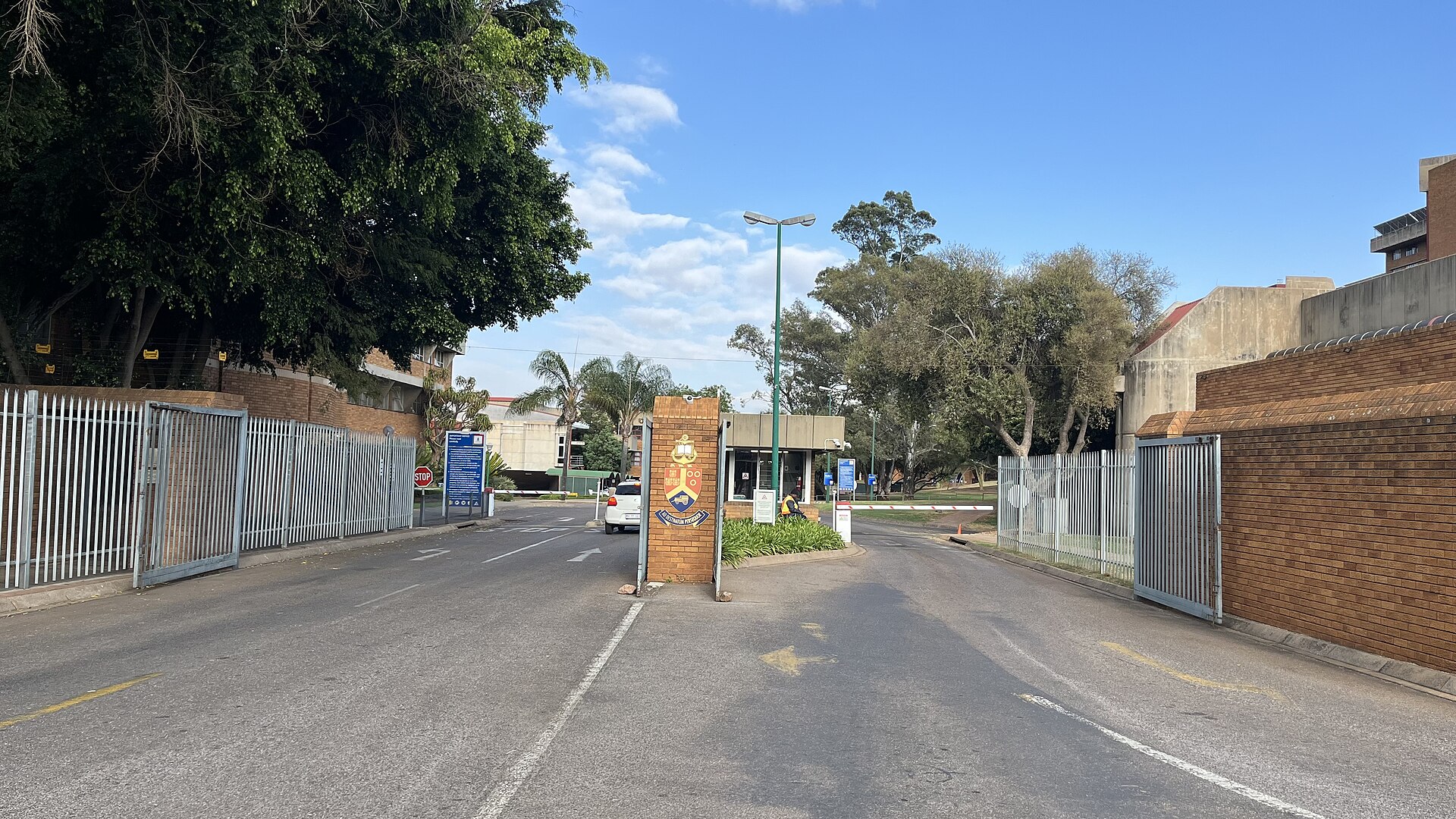
University of Pretoria — campus in pictures
Real, freely-licensed photographs of the campus (via Wikimedia Commons).


Why the University of Pretoria — Africa's Research Leader
Choosing UP means joining the most research-active university on the continent, in a cosmopolitan city at the heart of southern Africa's economic engine. Here is what distinguishes UP from every other African university.
SELECTIVITY
Acceptance Rate & Admissions Profile
UP admits approximately 50% of applicants overall, but selectivity varies dramatically by programme. High-demand faculties — Veterinary Science, Medicine (Health Sciences), Law, and Engineering — are substantially more competitive than the overall rate suggests. International applicants are assessed on the strength of their home-country qualifications and must meet faculty-specific minimum requirements. The IB Diploma is well recognised and a score of 29 or above meets the minimum threshold for most programmes; competitive faculties typically expect scores in the mid-30s.
AT A GLANCE
University of Pretoria Quick Facts
HOW TO APPLY
What Your Application Consists Of
UP uses a direct online application system — there is no centralised portal like UCAS or Common App. International students apply through UP's own application website. The application is primarily qualification-based; there are no personal essays required as a standard component, though some programmes (Fine Arts, Architecture, some Health Sciences streams) may require a portfolio or a short motivation letter. Check the specific faculty page for additional requirements.
ADMISSIONS PHILOSOPHY
What UP Looks For in International Students
That said, competitive programmes — Veterinary Science, Medicine, LLB, and BEng — receive many more qualified applicants than places available. For these, UP may look at the full subject profile, performance in relevant science and maths subjects, and (for Medicine) additional selection processes. Here is the profile that gives international students the strongest standing:
The University of Pretoria's admissions process is fundamentally academic — the primary criterion is whether your qualifications meet or exceed the minimum Admission Point Score (APS) for your chosen programme. Unlike US or UK institutions, UP does not holistically weigh extracurricular activities or personal essays in the standard undergraduate review. Academic merit is the decisive factor.
KEY DATES
Application Deadlines
UP opens applications for the following academic year (which begins in February) from around April–May each year. International students are strongly advised to apply by September to allow time for qualification evaluation, offer processing, and study permit applications. Exact dates vary by year — verify current deadlines on the official UP admissions website.
Deadlines are indicative. Always confirm on www.up.ac.za/prospective-students, as they are updated each cycle.
| Round | Period | Notes |
|---|---|---|
| Application Opens | Approximately April–May | Online portal opens for following year intake |
| Recommended International Deadline | September 30 | Allows time for SAQA evaluation and study permit |
| General Application Close | October 31 (approx.) | Some programmes may close earlier — verify per faculty |
| Offers Sent | October–December | Provisional offers based on predicted grades |
| Academic Year Begins | Late January / Early February | Two semesters: Feb–June and July–November |
CAMPUS LIFE
Student Life at UP
UP's residential community is one of the most storied in South Africa: 24 undergraduate and postgraduate residences house students in a culture of 'res house' identity, inter-res competitions (Insync, Serenade, Serrie), and traditions like the Jacaranda exams — where purple blossoms carpeting the campus are said to guarantee exam success. Rag, which UP pioneered in South Africa in 1925, remains one of the country's largest student charity events.
Campus life at the University of Pretoria is vibrant, deeply traditional, and unexpectedly rich. The main Hatfield campus — spread across 24 hectares of tree-lined grounds with over 60 historically significant buildings — sits in one of Pretoria's most leafy and liveable suburbs, minutes from the city centre and an hour's drive from Johannesburg.
AFTER GRADUATION
Career Outcomes & Graduate Employment
Internationally, UP alumni are active in over 190 countries. The alumni network of 250,000+ includes Constitutional Court judges, Fortune 500 executives (Anton Rupert of Richemont; Marius Kloppers, former BHP CEO), and Olympic athletes. GIBS graduates in particular are recruited by major African and global firms in management consulting, banking, and corporate strategy.
With an employment rate of 83% among graduates and an average starting salary of approximately USD 15,000 per year (positioned in the South African professional market), UP graduates are well-placed in one of Africa's most dynamic economies. The South African professional landscape — particularly in mining, financial services, law, healthcare, agriculture, and engineering — values UP degrees highly, and the university's proximity to Pretoria's government and diplomatic hub opens doors in public policy and international organisations.
FAQs
Frequently Asked Questions
Is the University of Pretoria taught in English?+
Yes. Since 2019, UP officially adopted English as its sole language of instruction. All undergraduate and postgraduate programmes are delivered in English. This makes UP fully accessible to international students who are comfortable in English.
Do I need to sit a South African national exam (NSC/Matric) to apply?+
No. International students are assessed on their own home-country qualifications — IB Diploma, A-Levels, international baccalaureates, national high school certificates, etc. UP's Admissions Office converts your results to an equivalent APS (Admission Point Score) for the relevant programme.
Is the IB Diploma accepted at UP?+
Yes, the IB Diploma is well recognised. A total score of 29 meets the general minimum entry requirement. Competitive programmes such as Medicine and Veterinary Science typically expect scores in the mid-to-high 30s. Specific subject grades in mathematics and sciences are important for STEM programmes.
How affordable is studying at UP compared to US or UK universities?+
Very affordable by comparison. International tuition is approximately USD 5,000 per year, with total cost of attendance (including living costs) estimated at around USD 12,000 annually. This is a fraction of comparable-ranked universities in the US, UK, or Australia.
Do I need a study permit to study at UP as a foreign national?+
Yes. Non-South African students require a study permit (not a visitor's visa). UP's International Student Services Office provides guidance on the application process after you receive your admission offer. Apply early — South African study permit processing can take several months.
How internationally diverse is UP?+
Approximately 9% of UP's student body is international, representing students from across Africa and the world. The International Student Services Office provides dedicated orientation, registration, and support services for international students.
Does UP offer financial aid or scholarships to international students?+
A limited number of bursaries and scholarships are available to international students. On average, UP-administered aid covers around 15% of costs for recipients. Most international students fund their studies through family resources, home-government scholarships, or external bursary programmes. Confirm current offerings on up.ac.za.
What is UP's strongest academic programme for international recognition?+
The Faculty of Veterinary Science (the only vet school in South Africa) and GIBS business school are internationally distinctive. Engineering, Law, and Natural & Agricultural Sciences are also strong. UP has 53 researchers in the global top 1% by citation impact, making it genuinely research-intensive.
ACADEMIC EXPECTATIONS
Academic Profile for International Applicants What UP Expects Academically
The University of Pretoria assesses international students on the strength of their home-country academic qualifications. Admission is fundamentally merit-based: your grades, subject choices, and qualification level determine whether you meet the minimum entry requirements for your chosen programme. There are no SAT/ACT tests required, and the process is more straightforward than US-style holistic review — but competitive programmes are genuinely selective, and academic preparation matters enormously.
ENTRY STANDARDS
Academic Entry Profile
UP sets minimum requirements per programme via the Admission Point Score (APS) system. For international students, your grades are converted to an equivalent APS. Below are the key benchmarks from UP's facts profile.
STANDARDISED TESTS
Test Policy: Test-Blind
This is standard across South African universities, which use their own qualification conversion systems rather than standardised American admissions tests. You do not need to sit or submit SAT, ACT, AP, or any standardised test for admission to UP.
The University of Pretoria is a test-blind institution for undergraduate admissions — SAT and ACT scores are neither required nor considered in any part of the admissions process. UP focuses entirely on your school-leaving qualifications and subject performance.
NO SAT / ACT
Standardised Tests — Not Applicable
The only standardised tests that matter at UP are English proficiency tests (IELTS/TOEFL) for applicants whose previous schooling was not in English. See the English requirements section below.
Unlike US universities, the University of Pretoria does not use SAT or ACT scores. Your application is assessed on your school-leaving qualification (IB Diploma, A-Levels, national high school certificate, or equivalent). If you have sat SAT/ACT exams for other applications, you may note them on your CV, but they carry no weight in UP's admissions process.
IB & A-LEVELS
IB Diploma, A-Levels & International Qualifications
For the IB Diploma, a total score of 29 meets the general minimum. However, programme-specific subject requirements apply — for example, Engineering and Sciences programmes require a minimum grade in Mathematics (HL is preferred for technically demanding programmes), while Health Sciences typically requires both Biology and Chemistry. A-Level applicants should check the specific A-Level grade requirements per faculty.
UP has established conversion frameworks for major international qualifications. The IB Diploma and Cambridge A-Levels are among the most commonly presented international qualifications and are well understood by UP's admissions team.
SUBJECT PREPARATION
Subject Preparation by Faculty
Choosing the right subjects in IB or A-Levels is critical for admission to UP's most sought-after faculties. Here is what each major faculty expects.
ENGLISH PROFICIENCY
English Language Requirements
Since all instruction at UP is in English, proficiency is required. Students who were previously educated in English (e.g., IB students, British curriculum, English-medium schools) are generally exempt. Others must submit IELTS Academic or TOEFL iBT scores.
| Test | Minimum Score | Notes |
|---|---|---|
| IELTS Academic | 6.5 overall | No individual band below 6.0 recommended; check faculty-specific requirements |
| TOEFL iBT | 80 | Computer-based or internet-based accepted |
| Duolingo English Test | Not specified | Confirm with UP Admissions whether accepted — verify on official site |
| Exempt | N/A | Applicants whose previous schooling was in English (e.g., IB English A) are typically exempt |
GRADE-BY-GRADE PLAN
Building Your Academic Profile for UP
Unlike US universities, UP's admissions is not holistic — but your subject choices and academic trajectory matter from early in high school. Here is a grade-by-grade roadmap.
PITFALLS TO AVOID
Common Academic Mistakes International Applicants Make
- Applying without checking faculty-specific subject prerequisites — each faculty publishes required subjects and UP will not waive them
- Dropping Mathematics in Grade 10 or 11 and then applying to Engineering, Health Sciences, or Commerce programmes that require it
- Assuming that meeting the minimum APS guarantees entry to oversubscribed programmes like Medicine or Veterinary Science — minimum is the floor, not the target
- Submitting uncertified copies of transcripts — UP requires certified (notarised) copies of all academic records
- Leaving the study permit application until after admission — South African study permits require lead time; apply the moment you have your offer letter
- Underestimating English proficiency requirements — even in an English-medium IB school, ensure your IELTS/TOEFL exemption status is confirmed by the Admissions Office
- Not researching the SAQA evaluation requirement for your country's qualification — some national certificates need external evaluation before UP can assess them
COST & FINANCIAL AID
Cost of Studying at the University of Pretoria Africa's Best-Value Research University
The University of Pretoria is one of the world's most affordable research-intensive universities at this global ranking tier. International students pay approximately USD 5,000 per year in tuition — a fraction of comparable institutions in the United States, United Kingdom, or Australia. Total annual costs (tuition plus living) are approximately USD 12,000. For students seeking a serious research environment and an internationally recognised degree without the debt burden of Western universities, UP offers exceptional value.
ANNUAL COSTS
Cost Breakdown (Annual Estimates)
The figures below are annual estimates for international students in undergraduate programmes. Costs are denominated in South African Rand (ZAR) and converted to approximate USD. Currency fluctuations will affect the USD equivalent — verify current fees on the UP fees schedule each year.
Veterinary Science and Medicine typically carry higher fees than average. Always verify the current fee schedule at www.up.ac.za/fees.
| Component | Estimate Usd | Notes |
|---|---|---|
| International Tuition | ~USD 5,000 | Per academic year; varies by faculty and programme |
| University Fees & Levies | Included above | Registration, IT, student services fees typically bundled |
| Living Costs (Pretoria) | ~USD 7,000 | Accommodation, food, transport, personal expenses |
| Total Cost of Attendance | ~USD 12,000 | Annual estimate; higher for Medicine and Veterinary Science |
| Application Fee | ~USD 20 | Non-refundable; paid at time of application |
FINANCIAL AID
Financial Aid for International Students
South African government-funded financial aid schemes (NSFAS) are restricted to South African citizens and permanent residents, so international students are not eligible. The African Union, bilateral government scholarship programmes (e.g., from DAAD Germany, Chevening UK, and various African government schemes), and UP's own merit-based awards are the primary routes for international financial support.
Financial aid for international students at UP is limited but exists. UP-administered bursaries and scholarships collectively cover costs for a portion of qualifying international students — on average, recipients receive aid covering approximately 15% of their total costs. Most international students at UP fund their studies through personal and family resources, their home-country government scholarships, or external bursary programmes aimed at African development.
SCHOLARSHIPS
Scholarships & Bursaries
The following are categories of scholarship relevant to international students at UP. Verify current availability, eligibility, and amounts on the official UP website or scholarship provider — amounts and availability change each cycle.
AFFORDABILITY
The Real Cost Advantage of UP
Pretoria's cost of living is substantially lower than London, Sydney, or North American cities. Campus accommodation is relatively affordable, local food and transport are inexpensive, and the ZAR exchange rate has historically favoured students earning or saving in USD, EUR, or GBP. Students can live comfortably in Pretoria on the estimated USD 7,000 annual living budget.
At roughly USD 12,000 per year total (tuition plus living), the University of Pretoria offers an extraordinary value proposition for internationally ambitious students. For context: a comparable-ranked UK university might cost USD 30,000–50,000 per year for an international student; a US university at this ranking tier might cost USD 50,000–70,000. UP delivers a QS top-350 education at one-quarter to one-sixth of those costs.
FUNDING YOUR DEGREE
Steps to Secure Funding
COST FAQs
Cost & Aid Frequently Asked Questions
How much does it cost per year to study at UP as an international student?+
Approximately USD 5,000 in tuition and USD 7,000 in living costs, for a total annual cost of attendance of approximately USD 12,000. Fees vary by programme — Medicine and Veterinary Science may be higher. Always verify the current fee schedule on www.up.ac.za/fees.
Am I eligible for NSFAS (South African government student loans)?+
No. NSFAS (National Student Financial Aid Scheme) is exclusively for South African citizens and permanent residents. International students are not eligible.
Does UP require international students to have medical insurance?+
Yes, international students are generally required to have medical cover. UP recommends or requires membership of an approved medical aid scheme. Confirm current requirements with the International Student Services Office before arrival.
Can I work while studying in South Africa?+
Study permit holders have limited right to work. South African immigration regulations generally do not permit full-time work on a study permit. Part-time on-campus employment may be possible. Confirm current regulations with the Department of Home Affairs or UP's International Office.
Are there fee concessions for exchange students?+
If you are coming as an exchange or visiting student through a formal institutional agreement between UP and your home university, fee arrangements are governed by that agreement. Contact your home university's international office for details.
APPLICATION & STATEMENTS
Applying to UP No Essays — But Strategy Still Matters
South African universities, including the University of Pretoria, do not use US-style application essays or supplemental writing prompts in the standard undergraduate admissions process. Admission is qualification-based. However, certain programmes require a motivation letter or portfolio, and for competitive programmes where many candidates meet the academic minimum, how you present yourself in optional documents can make a difference. This guide explains what you need, and how to make every element of your application count.
APPLICATION SYSTEM
The UP Application System: Direct, Qualification-Based
There is no standard personal statement required for most undergraduate programmes. However, selected programmes (Architecture, Fine Arts, some Health Sciences streams, Music) require a portfolio or a brief statement of motivation. Postgraduate applications often include a research proposal or motivation letter. Always check the specific requirements for your programme on the faculty website.
The University of Pretoria uses its own direct online application portal — not UCAS, Common App, or any centralised South African system. Each applicant applies directly to UP through www.up.ac.za. The process is primarily grade-driven: you submit your qualifications, and UP's Admissions Office converts your grades to the Admission Point Score (APS) system to determine eligibility for your chosen programme.
MOTIVATION LETTER
When a Motivation Letter Is Required
For programmes that request a motivation letter or statement of motivation, UP is looking for a clear, concise explanation of why you want to study this specific programme and what in your background prepares you for it. Unlike US supplemental essays, this is not a place for personal storytelling or extensive narrative — it is closer to a professional statement of purpose.
PERSONAL STATEMENT
No Personal Statement for Most Undergraduate Programmes
If you are applying from a background of US college application preparation and feel the urge to write something — channel that energy into ensuring your academic documents are complete, certified, and submitted early. For competitive programmes, what matters most is your IB or A-Level subject profile and results, not your ability to write a compelling personal narrative.
The vast majority of undergraduate degree programmes at UP do not require a personal statement. If you are applying to a standard BSc, BCom, LLB, BEng, or BA programme, your application will be assessed purely on your academic qualifications. There is no Common App, no UCAS personal statement, and no supplemental essays.
PROGRAMME-SPECIFIC
Portfolio and Motivation Requirements by Programme
MAKING YOUR APPLICATION STAND OUT
How to Present Your Best Case to UP
Even in a grades-first admissions system, the way you prepare and present your application documents sends a signal. Here is how to put your best foot forward.
COMMON PITFALLS
Application Mistakes to Avoid
- Applying too late — international students need the most lead time due to SAQA evaluation and study permit requirements; the recommended international deadline is September
- Submitting photocopies rather than certified copies of transcripts and qualification certificates — uncertified documents are not accepted
- Applying to a programme without confirming prerequisite subject requirements — you cannot substitute equivalent subjects without prior faculty approval
- Overlooking the medical aid/insurance requirement — UP expects international students to have cover from arrival; this must be arranged before you depart
- Confusing 'application to UP' with 'application for a study permit' — these are two separate processes; begin the study permit application immediately after receiving your UP offer letter
- Writing a generic motivation letter (if required) that could apply to any university — reference specific UP strengths, specific faculty resources, or specific research at UP that relates to your goals
- Not verifying whether your national qualification requires SAQA evaluation — some countries' school-leaving certificates need external evaluation before UP can assess them
APPLICATION FAQs
Frequently Asked Questions About the UP Application
Do I need to write a personal statement or essay to apply to UP?+
For most undergraduate programmes, no. UP's standard admissions process is grade-based and does not require a personal statement. Only certain programmes (Architecture, Fine Arts, Music, some Health Sciences streams, and all postgraduate research degrees) require additional documents such as a portfolio or motivation letter.
Which application portal does UP use?+
UP uses its own direct online application portal at www.up.ac.za. There is no centralised South African application system equivalent to UCAS or Common App. You apply directly to the university and can list multiple programme choices in order of preference.
Can I apply for multiple programmes?+
Yes, you can typically list multiple programme preferences in your UP application. Programmes are considered in order of preference, and you will receive an offer for the highest-preference programme for which you qualify.
When will I receive an admission decision?+
Provisional offers are typically issued from October onwards for the following February intake. International applicants who submit early (by September) should expect offers by November–December. Offers are often conditional on your final Grade 12 results.
What happens if my final results are lower than my predicted results?+
If your final results fall below the minimum APS for your programme, UP may withdraw your offer, waitlist you, or offer you an alternative programme. Communicate with the Admissions Office immediately if your results change significantly from predicted grades.
Does UP have an interview requirement?+
Most programmes do not require an interview. However, some Health Sciences and fine arts programmes may include an interview or audition as part of the selection process. This is published by the relevant faculty — check the faculty-specific admissions page.
I am applying as a postgraduate student. How is the process different?+
Postgraduate admissions at UP are faculty- and supervisor-driven. You typically need to identify a potential supervisor, submit a research proposal and motivation letter, and provide academic transcripts and references. Contact your target department directly and early — supervisor availability is the key variable in postgraduate admission.
Courses — schools, degrees & intake
72 degrees across 9 groupings.
Faculty of Economic and Management Sciences · 13 degrees
BCom (Accounting)
BCom (Auditing)
BCom (Economics)
BCom (Financial Sciences)
BCom (Human Resource Management)
BCom (Information and Knowledge Systems)
BCom (Investment Management)
BCom (Marketing Management)
BCom (Quantitative Management)
BCom (Statistics)
BCom (Tourism Management)
Bachelor of Consumer Science (Food Management)
Bachelor of Consumer Science (Interior Design and Housing)
Faculty of Education · 4 degrees
BEd (Early Childhood Development)
BEd (Foundation Phase Teaching)
BEd (Intermediate Phase Teaching)
BEd (Senior Phase and Further Education and Training Teaching)
Faculty of Engineering, Built Environment and Information Technology · 15 degrees
BEng (Chemical Engineering)
BEng (Civil Engineering)
BEng (Computer Engineering)
BEng (Electrical Engineering)
BEng (Electronic Engineering)
BEng (Industrial and Systems Engineering)
BEng (Mechanical and Aeronautical Engineering)
BEng (Metallurgical Engineering)
BEng (Mining Engineering)
BSc (Construction Management)
BSc (Quantity Surveying)
BSc (Real Estate)
BSc (Urban and Regional Planning)
BIT (Information Technology)
BIS (Information Science)
Faculty of Health Sciences · 9 degrees
MBChB (Bachelor of Medicine and Bachelor of Surgery)
BChD (Bachelor of Dental Surgery)
BPharm (Bachelor of Pharmacy)
BSc (Physiotherapy)
BSc (Occupational Therapy)
BSc (Dietetics)
BSc (Radiography: Diagnostics)
BSc (Radiography: Therapy)
BSc (Medical Sciences)
Faculty of Humanities · 8 degrees
BA (Language and Culture)
BA (Social Sciences)
BMus (Bachelor of Music)
BA (Performing Arts)
BA (Visual Arts)
BA (Communication Pathologies)
BA (Psychology)
BSW (Bachelor of Social Work)
Faculty of Law · 3 degrees
LLB (Bachelor of Laws)
BCom (Law)
BA (Law)
Faculty of Natural and Agricultural Sciences · 18 degrees
BSc (Actuarial and Financial Mathematics)
BSc (Applied Mathematics)
BSc (Biochemistry)
BSc (Biological Sciences)
BSc (Chemistry)
BSc (Computer Science)
BSc (Environmental Sciences)
BSc (Geography)
BSc (Geology)
BSc (Human Genetics)
BSc (Mathematics)
BSc (Physics)
BSc (Physiology)
BSc (Statistics)
BScAgric (Agricultural Economics)
BScAgric (Agronomy)
BScAgric (Animal Science)
BScAgric (Forestry and Natural Resources Management)
Faculty of Theology and Religion · 1 degrees
BTh (Bachelor of Theology)
Faculty of Veterinary Science · 1 degrees
BVSc (Bachelor of Veterinary Science)
Want your real chances at University of Pretoria?
Create a free TYCHR account for your personalised admit-chance, a shortlist you can track, exact entry requirements, and essay + counselling help.