← All universities

University of North Carolina at Chapel Hill

Chapel Hill, United States · Suburban

Public IvyAAUPublicResearch
Acceptance
15.0%
QS World
#102
Tuition/yr
$43,152
Students
31,000
Founded
1789

AMERICA'S OLDEST PUBLIC UNIVERSITY

University of North Carolina at Chapel Hill Admissions Guide for International Students

Founded in 1789, UNC Chapel Hill is the nation's oldest public university and one of America's most prestigious flagship institutions — a Public Ivy combining world-class research, storied journalism and public health schools, and the unmistakable energy of a quintessential college town.

For international students, Carolina offers access to powerhouse programmes in medicine, business, public health, and journalism at a fraction of the cost of most comparable private universities. But there is a frank caveat: North Carolina law caps non-resident enrolment at 18%, meaning international students compete for a genuinely limited pool of seats. Admission is meaningfully harder for non-residents than the overall acceptance rate suggests, and financial aid is not available to internationals. This guide gives you the honest, thorough picture you need to decide whether UNC belongs on your list — and how to build the strongest possible application if it does.

Campus

University of North Carolina at Chapel Hill — campus in pictures

Real, freely-licensed photographs of the campus (via Wikimedia Commons).
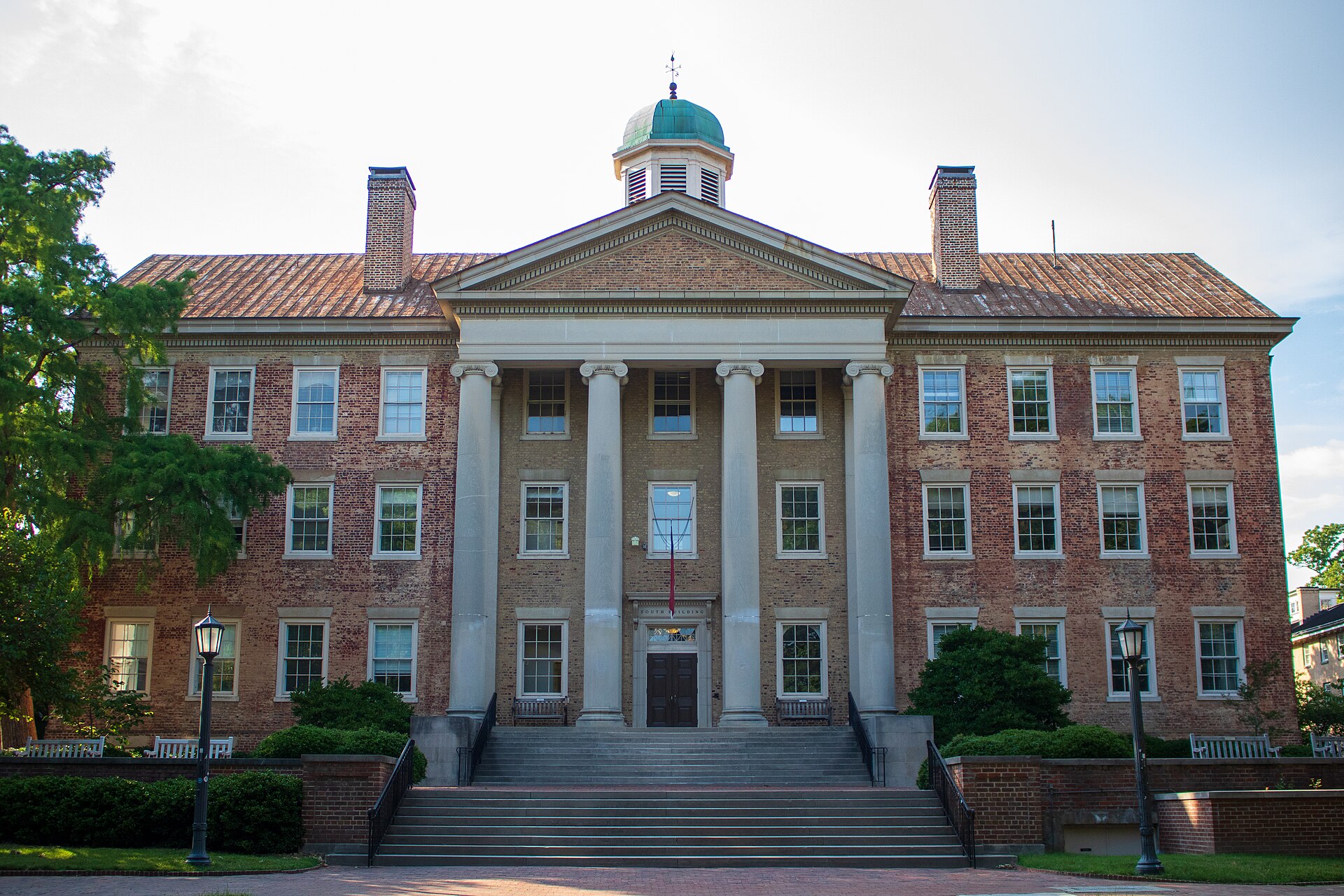
Cultural or natural site: South Building County: Orange
Cultural or natural site: South Building County: OrangeManavParikh · CC BY-SA 4.0 · via Wikimedia Commons
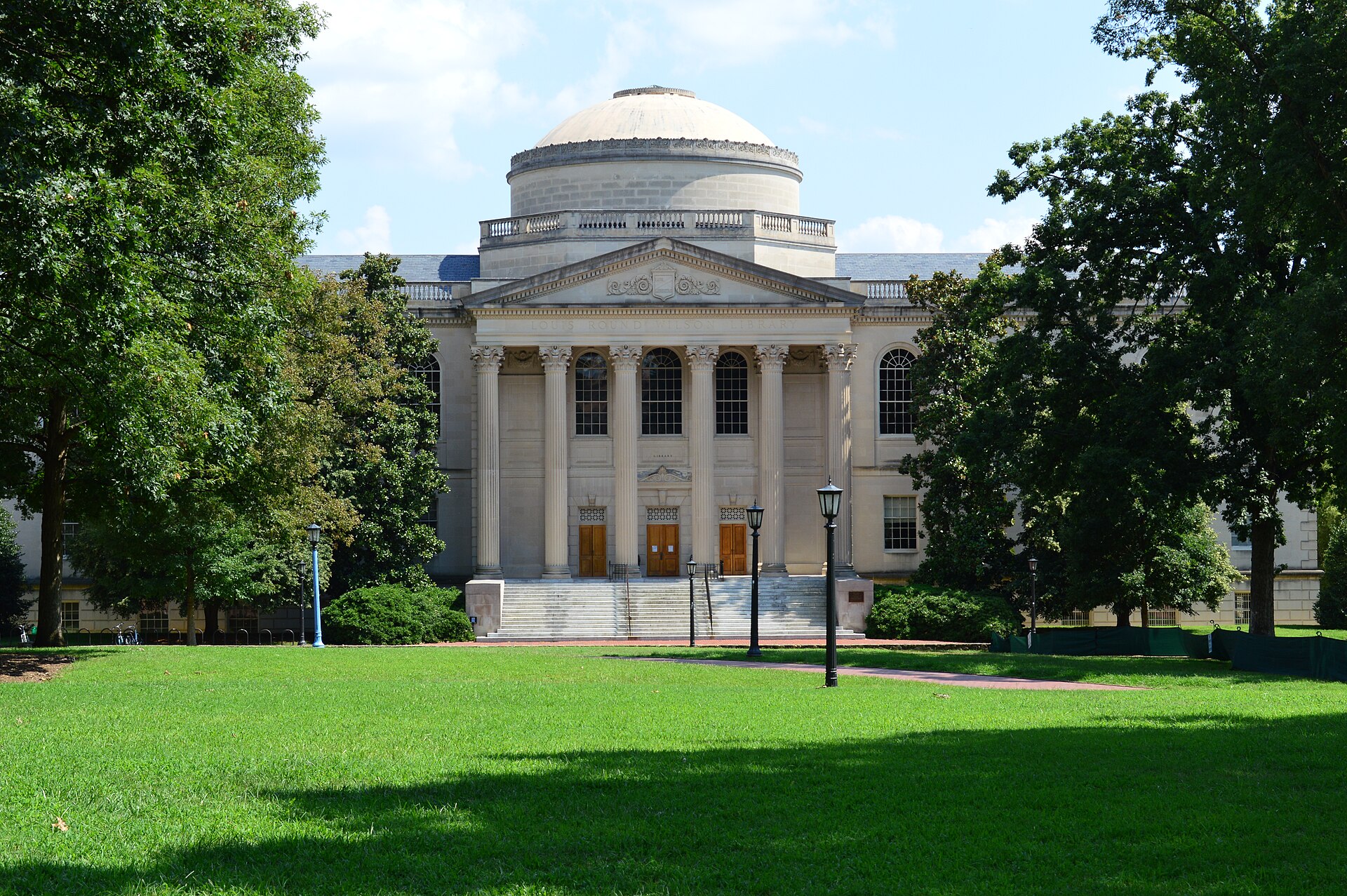
Louis Round Wilson Library at the University of North Carolina
Louis Round Wilson Library at the University of North CarolinaYeungb · CC BY 3.0 · via Wikimedia Commons
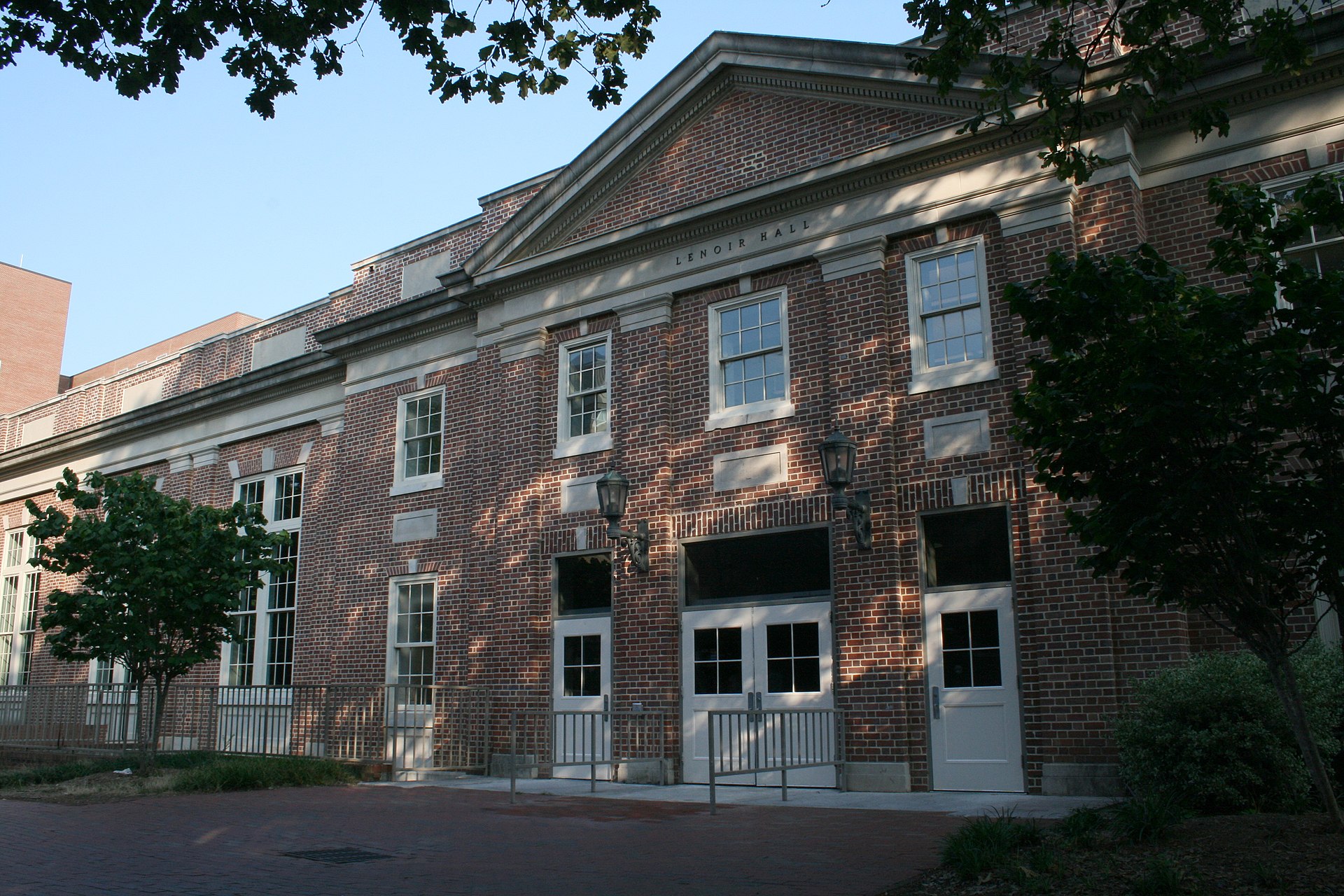
Lenoir Hall, which houses a food court and a cafeteria, at UNC.
Lenoir Hall, which houses a food court and a cafeteria, at UNC.Ildar Sagdejev (Specious) · CC BY-SA 4.0 · via Wikimedia Commons
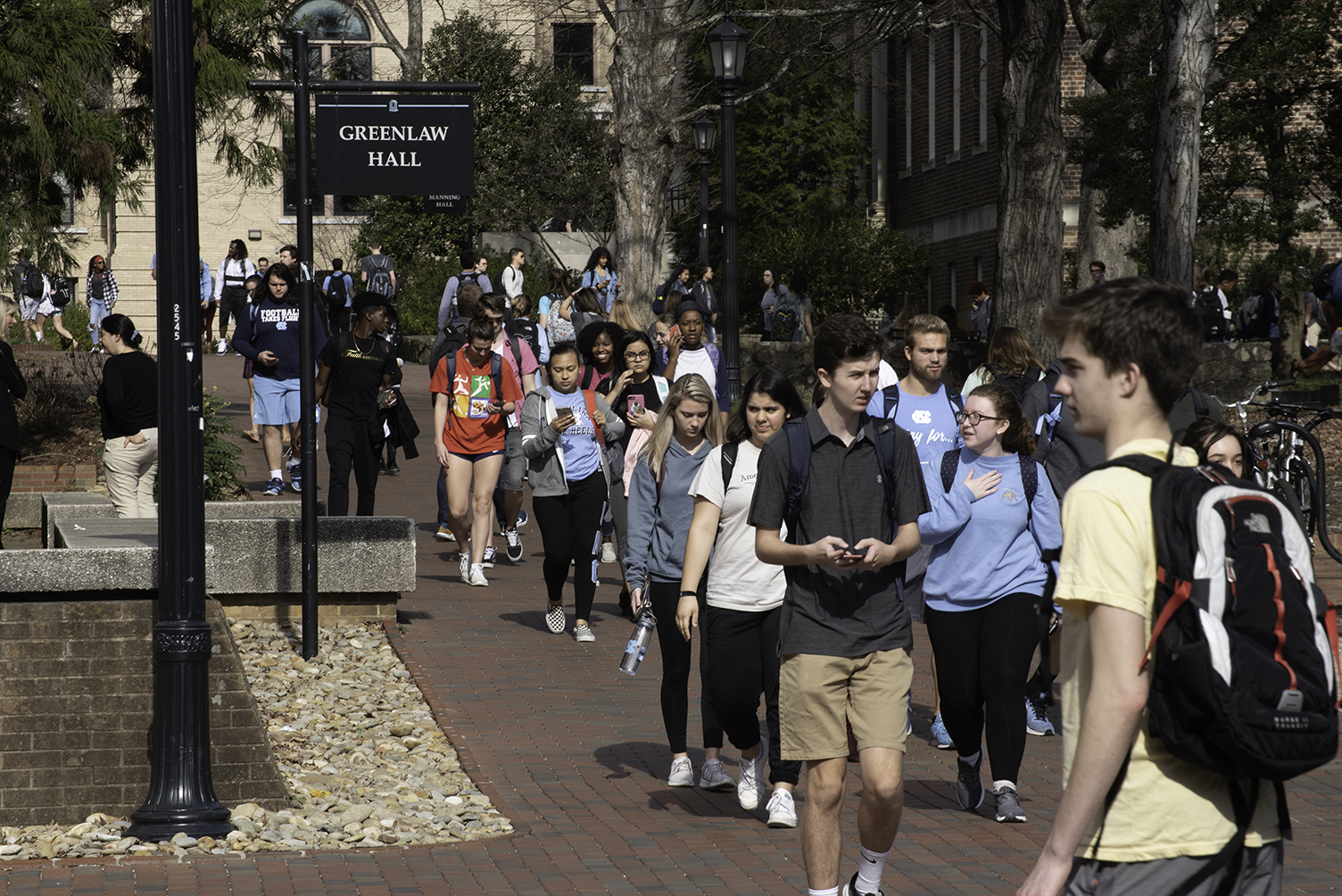
Students at UNC-Chapel Hill walk through campus between classes
Students at UNC-Chapel Hill walk through campus between classesDennis Ludlow - Sharkshock · CC BY-SA 4.0 · via Wikimedia Commons
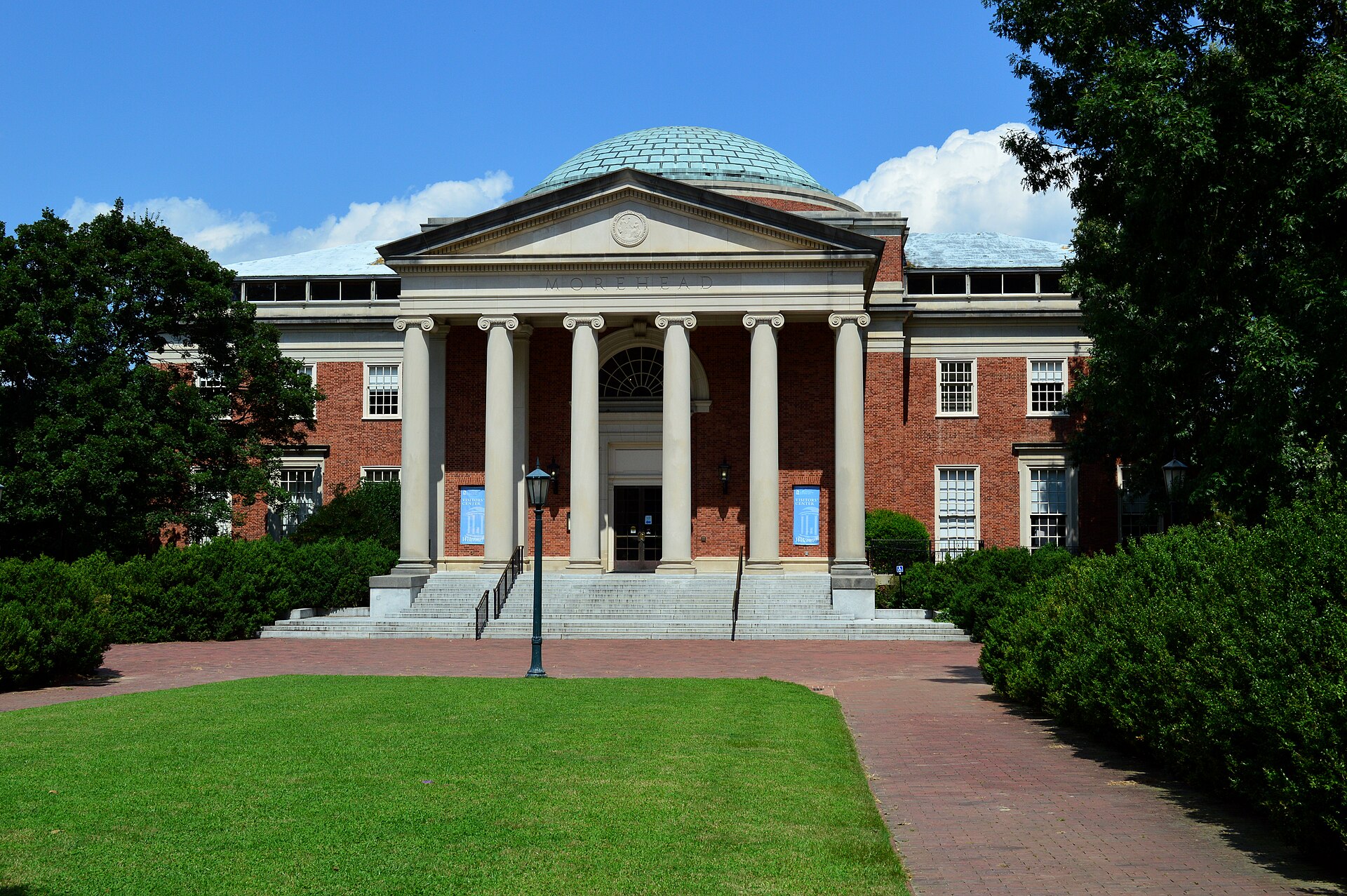
Morehead Planetarium at the University of North Carolina
Morehead Planetarium at the University of North CarolinaYeungb · CC BY 3.0 · via Wikimedia Commons
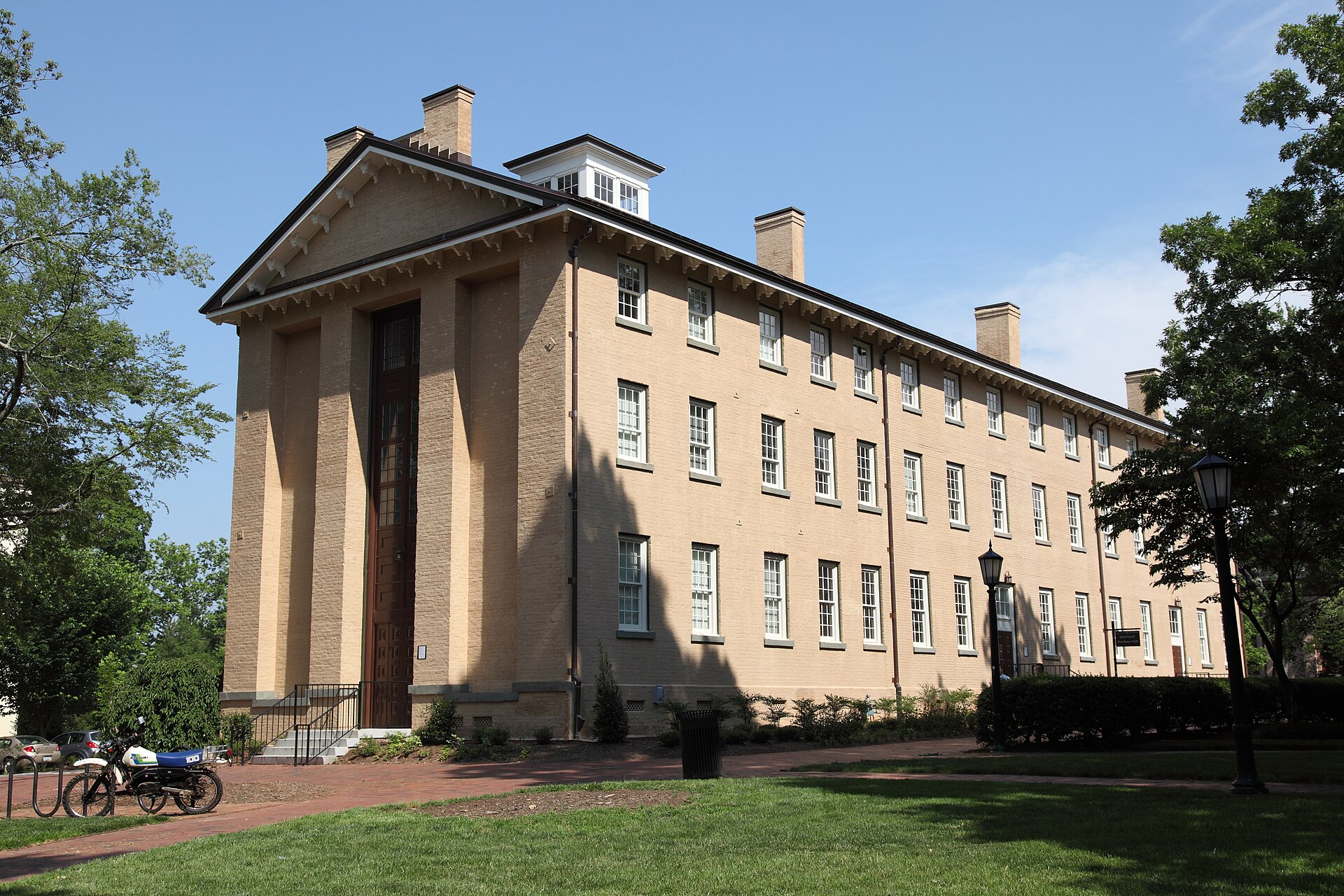
The Old East dormitory of UNC was built in 1793.  It is the first state university building in the United States.
The Old East dormitory of UNC was built in 1793. It is the first state university building in the United States.(User:Wgreaves) · CC BY-SA 3.0 · via Wikimedia Commons

WHY CAROLINA

Why UNC Chapel Hill — Public Ivy Prestige, World-Class Research & College-Town Soul

UNC Chapel Hill is not merely a flagship university — it helped invent the model of the American public research university. Ranked nationally in the top 25 and globally in the top 45 (Times Higher Education), Carolina delivers elite academic depth with the lived energy of one of America's great college towns.

1Public Ivy Legacy
One of eight original Public Ivies, Carolina rivals elite private peers in research output, alumni influence, and academic quality. Rated #1 for best value among US public institutions for 21 consecutive years by U.S. News, a UNC degree commands respect from London to Lagos to Seoul.
2World-Leading Flagship Programmes
The Gillings School of Global Public Health is among the world's top five public health schools. The Hussman School of Journalism and Media is consistently ranked in the country's top ten. Kenan-Flagler Business School and the School of Medicine round out a portfolio of nationally dominant professional schools.
3Research from Day One
All undergraduate students participate in faculty-led research — in labs, in the field, or in collaborative classrooms. Carolina's innovation ecosystem has produced over 1,273 affiliated startups with $48.9 billion in total funding raised, and the OUR.UNC.edu database connects students to hundreds of research opportunities each year.
4Chapel Hill & the Research Triangle
Chapel Hill is one of America's most beloved college towns — walkable, progressive, and intellectually alive. The surrounding Research Triangle (Chapel Hill, Durham, Raleigh) is a global hub for biotech, pharma, tech, and public policy, giving students internship and employer access that few college towns can match.
5Alumni Network & Scholarly Distinction
375,000 living alumni across 50 states and 152 countries. 57 Rhodes Scholars since 1902. Named a Fulbright top-producing institution in 16 of the last 17 years. Five Goldwater Scholars in 2025 alone — a university record. Carolina alumni lead hospitals, newsrooms, courts, and biotech companies worldwide.
6Carolina Spirit
Carolina blue is not just a colour — it is a culture. UNC's legendary basketball tradition, campus rituals, and public-service ethos create a sense of shared identity that international students describe as unexpectedly powerful from the very first week. This is a place where belonging is real.

SELECTIVITY

UNC Acceptance Rate & What It Really Means for International Students

UNC's overall acceptance rate of 15% makes it highly selective — but this number substantially understates the competitive reality for non-North Carolina applicants. State law mandates that no more than 18% of the student body may be from outside North Carolina, and international students compete within this same restricted non-resident quota alongside out-of-state US applicants. The effective acceptance rate for international students is meaningfully lower than 15%, and UNC is among the more structurally challenging public universities for international admissions in the United States.

Carolina's mission is explicitly to serve the people of North Carolina — and that mission is reflected in every aspect of its admissions process. The most competitive international applications pair an unambiguously strong academic profile with a genuine, specific articulation of why UNC's particular strengths match the applicant's goals.

15%
Overall acceptance rate
1400–1530
SAT middle 50%
28–34
ACT middle 50%
36+
IB competitive band
https://admissions.unc.edu/apply/first-year/

QUICK FACTS

University of North Carolina at a Glance

Stats

1789
Founded
31,000
Student population
8%
International students
13:1
Student:faculty ratio

Cards

Location
Chapel Hill, North Carolina — a walkable, nationally celebrated college town in the heart of the Research Triangle, one of the US's most dynamic economic and innovation corridors.
University Type
Public flagship research university. Member of the Association of American Universities (AAU) — the elite body of leading research institutions in North America.
Campus Setting
729-acre suburban campus in Chapel Hill, North Carolina. Red brick, Carolina blue, and one of the most photographed public university campuses in America.
Rankings
QS World University Rankings: #102 globally. Times Higher Education: #44 globally. U.S. News Best National Universities: #22. Ranked #1 for public university value for 21 consecutive years.

THE APPLICATION

What a Complete UNC Application Consists Of

UNC Chapel Hill uses the Common Application exclusively. As of the 2026-2027 cycle, UNC removed its short supplemental essays to simplify the process. Here is every required and optional component of a complete Carolina application.

01REQUIREDCommon Application
UNC accepts only the Common App. The application opens August 1 each cycle. Begin early — school reports, counsellor recommendations, and teacher letters all require substantial lead time from your school.
02REQUIRED · 650WCommon App Personal Essay
As of 2026-2027, the 650-word personal essay is the primary and only formal written voice of your application to UNC. Short supplemental essays have been removed. This essay now carries substantially more weight.
03REQUIREDOfficial Transcripts & School Report
All transcripts must be in English. If your school does not provide English transcripts, official certified translations must accompany originals. A school report from your counsellor is also required.
04REQUIREDLetter of Recommendation
One academic teacher recommendation is required. Choose a teacher from a core academic subject who can speak substantively to your intellectual character, not just your grade.
05REQUIREDApplication Fee
$85 application fee. Fee waivers are available for qualifying applicants through the Common App fee waiver process. International students should check their eligibility directly in the Common App.
06OPTIONAL (RECOMMENDED)SAT / ACT Scores
Test-optional for students with a weighted GPA of 2.8 or above on a 4.0 scale. For international applicants in the competitive non-resident pool, submitting strong scores (SAT 1450+ or ACT 31+) is strategically advisable.
07REQUIRED FOR INTERNATIONALSEnglish Proficiency Test
Required unless you have studied at an English-language school for at least four consecutive years. UNC accepts TOEFL (min 100), IELTS (min 7.0), Duolingo (min 125), Cambridge C1 Advanced, and Cambridge C2 Proficiency.
https://admissions.unc.edu/apply/first-year/

HOLISTIC REVIEW

What UNC Admissions Officers Are Looking For

UNC uses holistic review. Every element of your file — academic, personal, contextual — is considered together. Admissions officers are building a class that will serve North Carolina and the world, which means they actively value diverse perspectives, genuine community purpose, and demonstrated intellectual ambition.

01Rigour of Academic Record
The most important academic factor. Have you taken the most challenging courses available at your school? A student from an IB, A-Level, or demanding national curriculum who pursued its highest level is rewarded. Course selection matters as much as grades.
02Academic Achievement
Strong performance in rigorous courses. The published minimum GPA of 3.5 (on a 4.0 scale) is the floor, not the target. Competitive international applicants typically present well above this. UNC reads grades relative to school context and curriculum.
03Personal Character & Contribution
Who are you beyond your results, and what will you add to Carolina's community? UNC's mission of public service means they genuinely value applicants who demonstrate commitment to something larger than personal advancement.
04Activities & Depth of Commitment
Depth over breadth. A single sustained, high-impact commitment is more compelling than a long list of surface involvements. What have you built, changed, or led? What have you genuinely contributed to, not just participated in?
05Fit with Carolina's Public Mission
Carolina's founding mission is to serve the people of North Carolina and the world through teaching, research, and public service. Applications that connect the student's goals to this mission — genuinely, not generically — stand out in the non-resident pool.
06Contextual Perspective
UNC evaluates everything in context. A student's record is assessed relative to what was available at their specific school. International students who bring genuinely underrepresented perspectives add to the diversity of the class UNC is actively trying to build.

DEADLINES

UNC Application Deadlines Early Action & Regular Decision

UNC offers Early Action (non-binding) and Regular Decision. Applying Early Action is strongly advisable for international students — it signals genuine interest, provides an earlier decision, and means your file is reviewed before the non-resident pool becomes more crowded. EA does not bind you and does not prevent applications to other universities.

The Common App opens August 1. UNC accepts the Common Application only — no Coalition App or other platform.

RoundDeadlineDecisionBinding
Early Action15 OctoberBy 20 Dec (NC residents) / By 15 Feb (non-NC, incl. international)Non-binding
Regular Decision15 January31 MarchNon-binding
Enrolment Confirmation1 May—All admitted students
https://admissions.unc.edu/apply/first-year/

CAMPUS LIFE

Student Life at Carolina Chapel Hill, Community & Tar Heel Spirit

Chapel Hill is consistently ranked one of America's best college towns — and for good reason. The campus sits at the centre of a walkable, culturally vibrant community shaped by over two centuries of academic life. Franklin Street — the main corridor adjacent to campus — is lined with bookshops, restaurants, live-music venues, and cafés where students, professors, and long-time townspeople share space naturally.

UNC's residential system houses all first-year students on campus, building immediate community from day one. A new residence hall broke ground in 2026 — the first in two decades. The university's 500+ student organisations span every interest, from one of the oldest student newspapers in the South to pre-med societies, cultural clubs, debate teams, and a famously passionate intramural sports culture. The Research Triangle gives international students access to world-class cultural institutions, diverse food scenes, and major employers within easy reach.

First-Year Housing
All first-year students live on campus. Residence halls range from historic buildings near the heart of campus to modern suite-style facilities. Move-in for Fall 2026 is scheduled for August 12–16 — plan travel well in advance.
IDEAs in Action Curriculum
All first-year students complete the IDEAs in Action general education curriculum before declaring majors. Designed to sharpen critical thinking, problem-solving, and communication — the intellectual skills that underpin success in every field.
500+ Student Organisations
Student government, journalism, performing arts, cultural affinity organisations, pre-professional societies, and service groups — the breadth reflects UNC's genuine diversity and ambition. International students consistently report finding their communities faster than they expected.
Carolina Basketball & Athletics
The Tar Heels compete in the ACC — one of the most competitive athletic conferences in America. Men's basketball at the Dean E. Smith Center is a cultural institution; the energy of a home game is part of what makes UNC feel like a community rather than just a campus.
Research Triangle Access
Research Triangle Park (RTP) — one of the world's largest research and innovation parks — is home to IBM, Cisco, GlaxoSmithKline, Biogen, and hundreds of startups. Internship access from Chapel Hill is exceptional by any comparison, and grows richer each year.

CAREER OUTCOMES

Where Carolina Graduates Go Employment, Salary & Alumni Network

UNC graduates enter the job market backed by one of America's most respected public university brands and a Research Triangle ecosystem dense with healthcare, biotech, tech, finance, and public-policy employers. On-campus recruiting at Carolina is unusually strong for a public institution.

Stats

92%
Employment within 6 months of graduation
$60,000
Average starting salary
375,000+
Living alumni worldwide
57
Rhodes Scholars (since 1902)

Cards

Healthcare & Life Sciences
UNC's Medical Center, Gillings School of Global Public Health, and Research Triangle Park location create one of the strongest healthcare and biotech career pipelines in the country. Graduates enter hospital systems, pharmaceutical companies, public health agencies, and global health organisations.
Media & Journalism
Hussman School graduates lead newsrooms, documentary teams, public relations agencies, and digital media companies. The school's programmes offer direct-to-industry placement through professional residencies and industry connections built over generations.
Business & Consulting
Kenan-Flagler's undergraduate BSBA programme is nationally ranked and recruits well into consulting, investment banking, and technology. Goldman Sachs, McKinsey, Deloitte, and major tech firms recruit directly on campus each year.
Public Policy & Government
True to its founding mission, UNC produces a disproportionate share of North Carolina's judges, legislators, public health officials, and non-profit leaders. The Carolina Center for Public Service connects students to meaningful civic placements throughout their undergraduate years.

FAQs

Frequently Asked Questions UNC Chapel Hill for International Students

What is the actual acceptance rate for international students at UNC?+

UNC does not publish a separate international acceptance rate. The overall published rate is 15%, but North Carolina law caps non-resident enrolment at 18% of the student body. International students compete within this non-resident pool alongside out-of-state US applicants, making the effective international acceptance rate meaningfully lower than 15%. Treat UNC as a highly selective institution for international admissions planning — and build a list that accounts for this structural reality.

Can international students receive financial aid or scholarships at UNC?+

No. UNC explicitly states that international students are ineligible for need-based federal or University funds and will not be considered for academic scholarships. International students are expected to be fully self-funded, covering the full non-resident cost of attendance — approximately $61,822 per year. Only apply to UNC if you have confirmed funding for the complete four-year cost, including travel, health insurance, and personal expenses.

Does UNC still require the short answer essays?+

No. As of the 2026-2027 application cycle, UNC removed its short supplemental essays to simplify the application. The only formal written requirement is now the Common Application personal essay (650 words). The Activities section and Additional Information section of the Common App remain available to add further context.

Is UNC test-optional for international students?+

Yes. UNC is test-optional for all applicants — including internationals — with a weighted GPA of 2.8 or above on a 4.0 scale. However, for international students competing in the limited non-resident pool, submitting strong scores (SAT 1450+ or ACT 31+) provides an additional academic signal that can differentiate otherwise similar profiles. If your scores are at or above the middle 50% band, submitting is strategically advisable.

What English proficiency tests does UNC accept?+

UNC accepts TOEFL iBT (minimum 100), IELTS (minimum 7.0), Duolingo English Test (minimum 125), Cambridge C1 Advanced, and Cambridge C2 Proficiency. The requirement is waived if you have attended an English-language school for at least four consecutive years.

Should I apply Early Action or Regular Decision?+

Early Action (October 15 deadline) is non-binding and strongly advisable for international applicants. Decisions come by February 15 for non-NC applicants — giving you time to compare offers. EA signals genuine interest and means your file is reviewed earlier. If your application is complete by October, apply EA.

What are UNC's strongest programmes for international students?+

UNC's internationally recognised strengths are the Gillings School of Global Public Health (global top-five), Hussman School of Journalism and Media (top-ten nationally), Kenan-Flagler Business School (BSBA), and the School of Medicine pipeline. Computer Science, Biology, Public Health, and Political Science also attract strong international enrolment.

What is the 18% out-of-state cap and what does it mean for international applicants?+

North Carolina law mandates that no more than 18% of UNC's enrolled students may be from outside North Carolina. International students are counted as non-residents within this quota. This creates a structurally constrained pool: a relatively small number of seats are shared among all non-NC applicants. This is why the effective acceptance rate for international students is lower than the overall 15%, and why it is important to build an application list that includes universities without such statutory limits.

ACADEMIC REQUIREMENTS FOR INTERNATIONAL STUDENTS

UNC Chapel Hill Academic Requirements The Honest Breakdown for International Students

What GPA, test scores, and curriculum profile do competitive UNC applicants actually present? And what does holistic review mean for students from IB, A-Level, AP, and other international curricula applying to one of America's most selective public universities?

UNC's academic bar is genuinely high — and for international applicants competing within the 18% non-resident cap, the academic profile needs to be unambiguously strong. The published minimum GPA of 3.5 is the threshold for basic consideration, not the profile of a competitive admit. The most useful framework for international students is to treat UNC's standards within the non-resident pool as comparable to a highly selective private university, because the structural reality is that they effectively are.

1400–1530
SAT middle 50%
28–34
ACT middle 50%
36+
IB competitive band
3.5
Published minimum GPA

ACADEMIC PROFILE

UNC's Admitted Student Academic Profile Benchmarks & Context

UNC's class profile gives you the benchmarks. For international students, these figures represent the competitive context — the non-resident pool is more selective than the overall numbers suggest, so target the upper half of each range.

69% of UNC's enrolled class ranked in the top 10% of their high school graduating class; 87% in the top 20%. These figures span the entire admitted class, including in-state applicants. International applicants from IB, A-Level, or other rigorous curricula are evaluated relative to their school's known performance range — but the competitive expectation is clear.

1400–1530
SAT middle 50%
28–34
ACT middle 50%
36+
IB competitive band
3.5
Published minimum GPA
https://admissions.unc.edu/learn/our-newest-class/

TEST POLICY

UNC's Test-Optional Policy Explained What It Means for International Applicants

UNC is test-optional for students with a weighted GPA of 2.8 or above on a 4.0 scale. For students below this GPA threshold, submitting a minimum ACT score of 17 or SAT of 930 is required. This conditional test-optional policy applies to all applicants, including international students.

For competitive international applicants, the strategic question is not whether you need to submit scores, but whether your scores add positive value to your file. In a constrained non-resident pool, a strong test score (SAT 1480+, ACT 31+) provides an additional signal of academic capability. Submitting scores well below the middle 50% band can draw attention to a weaker dimension of an otherwise strong profile.

Test-optional does not mean test-irrelevant. In a limited non-resident pool, every element of the file matters. If you have strong scores, submit them. If your scores are significantly below the middle 50%, withholding is typically the better strategy.

https://admissions.unc.edu/apply/first-year/

STANDARDISED TESTS

SAT & ACT at UNC Chapel Hill Bands, Strategy & Submission Decision

The SAT middle 50% for UNC's admitted class is 1400–1530; the ACT middle 50% is 28–34. These bands reflect the full admitted class, including in-state applicants admitted through a broader pool. International applicants should target the upper half of each range.

SAT Strategy
A score of 1480 or above places an international applicant solidly within UNC's admitted range and meaningfully strengthens the file. Aim for at least 700 in both sections. A strong Math score (720+) is particularly valuable for STEM-intended applicants targeting Carolina's science, public health, or business programmes.
ACT Strategy
An ACT composite of 31 or above is a strong position for international applicants. The ACT Science section rewards data interpretation and analytical reasoning — if these are strengths, the ACT may be the better vehicle. UNC does not prefer SAT over ACT.
Submit vs. Withhold
Submit if: SAT 1450+ or ACT 31+. Consider withholding if: SAT below 1350 or ACT below 28. In the range between these thresholds, weigh whether submitting draws attention to a dimension of your academic profile that is weaker than everything else.

IB, A-LEVELS & AP

IB Diploma, A-Levels & AP at UNC Benchmarks for International Curricula

UNC evaluates international academic credentials contextually — relative to what was available at the applicant's school. For competitive non-resident applicants, strong performance in a demanding curriculum is effectively non-negotiable.

COMPETITIVE BAND: 36+IB Diploma
The published competitive band is 36+ points. A score of 36 is the competitive minimum for meaningful candidacy; scores of 38–42 represent a strong position in UNC's non-resident pool. Strong Higher Level performance (6s and 7s in subjects relevant to intended study) is the key academic signal. The Extended Essay and Theory of Knowledge grades are reviewed for evidence of intellectual depth and independent thinking.
COMPETITIVE: AAA OR ABOVEA-Levels
Students presenting A-Levels should aim for predicted or achieved grades of AAA or above, with A*AA representing a comfortably competitive profile. Subject rigour matters — Further Mathematics, three sciences, or a demanding combination of A-Level subjects signals the academic ambition UNC values. AS results and GCSE/IGCSE performance are reviewed alongside A-Level predictions to contextualise the overall record.
CREDIT AWARDED FOR 3–5AP Courses
UNC awards credit for AP scores of 3, 4, or 5 in many subjects, allowing students to place out of introductory courses. A strong AP profile — scores of 4 or 5 across multiple rigorous subjects (Calculus BC, Physics, Chemistry, Biology, English Language, US or World History) — reinforces the strength of the high school record and signals genuine academic ambition.
Other International Curricula
Students from CBSE, ISC, the French Baccalaureate, the Gaokao system, or other national curricula are evaluated contextually. UNC's admissions office has experience reading diverse international transcripts. The consistent principle: have you done the best you could in the most rigorous version of your system? That question is the benchmark regardless of curriculum.
https://admissions.unc.edu/apply/international-students/

SUBJECT PREPARATION

Academic Preparation by Intended Field What Rigour Looks Like at Carolina

UNC does not require specific subjects for most undergraduate programmes, but the following preparation is expected for competitive applicants in each area.

Mathematics, Statistics & Computer Science
HL Mathematics Analysis & Approaches (IB) or A-Level Mathematics/Further Mathematics is expected for STEM-directed applicants. For intended Computer Science, Statistics, or Economics applicants, calculus-level mathematics in the transcript is strongly advisable. Competition maths experience (national Olympiad, AMC/AIME equivalent) is a meaningful differentiator in the non-resident pool.
Sciences & Pre-Medicine
For Biology, Chemistry, Biostatistics, or pre-medicine intended applicants: HL or A-Level sciences with strong grades (6s and 7s, or As and A*s). Laboratory research experience beyond the classroom — through science fairs, hospital volunteering, or competitive research placements — significantly strengthens the file for Carolina's science and public health programmes.
Journalism, Media & Communications
The Hussman School values evidence of genuine engagement with journalism or media — whether through a school newspaper, freelance writing, documentary work, or community media. Strong English performance (HL or A-Level Language and Literature) and a demonstrated portfolio of writing are more compelling than stated interest alone.
Business (Kenan-Flagler BSBA)
Kenan-Flagler's undergraduate BSBA is a competitive programme. Applicants benefit from quantitative strength, demonstrated leadership or entrepreneurship, and a clear, specific narrative about why Kenan-Flagler specifically. Note that first-year direct admission to the BSBA is offered — confirm the current intake process and any separate application requirements directly with the school before applying.

ENGLISH PROFICIENCY

English Language Requirements for UNC Tests, Minimums & Waivers

International students whose primary language of instruction is not English must submit an English proficiency test score. UNC accepts five test types. All minimums are published and enforced.

The English proficiency requirement is waived if you have lived in an English-speaking country for the last four years, or attended an English-language school for at least four consecutive years immediately prior to applying.

TestMinimum ScoreNotes
TOEFL iBT100UNC institution code: C182
IELTS Academic7.0Overall band score
Duolingo English Test125Accepted alongside TOEFL and IELTS
Cambridge C1 AdvancedPassing scoreAccepted
Cambridge C2 ProficiencyPassing scoreHighest proficiency band, accepted
https://admissions.unc.edu/apply/international-students/

GRADE-BY-GRADE ROADMAP

Building Your UNC Profile A Four-Year Preparation Ladder

For international students targeting Carolina, the work begins years before the October application deadline. Here is a grade-by-grade framework.

1Grade 9 — Establish Academic Foundation
Enrol in the most rigorous available courses — IB Middle Years Programme, A-Level preparation, or advanced national curriculum track. Begin identifying the intellectual interests that will drive your application narrative. Commit to one extracurricular pursuit you can grow and lead over four years — depth accumulates over time.
2Grade 10 — Deepen & Differentiate
Continue academic rigour and begin building real engagement beyond the classroom. Explore research opportunities, journalism, community health projects, or business initiatives. If pursuing IB, ensure your SL/HL subject choices align with your intended direction. Begin standardised test preparation (PSAT diagnostic or preliminary ACT sitting).
3Grade 11 — Demonstrate Depth
The most important academic year. Take your most rigorous courses and perform well in SAT/ACT (aim to have scores in hand by spring). IB students: IA research and Extended Essay work should begin in earnest. Take on your first significant leadership or research role. Visit UNC virtually — start understanding the specific programmes and people that make it the right fit for you.
4Grade 12 — Execute the Application
Begin your Common App personal essay in the summer before Grade 12 — this is your only formal essay at UNC. Apply Early Action by October 15. Submit English proficiency test scores (TOEFL/IELTS/Duolingo) if required. Secure financial documentation confirming your family's ability to fund all four years. Maintain strong first-semester grades — UNC reviews mid-year reports from admitted students.

COMMON PITFALLS

Academic Mistakes International Applicants Make

These are the most consequential academic missteps in UNC applications from international students.

Items

  • Assuming the overall 15% acceptance rate applies to international applicants — it does not. The non-resident pool is structurally more competitive. Plan your list accordingly.
  • Taking easier courses to protect GPA rather than choosing the most rigorous curriculum available — course rigour is UNC's top-listed academic factor, and admissions officers read this clearly from transcripts.
  • Submitting a standardised test score significantly below the middle 50% band — this can draw attention to a weak academic dimension rather than strengthen the file.
  • Failing to submit English proficiency test results (TOEFL/IELTS/Duolingo) by the application deadline — without this, the international application is incomplete.
  • Treating the minimum published GPA of 3.5 as a target — competitive international admits are substantially above this, and the minimum is a threshold for basic consideration, not competitive standing.
  • Not confirming financial documentation early — without evidence that you can fund all four years, UNC cannot issue an I-20 student visa document, and admitted students who cannot confirm funding cannot enrol.
  • Assuming a strong GPA alone is sufficient — UNC's holistic review means that character, activities, and written presentation all matter alongside academic performance.

Faqs

Does UNC superscore the SAT?+

UNC considers the highest section scores across multiple sittings (effectively superscoring). Confirm the current policy directly with admissions before submitting, as test policies can change between cycles.

How does UNC evaluate transcripts without percentage-based grades?+

UNC's admissions office is experienced reading IB point scores, A-Level letter grades, and other international grading systems. Transcripts are contextualised against the school profile submitted by your counsellor through the Common App — this school profile is one reason counsellor preparation is so important for international applicants.

Is there a minimum TOEFL section score?+

UNC publishes an overall TOEFL minimum of 100 (iBT). Check directly with the admissions office for any section-level minimums, particularly if your overall score is at or near the threshold.

COST & FINANCIAL AID

The True Cost of UNC Chapel Hill An Honest Picture for International Students

UNC is among America's best value universities for North Carolina residents. For international students, the picture is fundamentally different: you pay the full non-resident rate, with no need-based aid and no institutional scholarships available. Confirming your financial plan before applying is not optional — it is a condition of enrolment.

At approximately $61,822 in total annual cost of attendance, UNC is significantly less expensive than most comparable private US universities. For the quality of an education at a top-22 national university with world-leading programmes, this represents genuine value. But the complete absence of institutional aid for international students means this cost must be met in full, every year, from personal, family, or external scholarship sources.

ANNUAL COST BREAKDOWN

Annual Cost of Attendance Out-of-State & International Students

All figures below are for non-resident (out-of-state and international) students. These are annual estimates — multiply by four for the full four-year financial commitment, noting that costs typically increase annually.

These figures are drawn from the university's published facts and are subject to annual revision. Always verify the current year's cost of attendance at studentaid.unc.edu before making financial commitments.

ComponentAnnual EstimateNotes
Tuition & Fees$43,152Non-resident (out-of-state/international) rate
Total Cost of Attendance$61,822Tuition + housing + meals + books + personal expenses
Cost of Living$15,000Housing, food, and personal expenses component
Application Fee$85One-time fee at application
Estimated 4-Year Total~$247,000+Estimate — costs rise annually; budget conservatively

FINANCIAL AID

Financial Aid for International Students The Honest Answer

UNC is explicit and unambiguous: international students are not eligible for need-based federal or University funds. The institution further states that international students will not be considered for academic scholarships and are expected to be fully self-funded.

This is one of the most significant constraints that sets UNC apart from many elite private universities. The Carolina Covenant — UNC's celebrated programme guaranteeing a debt-free education for low-income students — is available only to North Carolina residents who qualify for federal Pell Grants. International students do not qualify for the Pell Grant and cannot access the Covenant.

If you require financial assistance to attend a US university, UNC Chapel Hill is not the right choice. The university is transparent about this, and the right response is an honest reckoning with your financial situation — not an application made in hope that aid might materialise. Build your university list to include institutions that offer need-based aid to international students.

https://studentaid.unc.edu/special-circumstances/international-students/

SCHOLARSHIPS

Scholarship Options for International Students What Is and Is Not Available

UNC's Office of Scholarships and Student Aid states explicitly that international students are not considered for academic scholarships. The paths to external funding require proactive research well before the application deadline.

No Institutional Scholarships
UNC does not award merit or need-based scholarships to international students through its central financial aid office. This is stated policy, not an exceptional circumstance.
Individual School Enquiries
Some individual schools within UNC — particularly at the graduate level — may offer programme-specific funding to exceptional applicants. At the undergraduate level this is rare, but it is worth contacting your intended school (e.g., Gillings School of Public Health, Hussman School, Kenan-Flagler) directly to confirm whether any programme-level awards exist.
Government & Home-Country Scholarships
Many countries offer government-sponsored scholarships for study at accredited US universities. Common examples: Saudi Arabia (King Abdullah Scholarship Programme), Brazil (CNPq/CAPES), Malaysia (JPA), China (China Scholarship Council), Indonesia (LPDP), and others. Research your country's offerings 12–18 months before your intended start date.
External Scholarship Databases
UNC itself recommends iefa.org, InternationalScholarships.com, and NAFSA's funding guides as starting points. Fastweb and the College Board's scholarship search are also useful tools. External scholarships are the primary legitimate path to partial funding of a UNC education for international students.
https://studentaid.unc.edu/special-circumstances/international-students/

AFFORDABILITY

Is UNC Affordable for International Students?

Relative to comparable private US universities — Duke, Emory, Vanderbilt, Georgetown — UNC's $61,822 annual cost of attendance is substantially lower. For an internationally recognised education at a top-22 university with world-leading programmes in public health, journalism, and business, this represents genuine relative value.

The hard truth: without any institutional financial aid available, affordability reduces entirely to whether your family or sponsor can cover approximately $62,000 per year for four years. If the answer is no without external scholarship support, a UNC education is not currently within reach. If the answer is yes — or if you are actively pursuing government or external scholarships — UNC's quality-to-cost ratio is difficult to match among its US peers.

Budget beyond tuition. Plan for international travel (home country to Chapel Hill annually), UNC's required health insurance plan for international students, and a personal emergency reserve. UNC requires documented proof of financial resources before issuing an I-20 student visa document.

FUNDING ROADMAP

How to Fund Your UNC Education A Step-by-Step Approach

1Honestly Assess Your Family's Financial Position
Before applying, confirm that your family can realistically cover $62,000+ per year for four years without UNC's institutional support. Be conservative — annual costs typically increase by 3–5%, and unexpected expenses are common.
2Research Government Scholarships Early
Many national governments fund study at accredited US universities. Research your country's programmes 12–18 months before your intended enrolment date. Application processes for government scholarships often run on separate timelines from university applications.
3Search External Scholarship Databases
Use iefa.org, InternationalScholarships.com, and Fastweb to identify scholarships available to your nationality, intended field, and financial profile. Many external scholarship application deadlines coincide with or precede the UNC application deadline — begin this search in Grade 11 or earlier.
4Prepare Financial Documentation
After receiving an offer of admission, you will need official financial documentation — bank statements, sponsor letters, and/or scholarship award letters — demonstrating that you can cover the full cost of attendance for at least one academic year. This documentation is required for UNC to issue your I-20.
5Enquire with Individual Schools Directly
If applying to a specific school within UNC (Gillings, Hussman, Kenan-Flagler), contact that school's admissions office directly to ask whether any programme-specific awards are available to international undergraduate applicants. These are rare but worth confirming.

COST FAQs

Cost & Aid Frequently Asked Questions

Is the Carolina Covenant available to international students?+

No. The Carolina Covenant — UNC's programme guaranteeing a debt-free education to qualifying low-income students — is available only to North Carolina residents who qualify for the federal Pell Grant. International students are not eligible for Pell Grants and therefore cannot access the Covenant.

What is the estimated four-year total cost for an international student?+

Based on the current annual cost of attendance of $61,822 for non-residents, the four-year total is approximately $247,000 or more. This estimate is conservative — annual cost increases of 3–5% are typical, and costs for personal expenses, travel, and health insurance add further to the total.

Can I work on campus to offset costs?+

International students on F-1 visas are generally permitted to work on campus for up to 20 hours per week during the academic year. On-campus earnings can offset personal expenses but will not cover a meaningful portion of the $62,000 annual cost of attendance. Off-campus work is heavily restricted under F-1 visa regulations.

Does UNC require health insurance for international students?+

Yes. UNC requires all enrolled students — including international students — to maintain health insurance. Students who do not have comparable coverage from another source are enrolled in UNC's student health insurance plan, the cost of which is included in the standard cost of attendance figure.

If I receive a government scholarship from my home country, how does it work with UNC?+

External scholarships from your home government or private foundations can be applied directly toward tuition and expenses. Inform the Office of Scholarships and Student Aid of any confirmed external funding — it should be included in your financial documentation for I-20 issuance and may affect how your student account is managed.

Are there payment plans available for international students?+

UNC's Bursar's Office may offer instalment payment plans that spread the annual cost across the academic year. Contact the Bursar directly for current options. Payment plans change the timing of payment but do not reduce the total amount owed.

THE UNC ESSAYS

Writing Your UNC Chapel Hill Application Why the Personal Essay Now Carries More Weight

As of the 2026-2027 cycle, UNC removed its short supplemental essays entirely. The single Common Application personal essay is now the sole formal written window into who you are as an applicant. For international students competing for limited non-resident seats, the quality of this essay is a genuine differentiator.

Without a school-specific supplement, UNC's admissions office reads your Common App essay alongside your activities list and any additional information you choose to include. This makes the personal essay more important than ever — it is your primary opportunity to show the people, experiences, ideas, and commitments that have genuinely shaped you. Generic, polished-but-hollow essays are easy to identify. Specific, honest, well-crafted essays are remembered.

ESSAY OVERVIEW

How Many Essays Does UNC Require?

As of the 2026-2027 application cycle, UNC requires only the Common Application personal essay (650 words). The two short supplemental essay questions that were previously part of the Carolina application have been permanently removed. The application opens August 1.

UNC announced the essay removal to 'simplify the process for all students interested in applying to Carolina.' This change is in effect for the 2026-2027 cycle (applications opening August 1, 2026).

REQUIRED · 650 WORDSCommon App Personal Essay
650 words maximum. Choose from the Common App's seven prompts — or write on a topic of your own design (Prompt 7). This is now your only formal written submission to UNC. It is evaluated for voice, specificity, authenticity, and what it reveals about your character and intellectual life.
REQUIRED · UP TO 10 ACTIVITIESActivities Section
Up to 10 activities with 150-character descriptions each — not a traditional essay, but a critical written component that UNC reads carefully alongside the personal essay. The Activities section is where your commitments, achievements, and impact live.
OPTIONAL · 650 WORDSAdditional Information Section
The Common App Additional Information section (650 words maximum) lets you share context that has no other home in your application: gaps, extenuating circumstances, additional achievements, or brief elaboration on an activity. Use it purposefully and only when genuinely necessary.

ESSAY PROMPTS

The Common App Personal Essay Prompts

UNC accepts any of the seven Common Application personal essay prompts. There is no preference for any specific prompt. Choose the one that allows you to tell the most authentic and specific story about yourself. Verify current prompt wording at commonapp.org each cycle, as the Common App may update prompts annually.

COMMON APP PROMPT 1Background, Identity or Talent
Official Text: Some students have a background, identity, interest, or talent that is so meaningful they believe their application would be incomplete without it. If this sounds like you, then please share your story.
Strategic Guide: For international students, this prompt is particularly powerful when the background or identity is rendered with precision and specificity. Avoid the trap of writing a generic international-student narrative about 'bridging cultures.' Write about the one aspect of your background or identity that is genuinely particular to you — a specific relationship, a specific place, a specific way you move through the world that nobody else shares in exactly the same way.
COMMON APP PROMPT 2Challenge, Setback or Failure
Official Text: The lessons we take from obstacles we encounter can be fundamental to later success. Recount a time when you faced a challenge, setback, or failure. How did it affect you, and what did you learn from the experience?
Strategic Guide: This prompt works when the obstacle is real and the reflection is honest. The danger is an essay that stays abstract — 'I learned that failure is a teacher.' Ground everything in specifics: what the obstacle actually was, what it cost you, what you did next, and what changed in how you think or act. UNC values students with the character to be honest about difficulty.
COMMON APP PROMPT 3Questioning a Belief
Official Text: Reflect on a time when you questioned or challenged a belief or idea. What prompted your thinking? What was the outcome?
Strategic Guide: A strong choice for students with genuine intellectual curiosity. Carolina was founded on the principle of free intellectual inquiry — admissions officers respond well to students who demonstrate they can hold a question seriously without rushing to a comfortable answer. The best essays on this prompt show intellectual courage: the willingness to think something through even when it is uncomfortable.
COMMON APP PROMPT 4Gratitude and Its Impact
Official Text: Reflect on something that someone has done for you that has made you happy or thankful in a surprising way. How has this gratitude affected or motivated you?
Strategic Guide: An underused and potentially very strong prompt. The best essays here are anchored to a specific person and a specific act — not a general sense of appreciation, but a named moment with named people. Show how this specific experience of gratitude changed how you acted, thought, or related to others. Specificity is what separates a moving essay from a sentimental one.
COMMON APP PROMPT 5Personal Growth and Realisation
Official Text: Discuss an accomplishment, event, or realization that sparked a period of personal growth and a new understanding of yourself or others.
Strategic Guide: One of the most flexible prompts. It can accommodate almost any meaningful story. The risk is staying too surface-level — describing the event rather than the growth. Your essay earns its place when the realisation is genuine and specific, the growth is concrete and demonstrated, and the writing itself shows the reader something they would not learn from your transcript or activity list.
COMMON APP PROMPT 6Topic That Captivates You
Official Text: Describe a topic, idea, or concept you find so engaging that it makes you lose track of time. Why does it captivate you? What or who do you turn to when you want to learn more?
Strategic Guide: Excellent for students whose intellectual interests are the central thread of their application. UNC's emphasis on undergraduate research and the IDEAs in Action curriculum means genuine intellectual engagement is genuinely valued. Name specific sources, specific questions, specific moments of discovery — not just a subject area. An essay on public health that references specific papers, researchers, or unanswered questions is incomparably stronger than one that describes a general love of science.
COMMON APP PROMPT 7Topic of Your Own Design
Official Text: Share an essay on any topic of your choice. It can be one you've already written, one that responds to a different prompt, or one of your own design.
Strategic Guide: The open prompt is the highest-risk, highest-reward option. Used well — with a genuinely distinctive topic and a strong personal voice — it produces the most memorable essays. Used without a truly compelling subject, it produces essays that feel like they are trying too hard to be different. Choose this prompt only if you have a story that genuinely does not fit any other prompt, and that story is strong enough to stand on its own.
https://www.commonapp.org/apply/essay-prompts

PERSONAL ESSAY STRATEGY

Writing a Personal Essay That Works for Carolina

Without a school-specific supplement, the personal essay does additional work at UNC — it must show what kind of thinker and person you are, in the context of an institution with a specific identity and mission. Here is what the strongest UNC application essays share.

UNC values students who will contribute to its public-service mission and engage seriously with its academic community. Your essay does not need to mention UNC by name — but it should, on its own terms, reveal a person who thinks carefully, cares genuinely, and brings something real to a shared intellectual and civic life. Carolina's admissions readers are experienced at distinguishing between essays that perform these qualities and essays that embody them.

Be Specific, Not General
Name the person, the place, the moment, the exact question. An essay about 'learning to lead' that names no one and describes no specific situation is invisible. An essay about a specific argument with a specific teammate at a specific moment that changed how you think about listening — that is remembered. Specificity is not a stylistic preference; it is the mechanism by which a reader comes to believe and trust what you are saying.
Write From the Inside Out
The essay is not about the event — it is about how you think, feel, and grow. The best essays use a story or experience as a window into your interior life. Admissions officers are trying to know you as a person, not learn what happened to you. The external event should be described briefly; the internal experience deserves the space.
Show Your Voice
Carolina wants to hear from you — not from a polished, generic version of you. This means sentence rhythms that feel like your own speech. Humour, if it is genuinely yours. A turn of phrase that only you would use. Essays written to sound impressive are identifiable immediately. Essays written to be honest and clear are rare — and they are what get remembered.
Earn the Conclusion
The weakest part of most essays is the final paragraph, where students switch from showing to telling, summarising what they have already demonstrated. End with something earned: a final image, an honest admission, a small but true realisation. Never end with 'and that is why I want to attend the University of North Carolina at Chapel Hill.'

BEYOND THE PERSONAL ESSAY

Activities, Additional Information & What Else UNC Reads

Since UNC no longer has a school-specific supplement, the written components of your application extend beyond the personal essay into sections that are often underestimated. These are read alongside your essay as a complete package.

Activities Section — Write Like a Headline
Up to 10 activities with 150 characters per description. Write these like tight headlines — eliminate every filler word and maximise information. Lead with what you did and what impact it had: 'Led editorial team of 9 at school paper; secured statewide press award; circulation doubled in 18 months.' Position, organisation name, and hours are separate fields — use your 150 characters for substance.
Additional Information — Purpose Over Padding
The Additional Information section is not a second personal essay. Use it for context that genuinely requires explanation and has no other home: a grade anomaly, a family circumstance, a significant achievement that doesn't fit elsewhere, or brief additional detail on an unusual commitment. Empty additional information is always better than padding that dilutes the rest of your file.
Counsellor Letter — Brief Your Counsellor Well
Your counsellor recommendation provides UNC with the institutional context to read your academic record fairly. For international students from schools UNC may be less familiar with, this letter is especially important. Give your counsellor your academic story — what you're proudest of, what context matters to your record, what you hope they can convey that you cannot say about yourself.
Teacher Recommendation — Choose Strategically
One academic teacher recommendation is required. Choose a teacher who has seen you think — not just one in whose class you performed well. The best recommenders are those who can describe a specific moment in which you surprised them: intellectually, in character, or in how you handled a challenge in their classroom.

CHOOSING YOUR TOPIC

How to Choose Your Essay Topic

The best Common App essay topics for UNC are ones that are genuinely yours — not ones that seem impressive or strategically chosen. Here is a framework for selecting the right one.

1List What Only You Know
Write down five to ten things — people, places, experiences, ideas, objects — that are so specific to your life that nobody else could write about them in exactly the same way. The strongest essay topics almost always live on this list, not on a list of impressive-sounding subjects.
2Ask: What Does This Reveal?
For each candidate topic, ask: if I write about this well, what does a UNC admissions officer learn about how I think, what I care about, and who I am as a person? A topic that reveals genuine intellectual character and authentic values beats a flashy topic that reveals little.
3Draft Before You Decide
Do not choose a topic by deliberating — choose it by writing. Draft 300 words on your top two or three candidates. The one that flows most naturally and honestly, and that produces writing you actually want to read, is usually the right choice.
4Test for Universality
A strong essay topic works because of the specific details you bring to it, but it should touch on something universally human — curiosity, failure, belonging, identity, care. If your essay would only be interesting to someone from your exact cultural background, it probably needs a different angle or deeper reflection.

COMMON MISTAKES

Essay Mistakes That Cost International Applicants at UNC

These are the most common essay failures in UNC applications from international students — and how to avoid them.

  • Writing about an achievement rather than a person: describing what you accomplished tells UNC nothing it cannot already read in your transcript. Write about what changed in you — what the accomplishment cost, revealed, or rearranged in how you think.
  • Opening with a dictionary definition or a famous quote — an instant signal that the essay was written to sound impressive rather than to be honest. UNC's readers identify this pattern immediately.
  • The overcoming-adversity essay that is more about the obstacle than the person: the story of what happened to you is less interesting than how you responded, what you thought, and what you carry forward.
  • Treating the removal of short supplemental essays as an opportunity to submit a lower-effort personal essay. The absence of a supplement means the personal essay does more work at UNC, not less.
  • Ending with a pivot to UNC — 'I cannot wait to be a Tar Heel' or any variation. An earned, specific conclusion that lands on your own voice is always stronger than a sentence about the university.
  • Telling rather than showing: 'I am a driven, curious person who loves challenges' is invisible. 'I spent three evenings re-reading a single paper on mRNA stability because one sentence in the methods section didn't make sense to me' is specific, believable, and revealing.
  • Neglecting the Activities section while pouring effort into the essay — both are read with equal seriousness, and a weak activities list undermines even a strong personal essay.

ESSAY FAQs

Frequently Asked Questions About the UNC Application

UNC used to have short answer prompts. Are they really gone?+

Yes. UNC formally announced in 2026 that the short supplemental essays have been removed from the 2026-2027 application. The stated reason was to simplify the process. The only formal essay requirement is now the Common App personal essay (650 words). This is a permanent policy change for this cycle — but always confirm at admissions.unc.edu before applying.

Which Common App prompt does UNC prefer?+

UNC has not expressed preference for any specific prompt. Choose the prompt that gives you the most authentic, specific, and revealing story to tell. Prompt selection is far less important than essay quality. The strongest essays are typically written on prompts the applicant found genuinely engaging to write about, not prompts that seemed strategically correct.

Should I mention UNC specifically in my Common App essay?+

You do not need to mention UNC in your personal essay. The essay is about you, not the university. Since UNC has no 'Why UNC' supplement, there is no formal vehicle for school-specific fit essays. If you have something school-specific to convey, use the Additional Information section sparingly and purposefully.

How long should my essay actually be?+

Aim to be within 30–50 words of the 650-word maximum. A 450-word essay, when 650 words are permitted, signals either insufficient depth or insufficient revision. Fill the space with substance — additional specificity, earned reflection, or stronger development of your central idea. Never add padding, but do not undershoot the space available to you.

Can I submit the same personal essay to UNC as to other universities?+

Yes. The Common App personal essay is submitted simultaneously to every Common App university you apply to. You write it once. This is exactly why the quality of this essay matters so much — it represents you to every school on your list, not just Carolina.

What do UNC admissions officers respond to most in the personal essay?+

Voice, specificity, and authenticity. An essay that sounds genuinely like a particular person — with a distinct perspective and a concrete, specific story — is more compelling than a technically polished essay that could have been written by anyone. Show the reader who you actually are, not who you believe they want to see.

How important is the teacher recommendation relative to the personal essay?+

Both are read with equal seriousness as part of the same holistic file. The teacher recommendation provides an external, credentialed perspective on your intellectual character — something the essay cannot replicate. A strong recommendation that describes what makes you genuinely unusual as a student in the classroom adds value that no self-authored document can provide.

Is it worth using the Additional Information section?+

Use it when you have something substantive that genuinely has no other home in your application — a gap in your record, an extenuating circumstance, a major achievement with no activity category, or brief context for an unusual element of your transcript. Do not use it to write a second essay, repeat what is already in your file, or add activities that didn't make your top-ten list. Admissions officers notice when additional information is truly additional and when it is padding.

Courses — schools, degrees & intake

61 degrees across 9 groupings.

College of Arts and Sciences · 44 degrees

African, African American, and Diaspora Studies

BachelorsEntry GPA 3.5+ (unweighted); SAT 1400–1530 / ACT 28–34 (test-optional); holistic review; ~15% acceptance rateDeadline 2025-10-15

American Studies

BachelorsEntry GPA 3.5+ (unweighted); SAT 1400–1530 / ACT 28–34 (test-optional); holistic review; ~15% acceptance rateDeadline 2025-10-15

Anthropology

BachelorsEntry GPA 3.5+ (unweighted); SAT 1400–1530 / ACT 28–34 (test-optional); holistic review; ~15% acceptance rateDeadline 2025-10-15

Archaeology

BachelorsEntry GPA 3.5+ (unweighted); SAT 1400–1530 / ACT 28–34 (test-optional); holistic review; ~15% acceptance rateDeadline 2025-10-15

Art History

BachelorsEntry GPA 3.5+ (unweighted); SAT 1400–1530 / ACT 28–34 (test-optional); holistic review; ~15% acceptance rateDeadline 2025-10-15

Asian Studies

BachelorsEntry GPA 3.5+ (unweighted); SAT 1400–1530 / ACT 28–34 (test-optional); holistic review; ~15% acceptance rateDeadline 2025-10-15

Biology

BachelorsEntry GPA 3.5+ (unweighted); SAT 1400–1530 / ACT 28–34 (test-optional); holistic review; ~15% acceptance rateDeadline 2025-10-15

Biomedical Engineering

BachelorsEntry GPA 3.5+ (unweighted); SAT 1400–1530 / ACT 28–34 (test-optional); holistic review; ~15% acceptance rateDeadline 2025-10-15

Chemistry

BachelorsEntry GPA 3.5+ (unweighted); SAT 1400–1530 / ACT 28–34 (test-optional); holistic review; ~15% acceptance rateDeadline 2025-10-15

Communication Studies

BachelorsEntry GPA 3.5+ (unweighted); SAT 1400–1530 / ACT 28–34 (test-optional); holistic review; ~15% acceptance rateDeadline 2025-10-15

Computer Science

BachelorsEntry GPA 3.5+ (unweighted); SAT 1400–1530 / ACT 28–34 (test-optional); holistic review; ~15% acceptance rateDeadline 2025-10-15

Contemporary European Studies

BachelorsEntry GPA 3.5+ (unweighted); SAT 1400–1530 / ACT 28–34 (test-optional); holistic review; ~15% acceptance rateDeadline 2025-10-15

Data Science

BachelorsEntry GPA 3.5+ (unweighted); SAT 1400–1530 / ACT 28–34 (test-optional); holistic review; ~15% acceptance rateDeadline 2025-10-15

Dramatic Art

BachelorsEntry GPA 3.5+ (unweighted); SAT 1400–1530 / ACT 28–34 (test-optional); holistic review; ~15% acceptance rateDeadline 2025-10-15

Earth and Marine Sciences

BachelorsEntry GPA 3.5+ (unweighted); SAT 1400–1530 / ACT 28–34 (test-optional); holistic review; ~15% acceptance rateDeadline 2025-10-15

Economics

BachelorsEntry GPA 3.5+ (unweighted); SAT 1400–1530 / ACT 28–34 (test-optional); holistic review; ~15% acceptance rateDeadline 2025-10-15

English and Comparative Literature

BachelorsEntry GPA 3.5+ (unweighted); SAT 1400–1530 / ACT 28–34 (test-optional); holistic review; ~15% acceptance rateDeadline 2025-10-15

Environmental Science

BachelorsEntry GPA 3.5+ (unweighted); SAT 1400–1530 / ACT 28–34 (test-optional); holistic review; ~15% acceptance rateDeadline 2025-10-15

Exercise and Sport Science

BachelorsEntry GPA 3.5+ (unweighted); SAT 1400–1530 / ACT 28–34 (test-optional); holistic review; ~15% acceptance rateDeadline 2025-10-15

Geography

BachelorsEntry GPA 3.5+ (unweighted); SAT 1400–1530 / ACT 28–34 (test-optional); holistic review; ~15% acceptance rateDeadline 2025-10-15

Geospatial Data Science

BachelorsEntry GPA 3.5+ (unweighted); SAT 1400–1530 / ACT 28–34 (test-optional); holistic review; ~15% acceptance rateDeadline 2025-10-15

Global Studies

BachelorsEntry GPA 3.5+ (unweighted); SAT 1400–1530 / ACT 28–34 (test-optional); holistic review; ~15% acceptance rateDeadline 2025-10-15

History

BachelorsEntry GPA 3.5+ (unweighted); SAT 1400–1530 / ACT 28–34 (test-optional); holistic review; ~15% acceptance rateDeadline 2025-10-15

Interdisciplinary Studies

BachelorsEntry GPA 3.5+ (unweighted); SAT 1400–1530 / ACT 28–34 (test-optional); holistic review; ~15% acceptance rateDeadline 2025-10-15

Latin American Studies

BachelorsEntry GPA 3.5+ (unweighted); SAT 1400–1530 / ACT 28–34 (test-optional); holistic review; ~15% acceptance rateDeadline 2025-10-15

Linguistics

BachelorsEntry GPA 3.5+ (unweighted); SAT 1400–1530 / ACT 28–34 (test-optional); holistic review; ~15% acceptance rateDeadline 2025-10-15

Management and Society

BachelorsEntry GPA 3.5+ (unweighted); SAT 1400–1530 / ACT 28–34 (test-optional); holistic review; ~15% acceptance rateDeadline 2025-10-15

Mathematics

BachelorsEntry GPA 3.5+ (unweighted); SAT 1400–1530 / ACT 28–34 (test-optional); holistic review; ~15% acceptance rateDeadline 2025-10-15

Medical Anthropology

BachelorsEntry GPA 3.5+ (unweighted); SAT 1400–1530 / ACT 28–34 (test-optional); holistic review; ~15% acceptance rateDeadline 2025-10-15

Music

BachelorsEntry GPA 3.5+ (unweighted); SAT 1400–1530 / ACT 28–34 (test-optional); holistic review; ~15% acceptance rateDeadline 2025-10-15

Neuroscience

BachelorsEntry GPA 3.5+ (unweighted); SAT 1400–1530 / ACT 28–34 (test-optional); holistic review; ~15% acceptance rateDeadline 2025-10-15

Peace, War, and Defense

BachelorsEntry GPA 3.5+ (unweighted); SAT 1400–1530 / ACT 28–34 (test-optional); holistic review; ~15% acceptance rateDeadline 2025-10-15

Philosophy

BachelorsEntry GPA 3.5+ (unweighted); SAT 1400–1530 / ACT 28–34 (test-optional); holistic review; ~15% acceptance rateDeadline 2025-10-15

Physics

BachelorsEntry GPA 3.5+ (unweighted); SAT 1400–1530 / ACT 28–34 (test-optional); holistic review; ~15% acceptance rateDeadline 2025-10-15

Political Science

BachelorsEntry GPA 3.5+ (unweighted); SAT 1400–1530 / ACT 28–34 (test-optional); holistic review; ~15% acceptance rateDeadline 2025-10-15

Psychology

BachelorsEntry GPA 3.5+ (unweighted); SAT 1400–1530 / ACT 28–34 (test-optional); holistic review; ~15% acceptance rateDeadline 2025-10-15

Public Policy

BachelorsEntry GPA 3.5+ (unweighted); SAT 1400–1530 / ACT 28–34 (test-optional); holistic review; ~15% acceptance rateDeadline 2025-10-15

Religious Studies

BachelorsEntry GPA 3.5+ (unweighted); SAT 1400–1530 / ACT 28–34 (test-optional); holistic review; ~15% acceptance rateDeadline 2025-10-15

Romance Languages

BachelorsEntry GPA 3.5+ (unweighted); SAT 1400–1530 / ACT 28–34 (test-optional); holistic review; ~15% acceptance rateDeadline 2025-10-15

Sociology

BachelorsEntry GPA 3.5+ (unweighted); SAT 1400–1530 / ACT 28–34 (test-optional); holistic review; ~15% acceptance rateDeadline 2025-10-15

Statistics and Analytics

BachelorsEntry GPA 3.5+ (unweighted); SAT 1400–1530 / ACT 28–34 (test-optional); holistic review; ~15% acceptance rateDeadline 2025-10-15

Studio Art

BachelorsEntry GPA 3.5+ (unweighted); SAT 1400–1530 / ACT 28–34 (test-optional); holistic review; ~15% acceptance rateDeadline 2025-10-15

Women's and Gender Studies

BachelorsEntry GPA 3.5+ (unweighted); SAT 1400–1530 / ACT 28–34 (test-optional); holistic review; ~15% acceptance rateDeadline 2025-10-15

Applied Sciences

BachelorsEntry GPA 3.5+ (unweighted); SAT 1400–1530 / ACT 28–34 (test-optional); holistic review; ~15% acceptance rateDeadline 2025-10-15

Kenan-Flagler Business School · 1 degrees

Business Administration

BachelorsEntry GPA 3.5+ (unweighted); SAT 1400–1530 / ACT 28–34 (test-optional); holistic review; ~15% acceptance rateDeadline 2025-10-15

UNC Hussman School of Journalism and Media · 1 degrees

Media and Journalism

BachelorsEntry GPA 3.5+ (unweighted); SAT 1400–1530 / ACT 28–34 (test-optional); holistic review; ~15% acceptance rateDeadline 2025-10-15

Gillings School of Global Public Health · 5 degrees

Biostatistics

BachelorsEntry GPA 3.5+ (unweighted); SAT 1400–1530 / ACT 28–34 (test-optional); holistic review; ~15% acceptance rateDeadline 2025-10-15

Community and Global Public Health

BachelorsEntry GPA 3.5+ (unweighted); SAT 1400–1530 / ACT 28–34 (test-optional); holistic review; ~15% acceptance rateDeadline 2025-10-15

Environmental Health Sciences

BachelorsEntry GPA 3.5+ (unweighted); SAT 1400–1530 / ACT 28–34 (test-optional); holistic review; ~15% acceptance rateDeadline 2025-10-15

Health Policy and Management

BachelorsEntry GPA 3.5+ (unweighted); SAT 1400–1530 / ACT 28–34 (test-optional); holistic review; ~15% acceptance rateDeadline 2025-10-15

Nutrition

BachelorsEntry GPA 3.5+ (unweighted); SAT 1400–1530 / ACT 28–34 (test-optional); holistic review; ~15% acceptance rateDeadline 2025-10-15

School of Data and Information Sciences · 2 degrees

Data Science

BachelorsEntry GPA 3.5+ (unweighted); SAT 1400–1530 / ACT 28–34 (test-optional); holistic review; ~15% acceptance rateDeadline 2025-10-15

Information Science

BachelorsEntry GPA 3.5+ (unweighted); SAT 1400–1530 / ACT 28–34 (test-optional); holistic review; ~15% acceptance rateDeadline 2025-10-15

School of Education · 3 degrees

Elementary Education

BachelorsEntry GPA 3.5+ (unweighted); SAT 1400–1530 / ACT 28–34 (test-optional); holistic review; ~15% acceptance rateDeadline 2025-10-15

Human Development and Family Science

BachelorsEntry GPA 3.5+ (unweighted); SAT 1400–1530 / ACT 28–34 (test-optional); holistic review; ~15% acceptance rateDeadline 2025-10-15

Human Organizational Leadership and Development

BachelorsEntry GPA 3.5+ (unweighted); SAT 1400–1530 / ACT 28–34 (test-optional); holistic review; ~15% acceptance rateDeadline 2025-10-15

UNC School of Nursing · 1 degrees

Nursing

BachelorsEntry GPA 3.5+ (unweighted); SAT 1400–1530 / ACT 28–34 (test-optional); holistic review; ~15% acceptance rateDeadline 2025-10-15

UNC Adams School of Dentistry · 1 degrees

Dental Hygiene

BachelorsEntry GPA 3.5+ (unweighted); SAT 1400–1530 / ACT 28–34 (test-optional); holistic review; ~15% acceptance rateDeadline 2025-10-15

UNC School of Medicine – Allied Health Sciences · 3 degrees

Clinical Laboratory Science

BachelorsEntry GPA 3.5+ (unweighted); SAT 1400–1530 / ACT 28–34 (test-optional); holistic review; ~15% acceptance rateDeadline 2025-10-15

Neurodiagnostics and Sleep Science

BachelorsEntry GPA 3.5+ (unweighted); SAT 1400–1530 / ACT 28–34 (test-optional); holistic review; ~15% acceptance rateDeadline 2025-10-15

Radiologic Science

BachelorsEntry GPA 3.5+ (unweighted); SAT 1400–1530 / ACT 28–34 (test-optional); holistic review; ~15% acceptance rateDeadline 2025-10-15

Want your real chances at University of North Carolina at Chapel Hill?

Create a free TYCHR account for your personalised admit-chance, a shortlist you can track, exact entry requirements, and essay + counselling help.