University of Minnesota Twin Cities
Minneapolis, United States · Urban
BIG TEN · MINNEAPOLIS–ST. PAUL
University of Minnesota Twin Cities Admissions Guide for International Students
Minnesota's flagship public research university sits astride the Mississippi River in one of America's most economically dynamic metro areas. With a Fortune 500 corporate cluster — Target, 3M, Medtronic, General Mills, UnitedHealth Group — directly employing Gopher graduates, UMN Twin Cities combines world-class research with a practical career pipeline that few public universities can match. If you want a Big Ten education with real-world proximity and an acceptance rate that rewards ambition rather than luck, this is the guide for you.
Campus
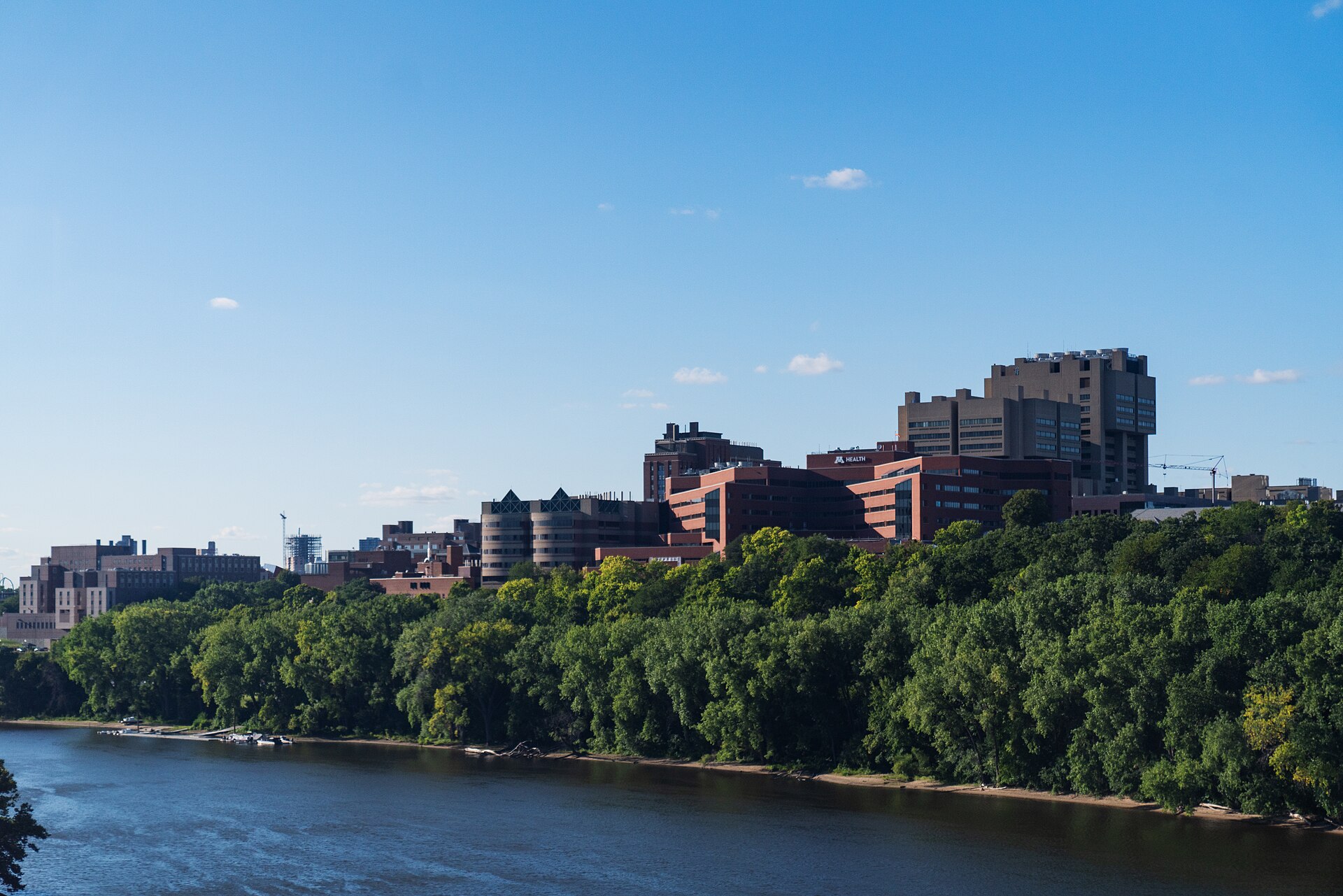
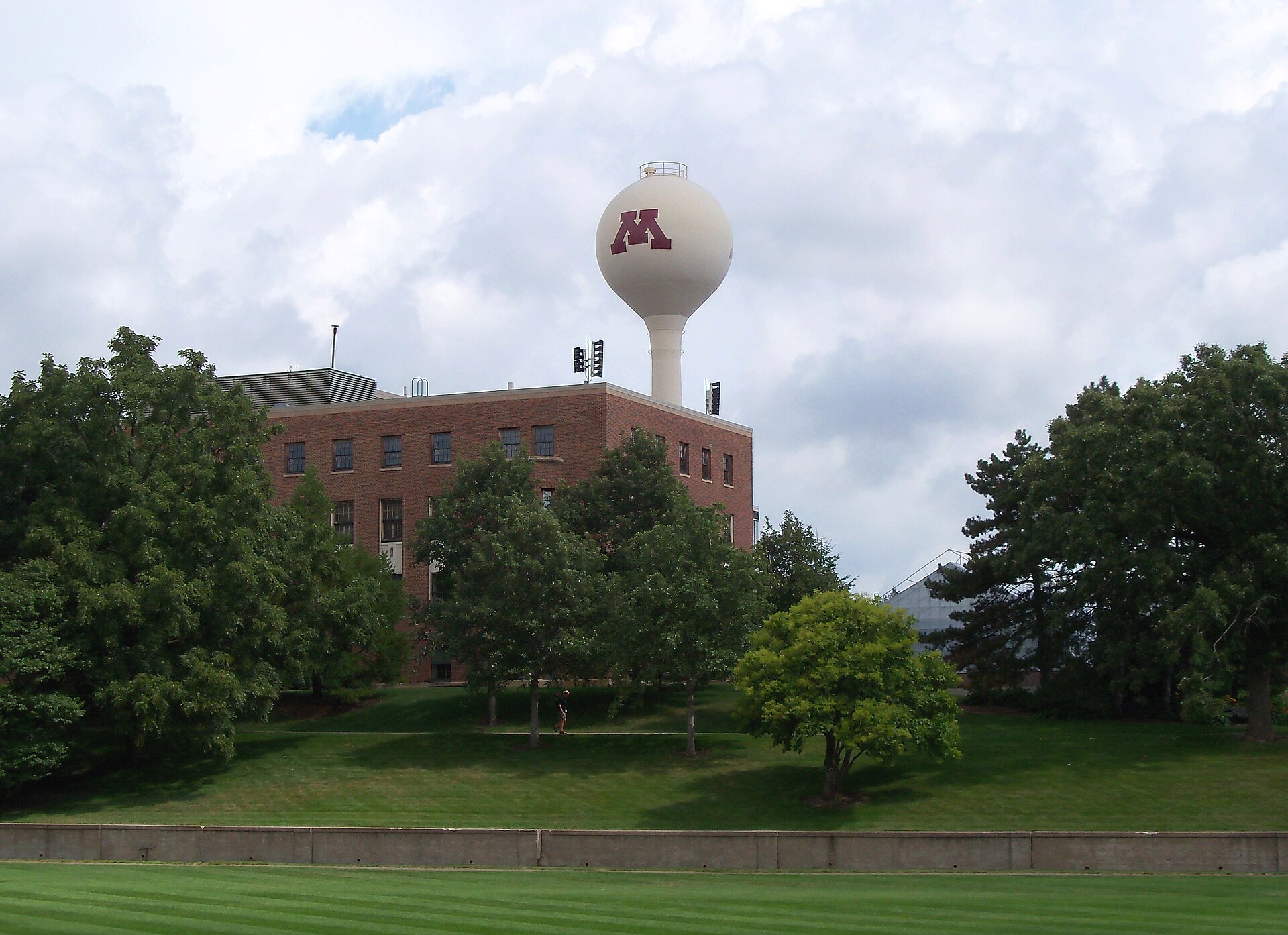
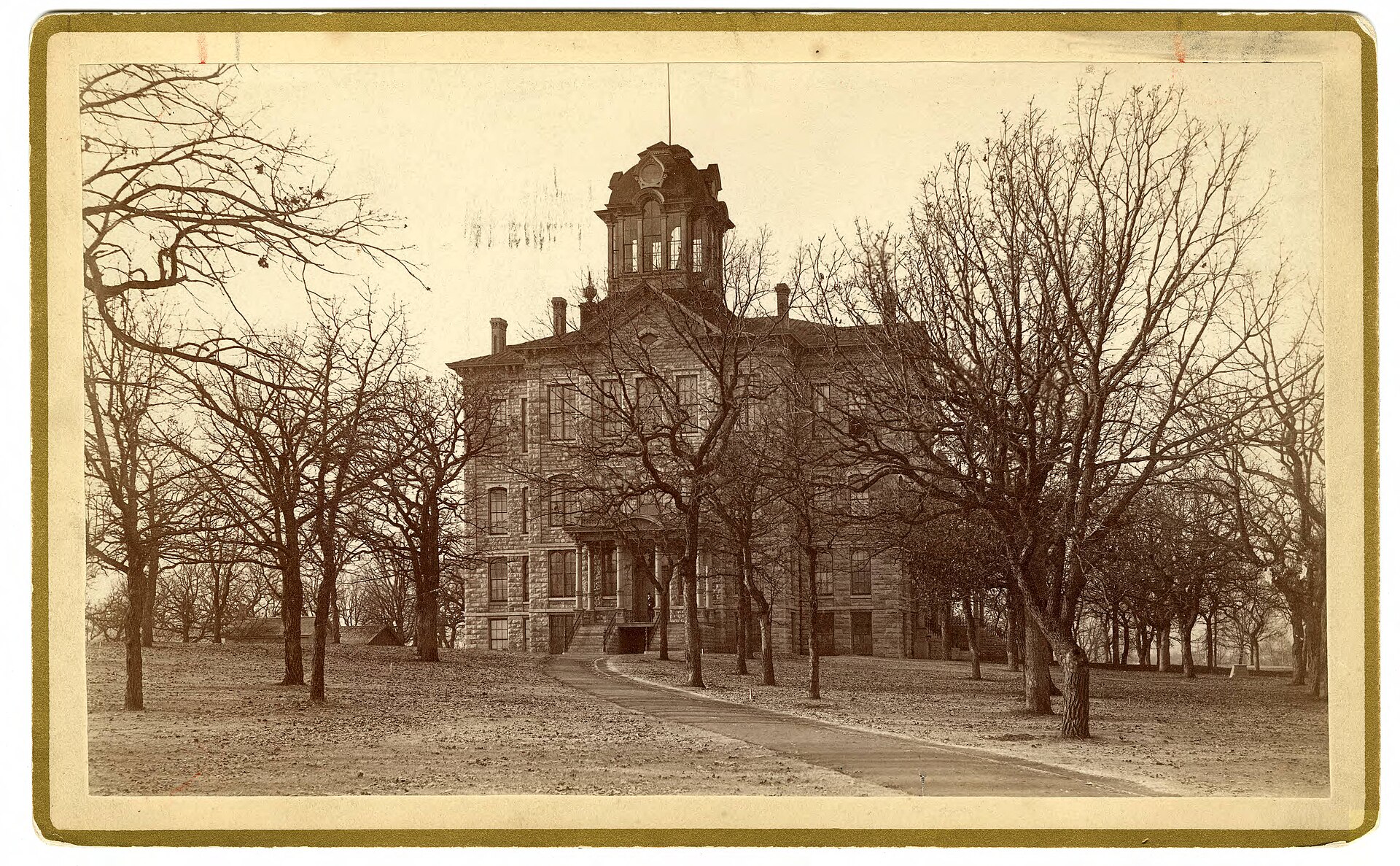
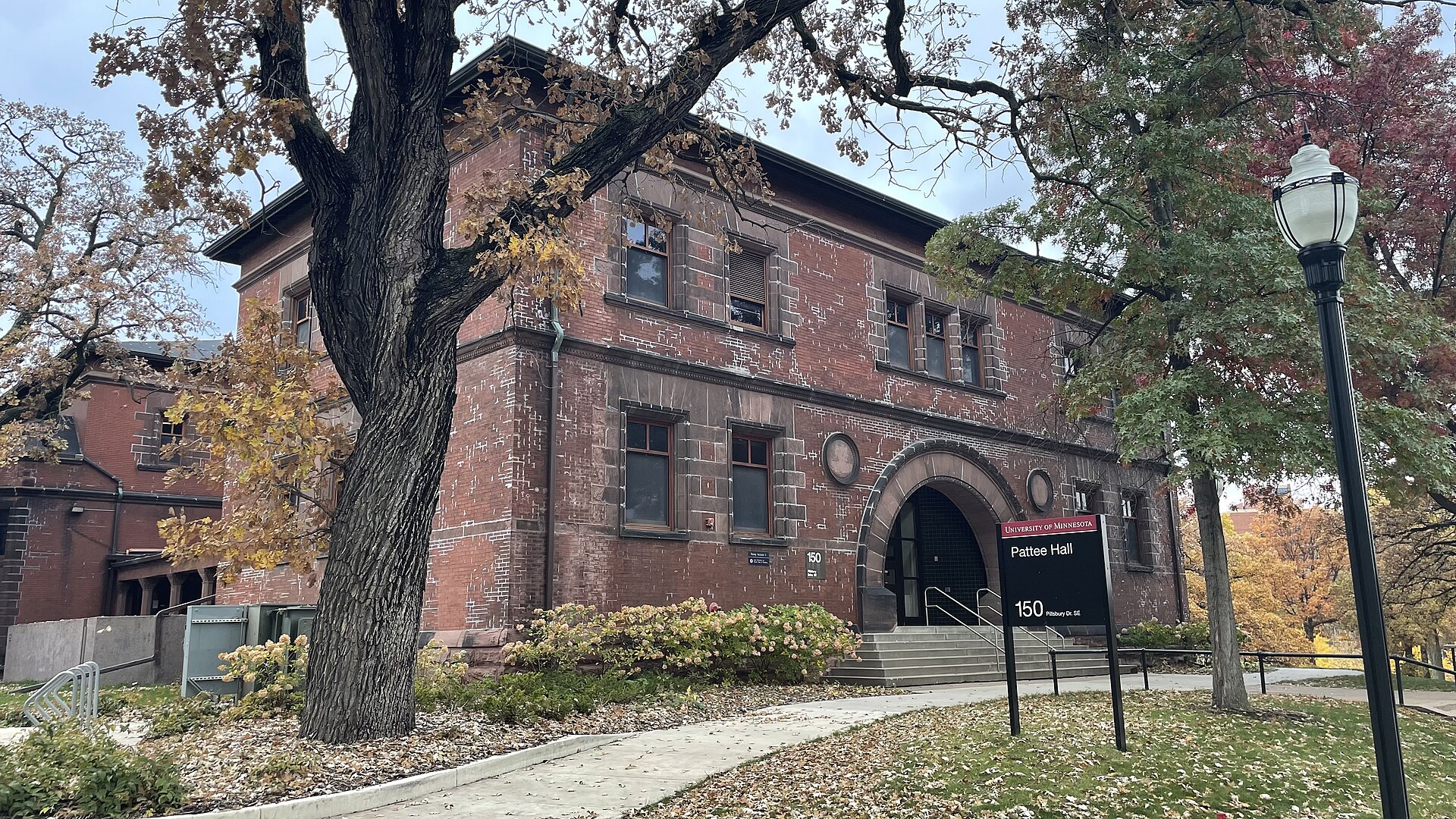
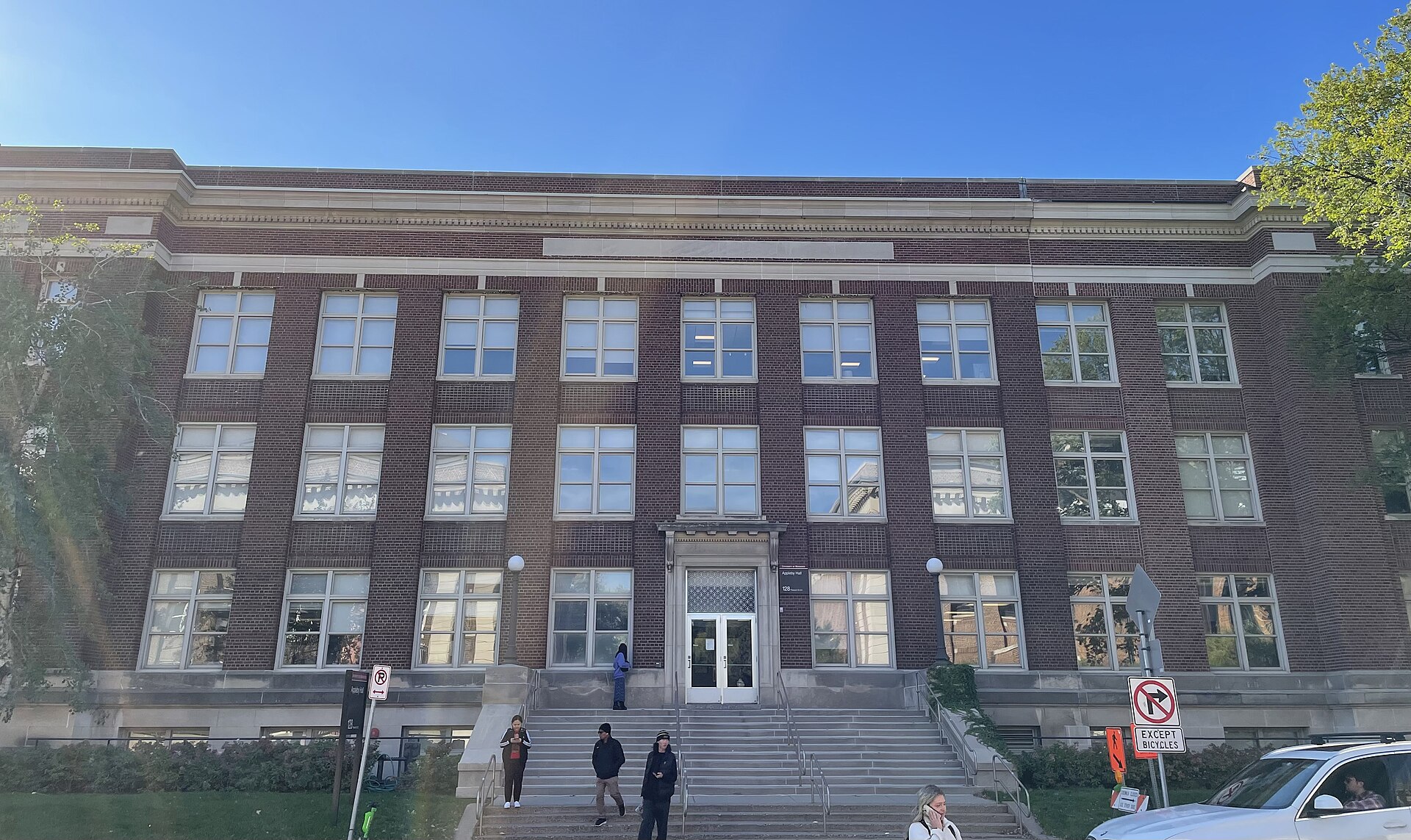
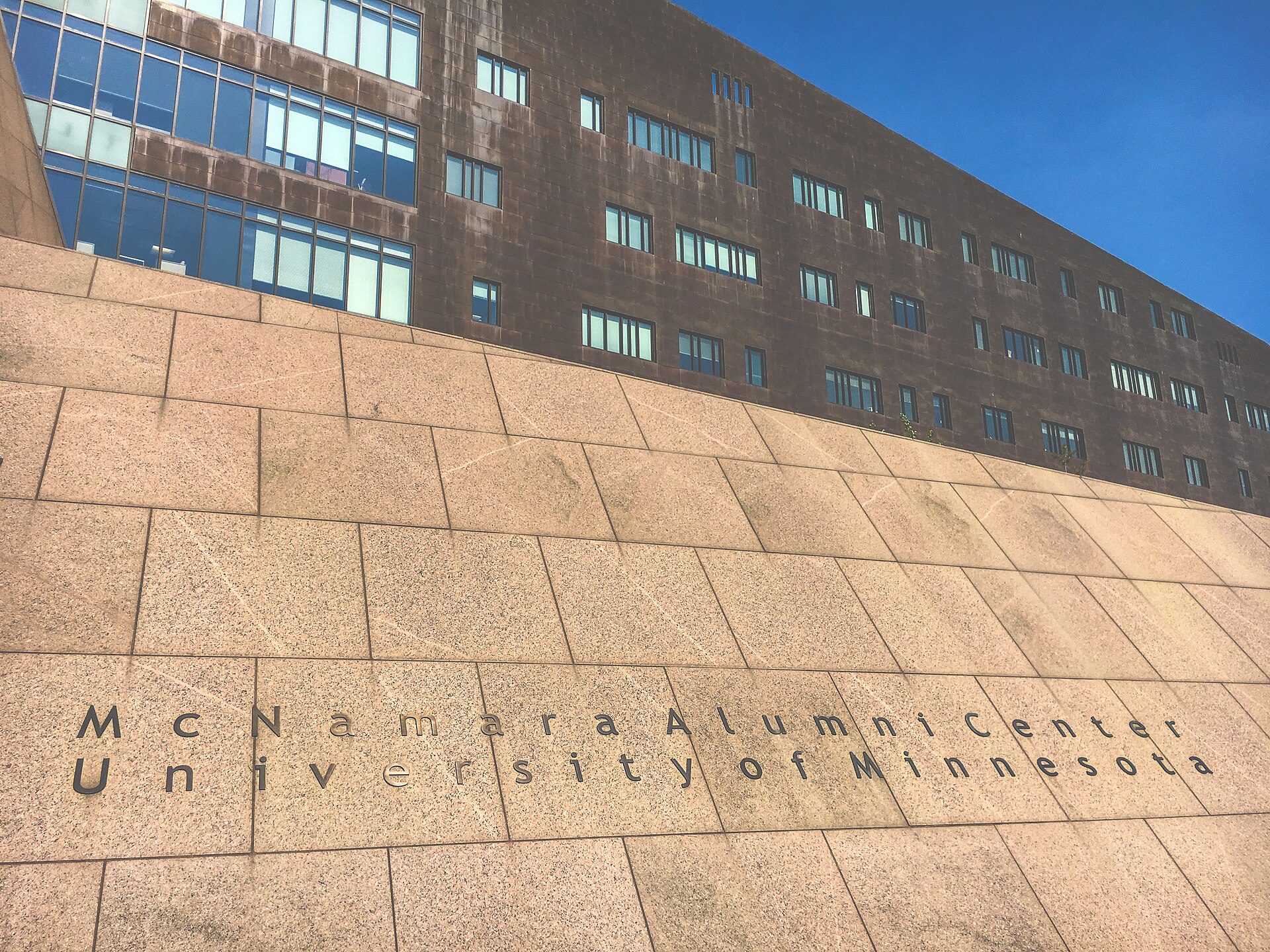
University of Minnesota Twin Cities — campus in pictures
Real, freely-licensed photographs of the campus (via Wikimedia Commons).
WHY MINNESOTA
Why the University of Minnesota — Research Power, Fortune 500 Access & Big Ten Spirit
UMN Twin Cities is one of the world's leading research universities and a founding member of the Association of American Universities. For international students, it offers a rare combination: a globally respected credential, direct pipeline to a Fortune 500 metro, and an accessible acceptance rate that rewards a genuinely strong academic profile.
SELECTIVITY
Acceptance Rate & Admission Profile
With a 77% acceptance rate, UMN Twin Cities is accessible — but it is not a safety school for unprepared applicants. The university expects a genuinely competitive academic profile: the admitted SAT range of 1280–1480 and ACT range of 26–31 reflect a student body that earned strong grades in rigorous coursework. The minimum GPA expectation is 3.3. International students benefit from holistic review: course rigour, upward grade trends, extracurricular depth, and the context of your school system all count.
QUICK FACTS
University at a Glance
APPLICATION COMPONENTS
What Your Application Needs
UMN Twin Cities accepts the Common Application and its own online application. The application is holistic for first-year students, but grades and course rigour carry the most weight. Here is what every international applicant must submit.
ADMISSION PHILOSOPHY
What Minnesota Looks For
Beyond academics, the university values demonstrated interest in your chosen field (through coursework, extracurriculars, or employment), intellectual curiosity, and potential to contribute to a research-intensive community. For programmes like CSE and Carlson, your interest in the specific discipline should be evident throughout your application. Community involvement and leadership are noted, but the academic record is the primary signal.
UMN Twin Cities conducts holistic review, but grades and course rigour are the dominant factors. The admissions office evaluates the strength of your academic record relative to your school's offerings — so a student who has maximised IB, A-Level, or equivalent rigorous coursework will be viewed more favourably than one with identical grades in a lighter curriculum.
DEADLINES
Application Rounds & Key Dates
UMN Twin Cities offers an Early Action round (non-binding) and Regular Decision. The university accepts the Common Application and its own online application portal. The dates below are based on established institutional practice — always confirm on the official admissions website before applying.
Deadlines verified via third-party source. Confirm current-cycle dates at admissions.umn.edu before submitting.
| Round | Deadline | Decision | Notes |
|---|---|---|---|
| Early Action (non-binding) | 1 November | Mid-January (verify) | Recommended for scholarship priority |
| Regular Decision (Fall) | 1 January | March (verify) | Standard international applicant round |
| Spring Entry | 15 December | Rolling | Limited programmes; verify availability |
CAMPUS & CITY LIFE
Life at Minnesota
With 54,000 students, UMN hosts over 900 registered student organisations, 26 varsity sports teams (Big Ten competition), and a student union complex rivalling small shopping malls. Housing options range from on-campus residence halls to off-campus apartments in Dinkytown and Stadium Village, two student-focused neighbourhood districts within walking distance of campus. The Twin Cities metro offers world-class dining, theatre (the Guthrie Theater, the Minnesota Orchestra), professional sports (Vikings, Twins, Timberwolves, Wild), and one of the US's most extensive urban trail systems for outdoor enthusiasts.
The Twin Cities campus spans both Minneapolis and St. Paul, connected internally by a heated pedestrian tunnel-and-skyway system that keeps students moving in Minnesota's notoriously cold winters. The Minneapolis campus — home to most undergraduate programmes — sits in a genuine urban neighbourhood, with the Mississippi River gorge providing dramatic natural scenery mere steps from lecture halls.
CAREER OUTCOMES
Where Gophers Go After Graduation
Key recruiting employers include 3M, Target, Medtronic, General Mills, UnitedHealth Group, Cargill, and dozens of regional and national firms that specifically recruit at Minnesota's career fairs. For engineering and computer science graduates, national tech recruiters (Amazon, Microsoft, Google, Meta) maintain a regular presence on campus. Graduate and professional school placement is equally strong — UMN's own medical, law, and graduate programmes are among the nation's most respected.
UMN Twin Cities has a 91% employment rate within six months of graduation, with an average starting salary of $61,000. The Carlson School of Management and the College of Science and Engineering routinely deliver the strongest placement outcomes, driven by deep ties to the Fortune 500 companies headquartered in the metro.
FAQs
International Student FAQs
Do international students need a separate application?+
Most international first-year applicants apply through the Common Application or UMN's own online portal — the same process as domestic students. However, additional documents are required: certified English translation of transcripts, proof of English proficiency (IELTS/TOEFL/Duolingo), and financial documentation for visa purposes. The International Admissions team handles all international files.
Is UMN Twin Cities test-optional for international students?+
Yes. UMN Twin Cities maintains a test-optional policy. You are not required to submit SAT or ACT scores. If your scores are strong relative to the admitted range (SAT 1280–1480, ACT 26–31), submitting them can strengthen your application. If they are below that range, withholding them and letting your academic record speak is advisable.
Which English test does UMN accept, and what are the minimums?+
UMN accepts IELTS (minimum 6.5 overall), TOEFL iBT (minimum 79 overall), and Duolingo English Test (minimum 105). Students who completed four or more years of secondary school in English may apply for a waiver — check with the admissions office.
What is the minimum GPA to be considered?+
UMN publishes a minimum GPA expectation of 3.3 (on a 4.0 US scale) for first-year applicants. For competitive programmes like CS, engineering, and nursing, the realistic competitive GPA is higher — typically 3.7 or above among admitted students. UMN admissions will convert your school's grading scale.
Can international students receive financial aid or scholarships?+
International undergraduate students are not eligible for US federal financial aid, but UMN does offer a limited number of merit scholarships for outstanding international applicants. Applying Early Action may improve scholarship consideration. The university is need-aware for international applicants. Always consult the ISSS financial resources page for the most current scholarship listings.
Is housing guaranteed for international students?+
On-campus housing is not guaranteed but is strongly encouraged for first-year students. UMN has a large on-campus housing inventory. International students who apply for housing by the stated deadline typically receive an assignment. Off-campus options in Dinkytown and Stadium Village are plentiful and student-oriented.
How competitive is admission to the Carlson School of Management?+
Carlson is a selective programme within UMN. Internal transfer and direct-admit processes differ — some students apply directly to Carlson as first-year applicants while others enter the university undeclared and apply for admission to Carlson after meeting academic benchmarks. Carlson may require a programme-specific supplemental application. Verify the current process at the Carlson admissions page.
What support exists for international students after arrival?+
International Student and Scholar Services (ISSS) provides comprehensive support: visa and immigration advising, cultural orientation programming, the International Student Association, and connections to the broader global student community. The university also has dedicated academic advisers for each college who are familiar with the needs of international students.
ACADEMICS
Academic Expectations at Minnesota What International Students Need to Know
UMN Twin Cities is a Big Ten research powerhouse with a 3.3 minimum GPA expectation and a test-optional policy. For international students, the key is demonstrating rigour in your national curriculum — whether IB, A-Level, CBSE, or another system — and showing that your grades reflect genuine academic challenge. Here is how to read the academic benchmarks and prepare your profile.
ACADEMIC BENCHMARKS
Admitted Student Academic Profile
The figures below are drawn directly from UMN's published data. They represent the middle 50% range — half of admitted students fall within these bands. Strong students at the upper end of these ranges, or above, are well-positioned for most programmes. Competitive programmes like CS, chemical engineering, and nursing typically attract applicants at the higher end.
TEST POLICY
Test-Optional Admissions
However, the test-optional policy creates a strategic decision: if your scores fall in the upper half of the admitted range (SAT 1380+, ACT 29+), submitting them adds a positive signal. If your scores fall below the band, your strong academic record and other application components will carry the review. Do not feel compelled to submit marginal scores out of anxiety — the holistic review works well without them.
UMN Twin Cities is test-optional for all first-year applicants, including international students. You are not required to submit SAT or ACT scores, and choosing not to submit will not negatively affect your application.
SAT & ACT
Standardised Test Strategy
INTERNATIONAL QUALIFICATIONS
How IB, A-Levels, and AP Are Evaluated
A-Level students from the UK, South Asia, East Africa, and other Commonwealth systems are reviewed on their A-Level subjects and predicted grades. Three A-Levels with strong grades (A-A*) in relevant subjects are typically competitive. Students from the Indian boards (CBSE, ISC) should present their overall percentage alongside any competitive entrance exam results (JEE, NEET where relevant) to provide full context. AP scores of 4 or 5 in relevant subjects may earn course credit and demonstrate academic readiness even for domestic international-school students.
UMN Twin Cities has substantial experience evaluating international qualifications. The IB Diploma is well understood and widely accepted; admitted international IB students typically score 33 or above on the full Diploma. Higher Level subjects may earn college credit — check the UMN credit-by-exam policies, as IB HL scores of 5 or above often translate to course credit.
SUBJECT PREPARATION
Academic Preparation by Programme
ENGLISH PROFICIENCY
English Language Requirements
All international applicants whose primary language of instruction was not English must submit a recognised English proficiency score. The following are UMN's published minimum requirements. Meeting the minimum qualifies your application — competitive candidates typically exceed these minimums.
Scores must be sent directly from the testing agency. Self-reported scores are not accepted. TOEFL institution code for UMN is 6874.
| Test | Minimum | Notes |
|---|---|---|
| IELTS Academic | 6.5 overall | No sub-score below 6.0 typically expected |
| TOEFL iBT | 79 total | Section minimums may apply — verify |
| Duolingo English Test | 105 | Accepted as equivalent alternative |
| Waiver | 4+ years English-medium education | Apply through ISSS — assessed case by case |
FOUR-YEAR ROADMAP
Building a Competitive Profile: Grade 9 to 12
COMMON PITFALLS
Academic Application Mistakes to Avoid
- Choosing a lighter curriculum to protect GPA — UMN readers see through this and value rigour over inflated grades in easier courses.
- Submitting a marginal SAT/ACT score when test-optional is available — scores below the 25th percentile (SAT 1280, ACT 26) can only hurt your application.
- Not requesting a TOEFL/IELTS waiver when you qualify — students who studied entirely in English for four or more years may not need to take the test.
- Underestimating the competitiveness of specific programmes (CS, nursing, Carlson direct-admit) by assuming the 77% overall rate applies to all majors equally.
- Sending transcripts without certified English translations — untranslated transcripts cannot be evaluated and will delay your application.
- Waiting until the Regular Decision deadline when Early Action offers potential scholarship advantages and earlier certainty.
- Failing to research credit-transfer policies before choosing which IB HL or AP courses to take — a small number of strategic HL choices can save an entire semester of tuition.
COST & AID
The Real Cost of Minnesota for International Students Tuition, Aid, and Affordability
UMN Twin Cities offers a world-class education at public-university pricing — significantly below comparable private research universities. The key reality for international students: US federal aid is not available to you, and UMN's need-based international aid is limited. However, merit scholarships exist, the city's cost of living is lower than coastal metros, and the career outcomes — 91% employment, $61,000 average starting salary — make the investment defensible.
ANNUAL COSTS
Cost of Attendance for International Students
The figures below are drawn directly from UMN's published data and represent estimated annual costs for undergraduate international students. Actual costs vary by programme, housing choice, and personal spending.
Costs are annual estimates based on institutional data and may change each academic year. Always verify current figures at onestop.umn.edu.
| Component | Annual Estimate | Notes |
|---|---|---|
| Tuition & Fees (International) | $37,000 | Non-resident/international rate |
| Housing & Meals | Included in COA | Variable by on/off-campus choice |
| Total Cost of Attendance | $56,000 | All-in estimate including living expenses |
| Cost of Living (personal) | $16,000 | Books, transport, personal expenses |
| Application Fee | $75 | Non-refundable; fee waivers may be available |
FINANCIAL AID
Financial Aid for International Students
Average aid at UMN covers approximately 35% of costs for those who receive it. However, the majority of this aid is awarded to domestic students. International students should plan to demonstrate sufficient financial resources for their full programme as required by the US student visa process. A limited number of merit-based scholarships are available to outstanding international applicants — Early Action applicants are often prioritised for these awards.
International undergraduate students at UMN Twin Cities are not eligible for US federal financial aid (Pell Grants, subsidised loans, or work-study under the Federal Work-Study programme). UMN is need-aware for international applicants — meaning demonstrated financial need is considered in the admissions process for international students.
Because international financial aid is limited, prospective students are strongly encouraged to explore home-country government scholarships, Fulbright programmes, and private scholarships alongside UMN's own offerings.
SCHOLARSHIPS
Scholarships for International Undergraduates
UMN awards merit-based scholarships through the admissions process — no separate scholarship application is typically needed for automatic consideration. Applying Early Action improves eligibility for scholarship review. The following are representative scholarship types at UMN Twin Cities; verify current availability and amounts at the official admissions site as these can change.
All scholarship names, amounts, and eligibility criteria should be verified at admissions.umn.edu and onestop.umn.edu. Aid structures can change year to year.
AFFORDABILITY
Is Minnesota Financially Achievable?
Minneapolis–St. Paul offers a substantially lower cost of living than Boston, New York, or San Francisco. Off-campus student apartments near the university are plentiful and affordable. Culturally, the Twin Cities punch above their weight — world-class food, arts, and outdoor recreation at costs that do not require a stipend to survive. Students eligible to work on-campus under their F-1 visa status (up to 20 hours per week during term) can offset personal expenses meaningfully, though this should not be factored into tuition planning.
At roughly $56,000 total cost of attendance, UMN Twin Cities is meaningfully less expensive than private research universities in the same academic tier (which often exceed $85,000 per year). For international students able to secure even partial merit scholarships, the net cost can fall to $45,000–50,000 per year — and the career outcomes justify the investment.
International students on F-1 visas may work on-campus up to 20 hours per week during term and full-time during official university breaks. Off-campus work requires authorisation (CPT/OPT). Do not plan your budget around off-campus income before authorisation is granted.
FUNDING STRATEGY
Steps to Maximise Your Funding
COST FAQs
Financial Aid FAQs for International Students
Can international students apply for financial aid at UMN?+
International students are not eligible for US federal aid (grants, subsidised loans, or federal work-study). UMN does offer a limited number of merit scholarships for outstanding international applicants. Apply Early Action for the best scholarship consideration, and verify current programmes on the official financial aid site.
What is the average financial aid package for international students?+
UMN's average aid percentage is 35% of costs, but this figure is heavily weighted toward domestic students. International students should not assume they will receive this level of aid and should plan for the full cost of attendance unless they receive a specific scholarship offer.
Are there payment plans available?+
UMN offers payment plan options through the One Stop Student Services office. Rather than paying each semester's bill in a single lump sum, students can spread payments across several instalments. There is typically a small enrolment fee for this service. International students should confirm payment plan eligibility.
Can international students work on campus?+
Yes. F-1 visa holders may work on-campus up to 20 hours per week during term time and full-time during official university breaks. UMN has a large on-campus employment market through the Student Employment office. This can help offset personal expenses but should not substitute for proper funding documentation.
What financial documentation is needed for the I-20/visa?+
To issue an I-20 (required for your F-1 visa), UMN's ISSS office will require proof of sufficient funds to cover at least one year of attendance (~$56,000). Acceptable documents include bank statements, scholarship award letters, and parental support affidavits. Begin preparing these documents as soon as you receive your admission offer.
ESSAYS
Writing for Minnesota Common App Essay & Programme Supplements
UMN Twin Cities is a Common App institution with a relatively streamlined essay requirement: the Common App personal statement (650 words) is the cornerstone, and selected programmes may require one short supplemental response. Unlike the most selective private universities with multiple long supplements, Minnesota's essay ask is focused — which means your personal statement needs to do significant work on its own. Here is how to use it well.
WHAT'S REQUIRED
Essay Requirements Overview
International students using UMN's own online application portal (rather than Common App) are typically asked one or more short-answer questions rather than a full personal statement. The substance, however, is equivalent — you are telling your story and demonstrating readiness for a research-intensive university in a specific academic context.
UMN Twin Cities accepts the Common Application. The Common App personal statement (up to 650 words) is required for all applicants. Some colleges within UMN — notably the Carlson School of Management — include short supplemental questions within the application. The overall essay burden is lighter than many peer institutions.
Always verify the current supplemental requirements for your chosen college on the UMN admissions site before submitting. Requirements can change between application cycles.
ESSAY PROMPTS
Common App Personal Statement Prompts
The Common App offers seven prompts for the personal statement. You choose one (or use the open-ended Prompt 7). All carry equal weight with admissions readers. The prompts below are the 2024–25 Common App prompts — confirm any updates at commonapp.org for the current cycle.
PERSONAL STATEMENT STRATEGY
Writing Your Common App Essay for Minnesota
For international students, the personal statement serves a particular function: it contextualises your background in a way that numbers alone cannot. If you grew up in a non-English-speaking country, attended a school with limited AP/IB resources, or navigated an unusual educational path, the essay is where you explain the context — not defensively, but with confidence. Write in clear, direct prose. American admissions culture values authenticity, specificity, and narrative over formality or philosophical abstraction.
UMN Twin Cities does not weight the personal statement as heavily as the most selective private universities — your academic record and grades are the primary factors. But the essay is still your single opportunity to speak directly to an admissions reader, and a well-written one can meaningfully distinguish you from another applicant with a similar academic profile.
Do not write a 650-word CV summary. The admissions reader already has your activities list. The essay should reveal something about you that is not already visible elsewhere in the application.
SUPPLEMENTAL QUESTIONS
Programme-Specific Supplements
Some colleges and programmes within UMN require or offer short supplemental responses. These typically ask about your intended programme, why you chose your major, or what you hope to contribute. Because they are shorter (typically 150–300 words), precision matters more than breadth.
TOPIC SELECTION
Choosing Your Essay Topic
The best essay topics are specific, sensory, and personal: a particular object, moment, conversation, or failure that you have genuinely thought about. You do not need a dramatic narrative of war, displacement, or extraordinary hardship — though if that is your genuine story, it belongs here. A student who writes vividly about their obsession with fermentation chemistry, or the specific feeling of navigating between two languages at home and school, will outshine a student who writes a polished but vague essay about 'overcoming challenges' without concrete detail.
The biggest essay mistake international applicants make is choosing a topic that sounds impressive rather than one that is genuinely true. Admission readers at large public universities read thousands of essays per cycle — they are extraordinarily good at detecting inauthenticity.
ESSAY PITFALLS
Essay Mistakes That Hurt Applications
- Writing a summary of your activities and achievements instead of a personal narrative — the admissions reader already has your activities list.
- Choosing a topic because it sounds impressive rather than because it is genuinely meaningful to you — readers detect the difference immediately.
- Using formal, academic, or translated prose that sounds nothing like your natural voice — write in the first person, in your own register.
- Repeating information already visible elsewhere in your application without adding new insight or dimension.
- Ignoring the word limit — 650 words is a constraint, not a target. Many strong essays are under 550 words. Over-writing dilutes.
- Submitting without proofreading by a native English speaker or trusted editor — grammar and clarity matter even in holistic review.
- For supplement prompts: being so generic about your interest in the programme that your essay could apply to any university anywhere — UMN readers want to see specific knowledge of their programmes, faculty, or opportunities.
- Using AI-generated text without genuine personal editing — generic AI prose is increasingly recognisable and will make your application feel impersonal.
ESSAY FAQs
Essay FAQs for International Applicants
Does UMN require supplemental essays?+
The Common App personal statement (up to 650 words) is required. Some specific programmes within UMN — particularly Carlson School of Management — may require short supplemental responses. Verify the current requirements for your specific college on the UMN admissions website before applying, as requirements can change between cycles.
Can I write my Common App essay in my native language and submit a translation?+
No. The Common App essay must be written in English. Since English proficiency is both a stated admission requirement and a predictor of your success at an English-medium institution, your essay should be written in English that represents your best work. If you used a translator, the essay no longer reflects your writing ability.
Should I mention that I am an international student in my essay?+
You do not need to mention your international status explicitly — it is already clear from your application. However, if your international background is central to the most compelling story you can tell (which it often is), weave it in naturally. Do not ignore it if it is relevant, but do not force it in as a qualifier.
How much does the essay affect my admission decision?+
At UMN Twin Cities, the essay carries less weight than at highly selective private universities. Academic record, grades, and course rigour are the primary factors. However, the essay becomes decisive when two applicants have similar academic profiles — it is the tiebreaker and the humanising document that makes your file memorable.
What is the word limit for the Common App essay?+
The Common App personal statement has a maximum of 650 words and a minimum of 250 words. There is no penalty for writing fewer than 650 words — if your essay is complete and effective at 500 words, do not pad it. Strong, focused writing is better than strained verbosity.
Can I reuse my Common App essay for other universities?+
Yes — the Common App personal statement is designed to be sent to multiple institutions. It is university-agnostic by design. However, any supplemental responses (like Carlson's) must be specific to UMN and should never be reused from another institution's supplement without revision.
Courses — schools, degrees & intake
84 degrees across 9 groupings.
College of Liberal Arts · 30 degrees
African American & African Studies
American Indian Studies
Anthropology
Art
Art History
Asian American Studies
Asian Languages & Literatures
Chicano & Latino Studies
Classical & Near Eastern Studies
Communication Studies
Comparative Literature
Economics
English
French & Italian
Geography
German, Nordic, Slavic & Dutch
Global Studies
History
Journalism
Strategic Communication
Linguistics
Music
Philosophy
Political Science
Psychology
Sociology
Spanish & Portuguese Studies
Speech-Language-Hearing Sciences
Theatre Arts & Dance
Women's, Gender, & Sexuality Studies
College of Science and Engineering · 16 degrees
Aerospace Engineering & Mechanics
Chemical Engineering
Chemistry
Civil Engineering
Computer Engineering
Computer Science
Earth Sciences
Electrical Engineering
Environmental Engineering
Geological Engineering
Industrial & Systems Engineering
Materials Science & Engineering
Mathematics
Mechanical Engineering
Physics
Statistics
Carlson School of Management · 7 degrees
Accounting (BSB)
Finance (BSB)
Management (BSB)
Management Information Systems (BSB)
Marketing (BSB)
Supply Chain & Operations Management (BSB)
Actuarial Science (BSB)
College of Biological Sciences · 6 degrees
Biology
Biochemistry
Genetics & Genomics
Microbiology
Neuroscience
Plant Biology
College of Education and Human Development · 8 degrees
Child Psychology
Community Health Education
Elementary Education
Family Social Science
Kinesiology
Recreation, Park, & Leisure Studies
Social Work
Youth Studies
College of Food, Agricultural and Natural Resource Sciences · 9 degrees
Agricultural Education
Agribusiness Management
Animal Science
Applied Economics
Applied Plant Science
Bioproducts & Biosystems Engineering
Environmental Sciences, Policy & Management
Food Science
Nutrition
College of Design · 6 degrees
Architecture
Graphic Design
Housing Studies
Interior Design
Landscape Architecture
Retail Merchandising
School of Nursing · 1 degrees
Nursing (BSN)
College of Pharmacy · 1 degrees
Pharmaceutical Sciences (BS)
Want your real chances at University of Minnesota Twin Cities?
Create a free TYCHR account for your personalised admit-chance, a shortlist you can track, exact entry requirements, and essay + counselling help.