← All universities

University of Miami

Coral Gables, United States · Suburban

Association of American Universities (AAU)PrivateResearchCoed
Acceptance
19.0%
QS World
#300
Tuition/yr
$62,000
Students
19,400
Founded
1925

ADMISSIONS GUIDE

University of Miami for International Students

Nestled in the sun-drenched suburb of Coral Gables, the University of Miami (UM) is a top-tier AAU research university that brings together hemispheric energy, world-class research, and a vibrant cosmopolitan campus. With signature strengths in marine and atmospheric science, music, business, nursing, and engineering, UM attracts ambitious students from across Latin America, Europe, Asia, and beyond — earning 15% international enrolment and a reputation as one of America's most globally minded campuses.

For international students, UM offers an unusually welcoming entry point: a selective but attainable acceptance rate, automatic merit scholarship consideration, CSS-Profile-accessible need-based aid, and a location in Miami — the gateway city between the Americas — that translates directly into internship, network, and career advantages you will not find at landlocked peer institutions.

Campus

University of Miami — campus in pictures

Real, freely-licensed photographs of the campus (via Wikimedia Commons).
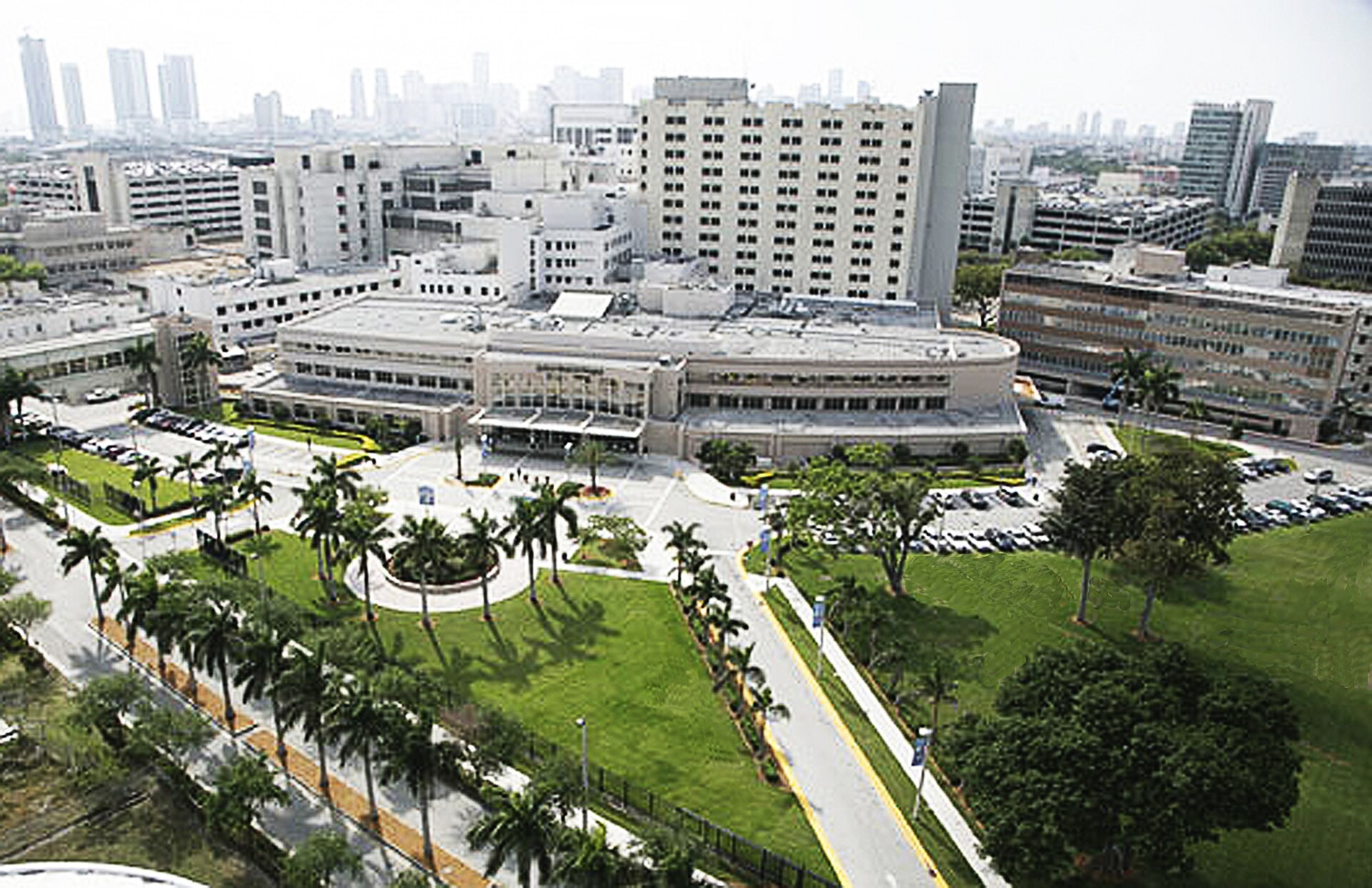
Jackson Memorial from a sky view
Jackson Memorial from a sky viewJayzze · CC BY-SA 4.0 · via Wikimedia Commons
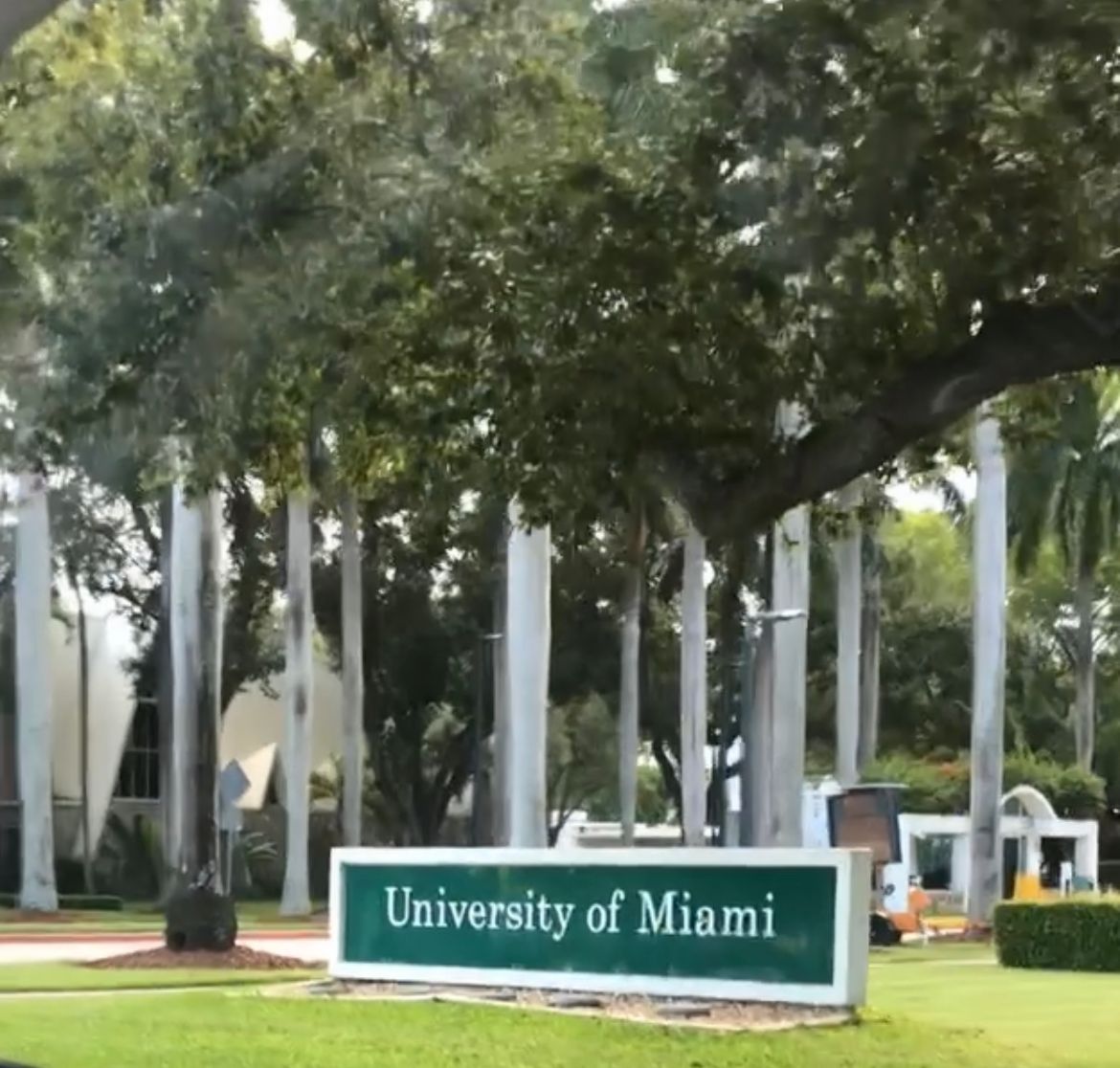
Main Entrance to the University of Miami
Main Entrance to the University of MiamiNkosiRob · CC BY-SA 4.0 · via Wikimedia Commons
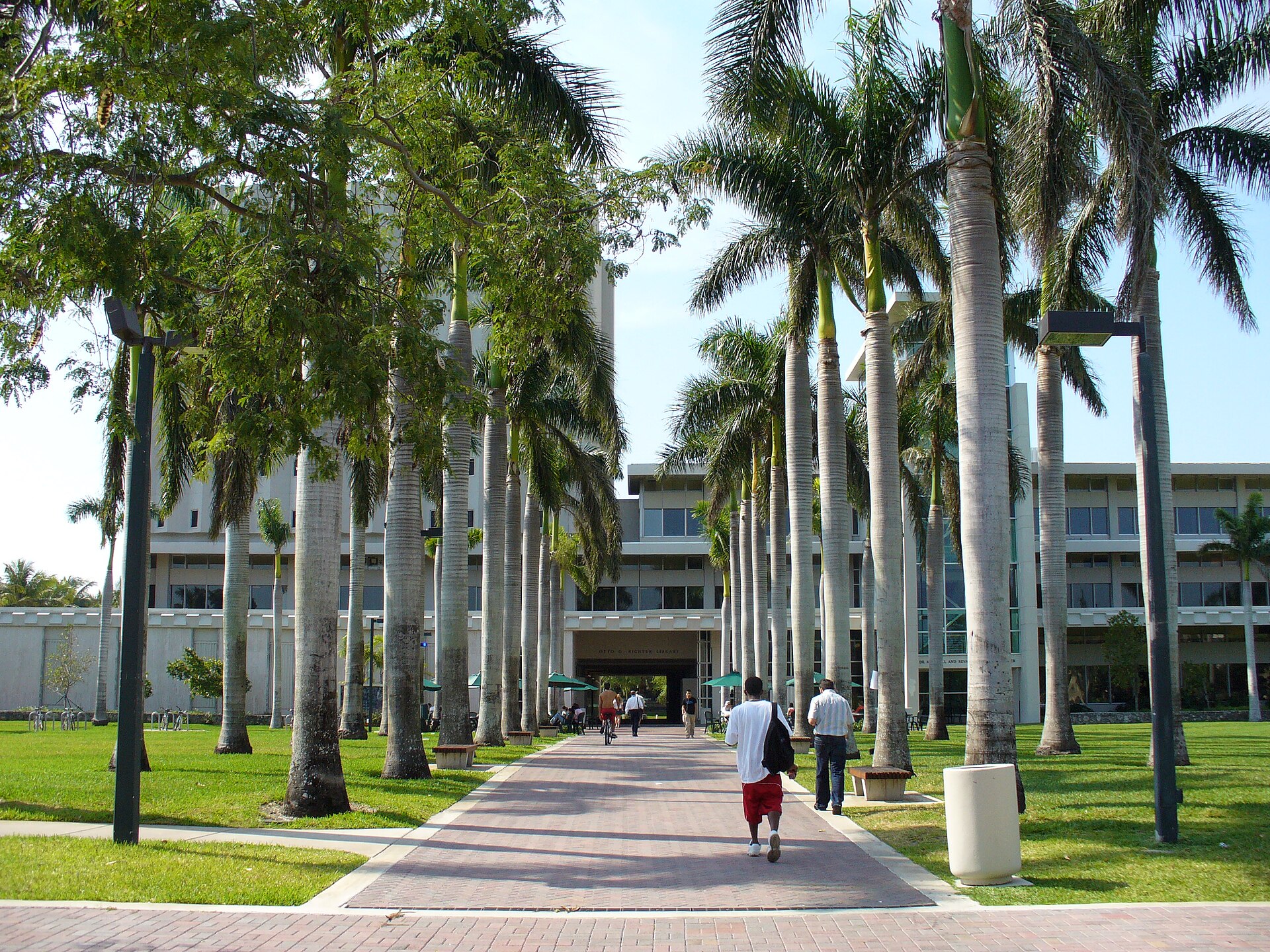
University of Miami Otto G. Richter Library
University of Miami Otto G. Richter LibraryRockfang · Public domain · via Wikimedia Commons
Approaching Nancy Holt's earthen sculpture, Star Crossed, on the campus of Miami University's Art Museum in Oxford, Ohio on 13 April 2022
Approaching Nancy Holt's earthen sculpture, Star Crossed, on the campus of Miami University's Art Museum in Oxford, Ohio on 13 April 2022Matthew.kowal · CC BY-SA 4.0 · via Wikimedia Commons
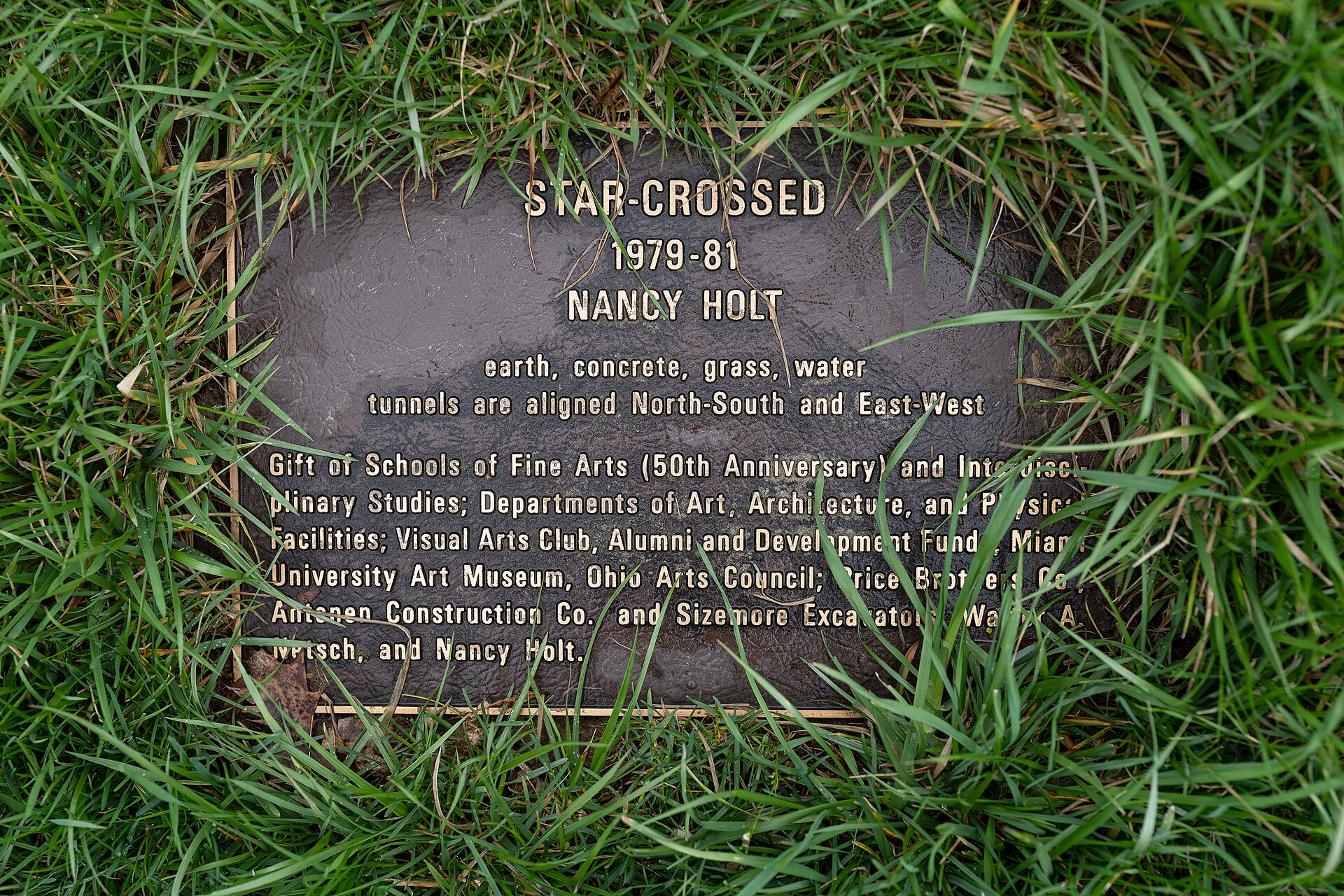
The plaque identifying Nancy Holt's earthen sculpture, Star Crossed, on the campus of Miami University's Art Museum in Oxford, Ohio on 13 Ap
The plaque identifying Nancy Holt's earthen sculpture, Star Crossed, on the campus of Miami University's Art Museum in Oxford, Ohio on 13 ApMatthew.kowal · CC BY-SA 4.0 · via Wikimedia Commons
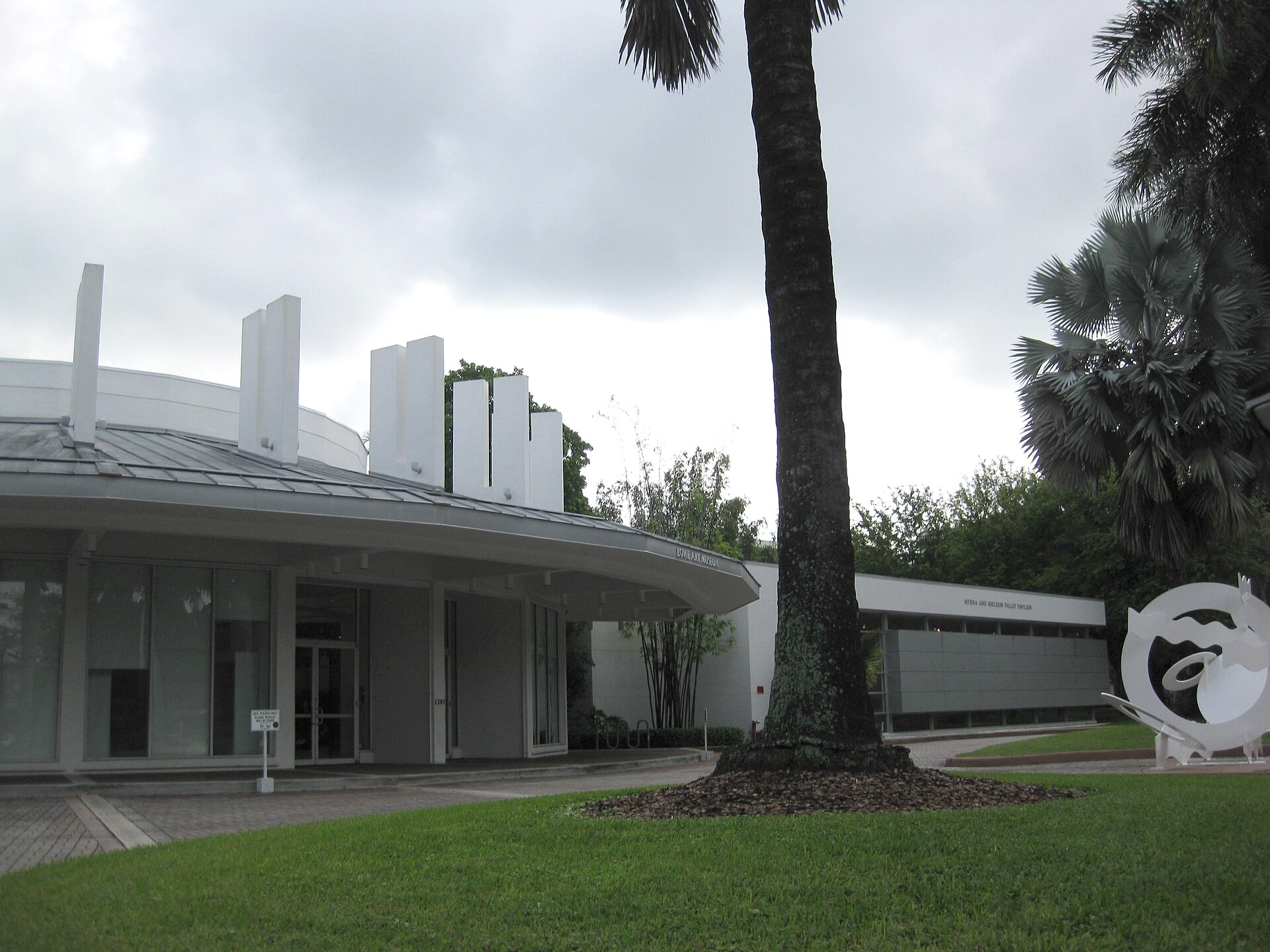
Depicted is the entrance to the Lowe Art Museum at the University of Miami in October 2015
Depicted is the entrance to the Lowe Art Museum at the University of Miami in October 2015AmgU2k25 · CC BY-SA 4.0 · via Wikimedia Commons

Why University of Miami — Research, Location & Global Career Launchpad

UM is not simply a South Florida school — it is an Association of American Universities member with $526 million in annual research funding, a globally ranked medical school, and a location in one of the world's most dynamic international business cities.

1AAU Research Powerhouse
UM holds membership in the Association of American Universities, placing it among the top ~65 research universities in North America. Undergraduates access $526 million in research funding and work alongside faculty at the Rosenstiel School of Marine, Atmospheric, and Earth Science — one of the foremost earth-science institutions in the world.
2The Miami Advantage
Coral Gables sits minutes from Brickell, Miami's international finance district, and Miami International Airport — connecting you to Latin America, Europe, and beyond. The city hosts the headquarters of major banks, tech firms, healthcare companies, and creative industries. With over 250,000 jobs and internships available to current students, the location is a professional accelerant.
3Frost School of Music & The Arts
The Frost School of Music is consistently ranked among the top music schools in the United States, offering performance, music business, music engineering, jazz, and studio composition. Combined with the School of Communication and the School of Architecture, UM is one of the strongest creative universities in the Southeast.
4Hemispheric International Community
At 15% international enrolment across 150+ countries, UM's student body is genuinely global. The campus hosts a rich array of cultural organisations, language communities, and international student programmes. Latin American ties are particularly deep — making UM especially welcoming for students from Brazil, Venezuela, Colombia, Argentina, and the Caribbean.
5Small-Class Academic Culture
Despite being a research university with 19,400 students, UM maintains a 12:1 student-to-faculty ratio and ensures 50% of undergraduate classes have 18 or fewer students. The Foote Fellows Honors Program, da Vinci Program, PRISM, and dual-degree pathways give high achievers accelerated, personalised academic routes.
6Competitive Athletics & Campus Culture
The Miami Hurricanes compete in the ACC (Atlantic Coast Conference) with 18 Division I sports and 21 NCAA championships. Campus culture blends serious academic ambition with vibrant social life — 300+ student clubs, 33 Greek organisations, and a wellness centre ranked among the finest in the nation.

SELECTIVITY

How Selective Is University of Miami?

UM admits roughly 19 out of every 100 applicants, placing it firmly in the selective tier — more attainable than the Ivies, yet rigorous enough that a strong academic profile and compelling application are essential. The middle-50% profile for admitted students reflects serious academic preparation.

UM is test-optional. Many admitted students submit no test scores and are evaluated holistically. Binding Early Decision (ED I) applicants tend to have higher yield-certainty and can be admitted at slightly stronger rates in some cycles — but the academic bar is the same.

19%
Acceptance Rate
1330–1470
SAT Middle 50%
30–33
ACT Middle 50%
~34
IB Score Band

AT A GLANCE

University of Miami — Quick Facts

1925
Founded
19,400
Total Enrolment
15%
International Students
12:1
Student–Faculty Ratio
https://admissions.miami.edu/undergraduate/academics/index.html

APPLICATION

What Does the UM Application Consist Of?

UM accepts the Common Application for first-year students. The application is holistic — every component contributes to the evaluation, not just GPA or test scores.

Common App + School Profile
Your application is submitted through the Common Application (commonapp.org). The school profile your counsellor submits provides context for your grades in the context of your high school's rigour.
Common App Personal Essay
One personal statement (up to 650 words) from the seven Common App prompts. This is your primary narrative — the space to reveal who you are beyond your transcript.
VERIFY ANNUALLYUniversity of Miami Supplement
UM requires supplemental writing within the Common App. Verify current prompts and word limits directly on the Common App or the UM admissions page before applying, as prompts update annually.
Standardised Test Scores (Optional)
SAT or ACT scores are optional. If submitted, they are considered as part of the full review. UM super-scores the SAT.
Letters of Recommendation
UM requires a counsellor recommendation and accepts teacher recommendations. Strong letters from teachers in rigorous subjects carry significant weight.
Extracurricular Activities & Honours
The activities section is carefully read. Depth of commitment and leadership in a few areas outperforms a scattered list of memberships. Research, community service, creative output, and entrepreneurship all resonate with UM readers.
https://admissions.miami.edu/undergraduate/application-process/index.html

ADMISSIONS PHILOSOPHY

What University of Miami Looks For

UM conducts a holistic, contextualised review. Admissions officers look at each applicant in the context of their school and background — they are not simply checking boxes for GPA and test scores.

The admissions committee values intellectual curiosity and a clear sense of purpose. Students who know why they want to study their chosen field and can articulate how Miami's specific resources — the Rosenstiel School, the Frost School, the Business School's Miami connections, or UM's hemispheric research agenda — serve their goals will stand out over generic applicants who could have applied anywhere.

Academic Rigour in Context
UM wants to see that you have challenged yourself with the most demanding courses available at your school — IB Diploma, A-Levels, AP courses, or national advanced curricula. A minimum GPA of 3.5 is the benchmark, but competitive admits typically exceed this.
Authentic Passion & Direction
With 12 schools and colleges across the arts, sciences, business, engineering, and health, UM is looking for students who have a clear direction — or at least a focused intellectual curiosity — rather than a vague "I want to study everything" profile.
Global Perspective
UM is a hemispheric institution. Students who bring cross-cultural experience, multilingualism, international research or service, or a genuine global viewpoint resonate strongly with UM's mission.
Impact & Leadership
Leadership does not have to mean president of every club. UM values students who create something — whether that is a community organisation, a research project, a performance, or a business — and have visible impact on others.

DEADLINES

Application Rounds & Deadlines

UM offers four application plans. Early Decision plans are binding. Supporting documents and test scores must be submitted by the final credentials deadline for each plan.

Frost School of Music applicants applying Regular Decision must submit by December 1. Incomplete applications are rolled into Regular Decision consideration. Application fee: $70.

RoundDeadlineDecisionBinding
Early Decision I (ED I)November 1Mid-DecemberYes
Early Action (EA)November 1Late JanuaryNo
Early Decision II (ED II)January 5Late FebruaryYes
Regular Decision (RD)January 5April 1No
https://admissions.miami.edu/undergraduate/application-process/options-and-deadlines/index.html

CAMPUS LIFE

Student Life at the University of Miami

The University of Miami campus in Coral Gables is a palm-lined, 239-acre subtropical setting — architecturally distinctive, physically beautiful, and minutes from Biscayne Bay. Campus life blends serious academic culture with access to one of the most vibrant cities in the Americas.

UM's residential college model places live-in faculty and student affairs staff alongside students, creating tight-knit communities centred on intellectual programming, seminars, field trips, and cultural events year-round. First-year students are encouraged to live on campus to build community before venturing into the city.

Student Organisations
300+ student clubs and organisations span academic, cultural, professional, and recreational interests. 33 fraternities and sororities provide Greek life options, and the Butler Center for Service and Leadership coordinates 35+ service-based organisations through which students log over 200,000 service hours annually.
Athletics — The Hurricanes
Miami Hurricanes compete in the ACC across 18 Division I sports with 21 NCAA championships. Football games at Hard Rock Stadium are a major campus event. Intramural and club sports are also extensively available.
Health & Wellness
The Patti & Allan Herbert Wellness Center is one of the finest on any university campus — featuring state-of-the-art fitness equipment, pools, courts, and wellness programmes. On-campus mental health and counselling services are available through the UM Counseling Center.
Miami — The City
Coral Gables is a quiet, tree-lined suburb, but Miami's energy — the beach, Wynwood arts district, South Beach nightlife, Brickell finance district, Little Havana, Design District — is minutes away. Miami International Airport connects you to Latin America, Europe, and the world with direct flights almost anywhere.

CAREERS & OUTCOMES

Career Outcomes & Professional Network

University of Miami graduates enter a highly active job market with strong employer relationships — particularly in finance, healthcare, entertainment, technology, and international business.

UM's Miami location is its most distinctive career asset. The city is home to the headquarters of major international banks, private equity firms, law firms, healthcare systems, media companies, and a rapidly growing tech sector. For business, finance, and international trade students, the on-the-ground Miami network is genuinely difficult to replicate. Rosenstiel graduates are recruited by NOAA, NASA, international research institutions, and environmental consultancies. Frost School alumni land in orchestras, recording studios, music publishing, and streaming companies worldwide.

89%
Employment Rate
$62,000
Avg Starting Salary
250K+
Jobs & Internships
https://admissions.miami.edu/undergraduate/student-life/index.html

FAQS

Frequently Asked Questions

Is University of Miami need-blind for international students?+

No. UM is need-aware for international applicants, meaning demonstrated financial need may be considered in the admission decision. However, international students are required to submit the CSS Profile and can be considered for need-based institutional aid. Merit scholarships are automatically considered for all applicants.

Does UM accept the Common Application?+

Yes. First-year international applicants apply through the Common Application (commonapp.org). Transfer students use the Transfer Common App.

What is the application fee for international students?+

The application fee is $70 USD.

Can I apply test-optional as an international student?+

Yes. UM is test-optional for all applicants, including internationals. If you do not submit SAT or ACT scores, your application is reviewed holistically on all other components. If you have strong scores, submitting them can strengthen your application.

Is Early Decision truly binding for international students?+

Yes. Both ED I (November 1) and ED II (January 5) are binding agreements. You must withdraw applications to other institutions if admitted and demonstrate the ability to pay. If your financial aid package is insufficient, you may be released from the ED commitment — but you must contact the admissions office immediately.

How is the IB Diploma viewed at University of Miami?+

UM views the IB Diploma very favourably. A competitive IB profile is around 34 or above, with Higher Level subjects matched to your intended area of study. IB graduates may receive course credit for HL scores of 5, 6, or 7 — check the UM credit policy for specifics.

Does University of Miami have a dedicated international admissions office?+

Yes. The Office of Undergraduate Admission handles all applicants including internationals, and the Division of Continuing and International Education supports enrolled international students. You can contact the admissions office at 305-284-6000.

What visa do international students typically use?+

Most full-time degree-seeking international students hold an F-1 student visa. UM's International Student and Scholar Services office processes the I-20 certificate needed for the F-1 visa application after admission and payment of deposit.

ACADEMICS

Academic Expectations for International Students

University of Miami offers a rigorous, research-active undergraduate curriculum across 12 schools and colleges. For international students, the academic culture rewards intellectual depth, high course rigour, and the ability to work in a fast-paced, interdisciplinary environment — often alongside faculty conducting cutting-edge research.

The 12:1 student-to-faculty ratio and the fact that 50% of undergraduate classes have 18 or fewer students means your professors know your name. This is not a lecture-hall institution where you can disappear — it is an engaged academic community where showing up intellectually is expected and rewarded.

ACADEMIC PROFILE

Typical Admitted Student Academic Profile

The following benchmarks represent the middle 50% of admitted students. Strong applicants near or above the 75th percentile benefit from higher chances of merit scholarship consideration.

1330–1470
SAT (Middle 50%)
30–33
ACT (Middle 50%)
~34
IB Benchmark
3.5
Minimum GPA

TEST POLICY

Test-Optional Policy

University of Miami is test-optional for all applicants, including international students. You are not required to submit SAT or ACT scores, and your application will be evaluated holistically without them.

If you choose to submit scores, UM super-scores the SAT (taking the highest section scores across multiple sittings). There is no minimum required score, but scores above the 75th percentile (1470 SAT, 33 ACT) put you in a strong position for both admission and merit aid consideration. If test-optional, the weight shifts to GPA, course rigour, essays, recommendations, and activities — all of which must be excellent.

International students whose first language is not English must still submit English proficiency test scores (IELTS, TOEFL, or Duolingo) regardless of test-optional SAT/ACT policy.

https://admissions.miami.edu/undergraduate/application-process/index.html

SAT & ACT

Standardised Tests — Strategy for International Students

While tests are optional, submitting strong scores can enhance your application and may increase merit scholarship eligibility. Here is how to approach the decision.

Submit If Above the 75th Percentile
If your SAT is 1470+ or ACT is 33+, submitting helps. Scores at this level confirm academic preparation in a standardised format that admissions officers globally understand. They can only help you.
Go Test-Optional If Scores Are Below-Band
If your SAT is below 1330 or ACT below 30, withholding scores and presenting a strong transcript, strong IB/A-Level results, and compelling essays is the better strategy. UM's holistic process genuinely honours this.
SAT Super-Score Policy
UM super-scores the SAT — it considers the highest Evidence-Based Reading & Writing score and the highest Math score across all test dates. This rewards multiple attempts and gives you flexibility to improve sub-scores.
ACT Composite
The ACT middle 50% is 30–33. If you are a strong math and science student, the ACT's science reasoning section can show an analytical strength that benefits STEM applicants.

IB & A-LEVELS

IB Diploma, A-Levels & AP Courses

UM has extensive experience evaluating international qualifications and actively recruits strong IB and A-Level students.

IB Diploma
A competitive total is approximately 34 or above. Higher Level subjects should align with your intended field of study (e.g., HL Mathematics and HL Physics for Engineering; HL Biology and HL Chemistry for pre-medicine). UM awards course credit for HL scores of 5, 6, and 7 in many disciplines — verify the credit equivalency table on the registrar website.
A-Levels (UK / Cambridge International)
A-Level students should aim for AAB or higher across three subjects, with the subject combination matched to the intended major. Top applicants present A*AA or better. UM evaluates A-Level qualifications regularly and awards credit for strong scores.
AP Courses
For students in AP programmes, UM recommends 4–6 AP courses minimum for competitive programmes, with scores of 4 or 5. AP credit is awarded for qualifying scores and can allow early course placement and faster degree completion.
National Curricula
Students from other national systems (CBSE, Indian ISC, Brazilian vestibular, Chinese Gaokao, Korean CSAT) are evaluated relative to the top students from their education system. UM has experience with the most common international qualifications.

SUBJECT RIGOUR

Subject Preparation by Area of Study

Strong subject-level preparation matters — UM's schools have distinct academic cultures and expectations.

Business School
Economics, Mathematics, and Statistics at the highest available level. Business at HL (IB) or A-Level is beneficial but not required. Quantitative rigour in pre-calculus and calculus is expected.
Engineering & Computer Science
HL Mathematics (IB Analysis & Approaches or A-Level Further Math), HL Physics or HL Computer Science are strong foundations. Coding experience, robotics, or STEM competition participation strengthens your profile.
Marine & Atmospheric Science (Rosenstiel)
HL Biology, HL Chemistry, and HL/SL Mathematics. An interest in ocean science, climate science, or earth systems should be evidenced by coursework, research, or fieldwork — not just stated.
Frost School of Music
An audition is required in addition to academic credentials. Prepare extensively — Frost is highly competitive. A portfolio of musical training, performance experience, and theoretical grounding is expected.
Nursing & Health Studies
HL Biology and HL Chemistry are expected. Clinical volunteering, patient interaction, or healthcare-adjacent research experience distinguishes nursing applicants in a competitive applicant pool.
Architecture
Portfolio submission is required. The School of Architecture evaluates creative and technical potential through drawings, models, and design thinking — not just grades. Strong spatial reasoning and visual communication skills matter.

ENGLISH PROFICIENCY

English Language Requirements

All international students whose first language is not English must demonstrate English proficiency. These minimums are required for admission — scoring above minimum is recommended for academic success.

Students who have completed three or more years of secondary school where English is the sole language of instruction may be exempt from English proficiency requirements — confirm with the admissions office.

TestMinimumNotes
IELTS6.5Academic band; no individual band below 6.0 recommended
TOEFL iBT80Internet-based total score
Duolingo English Test105Accepted as an alternative
https://admissions.miami.edu/undergraduate/application-process/index.html

GRADE-BY-GRADE

Building Your Academic Profile — Grade 9 to 12

Think of your secondary school career as a four-year project. Each year has a role.

1Grade 9 — Foundation & Exploration
Establish strong grades across all subjects. Begin exploring your interests through clubs, competitions, and electives. Join a STEM team, a music ensemble, or a community service group — and commit rather than sampling everything.
2Grade 10 — Rigour & Early Commitment
Move into the most demanding available courses in your interest area. Identify 2–3 activities you will develop over the next three years. If you are an IB student, pre-IB performance directly predicts your predicted grades — take this year seriously.
3Grade 11 — Depth & Achievement
This is the year admissions officers scrutinise most carefully. Aim for your strongest academic year. Seek out research opportunities, competitions, internships, or creative projects. Begin TOEFL/IELTS preparation. Take the SAT or ACT if you plan to submit scores.
4Grade 12 — Consolidate & Apply
Maintain or improve your grades — UM may rescind admissions for significant grade drops. Finalise essays, request recommendations early (two months before deadlines), complete the CSS Profile for financial aid, and submit your Common App by your target deadline. Sit IELTS or TOEFL by October at the latest.

PITFALLS

Academic Mistakes That Hurt International Applicants

  • Choosing easier IB/A-Level subjects to protect your predicted grade — admissions officers notice when the combination looks soft for your stated major
  • Submitting test scores that fall below the 25th percentile (1330 SAT / 30 ACT) — test-optional genuinely means optional; use that option when your scores hurt more than help
  • Letting Grade 12 first-semester grades drop significantly — UM issues conditional admits and checks final transcripts; rescission for grade drops does happen
  • Not submitting the CSS Profile as an international student — it is required for need-based institutional aid consideration and missing it forfeits aid eligibility
  • Leaving the IELTS/TOEFL to the last minute — testing slots book up; aim to have your score by October of your application year
  • Underestimating the supplement essay — UM reads its supplement carefully and can tell when a student has written a generic 'I want to attend a great university' response that could apply to any institution
  • Applying to multiple binding ED rounds at different universities simultaneously — ED is a binding single-institution commitment; applying to two ED schools is an ethical violation that can result in rescinded offers

COST & AID

What Does University of Miami Cost for International Students?

UM is a private research university with tuition comparable to other selective US private institutions. However, the university awards over $275 million in scholarships and grants annually and actively considers international students for both merit and need-based aid. Understanding the full funding picture before you apply is critical.

The sticker price is substantial, but the net price after merit scholarships and need-based aid can be meaningfully lower for strong candidates. UM awards merit-based scholarships automatically — no separate application required — and international students who submit the CSS Profile are considered for need-based institutional funding.

COST BREAKDOWN

Annual Cost of Attendance (Estimates)

All figures are annual estimates in USD. Costs are reviewed each academic year — confirm current figures on the UM financial aid website.

These are annual figures. A four-year degree at sticker price approaches $336,000 total before aid. Most merit-scholarship recipients significantly reduce this cost.

ComponentAnnual UsdNotes
Tuition & Fees$62,000Full-time undergraduate
Room & BoardIncluded in CoAVaries by housing choice
Cost of Attendance (Total)$84,000Tuition + room + board + personal
Cost of Living (Coral Gables)$19,000Off-campus personal expenses estimate
Application Fee$70One-time, non-refundable
https://admissions.miami.edu/undergraduate/financial-aid/index.html

FINANCIAL AID

Financial Aid for International Students

University of Miami is need-aware for international applicants — meaning demonstrated financial need may be a factor in the admission decision. However, once admitted, significant aid is available.

International students are required to submit the CSS Profile (collegeboard.org) to be considered for need-based institutional aid. The CSS Profile is separate from the FAFSA (which is for US citizens and permanent residents). UM calculates your expected family contribution from the CSS Profile and subtracts it from the cost of attendance to determine need-based aid eligibility.

Merit-Based Aid (Automatic)
All applicants are automatically considered for merit scholarships when they apply. No separate scholarship application is required. Merit awards are based on academic achievement and may cover a meaningful portion of tuition.
Need-Based Institutional Aid
International students who submit the CSS Profile are considered for need-based grants. UM awarded $275 million in university scholarships and grants in Fall 2025, and 88% of students received some form of aid.
Average Aid Package
On average, students receiving aid have approximately 45% of costs covered through scholarships and grants. Individual packages vary widely based on merit and demonstrated need.
https://admissions.miami.edu/undergraduate/financial-aid/scholarships/index.html

SCHOLARSHIPS

Scholarships & Funding at University of Miami

UM offers merit scholarships automatically awarded at admission, plus a range of specialised programmes. Specific scholarship names, amounts, and eligibility criteria are published on the Office of Financial Assistance & Employment website and may update annually — verify current offers before applying.

Verify current named scholarship offerings and amounts at finaid.miami.edu before applying, as amounts and programme names may change annually.

NO SEPARATE APPLICATIONAutomatic Merit Scholarships
All first-year applicants are automatically reviewed for merit-based university scholarships at the point of admission. No separate application is needed. Scholarships vary in amount and are awarded based on academic achievement.
PROGRAMME-LINKEDHonors & Scholars Program Awards
Students admitted to selective programmes like the Foote Fellows Honors Program, PRISM (Advanced Program for Integrated Science and Math), da Vinci Program, or Global Business Studies may receive enhanced scholarship packages.
CSS PROFILE REQUIREDNeed-Based Institutional Grants
International students who demonstrate financial need via the CSS Profile may receive institutional grant aid layered on top of merit awards. This is the primary mechanism for need-based support for international students.
RESEARCH SEPARATELYExternal & Government Scholarships
Many international students supplement UM aid with scholarships from their home governments (e.g., Brazilian CAPES/CNPq, Colombian Colfuturo, UAE scholarships), international foundations, or Rotary and Fulbright programmes. UM is eligible for most external awards. Research home-country funding in parallel.
https://admissions.miami.edu/undergraduate/financial-aid/scholarships/index.html

NET PRICE REALITY

Thinking Realistically About Net Cost

UM does not have a no-loan, meets-full-demonstrated-need policy for international students comparable to the very top US need-blind institutions. However, merit scholarships are generous and widely distributed.

For strong academic candidates — particularly those near or above the 75th percentile in GPA, test scores, and extracurricular strength — merit scholarships can reduce the annual cost meaningfully. The average aid percentage of 45% across the student body suggests that many students receive substantial support. Planning with a realistic assumption of partial funding (merit + need) rather than full-cost coverage is advisable for international families.

Use UM's Net Price Calculator (available on the financial aid website) to model estimated costs based on your family's financial profile before committing to the application.

FUNDING ROADMAP

Steps to Maximise Financial Aid at University of Miami

1Apply by Early Decision I (November 1) if Miami is your first choice
ED I applicants with strong profiles are considered for the best merit scholarship packages. If aid is insufficient, you can be released from the binding commitment — but applying ED demonstrates commitment that can improve scholarship outcomes.
2Submit the CSS Profile as early as possible
International students must submit the CSS Profile (not the FAFSA, which is for US citizens) for need-based aid consideration. Submit alongside or immediately after your application. Delays may reduce aid eligibility.
3Research home-government and foundation scholarships in parallel
Many countries offer competitive scholarships for students studying at accredited US universities. Research your home-country options (ministry of education scholarships, bilateral programmes, or foundation grants) early — some have deadlines in October or November.
4Use the Net Price Calculator
UM's Net Price Calculator on the financial aid website provides a personalised estimate of costs after aid based on your family's income and assets. Use this early to calibrate your expectations before application.
5Contact Financial Aid After Admission
If you receive competing offers from peer institutions, contact UM's Office of Financial Assistance & Employment to discuss your package. UM, like most US private universities, sometimes adjusts aid for strong admitted students who have compelling competing offers.

AID FAQS

Cost & Aid Frequently Asked Questions

Do international students qualify for need-based aid at UM?+

Yes. International students who submit the CSS Profile are considered for need-based institutional grants. UM is not need-blind for internationals, so demonstrated need may affect admission, but aid is genuinely available to those admitted.

Is a separate scholarship application required?+

No. All applicants are automatically considered for merit scholarships when they apply for admission. The CSS Profile is the additional form needed for need-based aid consideration.

What is the FAFSA and do I need it as an international student?+

The FAFSA is a US government financial aid form restricted to US citizens and permanent residents. International students do not submit the FAFSA — you submit the CSS Profile instead for UM's institutional aid.

Can I work in the US while studying at UM?+

F-1 visa students are eligible for on-campus employment (up to 20 hours/week during academic terms) without special authorisation. Off-campus employment requires Curricular Practical Training (CPT) or Optional Practical Training (OPT) authorisation. UM's 250,000+ internship and job network includes many on-campus roles.

Does UM offer a payment plan?+

Yes. UM typically offers monthly or semester payment plans that allow families to spread costs across the academic year. Contact the Office of Financial Assistance for current plan options.

Is the full cost of attendance guaranteed for all four years?+

Merit scholarships at UM are typically renewable for four years provided students maintain satisfactory academic progress (usually a minimum GPA requirement). Need-based aid is recalculated annually based on updated CSS Profile submissions.

ESSAYS

Essays & Supplements — Your Story for UM

University of Miami uses the Common Application with a supplemental essay component. Essays are a meaningful part of UM's holistic review — not a checkbox. Admissions officers read each essay looking for self-awareness, genuine interest in UM specifically, and the authentic voice of someone they want in their community.

For international students, the essay is often the most powerful levelling mechanism — the place where you move beyond GPA and test scores to convey who you are, what drives you, and why Miami's specific offerings map onto your ambitions. A generic, polished-but-hollow essay will not distinguish you. Specificity, honesty, and genuine reflection will.

ESSAY OVERVIEW

What Essays Does University of Miami Require?

UM requires the Common App Personal Essay plus a University of Miami supplement submitted within the Common Application. The supplement confirms genuine interest in UM and allows you to articulate how the university specifically serves your goals.

The Common App Personal Essay (up to 650 words) is shared with all schools you apply to. The UM supplement is specific to this institution. Essay prompts for the supplement update annually — always verify the current cycle's prompts directly on the Common App portal or the UM admissions page before writing.

Frost School of Music applicants and Architecture applicants have additional portfolio and audition requirements. These are evaluated separately from the written essays.

https://admissions.miami.edu/undergraduate/application-process/index.html

PROMPTS

Essay Prompts

UM uses the seven Common App Personal Essay prompts for the personal statement. The UM-specific supplement prompts are published annually on the Common App and may update each cycle. Always verify prompts directly from the official Common App portal before writing.

REQUIRED · UP TO 650 WORDSCommon App Personal Essay
Official Text: Choose from one of the seven Common Application personal essay prompts. Prompts include options such as reflecting on a background, identity, or talent; a challenge you have faced; a belief you have questioned; or a topic of your choice.
Strategic Guide: For UM applicants, the personal essay is your primary narrative space. Choose a topic that reveals something meaningful about who you are — not what you have accomplished. Admissions officers at a university with 19,400 students and 300+ clubs are looking for the human being behind the transcript. A quiet, specific story (a conversation with a grandfather, a failed experiment, a moment of doubt that became clarity) often lands harder than a sweep of impressive achievements. Write in your actual voice. If English is your third language and you tend to write plainly, write plainly — authenticity outperforms performed eloquence.
Source: https://www.commonapp.org/apply/essay-prompts
REQUIRED · VERIFY WORD LIMITUniversity of Miami Supplement
Official Text: Verify the current supplement prompt(s) directly on the Common Application portal under the University of Miami writing section, or at admissions.miami.edu. Supplement prompts update annually and are not reproduced here to avoid presenting outdated text.
Strategic Guide: The UM supplement typically asks you to articulate why you want to attend UM specifically, or to reflect on a dimension of your identity, goals, or intellectual interests. Whatever the current prompt, avoid generic praise ('UM has great programmes') and instead connect specific UM resources to specific aspects of your story. If you want Rosenstiel, name a faculty member whose research you have read. If you want Frost, describe the specific programme and what you bring to it. If you want the Miami location, explain how Brickell's international finance corridor or the Latin American business ecosystem connects to concrete goals you hold.
Source: https://admissions.miami.edu/undergraduate/

PERSONAL ESSAY STRATEGY

Writing Your Common App Personal Statement

The Common App personal essay is the most widely read piece of writing in your application — it goes to every school you apply to. For UM, it is one part of a holistic review where essays carry real weight.

International students often approach the personal essay with the impulse to explain how hard their journey has been — the language barriers, the distance from home, the cultural adjustment. These can be powerful stories, but only if they land on a specific moment of insight rather than a general summary of struggle. What did you learn? What changed? How does it shape who you are now?

The most memorable essays from international applicants at selective US universities are specific, grounded in place and detail, and end somewhere unexpected. Do not begin with a dictionary definition. Do not end with 'and that is why I want to study at the University of Miami.' Show, do not summarise.

SUPPLEMENT STRATEGY

How to Write a Strong UM Supplement

UM's supplement is designed to measure demonstrated interest and fit. The readers are checking whether you actually know what UM offers and whether it aligns with who you are — not just whether you can write well.

Do the Research Before You Write
Visit (or virtually explore) UM. Read about the Rosenstiel School, the Frost School, the Business School's Latin American network, the da Vinci Program, PRISM, or whatever is relevant to your major. Identify specific professors, specific research labs, or specific programmes. Name them in your essay with the confidence of someone who has genuinely explored.
Connect the Specific to the Personal
The supplement is not a Wikipedia entry on UM. It should weave UM-specific resources into your own story: 'The opportunity to work in Dr. X's atmospheric modelling lab is the reason I am applying to Rosenstiel — my independent research project on monsoon patterns in South Asia gave me a question only their equipment can help me answer.'
Location Is a Legitimate Essay Topic
Miami is genuinely singular. If the city — its international business culture, its proximity to Latin America, its arts scene, its multilingualism — is part of why you chose UM over peer institutions in different cities, say so. Specificity about place reads as genuine.
Avoid the Ranking Trap
Do not write about UM because of its QS or THE ranking. Rankings appear in every generic supplement and say nothing about you or your match with this institution. Admissions officers at every university see this approach and it signals low investment.

TOPIC SELECTION

Choosing What to Write About

International students often have more interesting material than they realise — and sometimes choose the least interesting version of it to write about.

Write About the Specific, Not the Category
Do not write about 'being an international student' as a category. Write about the specific day you arrived in a new country and what you noticed. Do not write about 'my passion for science'. Write about the specific experiment that failed and what the failure taught you.
The Unusual Everyday
The most compelling essay topics are often things the applicant thinks are too small — a grandmother's cooking, a neighbourhood sound, a classroom argument. These specifics are what make you memorable in a pool of thousands of students all claiming identical passions for engineering, medicine, or global business.
Let Your Activities List Be Separate
Your essay should not be a prose summary of your activity list. The activities section already lists your achievements. The essay should reveal something your activities do not — your interiority, your uncertainty, your actual relationship to the thing you do.

COMMON MISTAKES

Essay Mistakes That Weaken Applications

  • Writing a personal statement that reads as a summary of accomplishments — the activities section already contains those; the essay should reveal character, not just credentials
  • Using the supplement to list UM rankings or general features available at dozens of universities ('great research opportunities', 'diverse student body', 'strong alumni network')
  • Submitting a personal statement that was clearly written for a different university and lightly edited for UM — readers notice when the 'Why Us?' signals are generic
  • Overusing sophisticated vocabulary to sound impressive — clear, direct, specific prose reads as more intelligent than elaborate vocabulary poorly deployed
  • Writing an essay about an experience that happened to someone else (a parent's sacrifice, a teacher's wisdom) rather than about your own internal journey
  • Not leaving enough time — a polished essay requires multiple drafts over several weeks; writing it the night before the deadline produces work that reads like it was written the night before the deadline
  • Ignoring word limits — going significantly over or under the requested word count signals that you are not paying attention to the application's requirements
  • Failing to verify current supplement prompts — submitting an answer to last year's prompt is a serious error; always check the live Common App portal

ESSAY FAQS

Essay Frequently Asked Questions

How many essays does University of Miami require?+

UM requires the Common App Personal Essay (up to 650 words) and a UM-specific supplement within the Common App. Verify the current number and word limits on the live Common App portal, as requirements can change between cycles.

Does writing in perfect English matter if I am not a native speaker?+

Clarity and authenticity matter more than stylistic perfection. Admissions readers are experienced evaluating writing from non-native English speakers. A well-structured, genuine, specific essay in clear but imperfect English will outperform a technically polished but hollow essay. Use spellcheck, and have a trusted person proofread for obvious errors — but do not try to sound like someone you are not.

Can I write about a topic from my home country?+

Absolutely. Essays grounded in specific places, cultures, and lived experiences outside the United States are often more memorable precisely because they offer a perspective US-based readers rarely see. The key is specificity — the more vivid and particular your details, the better.

Should I explain cultural context that an American reader might not understand?+

Where necessary, yes — briefly. Do not over-explain or turn your essay into an anthropology lesson, but a sentence of context (e.g., what a particular exam means in your country's education system, or what a specific cultural tradition involves) helps the reader follow your story without getting lost.

Is there an interview as part of the UM application?+

UM does not typically conduct required admissions interviews for undergraduate applicants, unlike some other US universities. The written components of your application carry the full narrative weight.

What tone should I use in the UM supplement?+

The supplement should be confident and specific — not overly formal or gushing. Write as someone who has researched UM seriously and can articulate a genuine, concrete match between your goals and what UM offers. Avoid hollow superlatives ('the best university', 'an incredible opportunity').

Can I reuse my Common App personal essay across all my college applications?+

Yes — the Common App personal essay is intentionally designed to be sent to all schools you apply to on the Common App. Only the supplement must be tailored to UM specifically. Never accidentally include another university's name in your UM supplement.

Courses — schools, degrees & intake

101 degrees across 9 groupings.

School of Architecture · 1 degrees

Bachelor of Architecture (B.Arch.)

BachelorsEntry GPA 3.5+; IB 34 mid-range; SAT 1330–1470 / ACT 30–33 (test-optional); holistic review; 19% acceptance rateDeadline 2025-11-01

College of Arts and Sciences · 36 degrees

Aerospace Studies

BachelorsEntry GPA 3.5+; IB 34 mid-range; SAT 1330–1470 / ACT 30–33 (test-optional); holistic reviewDeadline 2025-11-01

Africana Studies

BachelorsEntry GPA 3.5+; IB 34 mid-range; SAT 1330–1470 / ACT 30–33 (test-optional); holistic reviewDeadline 2025-11-01

American Studies

BachelorsEntry GPA 3.5+; IB 34 mid-range; SAT 1330–1470 / ACT 30–33 (test-optional); holistic reviewDeadline 2025-11-01

Anthropology

BachelorsEntry GPA 3.5+; IB 34 mid-range; SAT 1330–1470 / ACT 30–33 (test-optional); holistic reviewDeadline 2025-11-01

Art and Art History

BachelorsEntry GPA 3.5+; IB 34 mid-range; SAT 1330–1470 / ACT 30–33 (test-optional); holistic reviewDeadline 2025-11-01

Astronomy

BachelorsEntry GPA 3.5+; IB 34 mid-range; SAT 1330–1470 / ACT 30–33 (test-optional); holistic reviewDeadline 2025-11-01

Biochemistry and Molecular Biology

BachelorsEntry GPA 3.5+; IB 34 mid-range; SAT 1330–1470 / ACT 30–33 (test-optional); holistic reviewDeadline 2025-11-01

Biology

BachelorsEntry GPA 3.5+; IB 34 mid-range; SAT 1330–1470 / ACT 30–33 (test-optional); holistic reviewDeadline 2025-11-01

Chemistry

BachelorsEntry GPA 3.5+; IB 34 mid-range; SAT 1330–1470 / ACT 30–33 (test-optional); holistic reviewDeadline 2025-11-01

Classics

BachelorsEntry GPA 3.5+; IB 34 mid-range; SAT 1330–1470 / ACT 30–33 (test-optional); holistic reviewDeadline 2025-11-01

Computer Science

BachelorsEntry GPA 3.5+; IB 34 mid-range; SAT 1330–1470 / ACT 30–33 (test-optional); holistic reviewDeadline 2025-11-01

Criminology

BachelorsEntry GPA 3.5+; IB 34 mid-range; SAT 1330–1470 / ACT 30–33 (test-optional); holistic reviewDeadline 2025-11-01

Cuban Studies

BachelorsEntry GPA 3.5+; IB 34 mid-range; SAT 1330–1470 / ACT 30–33 (test-optional); holistic reviewDeadline 2025-11-01

Economics

BachelorsEntry GPA 3.5+; IB 34 mid-range; SAT 1330–1470 / ACT 30–33 (test-optional); holistic reviewDeadline 2025-11-01

Ecosystem Science and Policy

BachelorsEntry GPA 3.5+; IB 34 mid-range; SAT 1330–1470 / ACT 30–33 (test-optional); holistic reviewDeadline 2025-11-01

English and Creative Writing

BachelorsEntry GPA 3.5+; IB 34 mid-range; SAT 1330–1470 / ACT 30–33 (test-optional); holistic reviewDeadline 2025-11-01

Gender and Sexuality Studies

BachelorsEntry GPA 3.5+; IB 34 mid-range; SAT 1330–1470 / ACT 30–33 (test-optional); holistic reviewDeadline 2025-11-01

Geography and Sustainable Development

BachelorsEntry GPA 3.5+; IB 34 mid-range; SAT 1330–1470 / ACT 30–33 (test-optional); holistic reviewDeadline 2025-11-01

Global Health Studies

BachelorsEntry GPA 3.5+; IB 34 mid-range; SAT 1330–1470 / ACT 30–33 (test-optional); holistic reviewDeadline 2025-11-01

History

BachelorsEntry GPA 3.5+; IB 34 mid-range; SAT 1330–1470 / ACT 30–33 (test-optional); holistic reviewDeadline 2025-11-01

Innovation and Society

BachelorsEntry GPA 3.5+; IB 34 mid-range; SAT 1330–1470 / ACT 30–33 (test-optional); holistic reviewDeadline 2025-11-01

International Studies

BachelorsEntry GPA 3.5+; IB 34 mid-range; SAT 1330–1470 / ACT 30–33 (test-optional); holistic reviewDeadline 2025-11-01

Judaic Studies

BachelorsEntry GPA 3.5+; IB 34 mid-range; SAT 1330–1470 / ACT 30–33 (test-optional); holistic reviewDeadline 2025-11-01

Latin American Studies

BachelorsEntry GPA 3.5+; IB 34 mid-range; SAT 1330–1470 / ACT 30–33 (test-optional); holistic reviewDeadline 2025-11-01

Mathematics

BachelorsEntry GPA 3.5+; IB 34 mid-range; SAT 1330–1470 / ACT 30–33 (test-optional); holistic reviewDeadline 2025-11-01

Microbiology and Immunology

BachelorsEntry GPA 3.5+; IB 34 mid-range; SAT 1330–1470 / ACT 30–33 (test-optional); holistic reviewDeadline 2025-11-01

Modern Languages and Literatures

BachelorsEntry GPA 3.5+; IB 34 mid-range; SAT 1330–1470 / ACT 30–33 (test-optional); holistic reviewDeadline 2025-11-01

Neuroscience

BachelorsEntry GPA 3.5+; IB 34 mid-range; SAT 1330–1470 / ACT 30–33 (test-optional); holistic reviewDeadline 2025-11-01

Philosophy

BachelorsEntry GPA 3.5+; IB 34 mid-range; SAT 1330–1470 / ACT 30–33 (test-optional); holistic reviewDeadline 2025-11-01

Physics

BachelorsEntry GPA 3.5+; IB 34 mid-range; SAT 1330–1470 / ACT 30–33 (test-optional); holistic reviewDeadline 2025-11-01

Political Science

BachelorsEntry GPA 3.5+; IB 34 mid-range; SAT 1330–1470 / ACT 30–33 (test-optional); holistic reviewDeadline 2025-11-01

Psychology

BachelorsEntry GPA 3.5+; IB 34 mid-range; SAT 1330–1470 / ACT 30–33 (test-optional); holistic reviewDeadline 2025-11-01

Religious Studies

BachelorsEntry GPA 3.5+; IB 34 mid-range; SAT 1330–1470 / ACT 30–33 (test-optional); holistic reviewDeadline 2025-11-01

Sociology

BachelorsEntry GPA 3.5+; IB 34 mid-range; SAT 1330–1470 / ACT 30–33 (test-optional); holistic reviewDeadline 2025-11-01

Theatre Arts

BachelorsEntry GPA 3.5+; IB 34 mid-range; SAT 1330–1470 / ACT 30–33 (test-optional); holistic reviewDeadline 2025-11-01

Writing Studies

BachelorsEntry GPA 3.5+; IB 34 mid-range; SAT 1330–1470 / ACT 30–33 (test-optional); holistic reviewDeadline 2025-11-01

Miami Herbert Business School · 11 degrees

Accounting (BBA)

BachelorsEntry GPA 3.5+; IB 34 mid-range; SAT 1330–1470 / ACT 30–33 (test-optional); holistic reviewDeadline 2025-11-01

Artificial Intelligence Technologies for Business (BBA)

BachelorsEntry GPA 3.5+; IB 34 mid-range; SAT 1330–1470 / ACT 30–33 (test-optional); holistic reviewDeadline 2025-11-01

Business Analytics (BBA)

BachelorsEntry GPA 3.5+; IB 34 mid-range; SAT 1330–1470 / ACT 30–33 (test-optional); holistic reviewDeadline 2025-11-01

Entrepreneurship (BBA)

BachelorsEntry GPA 3.5+; IB 34 mid-range; SAT 1330–1470 / ACT 30–33 (test-optional); holistic reviewDeadline 2025-11-01

Finance (BBA)

BachelorsEntry GPA 3.5+; IB 34 mid-range; SAT 1330–1470 / ACT 30–33 (test-optional); holistic reviewDeadline 2025-11-01

Health Management and Policy (BBA)

BachelorsEntry GPA 3.5+; IB 34 mid-range; SAT 1330–1470 / ACT 30–33 (test-optional); holistic reviewDeadline 2025-11-01

Management (BBA)

BachelorsEntry GPA 3.5+; IB 34 mid-range; SAT 1330–1470 / ACT 30–33 (test-optional); holistic reviewDeadline 2025-11-01

Marketing (BBA)

BachelorsEntry GPA 3.5+; IB 34 mid-range; SAT 1330–1470 / ACT 30–33 (test-optional); holistic reviewDeadline 2025-11-01

Real Estate (BBA)

BachelorsEntry GPA 3.5+; IB 34 mid-range; SAT 1330–1470 / ACT 30–33 (test-optional); holistic reviewDeadline 2025-11-01

Supply Chain Analytics (BBA)

BachelorsEntry GPA 3.5+; IB 34 mid-range; SAT 1330–1470 / ACT 30–33 (test-optional); holistic reviewDeadline 2025-11-01

Bachelor of Science in Accounting and Finance (BSAF)

BachelorsEntry GPA 3.5+; IB 34 mid-range; SAT 1330–1470 / ACT 30–33 (test-optional); holistic reviewDeadline 2025-11-01

School of Communication · 10 degrees

Advertising (BS in Communication)

BachelorsEntry GPA 3.5+; IB 34 mid-range; SAT 1330–1470 / ACT 30–33 (test-optional); holistic reviewDeadline 2025-11-01

Broadcast Journalism (BS in Communication)

BachelorsEntry GPA 3.5+; IB 34 mid-range; SAT 1330–1470 / ACT 30–33 (test-optional); holistic reviewDeadline 2025-11-01

Communication Studies (BS in Communication)

BachelorsEntry GPA 3.5+; IB 34 mid-range; SAT 1330–1470 / ACT 30–33 (test-optional); holistic reviewDeadline 2025-11-01

Digital Storytelling and Content Creation (BS in Communication)

BachelorsEntry GPA 3.5+; IB 34 mid-range; SAT 1330–1470 / ACT 30–33 (test-optional); holistic reviewDeadline 2025-11-01

Human-Centered Design and Computing (BS in Communication)

BachelorsEntry GPA 3.5+; IB 34 mid-range; SAT 1330–1470 / ACT 30–33 (test-optional); holistic reviewDeadline 2025-11-01

Immersive Media (BS in Communication)

BachelorsEntry GPA 3.5+; IB 34 mid-range; SAT 1330–1470 / ACT 30–33 (test-optional); holistic reviewDeadline 2025-11-01

Journalism (BS in Communication)

BachelorsEntry GPA 3.5+; IB 34 mid-range; SAT 1330–1470 / ACT 30–33 (test-optional); holistic reviewDeadline 2025-11-01

Media Management (BS in Communication)

BachelorsEntry GPA 3.5+; IB 34 mid-range; SAT 1330–1470 / ACT 30–33 (test-optional); holistic reviewDeadline 2025-11-01

Motion Pictures (BS in Communication)

BachelorsEntry GPA 3.5+; IB 34 mid-range; SAT 1330–1470 / ACT 30–33 (test-optional); holistic reviewDeadline 2025-11-01

Public Relations (BS in Communication)

BachelorsEntry GPA 3.5+; IB 34 mid-range; SAT 1330–1470 / ACT 30–33 (test-optional); holistic reviewDeadline 2025-11-01

School of Education and Human Development · 6 degrees

Applied Physiology (Exercise Physiology)

BachelorsEntry GPA 3.5+; IB 34 mid-range; SAT 1330–1470 / ACT 30–33 (test-optional); holistic reviewDeadline 2025-11-01

Community and Applied Psychological Studies (CAPS)

BachelorsEntry GPA 3.5+; IB 34 mid-range; SAT 1330–1470 / ACT 30–33 (test-optional); holistic reviewDeadline 2025-11-01

Data Analytics and Intelligence for Social Impact (DAISI)

BachelorsEntry GPA 3.5+; IB 34 mid-range; SAT 1330–1470 / ACT 30–33 (test-optional); holistic reviewDeadline 2025-11-01

Elementary Education (K-6) / Exceptional Student Education (K-12)

BachelorsEntry GPA 3.5+; IB 34 mid-range; SAT 1330–1470 / ACT 30–33 (test-optional); holistic reviewDeadline 2025-11-01

Sports Administration

BachelorsEntry GPA 3.5+; IB 34 mid-range; SAT 1330–1470 / ACT 30–33 (test-optional); holistic reviewDeadline 2025-11-01

Sports Medicine

BachelorsEntry GPA 3.5+; IB 34 mid-range; SAT 1330–1470 / ACT 30–33 (test-optional); holistic reviewDeadline 2025-11-01

College of Engineering · 13 degrees

Aerospace Engineering (BS)

BachelorsEntry GPA 3.5+; IB 34 mid-range; SAT 1330–1470 / ACT 30–33 (test-optional); holistic reviewDeadline 2025-11-01

Architectural Engineering (BS)

BachelorsEntry GPA 3.5+; IB 34 mid-range; SAT 1330–1470 / ACT 30–33 (test-optional); holistic reviewDeadline 2025-11-01

Biomedical Engineering (BS)

BachelorsEntry GPA 3.5+; IB 34 mid-range; SAT 1330–1470 / ACT 30–33 (test-optional); holistic reviewDeadline 2025-11-01

Chemical Engineering (BS)

BachelorsEntry GPA 3.5+; IB 34 mid-range; SAT 1330–1470 / ACT 30–33 (test-optional); holistic reviewDeadline 2025-11-01

Civil Engineering (BS)

BachelorsEntry GPA 3.5+; IB 34 mid-range; SAT 1330–1470 / ACT 30–33 (test-optional); holistic reviewDeadline 2025-11-01

Computer Engineering (BS)

BachelorsEntry GPA 3.5+; IB 34 mid-range; SAT 1330–1470 / ACT 30–33 (test-optional); holistic reviewDeadline 2025-11-01

Electrical Engineering (BS)

BachelorsEntry GPA 3.5+; IB 34 mid-range; SAT 1330–1470 / ACT 30–33 (test-optional); holistic reviewDeadline 2025-11-01

Engineering Science (BS)

BachelorsEntry GPA 3.5+; IB 34 mid-range; SAT 1330–1470 / ACT 30–33 (test-optional); holistic reviewDeadline 2025-11-01

Environmental Engineering (BS)

BachelorsEntry GPA 3.5+; IB 34 mid-range; SAT 1330–1470 / ACT 30–33 (test-optional); holistic reviewDeadline 2025-11-01

Industrial Engineering (BS)

BachelorsEntry GPA 3.5+; IB 34 mid-range; SAT 1330–1470 / ACT 30–33 (test-optional); holistic reviewDeadline 2025-11-01

Innovation, Technology and Design (BS)

BachelorsEntry GPA 3.5+; IB 34 mid-range; SAT 1330–1470 / ACT 30–33 (test-optional); holistic reviewDeadline 2025-11-01

Mechanical Engineering (BS)

BachelorsEntry GPA 3.5+; IB 34 mid-range; SAT 1330–1470 / ACT 30–33 (test-optional); holistic reviewDeadline 2025-11-01

Software Engineering (BS)

BachelorsEntry GPA 3.5+; IB 34 mid-range; SAT 1330–1470 / ACT 30–33 (test-optional); holistic reviewDeadline 2025-11-01

Frost School of Music · 15 degrees

Instrumental Performance (BM)

BachelorsEntry GPA 3.5+; IB 34 mid-range; SAT 1330–1470 / ACT 30–33 (test-optional); audition required; holistic reviewDeadline 2025-11-01

Keyboard Performance (BM)

BachelorsEntry GPA 3.5+; IB 34 mid-range; SAT 1330–1470 / ACT 30–33 (test-optional); audition required; holistic reviewDeadline 2025-11-01

Vocal Performance (BM)

BachelorsEntry GPA 3.5+; IB 34 mid-range; SAT 1330–1470 / ACT 30–33 (test-optional); audition required; holistic reviewDeadline 2025-11-01

Studio Jazz Instrumental (BM)

BachelorsEntry GPA 3.5+; IB 34 mid-range; SAT 1330–1470 / ACT 30–33 (test-optional); audition required; holistic reviewDeadline 2025-11-01

Studio Jazz Voice (BM)

BachelorsEntry GPA 3.5+; IB 34 mid-range; SAT 1330–1470 / ACT 30–33 (test-optional); audition required; holistic reviewDeadline 2025-11-01

Music Education (BM)

BachelorsEntry GPA 3.5+; IB 34 mid-range; SAT 1330–1470 / ACT 30–33 (test-optional); audition required; holistic reviewDeadline 2025-11-01

Music Therapy (BM)

BachelorsEntry GPA 3.5+; IB 34 mid-range; SAT 1330–1470 / ACT 30–33 (test-optional); audition required; holistic reviewDeadline 2025-11-01

Theory and Composition (BM)

BachelorsEntry GPA 3.5+; IB 34 mid-range; SAT 1330–1470 / ACT 30–33 (test-optional); audition/portfolio required; holistic reviewDeadline 2025-11-01

Media Scoring and Production (BM)

BachelorsEntry GPA 3.5+; IB 34 mid-range; SAT 1330–1470 / ACT 30–33 (test-optional); audition required; holistic reviewDeadline 2025-11-01

Music Industry (BM)

BachelorsEntry GPA 3.5+; IB 34 mid-range; SAT 1330–1470 / ACT 30–33 (test-optional); audition required; holistic reviewDeadline 2025-11-01

Modern Artist Development and Entrepreneurship (BM)

BachelorsEntry GPA 3.5+; IB 34 mid-range; SAT 1330–1470 / ACT 30–33 (test-optional); audition required; holistic reviewDeadline 2025-11-01

Audio Technology (BS)

BachelorsEntry GPA 3.5+; IB 34 mid-range; SAT 1330–1470 / ACT 30–33 (test-optional); audition/portfolio required; holistic reviewDeadline 2025-11-01

Music Engineering Technology (BS)

BachelorsEntry GPA 3.5+; IB 34 mid-range; SAT 1330–1470 / ACT 30–33 (test-optional); audition/portfolio required; holistic reviewDeadline 2025-11-01

Music (BA)

BachelorsEntry GPA 3.5+; IB 34 mid-range; SAT 1330–1470 / ACT 30–33 (test-optional); holistic reviewDeadline 2025-11-01

Music Industry (BA)

BachelorsEntry GPA 3.5+; IB 34 mid-range; SAT 1330–1470 / ACT 30–33 (test-optional); holistic reviewDeadline 2025-11-01

Rosenstiel School of Marine, Atmospheric, and Earth Science · 6 degrees

Marine Science (BS)

BachelorsEntry GPA 3.5+; IB 34 mid-range; SAT 1330–1470 / ACT 30–33 (test-optional); holistic reviewDeadline 2025-11-01

Meteorology (BS)

BachelorsEntry GPA 3.5+; IB 34 mid-range; SAT 1330–1470 / ACT 30–33 (test-optional); holistic reviewDeadline 2025-11-01

Geology (BS)

BachelorsEntry GPA 3.5+; IB 34 mid-range; SAT 1330–1470 / ACT 30–33 (test-optional); holistic reviewDeadline 2025-11-01

Oceanography (BS)

BachelorsEntry GPA 3.5+; IB 34 mid-range; SAT 1330–1470 / ACT 30–33 (test-optional); holistic reviewDeadline 2025-11-01

Marine Biology and Ecology (BS)

BachelorsEntry GPA 3.5+; IB 34 mid-range; SAT 1330–1470 / ACT 30–33 (test-optional); holistic reviewDeadline 2025-11-01

Marine Affairs (BS)

BachelorsEntry GPA 3.5+; IB 34 mid-range; SAT 1330–1470 / ACT 30–33 (test-optional); holistic reviewDeadline 2025-11-01

School of Nursing and Health Studies · 3 degrees

Bachelor of Science in Nursing (BSN)

BachelorsEntry GPA 3.5+; IB 34 mid-range; SAT 1330–1470 / ACT 30–33 (test-optional); holistic reviewDeadline 2025-11-01

Bachelor of Science in Health Science (BSHS)

BachelorsEntry GPA 3.5+; IB 34 mid-range; SAT 1330–1470 / ACT 30–33 (test-optional); holistic reviewDeadline 2025-11-01

Bachelor of Science in Public Health (BSPH)

BachelorsEntry GPA 3.5+; IB 34 mid-range; SAT 1330–1470 / ACT 30–33 (test-optional); holistic reviewDeadline 2025-11-01

Want your real chances at University of Miami?

Create a free TYCHR account for your personalised admit-chance, a shortlist you can track, exact entry requirements, and essay + counselling help.