University of Maryland, College Park
College Park, United States · Suburban
FLAGSHIP PUBLIC UNIVERSITY — COLLEGE PARK, MARYLAND
University of Maryland Admissions Guide for International Students
Maryland's flagship research university sits just ten miles from Washington, DC — a location that transforms the college experience into a front-row seat to federal policy, cutting-edge science agencies, and the capital's thriving tech corridor. UMD is a powerhouse in computer science, cybersecurity, aerospace, and quantum computing, and is one of the few public universities in America ranked in both the top 50 nationally and the top 200 globally. For ambitious international students who want the rigour of a research-intensive AAU institution alongside the energy of a Big Ten campus, Maryland offers a compelling combination of academic depth and real-world proximity.
With 41,000 students, strong graduate and research culture, and unmatched access to federal agencies including NASA, NIH, NSA, and NIST, UMD positions students for careers that bridge academia, government, and industry — a combination rarely found at a single campus.
Campus
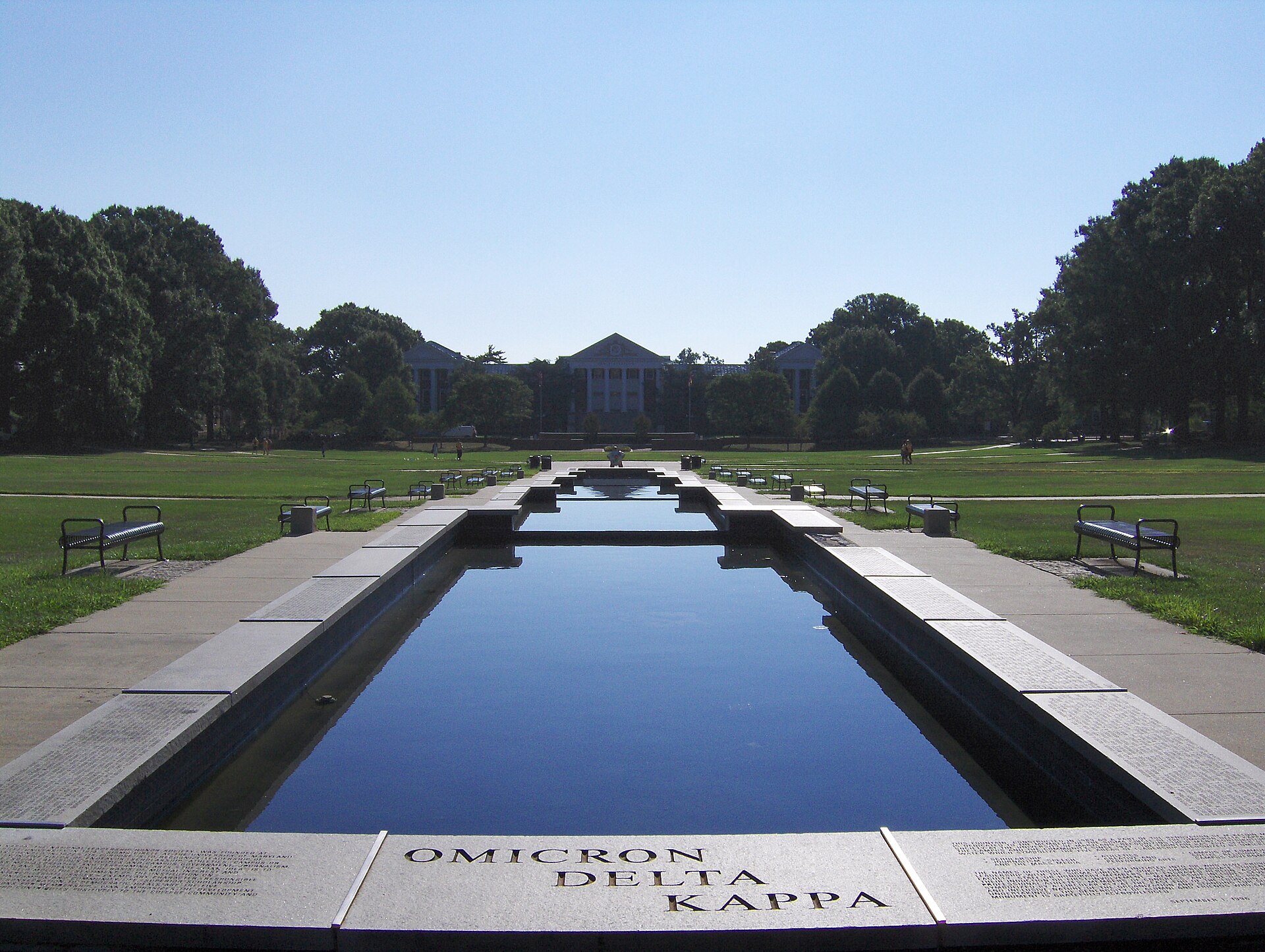
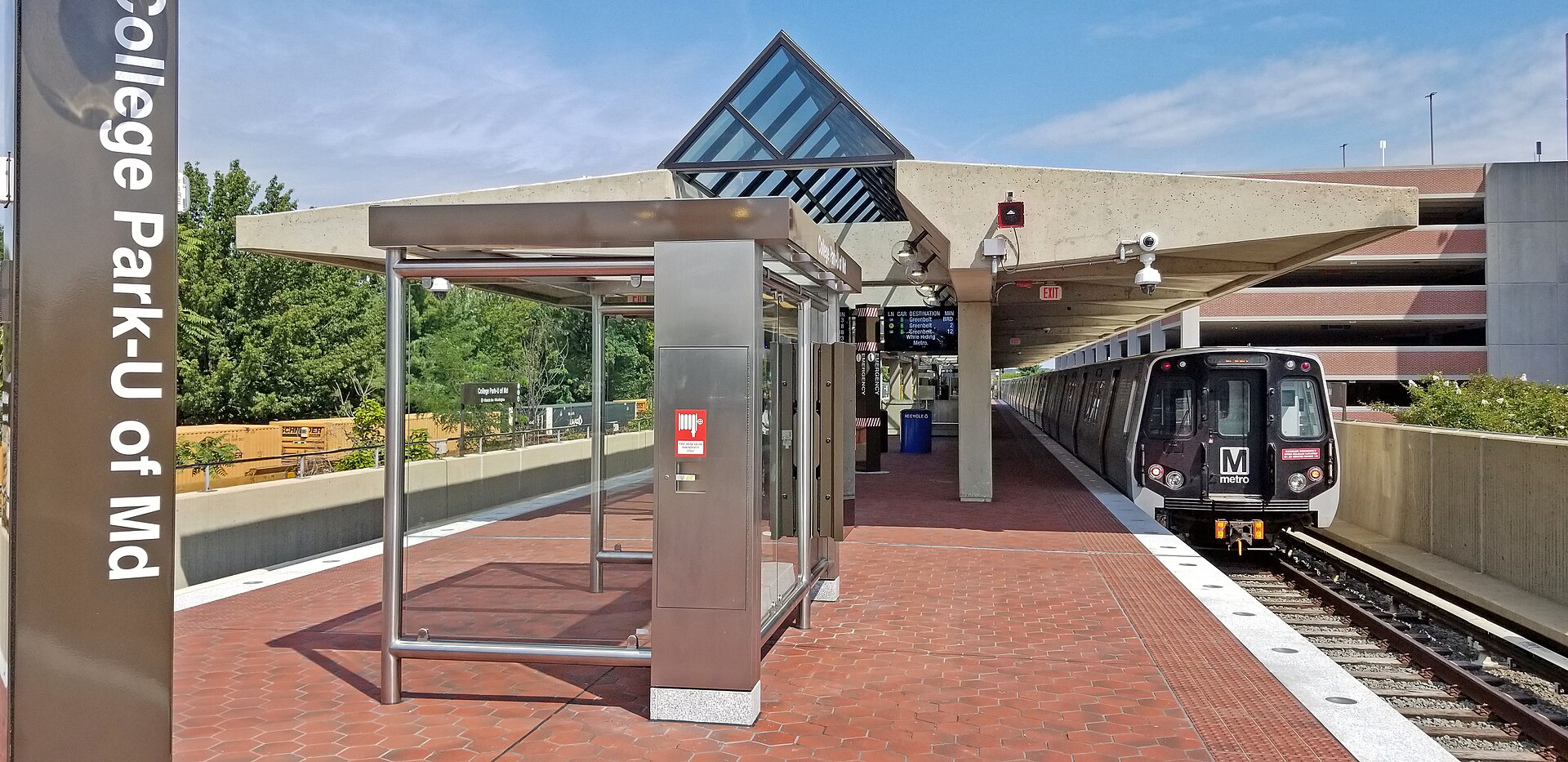
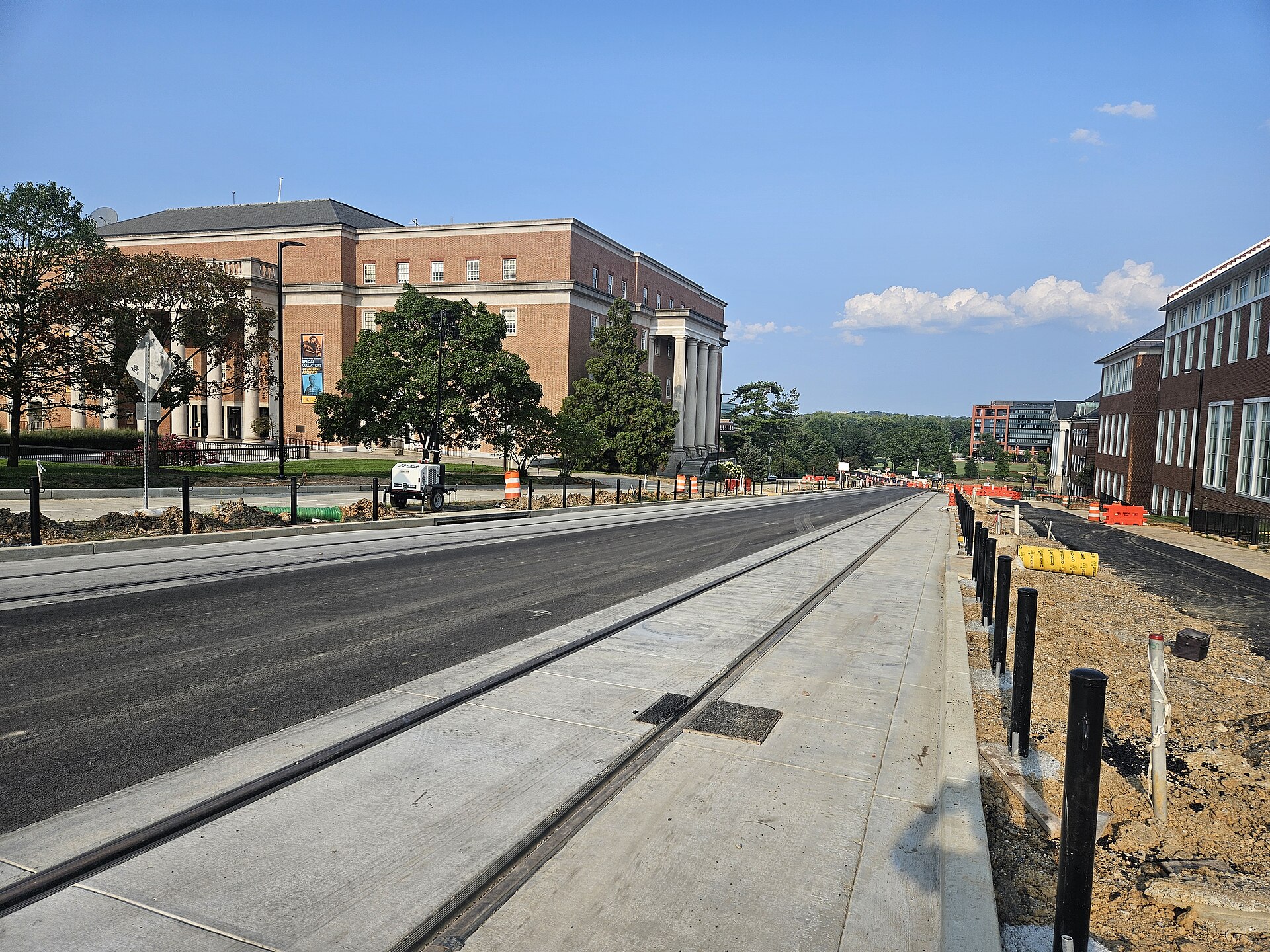
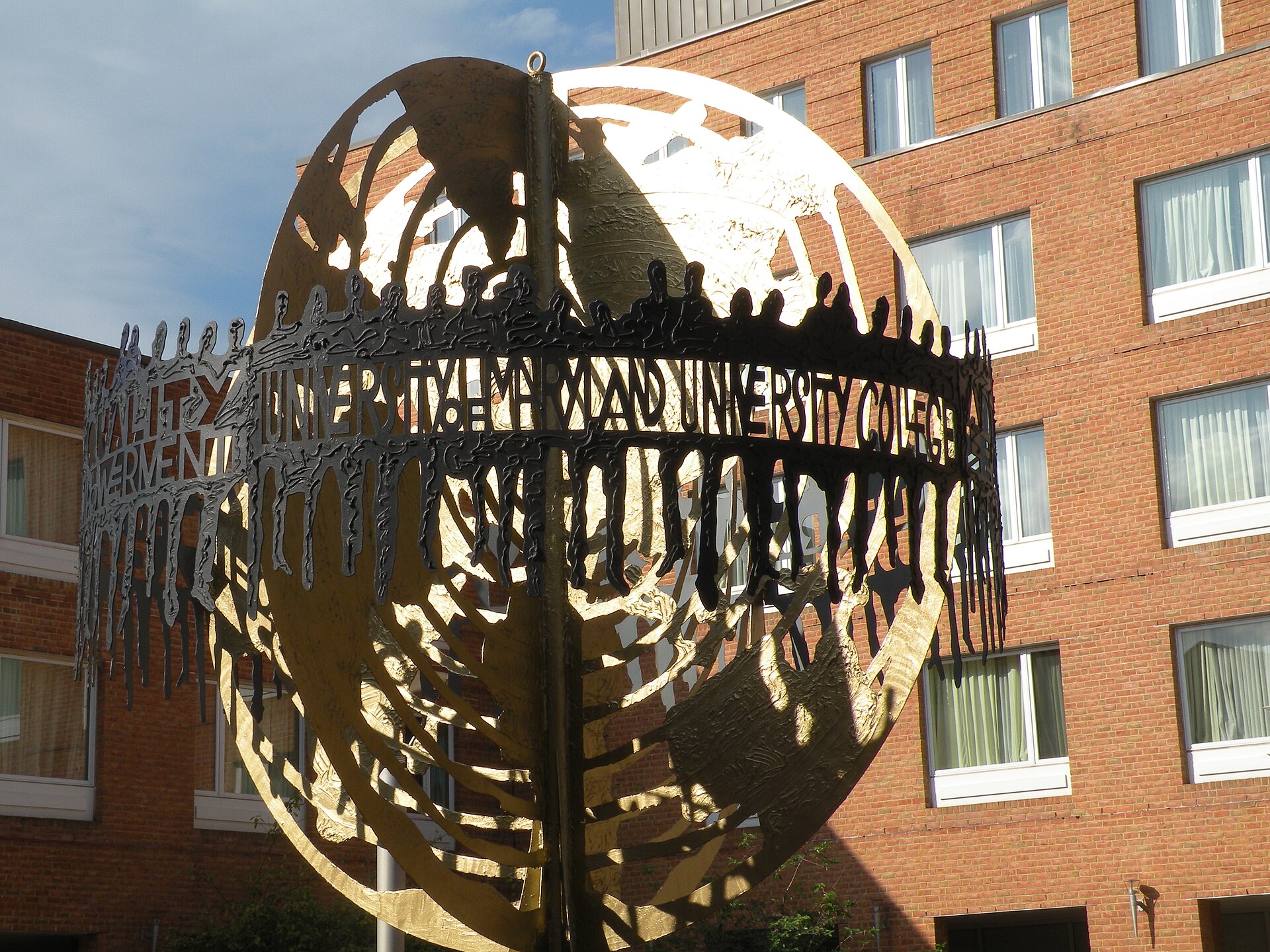
University of Maryland, College Park — campus in pictures
Real, freely-licensed photographs of the campus (via Wikimedia Commons).


WHY MARYLAND
Why Choose UMD — Research, Location & Big Ten Community
The University of Maryland is not just a large public university — it is a member of the Association of American Universities, a consortium of the 71 leading research universities in North America, and one of the few flagship publics that can genuinely claim proximity to both Silicon Valley-level innovation and the organs of the federal government.
SELECTIVITY
How Selective Is Maryland?
With an acceptance rate of 44%, UMD is moderately selective — more competitive than most regional universities but accessible to strong students who present themselves compellingly. For international students, the standards are comparable to domestic applicants, though the smaller international cohort means competition within that pool can be intense for the most popular programmes.
Programme-specific selectivity varies significantly: Computer Science, Engineering, and Business are substantially more competitive than the university-wide average. Apply to your intended major with a realistic sense of that programme's own profile.
AT A GLANCE
University of Maryland — Quick Facts
Founded in 1856 as the Maryland Agricultural College, the University of Maryland has grown into the state's flagship research institution and a member of both the Big Ten Conference and the Association of American Universities. The suburban College Park campus spans more than 1,200 acres and includes major research facilities, a performing arts centre, and one of the largest university libraries on the East Coast.
WHAT YOU'LL SUBMIT
The UMD Application — What You Need
UMD accepts applications through the Common App and its own ApplyWeb platform. The review is holistic, considering more than 23 factors. Here is what you will need to submit.
HOLISTIC REVIEW
What Maryland Looks For
UMD's Office of Undergraduate Admissions evaluates each application holistically across more than 23 factors. For international students, understanding the balance between academic credentials, which are the core, and the qualitative dimensions that distinguish the admitted class is key.
Academic strength — particularly grade trajectory, course rigour, and performance in STEM subjects for technical majors — carries the most weight. Maryland looks for students who have taken the most challenging curriculum available to them, whether that is an IB Diploma, A-Levels, AP courses, or the national curriculum of their home country.
APPLICATION TIMELINE
Application Deadlines
UMD offers Early Action (non-binding) and Regular Decision for fall enrollment. International students follow the same deadlines as domestic applicants for fall entry. The November 1 EA deadline is strongly recommended — it provides an earlier decision and positions you well for merit scholarship consideration.
All merit scholarships require submission by November 1 — there is no separate scholarship application. The Banneker/Key Scholarship, President's Scholarship, and other awards are automatically considered for students who apply by the EA deadline.
| Round | Deadline | Decision | Binding |
|---|---|---|---|
| Early Action (Fall) | November 1 | By February 1 | No (non-binding) |
| Regular Decision (Fall) | January 20 | By April 1 | No |
| Enrollment Confirmation | May 1 | — | Yes |
| Spring Entry (International Freshmen) | August 1 (prior year) | By late October | No |
CAMPUS & CITY
Life at Maryland
The University of Maryland's 1,200-acre campus in College Park is a vibrant, self-contained community that sits on the doorstep of the nation's capital. International students arrive to find a campus with everything they need — and a Metro ride to everything else.
On campus, more than 800 student organisations span academic clubs, cultural organisations, Greek life, media outlets, community service groups, and advocacy initiatives. The Student Government Association, a robust journalism school with a working TV and radio station, and one of the most active debate communities on the East Coast all contribute to a culture where students are genuinely engaged.
AFTER GRADUATION
Career Outcomes
UMD's location is its greatest career asset. Federal agencies, defence contractors, tech companies, financial firms, international organisations, and policy institutes recruit directly from campus. The Robert H. Smith School of Business, A. James Clark School of Engineering, and the iSchool all run dedicated career centres with strong employer networks.
Computer science and engineering graduates routinely enter software engineering, cybersecurity, and data science roles at firms including Google, Amazon, Lockheed Martin, Booz Allen Hamilton, Leidos, and the major consulting firms. Finance and business graduates often enter financial services, consulting, or federal financial agencies. The proximity to the NIH and FDA creates a unique pipeline for pre-med, public health, and biomedical engineering students.
FREQUENTLY ASKED QUESTIONS
UMD Admissions — International Student FAQs
Is UMD test-optional for international students?+
Yes. UMD is test-optional through the Fall 2027 cycle, and this applies equally to international applicants. However, if your SAT or ACT scores fall in the middle-50% range (1370–1520 SAT, 31–34 ACT), submitting them is likely to strengthen your application. Strong test scores can help demonstrate English proficiency indirectly but do not replace the formal English-test requirement.
Do international students still need to submit English proficiency scores even if they attended an English-medium school?+
UMD requires English proficiency scores from applicants whose native language is not English, regardless of the language of instruction at their school. Exceptions may apply to applicants from certain English-speaking countries — verify on the international admissions page, as the exact exemption criteria can change.
Which programmes are most competitive at UMD?+
Computer Science, Electrical and Computer Engineering, Mechanical Engineering, Aerospace Engineering, and Business Analytics are the most competitive majors. If you are targeting these, aim for the upper end of the SAT/ACT range, a strong IB score well above 36, and a compelling narrative around your interest in the field.
Can international students receive merit scholarships?+
Yes. The President's Scholarship (up to $20,000 per year) is open to international students. The Banneker/Key Scholarship, UMD's most prestigious award, is limited to US citizens and eligible non-citizens. You must apply by November 1 — no separate scholarship application is required.
Is need-based financial aid available to international students?+
UMD offers very limited need-based aid to international students. Most federal, state, and institutional grants require US citizenship or eligible immigration status. International students should plan to cover costs through family resources, the President's Scholarship (merit-based), home-country scholarships, or private loans with a US co-signer.
Does UMD require a supplemental essay?+
For most programmes, UMD requires only the standard Common App personal essay (up to 650 words, one of seven prompts). There is no additional supplemental essay for general undergraduate admission. The School of Music requires a supplemental application and audition.
What is the Honors College and how does it affect admissions?+
The Honors College at UMD is a selective academic community offering smaller seminars, dedicated advising, and prestigious scholarship access including the Banneker/Key. Admission to Honors College is competitive and requires separate consideration. International students can apply and are eligible for most Honors programmes.
Is College Park a safe and accessible city for international students?+
College Park is a university town with a large student population. The campus is well-served by the Washington Metro (Green Line), making DC easily accessible. The OISS office provides orientation, visa advising, and support services specifically for international students.
ACADEMIC EXPECTATIONS
What Does It Take Academically to Succeed at Maryland?
The University of Maryland is a research-intensive AAU institution where academic rigour is a baseline expectation, not an aspiration. For international students, understanding what UMD's admissions team looks for — and what academic profile gives you the best chance — is the first step to building a competitive application.
UMD's admissions review is holistic, but academic preparation carries the greatest weight. The admissions office evaluates the difficulty of your curriculum, your performance relative to what was available to you, and your trajectory over time. International students who have completed the IB Diploma, A-Levels, or the most advanced track of their national curriculum are well-positioned — provided the grades match the ambition.
ACADEMIC BENCHMARKS
Admitted Student Academic Profile
These ranges are drawn from the facts file and represent the middle 50% of admitted students. Applicants outside these ranges are still considered, but those in the upper portion have a significantly stronger statistical profile.
TEST POLICY
Test-Optional Policy
UMD has adopted a test-optional policy through the Fall 2027 application cycle. This means submitting SAT or ACT scores is your choice, and not submitting them will not disadvantage your application.
Strategic advice for international students: if your scores fall within or above the middle-50% range (1370–1520 SAT, 31–34 ACT), submit them — they reinforce your academic profile. If your scores are below the 25th percentile, omitting them and letting your grades, IB results, and essay do the work is a reasonable strategy. Scores will not be used to screen applications when withheld, but they can add a positive data point when strong.
Test-optional does NOT mean English-test-optional. Separate IELTS, TOEFL, or Duolingo scores are still required for applicants whose native language is not English.
SAT & ACT
Standardised Test Guidance
For international students who choose to submit test scores, here is how UMD uses them and what competitive-range scores look like.
INTERNATIONAL QUALIFICATIONS
IB Diploma, A-Levels & Other International Credentials
UMD is experienced at evaluating international qualifications and has clear credit-granting policies for IB and A-Level students. Understanding these policies helps you plan which courses to prioritise.
SUBJECT PREPARATION
Academic Preparation by Major
While UMD reviews your overall academic record, specific subject preparation matters — especially for undergraduate programmes with limited seats.
ENGLISH PROFICIENCY
English Language Requirements
All applicants whose native language is not English must submit official English proficiency scores, regardless of the language of instruction at their secondary school. UMD accepts three testing options.
Scores must be sent directly from the testing agency to UMD. The university code for TOEFL is 5814. Exceptions to the English proficiency requirement may be granted for citizens of certain primarily English-speaking countries — confirm with the Office of International Students and Scholars.
| Test | Minimum | Notes |
|---|---|---|
| IELTS (Academic) | 7.0 | No individual band score minimums published — overall 7.0 required |
| TOEFL iBT | 96 | Internet-based test; must be from an approved testing centre |
| Duolingo English Test | 120 | Accepted; check official page for the most current threshold |
FOUR-YEAR ROADMAP
Building Your Academic Profile — Year by Year
Getting into UMD as an international student is a multi-year process. Here is a practical ladder.
COMMON PITFALLS
Academic Mistakes International Students Make
- Applying to CS or Engineering without a strong mathematics background and expecting holistic factors to compensate
- Submitting weak standardised test scores under test-optional rather than simply not submitting them
- Assuming that attending an English-medium school exempts you from the IELTS/TOEFL requirement
- Waiting until Grade 12 to begin building extracurricular depth — a last-minute activity list is transparent to admissions officers
- Applying only Regular Decision and missing the November 1 merit scholarship window
- Listing intended major as Computer Science without any computational coursework, projects, or experiences to back it up
- Under-explaining your national curriculum to admissions readers — include a context note or ask your counsellor to clarify grading scales
COST & FINANCIAL AID
Understanding the Cost of Attending Maryland for International Students
As a public flagship, UMD is meaningfully more affordable than private research universities of comparable stature — but international students pay out-of-state tuition and have limited access to institutional need-based aid. Honest planning is essential.
International students should budget carefully. While UMD's tuition is lower than private peers, federal and state grant programmes are unavailable to non-US-resident students. Merit scholarships are the primary pathway to reducing costs, making the November 1 EA deadline strategically important.
ANNUAL COSTS
Cost of Attendance — Annual Estimates
All figures below are for international undergraduate students and are drawn from the university's published figures. These are annual estimates; actual costs may vary by programme, housing choice, and personal spending.
These figures are estimates based on the current published cost of attendance. Actual tuition and fees are set annually by the Board of Regents and may increase each year. Budget for a 3–5% annual increase over four years.
| Component | Annual Amount | Notes |
|---|---|---|
| Tuition & Mandatory Fees | $40,300 | Out-of-state/international rate |
| Cost of Living (Housing + Food + Personal) | $18,000 | Estimate; on-campus varies |
| Total Cost of Attendance | $62,000 | University-published estimate |
| Application Fee | $75 | One-time; non-refundable; waivers may be available |
FINANCIAL AID POLICY
Financial Aid for International Students
UMD's financial aid picture for international students is limited but not zero. Understanding the landscape clearly helps you plan without surprises.
Federal grants (Pell, SEOG), state grants, and most institutional grants require US citizenship or eligible immigration status. As a result, the majority of international undergraduate students are ineligible for need-based aid from the university's central financial aid office. The primary pathways to reducing cost are merit scholarships (awarded automatically to strong applicants who apply by November 1) and home-country government scholarships.
MERIT AWARDS
Named Scholarships at UMD
UMD's merit scholarships are automatically considered for applicants who submit a complete application by November 1. No separate scholarship application is required.
NET PRICE REALITY
What International Students Actually Pay
Without need-based aid, most international students face the full sticker cost of roughly $62,000 per year. Here is a realistic picture of what that means and how to think about it.
Compared to private research universities of similar standing — where international tuition can exceed $80,000 per year — UMD represents meaningful savings, particularly for students who earn merit scholarships. A President's Scholarship at the top end ($20,000/year) brings the net annual cost to approximately $42,000, which remains competitive with many private US university offers before aid.
Four-year total cost planning matters. Budget for annual tuition increases (typically 3–5%), and note that while on-campus housing costs are included in the cost-of-attendance estimate, off-campus living in the DC metro area can be significantly more expensive than the published figure suggests.
ACTION PLAN
How to Maximise Funding as an International Student
COST FAQs
Cost & Aid — Frequently Asked Questions
Does UMD meet 100% of demonstrated financial need for international students?+
No. UMD does not have a meet-100%-of-need policy for international students. Federal and most institutional need-based grants require US citizenship or eligible immigration status. Merit scholarships are the primary aid pathway for international applicants.
When and how are merit scholarships announced?+
Merit scholarship decisions are typically announced alongside or shortly after admission decisions — by February 1 for EA applicants and by April 1 for RD applicants. No separate scholarship application is required; all students who apply by November 1 are automatically considered.
Is the cost of attendance lower if I live off campus?+
Possibly, but not significantly in the DC metro area. College Park and the surrounding area have higher-than-average rental costs. On-campus housing for freshmen is guaranteed and often competitively priced compared to off-campus options near the Metro.
Can international students work in the US to cover costs?+
F-1 visa holders may work on campus up to 20 hours per week during the academic year. Off-campus work requires CPT or OPT authorization. On-campus jobs range from $15–$20/hour and can provide meaningful supplemental income.
Are there scholarship opportunities during the programme, not just at entry?+
Yes. Once enrolled, students can apply for departmental awards, research stipends, and competitive scholarships administered by individual colleges. The Honors College has its own funding streams. The Office of International Students and Scholars maintains a list of scholarships available to currently enrolled international students.
ESSAYS & APPLICATION
The UMD Application Essay Strategy for International Students
The University of Maryland applies through the Common App or ApplyWeb. Unlike many similarly-ranked US universities, UMD does not require a supplemental essay for most programmes — making the Common App personal statement your only major written submission. This single essay carries significant weight: use it wisely.
For international students, the essay is a rare opportunity to give admissions readers something they cannot see in your transcript: your voice, your values, your intellectual character, and your ability to write in English with nuance and clarity. Given that UMD reviews more than 23 factors holistically, a memorable personal essay can be the difference between a strong file that tips positive and one that gets deferred.
APPLICATION SYSTEM
How UMD's Application Works
UMD accepts the Common App and its own ApplyWeb platform. Most international students use the Common App for convenience and familiarity.
THE PROMPTS
Common App Essay Prompts
Choose ONE of the seven prompts below. All are equally valid — the best prompt is the one that allows you to write the most honest, specific, and compelling essay about yourself.
ESSAY STRATEGY
Writing Your Common App Essay for UMD
The Common App personal essay is shared across all your US applications — but the way you approach it should serve every school on your list, including UMD.
UMD is a research university with a strong identity in STEM, government, and public policy — but its essay prompts are open-ended and not major-specific. Write an essay that reveals who you are as a thinker and person, not merely what you plan to study. Admissions officers at UMD read thousands of essays from well-qualified students; the ones that stand out are honest, specific, and surprising.
ADDITIONAL COMPONENTS
Beyond the Essay — Supporting Your Application
While UMD has no supplemental essay for most applicants, there are additional elements of the Common App that smart applicants use strategically.
CHOOSING YOUR TOPIC
How International Students Should Choose Their Essay Topic
The most common mistake international applicants make is choosing a topic that seems impressive rather than one that is genuinely theirs.
PITFALLS TO AVOID
Essay Mistakes That Hurt International Applicants
- Writing an essay that summarises your resume instead of revealing your character
- Using overly formal or translated-sounding English — have native speakers check grammar without removing your voice
- Choosing a topic so culturally specific that you spend more words explaining context than telling your story
- Writing about famous people (a parent, a celebrity, a historical figure) rather than yourself
- Ending with a generic 'UMD is the perfect fit because...' line — if you use the additional information section, use it purposefully
- Ignoring the word limit — 650 words is a maximum, not a target; a sharp 500-word essay is better than a padded 650-word one
- Submitting your essay without multiple rounds of revision — strong essays go through at least 5–7 drafts
- Writing about COVID-19 unless it genuinely and uniquely shaped your story in a way that cannot be told otherwise
ESSAY FAQs
Essay & Application — Frequently Asked Questions
Does UMD read essays carefully, or are they mainly grade-driven?+
UMD's holistic review considers more than 23 factors. The personal essay is explicitly listed as a component. While academic record carries the most weight for a large public university, strong essays demonstrably improve outcomes in borderline cases — and for merit scholarship consideration, the writing matters more.
Should I write a UMD-specific essay even though there is no supplement?+
Not in the essay itself. Your Common App personal essay should be about you, not about UMD. However, the 'Why [University]' question is sometimes asked in Honors College or scholarship applications — if that is the case for you, write a UMD-specific, research-specific response for that component.
Can I reuse an essay I wrote for another university?+
Yes — the Common App personal essay is a single essay sent to all your schools. If you are submitting the same essay to multiple institutions, make sure it does not name or reference a different university. Write it to be universally resonant.
How important is English writing quality for international students?+
Very important. The personal essay is often the primary evidence admissions readers have of your English writing ability at a level beyond standardised test scores. Clear, accurate, and engaging prose signals readiness for university-level coursework in English. Have your essay reviewed by a fluent English speaker for grammar without losing your natural voice.
What if I do not have access to a writing counsellor or editor?+
Many free resources exist: the College Essay Guy website offers open guidance, Khan Academy has college application support, and many public library systems provide application essay workshops. UMD's admissions blog also publishes guidance for prospective students.
Is the essay more important for scholarship consideration?+
For merit scholarships like the President's Scholarship, the full application is reviewed holistically. Strong essays absolutely matter. For the Banneker/Key Scholarship, finalists are interviewed — the essay contributes to whether you are selected as a finalist, but the interview is the final determining factor.
Courses — schools, degrees & intake
100 degrees across 12 groupings.
College of Agriculture & Natural Resources (AGNR) · 9 degrees
Agricultural & Resource Economics
Agricultural Science & Technology
Animal Science
Environmental Science & Policy
Environmental Science & Technology
Fermentation Science
Landscape Architecture
Nutrition & Food Science
Plant Science
School of Architecture, Planning & Preservation (ARCH) · 2 degrees
Architecture
Real Estate & the Built Environment
College of Arts & Humanities (ARHU) · 29 degrees
American Studies
Arabic Studies
Art History
Chinese
Cinema & Media Studies
Classics
Communication
Dance
English
French Language & Literature
German Studies
History
Immersive Media Design
Italian Studies
Japanese
Jewish Studies
Linguistics
Music Education
Music: Liberal Arts Program
Music: Professional Program
Persian Studies
Philosophy
Philosophy, Politics & Economics
Religions of the Ancient Middle East
Romance Languages
Russian Language & Literature
Spanish Language, Literatures & Culture
Theatre
Women, Gender, & Sexuality Studies
College of Behavioral & Social Sciences (BSOS) · 10 degrees
African American Studies
Anthropology
Criminology & Criminal Justice
Economics
Geographical Sciences
Government and Politics
Hearing & Speech Sciences
Neuroscience
Psychology
Sociology
Robert H. Smith School of Business (BMGT) · 8 degrees
Accounting
Finance
Information Systems
International Business
Management
Marketing
Operations Management & Business Analytics
Supply Chain Management
College of Computer, Mathematical, & Natural Sciences (CMNS) · 10 degrees
Artificial Intelligence: Computational Structures for AI Systems
Astronomy
Atmospheric & Oceanic Science
Biochemistry
Biological Sciences
Chemistry
Computer Science
Geology
Mathematics
Physics
College of Education (EDUC) · 9 degrees
Art Education
Early Childhood & Early Childhood Special Education
Elementary Education
Human Development
Secondary Education - English
Secondary Education - Mathematics
Secondary Education - Science
Secondary Education - Social Studies
Secondary Education - World Languages
A. James Clark School of Engineering (ENGR) · 12 degrees
Aerospace Engineering
Biocomputational Engineering
Bioengineering
Chemical Engineering
Civil Engineering
Computer Engineering
Cyber-Physical Systems Engineering
Electrical Engineering
Fire Protection Engineering
Materials Science & Engineering
Mechanical Engineering
Mechatronics Engineering
College of Information (INFO) · 3 degrees
Information Science
Social Data Science
Technology & Information Design
Philip Merrill College of Journalism (JOUR) · 1 degrees
Journalism
School of Public Health (SPH) · 5 degrees
Family Health
Global Health
Kinesiology
Public Health Practice
Public Health Science
School of Public Policy (SPP) · 2 degrees
Global & Foreign Policy
Public Policy
Want your real chances at University of Maryland, College Park?
Create a free TYCHR account for your personalised admit-chance, a shortlist you can track, exact entry requirements, and essay + counselling help.