University of Macau
Taipa, Macau SAR · Urban
MACAU SAR · RANKED #1 IN MACAU
University of Macau Admissions Guide for International Students
The University of Macau is Macau's flagship public research university and its highest-ranked institution, occupying a purpose-built island campus modelled on the Oxbridge residential college tradition. English-medium teaching, a unique ten-college residential system, and research strengths in microelectronics, Chinese medicine, and hospitality management make it the defining gateway to Asia's most dynamic gaming, finance, and tourism economy.
Campus
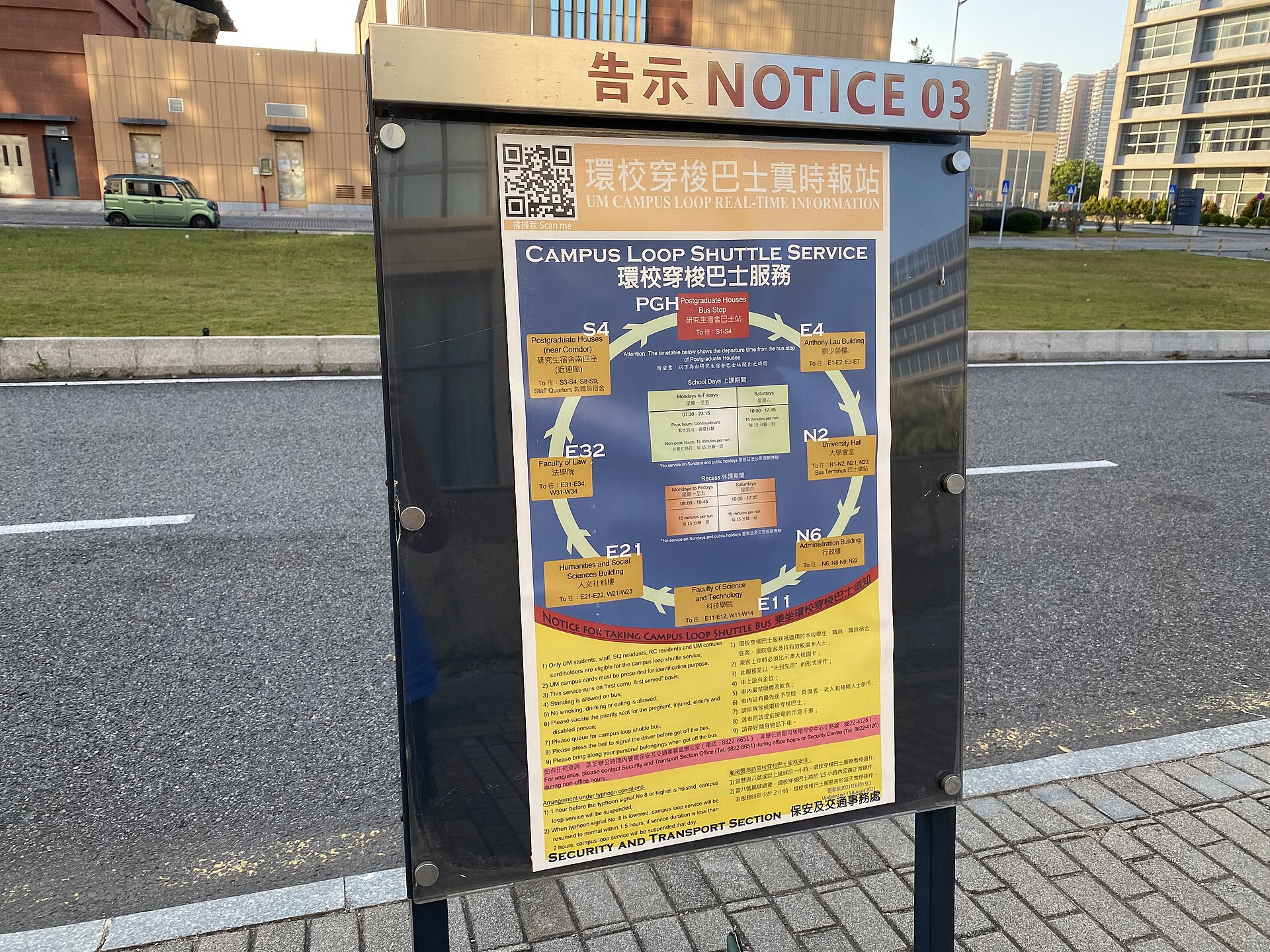
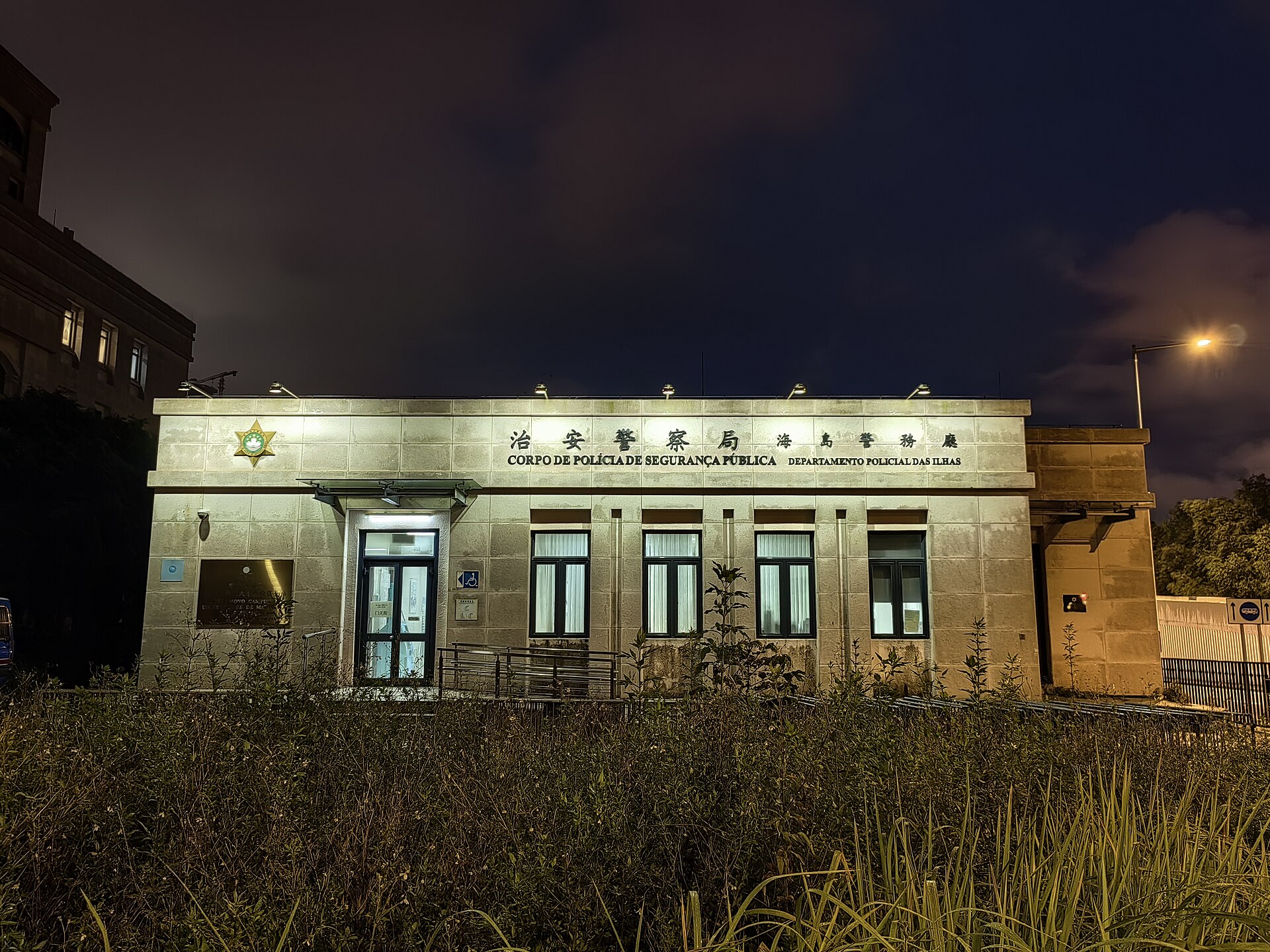
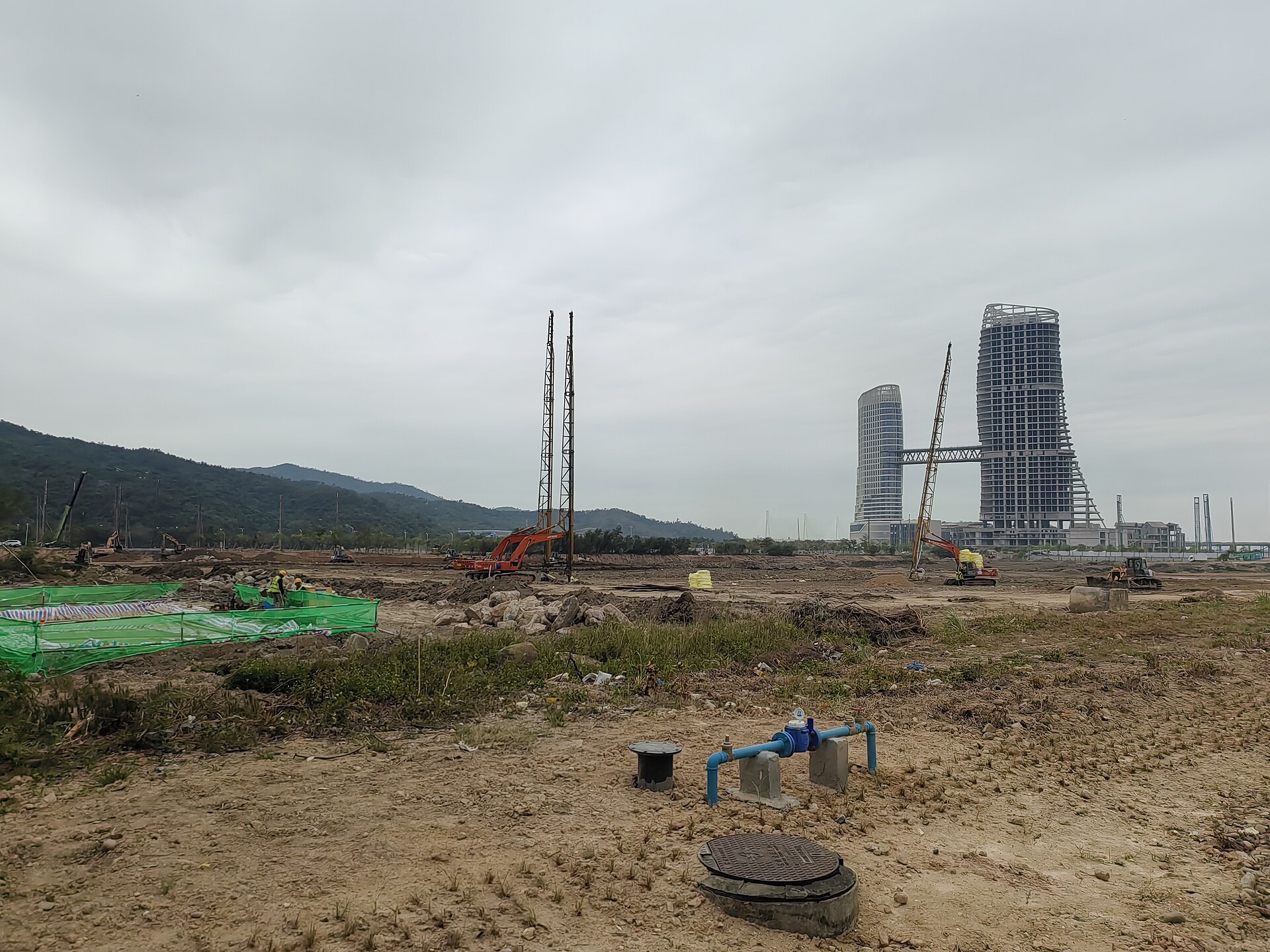
University of Macau — campus in pictures
Real, freely-licensed photographs of the campus (via Wikimedia Commons).
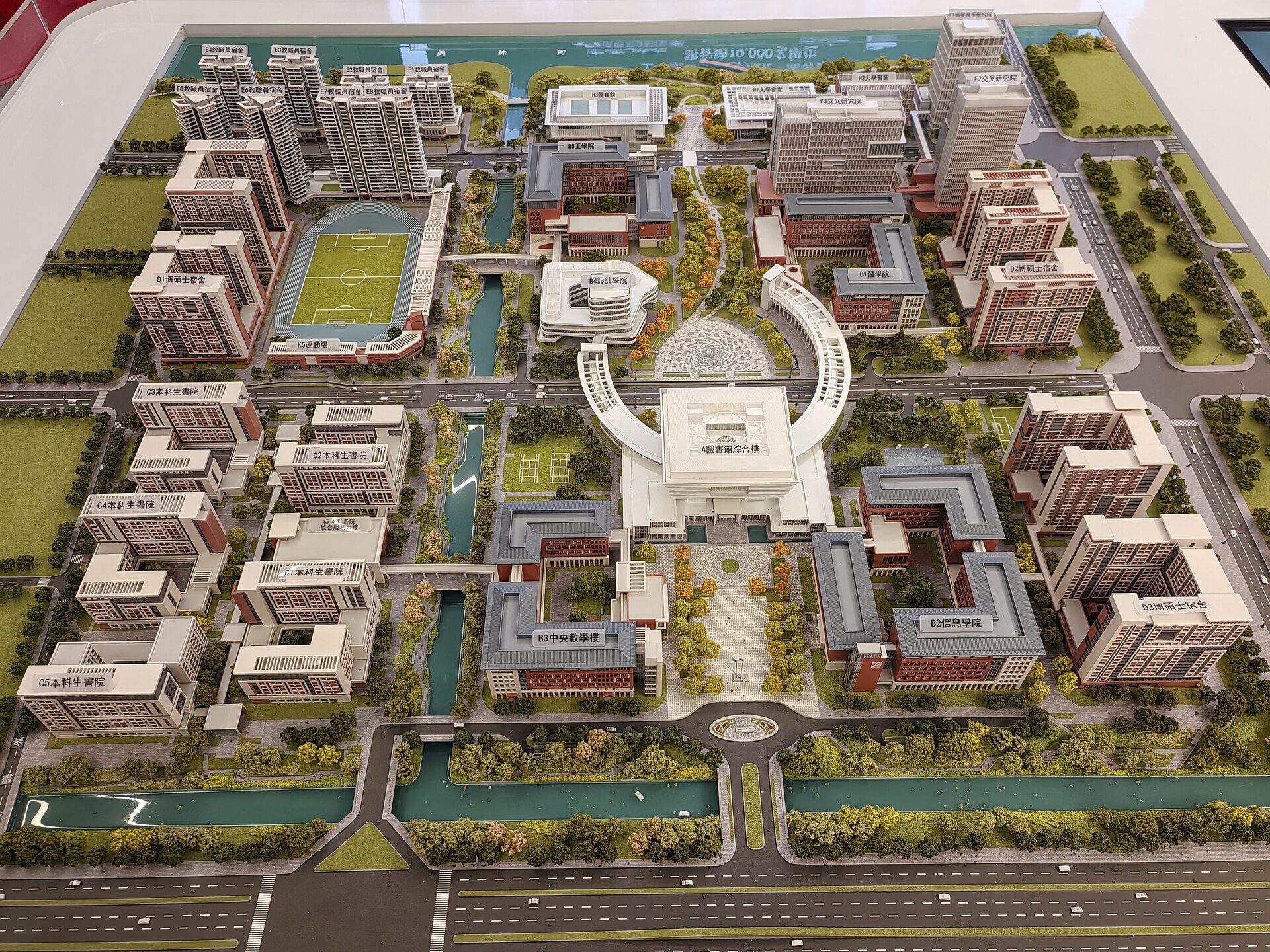
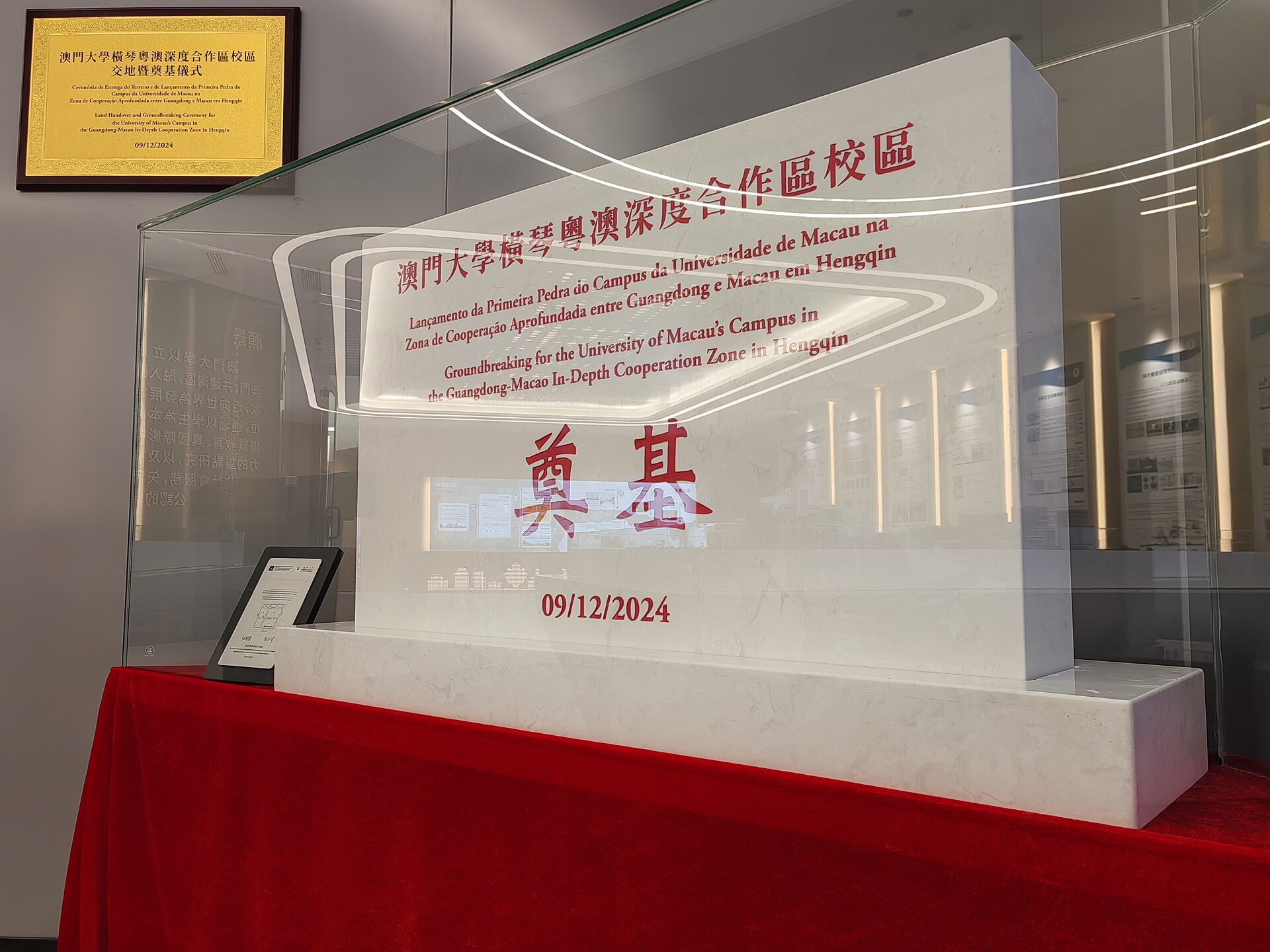
Why University of Macau — Asia's Best-Kept Admissions Opportunity
University of Macau blends the academic rigour of a top Asian research university with an extraordinary campus life model and a location that puts graduates at the crossroads of mainland China, Hong Kong, and global business. For international students seeking a QS Top 300 degree with genuine residential mentorship and strong employment outcomes, UM is one of the most strategically underrated choices in Asia.
SELECTIVITY SNAPSHOT
How Selective Is University of Macau?
UM's acceptance rate of 30% places it in the selective tier among Asian public universities — competitive but not opaque. Admission depends heavily on the strength of your qualifications (IB score, A-Level grades, national exam results) matched against programme-level quotas. The direct admission track for non-local international students gives well-prepared applicants a clear, straightforward path.
AT A GLANCE
University of Macau Quick Facts
WHAT YOU SUBMIT
The University of Macau Application
UM uses a direct online application system managed by its Registry. There is no Common App or UCAS involvement. For international students from outside mainland China, the primary pathway is the Direct Admission track, submitted via UM's own admissions portal. Your academic record is the centrepiece; competitive programmes may require a personal statement or interview.
ADMISSIONS VALUES
What University of Macau Looks For
UM evaluates international applicants primarily on academic merit. Unlike US universities, there is no holistic 'whole-person' essay-driven selection process — your qualification score relative to programme-specific intake bands is the decisive factor. That said, UM's residential college system means they are genuinely interested in students who will contribute to communal life, not just those who will excel in lecture halls.
KEY DATES
Application Deadlines 2026/2027
University of Macau runs separate application tracks by student origin. For international students from outside mainland China, Hong Kong, and Taiwan, the Direct Admission window is the primary route. Verify exact dates for the upcoming intake on UM's official admissions calendar.
Dates shown are for the 2026/2027 academic year. Always confirm on the official UM Registry website as dates can change annually.
| Track | Window | Notes |
|---|---|---|
| Direct Admission (Non-local, excl. Mainland) | 03 Feb – 09 Apr 2026 | Main route for most international students |
| Joint Admission Examination (JAE) | Registrations: 02–16 Jan 2026 | Exam-based route; available to non-local students |
| Chinese Mainland (Gaokao) | 04 May – 26 Jun 2026 | Separate track for PRC passport holders |
CAMPUS & CITY LIFE
Student Life at University of Macau
University of Macau's campus on Hengqin Island is one of the most distinctive in Asia: a purpose-built, self-contained university township of around 1.09 km² connected to central Macau by tunnel and to Zhuhai (mainland China) by bridge. The campus houses virtually all students in one of the ten residential colleges — a structure that creates a uniquely close-knit community uncommon among public research universities.
Life in Macau combines the intimacy of a small city (population ~700,000) with the cosmopolitan energy of the world's busiest gaming and entertainment hub. The historic centre is a UNESCO World Heritage Site mixing Portuguese baroque architecture with traditional Chinese streetscapes. Macau's economy means students have exposure to world-leading hospitality, gaming operations, finance, and luxury retail — all within walking distance or a short bus ride from campus.
AFTER GRADUATION
Career Outcomes
UM's 92% employment rate reflects both the strength of its programmes and the unique labour market advantage of graduating in Macau — a territory with near-zero unemployment and high demand for English-proficient, internationally educated professionals in gaming, hospitality, finance, and public administration.
Key recruiting industries include integrated resort operators (MGM, Sands, Wynn, Galaxy, Melco), financial services and banking, the Macau government's public service, healthcare (especially biomedical sciences graduates), technology companies entering the Greater Bay Area, and law firms with China-related practices. UM's Law faculty produces graduates eligible for the Macau Bar, a distinctive credential in a bilingual common-law/civil-law jurisdiction.
Salary data from the facts file. Industry recruiting patterns are qualitative based on UM programme offerings and Macau's economic structure.
FREQUENTLY ASKED QUESTIONS
University of Macau — FAQs for International Students
Do I need to speak Cantonese or Mandarin to study at UM?+
No. Most undergraduate programmes at UM are taught in English. Some programmes — particularly Education and certain Law courses — may require or strongly recommend proficiency in Chinese. Check your specific programme's language of instruction before applying.
Is Macau expensive to live in?+
Macau is more affordable than Hong Kong or Singapore but more expensive than many mainland Chinese cities. The estimated cost of living for students is around USD 8,000 per year, which covers accommodation in a residential college (MOP 16,500 per semester for double-occupancy rooms), food, local transport, and personal expenses.
Can I transfer to another university after studying at UM?+
Yes. UM has credit transfer arrangements with universities in Hong Kong, mainland China, Taiwan, and internationally. Students considering transfer or graduate study abroad should start building their academic record and faculty relationships from Year 1.
Are SAT or ACT scores required?+
No. UM has a test-optional policy and does not require SAT or ACT scores for undergraduate admission. Academic qualifications (IB, A-Levels, national exams) are the primary basis for admission.
What is the residential college requirement?+
All students are expected to live in and actively participate in one of UM's ten residential colleges. Completing residential college requirements — including activities, communal dining, and college courses — is mandatory for graduation. This is a defining feature of the UM experience, not an optional extra.
Can I apply to multiple programmes?+
Yes. The UM direct admission application allows you to indicate preferences for multiple programmes. You should research programme-specific requirements carefully, as cut-off scores and prerequisites vary significantly between faculties.
Is Macau safe for international students?+
Macau consistently ranks among the safest cities in Asia. It is a small, well-policed SAR with low crime rates. The UM Hengqin campus is a self-contained community with 24-hour security.
Can I work part-time while studying at UM?+
Non-local students may apply for permission to work part-time in Macau under specific conditions. The hospitality and retail sectors regularly employ UM students in part-time roles. Check the current regulations from the Macau Labour Affairs Bureau and UM's student services office.
ACADEMIC EXPECTATIONS
Academics at University of Macau What International Students Need to Know
UM operates on a semester system with English-medium instruction across most faculties. Academic culture combines the rigorous assessment traditions of a Chinese public university with the research-intensive practices of a globally connected institution. International students who arrive having mastered their IB or A-Level subjects will find the academic transition manageable — but also genuinely stretching.
ACADEMIC BENCHMARKS
Competitive Academic Profile
UM does not publish a formal class profile in the way US or UK universities do, but the following benchmarks from the facts file are the minimum and indicative thresholds for admission. Competitive programmes will have higher effective cut-offs.
STANDARDISED TESTS
Test Policy — Optional
UM has a test-optional policy. SAT and ACT scores are neither required nor officially considered in the admissions process. UM's admission decisions are driven by the qualifications used in your home system — IB Diploma, A-Levels, national university entrance examinations, or their equivalents.
If your school system relies on a standardised national exam (such as India's JEE/NEET, Malaysia's STPM, or similar), that exam result will typically be what UM evaluates rather than the SAT or ACT. Focus your preparation on the qualifications that count in your system.
SAT / ACT
SAT and ACT — Not Required at UM
Unlike US universities, UM does not use SAT or ACT scores as part of its selection process. There are no published SAT or ACT bands for admitted students. If you are applying to UM as your primary destination, you do not need to sit these exams for admissions purposes.
Students who have already taken the SAT or ACT for US university applications may include the scores if they believe them beneficial, but there is no mechanism at UM for them to substitute for or supplement your primary qualifications. Your IB, A-Level, or equivalent results remain the decisive academic credential.
IB / A-LEVEL / AP
IB, A-Level, and AP Recognition
UM explicitly accepts IB Diploma, A-Level, and AP qualifications for undergraduate admission. The IB minimum is 30 points overall; individual programme benchmarks are not published but programmes in Engineering, Law, Computer Science, and Medicine are known to be more competitive.
Specific programme grade requirements should be confirmed on the official UM prospectus or by contacting the Registry at +853 8822 4007.
SUBJECT PREPARATION
Subject Rigour Expected by Faculty
ENGLISH LANGUAGE
English Proficiency Requirements
Since most UM programmes are taught in English, demonstrating strong English proficiency is essential for applicants whose secondary education was not conducted in English.
| Test | Minimum | Notes |
|---|---|---|
| IELTS Academic | 6.0 overall | No individual band specified; check your programme |
| TOEFL iBT | 80 | Internet-based total score |
| Duolingo English Test | Not specified | Confirm acceptance with Registry |
| English-medium schooling | Typically exempt | Documentary evidence of English-medium instruction required |
YEAR-BY-YEAR ROADMAP
Building Your Profile for University of Macau
COMMON PITFALLS
Academic Mistakes International Students Make
- Applying too late — the Direct Admission window closes in early April, and competitive programmes fill quickly. Apply in February.
- Assuming all programmes are equally competitive — Law, Computer Science, and Biomedical Sciences at UM are significantly more selective than other faculties. Research programme-specific cut-offs.
- Underestimating the language requirement — an IELTS of 6.0 is the minimum, not the target. Programmes are taught in English; arrive with stronger skills than the minimum.
- Ignoring the residential college requirement — some students treat it as optional. It is not. Failing to meet residential college requirements can affect graduation eligibility.
- Not researching Macau's work permit rules before arrival — part-time work regulations differ from Hong Kong and mainland China. Know what is permitted before you arrive.
- Taking a 30 IB score as sufficient for all programmes — it is the university-wide floor; competitive programmes may require 34+ or strong Higher Level results in specific subjects.
- Not asking about credit transfer — if you have AP, A-Level, or IB Higher Level scores above a certain threshold, UM may grant credit exemption for some first-year courses. Ask the Registry before you start.
COSTS & FINANCIAL AID
Understanding the Cost of Studying at University of Macau
University of Macau is one of the most affordable QS Top 300 universities in Asia for international students. Annual tuition of approximately USD 15,100 — well below comparable programmes in the US, UK, Australia, or Singapore — combined with a cost of living that is manageable by regional standards makes UM a financially compelling option for internationally minded students.
ANNUAL COST ESTIMATE
Cost Breakdown for Non-Local Students
All figures below are annual estimates in USD unless noted. Tuition is the primary variable cost; living expenses vary by lifestyle.
Tuition figure converted from MOP at prevailing rates. UM reserves the right to amend fees. Always verify current fees at https://reg.um.edu.mo/admissions/general-information/fees/
| Item | Annual Usd | Notes |
|---|---|---|
| Tuition (non-local, 4-year programme) | ~USD 15,100 | Per year; total programme ~USD 60,400 |
| Residential College Accommodation | ~USD 4,100 | Approx. MOP 16,500/semester for double-occupancy |
| Cost of Living (food, transport, personal) | ~USD 8,000 | Annual estimate including meals, transport, personal |
| Total Cost of Attendance | ~USD 24,500 | Tuition + living; individual costs vary |
| Application Fee | ~USD 30 | Non-refundable, paid once at application |
FINANCIAL AID
Financial Aid for International Students
University of Macau offers financial aid and scholarship support to international (non-local) students, with approximately 30% of aid awarded on average. Most aid at UM is merit-based and tied to academic performance, either at admission or during the programme.
UM does not operate a US-style 'need-blind' admissions policy for international students. Financial need may be considered for certain bursary and hardship schemes, but the majority of support available to incoming international students is merit-based scholarship. Students are encouraged to apply for available scholarships at the time of admission and to maintain strong academic results to qualify for continuation scholarships.
avgAidPct of 30% from the facts file. Specific aid eligibility and amounts should be confirmed with the Student Affairs Office.
SCHOLARSHIPS
Scholarships at University of Macau
UM offers admission scholarships and continuation scholarships for outstanding non-local students. The following are the named schemes confirmed via the Registry; amounts and exact eligibility criteria should be verified on the official scholarship page or by contacting the Registry, as award values are not publicly listed.
Scholarship amounts are not publicly disclosed. The avgAidPct of 30% covers merit and need-based aid recipients. Do not treat this as a guarantee of a specific dollar amount.
REAL COST REALITY
Is University of Macau Affordable?
At approximately USD 24,500 per year in total cost of attendance, UM is dramatically more affordable than equivalent-ranked universities in the US, UK, or Australia. For comparison, a QS Top 300 US university typically costs USD 60,000–80,000 per year all-in for international students.
Macau's cost of living is modest by the standards of a major Asian financial city. Accommodation in UM's residential colleges is subsidised relative to open-market Macau rents. Food costs are kept reasonable by the availability of affordable Cantonese and Macanese food stalls near campus. Public transport is free for Macau residents and inexpensive for students. The main non-tuition expenses to budget for are health insurance, textbooks, and occasional travel.
UM does not have a published no-loan guarantee or endowment-driven aid programme comparable to US Ivy League schools. Cost figures are from the facts file and the fees page.
HOW TO FUND YOUR DEGREE
Steps to Secure Funding at UM
COST FAQS
Frequently Asked Questions — Cost & Aid
How much does it cost to attend University of Macau as an international student?+
The total estimated annual cost is approximately USD 24,500, covering tuition (~USD 15,100), residential college accommodation (~USD 4,100), and living expenses (~USD 8,000). These are estimates; verify current fees at reg.um.edu.mo.
Is financial aid available to international students?+
Yes. UM awards merit scholarships to outstanding international students at admission and through continuation awards. Approximately 30% of aid is awarded on average across the student body. Contact the Registry for details on what is currently available to non-local applicants.
Do I pay more tuition than local Macao students?+
Yes. Non-local students pay higher tuition fees than local Macao students. The non-local tuition for a four-year programme is approximately MOP 490,400 (around USD 60,000 total), paid in semester instalments.
Are there scholarships that cover full tuition?+
UM does not publicly confirm the existence of full-tuition international scholarships. Most merit scholarships are partial. Confirm current award levels with the Registry or Student Affairs Office.
Is accommodation included in tuition?+
No. Accommodation in a residential college is charged separately at approximately MOP 16,500 per semester (double occupancy). Living in a residential college is mandatory for most undergraduate students.
Can I apply for government scholarships from Macau?+
Some Macau government and Macao Foundation scholarship schemes are available to non-local students studying in Macau. Ask the Student Affairs Office about which external schemes you are eligible to apply for as a non-local student.
APPLICATION ESSAYS & STATEMENTS
The University of Macau Application — Personal Statement & How to Apply
University of Macau uses a direct application system — not Common App, UCAS, or any centralised platform. For most international applicants, admission is primarily qualification-based. However, competitive programmes and certain scholarship tracks may require a personal statement or motivation letter. This tab guides you through UM's application process and how to write a compelling statement if required.
APPLICATION SYSTEM
How the UM Application Works
UM operates its own online admissions portal managed by the Registry. International students from outside mainland China, Hong Kong, and Taiwan apply via the Direct Admission track. The application asks for your academic qualifications, language test scores, programme choices, and — depending on your faculty — may include a personal statement or motivation letter.
Unlike US universities, UM does not require multiple supplemental essays, short answers, or a 'why us' statement for every applicant. The application is streamlined and document-led. Where a personal statement is required, it typically asks you to explain your academic interests, career goals, and reasons for choosing the specific programme at UM. Verify the exact requirements for your programme on the official portal before applying.
PERSONAL STATEMENT
What to Write — UM Personal Statement
Where a personal statement or motivation letter is required at UM, it is typically a focused document (500–800 words) addressing three core questions. The following reflects what UM and similar Hong Kong / Macau SAR direct-application universities typically ask — but you must confirm the exact prompt for your programme on the official admissions portal, as requirements vary by faculty and cycle.
UM does not publish standardised personal statement prompts in the way US universities do. The themes above reflect the typical structure of direct-application personal statements at Hong Kong and Macau SAR universities. Always verify the current cycle's exact requirements at reg.um.edu.mo before writing.
WRITING STRATEGY
Writing Your UM Personal Statement
A UM personal statement is substantially different from a US Common App personal essay. It is not primarily a coming-of-age narrative or a showcase of your most challenging personal experience. It is an academic and professional motivation document — closer to a UK UCAS statement or a graduate school statement of purpose than to an American college essay.
The most effective UM statements are structured, specific, and forward-looking. A strong template: (1) open with a specific intellectual or professional moment that defines your interest in the field; (2) describe two or three academic or extracurricular experiences that built your preparation; (3) articulate what you will study at UM, why UM specifically (programmes, location, research, residential colleges), and where you intend to take that education professionally. Keep language precise and avoid overstatement.
Aim for 500–800 words unless the portal specifies otherwise. Have a teacher or counsellor review for clarity and grammar — English is the medium of instruction at UM, and how you write is as revealing as what you write.
DOCUMENT STRATEGY
Supporting Your Application
In a document-led application like UM's, every element of your submission communicates something. Think strategically about each component.
TOPIC & APPROACH
Choosing What to Write About
The most common mistake in UM personal statements is writing a broad, generic statement that could have been submitted to any university. UM's specific characteristics — its location in Macau, its residential college model, its research strengths in microelectronics and Chinese medicine, its hospitality and gaming management programmes — are differentiators you can speak to directly.
ESSAY PITFALLS
Common Personal Statement Mistakes — UM
- Writing a US-style personal narrative (coming-of-age story) for what UM wants as a programme motivation statement — these are different documents.
- Being vague about why UM specifically — saying 'UM has a great reputation' without naming anything specific about the university, its programmes, or its location.
- Ignoring the residential college system entirely — it is a core feature of UM life, and not mentioning it in a 'why UM' statement looks like you have not researched the university.
- Starting the statement with 'Since I was young, I have always been interested in...' — this is the most overused opening in personal statements globally. Start with something specific and concrete.
- Exceeding the word limit or submitting a statement below 400 words — both suggest poor judgement. Match the length to what the portal specifies.
- Submitting in a language other than English without checking the requirement — UM's instruction medium is English; your statement should be in English unless specifically instructed otherwise.
- Not having a native or near-native English speaker proofread — grammatical errors in an English-medium university's admissions statement create a poor impression regardless of the content.
ESSAY FAQS
Frequently Asked Questions — Application & Statement
Does University of Macau require a personal statement?+
It depends on your programme. Some competitive programmes at UM request a personal statement or motivation letter as part of the Direct Admission application; others are document-only. Check the requirements for your specific programme on the official admissions portal.
How long should my personal statement be?+
Where required, UM personal statements are typically 500–800 words. Follow any specific guidance given in the application portal. If no word limit is stated, aim for 600 words — long enough to be substantive, short enough to stay focused.
Does UM use Common App or UCAS?+
No. UM has its own direct online application system managed by the Registry. You apply at reg.um.edu.mo, not through Common App, UCAS, or any third-party platform.
Can I apply to UM at the same time as UK or US universities?+
Yes. UM's Direct Admission window (February–April) overlaps with UK offer periods and US RD decision timelines. There is no exclusivity requirement. Submit your UM application and accept or decline offers once you have your full set of results.
Is an interview required?+
Some programmes — particularly in the Faculty of Education — schedule interviews as part of the selection process. Check the requirements for your specific programme. Where an interview is required, it typically assesses English communication ability and motivation.
Do I write a 'why Macau' or 'why UM' statement?+
Where a personal statement is required, integrating your reasoning for choosing UM and Macau specifically strengthens your application — it signals research and genuine commitment. However, this is typically woven into a broader programme motivation statement, not a standalone 'why UM' essay in the US supplemental style.
My first language is not English — will this hurt my application?+
Not if your proficiency meets or exceeds the stated minimum (IELTS 6.0 / TOEFL 80). Many UM students and faculty are non-native English speakers. What matters is demonstrating clear written English in your personal statement and meeting the language test requirement. Have your statement reviewed by a fluent English speaker before submitting.
Courses — schools, degrees & intake
36 degrees across 9 groupings.
Faculty of Arts and Humanities · 5 degrees
Bachelor of Arts in Chinese Language and Literature
Bachelor of Arts in English Studies
Bachelor of Arts in History
Bachelor of Arts in Japanese Studies
Bachelor of Arts in Portuguese Studies
Faculty of Business Administration · 5 degrees
Bachelor of Business Administration
Bachelor of Science in Accounting
Bachelor of Science in Business Intelligence and Data Analytics
Bachelor of Science in Finance
Bachelor of Science in International Integrated Resort Management
Faculty of Education · 6 degrees
Bachelor of Education in Chinese
Bachelor of Education in English
Bachelor of Education in Integrated Science
Bachelor of Education in Mathematics
Bachelor of Education in Pre-Primary Education
Bachelor of Education in Primary Education
Faculty of Engineering · 3 degrees
Bachelor of Science in Civil Engineering
Bachelor of Science in Electrical and Computer Engineering
Bachelor of Science in Electromechanical Engineering
Faculty of Information Science and Computing · 1 degrees
Bachelor of Science in Computer Science
Faculty of Law · 5 degrees
Bachelor of Law in Chinese Law and Global Legal Studies
Bachelor of Law in Chinese Language (Daytime)
Bachelor of Law in Chinese Language (Evening)
Bachelor of Law (Conducted in Chinese and Portuguese)
Bachelor of Law in Portuguese Language (Evening)
Faculty of Medicine · 2 degrees
Bachelor of Science in Biomedical Sciences
Bachelor of Science in Pharmaceutical Sciences and Technology
Faculty of Science · 4 degrees
Bachelor of Science in Applied Physics and Chemistry
Bachelor of Science in Bioinformatics
Bachelor of Science in Mathematics (Mathematics and Applications)
Bachelor of Science in Mathematics (Statistics and Data Science)
Faculty of Social Sciences · 5 degrees
Bachelor of Social Sciences in Communication
Bachelor of Social Sciences in Economics
Bachelor of Social Sciences in Government and Public Administration
Bachelor of Social Sciences in Psychology
Bachelor of Social Sciences in Sociology
Want your real chances at University of Macau?
Create a free TYCHR account for your personalised admit-chance, a shortlist you can track, exact entry requirements, and essay + counselling help.