University of Leicester
Leicester, United Kingdom · Urban
UK ADMISSIONS GUIDE
University of Leicester — Where Science Changed the World
Founded in 1921 as a living memorial to the fallen of World War I, the University of Leicester has grown into one of the UK's most distinctive research universities. It is the birthplace of genetic fingerprinting, the institution that identified the remains of King Richard III, and home to Europe's largest academic space research centre. For international students seeking a rigorous UK education in a genuinely welcoming, multicultural city, Leicester is a compelling and often underrated choice.
Ranked in the UK's top 35 universities, Leicester is particularly strong in genetics, space science, medicine, law, and criminology — fields where it has made globally recognised contributions. With 25% international students, a compact and well-connected campus, and a city that is one of the UK's most ethnically diverse, Leicester offers a distinctive environment for students from around the world.
Campus
University of Leicester — campus in pictures
Real, freely-licensed photographs of the campus (via Wikimedia Commons).

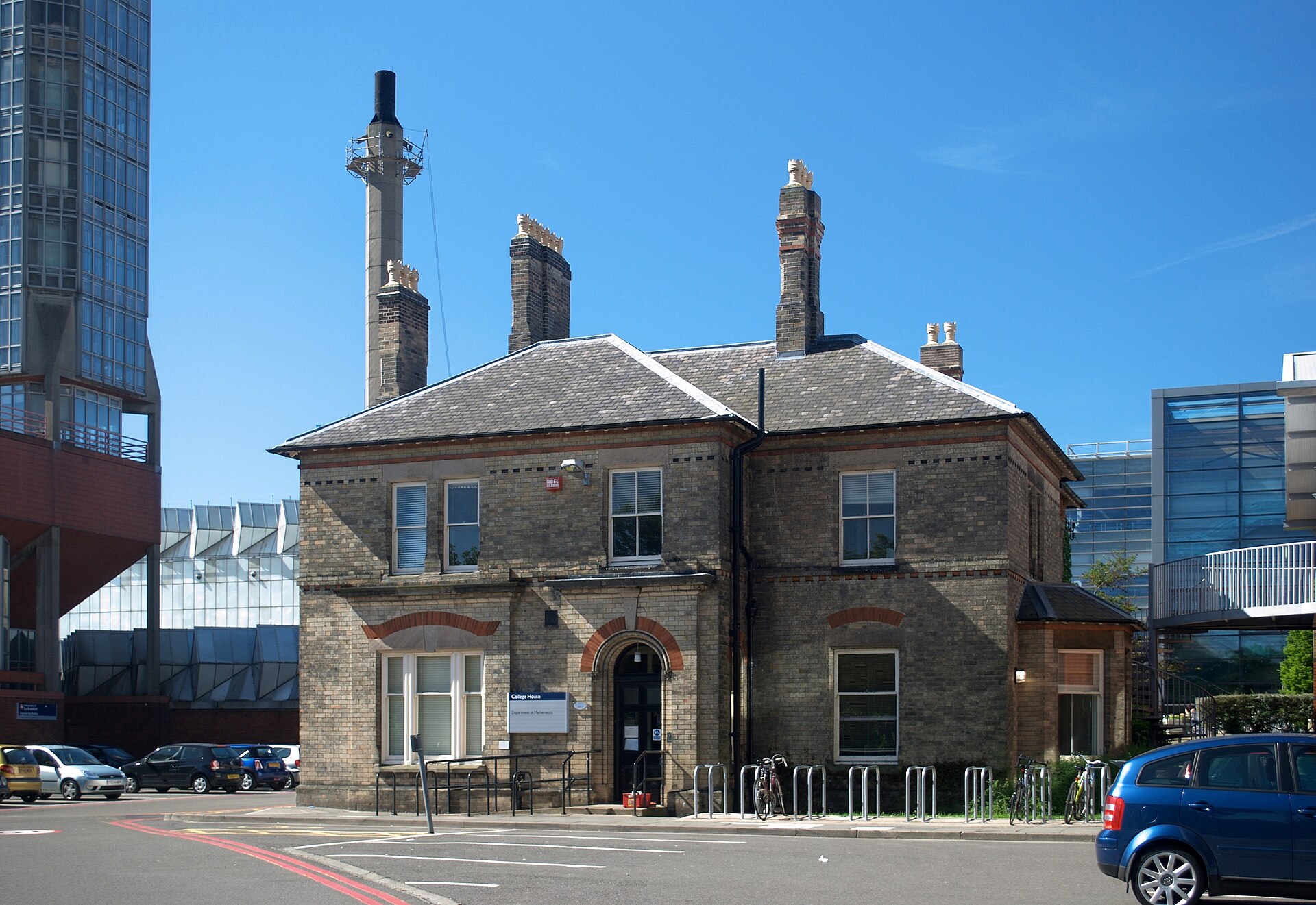
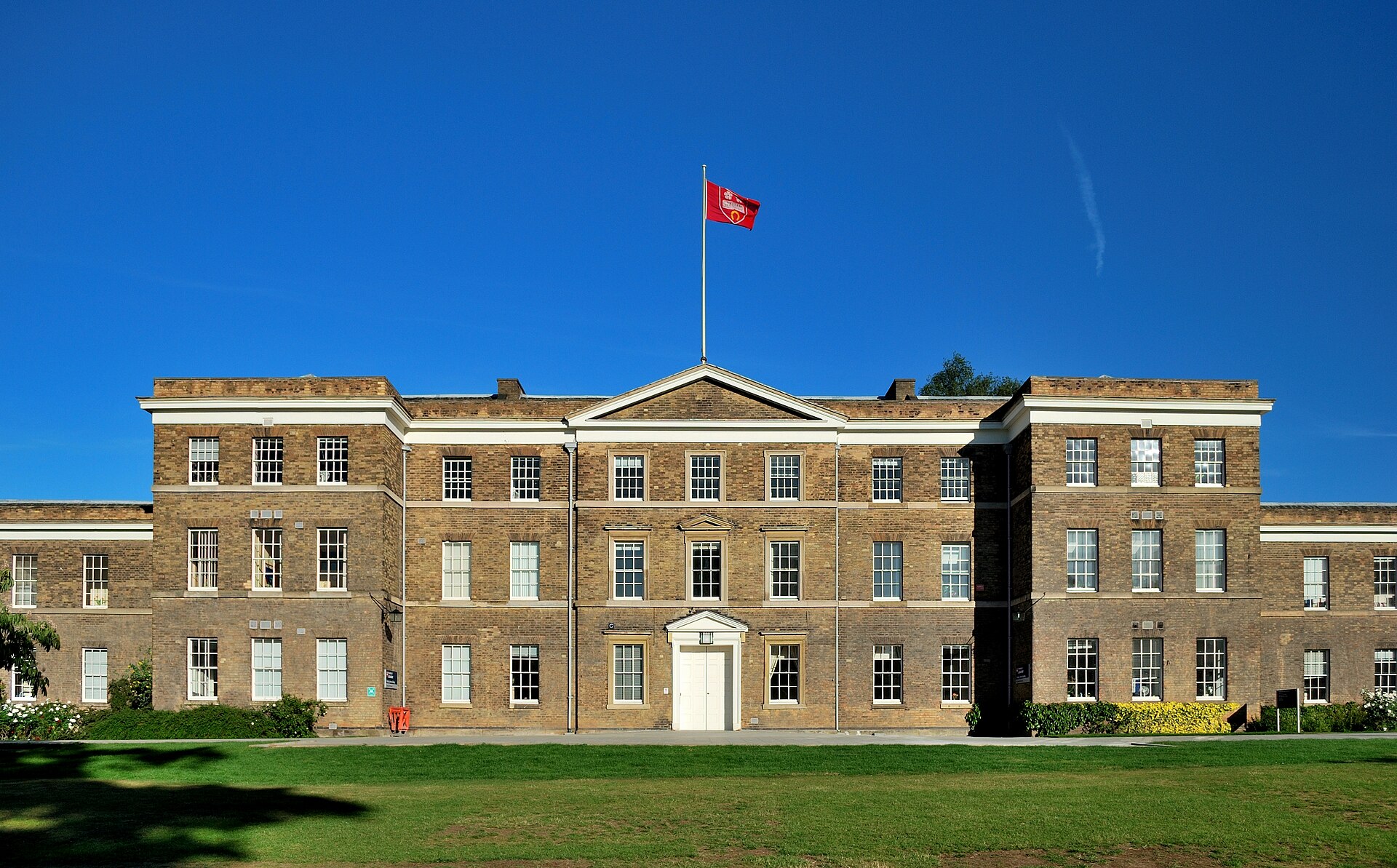
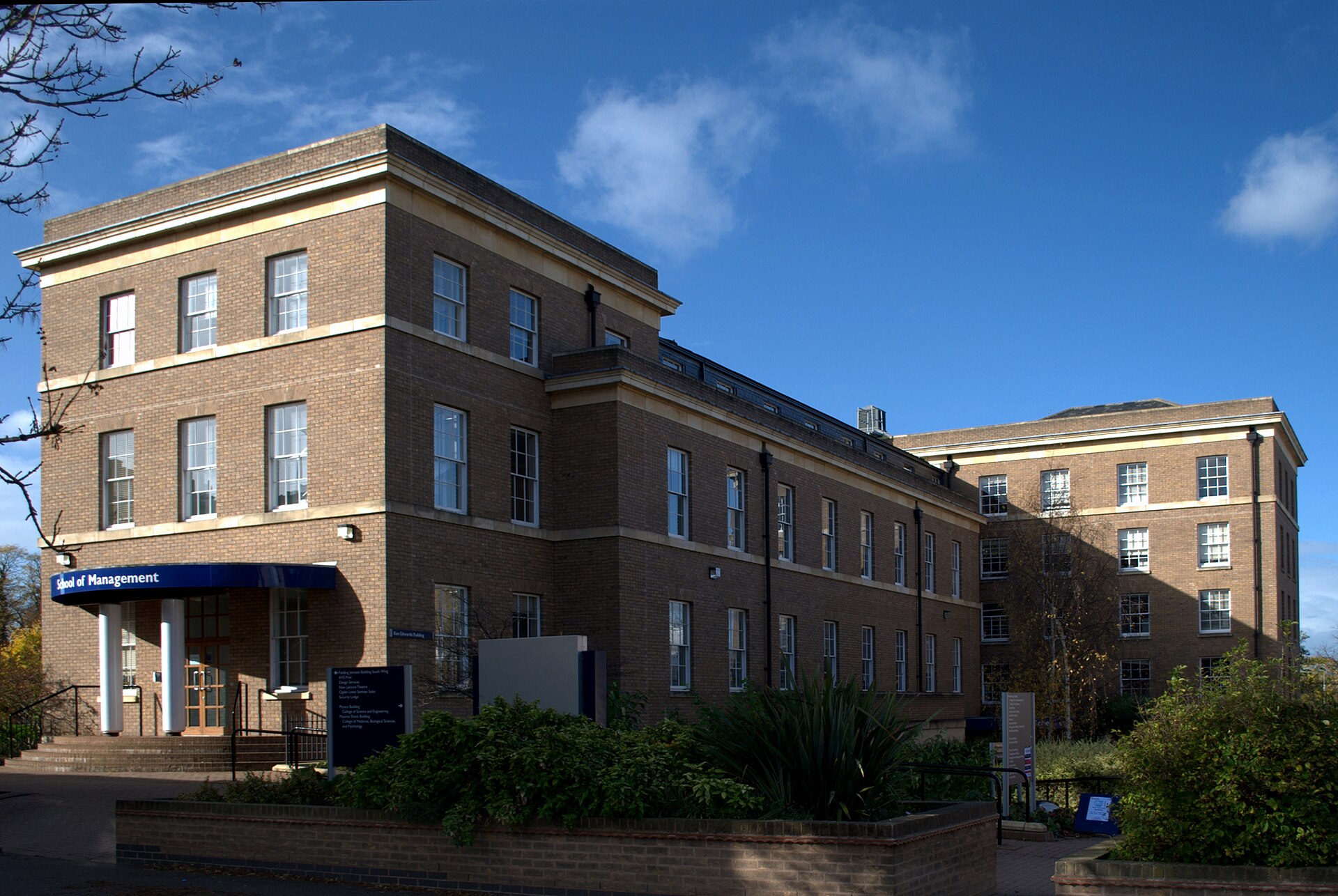

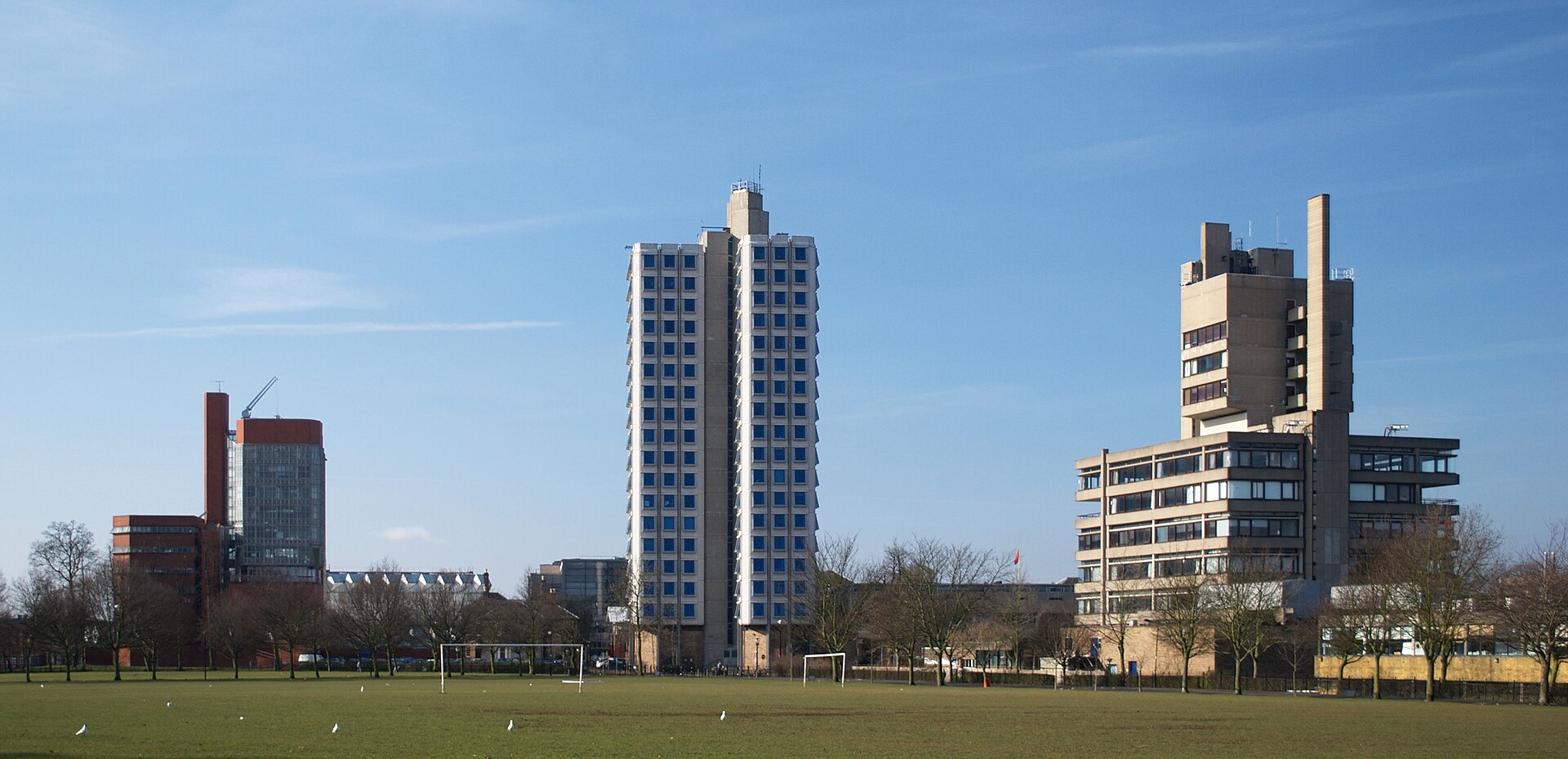
Why Choose Leicester — Discovery, Research & Community
Leicester is not a university you choose for prestige alone — you choose it because it has genuinely changed how the world works, and because it continues to do so.
ADMISSIONS PROFILE
Acceptance Rate & Academic Profile
The University of Leicester is a moderately selective UK institution, admitting around three quarters of applicants. However, acceptance rates vary significantly by course — Medicine, Law, and Computer Science are considerably more competitive than the university-wide average. Entry is primarily grades-based, assessed through UCAS and conditional offers tied to A-Level or IB performance.
Individual course offers are typically expressed as A-Level grades (e.g. ABB–AAB) or IB total points. Medical and Law courses have more demanding entry requirements. All international qualifications are assessed by the International Office on a case-by-case basis.
AT A GLANCE
Quick Facts
HOW TO APPLY
Application Components
International students apply to the University of Leicester through UCAS (the Universities and Colleges Admissions Service), the same system used by all UK universities. You can apply for up to five UK universities on one application.
WHAT LEICESTER LOOKS FOR
The Student Profile Leicester Admits
Unlike highly selective US universities, Leicester's admissions process is primarily grades-based rather than holistic. The dominant signal is academic performance — your predicted or achieved grades in A-Levels, IB, or your national curriculum. That said, your personal statement matters meaningfully, particularly for competitive courses and as a way to stand out in a borderline case.
KEY DATES
UCAS Application Deadlines
UK universities operate on the UCAS application cycle. Deadlines are set by UCAS nationally — there is no separate Leicester deadline for most courses. All times are UK time.
International students are strongly advised to apply before the January deadline to allow time for visa processing and accommodation applications. Apply early for competitive programmes.
| Round | Deadline | Notes |
|---|---|---|
| Medicine (UCAS) | 15 October | Hard deadline for UK and international Medical School applications |
| Main UCAS deadline | 29 January | Standard deadline for all other undergraduate courses — strongly recommended for international applicants |
| UCAS Extra / Clearing | Late June – September | Places may be available if you missed earlier rounds; contact Leicester Admissions |
CAMPUS & CITY
Student Life at Leicester
The University of Leicester's campus sits one mile south of the city centre, adjacent to the green expanse of Victoria Park — one of the largest urban parks in the East Midlands. The campus is compact and walkable, with most buildings within a short stroll of one another. Notable architecture includes the Grade II*-listed Engineering Building designed by James Stirling, a landmark of British Brutalist design.
The Students' Union runs over 220 clubs and societies — from the largest student law firm in the UK to student space research teams, drama societies, and competitive sports. Student media includes Leicester Student Magazine (founded 1957) and Galaxy Radio. Halls of residence are available on and near campus, with most first-year international students housed in guaranteed accommodation if they apply by the deadline.
Leicester city itself is one of the UK's most culturally diverse, with a thriving food scene, the Golden Mile of restaurants, a vibrant arts quarter, and direct train connections to London St Pancras (around 60–70 minutes). Cost of living is considerably lower than London, Oxford, or Cambridge, making Leicester one of the most affordable places to study in England.
GRADUATE OUTCOMES
Careers & Employment
Leicester's Careers Service operates on a sector-focused model, supporting students from Year 1 with skills development, employer connections, and mock interviews. The Graduate Outcomes Survey places Leicester's employment rate at 92% within 15 months of graduation.
Graduates from Leicester's science and technology programmes move into research, pharmaceutical, and space industry roles. Law graduates enter the East Midlands and London Bar and solicitor firms. Criminology graduates — from one of the UK's most respected programmes — enter the civil service, police, legal, and social services sectors. Medicine graduates enter the NHS Foundation programme, with some pursuing postgraduate study internationally.
For international students, Leicester's Careers Service offers dedicated visa and work-rights guidance under the UK's Graduate Route, which allows graduates to remain in the UK for two years (three for PhD graduates) after completing their degree.
FAQS
Frequently Asked Questions
Is the University of Leicester a good choice for international students?+
Yes. Leicester has a well-established international student community (25% of the student body), a dedicated International Office, and a city that is one of the UK's most culturally diverse. The university has consistently ranked in the UK top 35 and has strong research credentials.
Do I need to sit an admissions test for Leicester?+
Most courses at Leicester do not require an admissions test. The exception is Medicine, which requires the UCAT (University Clinical Aptitude Test), taken in July–September of the year you apply. Some Law programmes may recommend but not require the LNAT — check the specific course page.
What IB score do I need?+
The facts file indicates a minimum indicative IB score of 30 points, but actual offers are course-specific and typically higher for competitive programmes. Medicine and Law may require 34–38 points. Always check the specific course requirements on the Leicester website or UCAS.
Can I get a scholarship as an international undergraduate?+
Leicester offers a limited range of scholarships for international undergraduate students. It is important to check the official fees and funding page before applying, as availability and amounts change annually. The UK Government's Chevening and Commonwealth scholarships are also open to eligible nationalities.
Is accommodation guaranteed for international students?+
Leicester guarantees accommodation to all first-year international students who firmly accept an offer and apply for accommodation by the published deadline. Most first-year students live in university halls or university-approved accommodation close to campus.
How long does a UK student visa take to process?+
UK student visa (Student Route, formerly Tier 4) processing typically takes three weeks or less from outside the UK, but can vary. You will need a Confirmation of Acceptance for Studies (CAS) from Leicester before applying, which is issued after you have met your offer conditions.
Can I work in the UK after graduating from Leicester?+
Yes. UK graduates are eligible for the Graduate Route visa, which allows you to remain in the UK and work or look for work for two years after graduating (three years for PhD graduates) without needing to be sponsored by an employer.
How does Leicester compare to other UK universities at a similar level?+
Leicester is broadly comparable to universities like Exeter, Sheffield, and Southampton in terms of ranking and academic standing. Its distinctive strengths in genetics, space science, and criminology set it apart. It is a good choice for students who want a genuine research environment without the extreme competitiveness of Oxford, Cambridge, or London institutions.
ACADEMICS
Academic Expectations at Leicester for International Students
The University of Leicester is a research-led institution with over 350 undergraduate degree programmes spanning science, engineering, medicine, law, social sciences, and the arts. Academic standards are consistent with other UK mid-to-top-tier universities — rigorous, essay and lab-based, and increasingly cross-disciplinary. For international students, understanding how your qualifications map to UK offers is the essential first step.
Leicester's academic year runs from late September to May/June, divided into two semesters. Teaching methods combine lectures, seminars, tutorials, and — especially in the sciences — significant laboratory or fieldwork components. Assessment typically includes a mix of coursework, laboratory reports, essays, and end-of-year examinations. Independent study is expected; UK universities assign far more self-directed reading than many international students are used to.
ENTRY STANDARDS
Academic Profile of Admitted Students
Entry standards at Leicester are course-specific. A 74% overall acceptance rate masks considerable variation — Medicine, Law, and Space Sciences attract far more competition. Always check the UCAS course profile for your specific programme.
ADMISSIONS TESTS
Admissions Test Policy
Leicester's admissions are primarily grades-based and most undergraduate courses do not require a separate admissions test. There are important exceptions.
INTERNATIONAL QUALIFICATIONS
How Leicester Reads IB, A-Levels & International Qualifications
The University of Leicester recognises a wide range of international qualifications. Conditional offers are made in terms of A-Level grades (e.g. ABB) or IB total points, with Higher Level subject requirements specified separately where relevant.
SAT / ACT
SAT and ACT at Leicester
Leicester is a UK university and does not primarily use the SAT or ACT as entry qualifications. However, for US-educated students or those applying with a US High School Diploma, SAT scores can be considered alongside or in lieu of AP results.
As a UK institution operating under the UCAS system, Leicester's admissions are aligned to UK-style qualifications. If you are a US-curriculum student applying from the US, you should typically present SAT scores (ideally 1200+) alongside AP results, or discuss your application with the International Office to determine the appropriate equivalency for your target course.
SAT/ACT are not required and are not used for UK-educated students. The facts file indicates no SAT or ACT band data for Leicester — this is consistent with a UK admissions model.
ENGLISH LANGUAGE
English Language Requirements
If English is not your first language, you must provide evidence of English proficiency. The standard minimum for most undergraduate courses is listed below. Some programmes — particularly Medicine, Law, and Nursing — may require higher scores.
Students who have completed secondary education entirely in English (e.g. studying an English-curriculum school) may be exempt from language requirements — confirm with the International Office. Pre-sessional English courses are available at Leicester for students who need to improve before their programme begins.
| Test | Minimum | Notes |
|---|---|---|
| IELTS Academic | 6.5 overall | No band below 6.0 on any component |
| TOEFL iBT | 88 | Minimum scores per section may apply |
| Duolingo English Test | 115 | Accepted for most courses — confirm for your programme |
SUBJECT PREPARATION
Subject Rigour Expected by Programme
PREPARATION ROADMAP
Building Your Academic Profile: Year 9 to Year 13
COMMON PITFALLS
Academic Mistakes to Avoid
- Assuming the overall 74% acceptance rate applies to your specific programme — Medicine, Space Sciences, and Law are much more competitive.
- Not checking whether your specific course requires particular A-Level or IB HL subjects — missing a prerequisite can invalidate your application entirely.
- Applying with a subject combination that closes off your target degree — plan your subjects with your university shortlist in mind from Year 12.
- Waiting until January to start your UCAS application — strong applications take time, and personal statements should go through multiple drafts.
- For Medicine: underestimating UCAT preparation — the test requires specific practice and timing strategy, not just general intelligence.
- Not disclosing all secondary schools attended on your UCAS application — incomplete academic history raises red flags at admissions.
- Ignoring English language requirements until after receiving an offer — start preparing your IELTS or TOEFL early, ideally in Year 12.
FEES & FUNDING
The Real Cost of Leicester — An Honest Breakdown for International Students
As an international (non-UK) student, you will pay international tuition fees at Leicester — significantly higher than the fee UK-resident students pay. However, Leicester is among the more affordable research-oriented UK universities, and the city of Leicester offers one of the lowest costs of living among UK university cities. Understanding the full annual cost before you apply is essential for planning.
All figures below are drawn from the university facts file and represent estimated annual costs. Actual costs depend on your programme, accommodation choice, and personal spending.
ANNUAL COST ESTIMATE
Cost Breakdown (International Students, Annual)
These are estimated annual figures in USD. Exchange rates fluctuate — check current GBP equivalents on the official Leicester fees page. Medicine and some other programmes may carry different fee levels. Course fees are typically fixed for the duration of your degree once you start.
| Component | Estimated U S D | Notes |
|---|---|---|
| International tuition fees | $27,300 | Per year — varies slightly by course |
| Cost of living (accommodation, food, transport, personal) | $13,500 | Leicester is among the UK's most affordable university cities |
| Total estimated cost of attendance | $40,800 | Annual estimate including all living costs |
| Application fee | $36 | Paid to UCAS (not directly to Leicester) |
FINANCIAL AID
Financial Aid for International Students
Like most UK universities, Leicester does not offer need-based financial aid to international undergraduate students in the way that US universities might. UK government student loans are not available to international (non-UK) students for tuition fees or living costs.
However, Leicester does offer a range of merit-based and country-specific scholarships for international undergraduates, and some external funding sources — notably the UK Government's Chevening Scholarship and Commonwealth Scholarship and Fellowship Plan — are available to eligible nationalities. The average aid percentage in the facts file (10%) likely reflects the proportion of students receiving some form of scholarship or bursary.
International students should plan to fund their studies primarily through personal or family savings, home-country loans, or scholarships secured before arrival. Budget for full tuition plus living costs for the duration of your degree (typically three years for undergraduate programmes).
SCHOLARSHIPS
Scholarships for International Students
Leicester offers several scholarship schemes for international undergraduate students. Specific details — including amounts, eligibility criteria, and deadlines — change annually. The information below is qualitative; always verify current awards on the official website before applying.
AFFORDABILITY
Is Leicester Affordable for International Students?
Relative to other UK research universities at a similar academic level — such as Birmingham, Nottingham, or Sheffield — Leicester's tuition fees and cost of living are broadly comparable. The key affordability advantage is the city itself: Leicester is one of the least expensive university cities in England, with lower rents, transport costs, and daily living expenses than London, Bristol, or Edinburgh.
A student living in university accommodation during their first year can expect to pay significantly less per month than an equivalent student in London. After the first year, private sector renting in Leicester is also more affordable than most other major UK university cities. The total cost of a three-year undergraduate degree at Leicester — for an international student, including living costs — is estimated at approximately three times the annual cost of attendance figure.
There is no no-loan or no-fee policy for international students at Leicester. Budget realistically for the full duration of your course and factor in healthcare costs (the NHS surcharge applies to international students on a Student Route visa).
HOW TO FUND YOUR DEGREE
Steps to Securing Funding
COST FAQS
Cost & Funding FAQs
Can international students access UK student loans?+
No. UK Government student loans are not available to international (non-UK) students. Funding must come from personal or family savings, home-country loans, or scholarships.
Are there part-time work opportunities for international students?+
Yes. Students on a UK Student Route visa are typically permitted to work up to 20 hours per week during term time, and full-time during vacations. This can help offset living costs, though it should not be relied upon to cover tuition.
What is the NHS Immigration Health Surcharge?+
International students on a Student Route visa are required to pay the Immigration Health Surcharge (IHS) as part of their visa application. This grants access to NHS healthcare during your studies. The surcharge is paid upfront as part of the visa application process and is calculated per year of your course.
Does Leicester offer any discounts or fee waivers for international students?+
Leicester does not typically offer full fee waivers for international undergraduates. Partial scholarships reducing tuition by a set amount are the most common form of support. Check the current scholarships page for specific awards in your application cycle.
Is the tuition fee the same for all courses?+
Fees can vary slightly by programme — science and laboratory-based courses sometimes carry marginally higher fees than arts or social sciences. The figure in the facts file represents a general estimate. Check the specific course page for exact fees for your programme.
How do I plan a budget for studying at Leicester?+
Start with the total cost of attendance estimate of approximately $40,800 per year. Allocate for tuition (~$27,300), accommodation, food, transport within the city, course materials, and personal spending. Leicester's lower cost of living compared to London makes a meaningful difference to how far your money goes.
UCAS PERSONAL STATEMENT
The UCAS Personal Statement — Your Application Essay for Leicester
The University of Leicester, like all UK universities, uses the UCAS system for undergraduate admissions. There are no supplemental essays, Common App prompts, or university-specific short answers. Your written voice in the application comes down to one document: the UCAS Personal Statement.
From the 2026 UCAS application cycle onwards, the personal statement uses a new three-question format that replaced the older single free-form essay. This shift makes the structure more explicit — but the core challenge remains the same: demonstrating genuine intellectual engagement with your chosen subject, in your own voice, with specificity and depth.
HOW IT WORKS
The UCAS Personal Statement: Format and Role
The UCAS personal statement is submitted once and sent to all five of your UCAS choices simultaneously. It is not tailored to Leicester specifically — it is your subject-level statement, making the case for why you want to study this discipline at degree level. Leicester admissions tutors will read it as evidence of your intellectual readiness and genuine interest in the subject.
From the 2026 entry cycle, UCAS uses a three-question structured format instead of the previous free-form essay. Each question has a character limit. The three questions focus on: (1) your reasons for wanting to study the subject; (2) how your learning to date has prepared you; and (3) what you have done outside the curriculum to explore your interest. You must answer all three questions.
Unlike the US Common App, the UCAS personal statement is subject-focused, not you-as-a-whole-person focused. Keep the focus squarely on your academic interest and preparation for your chosen subject.
THE THREE QUESTIONS
The 2026 UCAS Personal Statement Questions
UCAS's new three-question format structures what used to be a single open-ended essay. The official questions below are sourced from UCAS and apply from the 2026 entry cycle. Verify on the UCAS website for any updates in subsequent cycles.
STRATEGIC OVERVIEW
Writing a Strong UCAS Personal Statement for Leicester
The UCAS personal statement is unlike a US application essay. It is not about your character, your background, or your personal journey — it is fundamentally about your subject. Admissions tutors at Leicester are academics in their field, and they are reading to assess whether you are genuinely ready and motivated to engage with their discipline at university level.
The most effective personal statements are highly specific. They name books read, experiments conducted, questions that remain unresolved, connections made between school topics and real-world problems. They demonstrate that the applicant has already begun thinking like someone in the field — not just someone who found a school subject enjoyable. The new three-question format makes this structure explicit, but the principle has always been the same.
Because your personal statement goes to all five UCAS choices, you cannot tailor it to Leicester specifically in the way you might write a supplemental essay. However, if all five choices are in the same subject, a well-crafted subject-focused statement works equally well for all of them.
BY PROGRAMME
Personal Statement Strategy by Programme
CHOOSING YOUR APPROACH
How to Select What to Write About
The three-question format simplifies topic selection — each question has a clear purpose. But within each question, the choices you make about what to include are the difference between a generic and a compelling statement.
PITFALLS TO AVOID
Common Personal Statement Mistakes
- Writing about yourself as a person rather than your subject — the UCAS personal statement is subject-focused, not character-focused.
- Using the opening line to state your name or the course you are applying for — tutors already know this; use every character to add substance.
- Listing activities without reflection — admissions tutors want to know what you learned, not just what you did.
- Writing separately about each of your five university choices — the statement goes to all of them and must work as a subject statement for all.
- Including quotations from famous people as an opening — this is one of the most common personal statement clichés and signals an unfocused application.
- Padding to the character limit with generic sentences — every sentence should add specific evidence or insight.
- Submitting without a teacher or counsellor review — the UCAS personal statement benefits significantly from an experienced reader who can identify vague or generic sections.
- Starting the process in January when the deadline is January — strong personal statements require multiple drafts over several months.
- For Medicine applicants: writing about work experience without reflection on what it taught you about medicine as a vocation.
ESSAY FAQS
UCAS Personal Statement FAQs
Is there a separate essay or supplement required by Leicester?+
No. The University of Leicester does not require any supplemental essays or university-specific written components for standard undergraduate applications. The UCAS personal statement is the only written statement in your application.
How long is the UCAS personal statement?+
From the 2026 entry cycle, the three-question format has individual character limits per question. Check the UCAS website for the exact limits for your application cycle, as they may have been updated. The total is broadly comparable to the previous 4,000-character limit.
Can I tailor my statement to the University of Leicester specifically?+
Your statement is sent to all five UCAS choices, so you cannot address one university specifically. However, if all your choices are in the same subject, the statement works as a subject declaration for all of them. Avoid naming any university by name in the statement.
Does Leicester conduct interviews?+
Most Leicester undergraduate programmes do not require an interview. The main exception is Medicine, where shortlisted applicants are called for interview as part of the selection process. Check the specific course page for your programme.
How much does the personal statement actually matter at Leicester?+
Offers at Leicester are primarily grades-based. However, in borderline cases, the personal statement can be the differentiating factor — particularly for competitive programmes like Medicine, Law, and Space Sciences. For most programmes, meeting the grade requirements is the primary hurdle; a strong personal statement helps, but a poor one rarely outweighs excellent grades.
What if I am applying to more than one subject across my five UCAS choices?+
This is a significant strategic challenge. If you are applying to different subjects (e.g. three Law and two Criminology choices), your personal statement must address both credibly. Applying to very different subjects across your five choices is generally inadvisable as you will struggle to write a personal statement that serves all of them well.
Should I mention specific modules or research at Leicester in my personal statement?+
Since the statement goes to all five choices, directly naming Leicester or its specific modules is not recommended and can disadvantage you if Leicester is not your firm choice. Instead, write about the aspects of the subject that happen to align with Leicester's strengths — without naming the university.
Courses — schools, degrees & intake
50 degrees across 17 groupings.
Leicester Medical School · 2 degrees
Medicine MB ChB
Medicine with Foundation Year MB ChB
School of Biological Sciences · 4 degrees
Biological Sciences BSc
Biomedical Sciences BSc
Genetics BSc
Biochemistry BSc
School of Psychology · 2 degrees
Psychology BSc
Neuroscience BSc
Department of Engineering · 7 degrees
Aerospace Engineering MEng
Aerospace Engineering BEng
Mechanical Engineering MEng
Mechanical Engineering BEng
Electrical and Electronic Engineering MEng
Electrical and Electronic Engineering BEng
Communications and Electronic Engineering BEng/MEng
Department of Physics and Astronomy · 4 degrees
Physics BSc
Physics MPhys
Astrophysics BSc
Physics with Space Science and Technology MPhys
Department of Chemistry · 2 degrees
Chemistry BSc
Chemistry MChem
Department of Computing and Mathematical Sciences · 3 degrees
Computer Science BSc
Mathematics BSc
Mathematics and Physics BSc
School of Geography, Geology and the Environment · 3 degrees
Geography BSc
Geology BSc
Environmental Science BSc
Leicester Law School · 3 degrees
Law LLB
Law with French Law LLB
Law with American Law LLB
School of Business · 4 degrees
Accounting and Finance BSc
Business and Management BSc
Economics BSc
Marketing BSc
School of Criminology · 3 degrees
Criminology BSc
Criminology and Sociology BSc
Criminology and Psychology BSc
School of History, Politics and International Relations · 4 degrees
History BA
Politics BSc
International Relations BSc
History and International Relations BA
School of Arts · 2 degrees
English BA
Film Studies BA
School of Archaeology and Ancient History · 3 degrees
Archaeology BA
Ancient History BA
Archaeology and Ancient History BA
School of Media, Communication and Sociology · 2 degrees
Media and Communication BA
Sociology BSc
School of American Studies · 1 degrees
American Studies BA
School of Museum Studies · 1 degrees
Museum Studies BA
Want your real chances at University of Leicester?
Create a free TYCHR account for your personalised admit-chance, a shortlist you can track, exact entry requirements, and essay + counselling help.