University of Leeds
Leeds, United Kingdom · Urban
RUSSELL GROUP · QS #82 · FOUNDED 1904
University of Leeds Admissions Guide for International Students
One of the UK's largest single-site universities and a flagship member of the Russell Group, the University of Leeds combines deep research intensity with a genuinely welcoming culture for international students. Located ten minutes from the heart of Leeds city centre — one of England's most dynamic cities — it offers world-class programmes in engineering, business, medicine, law, and the creative industries, backed by a 39,000-strong student community drawn from across the globe.
This guide is written for ambitious international students navigating UCAS and the UK admissions system. It covers entry requirements, the UCAS personal statement, scholarships, and everything you need to build a competitive application to Leeds.
Campus
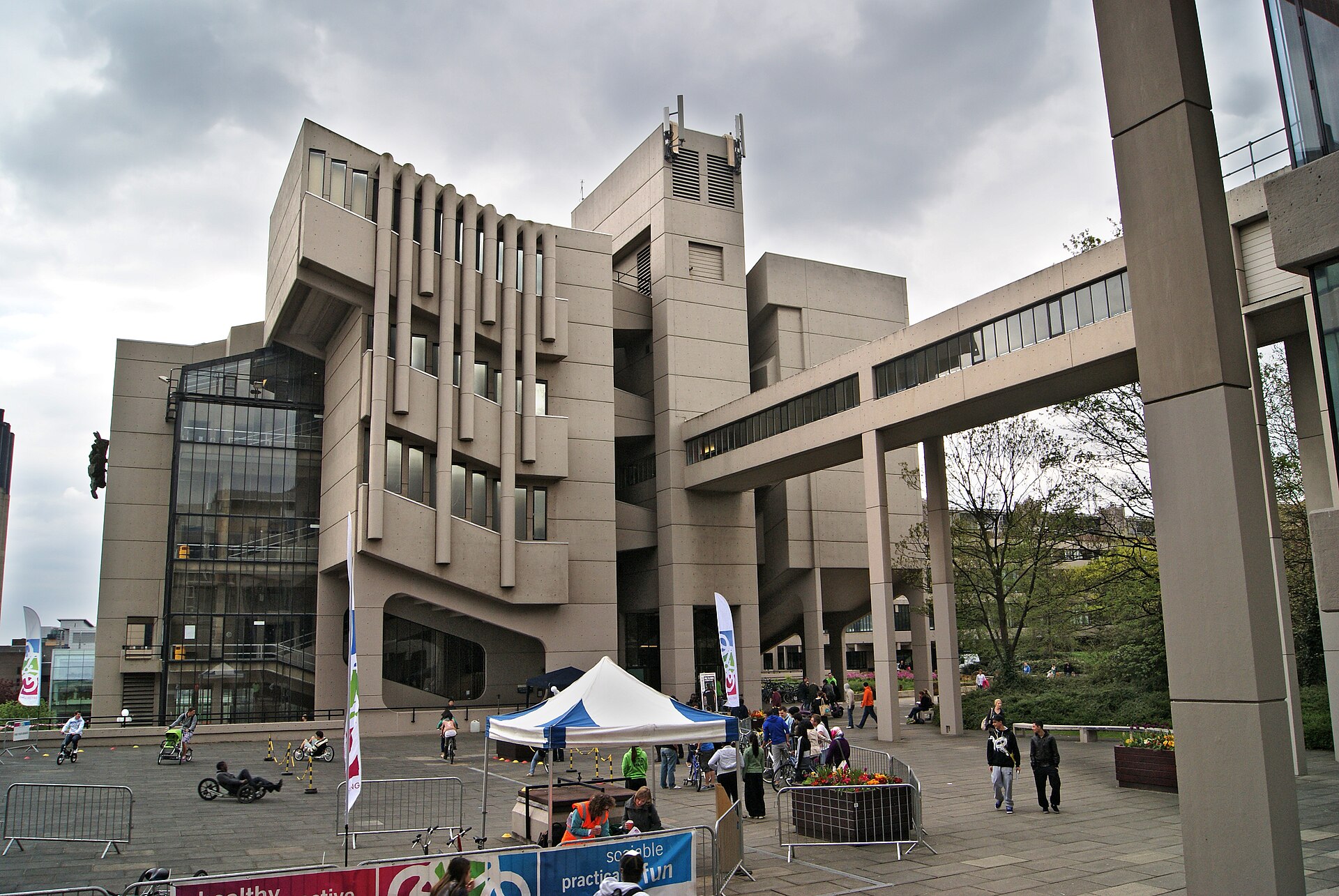
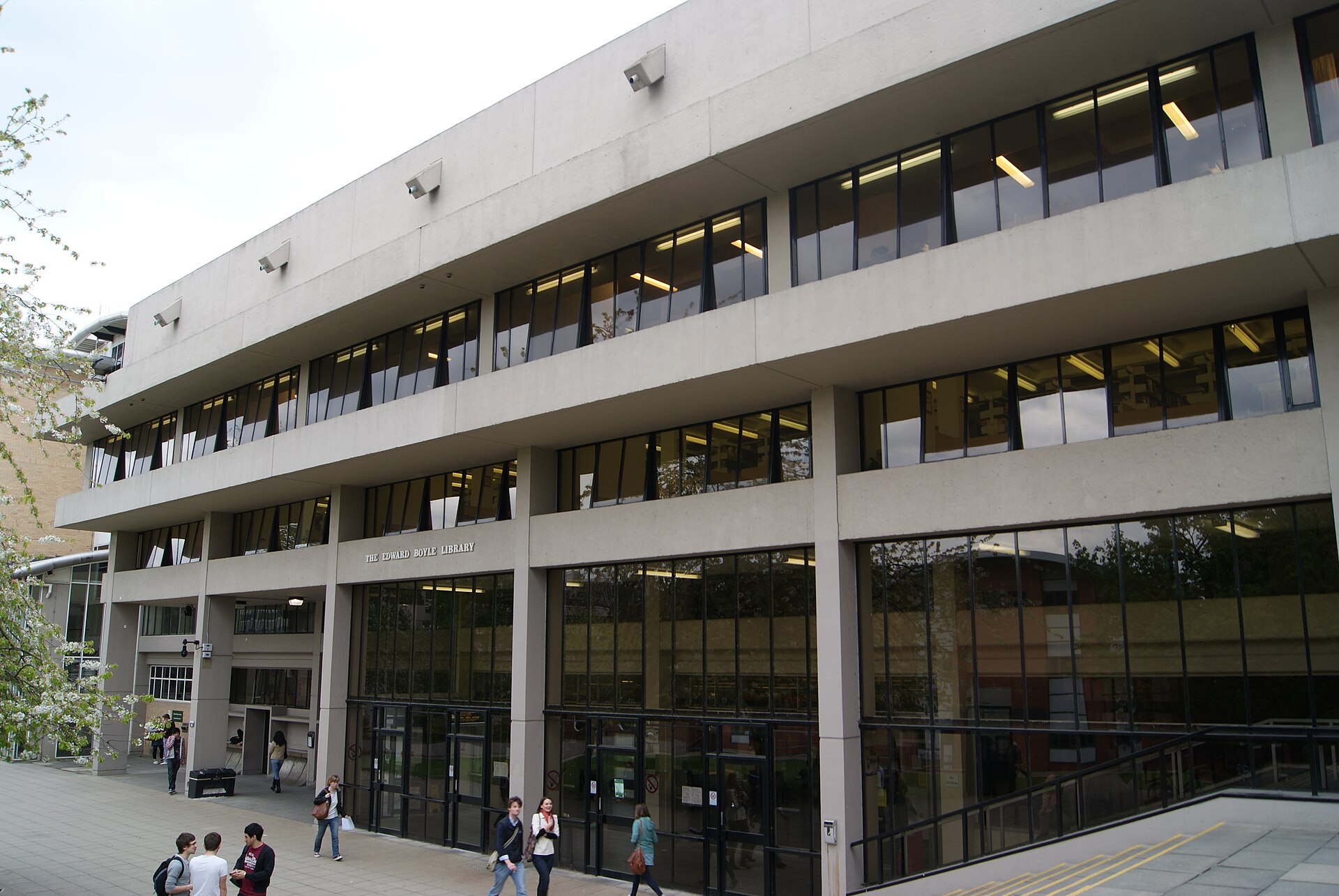
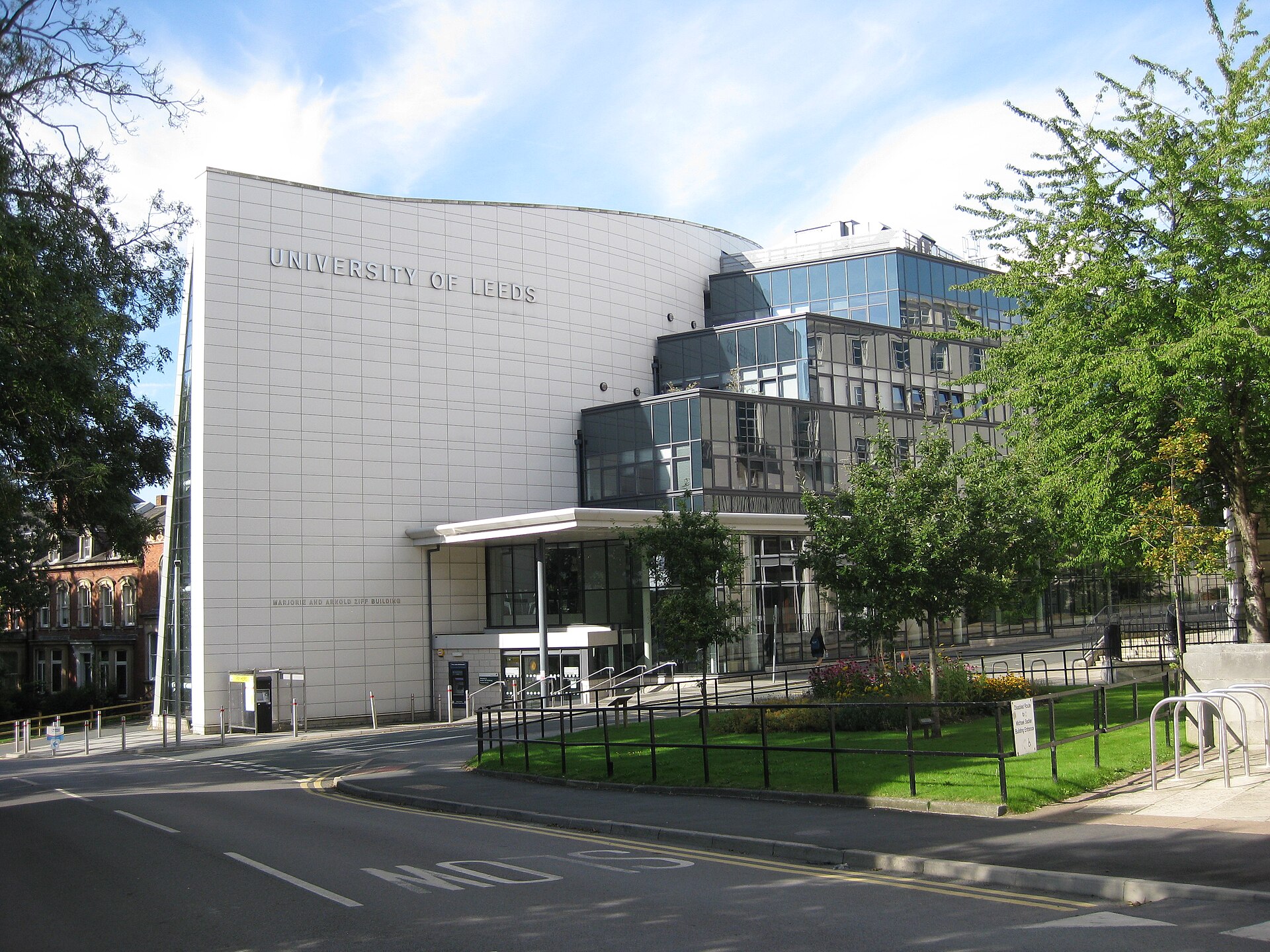
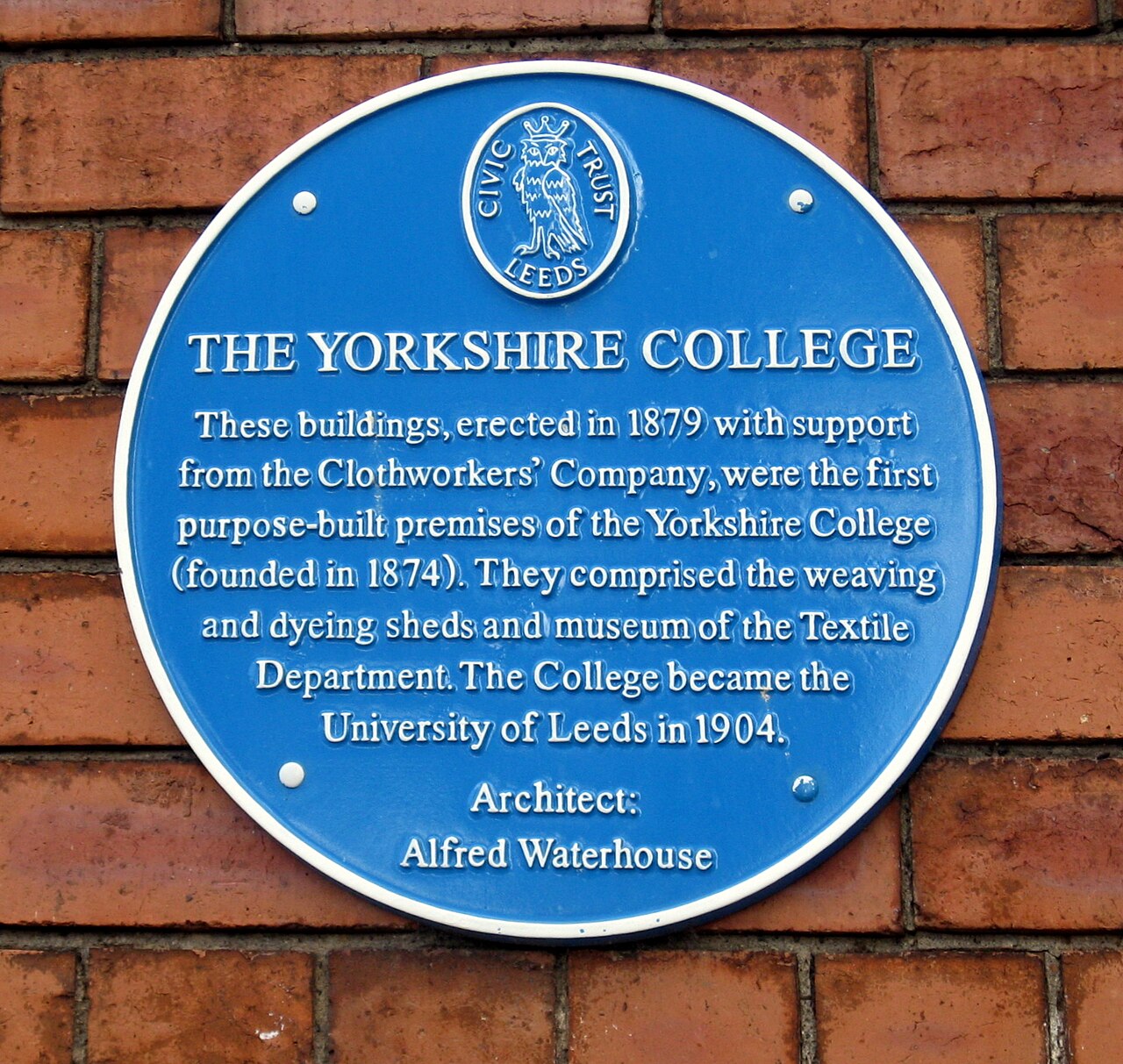
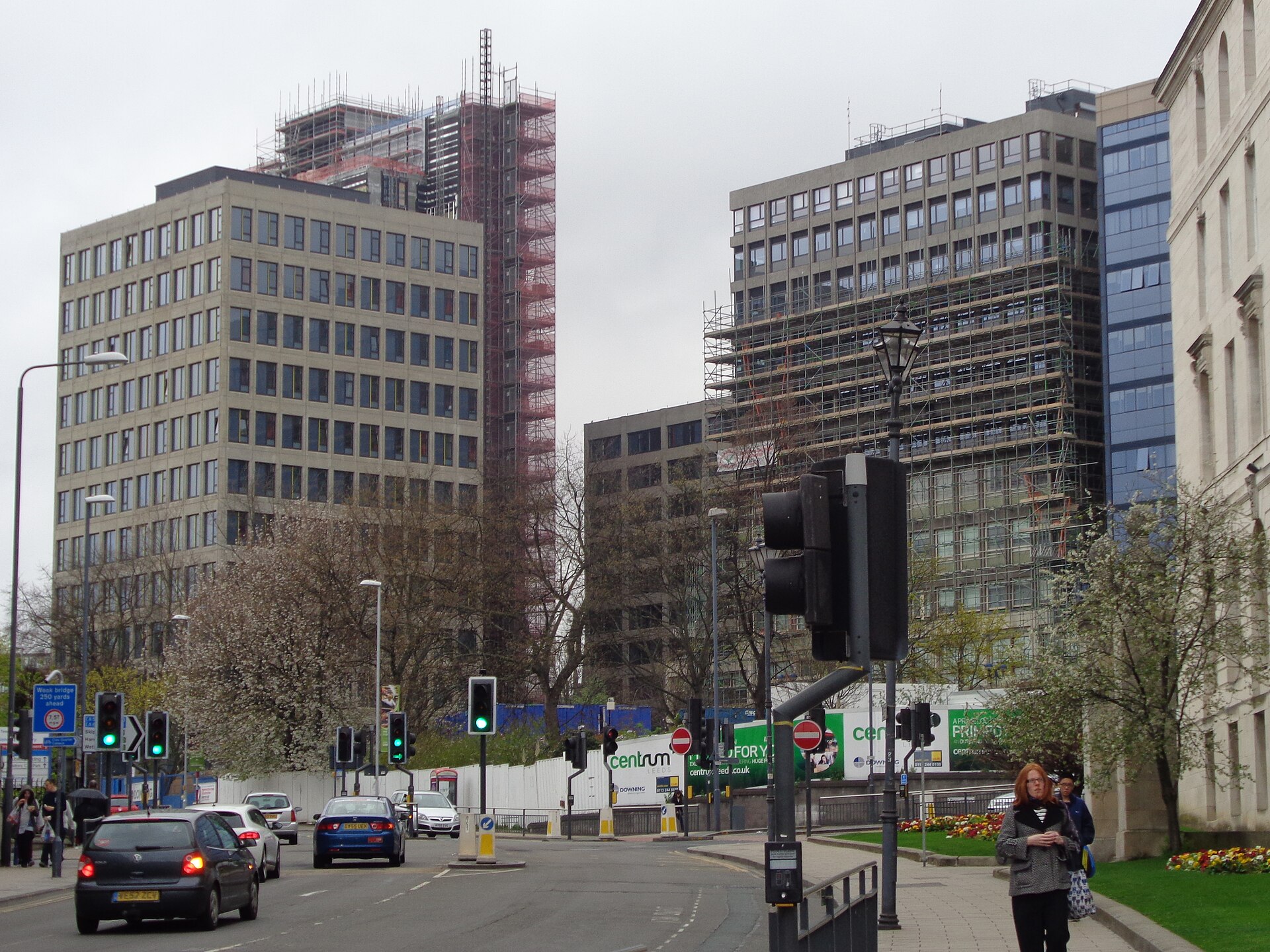
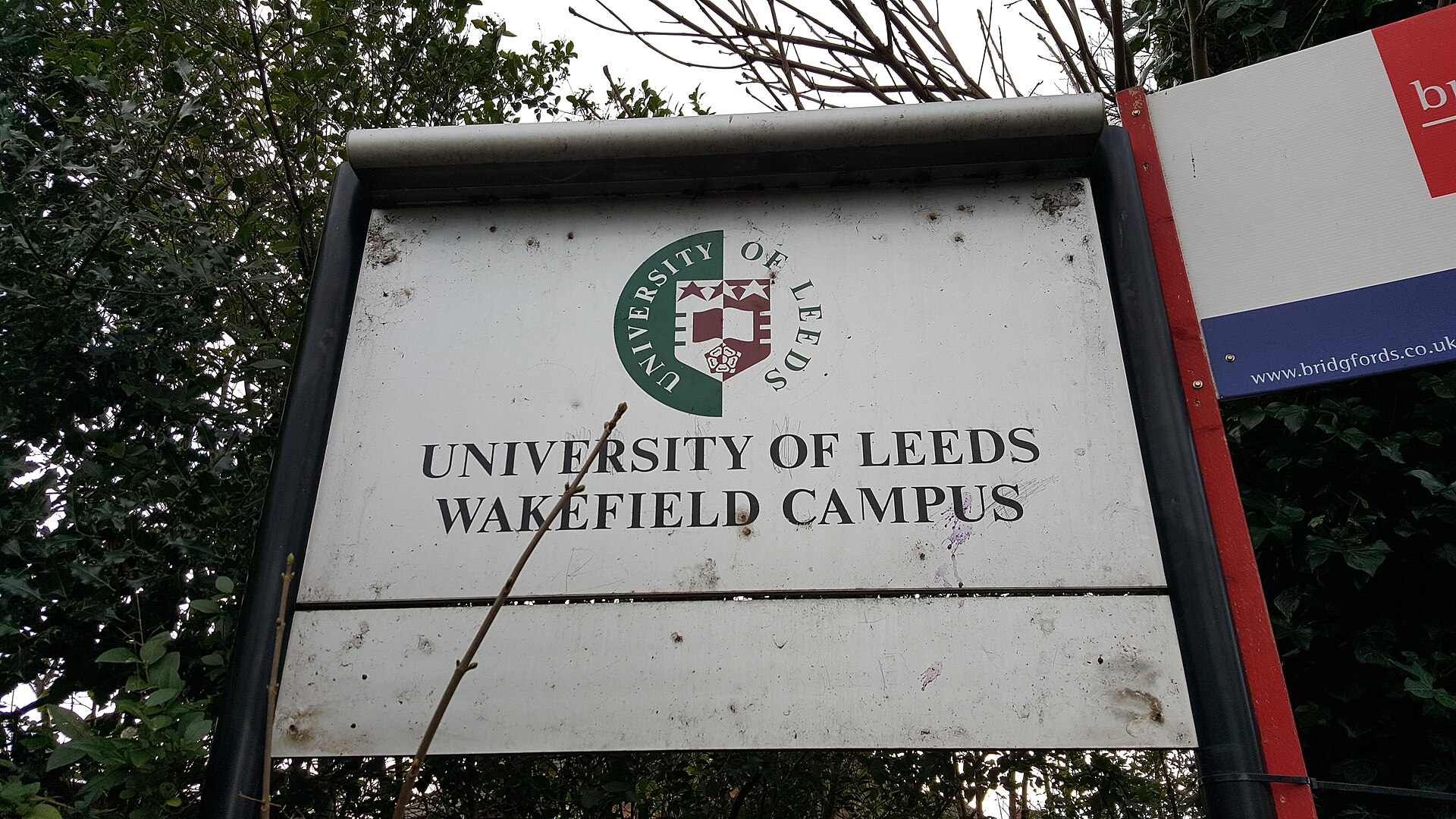
University of Leeds — campus in pictures
Real, freely-licensed photographs of the campus (via Wikimedia Commons).
WHY LEEDS
Why Choose the University of Leeds
Leeds is not just a large, high-ranked university — it is a place with distinctive strengths in research, industry connections, and student life that set it apart within the Russell Group.
SELECTIVITY
How Selective Is Leeds?
Leeds has a relatively high acceptance rate compared to Oxford, Cambridge, or London-based Russell Group universities, but admission is still competitive — especially for high-demand courses like Medicine, Law, and Business. Entry is offer-based, meaning the university assesses your predicted grades, personal statement, and subject preparation, then makes a conditional offer tied to specific A-Level or IB results.
For international students, the typical IB offer sits around 35 points overall, though this varies by course — some engineering programmes ask for 36–38 points with specific HL requirements, while some arts and humanities courses may offer at 32–34. Always check the course-specific requirements on the Leeds course pages.
AT A GLANCE
University of Leeds — Key Facts
APPLICATION COMPONENTS
What Your Leeds Application Consists Of
Undergraduate international applicants apply through UCAS — the UK's centralised university admissions service. You may apply to up to five universities on a single UCAS application. Leeds evaluates each component carefully.
WHAT LEEDS WANTS
The Profile Leeds Admits
Leeds makes primarily grade-based conditional offers, but the personal statement and reference are used to differentiate among applicants meeting the academic threshold. Here is what the admissions team is looking for.
DEADLINES
Application Deadlines for Leeds
Leeds uses UCAS for all undergraduate applications. There is no Leeds-specific deadline — you must submit your UCAS application by the relevant UCAS deadline. Applications received after these dates may still be considered if places remain, but equal consideration is only guaranteed for on-time applications.
University decisions on applications received by the January deadline are issued by 13 May 2026. Teaching begins 28 September 2026.
| Course | Ucas Deadline | Notes |
|---|---|---|
| Medicine, Dentistry, Veterinary | 15 October 2025 | Firm deadline — no late applications |
| All other undergraduate courses | 14 January 2026 | Equal consideration guaranteed for on-time applications |
| Late / Clearing applications | After 14 Jan 2026 | Considered if places available; not guaranteed |
LIFE AT LEEDS
Student Life at the University of Leeds
The University of Leeds sits on a large single-site campus just a ten-minute walk from Leeds city centre. The campus blends Victorian Gothic architecture (including the iconic Parkinson Building tower) with modern research facilities and green spaces such as St George's Field.
Leeds University Union is one of the largest and most active student unions in the UK, running over 300 clubs and societies — from cultural societies representing virtually every country and region to competitive sports clubs, theatre groups, and student media organisations. Leeds RAG (Raising and Giving) is one of the biggest student charity fundraisers in the country. The city of Leeds is England's third-largest, with a thriving independent music scene, acclaimed restaurant quarter, world-class cultural institutions (Royal Armouries, Leeds Art Gallery), major shopping (Victoria Quarter, Trinity Leeds), and excellent transport links — Manchester is 1 hour by train, London is 2 hours. Student rents in Leeds are significantly lower than London, Edinburgh, or Bristol, making it genuinely affordable for international students on a budget. On-campus student accommodation is available for first-year undergraduates, with a range of catered and self-catered options in university residences. Private housing is plentiful in the Headingley and Hyde Park areas immediately adjacent to campus.
CAREER OUTCOMES
Where Leeds Graduates Go
Leeds has strong employer partnerships and a proactive careers service that works with students from their first year through graduation and beyond.
Leeds graduates are recruited heavily by professional services firms in Leeds city centre (one of the UK's largest financial and legal sectors outside London), as well as by national and international employers across engineering, healthcare, media, and technology. The Leeds for Life careers programme connects students with employer events, placements, and internship opportunities throughout their degree. For international students, the Graduate Immigration Route allows most international graduates to work in the UK for two years after completing their degree (three years for PhD graduates), providing a significant post-study work window that makes a Leeds degree particularly attractive for career-starters.
FAQs
Frequently Asked Questions
Does Leeds consider international students' applications differently from UK students?+
Leeds uses the same UCAS process for all applicants, but international students must meet English language requirements in addition to academic entry requirements. Some scholarship opportunities are specifically targeted at international students.
Is Leeds a good choice if I want to work in the UK after graduation?+
Yes. The Graduate Immigration Route allows most international graduates from UK universities to work in the UK for two years post-graduation (three years for PhD holders) without needing a job offer first. Leeds' strong industry connections in Leeds city and across the North of England also support graduate employability.
Can I apply for Medicine at Leeds as an international student?+
Yes, international students can apply for MBChB Medicine at Leeds. However, the UCAS deadline for Medicine is 15 October (earlier than most courses), and applicants must sit the UCAT test and may be called to a Multiple Mini Interview. Medicine and Dental Surgery are excluded from the International Regional Scholarship and Excellence Scholarship schemes.
How does Leeds compare to other Russell Group universities for international students?+
Leeds is one of the more accessible Russell Group universities in terms of entry requirements and acceptance rate, while still offering strong research-based teaching and employer recognition. Its location (lower cost of living than London, strong graduate job market in a major northern city) and diverse campus culture make it particularly appealing.
Do I need a pre-sessional English course before starting at Leeds?+
Only if your English language qualification does not meet the minimum for your course. Leeds offers pre-sessional English programmes through the Language Centre, and your offer letter will specify if a pre-sessional course is required.
Can I transfer to Leeds from another UK university?+
Leeds does consider transfer applications in some circumstances, primarily at Year 1 level, through UCAS. Year 2 transfers are rare and depend heavily on the course and space availability. Contact the admissions team directly for transfer enquiries.
Is there student support specifically for international students?+
Yes. Leeds has a dedicated International Student Support team, an International Students' Association run by Leeds University Union, and English language support services available to international students throughout their degree.
What is the University of Leeds' reputation among UK employers?+
As a Russell Group institution with triple-accredited business school and strong professional faculties (Law, Medicine, Engineering), Leeds is well-recognised by UK employers. The Leeds for Life careers programme and strong on-campus employer events programme further support graduate employment.
ACADEMIC EXPECTATIONS
Academic Preparation for University of Leeds
Leeds makes conditional, grade-based offers — meaning the quality of your final A-Level or IB Diploma results is the single most critical factor in securing your place. The academic environment is research-active and intellectually demanding, and the university expects international students to arrive with strong subject preparation. This section covers what you need to achieve and how to plan your academic profile.
Understanding the UK grading system and how your international qualifications translate into a Leeds offer is the starting point for every applicant.
ENTRY PROFILE
Typical Admitted Student Profile
Leeds makes offers based on predicted or achieved qualifications. The IB band and GPA equivalents below are representative benchmarks — always check the specific course page for exact requirements.
TEST POLICY
Standardised Tests at Leeds
The University of Leeds does not require SAT or ACT scores from international applicants — offers are based on A-Level, IB Diploma, or equivalent national qualifications. SAT/ACT results are listed as optional and may be submitted for context, but they are not an alternative to meeting academic qualification requirements.
For course-specific admissions tests (UCAT for Medicine, LNAT for Law at some institutions, STEP for Mathematics), Leeds will specify these requirements on the individual course page. Always verify test requirements directly on the Leeds course search portal.
IB & A-LEVELS
How Leeds Reads IB Diploma and A-Level Results
The IB Diploma is widely accepted and respected at Leeds. The university accepts applicants presenting three Higher Level courses, or a combination of HL and A-Levels. Course-specific subject requirements apply — for example, Engineering programmes typically require HL Mathematics.
For IB students, Leeds typically expects: - An overall score in the range of 33–38 depending on the course (the facts-file benchmark is 35 points) - Specific Higher Level subjects aligned to the course (e.g. HL Mathematics for Engineering; HL Biology and Chemistry for Medicine) - HL scores of 5 or above in relevant subjects for competitive courses For A-Level students, offers are typically stated as three-grade combinations (e.g. AAA, AAB, ABB) with similar subject-specific requirements. AP courses (US curriculum) are accepted by Leeds: typically three AP courses with grades of 3, 4, or 5 as equivalents to A-Level grades. Check course pages for AP equivalencies.
ENGLISH LANGUAGE
English Language Requirements
All applicants whose first language is not English must demonstrate English proficiency. Leeds accepts IELTS Academic, TOEFL iBT, Duolingo English Test, and several other qualifications. Requirements vary slightly by course and faculty.
| Test | Minimum | Notes |
|---|---|---|
| IELTS Academic | 6.5 overall | No individual band below 6.0 for most courses; some require 7.0+ |
| TOEFL iBT | 87 overall | Minimum sub-score requirements apply; check course page |
| Duolingo English Test | 105 | Accepted; verify on course-specific entry requirements |
| Pre-sessional English (Leeds) | IELTS 5.5+ | Available if slightly below threshold; must complete before course start |
SUBJECT PREPARATION
Building the Right Subject Profile
Leeds courses have specific subject requirements — the subjects you take at IB HL or A-Level matter as much as the grades you achieve in them.
YEAR-BY-YEAR PLAN
How to Build Your Leeds-Ready Profile
Planning ahead across your secondary school years gives you the best chance of meeting and exceeding your conditional offer.
PITFALLS TO AVOID
Common Academic Application Mistakes
- Applying to Medicine without checking UCAS and UCAT deadlines — Medicine has a 15 October UCAS deadline, earlier than all other courses.
- Choosing IB or A-Level subjects that do not match the course requirements — e.g. picking Standard Level Maths when HL Maths is required for Engineering.
- Underestimating the importance of HL subject grades — Leeds often specifies minimum HL grades (e.g. 6 in two HL subjects), not just a total points threshold.
- Assuming a high total IB score compensates for a weak grade in a required subject — it usually does not. Meet both the total points and the subject requirements.
- Leaving English language testing too late — IELTS/TOEFL must be completed before arrival, and pre-sessional courses require time. Book your test early in Year 13.
- Not checking whether your specific course requires a portfolio, audition, or interview — Arts, Music, and Architecture courses at Leeds may have additional requirements.
- Applying for too many course combinations across five UCAS choices without tailoring your personal statement to a coherent subject focus.
ACADEMIC FAQs
Academics — Frequently Asked Questions
Can I apply to Leeds with a US high school diploma and SAT scores?+
US high school diplomas alone are typically not sufficient for direct entry. Leeds usually requires AP qualifications or IB Diploma alongside strong SAT scores. Contact the international admissions team with your specific qualifications for guidance.
What IB score do I need for Engineering at Leeds?+
Engineering programmes typically require 35–38 IB points overall with HL Mathematics (Analysis and Approaches) at grade 5 or above, and often HL Physics. Always verify the specific requirement on the Leeds course search page as it varies by engineering discipline.
Does Leeds require UCAT for Medicine?+
Yes. UCAT (University Clinical Aptitude Test) is required for applicants to MBChB Medicine and BChD Dental Surgery. You must sit UCAT in the summer before you apply (usually July–September). Shortlisted applicants are invited to a Multiple Mini Interview (MMI).
How does Leeds treat the Theory of Knowledge and Extended Essay in the IB Diploma?+
The IB Diploma is considered holistically. TOK and the Extended Essay contribute to the overall IB points total, which Leeds uses in making offers. A strong Extended Essay in a relevant subject can strengthen your personal statement narrative.
Is there a foundation year pathway to Leeds for students who do not meet direct entry requirements?+
Yes. Leeds International Study Centre offers pathway programmes (foundation and pre-masters) for students who need additional academic or English language preparation before entering undergraduate programmes at Leeds.
COST FOR INTERNATIONALS
Understanding the Cost of Studying at Leeds
As an international student, you will pay international tuition fees, which are higher than UK home student fees. However, Leeds offers a combination of named scholarships and a lower cost of living compared to London-based universities, making it one of the more affordable Russell Group options for international students.
All cost estimates below are for international (non-UK) undergraduate students. Fees are set in GBP and converted to USD at approximate rates — verify current GBP/USD rates and official fee schedules on the Leeds website before budgeting.
ANNUAL COSTS
Cost Breakdown for International Students
The following estimates are based on facts file values and are approximate annual figures. Actual GBP fees should be confirmed on the Leeds fees page.
Note: Medicine, Dentistry, and some clinical programmes carry higher tuition fees. Always verify current fees on the Leeds fees page before making financial decisions.
| Component | Annual Usd | Notes |
|---|---|---|
| International Tuition | $34,000 | Approximate; varies by faculty and course |
| Cost of Living (Leeds city) | $14,000 | Housing, food, transport, personal — significantly below London |
| Total Estimated Annual Cost | $50,000 | Tuition + living; before any scholarships |
| Application Fee | $30 | One-time UCAS application fee (covers up to 5 choices) |
FINANCIAL AID
Financial Aid for International Students
The University of Leeds does not offer comprehensive need-blind financial aid in the manner of some US universities. However, it does provide a meaningful scholarships programme specifically targeted at international students, and students may also access funding from external sources, home government schemes, and Leeds-specific awards.
Average aid data for international undergraduates at Leeds is not publicly reported, so we cannot give a percentage figure. However, the scholarship schemes below represent real, named awards that international students can receive — totalling up to £16,000 for the most competitive awards, or an automatic £5,000 for students from eligible countries. Students are strongly encouraged to also research funding from their home government (e.g. national government scholarships, student loan schemes), their employer or sponsor, and Leeds' charitable and subject-specific bursaries listed on the Leeds scholarship search.
SCHOLARSHIPS
Named Scholarships for International Students
Leeds offers two primary scholarship streams for international undergraduate students, plus additional subject-specific and faculty awards. These can be combined with each other up to 100% of tuition fees.
REAL COST CONTEXT
Leeds vs. London — The Affordability Advantage
One of the most significant practical advantages of studying at Leeds versus London-based Russell Group universities (UCL, King's, Imperial, LSE) is the cost of living. Student rents in Leeds — particularly in the popular Headingley and Hyde Park areas adjacent to campus — are substantially lower than equivalent London accommodation.
The annual cost of living estimate of approximately $14,000 USD (around £11,000 GBP) reflects a realistic Leeds student budget including accommodation, food, transport, and personal costs. London students typically budget 30–50% more for the same categories. For international students funding their own education, this can represent a saving of £3,000–5,000 per year in living costs alone, without any sacrifice in academic quality or employer reputation.
Leeds city centre has seen significant investment in its food, culture, and entertainment offering and was named one of the best places to live in northern England by multiple publications. Students report a high quality of life at substantially lower cost than London.
YOUR FUNDING PLAN
How to Plan and Apply for Funding
COST FAQs
Cost and Aid — Frequently Asked Questions
Can I combine the International Regional Scholarship and the Excellence Scholarship?+
Yes. Both can be combined with each other and with external funding, as long as total scholarship awards do not exceed 100% of tuition fees. This means you could receive up to £21,000 in combined reductions.
Does Leeds offer need-blind admissions or full financial aid for international students?+
No. Leeds does not operate a need-blind or full-scholarship model for international undergraduates in the way Harvard or Princeton do. Aid is competitive and merit-based. Students requiring substantial financial support should carefully research all available funding before applying.
Are there on-campus jobs available for international students?+
International students on a UK Student Visa are permitted to work up to 20 hours per week during term time and full-time during vacations. Leeds University Union and the university itself employ students in various roles, and Leeds city centre offers part-time employment across hospitality, retail, and services.
How do I show proof of funds for my UK Student Visa?+
You must show bank statements demonstrating you have enough money to pay your first year's tuition and £1,023 per month of living costs for 9 months (outside London). Leeds will issue a Confirmation of Acceptance for Studies (CAS) once you hold an unconditional offer, which you use to apply for your visa.
When is the Excellence Scholarship application open?+
Applications typically open in early spring for September entry students. The 2026 entry window has now closed (decisions by 29 May 2026). Check the Leeds scholarships page for the 2027 entry cycle opening. Apply early — the award is competitive.
UK APPLICATION · UCAS PERSONAL STATEMENT
The UCAS Personal Statement for University of Leeds
Unlike US universities, Leeds does not set its own supplemental essays or application prompts. Undergraduate admissions at Leeds operate through UCAS, and your single most important written piece is the UCAS Personal Statement — now presented in a new three-question format from 2026 onwards.
This guide covers how to write a compelling UCAS personal statement that works for Leeds specifically: what the admissions team looks for, how to approach each of the three new questions, and the strategic choices that will make your application stand out.
THE APPLICATION SYSTEM
How the UCAS System Works for Leeds
Leeds is a UCAS institution — there are no separate Leeds application forms, no writing supplements, and no short-answer questions beyond what UCAS itself collects.
On UCAS, you apply to up to five universities with one application form, one personal statement, and one academic reference. Your personal statement is shared with all five universities you list. This means your statement must be focused on your subject of study (not tailored to a specific institution), and must be compelling to admissions officers at every university on your list simultaneously. From the 2026 entry cycle onwards, UCAS has replaced the traditional single free-text personal statement with a structured three-question format. Each question has a minimum character requirement of 350 characters, with a 4,000-character overall limit across all three answers.
THE THREE QUESTIONS
The 2026 UCAS Personal Statement Format
The new UCAS three-question format structures the personal statement around three distinct areas of evidence. Leeds admissions staff read all three responses. Below are the questions and strategic guidance for each.
WRITING STRATEGY
How to Write a Statement that Works for Leeds
Leeds admissions tutors read thousands of personal statements. The ones that succeed are not the most eloquent — they are the most specific and most evidence-rich.
Start with a draft for Question 1 first. This is the hardest and most important question, and getting your 'why' clear will shape everything else you write. Avoid the temptation to open with a famous quote or a dramatic scenario — Leeds readers have seen every variation. Open instead with a specific moment, problem, or idea that genuinely sparked your interest. For Question 2, map your IB or A-Level subjects directly onto the skills and knowledge areas of your intended Leeds course. If you are applying for Colour and Polymer Chemistry (one of Leeds' most distinctive programmes), explain how your Chemistry HL topics on organic synthesis or materials intersect with what Leeds teaches. Specificity signals serious research into the course. For Question 3, the 1,000-character limit forces concision. Prioritise one or two activities with clear course relevance over a longer list of peripheral activities. Quality of reflection over quantity of activities. Remember: your UCAS personal statement is read by every university on your list. Do not mention Leeds by name in the statement (it will be sent to all five universities).
WHAT TO WRITE ABOUT
Choosing What to Include
The most common mistake international applicants make is trying to include everything. A strong personal statement has depth, not breadth.
PITFALLS
Common Personal Statement Mistakes
- Writing a generic personal statement not tailored to your specific subject of study — Leeds reads for course-specific motivation.
- Using AI-generated or template text — UCAS checks all statements with similarity-detection software, and Leeds admissions tutors are experienced at identifying generic AI phrasing.
- Mentioning Leeds by name in the statement — it is sent to all five of your UCAS choices simultaneously.
- Opening with a famous quote — this is one of the most common clichés in UCAS statements and immediately reads as unoriginal.
- Listing activities without reflection — saying you 'played football and volunteered' tells the reader nothing about who you are or what you learned.
- Repeating information that is already on the UCAS form (grades, course choices, school name) — use the space for evidence and voice, not data.
- Leaving insufficient time to draft, review, and redraft — Leeds recommends starting drafts months before the deadline and seeking feedback from teachers.
- Writing too broadly across multiple subjects — if you are applying to Engineering, your statement should be focused on Engineering, not split between multiple disciplines.
INTERVIEWS & TESTS
Admissions Tests and Interviews at Leeds
Most Leeds undergraduate courses do not require an interview or an admissions test. However, for the following courses, additional requirements apply.
STATEMENT FAQs
Personal Statement — Frequently Asked Questions
Does Leeds read the personal statement carefully, or is it all about grades?+
Both matter — but for courses with a high acceptance rate (like many arts and humanities programmes), the personal statement differentiates among candidates whose predicted grades are similar. For highly competitive courses (Medicine, Law), both grades and the personal statement are carefully evaluated.
Can I write different personal statements for different universities?+
No. UCAS submits one personal statement to all five of your university choices. Your statement must be focused on your subject of study, not on any specific institution. Do not mention any university name in your statement.
What is the character limit for the new 2026 UCAS personal statement?+
The total limit across all three questions is 4,000 characters. Each question has a minimum of 350 characters. UCAS recommends distributing roughly 40% on Why (Q1), 40% on Preparation (Q2), and 20% on Beyond Studies (Q3), but this is a guide not a rule.
How important is work experience in the Leeds personal statement?+
Work experience is most important for vocational courses like Medicine, Nursing, and Pharmacy — where evidence of healthcare exposure is expected. For most other courses, relevant super-curricular activities (reading, competitions, projects) are equally or more valued than formal work experience.
Should I address being an international student in my personal statement?+
You may briefly acknowledge your international context if it genuinely informs your motivation or preparation — for example, if your home country's specific challenges shaped your interest in development economics, or if studying in a different national curriculum gave you a particular perspective. Do not make it the central theme, but do not hide it if it is genuinely relevant.
Does Leeds conduct interviews for international applicants?+
Only for courses that formally require interviews (primarily Medicine and Dentistry). Most undergraduate programmes at Leeds do not interview applicants, whether domestic or international.
How does the personal statement interact with my academic reference?+
Your academic referee (usually a teacher in a relevant subject) submits a separate reference through UCAS. It should corroborate and expand on what you have said in your personal statement. Coordinate with your referee: share a draft of your statement so they can reference similar themes without repetition.
Courses — schools, degrees & intake
144 degrees across 10 groupings.
Leeds University Business School · 15 degrees
Accounting and Finance BSc
Banking and Finance BSc
Business Economics BSc
Business Management BA
Business Management and Human Resources BA
Business Management with Marketing BA
Business and Intelligent Technologies BSc
Economics BSc
Economics and Finance BSc
Economics and Mathematics BSc
International Business BSc
International Business and Finance BSc
International Business and Marketing BSc
Marketing BSc
Actuarial Mathematics BSc
Faculty of Engineering and Physical Sciences · 25 degrees
Aeronautical and Aerospace Engineering BEng
Aeronautical and Aerospace Engineering MEng
Architectural Engineering BEng
Architecture BArch/MEng
Automotive Engineering BEng
Chemical Engineering BEng
Chemical Engineering MEng
Civil Engineering BEng
Civil Engineering MEng
Civil and Environmental Engineering BEng
Civil and Structural Engineering BEng
Computer Science BSc
Computer Science MEng
Computer Science (Artificial Intelligence) BSc
Computer Science (High-Performance Graphics and Games Engineering) MEng
Data Science BSc
Electronic and Electrical Engineering BEng
Electronic and Electrical Engineering MEng
Electronics and Computer Engineering BEng
Materials Science and Engineering BEng
Mechanical Engineering BEng
Mechanical Engineering MEng
Mechatronics and Robotics Engineering BEng
Medical Engineering BEng
Product Design BSc
School of Mathematics and Physical Sciences · 16 degrees
Mathematics BSc
Mathematics MMath
Mathematics and Physics BSc
Mathematics and Statistics BSc
Financial Mathematics BSc
Physics BSc
Physics MPhys
Physics with Astrophysics BSc
Physics with Artificial Intelligence BSc
Theoretical Physics BSc
Chemistry BSc
Chemistry MChem
Medicinal Chemistry BSc
Chemistry with Artificial Intelligence BSc
Natural Sciences BSc
Natural Sciences MNatSc
Faculty of Biological Sciences · 14 degrees
Biochemistry BSc
Biochemistry MBiol
Biological Sciences BSc
Biological Sciences (Biotechnology with Enterprise) BSc
Biomedical Sciences BSc
Ecology and Conservation Biology BSc
Food Science BSc
Food Science and Nutrition BSc
Genetics BSc
Microbiology BSc
Neuroscience BSc
Nutrition BSc
Pharmacology BSc
Zoology BSc
Faculty of Medicine and Health · 15 degrees
Medicine and Surgery MBChB
Gateway Year to Medicine MBChB
Dental Surgery BChD
Dental Hygiene and Dental Therapy BSc
Psychology BSc
Advanced Psychology MPsyc
Nursing (Adult) BSc
Nursing (Child) BSc
Nursing (Mental Health) BSc
Midwifery BSc
Audiology BSc
Diagnostic Radiography BSc
Healthcare Science (Cardiac Physiology) BSc
Psychology with Education BSc
Sport and Exercise Sciences BSc
Faculty of Arts, Humanities and Cultures · 30 degrees
English Literature BA
English Language and Literature BA
English Language and Linguistics BA
English Literature with Creative Writing BA
History BA
History of Art BA
Philosophy BA
Philosophy, Politics and Economics BA
Linguistics BA
French BA
German BA
Spanish BA
Italian BA
Chinese (Modern) BA
Japanese BA
Modern Languages BA
Arabic, Islamic, Middle Eastern and North African Studies BA
East Asian Studies BA
Music BA
Music (Performance) BMus
Fine Art BA
Ancient History BA
Classical Civilisation BA
Theology, Religion and Society BA
Liberal Arts BA
Journalism BA
Theatre and Performance BA
Film Studies BA
Digital Media BA
Graphic and Communication Design BA
School of Law · 4 degrees
Law LLB
Law with French Law LLB
Law with German Law LLB
Law with Hispanic Law LLB
Faculty of Social Sciences · 12 degrees
Politics BA
International Relations BA
International History and Politics BA
Sociology BA
Social and Political Sciences BSc
Criminal Justice and Criminology BA
Social Work BA
Education BA
Primary Education with Qualified Teacher Status BA
Childhood Studies BA
Communication and Media BA
Global Creative Industries BA
Faculty of Environment · 9 degrees
Geography BA
Geography BSc
Environmental Science BSc
Environmental Geoscience BSc
Geology BSc
Geophysical and Atmospheric Sciences BSc
Global Development BA
Sustainability and Environmental Management BSc
Environment and Business BA
School of Design · 4 degrees
Fashion Design Innovation BA
Fashion Marketing BA
Sustainable Fashion BA
Textile Innovation and Sustainability BSc
Want your real chances at University of Leeds?
Create a free TYCHR account for your personalised admit-chance, a shortlist you can track, exact entry requirements, and essay + counselling help.