University of Johannesburg
Johannesburg, South Africa · Urban
SOUTH AFRICA'S GATEWAY TO AFRICA
University of Johannesburg Admissions Guide for International Students
Established in 2005 from three historic Johannesburg institutions, the University of Johannesburg has rapidly become one of Africa's most dynamic and internationally connected universities. With four campuses across the economic capital of Africa, a bold Fourth Industrial Revolution agenda, and membership in Universitas 21 — the only African university to hold that distinction — UJ offers ambitious international students a rare blend of African context and global academic standing.
For students seeking a research-intensive, urban university experience in a city that is the commercial engine of an entire continent, UJ combines affordable world-class education with unmatched proximity to Africa's biggest job markets and growing innovation ecosystem.
Campus
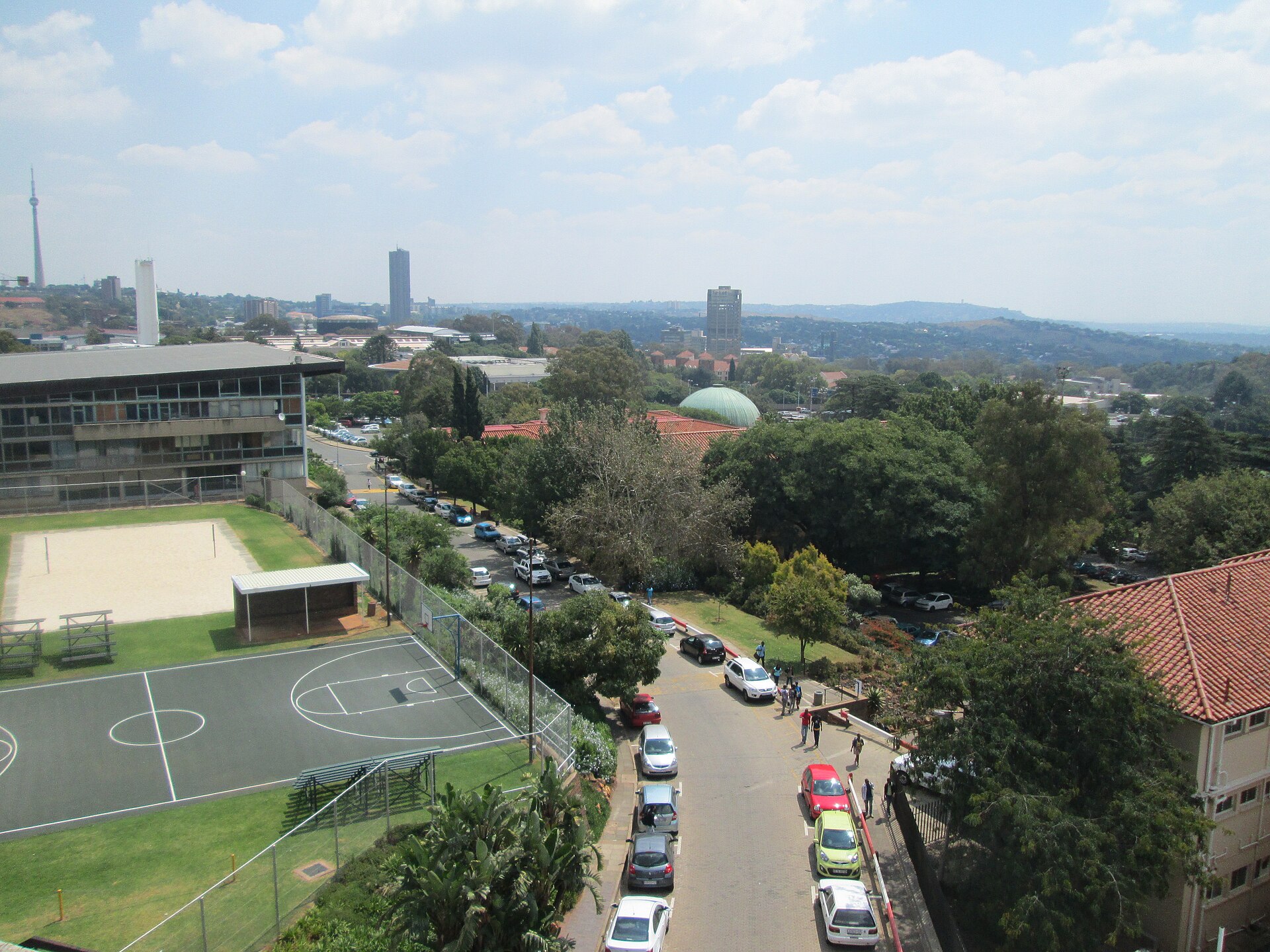
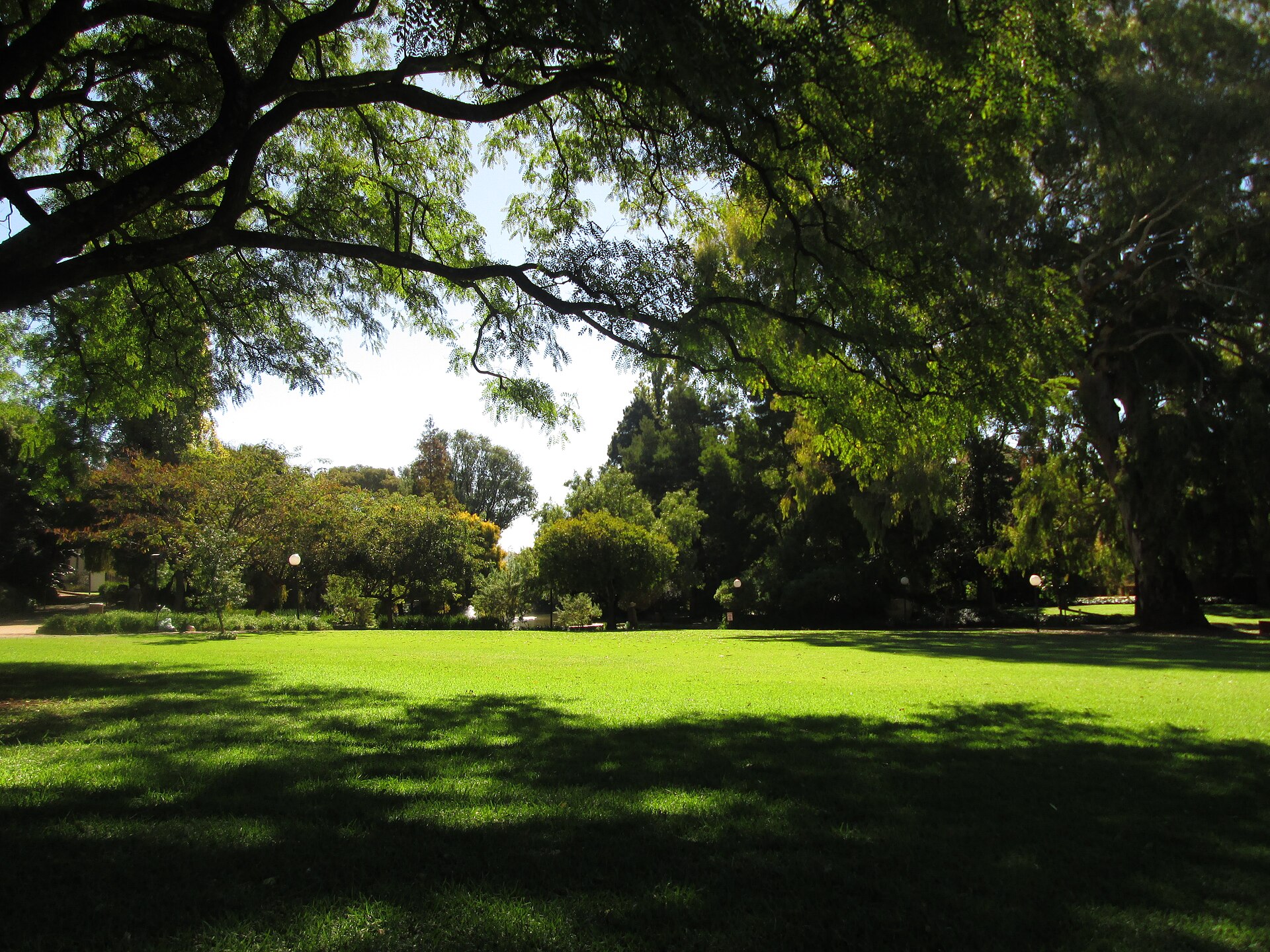
University of Johannesburg — campus in pictures
Real, freely-licensed photographs of the campus (via Wikimedia Commons).




WHY UJ
Why Choose the University of Johannesburg — Africa's Rising Global University
UJ is not simply a South African institution — it is an African university with global ambitions. Its rapid ascent in global rankings, distinctive Fourth Industrial Revolution focus, and pan-African vision make it a compelling choice for any student who wants to be at the forefront of Africa's transformation.
ADMISSIONS SELECTIVITY
UJ Acceptance Rate & Admission Profile
The University of Johannesburg accepts approximately 55% of applicants across all programmes, making it moderately selective. However, selectivity varies significantly by faculty and programme — Engineering, Health Sciences, Law, and the College of Business and Economics are considerably more competitive. International students are assessed on the strength of their academic qualifications and, for postgraduate study, their research potential.
Acceptance rate reflects the institution-wide figure. High-demand programmes in Engineering, Medicine, Law, and Business operate their own minimum Academic Point Scores (APS) and may be substantially more selective. Always check your faculty's specific entry requirements on the UJ admissions portal.
QUICK FACTS
University of Johannesburg — At a Glance
UJ is South Africa's fifth-largest university by enrolment and its fastest-rising in global rankings. Formed from the 2005 merger of Rand Afrikaans University (itself founded 1966), Technikon Witwatersrand (tracing roots to 1903), and Vista University campuses, UJ inherited the technical and research heritage of all three. The university is publicly funded, co-educational, and classified as a comprehensive research institution by South Africa's Department of Higher Education.
WHAT YOUR APPLICATION INCLUDES
Components of a UJ Application
UJ uses a direct online application portal — no Common App, UCAS, or third-party system. Applications are submitted at apply.uj.ac.za. Below are the standard documents required for international undergraduate applicants.
ADMISSION PROFILE
What UJ Looks for in International Applicants
Beyond grades, UJ values applicants who bring diverse perspectives to its campus — particularly those from across the African continent. For postgraduate and research programmes, your prior academic performance, research experience, and the quality of your motivation letter matter considerably.
UJ's undergraduate admissions are primarily qualifications-driven. South Africa's system uses an Academic Point Score (APS), which converts your Grade 12 results into a numerical score. As an international student, your senior school qualification is converted to an equivalent APS. IB Diploma holders with 28+ points are typically eligible for most programmes; competitive faculties require higher scores.
APPLICATION TIMING
Application Deadlines & Process
Always confirm current-year deadlines on the official UJ online application portal, as dates shift from year to year and some programmes close earlier when full. Note that UJ has no application fee — submissions are free.
UJ typically opens applications for the following year in April, with an early closing date for oversubscribed programmes and a general closing date in September. These dates are for the South African academic year, which begins in February. International students are strongly advised to apply as early as possible to allow time for document verification, visa processing, and residence allocation.
Always verify current deadlines at apply.uj.ac.za. These are indicative windows only and change annually.
| Intake | Typical_open | Typical_close | Notes |
|---|---|---|---|
| Mainstream (February start) | April | September | Main academic year; apply early for competitive programmes |
| Mid-Year Intake (July start) | Varies by faculty | Varies by faculty | Not all programmes offer mid-year entry; confirm per faculty |
| Postgraduate Applications | Varies by programme | Oct–Nov for Feb start | Research degrees may accept rolling applications; check department |
CAMPUS & CITY LIFE
Student Life at UJ and in Johannesburg
UJ offers on-campus accommodation in over 35 residences and accredited off-campus properties within 2 km of each campus — housing approximately 19,000 students. The university runs UJFM (95.4 FM) as its student radio station and the UJ Observer as its student newspaper. Over 20 sports are represented, with facilities including UJ Stadium. Student governance operates through the UJSRC (Students' Representative Council) with campus-level councils at each of the four campuses.
The University of Johannesburg's four campuses offer genuinely different experiences within Africa's most cosmopolitan city. Auckland Park Kingsway (APK) is the main administrative and social hub, home to the largest academic departments and most student facilities. Auckland Park Bunting Road (APB) is the creative campus — home to the Faculty of Art, Design and Architecture. Doornfontein (DFC) is UJ's engineering and health sciences campus, close to the city centre. The Soweto campus (SWC) carries historical significance as a former Vista University site.
CAREERS & OUTCOMES
Graduate Career Outcomes at UJ
UJ's College of Business and Economics feeds graduates into South Africa's Big Four banks (ABSA, Standard Bank, Nedbank, FNB), Big Four accounting firms, and a growing fintech sector. Engineering graduates are recruited into mining, infrastructure, and manufacturing — sectors where South Africa has global significance. Health Sciences alumni enter both public hospitals and South Africa's growing private healthcare network. Law graduates pursue careers at top South African law firms and in the public sector. The Faculty of Art, Design and Architecture is a pipeline for South Africa's creative industries.
UJ's graduates benefit from the university's position in Africa's business and innovation capital. With an employment rate of approximately 80% among recent graduates, UJ consistently places alumni into South Africa's leading corporations, government institutions, and growing startup ecosystem.
Average starting salary reflects South African market rates converted to USD. Real-world earnings depend heavily on field, programme, and individual career trajectory.
FREQUENTLY ASKED QUESTIONS
UJ Admissions — FAQs for International Students
Is the University of Johannesburg a good choice for international students?+
Yes. UJ is ranked among the top 5 universities in South Africa and #312 globally (QS 2026). It is the only African member of Universitas 21, a consortium of 28 elite research universities. With 7% international enrolment from 80+ countries and four urban campuses in Africa's business capital, it offers a genuinely global learning environment at a fraction of the cost of comparable ranked universities in Europe or North America.
What is the minimum IB score to apply to UJ?+
UJ's general minimum for the IB Diploma is 28 points overall. However, competitive programmes — Engineering, Health Sciences, Law, and Business — typically set their own minimum APS (Academic Point Score) equivalents, which may require higher total scores and specific Higher Level subject grades. Always check your specific programme's requirements.
Do I need to take the SAT or ACT for admission?+
No. UJ is test-blind with respect to the SAT and ACT — these scores are neither required nor considered. Admissions are assessed on your senior school qualification (IB Diploma, A-Levels, or national equivalent) and, where relevant, English proficiency test scores.
What are the English proficiency requirements?+
International applicants whose schooling was not in English must submit IELTS Academic (minimum 6.0 overall) or TOEFL iBT (minimum 80). If your secondary school used English as the medium of instruction, you may be exempt — the UJ International Office advises on a case-by-case basis.
Is there an application fee?+
No. UJ charges no application fee, which is one practical advantage over many overseas universities. Applications are submitted online through apply.uj.ac.za.
When should I apply as an international student?+
Apply as early as possible — ideally in April or May when applications open — especially for competitive programmes and if you need on-campus accommodation. The general deadline is typically September, but oversubscribed programmes close early. Applications for a February start should factor in visa processing time, which can take several months.
What student visa do I need?+
You need a South African Study Permit issued by the Department of Home Affairs. UJ's International Office provides admission letters and supporting documents required for your permit application. Do not travel to South Africa on a tourist visa expecting to convert it — apply for the study permit from your home country.
Is accommodation available for international students?+
Yes. UJ offers over 35 residences and accredited off-campus accommodation for approximately 19,000 students. International students are encouraged to apply for accommodation at the same time as their programme application, as spaces are competitive.
ACADEMIC EXPECTATIONS
Academic Requirements for International Students at UJ
Understanding how your qualifications translate to UJ's system — and what academic profile gives you the strongest chance.
UJ's admissions are primarily grades-based. There is no standardised test requirement (the university is test-blind on SAT/ACT), no audition for most programmes, and no mandatory application essay for undergraduate entry. Your senior school performance — and in particular the subjects you studied and the grades you earned — determines eligibility.
The University of Johannesburg operates within South Africa's National Qualifications Framework (NQF), which defines entry requirements using the Academic Point Score (APS) — a numeric conversion of your senior school subject grades. As an international student, the UJ International Office will assess your qualification against APS equivalency tables. Understanding this system is essential before applying.
ACADEMIC BENCHMARKS
Admission Academic Profile
The table below summarises the key academic benchmarks used in UJ admissions assessments for international students. Hard numbers are drawn from verified sources only.
These are minimum thresholds. Competitive programmes (Engineering, Health Sciences, Law, Business) may require significantly higher scores and specific subject prerequisites. Always verify requirements for your specific programme at uj.ac.za.
STANDARDISED TESTS
UJ's Test-Blind Policy
This test-blind approach means your IB Diploma total, A-Level grades, or national school-leaving certificate results are the primary academic metric. Subject selection matters: UJ's faculties specify required and recommended subjects — for instance, Engineering requires Mathematics and Physical Sciences at strong grades; Health Sciences require Mathematics and Life Sciences.
UJ is fully test-blind: the SAT and ACT are neither required nor considered in admissions decisions. This is the norm across South African universities, which assess applicants on the basis of their school-leaving qualifications and internal qualification equivalency frameworks rather than US-style standardised tests.
If you are considering UJ alongside US universities, you may still sit the SAT/ACT for those applications, but scores will have no bearing on your UJ application.
SOUTH AFRICAN APS SYSTEM
Understanding the APS & International Equivalency
For IB Diploma holders: the IB's 1–7 grade scale per subject maps naturally onto the APS scale. A total Diploma score of 28 meets the general university entrance threshold. Top-tier programmes (like Medicine or some Engineering streams) may require APS equivalents of 36+ — translating to roughly 34+ IB points or A-Level grades of ABB to AAA.
South Africa's Academic Point Score (APS) converts each senior school subject grade into a point value (1–7 scale per subject, with 7 subjects assessed), producing a total out of 42. Each UJ programme states a minimum APS. As an international student, your qualification is converted to an APS equivalent by UJ's International Office.
IB & A-LEVEL AT UJ
How IB and A-Level Qualifications Are Assessed
A-Level applicants should note that UJ typically assesses A-Level results as a combination of grades rather than requiring a specific number of subjects, provided prerequisites are met. Extended Project Qualification (EPQ) grades, where submitted, may be noted but are unlikely to carry significant weight in undergraduate admission — however, they strengthen postgraduate applications.
UJ has a well-established process for recognising the IB Diploma Programme. The overall diploma score maps to an APS equivalent, and individual Higher Level subject grades are reviewed for programme-specific prerequisites. A minimum of 28 IB points is the general threshold, though competitive programmes expect more.
If you are still in the IB Diploma or completing A-Levels, you can apply with predicted grades and be offered a conditional place. Final results must be submitted as soon as available and must meet or exceed the conditional offer.
SUBJECT PREPARATION
Subject Preparation by Faculty
UJ's eight faculties have specific subject prerequisites. Ensure your senior school curriculum includes the right subjects before applying.
ENGLISH PROFICIENCY
English Language Requirements
UJ's medium of instruction is English. International applicants from countries where English is not an official language or where schooling was not in English must demonstrate language proficiency.
English requirements are applied at the discretion of the UJ International Office. Always confirm what is accepted in your specific case before applying.
| Test | Minimum | Notes |
|---|---|---|
| IELTS Academic | 6.0 overall | No individual band minimum specified; confirm with International Office |
| TOEFL iBT | 80 | Internet-based test; combined score |
| Duolingo English Test | Not specified | Verify current acceptance with UJ International Office |
| English-Medium Schooling | Exemption possible | If your school's medium of instruction was English, exemption may apply — confirm |
YOUR ACADEMIC ROADMAP
Building Your Academic Profile for UJ
A year-by-year approach to preparing your strongest possible application.
COMMON PITFALLS
Academic Mistakes International Applicants Make
Items
- Applying without checking your programme's specific APS minimum — overall university thresholds are lower than many competitive faculties require
- Assuming IELTS or TOEFL is not needed because your school taught some subjects in English — always get written confirmation from the International Office
- Submitting unofficial or uncertified copies of transcripts — UJ requires certified documentation for all academic records
- Applying too late — applying close to the September deadline risks missing out on both your programme and on-campus accommodation
- Applying on a tourist visa and hoping to convert — South Africa requires a Study Permit obtained before arrival
- Underestimating APS equivalency differences — an IB score of 28 meets the general entry but many popular programmes require significantly higher APS equivalents
- Neglecting prerequisite subjects — applying to Engineering without HL Mathematics or Health Sciences without Life Sciences is almost always unsuccessful
- Failing to follow up after submitting — check your application status actively through apply.uj.ac.za and respond promptly to any requests for additional documents
Faqs
Can I apply if I don't have my final results yet?+
Yes. UJ accepts applications based on predicted/provisional grades and issues conditional offers. Your final results must be submitted as soon as available and must meet or exceed the conditions.
Are there any entrance tests I need to sit?+
Most undergraduate programmes at UJ do not require entrance tests beyond your school qualification and English proficiency test. Some programmes (e.g., in Health Sciences or specific selective programmes) may have aptitude assessments — always check with your faculty.
Does UJ offer bridging programmes if I don't meet direct entry?+
UJ offers some foundation and extended curriculum programmes for students who are close to but don't fully meet direct entry requirements. These are designed primarily for the South African context — confirm availability for international applicants with the admissions office.
COST & FINANCIAL AID
Understanding the Cost of Studying at UJ
Honest guidance on fees, living costs, and funding opportunities for international students.
That said, costs in South Africa are priced in South African Rand (ZAR), and the USD equivalent will fluctuate with exchange rates. All cost figures should be treated as estimates and verified in ZAR with UJ's Student Finance office before finalising your budget.
The University of Johannesburg is one of the most affordable well-ranked universities in the world for international students. Annual tuition for international students is approximately USD 4,500, and total cost of attendance — including accommodation, meals, transport, and personal expenses — is approximately USD 11,500 per year. These figures represent exceptional value given UJ's global ranking (#312 QS) and its location in Africa's business capital.
COST BREAKDOWN
Annual Cost of Attendance — Estimates for International Students
All figures are approximate annual estimates in USD equivalent, drawn from UJ's published data. Actual ZAR amounts will vary by exchange rate and programme.
These are USD equivalents for planning purposes. Official fees are published in ZAR. Verify current amounts on the UJ Student Finance portal and check the ZAR/USD rate at the time of your application.
| Component | Annual_usd | Notes |
|---|---|---|
| Tuition (International) | ~$4,500 | Varies by faculty; Science/Engineering may differ |
| On-Campus Accommodation | Included in CoA estimate | Part of the ~$7,000 living cost |
| Cost of Living (all-in) | ~$7,000 | Accommodation, meals, transport, personal |
| Total Cost of Attendance | ~$11,500 | Annual estimate, all costs inclusive |
| Application Fee | $0 | No application fee at UJ |
FINANCIAL AID
Financial Aid for International Students
International students should plan to be substantially self-funded or bring their own scholarship funding. Aid at UJ for internationals, where available, typically covers partial tuition rather than full costs. Do not assume aid will cover living expenses.
Approximately 15% of UJ students receive some form of financial assistance. For international students, aid availability is more limited than for South African citizens — South Africa's primary government bursary scheme (NSFAS) is restricted to South African nationals who meet means-test criteria. However, UJ does offer merit and need-based scholarships specifically accessible to international students, and the university's International Office can advise on funding pathways.
NSFAS (National Student Financial Aid Scheme) is for South African citizens only and cannot be accessed by international students.
SCHOLARSHIPS
Scholarships & Funding for International Students
UJ offers several scholarship and funding mechanisms relevant to international students. The following categories are based on UJ's publicly described funding landscape. Always verify current scholarship availability and application processes directly with UJ's Financial Aid office, as specific offerings change.
Specific scholarship names, amounts, and eligibility criteria change frequently. Verify all scholarships directly with UJ Financial Aid and the relevant external bodies before applying.
AFFORDABILITY IN CONTEXT
Is UJ Affordable for International Students?
Johannesburg's cost of living, while higher than other South African cities like Cape Town or Durban, remains far below major global academic cities. On-campus accommodation at UJ is subsidised. Transport on Johannesburg's Rea Vaya BRT or the Gautrain makes inter-campus and city commuting manageable on a student budget.
By global standards, UJ is extremely affordable. Total annual costs of approximately USD 11,500 compare favourably with US universities (average $55,000+), UK universities (£20,000-30,000/year for internationals), and Australian universities (AUD 30,000+). Even compared to other African universities attracting international students — such as those in Kenya, Ghana, or Egypt — UJ's tuition-to-ranking ratio is highly competitive.
South African Rand (ZAR) has historically been subject to exchange rate volatility. Students should maintain a financial buffer and consult their bank about currency risk when planning multi-year budgets.
FUNDING STRATEGY
Steps to Fund Your UJ Education as an International Student
COST FAQS
Cost & Aid FAQs for International Students
What is the total annual cost of studying at UJ as an international student?+
Approximately USD 11,500 per year in total cost of attendance, including tuition (~$4,500), accommodation, meals, transport, and personal expenses (~$7,000). These are USD equivalents — actual costs are in South African Rand and subject to exchange rate fluctuation. Verify current ZAR amounts with UJ's Student Finance office.
Is there an application fee?+
No. UJ charges no application fee for either South African or international students. This is one practical advantage over many international competitors.
Can I access NSFAS (South Africa's government student loan scheme)?+
No. NSFAS is exclusively for South African citizens and permanent residents who meet income eligibility criteria. International students cannot access NSFAS.
Does UJ offer financial aid to international students?+
Some merit-based and faculty-specific bursaries are available to international students, but availability is limited and changes annually. UJ is not need-blind for international students. Plan to be substantially self-funded and verify current aid options with the Financial Aid Office at the time of your application.
Are there scholarships specifically for African students from other countries?+
UJ has a strong pan-African mission and some institutional partnerships that may create funding channels for students from other African countries. The university's International Office is the best contact for current inter-country agreements. SADC regional frameworks may be relevant for students from neighbouring countries.
How does UJ's cost compare to studying in the UK, US, or Australia?+
UJ is dramatically more affordable. Total annual costs of ~$11,500 compare to $55,000+ at US universities, £20,000–30,000 at UK institutions for internationals, and AUD 30,000+ in Australia — while UJ ranks comparably in global tables and offers genuine career access to Africa's largest job market.
APPLICATION STATEMENT GUIDE
Your Application to UJ — Writing & Presenting Yourself
South Africa's university system is primarily grades-based. Here is what you actually need to know about presenting your candidacy.
For postgraduate applicants, the motivation letter or research proposal is a significant part of your application and can materially influence admission decisions. This guide covers both undergraduate and postgraduate contexts.
Unlike US or UK universities, the University of Johannesburg does not require a personal essay or supplemental essays as a standard part of undergraduate admission. UJ's undergraduate entry is assessed primarily on your senior school qualifications (APS equivalent), English proficiency, and subject prerequisites — not personal statements or essays. This guide explains what written elements ARE part of your application, when a motivation letter matters, and how to present yourself most effectively within UJ's direct application system.
APPLICATION SYSTEM OVERVIEW
How UJ Applications Work — Direct Portal, No Essays for UG
South Africa's admission system is one of the most grades-focused in the world. The APS (Academic Point Score) system reduces your qualifications to a numeric score per subject. For most UJ undergraduate programmes, if your APS equivalent meets the minimum and prerequisites are satisfied, you are a viable candidate. Character, motivation, and extracurricular accomplishments do not typically carry formal weight in undergraduate entry.
UJ operates a direct online application system at apply.uj.ac.za — no Common App, no UCAS, no Coalition. Undergraduate applications for most programmes do not include a personal statement or essay requirement. You apply by submitting your academic documents, English proficiency evidence, and personal information through the online portal.
There are exceptions: programmes in Art, Design, and Architecture require a portfolio. Some postgraduate programmes require a motivation letter or research proposal. Scholarships — internal and external — often require additional written statements.
WHEN A WRITTEN STATEMENT IS REQUIRED
Motivation Letters & Statements at UJ
While most UJ undergraduate programmes have no essay, you will need written statements in the following contexts. Treat each as an opportunity to differentiate yourself clearly and honestly.
NO PERSONAL STATEMENT FOR UNDERGRAD
Understanding Grades-First Admissions at South African Universities
This is both an advantage and a challenge. The advantage: you are assessed on what you have actually achieved academically, not on your ability to write a compelling narrative. The challenge: if your grades are at or near the minimum, there is no personal statement to compensate. This makes it even more important to arrive with grades that clearly exceed the minimum for your target programme.
If you are an international student used to writing detailed personal statements for US or UK applications, UJ's system may feel surprisingly simple. There is no Common App personal statement, no 'why UJ' essay, and no extracurricular activity list required for standard undergraduate admission. The system is deliberately meritocratic-by-grades: your APS equivalent and subject qualifications determine eligibility.
If you are applying to UJ alongside US/UK universities, write your personal statement for those applications — but don't try to submit it to UJ unless a specific programme requests it. Keep your UJ application clean and document-focused.
POSTGRADUATE STRATEGY
Strategy for Postgraduate Applicants
Postgraduate admission at UJ is more holistic than undergraduate entry. Your written motivation and research proposal (for doctoral applicants) matter significantly.
MAKING YOUR CASE
How to Present Yourself Compellingly Within UJ's System
For scholarship applications and postgraduate motivation letters, the single most important thing is specificity. UJ receives applications from across Africa and the world — generic statements about ambition are invisible. Name specific UJ researchers, courses, or research programmes. Connect your work explicitly to African and South African contexts, since this is the world UJ is designed to serve.
Since undergraduate applicants don't write essays, your 'case' is made through the precision and completeness of your application documents. The most important things you can do: apply early, ensure all documents are certified and correctly translated, and verify that your qualification meets the specific prerequisites for your programme before submitting.
COMMON APPLICATION MISTAKES
What Undermines Applications to UJ
- Applying without confirming prerequisite subjects — missing a required subject (e.g., no Mathematics for Engineering) results in automatic rejection regardless of overall grades
- Submitting uncertified or poorly translated documents — all international documents must be certified copies, and documents in languages other than English must include certified translations
- Applying close to the September deadline and missing out on accommodation — popular residences fill up early; accommodation and admission applications should run in parallel
- Writing a generic motivation letter for postgraduate programmes — supervisors and selection committees can tell immediately when a letter was written without reading their research
- Failing to address the Study Permit process early — visa processing can take months; late applications put your start date at risk
- Assuming aid will be available — for international students, financial assistance at UJ is limited and not guaranteed; have a self-funded plan before applying
- Applying to the wrong faculty for your interests — UJ's comprehensive structure means eight faculties with different cultures, requirements, and career pathways; research carefully before selecting
- Not confirming English proficiency requirements in writing — requirements may differ from what is published online; always confirm directly with the International Office
APPLICATION FAQS
Application & Statement FAQs for UJ
Do I need to write an essay or personal statement for undergraduate admission to UJ?+
No, for most undergraduate programmes at UJ, no personal statement or essay is required. Admission is based primarily on your academic qualifications (APS equivalent), subject prerequisites, and English proficiency. Exceptions include Art, Design, and Architecture programmes, which require a portfolio.
What is a motivation letter at UJ, and when is it required?+
A motivation letter is a written statement explaining your reasons for applying, your academic background, and your goals. It is required for most postgraduate applications (honours, masters, doctoral) and may be required for competitive selective undergraduate programmes. It is also a standard component of scholarship applications. It is NOT required for standard undergraduate admission at most UJ faculties.
How long should a UJ postgraduate motivation letter be?+
Typically 1–2 pages (500–800 words) unless the department specifies otherwise. Be concise and specific. Committees read many letters; those that get to the point with clear research alignment and genuine knowledge of UJ's work stand out.
Does UJ value extracurricular activities and leadership in admissions?+
For undergraduate entry, extracurricular activities are not formally assessed — UJ's undergraduate system is grades-based. For scholarships and postgraduate applications, evidence of community involvement, leadership, and professional experience adds value to your written application.
Is there an interview process at UJ?+
Most undergraduate programmes do not include formal interviews. Some competitive postgraduate programmes, particularly research degrees, may involve an informal meeting or conversation with a potential supervisor. Creative programmes in Art, Design, and Architecture may include a practical assessment or portfolio review session.
I am applying to UJ and US universities at the same time — can I reuse my Common App essay for UJ?+
For standard UJ undergraduate admission, there is no essay to submit — so your Common App essay is not relevant to the UJ application. If you are applying for a UJ scholarship or a postgraduate programme, you will write a separate, UJ-specific motivation letter rather than adapting a US-style personal statement.
Can I strengthen my application if my grades are at the minimum threshold?+
For undergraduate programmes, there is limited scope to compensate for grades below the programme minimum — UJ's system is primarily merit-by-grades. If your grades are close to but at the minimum, ensure all documents are perfect, apply early, and contact the faculty admissions office to ask whether there are supplementary assessment pathways. For postgraduate and scholarship applications, a strong motivation letter and evidence of relevant experience can matter more.
Courses — schools, degrees & intake
64 degrees across 12 groupings.
Faculty of Art, Design and Architecture (FADA) · 8 degrees
Bachelor of Fine Arts in Fine Art (Visual Art)
Bachelor of Design in Graphic Design
Bachelor of Design in Industrial Design
Bachelor of Design in Interior Design
Bachelor of Design in Fashion Design
Bachelor of Design in Jewellery Design and Manufacture
Bachelor of Design in Digital Arts and Multimedia
Bachelor of Architectural Studies
College of Business and Economics (CBE) — School of Accountancy · 2 degrees
BCom Accountancy
BCom Commercial Accounting
College of Business and Economics (CBE) — School of Consumer Intelligence and Information Systems · 3 degrees
BCom Applied Information Systems
BCom Information and Knowledge Management
BCom Marketing Management
College of Business and Economics (CBE) — School of Economics · 2 degrees
BCom Economics and Econometrics
BCom Public and Environmental Economics
College of Business and Economics (CBE) — School of Management · 4 degrees
BCom Business Management
BCom Finance and Investment Management
BCom Industrial Psychology and People Management
BCom Transport and Supply Chain Management
College of Business and Economics (CBE) — School of Tourism and Hospitality · 3 degrees
BCom Hospitality Management
BCom Tourism Management
BCom Food and Beverage Operations
Faculty of Education · 3 degrees
Bachelor of Education in Foundation Phase Teaching
Bachelor of Education in Intermediate Phase Teaching
Bachelor of Education in Senior Phase and Further Education and Training
Faculty of Engineering and the Built Environment · 10 degrees
Bachelor of Engineering in Civil Engineering
Bachelor of Engineering in Chemical Engineering
Bachelor of Engineering in Electrical and Electronic Engineering
Bachelor of Engineering in Mechanical Engineering
Bachelor of Engineering in Industrial Engineering
Bachelor of Engineering in Mining Engineering
Bachelor of Engineering in Metallurgical Engineering
BSc in Quantity Surveying
BSc in Construction Management
BSc in Town and Regional Planning
Faculty of Health Sciences · 8 degrees
Bachelor of Nursing (BNur)
Bachelor of Optometry (BOptom)
Bachelor of Health Sciences in Emergency Medical Care
Bachelor of Health Sciences in Environmental Health
Bachelor of Health Sciences in Biomedical Technology
Bachelor of Health Sciences in Medical Orthotics and Prosthetics
Bachelor of Health Sciences in Sport and Movement Studies
Bachelor of Health Sciences in Radiography (Diagnostic)
Faculty of Humanities · 11 degrees
Bachelor of Arts (General)
Bachelor of Arts in Communication
Bachelor of Arts in Psychology
Bachelor of Social Work
Bachelor of Arts in Sociology
Bachelor of Arts in Politics
Bachelor of Arts in Geography and Environmental Management
Bachelor of Arts in History
Bachelor of Arts in Philosophy
Bachelor of Arts in Language Practice
Bachelor of Arts in Theology
Faculty of Law · 1 degrees
Bachelor of Laws (LLB)
Faculty of Science · 9 degrees
BSc in Biochemistry
BSc in Botany and Zoology
BSc in Chemistry
BSc in Computer Science and Informatics
BSc in Mathematics
BSc in Physics
BSc in Geology
BSc in Statistics
BSc in Environmental Science
Want your real chances at University of Johannesburg?
Create a free TYCHR account for your personalised admit-chance, a shortlist you can track, exact entry requirements, and essay + counselling help.