University of Illinois Chicago
Chicago, United States · Urban
ADMISSIONS GUIDE
University of Illinois Chicago for International Students
Chicago's only public research university places you at the centre of one of the world's great cities. UIC combines world-class research facilities — including the largest medical school in the United States by enrolment — with direct access to Loop employers, global hospitals, and a genuinely diverse, urban campus community. For ambitious international students seeking a rigorous research education and a real-city career launchpad at a public-university price point, UIC is a compelling destination.
With more than 34,000 students, a global QS ranking of 294 and a Times Higher Education ranking of 170, UIC sits in the upper tier of American public research universities. Its strength in health sciences, engineering, architecture, and computing — paired with Chicago's unrivalled professional ecosystem — makes it particularly compelling for students targeting careers in medicine, technology, finance, and design.
Campus
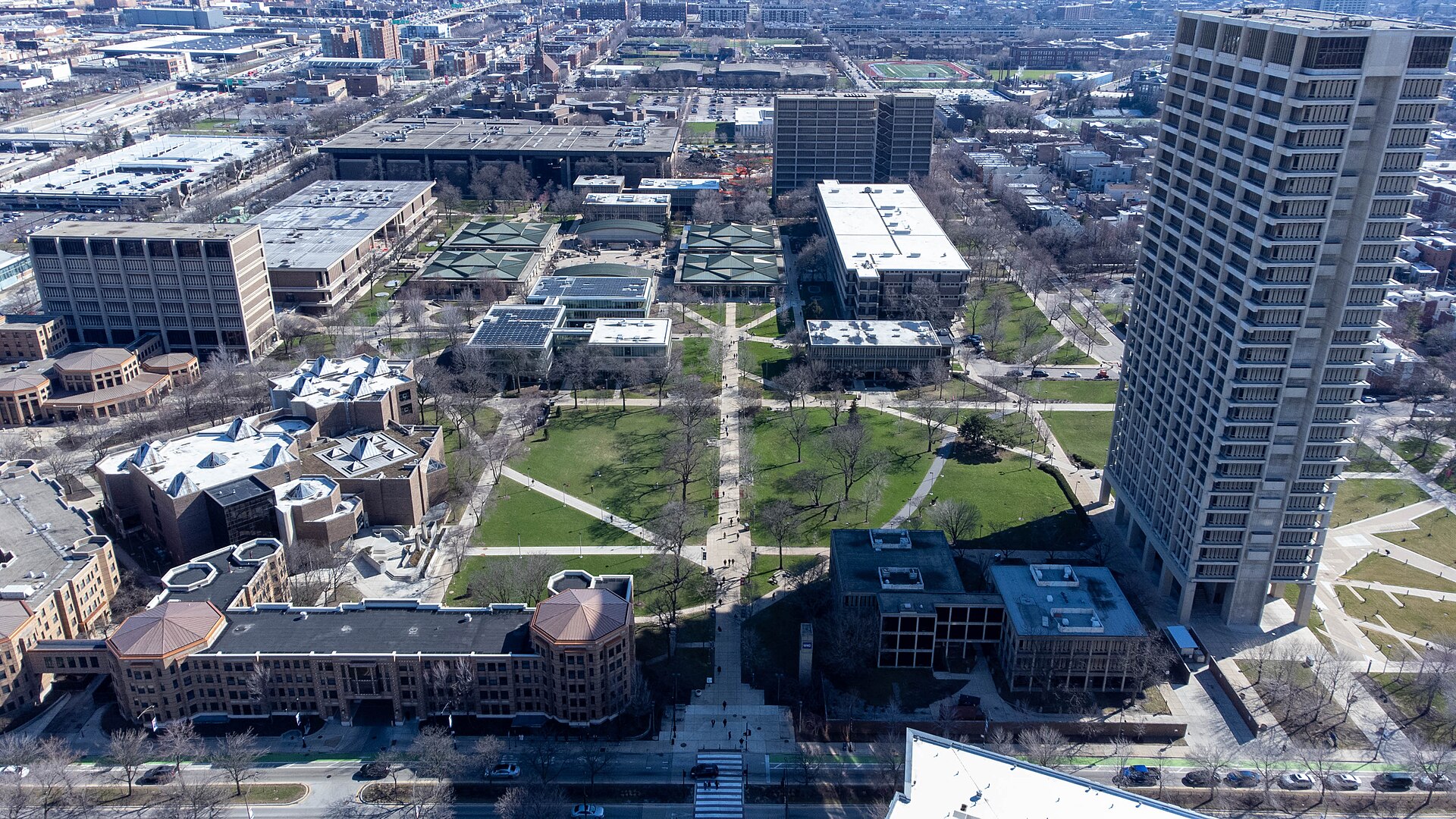
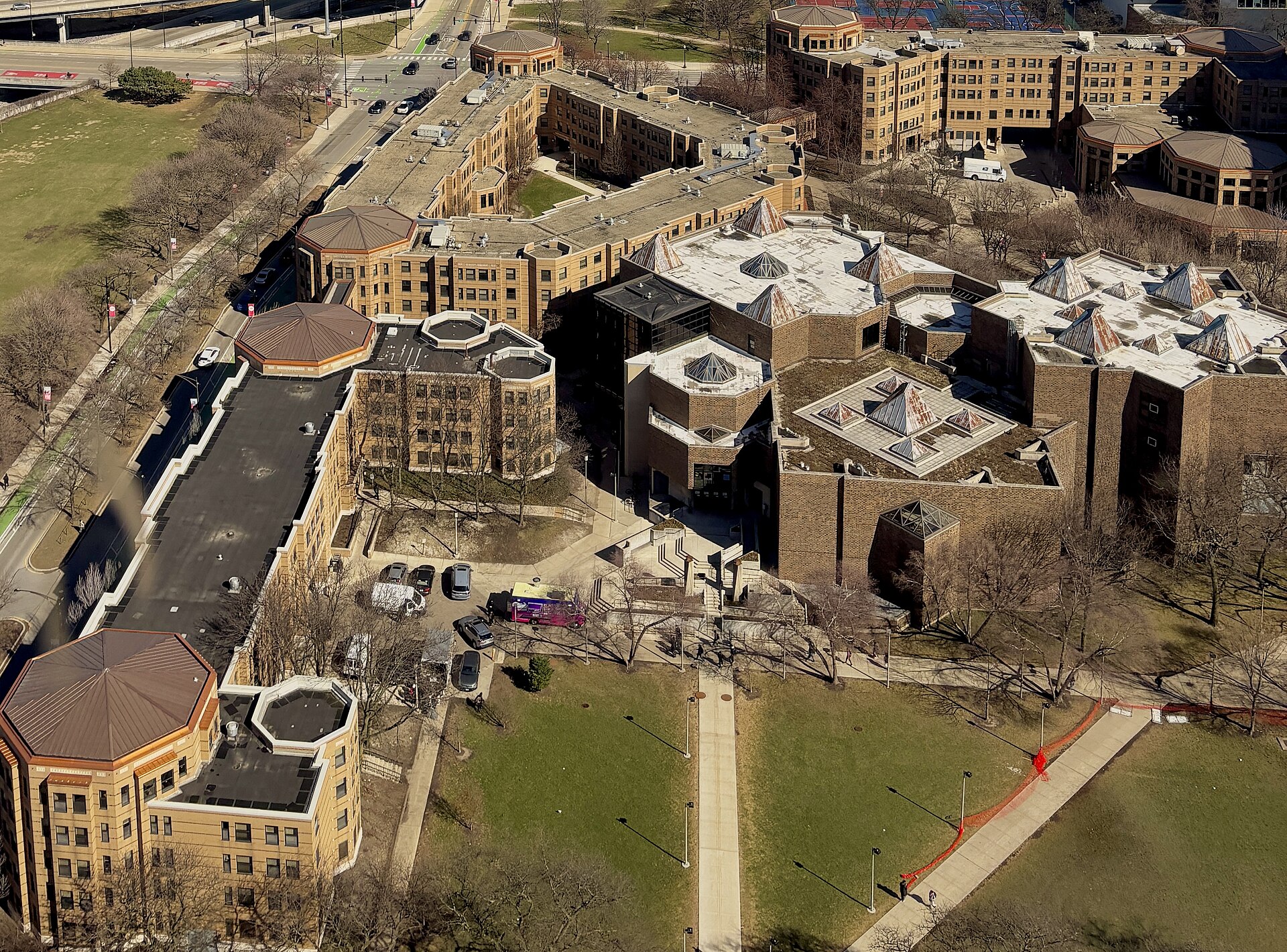
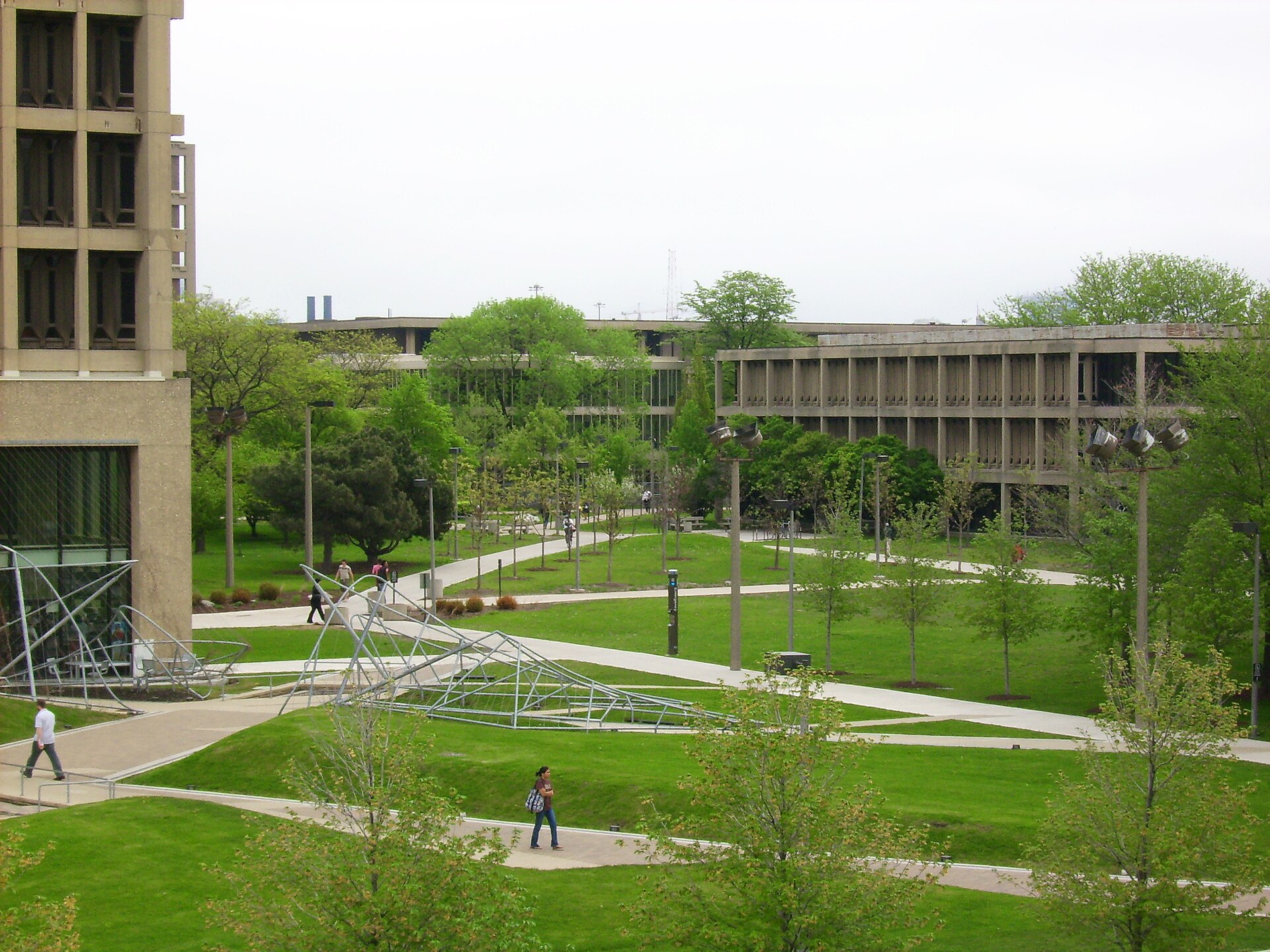
University of Illinois Chicago — campus in pictures
Real, freely-licensed photographs of the campus (via Wikimedia Commons).



WHY UIC
Why Choose UIC — Research, City & Career Access
UIC is not a typical large public university. It occupies a unique niche: R1 research intensity, a world-city location, and an inclusive urban mission that produces graduates ready for day-one professional impact.
SELECTIVITY
Admissions Profile Who Gets In
UIC has an overall acceptance rate of 79%, making it accessible to strong students while still being selective for competitive programmes such as Nursing, Computer Science, and Architecture. Being admitted does not guarantee entry to a specific major — programme-level selectivity varies considerably. International students should target the upper end of the test and GPA bands.
AT A GLANCE
UIC Quick Facts
WHAT YOU NEED
Application Components
UIC uses the Common App for first-year undergraduate admissions. The application is holistic but grades and academic rigour are the primary drivers. International applicants must also submit English proficiency scores and additional documentation.
ADMISSIONS PROFILE
What UIC Looks For
For competitive programmes like Computer Science, Nursing, and Architecture, higher-end academic credentials are expected. Beyond grades, UIC values students who demonstrate community engagement, intellectual curiosity, and the ability to contribute to a diverse urban campus.
UIC's admissions process is holistic, but academic achievement is the cornerstone. The admissions committee evaluates the rigour of your curriculum alongside your grades — students who challenge themselves with IB, A-Level, AP, or the most demanding courses available in their system are viewed favourably.
KEY DATES
Application Deadlines
UIC offers Early Action (non-binding) and Regular Decision rounds for fall entry, and a separate spring intake. Early Action is strongly recommended for international students who need additional time to secure housing, visa documentation, and financial arrangements.
Deadlines shown are for Fall 2027 entry as published. Always verify the current-cycle deadlines at admissions.uic.edu before submitting.
| Round | Deadline | Decision | Notes |
|---|---|---|---|
| Early Action (Fall) | 2 November | Mid-December | Non-binding; recommended for internationals |
| Regular Decision (Fall) | 1 February | March–April | Main intake round |
| Spring Intake | 1 October | Rolling | Limited programmes |
CAMPUS & CITY
Student Life in Chicago
On campus, UIC hosts more than 300 student organisations spanning cultural associations, academic clubs, entrepreneurship groups, and competitive sports. The Flames compete in NCAA Division I (Horizon League), and campus recreation facilities are extensive. On-campus housing is available for first-year students; the majority of upperclassmen live in nearby Chicago neighbourhoods well-served by public transit.
UIC's campus sits in the Near West Side neighbourhood of Chicago, walkable to the Medical District and minutes by CTA rail from the Loop, Millennium Park, and Lake Michigan. Chicago is one of the world's great cities — a hub for architecture, music, food, finance, technology, and medicine — and students routinely cite the city as a core part of their UIC experience.
AFTER GRADUATION
Career Outcomes
Top hiring sectors include healthcare and medicine, technology, financial services, architecture and urban planning, and public sector. Graduate schools at peer institutions — including UIC's own graduate programmes — recruit heavily from the undergraduate body. UIC alumni hold leadership positions across major Chicago institutions including Rush University Medical Center, Advocate Health, Accenture, and the City of Chicago itself.
UIC's position inside one of America's most dynamic economies gives graduates a distinct advantage. The university's location means students spend four years building internship portfolios and professional networks within the same city where they hope to work — a compounding advantage that campus-only universities cannot offer.
FAQs
Frequently Asked Questions
Is UIC a good university for international students?+
Yes. UIC ranks #170 in the Times Higher Education World University Rankings and #294 in QS. Its urban location in Chicago means abundant internship and career opportunities, and its diverse student body (9% international, 100+ nationalities) creates a welcoming environment. Health sciences, engineering, and computer science are particularly strong.
What is the acceptance rate at UIC?+
The overall acceptance rate is 79%, making UIC accessible to strong academic candidates. However, admission is programme-specific — highly competitive programmes like Nursing and Computer Science are considerably more selective. Applying with credentials at or above the middle 50% band strengthens your position.
Is UIC test-optional for international students?+
Yes. UIC's test-optional policy applies to all applicants, including international students. You may submit SAT or ACT scores if they strengthen your application, but omitting them will not disadvantage you. Note that English proficiency test scores (TOEFL/IELTS/Duolingo) are separate from standardised admissions tests and remain required.
Can international students get financial aid at UIC?+
UIC is a public university and most institutional aid and merit scholarships are reserved for Illinois residents or US citizens/eligible non-citizens. International students are not eligible for US federal financial aid (FAFSA). Some merit-based opportunities may be available — verify with the Office of Financial Aid. Most international students at UIC are self-funded.
What is the total cost for an international student at UIC?+
Based on published figures, non-resident tuition is approximately $32,000 per year and the total cost of attendance including housing, meals, and personal expenses is approximately $52,000. International applicants also pay a one-time $100 international document evaluation fee in addition to the standard $70 application fee.
Does UIC have early action?+
Yes. UIC offers non-binding Early Action with a deadline of 2 November for fall entry. Decisions are released in mid-December. International students are encouraged to apply Early Action to allow more time for visa, housing, and financial documentation. Always verify the exact deadline for your entry year at admissions.uic.edu.
Is the IB Diploma accepted at UIC?+
Yes. UIC accepts the IB Diploma and recognises IB Higher Level courses for credit. A competitive IB score for UIC is typically 30 or above. UIC may award college credit for HL subjects with scores of 5, 6, or 7 — verify current credit policies with the Registrar.
What programmes is UIC best known for?+
UIC is globally recognised for health sciences (home to America's largest medical school), nursing, public health, computer science, architecture, engineering, and neuroscience. It is also a significant research institution in kinesiology, data science, and urban planning.
ACADEMICS
Academic Expectations for International Students
UIC is a serious research university. The academic environment rewards intellectual rigour, independent inquiry, and a willingness to engage with urban complexity — from the laboratory to the city itself.
International students considering UIC should understand that admission to the university does not equal admission to a specific programme. Health sciences, computer science, architecture, and engineering programmes carry higher academic bars and sometimes require separate applications or portfolio submissions. Prepare your academic record with programme-level selectivity in mind.
ACADEMIC BENCHMARKS
Academic Profile
These figures represent the middle 50% range of admitted students. Competitive applicants to selective programmes should target the upper end of each band.
TEST POLICY
Test-Optional Policy
If your SAT or ACT scores are strong (particularly at or above the 75th percentile — SAT 1330 / ACT 29), submitting them can meaningfully strengthen an application for a competitive programme. If your scores fall below the 25th percentile (SAT 1090 / ACT 23), it may be better to let your academic record and essays carry the application. International students from education systems with strong external examinations (IB, A-Levels, CBSE, HSC) often present those credentials effectively without US standardised tests.
UIC operates a test-optional policy for undergraduate admissions. Submitting standardised test scores (SAT or ACT) is entirely your choice — a decision not to submit will not be held against you, and your application will receive the same holistic review.
SAT & ACT
Standardised Tests
If you choose to submit test scores, UIC considers the highest section scores from multiple test sittings (superscoring for SAT). Both SAT and ACT are accepted equally.
IB & A-LEVELS
IB Diploma & A-Level Recognition
UIC awards credit for IB Higher Level subjects. Scores of 5, 6, or 7 on HL exams typically qualify for college credit, enabling students to place out of introductory courses and potentially reduce time to graduation. Verify the current credit equivalency table on the UIC Registrar's website as policies update annually.
UIC actively recruits IB Diploma students and recognises the IB as strong preparation for university-level work. A typical competitive IB score for UIC is 30 or above. For selective programmes like Computer Science or Nursing, scores in the mid-30s are more competitive.
SUBJECT PREPARATION
Subject Rigour by Programme
UIC expects academic preparation specific to your intended programme. Generic academic profiles are less competitive for restricted-entry courses.
ENGLISH PROFICIENCY
English Language Requirements
All international applicants who are non-native English speakers must demonstrate English proficiency. UIC accepts multiple tests. Scores must be valid (within two years of the test date) and submitted directly by the testing agency.
Exemptions apply if you have completed two or more consecutive years of full-time study in English at a secondary school or university in a recognised English-speaking country. SAT/ACT verbal scores may also qualify for exemption — verify with the international admissions office.
| Test | Minimum Score | Notes |
|---|---|---|
| TOEFL iBT | 80 | UIC institutional code: 1851 |
| IELTS Academic | 6.5 | Band score; submitted via IELTS portal |
| Duolingo English Test | 110 | Accepted for most programmes |
| PTE Academic | 54 | Pearson Test of English |
GRADE-BY-GRADE
Building Your Profile — Grade 9 to 12
COMMON PITFALLS
Academic Mistakes to Avoid
- Underestimating programme-level selectivity: UIC's 79% overall acceptance rate masks much higher bars for Nursing, CS, and Architecture. Research specific programme requirements before applying.
- Neglecting the English proficiency requirement: Submitting a TOEFL or IELTS score below UIC's minimum (80 / 6.5) results in automatic rejection regardless of academic strength.
- Treating test-optional as 'tests don't matter': For competitive programmes, strong SAT/ACT scores remain a differentiator. Submit them if they support your application.
- Applying only Regular Decision: International students benefit from Early Action's earlier decision timeline, which allows more time for visa processing, housing applications, and financial planning.
- Providing unofficial or unverified transcripts: UIC requires official documents. Documents in non-English languages must be accompanied by ATA-certified translations or they will not be evaluated.
- Ignoring IB credit opportunities: Many IB HL students arrive at UIC eligible to place out of multiple introductory courses. Not claiming credit means paying for courses you've already mastered.
COST & FINANCIAL AID
Understanding the Cost for International Students
As a US public research university, UIC offers significantly lower tuition than comparable private universities — but international students should plan carefully, as most institutional aid is reserved for domestic students. Self-funding is the norm for international applicants.
UIC's annual cost of attendance for non-resident (international) students is approximately $52,000, making it substantially more affordable than many private US universities at similar or lower rankings. The Chicago cost of living is moderate compared to New York or San Francisco, and students who live off-campus in adjacent neighbourhoods typically find manageable options.
ANNUAL COSTS
Cost Breakdown
All figures are approximate annual estimates in USD for non-resident/international undergraduate students. Actual costs vary by programme, housing choice, and personal spending.
Four-year total at current rates is approximately $208,000 before any aid. Verify current tuition at admissions.uic.edu before planning.
| Component | Annual Cost Usd | Notes |
|---|---|---|
| Non-Resident Tuition | $32,000 | Per academic year |
| Total Cost of Attendance | $52,000 | Includes tuition, housing, meals, books, personal |
| Living Expenses Estimate | $16,000 | Housing, meals, transport, personal |
| Application Fee | $70 | Standard fee; +$100 international evaluation fee |
FINANCIAL AID
Financial Aid for International Students
A limited set of merit-based opportunities may be available to international students — contact the UIC Office of Financial Aid directly to understand current eligibility. Most international undergraduates at UIC are self-funded. Students should have sufficient financial documentation to satisfy the I-20 process for an F-1 student visa, demonstrating the ability to cover one year of costs upfront.
UIC is a public university and the majority of its institutional financial aid and scholarship programmes are restricted to Illinois residents or US citizens and eligible non-citizens. International students are not eligible for US federal financial aid (FAFSA-based grants and loans).
The facts file indicates an average aid percentage of 25% — this reflects aid distributed across all students, the vast majority of whom are domestic. International applicants should not assume this figure applies to them.
SCHOLARSHIPS
Scholarship Opportunities
The following named scholarships are offered by UIC. Note that most are restricted to Illinois residents or US citizens/eligible non-citizens. International students should verify eligibility directly with the scholarship office.
AFFORDABILITY
Net Price Reality
Chicago's size means students can find off-campus housing in nearby neighbourhoods — Pilsen, Wicker Park, Ukrainian Village — at various price points. Students with on-campus work authorisation (F-1 students may work up to 20 hours per week on campus) can offset some personal expenses, though this should not be relied upon for tuition coverage.
At approximately $52,000 total cost of attendance per year, UIC is considerably more affordable than private US universities of comparable rank. Top-ranked private research universities often cost $80,000–$90,000 per year before aid. For international students who are self-funding or receiving minimal aid, UIC represents genuine value.
FUNDING PLAN
Steps to Plan Your Funding
COST FAQs
Cost & Aid — Frequently Asked Questions
How much does UIC cost per year for an international student?+
The estimated total cost of attendance is approximately $52,000 per year, which includes non-resident tuition of approximately $32,000 plus housing, meals, books, and personal expenses. The application fee is $70 (standard) plus a $100 international document evaluation fee.
Can international students get financial aid from UIC?+
Most UIC institutional aid is restricted to Illinois residents or US citizens/eligible non-citizens. International students are not eligible for US federal financial aid. Some merit-based opportunities may exist — contact the financial aid office directly. Most international students at UIC are self-funded.
Is UIC cheaper than other US universities of similar ranking?+
Yes. As a public university, UIC's cost of attendance ($52,000/year) is substantially lower than comparable private research universities, which often cost $80,000–$90,000 per year. For self-funded international students, this is a meaningful distinction.
Can I work to cover costs while studying at UIC?+
F-1 visa holders may work up to 20 hours per week on campus during the academic year and full-time during official breaks. You cannot legally work off-campus without additional authorisation (e.g., Curricular Practical Training for internships). On-campus work can help with personal expenses but is not sufficient to cover tuition.
What is the Chicago cost of living like for students?+
Chicago is more affordable than New York, Boston, or San Francisco. Off-campus housing near UIC typically ranges from shared apartments to dormitory-style options. Students on moderate budgets who live off-campus in adjacent neighbourhoods can reduce their annual living cost. UIC estimates living expenses at approximately $16,000 per year.
ESSAYS & APPLICATIONS
Your UIC Application Essays Why They Matter
UIC uses the Common App. Your essays are the primary tool the admissions committee uses to understand who you are beyond grades and test scores — particularly for a diverse, urban university whose mission is to educate students for real-world impact in their communities.
UIC's holistic review means that a well-crafted personal essay can make a meaningful difference, especially when academic credentials cluster in similar ranges. The admissions team is reading for authenticity, self-awareness, and fit with UIC's urban mission — not for polished literary performance or impressive résumé items.
APPLICATION OVERVIEW
How the Application Works
UIC accepts the Common Application for all first-year undergraduate applicants. The Common App consists of a shared personal essay plus any institution-specific supplemental prompts that UIC adds to its portal.
Always verify the current UIC supplemental prompts directly within the Common App portal. Prompts change annually and third-party lists are frequently outdated.
ESSAY PROMPTS
Common App Personal Essay Prompts
The Common App offers seven personal essay prompts for the 2026–2027 application cycle. You select one and respond in up to 650 words. All prompts carry equal weight. Below are the official prompt options with strategic guidance for UIC applicants.
PERSONAL ESSAY STRATEGY
Writing Your Personal Essay for UIC
UIC's mission is explicitly urban and community-oriented. Essays that connect your background, interests, or goals to community impact, research curiosity, or Chicago's unique environment resonate particularly well. That said, any essay topic can work if it is told with specificity and authentic voice. What to avoid: essays that read like résumé summaries, essays built around achievements rather than growth, and essays where the writer disappears behind events.
The personal essay is your 650-word opportunity to speak directly to the UIC admissions team as a full human being. The best essays are specific, honest, and surprising — not polished performances of achievement, but genuine windows into how you think and what you care about.
Structure: open with a vivid, specific scene or detail. Develop the narrative or reflection with concreteness. Close by connecting the experience to who you are now and what you want to do at UIC specifically. Read it aloud — if it sounds like a formal report rather than a person speaking, revise.
SUPPLEMENTAL ESSAYS
UIC Supplemental Essay Strategy
UIC may ask one or more short supplemental questions within the Common App. These typically focus on your reasons for choosing UIC and your intended area of study. Always verify current prompts in your live Common App account before writing.
Check your active Common App application for the current cycle's UIC-specific prompts. Third-party lists are often outdated.
CHOOSING YOUR TOPIC
How to Choose Your Essay Topic
The most common mistake in essay topic selection is choosing what seems impressive rather than what is true. Admissions readers are expert detectors of manufactured narratives. The right topic is not the biggest or most dramatic thing that has happened to you — it is the topic you can write about most specifically, honestly, and with genuine insight.
WHAT TO AVOID
Common Essay Mistakes
- Writing a résumé in essay form: listing achievements rather than revealing character, growth, or insight.
- Choosing the topic you think sounds impressive rather than the one you can write most honestly and specifically.
- Using generic language about 'passion for helping people' or 'love of science' without any concrete evidence or story.
- Overly formal, academic writing style: the personal essay should sound like an intelligent, articulate person, not a formal report.
- Neglecting the supplemental essay: a strong personal essay with a weak 'Why UIC' response sends a mixed signal about genuine interest.
- Writing at the word limit without editing: longer does not mean better. The 650-word cap should feel constraining — meaning you have edited ruthlessly.
- Waiting until November to start: essays require multiple drafts over weeks. Starting in July or August of your Grade 12 year gives time for real revision.
- Ignoring the Additional Information section: if there is a significant context (illness, school disruption, unusual transcript pattern), explaining it here can prevent a negative interpretation of your academic record.
ESSAY FAQs
Essays — Frequently Asked Questions
Does UIC require supplemental essays?+
UIC may include one or more short supplemental prompts in the Common App in addition to the personal essay. These typically ask about your reasons for choosing UIC and your intended programme. Verify the current-cycle requirements directly in your Common App account, as prompts change each year.
Which Common App prompt should I choose?+
Choose the prompt that best fits the story you most want to tell — not the prompt that sounds most impressive. All seven prompts carry equal weight with UIC readers. The quality of your response matters far more than the prompt choice.
How long should my UIC essays be?+
The Common App personal essay has a 650-word maximum. You do not need to reach 650 words — aim for 550–650 if possible. Supplemental short answers typically have lower limits (100–350 words depending on the prompt). Always respect stated word limits exactly.
Can I reuse my personal essay for other schools?+
Yes — the Common App personal essay is shared with all schools on your list. The supplemental questions are UIC-specific and should never be reused for other schools verbatim. Always tailor 'Why UIC' responses to UIC specifically.
Will UIC reject me if my essay is imperfect?+
A weak essay is unlikely to torpedo an otherwise strong academic profile. But it can tip borderline cases in either direction. For competitive restricted-entry programmes where academic profiles are clustered, the essay and supplementals can be the deciding factor.
Should I address my COVID-19 academic disruption in my essay?+
If COVID-19 or any other significant disruption materially affected your academic record, address it briefly in the Additional Information section of the Common App — not the personal essay. The personal essay should be used for your strongest narrative, not for explaining deficits.
Is it better to write about academic or personal topics?+
Either can work brilliantly. The distinction UIC readers care about is specificity and insight, not topic category. A personal story with deep intellectual reflection and a research project with genuine emotional resonance are both compelling. Generic versions of either are not.
Courses — schools, degrees & intake
91 degrees across 10 groupings.
College of Applied Health Sciences · 5 degrees
Health Information Management
Disability and Human Development
Health and Rehabilitation Sciences
Kinesiology
Nutrition
College of Architecture, Design, and the Arts · 16 degrees
Architectural Studies
Architecture
Art
Art Education
Interdisciplinary Education in the Arts
Graphic Design
Industrial Design
Design Studies
Music
Music Business
Music Education
Performance
Jazz Studies
Theatre and Performance
Theatre Design, Production and Technology
Acting
College of Business Administration · 8 degrees
Accounting
Finance
Information and Decision Sciences
Entrepreneurship
Human Resource Management
Management
Marketing
Real Estate
College of Education · 3 degrees
Urban Education
Human Development and Learning
Inclusive and Special Education
College of Engineering · 13 degrees
Biomedical Engineering
Chemical Engineering
Civil Engineering
Environmental Engineering
Computer Science
Computer Science and Design
Data Science
Electrical Engineering
Computer Engineering
Engineering Physics
Mechanical Engineering
Industrial Engineering
Engineering Management
College of Liberal Arts and Sciences · 40 degrees
Anthropology
Biochemistry
Biological Sciences
Black Studies
Chemistry
Classical Studies
Communication
Criminology, Law and Justice
Earth and Environmental Sciences
Economics
Computer Science and Economics
English
Teaching of English
French and Francophone Studies
Teaching of French
Gender and Women's Studies
Germanic Studies
Teaching of German
Global Asian Studies
Spanish
Teaching of Spanish
History
Teaching of History
Integrated Health Studies
Liberal Studies
Linguistics
Computer Science and Linguistics
Mathematics
Statistics
Teaching of Mathematics
Mathematics and Computer Science
Neuroscience
Philosophy
Computer Science and Philosophy
Physics
Central and Eastern European Studies
Political Science
Applied Psychology
Psychology
Sociology
College of Nursing · 1 degrees
Nursing
College of Urban Planning and Public Affairs · 2 degrees
Public Policy
Urban Studies
Retzky College of Pharmacy · 1 degrees
Pharmaceutical Sciences
School of Public Health · 2 degrees
Public Health Practice
Public Health Sciences
Want your real chances at University of Illinois Chicago?
Create a free TYCHR account for your personalised admit-chance, a shortlist you can track, exact entry requirements, and essay + counselling help.