University of Helsinki
Helsinki, Finland · Urban
FINLAND'S OLDEST UNIVERSITY
University of Helsinki Admissions Guide for International Students
Founded in 1640, the University of Helsinki is Finland's premier research university — ranked #115 globally by QS and #1 in Finland. For international students who want rigorous European academics, world-class research access, and a pathway into one of the world's most liveable cities, Helsinki offers an exceptional combination of prestige, affordability relative to Anglophone peers, and genuine academic depth. This guide walks you through everything you need to know to apply successfully.
Campus
University of Helsinki — campus in pictures
Real, freely-licensed photographs of the campus (via Wikimedia Commons).
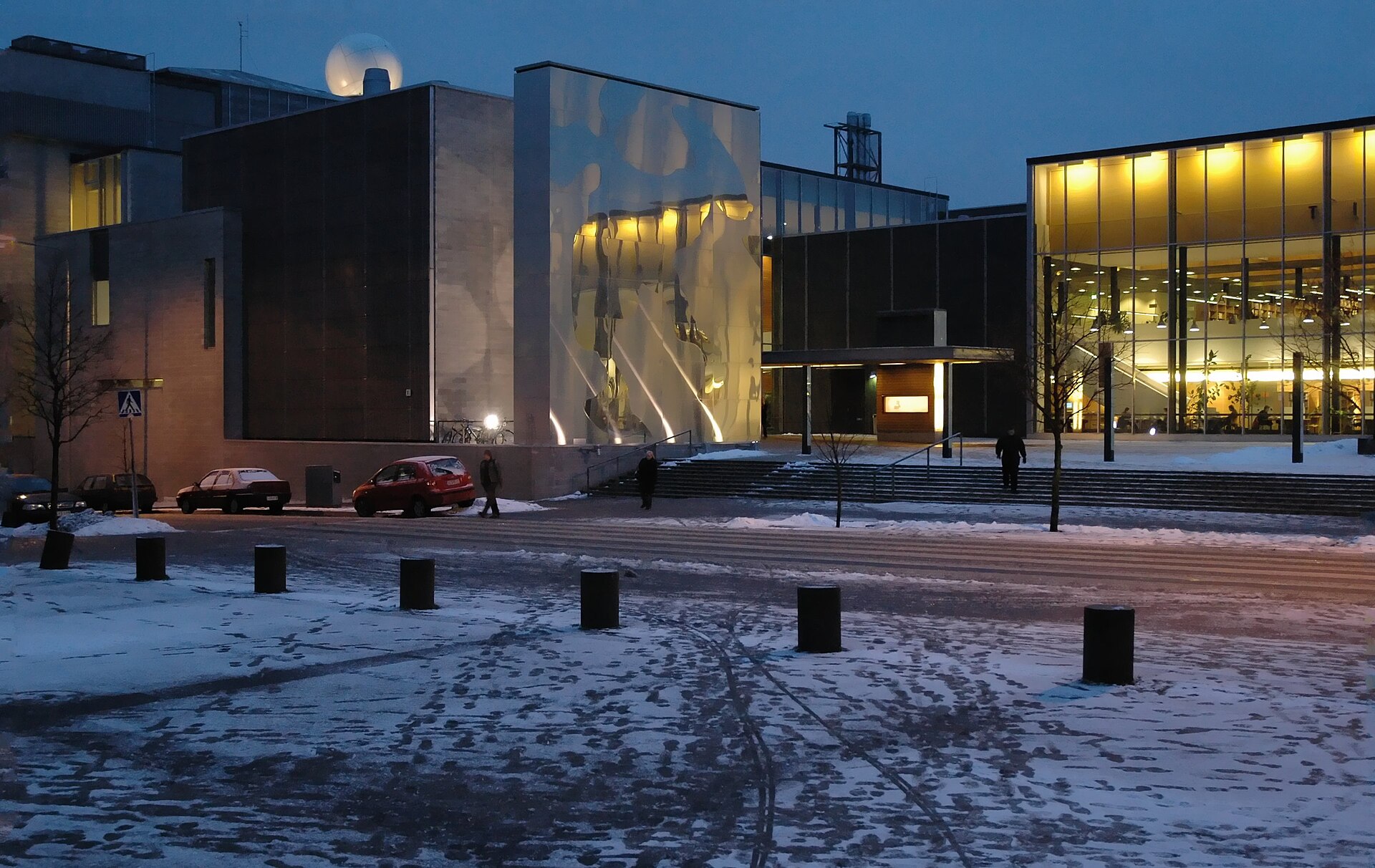


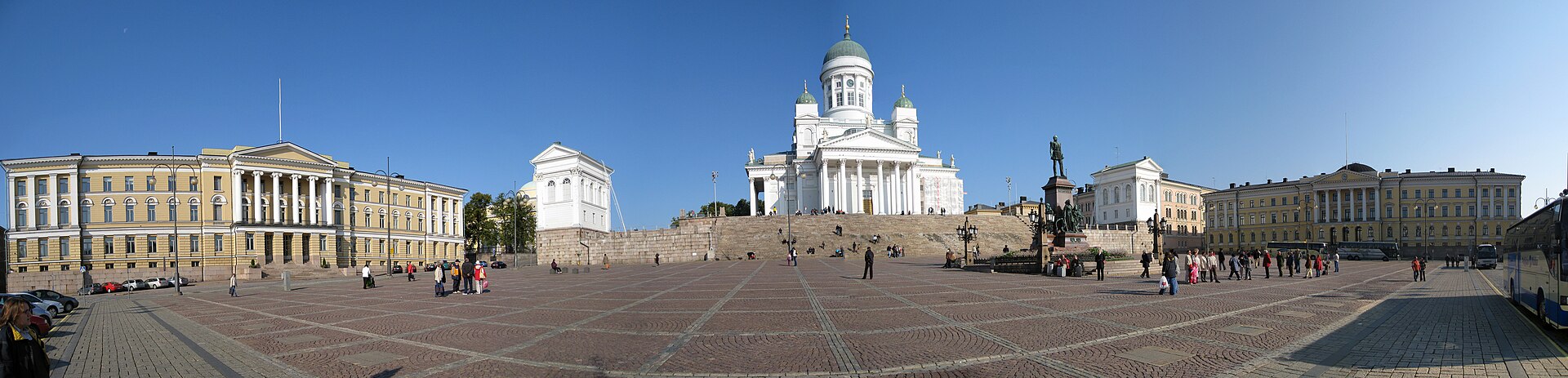

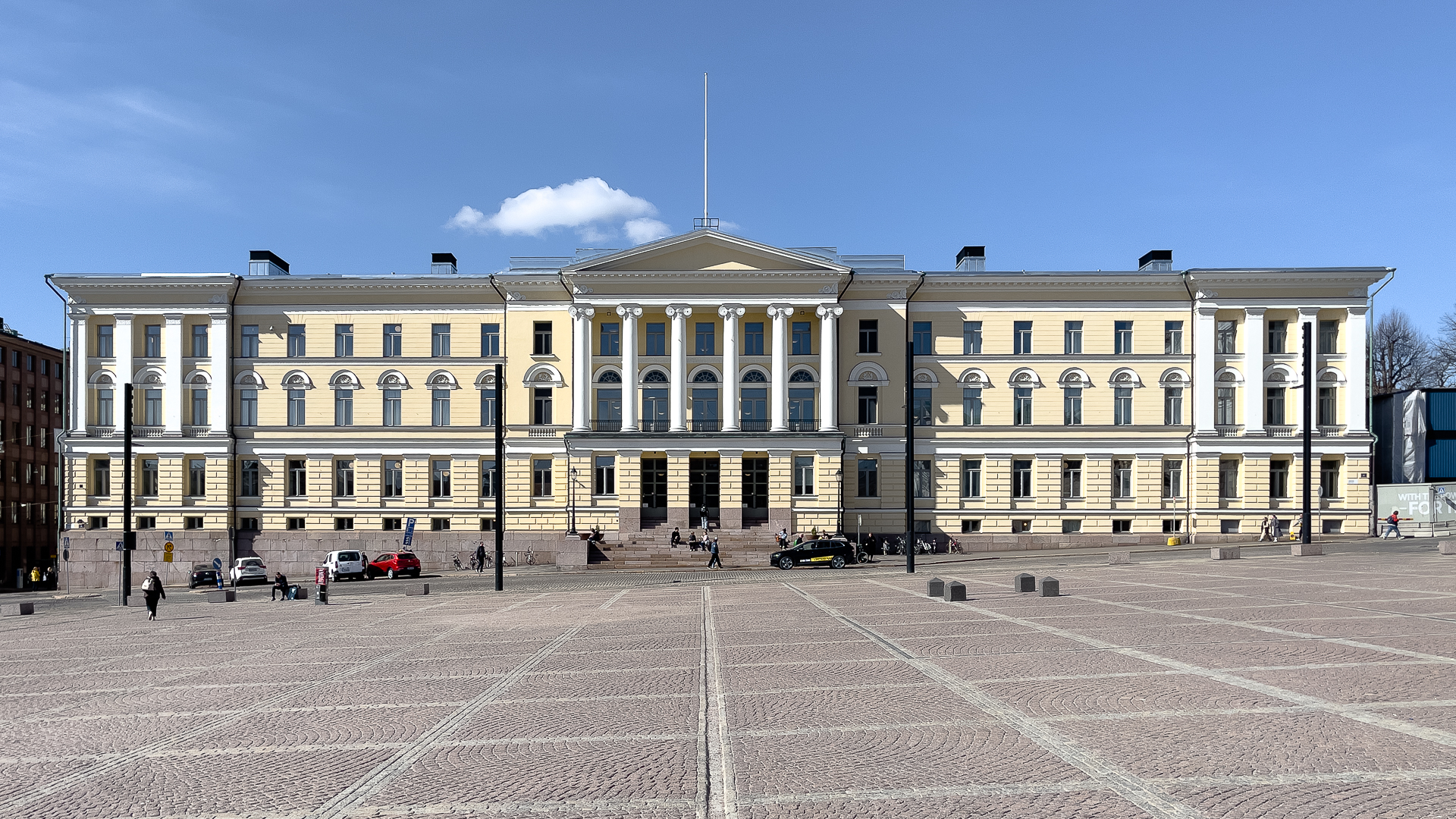
WHY HELSINKI
Why the University of Helsinki — Research, Prestige & Nordic Excellence
The University of Helsinki is not merely Finland's flagship — it is one of Europe's great research universities, a member of the League of European Research Universities (LERU), the Coimbra Group, and the Una Europa alliance. For international students, it combines academic rigour with a progressive, English-friendly environment and a city consistently ranked among the world's happiest.
SELECTIVITY
How Selective Is the University of Helsinki?
The University of Helsinki admits approximately 15% of applicants, making it moderately selective by European standards but far from a safety choice. Competition varies sharply by programme: Medicine and Computer Science are among the most competitive fields, while some Humanities and Social Science programmes have higher admission rates. International students applying in English-taught tracks compete in a separate pool from Finnish-language admissions.
QUICK FACTS
University of Helsinki at a Glance
APPLICATION COMPONENTS
What Does the Application Consist Of?
The University of Helsinki uses Studyinfo.fi — the Finnish national education application portal — for all international applications. The application is direct, programme-specific, and does not use Common App, UCAS, or any US/UK centralised system. Components differ slightly between Bachelor's and Master's tracks.
SELECTION CRITERIA
What Does Helsinki Look For?
Unlike US universities, Helsinki does not evaluate extracurricular activities, recommendation letters (for most programmes), or a personal narrative in the holistic American sense. The focus is squarely on academic suitability and demonstrated preparation for the field. For competitive programmes like Computer Science or Medicine, the bar is high — excellence in relevant subjects is non-negotiable.
Admissions at the University of Helsinki are primarily academic-merit driven. For Bachelor's applicants, the emphasis falls on your secondary school record and, for Group 1 applicants (non-Finnish/non-IB qualifications), standardised test scores (SAT or ACT). For Master's applicants, your undergraduate academic record, the relevance of your bachelor's degree to the programme, and your motivation letter carry the most weight.
DEADLINES
Application Deadlines & Rounds
The University of Helsinki accepts applications once per year for autumn-semester intake. There is no spring intake for degree programmes. All applications go through studyinfo.fi. International Master's programmes share one application window in January; Bachelor's programmes split into two groups with different deadlines.
All deadlines are for autumn intake only. There is no rolling admissions — missing a window means waiting a full year. Verify exact dates on studyinfo.fi each cycle as they may shift slightly.
| Programme | Window | Results | Acceptance |
|---|---|---|---|
| Bachelor's – Group 1 (SAT/ACT route) | 2–16 Jan 2026 | By 15 Apr 2026 | By 9 Jul 2026 |
| Bachelor's – Group 2 (IB / Finnish Matriculation) | 10–24 Mar 2026 | By 25 May–2 Jul 2026 | By 9 Jul 2026 |
| International Master's Programmes | 5–19 Jan 2027 | By Spring 2027 | Approx. July 2027 |
STUDENT LIFE
Life in Helsinki
Helsinki is compact, multilingual, and extremely English-accessible — most Finns under 50 speak English fluently, and daily life as an international student is rarely hindered by the language barrier. The city offers a remarkable quality of life: excellent public transport, world-class healthcare, year-round nature access (forests, islands, saunas), and a thriving design, music, and food culture. Finnish universities operate a robust student union (HYY — Helsinki University Student Union) with hundreds of subject associations (fuksis), sports facilities, subsidised student restaurants (Unicafé), and cultural events.
The University of Helsinki's main campus sits in the heart of central Helsinki — Senate Square, just steps from the Finnish Parliament and the Baltic Sea waterfront. The city and the university are genuinely integrated; you study in a living European capital rather than an isolated campus.
CAREER OUTCOMES
What Do Helsinki Graduates Do?
The University of Helsinki reports an employment rate of approximately 85% among graduates. Finland's economy is anchored in technology (Nokia, Rovio, Supercell), biomedical research, sustainable industries, and public administration — and Helsinki graduates are well-positioned across all sectors. Finnish degrees are internationally valued within the EU and Nordic labour markets, and the university's LERU membership provides recognition at top European employers.
Average starting salaries for Helsinki graduates are estimated at approximately $40,000 USD equivalent annually, reflective of Finnish wage norms. Finland's strong social safety net and relatively low housing costs (compared to London or Zurich) mean that real purchasing power is higher than the nominal salary figure might suggest. Many international graduates also leverage the Finnish Post-Study Work residence permit to build careers in Europe after graduation.
FAQS
Frequently Asked Questions
Do I need to speak Finnish to study at the University of Helsinki?+
No — the English-taught Bachelor's and all International Master's programmes are delivered entirely in English and require no Finnish. That said, learning basic Finnish significantly enhances your social life and post-graduation employment prospects in Finland.
Is there a spring intake for international students?+
No. All degree programmes have a single autumn intake each year. Applications for Bachelor's programmes open in January or March; for International Master's programmes, the window is January. Missing the window means waiting a full year.
Which application group applies to me as an IB Diploma student?+
IB Diploma holders apply in Admission Group 2 alongside Finnish matriculation holders. The Group 2 deadline (typically March) is later than Group 1. Your IB predicted or achieved scores are central to evaluation.
Is the University of Helsinki tuition-free for international students?+
EU/EEA students pay no tuition. Non-EU/EEA students pay approximately €13,000–€18,000 per year depending on the programme. The university offers 50% and 100% tuition fee waivers through its scholarship programme, applied for via the same admission form.
How competitive is Computer Science admission for international students?+
Computer Science is among the most competitive programmes. Strong mathematics, programming experience, and a compelling motivation letter (for Master's) are essential. Group 1 Bachelor's applicants are ranked by SAT/ACT scores among other criteria.
Can international students work while studying in Finland?+
Yes. Student visa holders in Finland can work up to 25 hours per week during term time and full-time during official vacation periods, subject to Finnish immigration rules. A part-time job in Helsinki is a realistic option.
Is there a post-study work visa after graduation?+
Yes. Finland offers a residence permit extension for job-seeking graduates — typically valid for two years after graduation — allowing international students to pursue employment in Finland or the broader EU/Nordic region.
Does the University of Helsinki recognise the IB Diploma for direct admission?+
Yes. The IB Diploma is explicitly recognised in Admission Group 2 for Bachelor's programmes. Achieved scores on Higher Level subjects are considered, though specific score thresholds vary by programme — confirm on studyinfo.fi.
ACADEMICS
Academic Expectations at the University of Helsinki for International Students
The University of Helsinki is a serious research university — one of Europe's best. Academic expectations are high, teaching is research-led, and the culture values independent thinking over rote performance. International students who thrive here come prepared with strong foundational knowledge, intellectual curiosity, and the initiative to engage with faculty and research groups from the start.
ACADEMIC PROFILE
The Admitted Student Profile
Admitted students are academically strong in their chosen field. There is no single admission test requirement — different qualification pathways apply, and each is evaluated on its own terms. What is consistent across all programmes is a track record of academic excellence and field-relevant preparation.
TEST POLICY
Standardised Tests at Helsinki
Group 1 Bachelor's applicants are ranked primarily based on their total scores across two SAT or ACT sittings. Group 2 applicants (IB Diploma, Finnish matriculation, European Baccalaureate) are NOT ranked by SAT/ACT — their admission is based on their academic qualifications directly. For Master's programmes, there is no SAT/ACT requirement; your undergraduate transcript is the central academic document.
The University of Helsinki's test policy is classified as 'required' — but this applies specifically to applicants in Bachelor's Admission Group 1. This group consists of students whose secondary qualifications are not directly equivalent to the Finnish matriculation examination or the IB Diploma (for example, students with only national board exam results, US high school diplomas without AP, or other qualifications not on Helsinki's recognised list).
SAT / ACT
SAT and ACT: Group 1 Bachelor's Applicants
If you are applying under Admission Group 1 (typically students with national secondary qualifications not recognised as equivalents to the Finnish matriculation or IB Diploma), your SAT or ACT scores are a primary ranking criterion. The university considers scores from two separate test sittings — your combined performance across both sittings is assessed, not just your best single score.
While the facts file does not record a specific SAT/ACT band for the University of Helsinki, competitive applicants at selective European research universities typically present strong scores. For context, Group 1 is inherently more competitive on test scores because it serves as an alternative pathway — aim for the top decile of your score range. Check studyinfo.fi for any published score thresholds in your specific programme.
IB Diploma and European Baccalaureate holders are NOT in Group 1 and do not submit SAT/ACT scores. They apply in Group 2 based on their qualification results.
IB / A-LEVEL / AP
How Helsinki Reads IB Diplomas and International Qualifications
A-Level qualifications are generally assessed in Group 2 as well, depending on the subject combination. AP courses on their own (without the full A-Level or IB framework) may place you in Group 1 depending on how your overall secondary qualification is classified — verify this with Helsinki's Admission Services before applying. For Master's programmes, your bachelor's degree is the primary qualification; IB scores are not relevant at that level.
The IB Diploma is recognised in Admission Group 2 for Bachelor's programmes — one of the most direct qualification pathways for internationally educated students. Your Higher Level subject grades and the overall Diploma total are considered. While the University does not publish a specific IB total cutoff in a single document, competitive programmes (particularly science, medicine, and computer science) expect excellent HL scores in relevant subjects.
SUBJECT PREPARATION
Recommended Academic Preparation by Field
Helsinki evaluates applicants for specific programmes rather than a general admissions pool. The subject rigour of your secondary or undergraduate record matters more when it aligns directly with your intended field.
ENGLISH REQUIREMENTS
English Language Proficiency Requirements
All students admitted to English-taught programmes must demonstrate English proficiency unless they have completed prior education entirely in English (with documentation). The following minimum scores apply across English-taught programmes.
| Test | Minimum | Notes |
|---|---|---|
| IELTS Academic | 6.5 overall | No individual band below standard programme requirements |
| TOEFL iBT | 92 total | Internet-based TOEFL only |
| Duolingo English Test | 120 | Accepted for most programmes; verify per programme |
| Prior English-medium education | Exempt | Must be documented (transcripts in English, or certificate of instruction language) |
PROFILE BUILDING
Building Your Profile: Year by Year
Unlike US admissions, Helsinki's evaluation is heavily academic — extracurriculars are not a formal criterion. That said, a coherent academic and intellectual profile still matters enormously, especially for Master's motivation letters and competitive programmes.
COMMON MISTAKES
Academic Application Mistakes to Avoid
- Applying in the wrong admission group — verify which group your secondary qualification falls into before the application opens; this affects your deadline and evaluation criteria.
- Missing the application window — Helsinki has a single autumn intake with brief, fixed application windows. There is no rolling admissions or late-application option.
- Submitting uncertified or non-translated documents — all transcripts not in Finnish, Swedish, or English must be submitted with certified translations. Missing documents disqualify your application.
- Underestimating the importance of the motivation letter for Master's applications — a generic letter citing 'passion for the subject' is insufficient. Helsinki readers expect evidence of academic preparation and a clear connection to the specific programme.
- Assuming all programmes are in English — many programmes at Helsinki are taught in Finnish or Swedish. Confirm the language of instruction for every programme you target.
- Applying to Medicine without understanding Finnish-language requirements — the medical programme is primarily in Finnish, making it inaccessible to most international applicants without Finnish proficiency.
- Forgetting to apply for the scholarship simultaneously — non-EU/EEA Master's applicants who want a tuition fee waiver must apply through the same form. There is no separate scholarship application window.
COST & AID
The Real Cost of Studying at the University of Helsinki For International Students
Compared to US or UK peer institutions, the University of Helsinki is genuinely affordable — but it is not free for non-EU/EEA students. Tuition fees apply to students from outside the EU/EEA, and while the university offers partial and full fee waivers through its scholarship programme, careful financial planning is essential. The good news: Helsinki's cost of living, while not cheap by global standards, is significantly lower than London, Zurich, or Sydney for equivalent quality of life.
COST BREAKDOWN
Annual Cost Estimates for International Students
The following figures are annual estimates based on the university's facts data. All amounts are in USD. Tuition is for non-EU/EEA students; EU/EEA citizens pay no tuition.
| Component | Annual | Notes |
|---|---|---|
| Tuition (non-EU/EEA) | ~$14,040 | Bachelor's; Master's varies (€13,000–€18,000) |
| Cost of Living (rent, food, transport) | ~$13,000 | Annual estimate for Helsinki; lower in student housing |
| Total Estimated Cost of Attendance | ~$27,000 | Tuition + living; before scholarships |
| Application Fee (non-EU/EEA) | ~$110 (one-time) | €100 one-time; EU/EEA citizens exempt |
FINANCIAL AID
Financial Aid for International Students
Finnish government grants (Kela student support) are generally not available to international degree students from outside the EU/EEA during the first year. EU/EEA students may be eligible for Finnish student financial aid (opintotuki) after one year of residence — consult Kela's official website for current eligibility rules. International students who hold valid Finnish residency permits may qualify for certain welfare provisions over time.
The University of Helsinki does not offer US-style need-based financial aid to international students. There is no aid application separate from the scholarship programme. Non-EU/EEA students eligible for tuition fee waivers are considered for scholarships through the Master's admission process — no additional application is required.
The University of Helsinki does not publish specific income-band aid tables for international students. Financial planning should assume full tuition unless a scholarship is secured.
SCHOLARSHIPS
Scholarships & Fee Waivers at the University of Helsinki
The University of Helsinki runs a dedicated scholarship programme for fee-liable Master's students — primarily non-EU/EEA applicants. Scholarships take the form of tuition fee waivers, not cash grants, and are applied for through the standard Master's admission form.
AFFORDABILITY
The Affordability Reality for International Students
Helsinki's cost of living is genuine — Finland is an expensive country. Budget carefully: accommodation in HOAS student housing is significantly cheaper than private rentals (apply immediately upon admission). Student restaurants (Unicafé) offer subsidised meals. A realistic monthly budget for a student in Helsinki is approximately €1,000–€1,200 including housing, food, transport, and incidentals, but this can vary.
At approximately $27,000 total estimated cost of attendance (before scholarships), the University of Helsinki sits well below the $70,000–$90,000 range common at selective US universities, and below the $40,000–$55,000 range at many UK Russell Group institutions for international students. For a research university ranked in the global top 120, this represents exceptional value.
Finland's winters are long and cold — budget for appropriate clothing and heating costs. On the positive side, public transport is excellent and generally affordable with a student card.
FUNDING STRATEGY
Steps to Fund Your Helsinki Education
COST FAQS
Cost & Aid FAQs
Do EU citizens pay tuition at the University of Helsinki?+
No. EU/EEA citizens (and Swiss nationals, and those with qualifying Finnish residence permits) are exempt from tuition fees entirely. Only non-EU/EEA students without qualifying permits pay tuition.
Is the scholarship automatically considered, or do I need a separate application?+
For Master's programmes, scholarship consideration is automatic — you apply for both admission and the scholarship through the same studyinfo.fi form. There is no separate application. Ensure your motivation letter is strong, as it is a key selection criterion.
Does the scholarship cover living expenses?+
No. The University of Helsinki scholarship programme provides tuition fee waivers only (50% or 100% of tuition). Living expenses, accommodation, and personal costs must be funded separately.
Are there scholarships for Bachelor's students?+
The university's own scholarship programme is for Master's students only. Bachelor's international students should research external Finnish scholarships (EDUFI, Fulbright) and their home-country government scholarships independently.
How much does it cost to live in Helsinki as a student?+
Realistic budget: approximately €1,000–€1,200 per month including HOAS student housing, subsidised Unicafé meals, public transport (student card), and basic living costs. Private-market accommodation adds €300–€500/month compared to student housing.
Can I work in Finland to support myself financially?+
Yes. Student visa holders can work up to 25 hours per week during term time and full-time during official holiday periods. Part-time work is a realistic supplement to your budget but should not be relied upon to cover full living costs.
APPLICATION & MOTIVATION
Applying to the University of Helsinki The Motivation Letter Guide
The University of Helsinki does not use Common App, UCAS, or US-style supplemental essays. Applications go through Studyinfo.fi — Finland's national education portal — and are primarily academic in nature. However, for Master's programme applicants, the motivation letter is a critical component. For Bachelor's Group 1 applicants, SAT/ACT scores are the key academic differentiator. This guide explains what each pathway requires and how to present yourself most effectively.
APPLICATION OVERVIEW
How Does the Application System Work?
For Bachelor's programmes, the primary decision-making tool is your academic qualification record (and SAT/ACT scores if in Group 1). There is no personal essay in the US sense — no Common App personal statement, no 'why this university' essay, no activities list. For Master's programmes, the motivation letter is a formal required component and plays a meaningful role — alongside your undergraduate transcript — in both admission and scholarship selection.
All applications to the University of Helsinki are submitted via studyinfo.fi — the Finnish national application system. This is not Common App or UCAS. It is a direct-to-university application portal with programme-specific requirements. Applications are not rolling; each programme has a fixed window, and late submissions are not accepted.
MOTIVATION LETTER
The Motivation Letter: Master's Applicants
The motivation letter is the primary personal statement document in the University of Helsinki Master's application. While the university does not publish a single universal prompt, most programmes ask you to address your academic background, your motivation for the specific programme, your research interests or career goals, and why Helsinki in particular. Each programme may have specific guidance — check the programme page on studyinfo.fi.
FOR BACHELOR'S APPLICANTS
Bachelor's Applications: Grades-First, No Personal Essay
This can feel disorienting for students accustomed to the holistic US admissions model. The practical implication is that your application is either strong on paper or it isn't — there is no narrative layer to compensate for weaker grades. Focus your energy on maximising your academic results and preparing strong standardised test scores if applicable. For Bachelor's students, choosing the right programme that matches your qualification profile is more important than any essay strategy.
If you are applying to a Bachelor's programme at the University of Helsinki, there is no personal statement, no motivational essay, and no extracurricular activities list. This is a fundamentally different model from US or UK admissions. You will be evaluated almost entirely on your academic qualifications and (if in Group 1) your SAT/ACT scores.
Some competitive Bachelor's programmes may include additional selection steps (entrance exams, portfolio submissions). Check individual programme pages on studyinfo.fi carefully.
STRATEGY
Motivation Letter Strategy for Master's Applicants
The motivation letter is your primary — and often only — opportunity to differentiate yourself from other academically qualified applicants. Unlike a US personal statement, it is functional and professional in tone rather than narrative and personal. Think of it as a hybrid between a cover letter and a research statement.
WHAT TO WRITE ABOUT
Choosing What to Include in Your Motivation Letter
What to include: your bachelor's degree and most relevant academic achievements; specific courses, projects, or a thesis that connect to the programme; research or professional experience directly relevant to the field; a clear statement of why Helsinki specifically (not just Finland generally); and specific future goals the degree supports. What to omit: childhood stories, vague passion claims, unrelated personal achievements, and anything that reads as filler.
The most effective Helsinki motivation letters share a common structure: they open with who you are academically, establish why this programme is the right next step, demonstrate genuine knowledge of the programme and institution, and close with clear professional or academic goals.
- Your undergraduate degree, institution, and GPA/grade information (briefly — transcripts provide the details)
- 2–3 specific academic experiences that directly prepared you for the programme
- Your research interests within the field, named specifically
- One or two specific features of the Helsinki programme that make it right for you
- Your post-degree plans: doctoral study, a specific professional domain, or a career direction
- Why Finland/Helsinki as a location (optional, but can strengthen if genuine)
COMMON MISTAKES
Motivation Letter Mistakes to Avoid
- Writing a personal narrative instead of an academic/professional argument — this is not the US Common App essay.
- Addressing 'The University of Helsinki' generically when the letter should be programme-specific — each programme may be read by its own faculty committee.
- Vague motivation: 'I am passionate about computer science' without evidence of what that passion has produced academically.
- Copying phrases from your undergraduate application or reusing a motivation letter written for another university without adapting it.
- Exceeding the length guidance — long letters signal poor editing and do not strengthen applications.
- Ignoring programme-specific prompts — some Helsinki programmes provide specific questions to address in the motivation letter. Not addressing these is an automatic weakness.
- Applying to a Finnish-language programme assuming it is in English — verify the language of instruction for every programme before applying.
- Non-EU/EEA students failing to use the motivation letter as a scholarship argument — this document serves double duty.
APPLICATION FAQS
Application & Motivation Letter FAQs
Do Bachelor's applicants need to write any essays at Helsinki?+
Generally no — Bachelor's applications at the University of Helsinki are grades-based (and SAT/ACT for Group 1). Most programmes do not require a motivation letter for Bachelor's entry. Some competitive programmes may have additional selection steps — verify on studyinfo.fi.
Is there a specific motivation letter prompt from the university?+
The university does not publish one universal prompt. Many programmes provide specific questions or guidance on their programme pages within studyinfo.fi. Always check the specific programme page for any letter requirements before applying.
How long should the motivation letter be?+
Typically 1–2 A4 pages. Follow any programme-specific instructions. Err toward concise and evidence-rich rather than long and verbose.
Can I use the same motivation letter for multiple Helsinki programmes?+
Only if the programmes are closely related. Each motivation letter should reference the specific programme's content, structure, or faculty. A generic letter sent to multiple programmes without adaptation is easily identified and weakens your application.
Is the motivation letter used for scholarship selection?+
Yes. Non-EU/EEA Master's applicants who are fee-liable are considered for tuition fee waivers through the same application form. The motivation letter, alongside academic results, is a key selection criterion for scholarship awards.
Does Helsinki conduct interviews?+
Most programmes do not conduct interviews as part of standard admission. Some programmes may request an interview as an additional selection step — check individual programme pages on studyinfo.fi. Interviews are not a universal feature of Helsinki admissions.
Is there a language test required even if I studied in English?+
If your entire previous education (secondary or undergraduate) was conducted in English, you may be exempt with documentation. Otherwise, IELTS (6.5 minimum), TOEFL iBT (92 minimum), or Duolingo (120 minimum) scores are required.
What application portal does the University of Helsinki use?+
All applications are submitted through studyinfo.fi — the Finnish national education portal. This is not Common App, UCAS, or any other international centralised system. You apply directly to Helsinki through this platform.
Courses — schools, degrees & intake
34 degrees across 12 groupings.
Faculty of Science · 5 degrees
Bachelor's Programme in Science
Bachelor's Programme in Chemistry
Bachelor's Programme in Computer Science
Bachelor's Programme in Mathematics and Statistics
Bachelor's Programme in Physics
Faculty of Biological and Environmental Sciences · 3 degrees
Bachelor's Programme in Biology
Bachelor's Programme in Molecular Biosciences
Bachelor's Programme in Environmental Sciences
Faculty of Agriculture and Forestry · 5 degrees
Bachelor's Programme in Agricultural Sciences
Bachelor's Programme in Forest Sciences
Bachelor's Programme in Food and Nutrition Sciences
Bachelor's Programme in Environmental and Agricultural Economics
Bachelor's Programme in Food Economics and Consumption
Faculty of Humanities · 7 degrees
Bachelor's Programme in Liberal Arts and Sciences
Bachelor's Programme in History
Bachelor's Programme in Philosophy
Bachelor's Programme in Languages
Bachelor's Programme in Finnish and Other Domestic Languages and Literatures
Bachelor's Programme in Cultural Studies
Bachelor's Programme in Arts Research
Faculty of Social Sciences · 3 degrees
Bachelor's Programme in Politics and Communication
Bachelor's Programme in Social Sciences
Bachelor's Programme in Economics
Faculty of Educational Sciences · 2 degrees
Bachelor's Programme in Educational Sciences
Bachelor's Programme in Subject Teacher Education in Mathematics, Physics and Chemistry
Faculty of Law · 1 degrees
Bachelor's Programme in Law (Bachelor of Laws / Oikeusnotaari)
Faculty of Medicine · 4 degrees
Degree Programme in Medicine
Degree Programme in Dentistry
Bachelor's Programme in Psychology
Bachelor's Programme in Logopedics
Faculty of Pharmacy · 1 degrees
Bachelor of Science in Pharmacy (Farmaseutti)
Faculty of Veterinary Medicine · 1 degrees
Bachelor of Veterinary Medicine
Faculty of Theology · 1 degrees
Bachelor's Programme in Theology and Religious Studies
Swedish School of Social Science (SSKH) · 1 degrees
Bachelor's Programme in Social Sciences (Swedish-medium)
Want your real chances at University of Helsinki?
Create a free TYCHR account for your personalised admit-chance, a shortlist you can track, exact entry requirements, and essay + counselling help.