University of Exeter
Exeter, United Kingdom · Suburban
RUSSELL GROUP · SOUTH WEST ENGLAND
University of Exeter Admissions Guide for International Students
Nestled in the heart of Devon, the University of Exeter blends a stunning campus setting with Russell Group research intensity and exceptional outcomes in business, environmental science, and sport. For international students seeking a prestigious UK degree outside the London bubble — with a genuinely close-knit community and a historic English city at their doorstep — Exeter offers something rare: elite academic standing without the urban anonymity of larger institutions.
This guide walks you through every dimension of applying to Exeter as an international student — from understanding what the admissions team looks for, to navigating UCAS, funding your studies, and crafting a personal statement that gets results.
Campus
University of Exeter — campus in pictures
Real, freely-licensed photographs of the campus (via Wikimedia Commons).

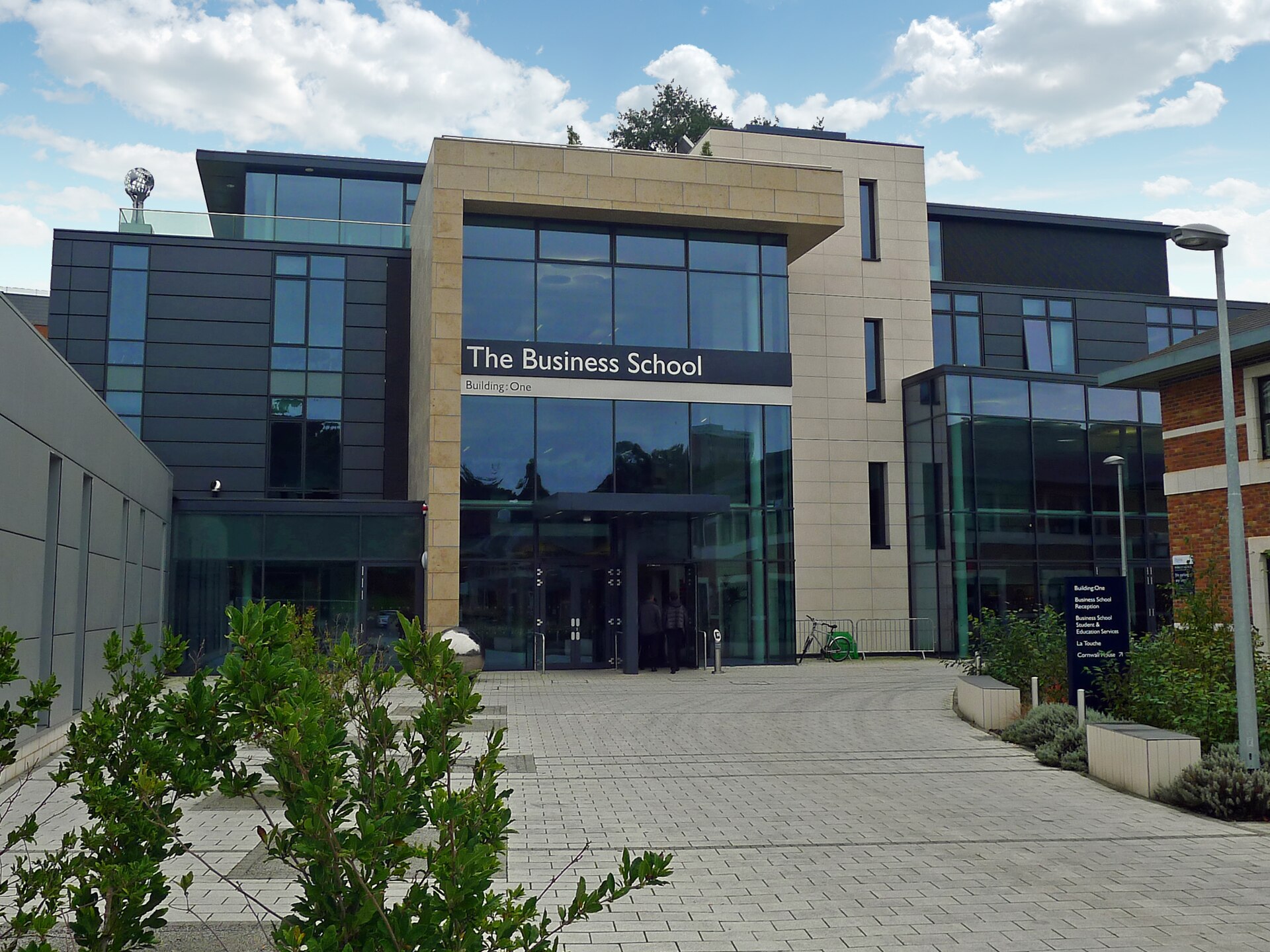
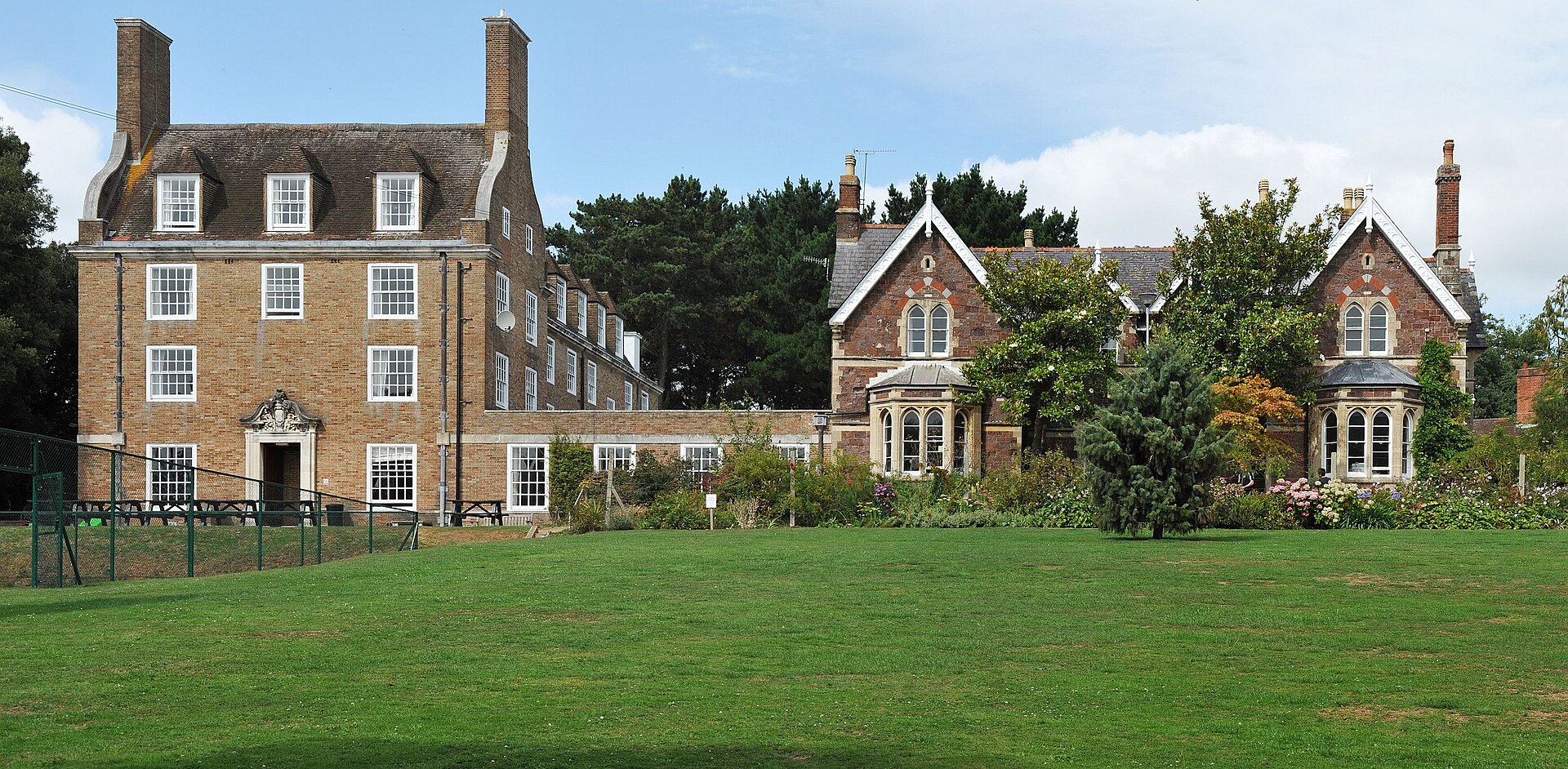

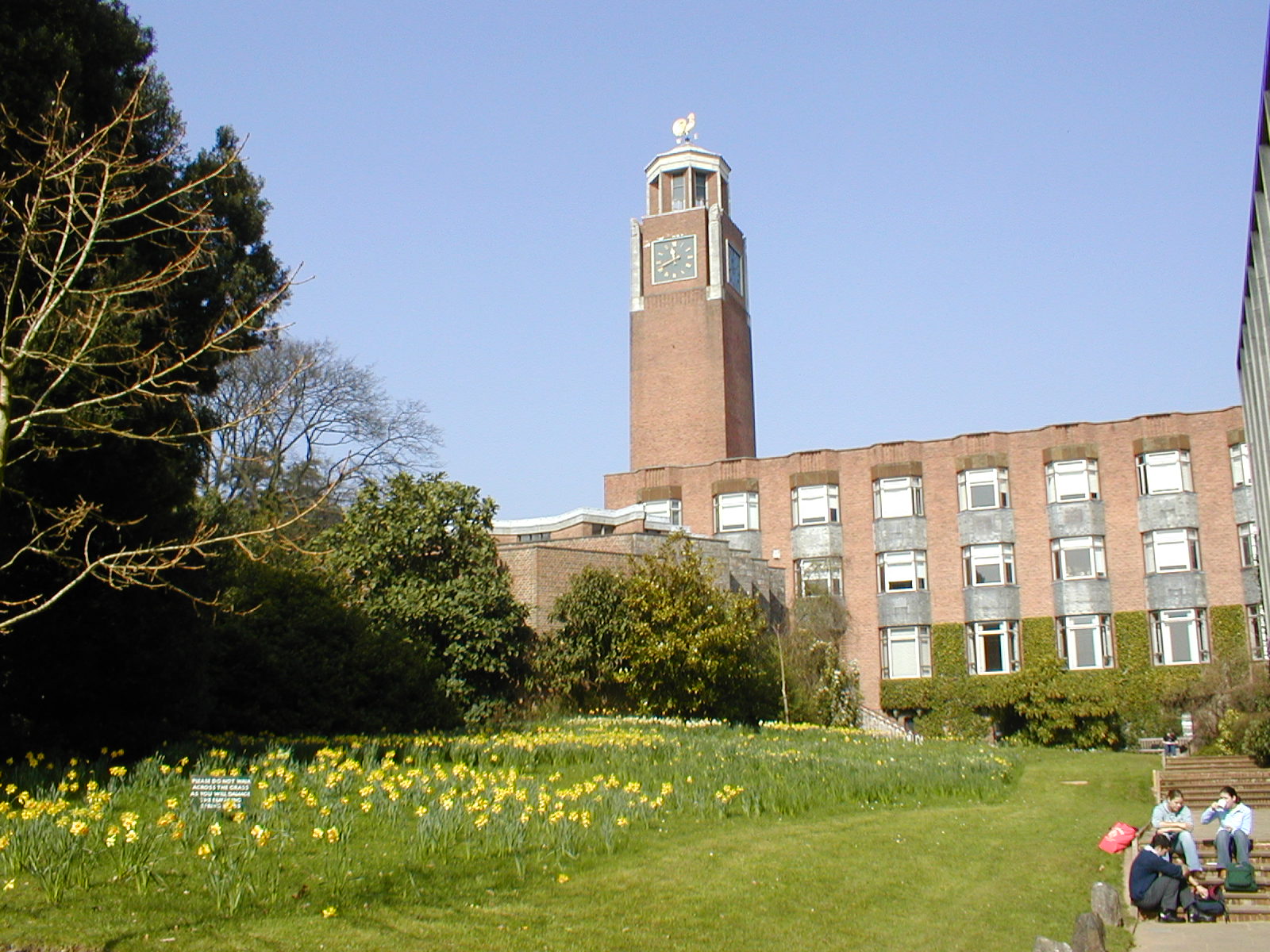

Why Choose Exeter — Russell Group Prestige, Stunning Campus, Global Outcomes
The University of Exeter consistently ranks among the UK's top 15 universities and is a member of the 24-strong Russell Group — the UK's equivalent of the US Ivy League in terms of research intensity and graduate employability. Here is what sets Exeter apart for ambitious international applicants.
SELECTIVITY
Acceptance Rate & Admissions Profile
The University of Exeter is selective but accessible — its 75% overall acceptance rate reflects that the university is looking for the right fit rather than simply turning away applicants. In practice, competition for popular courses (Medicine, Law, Business, Psychology) is considerably stiffer, and offers are conditional on achieving specific A-Level, IB, or equivalent grades. International students who meet the academic requirements and present a compelling UCAS personal statement are genuinely competitive.
Exeter makes contextual offers — typically two to three grades lower than standard entry requirements — for students from disadvantaged backgrounds. This means the bar is not entirely fixed; context matters. That said, for popular programmes, applicants who exceed grade predictions are at a clear advantage.
AT A GLANCE
University of Exeter — Quick Facts
WHAT YOUR APPLICATION INCLUDES
Admissions Components
Exeter uses the UCAS centralised application system. Unlike US universities, there is no separate application portal — everything goes through UCAS.com. Your application comprises the following elements, all submitted in one UCAS form.
SELECTION CRITERIA
What Exeter Is Looking For
Each application is reviewed individually — Exeter's admissions team emphasises this explicitly. The university has a stated commitment that no student with potential is deterred from applying.
Academic grades are the primary criterion, with the personal statement serving as the platform to demonstrate genuine passion for your subject, relevant preparation, and intellectual engagement beyond the classroom. Exeter is interested in applicants who show subject-specific curiosity, not just well-rounded 'busyness'.
KEY DATES
Application Deadlines
All undergraduate applications to Exeter go through UCAS. International students should note that UCAS operates on UK academic-year timing — typically targeting the September intake of the following year.
The standard UCAS equal consideration deadline (January 31) is the most important date for the majority of courses. Medicine has an earlier deadline of 15 October. After the January deadline, Exeter continues to consider international applications until 30 June if places remain, after which Clearing applies.
UCAS opens for applications in early September each year. Aim to submit well before the January 31 deadline — UCAS systems can be busy close to deadlines.
| Round | Deadline | Notes |
|---|---|---|
| Medicine (BMBS) | 15 October | Earlier UCAS deadline — non-negotiable |
| All other courses | 31 January | UCAS equal consideration deadline |
| International rolling | 30 June | Subject to places remaining after January |
| Clearing | August (results day) | If places remain after A-Level / IB results |
CAMPUS LIFE
Student Life at Exeter
The University of Exeter operates across three campuses: Streatham and St Luke's in Exeter city, and Penryn Campus on the Cornwall coast. Each has its own personality and community.
Streatham Campus is the main campus and one of the most beautiful in the UK — a green, landscaped setting with a lake, sports facilities, and a buzzing Student Guild. St Luke's Campus (a few minutes away) is home to Sport and Health Sciences and Medicine. Penryn Campus in Cornwall offers a distinctly different atmosphere — coastal, laid-back, with strong arts and environmental programmes.
GRADUATE OUTCOMES
Career Outcomes
Exeter's Russell Group membership, strong employer partnerships, and dedicated Careers Service translate into excellent graduate outcomes across a wide range of sectors.
Top sectors for Exeter graduates include financial services, consultancy, marketing, healthcare, public sector, and education. The Business School has active relationships with top four accounting firms, investment banks, and major consultancies. Medicine graduates enter the NHS Foundation Programme. Environmental Science graduates are sought by sustainability consultancies, government agencies, and NGOs worldwide.
Stats
Cards
FAQs
Frequently Asked Questions
Do I need to take the SAT or ACT to apply to Exeter?+
No. Exeter is a UK university and uses UCAS. There is no SAT or ACT requirement. Admission is based on your secondary school qualifications (IB, A-Levels, or equivalent international qualifications), your UCAS personal statement, and an academic reference.
What IB score do I need for most programmes?+
The typical competitive IB offer at Exeter is around 36 points overall, though this varies by course. Medicine and Law tend to require higher scores, while some courses accept lower. Always check the specific course entry requirements on exeter.ac.uk.
Can I apply to Exeter directly without using UCAS?+
No. All full-time undergraduate applications to Exeter must go through UCAS (ucas.com). International students use the same UCAS system as UK students — there is no separate international portal for undergraduate study.
Will Exeter consider my application if I miss the January 31 deadline?+
Yes, in many cases. Exeter reviews international applications until 30 June if places remain. After July results days, remaining spaces enter UCAS Clearing. It is always preferable to apply before the January deadline, but late applications are not automatically disqualified.
Does Exeter offer foundation or pathway programmes for international students?+
Yes. If you do not meet direct entry requirements, INTO University of Exeter offers foundation and pre-sessional programmes on campus that can lead to guaranteed progression to an Exeter undergraduate degree. Contact INTO Exeter for details.
What support is available for international students who arrive at Exeter?+
Exeter provides dedicated international student orientation, visa and immigration guidance, English language support, a peer mentoring programme, and access to student welfare services. There is also a specific International Students' Advisory Service.
Is the University of Exeter in London?+
No. Exeter is in Devon, South West England — approximately 2 hours from London by train. This is one of Exeter's distinctive features: it offers a genuine university-city experience in a beautiful, safe environment rather than being absorbed into London's urban sprawl.
Can I study at the Penryn Campus in Cornwall instead of Exeter city?+
Yes. Penryn Campus (near Falmouth, Cornwall) hosts programmes in Arts and Culture, Environment and Sustainability, and some Social Sciences. It is a distinct campus with its own community and coastal character. Select it specifically when applying through UCAS.
ACADEMIC REQUIREMENTS
What It Takes Academically to Succeed at Exeter
As a Russell Group university, Exeter sets demanding academic entry standards — but they are not unreachable. For international students, understanding how your qualifications map to UK grade expectations, and where you sit relative to course-specific benchmarks, is essential before you apply.
Exeter's admissions is primarily grade-led. The UCAS personal statement and reference play a supporting role, but the starting point is always whether your predicted or achieved grades meet — or, better, exceed — the standard offer for your chosen course. This section helps you understand exactly what Exeter expects academically and how to position yourself competitively.
ACADEMIC BENCHMARKS
Academic Entry Profile
Exeter does not publish a single universal offer — requirements vary substantially by programme. The benchmarks below are typical competitive indicators for international applicants across most programmes. Always verify on the specific course page.
Medicine (BMBS) is significantly more competitive and requires Higher Level Biology and Chemistry in the IB, plus the UCAT admissions test. Specific HL subject requirements exist for Engineering, Natural Sciences, and other programmes.
STANDARDISED TESTS
Test Policy
The University of Exeter does not require SAT or ACT scores for undergraduate admission. As a UK university operating under UCAS, standardised US-style tests are not part of the standard application. Your national or international school qualifications — IB Diploma, A-Levels, or equivalent — are the relevant academic credentials.
Some specific programmes require UK-specific admissions tests that are separate from UCAS. Medicine applicants must sit the UCAT (University Clinical Aptitude Test), which tests verbal reasoning, decision making, quantitative reasoning, abstract reasoning, and situational judgement. Check your specific course page for any additional admissions test requirements.
IB & A-LEVEL APPLICANTS
How Exeter Reads IB, A-Level, and International Qualifications
Exeter is experienced with a wide range of international qualifications and explicitly welcomes international applications.
For IB Diploma students, the typical competitive offer across most programmes is around 36 points overall, with specific Higher Level subject requirements for many courses. For example, Medicine typically requires IB 38+ with HL Biology and Chemistry at grade 6 or 7. Business and Economics may offer around 34–36 points. Always check the specific course page, as HL subject requirements can be decisive.
SUBJECT PREPARATION
Subject-Specific Academic Preparation
Beyond meeting minimum grade requirements, Exeter — and Russell Group universities generally — expect applicants to courses in competitive subjects to demonstrate genuine academic preparation through their personal statement and subject choices.
ENGLISH LANGUAGE
English Language Requirements
If English is not your first language and you have not completed your most recent full-time education in an English-speaking country, you must provide evidence of English proficiency before beginning your programme.
The minimum requirements below are for most undergraduate programmes. Some courses (particularly Medicine and Law) may require higher scores. Always verify on the specific course page.
IB students who completed the full Diploma with English A or B at Higher Level are typically exempt from English language testing requirements. Confirm this with the admissions team for your specific course.
| Test | Minimum | Notes |
|---|---|---|
| IELTS (Academic) | 6.5 overall | No component typically below 6.0 |
| TOEFL iBT | 90 overall | Check individual course for section minimums |
| Duolingo English Test | 120 | Accepted for most programmes |
| Pearson PTE Academic | Verify on course page | Generally accepted; confirm scores with admissions |
BUILDING YOUR APPLICATION
Building Your Academic Profile: Year by Year
Competitive Exeter applicants — especially for Medicine, Law, Business, and Psychology — are not built in Year 13. The profile that wins a conditional offer takes years to develop.
COMMON PITFALLS
Academic Mistakes That Cost Applicants
Russell Group admissions is unforgiving of avoidable errors. These are the most common mistakes international applicants make when applying to Exeter.
- Applying for Medicine without clinical work experience — this almost always results in rejection regardless of grades.
- Selecting the wrong IB Higher Level subjects for your course, making you ineligible despite a high total point score.
- Missing the October 15 UCAS deadline for Medicine by not sitting the UCAT in time.
- Writing a personal statement that covers too many interests rather than demonstrating deep subject-specific engagement.
- Assuming a high overall IB score is sufficient without checking HL subject-specific requirements.
- Applying in Clearing as a primary strategy — last-minute places are limited and quality choices narrow.
- Not declaring extenuating circumstances that could support a contextual offer.
FEES & FUNDING
Cost of Studying at Exeter as an International Student
The University of Exeter is among the UK's most affordable Russell Group universities relative to the quality of education and outcomes it delivers. Compared to US peer institutions, total cost of attendance is significantly lower — and the UK's two-year post-study Graduate Route visa adds considerable long-term financial value to the degree.
All cost figures below are annual estimates in USD for the 2026/27 academic year and are drawn from the university's facts data. Actual figures in GBP will vary with exchange rates. Always verify current fees in GBP on exeter.ac.uk before making financial decisions.
ANNUAL COST ESTIMATE
Annual Cost Breakdown
The figures below are annual estimates for international (non-UK) undergraduate students. Note that programme-specific tuition may vary — Business, Engineering, and Medicine may have different fee structures.
UK tuition is set in GBP; the USD figures are approximate conversions. Exeter city is significantly cheaper to live in than London — a genuine financial advantage for students.
| Component | Annual Usd | Notes |
|---|---|---|
| International tuition fees | $31,600 | Varies by programme — check exeter.ac.uk |
| Cost of living (accommodation, food, transport) | $15,000 | Estimate for Exeter city; lower than London |
| Total estimated cost of attendance | $49,500 | Inclusive of tuition and living |
| UCAS application fee | $36 | One-off UCAS application charge (GBP equivalent) |
FINANCIAL AID
Financial Aid for International Students
International (non-UK, non-EU) undergraduate students at Exeter are not eligible for UK government student loans. Financial support primarily takes the form of merit-based scholarships funded directly by the university. Need-based aid for international undergraduates is limited and not systematically available — unlike many US universities.
The university has committed more than £7 million in scholarships for international fee-paying students for 2026/27. This is significant but covers a portion of the international student body. The key message: scholarships are competitive and partial — they reduce, but do not eliminate, the cost of study. Plan on self-funding the majority of your fees and living costs.
SCHOLARSHIPS
Named Scholarships for International Students
Exeter offers several named scholarship programmes specifically for international undergraduate students. All require you to hold an offer from Exeter first.
MAKING IT WORK
Affordability — The Real Picture
Exeter is not a low-cost destination for international students, but it is considerably more affordable than comparable US Russell Group-equivalent institutions, and substantially cheaper than London-based universities with similar rankings.
At roughly $31,600/year in tuition and $15,000/year in living costs, a three-year undergraduate degree at Exeter costs approximately $139,000–$150,000 in total — compared to $250,000–$320,000 for a four-year US private university education. The shorter three-year degree structure (standard in the UK) is itself a significant cost saving. Combined with the UK Graduate Route visa (two additional years of work rights post-graduation), the value proposition is strong for students who plan carefully.
Scholarships from Exeter can reduce costs meaningfully but are competitive. Factor in exchange-rate risk when planning GBP-denominated fees.
YOUR FUNDING PLAN
Steps to Funding Your Exeter Education
COST FAQs
Cost & Funding FAQs
Can international students apply for UK student loans?+
No. UK government student loans (administered by Student Finance England) are only available to UK home students (and some EU students under specific transitional arrangements). International students must self-fund or secure scholarships.
Are there part-time work opportunities for international students?+
Yes. Students on a UK Student Visa can work up to 20 hours per week during term time and full-time during vacation periods. Exeter's career service supports students in finding part-time roles in the city and on campus.
How does Exeter's cost compare to London universities?+
Exeter's tuition fees are comparable to London institutions, but living costs in Exeter are significantly lower — typically £3,000–£5,000 per year less than London. Over a three-year degree, this makes a material difference to total cost of study.
Is the Exeter Excellence Scholarship automatic or do I need to apply?+
Some country-specific awards are automatically applied. The Exeter Excellence Scholarship may require a separate application after you hold an offer. Check the scholarship page carefully once you receive your offer, as deadlines can be tight.
What currency are Exeter's fees charged in?+
Fees are charged in British Pounds Sterling (GBP). The USD figures in this guide are approximate conversions. Check the current GBP rate and budget with appropriate exchange-rate caution.
UCAS PERSONAL STATEMENT
The UCAS Personal Statement — Exeter's Essay Gateway
Exeter is a UK university, which means it does not use the US Common App or require supplemental essays. Instead, all applications go through UCAS, and the central document you control is the UCAS Personal Statement — now in a new structured format from 2026.
Unlike US applications where you write separate supplemental essays for each university, your UCAS personal statement is a single document that all five of your UCAS choices read simultaneously. This changes the strategy fundamentally: you cannot tailor it to Exeter specifically — but you can write something so genuinely compelling about your subject that it resonates with every institution on your list.
WHAT YOU WRITE
The New UCAS Personal Statement Format (2026 Cycle)
UCAS introduced a new structured three-question personal statement format for the 2026 application cycle, replacing the traditional open-ended essay. This applies to all applicants including international students applying through UCAS.
The new format asks applicants to respond to three structured questions, each with a word or character limit. The purpose is to make the personal statement more accessible and equitable, reducing the advantage that expensive coaching had given some applicants under the old format. The three questions address: (1) your passion for and interest in the subject, (2) how your studies and qualifications have prepared you for it, and (3) what wider activities, experiences, or achievements make you a compelling candidate.
The exact question wording and character limits should be verified at ucas.com before you begin writing — UCAS retains the right to update the format. This guide reflects the 2026 format as of the authoring date.
THE THREE QUESTIONS
What the Three Questions Ask
The UCAS personal statement is now structured around three thematic questions. Below is guidance on what each section is asking for and how to approach it for Exeter — or any UK university.
STRATEGY
Writing a UCAS Personal Statement That Works for Exeter
There is no 'Exeter-specific' essay — the UCAS personal statement goes to all five of your choices. This means you are writing primarily about your subject, not about any individual university. The good news: Exeter does not require you to explain why you chose Exeter. The challenge: every word must demonstrate subject passion and genuine academic preparation.
Exeter's admissions readers are academics and admissions professionals who read thousands of personal statements. They are expert at spotting hollow enthusiasm versus genuine intellectual engagement. The test for every sentence: does this demonstrate that I am ready to study this subject at a Russell Group university, or am I filling space?
Start writing your personal statement in early Year 13 (or the equivalent summer before your final year). A statement written in a rush in December before the January deadline is almost always weaker. Give yourself three to four months of drafts, feedback, and revision.
NO SUPPLEMENTS
There Are No Exeter Supplemental Essays
Unlike US universities (which often require additional university-specific supplemental essays), Exeter does not require any supplemental essays or short-answer questions beyond the UCAS personal statement. This is standard for UK universities.
TOPIC SELECTION
Choosing What to Write About
The new structured format is more specific about what belongs in each section — but within each question, you still have significant creative latitude. Strong personal statements for Exeter-level programmes share common characteristics.
PITFALLS TO AVOID
Personal Statement Mistakes
These are the most common mistakes international students make with the UCAS personal statement when applying to competitive UK universities like Exeter.
- Writing a US-style personal statement focused on life story, overcoming adversity, or character — the UCAS format expects subject-focused academic engagement, not a narrative essay about personal growth.
- Mentioning specific universities by name — your statement goes to all five UCAS choices; name-dropping one university is visible to all others and is unprofessional.
- Generic enthusiasm without evidence ('I have always loved science') instead of specific, evidenced engagement with the discipline.
- Listing extracurricular activities without connecting them to subject relevance — UK admissions does not value a long list of unrelated activities the way US admissions sometimes does.
- Failing to address higher-level course content — claiming interest in university-level study while only demonstrating school-level knowledge.
- Starting too late — rushing a personal statement in December before the January deadline produces weaker, less-revised work.
- Ignoring UCAS word/character limits or the new structured question format — ensure you are writing to the current UCAS format (verify at ucas.com each cycle).
- Asking someone else to write it — UCAS has plagiarism detection tools, and a voice inconsistent with your reference or interview will raise concerns.
STATEMENT FAQs
UCAS Personal Statement FAQs
Does Exeter read the UCAS personal statement carefully?+
Yes. Unlike some high-volume UK universities that make offers primarily on grades, Exeter's admissions team reads personal statements as a substantive part of the assessment, especially for competitive programmes. A strong or weak statement can influence whether a borderline application receives an offer.
Can I write different personal statements for different universities?+
No. UCAS sends the same personal statement to all five of your university choices. This is one of the fundamental differences between UK and US university applications. Your statement must work for all your choices simultaneously — which is why a subject-focused approach is the correct one.
Do I need to explain why I want to go to Exeter?+
No. Unlike many US supplements, there is no 'Why Exeter?' question in the UCAS process. Exeter does not expect or need you to mention them. Focus entirely on your subject passion and academic preparation.
What is the new UCAS personal statement format?+
From the 2026 application cycle, UCAS replaced the old 4,000-character free-form personal statement with a structured three-question format. Each question has its own character limit. Check ucas.com for current specifications, as details may be updated each cycle.
How important is the personal statement for Medicine at Exeter?+
Very important — and it is only the beginning. Medicine shortlisting involves both the personal statement and the UCAT score. Shortlisted candidates are then interviewed (MMI format). Start your Medicine personal statement early and ensure your work experience is substantial, recent, and reflected upon.
Should I use a personal statement coach?+
Well-informed guidance from a teacher or counsellor who knows the UK system is valuable. However, UCAS uses plagiarism detection and admissions readers recognise inauthentically polished writing. The statement should be genuinely yours — authentic voice, real experiences, genuine reflection. Light editing for clarity is fine; ghost-writing is not.
Can I reuse a personal statement from a previous UCAS cycle?+
Not advisable. The new 2026 three-question format is structurally different from the old single-essay format. If you are reapplying after a gap year or previous unsuccessful application, you will need to rewrite to the current structure and update your content to reflect recent activities and development.
Courses — schools, degrees & intake
50 degrees across 11 groupings.
Faculty of Environment, Science and Economy — Engineering · 8 degrees
BEng Mechanical Engineering
BEng Civil Engineering
BEng Chemical Engineering
BEng Electrical and Electronic Engineering
BEng Renewable Energy Engineering
BEng Biomedical Engineering
BEng Robotics and Artificial Intelligence
BEng Environmental Engineering
Faculty of Environment, Science and Economy — Computer Science & Technology · 3 degrees
BSc Computer Science
BSc Artificial Intelligence
BSc Data Science
Faculty of Environment, Science and Economy — Mathematics & Statistics · 4 degrees
BSc Mathematics
BSc Mathematics with Finance
BSc Mathematics with Economics
BSc Natural Sciences
Faculty of Environment, Science and Economy — Physics & Astronomy · 3 degrees
BSc Physics
BSc Physics with Astrophysics
BSc Physics with Quantum Technology
Faculty of Environment, Science and Economy — Geography & Earth Sciences · 3 degrees
BSc Geography
BSc Environmental Science
BSc Geology
University of Exeter Business School · 6 degrees
BSc Accounting and Finance
BSc Accounting and Business
BSc Finance
BSc Business and Management
BSc Economics
BSc Economics and Finance
Faculty of Humanities, Arts and Social Sciences — Law School · 1 degrees
LLB Law
Faculty of Humanities, Arts and Social Sciences — Humanities & Social Sciences · 11 degrees
BA English
BA History
BA Philosophy
BA Politics
BA International Relations
BA Sociology
BA Drama
BA Film and Television Studies
BA Archaeology
BA Modern Languages
BA Liberal Arts
Faculty of Health and Life Sciences — Biosciences · 8 degrees
BSc Biological Sciences
BSc Biochemistry
BSc Zoology
BSc Marine Biology
BSc Animal Behaviour
BSc Conservation Biology and Ecology
BSc Neuroscience
BSc Biomedical Sciences
Faculty of Health and Life Sciences — Psychology · 1 degrees
BSc Psychology
Faculty of Health and Life Sciences — Medical School & Health Professions · 2 degrees
BMBS Medicine
BSc Adult Nursing
Want your real chances at University of Exeter?
Create a free TYCHR account for your personalised admit-chance, a shortlist you can track, exact entry requirements, and essay + counselling help.