University of Dundee
Dundee, United Kingdom · Urban
TYCHR ADMISSIONS GUIDE
University of Dundee Admissions Guide for International Students
The University of Dundee is Scotland's most focused research university for medicine, life sciences, and creative arts — a compact, campus city institution where internationally recognised research coexists with genuinely close-knit student communities. Ranked #355 globally by QS and #310 by Times Higher Education, Dundee is 1st in Scotland and 2nd in the UK for Medicine (Times & Sunday Times Good University Guide 2026), and its Duncan of Jordanstone College of Art and Design is one of the top-15 art and design schools in the UK.
Dundee admits a broad intake through UCAS — with a 72% overall acceptance rate, the university is accessible by UK standards — but competitive courses like Medicine, Dentistry, and DJCAD programmes demand serious academic and portfolio preparation. This guide covers the complete UCAS application pathway (including the new 2026 three-question personal statement), A-Level and IB benchmarks by course, Scottish degree structure, English language requirements, and the scholarship landscape — so you can build an application that genuinely reflects your fit for one of Scotland's most distinctive universities.
Campus
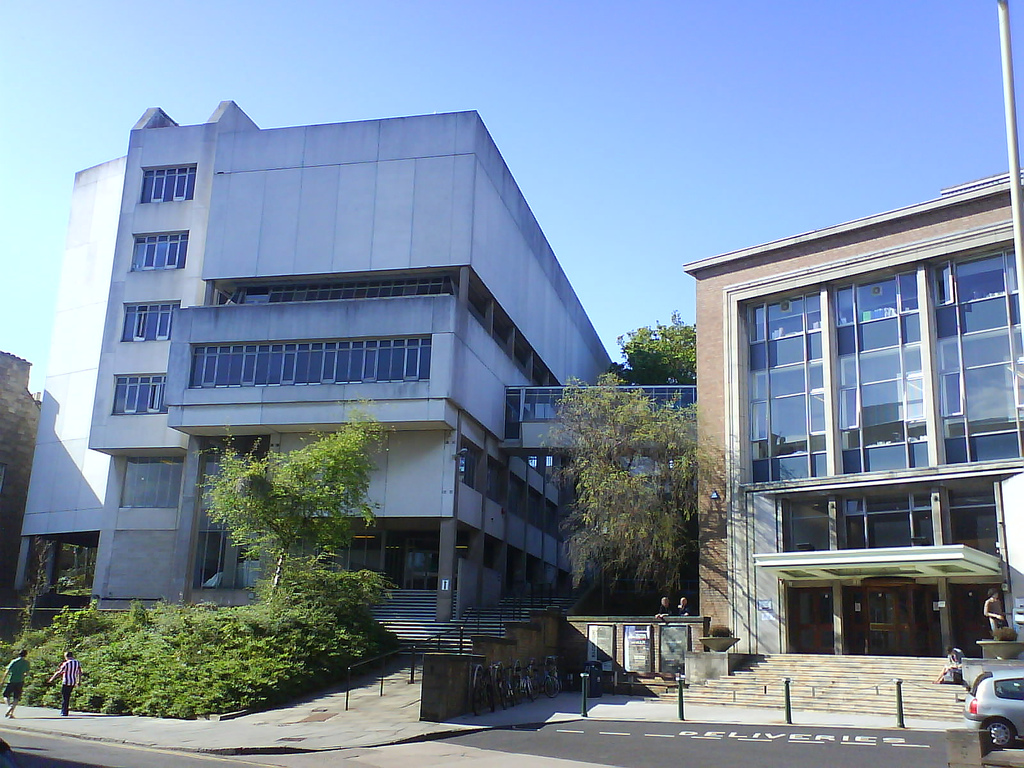
University of Dundee — campus in pictures
Real, freely-licensed photographs of the campus (via Wikimedia Commons).
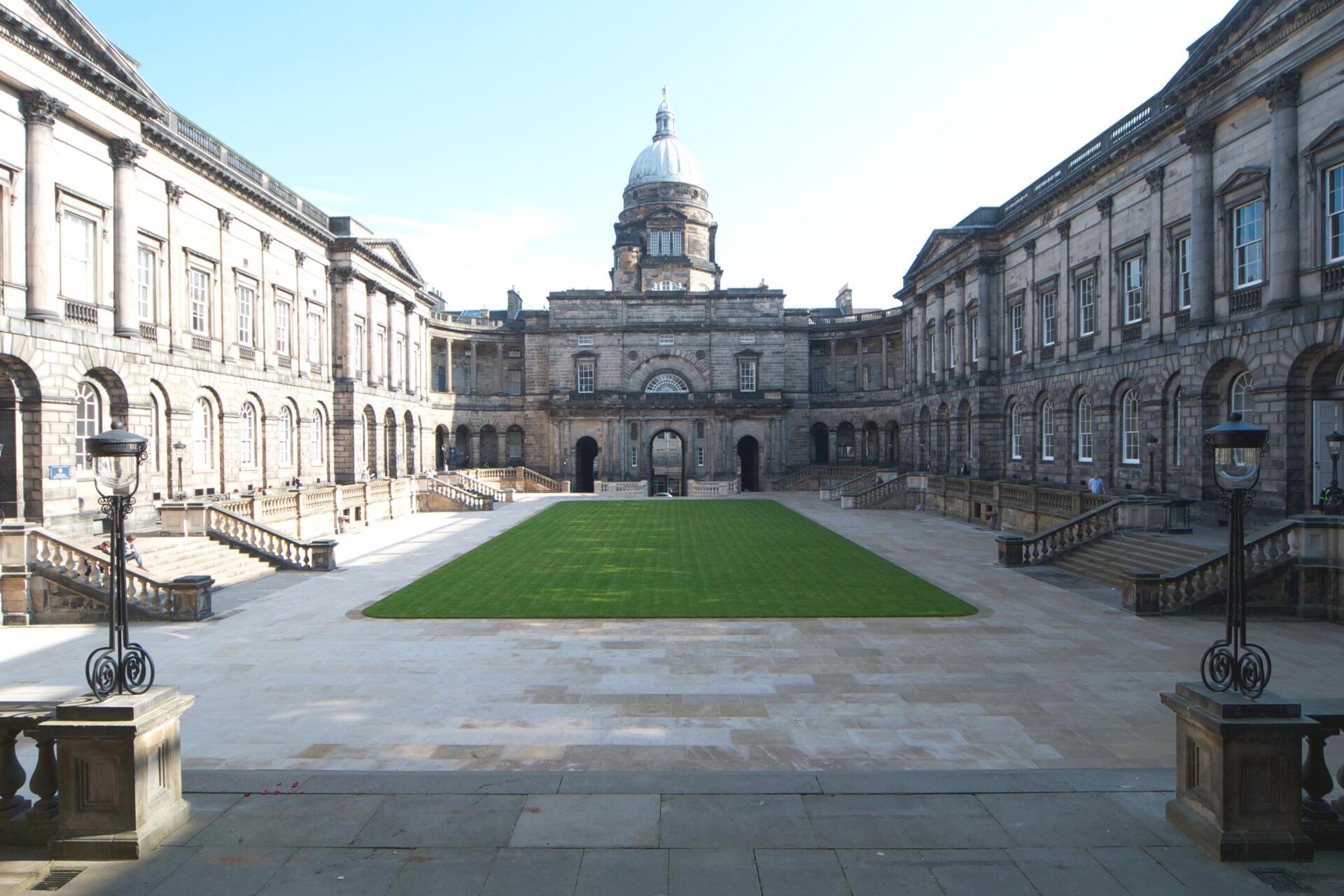

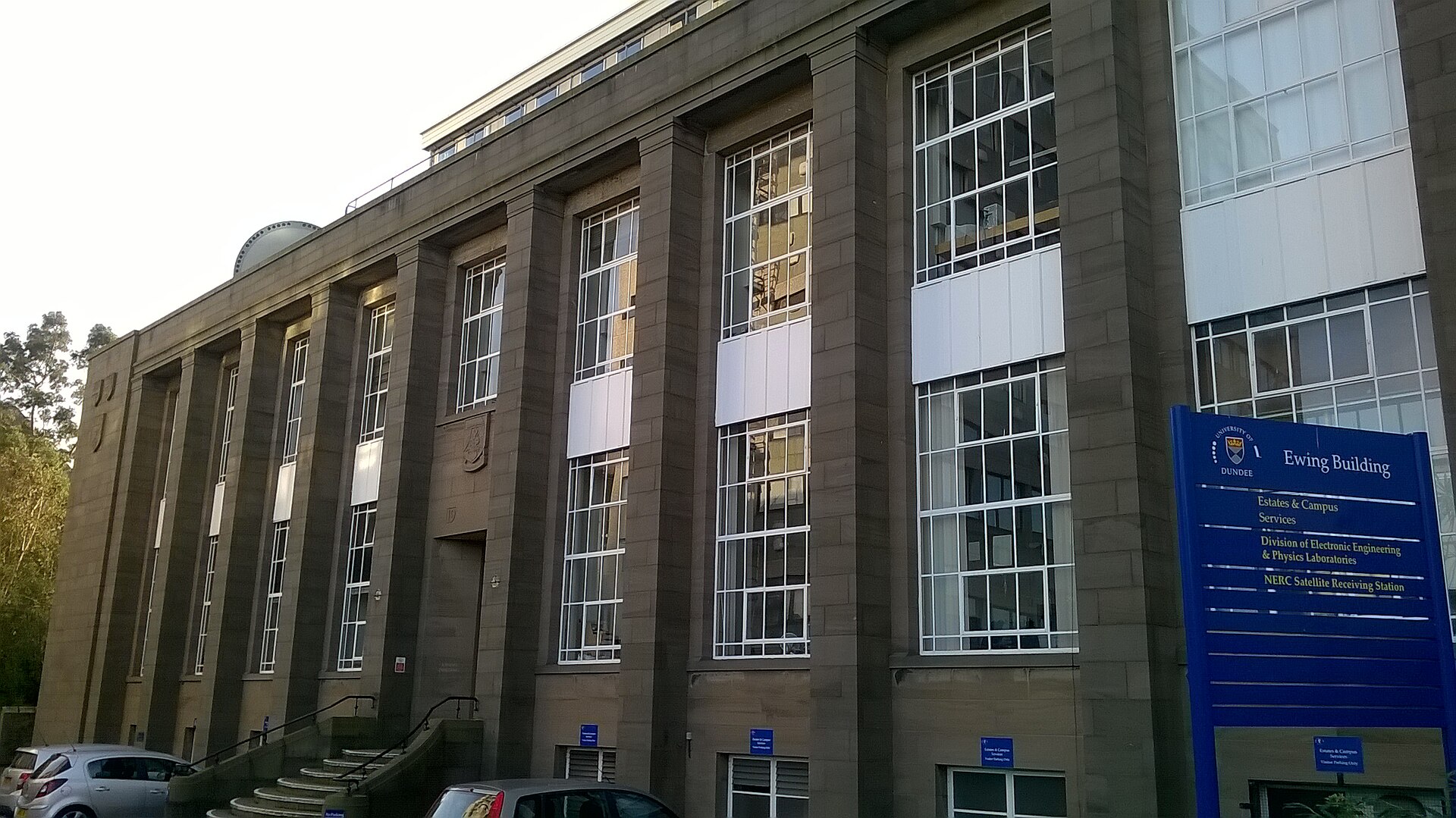
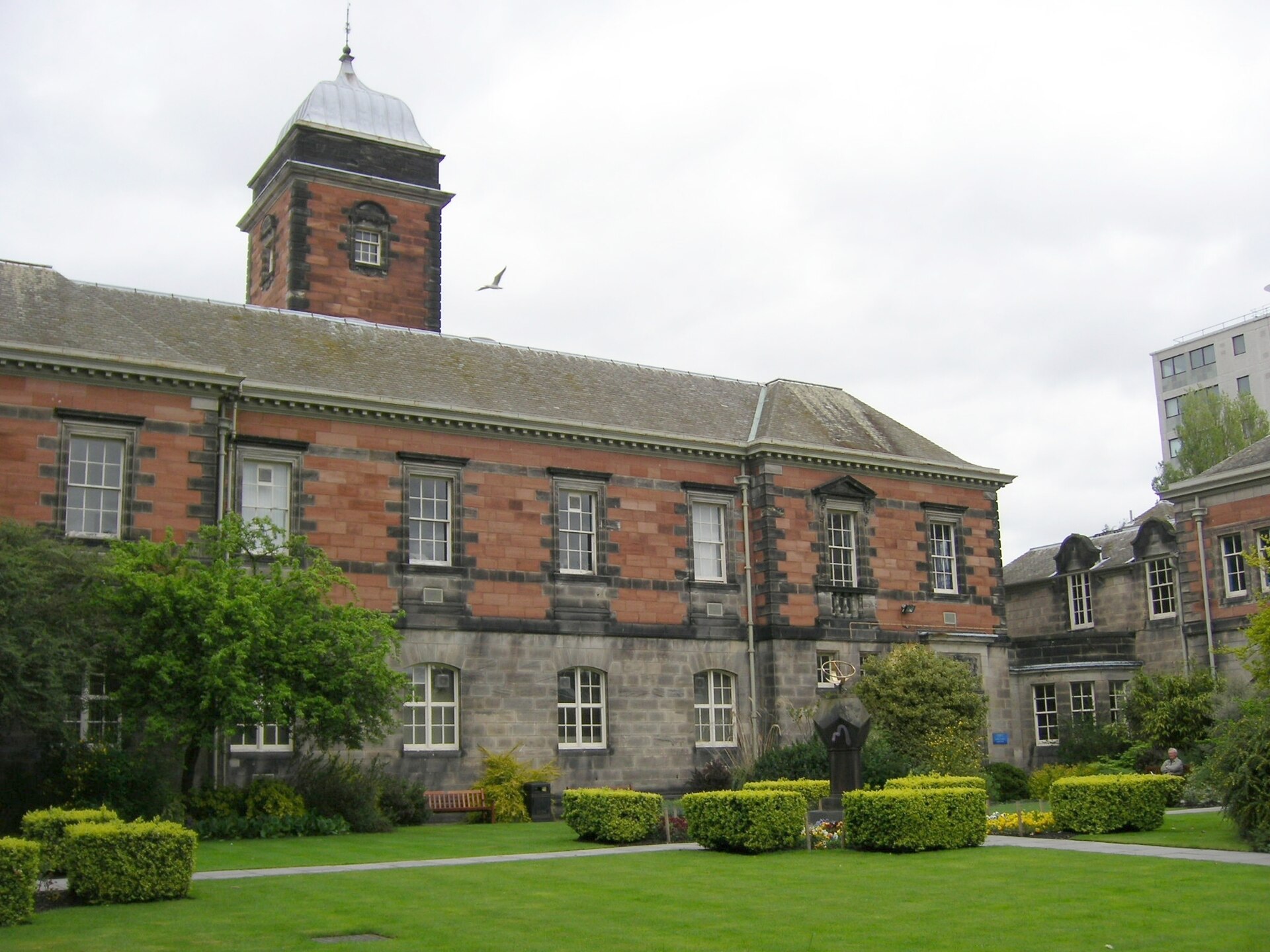
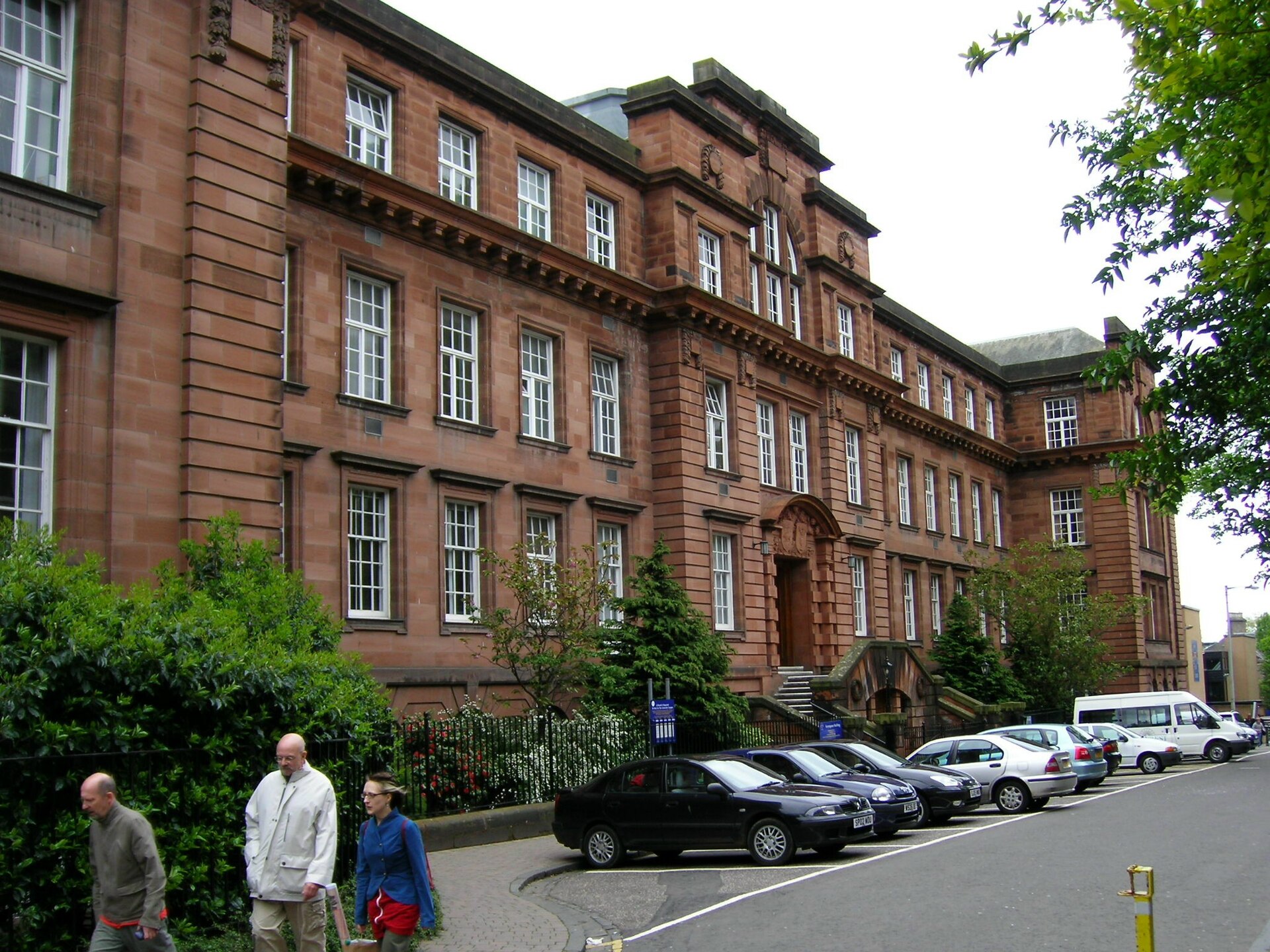
WHY DUNDEE
Why the University of Dundee — Medicine, Life Sciences, Art & Design, and a City on the Rise
Dundee is not a generalist redbrick: it is a university where specific disciplines genuinely punch above their global weight. For students interested in health sciences, creative industries, or forensic science, it offers world-class research exposure in a city that is far more affordable and liveable than London, Edinburgh, or Glasgow.
SELECTIVITY
How Selective Is Dundee?
The University of Dundee has an overall acceptance rate of 72%, making it accessible by UK university standards. However, this headline figure conceals wide variation by course. Medicine and Dentistry are among the most competitive undergraduate programmes in Scotland — applicants need top grades, strong UCAT scores, and a compelling personal statement. DJCAD creative programmes require a strong portfolio. Most other courses, including Life Sciences, Law, Computer Science, and Business, are genuinely achievable for a well-prepared student with solid predicted grades.
Medicine applicants at Dundee must also sit the UCAT (University Clinical Aptitude Test) and attend a Multiple Mini Interview (MMI). Acceptance for medicine is significantly more competitive than the 72% university-wide figure suggests.
AT A GLANCE
University of Dundee — Quick Facts
APPLICATION CHECKLIST
What Your Dundee Application Consists Of
All undergraduate applications to the University of Dundee are made through UCAS (Universities and Colleges Admissions Service), the UK's centralised admissions system. You can apply to up to five universities on one UCAS application. Your Dundee application is assessed on the following components:
ADMISSIONS PROFILE
The Profile Dundee Admits
Dundee is academically rigorous but not exclusively focused on grades. For most programmes, they are looking for students who have both the predicted grades for their course and a genuine, evidenced passion for their chosen subject. The personal statement and reference matter — especially for competitive programmes. Here is what stands out:
APPLICATION DEADLINES
UCAS Application Deadlines for Dundee
Dundee uses UCAS, which sets fixed application deadlines. Applications received before the equal consideration deadline are all reviewed equally — there is no advantage to applying earlier within that window (unlike US Early Action). Missing the deadline may result in your application being considered late, which reduces your chances significantly for competitive courses.
| Round | Deadline | Notes |
|---|---|---|
| Medicine & Dentistry | 15 October 2025 | Hard UCAS deadline — no exceptions. UCAT must be completed before this date. |
| All Other Courses | 29 January 2026 | Equal consideration deadline. Apply any time from September 2025 to this date. |
| Late Applications | After 29 January 2026 | UCAS accepts late applications through UCAS Extra if courses still have spaces. Less reliable for popular programmes. |
| UCAS Clearing | From August 2026 | Available from A-Level results day (August). Some Dundee courses participate in Clearing if unfilled places remain. |
STUDENT LIFE
Living and Studying in Dundee
Dundee is a compact, walkable city with a student population that genuinely shapes its culture. With 16,000 university students in a city of around 150,000 people, the student presence is significant — and affordable. Dundee consistently ranks among the most affordable UK student cities, with living costs considerably lower than Edinburgh (40 minutes by train) or London.
CAREER OUTCOMES
Graduate Employment and Career Pathways
The University of Dundee reports a 93% graduate employment or further study rate — a strong outcome that reflects both the vocational focus of its leading departments and the work of its careers service. Average starting salaries are around $35,000 USD equivalent, with significant variation by discipline: medicine and dentistry graduates earn considerably more; arts and humanities graduates typically closer to the average.
Stats
Cards
FREQUENTLY ASKED QUESTIONS
FAQs — University of Dundee for International Students
Is Dundee a Russell Group university?+
No — the University of Dundee is not a Russell Group member. It is a public research university that is a member of the Universities Scotland body. This distinction matters for some employers and postgraduate programmes, but Dundee's specific strengths in medicine and life sciences are internationally recognised regardless of Russell Group membership.
What is the Scottish Honours degree and how does it affect me?+
Scottish universities offer a four-year Honours degree (or a three-year Ordinary degree). As an international student, you would typically enter Year 1 regardless of your prior qualifications. The first year is broad and helps you confirm your academic direction before choosing an Honours pathway in Year 2. This is different from English universities where most degrees are three years.
Does Dundee make conditional offers based on predicted grades?+
Yes. For most courses, Dundee makes conditional offers based on your predicted A-Level or IB scores, or equivalent international qualifications. You then confirm the offer once your actual results are released (August). If you narrowly miss your offer grades, it is worth contacting the admissions team — Dundee sometimes accepts students who are one grade below if their overall profile is strong.
Can I apply to Dundee without A-Levels?+
Yes. Dundee accepts a wide range of international qualifications through UCAS, including the International Baccalaureate, Indian Standard XII board results, US high school transcripts with SAT/ACT scores, Canadian provincial qualifications, and many others. The key is that your qualifications must be equivalent to UK entry requirements for your chosen course. Check the Country Information section on the Dundee website for your specific qualification.
Does Dundee require SAT or ACT scores from US students?+
UK universities including Dundee do not use SAT or ACT scores in the same way US universities do. For US applicants, Dundee typically evaluates your High School GPA, Advanced Placement (AP) scores or IB results, and the quality of your personal statement. SAT/ACT may be referenced as supporting evidence but is not a primary admissions criterion.
What is the accommodation situation for international students?+
The university provides en-suite single-occupancy accommodation from £179.48 per week (bills inclusive). While there is no guaranteed place stated for all first-year students, the university has accommodation across multiple sites and prioritises new international students where possible. Apply for accommodation as early as possible after receiving your offer — allocation is often on a first-come basis.
Is Dundee suitable if I want to stay in the UK after graduation?+
Yes. UK-graduated international students are eligible for the Graduate Route (post-study work visa), which allows you to stay and work in the UK for two years after graduation (three years for PhD graduates). Dundee's career outcomes and employer links mean you will have strong support in finding UK employment during this window.
What support is available for international students?+
Dundee has a dedicated International Students Advice Service that helps with UK visas, bank accounts, accommodation, healthcare registration, and cultural integration. The service runs induction events for new international students each September and is available year-round for ongoing support.
ACADEMIC PREPARATION
Academic Expectations at the University of Dundee — What You Need to Prepare
Dundee is an academically serious institution. While its overall acceptance rate is relatively open, the courses that define its reputation — Medicine, Dentistry, Life Sciences, DJCAD — have demanding entry requirements and expect students who arrive genuinely prepared. For international students, this means understanding not just the grade thresholds but the subject preparation and mindset that Dundee's best departments expect.
Scotland's four-year degree structure means your first year is partly a broadening exercise — but that does not mean Dundee expects less of you academically. The first year of a Scottish Honours degree is substantive, and students who arrive without appropriate subject foundations quickly fall behind. Use this guide to benchmark your preparation honestly.
GRADE BENCHMARKS
Academic Entry Benchmarks
Dundee's entry requirements vary significantly by course. The figures below represent general benchmarks for international applicants. Always check the specific course page on the Dundee website, as requirements for Medicine, Dentistry, and some DJCAD programmes are materially higher.
These are indicative benchmarks. Dundee makes offers on a course-by-course basis. An IB score of 31 is the minimum for general entry; Medicine typically requires 38+ IB points with HL Chemistry and Biology at 6–6. Always verify requirements on the official course page.
TEST POLICY
Standardised Tests at Dundee
The University of Dundee, like all UK universities, is primarily grades-based in its admissions decisions. Standardised tests like the SAT and ACT do not play a central role in UK admissions. However, certain courses require specialist admissions tests, and English language proficiency tests are required for international applicants from non-majority-English-speaking countries.
IB AND A-LEVEL
How Dundee Reads IB and A-Level Qualifications
Dundee is fully familiar with both the International Baccalaureate and A-Levels, making conditional offers to students with either qualification. The IB Diploma is well established at Dundee — it is one of the most common international qualifications among the 30% international student population.
SUBJECT PREPARATION
Subject Preparation by Programme Area
Arriving at Dundee well-prepared in your subject area matters more than at many universities, because the first year of the Scottish degree is substantive and moves at pace. Here is what each main programme area expects:
ENGLISH LANGUAGE
English Language Requirements
All taught programmes at the University of Dundee require evidence of English language proficiency for applicants from non-majority-English-speaking countries. Tests must be taken within the past two years at the start of your course. IELTS, TOEFL, PTE Academic, Cambridge English, and several online alternatives are accepted.
Medicine, Dentistry, and Nursing typically require higher English proficiency than the university minimum — often IELTS 7.0 overall with no band below 7.0. Always check your specific course's requirement. Pre-sessional English courses are available for applicants who narrowly miss the threshold.
| Test | Minimum | Notes |
|---|---|---|
| IELTS Academic | 6.0 overall | Minimum per band varies by course; no band below 5.5 for most programmes |
| TOEFL iBT | 78 overall | Single-sitting scores only — MyBest scores are not accepted at Dundee |
| Duolingo English Test | 100 | Accepted for some courses; verify with your specific department |
| PTE Academic | Check course page | PTE Academic UKVI accepted for student visa purposes |
| Cambridge English | C1 Advanced (CAE) | C1 or C2 Proficiency accepted; band score mapping available on course pages |
PREPARATION LADDER
Building Your Academic Profile Year by Year
For international students targeting Dundee, here is a practical roadmap from Year 9 to your gap year:
COMMON MISTAKES
Academic Application Mistakes to Avoid
Items
- Applying to Medicine without completing UCAT registration before the October deadline — UCAT must be sat before UCAS submission, not after.
- Choosing Higher Level IB subjects that do not align with your intended course — a 38-point IB score with HL Languages and Humanities will not satisfy a Medicine conditional offer requiring HL Chemistry and Biology.
- Underestimating the first year of the Scottish degree — the broad Year 1 is substantive, not a foundation year, and poor performance can affect Honours eligibility.
- Submitting UCAS only to Dundee as one of five choices without strategic backup — have a safety choice (a university with lower entry requirements for the same course) and an aspiration choice.
- Not checking whether your specific national qualification maps to Dundee's requirements — the Country Information pages on the Dundee website are essential reading for non-UK qualifications.
- Believing that the 72% acceptance rate applies uniformly across all courses — Medicine, Dentistry, and DJCAD fine art are materially more selective than this university-wide figure.
- Neglecting English test registration timelines — IELTS and TOEFL have limited sitting dates; book 6–8 months before your application deadline.
Faqs
Can I retake the UCAT if I'm unhappy with my score?+
UCAT can only be taken once per admissions cycle. If your score falls below Dundee's shortlisting threshold, you will not be invited to interview. Strong preparation (practice tests, question banks, timed drills) is essential before your one attempt.
What happens if I receive my IB results in July and they are lower than my offer?+
Contact Dundee admissions immediately via UCAS Track. Dundee may consider applicants who miss their offer by a small margin, particularly if one score is slightly lower but another is higher than expected. Have your full results and any mitigating circumstances documented before you call.
Is a gap year viewed negatively by Dundee?+
No. Dundee, like all UK universities, takes a pragmatic view of gap years. If you have used the time productively — relevant work experience, travel, language learning, or personal development — mention it briefly in your personal statement. It does not reduce your competitiveness.
COST AND FUNDING
The True Cost of a Dundee Education — An Honest Picture for International Students
Dundee is among the more affordable options for international students in the UK, with a city cost of living that is significantly lower than London or Edinburgh. Annual international tuition is approximately $27,900 USD, and total cost of attendance is around $40,400 — a figure that includes accommodation, food, transport, and personal expenses in a compact, walkable Scottish city.
The university does not offer fully-funded scholarships for international students. All scholarships are structured as partial fee reductions — meaningful support, but not the full-ride funding available at some US universities. Planning your finances carefully, applying for Dundee's own scholarships, and investigating external government or foundation awards for your home country are all essential steps.
ANNUAL COSTS
Annual Cost Breakdown for International Undergraduates
The figures below are annual estimates based on the university's facts data. Tuition varies slightly by course — Medicine and Dentistry have higher fees than the general undergraduate rate. Always confirm the current fee for your specific course on the Dundee website before planning.
| Component | Annual Estimate | Notes |
|---|---|---|
| International Tuition | ~$27,900 USD | Per academic year; Medicine/Dentistry typically higher |
| University Accommodation | ~$10,600 USD | Based on £179.48/week × 39 weeks, bills inclusive |
| Food and Personal Expenses | ~$5,500 USD | All accommodation is self-catered; grocery costs in Dundee are modest |
| Books and Study Materials | ~$800 USD | Most materials available via university library; varies by course |
| Transport | ~$600 USD | Dundee city is compact and walkable; train to Edinburgh ~£10 |
| UCAS Application Fee | ~$36 USD | One-time; covers up to five UK university choices |
| Total Cost of Attendance (est.) | ~$40,400 USD | Annual estimate; source: university facts data |
FINANCIAL AID
Financial Aid for International Students
The University of Dundee does not offer need-blind admissions or need-based financial aid in the US sense. Aid for international students takes the form of merit-based scholarships that reduce your tuition — not grants covering living expenses or full attendance costs. On average, international students who receive any scholarship receive around 10% off their tuition fee.
SCHOLARSHIPS
Scholarship Opportunities at Dundee
Dundee offers regional and merit-based scholarships across its international intake. Scholarships are administered through the university's scholarships portal and organised by geographic region. You apply through the university rather than a separate foundation. Below is what is publicly known about the scholarship landscape — always verify current awards and amounts on the official Dundee scholarships page, as offerings are updated annually.
COST REALITY
The Affordability Reality at Dundee
Dundee is genuinely one of the most affordable cities in the UK for international students. Compared to London (where cost of living alone can exceed £1,500/month), Dundee's living costs are substantially lower — and the quality of life is high. The compact city means you can walk or cycle everywhere, reducing transport costs to near zero.
The university's self-catered accommodation (starting at £179.48 per week, bills inclusive) is good value by UK standards. Grocery costs in Dundee are lower than in any major English city, and student discounts through the NUS/TOTUM card apply across the city. If you budget carefully, a total spend of $40,400 per year is achievable — and could be lower if you secure any scholarship support or live off-campus in a shared flat after your first year. Many international students find their second or third-year off-campus costs are materially lower than first-year university accommodation.
Medicine tuition at Dundee is higher than the general undergraduate rate — plan for a higher figure if you are applying to MBChB or BDS. The five-year MBChB course represents a significant total investment; factor in all five years when modelling your total cost.
FUNDING ROADMAP
How to Secure Funding for Dundee
COST FAQs
Cost and Funding FAQs
Are there any no-loan or full-scholarship programmes at Dundee?+
No — Dundee does not operate a no-loan or full-scholarship programme for international undergraduates. All awards are partial fee reductions. If you require a full scholarship to attend, investigate external funding from your home government, the Commonwealth, or international foundations before applying.
Do I pay Scottish tuition fees or international fees?+
International students from outside the UK pay international tuition fees — approximately $27,900 USD per year for most programmes. Scottish and UK students have their fees covered by the Student Awards Agency Scotland (SAAS) and Student Finance England respectively. EU students who started before Brexit retained home-fee status; new EU entrants pay international fees.
Is Medicine tuition higher than the general undergraduate rate?+
Yes — Medicine and Dentistry at UK universities carry higher tuition fees than arts and science programmes. Confirm the exact current fee for MBChB or BDS on the Dundee fees page, as these are typically updated annually.
Can I work in Dundee while studying?+
Yes — UK Student Visas typically permit 20 hours per week of work during term-time and full-time during official holidays. Dundee has student employment opportunities through the university and the city. This is a supplement to your budget, not a replacement for adequate savings or funding.
How do I deposit and secure my place?+
Once you receive a UCAS offer, you reply through UCAS (Firm or Insurance choice). Dundee will then send you a formal letter with any deposit or enrolment requirements. International students typically pay a deposit to secure their place before visa applications begin — confirm the current deposit amount with the admissions office.
UCAS PERSONAL STATEMENT
The UCAS Personal Statement — Your Only Narrative Essay to UK Universities
Unlike applying to US universities where you write multiple supplemental essays for each institution, UK universities including Dundee use one personal statement submitted through UCAS. This single document goes to every university you apply to — you cannot customise it per institution. From 2026 entry, UCAS replaced the old free-form 4,000-character essay with a structured three-question format.
The stakes of the UCAS personal statement are different from US essays. UK admissions tutors are primarily assessing whether you are genuinely motivated and academically prepared for your chosen subject — not constructing a holistic story about who you are as a person. Your answers should be tightly focused on your subject, your academic preparation, and your evidence of engagement. This guide explains each of the three questions, what Dundee's tutors are looking for, and the most common mistakes to avoid.
HOW IT WORKS
The 2026 UCAS Personal Statement Format
UCAS introduced a new three-question personal statement structure for students applying to university in 2026 entry. The structured format replaced the old single free-form essay and is designed to make it easier for admissions tutors to find key information quickly — which means you should answer each question directly and substantively, not blend your answers.
THE QUESTIONS
UCAS Personal Statement Questions — 2026 Entry
The three questions below are the UCAS structured personal statement format for 2026 entry. Each question has a character limit. Write your answers with the specific course and university audience in mind — remembering that the same document goes to all five of your UCAS choices.
UCAS STRATEGY
Personal Statement Strategy for Dundee
Writing for a UK audience is different from writing US college essays. UK admissions tutors are subject specialists — they read hundreds of personal statements from applicants to their course, and they will notice immediately if you are genuinely engaged or if you are recycling generic phrases. Here is how to approach the Dundee UCAS personal statement strategically.
Dundee's most competitive courses (Medicine, DJCAD, Life Sciences) have tutors who read personal statements very critically for subject-specific knowledge and authentic engagement. The new three-question format actually helps applicants: it forces you to answer the right questions rather than writing around them. Use this structure to your advantage — answer each question directly before moving to deeper reflection.
WHAT TO WRITE ABOUT
Choosing What to Write About in Each Question
With approximately 1,000 characters per question, you must be selective. Here is a framework for choosing the most effective content for each of the three questions:
PITFALLS
Personal Statement Mistakes to Avoid
- Opening with a cliché or a quotation — 'From a young age I knew I wanted to be a doctor' or a Hippocrates quote. UK tutors read thousands of these; start with something specific to you.
- Forgetting that the same statement goes to all five UCAS choices — do not mention Dundee specifically or criticise universities you have not chosen.
- Writing Question 2 as a subject list ('I take Chemistry, Biology, Mathematics, and Psychology') rather than a selective analysis of how specific content prepares you for your course.
- Using Question 3 to list extracurricular activities without explaining their relevance to your chosen course — 'I play football and am head of the school council' is irrelevant to a medicine application unless you explicitly connect it.
- Exceeding the character limit — UCAS will cut off your answers. Write within the limits, then edit for quality, not length.
- Plagiarising or using AI-generated text — UCAS runs plagiarism checks. All content must be your own. Tutor-reviewed guidance is fine; AI-written paragraphs submitted as your own are not.
- Leaving the personal statement until the last month — strong personal statements are revised multiple times over weeks, not written in a week before the deadline.
ESSAY FAQs
UCAS Personal Statement FAQs for Dundee Applicants
Does Dundee read all three personal statement questions equally?+
Admissions practices vary by department. For medicine, Question 1 (why medicine) and Question 3 (clinical experience) are typically read most critically. For DJCAD, Question 1 (creative motivation) carries significant weight alongside your portfolio. Most departments expect all three questions to be answered substantively — a thin or absent answer to any question is a red flag.
Should I mention Dundee specifically in my personal statement?+
No. The same personal statement goes to all five of your UCAS choices. Never mention a specific university by name — it would be inappropriate for every other institution receiving your application and does not help your Dundee application either.
How is the new three-question format different from the old statement?+
The old format was a single free-form essay of up to 4,000 characters. The new format has three separate structured questions, each with its own character limit. This change benefits applicants who found the open format daunting — the structure tells you exactly what to address. It benefits admissions tutors who can now find specific information more easily.
Can I use the same personal statement for both Medicine and Dentistry if I am applying to both?+
UCAS only allows one personal statement for all five choices. If you are applying to both Medicine and Dentistry, you need a statement that credibly covers both — which is possible, since both are clinical health professions with overlapping motivations. However, if your interest is strongly in one over the other, applying to both with a generic clinical statement may weaken both applications.
How early should I start writing my personal statement?+
Begin drafting by June or July of your final school year. This gives you time to seek feedback from teachers, revise substantially, and finalise before the September/October opening of UCAS applications. For Medicine applicants, remember your UCAS deadline is 15 October — you cannot afford to start in September.
Can my TYCHR counsellor help me with my UCAS personal statement?+
Yes. Your TYCHR counsellor can review your personal statement drafts, advise on content and structure, and help you calibrate what Dundee's specific admissions tutors are looking for in your course. The personal statement must be written in your own words, but guidance and feedback are encouraged. Book a session through your TYCHR dashboard.
What happens after I submit my UCAS application?+
Dundee will review your application and either make a conditional offer (based on predicted grades), an unconditional offer (rare; usually for mature or post-qualification applicants), or decline your application. For Medicine and DJCAD, you may receive an invitation to UCAT shortlisting / MMI interview or portfolio review respectively before any offer is made. You can track decisions through UCAS Track.
Courses — schools, degrees & intake
73 degrees across 8 groupings.
School of Medicine · 3 degrees
Medicine MBChB
Medicine: Gateway to Medicine MBChB
ScotGEM MBChB
School of Dentistry · 2 degrees
Dentistry BDS
Oral Health Sciences BSc
School of Life Sciences · 8 degrees
Biochemistry BSc (Hons)
Biological Sciences BSc (Hons)
Biomedical Sciences BSc (Hons)
Biological Chemistry and Drug Discovery BSc (Hons)
Microbiology BSc (Hons)
Neuroscience BSc (Hons)
Pharmacology BSc (Hons)
Foundation Year in Life Sciences
School of Science and Engineering · 18 degrees
Biomedical Engineering BEng (Hons)
Civil and Structural Engineering BEng (Hons)
Civil and Structural Engineering MEng (Hons)
Structural Engineering with Architecture MEng (Hons)
Mechanical Engineering BEng (Hons)
Mechanical Engineering with Renewables BEng (Hons)
Computer Science BSc (Hons)
Computer Science (Data Science and AI) BSc (Hons)
Computer Science (User Experience and Design) BSc (Hons)
Physics BSc (Hons)
Physics MSci (Hons)
Physics with Astrophysics BSc (Hons)
Physics with Renewable Energy Science BSc (Hons)
Mathematics BSc (Hons)
Mathematics MMath (Hons)
Mathematical Biology BSc (Hons)
Mathematics and Physics BSc (Hons)
Mathematics and Physics MSci (Hons)
Duncan of Jordanstone College of Art and Design (DJCAD) · 10 degrees
Fine Art BA (Hons)
Animation BDes (Hons)
Graphic Design BDes (Hons)
Illustration BDes (Hons)
Interior and Environmental Design BDes (Hons)
Jewellery and Metal Design BDes (Hons)
Product Design BSc (Hons)
Textile Design BDes (Hons)
Art and Philosophy BA (Hons)
Architecture MArch (Hons)
School of Social Sciences · 26 degrees
Law (Scots) LLB (Hons)
Law (English/NI) LLB (Hons)
Law (Scots and English Dual Qualifying) LLB (Hons)
Law (Scots) with Energy Law LLB (Hons)
Law (Scots) with French LLB (Hons)
Law (Scots) with Spanish LLB (Hons)
Economics MA (Hons)
Financial Economics BSc (Hons)
Business Economics BSc (Hons)
Business Management BSc (Hons)
International Business MA (Hons)
Accountancy and Mathematics BSc (Hons)
Psychology BSc (Hons)
Psychology MA (Hons)
English MA (Hons)
English and Creative Writing MA (Hons)
English and Film Studies MA (Hons)
History MA (Hons)
Philosophy MA (Hons)
Politics MA (Hons)
International Relations and Politics MA (Hons)
Geopolitics MA (Hons)
Geography BSc (Hons)
Environmental Science BSc (Hons)
Geography and Planning MA (Hons)
Social Work BA (Hons)
School of Nursing and Midwifery · 3 degrees
Adult Nursing BSc (Hons)
Child Nursing BSc (Hons)
Mental Health Nursing BSc (Hons)
School of Education and Social Work · 3 degrees
Education MA (Hons)
Childhood Practice BA
Childhood Studies BA
Want your real chances at University of Dundee?
Create a free TYCHR account for your personalised admit-chance, a shortlist you can track, exact entry requirements, and essay + counselling help.