University of Colorado Boulder
Boulder, United States · Suburban
ADMISSIONS GUIDE — CU BOULDER
University of Colorado Boulder for International Students
Perched at the foot of the Flatirons in one of America's most liveable college towns, CU Boulder is a flagship research university with genuine global standing in aerospace, physics, environmental science, and computer science. With a 79% acceptance rate, it is accessible — but the most competitive colleges and programmes demand a strong academic profile. If you want a top-100 globally ranked research university, Big 12 athletics, world-class outdoor recreation, and a vibrant innovation ecosystem — all in one place — CU Boulder deserves serious attention.
This guide is written for ambitious international students navigating CU Boulder's Common App application. We cover academic expectations, cost and aid realities, the essay requirements, and everything you need to put together a compelling application from outside the United States.
Campus
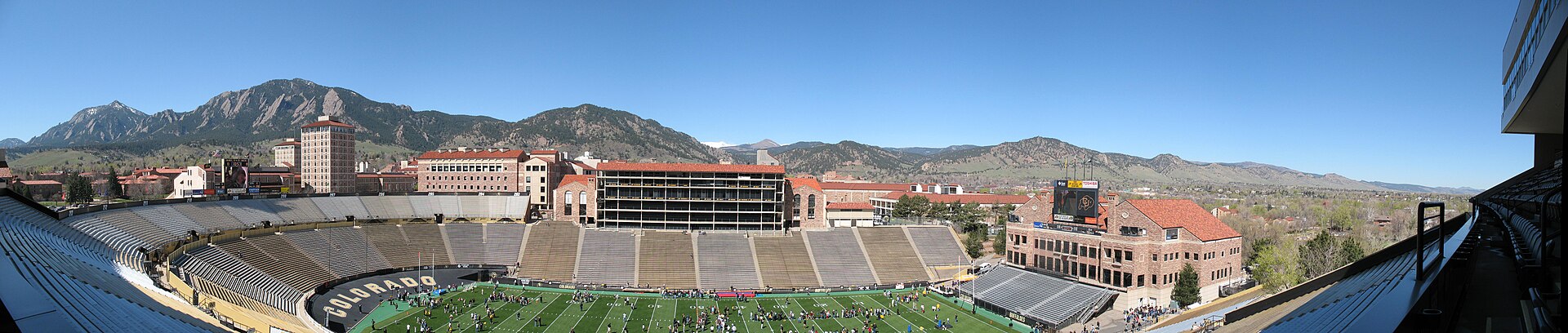
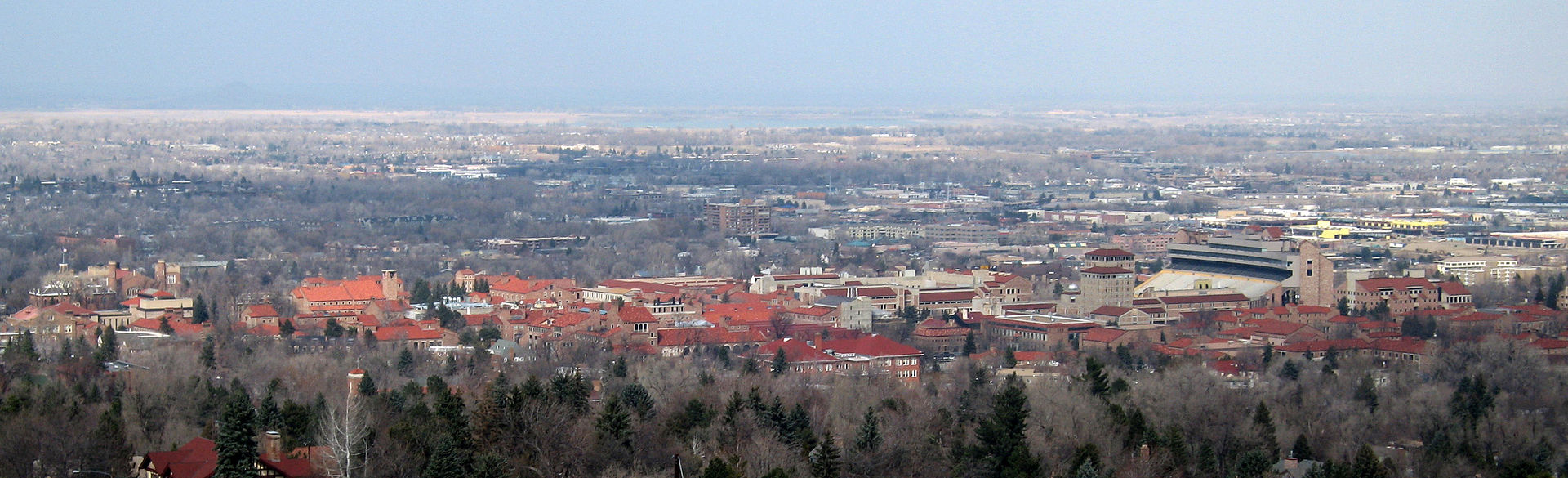
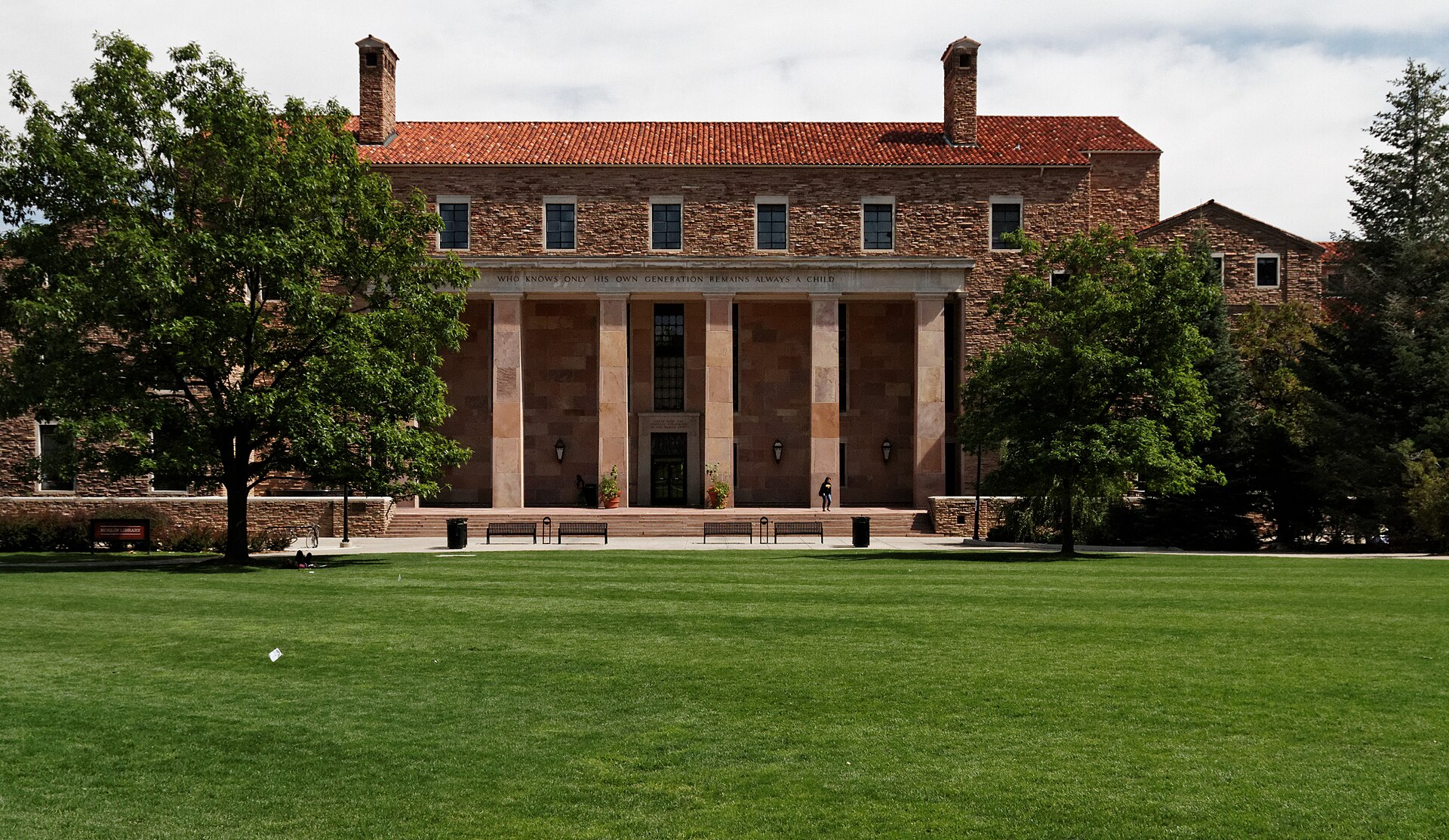
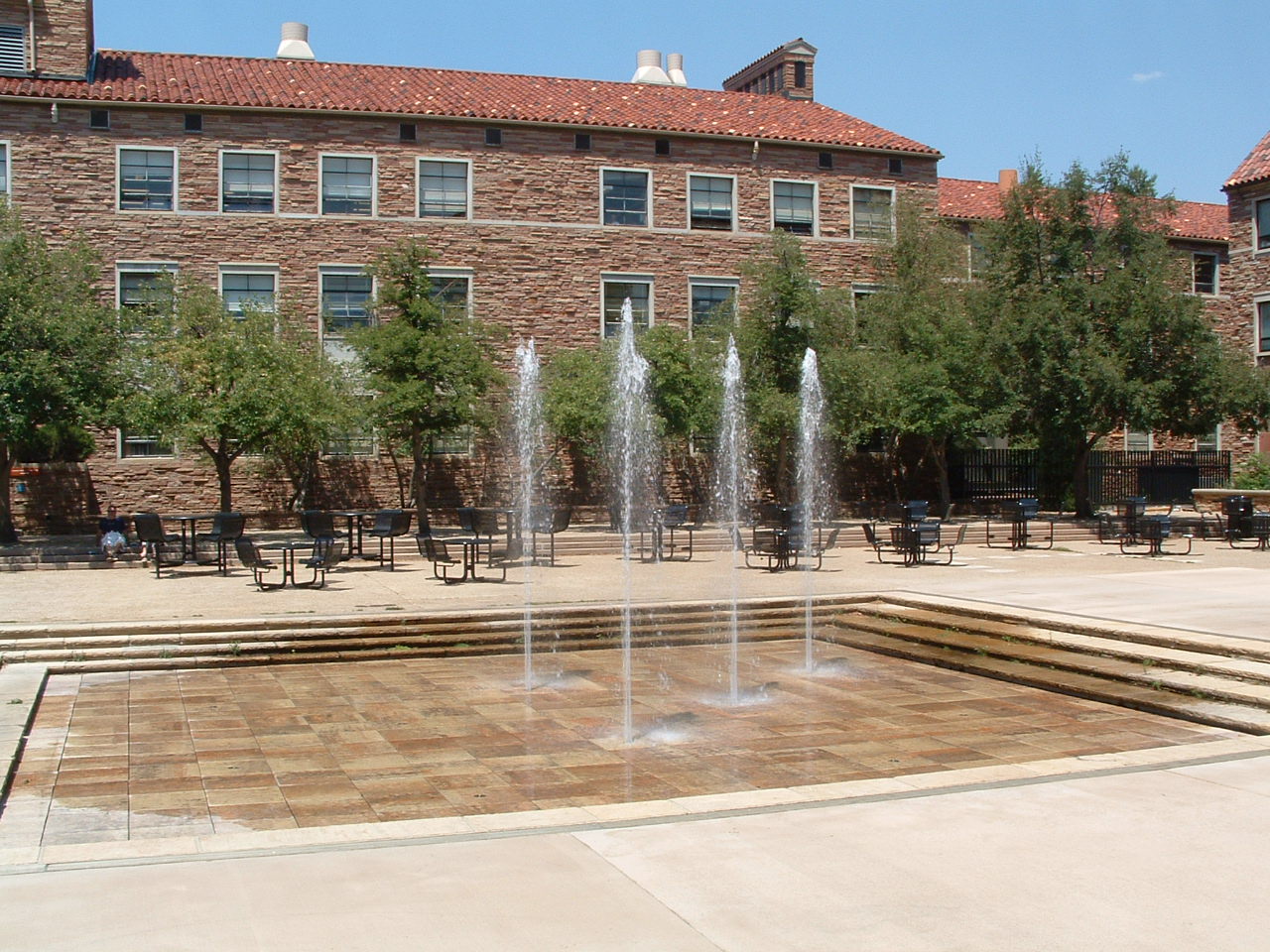
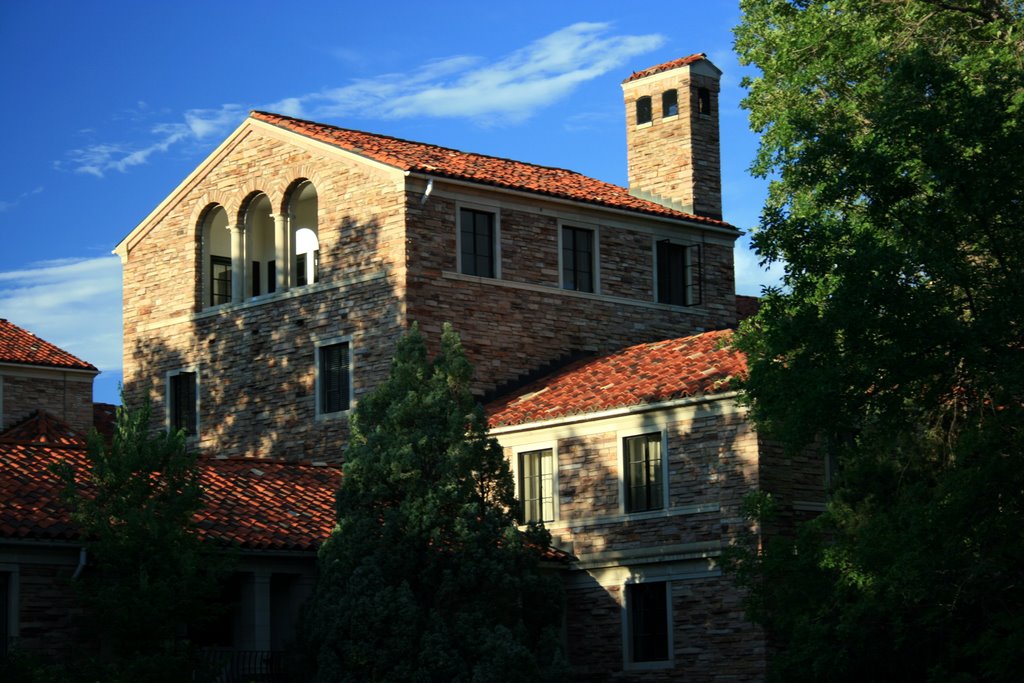
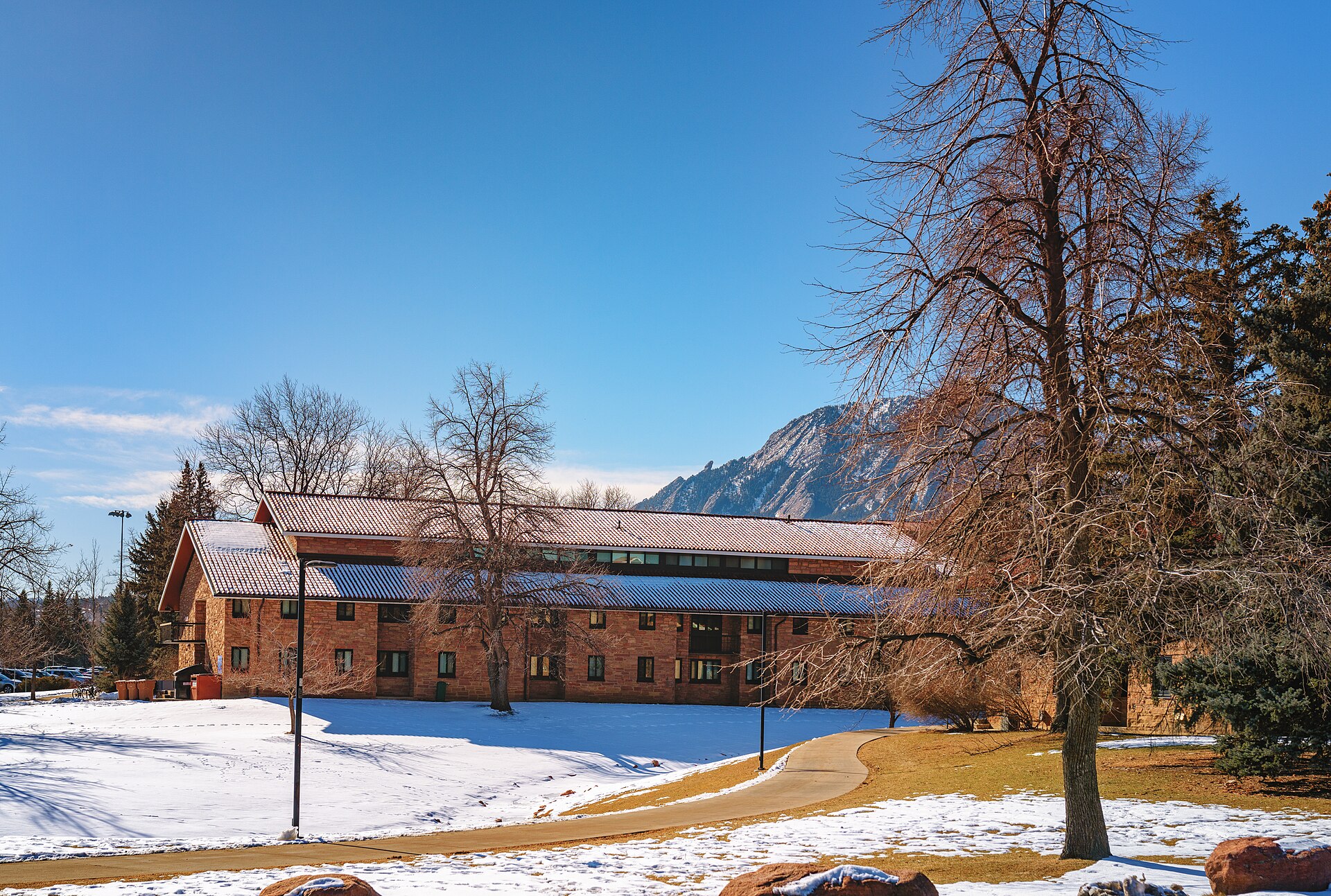
University of Colorado Boulder — campus in pictures
Real, freely-licensed photographs of the campus (via Wikimedia Commons).
WHY CU BOULDER
Why Choose CU Boulder
CU Boulder punches above its weight for a public university — particularly in space, atmospheric sciences, physics, and environmental engineering. Here is why international students choose it.
SELECTIVITY
Acceptance Rate & Admitted Student Profile
CU Boulder has a relatively high overall acceptance rate, but selectivity varies significantly by college and major. Engineering, computer science, and the College of Music are considerably more competitive. International applicants are evaluated within the context of their home curriculum and available opportunities.
The high acceptance rate does not mean all admits look the same. CU Boulder recalculates GPAs on a standardised 4.0 scale, weighting honours, AP, IB, and dual-enrolment courses. A student with a recalculated GPA below 3.2 is unlikely to be competitive. Engineering and CS programmes routinely see average admitted GPAs above 3.7. For international students, IB Diploma holders with 32+ total points in a rigorous subject combination are generally well-positioned for most colleges, with 36+ points recommended for engineering.
AT A GLANCE
Quick Facts
CU Boulder is a large public research university — the state's flagship — with a diverse portfolio spanning arts, sciences, business, engineering, and law. The 600-acre campus is famous for its distinctive sandstone Collegiate Gothic architecture and mountain backdrop. The university is part of the Big 12 Conference, giving it national athletic visibility alongside its research profile.
Type: Public Research University. Setting: Suburban/Mountain city. AAU member.
THE APPLICATION
What Your Application Consists Of
CU Boulder uses the Common Application. International first-year applicants submit the following components — each is evaluated as part of a holistic review.
ADMISSIONS LENS
What CU Boulder Looks For
CU Boulder conducts holistic review, weighing primary academic factors most heavily, then secondary factors including essays and activities.
The most important thing CU Boulder evaluates is your performance in core academic subjects — English, mathematics, science, social studies — relative to what was available at your school. A student who takes the hardest available courses and earns strong grades is valued over one with a top GPA in easier classes. The university explicitly looks for course rigour within your school's opportunities, not against a universal standard.
CALENDAR
Application Deadlines
CU Boulder offers Early Action (non-binding) and Regular Decision rounds. International students should apply Early Action where possible — not because it increases admission chances significantly, but because financial aid and scholarship decisions come earlier.
The 2027 application cycle is now open via Common App. Application fee: $50 (waivers available). International students must also submit proof of financial support before immigration documents (Form I-20) can be issued.
| Round | Deadline | Decision | Binding |
|---|---|---|---|
| Early Action (Fall/Summer) | 15 November | By 1 February | No |
| Regular Decision (Fall/Summer) | 15 January | By 1 April | No |
| Spring Entry | 1 October | Rolling | No |
CAMPUS LIFE
Student Life at CU Boulder
CU Boulder offers a distinctive blend of serious academics and one of the country's most enviable outdoor lifestyles. The campus sits at the foot of the Flatirons — one of Colorado's most iconic geological formations — creating a backdrop unlike any other major research university.
The campus has over 600 registered student organisations, ranging from academic and professional clubs to cultural groups serving international students from dozens of countries. The Center for Community (C4C) serves as the hub for international student services, providing visa support, cultural programming, and community events. Boulder's thriving Pearl Street Mall is a 10-minute walk from campus, offering restaurants, shops, and live music.
OUTCOMES
Career Outcomes
CU Boulder graduates enter strong job markets, particularly in Colorado's booming technology, aerospace, clean energy, and healthcare sectors.
Engineering and computer science graduates tend to earn above the institutional average, drawn to companies such as Lockheed Martin, Ball Aerospace, Raytheon, Google, Microsoft, Amazon, and a dense network of Boulder-area startups. Business graduates from the Leeds School enter finance, consulting, and tech management roles. Environmental studies and atmospheric science graduates frequently pursue graduate degrees or roles in federal agencies including NOAA, NIST, and the EPA — all of which maintain major facilities in Boulder.
For international students, career outcomes depend on OPT/CPT authorisation and the H-1B process. STEM-designated degrees at CU Boulder qualify for 24-month OPT extension — a critical benefit for international graduates seeking US work experience.
FAQS
International Students — Common Questions
Is CU Boulder a good university for international students?+
Yes. CU Boulder is a member of the Association of American Universities, ranked globally in the top 250 by QS and top 150 by Times Higher Education. Its programmes in aerospace, physics, environmental science, computer science, and engineering carry strong international recognition. The Boulder location and outdoor culture also make the overall experience highly distinctive.
How hard is it to get into CU Boulder as an international student?+
The overall acceptance rate is 79%, making CU Boulder considerably more accessible than highly selective US universities. However, specific colleges — particularly Engineering and Computer Science — are more competitive. International applicants are evaluated the same way as domestic applicants: holistically, with primary weight on GPA, course rigour, and essays.
Does CU Boulder offer financial aid to international students?+
Federal need-based financial aid (FAFSA) is not available to international students. CU Boulder offers limited merit-based scholarships to international undergraduates, and occasionally athletic and music scholarships to exceptionally talented individuals. Most international students finance their education through family funds, government scholarships from their home country, or external scholarships.
What English proficiency scores are required?+
CU Boulder requires a minimum IELTS of 6.5, TOEFL of 75, or Duolingo of 100 (verify current requirements on the official site as thresholds update). Scores must be submitted directly to CU Boulder (email: intladm@colorado.edu). Exemptions apply for students from English-medium secondary schools in qualifying countries.
Can I apply test-optional as an international student?+
Yes. SAT and ACT scores are optional for the 2027 cycle. If your scores fall within or above the middle 50% range (SAT 1180–1390, ACT 26–32), submitting them can strengthen your application. If your scores are below this range, test-optional is likely the better strategy.
What is the CU Boulder short answer about?+
CU Boulder's supplemental short answer (approximately 250 words) typically asks about your intended major or academic interests at CU Boulder specifically. It is not a generic 'why this college' prompt — you should connect your academic goals to specific programmes, faculty, research centres, or opportunities at CU Boulder that align with your interests.
Do I need to apply to a specific college at CU Boulder?+
Yes. CU Boulder has multiple colleges — including Engineering & Applied Science, Arts & Sciences, Leeds School of Business, College of Music, and others. You apply to a specific college and major. Engineering is considerably more selective than most arts and sciences programmes. You can apply undecided within Arts & Sciences.
What are STEM OPT benefits at CU Boulder?+
Many CU Boulder degrees in engineering, computer science, mathematics, and natural sciences carry STEM designation, qualifying international graduates for a 24-month OPT extension (total 36 months of US work authorisation) after graduation. This is a significant advantage for international students seeking US career experience before or instead of the H-1B process.
ACADEMICS
Academic Expectations for International Students
CU Boulder operates on a semester system with rigorous coursework expectations, particularly in STEM. International students joining programmes such as Aerospace Engineering, Computer Science, Physics, or Integrative Physiology should be prepared for a step up in pace and breadth compared to many secondary curricula.
The university is research-intensive across all of its colleges. Even at the undergraduate level, students are expected to engage with primary literature, work in labs, and demonstrate independent thinking. The academic culture values curiosity and applied problem-solving alongside theoretical foundations — a balance that suits IB graduates particularly well.
ADMITTED STUDENT PROFILE
Academic Profile of Admitted Students
These ranges reflect the full admitted class. Engineering and Computer Science applicants should target the upper range or above. Arts & Sciences is somewhat more flexible. CU Boulder's GPA recalculation process weights AP, IB, and honours courses — so a student with a slightly lower raw GPA who took very challenging courses may be recalculated higher than their transcript suggests.
TEST POLICY
Standardised Test Policy
CU Boulder is test-optional for the 2027 application cycle. This means SAT and ACT scores are not required, and students who do not submit scores will not be disadvantaged in the review process.
SAT & ACT
SAT and ACT — What the Bands Mean
CU Boulder's middle 50% bands give you a realistic sense of where you stand compared to the admitted class.
A score at the 75th percentile or above (SAT 1390+, ACT 32+) will strengthen an application to competitive programmes like engineering. For general Arts & Sciences admissions, a score anywhere within the range is solid. Scores are self-reported on Common App — official reports are only required after admission.
| Test | 25th_percentile | 75th_percentile | Note |
|---|---|---|---|
| SAT Total | 1180 | 1390 | Test-optional; self-reported accepted |
| ACT Composite | 26 | 32 | Test-optional; self-reported accepted |
IB / A-LEVELS / AP
IB, A-Level, and AP — How They're Evaluated
CU Boulder is well-versed in evaluating international qualifications. IB Diploma candidates and A-Level students are assessed comparatively within the full application context.
IB band of 32 is from the facts file. Competitive engineering/CS ranges are based on well-established expectations — verify current requirements at colorado.edu/admissions.
SUBJECT PREPARATION
Subject Preparation by Intended Major
The subjects you take and how well you perform in them relative to your intended major is a critical signal in your application.
ENGLISH PROFICIENCY
English Proficiency Requirements
International students must demonstrate English proficiency before immigration documents (Form I-20) can be issued, even after admission. Scores must be received directly by CU Boulder (email: intladm@colorado.edu).
Exemptions may apply for students who completed two years of secondary education or one year of post-secondary study in an English-medium institution in a qualifying country. IB English A (SL score ≥6 or HL score ≥5) also satisfies the requirement.
| Test | Minimum | Notes |
|---|---|---|
| IELTS | 6.5 | Academic module; must be within 2 years of start date |
| TOEFL iBT | 75 | Internet-based; verify current threshold at official site |
| Duolingo English Test | 100 | Accepted; verify current threshold |
| PTE Academic | 58 | Pearson Test of English |
| Cambridge C1/C2 | 180 | C1 Advanced or C2 Proficiency |
ROADMAP
Building Your Profile for CU Boulder (Grade 9–12)
A strategic four-year approach to building a competitive application as an international student.
WATCH OUT FOR
Academic Profile Mistakes to Avoid
- Taking easy courses to protect GPA — CU Boulder's recalculation rewards rigour; a slightly lower grade in a harder course often counts more than a perfect score in an easier one.
- Assuming a high raw GPA guarantees admission — CU recalculates on its own scale; what matters is performance in core academic subjects against the hardest courses available at your school.
- Ignoring English proficiency requirements until after admission — the I-20 (immigration document) cannot be issued without verified English proficiency scores, which can delay your visa.
- Applying undecided to Engineering — Engineering is a distinct college with specific admission requirements and higher selectivity. You cannot simply transfer into Engineering from undecided; apply directly to your intended engineering major.
- Not taking the SAT/ACT when your score would be competitive — test-optional is a policy, not a preference. A strong score adds a positive data point; don't leave it on the table.
- Neglecting the CU short-answer supplement — many international applicants write a generic 'why I want to study X' essay. The best short answers name specific CU resources, labs, programmes, or faculty and explain why they matter for your goals.
COST & AID
Understanding the Cost of CU Boulder for International Students
As a public university, CU Boulder offers competitive tuition relative to private US universities — but non-resident international tuition is significantly higher than the in-state rate paid by Colorado residents. Financial aid for international students is very limited. Planning and external scholarship applications should begin well before admission.
The honest reality: CU Boulder is not a need-blind institution for international students, and federal financial aid is not available to non-US citizens or permanent residents. However, the university does offer limited merit scholarships, and a CU Boulder degree — particularly in engineering, computer science, and business — has strong return on investment through career outcomes.
ANNUAL COSTS
Cost Breakdown (Annual Estimates)
All figures are annual estimates for international undergraduate students. Actual costs vary by programme and personal spending.
These are the figures from CU Boulder's published data. Actual costs may vary. The university's Net Price Calculator provides a personalised estimate.
| Component | Amount | Notes |
|---|---|---|
| Tuition & Fees (non-resident / international) | $43,000 | Per academic year |
| Total Cost of Attendance | $65,000 | Includes tuition, housing, meals, books, personal |
| Cost of Living (off-campus estimate) | $18,000 | Housing + food + transport + personal |
| Application Fee | $50 | Non-refundable; waivers available |
FINANCIAL AID POLICY
Financial Aid for International Students
CU Boulder's financial aid policy for international undergraduates is more limited than many peer institutions. Understanding this early is critical to planning.
Federal need-based financial aid (Pell Grants, subsidised loans, work-study) is not available to international students under US law. CU Boulder cannot provide need-based institutional grants to international undergraduates. The average aid percentage from the facts file (25%) primarily reflects aid to domestic students.
SCHOLARSHIPS
Scholarship Opportunities
While institutional aid is limited for international students, the following scholarship routes are available and worth pursuing.
NET COST REALITY
What CU Boulder Actually Costs — Honestly
Understanding the real cost picture before applying saves time and sets realistic expectations.
For international students without merit scholarships, the full cost of attendance at CU Boulder is approximately $65,000 per year. Over four years, this amounts to roughly $260,000 — a significant investment. CU Boulder does not have a no-loan policy or need-blind admissions for international students, so the sticker price is likely to be close to what you pay. However, the return on investment for CU Boulder graduates is competitive, especially for STEM graduates. Engineering, computer science, and business graduates enter Colorado's strong job market — and with STEM OPT designation, have up to 36 months to gain US work experience and potentially transition to long-term visa pathways. If the full cost is unaffordable without external support, we strongly recommend securing home-country government funding, international private scholarships, or private education loans before committing to enrolment.
CU Boulder's Net Price Calculator at colorado.edu/admissions can give a personalised cost estimate. International students receive their own section on the calculator.
HOW TO FUND YOUR DEGREE
Steps to Secure Funding
A step-by-step approach to funding your CU Boulder education as an international student.
COST FAQS
Cost & Aid — Frequently Asked Questions
Does CU Boulder offer full scholarships for international students?+
Full scholarships from CU Boulder's institutional funds are very rare for international undergraduates. The most realistic route to full funding is through home-country government scholarships or external merit programmes. Athletic and music scholarships can be full or partial, but are awarded to an extremely small number of elite performers.
What is the total cost of attending CU Boulder for four years?+
Based on the current cost of attendance of $65,000 per year, four years at CU Boulder costs approximately $260,000 before any scholarships or aid. Tuition, fees, housing, meals, books, and personal expenses are all included in this estimate.
Can international students work while studying at CU Boulder?+
F-1 visa students may work up to 20 hours per week on campus during the academic year. Off-campus employment requires Curricular Practical Training (CPT) or Optional Practical Training (OPT) authorisation. After graduation, STEM-designated degree holders can work for up to 36 months on OPT.
Is the application fee waived for international students?+
Fee waivers are available. Contact CU Boulder's admissions office to inquire — circumstances such as demonstrated financial hardship may qualify you for a waiver of the $50 application fee.
Does CU Boulder consider ability to pay in the admissions decision?+
CU Boulder is need-aware for international students, meaning demonstrated financial need may be a factor in admission decisions, particularly at the margin. This is different from need-blind universities (like some Ivy League schools) where financial need has no bearing on admission.
ESSAYS
The Essays That Get You Into CU Boulder
CU Boulder's application requires two pieces of writing: the Common App personal essay (your universal narrative) and a CU-specific short answer about your academic interests. Together, they are the primary opportunity to show admissions who you are beyond your transcript and test scores.
CU Boulder's admissions readers are looking for authenticity and specificity. They have explicitly said they want to know the person — a compelling, specific story about a meaningful experience is more effective than a list of accomplishments repackaged as prose. The short answer is equally important: generic 'I want to study here because it's a great university' answers are immediately recognisable and unhelpful. Your goal is to connect your specific interests to specific things at CU Boulder.
WHAT'S REQUIRED
Essay Requirements Overview
CU Boulder uses the Common Application. Two writing components are required for first-year applicants.
CU Boulder does not require additional supplemental essays beyond these two components. The College of Music requires a separate supplemental application and audition. Verify current requirements at colorado.edu/admissions.
| Component | Length | Type | Notes |
|---|---|---|---|
| Common App Personal Essay | 250–650 words | Required | Choose from 7 Common App prompts |
| CU Boulder Short Answer | ~250 words | Required | About intended major / academic interests at CU |
THE PROMPTS
Essay Prompts — 2025–26 Cycle
The Common App personal essay allows you to choose from seven prompts. Only one is submitted. Below are the current prompts and the CU-specific short answer context.
PERSONAL ESSAY STRATEGY
Writing the Common App Personal Essay
Your personal essay is read by every university you apply to via Common App — it is your universal narrative. For CU Boulder, authenticity and specific storytelling are explicitly valued.
CU Boulder's admissions team has stated that essays should tell a real story — 'a funny or interesting story doesn't hurt' — and that résumé-style listing of achievements is the wrong approach. This points to something important: CU Boulder readers want to feel they know you as a person by the end of your essay. That means concrete scenes, real feelings, and honest reflection — not an impressive summary of what you've done. For international students, the personal essay is also an opportunity to provide context that your transcript cannot: what your school system was like, what circumstances shaped your choices, or what it meant to pursue a particular interest in a particular place. Use this contextually without making the essay just a travelogue of your country or culture.
SHORT ANSWER STRATEGY
CU Boulder Short Answer — How to Nail It
The CU-specific short answer is about academic fit and intellectual purpose. Generic answers are visible immediately and fail to differentiate you.
CHOOSING YOUR STORY
How to Choose Your Personal Essay Topic
The right topic is the one that lets you be most specific, most honest, and most distinctly yourself.
WHAT NOT TO DO
Common Essay Mistakes to Avoid
- Writing a résumé in prose — listing accomplishments without storytelling or reflection.
- Opening with a dictionary definition, a quote, or a statement about your passion.
- Making the personal essay about your country, culture, or language rather than about you specifically.
- Submitting a generic CU short answer with no specific CU programmes, resources, or faculty named.
- Exceeding the word count — 650 words for the personal essay and roughly 250 for the short answer are firm limits.
- Using the same short answer for multiple universities with minimal edits — CU Boulder readers will notice if the answer could have been written for any school.
- Asking someone else to write your essay — even with good intentions. CU Boulder's admissions culture genuinely values authenticity; essays that feel coached or overly polished can read as inauthentic.
- Waiting until the deadline week to start — the personal essay requires multiple drafts over weeks, not a single sitting before the November 15 deadline.
ESSAY FAQS
Essays — Frequently Asked Questions
How important is the short answer compared to the personal essay?+
Both matter. The personal essay establishes your voice and character; the short answer demonstrates fit with CU Boulder specifically. The short answer can be decisive for competitive programmes where many applicants have similar academic profiles — a compelling, specific answer about your interests in that programme signals genuine intent and preparation.
Should I write about being an international student in my essay?+
Not necessarily — and certainly not as the main subject just because it's true. Your international background is worth including if it's the most meaningful thing about your story and you can treat it with specificity. But your essay topic should be driven by what's most important to you, not by what you think an admissions reader wants from an international student.
Can I reuse a personal essay I wrote for another university?+
The Common App personal essay is designed to be submitted to multiple universities — you write it once and it goes everywhere. However, the CU Boulder short answer must be written specifically for CU. Never repurpose a supplement from another school.
How do I research CU Boulder for the short answer?+
Spend time on colorado.edu — explore your intended college's website, faculty profiles, research centres, and unique programmes. Search '[CU Boulder] [your interest]' and see what comes up. Genuine curiosity about specific CU opportunities will come through in your writing in a way that generic research does not.
Is there an interview as part of CU Boulder's application?+
CU Boulder does not conduct alumni or admissions interviews as part of the standard undergraduate application process. Your essays, transcript, recommendation, and activities are the primary inputs into the holistic review.
What if English is not my first language — will my essay be held to a native-speaker standard?+
No. CU Boulder's admissions readers understand that many international applicants are writing in a second or third language. Clarity, specificity, and authentic voice matter far more than stylistic flourish. A clear, honest, well-structured essay in plain English will always be better than an attempt at literary complexity that obscures your meaning.
Courses — schools, degrees & intake
78 degrees across 6 groupings.
College of Arts and Sciences · 42 degrees
Anthropology
Art History
Art Practices
Asian Studies
Astrophysical and Planetary Sciences
Atmospheric and Oceanic Sciences
Biochemistry
Chemistry
Chinese
Cinema Studies and Moving Image Arts
Classics
Dance
Earth Science
Economics
English
Environmental Studies
Ethnic Studies
French
Geography
German Studies
History
Humanities
Integrative Physiology
International Affairs
Japanese
Jewish Studies
Linguistics
Mathematics
Molecular, Cellular, and Developmental Biology
Philosophy
Physics
Political Science
Psychology
Public Health
Religious Studies
Russian Studies
Sociology
Spanish
Speech, Language, and Hearing Sciences
Statistics and Data Science
Theatre
Women and Gender Studies
Leeds School of Business · 2 degrees
Business Administration
Integrated Business and Engineering
College of Media, Communication and Information · 8 degrees
Architecture
Environmental Design
Communication
Journalism
Media Production
Media Studies
Strategic Communication
Information Science
College of Engineering and Applied Science · 15 degrees
Aerospace Engineering Sciences
Applied Mathematics
Architectural Engineering
Biomedical Engineering
Biological Engineering
Chemical Engineering
Civil Engineering
Computer Science
Creative Technology and Design (ATLAS)
Electrical Engineering
Electrical, Computer and Energy Engineering
Engineering Physics
Environmental Engineering
Integrated Design Engineering
Mechanical Engineering
School of Education · 4 degrees
Elementary Education
Middle and High School Teaching
Education Studies
Leadership and Community Engagement
College of Music · 7 degrees
Music (Bachelor of Arts in Music)
Music Performance (Bachelor of Music)
Jazz Studies (Bachelor of Music)
Music Composition (Bachelor of Music)
Musicology (Bachelor of Music)
Musical Theatre (Bachelor of Music)
Music Education (Bachelor of Music Education)
Want your real chances at University of Colorado Boulder?
Create a free TYCHR account for your personalised admit-chance, a shortlist you can track, exact entry requirements, and essay + counselling help.