University of California, Santa Barbara
Santa Barbara, United States · Suburban
UC SANTA BARBARA — ADMISSIONS GUIDE
Your Guide to UC Santa Barbara for International Students
UC Santa Barbara is one of America's most distinctive public research universities — an Association of American Universities member perched on the Pacific coast, where Nobel Prize-winning science meets a vibrant, collaborative student culture. For international students, UCSB offers genuine research access from year one, a test-blind holistic review, and a coastal California lifestyle unlike any other campus on earth.
Ranked #63 globally by Times Higher Education and #39 nationally, UCSB punches well above its public-university weight in the physical sciences, materials science, marine biology, and technology. With a 33% acceptance rate, it is selective but accessible — making it an outstanding target for ambitious international students who have built strong academic profiles and meaningful extracurricular stories.
Campus
University of California, Santa Barbara — campus in pictures
Real, freely-licensed photographs of the campus (via Wikimedia Commons).
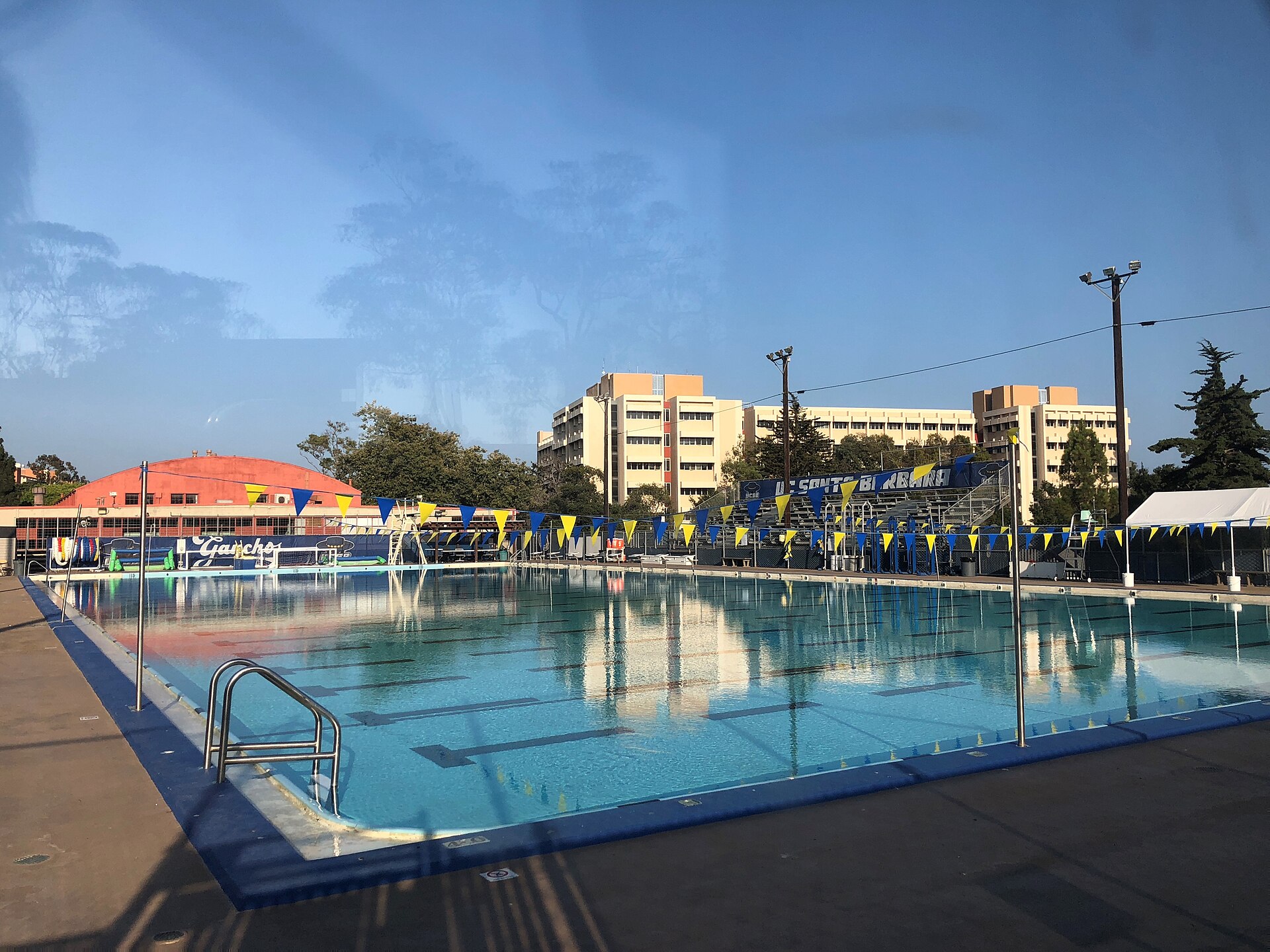
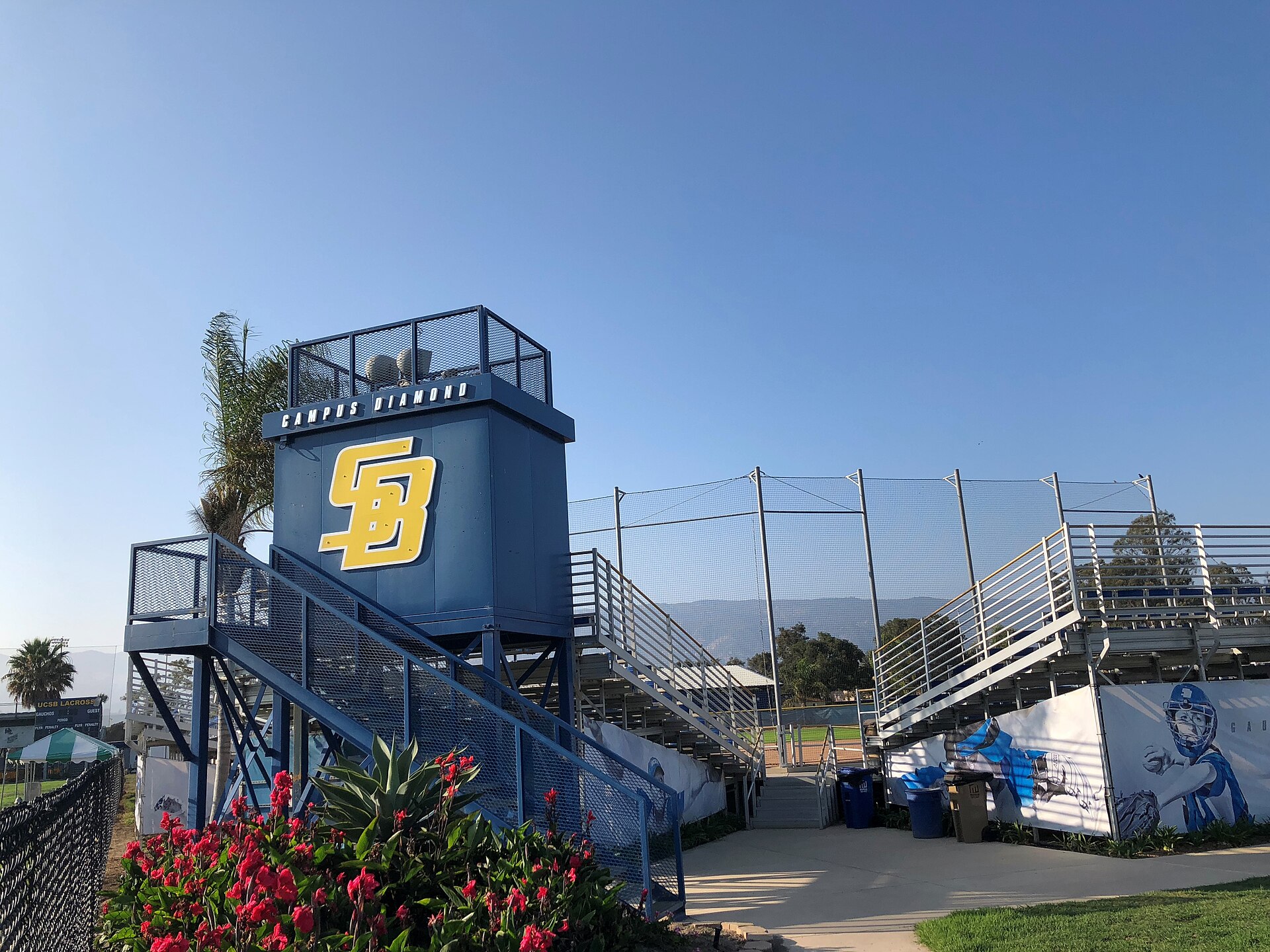

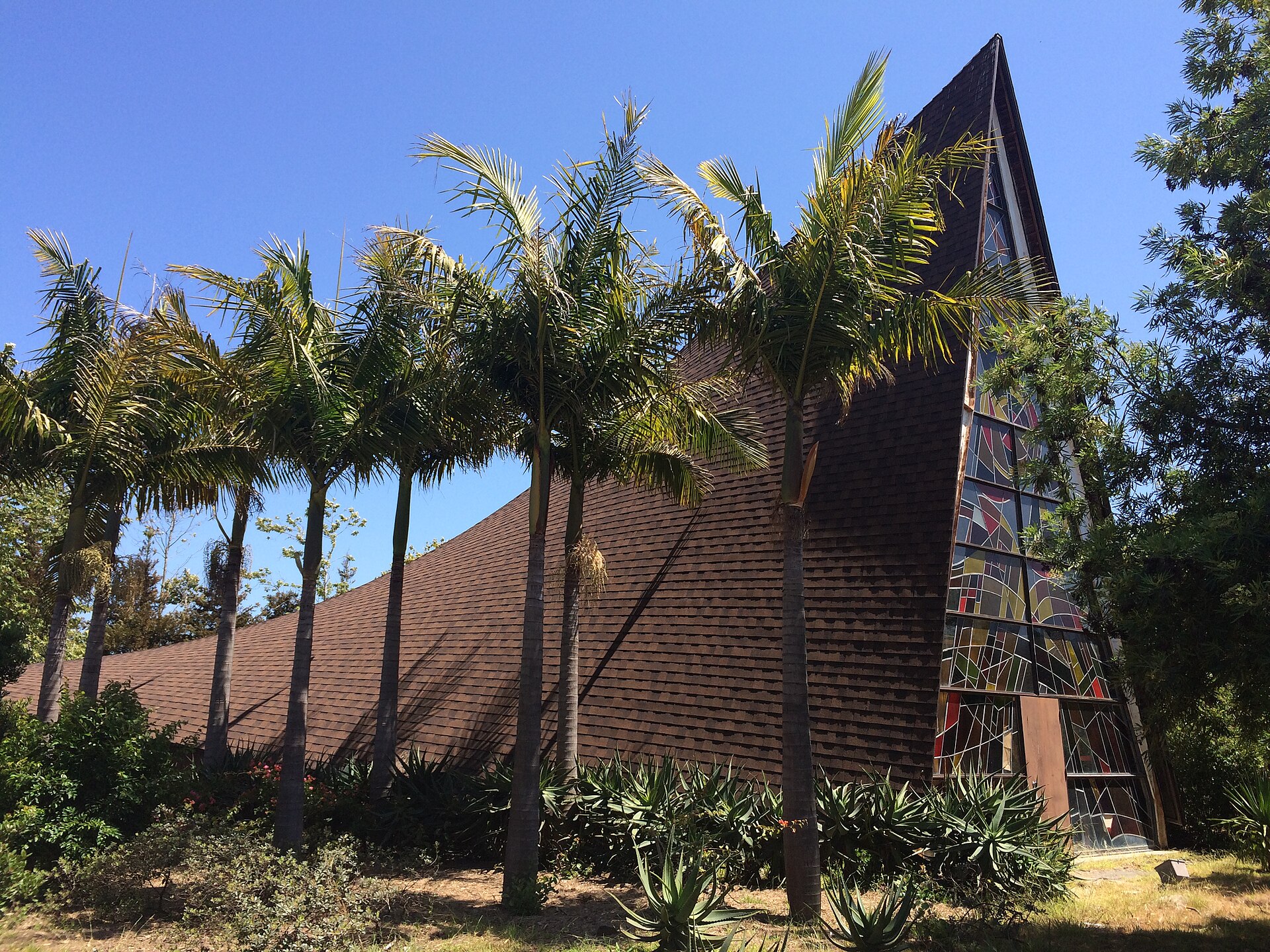
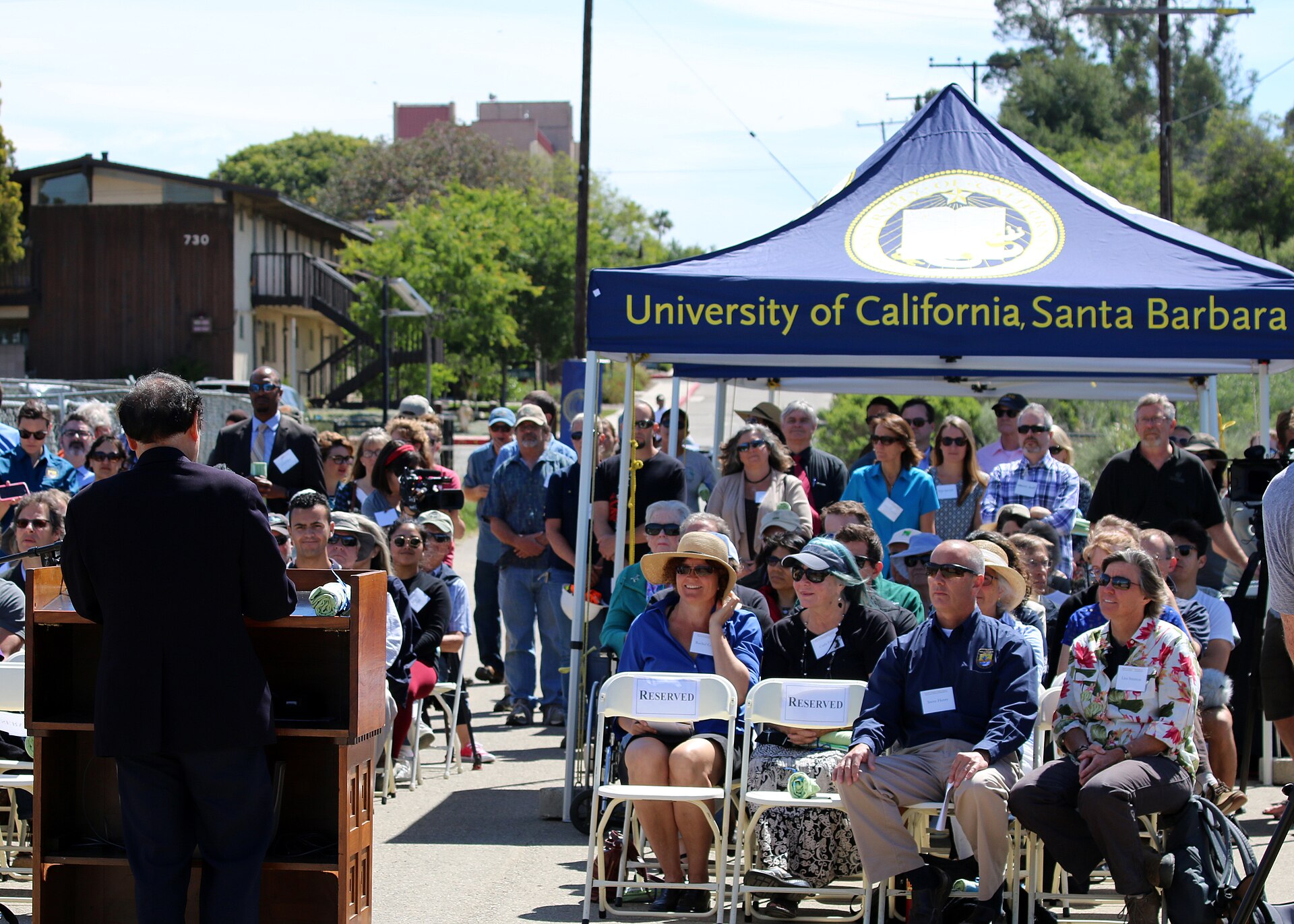
WHY UCSB
Why UC Santa Barbara — Research, Coast & Opportunity
UCSB is not simply a beautiful campus — it is one of the most research-productive universities in the world relative to its size, home to faculty who have changed entire scientific fields. Here is why ambitious international students choose it.
SELECTIVITY
UCSB Acceptance Rate & Admitted Profile
UCSB is a selective public research university with a 33% acceptance rate — making it competitive but accessible for well-prepared international students. Because UCSB is test-blind, your GPA, course rigour, and personal insight essays carry the most weight.
UCSB is fully test-blind: SAT and ACT scores are not reviewed for admissions decisions. The GPA shown is the minimum UC-calculated GPA required for eligibility — competitive admits typically present stronger records. The IB band is a typical range from the facts file, not a hard floor.
AT A GLANCE
UCSB Quick Facts
APPLICATION COMPONENTS
What Your UCSB Application Consists Of
UCSB uses the UC Application — a single system shared by all ten UC campuses. You apply once and may select up to nine UC campuses. Here is what the application includes.
SELECTION CRITERIA
What UCSB Looks for in International Applicants
UCSB uses a comprehensive holistic review that considers your full application — not just grades. The UC system evaluates applicants on 13 academic and non-academic criteria. For international students, context matters: UCSB readers understand that your academic system, resource access, and opportunities differ from US applicants.
DEADLINES
Application Deadlines & Key Dates
UCSB uses a single annual application window — there is no Early Action or Early Decision. All applicants compete in the same round. The filing period runs from October 1 to November 30 each year for the following fall enrolment.
There is no Early Decision or Early Action at UCSB. All applications are due by 30 November. Application fee is $80 for domestic and $95 for international applicants per UC campus selected.
| Round | Date | Notes |
|---|---|---|
| Application Opens | 1 August | UC Application portal accessible |
| Filing Period Opens | 1 October | Official filing window begins |
| Application Deadline | 30 November | Hard deadline — no extensions |
| Decision Notifications | March | Admissions decisions released |
| Statement of Intent (SIR) | 1 May | Deadline to accept your offer |
CAMPUS LIFE
Student Life at UC Santa Barbara
UCSB offers one of the most distinctive campus experiences in the United States — a self-contained coastal community where academic life, outdoor adventure, and cultural programming intersect.
The campus sits between the Santa Ynez Mountains and the Pacific Ocean, adjacent to the community of Isla Vista. Most first-year students live on campus in the residence halls — an immersive introduction to Gaucho life and a key way to build friendships across 26,000 students. Undergraduate housing is available for first-year students and guaranteed for the first two years for those who apply on time.
CAREER OUTCOMES
Career Outcomes & Graduate Destinations
UCSB graduates are highly sought in California's technology, biotechnology, environmental, and finance sectors. The Career Services office and the UCSB Alumni Association provide recruiting connections across the US and internationally.
UCSB's location in California places it within reach of Silicon Valley, Los Angeles, and the broader Southern California tech and entertainment industries. Major recruiters include Google, Apple, Microsoft, Northrop Grumman, Amazon, and a large number of biotechnology and life-sciences companies. For international students, UCSB's strong STEM programmes make graduates eligible for OPT STEM extension, allowing up to three years of post-graduation work authorisation in the US.
FAQS
Frequently Asked Questions
Is UCSB test-blind or test-optional?+
UCSB is fully test-blind, meaning SAT and ACT scores are not reviewed for admissions decisions at all. You may submit scores, but they will not be considered. After admission, scores may be used for course placement purposes.
Can international students apply for financial aid at UCSB?+
Federal and California state aid programmes are not available to international students on F-1 visas. However, UCSB does offer some institutional scholarships and merit awards that international students may be eligible for. You should contact the Office of Financial Aid and Scholarships directly to confirm current eligibility.
Does UCSB have an Early Action or Early Decision round?+
No. UCSB uses the UC Application with a single filing window: October 1–November 30. All applicants compete in the same cycle and receive decisions in March.
How is the UC Application different from the Common App?+
The UC Application is a separate platform used only by University of California campuses. You can apply to up to nine UC campuses on one application. It uses Personal Insight Questions (PIQs) rather than the Common App personal statement, and has no teacher or counsellor recommendation letters for most applicants.
What is Isla Vista like for international students?+
Isla Vista is the student-oriented community adjacent to campus. It is walkable, bike-friendly, and has a strong sense of community. Most first-year students live on campus; many upperclassmen move to IV. The cost of off-campus housing is significant — plan for Santa Barbara's relatively high cost of living.
Does UCSB require letters of recommendation?+
For most freshman applicants, UCSB does NOT require letters of recommendation. Some competitive scholarship programmes may request them separately, but they are not part of the standard UC Application. Your PIQs and academic record carry the full weight.
Which majors are UCSB's strongest?+
UCSB has particularly strong programmes in materials science, physics, chemistry, computer science, marine biology, environmental science, economics, and psychological and brain sciences. Its College of Engineering and Bren School of Environmental Science & Management are nationally recognised.
How important are extracurriculars for UCSB admissions?+
Very important — but quality over quantity matters. UCSB's holistic review emphasises depth of commitment, leadership, and genuine impact. A student who has sustained one meaningful activity for four years will be viewed more favourably than one who lists 20 clubs with no depth.
ACADEMICS
Academic Expectations at UC Santa Barbara What International Students Need to Know
UCSB is a world-class research university where intellectual rigour is expected and rewarded. For international applicants, understanding how the UC system evaluates your international credentials — and what academic profile makes you competitive — is essential to building a strong application.
ACADEMIC BENCHMARKS
Admitted Student Academic Profile
Because UCSB is test-blind, your academic profile centres on your GPA, course rigour, and the strength of your curriculum. The figures below are from the university's official data.
SAT and ACT scores shown reflect the admitted class profile but are collected for placement purposes only after admission — they have no bearing on the admission decision. The IB score band is a typical indicator from university data, not a published cutoff.
TEST POLICY
UCSB is Fully Test-Blind
Effective for the Class of 2025 and all subsequent classes, the University of California eliminated standardised test scores from its admissions process entirely. UCSB does not review SAT or ACT scores when making admissions decisions.
This is a permanent policy change — not a temporary measure. International students who sat the SAT or ACT may still report their scores if they wish, but those scores will not be seen by admissions readers. After admission, scores may be used to place you in the appropriate math or writing course. If you did not sit any standardised test, this does not disadvantage you in any way at UCSB.
Source: UC Office of the President permanent test-blind policy.
STANDARDISED TESTS
SAT, ACT & UCSB: What You Should Know
Because UCSB is test-blind, this section is purely informational — to help you understand where the tests may still matter in your broader US university strategy.
IB & INTERNATIONAL CURRICULA
IB, A-Level & Other International Qualifications
UCSB accepts and positively values the International Baccalaureate Diploma, A-Levels, and other international qualifications. The UC system has established course articulation frameworks that translate international credentials into UC GPA equivalents.
SUBJECT PREPARATION
Subject Preparation by Major Area
The UC system has A–G subject requirements that define the minimum preparatory curriculum. For competitive UCSB applicants, aim well beyond the minimums — especially in subjects relevant to your intended major.
ENGLISH PROFICIENCY
English Language Requirements for International Students
International students whose primary language of instruction was not English must submit an English proficiency test. Scores must be valid and unexpired at the time of submission and self-reported on the UC Application. Official scores must be sent directly to UCSB upon admission.
Students educated in English-medium schools in countries where English is not the national language should confirm with UCSB admissions whether an exemption applies. Contact: admissions@ucsb.edu / (805) 893-2881.
| Test | Minimum Score | Notes |
|---|---|---|
| IELTS Academic | 7.0 overall | No sub-band minimums specified; verify with admissions |
| TOEFL iBT | 80 | Internet-Based Test score |
| Duolingo English Test | 120 | Accepted; verify with admissions for current cycle |
ROADMAP
Building Your UCSB Profile: Grade 9–12
UCSB evaluates your full four-year high school record. Start building strategically early.
COMMON MISTAKES
Academic Pitfalls to Avoid
- Dropping rigorous courses in Grade 12 — UCSB notices any decline in course load or grades after you are admitted.
- Assuming your IB or A-Level predicted grades are your 'offer' — unlike UK universities, UCSB evaluates your full transcript, not just predicted scores.
- Misunderstanding 'test-blind' as 'grades don't matter' — your academic record is more important than ever because test scores are removed from the equation.
- Applying with the minimum 3.4 UC GPA and assuming you are competitive — the minimum is an eligibility threshold, not a competitive benchmark.
- Underrepresenting your international academic context — use the additional comments section to help readers understand your school system, marking scheme, and class rank if relevant.
- Failing to check the A–G course requirements — ensure your international curriculum satisfies the UC system's subject-area prerequisites for eligibility.
- Not having your English proficiency scores ready — official scores must be sent directly to UCSB after admission, so plan test timing accordingly.
COST & AID
Understanding the Cost of UCSB An Honest Guide for International Families
UCSB is a public university with lower tuition than elite private US universities — but as an international (non-California-resident) student, you will pay non-resident supplemental tuition. The total cost of attendance for international students is significant, and financial aid availability for F-1 visa holders is limited. Plan carefully and early.
COST BREAKDOWN
Annual Cost of Attendance (Estimated)
All figures below are from the university's official data. These are annual estimates — actual costs depend on housing choice, programme of study, and personal spending.
These figures represent estimated annual costs. Santa Barbara is a high cost-of-living city by US standards. Budget generously for housing, especially if living off-campus in Isla Vista, where rental costs are substantial.
| Item | Annual Cost | Notes |
|---|---|---|
| Tuition & Fees (Non-Resident) | $56,943 | International students pay non-resident supplemental tuition |
| Total Cost of Attendance | $90,216 | Includes tuition, housing, meals, books, personal, transport |
| Estimated Cost of Living | $21,000 | Housing, food, personal expenses in Santa Barbara area |
| Application Fee | $95 | Per UC campus for international applicants (one-time, at application) |
FINANCIAL AID
Financial Aid for International Students
Financial aid at UCSB is primarily funded by federal and California state government programmes — which are not available to international students on F-1 visas. This is an important reality for international families to understand before applying.
UCSB does administer some institutional aid that may be available to international students, and approximately 82% of UCSB students overall receive some form of financial aid — however, this figure is predominantly composed of domestic students receiving federal grants, loans, and California state aid. International students on F-1 visas are generally not eligible for these programmes.
Contact the UCSB Office of Financial Aid and Scholarships (finaid@sa.ucsb.edu) to confirm current international student aid availability for your intended enrolment year. Policies and available funding can change annually.
SCHOLARSHIPS
Scholarship Opportunities at UCSB
UCSB offers a range of institutional scholarships, and several external organisations offer awards to students planning to study in California or the UC system. Below are verified programme types — confirm current availability and amounts on the official scholarships page.
AFFORDABILITY
Is UCSB Affordable for International Students?
Compared to elite private US universities (which charge $80,000–$90,000+ per year in tuition alone), UCSB's tuition of approximately $56,943 is significantly lower — but still a major investment for most international families. The total cost of attendance of approximately $90,216 accounts for living in Santa Barbara, which is an expensive coastal city.
Without access to US federal or state aid, most international students at UCSB are self-funded or rely on home-country government scholarships. Families should budget for four full years at current costs (which typically increase each year). Campus employment (up to 20 hours/week on F-1 status) can supplement living costs but cannot offset tuition. UCSB's 86% employment rate and average starting salary of $66,000 mean graduates are well-positioned to manage student debt if applicable — but most international students will need to fund undergraduate study independently.
ACTION PLAN
Steps to Fund Your UCSB Education
FAQS
Cost & Aid FAQs for International Students
Do international students pay in-state or out-of-state tuition at UCSB?+
International students pay non-resident supplemental tuition, which is higher than California in-state tuition. The total tuition and fees figure of approximately $56,943 per year applies to international students.
Can I receive US federal financial aid as an international student?+
No. US federal financial aid (Pell Grants, federal loans, federal work-study) is restricted to US citizens and eligible non-citizens. F-1 international students are not eligible for these programmes.
Is need-blind admission available for international students?+
UCSB is need-aware in its admissions process and does not guarantee meeting 100% of demonstrated financial need for international students. Unlike some elite private universities, UCSB does not have a formal need-blind international admissions policy.
Can I work part-time to help cover costs?+
F-1 students can work on campus up to 20 hours per week during term. After graduation, Optional Practical Training (OPT) and STEM OPT extension (up to 3 years for STEM majors) allow you to work in the US, which helps manage any student loans.
How much does off-campus housing in Isla Vista cost?+
Isla Vista is a student-dominated neighbourhood with high demand and relatively high rents by national standards. Rents vary; budget as part of your total cost of attendance estimate. UCSB's on-campus housing is available to first-year students and is often more affordable.
ESSAYS & APPLICATION
UCSB Essays & Personal Insight Questions Your Most Important Application Component
At UCSB, there are no Common App personal statements or university-specific supplemental essays — instead, the UC Application uses Personal Insight Questions (PIQs): four responses of up to 350 words each, chosen from a bank of eight. These are your primary opportunity to show UCSB who you are beyond your transcript. For international students, they are especially important — they are your voice, your story, and your only chance to provide context that grades alone cannot convey.
THE BASICS
How the PIQ System Works
The UC Application does not use the Common App or Coalition App. All nine UC campuses read the same four PIQ responses — there are no campus-specific supplemental essays for any UC campus, including UCSB.
THE 8 PROMPTS
All 8 UC Personal Insight Question Prompts
Choose any 4 of these 8 questions. Each response is limited to 350 words. These are the official current prompts from the University of California admissions website.
STRATEGY
Choosing Your Four PIQs: A Strategic Framework
With 8 prompts and a requirement to choose 4, the choice matters. The UC system says all prompts are equal — but strategically, your four selections should work together to paint a multidimensional portrait of who you are.
TOPIC SELECTION
Choosing What to Write About
For international students, topic selection in PIQs is often the most anxiety-inducing step. Here is a framework to make the right choices.
Start by brainstorming every significant experience, achievement, challenge, passion, and identity marker in your life. List them freely, without filtering. Then apply two tests: (1) Is this story MINE — something only I could write? (2) Does this story reveal something IMPORTANT about me that is not obvious from my transcript? If yes to both, it is a strong PIQ candidate. If the story sounds like it could appear in a thousand other applications, find a more specific angle or choose a different story.
COMMON MISTAKES
PIQ Writing Mistakes to Avoid
- Exceeding 350 words — the portal hard-caps the limit, but cutting your best thinking at the last moment hurts quality. Write to 320–330 words, then polish.
- Writing for what you think UCSB wants to hear rather than your authentic experience — readers have read millions of essays and recognise inauthenticity immediately.
- Using all four PIQs to talk about the same theme from different angles — this wastes the opportunity to show your multidimensionality.
- Treating Prompt 8 ('What makes you a strong candidate') as a summary — it should add NEW information, not recap the other three.
- Ignoring the activities and awards section — the UC Application's activities section is separate from your PIQs and equally important. Use it fully and accurately.
- Submitting without editing for concision — 350 words is tight. Every sentence should be doing work. Cut adverbs, cut filler phrases, cut anything that does not advance the story.
- Translating an essay written for another application system (e.g., a Common App personal essay) directly into a PIQ without reworking it — the format and expectations are different.
FAQS
PIQ & Essay FAQs
Does UCSB require campus-specific supplemental essays?+
No. UCSB does not require any campus-specific supplemental essays for freshman applicants. The four PIQs are read by all UC campuses you apply to on the same application.
Is there a UC personal statement like the Common App personal statement?+
No. The UC Application uses Personal Insight Questions — four responses of up to 350 words each, chosen from a bank of 8 prompts. This is an entirely different format from the 650-word Common App personal statement.
Does UCSB require letters of recommendation?+
No. Standard freshman applicants do not submit letters of recommendation through the UC Application. Some scholarship programmes administered after admission may request them separately.
Can I write the same PIQ for multiple UC campuses?+
Yes — in fact, you must. Because all UC campuses share the same application, your four PIQs are submitted once and read by every UC campus you selected. You cannot customise essays per campus.
Should I choose prompts that relate to my intended major?+
Not necessarily. UCSB values a multidimensional portrait. Choose the four prompts for which you have the strongest, most specific, most authentic stories — not the ones that sound most relevant to UCSB's top programmes. That said, Prompt 6 (academic subject that inspires) is a natural fit for STEM applicants who want to articulate their intellectual passion.
What is the word limit and is it strictly enforced?+
350 words maximum per PIQ. The UC Application portal enforces this limit — you cannot submit a response that exceeds it. Write to approximately 320–330 words, then revise for quality.
Can I write about being an international student as my topic?+
Yes — but be careful. 'I am an international student and it was hard' is generic. What worked for you: a specific cultural clash you navigated, a language barrier you overcame in a concrete situation, an experience of being an outsider that gave you unusual insight. Make it specific, not conceptual.
Courses — schools, degrees & intake
59 degrees across 5 groupings.
College of Letters & Science – Humanities & Fine Arts · 21 degrees
Art (Studio Art)
Art History
Classics
Comparative Literature
Dance
East Asian Languages and Cultural Studies
English
Feminist Studies
Film and Media Studies
French
German
History
Italian
Latin American and Iberian Studies
Linguistics
Media Arts and Technology
Music
Philosophy
Religious Studies
Spanish
Theater
College of Letters & Science – Mathematical, Life & Physical Sciences · 13 degrees
Actuarial Science
Biochemistry
Chemistry
Earth Science
Ecology, Evolution, and Marine Biology
Environmental Science
Environmental Studies
Geography
Marine Biology
Mathematics
Molecular, Cellular, and Developmental Biology
Physics
Statistics and Applied Probability
College of Letters & Science – Social Sciences · 11 degrees
Anthropology
Asian American Studies
Black Studies
Chicana and Chicano Studies
Communication
Economics
Exercise and Sport Studies
Global Studies
Political Science
Psychological and Brain Sciences
Sociology
College of Engineering · 5 degrees
Chemical Engineering
Computer Engineering
Computer Science
Electrical Engineering
Mechanical Engineering
College of Creative Studies · 9 degrees
Art
Biology
Chemistry and Biochemistry
Computing
Marine Science
Mathematics
Music Composition
Physics
Writing and Literature
Want your real chances at University of California, Santa Barbara?
Create a free TYCHR account for your personalised admit-chance, a shortlist you can track, exact entry requirements, and essay + counselling help.