← All universities

University of California, Los Angeles

Los Angeles, United States · Urban

Public IvyAAUPublicResearch
Acceptance
9.0%
QS World
#42
Tuition/yr
$53,300
Students
46,000
Founded
1919

UNIVERSITY ADMISSIONS GUIDE

UCLA Admissions Guide for International Students

The University of California, Los Angeles is the most applied-to university in the United States — and one of the most selective public institutions in the world. Ranked #15 nationally and #42 globally by QS, UCLA combines the research depth of a world-class institution with the cultural energy of Los Angeles. This guide covers everything an international student needs to know: from the UC Application and Personal Insight Questions to the reality of costs and the absence of institutional financial aid.

With a 9% acceptance rate, an IB benchmark of 40 points, and a holistic review that scrutinises every aspect of who you are and what you have done, getting into UCLA demands both academic excellence and a compelling personal story. Because UCLA is test-blind, your four Personal Insight Questions are the single most differentiating part of your application. This guide is your honest, practical roadmap.

Campus

University of California, Los Angeles — campus in pictures

Real, freely-licensed photographs of the campus (via Wikimedia Commons).
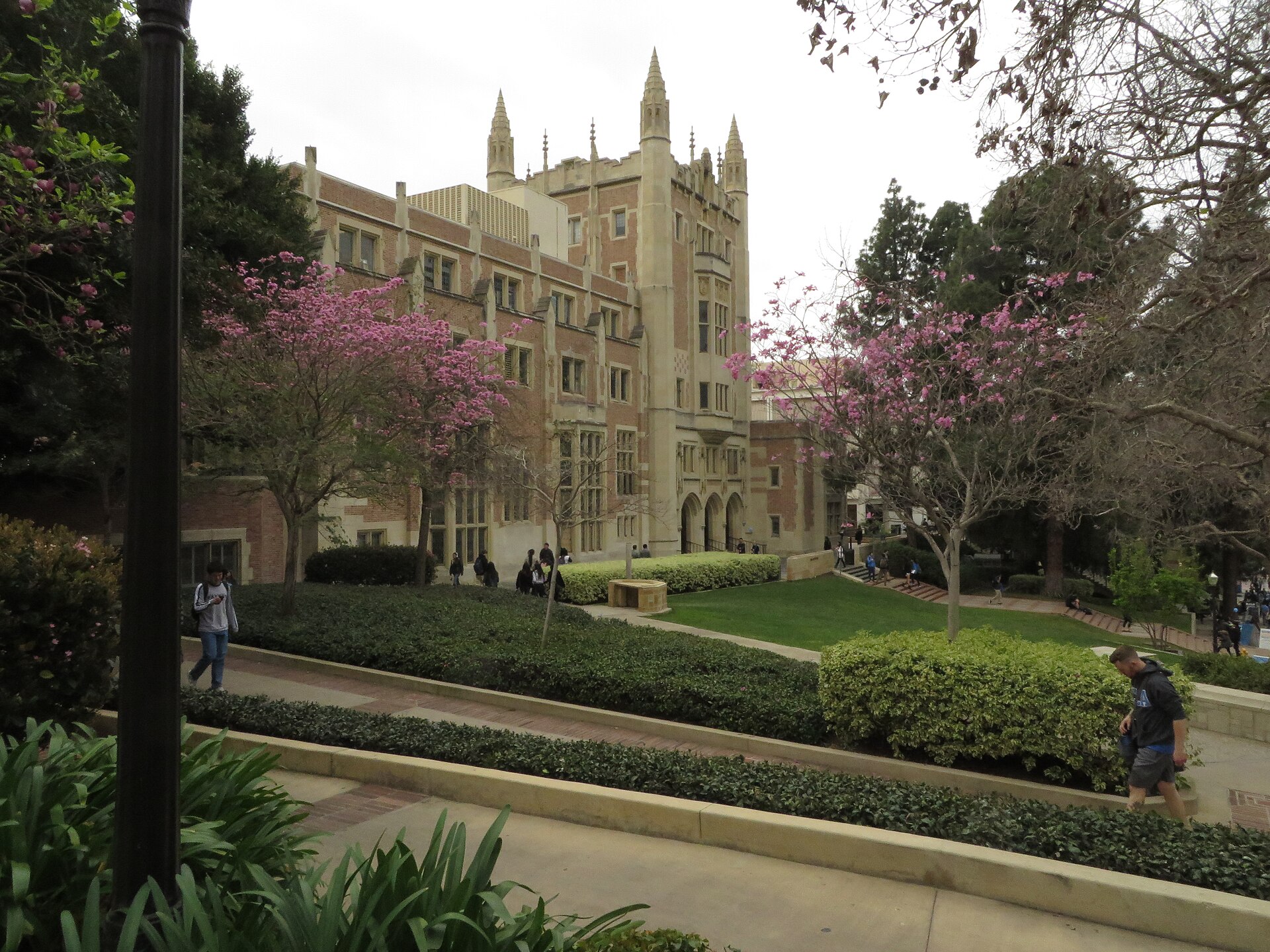
The front lawn of Kerckhoff Hall, as seen in Legally Blonde.
The front lawn of Kerckhoff Hall, as seen in Legally Blonde.Logan Ward · CC BY 2.0 · via Wikimedia Commons
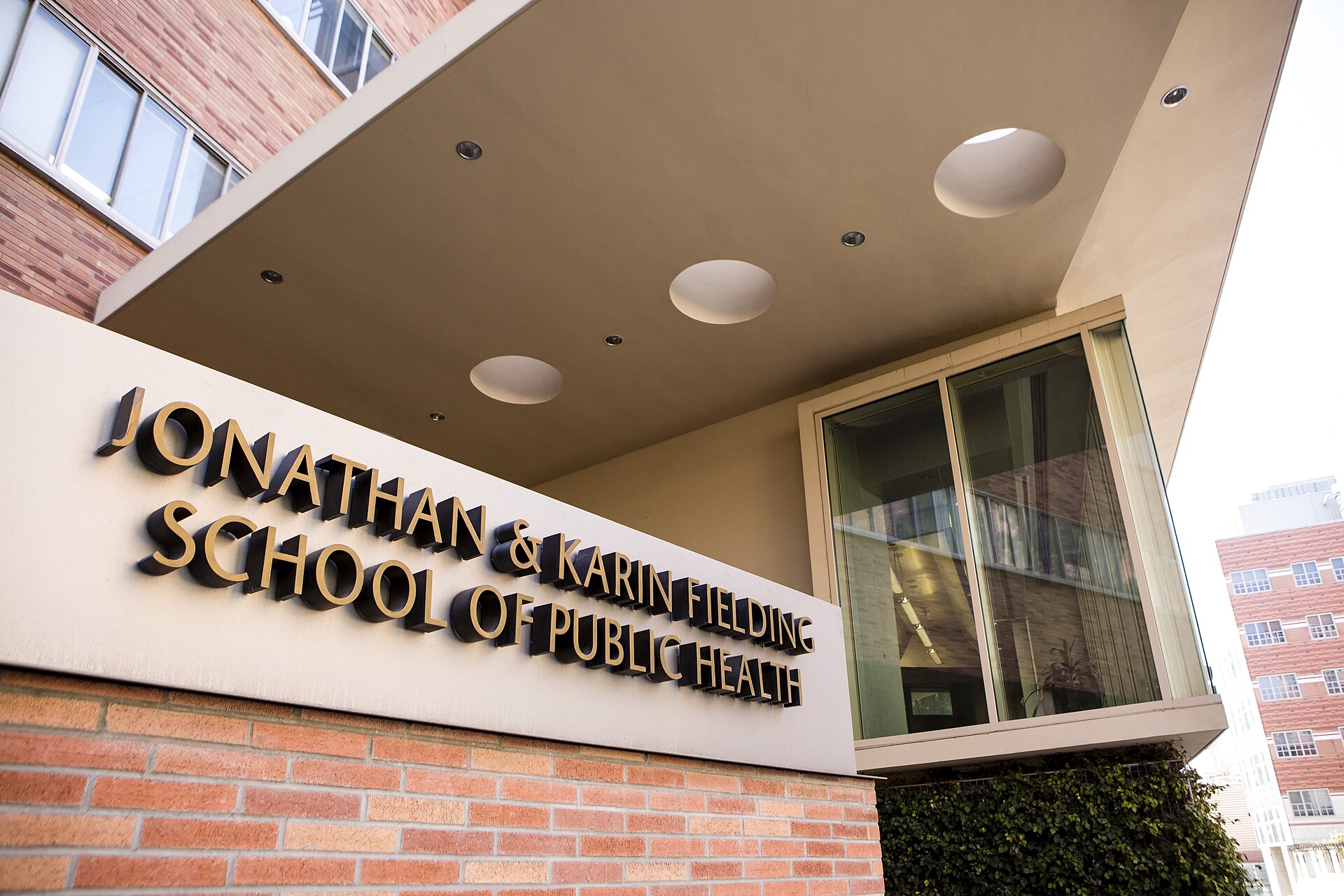
Main entrance to the UCLA Fielding School of Public Health
Main entrance to the UCLA Fielding School of Public HealthJurriaanlinsen · CC BY-SA 4.0 · via Wikimedia Commons
Crowd at JazzReggae Festival @ UCLA 2010
Crowd at JazzReggae Festival @ UCLA 2010Kmitch7490 · CC BY-SA 3.0 · via Wikimedia Commons
UCLA marching band
UCLA marching bandMonica's Dad's · CC BY 2.0 · via Wikimedia Commons
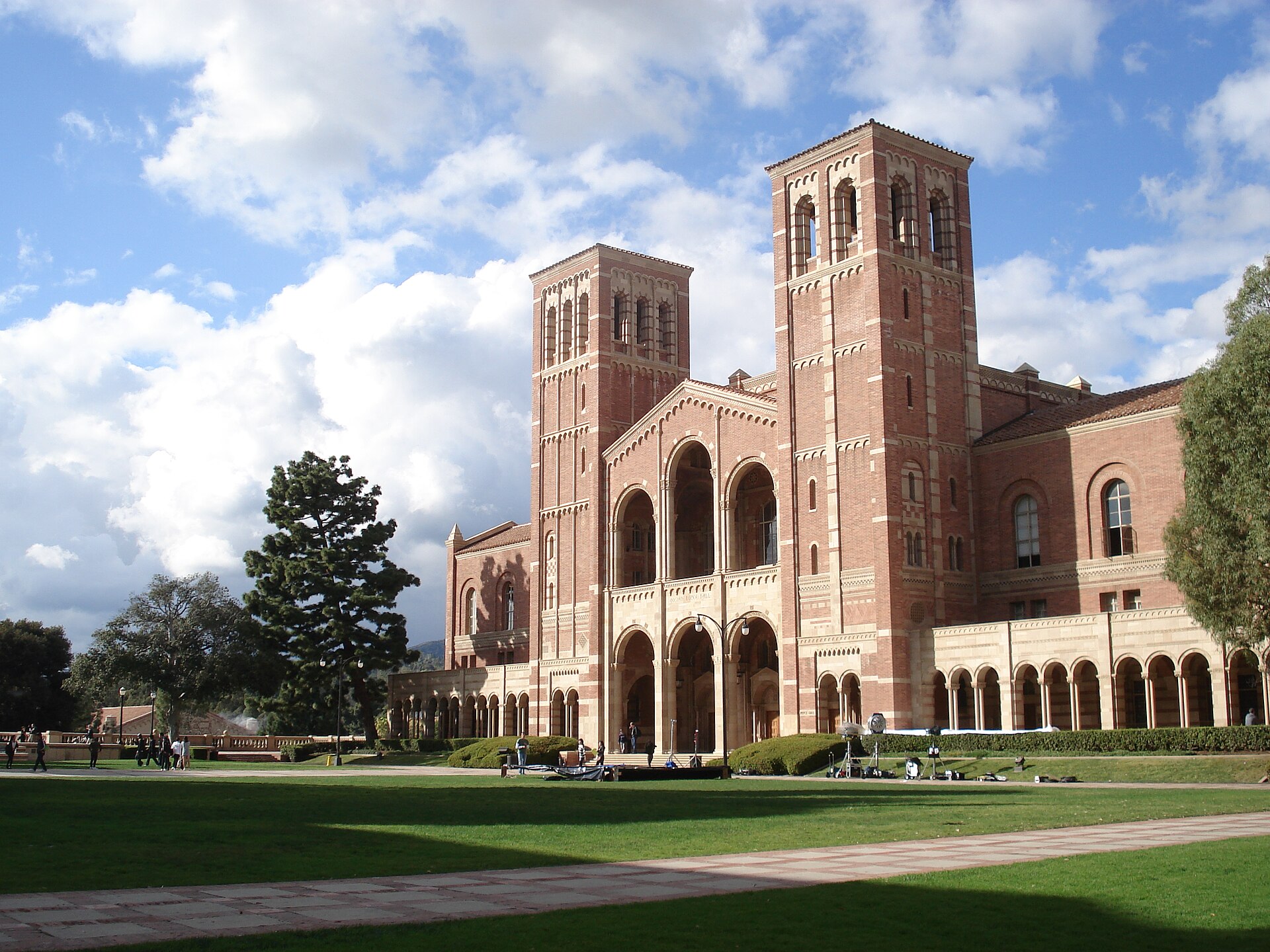
Royce Hall, UCLA's landmark building, stands in the midst of a glorious post-rain sky.
Royce Hall, UCLA's landmark building, stands in the midst of a glorious post-rain sky.Alton · CC BY-SA 3.0 · via Wikimedia Commons
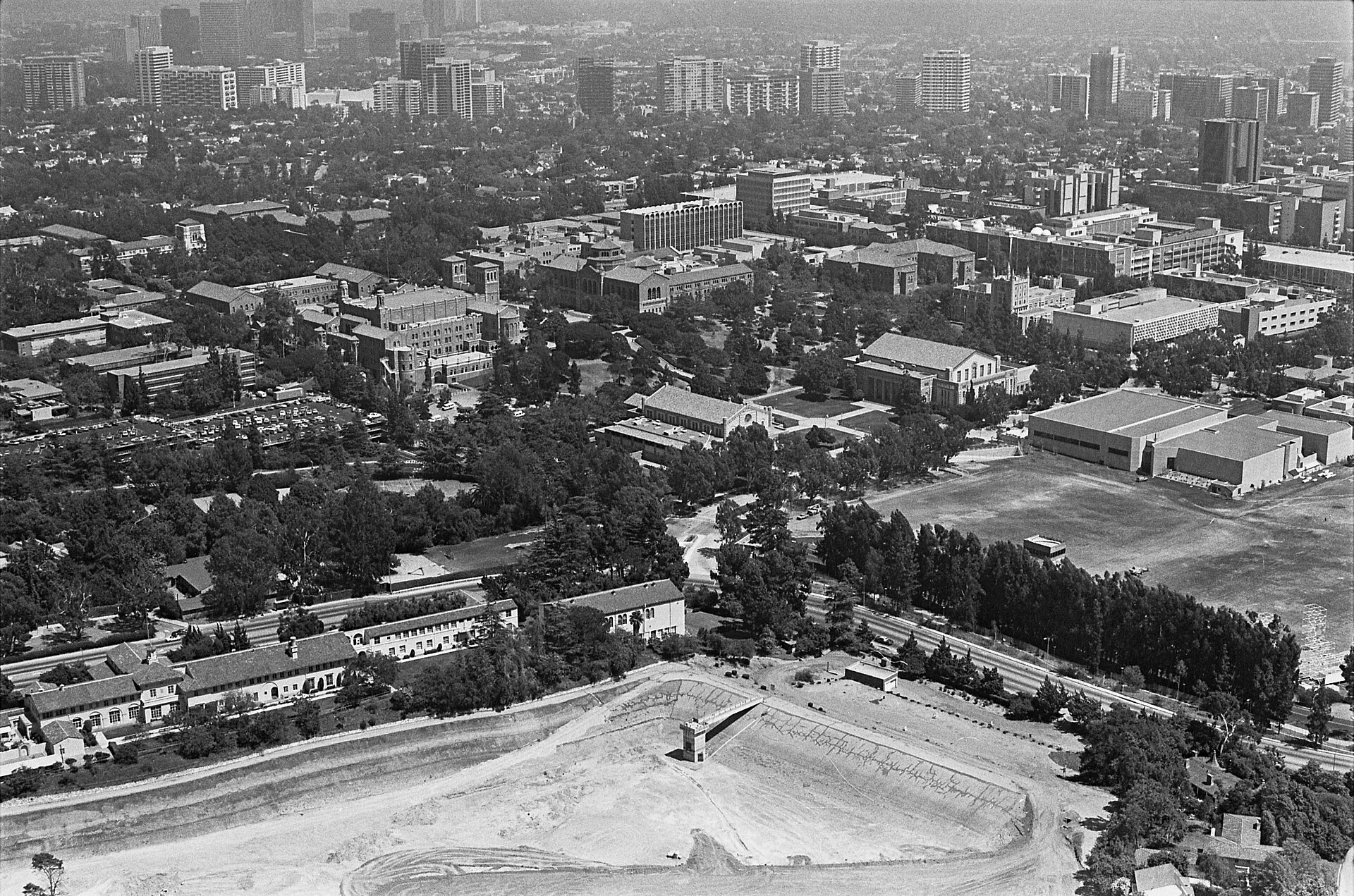
Aerial view of UCLA campus and Westwood, California, facing southeast
Aerial view of UCLA campus and Westwood, California, facing southeastRick Meyer, Los Angeles Times · CC BY 4.0 · via Wikimedia Commons

Why UCLA — Public Research Power, LA Advantage & Global Rankings

UCLA is not simply the top-ranked US public university. It is an institution where undergraduates conduct world-changing research, launch careers in entertainment, tech, and science, and live in one of the world's most dynamic cities. Here is what sets it apart for international students.

1America's Top Public University
UCLA sits at #15 nationally (US News), #18 globally (Times Higher Education), and #42 in QS World Rankings — the highest-placed US public institution in nearly every major ranking. A UCLA degree carries significant employer recognition in North America, Asia, and beyond.
2Los Angeles Career Access
Westwood sits minutes from Silicon Beach (Google, Snap, Hulu), Hollywood studios (Warner Bros, Paramount, Netflix), and a global finance and consulting hub. Internship and career access in tech, entertainment, biotech, and finance is unmatched at any other US public university.
3Film, Television & Arts Powerhouse
UCLA's School of Theater, Film and Television (TFT) is consistently ranked among the best in the world. If you aspire to work in the creative industries, there is no stronger public university address in the United States.
4Research Intensity at Scale
UCLA is a founding member of the Association of American Universities (AAU) and one of the top research institutions in the country. Undergraduates have meaningful access to research across life sciences, engineering, social sciences, and the arts from early in their studies.
5Bruin Athletics & Campus Culture
UCLA has won more NCAA championships than any other university. Athletics are woven deeply into campus identity — from Pauley Pavilion basketball to Rose Bowl football. Bruins are known for a warm, collaborative, and outwardly ambitious campus culture.
6Employment Outcomes & Network
92% of UCLA graduates are employed within six months, with an average starting salary of $75,000. The Bruin alumni network spans every industry and continent — and in Hollywood, it is simply the most powerful university network in the world.

SELECTIVITY

UCLA Acceptance Rate & Admitted Student Profile

UCLA receives more undergraduate applications than any other university in the United States — over 140,000 in recent cycles. With a 9% overall acceptance rate, it is among the most selective public universities globally. The university is permanently test-blind: SAT and ACT scores are not considered at any stage of the admissions process.

International applicants face the same holistic review as domestic students. There is no separate international admissions quota, but the pool is deeply competitive. For IB students, a final score of 40+ is the realistic competitive baseline; the most oversubscribed departments — Computer Science, Biology, Psychology, Business Economics — are significantly more selective than UCLA's headline acceptance rate suggests.

9%
Acceptance rate
40+
IB benchmark
3.9
Minimum GPA (UC-weighted)
Test-blind
Test policy

AT A GLANCE

UCLA at a Glance — Key Facts

1919
Founded
46,000
Total students
12%
International students
18:1
Student:faculty ratio
#42
QS World Rank
#15
National rank (US News)

APPLICATION COMPONENTS

What the UCLA Application Consists Of

UCLA uses the UC Application — an independent platform used by all nine University of California undergraduate campuses. UCLA does not accept the Common App. There are no letters of recommendation and no admission interviews. The application is holistic but entirely paper-based.

01REQUIREDUC Application
The University of California's own online platform, available from August 1 each year. You can apply simultaneously to UCLA and other UC campuses in a single submission. Filing window: October 1 – November 30.
02REQUIRED4 Personal Insight Questions
Choose 4 of 8 prompts; 350 words maximum per response. With no letters of recommendation and no interviews, these are your entire personal voice in the application. They carry exceptional weight in holistic review.
03REQUIREDAcademic Record (A-G Courses)
Transcripts showing completion of 15 A-G college-preparatory courses: 4 years English, 3 years math, 2 years lab science, 2 years history, 2 years of a language other than English, 1 year visual/performing arts, and 1 elective.
04REQUIREDEnglish Language Proficiency
Required for students who have not completed 3+ years of education in English-medium instruction. Accepted tests: TOEFL iBT, IELTS Academic, or Duolingo English Test. SAT/ACT verbal scores are not accepted as proof of English proficiency.
05REQUIREDSelf-Reported Activities & Awards
The UC Application includes sections for extracurricular activities, awards, community involvement, and employment. These are self-reported — no supporting documents are required at the application stage.
06CONDITIONALSupplemental Application (Select Majors)
Applicants to the School of Arts and Architecture, Department of Music, School of Nursing, and School of Theater, Film and Television must submit a supplemental application directly to the relevant school, in addition to the main UC Application.
https://admission.ucla.edu/apply/first-year

HOLISTIC REVIEW

What UCLA Looks For — Comprehensive Review Criteria

Every UCLA application receives two complete, independent readings by trained admissions professionals. Readers score applications holistically — there are no predetermined numerical weights. UCLA evaluates applicants through seven primary dimensions, each interpreted in the context of each applicant's educational circumstances and available opportunities.

Academic Achievement in Context
Your full record in college-preparatory coursework — course rigour, grades, and performance relative to what was available at your specific school. All-A's in the most demanding curriculum offered is the baseline expectation for competitive applicants. Context matters: UCLA knows if your school only offered 3 AP courses or if it offered 30.
Personal Qualities
Leadership, character, tenacity, creativity, and concern for others and for community. UCLA wants students who have demonstrated genuine agency — who have created things, led people, and pursued interests with depth rather than strategic padding.
Potential Campus Contributions
Evidence that you will add meaningfully to intellectual and cultural life at UCLA. Athletic distinction, artistic excellence, research engagement, and community advocacy all count alongside traditional academic markers.
Opportunities and Challenges
Your achievements are read in the full context of your educational background. If barriers — financial, linguistic, familial, or geographic — shaped your academic journey, UCLA explicitly accounts for them. Maturity in facing hardship is evaluated as a strength.
Special Talents and Accomplishments
National-level recognition in arts, athletics, research, or academic competitions carries genuine weight. UCLA deliberately builds a class with real distinction across multiple fields — not a cohort of interchangeable high-achievers.
https://admission.ucla.edu/apply/first-year/first-year-requirements/application-review-process

KEY DATES

UCLA Application Deadlines & Key Dates

UCLA offers fall admission only. There is no early action, early decision, or rolling admissions. All applicants — domestic and international — compete in a single round with a fixed filing window. There are no extensions.

International students use the same deadline as domestic applicants. There is no separate international admissions window. Financial aid applications are for US citizens and permanent residents only.

MilestoneDateNotes
UC Application opensAugust 1Available for all nine UC campuses
Application filing window opensOctober 1First date to submit
Application filing window closesNovember 30Hard deadline — no extensions
Admission notificationsLate MarchDecisions released online
Enrollment deposit deadlineMay 1Statement of Intent to Register
Final official transcripts dueJuly 1Sent directly from your school
AP / IB exam results dueJuly 15Sent from the exam board
https://admission.ucla.edu/apply/first-year

CAMPUS LIFE

Life at UCLA — Westwood, Los Angeles & Bruin Culture

UCLA's 419-acre campus in Westwood is widely regarded as one of the most beautiful in the United States — a blend of Italian Romanesque architecture and modern research facilities. It borders Beverly Hills to the east and Santa Monica to the west, with the Pacific Ocean just three miles away.

Housing is guaranteed for first-year students in the residential halls on the Hill, placing incoming Bruins in a tight residential community that many describe as the social foundation of their UCLA experience. The university hosts over 1,000 registered student organisations — from cultural and ethnic clubs serving UCLA's large international population to pre-professional societies, performance groups, and community-service organisations. Los Angeles itself functions as an educational extension of campus: internship access, cultural institutions, startup ecosystems, and entertainment industry pathways are built into the UCLA value proposition in a way no other US public university can replicate.

Westwood & Los Angeles
Westwood Village sits adjacent to campus and offers restaurants, cinemas, and retail. Beyond it: Beverly Hills, Santa Monica Beach, Downtown LA, Koreatown, Little Tokyo, and the entire LA metro are accessible by Metro, rideshare, or car.
First-Year Housing
All incoming freshmen are guaranteed on-campus housing in the Hill residential system. Upper-division students can live in UCLA apartments or off-campus in Westwood and surrounding neighbourhoods. On-campus living costs are included in the official cost of attendance estimate.
Athletics & Recreation
UCLA has won more NCAA championships than any other university. Bruin sports — basketball at Pauley Pavilion, football at the Rose Bowl, and dozens of other varsity sports — are central to campus identity. Extensive intramural and club sports serve non-varsity athletes.
International Student Community
12% of UCLA's student body are international students. A significantly larger proportion are first- or second-generation Americans. The campus is one of the most ethnically diverse research universities in the United States, with active communities for students from South Asia, East Asia, Southeast Asia, Latin America, and the Middle East.

CAREER OUTCOMES

UCLA Career Outcomes & Industry Access

UCLA's location in Los Angeles provides unparalleled access to the entertainment industry, tech sector, healthcare system, and a large entrepreneurial ecosystem. The Bruin Career Center runs year-round recruiting events, on-campus interviews, and an extensive alumni mentorship programme.

The Bruin alumni network is particularly powerful in entertainment, biotech, and Southern California tech. UCLA is the most prominent West Coast public feeder into the entertainment industry — for film production, animation, gaming, and digital media, a UCLA degree opens doors that no other public university can match. For international students pursuing F-1 OPT and STEM OPT extensions, LA's concentration of large employers in tech, biotech, and media meaningfully improves post-graduation work authorisation prospects.

92%
Employment rate
$75,000
Average starting salary

FAQS

UCLA Admissions FAQs for International Students

Does UCLA use the Common App or its own application?+

UCLA uses the UC Application — the University of California's own online system, not the Common App. You apply to UCLA and other UC campuses simultaneously through this platform. The filing window is October 1 to November 30 each year, with the application available from August 1.

Is UCLA truly test-blind? Are SAT/ACT scores ever reviewed?+

Yes. UCLA is permanently and fully test-blind: SAT and ACT scores are not considered at any stage of the admissions process — not for admission, and not for scholarships. Submitting scores provides no benefit. After enrollment, scores may only be used for course placement.

Does UCLA offer financial aid to international undergraduate students?+

No. UCLA does not award need-based financial aid or university scholarships to undergraduate students who are not US citizens or permanent residents. You must be able to fund the full cost of attendance — approximately $80,739 per year for Fall 2026 — from personal, family, or external sources.

Does UCLA require letters of recommendation?+

No. UCLA does not accept letters of recommendation from teachers or school counsellors. The four Personal Insight Questions are the primary vehicle through which you present your personal story. This makes PIQ quality exceptionally important.

Are there admission interviews at UCLA?+

No. UCLA does not conduct admission interviews of any kind. Your application is evaluated entirely on the written materials: academic record, activities, and four Personal Insight Question responses.

What IB score does UCLA expect from international applicants?+

A final IB score of 40 or above is the competitive benchmark. UCLA reads IB scores in context — the weight given to specific Higher Level subjects, the reputation of your school, and the overall arc of your performance all matter. There is no published cutoff, but scores below 38 will make admission to UCLA's most selective programmes very difficult.

Can I apply Early Action or Early Decision to UCLA?+

No. UCLA does not offer early action or early decision. All applicants — domestic and international — apply in the same round (October 1 to November 30) and receive decisions in late March.

Which UCLA majors are the most competitive?+

Computer Science, Electrical Engineering, and Biology consistently have effective acceptance rates well below the university-wide 9% figure. Business Economics, Psychology, and Neuroscience are also highly impacted. If your intended major is in this tier, demonstrating deep, sustained engagement in that field through your activities record and PIQs is essential.

ACADEMICS

Academic Expectations at UCLA — What International Students Must Know

UCLA is one of the most academically rigorous public universities in the world. For international applicants, understanding what the admissions committee actually reads — and how it interprets international credentials — is essential to building a competitive case.

The university uses comprehensive review: every application receives two complete, independent readings by trained professionals. There is no formula, no minimum GPA that guarantees admission, and no automatic rejection threshold based on a single metric. What matters is the full picture of your academic achievement, interpreted in the context of what was realistically available to you at your specific school in your specific country.

ACADEMIC BENCHMARKS

UCLA Academic Profile — GPA, IB & Test Policy

UCLA does not publish middle-50% SAT or ACT bands because it is fully test-blind and these scores are never reviewed. The benchmarks below reflect the competitive standard for admitted international applicants.

3.9
Minimum GPA (UC-weighted)
40+
IB benchmark
Not reviewed
SAT / ACT
15 courses
A-G Course Requirement

TEST POLICY

UCLA is Test-Blind — SAT & ACT Not Considered

UCLA adopted a permanent test-blind policy: SAT and ACT scores are not considered for admission or scholarship decisions, regardless of whether you submit them. This is not test-optional — it is test-blind, meaning scores cannot help and cannot hurt.

This is a critical distinction for international students who may have invested significant preparation time in standardised testing. At UCLA, that investment carries zero admissions value. After enrollment, submitted test scores may be used solely for course placement purposes. The admissions committee's evaluation of your academic strength comes entirely from your A-G coursework record, GPA, and the rigour of your curriculum relative to what your school offered.

All nine University of California campuses — including UC Berkeley — have adopted the same system-wide permanent test-blind policy.

https://admission.ucla.edu/apply/first-year/first-year-requirements

SAT & ACT

SAT & ACT at UCLA — What Replaces Them

Because UCLA is test-blind, the SAT and ACT play no role whatsoever in your application. You do not need to take them for UCLA, and submitting scores will not affect your outcome. What replaces them in the evaluation framework is explained below.

No SAT/ACT required or considered
Unlike most US universities, UCLA will not review your SAT or ACT scores at any point in the admissions process. You should not take these exams for UCLA's benefit or budget preparation time for them when applying to UCLA.
English proficiency is tested separately
For international students needing to demonstrate English language ability, UCLA accepts TOEFL iBT, IELTS Academic, or Duolingo English Test scores — not SAT verbal sections. Students with 3+ years of full English-medium instruction are exempt.
Academic strength shown through coursework
Your IB, A-Level, or national curriculum grades — and crucially, the rigour of the courses you chose — are how UCLA evaluates academic capability. A student who took the hardest available curriculum and earned strong grades demonstrates more than a student with a perfect GPA in less demanding courses.

IB, A-LEVEL & AP

IB, A-Level & AP at UCLA — How Your Credentials Are Evaluated

UCLA and the UC system are highly experienced at evaluating international qualifications. IB and A-Level credentials are well understood and respected — and high scores often earn transferable college credit after enrollment.

IB Diploma Programme
A final IB score of 40+ is the competitive benchmark for UCLA admissions. Readers pay close attention to HL subject selection and performance — 6s and 7s in Higher Level subjects relevant to your intended major carry significant weight. Students who earn the full IB Diploma may receive UC credit for individual HL subjects scoring 5, 6, or 7 — the exact credit depends on subject and score.
A-Levels
A-Levels are well understood by UCLA admissions. Competitive applicants typically present A*AA to A*A*A* at A-Level. Because A-Levels are narrower than the IB, international students on A-Level tracks should verify that their subject combination satisfies all elements of the UC A-G course requirement before applying.
AP (Advanced Placement)
Students on US or international curricula who take AP exams earn UC credit for scores of 3, 4, or 5 on most AP subjects. Taking the most rigorous AP curriculum available at your school — particularly in your area of academic interest — is viewed favourably in holistic review as evidence of self-challenge.
National Curricula (CBSE, Gaokao, HSC, etc.)
Applicants from India (CBSE/ISC), China (Gaokao), Australia (HSC/VCE), and other national systems are evaluated in the context of their specific curriculum. UCLA's international requirements page provides country-specific guidance on how credentials are read and what the A-G equivalent requirements look like.

SUBJECT PREPARATION

Subject Rigour UCLA Expects from International Applicants

UCLA expects competitive applicants to have taken the most demanding available coursework in their area of strength — and to have maintained excellent performance throughout. The subject-level preparation benchmarks below reflect what the admissions committee regards as a competitive academic foundation.

Mathematics
Strong mathematics preparation is expected across nearly all fields. For STEM applicants, calculus (IB HL Mathematics: Analysis and Approaches, or AP Calculus BC) is the target. For humanities and social science applicants, pre-calculus and statistics are the floor. Business Economics and Psychology applicants are expected to have quantitative depth.
English & Academic Writing
Strong academic English is expected of all applicants, demonstrated through both coursework and the quality of Personal Insight Question responses. IB Language A (Literature or Language and Literature) at HL, or equivalent A-Level English, satisfies the A-G English requirement and signals advanced literacy.
Laboratory Sciences
The A-G requirement is a minimum of two years of lab science (three recommended). For Biology, Chemistry, Neuroscience, and Pre-Med pathways, strong HL science coursework (IB or A-Level) is essential — these majors are among the most selective at UCLA.
Language Other Than English
At least two years of a language other than English are required. Many international students have studied in their mother tongue or learned a third language — this A-G component is frequently one that international applicants satisfy more easily than their US domestic counterparts.

ENGLISH PROFICIENCY

English Language Requirements for International Students

Students who have completed at least three years of secondary education where English was the sole language of instruction are exempt from English language testing. All other international applicants must submit approved test scores.

The scores above are the official minimum eligibility thresholds from UCLA's facts data. Competitive international applicants to popular majors typically score significantly above these minimums. Submitting your highest available score is always advisable.

TestMinimumNotes
TOEFL iBT87Internet-based; minimum threshold
IELTS Academic7.0Overall band score minimum
Duolingo English Test120Online adaptive test
https://admission.ucla.edu/apply/international-applicants

PROFILE BUILDING

Building a Competitive UCLA Profile — Grade 9 to Application

1Grades 9–10: Build the Academic Foundation
Take the most rigorous courses available to you from the start. GPA matters from 9th grade onward at UCLA. Choose one or two extracurricular commitments to sustain over years rather than collecting brief involvements. Depth beats breadth.
2Grade 11: Deepen, Lead, Distinguish
Increase your course load to the maximum manageable level. Begin pursuing leadership positions in activities you have sustained. Initiate a research project, competition entry, or creative project that reflects genuine intellectual drive. Start your IB Extended Essay if applicable.
3Grade 11 Summer: English Proficiency Testing
If required, sit TOEFL, IELTS, or Duolingo English Test before Grade 12 begins — so you have scores ready well ahead of the November application deadline. No SAT/ACT preparation is needed for UCLA.
4August (Grade 12): Open the UC Application
The UC Application opens August 1. Complete your academic history and activities record early, then spend August and September drafting and revising your four Personal Insight Questions. Give yourself 2–3 months of serious revision.
5October 1 – November 30: Submit
The filing window opens October 1 and closes November 30. Submit well before November 30 — technical difficulties are common near deadlines. No recommendation letters, portfolios, or additional materials are submitted unless you are applying to a supplemental school.

COMMON PITFALLS

Academic Mistakes That Hurt UCLA Applicants

  • Submitting SAT or ACT scores believing they will strengthen the application — they are permanently test-blind and cannot help
  • Applying with a GPA below 3.9 without extraordinary contextual explanation — the academic bar is the single hardest threshold to overcome
  • Underloading on course rigour — readers evaluate whether you took the hardest available courses at your specific school, not at an abstract standard
  • Failing to verify that your international curriculum satisfies the A-G course requirements — not all IB or A-Level subject combinations automatically qualify
  • Treating the Personal Insight Questions as secondary to grades — with no interviews or recommendations, the PIQs are your only opportunity to speak directly to the reader
  • Applying to the most impacted majors (CS, Biology, Business Economics) without documented, sustained engagement in that field across your activities record and PIQs
  • Missing the November 30 deadline — there is no late application process, no appeals route for missed deadlines, and no rolling admissions at UCLA

COST & AID

Cost of Attending UCLA — A Candid Guide for International Students

UCLA is a public university — significantly more affordable than comparable private US universities for California residents. For international undergraduates, however, the picture is different: there is no need-based financial aid, no institutional scholarships, and no loan programs available from UCLA itself.

International students must fund the full cost of attendance from personal, family, or external scholarship sources. The annual total for Fall 2026 is approximately $80,739. This is a substantial commitment — but meaningfully lower than the equivalent cost at comparably ranked private US universities, which frequently exceed $90,000–$95,000 per year for international students. The key difference is that private universities may dramatically reduce that sticker price through need-based aid; UCLA does not.

ANNUAL COSTS

UCLA Annual Cost of Attendance — International Undergraduate Estimates

All figures below are sourced from UCLA's official cost estimates for international undergraduate students. All values are in US dollars per academic year.

UCLA recommends that international students carry an additional ~$5,000 buffer for unexpected expenses, mandatory medical insurance, and visa-related costs. All figures are annual and subject to increase each academic year.

ComponentAnnualNotes
Tuition & Fees$53,300Non-resident / international rate
Cost of Living (books, personal, transport)~$23,000Los Angeles living estimate
Total Cost of Attendance$80,739Official Fall 2026 estimate
Application Fee$80UC Application — non-refundable
https://admission.ucla.edu/apply/international-applicants

FINANCIAL AID

Financial Aid for International Undergraduates — The Honest Picture

UCLA does not award need-based financial aid or institutional scholarships to undergraduate students who are not US citizens or permanent residents. This is a firm institutional policy, not an exceptional circumstance.

This means that if you are admitted to UCLA as an international undergraduate, you are responsible for funding the full cost of attendance — approximately $80,739 per year — entirely from your own resources. Before UCLA will issue the I-20 form required for your F-1 student visa, you must demonstrate that these funds are available. Plan for four years of full costs, plus annual increases of approximately 3–5%, before submitting your application.

Graduate programs at UCLA may offer fellowships, research assistantships, and need-based funding to international students. This guide covers undergraduate admissions only.

https://admission.ucla.edu/apply/international-applicants

SCHOLARSHIPS

Scholarship Options for International Students at UCLA

Because UCLA does not offer institutional aid to international undergraduates, students must pursue external scholarships. Below are the primary funding sources worth researching.

UCLA Scholarship Center
UCLA's Scholarship Center maintains a searchable database of external scholarships for which international students may be eligible. These are not UCLA-funded awards — they are scholarships from external foundations and organisations that UCLA has catalogued. Access at scholarshipcenter.ucla.edu.
Home Government Scholarships
Many national governments offer merit scholarships for study at internationally ranked US universities. Research your country's national scholarship authority early — applications often run concurrently with or before university applications. Common examples: Indonesia LPDP, Malaysia JPA/MARA, Saudi Arabia SACM, India Inlaks Foundation, Brazil CAPES.
US Private Foundation Scholarships
A limited number of US-based private foundations offer merit scholarships to international undergraduate students. Searching through the Institute of International Education (iie.org) and Fastweb can identify relevant opportunities. The volume of such awards available at US public universities is smaller than at private Ivy League institutions.
Employer & Government Sponsorship
Students from the Middle East, Southeast Asia, and Africa often attend US universities under employer or government sponsorship agreements. If your government, a state-owned enterprise, or a family employer offers bonded sponsorship for US study, this is worth exploring before and alongside your UCLA application.

AFFORDABILITY

Is UCLA Financially Viable for International Students?

At $80,739 per year, UCLA is among the most affordable options among globally elite US universities — but this still requires significant and reliable financial resources for most international families.

Compared to private US universities of equivalent prestige — which frequently cost $90,000–$95,000+ per year for international students — UCLA represents a meaningful cost advantage: approximately $40,000–$60,000 in total savings over a four-year degree. The tradeoff is that those private universities may offer substantial need-based aid that dramatically reduces their net price for high-need international families; UCLA does not. For families who cannot demonstrably fund four full years of UCLA attendance, a private US university offering generous international aid — or a home-country institution — may ultimately be more affordable despite a higher sticker price. Financial planning must happen before you apply, not after you are admitted.

FUNDING STRATEGY

How to Fund Your UCLA Education — Step by Step

1Calculate the true four-year cost
Multiply $80,739 by four, then apply a 3–5% annual increase to each subsequent year's figures. The total four-year cost for an international student at UCLA is approximately $340,000–$360,000. This is the financial commitment you are making before you apply.
2Research home government scholarships in Grade 11
Identify all national government scholarship programmes in your country that fund US university study. Check eligibility requirements carefully — some require specific fields of study, minimum GPA commitments, or post-graduation return obligations. Apply simultaneously with your UCLA application.
3Search external scholarship databases
Visit UCLA's Scholarship Center (scholarshipcenter.ucla.edu), IIE (iie.org), and Fastweb for US-based foundation scholarships open to international undergraduates. Begin this search in Grade 11, as many external scholarship deadlines precede the UCLA November 30 deadline.
4Prepare financial documentation for post-admission
After admission, UCLA will require proof of sufficient funds — bank statements, scholarship award letters, or sponsor declarations covering the full cost of attendance plus a buffer. Prepare and organise these documents in advance so they are ready when UCLA requests them.
5Plan for OPT and STEM OPT post-graduation
International students on F-1 visas are eligible for Optional Practical Training (OPT) after graduation — one year of US work authorisation, extendable to three years for STEM graduates. Many UCLA alumni in tech, engineering, and life sciences leverage OPT-period US salaries to significantly offset their education investment.

COST FAQS

UCLA Cost & Aid FAQs

Can international undergraduate students receive any financial aid from UCLA?+

No. UCLA does not award need-based financial aid or institutional scholarships to undergraduate students who are not US citizens or permanent residents. You must fund the full cost of attendance from your own resources.

What is the total annual cost for an international undergraduate at UCLA?+

UCLA's official estimate for Fall 2026 is approximately $80,739 per year for international undergraduates. This covers tuition, fees, room, board, and living expenses in Los Angeles. An additional ~$5,000 buffer is recommended for medical insurance and unexpected costs.

Are there any scholarships UCLA recommends for international students?+

UCLA's Scholarship Center (scholarshipcenter.ucla.edu) lists external scholarships for which international students may be eligible, but these are not UCLA-funded. Home government scholarships and US-based private foundations are the primary funding sources available to international undergraduates.

Do I need to show proof of funds when I apply to UCLA?+

Not at the application stage. Financial documentation is required after admission, when UCLA will ask you to demonstrate sufficient funds before issuing the I-20 form required for your F-1 student visa.

Does UCLA tuition increase each year?+

Yes. University of California tuition increases annually, typically by 2–5%. When budgeting for four years of study, apply a conservative 3–5% annual increase to each subsequent year's tuition estimate to avoid underplanning.

Is the UC Application fee waived for international students with financial hardship?+

The UC Application fee is $80. Fee waivers are primarily available to California residents meeting income criteria. International students do not typically qualify for automatic waivers, though the application allows you to request a waiver if you face demonstrated financial hardship.

ESSAYS & WRITING

UCLA Personal Insight Questions — Your Only Direct Voice in the Application

UCLA does not accept letters of recommendation. It does not conduct admission interviews. The four Personal Insight Questions you write are the sole place in your entire application where you can speak directly to the reader. They matter more than they do at almost any other university.

At an institution receiving over 140,000 applications — most from students with strong grades and impressive activities — the PIQs are the primary differentiating tool. Two independent trained readers evaluate each application holistically. Readers are looking for specificity, honesty, and a clear sense of who you genuinely are. Generic responses about learning from failure or being inspired by a mentor disappear into the pile. Specific, honest, well-crafted responses are remembered.

OVERVIEW

How the UCLA PIQ System Works — 4 of 8 Questions, 350 Words Each

UCLA uses Personal Insight Questions in place of the Common App personal statement and traditional supplements. The PIQ format is unique to the UC Application system.

Choose exactly 4 of 8 prompts
You are given 8 prompts and must answer exactly 4. All prompts carry equal weight — there is no admissions advantage to choosing any particular combination. Choose the four where you have the most authentic, specific, and compelling material to offer.
350 words maximum per response
Each PIQ response is hard-capped at 350 words — approximately one double-spaced page. Every sentence must do work. There is no room for extended preamble, vague inspiration, or generic claims. Short and specific is almost always stronger than padded and general.
Evaluate the four as a set
Readers evaluate your four PIQs together, not in isolation. The set should collectively paint a multi-dimensional, coherent picture of who you are — your intellectual interests, your personal character, your engagement with community, and what you bring that is genuinely distinctive.
No content overlap across responses
Avoid repeating activities, achievements, or themes across multiple PIQs. Each of your four responses should reveal a genuinely different facet of who you are, what you have done, or how you think. Overlap is a signal that you lack range or depth in your story.
https://admission.universityofcalifornia.edu/how-to-apply/applying-as-a-freshman/personal-insight-questions.html

THE 8 PROMPTS

All 8 UC Personal Insight Questions — Official Text & Strategy

Below are all 8 Personal Insight Questions with their official verbatim text, sourced from the UC Admissions website. You must choose and answer exactly 4.

CHOOSE ANY 4 · 350 WORDS MAXLeadership Experience
Official Text: Describe an example of your leadership experience in which you have positively influenced others, helped resolve disputes or contributed to group efforts over time.
Strategic Guide: UCLA defines leadership broadly — it is not limited to formal titles. Readers are looking for evidence of sustained positive influence over time: months or years, not a single event. Focus on a specific situation. Name the people involved, describe the challenge or conflict you navigated, and show what changed because of your actions. Avoid the generic 'as team captain I learned...' construction. The most compelling responses show leadership in unconventional settings: within a family, in an online community, in a part-time job, or in a cross-cultural collaboration. International students often have genuinely distinctive leadership stories — do not default to the most conventional framing.
CHOOSE ANY 4 · 350 WORDS MAXCreative Expression
Official Text: Every person has a creative side, and it can be expressed in many ways: problem solving, original and innovative thinking, and artistically, to name a few. Describe how you express your creative side.
Strategic Guide: This prompt has a deliberately expansive definition of creativity — you do not need to be an artist. A student who designed a novel algorithm, restructured a community organisation, or developed a new coaching method can write a strong response here. Avoid listing creative outputs. Instead, use this essay to reveal your creative process: how you think when conventional approaches fail, where your ideas come from, and what it looks and feels like when you are working at your creative best. Specificity — a precise project, a particular moment, a named problem — makes all the difference.
CHOOSE ANY 4 · 350 WORDS MAXGreatest Talent or Skill
Official Text: What would you say is your greatest talent or skill? How have you developed and demonstrated that talent over time?
Strategic Guide: This prompt rewards specificity about process rather than achievement. Do not simply name the talent — show how it developed over time, including early difficulty, deliberate practice, and the point at which you knew you had reached genuine excellence. The narrative arc of growth is more compelling than a list of accolades. For international students, a talent that intersects with cultural background, language expertise, or geographic context can make for a particularly distinctive and memorable response.
CHOOSE ANY 4 · 350 WORDS MAXEducational Opportunity or Barrier
Official Text: Describe how you have taken advantage of a significant educational opportunity or worked to overcome an educational barrier you have faced.
Strategic Guide: This is one of the prompts where international students have a genuine and natural advantage. Moving countries for education, studying in a second or third language, accessing exceptional opportunities (a summer research programme, early university coursework), or navigating resource-limited school environments — all speak directly and authentically to what UCLA is asking. Be concrete and honest: the gap between your context and what you achieved is exactly what the reader notices and values. Do not minimise real barriers in an effort to sound resilient; name them precisely.
CHOOSE ANY 4 · 350 WORDS MAXSignificant Challenge
Official Text: Describe the most significant challenge you have faced and the steps you have taken to overcome this challenge. How has this challenge affected your academic achievement?
Strategic Guide: The phrase 'academic achievement' is the key — UCLA wants to understand how this challenge intersected with your studies, not simply your personal or emotional life. A challenge that explains an unusual pattern, dip, or gap in your academic record is often the most relevant choice here. Be precise about what the challenge was, what specific steps you took, and what the outcome looked like academically. Avoid framing the challenge as entirely resolved — ongoing struggles handled with maturity and self-awareness are often more compelling than stories of clean, complete recovery.
CHOOSE ANY 4 · 350 WORDS MAXAcademic Passion
Official Text: Think about an academic subject that inspires you. Describe how you have furthered this interest inside and/or outside of the classroom.
Strategic Guide: This is UCLA's version of the intellectual curiosity essay. The most powerful responses go well beyond classroom performance: they describe a specific question you became genuinely obsessed with, the rabbit holes you pursued, the books or experiments or conversations that deepened your understanding. If you are applying to a specific major, this is an opportunity to demonstrate authentic, self-driven preparation — but only if that engagement is real. Readers have seen thousands of strategically constructed passion narratives; authentic ones read very differently.
CHOOSE ANY 4 · 350 WORDS MAXCommunity Contribution
Official Text: What have you done to make your school or your community a better place?
Strategic Guide: UCLA defines community very broadly. Family is a community. An online forum is a community. A neighbourhood, a religious group, or a sports club all qualify. The question is not about scale but intentionality: did you identify a genuine problem, decide to act, and create a real change? For international students, contributions to communities in your home country or cultural community are equally valid and often far more distinctive than the standard school-club volunteering narrative. Be specific about the problem you saw, what you did, who was affected, and what you learned.
CHOOSE ANY 4 · 350 WORDS MAXAdditional Strengths
Official Text: Beyond what has already been shared in your application, what do you believe makes you a strong candidate for admissions to the University of California?
Strategic Guide: This is the most open and also the most dangerous prompt. Only use it if you have something genuinely significant that could not be expressed through any of the other seven prompts — an unusual background, an important context (a health gap, caring for a family member, an extraordinary personal circumstance), or a distinctive dimension of your character that has no other outlet in your application. Avoid using this prompt as a summary of your achievements or a list of everything you have done. That approach signals poor prompt selection more than it signals strength.
https://admission.universityofcalifornia.edu/how-to-apply/applying-as-a-freshman/personal-insight-questions.html

PIQ VS COMMON APP

UCLA PIQs vs. the Common App Essay — A Completely Different Writing Challenge

If you are also applying to other US universities via the Common App, you are writing a 650-word personal statement. The UCLA PIQs are a fundamentally different writing task — shorter, more numerous, and focused on specific aspects of your life rather than a single overarching narrative.

The most common mistake students make is trying to adapt their Common App personal statement into a PIQ response. The two formats are incompatible. A 650-word narrative essay does not compress into 350 words without losing its structure, its voice, and its power. UCLA PIQs are closer to focused, structured short answers than to traditional personal essays. Each one should have a clear subject, a concrete example, and a direct point — introduced without preamble and concluded without summary. Write your PIQs from scratch. Think of each one as a direct, honest answer to a direct question, not as a miniature essay. The best PIQs are conversational, specific, and self-aware. They make the reader feel they have met a real person, not processed an application.

STRATEGY

How to Approach Your 4 PIQs as A Coherent Set

The four PIQs you choose should collectively cover different dimensions of your character, experience, and potential. A strategic framework for selection and positioning is outlined below.

Cover different life domains
A well-constructed set might include one academic or intellectual response (Q6 — Academic Passion), one showing personal character or resilience (Q3, Q4, or Q5), one demonstrating engagement with people or community (Q1 or Q7), and one revealing something distinctive that appears nowhere else in your application. Avoid four responses all centred on academic achievement.
Lead with your strongest response
Readers begin with your first PIQ. Your most specific, most vivid, most compelling response should appear first. A weak opening response loses the reader's engagement before they reach your best writing — the sequence of your four responses genuinely matters.
Each response should introduce new information
Review your activities section and the rest of your UC Application before finalising your PIQ choices. Each response should ideally reference a context, experience, person, or quality that does not already appear elsewhere. Redundancy is a wasted opportunity when you have only four responses.
International students: use your context authentically
Your upbringing, linguistic background, cultural context, and geographic experience are genuinely distinctive at UCLA. Q4 (Educational Opportunity/Barrier) and Q7 (Community Contribution) are particularly well-suited to deploying your international context authentically — but all eight prompts can accommodate a global perspective when the material is real.

TOPIC SELECTION

How to Choose Your 4 PIQ Topics — The Right Process

1Draft bullet-point responses to all 8 prompts
Before selecting your four, write brief bullet-point outlines for all eight. This quickly reveals which prompts you have genuinely specific material for — and which feel strained or generic. The four with the richest real material are almost always your best choices.
2Identify the four with the most concrete, specific examples
Prompts where you have a specific named event, person, project, or moment as your anchor are stronger than prompts where you can only write in generalities. Specificity is the single most reliable indicator of PIQ quality.
3Verify narrative diversity across your four
Ensure your chosen four do not all tell variations of the same story. If three of your four responses revolve around the same activity, achievement, or theme, you are leaving critical dimensions of your character unexplored and signalling a lack of range.
4Revise extensively — multiple complete drafts
350 words sounds simple. Getting exactly the right 350 words — honest, specific, clear, and revealing — is genuinely difficult. Plan for 3–5 complete drafts of each response, with days or weeks between drafts. Start in August when the application opens; finish by early October.

COMMON MISTAKES

PIQ Mistakes That Undermine UCLA Applications

  • Adapting a Common App personal statement for a PIQ — the formats are incompatible; write each PIQ from scratch
  • Opening with vague, generic sentences like 'Since I was young, I have always been passionate about...' — readers encounter these thousands of times and they signal a generic response before the first sentence is finished
  • Repeating activities or achievements already visible in the activities section — PIQs should add new dimensions, not summarise what the reader already knows
  • Writing primarily about another person — a mentor, parent, or coach — rather than about yourself; the focus must remain on you and your actions
  • Selecting prompts based on what sounds impressive rather than what you have the most genuine material for
  • Staying abstract and philosophical rather than grounding each response in a specific, named event, moment, or person
  • Padding responses to hit the 350-word ceiling — tighter is almost always stronger; 290 excellent words outperform 350 mediocre ones
  • For international students: failing to have a strong English writer review your drafts before submission — even students with excellent English benefit from an editorial eye on concision and clarity

ESSAY FAQS

UCLA PIQ Frequently Asked Questions

Do I have to answer specific PIQs, or can I really choose any 4?+

You can genuinely choose any 4 of the 8 questions. UCLA gives no advantage to any particular prompt or combination. All carry equal weight. Choose the four where you have the most authentic, specific, and compelling material — not the four that sound most strategic.

Can I write about the same topic in multiple PIQs?+

Technically yes, but strategically no. Each of your four responses should reveal a different dimension of who you are. Writing about the same topic, activity, or theme across multiple responses leaves important aspects of your character unexplored and signals limited range.

Should I write about my home country, culture, or international experience?+

Yes — when it is genuine and specific. Cultural background, the experience of being educated internationally, and the particular challenges of relocating or studying in a second language are all legitimate and often highly distinctive PIQ material. The key is specificity: a precise anecdote from your specific context is always stronger than a vague reference to 'cultural differences.'

Is there a minimum word count for each PIQ?+

No. The maximum is 350 words per response. There is no minimum. A concise, excellent 280-word response will always outperform a padded 350-word one. Cut without mercy.

Do PIQ responses need a title?+

No. The prompt itself serves as the heading in the application. Jump directly into your response without adding a title or restating the question — doing so wastes precious words.

When should I start writing my PIQs?+

Begin no later than August 1 when the UC Application opens. The optimal timeline is: outline all 8 in August, select and draft your 4 through August-September, revise through October, and finalise well before the November 30 deadline. Strong PIQs require multiple complete drafts over weeks — not intensive writing in the days before submission.

Will UCLA know I applied to other UC campuses? Does that affect my chances?+

Yes — UCLA can see that you have applied to other UC campuses on the same application. This does not negatively affect your chances at UCLA. Applying to multiple UC campuses simultaneously is the norm, and each campus evaluates your application independently on its own merits.

Courses — schools, degrees & intake

130 degrees across 12 groupings.

College of Letters and Science – Humanities Division · 39 degrees

African American Studies (B.A.)

BachelorsEntry IB 40; GPA 3.9 unweighted; test-blindDeadline 2025-11-30

African and Middle Eastern Studies (B.A.)

BachelorsEntry IB 40; GPA 3.9 unweighted; test-blindDeadline 2025-11-30

American Indian Studies (B.A.)

BachelorsEntry IB 40; GPA 3.9 unweighted; test-blindDeadline 2025-11-30

American Literature and Culture (B.A.)

BachelorsEntry IB 40; GPA 3.9 unweighted; test-blindDeadline 2025-11-30

Ancient Near East and Egyptology (B.A.)

BachelorsEntry IB 40; GPA 3.9 unweighted; test-blindDeadline 2025-11-30

Arabic (B.A.)

BachelorsEntry IB 40; GPA 3.9 unweighted; test-blindDeadline 2025-11-30

Art History (B.A.)

BachelorsEntry IB 40; GPA 3.9 unweighted; test-blindDeadline 2025-11-30

Asian American Studies (B.A.)

BachelorsEntry IB 40; GPA 3.9 unweighted; test-blindDeadline 2025-11-30

Asian Humanities (B.A.)

BachelorsEntry IB 40; GPA 3.9 unweighted; test-blindDeadline 2025-11-30

Asian Languages and Linguistics (B.A.)

BachelorsEntry IB 40; GPA 3.9 unweighted; test-blindDeadline 2025-11-30

Asian Religions (B.A.)

BachelorsEntry IB 40; GPA 3.9 unweighted; test-blindDeadline 2025-11-30

Asian Studies (B.A.)

BachelorsEntry IB 40; GPA 3.9 unweighted; test-blindDeadline 2025-11-30

Central and East European Languages and Cultures (B.A.)

BachelorsEntry IB 40; GPA 3.9 unweighted; test-blindDeadline 2025-11-30

Classical Civilization (B.A.)

BachelorsEntry IB 40; GPA 3.9 unweighted; test-blindDeadline 2025-11-30

Comparative Literature (B.A.)

BachelorsEntry IB 40; GPA 3.9 unweighted; test-blindDeadline 2025-11-30

European Languages and Transcultural Studies with French and Francophone (B.A.)

BachelorsEntry IB 40; GPA 3.9 unweighted; test-blindDeadline 2025-11-30

European Languages and Transcultural Studies with German (B.A.)

BachelorsEntry IB 40; GPA 3.9 unweighted; test-blindDeadline 2025-11-30

European Languages and Transcultural Studies with Italian (B.A.)

BachelorsEntry IB 40; GPA 3.9 unweighted; test-blindDeadline 2025-11-30

European Languages and Transcultural Studies with Scandinavian (B.A.)

BachelorsEntry IB 40; GPA 3.9 unweighted; test-blindDeadline 2025-11-30

European Studies (B.A.)

BachelorsEntry IB 40; GPA 3.9 unweighted; test-blindDeadline 2025-11-30

Gender Studies (B.A.)

BachelorsEntry IB 40; GPA 3.9 unweighted; test-blindDeadline 2025-11-30

Greek (B.A.)

BachelorsEntry IB 40; GPA 3.9 unweighted; test-blindDeadline 2025-11-30

Greek and Latin (B.A.)

BachelorsEntry IB 40; GPA 3.9 unweighted; test-blindDeadline 2025-11-30

History (B.A.)

BachelorsEntry IB 40; GPA 3.9 unweighted; test-blindDeadline 2025-11-30

Iranian Studies (B.A.)

BachelorsEntry IB 40; GPA 3.9 unweighted; test-blindDeadline 2025-11-30

Japanese (B.A.)

BachelorsEntry IB 40; GPA 3.9 unweighted; test-blindDeadline 2025-11-30

Jewish Studies (B.A.)

BachelorsEntry IB 40; GPA 3.9 unweighted; test-blindDeadline 2025-11-30

Korean (B.A.)

BachelorsEntry IB 40; GPA 3.9 unweighted; test-blindDeadline 2025-11-30

Labor Studies (B.A.)

BachelorsEntry IB 40; GPA 3.9 unweighted; test-blindDeadline 2025-11-30

Latin (B.A.)

BachelorsEntry IB 40; GPA 3.9 unweighted; test-blindDeadline 2025-11-30

Philosophy (B.A.)

BachelorsEntry IB 40; GPA 3.9 unweighted; test-blindDeadline 2025-11-30

Portuguese and Brazilian Studies (B.A.)

BachelorsEntry IB 40; GPA 3.9 unweighted; test-blindDeadline 2025-11-30

Religion, Study of (B.A.)

BachelorsEntry IB 40; GPA 3.9 unweighted; test-blindDeadline 2025-11-30

Russian Language and Literature (B.A.)

BachelorsEntry IB 40; GPA 3.9 unweighted; test-blindDeadline 2025-11-30

Russian Studies (B.A.)

BachelorsEntry IB 40; GPA 3.9 unweighted; test-blindDeadline 2025-11-30

Spanish (B.A.)

BachelorsEntry IB 40; GPA 3.9 unweighted; test-blindDeadline 2025-11-30

Spanish and Community and Culture (B.A.)

BachelorsEntry IB 40; GPA 3.9 unweighted; test-blindDeadline 2025-11-30

Spanish and Linguistics (B.A.)

BachelorsEntry IB 40; GPA 3.9 unweighted; test-blindDeadline 2025-11-30

Spanish and Portuguese (B.A.)

BachelorsEntry IB 40; GPA 3.9 unweighted; test-blindDeadline 2025-11-30

College of Letters and Science – Life Sciences Division · 13 degrees

Anthropology (B.S.)

BachelorsEntry IB 40; GPA 3.9 unweighted; test-blindDeadline 2025-11-30

Biochemistry (B.S.)

BachelorsEntry IB 40; GPA 3.9 unweighted; test-blindDeadline 2025-11-30

Biology (B.S.)

BachelorsEntry IB 40; GPA 3.9 unweighted; test-blindDeadline 2025-11-30

Computational Biology (B.S.)

BachelorsEntry IB 40; GPA 3.9 unweighted; test-blindDeadline 2025-11-30

Ecology, Behavior, and Evolution (B.S.)

BachelorsEntry IB 40; GPA 3.9 unweighted; test-blindDeadline 2025-11-30

Environmental Science (B.S.)

BachelorsEntry IB 40; GPA 3.9 unweighted; test-blindDeadline 2025-11-30

Human Biology and Society (B.A. / B.S.)

BachelorsEntry IB 40; GPA 3.9 unweighted; test-blindDeadline 2025-11-30

Marine Biology (B.S.)

BachelorsEntry IB 40; GPA 3.9 unweighted; test-blindDeadline 2025-11-30

Microbiology, Immunology, and Molecular Genetics (B.S.)

BachelorsEntry IB 40; GPA 3.9 unweighted; test-blindDeadline 2025-11-30

Molecular, Cell, and Developmental Biology (B.S.)

BachelorsEntry IB 40; GPA 3.9 unweighted; test-blindDeadline 2025-11-30

Neuroscience (B.S.)

BachelorsEntry IB 40; GPA 3.9 unweighted; test-blindDeadline 2025-11-30

Physiological Science (B.S.)

BachelorsEntry IB 40; GPA 3.9 unweighted; test-blindDeadline 2025-11-30

Psychobiology (B.S.)

BachelorsEntry IB 40; GPA 3.9 unweighted; test-blindDeadline 2025-11-30

College of Letters and Science – Physical Sciences Division · 19 degrees

Astrophysics (B.S.)

BachelorsEntry IB 40; GPA 3.9 unweighted; test-blindDeadline 2025-11-30

Atmospheric and Oceanic Sciences (B.S.)

BachelorsEntry IB 40; GPA 3.9 unweighted; test-blindDeadline 2025-11-30

Atmospheric and Oceanic Sciences/Mathematics (B.S.)

BachelorsEntry IB 40; GPA 3.9 unweighted; test-blindDeadline 2025-11-30

Chemistry (B.S.)

BachelorsEntry IB 40; GPA 3.9 unweighted; test-blindDeadline 2025-11-30

Chemistry/Materials Science (B.S.)

BachelorsEntry IB 40; GPA 3.9 unweighted; test-blindDeadline 2025-11-30

Climate Science (B.S.)

BachelorsEntry IB 40; GPA 3.9 unweighted; test-blindDeadline 2025-11-30

Earth and Environmental Science (B.A.)

BachelorsEntry IB 40; GPA 3.9 unweighted; test-blindDeadline 2025-11-30

Geology (B.S.)

BachelorsEntry IB 40; GPA 3.9 unweighted; test-blindDeadline 2025-11-30

Geology/Engineering Geology (B.S.)

BachelorsEntry IB 40; GPA 3.9 unweighted; test-blindDeadline 2025-11-30

Geophysics (B.S.)

BachelorsEntry IB 40; GPA 3.9 unweighted; test-blindDeadline 2025-11-30

Mathematics (B.S.)

BachelorsEntry IB 40; GPA 3.9 unweighted; test-blindDeadline 2025-11-30

Applied Mathematics (B.S.)

BachelorsEntry IB 40; GPA 3.9 unweighted; test-blindDeadline 2025-11-30

Mathematics/Applied Science (B.S.)

BachelorsEntry IB 40; GPA 3.9 unweighted; test-blindDeadline 2025-11-30

Mathematics/Economics (B.S.)

BachelorsEntry IB 40; GPA 3.9 unweighted; test-blindDeadline 2025-11-30

Mathematics, Financial Actuarial (B.S.)

BachelorsEntry IB 40; GPA 3.9 unweighted; test-blindDeadline 2025-11-30

Mathematics for Teaching (B.S.)

BachelorsEntry IB 40; GPA 3.9 unweighted; test-blindDeadline 2025-11-30

Mathematics of Computation (B.S.)

BachelorsEntry IB 40; GPA 3.9 unweighted; test-blindDeadline 2025-11-30

Physics (B.A. / B.S.)

BachelorsEntry IB 40; GPA 3.9 unweighted; test-blindDeadline 2025-11-30

Statistics and Data Science (B.S.)

BachelorsEntry IB 40; GPA 3.9 unweighted; test-blindDeadline 2025-11-30

College of Letters and Science – Social Sciences Division · 28 degrees

Anthropology (B.A.)

BachelorsEntry IB 40; GPA 3.9 unweighted; test-blindDeadline 2025-11-30

Business Economics (B.A.)

BachelorsEntry IB 40; GPA 3.9 unweighted; test-blindDeadline 2025-11-30

Chicana/o and Central American Studies (B.A.)

BachelorsEntry IB 40; GPA 3.9 unweighted; test-blindDeadline 2025-11-30

Cognitive Science (B.S.)

BachelorsEntry IB 40; GPA 3.9 unweighted; test-blindDeadline 2025-11-30

Communication (B.A.)

BachelorsEntry IB 40; GPA 3.9 unweighted; test-blindDeadline 2025-11-30

Data Theory (B.S.)

BachelorsEntry IB 40; GPA 3.9 unweighted; test-blindDeadline 2025-11-30

Disability Studies (B.A.)

BachelorsEntry IB 40; GPA 3.9 unweighted; test-blindDeadline 2025-11-30

Economics (B.A.)

BachelorsEntry IB 40; GPA 3.9 unweighted; test-blindDeadline 2025-11-30

English (B.A.)

BachelorsEntry IB 40; GPA 3.9 unweighted; test-blindDeadline 2025-11-30

Geography (B.A.)

BachelorsEntry IB 40; GPA 3.9 unweighted; test-blindDeadline 2025-11-30

Geography/Environmental Studies (B.A.)

BachelorsEntry IB 40; GPA 3.9 unweighted; test-blindDeadline 2025-11-30

Global Studies (B.A.)

BachelorsEntry IB 40; GPA 3.9 unweighted; test-blindDeadline 2025-11-30

International Development Studies (B.A.)

BachelorsEntry IB 40; GPA 3.9 unweighted; test-blindDeadline 2025-11-30

Latin American Studies (B.A.)

BachelorsEntry IB 40; GPA 3.9 unweighted; test-blindDeadline 2025-11-30

Linguistics (B.A.)

BachelorsEntry IB 40; GPA 3.9 unweighted; test-blindDeadline 2025-11-30

Linguistics and Anthropology (B.A.)

BachelorsEntry IB 40; GPA 3.9 unweighted; test-blindDeadline 2025-11-30

Linguistics and Asian Languages and Cultures (B.A.)

BachelorsEntry IB 40; GPA 3.9 unweighted; test-blindDeadline 2025-11-30

Linguistics and Computer Science (B.A.)

BachelorsEntry IB 40; GPA 3.9 unweighted; test-blindDeadline 2025-11-30

Linguistics and English (B.A.)

BachelorsEntry IB 40; GPA 3.9 unweighted; test-blindDeadline 2025-11-30

Linguistics and Philosophy (B.A.)

BachelorsEntry IB 40; GPA 3.9 unweighted; test-blindDeadline 2025-11-30

Linguistics and Psychology (B.A.)

BachelorsEntry IB 40; GPA 3.9 unweighted; test-blindDeadline 2025-11-30

Linguistics and Spanish (B.A.)

BachelorsEntry IB 40; GPA 3.9 unweighted; test-blindDeadline 2025-11-30

Applied Linguistics (B.A.)

BachelorsEntry IB 40; GPA 3.9 unweighted; test-blindDeadline 2025-11-30

Middle Eastern Studies (B.A.)

BachelorsEntry IB 40; GPA 3.9 unweighted; test-blindDeadline 2025-11-30

Political Science (B.A.)

BachelorsEntry IB 40; GPA 3.9 unweighted; test-blindDeadline 2025-11-30

Psychology (B.A.)

BachelorsEntry IB 40; GPA 3.9 unweighted; test-blindDeadline 2025-11-30

Sociology (B.A.)

BachelorsEntry IB 40; GPA 3.9 unweighted; test-blindDeadline 2025-11-30

Southeast Asian Studies (B.A.)

BachelorsEntry IB 40; GPA 3.9 unweighted; test-blindDeadline 2025-11-30

Henry Samueli School of Engineering and Applied Science · 10 degrees

Aerospace Engineering (B.S.)

BachelorsEntry IB 40; GPA 3.9 unweighted; test-blindDeadline 2025-11-30

Bioengineering (B.S.)

BachelorsEntry IB 40; GPA 3.9 unweighted; test-blindDeadline 2025-11-30

Chemical Engineering (B.S.)

BachelorsEntry IB 40; GPA 3.9 unweighted; test-blindDeadline 2025-11-30

Civil Engineering (B.S.)

BachelorsEntry IB 40; GPA 3.9 unweighted; test-blindDeadline 2025-11-30

Computer Engineering (B.S.)

BachelorsEntry IB 40; GPA 3.9 unweighted; test-blindDeadline 2025-11-30

Computer Science (B.S.)

BachelorsEntry IB 40; GPA 3.9 unweighted; test-blindDeadline 2025-11-30

Computer Science and Engineering (B.S.)

BachelorsEntry IB 40; GPA 3.9 unweighted; test-blindDeadline 2025-11-30

Electrical Engineering (B.S.)

BachelorsEntry IB 40; GPA 3.9 unweighted; test-blindDeadline 2025-11-30

Materials Engineering (B.S.)

BachelorsEntry IB 40; GPA 3.9 unweighted; test-blindDeadline 2025-11-30

Mechanical Engineering (B.S.)

BachelorsEntry IB 40; GPA 3.9 unweighted; test-blindDeadline 2025-11-30

School of the Arts and Architecture · 7 degrees

Architectural Studies (B.A.)

BachelorsEntry IB 40; GPA 3.9 unweighted; test-blindDeadline 2025-11-30

Art (B.A.)

BachelorsEntry IB 40; GPA 3.9 unweighted; test-blindDeadline 2025-11-30

Computational Art (B.A.)

BachelorsEntry IB 40; GPA 3.9 unweighted; test-blindDeadline 2025-11-30

Dance (B.A.)

BachelorsEntry IB 40; GPA 3.9 unweighted; test-blindDeadline 2025-11-30

Design (B.A.)

BachelorsEntry IB 40; GPA 3.9 unweighted; test-blindDeadline 2025-11-30

Games (B.A.)

BachelorsEntry IB 40; GPA 3.9 unweighted; test-blindDeadline 2025-11-30

World Arts and Cultures (B.A.)

BachelorsEntry IB 40; GPA 3.9 unweighted; test-blindDeadline 2025-11-30

Herb Alpert School of Music · 7 degrees

Ethnomusicology (B.A.)

BachelorsEntry IB 40; GPA 3.9 unweighted; test-blindDeadline 2025-11-30

Global Jazz Studies (B.A.)

BachelorsEntry IB 40; GPA 3.9 unweighted; test-blindDeadline 2025-11-30

Musicology (B.A.)

BachelorsEntry IB 40; GPA 3.9 unweighted; test-blindDeadline 2025-11-30

Music Composition (B.A.)

BachelorsEntry IB 40; GPA 3.9 unweighted; test-blindDeadline 2025-11-30

Music Education (B.A.)

BachelorsEntry IB 40; GPA 3.9 unweighted; test-blindDeadline 2025-11-30

Music Industry (B.A.)

BachelorsEntry IB 40; GPA 3.9 unweighted; test-blindDeadline 2025-11-30

Music Performance (B.A.)

BachelorsEntry IB 40; GPA 3.9 unweighted; test-blindDeadline 2025-11-30

Joe C. Wen School of Nursing · 1 degrees

Nursing – Prelicensure (B.S.N.)

BachelorsEntry IB 40; GPA 3.9 unweighted; test-blindDeadline 2025-11-30

Meyer and Renee Luskin School of Public Affairs · 1 degrees

Public Affairs (B.A.)

BachelorsEntry IB 40; GPA 3.9 unweighted; test-blindDeadline 2025-11-30

School of Theater, Film and Television · 2 degrees

Film and Television (B.A.)

BachelorsEntry IB 40; GPA 3.9 unweighted; test-blindDeadline 2025-11-30

Theater (B.A.)

BachelorsEntry IB 40; GPA 3.9 unweighted; test-blindDeadline 2025-11-30

School of Education and Information Studies · 1 degrees

Education and Social Transformation (B.A.)

BachelorsEntry IB 40; GPA 3.9 unweighted; test-blindDeadline 2025-11-30

Jonathan and Karin Fielding School of Public Health · 2 degrees

Public Health (B.A.)

BachelorsEntry IB 40; GPA 3.9 unweighted; test-blindDeadline 2025-11-30

Public Health (B.S.)

BachelorsEntry IB 40; GPA 3.9 unweighted; test-blindDeadline 2025-11-30

Want your real chances at University of California, Los Angeles?

Create a free TYCHR account for your personalised admit-chance, a shortlist you can track, exact entry requirements, and essay + counselling help.