University of California, Irvine
Irvine, United States · Suburban
UC IRVINE ADMISSIONS GUIDE
University of California, Irvine — For International Students
UC Irvine is the youngest member of the Association of American Universities and one of the most internationally welcoming campuses in the entire UC system. Set in the safe, sun-soaked city of Irvine in Orange County — midway between Los Angeles and San Diego — UCI pairs genuine research intensity with a master-planned campus, a nationally ranked computer science programme, and one of the most diverse student bodies in American public higher education. If you want a top-33 nationally ranked public university with real affordability ambitions and a technology-adjacent location that opens doors to Silicon Beach and Big Tech, UCI deserves close attention.
Campus
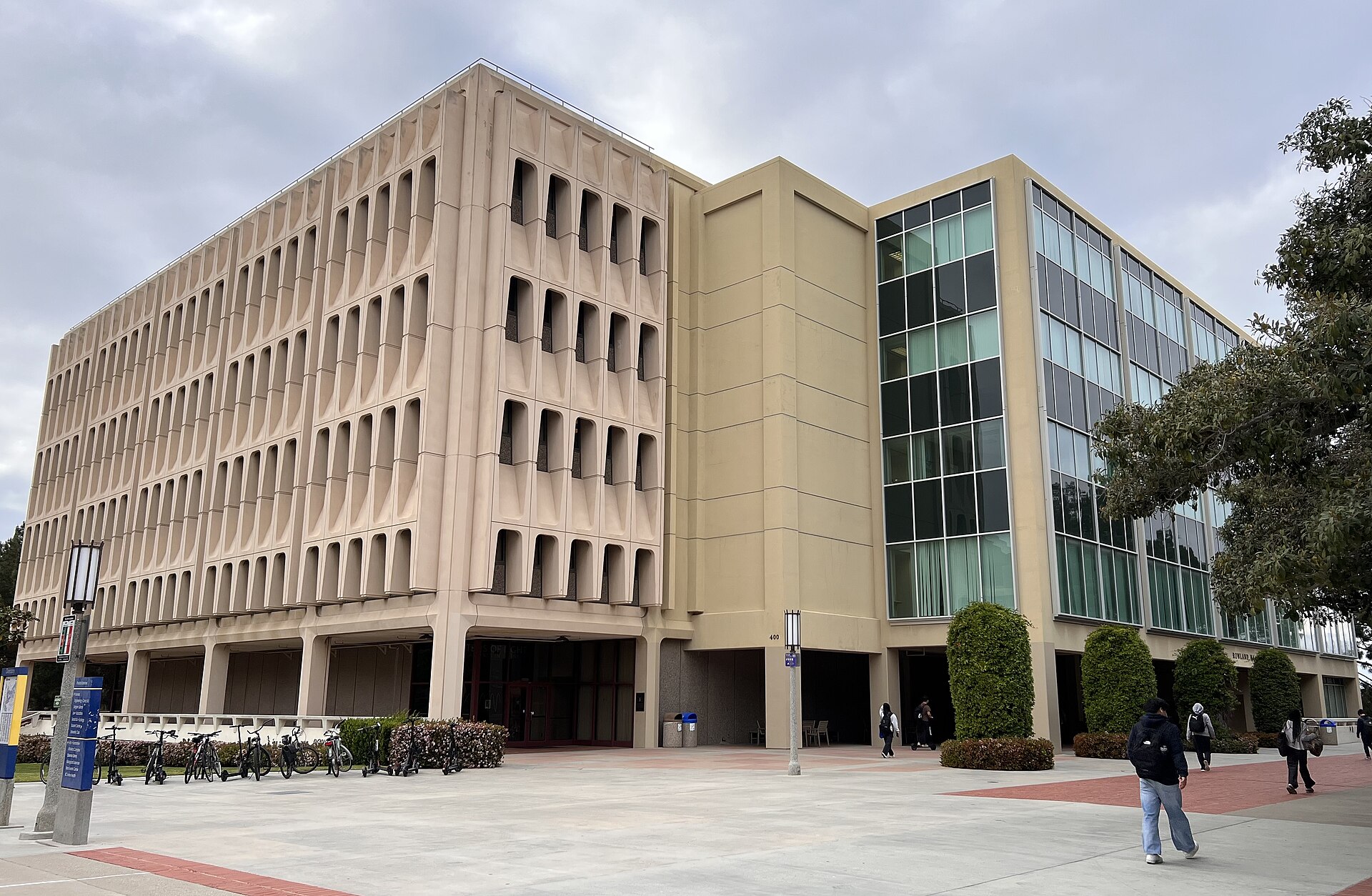
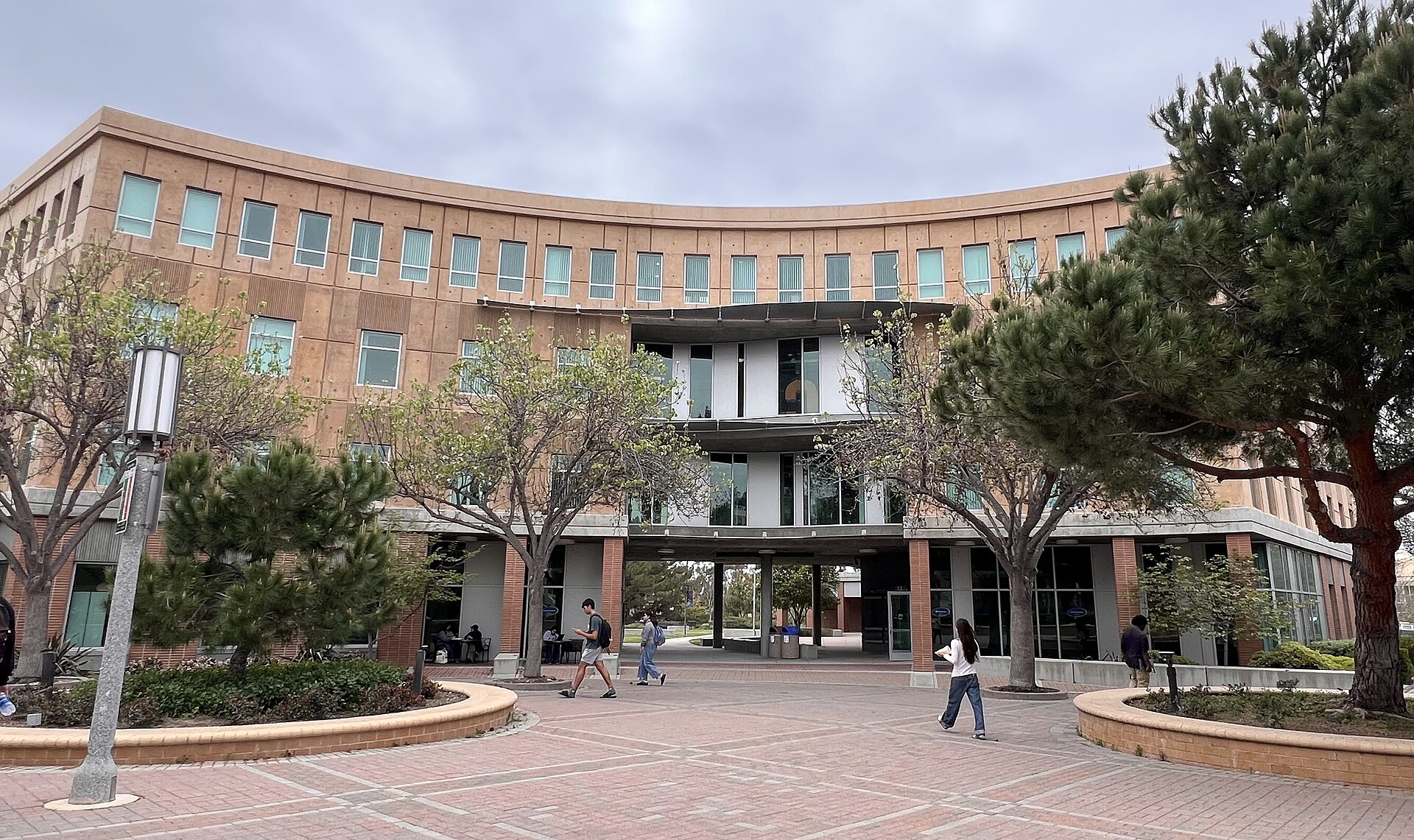
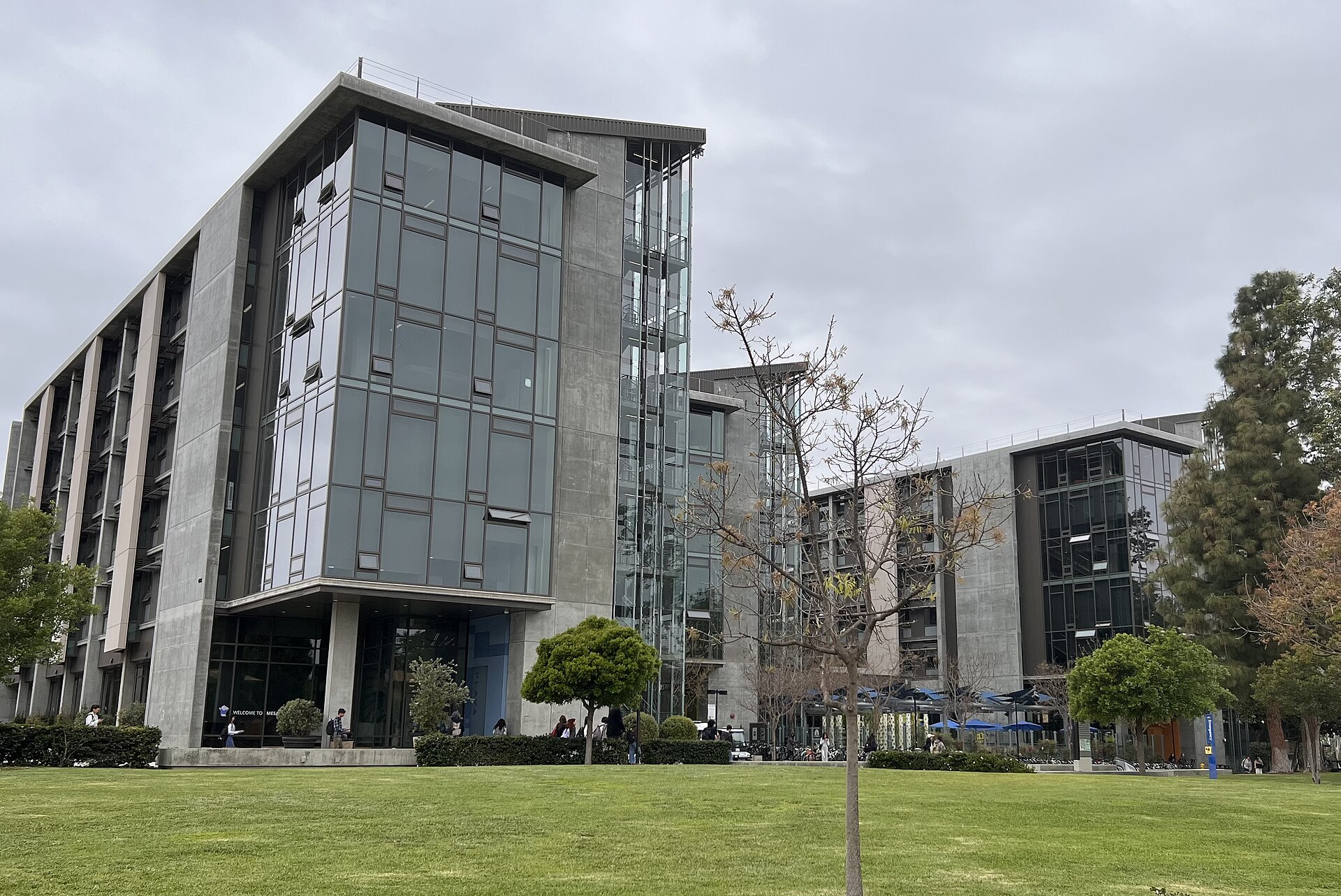
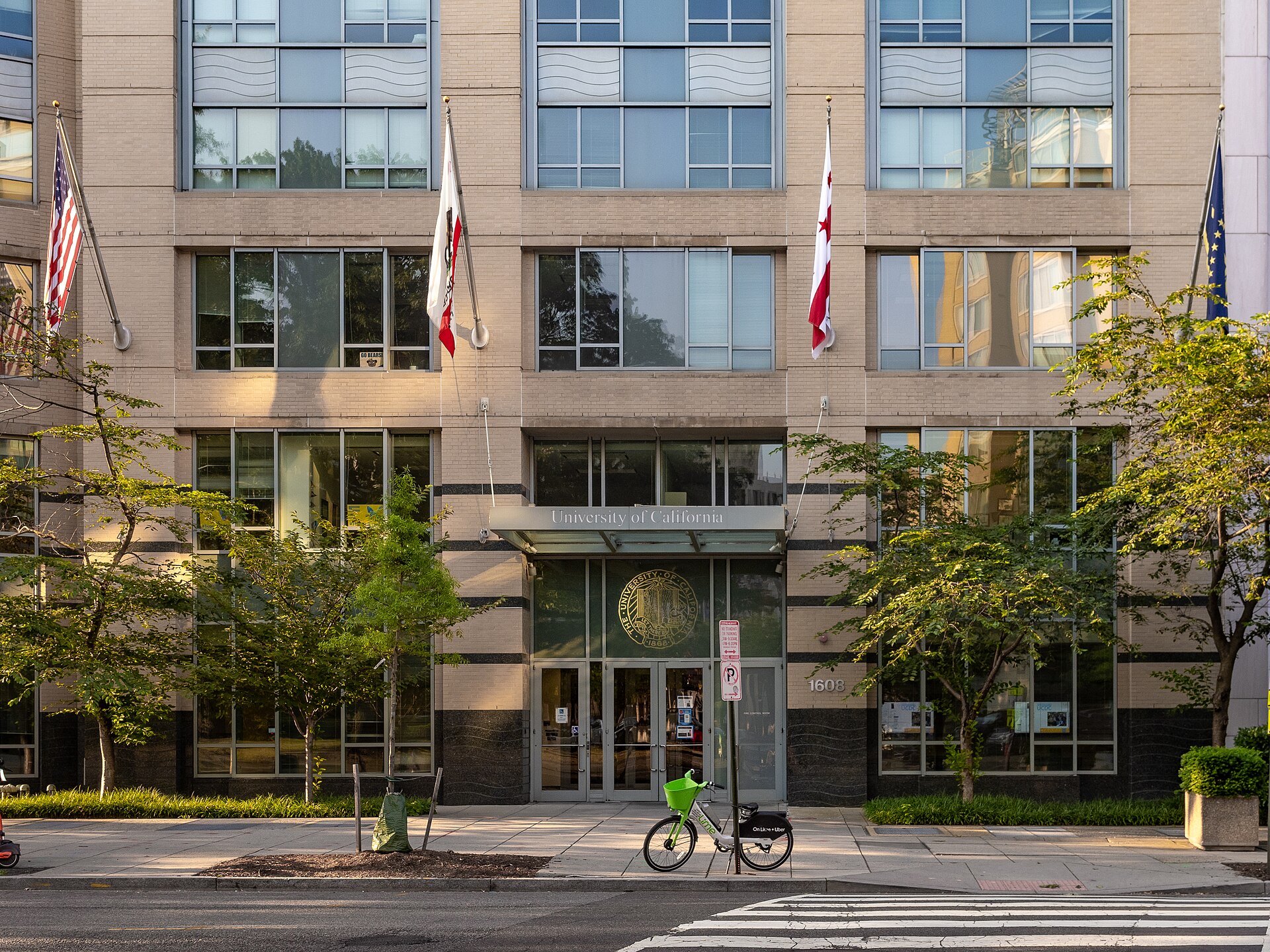
University of California, Irvine — campus in pictures
Real, freely-licensed photographs of the campus (via Wikimedia Commons).
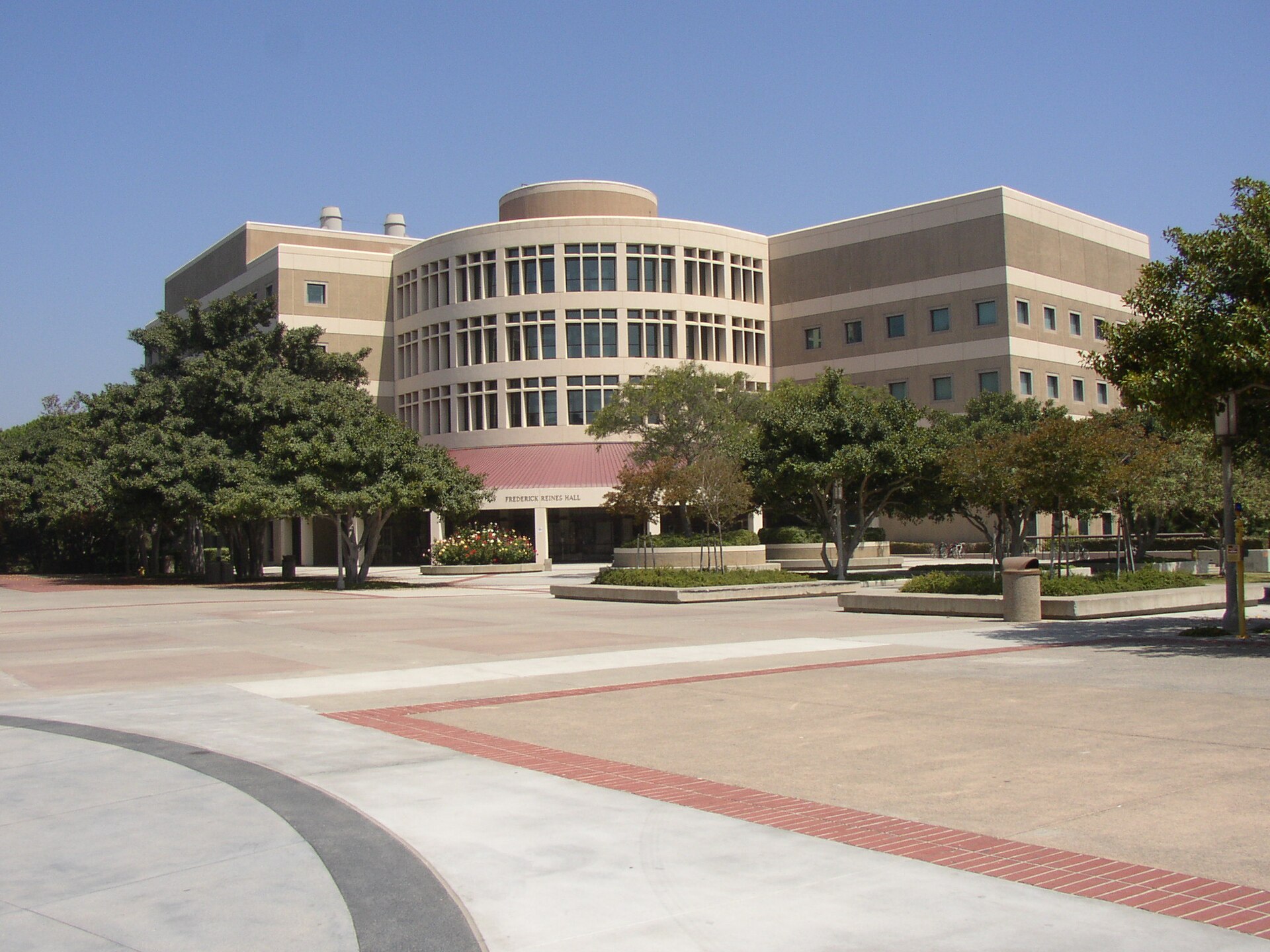
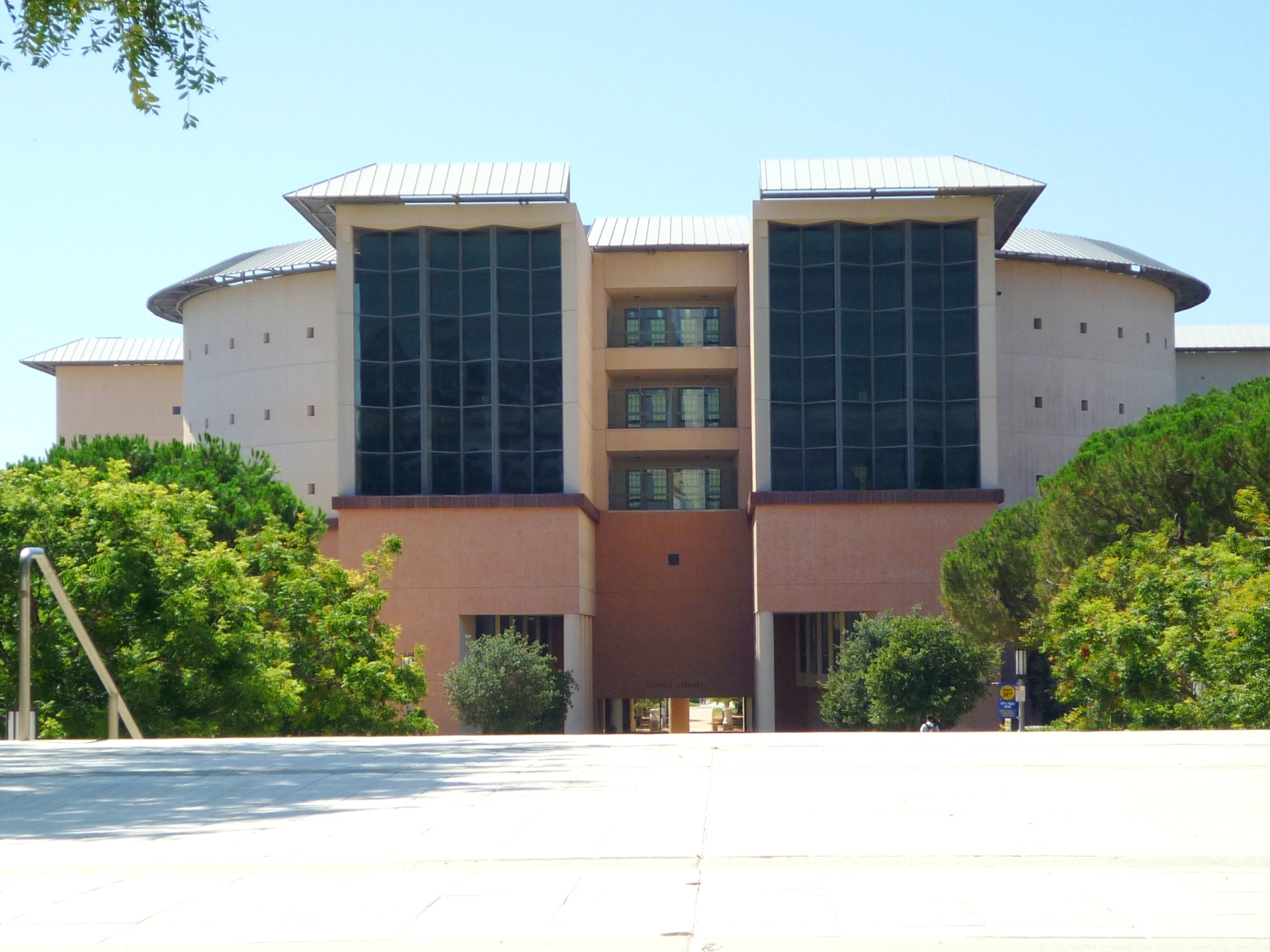
Why UC Irvine — Research, Location, and Genuine Opportunity
UCI sits in a rare sweet spot: research-university credibility, a campus culture that actively recruits international talent, and a Southern California location that puts students inside one of the world's most dynamic technology and life-sciences ecosystems.
SELECTIVITY
How Selective Is UCI?
UCI admits roughly 1 in 4 applicants overall, placing it in the moderately selective tier among UC campuses — more selective than UC Santa Cruz or UC Riverside, less so than UCLA or UC Berkeley. Selectivity varies significantly by major: Computer Science, Biological Sciences, Nursing, and Business Economics are considerably more competitive than the overall rate suggests. International applicants, who typically come with strong academic profiles, face a rigorous but achievable standard.
AT A GLANCE
UCI Quick Facts
WHAT YOU SUBMIT
The UCI Application — What It Consists Of
UCI uses the UC Application, a California-specific system that is distinct from the Common App or Coalition App. There are no supplemental essays; instead, the application's centrepiece is the Personal Insight Questions (PIQs). Every element of your application communicates something about you to the admissions committee.
ADMISSIONS PHILOSOPHY
What UCI Looks for in International Applicants
For international students, the 'context' component of comprehensive review is especially important. Admissions officers are trained to evaluate your transcript in light of the grading system and curriculum available in your country. An all-A student from a rigorous IB school in Dubai, a British A-Level student, and a CBSE student from India will all be read with awareness of their respective systems.
UCI uses a comprehensive review process — the same system used across all UC campuses — that evaluates applicants holistically rather than through a single ranking metric. The review examines 13 criteria including academic achievement in the context of the courses available at your school, demonstrated intellectual curiosity, research or creative endeavour, leadership, and the unique perspective you bring to a diverse campus.
DEADLINES
Application Deadlines and Key Dates
Unlike many US universities, UC campuses have a single application window with no Early Action or Early Decision rounds. All freshman applicants submit between October 1 and November 30. Decisions are released in the spring.
Dates above are based on the typical UC academic calendar. Confirm exact dates for your application cycle at admission.universityofcalifornia.edu.
| Event | Date | Notes |
|---|---|---|
| UC Application opens | August 1 | Begin working on PIQs and activities |
| Application submission window opens | October 1 | First day to submit |
| Application submission deadline | November 30 | Hard deadline — no extensions |
| Admission decisions released | March (typical) | Verify on official admissions site |
| Statement of Intent to Register (SIR) | May 1 (typical) | Deadline to accept your offer |
| Final transcripts due | July 1 | Official sealed transcripts to admissions |
| AP/IB test scores due | July 15 | Report official IB or AP scores |
CAMPUS LIFE
Life at UCI — Irvine, Orange County
Irvine itself is a planned city of roughly 300,000 people, consistently ranked the safest large city in the United States. While it does not have the urban pulse of LA or San Diego, it offers clean neighbourhoods, exceptional cycling infrastructure, strong public transit connections, and a burgeoning food scene that reflects Southern California's Asian, Middle Eastern, and Latin American communities. The international student community at UCI has particularly strong roots here — Irvine's demographics mirror UCI's internationalism. Students regularly visit the beach (Newport Beach and Laguna Beach are 15–20 minutes away), Disneyland, and both LA and San Diego for weekend trips.
UCI's campus is a master-planned ring — the undergraduate schools are arranged along Ring Road to encourage interdisciplinary interaction. It is green, walkable, and well-equipped with research facilities, gyms, and performance venues. The pace of campus life blends the collegiate traditions of a residential campus with the year-round outdoor lifestyle Orange County affords.
OUTCOMES
Career Outcomes and Graduate Prospects
UCI graduates pursuing graduate or professional school — particularly pre-med students — benefit from UCI's proximity to UCI Medical Center and a strong network of research faculty who provide letters of recommendation and research experience. UCI has produced graduates who have gone on to law schools, medical schools, and doctoral programmes at leading US universities. International students on OPT (Optional Practical Training) can extend their post-graduation work authorisation in STEM fields for up to three years — a significant advantage for computing, engineering, and data science graduates.
UCI's location inside the Southern California tech and life-sciences corridor is one of its defining career advantages. Major employers including Apple, Google, Amazon, Microsoft, Broadcom, Blizzard Entertainment, Boeing, Edwards Lifesciences, and Kaiser Permanente actively recruit on campus. The UC system's alumni network spans every continent and is particularly strong in the Pacific Rim — a meaningful advantage for international graduates who may return home.
FREQUENTLY ASKED QUESTIONS
UCI Admissions — FAQ for International Students
Does UCI accept the Common App?+
No. UCI — like all UC campuses — uses the UC Application exclusively. You submit one UC Application and indicate which campuses you want to apply to. The application opens August 1 and the submission window is October 1 to November 30.
Is UCI test-blind or test-optional?+
UCI is permanently test-blind. SAT and ACT scores are not considered in admission decisions and should not be submitted. This is a UC-system-wide policy with no announced end date.
Can international students receive financial aid from UCI?+
UCI is need-aware for international students, meaning financial need may factor into admission decisions. International students are not eligible for federal US financial aid (FAFSA). However, the UC system does offer some institutional aid to international students, and UCI maintains a scholarship programme open to all enrolled students. Confirm current international aid availability at ofas.uci.edu.
What GPA do international applicants need?+
The UC system requires a minimum 3.4 GPA (unweighted, A-G courses) for non-California residents. Competitive applicants to UCI typically present GPAs above 3.7 in the context of rigorous course loads. For IB students, a score of 37 or above is a meaningful benchmark.
Can I apply to multiple UC campuses on one application?+
Yes. The UC Application allows you to apply to any combination of UC campuses for an $80 fee per campus. Applying to multiple campuses is common and does not hurt your chances at any individual campus.
What is UCI's best-known academic strength for international students?+
UCI's Donald Bren School of Information and Computer Sciences is nationally ranked and houses the unique Computer Game Science degree. Its Biological Sciences and Public Health programmes feed strong pre-med pipelines. Criminology, Law & Society — housed in the School of Social Ecology — is a regionally distinctive offering with no direct equivalent at most other UCs.
Is Irvine safe for international students?+
Irvine consistently ranks as one of the safest large cities in the United States. This is a genuine differentiator compared with campus neighbourhoods at some other major research universities and is particularly valued by international students and their families.
Does UCI offer merit scholarships to international students?+
UCI offers institutional scholarships through its annual online scholarship application, open to all enrolled students. Named awards such as the Reward Opportunity Advancing Distinguished Students (ROADS) Scholarship are available. Dedicated international merit scholarships are limited; most institutional aid is need-based. Verify current offerings at ofas.uci.edu.
ACADEMIC EXPECTATIONS
Academic Profile for UCI — What International Students Need to Know
UCI evaluates international applicants through the same comprehensive review lens as domestic students — but calibrated to your home country's curriculum. This means your IB score, A-Level grades, or national-track results are assessed alongside the rigour of your school, not just the raw number. What UCI wants to see is that you have pushed yourself in the most challenging courses available to you and earned strong results.
The single most important academic fact for UCI applicants: it is permanently test-blind. The SAT and ACT play zero role in your application. Your academic case rests entirely on your transcript, the trajectory of your grades, and the rigour of your curriculum.
ACADEMIC BENCHMARKS
Competitive Academic Profile
The figures below are drawn from UCI's published data. SAT and ACT bands are not relevant at UCI — the university is test-blind.
TEST POLICY
UCI Is Permanently Test-Blind
This policy has significant implications for international applicants: you cannot compensate for a slightly lower GPA with a high standardised test score. Conversely, strong test performance from SAT prep alone will not provide any advantage. The playing field is genuinely levelled to academic record, curriculum rigour, Personal Insight Questions, and extracurricular context.
The entire UC system adopted a permanent test-blind policy. This means SAT and ACT scores are not reviewed, not used in admission decisions, and should not be submitted — even if you have exceptional scores. UCI explicitly cannot consider them.
STANDARDISED TESTS
No SAT or ACT — Focus Your Energy Elsewhere
The one exception is English proficiency testing for international students whose first language is not English. IELTS, TOEFL, and the Duolingo English Test are required if you have not completed a minimum of three years of full-time study in English at the secondary level. See the English requirements section below.
UCI's test-blind status is permanent and applies equally to domestic and international applicants. You do not need SAT Subject Tests, ACT, or any US-style standardised test for undergraduate admission.
AP and IB examinations are welcomed on your transcript and can grant college credit at UCI, but they are separate from the admission decision.
INTERNATIONAL CURRICULA
IB, A-Levels, and Other International Qualifications
A-Level students (UK, Singapore, Hong Kong, India Cambridge boards) are evaluated on the grades and subjects taken. Strong A and A* grades in three or more subjects relevant to your intended major are expected. French Baccalaureate, German Abitur, Indian CBSE/ISC boards, and other national qualifications are all reviewed within their own grading contexts — UCI admissions officers are experienced with these systems.
UCI's comprehensive review is well-versed in international qualification systems. IB Diploma students are a significant component of the international applicant pool. An IB score of 37 or above signals strong competitiveness, though admitted students from highly selective programmes often present higher scores. HL grades in relevant subjects matter: an applicant targeting Computer Science with HL Mathematics and HL Computer Science sends a clearer signal than one without quantitative HLs.
SUBJECT PREPARATION
Course Preparation by Intended Major
UCI expects all applicants to complete the UC A-G course sequence (15 college-preparatory courses). Beyond that baseline, competitive applicants in specific programmes should show subject-specific depth.
ENGLISH PROFICIENCY
English Language Requirements
International students whose first language is not English must demonstrate English proficiency. UCI accepts the following standardised English tests:
Students who have completed at least three years of full-time secondary or post-secondary study taught entirely in English may be exempt from the English proficiency requirement. Confirm your eligibility at the official admissions site.
| Test | Minimum | Notes |
|---|---|---|
| IELTS Academic | 6.5 overall | No sub-score requirement published; verify |
| TOEFL iBT | 80 total | Internet-based test |
| Duolingo English Test | 115 | Online, widely accepted by UC system |
PLANNING AHEAD
Building Your Profile — Grade 9 to 12 Roadmap
COMMON MISTAKES
Academic Pitfalls to Avoid
- Submitting SAT or ACT scores — UCI is test-blind and cannot consider them. Doing so wastes application effort.
- Taking easier courses in senior year to protect GPA — 'senioritis' drops are a common reason UCI rescinds conditional admissions offers.
- Underestimating major-specific selectivity — the 26% overall rate masks much lower rates for CS, Nursing, and Biological Sciences.
- Applying to only one UC campus — since one application covers multiple campuses, apply to a range including likely, match, and reach campuses.
- Ignoring the A-G course requirement — international applicants must ensure their transcript maps to the A-G sequence. Gaps in required subjects (especially two years of a language other than English) can affect eligibility.
- Late English proficiency testing — book IELTS or TOEFL well before November so scores arrive before submission deadline.
- Generic Personal Insight Questions — the PIQs are your primary voice in this application; outsourcing or over-editing them strips out the authenticity that reviewers are trained to notice.
COST & FINANCIAL AID
Understanding the Cost of UCI — For International Students
UCI's stated cost of attendance for international (nonresident) students is significant — in the range of most US public research universities. However, UCI's active scholarship infrastructure and need-based aid mean that your actual cost may differ from the sticker price. The key is to plan carefully, apply for all available institutional aid at enrolment, and understand the realistic landscape before you commit.
Unlike elite private universities that meet 100% of demonstrated financial need, UCI — as a public university — has more constrained aid for international students. Federal US financial aid (FAFSA) is not available to international applicants. Planning for the full cost of attendance is the prudent starting point.
COST OF ATTENDANCE
Annual Cost Estimates (International Students)
All figures are annual estimates from UCI's published data. Actual costs vary by programme, housing choice, and personal spending.
Costs are subject to annual increases. Confirm exact figures for your entry year at ofas.uci.edu.
| Component | Annual Estimate | Notes |
|---|---|---|
| Nonresident tuition & fees | $51,000 | From UCI facts data |
| Total cost of attendance | $78,000 | Includes tuition, housing, meals, books, personal |
| Off-campus living estimate | $22,000 | Irvine cost of living component |
| Application fee | $80 | Per UC campus applied to |
FINANCIAL AID
Financial Aid for International Students
UCI's institutional financial aid is primarily available to California residents and US citizens/permanent residents. However, UCI does maintain an institutional scholarship programme open to all enrolled students — including international students — through an annual online application managed by the Office of Financial Aid and Scholarships (OFAS). The university has stated that 20% of students on average receive some form of institutional aid. Whether international students share meaningfully in this figure depends on individual circumstances and available funds in a given year.
International students at UCI are not eligible for US federal financial aid (FAFSA-based grants and loans). UCI is need-aware for international students in its admission process, which means demonstrated financial need may be considered alongside your academic application.
Contact OFAS directly (finaid@uci.edu) to confirm current aid availability for international applicants before basing your application decision on financial aid expectations.
SCHOLARSHIPS
Scholarships at UCI
UCI offers scholarships through its centralised annual online scholarship application. Most awards are open to all enrolled undergraduates; some are restricted by field of study, year, or financial need.
AFFORDABILITY REALITY
What UCI Actually Costs International Families
The meaningful cost advantages at UCI for international students are: (1) four-year graduation rates are strong, meaning fewer total years of tuition; (2) the internship and co-op pipeline to Southern California technology employers can offset costs through co-op earnings; (3) UCI's STEM OPT extension (up to 3 years post-graduation for STEM graduates) gives international graduates extended US work authorisation, improving the return on investment of the degree.
For international families, planning for the full $78,000 cost of attendance is the realistic baseline. This is broadly comparable to other leading US public universities for nonresident students (e.g., UCLA, UC San Diego, UMich) and significantly below most elite private US universities.
HOW TO FUND YOUR UCI EDUCATION
Steps to Maximise Your Aid and Funding
COST FAQs
Financial Aid FAQs for International Students
Can international students apply for FAFSA at UCI?+
No. FAFSA (the US federal financial aid application) is available only to US citizens and eligible non-citizens. International students on F-1 visas are not eligible. UCI's institutional aid, external scholarships, and on-campus employment are the primary funding routes.
Does UCI offer merit scholarships to international applicants at admission?+
UCI does not publish a named merit scholarship awarded at the point of admission specifically for international freshmen. Most institutional scholarships are applied for after enrolment through the annual OFAS application. Verify current offerings at ofas.uci.edu.
How much does it actually cost to live in Irvine?+
UCI's published cost of living estimate is approximately $22,000 per year. Irvine is a planned suburban city — not cheap by global standards — but comparable to other major UC campus cities. Shared off-campus apartment arrangements and cooking at home can meaningfully reduce this figure.
Is UCI need-blind for international students?+
No. UCI is need-aware for international students, meaning financial need may be a factor in admission decisions. This is the same policy as most US public universities.
Can I work while studying at UCI?+
Yes, on a limited basis. F-1 students may work up to 20 hours per week on campus during the academic term and full-time during academic breaks. Off-campus work generally requires an authorisation (CPT or OPT) tied to your programme.
UC APPLICATION & ESSAYS
The UCI Essay Process — Personal Insight Questions (PIQs)
UC Irvine does not use the Common App and does not have supplemental essays in the traditional sense. Instead, the UC Application's Personal Insight Questions (PIQs) are your primary written voice. You choose 4 of 8 prompts and write up to 350 words per response. These short, focused responses are the single most important qualitative element of your UCI application — treat them as seriously as any full-length college essay.
For international students, the PIQs offer a real advantage: 350 words is manageable regardless of your English fluency level. The format rewards clarity, specificity, and authentic voice over sophisticated prose. A student who writes simply but specifically about a real experience will always outperform one who writes floridly about a vague idea.
HOW IT WORKS
The UC Application Essay System
The UC Application is unique to the University of California system. One application covers all nine undergraduate UC campuses — including UCI. The PIQs you write are sent to every campus you apply to.
THE PROMPTS
The 8 UC Personal Insight Questions
These are the official 2025-26 UC Personal Insight Questions. Choose any 4 to answer.
NO COMMON APP
The UC Application Is Not the Common App
Do not recycle your Common App personal statement into a PIQ. The format difference is real: a 650-word narrative that works beautifully in full will almost never compress effectively to 350 words. The PIQs reward you starting fresh with tighter, more specific writing. If you are applying to both systems, budget time to write the PIQs from scratch after you complete your Common App personal statement.
International students applying to both US private universities (via Common App) and UC campuses (via UC Application) are managing two distinct systems simultaneously. The Common App personal statement is 650 words and tells a longer personal narrative. The UC PIQs are 350 words each and tend toward specificity and focus.
STRATEGY
Choosing and Writing Your Four PIQs
TOPIC SELECTION
How to Choose What to Write About
A useful test: after reading all four of your PIQs, could a reader describe you as a specific individual? Or would they describe a generic high-achieving student? If the answer is the latter, you have not been specific enough. Each PIQ should contain at least one detail — a name, a place, a specific number, a moment — that could only appear in your application, no one else's.
The UC PIQ system evaluates four separate snapshots of who you are. The goal of your four-response package is to emerge from it as a fully realised person — not a collection of achievements.
WHAT TO AVOID
Common PIQ Mistakes
- Submitting generic essays that could apply to any UC campus — none of the PIQs ask you to explain why you want to attend UCI, but your specificity and intellectual passion should make you obviously right for a research-intensive environment.
- Writing 200-word responses instead of using the full 350 words — brevity for its own sake leaves evidence of who you are on the table.
- Using the same experience or activity in more than two responses — your four responses should collectively span your life, not circle one event.
- Over-editing to the point of losing your authentic voice — if a native speaker writes your PIQs for you and your English proficiency score is 6.5 IELTS, the mismatch is jarring to experienced readers.
- Treating the 'additional strengths' prompt (Prompt 8) as mandatory — it is optional and you should only use it if you have genuinely new material to add.
- Waiting until November to start — the UC Application opens August 1. Starting PIQ drafts in August gives you three months to revise and refine. Students who start in late October write weaker essays.
- Forgetting the deadline is November 30 and missing it — the UC system does not accept late applications. There is no extension for international applicants.
ESSAY FAQs
PIQ and Application FAQs
Does UCI have its own supplemental essay in addition to the PIQs?+
No. UCI does not add campus-specific supplemental essays. Your four PIQ responses through the UC Application are the entirety of your written submission. There is no 'Why UCI?' essay or additional UCI-specific prompt.
Which 4 of the 8 PIQs should I choose?+
Choose the four for which you have the most specific, authentic, and differentiated material. The UC explicitly states all eight prompts receive equal consideration. There is no strategically 'correct' combination — the quality and specificity of your responses matter, not which prompts you selected.
Can I write about experiences from my home country?+
Absolutely, and you should if those are your most genuine and specific stories. Admissions officers actively want to understand the diverse contexts applicants come from. A response about navigating a challenging educational system in your home country or contributing to a community in another country is valuable — do not sanitise it into a generic narrative.
Do I need to write about my intended major in a PIQ?+
It is not required, but Prompt 6 (Academic Interest) is a natural vehicle for this if you have a clear intellectual passion. Even if you do not use Prompt 6, connecting your PIQs to a coherent sense of purpose and interest helps reviewers understand the fit between you and your intended major.
Does the quality of my English writing affect my chances if I am not a native speaker?+
The UC reads PIQs with awareness that many applicants are writing in a second or third language. Clear, correct, and specific writing will always be valued over complex prose with errors. Write clearly in your own voice rather than attempting to impress with vocabulary you are not comfortable with.
Can I reuse my PIQs for multiple UC campuses?+
Yes. The same PIQs go to every UC campus you select in your application. This is one of the efficiencies of the UC Application system — you write four responses once and they serve all your UC applications simultaneously.
Courses — schools, degrees & intake
87 degrees across 14 groupings.
School of Humanities · 21 degrees
African American Studies, B.A.
Art History, B.A.
Asian American Studies, B.A.
Chinese Studies, B.A.
Classics, B.A.
Comparative Literature, B.A.
East Asian Cultures, B.A.
English, B.A.
European Studies, B.A.
Film and Media Studies, B.A.
French, B.A.
Gender and Sexuality Studies, B.A.
German Studies, B.A.
Global Cultures, B.A.
History, B.A.
Japanese Language and Literature, B.A.
Korean Literature and Culture, B.A.
Literary Journalism, B.A.
Philosophy, B.A.
Religious Studies, B.A.
Spanish, B.A.
Henry Samueli School of Engineering · 10 degrees
Aerospace Engineering, B.S.
Biomedical Engineering, B.S.
Biomedical Engineering: Premedical, B.S.
Chemical Engineering, B.S.
Civil Engineering, B.S.
Computer Engineering, B.S.
Electrical Engineering, B.S.
Environmental Engineering, B.S.
Materials Science and Engineering, B.S.
Mechanical Engineering, B.S.
Charlie Dunlop School of Biological Sciences · 10 degrees
Biochemistry and Molecular Biology, B.S.
Biological Sciences, B.S.
Biology/Education, B.S.
Developmental and Cell Biology, B.S.
Ecology and Evolutionary Biology, B.S.
Genetics, B.S.
Human Biology, B.S.
Microbiology and Immunology, B.S.
Neurobiology, B.S.
Physiology and Exercise Science, B.S.
School of Physical Sciences · 6 degrees
Applied and Computational Mathematics, B.S.
Applied Physics, B.S.
Chemistry, B.S.
Environmental and Earth System Science, B.S.
Mathematics, B.S.
Physics, B.S.
School of Social Sciences · 13 degrees
Anthropology, B.A.
Business Economics, B.A.
Chicano/Latino Studies, B.A.
Cognitive Sciences, B.S.
Economics, B.A.
International Studies, B.A.
Language Science, B.A.
Political Science, B.A.
Psychology, B.A.
Psychology, B.S.
Quantitative Economics, B.A.
Social Policy and Public Service, B.A.
Sociology, B.A.
Donald Bren School of Information and Computer Sciences · 6 degrees
Computer Science, B.S.
Data Science, B.S.
Game Design and Interactive Media, B.S.
Informatics, B.S.
Information and Computer Science, B.S.
Software Engineering, B.S.
Paul Merage School of Business · 1 degrees
Business Administration, B.A.
School of Education · 1 degrees
Education Sciences, B.A.
School of Social Ecology · 4 degrees
Criminology, Law and Society, B.A.
Psychology, B.A.
Social Ecology, B.A.
Urban Studies, Planning, and Policy, B.A.
Claire Trevor School of the Arts · 7 degrees
Art, B.A.
Dance, B.A.
Dance, B.F.A.
Drama, B.A.
Music, B.A.
Music, B.Mus.
Music Theatre, B.F.A.
Joe C. Wen School of Population and Public Health · 2 degrees
Public Health Policy, B.A.
Public Health Sciences, B.S.
Sue and Bill Gross School of Nursing · 1 degrees
Nursing Science, B.S.
School of Pharmacy and Pharmaceutical Sciences · 1 degrees
Pharmaceutical Sciences, B.S.
Interdisciplinary Studies · 4 degrees
Business Information Management, B.S.
Computer Science and Engineering, B.S.
Environmental Science and Policy, B.A.
Global Middle East Studies, B.A.
Want your real chances at University of California, Irvine?
Create a free TYCHR account for your personalised admit-chance, a shortlist you can track, exact entry requirements, and essay + counselling help.