University of Bonn
Bonn, Germany · Urban
RHEINISCHE FRIEDRICH-WILHELMS-UNIVERSITÄT BONN
University of Bonn Admissions Guide for International Students
Founded in 1818 on the banks of the Rhine, the University of Bonn is one of Germany's eleven designated Universities of Excellence — the country's highest academic distinction. Home to the world-famous Hausdorff Center for Mathematics and the only German university to hold eight Clusters of Excellence simultaneously, Bonn has produced more Nobel Prize and Fields Medal laureates in recent decades than any other German institution. For international students seeking rigorous research, near-zero tuition fees, and a compact, student-friendly city in the heart of Europe, Bonn represents a compelling — and often underrated — choice.
Campus
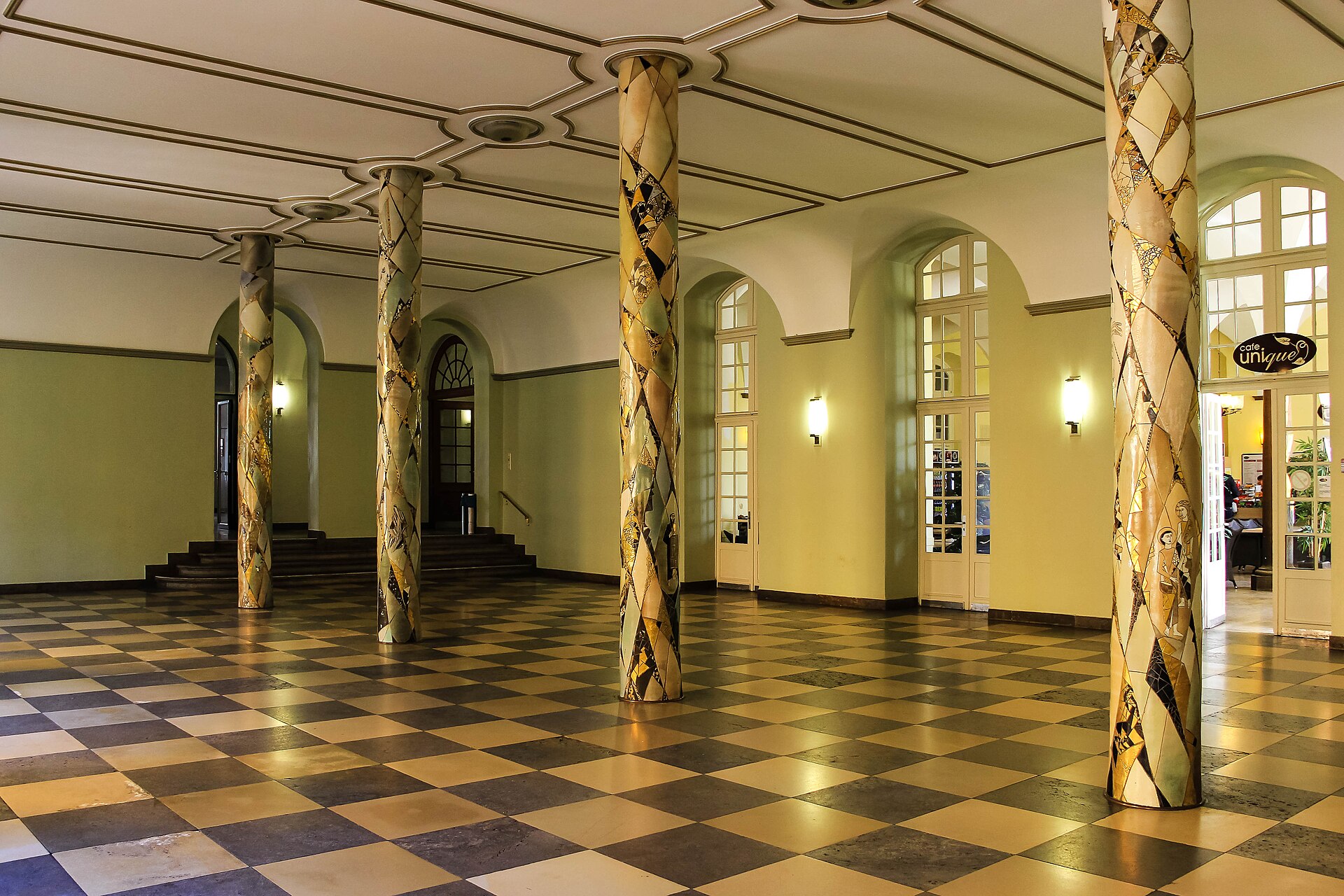
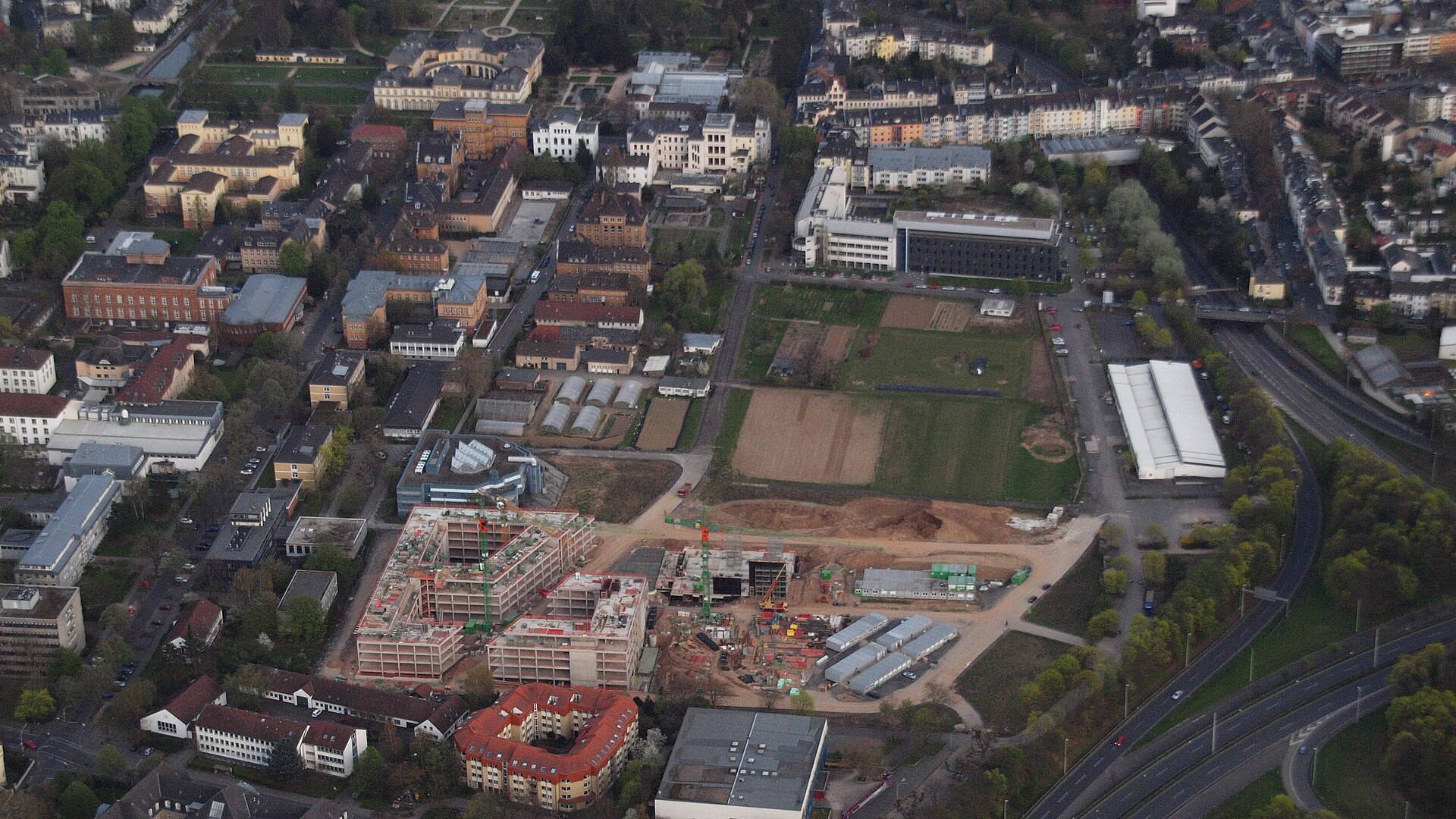
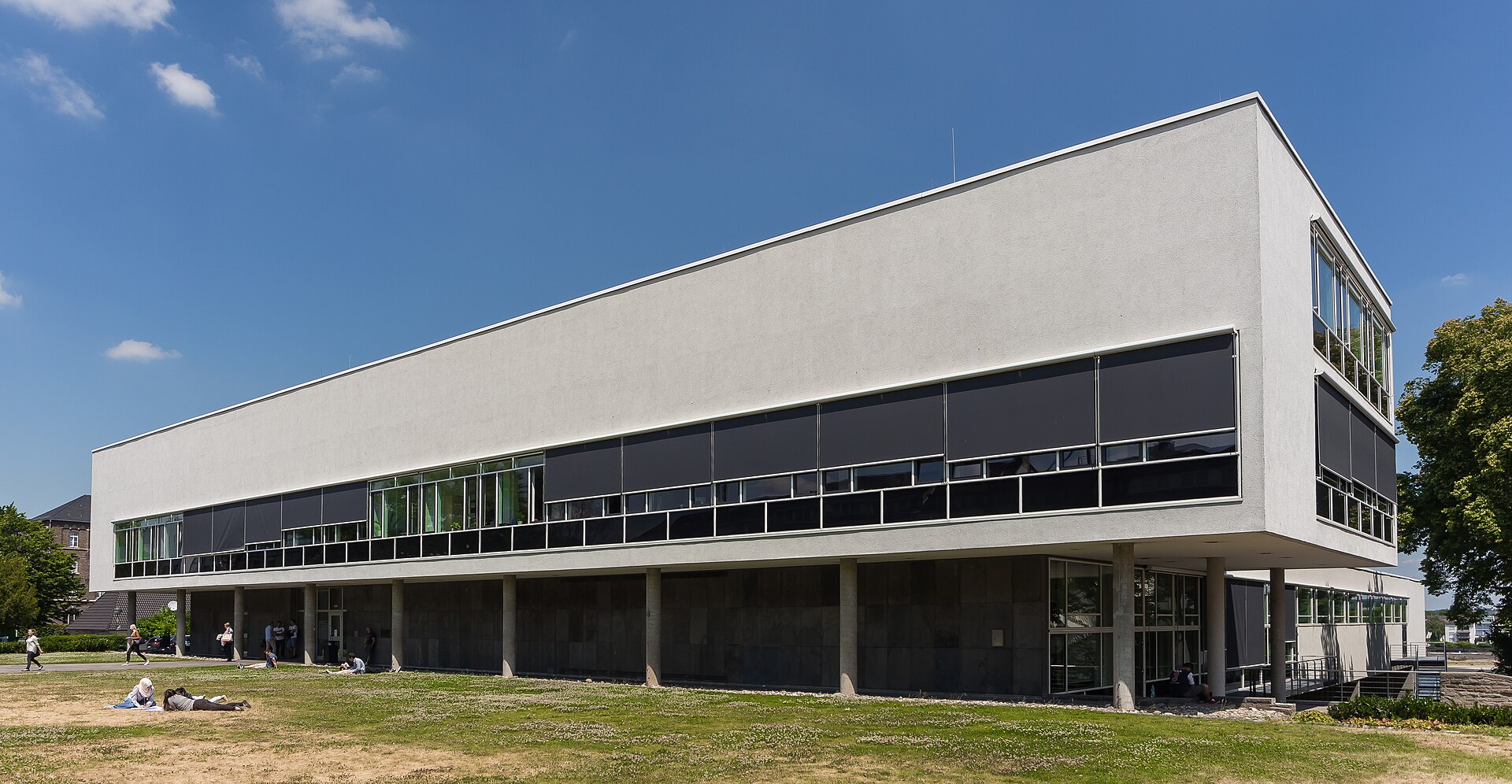
University of Bonn — campus in pictures
Real, freely-licensed photographs of the campus (via Wikimedia Commons).
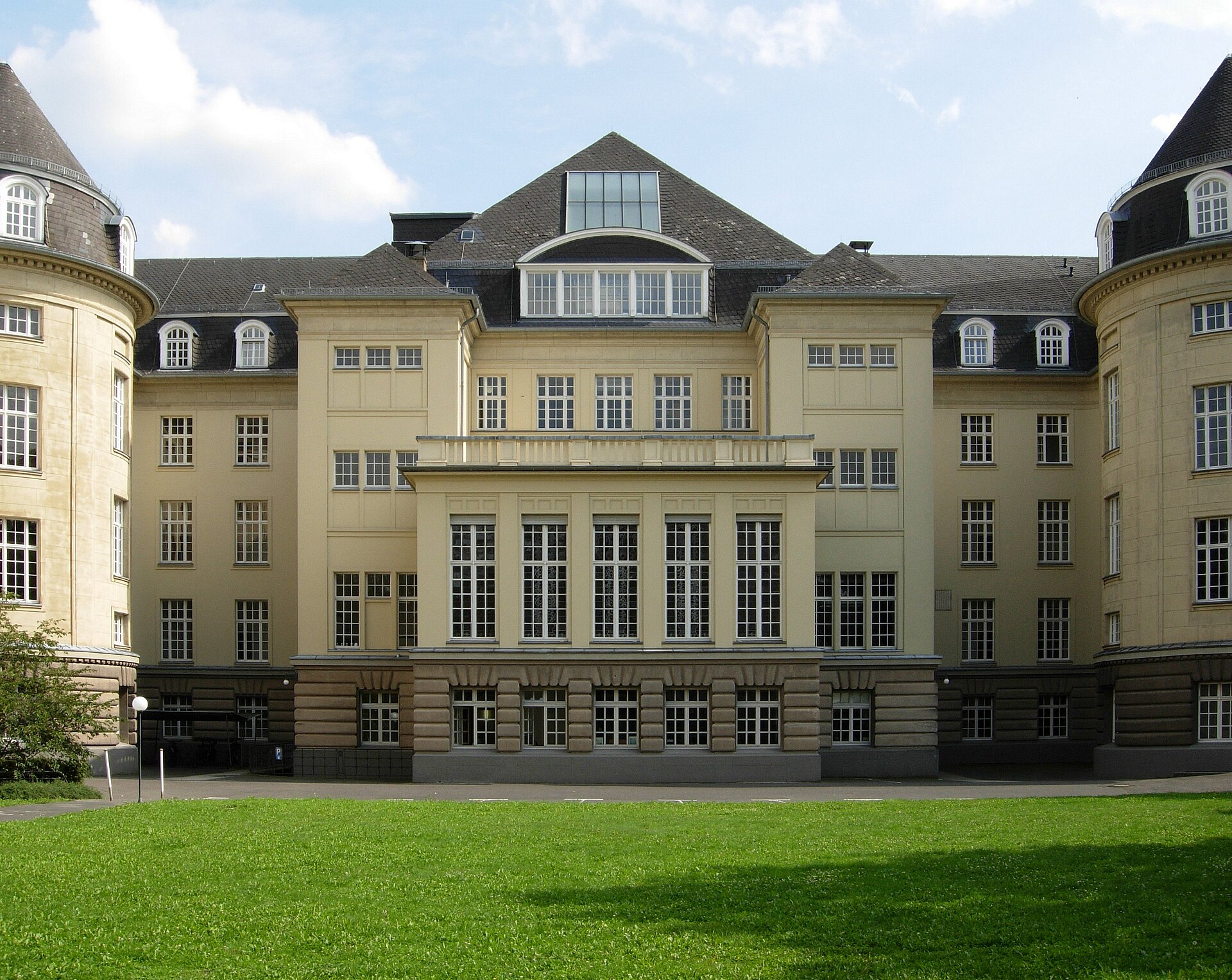
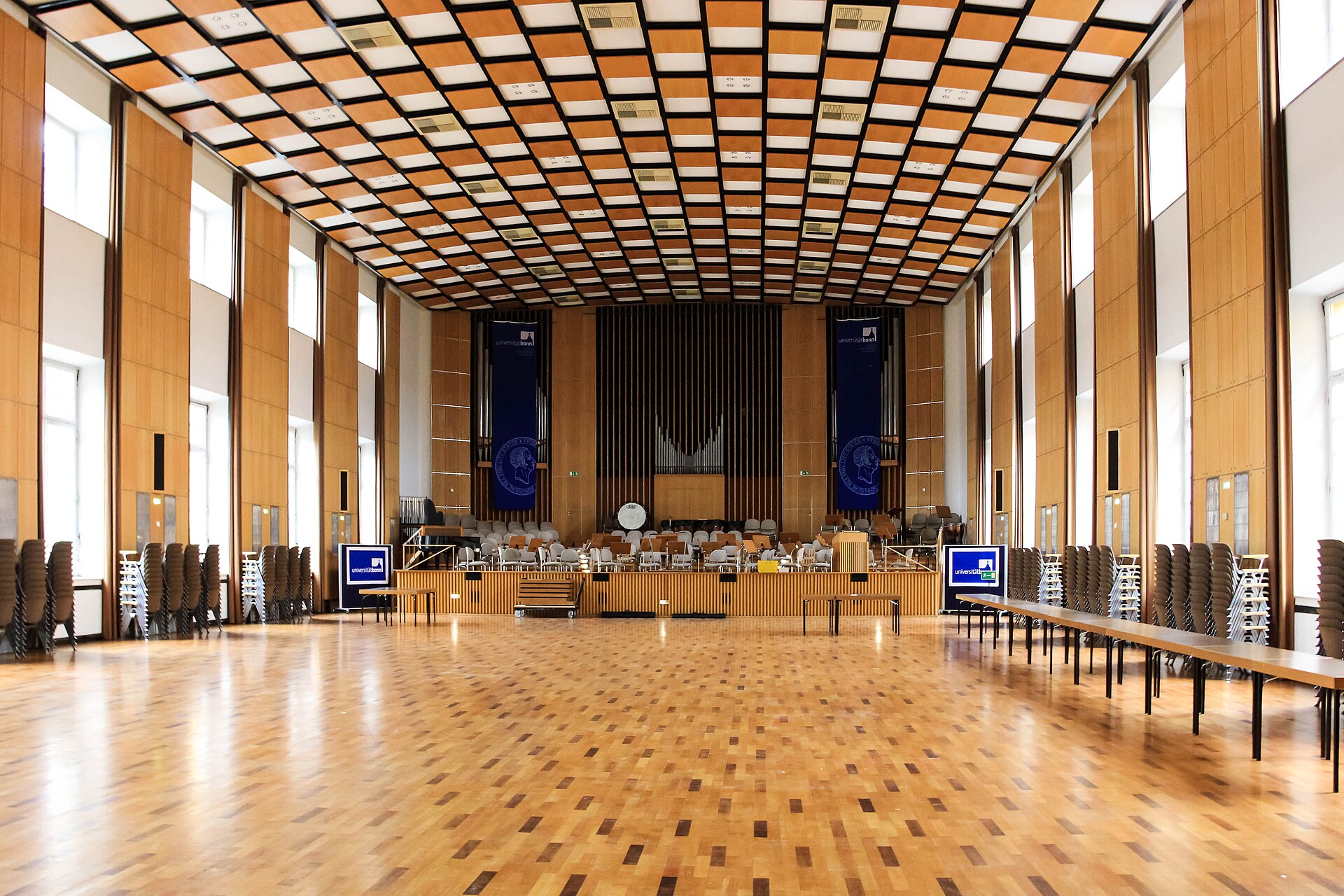
Why Choose the University of Bonn?
Bonn combines the academic firepower of a German Excellence University with some of the lowest tuition costs on the planet. It is a serious research institution that punches far above its size in science, mathematics, and the humanities — while offering international students a genuinely liveable, affordable city.
SELECTIVITY
Admissions Profile at a Glance
The University of Bonn operates a differentiated admissions system. Many programmes admit students based on grades alone (without a numerus clausus cap), while high-demand programmes in medicine, law, dentistry, pharmacy, and some STEM fields are heavily restricted. The university-wide acceptance rate of approximately 35% masks wide variation: competitive programmes can be far more selective, while others admit most qualified applicants. International students without an Abitur (German school-leaving certificate) must have their foreign qualifications assessed — typically through uni-assist — and may need to complete a preparatory year (Studienkolleg) or sit an equivalency test.
There are no SAT/ACT requirements. German universities are test-blind for standardised US-style admissions tests. Admission is based on academic qualifications, GPA/grade equivalents, and, for some master's programmes, a motivation letter and CV.
QUICK FACTS
University of Bonn at a Glance
WHAT YOU NEED TO APPLY
Application Components
The University of Bonn uses a direct application system (for bachelor's programmes) and a programme-specific portal (for master's programmes). Most international applicants submit documents through uni-assist (the centralised credential evaluation service for international qualifications) or directly via the university's own portal, depending on the programme.
ADMISSIONS PHILOSOPHY
What Bonn Looks For
The University of Bonn, like most German public universities, is primarily grade-driven at the undergraduate level. The strongest predictor of admission success is your academic transcript — specifically, the grades in subjects relevant to your intended programme. There is no holistic admissions review of the kind used by US liberal arts colleges; instead, a grade-point equivalent (Numerus Clausus, or NC) is calculated from your qualifications and compared against a programme's cut-off for that semester.
APPLICATION DEADLINES
Key Dates & Application Rounds
German universities operate on two semesters: winter semester (starting October) and summer semester (starting April). Most international applicants target the winter semester, as more programmes are available. Exact deadlines vary by programme and change each year — always confirm on the official programme page.
uni-assist has earlier deadlines than the university itself — submit your documents to uni-assist at least 6–8 weeks before the university deadline. Always verify current deadlines on the official Bonn admissions portal.
| Semester | Start | Application Deadline | Notes |
|---|---|---|---|
| Winter Semester | October | Typically 15 July (via uni-assist: 31 May) | Most popular intake for international students |
| Summer Semester | April | Typically 15 January (via uni-assist: 30 November) | Fewer programmes; some master's only |
CAMPUS & CITY LIFE
Student Life in Bonn
Bonn is a city built to a human scale — compact, safe, and extraordinarily well-connected. The historic main building of the university sits right on the Rhine promenade, and most faculties are within cycling distance. The city's position on the Rhine means short trips to Cologne (25 min by train), Düsseldorf, and Frankfurt.
CAREER & OUTCOMES
Graduate Outcomes & Career Prospects
A University of Bonn degree carries significant weight in Germany and Europe. The university's graduate employment rate of 92% reflects a German higher education system that is strongly connected to industry, research institutes, and the public sector. Average starting salaries for graduates are around USD 56,000 annually, competitive within the European context.
Cards
Stats
FREQUENTLY ASKED QUESTIONS
FAQs — International Applicants
Do I need to speak German to study at the University of Bonn?+
It depends on your programme. The majority of bachelor's programmes are taught in German and require a DSH-2 or TestDaF-4 certificate. However, there are English-taught master's programmes (primarily in sciences, mathematics, and some social sciences) where IELTS 6.5 or TOEFL 90 is sufficient. Always check the language of instruction for your specific programme.
Is a German Abitur required for admission?+
No. International qualifications such as the IB Diploma, A-Levels, or an equivalent national qualification can be accepted, but they must be assessed for equivalency — usually through uni-assist for bachelor's programmes. Depending on your qualification and country, you may be directly admitted, required to pass a specific aptitude assessment, or asked to complete a Studienkolleg (preparatory course).
How much does it actually cost to study at Bonn?+
The University of Bonn charges semester contributions of approximately €700 per year (not per semester) — this is not tuition but a service fee that includes a public transport semester ticket. There is no separate tuition fee for EU and non-EU students at public German universities in North Rhine-Westphalia. Your main costs are living expenses, estimated at around €13,000 per year for Bonn.
What is uni-assist and do I need it?+
uni-assist is a centralised service used by many German universities to assess international academic credentials. If you hold a foreign school-leaving certificate and are applying to a bachelor's programme, you will likely need to submit your documents through uni-assist before applying to Bonn directly. uni-assist has its own earlier deadlines — check well in advance.
Can I apply for both winter and summer semester?+
Yes, but the winter semester (October start) offers the widest choice of programmes and is the primary intake for most departments. The summer semester (April start) has fewer available programmes, particularly at master's level.
Does Bonn offer scholarships for international students?+
The university itself offers limited direct scholarships, but international students have access to DAAD (German Academic Exchange Service) scholarships, the Deutschlandstipendium (which Bonn participates in), and various national and EU funding schemes. The NRWege ins Studium programme supports students with a refugee background. Germany's low-cost model means many students fund their studies through part-time work (up to 120 full days or 240 half days per year for non-EU students).
What are Bonn's strongest academic areas for international students?+
Mathematics (home of the Hausdorff Center and two Fields Medalists), Physics and Astronomy, Economics, Neuroscience, Agricultural Sciences, and Law are among Bonn's globally recognised strengths. The university's eight Clusters of Excellence span quantum matter, mathematics, the life sciences, and the humanities.
Is English enough to get by in Bonn day-to-day?+
In research and academic environments, English is widely spoken. However, daily life in Bonn (bureaucracy, housing contracts, healthcare) largely operates in German. Basic German language skills will significantly improve your quality of life and are strongly recommended even for English-programme students. The university offers German courses at all levels.
ACADEMIC EXPECTATIONS
Academic Profile for International Students
The University of Bonn holds eight Clusters of Excellence — Germany's highest count — and has been a powerhouse of European scholarship for over 200 years. The academic environment is demanding, research-driven, and rewards independent study habits. International students should come prepared for a different pedagogical culture: German universities expect significant self-directed learning, and assessment is often concentrated on fewer, high-stakes examinations rather than continuous coursework. Understanding what Bonn's admissions process values — and what it does not — is essential to a competitive application.
ACADEMIC BENCHMARKS
Competitive Academic Profile
German university admissions are grade-driven, not holistic. There is no SAT, ACT, or standardised test requirement — the primary measure is your academic transcript converted to the German grade scale. For master's programmes, a strong prior degree and a well-written motivation letter matter significantly.
For restricted (NC) bachelor's programmes, a German-equivalent grade of 1.0–2.0 (corresponding roughly to A/A+ averages) is typically required. Non-restricted programmes admit all suitably qualified applicants.
TEST POLICY
Standardised Tests — Test-Blind
The University of Bonn, like all German public universities, is test-blind with respect to US-style standardised tests. SAT, ACT, GRE, and GMAT scores are not part of the admissions process. This is a fundamental difference from Anglo-American university systems.
LANGUAGE REQUIREMENTS IN DETAIL
Language Proficiency Requirements
Language proficiency is the most critical non-academic requirement for University of Bonn admission. The test you need depends entirely on the language of instruction of your chosen programme.
Applicants whose prior degree or secondary education was taught entirely in the programme's language of instruction may be exempt — check with the relevant department.
| Test | Purpose | Min Score | Notes |
|---|---|---|---|
| DSH-2 | German-taught programmes | Level 2 in all sections | Accepted by Bonn directly; can be taken at Bonn |
| TestDaF | German-taught programmes | TDN 4 in all four sections | Internationally available |
| IELTS Academic | English-taught programmes | 6.5 overall | No sub-score below 6.0 typically accepted |
| TOEFL iBT | English-taught programmes | 90 | Standard for English-medium master's |
| Goethe-Zertifikat C1 / C2 | German-taught programmes | C1 minimum | May be accepted; confirm with admissions |
INTERNATIONAL QUALIFICATIONS
IB, A-Levels & International Qualifications
Germany has an established framework for recognising international school-leaving certificates. The IB Diploma and A-Levels are well understood and respected by Bonn admissions, though the process of establishing equivalency adds a step for international applicants.
SUBJECT PREPARATION
Building the Right Academic Foundation
Bonn's strongest programmes are in mathematics, sciences, and economics. Regardless of your intended field, subject rigour matters enormously in German admissions.
ENGLISH PROFICIENCY
English Language Requirements
English proficiency requirements apply to English-taught programmes. German-taught programmes require German proficiency instead.
Applicants whose previous degree or secondary schooling was conducted entirely in English may request an exemption — submit evidence with your application.
| Test | Min Score | Notes |
|---|---|---|
| IELTS Academic | 6.5 | Most English-taught programmes |
| TOEFL iBT | 90 | Most English-taught programmes |
| Duolingo English Test | Not specified | Confirm with specific programme; generally not listed |
TIMELINE
Year-by-Year Roadmap to Bonn
German university applications are grade-first, but that does not mean nothing else matters. Use your secondary and undergraduate years strategically.
COMMON PITFALLS
Academic Mistakes to Avoid
- Assuming you can apply like a US university — German admissions is grade-driven, with strict document and deadline requirements. There is no room for 'spin'.
- Missing the uni-assist deadline: uni-assist has earlier deadlines than the university itself. Missing it means waiting an entire semester.
- Underestimating German language preparation: most bachelor's programmes are taught in German. Students who arrive without C1-level German cannot enrol.
- Not checking ANABIN for your qualification: not all foreign school-leaving certificates are directly equivalent to the German Abitur. Check early.
- Applying to an NC programme with borderline grades: unlike holistic US admissions, German grade-based selection has no 'override' for extraordinary circumstances.
- Ignoring the blocked account requirement: Germany requires non-EU students to demonstrate financial self-sufficiency before a student visa is issued. This is not optional.
- Neglecting subject relevance: for restricted programmes, the grades in prerequisite subjects (not just the overall average) can be determinative.
- Forgetting to apostille/notarise documents: German university admissions typically require certified/legalised copies of academic certificates.
COST & FINANCIAL AID
Studying at Bonn — One of the World's Best Value Universities
The University of Bonn offers one of the most compelling financial propositions in global higher education. Public universities in North Rhine-Westphalia charge no tuition fees for undergraduate or postgraduate programmes — for any student, whether EU or non-EU. The semester contribution of approximately €700 per year covers administrative costs and includes a public transport ticket for the region. This means your primary cost is living expenses in Bonn — a genuinely affordable German city by Western European standards.
COST BREAKDOWN
Annual Cost Estimates (USD)
All figures are estimates in USD for the academic year. Exchange rate fluctuations apply. Living costs are based on a modest student lifestyle in Bonn.
These figures reflect facts from the university's profile. All values are approximate USD equivalents; verify current semester contribution rates and exchange rates before budgeting.
| Component | Annual Usd | Notes |
|---|---|---|
| Tuition fees | $0 | No tuition at public NRW universities (EU and non-EU) |
| Semester contribution (admin + transport) | ~$700 | Mandatory; includes regional public transport pass |
| Living expenses (accommodation, food, transport, misc) | ~$13,000 | Bonn is modestly priced by German standards |
| Total cost of attendance (estimate) | ~$14,200 | Per year, inclusive |
| Application fee (if applicable) | ~$80 | uni-assist processing fee per application |
FINANCIAL AID
Financial Support for International Students
Because tuition is free, 'financial aid' at Bonn primarily means cost-of-living support rather than tuition waivers. Approximately 10% of students receive some form of merit- or need-based financial support through the programmes listed below. Germany has a well-developed scholarship ecosystem primarily administered through national organisations rather than individual universities.
SCHOLARSHIPS
Scholarships & Funding Opportunities
Germany's scholarship landscape is primarily national rather than institutional. The following are the key avenues for international students targeting the University of Bonn.
NET COST REALITY
The Real Cost of Studying at Bonn
With zero tuition fees, the total annual cost of studying at Bonn is essentially just the cost of living in Germany — one of Europe's most developed economies but with a student-accessible city in Bonn. A realistic annual budget for an international student living modestly in Bonn is €11,000–€13,000 (approximately USD 12,000–14,200), covering accommodation, food, transport (included in the semester ticket), health insurance (mandatory), and personal expenses.
Non-EU students must demonstrate financial resources of approximately €11,208/year (the blocked-account requirement set by German immigration law) before a student visa is issued. This amount is similar to, and in some cases slightly lower than, the actual cost of living — plan carefully. Health insurance is compulsory for all students in Germany; public student health insurance costs approximately €110–120 per month for those under 30.
HOW TO SECURE FUNDING
Funding Action Plan
COST FAQs
Cost & Aid FAQs
Is there really no tuition fee for international students?+
Correct. Public universities in North Rhine-Westphalia, including the University of Bonn, do not charge tuition fees for either EU or non-EU students. You pay only the semester contribution (approximately €350 per semester, ~€700/year), which includes a regional public transport pass.
What is the total cost of attendance?+
Based on university data, the estimated cost of attendance is approximately USD 14,200 per year. This covers the semester contribution plus living expenses. There is no tuition component.
What is the DAAD and how do I apply?+
The DAAD (German Academic Exchange Service) is Germany's national scholarship organisation. It offers a range of programmes depending on your study level and home country. Applications are typically made through your home country's DAAD representative or directly online at www.daad.de. Application cycles and deadlines vary significantly by programme — check 12–18 months in advance.
Can I work while studying?+
Yes. Non-EU students can work up to 120 full days or 240 half days per year. EU/EEA students have no restriction. Many Bonn students work as student assistants (Hilfskraft or HiWi) in university departments, which also builds valuable research experience.
Do I need a blocked account for a student visa?+
Yes. Germany requires non-EU student visa applicants to demonstrate financial resources, typically through a German blocked account (Sperrkonto) with approximately €11,208 deposited. The funds are released monthly during your studies.
Is health insurance included in the semester fee?+
No. Health insurance is mandatory for all students but is separate from the semester contribution. Students under 30 can access affordable public student health insurance at approximately €110–120/month.
APPLICATION & WRITTEN STATEMENT
Applying to Bonn — The Motivation Letter & Application System
The University of Bonn, as a German public university, does not use the US Common App system, UCAS, or any supplemental essay format comparable to American universities. For most bachelor's programmes, admission is grade-based with no written essay required. For master's programmes, a Motivation Letter (Motivationsschreiben) is typically required — this is your primary written statement and the one place where you can differentiate yourself beyond grades. Understanding how this system works is essential for international applicants.
If you are looking for US-style 'Common App personal statement' guidance, this does not apply to Bonn. The Motivation Letter is a focused academic document, not a personal narrative essay.
APPLICATION SYSTEM — GERMANY
How Applications Work at Bonn
International students apply to the University of Bonn through one of two routes depending on whether their target programme is at bachelor's or master's level.
MOTIVATION LETTER
The Motivation Letter — Germany's Written Application
The Motivation Letter (Motivationsschreiben) is required for most master's programmes at Bonn. It is a focused, structured academic document — typically 1–2 pages — not a creative personal narrative. While specific prompts vary by programme and are not centralised, programmes typically ask you to address the following areas. Always consult the specific programme's admissions page for its exact requirements.
These represent typical motivation letter components for German master's programmes. Always download and read the specific application instructions for your target programme at Bonn — requirements can differ significantly between departments.
STRATEGY
Writing a Strong German Motivation Letter
The German Motivationsschreiben is a fundamentally different document from an American college application essay or a UK personal statement. It is not about telling your life story or demonstrating character through anecdote. It is a professional, precise document that makes a clear academic case for why you are the right candidate for this specific programme at this specific institution.
OTHER APPLICATION MATERIALS
Supporting Documents — What Each One Does
WHAT TO WRITE ABOUT
Choosing What to Include in Your Motivation Letter
The challenge of the German motivation letter is not creative expression — it is convincing a specialist admissions committee that your academic profile genuinely fits the programme. The following principles guide effective content selection.
PITFALLS
Motivation Letter Mistakes to Avoid
- Writing a narrative personal essay instead of a structured academic motivation letter — German committees expect precision, not storytelling.
- Not tailoring the letter to Bonn specifically — mentioning no faculty members, research groups, or Clusters of Excellence relevant to your interests.
- Writing too long — 1.5 to 2 pages is the standard; exceeding this without a clear reason suggests poor self-editing.
- Poor structure: no clear logic flow from background → interests → Bonn fit → goals.
- Writing in the wrong language: German-taught programme letters must be in German; English-taught letters in English.
- Vague claims of 'passion' without specific academic evidence to back them up.
- Neglecting the CV — a weak, poorly structured CV undermines even a strong motivation letter.
- Not reading the specific programme's admissions requirements: some Bonn departments have quite specific expectations for what the motivation letter must contain.
APPLICATION FAQs
Application Process FAQs
Does Bonn use the Common App?+
No. The University of Bonn is a German public university and does not participate in the Common App, Coalition App, or any US-style centralised admissions platform. Applications are made directly through Bonn's online portal or, for credential assessment, through uni-assist.
Is a motivation letter required for bachelor's programmes?+
No. For bachelor's degree programmes at Bonn, admission is grade-based. No motivation letter, personal statement, or essay is required. Your academic qualification and its German-equivalent grade are the sole determining factors.
How long should the motivation letter be?+
Typically 1–2 pages (approximately 500–1,000 words). Check the specific programme's requirements as some departments specify a maximum length. Err towards concision — German academic culture values brevity and precision.
Should I write the motivation letter in German or English?+
Write in the language of instruction of the programme you're applying to. German-taught programmes: write in German. English-taught programmes: write in English. Writing in German for a German-taught programme also demonstrates language competence, which is valued.
Do I need to contact a professor before applying?+
At bachelor's and taught master's level, prior contact with professors is not required or expected. For research-focused master's programmes or direct doctoral admission, a brief, professional email to a potential supervisor introducing yourself and your research interests can be appropriate — but keep it concise and professional.
Are there interviews as part of the admissions process?+
Some master's programmes at Bonn include interviews for shortlisted candidates, particularly in competitive or research-intensive fields. This is programme-specific — check the admissions requirements for your target programme. Most standard master's programmes do not interview.
Can I apply to multiple programmes at Bonn simultaneously?+
Yes, you can apply to multiple programmes, but each application is separate and requires its own set of documents (including a tailored motivation letter for each). Do not submit the same generic letter to multiple programmes.
Courses — schools, degrees & intake
46 degrees across 7 groupings.
Faculty of Mathematics and Natural Sciences · 9 degrees
Biology
Chemistry
Computer Science
Cyber Security
Earth Sciences (Geosciences)
Mathematics
Meteorology and Geophysics
Molecular Biomedicine
Physics
Faculty of Agricultural, Nutritional and Engineering Sciences · 3 degrees
Agricultural Sciences
Nutrition and Food Sciences
Geodesy and Geoinformation
Faculty of Law and Economics · 5 degrees
Economics (B.Sc.)
Economics and Computer Science (B.Sc.)
Economics (B.A., dual-subject)
Law & Economics (LL.B.)
Law (Rechtswissenschaft, Staatsexamen)
Faculty of Medicine · 2 degrees
Human Medicine (Staatsexamen)
Dental Medicine (Zahnmedizin, Staatsexamen)
Faculty of Arts (Philosophische Fakultät) · 22 degrees
Philosophy
Psychology
Political Science
History
German Language and Literature (German Studies)
Comparative Literature
English Studies
Romance Studies (French)
Romance Studies (Italian)
Romance Studies (Spanish)
Ancient Greek Literature and its Tradition
Ancient Latin Literature and its Tradition
Arabic Studies
Islamic Studies
East Asian Studies
Linguistics
Media Studies
Musicology
Art History
Archaeologies
Anthropology of the Americas
Sociology
Faculty of Catholic Theology · 2 degrees
Catholic Theology (B.A.)
Theology (Magister Theologiae)
Faculty of Protestant Theology · 3 degrees
Protestant Theology (B.A.)
Theology (Magister Theologiae)
Biblical Studies (English-taught, B.A.)
Want your real chances at University of Bonn?
Create a free TYCHR account for your personalised admit-chance, a shortlist you can track, exact entry requirements, and essay + counselling help.