University of Birmingham
Birmingham, United Kingdom · Suburban
RUSSELL GROUP · QS #80 · FOUNDED 1900
University of Birmingham Admissions Guide for International Students
England's first civic 'redbrick' university and a proud Russell Group member, the University of Birmingham offers a world-class education on a stunning parkland campus in Edgbaston — just minutes from the vibrant heart of the UK's second-largest city. With a 14% acceptance rate, a strong research culture, and one of the most diverse student bodies in the country, Birmingham rewards academically serious international students who are ready to engage deeply with their discipline and contribute to campus life.
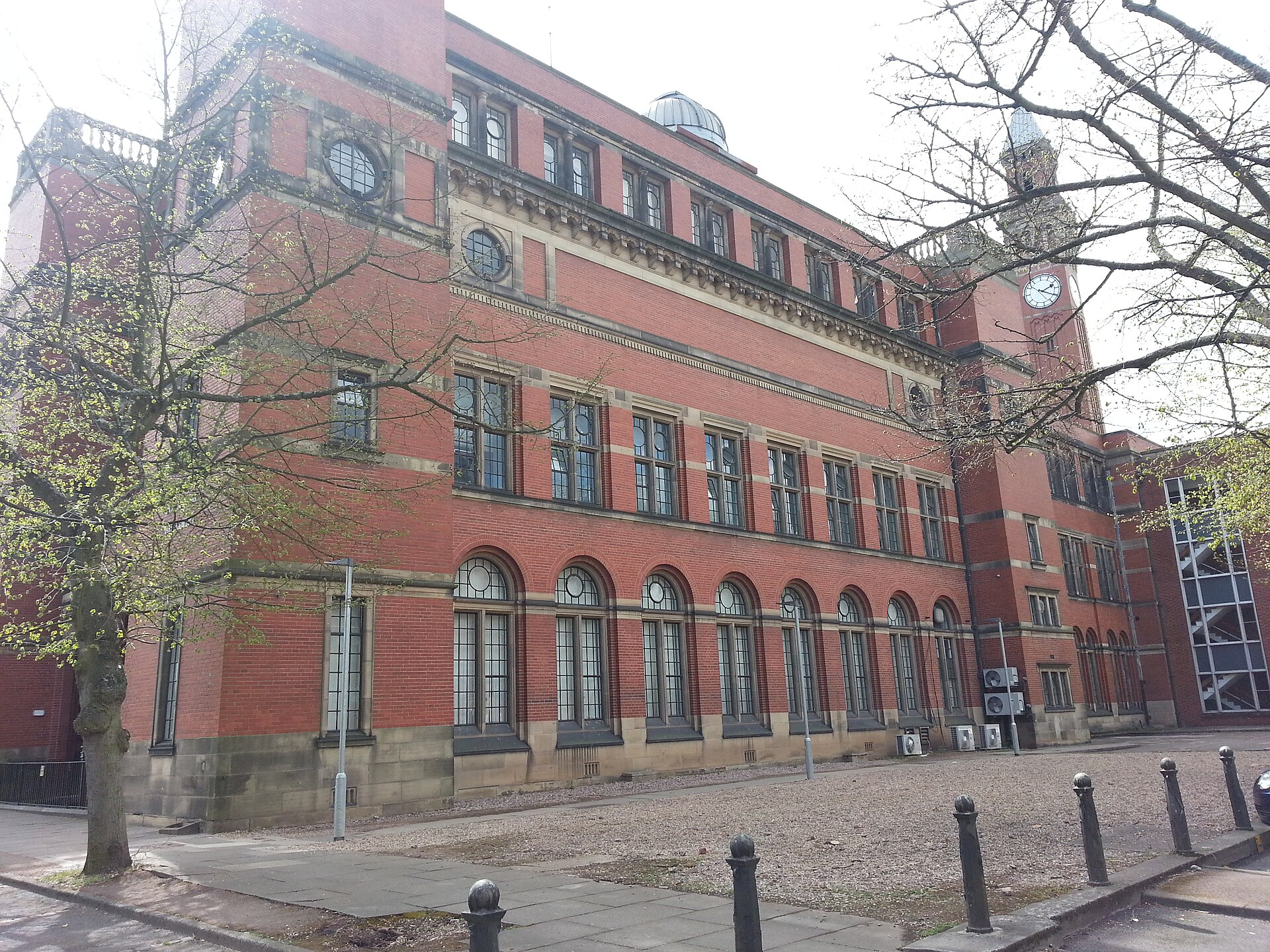
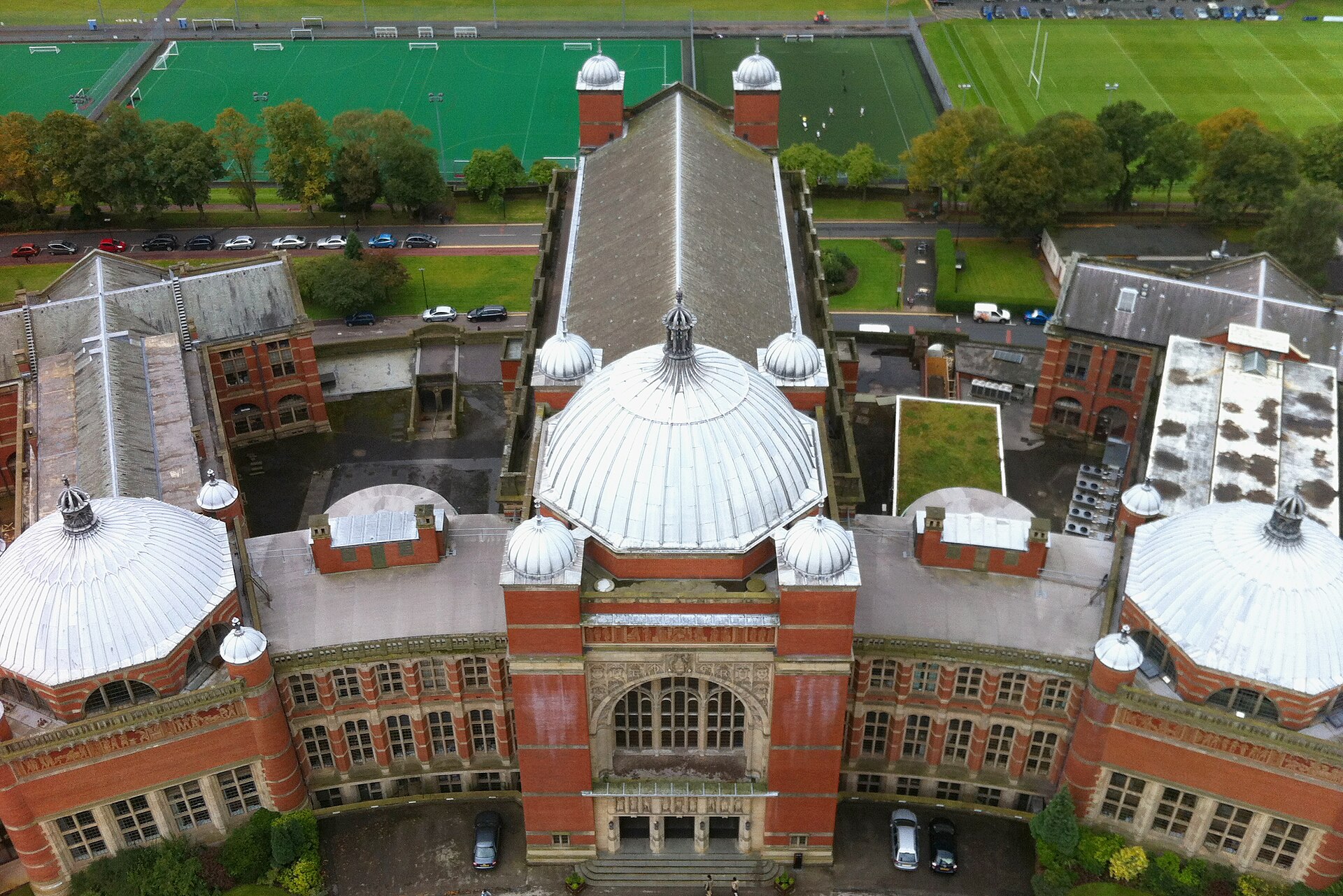
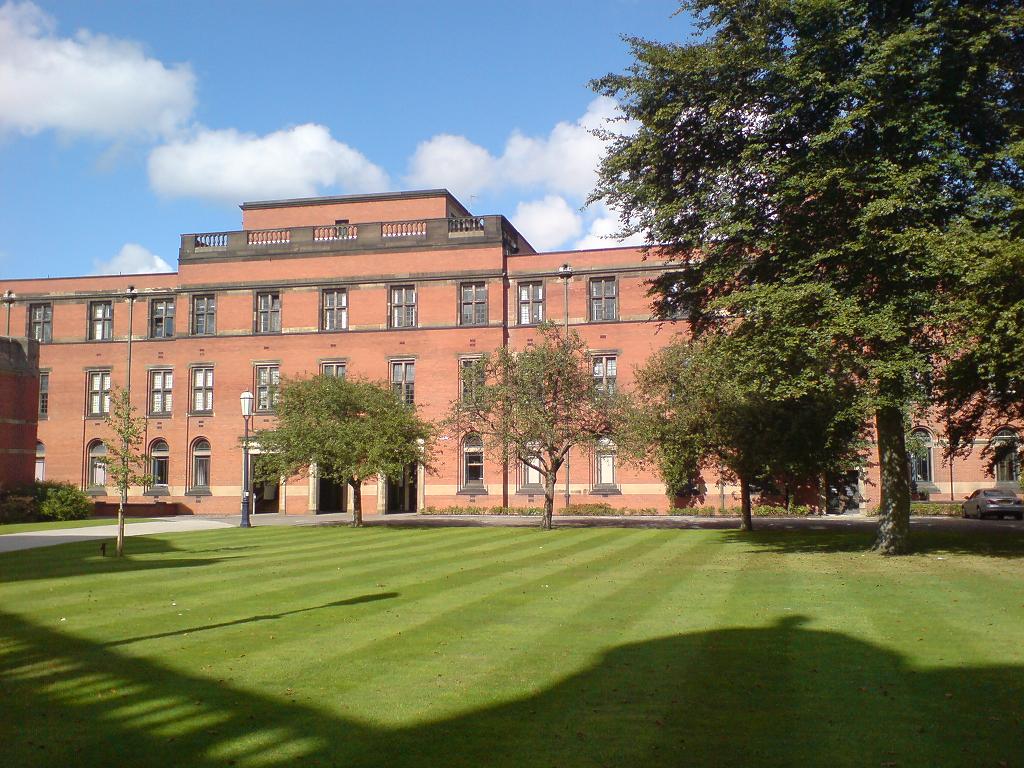
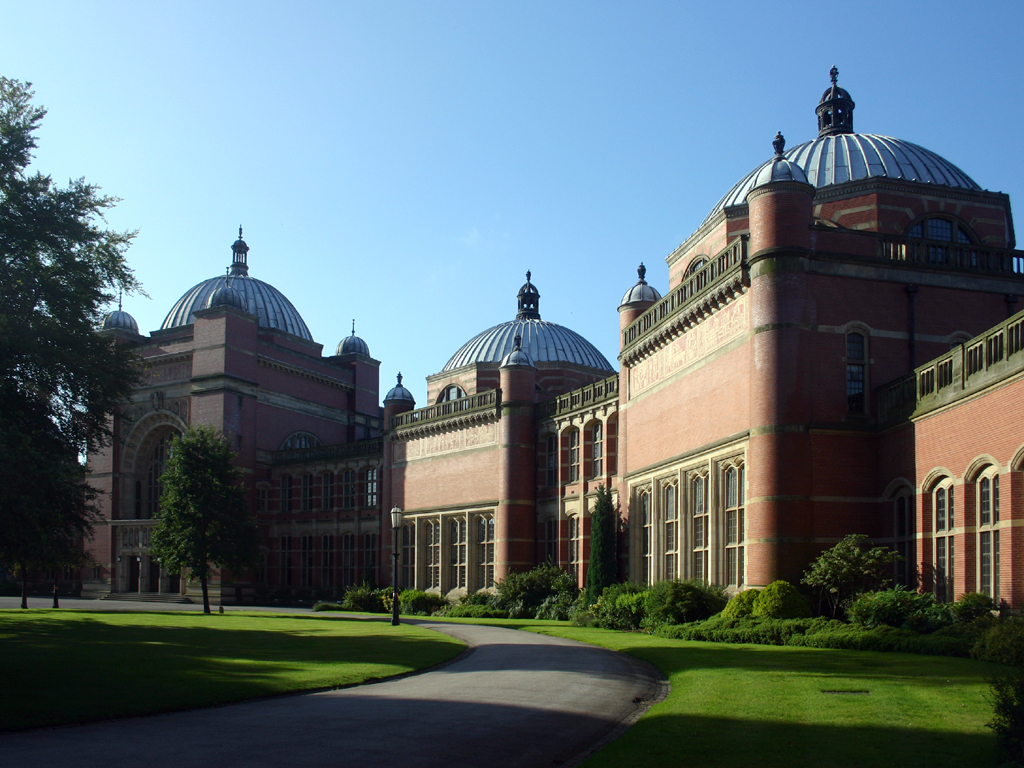
Campus
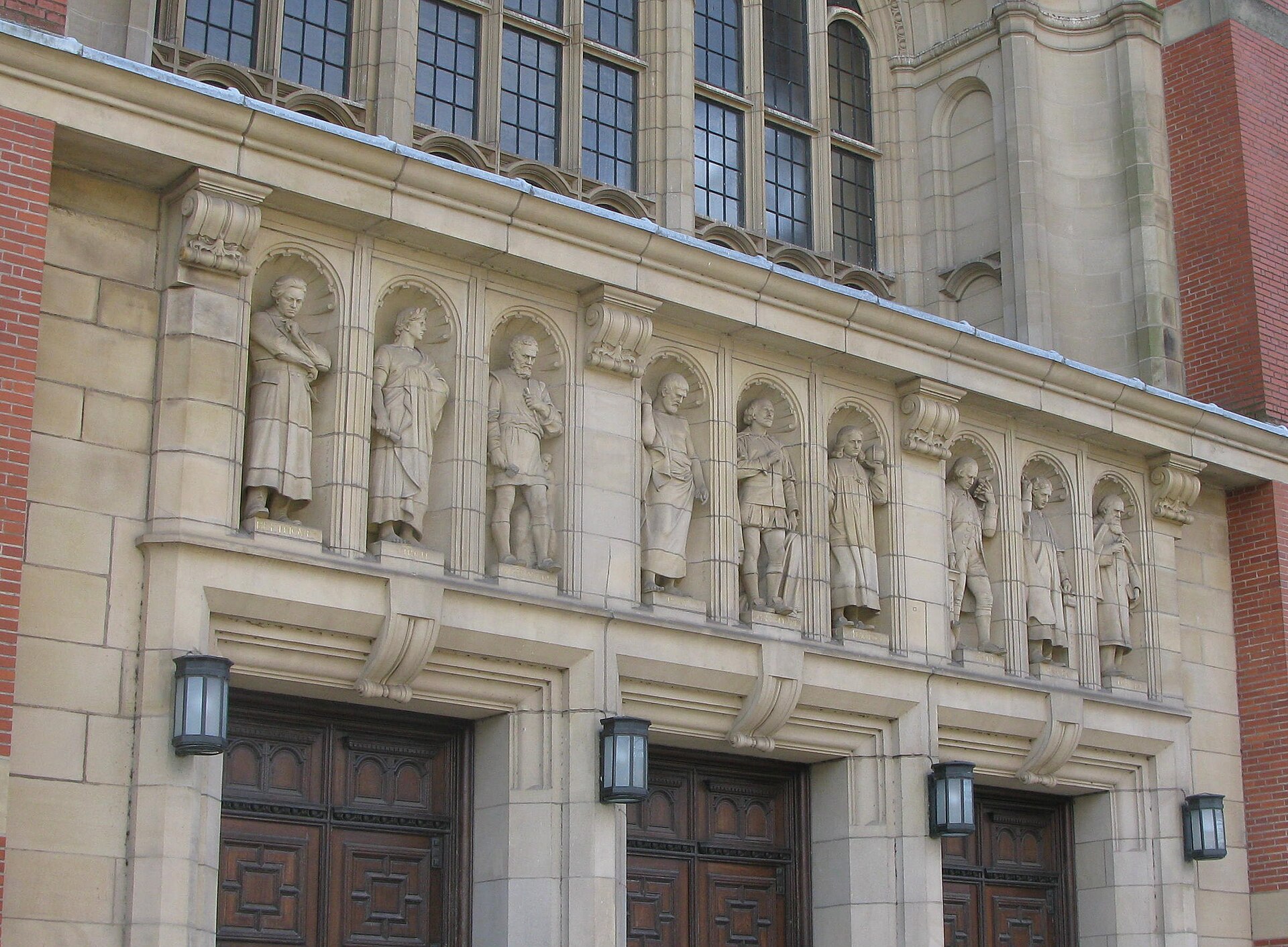
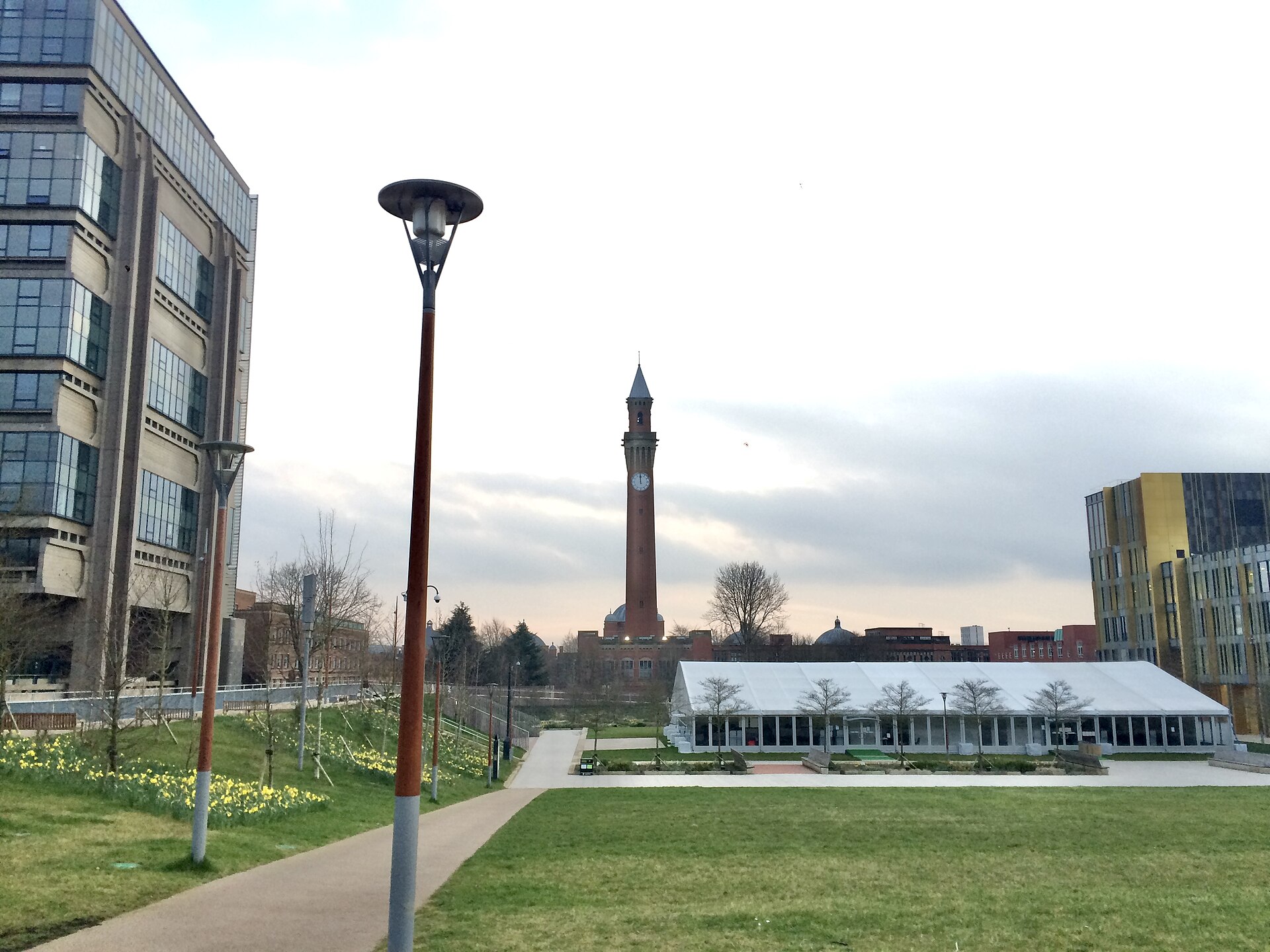
University of Birmingham — campus in pictures
Real, freely-licensed photographs of the campus (via Wikimedia Commons).
Why Birmingham — Russell Group Prestige, Research Power & City Advantage
Birmingham is far more than its rankings suggest. As the university that invented the civic 'redbrick' tradition — embedding research in service to society — it offers a distinctive combination of academic rigour, real-world impact, and city-centre opportunity that few UK universities can match.
SELECTIVITY
How Selective Is Birmingham?
With an acceptance rate of 14%, the University of Birmingham is significantly more selective than most UK universities — a reflection of both its Russell Group standing and the quality of its applicant pool. Competition is particularly fierce for Medicine, Law, Computer Science, and Economics. Understanding what Birmingham's admissions tutors look for is essential to building a compelling application.
Birmingham's 14% acceptance rate places it in the top tier of selective UK universities. Unlike the US system, UK admissions decisions are primarily grade-driven: offers are made on predicted A-Level or IB grades, with offers ranging from A*AA to ABB depending on the programme. Strong GCSE/IGCSE results (particularly in relevant subjects) are also reviewed for competitive programmes. International students should note that many courses have quotas, so applying early in the UCAS cycle and meeting English language requirements promptly is important.
UNIVERSITY AT A GLANCE
Birmingham by the Numbers
APPLICATION COMPONENTS
What Your Birmingham Application Consists Of
All undergraduate applications to the University of Birmingham are submitted through UCAS (Universities and Colleges Admissions Service), the UK's centralised admissions system. There is no separate Birmingham application form — UCAS is the single gateway.
ADMISSIONS PHILOSOPHY
What Birmingham Admissions Tutors Really Look For
As a Russell Group university, Birmingham takes a holistic but academically rigorous approach to admissions. Academic potential is the primary filter, but tutors also look for evidence of genuine intellectual engagement with the subject, relevant extracurricular experience, and a clear sense of why you want to study this particular discipline at Birmingham.
KEY DATES
Application Deadlines & Key Milestones
All applications go through UCAS. Unlike the US, the UK has a single centralised deadline system — not rolling admissions. Missing the January deadline means applying in Clearing, which is high-risk for competitive programmes.
International students whose schools are not UCAS-registered must apply directly through the British Council or UCAS international guidance. Check the official Birmingham admissions page for the most current deadlines before applying.
| Course | Deadline | Notes |
|---|---|---|
| Medicine & Dentistry | 15 October 2025 | Hard UCAS deadline; UCAT required |
| All other undergraduate courses | 14 January 2026 | Guaranteed equal consideration |
| Access to Birmingham (widening access) | 12 February 2026 | Alternative pathway programme |
| UCAS offer response deadline | 3 June 2026 | Firm and insurance choice |
| International accommodation deadline | 31 July 2026 | Accept firm place first |
CAMPUS & CITY
Life at Birmingham
The University of Birmingham offers one of the most complete student experiences in the UK — a stunning campus, a world-class student union, a vibrant city on the doorstep, and a community of 38,000 students from over 150 countries.
The 250-acre Edgbaston campus is anchored by the iconic Chamberlain clock tower and features purpose-built accommodation, a campus lake, and extensive green space — an environment that consistently wins top marks in national student satisfaction surveys. The Guild of Students is one of the UK's oldest and most active student unions, running over 500 clubs and societies and hosting popular weekly events including Sports Night on Wednesdays and Fab 'N' Fresh on Saturdays.
GRADUATE OUTCOMES
Where Birmingham Graduates Go
Birmingham's location in the heart of England's most economically diverse region — and its Russell Group reputation — means graduates are well-positioned across finance, engineering, law, medicine, tech, and the public sector.
Birmingham's Professional Networks service offers employer events, internship fairs, and careers appointments from Year 1. The university has deep partnerships with regional, national, and international employers across engineering, financial services, law, healthcare, and consultancy. The alumni network spans over 160 countries, providing a global community for professional development. Medicine, Engineering, and Business graduates in particular enjoy strong sector connections forged through placement programmes embedded in the curriculum.
FREQUENTLY ASKED QUESTIONS
Birmingham Admissions — FAQs for International Students
Do I need to take the SAT or ACT to apply to Birmingham?+
No. The University of Birmingham does not require or primarily consider SAT or ACT scores. Admissions decisions are based on your A-Level, IB, or equivalent national qualification results (predicted and actual). Standardised US tests are not part of the standard UK admissions process.
Can I apply if I'm studying the IB?+
Yes — IB is fully accepted and well-understood by Birmingham admissions tutors. The minimum overall score is 32 points, with Higher Level grades typically required at 6,6,5 or above. Specific programmes may require particular subjects at HL (e.g., Mathematics for Engineering, Biology/Chemistry for Medicine). Check your chosen course page for precise requirements.
What is the UCAS personal statement like for 2026 entry?+
From 2026 entry onwards, UCAS has changed to a three-question format replacing the traditional free-form essay. You answer: (1) Why do you want to study this subject? (2) What have you done academically to prepare? (3) What extracurricular activities and experiences are relevant? The total character limit is 4,000 characters across all three sections, with a minimum of 350 per section.
Do I need an interview?+
Most courses at Birmingham do not require an interview. Exceptions include Medicine (which requires UCAT and may invite shortlisted candidates to interview), and some Law and Nursing programmes. If an interview is required, you will be notified by the admissions team after your UCAS application is reviewed.
What English language score do I need?+
Requirements vary by subject group. The standard minimum is IELTS 6.5 overall (which the facts file confirms), though some programmes require higher — up to IELTS 7.0 overall with 7.0 in all bands for certain Law and Social Science courses. TOEFL iBT 88, PTE, Cambridge English, and other tests are also accepted. Tests must be taken within two years of your course start date.
Is there financial support available to international students?+
Yes. Birmingham offers a range of regional 'High Fliers' scholarships for international undergraduates, as well as subject-specific and external funding options. Scholarships are competitive and require a separate application — they are not automatically awarded with your offer. See the scholarship page at birmingham.ac.uk for current awards and deadlines.
What is the Birmingham International Academy?+
The Birmingham International Academy offers foundation and pre-sessional programmes for international students who do not yet meet direct entry requirements — either academically or in English language. Successful completion provides a guaranteed pathway into selected undergraduate degrees at Birmingham.
How do I choose between Birmingham and other Russell Group universities?+
Birmingham distinguishes itself through its campus setting (Edgbaston is one of the most beautiful self-contained campuses in the UK), its location in a large, genuinely diverse UK city with low living costs, and particular strength in engineering, medicine, sport science, and business. If a leafy campus, an active student union, and a city with affordable living appeal, Birmingham is often the strongest choice in its tier.
ACADEMIC EXPECTATIONS
Academic Standards at Birmingham for International Students
The University of Birmingham is a research-intensive Russell Group institution. Academic expectations are high, course content is rigorous, and assessment is demanding — particularly at Year 1, which is assessed and carries weight in your final degree classification in most programmes. For international students, understanding what grades, qualifications, and academic preparation will get you in — and how to thrive once you arrive — is the first priority.
Birmingham's academic culture rewards independent thinking, active engagement with primary sources, and going beyond the syllabus. Students are expected to attend lectures and seminars, engage with research-level reading, and produce substantive written work across most disciplines. The tutorial and small-group teaching model that characterises Russell Group universities means you will have regular contact with expert academic staff — but you must come prepared.
GRADE PROFILE
Typical Academic Profile of Admitted Students
Birmingham makes offers based on predicted grades and final results. The ranges below reflect what is typically competitive for entry — not absolute minimums, which vary by programme. Always check individual course pages for precise requirements.
STANDARDISED TESTS
SAT / ACT Policy
The University of Birmingham has an 'optional' policy on US standardised tests. Unlike US universities, Birmingham does not require or primarily evaluate SAT or ACT scores for undergraduate admission. Admissions tutors focus on A-Level, IB, or equivalent national qualifications, supplemented by the UCAS personal statement and academic reference.
International students presenting US high school diplomas or studying at US-curriculum schools can submit SAT/ACT results as supplementary evidence, but they are not the primary basis for an offer. A strong IB Diploma or equivalent national credential is the recommended academic pathway for international students targeting Birmingham.
IB & A-LEVEL
How Birmingham Reads IB, A-Level & International Qualifications
The IB Diploma is fully accepted and well-regarded at Birmingham. Admissions tutors are experienced in reading IB transcripts and understand the rigour of the programme.
SUBJECT PREPARATION
Subject Rigour: What Birmingham Expects
Entry requirements are subject-specific. Here is what to expect in key discipline areas.
ENGLISH LANGUAGE
English Language Requirements
All international students whose first language is not English must demonstrate English proficiency. Requirements vary by subject group — check your specific course page. Tests must have been taken within two years of the course start date.
Some courses (particularly Law and certain Social Science programmes) require IELTS 7.0 overall with 7.0 in all four bands. Always verify on your specific course page.
| Test | Minimum | Notes |
|---|---|---|
| IELTS Academic | 6.5 overall | Minimum 6.0 in each band (standard); up to 7.0 overall for some courses |
| TOEFL iBT | 88 | Minimum section scores vary by course group |
| Duolingo English Test | 120 | Accepted for most programmes; verify on course page |
| PTE Academic | Accepted | Check individual course page for score minimum |
| Cambridge English (CAE/CPE) | Accepted | CAE grade B or above for most courses |
| IB English (SL or HL) | Grade 5 | Satisfies English requirement for many programmes |
PLANNING AHEAD
Building Your Academic Profile: Year-by-Year
PITFALLS TO AVOID
Common Academic Application Mistakes
- Applying without checking the specific subject requirements for your chosen Birmingham course — many programmes require particular HL or A-Level subjects
- Underestimating the competitiveness of Medicine, Law, and Computer Science at Birmingham — these courses are significantly more selective than the overall 14% acceptance rate suggests
- Failing to take the UCAT if applying to Medicine — it is mandatory and cannot be submitted after the application deadline
- Assuming SAT/ACT scores can substitute for IB or A-Level qualifications — they cannot; UK admissions are qualification-based
- Sitting your English language test too early — tests must be within two years of your course start date
- Ignoring GCSEs/IGCSEs when they are included in your UCAS form — competitive programmes do review them, and poor grades in core subjects can affect your offer
- Waiting until January to start your personal statement — the new three-question format requires careful, individual thinking; start in Year 12 summer
FEES & FUNDING
The Real Cost of Birmingham for International Students
The University of Birmingham is a genuine investment — but one with a strong return. International tuition fees are significant, but Birmingham's location in the West Midlands means living costs are substantially lower than London universities offering comparable academic prestige. Understanding the full cost picture — and the scholarships available — is essential before applying.
As a public UK university, Birmingham charges higher fees to international (non-UK) students than to domestic students. Unlike the US, Birmingham does not offer need-blind admissions or large need-based grants to international undergraduates as standard. Scholarships are available but competitive and require a separate application. Plan your finances carefully and apply for scholarships early.
COST BREAKDOWN
Annual Cost Estimate for International Students
All figures are annual estimates. Tuition varies by programme — check your specific course page for the exact fee. Living costs are estimates for the Edgbaston/Birmingham area.
Figures are approximate USD equivalents based on published data and subject to exchange rate fluctuation. All fees are originally quoted in GBP on the official Birmingham website. Verify exact fees on birmingham.ac.uk before applying.
| Item | Cost | Notes |
|---|---|---|
| International tuition (undergraduate) | ~$30,500 / year | USD equivalent; varies by programme |
| University accommodation (on-campus) | Included in CoA | Range of catered and self-catered options |
| Estimated cost of living (Birmingham) | ~$13,000 / year | Food, transport, personal expenses |
| Total estimated Cost of Attendance | ~$45,000 / year | Tuition + living; USD equivalent |
| UCAS application fee | ~$35 | One-time UCAS processing fee (covers up to 5 universities) |
FINANCIAL AID
Financial Aid for International Students
Unlike many large US universities, UK universities including Birmingham do not operate a comprehensive need-based financial aid system for international undergraduates. There are no 'meets full demonstrated need' policies for international students. The primary form of financial support is merit scholarships.
Birmingham does not have a systematic need-based grant programme for international undergraduates — the UK higher education model is fundamentally different from the US one in this respect. Students are expected to have secured funding for their full course before arrival. However, the university does offer a range of competitive scholarships, some of which consider financial circumstances alongside academic merit. External funding from home-country governments, bilateral scholarship programmes, and international organisations (such as Chevening, Commonwealth, and IsDB scholarships) is an important source of support for many Birmingham international students.
NAMED SCHOLARSHIPS
Scholarships Available to International Students
Birmingham offers a range of regional and merit-based scholarships for international undergraduates. These are competitive and require a separate application — they are not automatically awarded with your offer. Deadlines vary by region; check the official scholarship page for current awards.
AFFORDABILITY REALITY
Is Birmingham Affordable for International Students?
Relative to London, Birmingham offers significantly better value. Living costs of approximately $13,000 per year (compared to $18,000–$22,000+ in London) mean that the total Cost of Attendance at Birmingham is lower than at comparably ranked UK universities in the capital — making it one of the most cost-effective Russell Group options.
Birmingham does not offer no-loan policies or meet-full-need guarantees. International students should plan to fund their own studies in full and treat scholarships as a competitive bonus, not a baseline. The university offers instalment payment options for international students — fees can be paid in two or three instalments per academic year, which eases cash-flow management. Students from India, China, Malaysia, and other high-sending countries should explore both the Birmingham High Fliers scholarships and home-country government or bank loan schemes.
HOW TO APPLY FOR FUNDING
Steps to Secure Scholarships and Funding
COST FAQs
Cost & Funding FAQs
What are the current international tuition fees at Birmingham?+
International undergraduate tuition is approximately $30,500 per year (USD equivalent). Exact fees in GBP vary by programme and are listed on each course page at birmingham.ac.uk. Fees increase slightly each year, so check the most current figures for your entry year.
Is Birmingham cheaper to live in than London?+
Significantly so. Estimated annual living costs in Birmingham are approximately $13,000 — compared to $18,000–$22,000+ in London. Accommodation, food, transport, and social activities all cost substantially less in Birmingham, making the total cost of attendance lower than at comparably ranked London universities.
Can I work while studying at Birmingham?+
International students on a Student visa (formerly Tier 4) can typically work up to 20 hours per week during term time and full-time during vacations. Part-time work can help offset living costs. Birmingham's Careers Network can help you find suitable on-campus or local part-time roles.
Are there automatic scholarships for high-achieving international students?+
Some regions do have automatic or competitive scholarship awards linked to high academic achievement, but most require a separate application. There is no universally automatic tuition discount. Review the High Fliers programme on the Birmingham scholarship page for your region.
How does the payment instalment system work?+
Birmingham allows international students to pay fees in two or three instalments per academic year, rather than in one lump sum. This is useful for managing cash flow but does not reduce the total fee. Contact the Finance Office after accepting your offer to arrange instalments.
UCAS PERSONAL STATEMENT
Your UCAS Personal Statement The Gateway to Birmingham
Unlike US universities, the University of Birmingham does not ask you to write supplemental essays specific to the university. All applicants to UK universities write a single personal statement submitted through UCAS — and from 2026 entry onwards, that personal statement follows a new structured, three-question format. Getting this right is one of the most important steps in your application to Birmingham.
The UCAS personal statement is your single opportunity to tell Birmingham's admissions tutors who you are as a student, why you are passionate about this subject, and why you are ready for the demands of a Russell Group degree. Unlike US supplemental essays, you are not asked 'Why Birmingham?' — instead, you are asked to make a compelling academic case for why you deserve a place on your chosen course. This distinction matters: the personal statement must be course-focused, not university-focused.
HOW IT WORKS
The UCAS Application: How It Fits Together
From 2026 entry, UCAS has redesigned the personal statement from a single free-form essay to a structured three-question format. This is the same statement used for all UK universities you apply to — including Birmingham.
THE THREE QUESTIONS
The 2026 UCAS Personal Statement: What You're Asked
These are the three questions in the new UCAS personal statement format, effective for 2026 entry onwards. Each has a minimum of 350 characters and together they total up to 4,000 characters.
WRITING STRATEGY
Writing a Birmingham-Calibre Personal Statement
Birmingham is a Russell Group university: admissions tutors are academics, not marketers. They are looking for a future student who can think analytically, handle complex reading, and contribute to seminars and tutorials. Your personal statement should read like it was written by that student.
For international students in particular: do not assume that a glittering list of extracurriculars (the US model) will win over a Birmingham tutor. Academic seriousness — evidence that you have gone beyond the syllabus to engage with your subject as an intellectual pursuit — is what moves the needle at research-intensive UK universities.
The single most important principle: make every sentence earn its place. UK personal statements are read quickly by busy academics who review hundreds of applications. Vague claims ('I am hardworking and passionate') are invisible. Specific examples ('Reading Kahneman's Thinking, Fast and Slow changed how I thought about economic decision-making, which is why I then explored behavioural economics in my Extended Essay') are memorable and persuasive.
SECTION-BY-SECTION STRATEGY
Maximising Each Section of Your UCAS Statement
WHAT TO WRITE ABOUT
Choosing What to Include
The personal statement is not a life story — it is a focused academic argument for why you are ready for this degree. Every piece of content should serve that argument.
COMMON PITFALLS
Personal Statement Mistakes to Avoid
- Writing a general 'why I love this subject' statement rather than demonstrating analytical engagement — Birmingham tutors can spot the difference immediately
- Starting with a famous quote — it is one of the most commented-on clichés in UK personal statement writing
- Using the personal statement to talk about a different university or course — since the same statement goes to all five UCAS choices, any specific mention of another university is a serious error
- Exaggerating or fabricating work experience, research, or reading — admissions interviews and offer conditions allow tutors to probe claims
- Writing in an overly flowery or essay-literary style — UK academic writing values precision and clarity over elaborate prose
- Leaving the personal statement until December — the January deadline is too close to start from scratch; begin drafting in Year 12 summer
- Treating Section 3 (extracurriculars) as the most important — for most subjects at Birmingham, it is the least important; Section 1 (why this subject) is where the decision is made
- Not asking a teacher or tutor to read the final draft — a fresh pair of eyes spots clichés, repetition, and unclear arguments that you will have missed after many drafts
ESSAY FAQs
Personal Statement FAQs
Do I need to mention the University of Birmingham in my personal statement?+
No — and in fact, you should not. Since the same UCAS personal statement goes to all five universities you apply to, mentioning Birmingham by name (or any other university) would be a serious mistake if that statement is also seen by your other choices. Focus entirely on your subject motivation and academic preparation.
How long should each section of the personal statement be?+
The total character limit is 4,000 with a minimum of 350 per section. Most applicants write approximately 1,200–1,500 characters for Sections 1 and 2, and around 800–1,000 for Section 3. There is no strict rule — let the content determine the length, within the overall limit.
Can I use the same personal statement for multiple courses or universities?+
UCAS allows you to apply to up to five universities using the same personal statement. However, if your five courses span significantly different subjects (e.g., Engineering and Economics), your personal statement faces a near-impossible task of serving both. Most advisers recommend focusing your five choices on a single subject or closely related field.
Will Birmingham ask me to write anything additional after submitting through UCAS?+
For most programmes, no. However, Medicine applicants must submit UCAT scores and may be invited to interview. A small number of other programmes may request portfolios or auditions. Check your specific course page after submitting your UCAS application.
How important is the personal statement compared to predicted grades?+
In the UK system, predicted grades are the primary selection criterion — the personal statement functions to support or differentiate where grades are close to the threshold. A brilliant personal statement will not overcome significantly underperforming predicted grades at a Russell Group university. Get your academic foundations right first, then invest in your statement.
As an international student, should I explain my education system in the personal statement?+
No — that is not the purpose of the personal statement. Birmingham admissions tutors are experienced with international qualifications and do not need Section 1 to explain that IB HL is equivalent to A-Level. Use all 4,000 characters for your intellectual engagement with the subject, not administrative explanation of your curriculum.
Courses — schools, degrees & intake
84 degrees across 24 groupings.
School of History and Cultures (College of Arts and Law) · 5 degrees
History BA
Ancient History BA
Ancient and Medieval History BA
Ancient History and Archaeology BA
Archaeology and History BA
School of English, Drama and American and Canadian Studies (College of Arts and Law) · 5 degrees
English Literature BA
English Literature and Creative Writing BA
English Language and Linguistics BA
Drama and Theatre Arts BA
Film and Creative Writing BA
School of Languages, Cultures, Art History and Music (College of Arts and Law) · 3 degrees
Modern Languages BA
History of Art BA
Music BMus
School of Philosophy, Theology and Religion (College of Arts and Law) · 3 degrees
Philosophy BA
Theology and Religion BA
Liberal Arts BA
Birmingham Law School (College of Arts and Law) · 3 degrees
Law LLB
Law with Criminology LLB
Philosophy, Politics and Law BA
School of Chemical Engineering (College of Engineering and Physical Sciences) · 2 degrees
Chemical Engineering BEng
Chemical Engineering MEng
School of Chemistry (College of Engineering and Physical Sciences) · 2 degrees
Chemistry BSc
Chemistry MSci
School of Computer Science (College of Engineering and Physical Sciences) · 3 degrees
Computer Science BSc
Artificial Intelligence and Computer Science BSc
Artificial Intelligence and Computer Science with Year in Industry BSc
Schools of Civil, Mechanical and Aerospace Engineering (College of Engineering and Physical Sciences) · 6 degrees
Mechanical Engineering BEng
Mechanical Engineering MEng
Aerospace Engineering BEng
Aerospace Engineering MEng
Civil Engineering BEng
Civil Engineering MEng
School of Electronic, Electrical and Systems Engineering (College of Engineering and Physical Sciences) · 2 degrees
Electronic and Electrical Engineering BEng
Electronic and Electrical Engineering MEng
School of Mathematics (College of Engineering and Physical Sciences) · 3 degrees
Mathematics BSc
Mathematics MSci
Mathematics, Statistics and Data Science BSc
School of Metallurgy and Materials (College of Engineering and Physical Sciences) · 2 degrees
Materials Science and Engineering BEng
Materials Science and Engineering MEng
School of Physics and Astronomy (College of Engineering and Physical Sciences) · 4 degrees
Physics BSc
Physics MSci
Physics and Astrophysics BSc
Physics and Astrophysics MSci
School of Biosciences (College of Life and Environmental Sciences) · 6 degrees
Biological Sciences BSc
Biochemistry BSc
Biotechnology BSc
Microbiology BSc
Medical Biochemistry BSc
Human Sciences BSc
School of Geography, Earth and Environmental Sciences (College of Life and Environmental Sciences) · 4 degrees
Geography BA
Geography BSc
Geology BSc
Environmental Change and Sustainability BSc
School of Psychology (College of Life and Environmental Sciences) · 2 degrees
Psychology BSc
Human Neuroscience BSc
School of Sport, Exercise and Rehabilitation Sciences (College of Life and Environmental Sciences) · 4 degrees
Sport, PE and Coaching Science BSc
Sport Sciences with Business BSc
Physiotherapy MSci
Applied Golf Management Studies BSc
Birmingham Medical School (College of Medicine and Health) · 2 degrees
Medicine and Surgery MBChB
Biomedical Sciences BSc
School of Dentistry (College of Medicine and Health) · 2 degrees
Dental Surgery BDS
Dental Hygiene and Therapy BSc
School of Nursing and Midwifery (College of Medicine and Health) · 3 degrees
Nursing BNurs (Adult)
Nursing BNurs (Mental Health)
Midwifery BSc
Birmingham Business School (College of Social Sciences) · 6 degrees
Accounting and Finance BSc
Business Management BSc
International Business BSc
Economics BA
Money, Banking and Finance BSc
Marketing BSc
School of Government (College of Social Sciences) · 5 degrees
Politics BA
International Relations BA
Politics and International Relations BA
Politics, Philosophy and Economics BA
International Development and Politics BA
School of Education (College of Social Sciences) · 2 degrees
Education BA
Psychology in Education BSc
School of Social Policy, Sociology and Criminology (College of Social Sciences) · 5 degrees
Sociology BA
Criminology BA
Social Policy BA
Social Work BA
Sociology and Criminology BA
Want your real chances at University of Birmingham?
Create a free TYCHR account for your personalised admit-chance, a shortlist you can track, exact entry requirements, and essay + counselling help.