University of Bath
Bath, United Kingdom · Suburban
TOP 10 UK UNIVERSITY
University of Bath Admissions Guide for International Students
Perched on a hillside above one of England's most beautiful UNESCO World Heritage cities, the University of Bath is the UK's destination for students who want elite academic rigour alongside the country's most powerful employment outcomes. With 90% of graduates in work or further study within fifteen months and a placement year program that is the envy of UK higher education, Bath transforms ambitious international students into globally competitive professionals.
Bath is not a large research-only institution or a sprawling metropolitan university. It is a focused, campus-based university of 20,000 students — consistently ranked in the UK's top ten — where undergraduates are known by name, teaching quality is nationally gold-rated, and the combination of academic depth and practical experience has made Bath graduates among the most sought-after in the United Kingdom.
Campus
University of Bath — campus in pictures
Real, freely-licensed photographs of the campus (via Wikimedia Commons).
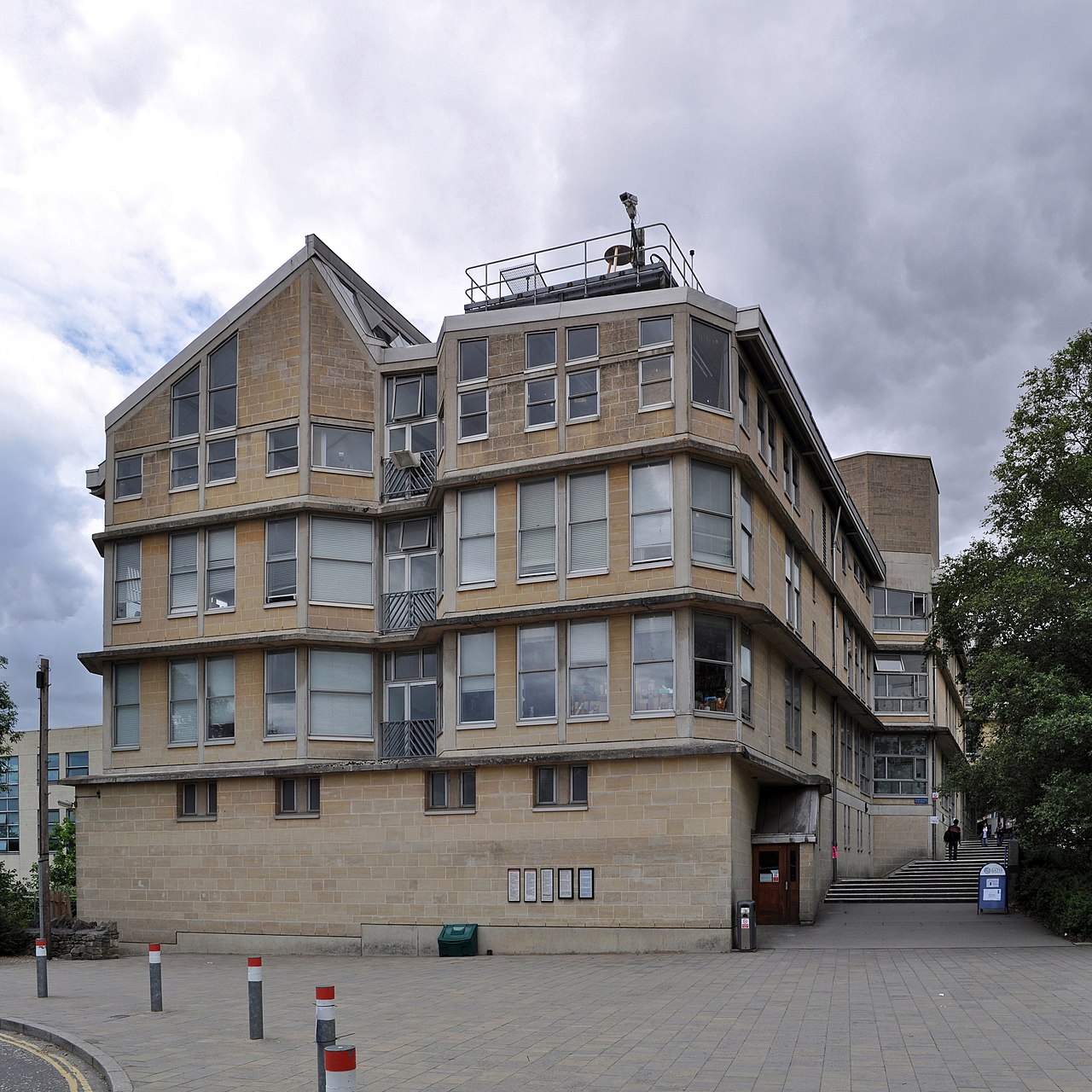
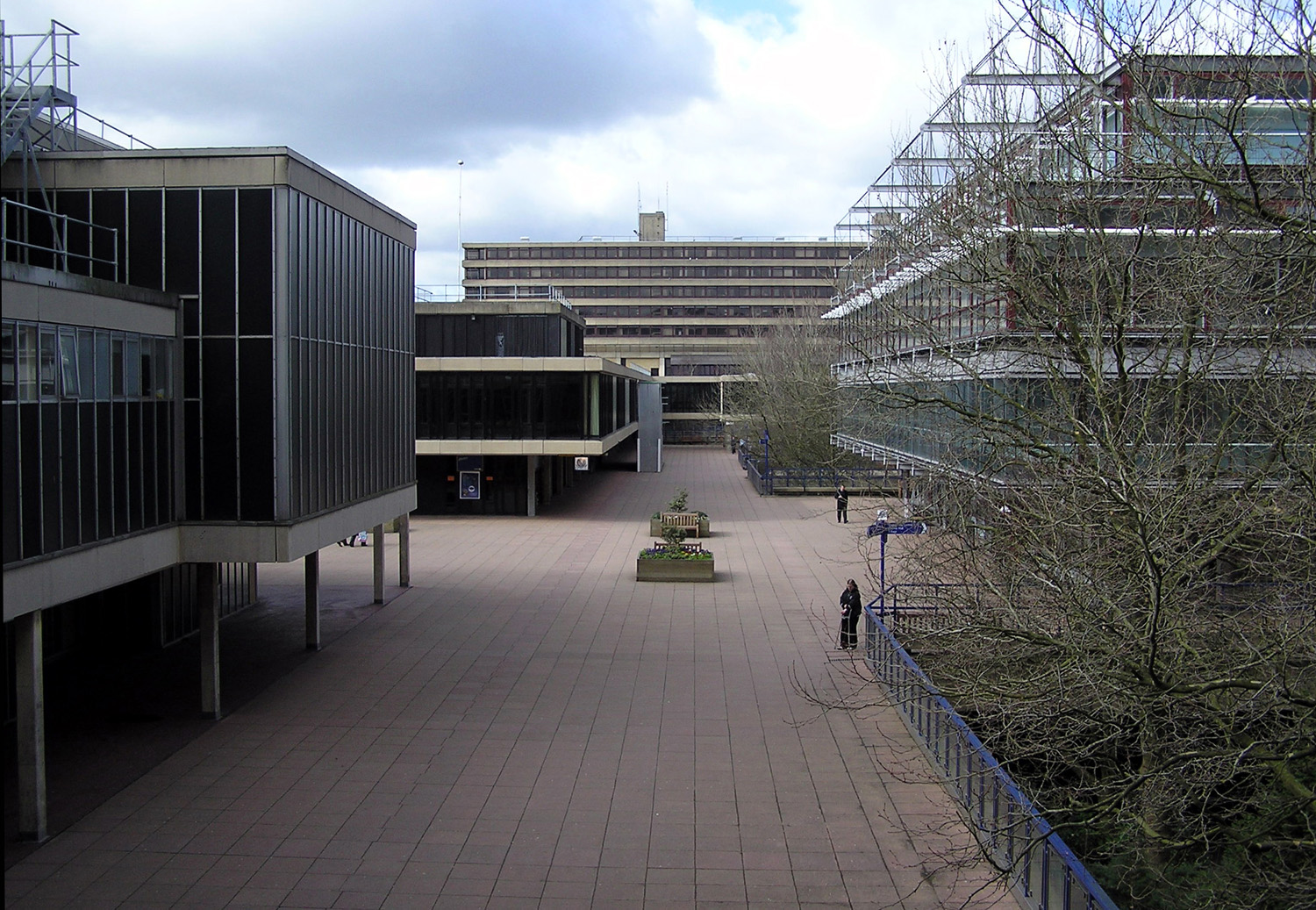
Why Choose Bath — Outcomes, Excellence & Character
Bath's identity rests on a distinctive combination: elite academic standards, unparalleled placement year infrastructure, and a genuinely beautiful, safe campus city. Here is what makes it different from any other top-ten UK university.
SELECTIVITY
How Selective Is Bath?
With a 14% overall acceptance rate, the University of Bath is significantly more selective than most UK universities. Competition for the most sought-after programmes — Management, Computer Science, and Chemical Engineering — is especially intense. Bath makes conditional offers based on predicted grades, so your A-Level or IB trajectory matters enormously.
Bath makes conditional offers primarily based on A-Level grades or IB Diploma scores. International students are assessed on their predicted grades at the time of application, not on a holistic points system. For IB students, a total score of 36 represents the general benchmark, but competitive programmes (Management, Computer Science) often require higher — verify current offers on individual course pages. The 14% acceptance rate reflects the aggregate; some courses are far more competitive.
QUICK FACTS
University of Bath at a Glance
Bath is a mid-sized, campus-based public university in the South West of England. It sits on Claverton Down, a suburban hillside setting above the city of Bath, with most faculties, student accommodation, and sports facilities within walking distance of each other. Its relatively compact size — compared with the Russell Group's largest institutions — means a tighter community and easier navigation, but with a genuine research university's academic depth.
WHAT YOU SUBMIT
Components of a Bath Application
International undergraduate applicants to UK universities apply through UCAS (the Universities and Colleges Admissions Service), not directly to Bath. Your UCAS application is a single document that goes to up to five universities simultaneously.
ADMISSIONS PHILOSOPHY
What Bath Really Looks For
Bath is academically focused and course-specific in its admissions. It is not a holistic US-style process — grades and predicted performance are the primary gate. But within applicants who meet the academic threshold, the personal statement and reference allow Bath to distinguish genuinely engaged students from those applying by default.
Bath explicitly states that most successful applicants have no relevant work experience, particularly in technical disciplines. What matters far more is your demonstrated enthusiasm for and understanding of the subject you are applying to study. Bath's admissions guidance notes that reflective engagement with your experiences — not the volume of activities — is what distinguishes a strong personal statement.
UCAS DEADLINES
Application Deadlines
Bath does not set its own application deadlines — UCAS sets universal deadlines that apply to all UK universities. For most Bath programmes, the standard January UCAS deadline applies. There is no Early Decision or Early Action system in the UK.
UCAS deadlines listed below are standard cycle dates. Confirm the exact dates for your entry year at ucas.com before applying, as they shift slightly year to year.
| Round | Deadline | Notes |
|---|---|---|
| Standard UCAS Deadline | Late January (verify at ucas.com) | Applies to most Bath undergraduate programmes |
| Oxford / Cambridge / Medicine | 15 October | Does not apply to Bath courses |
| UCAS Extra | February – July | For applicants who did not receive any offers |
| UCAS Clearing | July – September | Some Bath places released after A-Level results (August) |
CAMPUS & CITY
Life at Bath — Campus, City & Culture
Bath's compact hillside campus and its setting above one of England's most liveable cities make it a distinctive experience for international students. You are simultaneously in a genuine university campus environment and minutes from a historic, walkable, culturally rich city.
The campus has over 25 residential facilities, ranging from modern city-centre apartments (Aquila Court, Centurion House, Eveleigh Waterside) to quieter campus options like Osborne House (designated quiet accommodation) and family accommodation at Cotswold House. First-year international students are strongly advised to apply for on-campus accommodation early, as guaranteed places are limited.
GRADUATE OUTCOMES
Where Bath Graduates Go
Bath's 90% employment or further study rate within 15 months is one of the strongest in the UK. This is not accidental — it is the direct product of a 50-year institutional commitment to the sandwich placement year and deep employer relationships across engineering, finance, technology, and management.
Bath's School of Management and Engineering departments have established relationships with firms including Rolls-Royce, Dyson, PwC, Deloitte, KPMG, Goldman Sachs, IBM, and hundreds of others who specifically recruit Bath placement students and graduates. For international students, Bath's careers service offers dedicated support on UK work visa pathways, international career planning, and graduate scheme applications.
Stats
Cards
FREQUENTLY ASKED
FAQs for International Applicants
Can I apply to Bath without going through UCAS?+
No. All UK undergraduate applications, including from international students, must be submitted through UCAS. There is no separate Bath application portal for undergraduate entry.
Does Bath interview undergraduate applicants?+
Most Bath undergraduate programmes do not require interviews. However, some courses may conduct interviews or ask for portfolio submissions — check the individual course page for your chosen programme.
Can I do the placement year as an international student?+
Yes. International students on Bath's sandwich programmes are eligible for the placement year. You will need a valid UK visa that covers your placement period — the university's Student Immigration Service can advise on this.
Is the IB accepted, and what score do I need?+
Yes, Bath accepts the IB Diploma. The general benchmark in the facts file is 36 points, but individual course requirements vary. For example, Engineering and Management programmes may require higher totals and specific Higher Level subject requirements. Check the specific course page.
Does Bath offer any financial aid or scholarships for international undergraduates?+
Bath offers some scholarships and bursaries for international undergraduate students. Check the university's official scholarships page — the availability and amounts vary by year and programme. External funding sources (government scholarships in your home country, Chevening, Commonwealth) are also worth investigating.
Is Bath in a rural area? Is it hard to get to from London?+
Bath has excellent transport links. Direct trains connect Bath Spa station to London Paddington in approximately 90 minutes and to Bristol Temple Meads in about 15 minutes. The city is walkable and the campus is served by local bus routes.
What is the campus like for first-year international students?+
Bath's hillside campus is compact and community-oriented — very different from sprawling urban universities. Most first-year students live on or very close to campus. The International Support Service, international community events, and pre-arrival orientation programs help new arrivals settle quickly.
How does Bath compare to Russell Group universities?+
Bath is not a Russell Group member but consistently outranks many Russell Group institutions in graduate employability, teaching quality (TEF Triple Gold), and student satisfaction. It is sometimes described as the leading 'post-92 exempt' or 'plate glass' university, but functionally competes with and beats many traditional Russell Group universities on outcomes metrics.
ACADEMIC EXPECTATIONS
Academic Standards at Bath What International Students Need to Know
Bath is a highly selective UK university that makes conditional offers based on your predicted or actual grades. The academic bar is high, the curriculum is rigorous, and the placement year demands intellectual readiness to apply your learning in professional contexts from your third year. Here is how to build the profile Bath is looking for.
For international students, Bath's admissions process centres on translated academic credentials and predicted grade reports. Unlike the US system, there is no holistic points rubric that trades grades for extracurriculars. Grades are the gate. Once through, your personal statement and reference tell the story of your intellectual engagement.
ACADEMIC PROFILE
Target Academic Profile
These benchmarks are drawn from the facts file. Individual course requirements vary — always check the specific course page for the most accurate current entry requirements.
For IB students, 36 points overall is a general benchmark — but this does not mean every course accepts 36. Competitive programmes in Management, Computer Science, and Engineering typically require higher totals plus specific Higher Level subject grades. Always read the individual course requirements carefully, as offers are conditional and course-specific.
TEST POLICY
Standardised Tests — Optional
Bath's test policy is listed as 'optional' in the facts file. The UK university system does not require SAT or ACT scores — these are US-specific standardised tests. Bath does not factor them into UK undergraduate admissions.
International students from countries where the national qualification differs from A-Levels or IB (for example, students presenting US high school transcripts, Indian CBSE/ISC boards, or other national qualifications) should consult Bath's country-specific admissions guidance. Bath provides information on equivalencies for students from the USA, India, China, Taiwan, and Thailand, among others. If your country is not listed, Bath's admissions team can advise on how your qualification will be assessed.
SAT / ACT
SAT, ACT, and the UK System
The SAT and ACT are not part of UCAS or Bath's standard undergraduate admissions criteria. However, they may be useful context for students presenting US qualifications.
If you are an international student from the United States applying with an American high school diploma, Bath's admissions team will review your GPA, course rigour (including AP or IB courses taken), and SAT/ACT scores as part of a holistic view of your American qualification. In the UK system, the SAT and ACT do not have formal equivalencies to A-Level grades, but a strong score can corroborate your academic ability when the school transcript is the primary document. Contact Bath's international admissions team to understand exactly how US qualifications are assessed for your chosen course.
SAT/ACT bands are not published for Bath admissions because the UK system does not use these tests as a primary criterion. There are no published SAT/ACT middle-50% bands for Bath's entering class.
IB & A-LEVEL
IB Diploma, A-Levels, and AP
Bath accepts and is experienced with the IB Diploma, A-Levels, and Advanced Placement courses. The IB is increasingly popular among Bath's international applicants and is well understood by the admissions team.
SUBJECT READINESS
Subject Preparation — What Bath Expects
Bath's programmes are academically rigorous and often require specific subject foundations. Here is what to target across key discipline areas.
ENGLISH LANGUAGE
English Language Requirements
International applicants whose first language is not English must demonstrate English proficiency. Bath accepts multiple test formats. The figures below are from the facts file — individual courses may have higher requirements.
If you do not yet meet the English language requirements, Bath's International Study Centre (operated by Study Group) offers Pre-sessional English (PSE) courses that are designed to bridge your current level to Bath's entry requirements. Successful completion of a PSE course is accepted as evidence of English language proficiency.
| Test | Minimum Overall | Notes |
|---|---|---|
| IELTS Academic | 6.5 | With no component below the course minimum (typically 6.0) |
| TOEFL iBT | 90 | Check individual course pages for component minimums |
| Duolingo English Test | 120 | Accepted; verify on current course pages as policy can change |
| Cambridge English | B2 / C1 level | CAE/CPE accepted — check Bath's official list for current accepted tests |
YEAR-BY-YEAR PLAN
Building Your Bath Application — Year by Year
The UK UCAS system is grade-first and moves faster than the US cycle. Here is a practical ladder for international students targeting Bath.
COMMON PITFALLS
Academic Mistakes to Avoid
- Underestimating how course-specific Bath's entry requirements are — check each programme's required subjects, not just the overall IB or A-Level minimum.
- Assuming that a strong IB total compensates for missing a required Higher Level subject — it typically does not in the UK system.
- Waiting until Year 13 to start thinking about personal statement content — your intellectual engagement with the subject should be built over years, not written from nothing in October.
- Applying with a generic personal statement that could apply to any university or course — Bath's admissions team notices and is unimpressed by statements that fail to show specific subject enthusiasm.
- Ignoring English language requirements until late in the process — if you need pre-sessional English, the course timeline means you must plan a full year in advance.
- Assuming grades are all that matter and neglecting the personal statement entirely — within the strong-grades pool, a weak statement can cost you an offer.
- Misunderstanding UCAS choices — you should not apply to Bath and four universities that are all your 'reach' — include an insurance choice where your predicted grades comfortably exceed the offer.
- Not verifying whether your international qualification equivalency is accepted before applying — check Bath's country-specific page or contact admissions directly.
FEES & FUNDING
Cost of Studying at Bath An Honest Guide for International Students
The University of Bath is a high-quality UK institution with international tuition fees that reflect its premium standing. Understanding the full cost picture — and the scholarships, funding routes, and earning potential of the placement year — is essential before committing to a Bath application.
The figures below are drawn from the facts file and represent annual estimates in USD. Actual fees are set in GBP and will vary with exchange rates. The placement year offers a significant financial offset: sandwich year students earn a salary during their placement, which can materially reduce the total cost of a four-year programme.
ANNUAL COST ESTIMATE
Cost Breakdown (Annual, International Students)
All figures below are derived from the facts file and represent approximate USD equivalents. Actual amounts are set in GBP — verify current fee schedules on Bath's official website. These are estimated annual costs.
A standard Bath undergraduate programme is three years for a BSc or four years for an integrated MEng or MSci (or three years plus a placement year for sandwich programmes). Total programme cost for a four-year sandwich degree will be approximately four times the annual figure, offset partially by the placement year salary.
| Component | Estimated Usd | Notes |
|---|---|---|
| International Tuition (annual) | $40,640 | Overseas student fee; varies by programme |
| Cost of Living (annual) | $15,000 | Accommodation, food, transport, personal expenses |
| Total Cost of Attendance (annual) | $56,000 | Tuition + living; verify against current GBP rates |
| Application Fee | $36 | UCAS application fee (paid to UCAS, not Bath) |
FINANCIAL AID
Financial Aid for International Students
The University of Bath does not operate a US-style need-blind or need-aware financial aid programme that guarantees funding for international undergraduates. International students are not eligible for UK government student loans (which are reserved for home/EU-settled students). Aid for international students comes primarily through scholarships.
The most common route to funding for international Bath students is merit-based scholarships offered by Bath itself, government scholarships from your home country, or external funding bodies. The UK government's Chevening Scholarship (postgraduate) is not applicable to undergraduates, but home-country government scholarship programmes — particularly for students from India, Southeast Asia, and Africa — do fund UK undergraduate study. Contact your country's ministry of education or education abroad office to identify national funding schemes that cover UK universities.
SCHOLARSHIPS
Scholarships Available for International Students
Bath offers scholarships and bursaries for international undergraduate and postgraduate students. The specific named scholarships, award amounts, and eligibility criteria change annually. The information below reflects what is publicly available — always verify current offerings on Bath's official scholarships page.
REALITY CHECK
The Real Cost Picture — and the Placement Year Offset
At approximately $56,000 per year all-in, Bath is priced similarly to a mid-tier US private university for international students. However, the cost structure is fundamentally different in two key ways.
First, a standard Bath undergraduate degree is three years (not four), which means the total programme cost is lower than a four-year US equivalent. Second, students on a sandwich (placement year) programme spend their third year working in industry — earning a salary rather than paying tuition. Placement year salaries vary by industry but can be meaningful: many Bath placement students earn enough during their placement year to cover a significant portion of their following year's costs. This makes the four-year sandwich programme potentially more affordable in net terms than it first appears.
HOW TO FUND YOUR DEGREE
Steps to Secure Funding as an International Student
COST FAQs
Cost & Aid — Frequently Asked Questions
Is Bath cheaper than other top-10 UK universities?+
Bath's international tuition fees are broadly comparable to other leading UK universities. The key differentiator is not the sticker price but the four-year sandwich programme structure, where you earn a salary in Year 3 and gain an extra year of experience without an extra year of tuition.
Can I work part-time as an international student to help with costs?+
Students on the UK Student Route visa are typically permitted to work up to 20 hours per week during term time and full-time during vacation periods. This can help offset living costs. The university Careers Service can assist with finding legitimate part-time work.
Does Bath have need-blind admissions for international students?+
No. Like virtually all UK universities, Bath does not operate need-blind admissions for international students. Your financial circumstances do not affect the admissions decision, but there is no guarantee of funding.
Are fees listed in GBP or USD?+
Bath's fees are set in GBP. The figures in this guide are USD approximations from the facts file. Always check the official Bath fees page for current GBP amounts and use a current exchange rate for your planning.
Do placement year students pay tuition in their placement year?+
Placement year students typically pay a reduced fee (significantly lower than standard tuition) during their placement year. This is a further financial benefit of the sandwich structure — verify the current placement year fee on Bath's website.
Are there departmental scholarships at Bath?+
Some Bath departments offer their own awards for high-performing or exceptional students. These are not always advertised centrally — it is worth contacting your department directly after receiving an offer to ask whether any departmental funding is available.
UCAS PERSONAL STATEMENT
The UCAS Personal Statement Bath's Essay and Application Writing Guide
Unlike US universities, Bath does not require supplemental essays or short-answer questions. The only written statement you submit is the UCAS Personal Statement — a single document shared with all five of your UCAS choices simultaneously. From 2026 entry, this statement has a new three-question format. Getting it right for Bath means showing genuine, specific subject enthusiasm to admissions tutors who read thousands of statements each year.
The UCAS personal statement is not a US-style common application essay about personal growth. It is primarily a subject statement — a piece of writing that demonstrates you understand your chosen course, have engaged with the subject intellectually, and are ready for degree-level study. Bath's guidance is explicit: subject knowledge and genuine enthusiasm matter far more than extracurricular activities or a compelling life story.
APPLICATION SYSTEM
How UK Applications Work — UCAS
International undergraduate applicants to Bath use the UCAS (Universities and Colleges Admissions Service) system. This is a centralised UK application portal where you apply to up to five courses at different universities simultaneously.
THE THREE QUESTIONS
The New UCAS Personal Statement — Three Questions
From 2026 entry, the UCAS personal statement is structured around three specific questions. These replace the previous single free-text format. The questions below reflect Bath's published guidance and UCAS's 2026 format.
STRATEGY
Crafting a Strong Bath Personal Statement
The biggest mistake international applicants make when writing for UK universities (including Bath) is applying US essay logic to the UCAS format. The personal statement is not about you as a person — it is about you as a student of your subject.
Bath's admissions guidance is unusually direct: they seek evidence of 'enthusiasm, understanding and preparation' for the subject. They explicitly note that most successful applicants have no relevant work experience, and that extracurricular activities should be included only if you can show how they demonstrate transferable skills or subject-relevant learning. This is not a document to tell your life story or demonstrate global citizenship. It is a document to convince an admissions tutor that you are ready and motivated to study a specific discipline at degree level.
NO SUPPLEMENTS NEEDED
There Are No Bath-Specific Supplements
Unlike US universities, Bath does not ask for additional written materials beyond the UCAS personal statement. There are no 'Why Bath?' essays, additional short answers, or university-specific writing requirements at the undergraduate level.
This means your preparation effort should be concentrated entirely on the three UCAS personal statement questions — writing, refining, and ensuring the statement reads authentically and with genuine intellectual engagement. Because the same statement goes to all five UCAS choices, write it around your subject rather than a specific university. You can, however, briefly mention specific Bath features (such as the placement year programme) if they are genuinely part of why you are interested in studying your subject at university — but this is optional and should not dominate any section.
Some postgraduate programmes at Bath do require personal statements, statements of purpose, or research proposals submitted through Bath's direct online application portal. This essay tab focuses on undergraduate UCAS applications.
WHAT TO WRITE ABOUT
Choosing Your Content — What Works at Bath
Given Bath's subject-centred admissions philosophy, the most effective personal statement content is intellectual and specific to your discipline. Here is a guide to what to include and what to avoid.
WHAT NOT TO DO
Common Personal Statement Mistakes for UK Applications
- Writing a US-style personal narrative focused on personal growth, challenge, and character — this is not what Bath or UCAS want in a subject statement.
- Opening with a famous quote — Bath's guidance explicitly warns against this as a cliché.
- Spending too much space on Question 3 (extracurriculars) at the expense of Question 1 (subject motivation) — for Bath, the subject enthusiasm question is the most important.
- Writing vaguely about 'always loving' a subject without showing what that love has led you to read, explore, or investigate.
- Fabricating or exaggerating experiences — Bath warns that you may face interview questions based on your statement, and inconsistency will undermine your application.
- Failing to tailor content to your specific course — applying for Engineering but describing your passion for economics without connecting it to systems thinking, for example.
- Using the personal statement to explain grade dips or gaps in academic history — this is better handled by your academic reference or in extenuating circumstances notes.
- Exceeding the character limit or submitting below the per-question minimum — both create a poor impression and indicate poor attention to detail.
- Copying or AI-generating the statement — UCAS uses AI detection tools. An inauthentic statement will also fail under interview scrutiny. Authenticity is not optional.
ESSAY FAQs
Personal Statement — Frequently Asked Questions
Does Bath read the personal statement carefully, or is it just a formality?+
Bath's admissions guidance confirms that admissions staff read every personal statement. It is not a formality. Within the pool of applicants who meet the academic threshold, the personal statement is the key differentiating document.
Should I mention Bath by name in my personal statement?+
Caution is needed here. Because the same statement goes to all five UCAS choices simultaneously, mentioning Bath by name means the same text is sent to your other four choices. You can reference Bath-specific features (such as the placement year) if they are relevant to why you want this type of programme — but keep it general enough that it also makes sense to your other choices, or omit the university name.
How long should the personal statement be?+
Each of the three questions requires a minimum of 350 characters. The total statement has a maximum of 4,000 characters (not words — characters, including spaces). Aim to use close to the full character limit, distributing most of it across Questions 1 and 2.
Can I include my IB predicted grades or achievements in the personal statement?+
Your grades and predicted performance are submitted separately through UCAS (by your school). You do not need to repeat them in the statement. Use the character limit for substantive content about your subject engagement, not information already visible in other parts of the form.
Does Bath interview applicants based on the personal statement?+
Most Bath undergraduate programmes do not use interviews as part of the standard admissions process. However, Bath's guidance notes that if you are invited to interview, your personal statement may form the basis of questions. Everything in your statement should be truthful and something you can discuss in depth.
Is the new three-question format more or less difficult than the old single essay?+
Many applicants find the new format easier because it provides explicit structure and removes the anxiety of a completely open-ended essay. The three questions are clear: motivation, academic preparation, and relevant experience. The challenge is using the limited character count efficiently across all three.
Can I get my personal statement reviewed before submitting?+
Yes — and you should. Your school counsellor, IB coordinator, or an independent admissions adviser can review your statement for content, clarity, and tone. Bath also publishes guidance online on what they look for. TYCHR's counsellors specialise in UK university personal statement preparation.
Courses — schools, degrees & intake
86 degrees across 18 groupings.
Faculty of Engineering & Design — Architecture & Civil Engineering · 6 degrees
Architecture BSc
Architecture MArch
Civil Engineering BEng
Civil Engineering MEng
Structural and Architectural Engineering BEng
Structural and Architectural Engineering MEng
Faculty of Engineering & Design — Chemical Engineering · 3 degrees
Chemical Engineering BEng
Chemical Engineering MEng
Chemical Engineering with Environmental Engineering MEng
Faculty of Engineering & Design — Electronic & Electrical Engineering · 8 degrees
Computer Systems Engineering BEng
Computer Systems Engineering MEng
Electrical and Electronic Engineering BEng
Electrical and Electronic Engineering MEng
Electronic Engineering with Space Science and Technology BEng
Electronic Engineering with Space Science and Technology MEng
Integrated Mechanical and Electrical Engineering BEng
Integrated Mechanical and Electrical Engineering MEng
Faculty of Engineering & Design — Mechanical Engineering · 7 degrees
Aerospace Engineering BEng
Aerospace Engineering MEng
Integrated Design Engineering BEng
Mechanical Engineering BEng
Mechanical Engineering MEng
Mechanical Engineering with Manufacturing and Management BEng
Mechanical with Automotive Engineering BEng
Faculty of Engineering & Design — Robotics Engineering · 2 degrees
Robotics Engineering BEng
Robotics Engineering MEng
Faculty of Humanities & Social Sciences — Economics · 4 degrees
Economics BSc
Economics and Mathematics BSc
Economics with Politics BSc
International Development with Economics BSc
Faculty of Humanities & Social Sciences — Psychology · 1 degrees
Psychology BSc
Faculty of Humanities & Social Sciences — Social & Policy Sciences · 6 degrees
Criminology BSc
Social Policy BSc
Social Sciences BSc
Sociology BSc
Sociology and Social Policy BSc
Social Work and Applied Social Studies BSc
Faculty of Humanities & Social Sciences — Politics, Languages & International Studies · 4 degrees
Politics and International Relations BSc
Politics with Economics BSc
International Politics and Modern Languages BA
Modern Languages BA
Faculty of Humanities & Social Sciences — Education & Health · 5 degrees
Education with Psychology BA
Health and Exercise Science BSc
Sport and Exercise Science BSc
Sport and Exercise Science MSci
Sport Management and Coaching BSc
Faculty of Science — Biosciences · 6 degrees
Biology BSc
Biology MBiol
Biochemistry BSc
Biochemistry MBiochem
Biomedical Sciences BSc
Biomedical Sciences MBiomed
Faculty of Science — Chemistry · 5 degrees
Chemistry BSc
Chemistry MChem
Chemistry for Drug Discovery BSc
Chemistry for Drug Discovery MChem
Chemistry with Management BSc
Faculty of Science — Computer Science · 4 degrees
Computer Science BSc
Computer Science MComp
Computer Science and Artificial Intelligence BSc
Computer Science and Mathematics BSc
Faculty of Science — Mathematical Sciences · 4 degrees
Mathematics BSc
Mathematics MMath
Mathematics and Statistics BSc
Mathematics, Statistics and Data Science BSc
Faculty of Science — Natural Sciences · 2 degrees
Natural Sciences BSc
Natural Sciences MSci
Faculty of Science — Pharmacy & Pharmacology · 3 degrees
MPharm Pharmacy
Pharmacology BSc
Pharmacology MPharmacol
Faculty of Science — Physics · 6 degrees
Physics BSc
Physics MPhys
Physics with Astrophysics BSc
Physics with Theoretical Physics BSc
Mathematics and Physics BSc
Mathematics and Physics MSci
School of Management · 10 degrees
Management BSc
Management with Marketing BSc
Business BSc
International Management BSc
International Management and Modern Languages (French) BSc
International Management and Modern Languages (German) BSc
International Management and Modern Languages (Spanish) BSc
Accounting and Finance BSc
Accounting and Management BSc
Finance BSc
Want your real chances at University of Bath?
Create a free TYCHR account for your personalised admit-chance, a shortlist you can track, exact entry requirements, and essay + counselling help.