University of Basel
Basel, Switzerland · Urban
SWITZERLAND'S OLDEST UNIVERSITY
University of Basel — Where 560 Years of Scholarship Meet Cutting-Edge Science
Founded in 1460, the University of Basel is Switzerland's oldest university and one of Europe's most storied institutions. Situated in Basel — a city at the convergence of Switzerland, Germany, and France — it offers international students a rare combination: world-class life sciences research anchored by the legendary Biozentrum, one of Europe's leading molecular biology institutes, alongside a vibrant humanities tradition stretching back to Erasmus himself. With a QS World Ranking of 130 and a Times Higher Education rank of 95, Basel punches well above its size, making it an exceptional choice for ambitious students who want rigorous academics without the price tag of an American or UK institution.
Campus
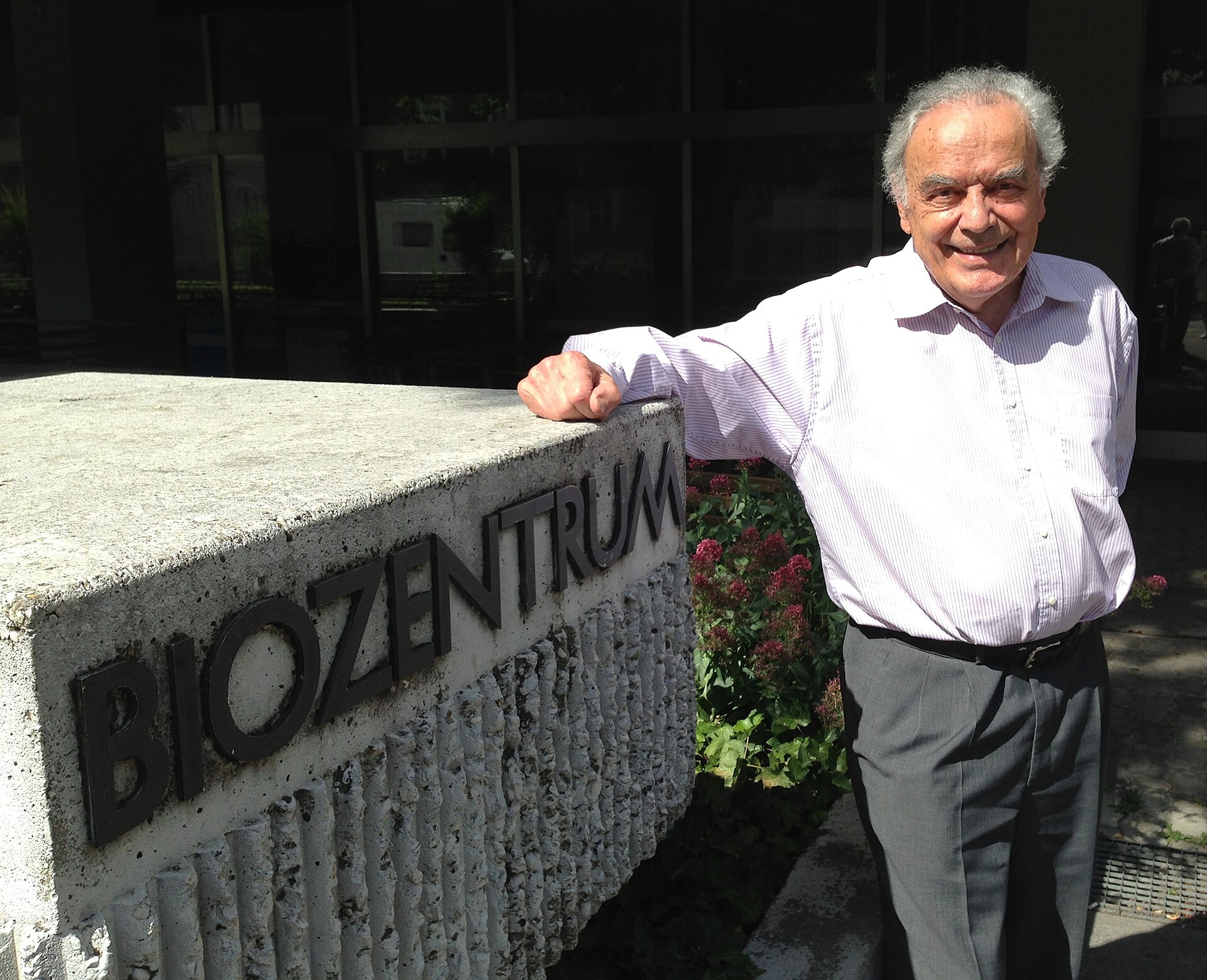
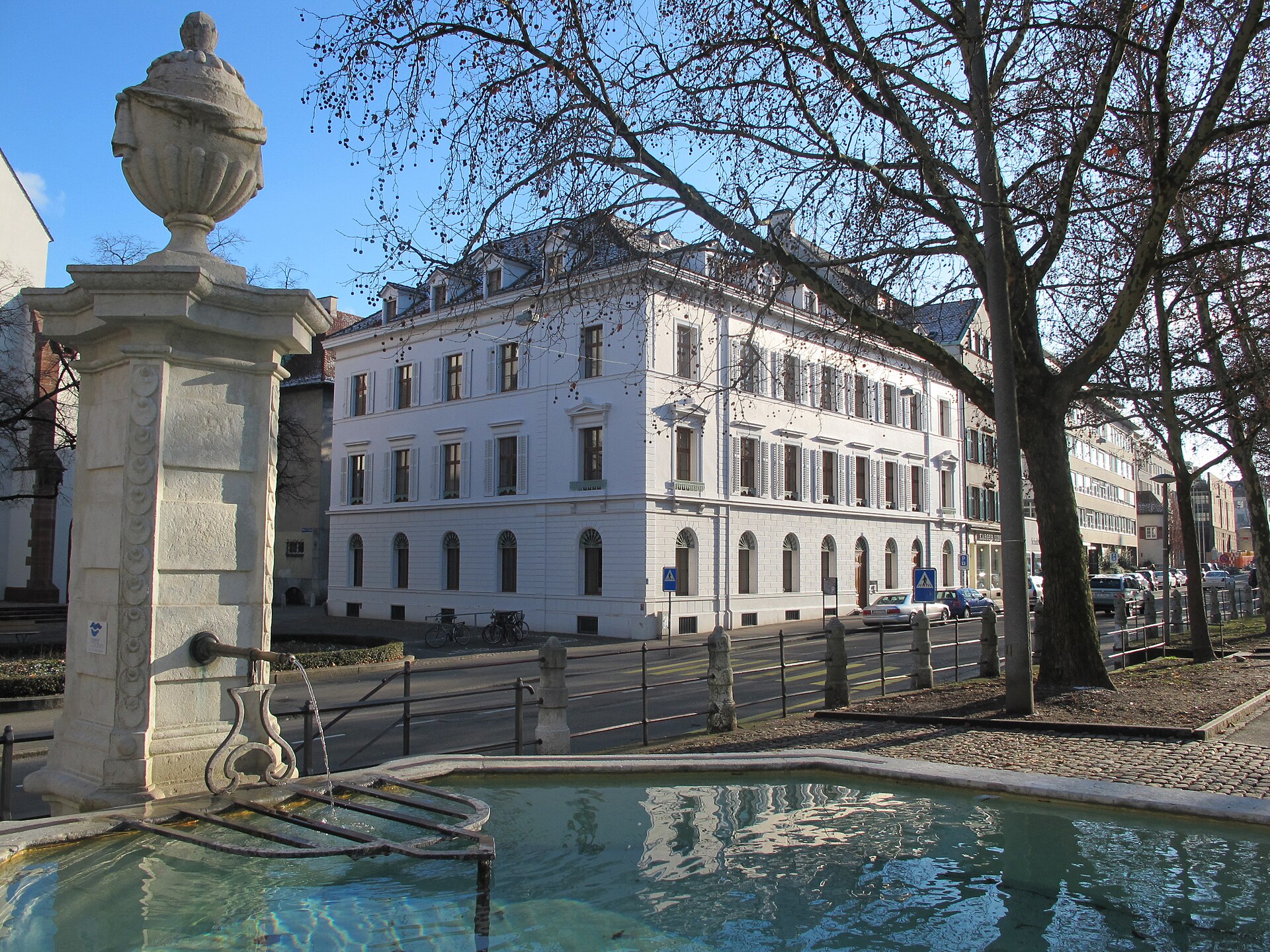
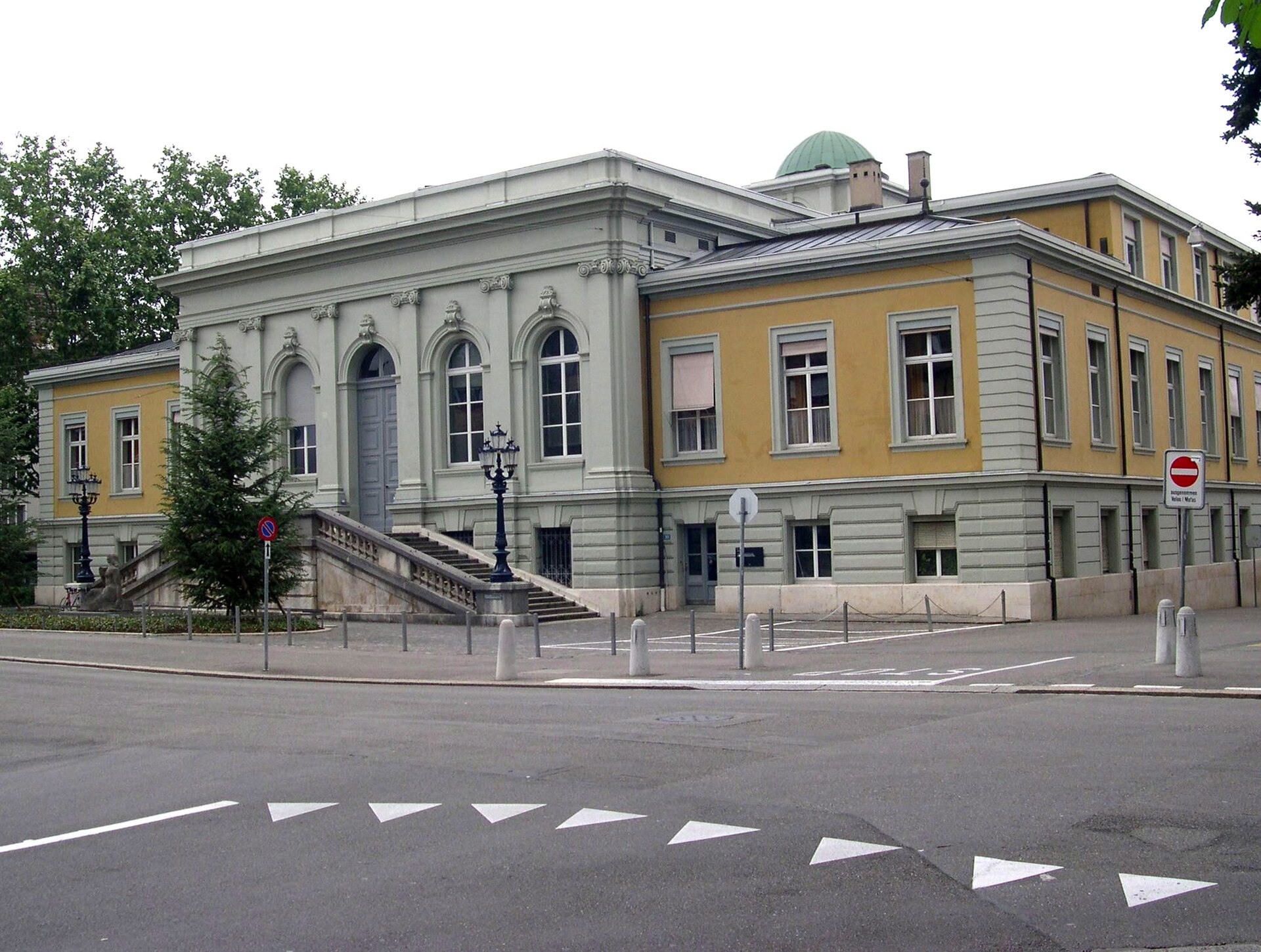
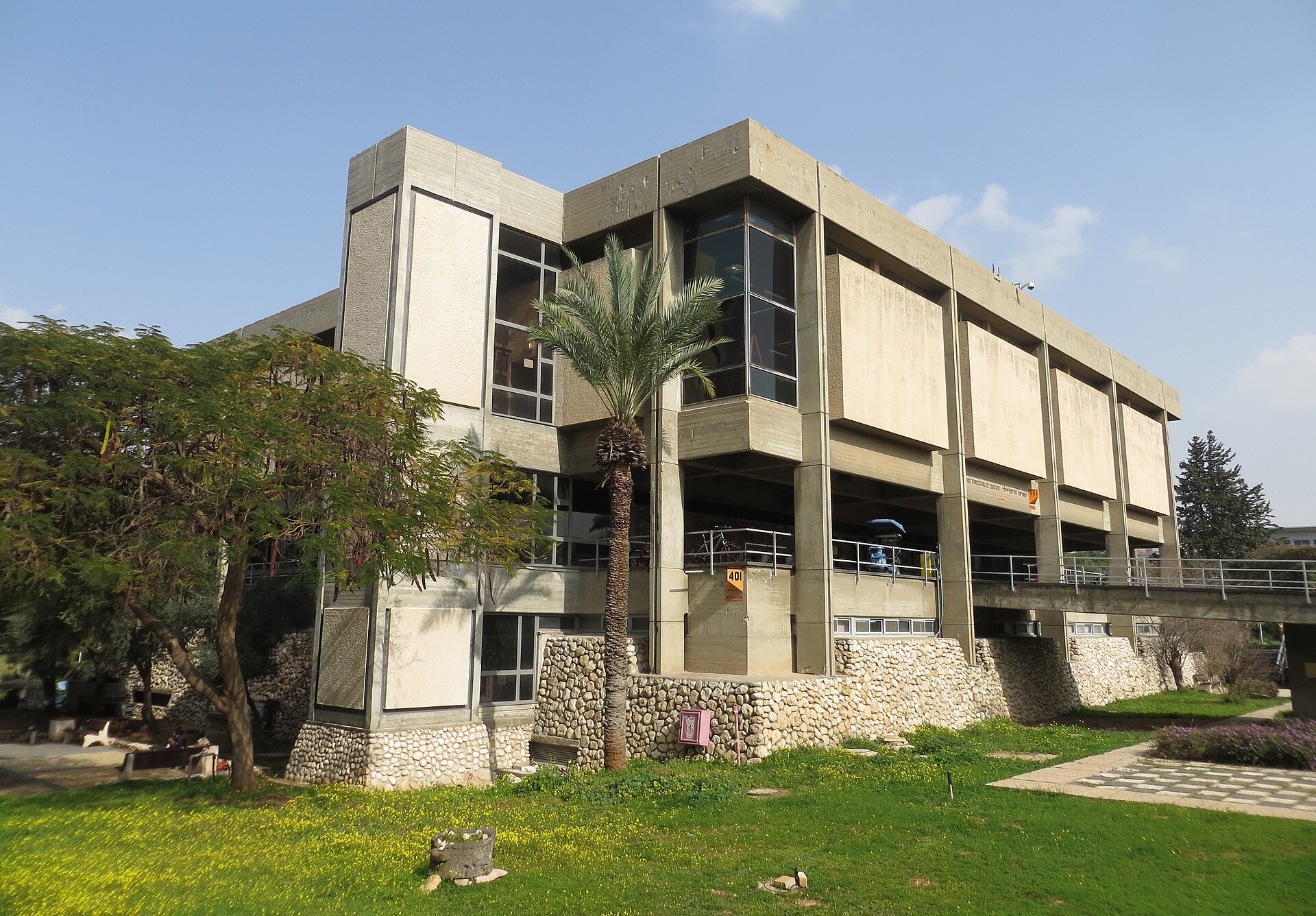
University of Basel — campus in pictures
Real, freely-licensed photographs of the campus (via Wikimedia Commons).
WHY BASEL
Five Reasons to Choose University of Basel
Beyond the prestige of a top-100 global university lies a place of genuine intellectual distinction — where Nobel laureates have studied, Erasmus lectured, and where Novartis and Roche grew from local labs into global pharmaceutical giants. Here is why Basel belongs at the top of your Swiss shortlist.
SELECTIVITY
Acceptance Rate and Admissions Profile
The University of Basel is selectively accessible: with an overall acceptance rate of approximately 25%, it is more competitive than many European public universities but less opaque than top US or UK institutions. Most undergraduate programmes admit on the basis of a recognised secondary school leaving certificate; highly impacted programmes — particularly Medicine and Dentistry — operate a numerus clausus (NC) that makes them significantly more selective. IB candidates targeting these fields should aim above the 34-point band indicated in official data.
For Medicine, the numerus clausus applies: places are limited and allocated by academic merit. Non-Swiss applicants holding an IB diploma should check the current NC threshold with the admissions office before applying, as cut-offs are recalculated each cycle.
QUICK FACTS
University of Basel at a Glance
HOW TO APPLY
What Your Application Consists Of
The University of Basel uses a direct application system — there is no centralised portal equivalent to UCAS or Common App. You apply directly to the university via its online portal. Admission is primarily academic-qualification-based; there are no US-style holistic reviews with extracurricular essays. The core components are your academic qualifications, a recognition check of your foreign certificate, and — for some programmes — a motivation letter.
ADMISSION PROFILE
The Profile Basel Admits
Unlike US universities with holistic review, University of Basel makes most undergraduate admission decisions primarily on the basis of your academic qualifications. However, the quality of your academic record, the rigour of your subjects, and how well your certificate matches Swiss Matura equivalency standards are crucial. For graduate programmes, research fit and academic preparation are assessed more qualitatively.
DEADLINES
Application Deadlines and Key Dates
The University of Basel operates on a semester system with Autumn (September) and Spring (February/March) intake. Application deadlines vary by programme and study level. The information below reflects the general structure — always verify exact dates on the official deadlines page as they are refreshed each cycle.
Always verify current deadlines directly at unibas.ch/en/Studies/Before-My-Studies/Dates-Events/Deadlines. Deadline information above is qualitative — exact dates shift each year and must be confirmed on the official site.
| Intake | Level Bachelor | Level Master | Notes |
|---|---|---|---|
| Autumn Semester (September) | Approx. late April / early May | Varies by programme — typically April–June | Main intake; most programmes open |
| Spring Semester (February) | Approx. late November | Varies by programme; not all offer spring intake | Limited programmes; check availability |
STUDENT LIFE
Living and Studying in Basel
Basel is a mid-sized city of around 180,000 people that feels intimate despite punching far above its weight culturally and scientifically. The campus weaves through the medieval Altstadt (old town) on the banks of the Rhine, with river swimming in summer a beloved local tradition.
CAREER OUTCOMES
What Happens After You Graduate
Basel's location in the global pharmaceutical and life sciences capital translates directly into graduate outcomes. The university's employment rate is 88%, with an average starting salary of approximately USD 70,000 — strong by global standards and exceptional given the low tuition invested.
Life sciences, pharmaceutical sciences, and chemistry graduates benefit from direct pipelines into Novartis, Roche, and their combined ecosystem of partner companies and biotech spin-outs — many based within cycling distance of the campus. Basel is also home to major private banking and financial services operations, supporting strong graduate placement in economics and business. The humanities tradition feeds into Basel's robust cultural sector, international organisations (Basel hosts the Bank for International Settlements), and law firms with cross-border German-French-Swiss practices. Doctoral graduates from the Biozentrum are sought after by leading research universities and biotech companies worldwide.
FAQS
Frequently Asked Questions
Do I need to speak German to study at the University of Basel?+
For most bachelor's programmes: yes, C1-level German is required, as instruction is in German. However, many master's programmes are taught in English — particularly in life sciences, nanosciences, and business. Always check the language of instruction listed on the individual programme page before applying.
Is the IB Diploma accepted for admission?+
Yes. The International Baccalaureate Diploma is well-recognised in Switzerland. Swissuniversities has established equivalency for IB diplomas; a score of 34 or above aligns with the competitive benchmark for most programmes. Medicine and other NC-restricted programmes may require higher scores depending on the cycle.
How does the Swiss numerus clausus (NC) work?+
Certain highly impacted programmes — principally Medicine, Dentistry, and Veterinary Medicine — are subject to a numerus clausus: the number of first-year places is capped, and admission is based on a competitive ranking of academic results. The NC threshold is recalculated each cycle. Non-Swiss applicants compete in a separate quota.
How affordable is studying at Basel really?+
Tuition is exceptionally low — approximately USD 2,150 per year — because it is a Swiss public university. The main cost is living in Basel, a relatively expensive city. Total estimated cost of attendance is around USD 30,000 per year (including accommodation, food, transport, and insurance). This is substantially lower than comparable-quality institutions in the US or UK.
Can I work while studying in Switzerland?+
Non-EU/EFTA students holding a valid Swiss student residence permit (type B) are generally permitted to work up to 15 hours per week during term time without a separate work permit. This can partially offset living costs. EU/EFTA nationals may work more freely. Always confirm the current rules with the International Office.
What is the Eucor network and how does it benefit me?+
Eucor — The European Campus is a consortium of five universities: Basel, Freiburg (Germany), Karlsruhe (Germany), Mulhouse (France), and Strasbourg (France). As a Basel student you can take courses at any of the other four institutions, access their libraries, and have those credits recognised. It effectively gives you a five-university campus spanning three countries.
Is there financial aid for international students?+
Switzerland's low tuition already makes a significant difference. Swiss government excellence scholarships exist for postgraduate applicants, as do some faculty-level and external grants. There is no large-scale need-based grant programme equivalent to US financial aid for international undergraduates. Most support is merit-based at master's and doctoral level.
When should I start preparing my application?+
At least 6–9 months before your intended intake. The certificate recognition process through swissuniversities adds time beyond the university application itself. If your German language skills are not yet at C1, factor in language study time. For English-taught master's, confirm programme-specific deadlines, as some close as early as four months before semester start.
ACADEMIC EXPECTATIONS
Academic Standards at University of Basel
University of Basel is a research-intensive institution where undergraduate and postgraduate students are expected to engage with primary literature, seminars, and lab work from early in their studies. The academic culture is rigorous, independent, and oriented toward producing original thought rather than consuming instruction. International students who thrive here are self-directed learners who are ready for the Socratic seminar and the laboratory bench — often simultaneously.
ENTRY BENCHMARKS
Academic Profile for Competitive Admission
Admission at Basel is qualification-led. The following benchmarks reflect the publicly indicated thresholds and established competitive standards. Note that SAT/ACT scores are not part of the Swiss admission system and are therefore not evaluated.
The University of Basel does not use SAT or ACT scores in its admission process. These are irrelevant for Swiss university applications. Your secondary school leaving certificate and its grade profile are what matters.
TEST POLICY
Standardised Tests — Not Required
The University of Basel does not require or consider SAT or ACT scores at any level of study. This is standard for European and Swiss universities. Admission is based on your secondary school leaving certificate (Matura, IB Diploma, A-Levels, or national equivalent) and its grade profile. The only 'tests' that matter are: (1) language proficiency tests (IELTS/TOEFL for English-taught programmes; DSH/TestDaF/Goethe-Zertifikat C1 for German-taught programmes), and (2) for Medicine specifically, the potential numerus clausus cut-off.
IB & A-LEVELS
How IB and A-Levels Are Assessed in Switzerland
Switzerland has a well-established process for recognising foreign school-leaving qualifications via swissuniversities, the national organisation that sets and enforces equivalency standards.
LANGUAGE OF INSTRUCTION
German vs. English Taught Programmes
Understanding the language of instruction split is critical for planning your application. Most bachelor's degrees at Basel are taught in German; a significant number of master's programmes are available in English. Verify the language of instruction on each individual programme page.
LANGUAGE REQUIREMENTS
English and German Proficiency Tests
Language requirements depend on the programme's language of instruction. Below are the thresholds applicable to English-taught programmes; German-taught programmes have separate German-language requirements.
Some programmes waive language requirements if your previous degree or secondary education was conducted entirely in the relevant language. Always confirm with the admissions office for your specific programme.
| Test | Minimum | Notes |
|---|---|---|
| IELTS Academic | 7.0 | Most widely accepted; required for English-taught programmes |
| TOEFL iBT | 100 | Also widely accepted for English-taught master's programmes |
| Duolingo English Test | Verify with programme | Not confirmed as accepted; check individual programme |
| Goethe-Zertifikat C1 / DSH / TestDaF | C1 (or DSH-2 / TDN 4) | Required for German-taught programmes for non-native speakers |
YEAR-BY-YEAR GUIDE
Building Your Profile for Basel Admission
ACADEMIC PREPARATION
Subject Preparation by Programme Area
PITFALLS TO AVOID
Common Academic Application Mistakes
Items
- Applying to a German-taught bachelor's without C1-level German. The university will not enrol you without the language certificate — this is a firm requirement, not a soft suggestion.
- Leaving certificate recognition too late. Swissuniversities assessment takes time; start the process in the autumn of your final school year, not the week before the application deadline.
- Assuming SAT/ACT scores will help your application. They are not evaluated and do not substitute for a recognised secondary certificate.
- Ignoring the numerus clausus for Medicine or Dentistry. The NC threshold is competitive and shifts each cycle. Research the previous year's cut-off and do not assume your IB score is automatically sufficient.
- Underestimating living costs. Tuition at USD 2,150 is excellent value, but Basel's cost of living is high. Budget carefully for accommodation, health insurance, food, transport, and social expenses.
- Not verifying the language of instruction of a specific master's programme. 'University of Basel offers English programmes' is true but incomplete — each programme must be checked individually.
- Failing to get health insurance sorted before arrival. Switzerland requires all residents (including students on a student permit) to hold Swiss health insurance (Krankenkasse). This must be arranged within three months of arrival and is a legal requirement.
Faqs
Can I apply to Basel in English even if the programme is in German?+
You can submit your application documents in English or German, but you will need to demonstrate C1 German proficiency before enrolment in a German-taught programme. An English-language application does not exempt you from the language requirement.
Are there English-taught bachelor's programmes?+
Very few bachelor's programmes at Basel are taught entirely in English. Most English-medium instruction is at master's level. If you do not have C1 German and want a bachelor's degree, consider English-taught master's pathways at Basel after completing a bachelor's elsewhere, or look at programmes that offer a bilingual track.
COST AND VALUE
One of Europe's Best-Value Research Universities
University of Basel charges some of the lowest tuition fees of any top-100 global university. At approximately USD 2,150 per year, the cost of instruction is a fraction of what similar-quality universities in the UK, US, Australia, or even some EU countries charge. The significant cost for international students is Basel's cost of living — a prosperous Swiss city with Swiss prices. However, given the graduate salary premiums commanded in Basel's pharma and finance sectors, the return on investment is exceptionally strong.
COST BREAKDOWN
Annual Cost Estimates for International Students
All figures are annual estimates in USD equivalents. Swiss franc (CHF) values fluctuate; confirm current amounts in CHF on the official tuition fees page.
Tuition figure from facts file. Living and total cost of attendance figures from facts file. Health insurance is an estimate — not from facts file; verify current premiums.
| Component | Annual Usd | Notes |
|---|---|---|
| Tuition (all students, all nationalities) | ~USD 2,150 | Swiss public university flat rate; no differential for international students |
| Cost of living (accommodation, food, transport, misc) | ~USD 22,000 | Basel is an expensive Swiss city; actual costs vary by lifestyle |
| Total estimated cost of attendance | ~USD 30,000 | Includes tuition + living + insurance + personal expenses |
| Application fee | ~USD 110 | One-time, non-refundable; paid at application submission |
| Health insurance (Krankenkasse) | USD 1,500–2,500 | Mandatory for all Swiss residents; estimate only — premiums vary by provider |
FINANCIAL AID
Aid Policy for International Students
Switzerland's model is fundamentally different from US financial aid: the very low tuition IS the structural subsidy. University of Basel does not operate a large-scale need-based grant programme for international undergraduate students equivalent to US university financial aid. Instead, a limited number of merit-based scholarships are available at master's and doctoral level, and the Swiss Government Excellence Scholarships offer a prestigious route for postgraduate international applicants.
The University of Basel's student solidarity fund provides modest emergency support to enrolled students facing unexpected financial hardship. International students are encouraged to come prepared with adequate funding for at least the first year. Most financial support for international students at Basel comes through external competitive scholarships rather than institutional grants.
avgAidPct is not available from the facts file; no percentage is stated. Do not interpret the absence of a large aid programme as a disadvantage — the low tuition already represents the primary cost subsidy.
SCHOLARSHIPS
Funding Opportunities for International Students
While University of Basel's tuition is low by global standards, the following funding routes are available and worth investigating carefully. All scholarship details should be verified on official sources as amounts and eligibility shift annually.
AFFORDABILITY REALITY
Net Cost — The Honest Picture
University of Basel is genuinely one of the best-value top-100 global universities in the world — but that value comes primarily from ultra-low tuition, not from generous grants to international students. The total cost of attendance (tuition + living) of approximately USD 30,000 per year is lower than the sticker price at many mid-tier US private universities, and significantly cheaper than comparable UK universities when tuition differentials are factored in. Basel is an expensive Swiss city: a room in a shared flat runs CHF 700–1,100 per month, public transport is excellent but not cheap, and eating out is pricier than most European capitals. Students who budget carefully and take advantage of the student canteen, student transport passes, and the right to work up to 15 hours per week (for non-EU students on a student permit) can manage comfortably on CHF 2,000–2,500 per month. The investment calculus is compelling: an average starting salary of USD 70,000 — with direct access to Basel's pharma industry — against an annual education cost of USD 30,000 represents excellent expected return, particularly for life sciences, pharmaceutical sciences, and chemistry graduates.
ACTION PLAN
Steps to Fund Your Basel Education
COST FAQS
Frequently Asked Cost Questions
Do international students pay higher tuition than Swiss students?+
No. Unlike many countries, Switzerland's public universities charge the same low tuition to all enrolled students regardless of nationality. The approximately USD 2,150 annual tuition applies to everyone. This is one of the most internationally equitable tuition structures in the world.
How do I pay tuition — in USD or CHF?+
Tuition is charged and payable in Swiss Francs (CHF). The USD figure in this guide is an approximate conversion for comparison purposes. Always check the current CHF amount on the official tuition page and account for exchange rate fluctuation in your financial planning.
Is health insurance included in tuition?+
No. Swiss health insurance (Krankenkasse) is a separate, mandatory requirement for all residents including students. You must arrange it independently within three months of arriving in Switzerland. Premiums vary by provider and your age; compare on Comparis.ch.
Are there any student discounts in Basel?+
Yes. University of Basel students receive significant discounts on public transport (trams, buses, regional trains) through the semesterticket. Student canteen meals are subsidised. Many museums, cultural events, and shops offer student rates. The Swiss Half-Fare Card is also worth purchasing for wider travel.
Can I get a student loan from Switzerland?+
Swiss student loans (Stipendien und Darlehen) are generally limited to Swiss citizens and long-term Swiss residents. International students are usually not eligible for Swiss cantonal financial support. Check with your home country's student loan or education finance authorities for loans that can be used abroad.
APPLICATIONS AT SWISS UNIVERSITIES
No Essays — But Your Application Still Requires Strategy
University of Basel does not use the US Common App, UCAS, or any system that involves multiple timed supplemental essays. Swiss university admission is primarily qualification-based. However, that does not mean your application is automatic or passive: the motivation letter (where required), the way you present your academic record, and the care you take with certificate recognition and language documentation are all decisive. This section explains how the Swiss direct application system works and how to make your application as strong as possible.
THE APPLICATION SYSTEM
How University of Basel Admissions Works
Switzerland uses a direct university application model. There is no central clearing house equivalent to UCAS (UK) or Common App (US). You apply directly to the University of Basel via its online application portal. The process is document-led and academic-qualification-led. For most bachelor's programmes, if your certificate is recognised and your grades meet the threshold, you will receive an offer. For competitive programmes with a numerus clausus (Medicine, Dentistry) or selective master's programmes, additional criteria apply.
MOTIVATION LETTER
Writing Your Motivation Letter
For master's programmes and some specialised bachelor's tracks, a motivation letter is your main opportunity to differentiate yourself beyond your grades. Unlike US application essays, this is not the place for personal narratives or creative storytelling — it is a structured academic statement that demonstrates intellectual preparation and programme fit.
APPLICATION STRATEGY
How to Make Your Application Stand Out
In a system that is largely qualification-based, the best way to stand out is to have strong qualifications — and to manage the administrative process flawlessly. Here are the strategic moves that separate successful applicants from the rest.
FOCUS AND FIT
Choosing What to Highlight
In the Swiss direct application system, your strongest assets are a clear academic profile and demonstrated fit with the programme. Here is how to frame your candidacy most effectively.
MISTAKES TO AVOID
Application Pitfalls in the Swiss System
- Applying without first checking whether your secondary certificate is on the swissuniversities recognised list — and leaving the recognition assessment to the last minute.
- Sending a generic motivation letter that could apply to any university. Failing to reference Basel's specific research environment, programmes, or faculty is a missed opportunity and signals low engagement.
- Assuming the absence of an essay requirement means less preparation is needed. The strength of your academic record and the clarity of your administrative documentation are what matter — and both require preparation.
- Not verifying the language of instruction for your specific programme. Applying to a German-taught programme without C1 German will result in a failed enrolment.
- Contacting a prospective PhD supervisor with a template email. Supervisors in Basel's research institutes receive many enquiries; a personalised, research-focused email citing their specific publications is far more likely to receive a positive response.
- Missing the application deadline due to slow certificate recognition or language test scheduling. Both take time — plan backwards from your intake deadline.
- Not budgeting for Swiss mandatory health insurance. It is easy to overlook this as a 'setup cost' but it is a legal requirement and a material annual expense.
APPLICATION FAQS
Application FAQs
Does University of Basel require application essays like US universities?+
No. There are no mandatory supplemental essays equivalent to US Common App or Coalition supplements. The application is document-led. A motivation letter may be required for specific master's programmes and is strongly recommended for competitive ones even if not formally required.
How long should a motivation letter be?+
One to two pages (500–800 words) is the standard expectation. Swiss academic culture values conciseness and precision. A tightly written, evidence-rich letter of 600 words will outperform a meandering 1,200-word piece. Focus on academic background, research interests, specific programme fit, and goals.
Do I need references / letters of recommendation?+
Requirements vary by programme. Most bachelor's programmes do not require references. Many master's programmes ask for one or two academic references or reference letters. Doctoral applications almost always require a reference from your undergraduate supervisor. Always check the specific programme page.
Can I apply in English even if the programme is taught in German?+
You may submit application documents in English or German. However, if the programme is taught in German, you must demonstrate C1 German proficiency regardless of the language your application was submitted in. The two are separate requirements.
How early should I contact a potential PhD supervisor?+
At least 6–12 months before your hoped-for start date. Supervisor capacity fills up, funded positions are time-limited, and a good supervisor relationship requires time to establish. Do not contact supervisors cold with a generic email — write specifically about their research and why you want to join their group.
Is there an interview as part of the application process?+
Interviews are not standard for bachelor's applications. Some competitive master's programmes conduct interviews — check the individual programme page. PhD applications are almost always followed by an interview with the prospective supervisor, either in person or via video call.
What happens if my foreign certificate is not directly recognised?+
You will be required to sit the central Swiss university entrance examination (Eignungsprüfung) or to complete an additional qualification. This is uncommon for IB or A-Level holders but can affect applicants with non-standard qualifications. The swissuniversities website lists which certificates are automatically recognised — check yours before investing in an application.
Courses — schools, degrees & intake
41 degrees across 7 groupings.
Faculty of Theology · 2 degrees
Bachelor of Theology (BTh)
Bachelor of Arts – Theology (Combined Programme)
Faculty of Law · 1 degrees
Bachelor of Law (BLaw)
Faculty of Medicine · 3 degrees
Bachelor of Medicine – Human Medicine (Humanmedizin)
Bachelor of Dentistry (Zahnmedizin)
BSc Sport, Movement and Health (Sport, Bewegung und Gesundheit)
Faculty of Psychology · 1 degrees
Bachelor of Science in Psychology
Faculty of Humanities and Social Sciences (Philosophisch-Historische Fakultät) · 21 degrees
BA – Ancient Civilizations
BA – Art History
BA – Cultural Anthropology
BA – Eastern European Cultures
BA – English
BA – French Studies
BA – Gender Studies
BA – German Philology
BA – Hispanic Studies
BA – History
BA – Italian Language and Literature
BA – Jewish Studies
BA – Media Studies
BA – Musicology
BA – Near and Middle Eastern Studies
BA – Philosophy
BA – Political Science
BA – Scandinavian Studies
BA – Social Anthropology
BA – Sociology
BA – Study of Religion
Faculty of Business and Economics (WWZ) · 3 degrees
BA in Business and Economics – Major in Business
BA in Business and Economics – Major in Economics
BA in Business and Economics – Studium Generalis
Faculty of Natural Sciences and Mathematics (Philosophisch-Naturwissenschaftliche Fakultät) · 10 degrees
BSc Biology
BSc Chemistry
BSc Computational Sciences
BSc Computer Science (Informatik)
BSc Geosciences (Geowissenschaften)
BSc Mathematics (Mathematik)
BSc Nanosciences (Nanowissenschaften)
BSc Pharmaceutical Sciences (Pharmazeutische Wissenschaften)
BSc Physics (Physik)
BSc Prehistoric and Scientific Archaeology (Prähistorische und Naturwissenschaftliche Archäologie)
Want your real chances at University of Basel?
Create a free TYCHR account for your personalised admit-chance, a shortlist you can track, exact entry requirements, and essay + counselling help.