University of Alberta
Edmonton, Canada · Urban
TYCHR UNIVERSITY GUIDE
University of Alberta Admissions Guide for International Students
Canada's fourth-ranked research university sits in the global top 100 (QS #96), anchors the world's second-ranked AI research ecosystem, and educates 40,000 students from 151 countries in one of North America's most liveable and affordable capital cities. For international students navigating a grades-first Canadian admissions system, U of A rewards academic rigour — no essays, no holistic review, just results.
Founded in 1908 by the first Premier of Alberta, the University of Alberta is a member of U15 — Canada's consortium of the 15 most research-intensive universities. It has produced 72 Rhodes Scholars, generated $19.4 billion in annual economic impact for Alberta, and built a global reputation in engineering, artificial intelligence, energy science, and health innovation.
Campus
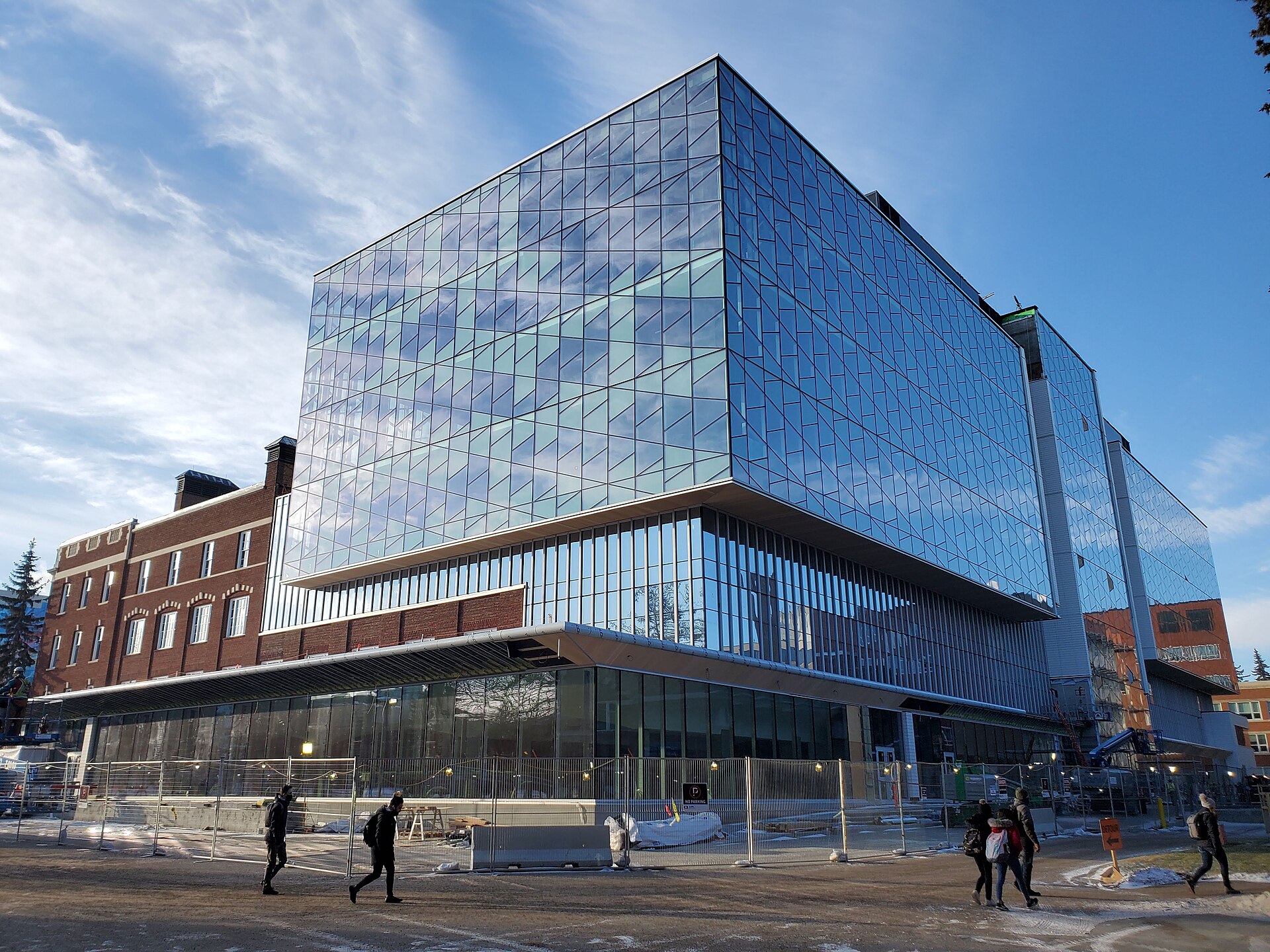
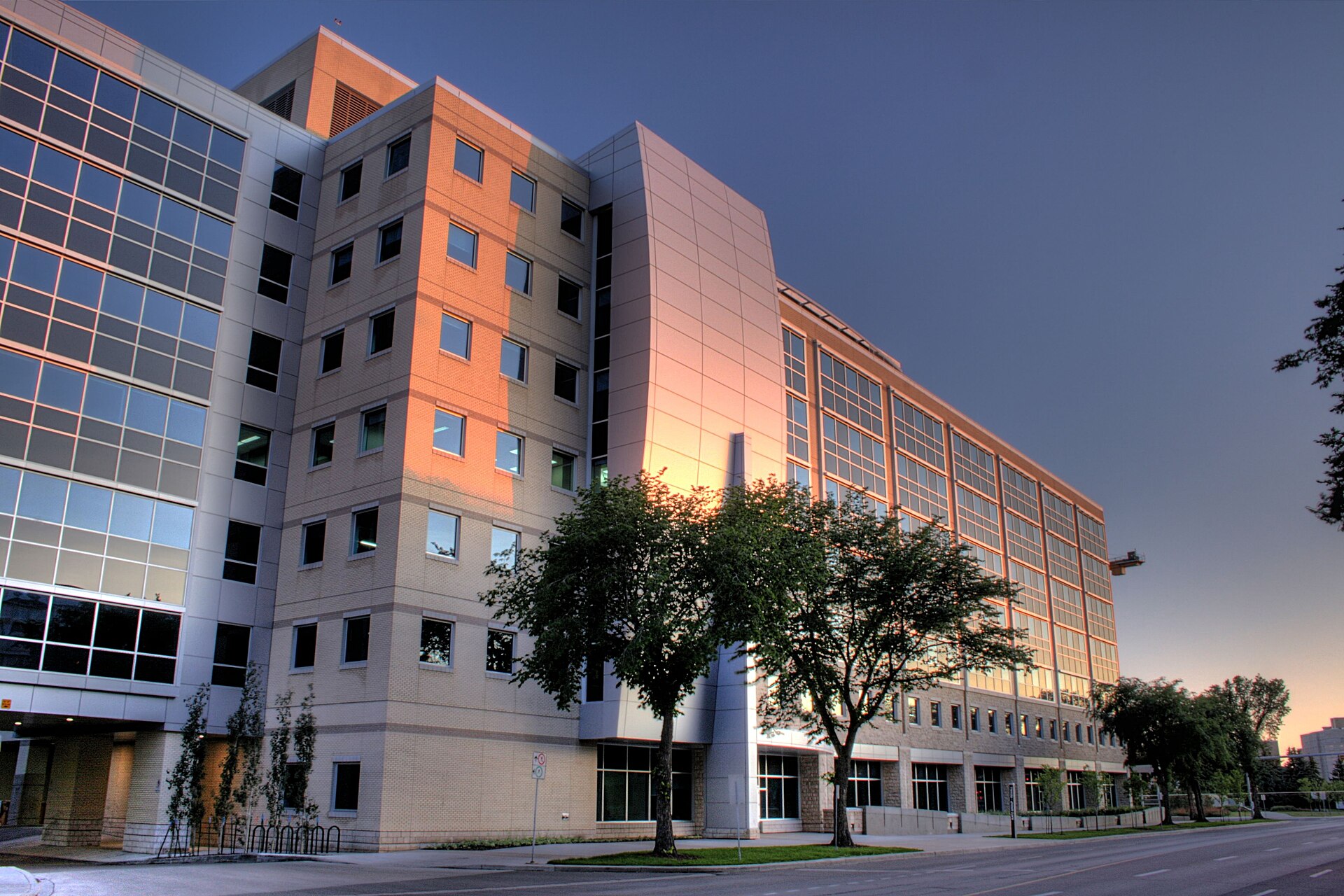
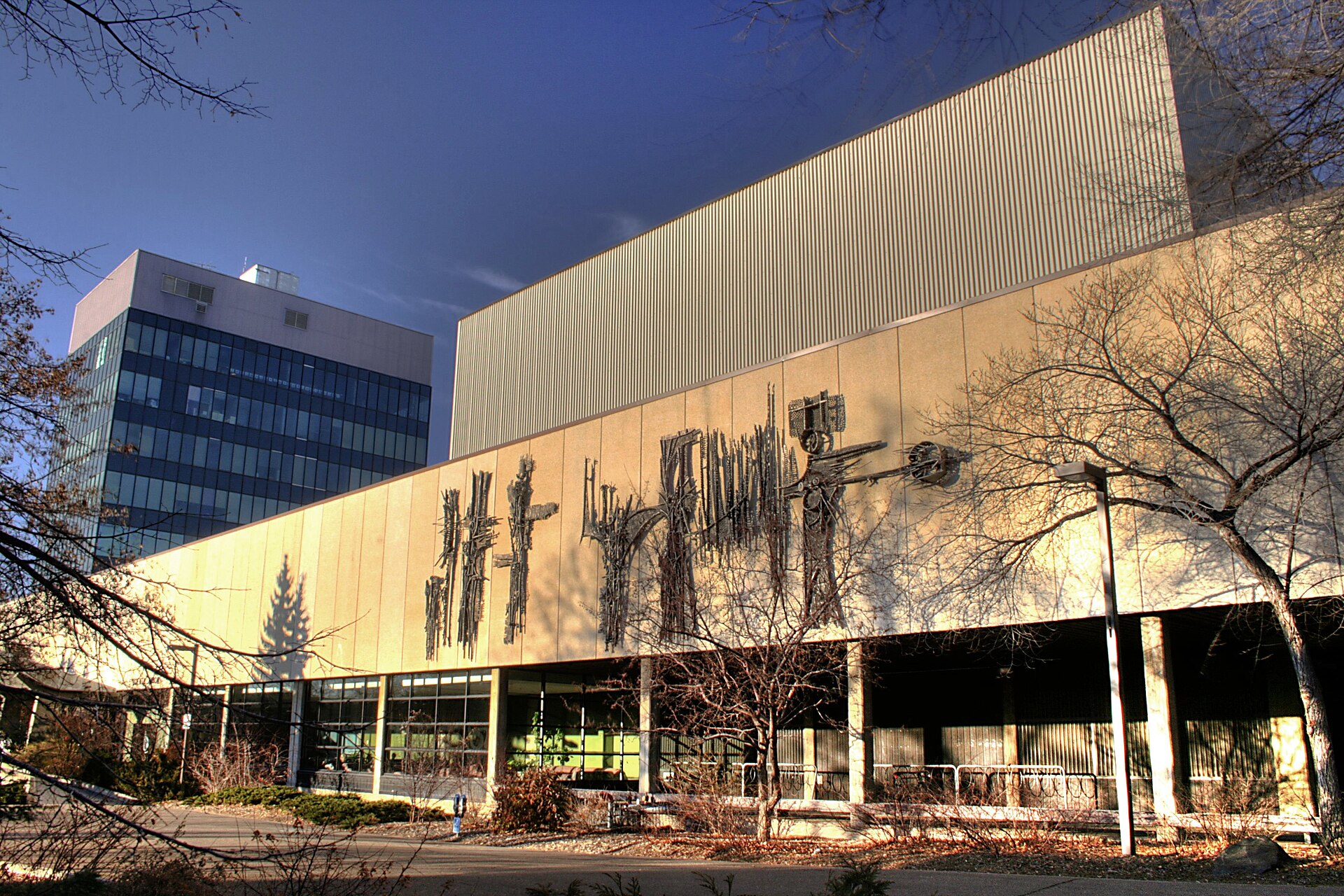
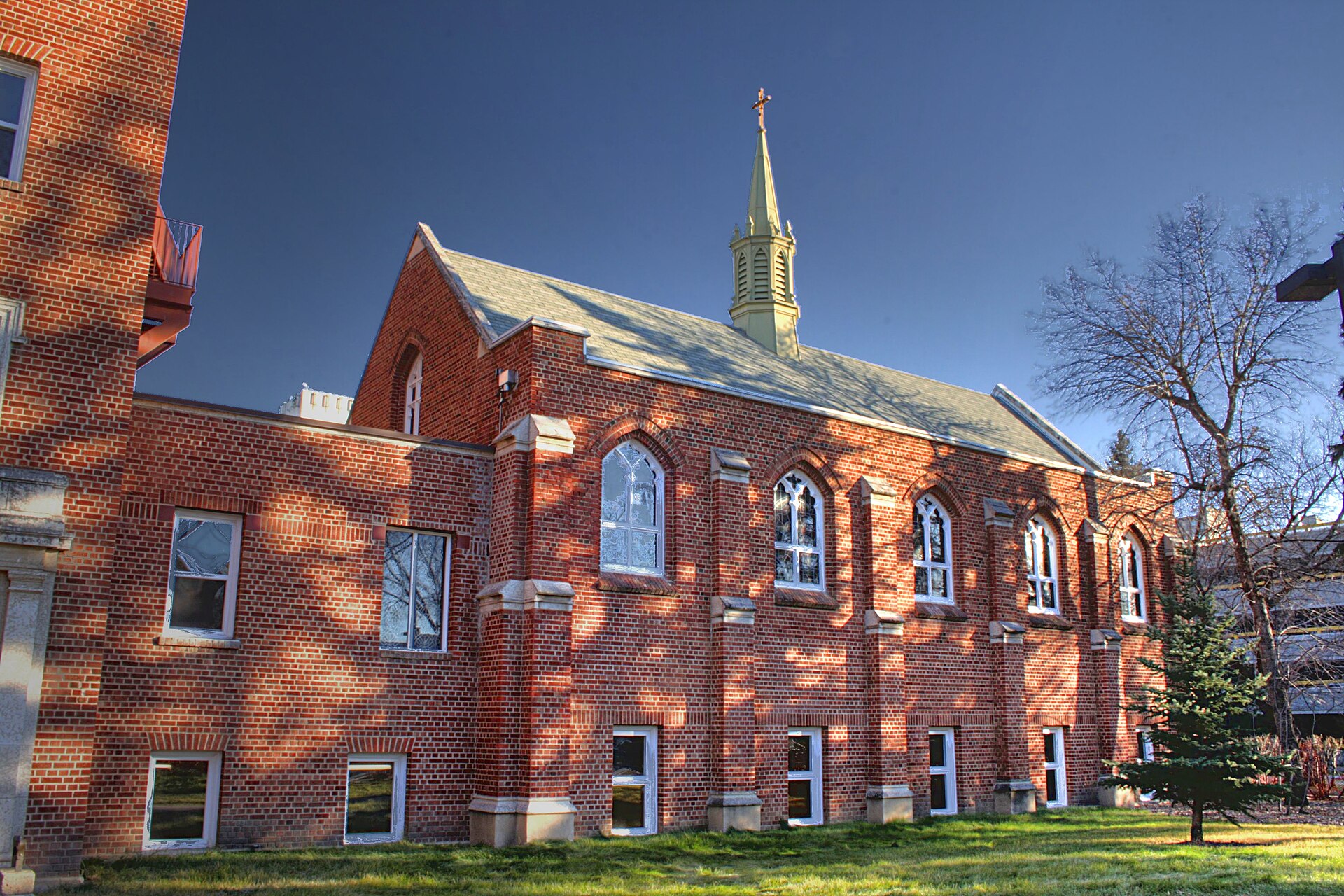
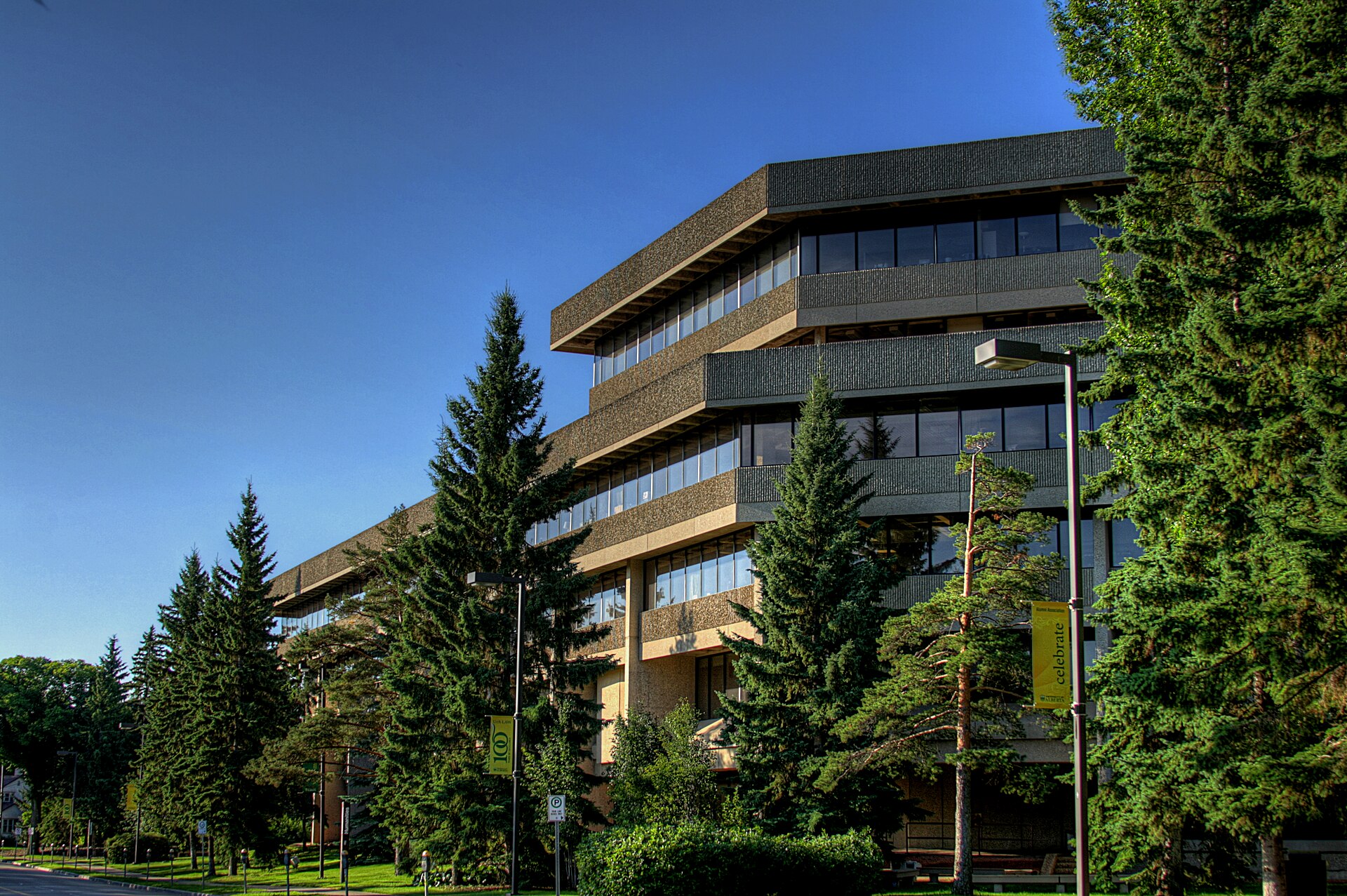
University of Alberta — campus in pictures
Real, freely-licensed photographs of the campus (via Wikimedia Commons).

Why University of Alberta — Research, AI, Energy & Real Affordability
The University of Alberta does not need inflating. It sits in the global top 100 (QS #96), delivers nearly $500 million in annual research, and positions graduates directly into Alberta's energy economy, Canada's AI sector, and the country's healthcare system. At USD $39,000 total annual cost of attendance, it offers a rare combination of research calibre and economic accessibility.
SELECTIVITY
Acceptance Rate & Admission Profile — 55% Overall, Program-Dependent
The University of Alberta admits approximately 55% of applicants overall — but this figure obscures significant variation. Popular international programs such as Engineering, Computing Science, Nursing, and Business attract far more competitive applicant pools, particularly from international students. Admission is exclusively grades-based: there is no essay, no interview for most programs, and no holistic personal review. Your academic transcript is the only lever.
For international applicants, the effective competition is against a global pool of high-achieving students submitting to the same programs. A strong academic average — particularly in prerequisite subjects — is the decisive factor. The minimum IB score for consideration is 32 points, but competitive programs routinely admit students well above this threshold.
QUICK FACTS
University of Alberta — At a Glance
HOW TO APPLY
Application Components — Direct, Streamlined, Grades-First
Unlike US universities, U of A does not use the Common Application, Coalition App, or UCAS. You apply directly through the University of Alberta's own online undergraduate application portal. For most programs, the process is: submit your application, transcripts, and English proficiency proof. No personal statement. No essay. No recommendation letters for standard admission.
ADMISSION PROFILE
What U of A Looks For — Academic Excellence, Relevant Subjects
The University of Alberta's undergraduate admissions are transparently grades-first. There is no holistic review committee weighing your extracurriculars against your GPA. Your admission average — calculated from your strongest relevant courses in senior secondary (Grade 11 and 12 equivalents) — is the decisive factor for the vast majority of programs.
For international students, U of A converts your credential into a percentage admission average using its own equivalency tables. What matters most: your overall average in the prerequisite subjects for your intended program. A student with a slightly lower overall IB score but strong HL grades in the required subjects may outperform one with a higher total who has weaker subject grades.
APPLICATION DEADLINES
When to Apply — Apply Early: International Processing Takes Time
The University of Alberta reviews applications on a rolling basis. Popular programs fill before the official deadline. International students must also allow significant lead time for document processing, study permit applications, housing arrangements, and travel. Always verify current deadlines on the official program page — they are updated each cycle.
U of A does not offer Early Decision, Early Action, or binding early rounds. However, applying early meaningfully increases your chances of securing a spot in competitive programs before they fill. The scholarship application has its own deadline of January 10, independent of your admission application.
| Intake | Strategy | Notes |
|---|---|---|
| Fall Entry (September) | Apply October–December | Programs fill on a rolling basis. Competitive programs (Engineering, Nursing, Computing Science) may close for international applicants well before the official deadline. Apply as early as possible. |
| Winter Entry (January) | Apply September–October | Fewer programs offer winter entry. Confirm availability on your specific program page before applying. |
| Scholarship Application | January 10 deadline | Single application for most application-based scholarships including International Leader, Global Citizen, and May Quon awards. No extensions offered. |
STUDENT LIFE
Campus, City & Community — Edmonton Awaits
The University of Alberta's North Campus spans 92 hectares along the North Saskatchewan River Valley — 150 buildings connected by an underground pedway network for Edmonton's cold winters, set in a sweep of urban parkland that runs the length of the city. It is a campus built for serious study and year-round life.
Edmonton is Canada's most underrated major city. Home to over one million people, it is the provincial capital and centre of Alberta's energy economy — but also one of the most culturally active cities in the country. The International Fringe Festival is the largest arts festival in North America by number of performances. The Edmonton Oilers (NHL) play 6 minutes from campus. The Canadian Rockies — Banff, Jasper, Lake Louise — are a 3–4 hour drive. Winter is long and cold; Edmontonians make it a badge of honour.
CAREER OUTCOMES
Life After U of A — 90% Employed Within 6 Months
The University of Alberta's graduates have a strong employment record: 90% report employment or continued education within six months of graduation. Average starting salaries for U of A graduates are approximately USD $50,000, with Engineering, Computing Science, and health science graduates typically well above this baseline.
U of A's alumni network spans 260,000 graduates globally, including 72 Rhodes Scholars. The university's deep ties to Alberta's energy sector, Canada's technology industry, and the country's healthcare system mean that career connections are practical and employer relationships are direct — not theoretical.
Cards
Stats
FREQUENTLY ASKED
International Students Ask — The Most Common Questions
Do I need to write essays to apply to U of A?+
No, for most programs. Unlike US universities, U of A does not require a personal statement or general essays for standard undergraduate admission. Admission is grades-based. The main exceptions are: (1) supplementary applications required by Nursing, Dentistry, and Pharmacy; and (2) the optional scholarship application, which asks about personal achievements and leadership. Treat the scholarship application as your one essay opportunity — it can yield awards worth up to CAD $120,000 over four years.
Is the 55% acceptance rate misleading?+
Yes, significantly. The 55% overall rate is an average across all 388 programs including less competitive Arts and Social Sciences streams. High-demand international programs — Engineering, Computing Science, Nursing, Business — attract much stronger applicant pools. For international students specifically, these programs are considerably more competitive than the headline number suggests. Plan based on your specific program's competitiveness, not the university-wide figure.
How does U of A treat IB Diploma applicants?+
U of A welcomes IB students and converts IB scores into its own percentage admission average using an established equivalency table. The minimum IB score for consideration is 32 total points. Competitive programs attract applicants with significantly higher totals. HL subject grades in prerequisite areas carry the most weight. Predicted grades are used for conditional offers; final scores must be confirmed by the stipulated deadline. High HL scores (6–7) in relevant subjects may also qualify you for transfer credit.
Can I work in Canada while studying at U of A?+
Yes. With a valid Canadian study permit, international students may work up to 20 hours per week during academic terms and full-time during scheduled breaks. On-campus employment is not subject to the hour cap. Edmonton's job market — particularly in hospitality, retail, healthcare support, and campus roles — offers real part-time opportunities.
Is Edmonton actually affordable?+
Yes — materially so, compared to other major Canadian cities. Alberta has no provincial sales tax (PST), reducing everyday costs. Rents are significantly lower than Toronto or Vancouver. The facts-based cost of living estimate for U of A students is approximately USD $14,000 per year for all non-tuition expenses. Budget for higher utilities in winter and initial setup costs, but the ongoing cost of living is genuinely manageable.
What does it mean that U of A is in the U15?+
The U15 is Canada's association of the 15 most research-intensive universities — the closest Canadian equivalent to the US AAU or UK Russell Group. U of A's membership signals access to larger research budgets, a more extensive graduate school presence, broader departmental depth, and stronger employer recognition. It is a meaningful quality signal when comparing Canadian universities.
Does U of A award merit scholarships to international students?+
Yes, substantially. U of A distributes approximately CAD $52 million annually in scholarships to international undergraduates. The International Admission Scholarship (up to CAD $5,000) is awarded automatically. The President's International Distinction Scholarship (up to CAD $120,000 over 4 years) is the flagship competitive award. Application-based awards require a separate scholarship application submitted by January 10.
How competitive is the AI and Computing Science program?+
Very. U of A's Computing Science and AI programs are globally recognised — AMII ranks #2 in AI research across Canada and the US. The program attracts strong international applicants from China, India, the Middle East, and Southeast Asia. A very strong academic average in mathematics and relevant sciences, significantly above the university minimum, is needed to be competitive. Apply early; the program fills quickly.
ACADEMICS
Academic Expectations at U of A — Grades Are Your Entire Application
The University of Alberta's admissions process is one of the most transparent in the research-university world: your academic average earns your place. No essays, no alumni interviews, no holistic committee. For international students, that clarity is both empowering and unforgiving — every grade you earn in senior secondary school is on record.
U of A offers over 388 undergraduate programs across 18 faculties. Academic intensity varies: Sciences, Engineering, and Computing Science are rigorous and research-active from Year 1. Arts and Social Sciences offer more flexibility. Health Sciences programs — Nursing, Dentistry, Pharmacy — are among the most competitive in Western Canada. Understanding exactly which grades U of A will calculate, and in which subjects, is the first step in a successful application strategy.
ACADEMIC PROFILE
Typical Admission Thresholds — From the University's Data
The following figures represent the thresholds established by the University of Alberta. Hard numbers are taken directly from the university's official profile data.
SAT / ACT POLICY
Standardised Testing Policy — Test-Optional (SAT/ACT Not Required)
The University of Alberta is a Canadian institution. SAT and ACT scores are not required, not typically reviewed, and not part of the standard undergraduate application. Canadian universities assess international applicants on secondary school transcripts, IB/A-Level results, and English proficiency tests — the US standardised test framework does not apply here.
If you have strong SAT or ACT scores, submitting them will not harm your application — but they will not compensate for a weaker transcript. The time and preparation energy you would invest in SAT/ACT prep is better directed at maximising your IB, A-Level, or national curriculum results, particularly in the prerequisite subjects for your intended program.
ENGLISH PROFICIENCY
English Language Testing — IELTS, TOEFL & Duolingo Requirements
English proficiency tests are required for applicants whose first language is not English and who have not completed at least three consecutive years of full-time secondary education taught in English. The following minimum scores apply to most programs — individual health science and professional programs may require higher overall or sub-scores.
Meeting the minimum threshold does not guarantee admission to competitive programs. For Nursing, Pharmacy, and Dentistry, aim significantly above the university minimum — particularly in speaking and writing sub-scores, which these programs review closely.
| Test | Minimum | Notes |
|---|---|---|
| IELTS Academic | 6.5 overall | Academic band only (not General Training); no band below 6.0 for most programs |
| TOEFL iBT | 90 overall | Internet-based test; accepted for all programs |
| Duolingo English Test | 120 | Increasingly accepted at Canadian universities; confirm per specific program |
IB · A-LEVEL · AP
International Curricula — How U of A Reads Your Scores
The University of Alberta has extensive experience evaluating international curricula and converts IB, A-Level, and AP results into its own percentage admission average using official equivalency tables. Understanding this conversion is essential for IB and A-Level students setting their academic targets.
IB Diploma students must achieve a minimum of 32 total points. U of A converts each IB subject grade into a percentage equivalent; HL subject grades in the prerequisite subjects for your program carry the most weight in the admission average calculation. Your Extended Essay and Theory of Knowledge results contribute to your total points score, which factors into the overall conversion. Strong HL performance in prerequisite subjects — particularly a grade of 6 or 7 in mathematics and sciences for Engineering or Computing Science — is a significant advantage. A-Level students are assessed on three A-Level subjects. A minimum grade of C in each required subject is the general threshold, but competitive programs at U of A consistently admit students with stronger results. AS-Level results (half-credit subjects) may be considered for prerequisite purposes where relevant. Students should ensure they are taking A-Level (not only AS-Level) in subjects required as program prerequisites. AP examination scores (4 or 5 on relevant subjects) may qualify for transfer credit at U of A — allowing you to reduce your course load or place into higher-level courses. AP scores do not substitute for the admission average calculation, which is based on your secondary school grades. Confirm which AP credits are accepted by your specific faculty.
Predicted grades are accepted for conditional offers. Final IB and A-Level results must be submitted by the deadline in your offer letter. Discrepancies between predicted and final results may result in conditional offers being reviewed.
SUBJECT PREPARATION
Prerequisites That Matter — By Faculty
Prerequisite subjects at U of A are non-negotiable. Meeting the general admission average while missing a required prerequisite will result in rejection for that specific program. Plan your IB or A-Level subject choices in Grade 10–11 with your intended U of A program's prerequisites in view.
ENGLISH REQUIREMENTS
English Proficiency — Minimums by Test
English proficiency requirements apply unless you have completed full-time secondary education in English for at least 3 consecutive years. These are university-wide minimums; specific programs may require higher overall or sub-scores.
| Test | Minimum_score | Format |
|---|---|---|
| IELTS Academic | 6.5 | Academic (not General Training) |
| TOEFL iBT | 90 | Internet-based only |
| Duolingo English Test | 120 | Confirm per specific program |
GRADE 9–12 ROADMAP
Building Your Academic Profile — A Four-Year Plan
Because U of A's admissions are almost entirely transcript-based, the choices you make about subjects in Grades 10–11 directly shape your eligibility for your target program. This four-year plan is designed to maximise your academic positioning.
COMMON MISTAKES
Academic Pitfalls to Avoid — Mistakes That Cost Offers
In a grades-first system, errors in subject selection or strategic planning are irreversible. These are the most common mistakes TYCHR counsellors see from U of A applicants.
- Applying to a program without verifying its specific prerequisite subjects — missing one prerequisite results in rejection regardless of your average
- Choosing IB SL Mathematics instead of HL when applying to Engineering, Computing Science, or Physical Sciences
- Underestimating English proficiency requirements for Health Science programs — aim above the IELTS 6.5 minimum for Nursing and Pharmacy
- Booking IELTS or TOEFL too close to the application deadline — test slots book up months in advance in many countries
- Assuming that meeting the IB minimum of 32 points is sufficient for competitive programs where most admitted students score well above this
- Applying close to the official deadline for fall entry — international applications require more processing time, and programs fill on a rolling basis
- Missing the supplementary application for programs that require it (Nursing, Dentistry, Pharmacy) — the application file is considered incomplete without it
- Treating the scholarship application as optional — this is the only component of the U of A process where personal achievements matter, and the financial upside is substantial
COST & FINANCIAL AID
What U of A Actually Costs — Canada's Affordability Advantage
The University of Alberta is among the most affordable Top 100 world universities for international students. At approximately USD $24,000 in annual international tuition and $39,000 total cost of attendance, U of A compares favourably to UK Russell Group peers (typically £30,000–£45,000/year) and US public flagship equivalents. Add a three-year Post-Graduation Work Permit and the long-term financial picture becomes even more compelling.
Edmonton's lower-than-average cost of living, Alberta's absence of provincial sales tax, and U of A's $52-million annual international scholarship pool make the net cost of attendance meaningfully better than the headline numbers for many competitive students.
ANNUAL COST ESTIMATE
Cost of Attendance — Annual Estimates for International Students
All figures below are approximate annual estimates in USD derived from the University of Alberta's published international student data. Actual tuition varies by program; Engineering and professional programs may differ. Exchange rate fluctuations affect CAD-to-USD equivalents.
| Item | Annual_usd | Notes |
|---|---|---|
| International Tuition | ~$24,000 | Varies by program and faculty; confirm per program |
| Total Cost of Attendance | ~$39,000 | Includes tuition, fees, housing, meals, books, personal expenses |
| Cost of Living (Non-Tuition) | ~$14,000 | Housing, food, transport, personal expenses |
| Application Fee | $95 | One-time, non-refundable per application cycle |
FINANCIAL AID
Need-Based Aid for Internationals — Merit Scholarships Are the Primary Vehicle
As a Canadian public university, U of A's need-based financial aid for international undergraduates is more limited than at large US private universities with multi-billion-dollar endowments. The primary vehicle for financial support is merit-based scholarships — awarded on academic performance and, for application-based awards, leadership and community achievement.
International undergraduate students are generally not eligible for Canadian federal student loans or provincial grants (these are reserved for Canadian citizens and permanent residents). Some students may qualify for home-country government scholarship programmes — China Scholarship Council, DAAD, Commonwealth Scholarships, and others — that can be combined with U of A institutional awards. Plan your finances on a full-pay basis and treat scholarships as meaningful upside, not a guarantee.
SCHOLARSHIPS
Scholarships for International Students — CAD $52 Million Awarded Annually
The University of Alberta distributes approximately CAD $52 million annually in scholarship support to international undergraduate students. Awards range from automatic admission-based grants to highly competitive multi-year distinction scholarships. The single scholarship application, submitted by January 10, unlocks consideration for most application-based awards.
All amounts are in Canadian Dollars (CAD). Verify current USD equivalents at time of application. Scholarship criteria and amounts may be updated by the university each year.
AFFORDABILITY
The Real Cost Picture — Best-Value Top-100 University
At approximately USD $39,000 total annual cost of attendance, U of A is one of the most cost-effective Top 100 world universities available to international students. The comparison is meaningful: US public flagship universities (out-of-state) typically run $35,000–$55,000 with only optional practical training (OPT) post-graduation; UK Russell Group institutions cost £30,000–£45,000/year with only a 2-year Graduate Route visa. U of A offers equivalent academic quality, a 3-year PGWP, and a genuinely lower cost of living.
Alberta charges no provincial sales tax, reducing the effective cost of all purchases. Edmonton rents are significantly lower than Vancouver or Toronto — a shared apartment near campus can cost CAD $800–$1,200/month per person. On-campus employment is not subject to the 20-hour weekly limit that applies off-campus, and Edmonton's economy provides real part-time opportunities in hospitality, retail, and campus services. Budget carefully for the first semester: setup costs (first/last month rent, winter clothing, bedding, kitchen supplies) add a meaningful one-time expense. The Canadian student permit application (CAD $150) and biometrics fee should also be factored into pre-arrival budgeting.
FUNDING STRATEGY
How to Secure Funding at U of A — Step by Step
COST FAQS
Cost & Aid — What International Students Ask
Is U of A cheaper than comparable UK or US universities?+
Yes, materially. At approximately USD $39,000 total cost of attendance per year, U of A is significantly cheaper than UK Russell Group equivalents (typically £30,000–£45,000/year for international students) and most US public flagships at out-of-state rates. Accounting for Canada's post-graduation work rights (3-year PGWP versus 2-year UK Graduate Route or 3-year US OPT), the overall return on investment is favourable.
Can international students receive scholarships at U of A?+
Yes — substantially. U of A awards approximately CAD $52 million annually to international undergraduates. Some scholarships are automatic upon admission (International Admission Scholarship up to CAD $5,000; President's International Distinction Scholarship up to CAD $120,000 over 4 years). Others require a scholarship application submitted by January 10. Strong academic performance is the primary criterion.
Does U of A offer need-based financial aid to international students?+
U of A's need-based aid for international undergraduates is limited. A small number of awards (May Quon Undergraduate Scholarship, Cora Martinson Scholarship) consider financial need alongside academic merit. Most support is merit-based. Plan to fund your studies independently and treat scholarship awards as meaningful supplemental income.
What is the application fee?+
USD $95 (approximately CAD $130 at typical exchange rates), paid once per application cycle. This fee is non-refundable regardless of the admissions outcome.
Can international students work while studying?+
Yes. With a valid Canadian study permit, international students may work up to 20 hours per week off-campus during academic terms and full-time during scheduled breaks. On-campus employment (within the U of A campus) is not subject to the 20-hour cap. Edmonton's labour market offers genuine part-time opportunities, particularly in hospitality, retail, and campus services.
Are there hidden costs beyond tuition and the cost-of-attendance estimate?+
Yes — particularly in the first year. Budget additionally for: Canadian study permit application (approximately CAD $150), biometrics (approximately CAD $85), first/last month's rent deposit (CAD $1,600–$2,400 for a shared apartment), winter clothing, and a first-semester setup fund for kitchen supplies and bedding. Provincial health insurance coverage varies; confirm whether U of A's student health plan covers your situation as a new arrival.
ESSAYS & APPLICATION STRATEGY
Does U of A Require Essays? — Almost Never — But Here Is What Does Matter
The University of Alberta runs a direct, grades-based admission system. For the vast majority of programs, there are no essays, personal statements, or interviews. Your transcript earns your admission. This guide covers the three situations where writing matters at U of A: supplementary applications for specific competitive health science programs, the scholarship application (the most financially significant piece of optional writing in the process), and strategic framing within the application where available.
If you are approaching this from a US-application mindset — essays, short supplements, a curated activities list — reset your framework. At U of A, academic excellence earns admission. Strategic writing earns scholarships and supplementary program consideration. Both deserve your serious attention.
APPLICATION OVERVIEW
The U of A Application — No Common App, No Personal Statement
The University of Alberta does not use the Common Application, UCAS, Coalition App, or any multi-institution platform. You apply directly through U of A's own undergraduate online application portal. For most programs, the application consists of: personal information, academic history, English proficiency scores, and uploaded transcripts. No personal statement. No recommendation letters for standard admission. No activities list.
This makes the standard U of A application one of the more accessible processes among top-100 world universities. The trade-off: your academic record is your entire application. There is no supplementary narrative to compensate for a weaker average. The one exception — and the most consequential piece of optional writing in the U of A process — is the scholarship application. It asks for personal and leadership information, is the sole opportunity to present yourself holistically, and can yield awards worth up to CAD $120,000 over four years. Submit it without exception.
WHERE WRITING MATTERS
Writing Requirements at U of A — By Application Component
The following covers all writing components international students may encounter in the U of A application. Current supplementary questions are updated each cycle; verify specific prompts on the faculty program page before applying. Verbatim prompt text is not reproduced here as it changes annually.
SCHOLARSHIP WRITING STRATEGY
The Scholarship Application — Your One Essay at U of A
The scholarship application is the most consequential piece of writing in the U of A international student application. Unlike US applications where essays affect admission, here they affect scholarship outcomes exclusively — but given that top awards total CAD $120,000 over four years, the stakes are comparable.
The application asks for evidence of leadership, community contribution, and personal achievement beyond academics. Approach it as a structured argument: you are demonstrating that, alongside excellent academic results, you have made genuine contributions to communities around you — and you will continue to do so at U of A. Start early. Research the specific criteria for each scholarship you are targeting. The President's International Distinction Scholarship selects for 'superior admission average and demonstrated leadership' — both pillars must be present. The Global Citizen Scholarship emphasises international awareness and cross-cultural contribution — your international student background is an asset when framed deliberately. The International Leader Scholarship is explicitly about leadership impact, not just leadership titles. Get feedback before submitting. The scholarship application is short-form writing with high financial stakes. Have someone who knows you well review your answers — not just for grammar, but for whether the narrative sounds authentically like you and whether it tells a coherent story across all questions.
SUPPLEMENTARY APPLICATIONS
Health Science Supplementaries — How to Approach Each Question Type
If you are applying to Nursing, Dentistry, or Pharmacy, the supplementary application carries substantial weight alongside your academic average. These responses are reviewed by faculty admissions committees and differentiate candidates who meet the academic threshold. Here is how to approach the most common question types.
STRATEGY
How to Present Yourself at U of A — In a System Where Grades Come First
You cannot write your way into U of A — but you can write your way to significantly better scholarship funding. The scholarship application is the only place your personal story formally enters the picture. Here is how to think about it strategically.
Begin by inventorying your genuine achievements: academic awards, competition results, formal and informal leadership roles, community or cultural contributions, research experience. Rank them by specificity and demonstrated impact — not by how impressive they sound to outsiders. A student who organised a community English literacy programme for recent immigrants is more compelling in a scholarship application than one who attended a prestigious youth conference as a participant. The central question the scholarship committee is asking: will this person make our university community better? Write toward that question, not toward 'I have done impressive things.' The distinction is subtle but decisive. For the supplementary application, write toward fit — demonstrating that you understand what this specific program at this specific university offers, and that you are the kind of person who will make the most of it.
COMMON MISTAKES
Mistakes to Avoid — In the U of A Application
- Treating the scholarship application as optional — it is your only opportunity to present your personal profile and the financial upside can reach CAD $120,000 over four years
- Missing the January 10 scholarship application deadline — no extensions are offered
- Writing a supplementary application that is generic and could apply to any health science program at any university
- Applying to Nursing, Dentistry, or Pharmacy without completing the supplementary application — your file is considered incomplete
- Relying on the 55% overall acceptance rate when applying to a competitive program — Engineering and Computing Science attract significantly stronger applicant pools internationally
- Waiting until late in the admissions cycle to apply for fall entry — programs fill on a rolling basis and international document processing takes time
- Submitting predicted IB or A-Level grades materially higher than your actual trajectory — discrepancies are reviewed when final results arrive
- Not applying for on-campus housing immediately after receiving your offer — spaces are competitive and early movers have a significant advantage
APPLICATION FAQS
Writing & Application — What Students Ask
Does U of A require a personal statement?+
No. For most programs, U of A does not require a personal statement for undergraduate admission. The application consists of personal information, academic transcripts, and English proficiency scores. There is no personal essay comparable to the Common App statement or UCAS personal statement. The sole exception is certain health science supplementary applications and the optional scholarship application.
What is the scholarship application, and should I complete it?+
Yes — absolutely. The scholarship application is a separate form that unlocks consideration for U of A's application-based awards, including the International Leader Scholarship (up to CAD $15,000), Global Citizen Scholarship (up to CAD $53,000/year), and May Quon Undergraduate Scholarship (up to CAD $100,000 over 4 years). It asks about personal achievements, leadership, and community contributions. The deadline is January 10 annually. No extensions are offered.
How long are supplementary application responses?+
Response formats and word limits vary by program and are updated each cycle. Health science supplementaries typically use structured questions with response limits of 200–500 words per question. Always check the current program page for the supplementary format and specific prompts before beginning — these are not published far in advance.
Are recommendation letters required?+
Recommendation letters are not part of the standard U of A undergraduate application. They may be requested as part of specific scholarship applications for particular awards, but this is not universal. Confirm the requirements for any scholarship awards you are pursuing by checking the current scholarship application guidelines.
Is there an interview at U of A?+
Interviews are not part of the standard undergraduate admissions process. Some health science programs — particularly Dentistry — may include an interview for shortlisted applicants as part of the admissions process. Confirm the specific process on your intended program's faculty page.
My written English is weaker than my spoken English — will this affect me?+
For the standard application (no essays), written English quality does not directly affect admission for most programs. For the scholarship application and health science supplementaries, written clarity and structure matter. IELTS and TOEFL Writing sub-scores are reviewed for health science programs specifically. If this is a concern, invest time in academic writing practice before preparing your scholarship and supplementary responses.
How should I frame 'Why U of A?' in a scholarship or supplementary application?+
Be specific and researched. For AI and Computing Science: reference AMII's global ranking and specific research clusters. For Engineering: the Karl Clark oilsands legacy and industry partnerships. For Health Sciences: the Edmonton Protocol's impact on global diabetes care, the Li Ka Shing Institute of Virology, and clinical training connections to Edmonton's major teaching hospitals. For Business: the Alberta School of Business's historic AACSB accreditation. Generic references to 'world-class research' without specifics are obvious and unconvincing.
Courses — schools, degrees & intake
66 degrees across 10 groupings.
Faculty of Arts · 20 degrees
Bachelor of Arts — Anthropology
Bachelor of Arts — Art and Design
Bachelor of Arts — Classical Studies
Bachelor of Arts — Comparative Literature
Bachelor of Arts — Drama
Bachelor of Arts — East Asian Studies
Bachelor of Arts — Economics
Bachelor of Arts — English
Bachelor of Arts — Film Studies
Bachelor of Arts — History
Bachelor of Arts — Indigenous Studies
Bachelor of Arts — Linguistics
Bachelor of Arts — Philosophy
Bachelor of Arts — Political Science
Bachelor of Arts — Psychology
Bachelor of Arts — Religious Studies
Bachelor of Arts — Sociology
Bachelor of Arts — Women's and Gender Studies
Bachelor of Fine Arts — Drama
Bachelor of Music
Faculty of Science · 10 degrees
Bachelor of Science — Biological Sciences
Bachelor of Science — Chemistry
Bachelor of Science — Computing Science
Bachelor of Science — Earth and Atmospheric Sciences
Bachelor of Science — Mathematical Sciences
Bachelor of Science — Physics
Bachelor of Science — Statistics
Bachelor of Science — Immunology and Infection
Bachelor of Science — Pharmacology
Bachelor of Science — Physiology
Faculty of Engineering · 10 degrees
Bachelor of Science in Engineering — Chemical Engineering
Bachelor of Science in Engineering — Civil Engineering
Bachelor of Science in Engineering — Computer Engineering
Bachelor of Science in Engineering — Electrical Engineering
Bachelor of Science in Engineering — Engineering Physics
Bachelor of Science in Engineering — Materials Engineering
Bachelor of Science in Engineering — Mechanical Engineering
Bachelor of Science in Engineering — Mining Engineering
Bachelor of Science in Engineering — Petroleum Engineering
Bachelor of Science in Engineering — Biomedical Engineering
Alberta School of Business · 8 degrees
Bachelor of Commerce — Accounting
Bachelor of Commerce — Finance
Bachelor of Commerce — Marketing
Bachelor of Commerce — Management
Bachelor of Commerce — Operations Management
Bachelor of Commerce — Strategic Management and Organisation
Bachelor of Commerce — International Business
Bachelor of Commerce — Business Economics
Faculty of Agricultural, Life and Environmental Sciences (ALES) · 7 degrees
Bachelor of Science in Agriculture — Animal Science
Bachelor of Science in Environmental and Conservation Sciences
Bachelor of Science in Food Science and Technology
Bachelor of Science in Forestry
Bachelor of Science in Human Ecology
Bachelor of Science in Nutrition and Food Sciences
Bachelor of Commerce in Agriculture
Faculty of Education · 2 degrees
Bachelor of Education — Elementary Education
Bachelor of Education — Secondary Education
Faculty of Nursing · 1 degrees
Bachelor of Science in Nursing
Faculty of Kinesiology, Sport, and Recreation · 2 degrees
Bachelor of Kinesiology
Bachelor of Science in Recreation, Sport, and Tourism
Faculty of Medicine and Dentistry · 3 degrees
Bachelor of Science in Medical Laboratory Science
Bachelor of Health Sciences
Bachelor of Science in Dental Hygiene
Augustana Campus · 3 degrees
Bachelor of Arts (Augustana Campus)
Bachelor of Science (Augustana Campus)
Bachelor of Music (Augustana Campus)
Want your real chances at University of Alberta?
Create a free TYCHR account for your personalised admit-chance, a shortlist you can track, exact entry requirements, and essay + counselling help.