University of Aberdeen
Aberdeen, United Kingdom · Urban
FOUNDED 1495 · ABERDEEN, SCOTLAND
University of Aberdeen Admissions Guide for International Students
One of the oldest universities in the English-speaking world, Aberdeen offers a rare combination of ancient academic tradition and forward-looking research — particularly in energy transition, medicine, law, and marine science. Studying in Scotland's Energy Capital, you will graduate into one of the most employment-connected university networks in the United Kingdom.
Aberdeen's 35% international student population, automatic £6,000-per-year scholarship for eligible new arrivals, and a 92% graduate employment rate make it a genuinely international research university with strong return on investment. This guide is written for ambitious students worldwide preparing a UCAS application to Aberdeen.
Campus
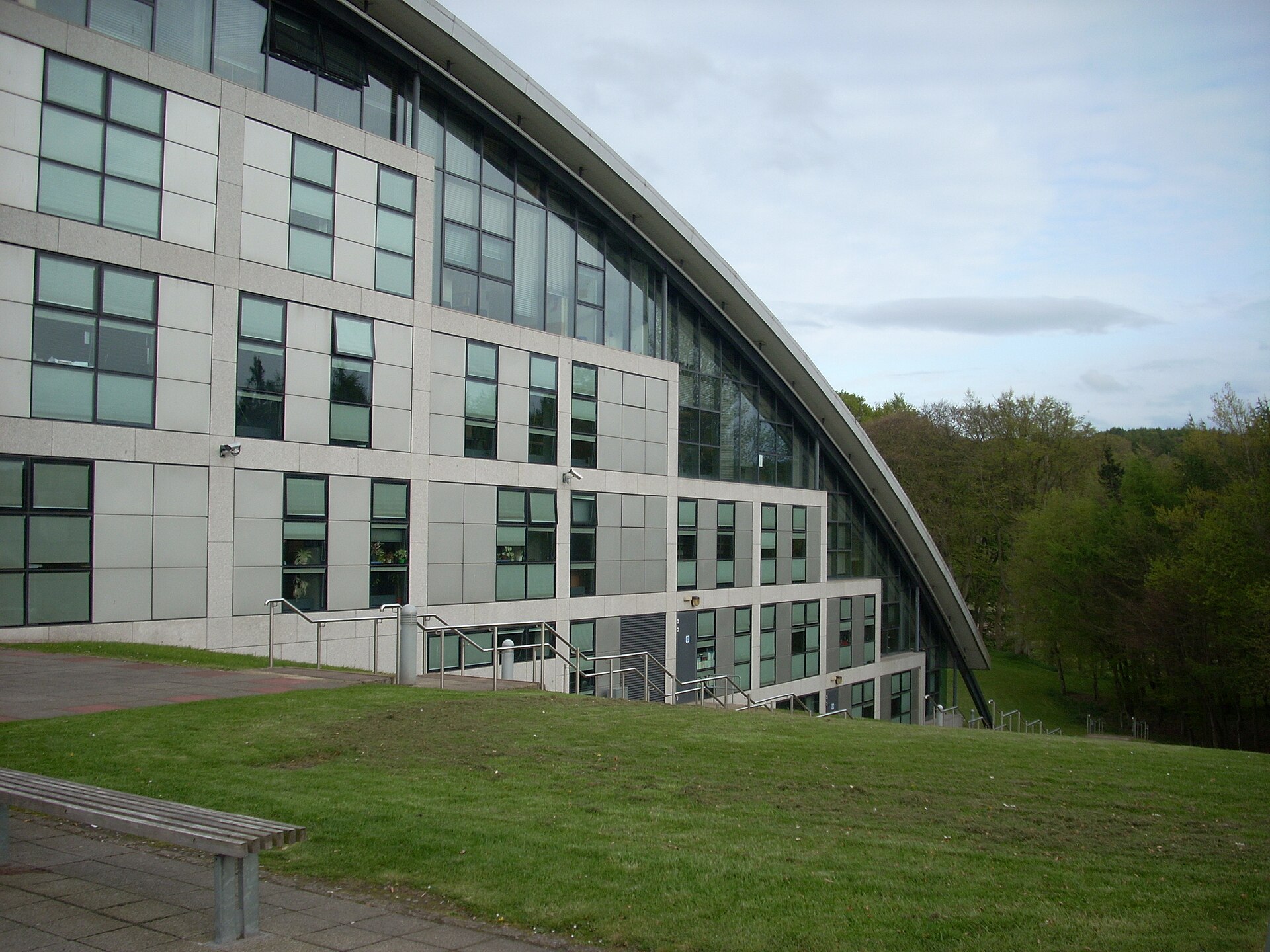
University of Aberdeen — campus in pictures
Real, freely-licensed photographs of the campus (via Wikimedia Commons).
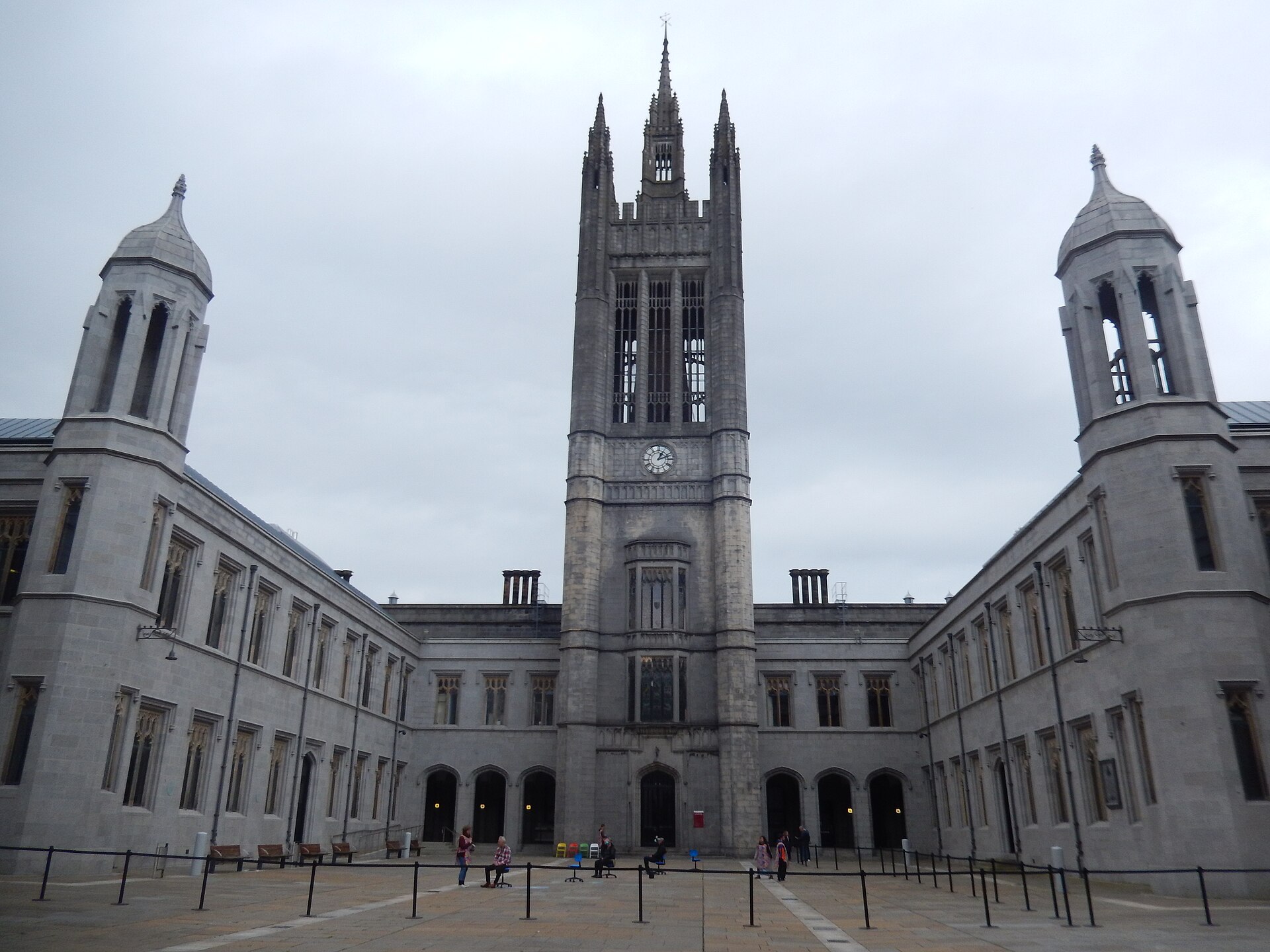
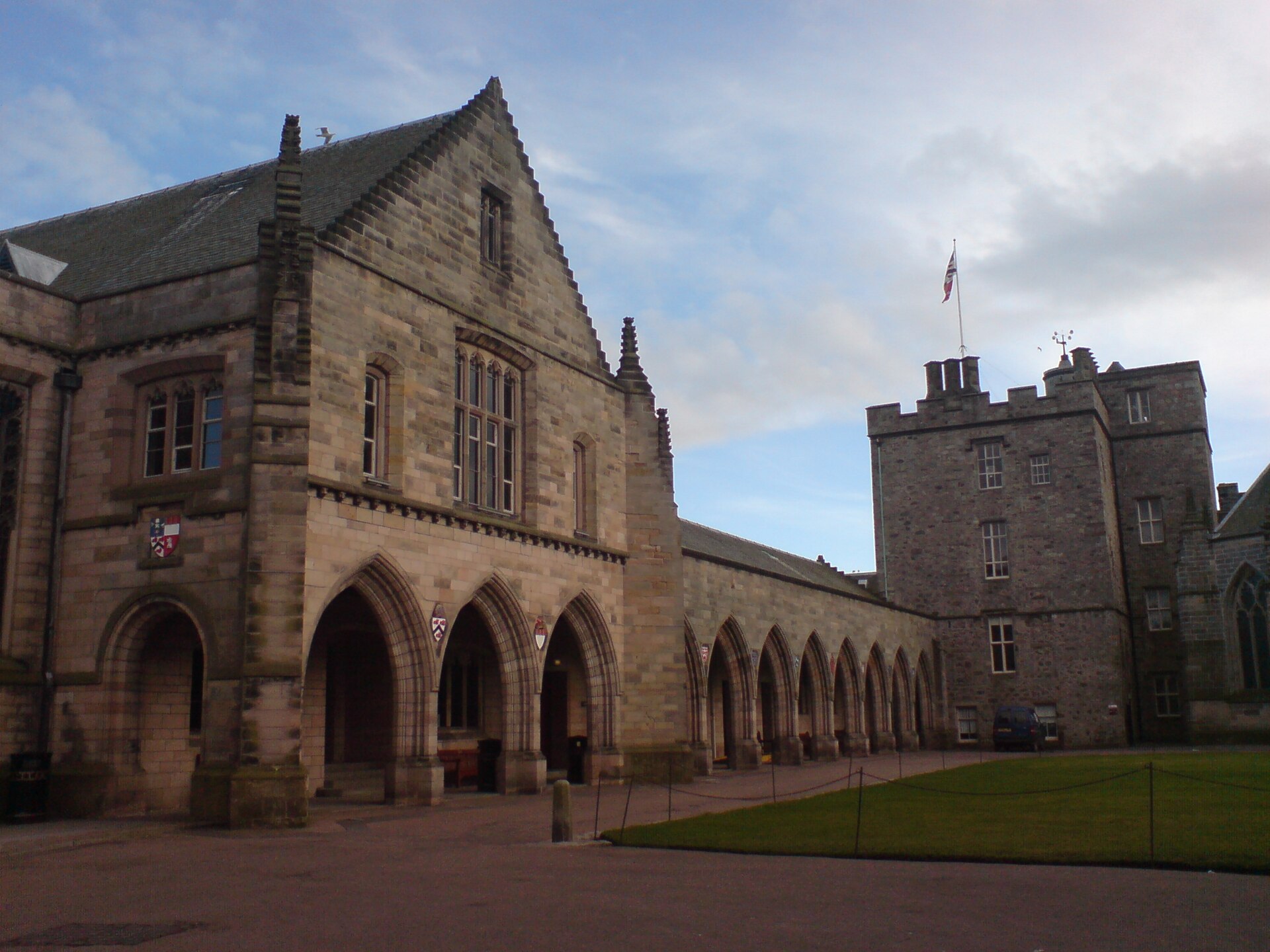

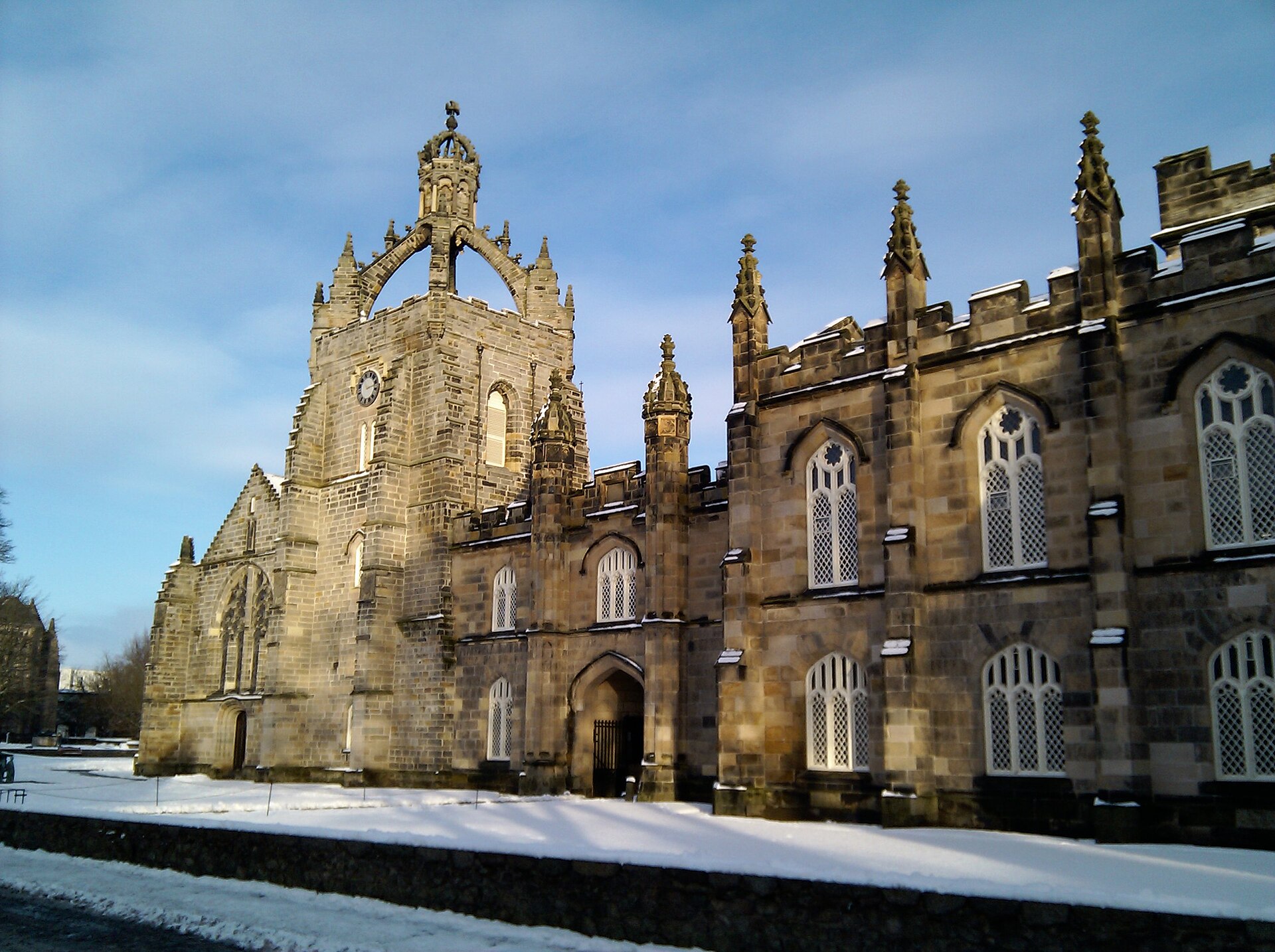
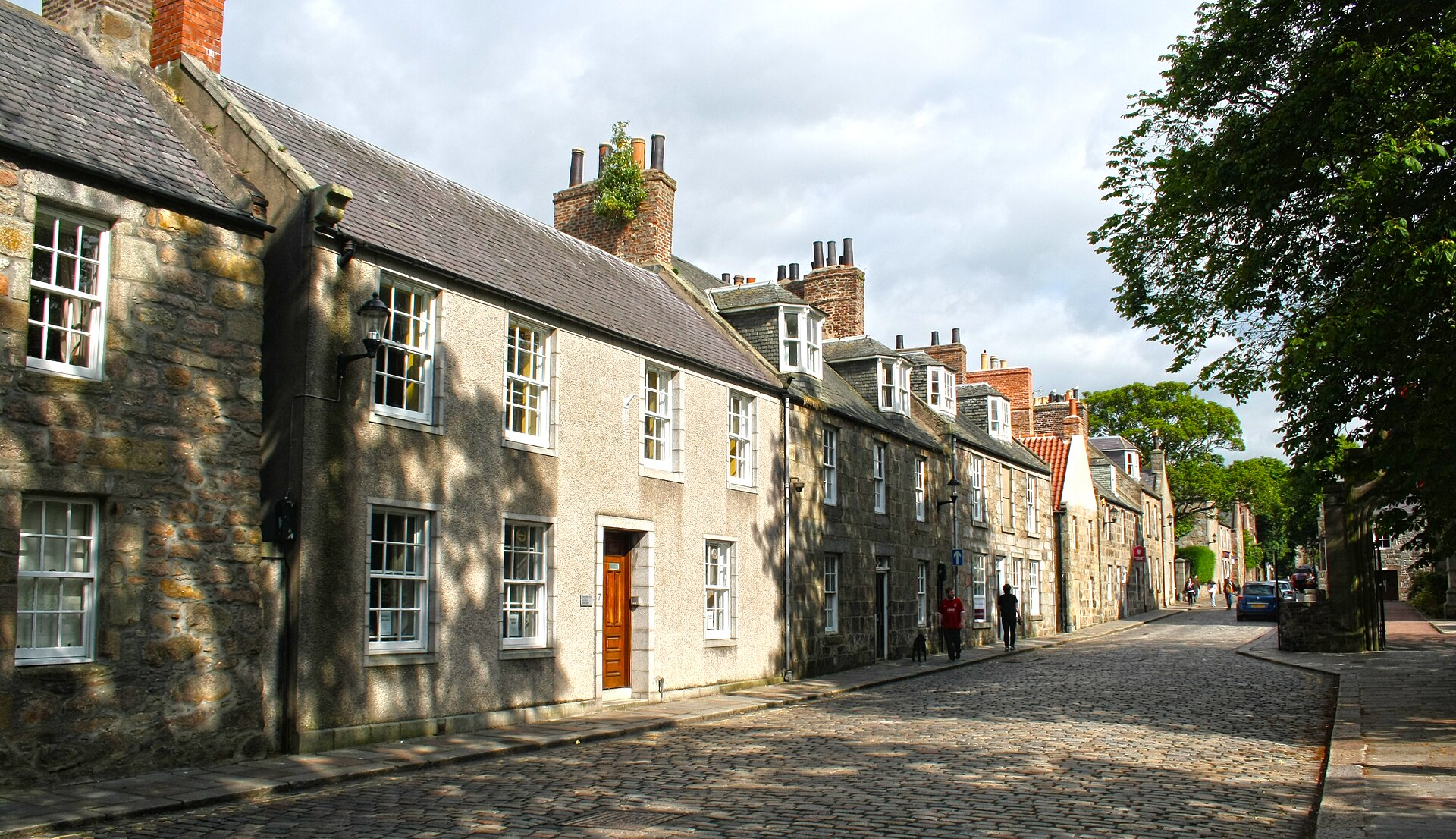
WHY ABERDEEN
Why Choose the University of Aberdeen
Aberdeen's 525+ year history is matched by a resolutely modern research agenda. Here is what sets it apart for international students.
SELECTIVITY
Aberdeen Acceptance Rate & Entry Profile
Aberdeen is moderately selective by UK research university standards. With a 70% acceptance rate across all applicants, gaining an offer is achievable for well-prepared students — but course-specific offers for Medicine, Dentistry, and Law are considerably more competitive. International applicants are assessed on the academic merit of their qualifications and UCAS personal statement.
The IB minimum benchmark for most programmes is 32 points, though highly competitive courses such as MBChB Medicine and LLB Law typically require higher scores — verify exact requirements on the programme pages at abdn.ac.uk. Offers are conditional: the university will make you an offer based on predicted grades, and you must meet those grades at results day.
AT A GLANCE
University of Aberdeen — Quick Facts
HOW TO APPLY
What Your Aberdeen Application Consists Of
Undergraduate international students apply through UCAS (the UK centralised admissions system). Your application has five core components:
ADMISSIONS PHILOSOPHY
The Student Profile Aberdeen Admits
Aberdeen takes a holistic view within a primarily academic framework. Selectors are looking for students who are genuinely curious about their chosen subject, have the academic foundations to succeed in a research-intensive environment, and can contribute to a diverse campus community.
Unlike highly selective US universities, Aberdeen's admissions process does not systematically assess extracurricular activities, leadership, or community service for standard undergraduate entry. The key differentiators are: the strength of your predicted grades, the quality of your UCAS personal statement (especially academic motivation), your teacher's reference, and — for competitive programmes like Medicine and Dentistry — any required admissions tests (UCAT).
KEY DATES
Application Deadlines & Key Dates for 2026 Entry
Aberdeen follows standard UCAS deadlines for most courses. International applicants who miss the January UCAS deadline can apply directly to the university up to August.
| Route | Deadline | Notes |
|---|---|---|
| UCAS — Medicine / Dentistry | 15 October 2025 | Firm UCAS deadline for MBChB and BDS applicants |
| UCAS — All other courses | 14 January 2026 | Equal consideration UCAS deadline; apply by this date for full consideration |
| UCAS — Late applications | 30 June 2026 | Applications received after 14 Jan are considered if places remain; no guarantee |
| International Direct (non-UCAS) | 3 August 2026 | International applicants may apply directly to Aberdeen; late applications until 17 Aug |
| UCAS Firm Choice (Reply Deadline) | 6 May 2026 | If all decisions received by 31 March 2026 |
| Welcome Week / Teaching Starts | 14–21 September 2026 | Welcome Week begins 14 Sep; teaching begins 21 Sep |
STUDENT LIFE
Life on Campus and in Aberdeen City
Aberdeen is a compact, walkable city on Scotland's northeast coast — known as the 'Granite City' for its distinctive silver-grey stone architecture. The campus sits within walking distance of the city centre, the beach, and some of Scotland's most dramatic coastal scenery.
The University of Aberdeen Students' Association is one of Scotland's oldest and most active, running over 200 clubs and societies. From highland sports and debating to hackathons and international cultural societies, there is a community for every interest. Aberdeen's geographic position — gateway to the Cairngorms National Park and a 45-minute drive from Royal Deeside — makes outdoor pursuits an integral part of student culture.
CAREER OUTCOMES
What Happens After You Graduate
Aberdeen's location in Europe's energy capital creates a unique talent pipeline into the oil, gas, and renewable energy sectors. At the same time, the university's medical, legal, and business schools feed strong graduate pipelines into their respective professions.
Aberdeen graduates are highly sought after in the energy sector (BP, Shell, TotalEnergies, Wood Group all have Aberdeen offices), in Scottish and UK legal firms, in NHS healthcare, and in financial services. The university maintains a strong Careers & Employability Service with employer engagement events, internship facilitation, and sector-specific advisory panels. Petroleum Geology and Energy Engineering graduates in particular benefit from Aberdeen's unique geographic positioning as a hub for North Sea operations and increasingly for offshore wind and hydrogen transition projects.
FAQ
Frequently Asked Questions about Applying to Aberdeen
Do I need to take the SAT or ACT to apply to Aberdeen?+
No. Aberdeen is a UK university and does not require SAT or ACT scores. Your IB Diploma, A-Levels, or national board results are the academic credentials assessed. Aberdeen's test policy is optional, so submitting SAT/ACT scores would not strengthen a UK UCAS application.
Can international students apply after the January UCAS deadline?+
Yes. International applicants who miss the 14 January UCAS equal-consideration deadline can apply directly to Aberdeen through the international admissions office, with a deadline of 3 August 2026 (late applications accepted until 17 August). Contact ugadmissions@abdn.ac.uk.
Is the Aberdeen Global Scholarship automatic?+
Yes. All eligible new self-funded international on-campus undergraduate students automatically receive the Aberdeen Global Scholarship — a £6,000 per year tuition fee waiver. There is no application form; it is reflected on your CAS (Confirmation of Acceptance for Studies). Medicine, Dentistry, and DPLP are excluded.
What is the IB score required to get in?+
The facts-file benchmark for Aberdeen is an IB Diploma total of 32 points, but this varies significantly by programme. Arts, humanities, and business programmes may require BBB equivalent (A-Level) / around 30–33 IB points, while Medicine and Dentistry require much higher scores. Always check the individual course page on abdn.ac.uk for current programme-specific offers.
How does the Scottish 4-year degree (MA Hons) differ from a 3-year English degree?+
Scottish undergraduate degrees typically take four years and award an MA (Hons) or BSc (Hons). The first year is broad, often allowing you to explore subjects before specialising. This structure suits students who want extra breadth before committing to a specialism, and international students often find the extra year valuable for academic adjustment. Exceptionally strong students may be considered for direct second-year entry.
Is Aberdeen safe for international students?+
Aberdeen consistently ranks among the UK's safest cities. Its compact geography, active student community, and the university's 24/7 campus security and welfare support systems make it a reassuring environment for students arriving from abroad.
What visa do I need as a non-EU international student?+
Most international undergraduates studying in the UK require a Student visa (formerly Tier 4). Aberdeen will issue you a CAS number after you accept your offer and pay any required deposit. The university's International Student Advisory team provides detailed visa guidance. Budget for the NHS Health Surcharge (£776 per year of study) as part of your visa application costs.
Can I work part-time while studying at Aberdeen?+
Yes. International students on a Student visa enrolled on programmes longer than six months can work up to 20 hours per week during term time and full-time during vacations. However, UK visa regulations require that employment is not your primary source of financial support.
ACADEMIC EXPECTATIONS
Academic Requirements for International Applicants
Aberdeen's admissions process is fundamentally grades-first. As a research-intensive university ranked in the global top 240, it expects international students to demonstrate strong academic credentials — both in their current qualifications and in the specific subjects relevant to their chosen degree.
The university operates a predominantly subject-conditional offer system: you receive a conditional offer stating the grades you need to achieve (e.g. 'IB 34 with Higher Level Chemistry and Mathematics'). Meeting those conditions on results day is what secures your place. This section explains what academic profile you need and how to build it from Year 9 onwards.
ENTRY BENCHMARKS
Academic Profile — What Aberdeen Looks For
Hard numbers from the university's published facts. Programme-specific requirements vary — always check the individual course page.
TEST POLICY
Standardised Tests — Optional at Aberdeen
Aberdeen does not require SAT or ACT scores for undergraduate admission via UCAS. These US-based tests are not part of the standard UK admissions process, and submitting them does not meaningfully supplement a UCAS application. Aberdeen's admissions team evaluates you on your national or international academic qualifications.
However, if you are applying from a US high school without IB or A-Levels, strong SAT/ACT scores combined with AP results can serve as supporting evidence of academic ability. In this case, aim for SAT scores in the high 1200s–1400s and AP grades of 4 or 5 in relevant subjects. For all other applicants, your school-leaving qualification (IB, A-Levels, national boards) is the primary evidence reviewed.
IB & A-LEVELS
How IB, A-Levels, and International Qualifications Are Read
Aberdeen accepts a wide range of qualifications from over 130 countries. The university publishes country-specific entry requirements on its international admissions pages. Below are the most common frameworks:
ENGLISH LANGUAGE
English Language Requirements
If English is not your first language, you must provide evidence of English proficiency before your place is confirmed. Aberdeen accepts multiple approved tests. The standard undergraduate requirement is listed below; Medicine and some other programmes require higher scores.
| Test | Overall Min | Component Min | Notes |
|---|---|---|---|
| IELTS Academic | 6.0 | Reading 5.5 / Writing 6.0 / Listening 5.5 / Speaking 5.5 | IELTS General Training not accepted |
| TOEFL iBT | 78 | Listening 17 / Reading 18 / Speaking 20 / Writing 21 | Scores from tests before 21 Jan 2026; newer scoring system applies post-Jan 2026 |
| Duolingo English Test | 100 | All components minimum required | Not accepted for Medicine programmes |
| PTE Academic | 59 | All components at equivalent level | Standard undergraduate programmes |
| Cambridge B2 First / C1 Advanced | 169 | All components pass | Cambridge English exams widely accepted |
SUBJECT PREPARATION
Subject-Specific Academic Preparation by Discipline
Aberdeen's offers are frequently subject-conditional. Here is what to expect by broad discipline:
YEAR-BY-YEAR PLAN
Building Your Academic Profile: Year 9 to Year 13 Roadmap
PITFALLS TO AVOID
Common Academic Mistakes That Weaken Applications
- Missing the UCAS equal-consideration deadline (14 January) — late applications are at a significant disadvantage for popular programmes
- Applying for Medicine without sitting UCAT — the test is mandatory and results are used to rank Medicine applicants
- Applying with the wrong English test — Aberdeen does not accept IELTS General Training, IELTS Indicator, or IELTS Online; use IELTS Academic or IELTS UKVI Academic only
- Choosing too many subjects at IB / A-Level without enough depth in the required subject areas for your chosen programme
- Failing to check course-specific prerequisites — e.g. applying for Engineering without Higher Level Mathematics in the IB
- Underestimating the importance of the UCAS personal statement — unlike grades, this is where you make your case for why you want to study this subject
- Not declaring all qualifications honestly on the UCAS form — late or missing information can delay or void offers
- Relying on part-time work as primary financial support — UK Student visa rules require that you have sufficient funds before you arrive; plan your finances carefully
COST & FINANCIAL AID
The Real Cost of Attending Aberdeen as an International Student
Aberdeen is significantly more affordable than London-based universities — its city costs are lower, tuition fees are competitive, and every eligible new international undergraduate automatically receives a £6,000-per-year fee waiver before they even set foot on campus.
All cost figures below are sourced from the university's published facts. Actual costs may vary by programme, lifestyle, and exchange rates. Figures are annual estimates in USD unless otherwise noted. All international students should budget conservatively and explore scholarship and bursary options before arrival.
ANNUAL COSTS
Aberdeen Cost Breakdown (Annual Estimates)
All figures are approximate annual amounts in USD for international fee-status undergraduate students. Exchange rate movements will affect the actual GBP equivalent.
| Item | Amount | Notes |
|---|---|---|
| Tuition (International) | $30,500 | Per year; excludes Medicine which has higher fees |
| Aberdeen Global Scholarship | −£6,000 (~−$7,600) | Automatic fee waiver for eligible self-funded UG students; reduces tuition |
| Living Costs (University Estimate) | $13,000 | Accommodation, food, transport, personal spending — Aberdeen city rates |
| Total Cost of Attendance (est.) | $43,500 | Before scholarship; includes tuition + living |
| Application Fee | $36 | UCAS application fee (covers up to 5 choices) |
| NHS Health Surcharge | £776/year | Paid as part of UK Student visa application; grants access to NHS healthcare |
FINANCIAL AID
Financial Aid for International Students
Aberdeen provides a modest level of institutional financial aid to international students — the average aid percentage is approximately 10% of fees. Unlike some US universities, Aberdeen does not operate a need-blind admissions process for international students. Aid is primarily scholarship-based rather than need-based grants.
The most significant aid mechanism is the Aberdeen Global Scholarship — a £6,000 per year automatic fee waiver for all eligible new self-funded international undergraduates. Beyond this, international students should plan to self-fund their studies and supplement with external scholarships from their home governments, bilateral agreements, or international scholarship bodies. Aberdeen's financial aid office can advise on external funding sources.
SCHOLARSHIPS
Scholarships Available to International Undergraduates
AFFORDABILITY REALITY
Putting the Numbers in Perspective
Aberdeen offers considerably better value for money than London-based universities with comparable rankings. Living costs are materially lower — the university estimates £1,171 per month (approximately $1,480), compared to £2,000+ monthly in London.
After the automatic £6,000 Global Scholarship is applied, the effective annual tuition cost reduces significantly. Students who work part-time during term (up to 20 hours/week allowed on a Student visa) can further offset living expenses, though part-time work should be a supplement, not a primary financial plan. The four-year Scottish MA Hons degree structure means one additional year of fees compared to a three-year English degree — but also one additional year of academic and professional development in a world-class environment.
ACTION PLAN
Steps to Fund Your Aberdeen Education
COST FAQs
Frequently Asked Questions about Costs and Aid at Aberdeen
Does Aberdeen meet 100% of international students' demonstrated financial need?+
No. Aberdeen does not operate a need-blind or need-meeting policy for international students equivalent to US need-blind universities. The primary institutional aid is the automatic Aberdeen Global Scholarship (£6,000/year fee waiver). Students are expected to self-fund the remainder.
Can I get a tuition fee loan as an international student in the UK?+
UK government tuition fee loans are not available to international students. You must fund your own studies through personal savings, sponsor funding, scholarships, or a combination. Only UK/Irish nationals and certain settled residents qualify for Student Finance England/Wales/Scotland loans.
How much does it actually cost to live in Aberdeen?+
The university estimates £1,171 per month to cover all living costs — accommodation, food, books, transport, and personal spending. This is notably lower than Edinburgh or London. With careful budgeting, monthly costs can be managed within this figure.
Is the Aberdeen Global Scholarship renewable?+
The scholarship is awarded for each year of your programme, subject to satisfactory academic progress. It is tied to your initial enrolment year and does not need to be reapplied for annually. Confirm the renewal conditions with the Scholarships team.
Are there scholarships for postgraduate international study at Aberdeen?+
Yes — Aberdeen also offers the Aberdeen Global Scholarship for eligible postgraduate taught students (a separate award, reference abdn.ac.uk/study/funding/644). Additional discipline-specific funding may be available from research councils and external bodies for PhD and research degrees.
UCAS PERSONAL STATEMENT
Your Personal Statement: The Single Most Important Document in Your UK Application
Unlike US applications, which can involve 5–10 essays for a single university, applying to UK universities via UCAS means writing one personal statement shared by all five universities you apply to. At Aberdeen, as at all UK research universities, your personal statement must be overwhelmingly focused on academic motivation and subject engagement — not a catalogue of extracurriculars.
From 2026, UCAS uses a new three-question personal statement format, replacing the old open-ended 4,000-character essay. This guide explains what Aberdeen wants to see, how the new format works, and how to write a statement that stands out.
THE UCAS SYSTEM
How the UCAS Personal Statement Works in 2026
UCAS (the Universities and Colleges Admissions Service) is the centralised UK application portal. You submit one application listing up to five universities and degree choices. Your personal statement is read by all five. The new 2026 format replaces the single open-ended text with three structured questions:
Total length limit: 4,000 characters across all three questions (or 47 lines). There is no per-question word limit — distribute space according to the weight of evidence you can offer. Question 1 typically deserves the most space.
THE THREE QUESTIONS
UCAS 2026 Personal Statement — Prompts & Strategy
PERSONAL STATEMENT STRATEGY
Writing a Personal Statement for a UK Research University Like Aberdeen
The UCAS personal statement demands a very different approach from a US Common App essay. The primary audience — Aberdeen admissions tutors in your chosen department — are subject specialists reading your statement to assess whether you think like a student of their discipline.
Unlike the US personal statement, which can explore personal growth, identity, or challenge-and-response narratives, the UK personal statement should be 80–90% about academic motivation and intellectual engagement with your subject. Personal reflection and character can appear in brief doses, but they must connect back to why you are ready and eager to study this degree at university level. The one-statement-for-five-universities structure means you cannot write an Aberdeen-specific supplement. Your statement must work for every university on your UCAS list. If you are applying for the same subject at all five (e.g. Law at Aberdeen, Edinburgh, Durham, Leeds, and Bristol), write a statement about Law — not about any specific university. If you are applying for different subjects, you cannot write one statement for both; UCAS strongly advises applying for the same or very closely related subjects across all five choices.
Aberdeen does not interview most undergraduate applicants. For most programmes, the personal statement and predicted grades are the only direct evidence the admissions tutor has of your suitability. Invest serious time in your statement.
SUBJECT-SPECIFIC TIPS
Personal Statement Strategy by Discipline at Aberdeen
TOPIC SELECTION
Choosing What to Write About: Principles for UK Personal Statements
The most common mistake in UCAS personal statements is writing about the wrong things. Here is a framework for deciding what to include:
MISTAKES TO AVOID
Essay Pitfalls That Undermine UCAS Personal Statements
- Opening with a cliché — 'I have always been passionate about...' or 'From a young age I knew I wanted to...'
- Spending more than 15% of the statement on extracurricular activities unrelated to academic subject engagement
- Mentioning university names — your statement is read by all five universities on your list; naming Aberdeen (or any other institution) can work against you
- Writing about multiple unrelated subjects if applying across very different disciplines — UCAS strongly recommends applying for the same or closely related subjects
- Making unsupported claims — every assertion about your interests should have a specific, verifiable example behind it
- Copying or paraphrasing published personal statements or using AI to generate content — UCAS and universities use plagiarism detection; statements that do not sound like your genuine voice are flagged
- Ignoring the character limit — 4,000 total characters is finite; every sentence must earn its place
- Submitting the same statement without proofreading for spelling errors, grammar, and clarity — a statement full of errors signals poor attention to detail
- Forgetting that Medicine applicants also need a strong UCAT score — the personal statement alone cannot compensate for a low UCAT result
- Applying after the UCAS equal consideration deadline (14 January) and expecting the same level of consideration as earlier applicants
ESSAY FAQs
Frequently Asked Questions about the UCAS Personal Statement
Does Aberdeen read the personal statement carefully, or is it primarily grades?+
For most programmes, predicted grades are the primary filter — Aberdeen makes conditional offers based on academic requirements first. However, for competitive courses (Medicine, Dentistry, Law, some Engineering programmes), the personal statement is read carefully by departmental selectors as a differentiator when grades are similar across many applicants.
Can I write about my home country's culture or international background?+
You can briefly reference your background if it meaningfully connects to your subject motivation — for example, growing up in an oil-producing country and witnessing energy infrastructure can be a genuine framing for a Petroleum Geology interest. However, cultural or personal background should never take up more than a few sentences; the focus must remain on academic engagement with the subject.
What is the new UCAS 2026 three-question format, and how is it different from the old system?+
Previously, UCAS used a single 4,000-character open-ended personal statement. From 2026, this is replaced by three structured questions: (1) Why this subject? (2) How have your studies prepared you? (3) What else have you done outside education? The total character limit remains approximately 4,000 characters, but responses are now structured by question.
Should I mention Aberdeen specifically in my personal statement?+
No. Your personal statement is submitted to all five universities on your UCAS list. Naming specific universities in a personal statement is generally inadvisable and can create an unfavourable impression at institutions you have not mentioned. Write about your subject, not your university choices.
Does Aberdeen conduct interviews for undergraduate applicants?+
Aberdeen does not systematically interview most undergraduate applicants. Medicine (MBChB) and Dentistry (BDS) are exceptions — medical school entry at Aberdeen involves the UCAT test rather than a formal interview at most stages, though you should verify current year requirements on the admissions page.
Can I use AI tools to help write my personal statement?+
UCAS and universities use AI detection tools and plagiarism software on personal statements. Submitting a statement that is primarily AI-generated violates UCAS regulations and undermines the admissions process. Use AI tools for brainstorming or feedback only — every word submitted must be genuinely your own.
How many universities can I apply to via UCAS?+
You can list up to five universities on a single UCAS application. There is no advantage to applying to fewer. Consider a realistic spread of courses — two to three that match your predicted profile, one or two as safer choices. Aberdeen sits comfortably as a strong research university choice for most internationally educated students.
Courses — schools, degrees & intake
108 degrees across 12 groupings.
School of Divinity, History, Philosophy and Art History · 11 degrees
BD Divinity
MA Theology & Religion
BTh Theology (Online)
MA History
MA Art History
MA Philosophy
MA Philosophy, Politics and Economics
MA Archaeology
BSc Archaeology
MA History and Philosophy
MA Celtic & Anglo-Saxon Studies
School of Education · 6 degrees
MA Primary Education
BA Childhood Practice
MA Secondary Education with Chemistry
MA Secondary Education with Computing Science
MA Secondary Education with Physics
MA Secondary Education with Biology
School of Language, Literature, Music and Visual Culture · 10 degrees
MA English
MA English Language & Literature
MA English with Creative Writing
MA Language & Linguistics
MA Comparative Literature & Culture
MA Film & Visual Culture
MA Music Studies
MA Music Studies with Teaching
MA Gaelic Studies
MA Modern Languages and Translation & Interpreting Studies
Business School · 11 degrees
MA Accountancy
MA Accountancy and Finance
MA Business Management
MA Business Management and Economics
MA International Business
MBus International Business (5 years)
MA Finance
MA Economics
MA Economics and Finance
MA Real Estate
MA Business Management and Information Systems
School of Law · 8 degrees
LLB Law
LLB Law with options in Accountancy
LLB Law with options in Business Management
LLB Law with options in Economics
LLB Law with options in French
LLB Law with Computing Science
LLB Law and French Law (5 years)
LLB Law and German Law (5 years)
School of Social Science · 7 degrees
MA Anthropology
MA Sociology
MA Politics
MA International Relations
MA Geography
MA Anthropology and Sociology
MA Geography and International Relations
School of Biological Sciences · 10 degrees
BSc Biology
BSc Biological Sciences
BSc Biochemistry
BSc Animal Behaviour
BSc Animal Behaviour and Welfare
BSc Zoology
BSc Marine Biology
BSc Ecology
BSc Conservation Biology
BSc Plant and Soil Science
School of Medicine, Medical Sciences and Nutrition · 6 degrees
MB ChB Medicine
BDS Dentistry
BSc Biomedical Sciences
BSc Nursing (Adult)
BSc Nursing (Child Health)
BSc Nursing (Mental Health)
School of Psychology · 4 degrees
BSc Psychology
MA Psychology
MSci Counselling, Psychology and Education
MA Psychology with Counselling Skills
School of Engineering · 16 degrees
BEng Engineering
MEng Engineering
BEng Engineering (Mechanical)
MEng Mechanical Engineering (5 years)
BEng Chemical Engineering
MEng Chemical Engineering (5 years)
BEng Engineering (Civil)
MEng Civil Engineering (5 years)
MEng Civil and Environmental Engineering (5 years)
BEng Engineering (Electrical and Electronic)
MEng Electrical and Electronic Engineering (5 years)
MEng Electrical and Electronic Engineering with Renewable Energy (5 years)
MEng Electrical and Electronic Engineering with Robotics (5 years)
BEng Engineering (Petroleum)
MEng Petroleum Engineering (5 years)
MEng Engineering (Mechanical and Renewable Energy) (5 years)
School of Geosciences · 5 degrees
BSc Geology
BSc Geoscience
BSc Geography
BSc Environmental Science
BSc Geology and Physics
School of Natural and Computing Sciences · 14 degrees
BSc Computing Science
MEng Computing Science (5 years)
MEng Computing Science (Artificial Intelligence)
MEng Computing Science (Cybersecurity)
BSc Data Science
BSc Computing Science and Mathematics
BSc Computing Science and Physics
BSc Mathematics
MA Mathematics
BSc Chemistry
MChem Chemistry (5 years)
MSci Chemistry with Industrial Placement (5 years)
BSc Physics
MPhys Physics (5 years)
Want your real chances at University of Aberdeen?
Create a free TYCHR account for your personalised admit-chance, a shortlist you can track, exact entry requirements, and essay + counselling help.