University College Cork
Cork, Ireland · Urban
IRELAND'S THIRD-RANKED UNIVERSITY
University College Cork — Where Research Meets Real-World Impact
Founded in 1845 on a picturesque riverside campus in the heart of Cork city, UCC is Ireland's second-largest university and the country's recognised leader in food science, microbiome research, and sustainability. With 24,000 students, a celebrated medical school, and a campus that blends Victorian limestone with cutting-edge research facilities, UCC offers international students something rare: genuine research depth in a city that is affordable, walkable, and richly cultural. For ambitious international applicants, UCC represents Ireland's best alternative to Trinity and University College Dublin — with distinctive strengths that in many disciplines, particularly the life sciences, food science, pharmacy, and law, place it ahead of both. The university's €1.18 billion annual economic impact and '90%-plus employment or further study' graduate outcomes reflect an institution that takes career readiness seriously.
Campus
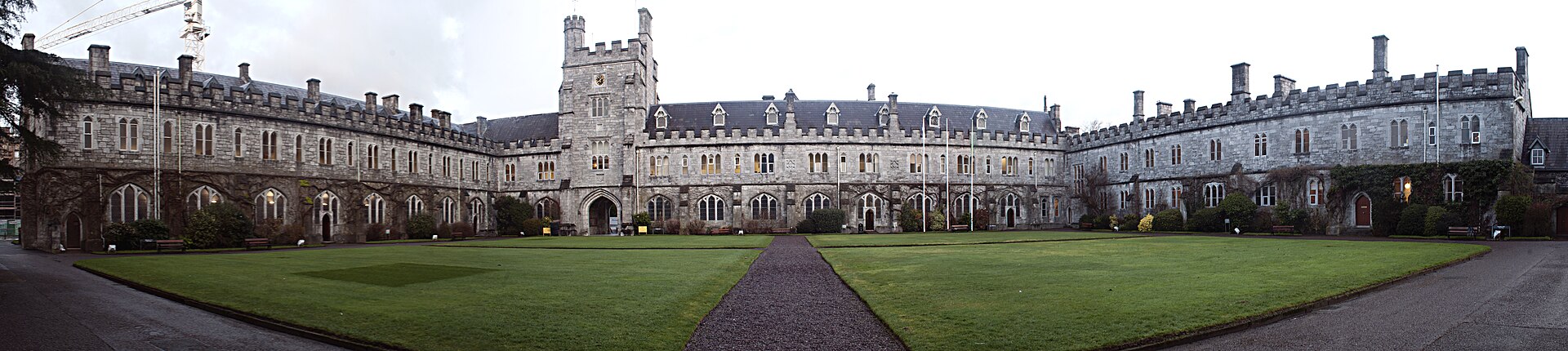
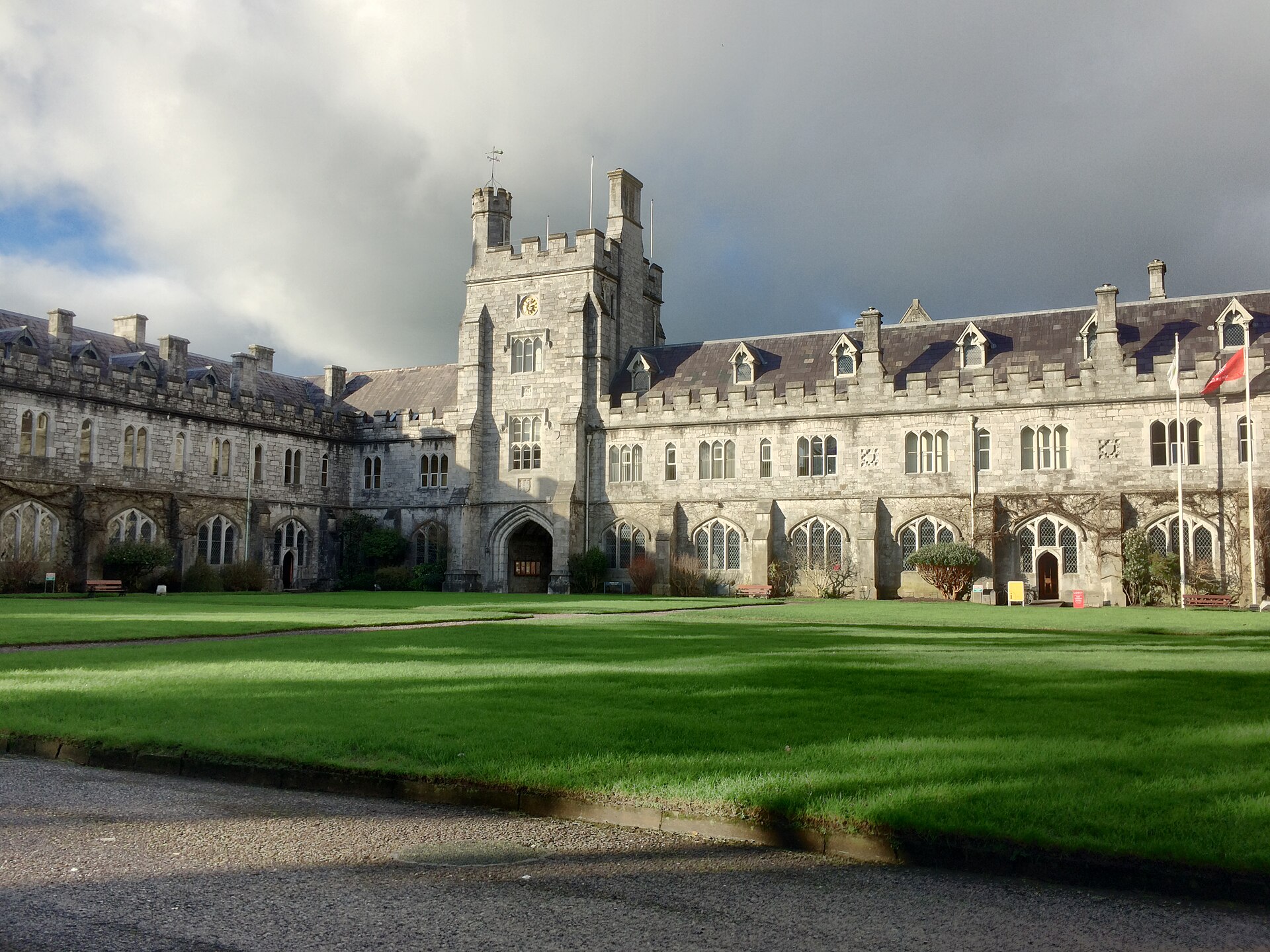
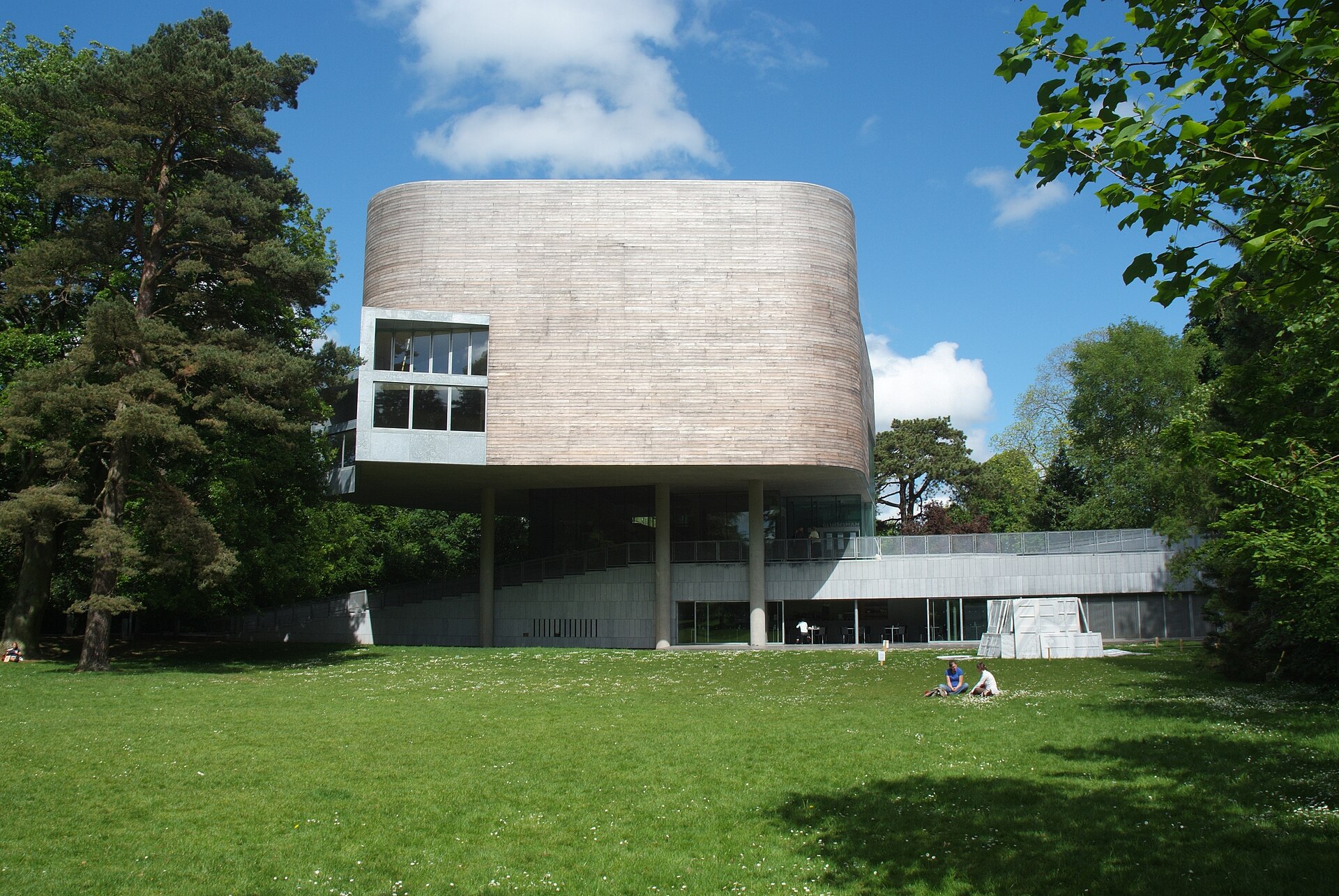
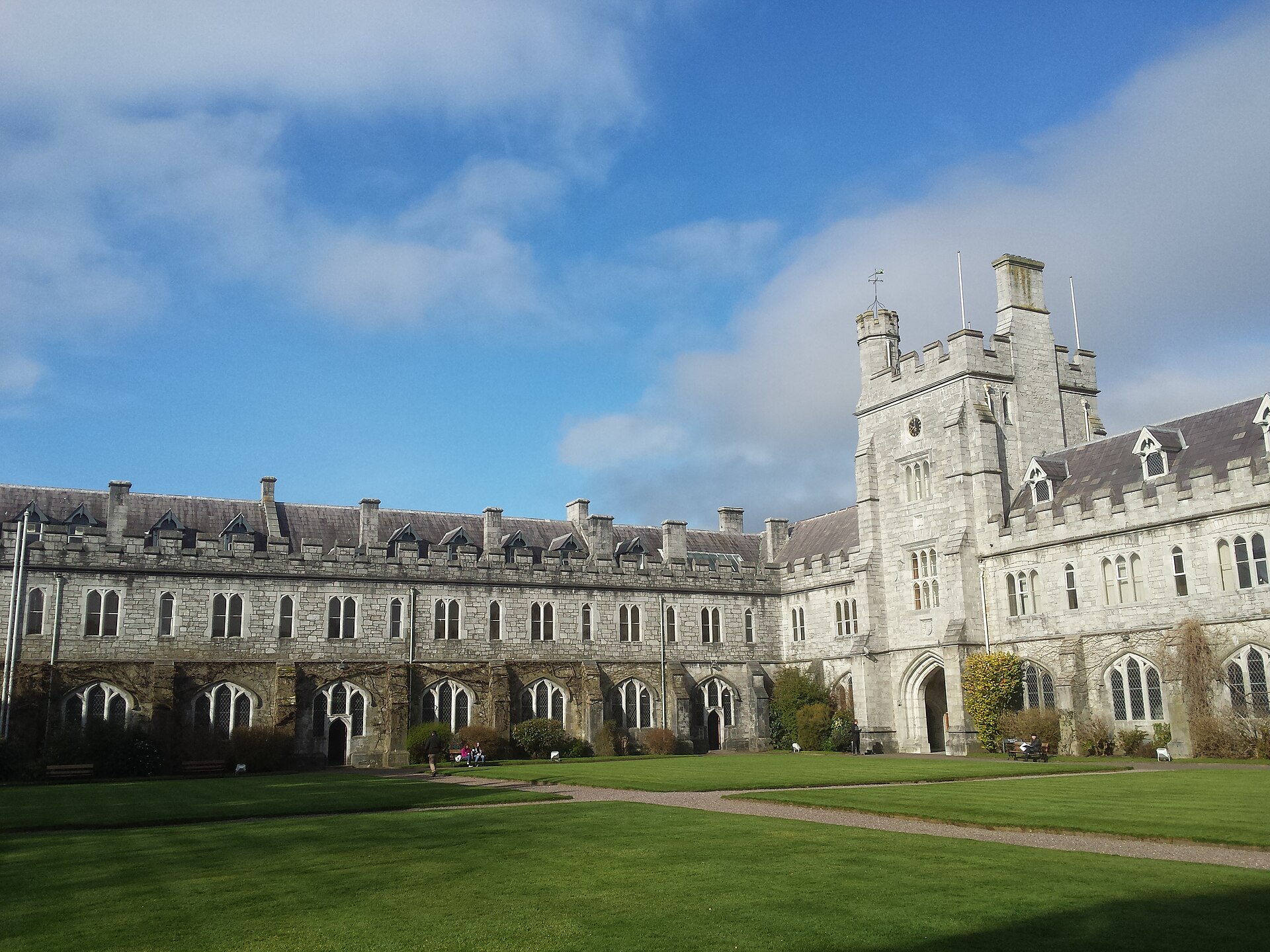
University College Cork — campus in pictures
Real, freely-licensed photographs of the campus (via Wikimedia Commons).
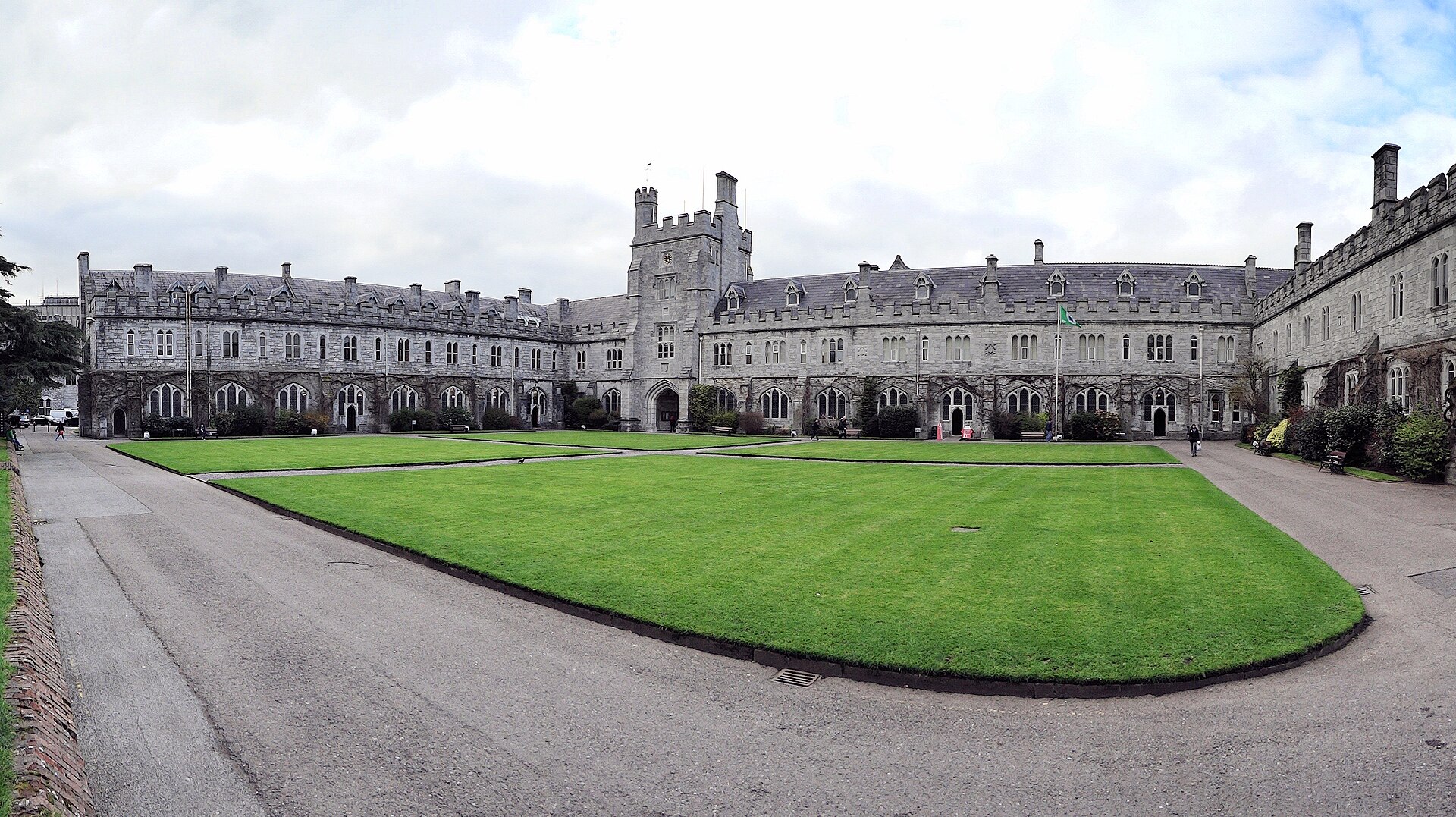
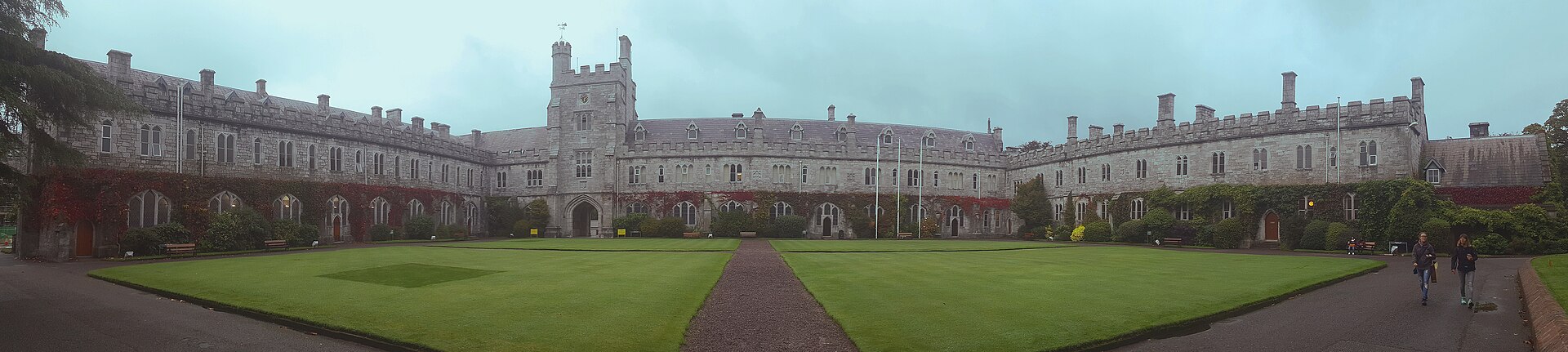
Why UCC — Research, City, and Career
UCC is not a safety school for Ireland — it is the destination school for specific disciplines and a genuinely excellent university for international students who want research access alongside a rich campus life.
SELECTIVITY
UCC Acceptance Rate & Admissions Profile
UCC admits around 55% of applicants overall, but this headline figure conceals significant variation by programme. Medicine, Dentistry, Pharmacy, and Applied Psychology are far more selective. International students compete in a separate pool from Irish/EU students (who apply via CAO points). Decisions are made on a rolling basis, so early strong applications have an advantage.
QUICK FACTS
UCC at a Glance
WHAT YOU SUBMIT
The UCC Application — What's Required
International (non-EU) undergraduate applicants apply directly to UCC through the UCCApply online portal — not through Ireland's CAO system (which is only for EU/Irish students). The application is document-based and straightforward compared to US or UK equivalents.
WHAT UCC SELECTS FOR
The Profile UCC Admits
Unlike US universities where holistic review balances academics with essays, activities, and personal narrative, UCC's international admissions is primarily qualification-based. Your academic record carries the most weight. For most programmes, strong grades in relevant subjects are the primary criterion. For professional programmes (Medicine, Dentistry, Pharmacy), additional requirements apply — HPAT-Ireland (for medicine via the CAO route, which international students don't use), programme-specific aptitude assessment, or designated agent routes for international medicine applicants. Always verify the pathway for your programme on the official admissions page. English proficiency is a firm requirement, not a discretionary factor. Applications where language thresholds are not met will not proceed regardless of academic strength.
KEY DATES
Application Deadlines for Non-EU Students
UCC processes international undergraduate applications on a rolling basis. Earlier applications receive earlier decisions (typically within 3–5 weeks of a complete application). Apply as early as possible — programme places fill before the closing dates.
Dates shown are for the 2026 intake cycle (verify on the official admissions page before applying).
| Programme | Opens | Closes | Notes |
|---|---|---|---|
| General / All Standard Programmes | 1 December 2025 | 31 May 2026 | Rolling decisions |
| Pharmacy | 1 December 2025 | 1 March 2026 | Early close |
| Applied Psychology | 1 December 2025 | 20 March 2026 | Early close |
| Computer Science & Data Science | 1 December 2025 | 8 May 2026 | Early close |
| Finance | 1 December 2025 | 12 May 2026 | Early close |
| Medicine & Dentistry | — | Via agents only | Separate international pathway |
CAMPUS & CITY
Student Life at UCC and in Cork
UCC's campus is architecturally striking — a combination of Victorian Gothic limestone buildings, contemporary research facilities, and riverside greenways that make it genuinely beautiful by any measure. The campus sits along the south branch of the River Lee, a 10-minute walk from Cork's city centre. Cork is Ireland's second city and its self-declared 'rebel' cultural capital. It has a renowned food scene (the English Market is a UNESCO-recognised landmark), a thriving live music culture, and a cost of living significantly below Dublin. Student accommodation options include on-campus UCC Villages (self-catering) and a broad private rental market in Cork's neighbourhoods. The UCC Students' Union runs hundreds of clubs and societies — from the Philosophical Society (one of Ireland's oldest debating clubs) to GAA sports, international cultural societies, STEM clubs, and arts collectives. UCC sport has produced Olympians and international rugby, soccer, and GAA players. The campus's Mardyke Arena is a state-of-the-art sports facility open to all students.
GRADUATE OUTCOMES
Where UCC Graduates Go
UCC reports that 91% of graduates are in employment or further study within a defined period after graduation. Cork's pharmaceutical and technology sector is one of the most concentrated in Europe — Apple, AstraZeneca, Johnson & Johnson, Pfizer, Eli Lilly, and Stryker all have major operations within 30 minutes of campus. For students in food science, biosciences, and medicine, UCC's alumni network is particularly powerful: the university feeds directly into multinationals, the Health Service Executive, and academic research careers globally. Law and commerce graduates are recruited by leading Irish and international firms, with many entering the Bar of Ireland or accountancy and financial services.
FAQS
Frequently Asked Questions
Do international students apply through CAO?+
No. CAO (the Central Applications Office) is only for EU/Irish applicants. Non-EU international students apply directly to UCC through the UCCApply online portal at the International Office. The process, deadlines, and entry requirements are entirely separate from the CAO system.
Can I apply for Medicine as an international student?+
Yes, but through a designated agent route only. International applicants cannot use the standard CAO/HPAT-Ireland medicine pathway. Contact UCC's International Office directly for the current list of approved agents and the separate international medicine admissions process.
What IB score do I need?+
The facts file indicates a typical IB band of 32 points for entry-level programmes. Competitive programmes like Medicine, Pharmacy, and Dentistry will require higher scores and have additional requirements. Check the specific course entry requirements on ucc.ie.
Is an IELTS score of 6.5 sufficient for all programmes?+
For most programmes, yes — IELTS 6.5 overall (with no band below 6.0) meets the general requirement. Some programmes, particularly Medicine and Nursing, may set higher thresholds. Always verify on the specific programme page before applying.
How long does an admissions decision take?+
UCC processes complete applications on a rolling basis, typically within 3–5 weeks of receiving all required documents. Incomplete applications will not be reviewed. Submit all supporting materials at the same time as your application to avoid delays.
Are there scholarships specifically for international students?+
Yes. UCC operates automatic merit-based scholarships for international undergraduate students through its Science, Engineering & Food Science (SEFS), Arts, Celtic Studies & Social Sciences (CACSSS), and Business & Law colleges. These are awarded on the basis of your academic results and do not require a separate application.
Is Cork more affordable than Dublin for student living?+
Generally yes. Private rental costs, daily living expenses, and transport costs in Cork are lower than Dublin, though Ireland as a whole is not an inexpensive country. The facts file estimates annual cost of living at approximately $14,200 USD; factor in accommodation above that figure.
What makes UCC different from University College Dublin (UCD)?+
UCC is the stronger choice for food science, microbiome and pharmaceutical research, and environment/sustainability. UCD has broader scale and more programmes. UCC's campus atmosphere is more intimate, Cork is significantly cheaper to live in, and UCC has the Tyndall National Institute embedded on campus — one of Europe's leading photonics and semiconductor research centres. Your programme matters more than the institution name for most careers in Ireland.
ACADEMIC EXPECTATIONS
Academic Standards for International Applicants at University College Cork
UCC's admissions process for non-EU international students is straightforwardly qualification-based. There is no holistic 'whole-person' review in the way US universities work — your academic transcript is the primary determinant of whether you receive an offer. This clarity is a strength of the Irish system: if your grades meet the standard for your chosen programme, you will be considered. The key academic question for international applicants is equivalency: does your qualification (IB Diploma, A-Levels, US HS Diploma + APs, Indian Class XII, or another national leaving certificate) meet the entry standard for your chosen UCC programme? Competitive programmes set higher bars, and specific subject prerequisites apply in science, engineering, medicine, and pharmacy.
ENTRY PROFILE
Academic Benchmarks
The benchmarks below reflect general entry thresholds for international undergraduate applicants. Competitive professional programmes (Medicine, Dentistry, Pharmacy, Applied Psychology) consistently require significantly higher results.
STANDARDISED TESTS
Standardised Test Policy
UCC's test policy for international undergraduate admissions is 'optional' for general standardised tests such as SAT and ACT. These are not required and do not form part of the standard admissions assessment for non-EU students. Your national school-leaving qualification is the primary academic credential reviewed. However, English language tests (IELTS, TOEFL, Pearson PTE) are mandatory for non-native English speakers and are a firm requirement — not optional.
LANGUAGE TESTS
English Language Requirements
English proficiency is a firm admission requirement for non-native speakers. UCC accepts IELTS Academic, TOEFL iBT, Pearson PTE Academic, and Duolingo English Test.
Higher thresholds apply to some programmes, particularly in Medicine, Nursing, and Health Sciences. Always check your specific programme page. Tests must be from a single sitting.
| Test | Overall Minimum | Band Requirement | Validity |
|---|---|---|---|
| IELTS Academic | 6.5 | No band below 6.0 | 2 years |
| TOEFL iBT | 90 | Check programme-specific requirements | 2 years |
| Duolingo English Test | 120 | Check programme-specific requirements | 2 years |
| Pearson PTE Academic | Contact admissions | Accepted — verify score requirement | 2 years |
INTERNATIONAL QUALIFICATIONS
How UCC Reads IB, A-Levels, and Other International Qualifications
UCC assesses international qualifications against the Irish Leaving Certificate points scale and programme-specific subject requirements. The key is understanding both: (a) your overall grade level vs. the threshold for your programme, and (b) whether you have the required subjects at the required level.
SUBJECT REQUIREMENTS
What Subjects UCC Looks For by Discipline
Subject prerequisites vary by programme and are enforced. Applying for a programme without meeting subject prerequisites is unlikely to succeed. Check the specific course entry requirements before applying.
ENGLISH PROFICIENCY
Accepted English Language Tests
UCC accepts multiple English language proficiency tests. All tests must be from a single sitting and completed within two years prior to your programme start date. If English was your medium of instruction throughout secondary school in a recognised English-medium institution, an exemption may apply — contact the International Office to verify.
| Test | Minimum | Notes |
|---|---|---|
| IELTS Academic | 6.5 overall | No individual band below 6.0 |
| TOEFL iBT | 90 | Programme-specific requirements may be higher |
| Duolingo English Test | 120 | Check programme pages for acceptability |
| Pearson PTE Academic | Verify with admissions | Accepted; contact International Office for exact threshold |
YEAR-BY-YEAR ROADMAP
Building Your Academic Profile for UCC
Because UCC's international admissions is primarily grade-based, your secondary school performance trajectory matters enormously. Build a profile that speaks clearly to your intended programme.
COMMON PITFALLS
Academic Application Mistakes to Avoid
- Applying via CAO as an international student — CAO is only for EU/Irish residents; non-EU applicants must use UCCApply directly.
- Missing early programme-specific deadlines — Pharmacy (March 1), Applied Psychology (March 20), Computer Science (May 8), and Finance (May 12) close well before the general May 31 date.
- Submitting an incomplete application and expecting a decision — UCC only reviews complete applications. Missing transcripts or language scores delay the entire process.
- Underestimating English test difficulty — IELTS 6.5 requires genuine preparation; sitting the test without focused study risks needing a retake and missing application windows.
- Assuming SAT/ACT scores substitute for qualifications — they don't. Your national school-leaving qualification is what UCC assesses; SAT/ACT are supplementary at best.
- Not checking subject prerequisites — applying for Medicine without HL Biology and Chemistry, or Engineering without HL Mathematics, will result in rejection regardless of overall grade.
- Assuming the general acceptance rate (55%) applies to your target programme — Medicine, Pharmacy, Dentistry, and Applied Psychology are significantly more selective.
- Leaving IB predicted grades vague — for rolling admissions, UCC may make a conditional offer based on predicted grades; ensure your school provides clear, subject-specific predictions.
COST & FUNDING
Understanding the Cost of UCC for International Students
UCC is a public Irish university, which means EU students pay government-set tuition fees significantly lower than non-EU rates. As a non-EU international student, you pay the full non-EU fee — but UCC remains meaningfully cheaper than private universities in the US, UK, or Australia for comparable programmes. Cork city's lower cost of living versus Dublin also reduces the total financial burden. UCC offers automatic merit-based scholarships for international undergraduates through its colleges, reducing effective tuition for strong applicants. Understanding the full cost picture — tuition, living, travel, and available funding — is essential before committing.
ANNUAL COSTS
Cost of Attendance Breakdown
Figures below are annual estimates in USD. Actual tuition in EUR will vary with exchange rates. Verify current fee schedules on ucc.ie/en/financeoffice/fees/schedules/ before applying.
All figures are annual estimates from the university facts profile. Actual costs depend on programme, accommodation choice, and EUR/USD exchange rate at time of payment.
| Component | Annual Estimate Usd | Notes |
|---|---|---|
| Tuition (non-EU international) | $24,000 | Varies by programme; Medicine and professional programmes higher |
| Cost of living (Cork) | $14,200 | Accommodation, food, transport, personal |
| Total estimated cost of attendance | $40,000 | Including tuition + living |
| Application fee | $50 | Non-refundable; paid via UCCApply |
FINANCIAL AID
Financial Aid Policy for International Students
As a public Irish university funded primarily for domestic and EU students, UCC does not offer need-blind financial aid or large need-based grants to international (non-EU) undergraduate students in the way some US institutions do. Financial support for international undergraduates comes primarily through merit-based scholarships administered by individual colleges. The average aid percentage from the facts file is approximately 15% of tuition costs for recipients — meaning scholarships partially offset rather than fully cover tuition for most recipients. International students are expected to demonstrate the financial capacity to fund their studies as part of the student visa application to the Irish immigration authorities.
SCHOLARSHIPS
Named Scholarships for International Undergraduates
UCC awards 1,000 scholarships and bursaries annually across domestic and international students. The following are specifically relevant to non-EU international undergraduate applicants. Automatic awards require no separate application — they are assessed on the basis of your academic results.
COST REALITY
The True Affordability of UCC
Compared to US private universities ($60,000–$90,000 per year all-in), UK Russell Group universities (£30,000–£45,000+ per year for internationals), and leading Australian universities, UCC's total cost of attendance of approximately $40,000 USD per year represents genuine value for a research-active, internationally recognised institution. The primary financial risk for international students in Ireland is accommodation costs, which have risen significantly in recent years. UCC on-campus accommodation is limited — early application is essential, and many students rent privately in Cork. Students should budget for a minimum of €8,000–€12,000 per year for accommodation depending on whether they secure on-campus housing. Factor in an insurance plan, student visa fees, and return travel when calculating total cost. UCC does not have a no-loan, no-debt financial aid model. The institution does not meet demonstrated need for international students. Plan on either self-funding, scholarship support, or securing an education loan in your home country before committing.
UCC does not publish income-band aid tables for international undergraduates. The figures above are based on the university facts profile and general publicly available cost information.
FUNDING PATHWAY
How to Secure Funding for UCC
COST FAQS
Cost & Aid Frequently Asked Questions
Does UCC offer need-based financial aid for international students?+
No — UCC does not have a formal need-based aid programme for non-EU international undergraduate students comparable to US Ivy League need-blind admissions. Support is primarily merit-based scholarships through individual colleges.
Are the college scholarships automatically applied, or do I need to apply separately?+
The SEFS, CACSSS, Business/Law, and Nursing college scholarships for international undergraduates are automatic — they are assessed on the basis of your academic profile at the time of admission. No separate scholarship application is required for these awards.
What is the actual annual tuition in EUR for a non-EU student?+
The facts profile gives $24,000 USD as an estimate. Actual EUR fees vary by programme and are set annually — verify the current fee schedule at ucc.ie/en/financeoffice/fees/schedules/ before applying. Professional programmes (Medicine, Dentistry) will be substantially higher.
Is UCC cheaper than studying in the UK, US, or Australia?+
For most non-medicine programmes, yes — UCC's $40,000 USD all-in annual estimate is meaningfully below comparable UK (London) or US private university costs. Cork's cost of living is particularly advantageous compared to Dublin, London, Sydney, or any major US city.
Do I need to show proof of finances for my student visa?+
Yes. Ireland's student visa requires evidence that you can fund your tuition and living costs. Typically you need to demonstrate access to a year's tuition plus living costs. Scholarship award letters from UCC count toward this. Check inis.gov.ie for current requirements.
APPLICATION & PERSONAL STATEMENT
Applying to UCC — Ireland's Direct, Grades-First System
UCC's admissions system for international students is fundamentally different from US or UK university applications. There is no Common App, no Coalition, no UCAS personal statement in the traditional sense, and no set of university-specific supplemental essays. International (non-EU) students apply directly through UCCApply, and the primary criterion is your academic qualification. This does not mean written materials are irrelevant. For competitive professional programmes — Medicine, Dentistry, Pharmacy, Applied Psychology — and for automatic scholarship consideration, a well-crafted personal statement or motivation letter can distinguish your application. Understanding where written statements matter and where they don't is the strategic key to applying effectively to UCC.
APPLICATION SYSTEM
How the UCC Application Actually Works
Non-EU international undergraduate students apply through UCC's UCCApply portal — a direct online application system managed by the International Office. You may apply for up to two programmes in a single application.
WHEN A STATEMENT IS REQUIRED
Personal Statement Guidance for Competitive Programmes
For programmes that require a personal statement or motivation letter (Medicine, Pharmacy, Applied Psychology, and others as specified on the programme page), UCC typically asks you to write about your motivation for the programme, relevant experience, and future goals. No standardised prompt text is published — the invitation to submit a statement will appear in the programme's application requirements. The guidance below reflects general expectations for Irish university medicine and professional programme statements.
WRITING STRATEGY
Writing a Strong UCC Programme Statement
If your chosen programme requires a personal statement, approach it as a professional document — not a creative narrative. Irish admissions offices and academic selectors for professional programmes value clarity, evidence, and specificity over emotive storytelling. A strong UCC programme statement covers three things: why this discipline (grounded in specific experience), why now and why you're academically prepared (your qualifications and relevant preparation), and why UCC specifically (research centres, faculty, programme structure). The last element is the one most applicants neglect. Visiting the programme page, reading the module list, and naming specific UCC research groups or clinical placements that align with your goals will immediately distinguish your statement from generic ones. Length is typically 500–800 words unless the programme specifies otherwise. Write in clear, direct prose — Irish academic culture values intellectual directness over elaborate rhetoric. Have a qualified reader (teacher, counsellor, or writing professional) review it before submission.
FOR SCHOLARSHIP APPLICATIONS
Scholarship Application Strategy
The most significant scholarships requiring written applications for UCC international undergraduates are external awards. The automatic college scholarships require no statement. For written scholarship applications, the strategy differs from programme statements.
WHAT TO WRITE ABOUT
Choosing the Right Content for Your Statement
For UCC programme statements, topic selection is less about 'standing out' through unusual stories and more about demonstrating genuine fit and preparedness for the programme. Irish academic selectors are assessing: Do you understand what this degree involves? Do you have the academic background for it? Is your motivation genuine and specific to this field? Avoid: Vague statements about wanting to 'make a difference'. Copying generic internet templates about medicine or law. Writing about secondary school achievements without connecting them to the programme. Mentioning other universities you're applying to. Focus on: One or two specific experiences that shaped your commitment to the field. The specific academic preparation you've done (HL subjects, relevant coursework, projects, research). One specific aspect of UCC's programme, research, or resources that genuinely excites you and that you've looked up.
- One personal experience that directly connects to why you want this specific discipline
- Your most relevant academic preparation — subjects, projects, or independent study
- A specific UCC resource, research centre, or programme feature that you have researched and can name
- Your career or further study intention (keep it general but purposeful — 'research in microbiome science', not 'I want to cure cancer')
- Why Cork and Ireland represent a meaningful place to pursue this — optional but can strengthen the statement
WHAT TO AVOID
Common Statement and Application Mistakes
- Submitting a US Common App personal statement as your UCC programme statement — the format, tone, and expectations are entirely different.
- Writing a generic statement that could apply to any university — admissions selectors can spot these immediately.
- Focusing on childhood memories or early inspirations with no connection to current academic readiness — Irish selectors are more interested in what you're doing now than what you felt aged ten.
- Ignoring the programme-specific requirements — some UCC courses do not require a statement; submitting one unsolicited is harmless, but failing to submit one that IS required is disqualifying.
- Applying for two very different programmes without tailoring your statement — if you apply for Medicine and Commerce on the same application, the personal statement needs to reflect that your primary ambition is clear.
- Writing a statement that's over 1,000 words without being asked — keep it tight and direct. Irish academic culture prizes economy of expression.
- Not checking whether your chosen programme requires the statement at all — confirm on the programme page at ucc.ie before writing.
APPLICATION FAQS
Personal Statement & Application FAQs
Do I need to write a personal statement to apply to UCC as an international student?+
Not for most standard undergraduate programmes. UCC's non-EU admissions is grades-based for most degrees. A personal statement or motivation letter is required for specific competitive programmes (Medicine, Pharmacy, Applied Psychology, and others as specified on the programme page) and for certain scholarship applications.
Is there a UCAS-style personal statement required for UCC?+
No. UCC international students do not apply through UCAS (which is only for UK universities). There is no equivalent one-statement-covers-all system for UCC international admissions. Where a statement is required, it is programme-specific and submitted through UCCApply.
How long should a UCC personal statement be?+
No universal word limit is set by UCC for programme statements, but aim for 500–800 words unless the programme specifies otherwise. Direct, evidence-based writing is more effective than length.
Can I apply to two programmes with one personal statement?+
If you apply to two programmes and both require a statement, ensure the statement is appropriate for your primary programme of interest. If the two programmes are very different (e.g., Medicine and Commerce), reconsider whether this combination makes strategic sense — your statement will need to reflect a coherent set of interests.
What is the UCCApply system and how do I access it?+
UCCApply is UCC's online portal for non-EU international undergraduate applications. Access it through ucc.ie. Applications open 1 December each year. You will need to create an account, fill in your academic and personal details, upload supporting documents, and submit your application and application fee through the portal.
Does UCC interview international applicants?+
Interviews are not a standard part of the UCC international undergraduate admissions process for most programmes. Some professional programmes (Medicine through the agent pathway, Applied Psychology) may include an interview or aptitude assessment component. Verify on the specific programme page.
What should I write about in a UCC scholarship statement?+
For competitive external awards like the Government of Ireland Scholarships, focus on: your academic distinction, your specific research or study focus aligned with the university's strengths, what you will contribute during and after your time in Ireland, and your future plans. Be specific about UCC — name research groups, programmes, or facilities. Generic scholarship statements are rarely successful.
Courses — schools, degrees & intake
55 degrees across 6 groupings.
College of Arts, Celtic Studies & Social Sciences · 19 degrees
Arts
Arts (International)
Arts - Music
Anthropology
Applied Psychology
Criminology
Digital Humanities & Information Technology
Early Years and Childhood Studies
Education - Gaeilge
English
Film and Screen Media
Government and Political Science
Physical Education, Sports Studies and Arts
Psychology and Computing
Social Science
Social Work
Theatre and Performative Practices
World Languages
Youth and Community Work
Cork University Business School · 8 degrees
Accounting
Applied Economics
Business Information Systems
Commerce
Finance
Food Marketing and Entrepreneurship
International Business with Languages
International Development
College of Business & Law · 3 degrees
BCL (Law Pathways)
Law and French
Law and Business
College of Science, Engineering & Food Science · 15 degrees
Agricultural Science
Architecture
Biological and Chemical Sciences
Biological, Earth and Environmental Sciences
Chemical Sciences
Computer Science
Data Science and Artificial Intelligence
Engineering
Food Science
Genetics
Mathematical Sciences
Nutritional Sciences
Physics and Astrophysics
Science Education
Sustainability
College of Medicine & Health · 5 degrees
Medical and Health Sciences
Occupational Therapy
Pharmacy
Public Health Sciences
Speech and Language Therapy
School of Nursing & Midwifery · 5 degrees
Nursing (General)
Nursing (Mental Health)
Nursing (Children's and General Integrated)
Nursing (Intellectual Disability)
Midwifery
Want your real chances at University College Cork?
Create a free TYCHR account for your personalised admit-chance, a shortlist you can track, exact entry requirements, and essay + counselling help.