Universiti Teknologi Malaysia
Johor Bahru, Malaysia · Suburban
JOHOR BAHRU, MALAYSIA
Universiti Teknologi Malaysia Admissions Guide for International Students
Universiti Teknologi Malaysia (UTM) is Malaysia's flagship engineering and technology research university — a sprawling, green campus in Johor Bahru that sits just across the causeway from Singapore, ranked #181 globally by QS and fifth among all Malaysian universities. For international students seeking a rigorous STEM education at a fraction of what comparable programmes cost in the West, UTM offers research depth, a genuinely international graduate community, and a strategic location in one of Southeast Asia's fastest-growing economic corridors.
Whether you are pursuing an undergraduate degree in Civil Engineering or a research Master's in Computing, this guide walks you through UTM's direct-application process, academic expectations, cost structure, and scholarship landscape so you can plan your application with confidence.
Campus
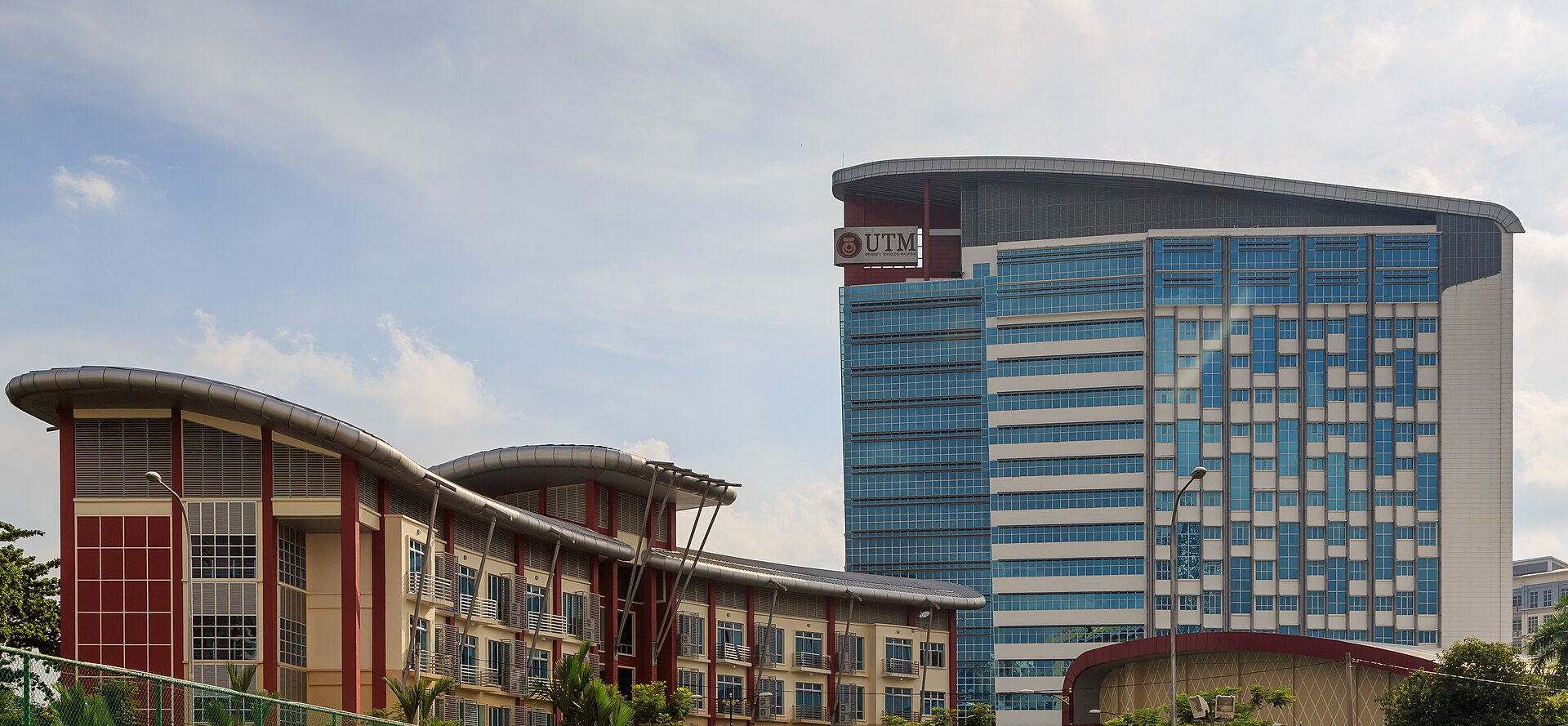
Universiti Teknologi Malaysia — campus in pictures
Real, freely-licensed photographs of the campus (via Wikimedia Commons).
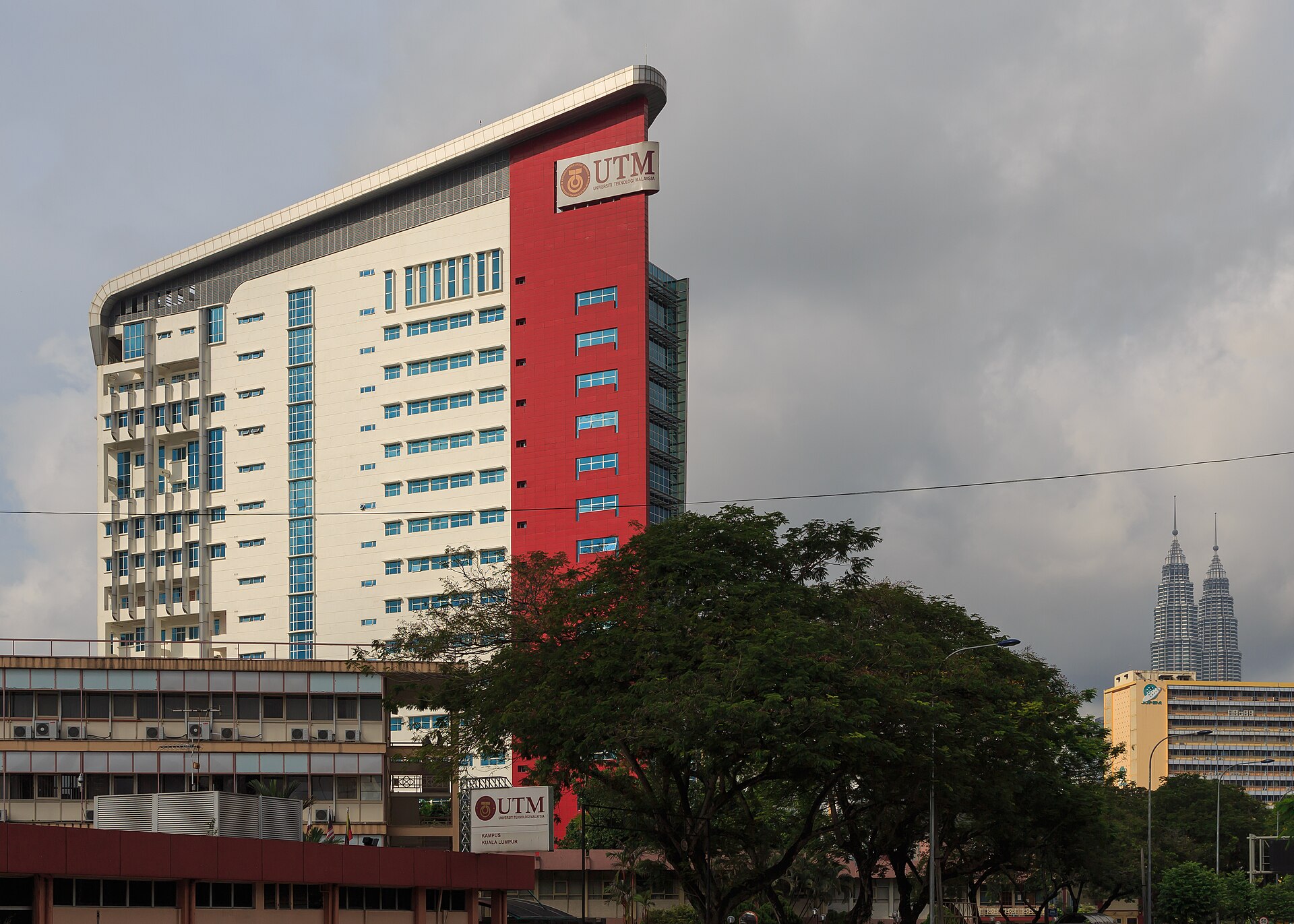
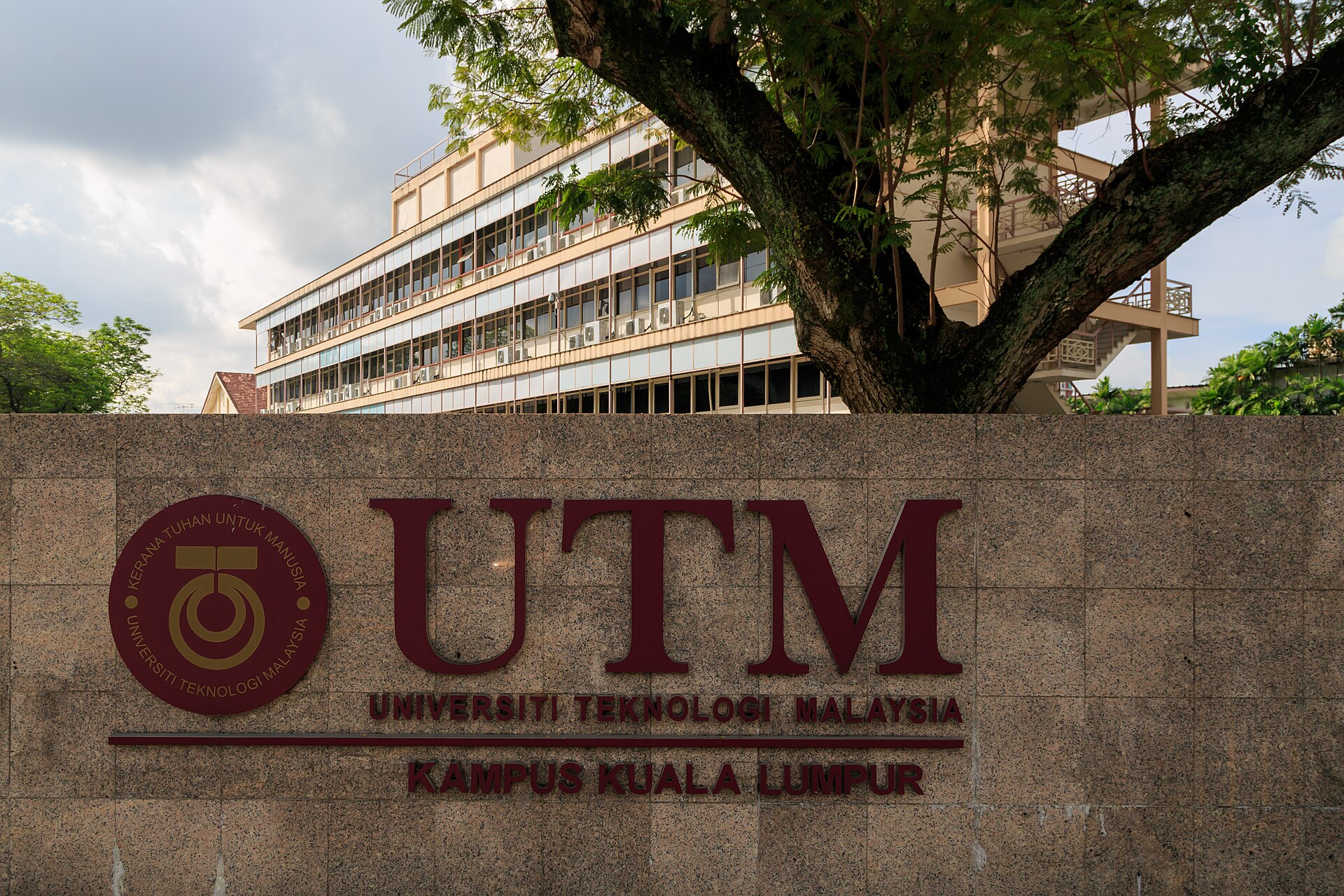
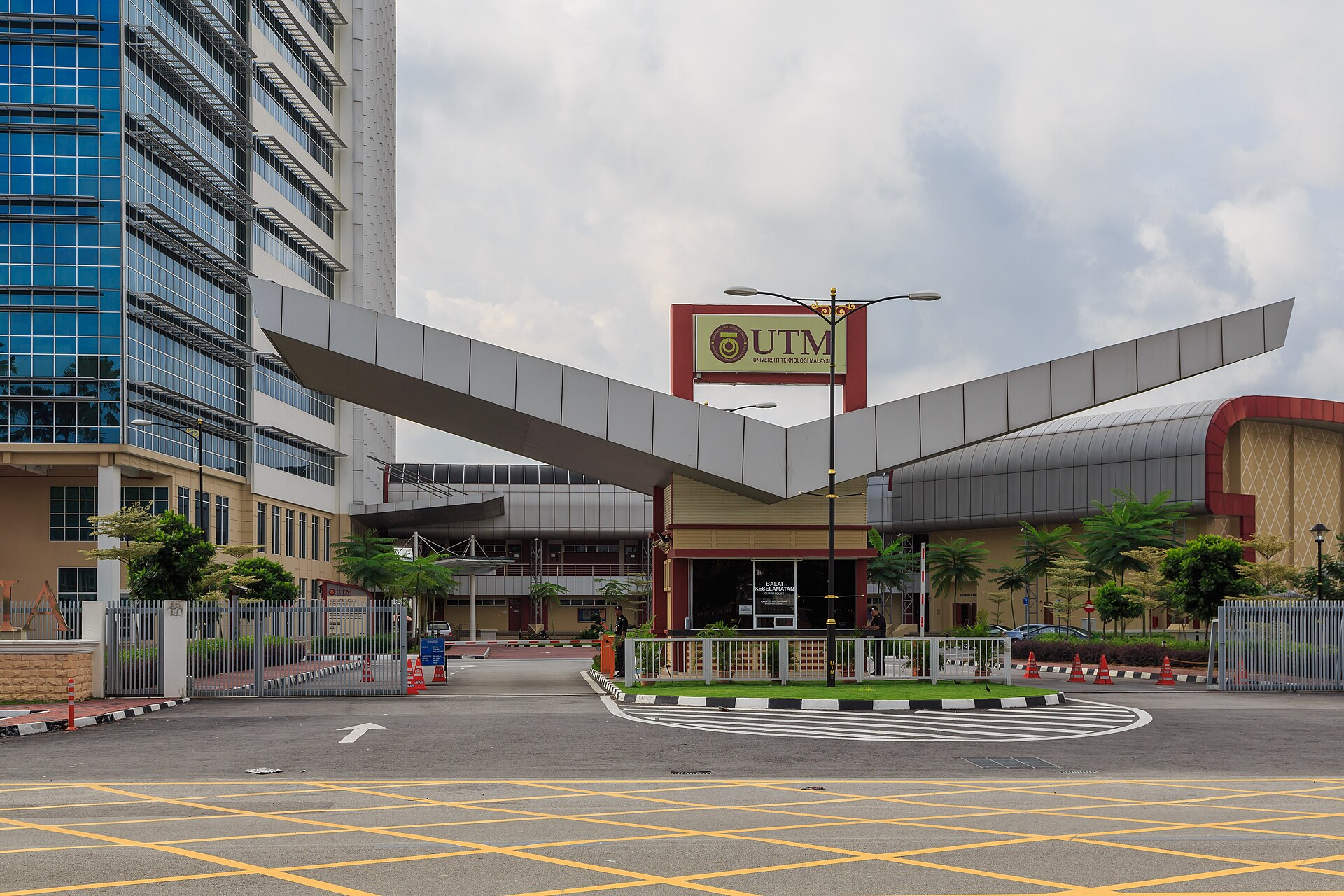
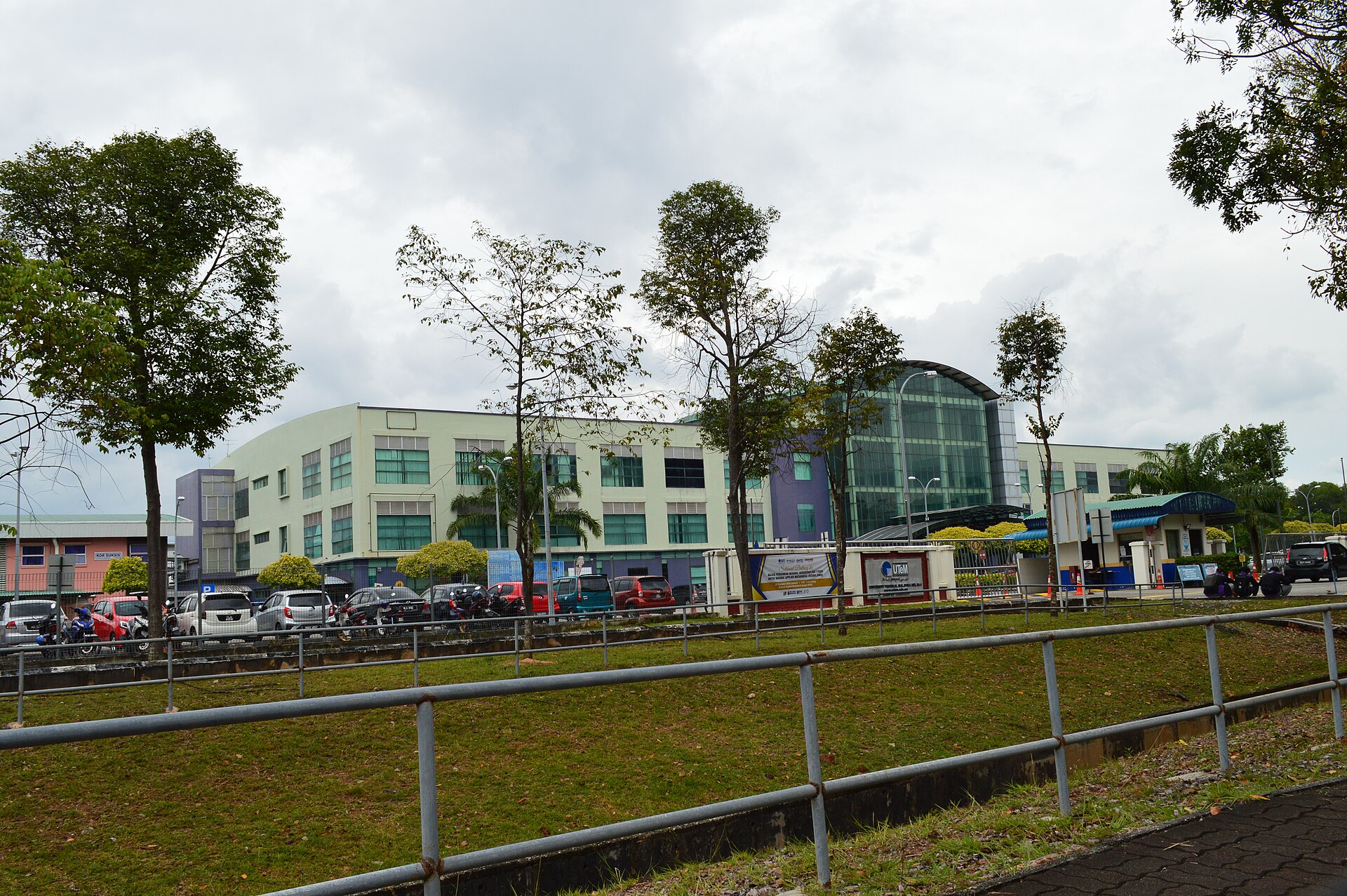
WHY UTM
Why Choose UTM — Malaysia's Premier Engineering University
UTM has spent five decades building one of Southeast Asia's most respected engineering and technology ecosystems. Here is what sets it apart for international applicants.
SELECTIVITY
How Selective Is UTM?
UTM admits approximately 30% of applicants across all programmes, but competition varies considerably by faculty and programme. Engineering programmes attracting international applicants from the Gulf, South Asia, and Africa tend to be more competitive in practice. The IB minimum benchmark sits at a total score of 30; the minimum GPA accepted is 2.75 (out of 4.0).
Acceptance is primarily merit-based: UTM evaluates prior academic results, English proficiency, and — for postgraduate research programmes — the quality of the research proposal and supervisor match. There are no standardised tests (SAT/ACT/GRE) required; UTM's test policy is optional for such exams.
AT A GLANCE
UTM Quick Facts
APPLICATION COMPONENTS
What Your UTM Application Consists Of
UTM uses a direct online application system — there is no third-party portal like Common App or UCAS. All components are submitted through the UTM Admissions portal (admission.utm.my). Postgraduate applicants have additional requirements.
ADMISSION PROFILE
The Profile UTM Admits
UTM is primarily an academically selective institution that evaluates applicants on academic results and English proficiency. There is no holistic 'extracurricular' evaluation equivalent to US admissions. That said, the following attributes strengthen an application.
INTAKES & DEADLINES
Application Intakes
UTM offers two main intakes per year. The exact application-open and closing dates vary by faculty and programme — always confirm on the official admissions portal. The dates below are indicative; verify at admission.utm.my.
International students should apply at least three to four months before the intended intake to allow time for offer processing and the Malaysian student-visa (EMGS) application.
| Intake | Approx Start | Application Window | Notes |
|---|---|---|---|
| Semester I (Main Intake) | September / October | Typically March – June | Largest cohort; more programme availability |
| Semester II | February / March | Typically September – November | Smaller cohort; not all programmes available |
CAMPUS & CITY LIFE
Life at UTM
UTM's main campus in Johor Bahru spans over 1,000 acres of tropical greenery, making it one of the largest university campuses in Malaysia. On-campus accommodation is available for international students, with hostels located across the campus and managed by the Residential College system.
Johor Bahru — Malaysia's second-largest city — offers a vibrant blend of Malay, Chinese, and Indian cultures. The city is rapidly modernising thanks to the Iskandar Malaysia economic zone and is less than an hour by road from central Singapore, giving students access to a major global city on weekends. Cost of living is significantly lower than Singapore or Kuala Lumpur.
CAREER OUTCOMES
Where UTM Graduates Go
UTM's graduate employment rate stands at 80%, with engineering and computing graduates among the most sought-after by employers in Malaysia, Singapore, and the Gulf region. Average starting salaries are approximately USD 12,000 per year — a figure that must be read in the context of Malaysia's much lower cost of living compared to Western economies.
UTM alumni are found across multinational engineering and infrastructure firms, oil-and-gas companies (notably Petronas), technology companies, government agencies, and academia. The university's proximity to Singapore's job market also opens paths to significantly higher-paying roles for graduates willing to work across the border.
Cards
Stats
FAQs
Frequently Asked Questions
Are undergraduate programmes at UTM taught in English?+
Many undergraduate engineering programmes are taught predominantly in Bahasa Malaysia (the national language), with some technical content and textbooks in English. A growing number of programmes — especially at postgraduate level — are delivered fully in English. International students should confirm the language of instruction for their specific programme directly with the faculty before applying.
Does UTM have a satellite campus?+
Yes. UTM has a second campus in Kuala Lumpur (UTM Kuala Lumpur) which focuses primarily on postgraduate programmes and certain specialised undergraduate offerings. Check which campus your programme is based at when you apply.
Do I need to take the SAT, ACT, or GRE to apply?+
No. UTM's test policy is optional with respect to SAT/ACT/GRE. Admissions are based on prior academic qualifications (A-Level, IB, national board results) and English proficiency tests (IELTS/TOEFL/Duolingo).
How do I apply for a Malaysian student visa?+
Once you receive an official offer letter from UTM, the university's international office will guide you through the EMGS (Education Malaysia Global Services) process, which manages the Malaysian Student Pass. Apply as early as possible — EMGS processing can take four to eight weeks.
Is on-campus accommodation guaranteed for international students?+
UTM generally prioritises accommodation for first-year international students in its residential colleges. Places are not unlimited, however, so apply for accommodation promptly after accepting your offer. Johor Bahru also has affordable private housing and apartments close to campus.
What are UTM's English language minimum requirements?+
The minimum accepted scores are IELTS 6.0, TOEFL iBT 80, or Duolingo 100. Some programmes or faculties may set higher requirements. Applicants whose prior education was conducted entirely in English may apply for an exemption — confirm with your faculty.
Can I work part-time while studying at UTM?+
International student pass holders in Malaysia are generally permitted to work part-time (up to 20 hours per week during semester breaks, subject to conditions). Regulations can change; check with UTM International and Malaysian Immigration for the current rules.
How close is UTM to Singapore?+
UTM's Johor Bahru campus is approximately 25–40 minutes by road from central Singapore (depending on Causeway traffic). This gives students realistic access to Singapore's internship market, leisure activities, and career opportunities while benefiting from Malaysia's much lower cost of living.
ACADEMICS
Academic Expectations at UTM for International Students
UTM is a research-intensive engineering and technology university. Its academic environment rewards mathematical rigour, applied problem-solving, and disciplined study habits. International students typically find the workload in engineering programmes demanding, particularly in mathematics, physics, and technical drawing subjects in the first two years.
This section walks you through UTM's academic profile, how it reads your qualifications, and what you need to build a competitive application.
ACADEMIC BENCHMARKS
Academic Profile — What the Numbers Say
UTM evaluates academic performance through your prior qualification results. The benchmarks below are drawn from the official facts file. Competitive applicants exceed the minimums, particularly for high-demand programmes like Computer Science and Electrical Engineering.
TEST POLICY
Standardised Tests — Optional
UTM does not require SAT, ACT, or GRE scores for admission to undergraduate or postgraduate programmes. Its test policy is optional: submitting such scores will not advantage your application in the conventional sense. The core evaluation criteria are your pre-university or undergraduate academic results and your English language proficiency test scores.
For Malaysian and ASEAN applicants, SPM, STPM, UEC, and A-Level results are the primary academic benchmarks. For international applicants, IB Diploma, A-Level, and national board equivalent qualifications are all recognised. UTM publishes subject-specific grade requirements; always check the programme-level entry requirements on the official admissions portal.
SAT / ACT / GRE
SAT, ACT and GRE — What You Need to Know
UTM does not require SAT or ACT scores for undergraduate admission, nor GRE scores for postgraduate entry. These tests are not part of UTM's formal evaluation framework. If you have taken them, you may include scores in your application file as supplementary evidence of academic ability, but they carry no official weight in the admissions decision.
This reflects the Malaysian higher-education context: admission is based on your national or international pre-university qualifications (IB, A-Level, or equivalent) rather than on standardised aptitude tests. International students from systems that emphasise SAT/ACT (such as the United States or those who sat US-curriculum schooling) should focus their preparation on securing strong IB or A-Level results and meeting the English proficiency requirements — not on optimising a test score UTM will not formally evaluate.
IB & A-LEVEL
How UTM Reads IB and A-Level Results
UTM recognises the International Baccalaureate Diploma and A-Level qualifications for international undergraduate admission. The IB minimum benchmark is a total score of 30. Competitive engineering programmes typically expect strong results in Higher Level Mathematics and Physics (or Chemistry for Chemical Engineering).
A-Level applicants are evaluated on their grade outcomes in relevant subjects. Two or three A-Level subjects are the norm, with subject requirements matching the intended engineering or computing discipline. Conditional offers are common: UTM may issue an offer contingent on achieving specified grades in your final examinations.
SUBJECT PREPARATION
Subject-Level Preparation That Matters
Engineering and technology programmes at UTM demand a strong pre-university foundation in specific subjects. Students who have not taken these subjects at an advanced level will find the first-year curriculum very demanding.
ENGLISH PROFICIENCY
English Language Requirements
All international students must demonstrate English proficiency unless they completed their prior education in a recognised English-medium institution (exemption must be confirmed with the relevant faculty). The minimum scores accepted are:
Scores are valid for two years. Ensure your test date is within the validity window at the time of your intended intake.
| Test | Minimum Score | Notes |
|---|---|---|
| IELTS Academic | 6.0 | Some programmes or faculties may require 6.5 — verify per programme |
| TOEFL iBT | 80 | Internet-based test; paper-based TOEFL generally not accepted |
| Duolingo English Test | 100 | Accepted as an alternative; check with your faculty |
BUILDING YOUR PROFILE
A Year-by-Year Roadmap to a Strong UTM Application
UTM's direct-application model rewards consistent academic performance above all else. Use this timeline to build a competitive profile.
COMMON PITFALLS
Academic Mistakes to Avoid
International applicants to UTM regularly make a handful of avoidable errors. Review this list before you apply.
Items
- Applying without checking whether the specific programme is taught in English or Bahasa Malaysia — this is the single most common source of disappointment for international undergraduates.
- Submitting uncertified or unnotarised academic documents — UTM requires certified copies; originals or un-certified photocopies will lead to delays or rejection.
- Underestimating the EMGS visa timeline — do not book flights until your student pass is approved; allow at least six to eight weeks after receiving the offer letter.
- Missing the English proficiency exemption confirmation step — assuming you are exempt without written confirmation from the faculty is a risky error.
- For postgraduate research applicants: submitting a vague or unfocused research proposal without first engaging with a potential supervisor significantly reduces admission chances.
- Waiting until the semester before to apply — the main intake (September) fills up, and late international applicants may miss hostel allocation and financial-aid windows.
- Confusing the Johor Bahru main campus with UTM Kuala Lumpur — different programmes run at each campus; confirm which campus your offer is for before accepting.
Faqs
Can I transfer credits from my home institution to UTM?+
Credit transfers are considered case by case by UTM's Academic Management Division. There is no blanket credit-transfer agreement; each subject is evaluated individually. Bring official transcripts and syllabuses for subjects you wish to transfer.
Is UTM accredited internationally?+
UTM's engineering programmes are accredited by the Engineering Accreditation Council (EAC) Malaysia and are recognised by FEANI (European Federation of National Engineering Associations) through Washington Accord membership — meaning UTM engineering degrees are recognised by signatory countries including the UK, USA, Australia, and Canada (verify current status at the time of application).
COST & AID
Cost of Studying at UTM An Honest Breakdown for International Students
One of UTM's most compelling advantages is its affordability. As a Malaysian public research university, it operates at tuition levels that are dramatically lower than comparable ranked institutions in the UK, Australia, or the US. For international students from developing economies in particular, UTM offers a genuine value proposition: research-university quality at a cost that does not require six-figure debt.
This section provides honest, facts-based cost figures and explains the financial-aid landscape — including what is genuinely available to international students and what is not.
COST BREAKDOWN
Annual Cost Estimates for International Students
The figures below are sourced from the university's facts data. All amounts are in USD and represent approximate annual estimates. Actual costs vary by programme, campus (Johor Bahru vs Kuala Lumpur), and individual lifestyle. Application fee is one-time.
Costs are lower at UTM than at most universities of equivalent ranking in English-speaking countries. Johor Bahru's cost of living is significantly lower than Kuala Lumpur, further increasing UTM's affordability advantage.
| Component | Estimated Annual Usd | Notes |
|---|---|---|
| Tuition (International Rate) | ~USD 4,573 | Approximate; varies by programme and faculty |
| Cost of Living (Johor Bahru) | ~USD 6,000 | Accommodation, food, transport, personal expenses |
| Total Cost of Attendance | ~USD 8,960 | Tuition + living; comprehensive annual estimate |
| Application Fee | ~USD 30 | One-time, non-refundable |
FINANCIAL AID
Financial Aid for International Students
UTM does not operate a need-blind financial-aid system in the US sense. Most financial support available to international students comes in the form of named scholarships and research assistantships (for postgraduate students) rather than need-based grants.
Because UTM's international tuition is already substantially lower than Western peers, the financial-aid landscape is different in character: the primary question for most international students is covering living costs and travel, not six-figure tuition bills. Scholarship support is available but competitive — only a minority of international students receive institutional funding.
No average aid percentage data is available in UTM's published facts. Aid figures for specific schemes should be verified directly with the Bursary or International Office.
SCHOLARSHIPS
Scholarship Opportunities at UTM
UTM and the Malaysian government offer several scholarship and funding pathways for international students. Verify current availability, amounts, and eligibility at the official scholarship pages, as these change from year to year.
AFFORDABILITY
The Real Cost Picture
At approximately USD 8,960 per year in total cost of attendance, UTM is among the most affordable QS top-200 universities globally for international students. To put this in context: four years at UTM would cost roughly what one year of tuition alone costs at a mid-tier US private university.
Johor Bahru's cost of living is genuinely low by global standards. Affordable on-campus housing, inexpensive campus canteen food, and low local transport costs mean that many international students can live comfortably within the USD 500–600 per month living budget range. Students willing to share off-campus apartments can live for even less.
Remember that annual salary data (UTM graduates averaging approximately USD 12,000/year in Malaysia) reflects Malaysian salary scales — not those of Singapore or Western markets. Graduates who cross the Causeway to work in Singapore or secure international positions often earn significantly more.
HOW TO APPLY FOR AID
Steps to Secure Scholarships and Financial Support
COST FAQs
Cost & Aid — Frequently Asked Questions
Does UTM offer financial aid based on financial need?+
Not systematically in the manner of US need-blind institutions. Most aid is merit- or research-based. If financial need is a concern, the Malaysia International Scholarship and Research Assistantships are the most realistic options for postgraduate students. Undergraduate financial-need support is limited.
Are there tuition-fee waivers for international students?+
Some scholarship schemes — particularly for postgraduate research students — include full or partial tuition waivers. These are typically tied to specific grants held by supervisors or to competitive institutional schemes. Confirm current availability with the UTM Bursary.
How much does off-campus accommodation cost in Johor Bahru?+
Private apartments near UTM in Johor Bahru typically range from MYR 300–700 (approximately USD 65–150) per month for a shared room. Single-occupancy apartments with basic furnishings are available for MYR 700–1,200 (approximately USD 150–260) per month. These figures are indicative; confirm locally.
Is the MYR cost of living affected by currency fluctuation?+
Yes. UTM's affordability for international students in part depends on the Malaysian Ringgit (MYR) remaining relatively weak against USD, EUR, and GBP. If your funding is in a currency that weakens relative to the MYR, your effective costs increase. Budget conservatively.
APPLICATION STATEMENT
Your UTM Application Statement No US-Style Essays — But Your Motivation Letter Matters
UTM uses a direct application system — not Common App, UCAS, or any third-party portal — and does not require multiple essays or 'supplemental' responses. The core written component is a Personal Statement or Motivation Letter that you submit alongside your academic documents. This tab explains what UTM expects and how to write a compelling one.
This is not a US Common App guide. Malaysia's application system is grade-first and document-based. The motivation letter is supporting evidence, not the centrepiece of your application — but a weak or generic letter can still undermine an otherwise strong application.
APPLICATION SYSTEM
How UTM's Direct Application Works
UTM international students apply through the UTM Admissions portal (admission.utm.my) or, for postgraduate research programmes, by direct correspondence with a faculty supervisor followed by a formal application. The written components are:
WHAT TO ADDRESS
What Your Motivation Letter Should Cover
UTM does not publish official essay prompts with specific word limits in the way US universities do. The following are the expected themes for your written statement, drawn from general Malaysian university admissions practice and UTM's published requirements. Use them as a framework — not as verbatim prompts.
Always check the specific requirements stated in the programme listing or offer communication, as faculties may issue their own instructions.
WRITING STRATEGY
How to Write a Strong UTM Motivation Letter
A UTM motivation letter is functional and professional in register — not confessional or narrative in the US-essay style. Think of the audience: an admissions officer or faculty member at a Malaysian engineering university who reads dozens of applications and is looking for credible evidence that you understand the programme, have the academic foundation, and have a realistic career direction.
Aim for clarity and specificity over literary flair. A well-structured letter of one to two pages — with a clear opening, a section on your academic background, your reasons for choosing UTM and this programme specifically, and a concise career-goals paragraph — will serve you better than an elaborate personal narrative that buries the relevant information.
Write in formal English. Proofread carefully — grammar and spelling errors create a poor impression, especially since English proficiency is a formal requirement for admission.
POSTGRADUATE RESEARCH
Writing Your Research Proposal (Postgraduate)
If you are applying for a Master's by Research or PhD at UTM, the research proposal is the most important document in your application — more important than your personal statement. A strong proposal demonstrates that you can think like a researcher and that your project is feasible within UTM's research environment.
TOPIC SELECTION
Choosing What to Write About
For the undergraduate motivation letter, the most common mistake is writing a generic document that could apply to any engineering university anywhere in the world. The single most effective thing you can do is make your letter specific to UTM.
Research UTM's faculty pages, research centres, and programme handbooks before you write. If you are applying to Computer Science, mention a specific area of UTM's computing research that interests you. If you are applying to Civil Engineering, reference UTM's work in sustainable infrastructure or its connections to Malaysia's urban development agenda. Specificity signals genuine interest and is memorable.
- Choose a programme area and articulate why it aligns with your academic preparation — not just your 'passion'.
- Reference UTM's research environment specifically — its status as a Research University and what that means for your academic experience.
- Connect your career goal to Malaysia's or your home country's development context — UTM has a strong track record in engineering for emerging economies.
- If English is not your first language, keep sentences short and construction simple — clarity matters more than sophistication in a motivation letter.
COMMON MISTAKES
Written Statement — Mistakes to Avoid
- Writing a generic statement that does not mention UTM by name or reference any specific programme, faculty, or research area.
- Copying or paraphrasing templates found online — admissions staff recognise boilerplate language.
- Making the letter too long. One to two pages is appropriate for a motivation letter; a three-page autobiographical narrative is not.
- Using flowery, overly literary language better suited to a US Common App essay — UTM's reviewers expect a professional, factual tone.
- Failing to explain a gap, a low grade, or a change of direction in your academic history — these can be addressed briefly and honestly.
- For research applicants: submitting a proposal that is too broad ('I want to research artificial intelligence') without a specific problem or methodology.
- Submitting the statement with grammatical errors or inconsistent terminology — this undermines the English proficiency claim in your application.
APPLICATION FAQs
Application Statement — Frequently Asked Questions
Does UTM require a personal statement for undergraduate admission?+
Most undergraduate faculties at UTM expect a personal statement or motivation letter as part of the international student application package. Format and length are generally not formally specified — one to two pages in professional English is the convention. Confirm with your specific faculty at the time of application.
Can I submit my personal statement in a language other than English?+
No. UTM's medium of instruction and academic administration is English and Bahasa Malaysia. Personal statements from international applicants should be in English.
Is there an interview as part of the UTM international admission process?+
Interviews are not a standard part of UTM undergraduate admission for international students. For postgraduate research programmes, an informal interview or meeting with a prospective supervisor may occur, but it is not a formal gated step. Confirm with the relevant faculty.
Do I need a recommendation letter for undergraduate admission?+
Recommendation letters are not typically required for UTM undergraduate applications. They are, however, expected for PhD applicants and can strengthen Master's by Research applications. Check the specific programme requirements.
How important is the motivation letter compared to my grades?+
At UTM, grades are the primary selection criterion for international undergraduate applicants. The motivation letter is secondary — it confirms your suitability and genuine interest, and a poor one can raise doubts, but it cannot substitute for weak academic results. For postgraduate research applicants, the research proposal carries much more weight.
Courses — schools, degrees & intake
61 degrees across 12 groupings.
Faculty of Civil Engineering · 1 degrees
Bachelor of Engineering (Civil) with Honours
Faculty of Mechanical Engineering · 5 degrees
Bachelor of Engineering (Mechanical) with Honours
Bachelor of Engineering (Mechanical – Marine Technology) with Honours
Bachelor of Engineering (Mechanical – Manufacturing) with Honours
Bachelor of Engineering (Mechanical – Industrial) with Honours
Bachelor of Engineering (Mechanical – Aeronautics) with Honours
Faculty of Chemical & Energy Engineering · 5 degrees
Bachelor of Chemical Engineering with Honours
Bachelor of Chemical Engineering (Bioprocess) with Honours
Bachelor of Chemical Engineering (Gas) with Honours
Bachelor of Petroleum Engineering with Honours
Bachelor of Nuclear Engineering with Honours
Faculty of Electrical Engineering · 4 degrees
Bachelor of Electrical Engineering with Honours
Bachelor of Electronic Engineering with Honours
Bachelor of Engineering (Electrical – Mechatronics) with Honours
Bachelor of Biomedical Engineering with Honours
Faculty of Built Environment and Surveying · 9 degrees
Bachelor of Science in Architecture with Honours
Bachelor of Quantity Surveying with Honours
Bachelor of Urban and Regional Planning with Honours
Bachelor of Landscape Architecture with Honours
Bachelor of Geomatics Engineering with Honours
Bachelor of Science Geoinformatics with Honours
Bachelor of Science Land Administration and Development with Honours
Bachelor of Real Estate with Honours
Bachelor of Science in Construction with Honours
Faculty of Computing · 5 degrees
Bachelor in Software Engineering with Honours
Bachelor of Computer Science (Computer Networks and Security) with Honours
Bachelor of Computer Science (Bioinformatics) with Honours
Bachelor of Computer Science (Data Engineering) with Honours
Bachelor of Computer Science (Graphics and Multimedia Software) with Honours
Faculty of Science · 9 degrees
Bachelor of Science (Chemistry) with Honours
Bachelor of Science (Mathematics) with Honours
Bachelor of Science (Physics) with Honours
Bachelor of Science (Biology) with Honours
Bachelor of Science (Industrial Chemistry) with Honours
Bachelor of Science (Industrial Mathematics) with Honours
Bachelor of Science (Industrial Physics) with Honours
Bachelor of Science (Industrial Biology) with Honours
Bachelor of Science in Biotechnology with Honours
Faculty of Social Sciences and Humanities · 3 degrees
Bachelor of Human Resource Development with Honours
Bachelor of Psychology with Human Resource Development with Honours
Bachelor of Science (Human Resource Development) with Honours
Faculty of Management · 3 degrees
Bachelor in Accounting with Honours
Bachelor of Management with Honours
Bachelor of Management (Marketing) with Honours
Faculty of Artificial Intelligence · 2 degrees
Bachelor in Artificial Intelligence with Honours
Bachelor of Science with Honours (Industrial Design)
Faculty of Educational Sciences and Technology · 10 degrees
Bachelor of Technology with Education (Civil Engineering) with Honours
Bachelor of Technology with Education (Mechanical Engineering) with Honours
Bachelor of Technology with Education (Electrical and Electronics Engineering) with Honours
Bachelor of Science with Education (Chemistry) with Honours
Bachelor of Science with Education (Physics) with Honours
Bachelor of Education (Islamic Studies) with Honours
Bachelor of Education (Teaching English As A Second Language) with Honours
Bachelor of Science with Education (Mathematics) with Honours
Bachelor of Science with Education (Sports Science) with Honours
Bachelor of Technology with Education (Design and Technology) with Honours
Malaysia-Japan International Institute of Technology (MJIIT) · 5 degrees
Bachelor in Mechanical Precision Engineering with Honours
Bachelor in Electronic Systems Engineering with Honours
Bachelor in Chemical Process Engineering with Honours
Bachelor in Software Engineering with Honours (MJIIT)
Bachelor of Science (Industrial Mathematics) with Honours (MJIIT)
Want your real chances at Universiti Teknologi Malaysia?
Create a free TYCHR account for your personalised admit-chance, a shortlist you can track, exact entry requirements, and essay + counselling help.