Universiti Putra Malaysia
Serdang, Malaysia · Suburban
SERDANG, MALAYSIA · QS #148 · MALAYSIA'S #2 UNIVERSITY
Universiti Putra Malaysia Admissions Guide for International Students
Universiti Putra Malaysia (UPM) is one of Malaysia's oldest and most distinguished research universities, tracing its roots to an agricultural school founded in 1931 and evolving into a comprehensive research powerhouse ranked #148 globally by QS. Located in Serdang, Selangor — just 25 km south of Kuala Lumpur — UPM is a leafy, sprawling campus university with particular global strength in agriculture, veterinary medicine, forestry, food science, and biotechnology. For international students seeking a globally recognised Malaysian degree at a fraction of Western tuition costs, with a diverse, English-friendly environment and direct access to Southeast Asia's economic hub, UPM is a compelling destination.
Campus
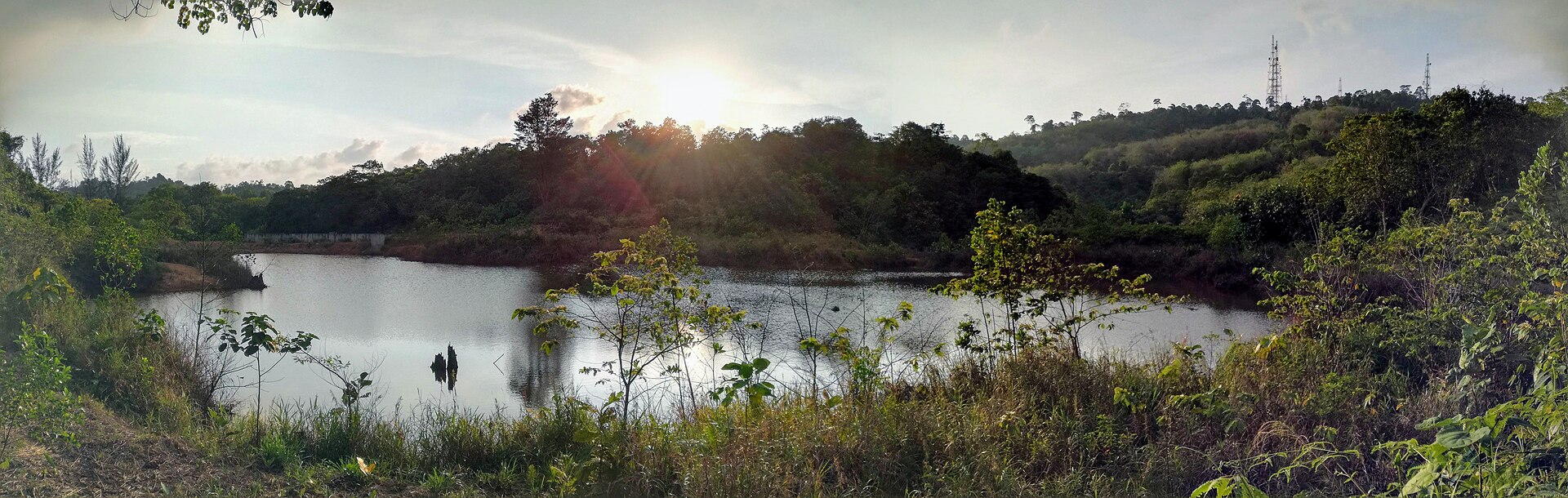
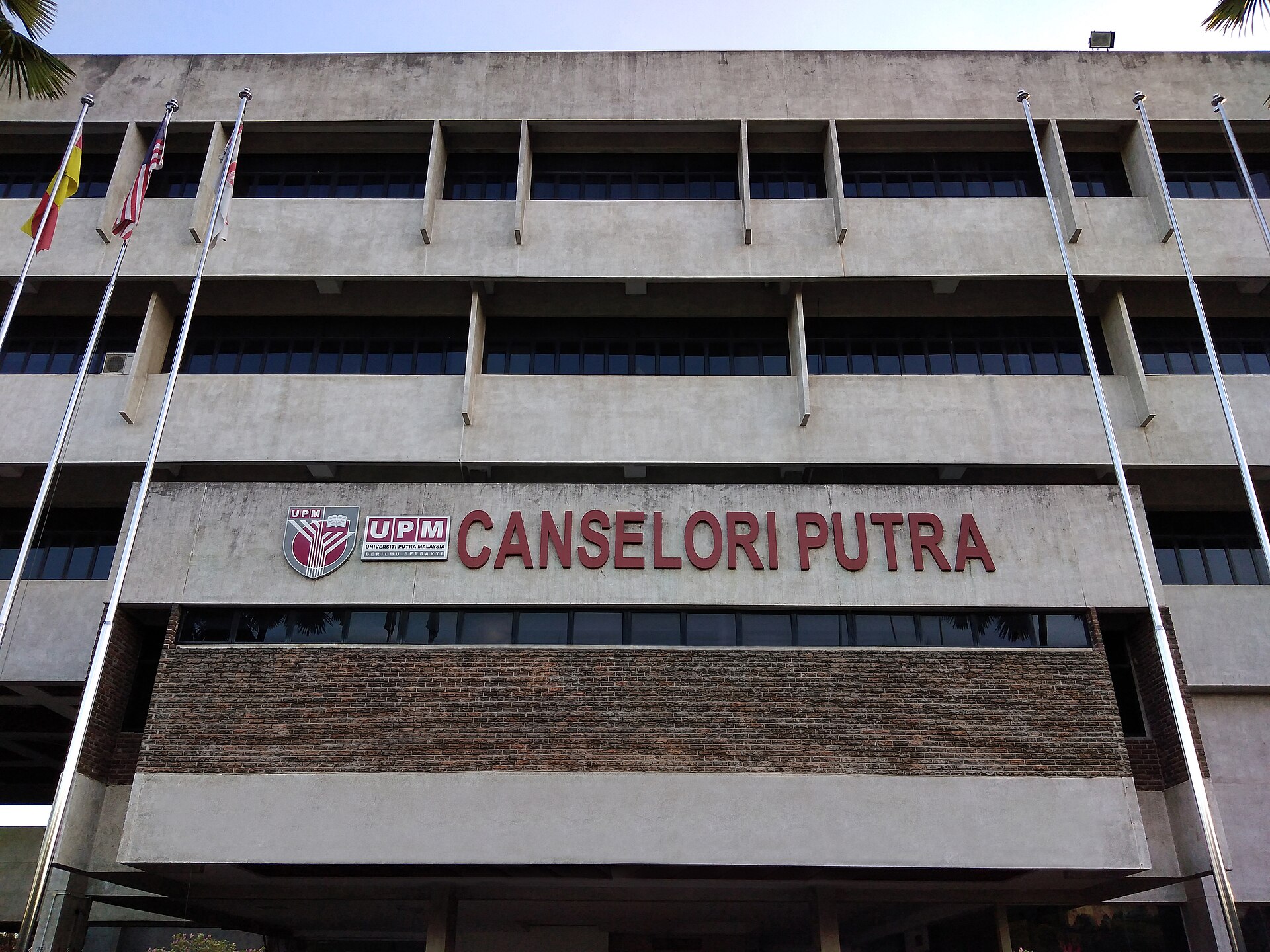
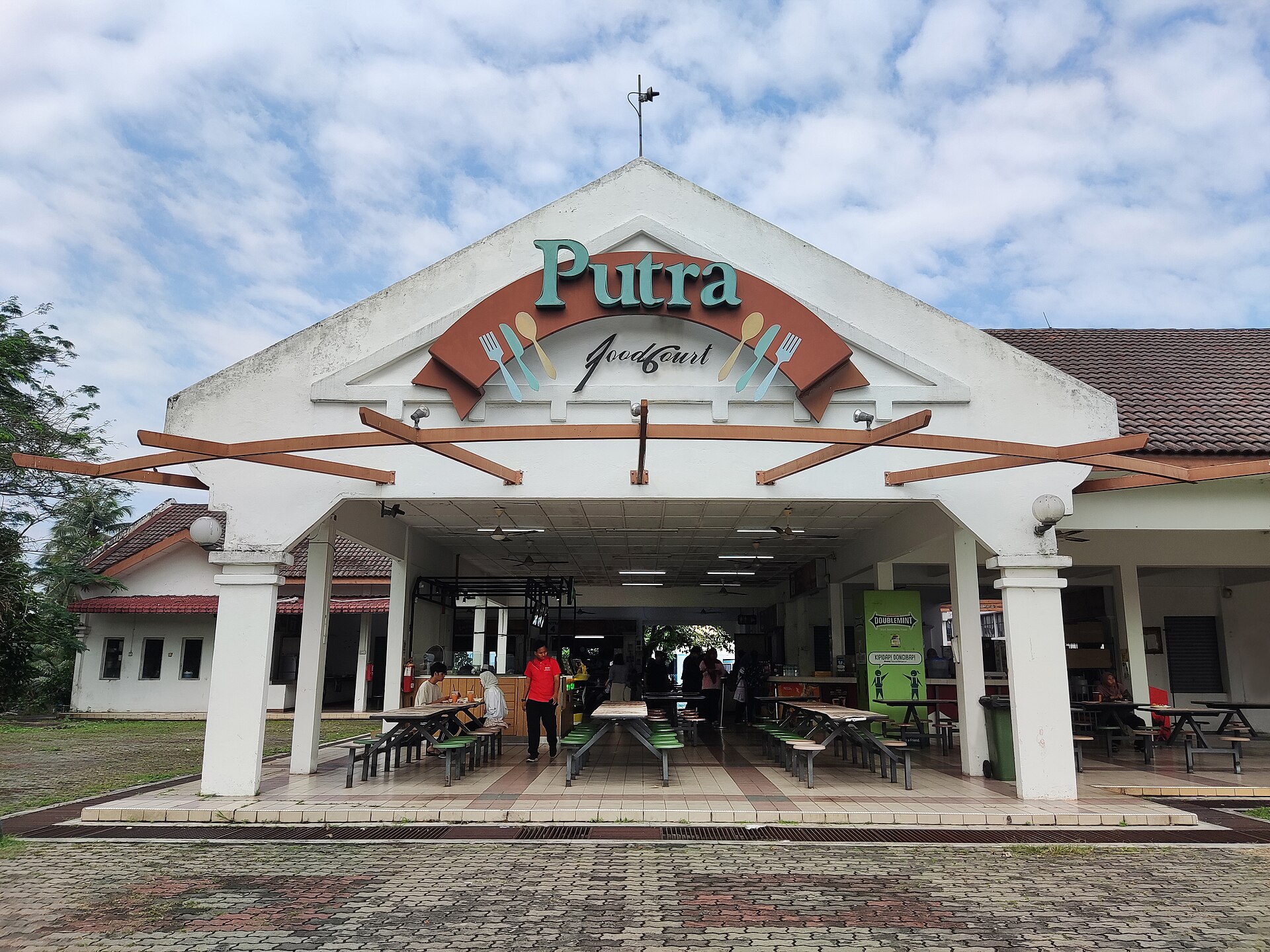
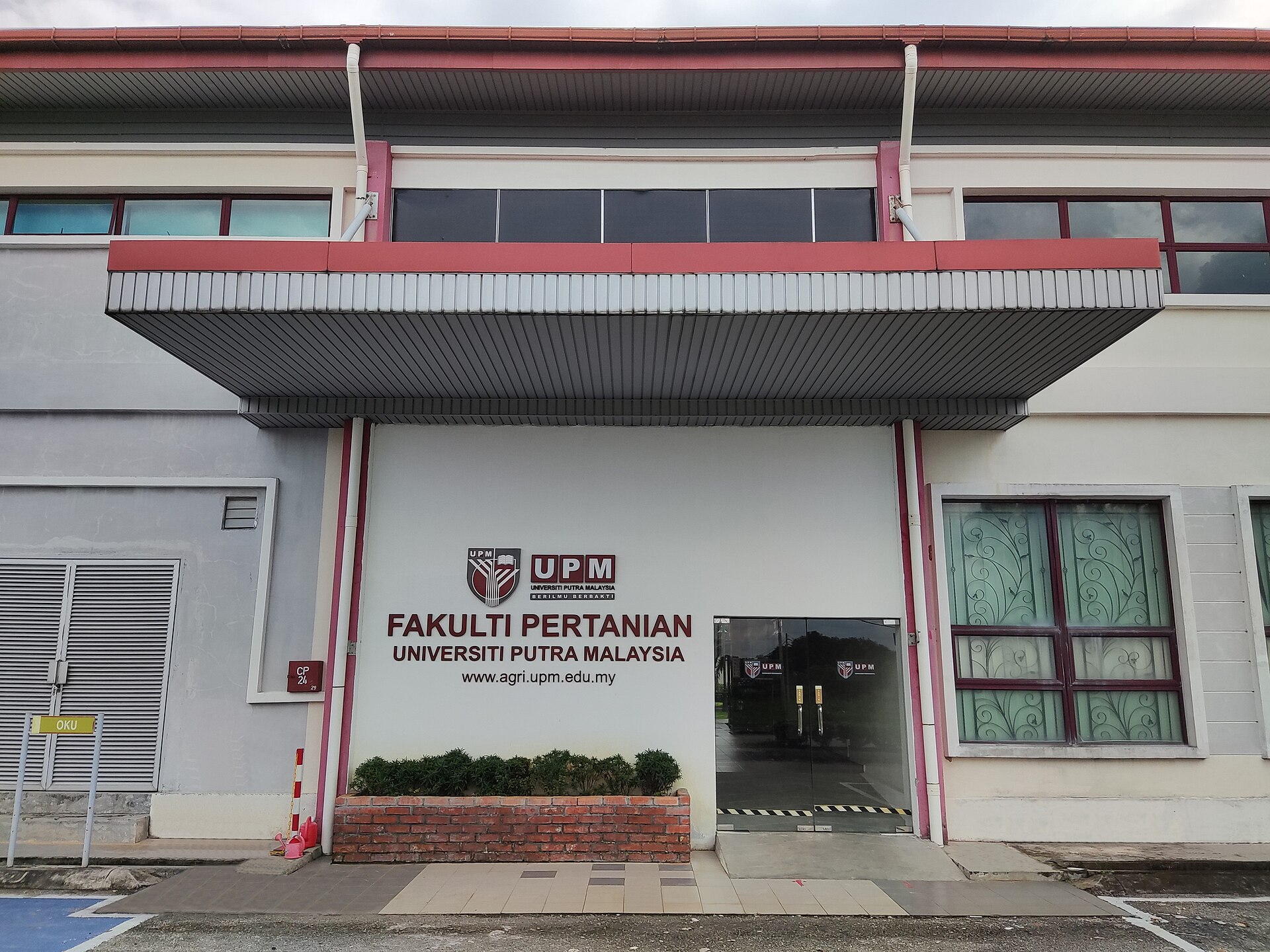
Universiti Putra Malaysia — campus in pictures
Real, freely-licensed photographs of the campus (via Wikimedia Commons).

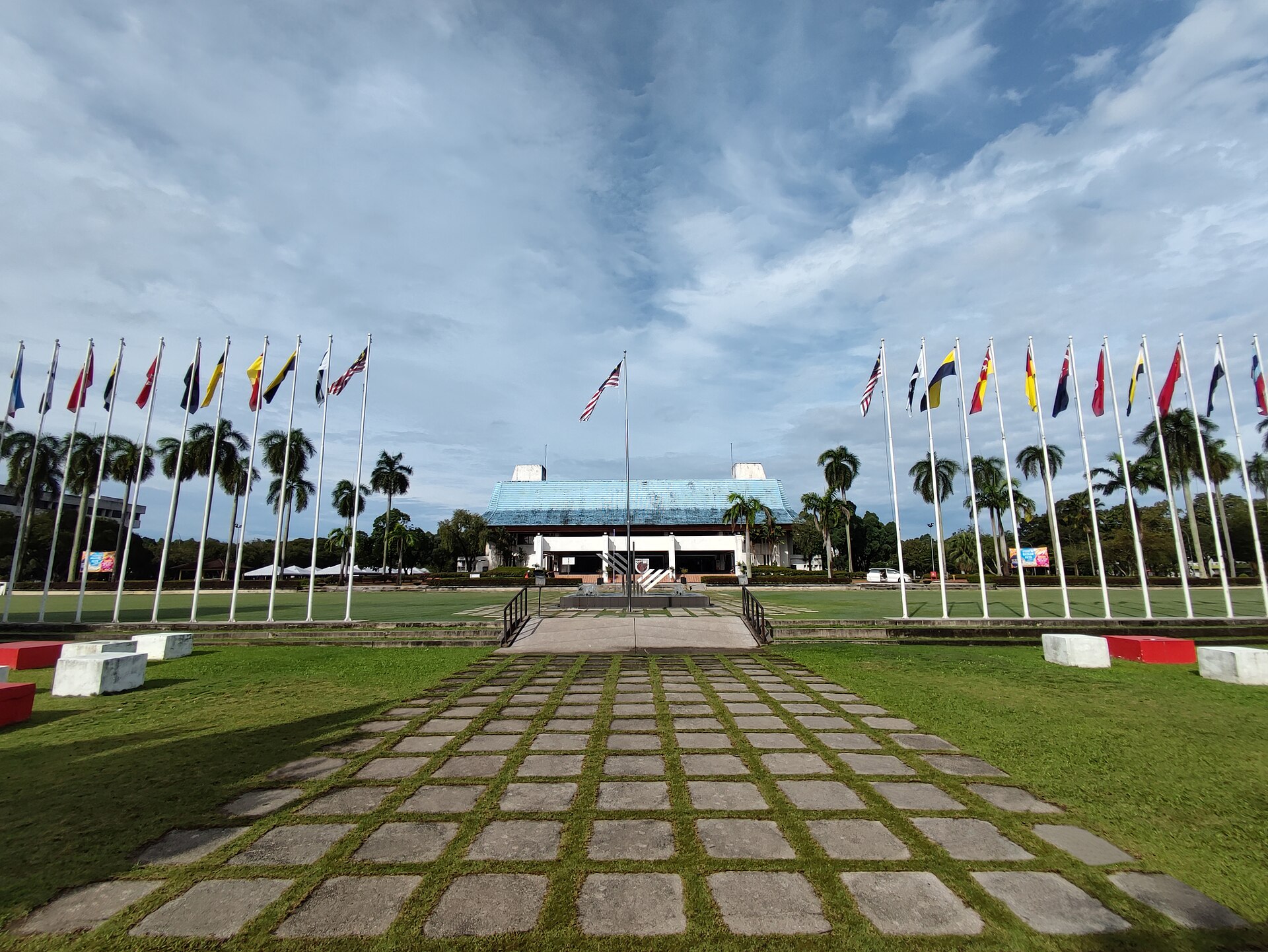
Why UPM — Research, Roots & Regional Reach
UPM combines nine decades of academic heritage with a forward-looking research agenda, making it Malaysia's second-ranked university and a globally recognised institution — particularly in the life sciences and agricultural fields that are critical to Southeast Asia's future.
SELECTIVITY
How Selective Is UPM?
UPM has an acceptance rate of approximately 40%, making it moderately selective among Malaysian public universities. While this figure reflects the overall intake, individual faculties — particularly Medicine, Veterinary Science, and Engineering — are considerably more competitive. International students are assessed primarily on academic qualifications and English proficiency rather than standardised tests like the SAT or ACT, which UPM does not require. A minimum IB score around 30 points and a GPA of 3.0 represent the general floor; competitive programmes will expect meaningfully higher scores.
AT A GLANCE
Universiti Putra Malaysia — Quick Facts
WHAT YOU NEED TO APPLY
UPM International Application — Key Components
UPM's international admissions process is direct — there is no centralised application portal like UCAS or Common App. Applications are submitted through UPM's own online system, and assessment is primarily based on academic qualifications and English proficiency. There are no formal application essays or supplements required for most undergraduate programmes.
ADMISSIONS PHILOSOPHY
What UPM Looks For in International Applicants
For competitive programmes such as Medicine, Veterinary Medicine, and Engineering, the bar is set higher: applicants should exceed the minimum thresholds significantly. The university is particularly welcoming to students with genuine interest in the biological sciences, food systems, and tropical environments, given UPM's deep institutional expertise in these areas. English proficiency is assessed formally, but Malaysian campus life is English-friendly at a practical level — international students adapt quickly.
UPM's admissions process is fundamentally merit-based, with academic qualifications as the primary criterion. Unlike many Western universities, UPM does not conduct a holistic review of extracurricular activities, personal essays, or teacher recommendations for most undergraduate programmes. The focus is squarely on whether you have the academic preparation to succeed in your chosen programme.
APPLICATION TIMELINE
Application Intakes & Deadlines
UPM typically operates on a semester system with intakes in September/October and February/March. International students are strongly advised to apply at least three to four months before their intended intake to allow time for offer processing, Visa Approval Letter (VAL) issuance, and Student Pass application. The exact deadlines for each intake cycle are published on the UPM Admissions website — always verify the current cycle directly.
Deadlines change each cycle. Always confirm with the UPM International Office (intl.upm.edu.my) before planning your application.
| Intake | Period | Apply By | Notes |
|---|---|---|---|
| Semester 1 (Main Intake) | September / October | ~May–June (verify) | Largest intake; most programmes available |
| Semester 2 (Minor Intake) | February / March | ~October–November (verify) | Limited programme availability; confirm per faculty |
CAMPUS LIFE
Living & Studying at UPM
On-campus residential colleges accommodate most first-year and international students, with affordable room rates well below off-campus options. The university maintains a Student Affairs Division that runs cultural festivals, international student orientation programmes, and over 200 clubs and societies covering sports, arts, academic interests, and cultural organisations. The UPM Bintulu Sarawak campus extends UPM's reach to East Malaysia.
UPM's 1,200-hectare Serdang campus is one of the largest and greenest in Southeast Asia. The campus is almost self-contained — with residential colleges, restaurants, sports facilities, a teaching hospital, a veterinary hospital, and a nature reserve — making it possible to live fully on campus while still feeling connected to greater Kuala Lumpur.
AFTER GRADUATION
Career Outcomes & Graduate Prospects
UPM's industry ties are strongest in sectors aligned with its core strengths: palm oil and plantation science (FELDA, IOI, Sime Darby), food manufacturing (Nestlé, F&N), veterinary and animal sciences, engineering and construction, and government-linked agencies. The university's research commercialisation arm facilitates technology transfer and startup formation, particularly in agricultural biotechnology.
UPM reports an 80% graduate employment rate, with an average starting salary of approximately USD 10,000 annually — competitive within the Malaysian labour market context. Graduates enter careers across agriculture, food technology, engineering, education, the public sector, and increasingly the biotech and pharmaceutical industries as Malaysia develops its knowledge economy.
FAQS
International Students Ask — Answered Honestly
Is UPM a good choice for international students?+
Yes, for students prioritising affordability, life sciences or engineering, and Southeast Asian career pathways. UPM's QS #148 ranking carries genuine international recognition, and the cost of attendance — around USD 9,200 per year — is exceptionally competitive for a university of this calibre.
What language are classes taught in at UPM?+
The medium of instruction at UPM is predominantly Malay (Bahasa Malaysia) for most undergraduate programmes, with English used in postgraduate programmes and some undergraduate courses in science, engineering, and technology. International students should verify the language of instruction for their specific programme before applying. English proficiency requirements still apply.
Do I need to apply through Common App or UCAS?+
No. UPM uses its own direct application portal. There is no Common App, UCAS, or other third-party platform. You apply directly through UPM's online system.
Is the SAT or ACT required?+
No. UPM does not require SAT or ACT scores. Admissions for international students is based on pre-university qualifications (A-Levels, IB Diploma, STPM, or equivalent) and English proficiency test scores.
What IB score do I need?+
The general minimum IB score threshold is 30 points, but competitive programmes such as Medicine, Veterinary Medicine, and Engineering require higher scores. Applicants should target significantly above the minimum for these faculties.
How do I get a student visa for Malaysia?+
After receiving your offer letter, UPM's International Office will process your Visa Approval Letter (VAL) on your behalf. You then apply for a Student Pass upon arrival in Malaysia. The process takes several weeks, so apply early and follow UPM's instructions carefully.
Is on-campus housing guaranteed for international students?+
On-campus residential college places are generally available for international students, particularly in the first year. Priority is given to new international students. Contact the Student Affairs Division or the International Office to confirm availability and reserve your placement.
Are there scholarships for international students at UPM?+
Several scholarships are available for international graduate students, including the International Graduate Student Scholarship (IGSS), SEARCA scholarships (for ASEAN citizens), and the Putra Alumni Scholarship Scheme (PASS) – International. Undergraduate international scholarship options are more limited — contact the UPM International Office for current availability.
ACADEMIC EXPECTATIONS
What UPM Expects Academically — An Honest Guide for Internationals
UPM's admission standards prioritise clear academic preparation in your intended subject area. Unlike US or UK universities that consider holistic profiles, UPM evaluates primarily on grades, relevant pre-university subjects, and English proficiency. Understanding exactly what qualifications are accepted and at what level — before you apply — is the most important step in a successful application.
ACADEMIC BENCHMARKS
Typical Academic Profile of Admitted Students
These figures reflect the general academic thresholds for international undergraduate applicants. Competitive faculties (Medicine, Veterinary Science, Engineering) will require stronger profiles.
TEST POLICY
Standardised Tests — Optional at UPM
This is consistent with how most Asian public universities approach undergraduate admissions — your secondary school and pre-university grades, not standardised test scores, determine your eligibility. If you have strong SAT or ACT scores, they will not hurt your application, but they carry no weight in UPM's evaluation process.
UPM's test policy for international admissions is test-optional: the SAT, ACT, and similar international standardised tests are not required and play no formal role in the undergraduate admissions evaluation. Admission decisions are made based on academic qualifications (IB, A-Levels, STPM, or equivalent) and English proficiency tests.
SAT & ACT
SAT & ACT — Not Required at UPM
Focus your standardised test effort on your English proficiency requirement: IELTS or TOEFL scores are formally required for most international applicants and must meet UPM's stated minimums. These scores must typically come from tests taken within the past two years.
UPM does not use SAT or ACT scores in undergraduate admissions decisions. You should not take these tests specifically for UPM application purposes. If you are applying simultaneously to US universities and therefore already taking the SAT/ACT, there is no need to submit those scores to UPM.
IB & A-LEVELS
How UPM Reads IB, A-Levels & International Qualifications
A-Level applicants should typically hold a minimum of 3 A-Level passes at grades relevant to their chosen programme. The equivalent of BBB or above is generally expected, with top faculties requiring AAB or better. Foundation and matriculation certificates from Malaysian pre-university programmes (PASUM/UPM Foundation) are also accepted — international applicants completing these programmes have a strong track record of admission.
UPM accepts a wide range of international secondary school qualifications, recognising that its international applicants come from diverse educational systems. The IB Diploma is accepted and well understood by Malaysian admissions officers. A minimum of 30 IB points is the general floor, but your Higher Level (HL) subject results matter significantly — competitive science and engineering programmes expect strong HL Biology, Chemistry, Mathematics, and/or Physics.
SUBJECT PREPARATION
Subject Preparation — What UPM Faculties Expect
Your pre-university subject choices need to align with your intended programme. UPM is strict about subject prerequisites for science-based faculties — don't apply to Engineering without Mathematics and Physics, or to Veterinary Medicine without Biology and Chemistry.
ENGLISH PROFICIENCY
English Language Requirements
All international applicants from countries where English is not the primary medium of instruction must provide evidence of English proficiency. UPM's minimum requirements are set at a level that reflects the English component of coursework — note that while instruction in some programmes includes Malay, English is used extensively in readings, research, and academic communication.
Students from countries where English is the official medium of instruction (e.g., India, Nigeria, Philippines, certain Caribbean nations) may be eligible for exemption. Confirm with the UPM International Office before your application.
| Test | Minimum | Notes |
|---|---|---|
| IELTS Academic | 6.0 (overall) | No individual band minimum specified; check faculty requirements |
| TOEFL iBT | 80 (total) | Internet-based test; paper-based not typically accepted |
| Duolingo English Test | Not specified | Verify current acceptance with UPM International Office |
| Malaysian SPM / STPM English | Grade B or above | Applicable to Malaysian and relevant regional applicants only |
GRADE 9–12 ROADMAP
Building Your Profile for UPM — Year by Year
UPM's admissions is grades-first. Your priority from Grade 9 is consistent, strong academic performance in subjects relevant to your intended programme. Here is how to build the right profile.
WATCH OUT FOR THESE
Common Academic Application Mistakes at UPM
- Applying without verifying language of instruction — many UPM undergraduate programmes teach primarily in Malay. Confirm the language of your specific programme before applying.
- Choosing the wrong pre-university subjects — UPM is strict about subject prerequisites. Applying to Engineering without Physics and Mathematics, or to Veterinary Science without Biology and Chemistry, will result in rejection.
- Submitting an IELTS/TOEFL score below the minimum or from a test taken more than two years ago — always check score validity.
- Confusing UPM's acceptance rate (40% overall) with the acceptance rate for competitive programmes — Medicine and Veterinary Medicine are significantly more selective.
- Applying too late for your target intake — international application processing including visa issuance takes several months. Allow a minimum of three to four months between application submission and intended start date.
- Not having academic documents officially certified — UPM requires certified translations and notarised copies. Submitting uncertified documents will delay or invalidate your application.
- Expecting a holistic review process — UPM does not review extracurriculars or recommendation letters for most programmes. Focus your energy entirely on strong academic preparation and documentation.
COST & FINANCIAL AID
The Cost of UPM — Remarkably Affordable for a Top-150 University
At approximately USD 4,500 per year in tuition for international students and a total cost of attendance around USD 9,200 annually, Universiti Putra Malaysia represents one of the most cost-effective routes to a globally ranked degree in the Asia-Pacific region. For students comparing options with Australian, UK, or North American universities where international fees commonly exceed USD 30,000–50,000 per year, the case for UPM is financially compelling.
ANNUAL COST BREAKDOWN
Estimated Annual Costs for International Students
All figures are annual estimates in USD. Actual costs depend on the MYR/USD exchange rate, your faculty, lifestyle choices, and accommodation type. Figures are drawn from institutional data.
Programme-specific fees (clinical training, laboratory courses, professional programmes) may add to base tuition. Always confirm the exact fee schedule for your specific programme with UPM's Bursar Office.
| Component | Estimated Annual Usd | Notes |
|---|---|---|
| Tuition Fees | ~USD 4,500 | International student rate; varies slightly by faculty and programme |
| Living & Personal Expenses | ~USD 4,000 | Accommodation, food, transport, utilities, personal |
| Total Cost of Attendance | ~USD 9,200 | Tuition + living (excludes flights, visa fees, health insurance) |
| Application Fee | ~USD 50 | One-time, non-refundable |
| Health Insurance | ~USD 200–400 | Required for international students; obtain locally or before arrival |
FINANCIAL AID
Financial Aid for International Students
Postgraduate international students have considerably more financial support options, including research assistantships, teaching assistantships, and specific scholarship programmes administered through the School of Graduate Studies. Undergraduate international students should budget for self-funding and explore external scholarship options through their home country government or multilateral programmes.
UPM does not offer broad need-based financial aid to international undergraduate students in the same way US universities do. The university's financial model relies on government subsidy for Malaysian students; international student fees already reflect a substantial subsidy relative to the true cost of education. The primary financial support available to international students comes through scholarships rather than need-based grants.
SCHOLARSHIPS
Scholarships Available for International Students
UPM and its partner organisations offer several scholarships for international students, primarily at postgraduate level. Undergraduate scholarship options are more limited and competitive.
THE BIG PICTURE
Making UPM Work Financially
The Malaysian Ringgit's relatively low purchasing power parity against major currencies means that students funded in USD, EUR, GBP, or SGD find their money stretches exceptionally well on campus. On-campus accommodation and campus cafeteria meals are particularly affordable. Students from countries with stronger currencies find the UPM cost of living genuinely manageable on modest family budgets.
For a student making a cost-benefit calculation, UPM offers a compelling proposition: a QS Top 150 degree from Malaysia's #2 university at a total investment of approximately USD 37,000–45,000 over four years (tuition + living). This compares to USD 120,000–240,000 at comparable-ranked US universities or USD 80,000–120,000 at Australian or UK equivalents.
Note: UPM does not publish a formal 'no-loan policy' or 'meet 100% of demonstrated need' commitment for international undergraduates. Financial self-sufficiency is expected. Plan conservatively and maintain a financial buffer for unexpected costs.
HOW TO FUND YOUR STUDIES
Steps to Secure Funding for UPM
COST FAQs
Cost & Aid — Frequently Asked Questions
How much does UPM cost for international students per year?+
Approximately USD 4,500 in tuition fees and USD 4,000 in living expenses, totalling around USD 9,200 per year in total cost of attendance. This is an estimate — confirm exact tuition for your specific programme with UPM's Bursar Office.
Does UPM offer need-based financial aid to international undergraduates?+
No broad need-based aid programme exists for international undergraduates in the way it does at US universities. The primary financial support is through scholarships, which are more widely available at postgraduate level.
What is the application fee?+
Approximately USD 50, paid when submitting your online application. This is non-refundable.
Can I work part-time while studying at UPM?+
International students on a Student Pass in Malaysia are generally permitted to work part-time (up to 20 hours per week during semester and full-time during vacations) with prior approval. Verify current Malaysian immigration regulations and UPM's guidelines before relying on part-time income.
Are there undergraduate scholarships for international students?+
Undergraduate-level scholarships directly from UPM are limited. Your best options at undergraduate level are home-country government scholarships and the Malaysia International Scholarship, if you qualify. Postgraduate students have more options including IGSS and SEARCA.
APPLICATION & STATEMENT
Applying to UPM — No Essays, But Preparation Matters
Universiti Putra Malaysia is a Malaysian public university that uses a direct application process — not Common App, not UCAS. For most undergraduate programmes, there is no formal application essay or personal statement required. Your case is made by your academic credentials, English proficiency scores, and supporting documents. This tab explains the UPM application process honestly, covers personal statements and interviews where they do apply (Medicine, Veterinary Science), and tells you what you actually need to do to make a strong application.
THE APPLICATION SYSTEM
How UPM's Admission Process Actually Works
Certain programmes — most notably Medicine (MBBS), Veterinary Medicine, and Architecture — may request additional materials, a personal statement, or an interview as part of their selection process. If you are applying to these competitive programmes, treat any requested statement or interview as your one substantive opportunity to differentiate yourself. For all other programmes, your documents do the talking.
Unlike US or UK university applications, UPM's undergraduate admissions does not involve a structured personal statement, supplemental essays, or Common App-style written responses for the vast majority of programmes. The decision is made primarily on your academic qualifications, relevant subject results, and English test scores.
PROGRAMME-SPECIFIC STATEMENTS
When a Statement Is Required — What to Know
A small number of UPM programmes request a personal statement or motivation letter as part of the application. UPM does not publish standardised essay prompts. If the admissions team requests a statement, you will be guided through what is required. Below is guidance on how to approach such a request if it arises.
APPLYING DIRECTLY
The UPM Direct Application Process
The most common mistake international applicants make is treating UPM like a Western university — spending time crafting elaborate essays or gathering teacher recommendations when what UPM actually needs is clean, complete, certified documentation submitted on time. Focus your application energy on obtaining certified copies of all academic documents, booking and sitting your IELTS/TOEFL if you haven't already, and initiating the process well ahead of the intake deadline.
Your UPM application is submitted directly through UPM's online portal. The process is document-based. You will upload your academic transcripts, certificates, passport copy, English proficiency test results, and any programme-specific materials. There is no narrative component for most programmes.
COMPETITIVE PROGRAMMES
Competitive Programme Applications — Medicine, Vet, Architecture
If you are applying to UPM's most competitive faculties, the following strategic considerations apply beyond the standard document submission.
IF A STATEMENT IS NEEDED
How to Choose What to Write About
Think about: What genuinely excites you about your chosen field? What have you done — in school, at home, in your community — that relates to this subject? What specifically about Malaysia or about UPM's programme design draws you here rather than a university elsewhere? Answer these questions plainly, with concrete examples, and your statement will be stronger than 80% of what a committee reads.
If UPM's admissions process for your specific programme requests a motivation letter or personal statement, the guiding principle is specificity and honesty over ambition-signalling. Malaysian universities have a lower tolerance for the kind of hyperbolic, achievement-stacking personal statements that some US university counsellors encourage. A direct, clearly reasoned account of your academic interests and why UPM suits your goals will serve you better.
- Describe a specific moment — a laboratory experiment, a field trip, a book, an experience — that crystallised your interest in the subject.
- Connect UPM's specific strengths (tropical agriculture, food science research, veterinary facilities) to your academic or career goals.
- Be honest about why Malaysia — cost, regional career opportunities, family connections, prior exposure to the country — rather than pretending UPM is your dream school if it isn't.
- Keep it focused: 400–600 words is sufficient. Do not pad with generic sentences about 'the global challenges of our time'.
COMMON MISTAKES
Application Mistakes to Avoid at UPM
- Preparing a formal application essay when none is required — invest that energy in getting your documentation complete and certified instead.
- Applying without confirming the language of instruction for your programme — some UPM undergraduate programmes teach primarily in Bahasa Malaysia.
- Submitting documents late — Malaysian visa processing adds weeks to your timeline; apply as early as the portal allows.
- Using uncertified or untranslated academic documents — UPM requires certified English or Malay translations of non-English documents.
- Assuming competitive programmes (Medicine, Veterinary Science) have the same 40% acceptance rate as the university overall — these faculties are far more selective.
- Not preparing for an interview if one is requested — especially for Medicine and Veterinary Science, an interview is a real selection hurdle, not a formality.
- Writing a generic motivation letter that could apply to any university — if a statement is requested, it must be specific to UPM and your programme.
APPLICATION FAQs
Application Process — Frequently Asked Questions
Do I need to write an essay to apply to UPM?+
For most undergraduate programmes, no formal essay or personal statement is required. Your application is assessed on academic qualifications and English proficiency scores. A small number of competitive programmes (Medicine, Veterinary Science, Architecture) may request a personal statement or interview.
Does UPM use Common App or UCAS?+
No. UPM uses its own direct online application system. There is no Common App, UCAS, or third-party portal. Apply directly through upm.edu.my.
Is a recommendation letter required?+
Recommendation letters are generally not required for UPM undergraduate admissions. Some postgraduate programmes may require academic references. Check the specific requirements for your programme with the relevant faculty.
Will I need to attend an interview?+
Interviews are not standard for most UPM undergraduate programmes. Medicine, Veterinary Medicine, and some competitive health science programmes may include an interview as part of their selection. If an interview is required, UPM will notify you after reviewing your application.
How long does the UPM application decision take?+
International undergraduate admissions typically takes four to eight weeks from complete document submission to an offer letter. Plan well ahead of your intake — you then need several more weeks for Visa Approval Letter processing.
Can I apply to multiple programmes simultaneously?+
Yes, UPM allows international applicants to indicate multiple programme preferences in order of priority. You will typically receive an offer for one programme based on your qualifications and availability. Confirm the current policy when you access the application portal.
Courses — schools, degrees & intake
86 degrees across 16 groupings.
Faculty of Agriculture · 7 degrees
Bachelor of Science in Agriculture with Honours
Bachelor of Science in Horticulture with Honours
Bachelor of Agribusiness Science with Honours
Bachelor of Science in Aquaculture with Honours
Bachelor of Science in Animal Science with Honours
Bachelor of Science in Plantation Management with Honours
Bachelor of Smart Agricultural Technology with Honours
Faculty of Computer Science and Information Technology · 4 degrees
Bachelor of Computer Science with Honours
Bachelor of Computer Science (Multimedia Computing) with Honours
Bachelor of Computer Science (Computer Network) with Honours
Bachelor of Software Engineering with Honours
Faculty of Design and Architecture · 3 degrees
Bachelor of Landscape Architecture with Honours
Bachelor of Science in Architecture with Honours
Bachelor of Industrial Design with Honours
Faculty of Educational Studies · 8 degrees
Bachelor of Education in Agricultural Science with Honours
Bachelor of Education in Home Science with Honours
Bachelor of Education in Physical Education with Honours
Bachelor of Education in Malay Language with Honours
Bachelor of Education in Teaching English as a Second Language (TESL) with Honours
Bachelor of Education in Guidance and Counselling with Honours
Bachelor of Science Human Resource Development with Honours
Bachelor of Counselling with Honours
Faculty of Engineering · 8 degrees
Bachelor of Aerospace Engineering with Honours
Bachelor of Civil Engineering with Honours
Bachelor of Agricultural and Biosystems Engineering with Honours
Bachelor of Electrical and Electronic Engineering with Honours
Bachelor of Chemical Engineering with Honours
Bachelor of Computer and Communication Systems Engineering with Honours
Bachelor of Mechanical Engineering with Honours
Bachelor of Process and Food Engineering with Honours
Faculty of Forestry and Environment · 5 degrees
Bachelor of Forestry Science with Honours
Bachelor of Wood Science and Technology with Honours
Bachelor of Parks and Recreation Science with Honours
Bachelor of Environmental Management with Honours
Bachelor of Environmental Science and Technology with Honours
Faculty of Food Science and Technology · 4 degrees
Bachelor of Food Science and Technology with Honours
Bachelor of Science in Food Studies with Honours
Bachelor of Science in Food Service Management with Honours
Bachelor of Science in Food Manufacturing Operations with Honours
Faculty of Medicine and Health Science · 6 degrees
Doctor of Medicine
Bachelor of Science Biomedical Science with Honours
Bachelor of Science Dietetics with Honours
Bachelor of Science Nutrition and Community Health with Honours
Bachelor of Science Environmental and Occupational Health with Honours
Bachelor of Nursing with Honours
Faculty of Modern Languages and Communication · 9 degrees
Bachelor of Communication with Honours
Bachelor of Arts in Malay Literature with Honours
Bachelor of Arts in Malay Language and Linguistics with Honours
Bachelor of Arts in French Language Studies with Honours
Bachelor of Arts in German Language Studies with Honours
Bachelor of Arts in Arabic Language with Honours
Bachelor of Arts in Chinese Language Studies with Honours
Bachelor of Arts in English Language and Linguistics with Honours
Bachelor of Arts in English Literature with Honours
Faculty of Science · 14 degrees
Bachelor of Science in Biology with Honours
Bachelor of Science in Physics with Honours
Bachelor of Science in Material Physics with Honours
Bachelor of Science in Instrumentation Physics with Honours
Bachelor of Science in Chemistry with Honours
Bachelor of Science in Petroleum Chemistry with Honours
Bachelor of Science in Industrial Chemistry with Honours
Bachelor of Science in Mathematics with Honours
Bachelor of Science in Statistics with Honours
Bachelor of Science in Biology with Education (Honours)
Bachelor of Science in Physics with Education (Honours)
Bachelor of Science in Chemistry with Education (Honours)
Bachelor of Science in Mathematics with Education (Honours)
Bachelor of Science in Statistics with Education (Honours)
Faculty of Veterinary Medicine · 1 degrees
Doctor of Veterinary Medicine
Faculty of Biotechnology and Biomolecular Sciences · 4 degrees
Bachelor of Science in Biochemistry with Honours
Bachelor of Science in Microbiology with Honours
Bachelor of Science in Biotechnology with Honours
Bachelor of Science in Cell and Molecular Biology with Honours
School of Business and Economics · 3 degrees
Bachelor of Economics with Honours
Bachelor of Accounting (Honours)
Bachelor of Business Administration with Honours
Faculty of Human Ecology · 5 degrees
Bachelor of Human Development Science with Honours
Bachelor of Human Development Science with Management (Honours)
Bachelor of Human Development Science with Information Technology (Honours)
Bachelor of Consumer Studies with Honours
Bachelor of Music with Honours
Faculty of Agricultural Science and Forestry (UPM Sarawak) · 3 degrees
Bachelor of Bioindustry Science with Honours
Bachelor of Forestry Science with Honours (Sarawak)
Bachelor of Science in Aquaculture with Honours (Sarawak)
Faculty of Humanities, Management and Science (UPM Sarawak) · 2 degrees
Bachelor of Human Development Science with Management (Honours) (Sarawak)
Bachelor of Science Honours in Industrial Chemistry (Sarawak)
Want your real chances at Universiti Putra Malaysia?
Create a free TYCHR account for your personalised admit-chance, a shortlist you can track, exact entry requirements, and essay + counselling help.