Universiti Kebangsaan Malaysia
Bangi, Malaysia · Suburban
MALAYSIA'S NATIONAL UNIVERSITY
Universiti Kebangsaan Malaysia Admissions Guide for International Students
UKM — ranked #138 globally by QS — is one of Malaysia's five designated research universities, offering internationally competitive programmes at a fraction of the cost of Western institutions. Founded in 1970 to champion scholarship in the Malay language, UKM has grown into a bilingual research powerhouse in Bangi, Selangor, attracting students from more than 50 countries.
For international students seeking a high-quality, research-active Asian university with excellent employment outcomes and exceptionally affordable tuition, UKM offers a compelling combination of academic rigour, a vibrant multicultural campus, and proximity to Kuala Lumpur's fast-growing technology and finance sectors.
Campus
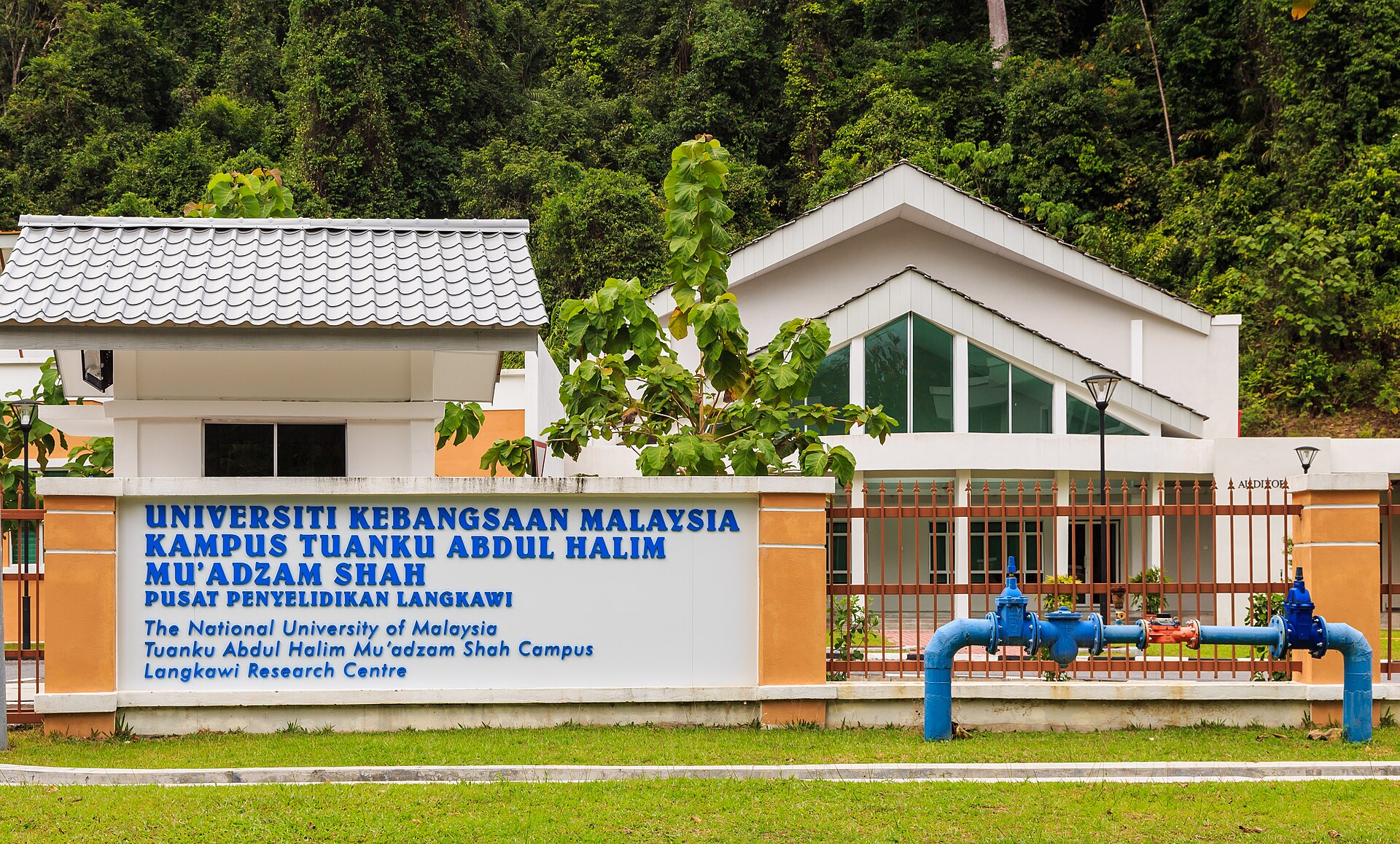
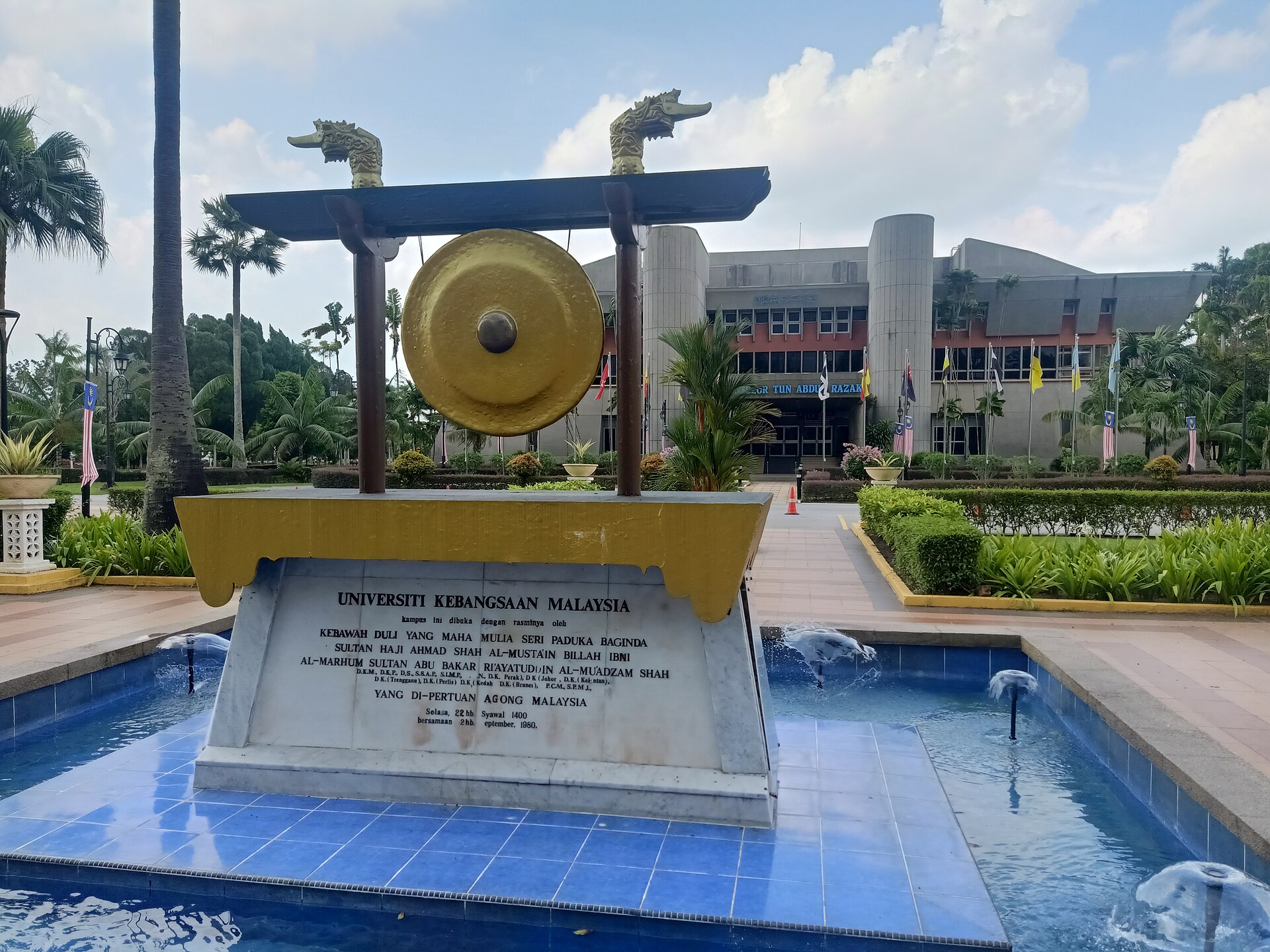
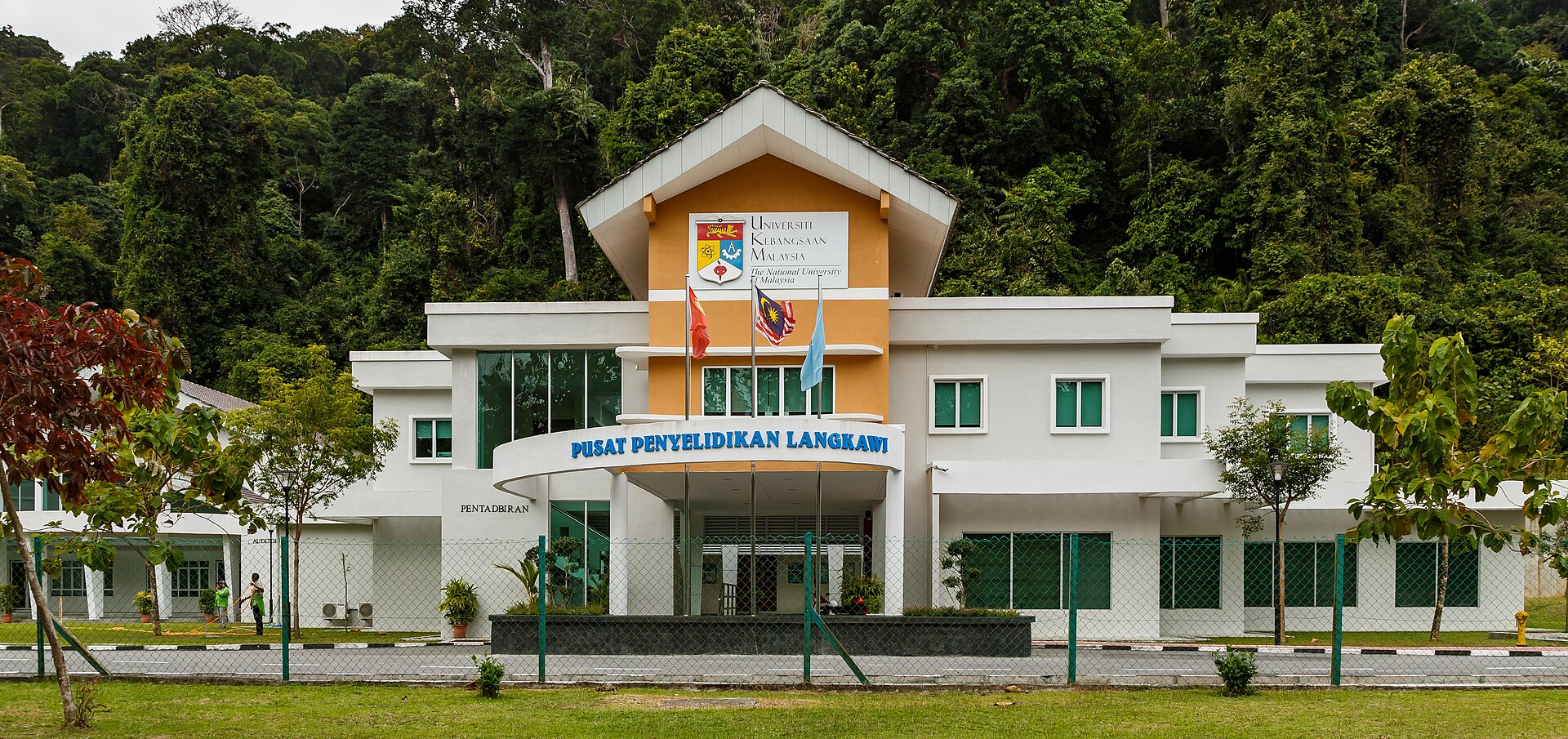
Universiti Kebangsaan Malaysia — campus in pictures
Real, freely-licensed photographs of the campus (via Wikimedia Commons).
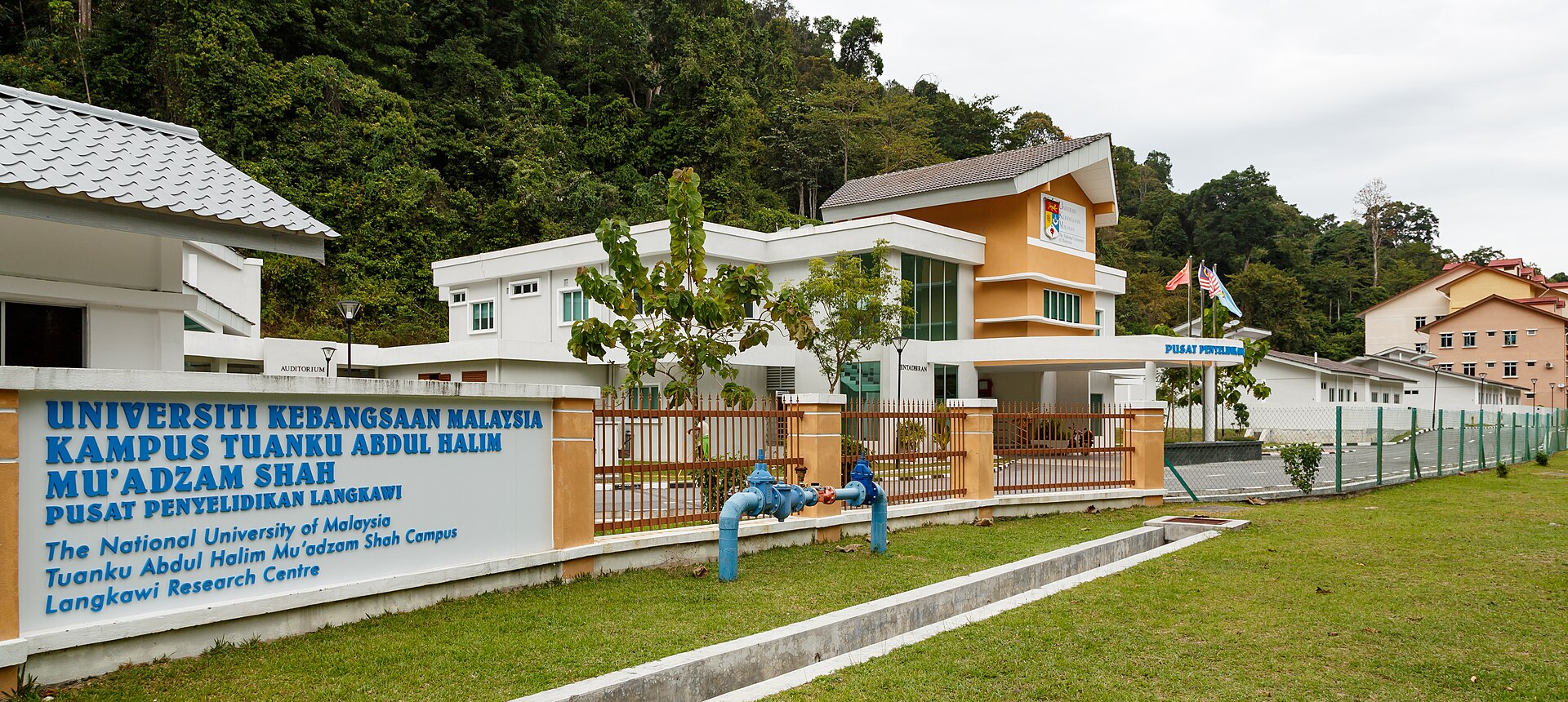
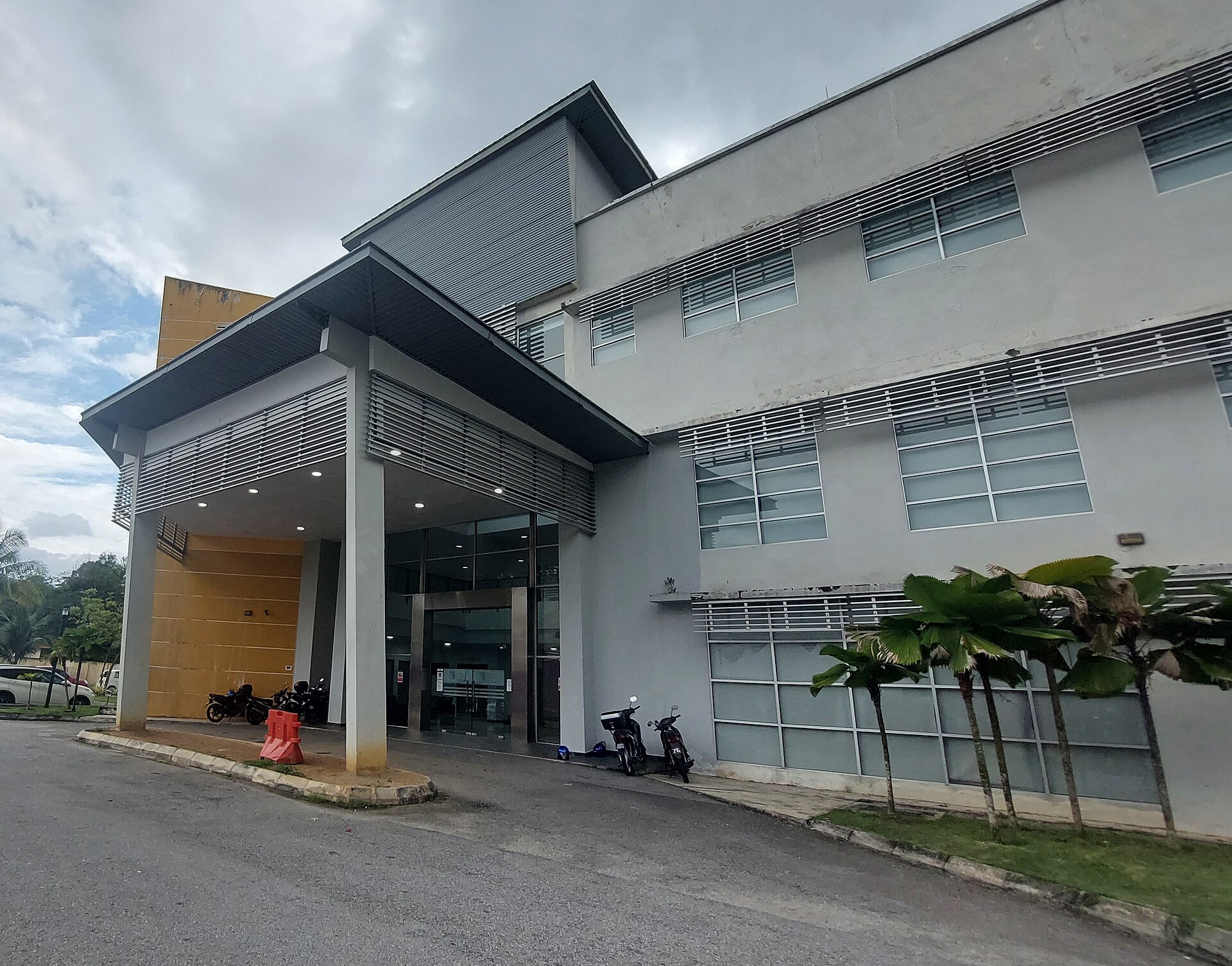
Why UKM — Research, Value, and Regional Influence
UKM sits at the intersection of academic excellence and Southeast Asian opportunity. Its QS #138 standing reflects sustained strength in research output, international diversity, and employer reputation — while its location in the Klang Valley puts graduates within reach of Malaysia's most dynamic industries.
SELECTIVITY
Acceptance Rate and Admissions Profile
UKM is selective for its most competitive programmes. The university-wide acceptance rate of approximately 30% masks significant variation: professional degree programmes in Medicine, Dentistry, and Pharmacy are far more competitive, while some humanities and social sciences programmes offer broader access.
International applicants are evaluated on their secondary-school results (A-Level, IB Diploma, STPM, or equivalent national qualifications), English proficiency scores, and any programme-specific requirements. Academic achievement is the primary criterion — UKM does not rely on holistic or essay-heavy evaluation in the way US universities do.
AT A GLANCE
UKM Quick Facts
WHAT YOU NEED TO APPLY
Application Components
UKM uses a direct online admissions system. International applicants submit their applications through UKM's central admissions portal. The process is document-driven rather than essay-driven — your academic record is the centrepiece.
ADMISSIONS PROFILE
What UKM Looks For
UKM's admissions process prioritises demonstrated academic achievement and readiness for rigorous university study. Unlike US universities, there is no holistic review of extracurriculars, essays, or 'fit' narratives — your grades and qualifications carry the most weight.
For international students, the key factors are: strong results in your home country's school-leaving qualification (A-Level predicted/achieved grades, IB Diploma total, or equivalent), a clear fit between your subject background and the chosen faculty, and proof of English language competence. In health sciences, prior biology and chemistry results are scrutinised carefully. In engineering and computing, strong mathematics performance is essential.
APPLICATION TIMELINE
Application Deadlines and Intake Periods
UKM offers two main intake periods per year: the main intake in September/October (for the academic year starting in October/November) and a smaller intake in February/March. International students are advised to apply at least three to four months before their intended start date to allow time for document verification and visa processing.
Exact application deadlines vary by faculty and programme. Always confirm current dates on the official UKM admissions portal before applying, as dates are updated each cycle.
| Intake | Application Open | Start Month | Notes |
|---|---|---|---|
| Main Intake (Semester 1) | March – June | October / November | Majority of undergraduate programmes |
| February Intake (Semester 2) | October – December | February / March | Selected programmes only; check faculty |
CAMPUS EXPERIENCE
Student Life at UKM
UKM's main campus in Bangi spans a large, lush suburban area with well-maintained grounds, sporting facilities, and a self-contained environment that combines study, residence, and recreation. The campus has 13 residential colleges (kolej kediaman) offering a strong sense of community for students who choose to live on campus.
Student societies (persatuan) cover an extraordinary range — from debate and entrepreneurship to cultural dance troupes representing Malaysia's many ethnic communities. The Pusat Islam mosque and interfaith spaces reflect UKM's diverse student body. The campus is well-equipped with sports facilities including an Olympic-standard athletics track, swimming pools, and courts for badminton, tennis, and football — with some of Malaysia's top student athletes training at UKM. Bangi itself is a quiet, family-oriented suburb. Most social life happens on campus or via the KTM Komuter/MRT rail network into Kuala Lumpur (about 45–60 minutes), giving students access to the malls, food scene, arts, and nightlife of one of Southeast Asia's most vibrant cities.
GRADUATE OUTCOMES
Career Outcomes and Employment
UKM graduates enjoy strong employment prospects, particularly in Malaysia's public sector, GLCs (government-linked companies), healthcare, engineering, and financial services. The university's research university status and close ties to Malaysian industry open pathways into both domestic and regional careers.
Top recruiting sectors include healthcare (especially for Medicine, Pharmacy, and Dentistry graduates), government ministries and agencies, Petronas and the O&G sector, banks and financial institutions (Maybank, CIMB, RHB), technology companies expanding into ASEAN, and international development organisations active in the region. UKM's medical graduates are particularly sought after by both Malaysian public hospitals and private health networks across Southeast Asia and the Middle East.
FREQUENTLY ASKED QUESTIONS
UKM International Admissions — FAQs
Can I apply to UKM with an IB Diploma?+
Yes. UKM accepts the IB Diploma for undergraduate admission. The general minimum is 30 points, though competitive programmes such as Medicine and Engineering may expect higher scores. Confirm exact requirements with the respective faculty.
Is the medium of instruction English at UKM?+
UKM is a bilingual university. Many science, technology, engineering, and health sciences programmes are taught substantially in English, while some humanities and social sciences programmes are conducted in Bahasa Malaysia. For most programmes open to international students, English is the primary classroom language. Always verify the language of instruction for your specific programme.
Does UKM offer scholarships to international students?+
Several scholarship and financial assistance options exist for international students at Malaysian public universities, including government-to-government sponsorships, UKM's own institutional awards, and funding through agencies such as MARA or foreign government scholarships. Availability varies year to year — check the UKM scholarship office and your home country's education ministry for current opportunities.
How competitive is Medicine at UKM?+
The MBBS programme at UKM is among the most competitive in Malaysia. Successful international applicants typically present very strong science results well above the stated minimum. Shortlisted candidates may be called for an interview. Apply early and ensure your Biology, Chemistry, and Mathematics results are as strong as possible.
What visa do I need to study in Malaysia?+
International students studying in Malaysia on a full-time programme require a Student Pass issued by the Malaysian Immigration Department. UKM's International Office facilitates the application process once you are formally admitted — do not apply for a tourist visa with the intention of studying.
Is on-campus accommodation available for international students?+
Yes. UKM has 13 residential colleges on its Bangi campus. International students are typically eligible to apply for on-campus housing, especially in their first year. Places are limited and allocated on a first-come-first-served basis — apply promptly after receiving your offer.
What is the application fee?+
The application fee for international students is approximately USD 22 (the equivalent in Malaysian Ringgit). Fees are subject to change — verify the current amount on the official UKM admissions portal.
Does UKM require standardised tests (SAT/ACT)?+
UKM follows an optional test policy for standardised exams such as SAT/ACT. Your secondary-school qualification (A-Level, IB, or equivalent) is the primary basis for evaluation. You may submit SAT or ACT scores if you feel they strengthen your file, but they are not mandatory.
ACADEMICS
Academic Expectations at UKM for International Students
UKM operates a rigorous research-university curriculum across 14 faculties. International students entering from A-Level, IB, or equivalent backgrounds will find the academic pace demanding, particularly in science-based faculties where laboratory components complement lecture-intensive coursework.
The academic year runs on a semester system (typically two 14-week semesters per year plus a short semester). Assessment is continuous — coursework, lab reports, presentations, and mid-semester exams contribute alongside final examinations. English is the predominant language of instruction for programmes accepting international students, though some courses and materials may include elements in Bahasa Malaysia.
ENTRY PROFILE
Academic Entry Profile
STANDARDISED TESTS
Test Policy
UKM's policy on standardised tests (SAT/ACT) is optional. Your secondary school leaving qualification is the primary basis for undergraduate admission. For most international applicants, submitting SAT or ACT results is not required and will not be used as a substitute for weak school results.
If you studied at a US curriculum school and have strong SAT or ACT scores, you may include them as supplementary evidence of your academic readiness — but they will not compensate for deficiencies in your high-school subject results. The core evaluation is your final or predicted grades in a recognised qualification (A-Level, IB Diploma, STPM, or equivalent).
SAT / ACT
SAT and ACT — Context for UKM Applicants
Unlike US-focused universities, UKM places little to no weight on SAT or ACT scores. These tests are not part of the standard international admissions process for Malaysian public universities.
If your secondary education was in a US-based curriculum and you are applying on the basis of SAT/ACT results, contact the UKM admissions office to confirm which qualification pathway applies to you. In most cases, UKM will instead evaluate your high-school grade transcript (GPA) and any AP or subject-area results.
IB / A-LEVEL / AP
IB Diploma, A-Level, and International Qualifications
UKM recognises and accepts a wide range of international pre-university qualifications. The most commonly accepted qualifications from international students are the A-Level (Cambridge International), the IB Diploma Programme, and recognised national equivalents (SPM, STPM, Matriculation for Malaysian applicants).
For the IB Diploma, the published minimum is 30 points overall. Competitive programmes — particularly Medicine (MBBS), Dentistry (BDS), and Engineering — typically expect substantially higher scores and strong HL results in relevant subjects. An IB applicant aiming for Medicine, for instance, should target HL Biology, HL Chemistry, and strong scores of 6–7 in both, alongside a competitive overall total. A-Level applicants should present at least three relevant A-Level subjects. The minimum for competitive science programmes is typically three A or A* grades in relevant subjects (Biology, Chemistry, Physics, Mathematics). Offers for Medicine may be conditional on A*AA or equivalent.
SUBJECT PREPARATION
Subject-Level Academic Preparation
The rigor expected varies dramatically by faculty. Here is what you need to have studied before applying to UKM's most sought-after programmes.
ENGLISH PROFICIENCY
English Language Requirements
International students from countries where English is not the primary medium of secondary instruction must demonstrate English proficiency. UKM accepts IELTS Academic and TOEFL iBT as the standard evidence. No Duolingo minimum is published.
| Test | Minimum Score | Notes |
|---|---|---|
| IELTS Academic | 6.0 overall | No individual band stated; confirm with faculty — some require 6.5+ |
| TOEFL iBT | 80 | Internet-based test; section minimums may apply for specific programmes |
| Cambridge English (C1/C2) | Accepted (verify) | May be accepted as equivalent — confirm with UKM International Office |
| English-Medium Schooling | Exemption possible | Students from countries with English-medium secondary education may be exempt — check with admissions |
YEAR-BY-YEAR PLAN
Building Your Academic Profile for UKM
If UKM is your target, use your secondary-school years strategically to ensure you meet the academic and language requirements by the time you apply.
COMMON PITFALLS
Academic Mistakes to Avoid
- Applying to a health-sciences or engineering programme without the required science subjects — subject mismatch is the most common cause of rejection.
- Assuming the stated minimum IB/A-Level score is sufficient for competitive programmes like Medicine or Dentistry — expect the actual admitted band to be significantly higher.
- Forgetting English proficiency requirements — applying without a valid IELTS or TOEFL score when you are from a non-English-medium schooling background will result in an incomplete application.
- Applying too late — Malaysian public universities process many applications per cycle; submitting close to the deadline increases the risk of missing document checks and visa lead times.
- Ignoring the language of instruction — some UKM programmes deliver significant content in Bahasa Malaysia. Confirm the language of instruction before committing to a programme if your Malay proficiency is limited.
- Not verifying your qualification's equivalency — if your school-leaving qualification is unusual or from a country with limited recognition history in Malaysia, contact the UKM International Office to confirm equivalency before investing in the application.
- Overlooking programme-specific prerequisites — each faculty may have requirements beyond the university minimum. Always read the faculty-level admissions page, not just the central university page.
COST & AID
The True Cost of Studying at UKM Affordable Excellence in Southeast Asia
UKM stands among the most affordable research universities in the world for its global ranking. Annual international tuition is approximately USD 4,500, and the total estimated cost of attendance — including accommodation, food, and living expenses — is around USD 9,000 per year. For context, this is comparable to or lower than many regional universities in Southeast Asia, and dramatically below European or North American equivalents ranked in the same tier.
Malaysia's overall cost of living remains low by international standards. Bangi is a suburban city where student living is economical. Food is inexpensive and abundant (university canteens, local hawker stalls), and public transport links to Kuala Lumpur are cheap and reliable.
ANNUAL COST ESTIMATE
Cost Breakdown (International Students)
All figures are annual estimates in USD. Actual costs in Malaysian Ringgit will vary with exchange rates.
These figures are based on available data and are estimates. Confirm exact tuition for your specific programme with UKM's Bursar's Office before committing.
| Component | Estimated Usd | Notes |
|---|---|---|
| Tuition fees | ~USD 4,500/year | Varies by faculty; health sciences may be higher |
| On-campus accommodation | ~USD 1,000–1,500/year | Residential college room; varies by college type |
| Food and meals | ~USD 1,200–1,800/year | Hawker meals are inexpensive; campus canteens affordable |
| Personal, transport, books | ~USD 1,000–1,500/year | Varies by lifestyle; public transport to KL is low-cost |
| Total estimated cost of attendance | ~USD 9,000/year | Inclusive estimate; actual spending may be lower |
| Application fee | ~USD 22 | One-time, non-refundable |
FINANCIAL AID
Financial Aid for International Students
UKM is a Malaysian public university and the financial aid landscape is different from US or UK universities. Formal need-based aid administered directly by UKM for international students is limited. The primary routes for financial support are government-to-government scholarships, institutional merit awards, and external funding agencies.
Students from developing countries may be eligible for scholarships offered by the Malaysian government through agencies such as the Malaysia International Scholarship (MIS) programme (administered by the Ministry of Higher Education). Separately, many students receive sponsorship from their home country's government, employer, or development bank before arriving at UKM. Since UKM's fees are already exceptionally low relative to comparable-ranked universities globally, many international students find that careful financial planning — rather than institutional aid — is the primary strategy for managing costs.
SCHOLARSHIPS
Scholarship and Funding Opportunities
Several scholarship routes are available to international students at UKM, spanning government programmes, bilateral agreements, and institutional awards. Specific award names, amounts, and eligibility change annually — always verify current availability through official channels.
THE REAL COST
Affordability: The UKM Advantage
At approximately USD 9,000 per year all-in, UKM offers an unusually compelling value proposition for a QS Top 150 university. Few institutions in the world at this ranking level are accessible at this price point.
Malaysia's currency (Ringgit) has historically remained favourable against many international currencies, meaning students from countries with stronger currencies experience even lower effective costs. Campus accommodation in residential colleges is subsidised, food is inexpensive, and the 45-minute train to Kuala Lumpur means students can access a global city's internships and culture without city-level living costs. For families from middle-income countries investing in a globally recognised degree, UKM represents one of the strongest cost-to-prestige ratios available. A UKM degree carries regional employer recognition across ASEAN, the Middle East, and South Asia — especially in healthcare, engineering, and public administration.
HOW TO SECURE FUNDING
Steps to Maximise Your Funding at UKM
COST FAQS
Cost and Financial Aid — FAQs
How does UKM's tuition compare to other Top 150 QS universities?+
UKM is among the most affordable QS Top 150 institutions in the world. With approximately USD 4,500 per year in international tuition, it is dramatically cheaper than comparable-ranked universities in the UK, US, Australia, or even Singapore. The total cost of attendance of ~USD 9,000/year is comparable to or below regional peers in Malaysia.
Is there a no-loan or no-debt guarantee for international students?+
UKM does not offer a formal no-loan policy in the Harvard/MIT sense. However, the low fee structure means many students can fund their education without significant debt, especially those receiving partial scholarships or home-country support. There is no UKM-administered loan programme specifically for international students.
Can I work part-time in Malaysia as an international student?+
International students on a Student Pass in Malaysia are generally permitted to work part-time (up to 20 hours per week) in certain categories. Verify current Immigration Department regulations, as rules have changed in recent years. On-campus opportunities (teaching assistantships, library work) are a common route for graduate students.
Are fees different for health-sciences programmes?+
Yes. Programmes such as Medicine (MBBS), Dentistry, and Pharmacy typically carry higher tuition than humanities or social science programmes, even for Malaysian public universities. Confirm exact fees for your specific programme with UKM's Bursar's Office, as they are set per faculty.
When must fees be paid?+
UKM typically requires fee payment at the point of registration for each semester. Confirm the payment schedule and accepted methods (bank transfer, international payment platforms) with the Bursar's Office upon receiving your offer. Late payment may affect registration status.
APPLICATION & STATEMENT
Applying to UKM A Grades-First, Document-Driven Process
Unlike US or UK universities, UKM does not require supplemental essays, a Common App personal statement, or a UCAS personal statement as standard components of undergraduate admission. The application is document-driven: your academic results, English proficiency evidence, and required supporting documents carry the full weight of the decision.
This guide covers how to apply effectively, what supporting documents and statements are expected, when a personal statement or motivation letter may help your application (particularly for postgraduate programmes), and how to present your candidacy most compellingly within UKM's admissions process.
APPLICATION SYSTEM
How UKM's Application Process Works
International students apply to UKM directly through UKM's online admissions portal. There is no central application system (such as UCAS or Common App) for Malaysian public universities.
The application involves uploading certified copies of academic documents, English proficiency results, passport, and completing a personal information form. For undergraduate programmes, the process is largely form-based with no written essay requirement as standard. For certain postgraduate programmes, a Personal Statement or Research Proposal may be required alongside academic records.
PERSONAL STATEMENT
The UKM Personal Statement (Postgraduate)
For postgraduate applicants to taught programmes, a Personal Statement is typically required. Unlike the UCAS personal statement or US supplemental essays, this statement is more professionally focused — it is closer to a letter of motivation than a personal narrative.
There are no fixed prompts in the US or UK sense. You are generally expected to address: why you want to pursue this specific programme at UKM, what relevant academic and professional experience you bring, and what you intend to do with the qualification. Keep it concise, honest, and specific to the programme and faculty you are applying to.
UNDERGRADUATE APPLICATIONS
Undergraduate Applications — No Essay Required
For international students applying to UKM's undergraduate programmes, no personal statement or essay is required as a standard component. This is a key difference from UK, US, and Australian universities at similar ranking levels.
Your application is evaluated entirely on your academic record and supporting documents. This means your energy should go into maximising your academic results — particularly in the prerequisite subjects for your chosen faculty — rather than crafting a personal narrative. Make sure your results are certified, your English proficiency is documented, and your application is submitted well before the intake deadline. Some faculties — particularly for very competitive undergraduate programmes such as Medicine — may conduct an interview as part of the selection process. If you are shortlisted, you may be invited to a face-to-face or video interview. Treat this as your opportunity to demonstrate genuine motivation, knowledge of your chosen field, and ability to articulate your career goals in English.
STRATEGY
Making Your Application Stand Out
Since UKM's process is not essay-driven for undergraduates, 'standing out' means something different here than at US or UK universities. The following strategies improve your candidacy within UKM's evaluation framework.
POSTGRADUATE PERSONAL STATEMENT
Choosing What to Write About
For postgraduate applicants who need to write a personal statement or research proposal, here is how to approach topic and content selection effectively.
WHAT NOT TO DO
Application Mistakes to Avoid
- Assuming UKM requires a personal essay for undergraduate admission — it typically does not; focus your energy on your academic results and document preparation instead.
- Submitting uncertified or unofficial academic documents — UKM requires certified true copies, and uncertified documents will lead to an incomplete application or rejection.
- Applying to a programme that does not match your subject background — mismatched prerequisites are the most common reason for rejection.
- Writing a generic, non-specific personal statement for postgraduate applications — statements that could apply to any university or any programme are ineffective.
- Failing to obtain English proficiency test results before the deadline — IELTS/TOEFL scores must be current (typically within 2 years); book early.
- Overlooking visa timelines — Malaysian Student Pass applications can take several weeks to process; submitting your university application late leaves insufficient time for visa processing before the intake date.
- Applying without checking whether your qualification is recognised — contact the UKM International Office to confirm equivalency if your qualification is not one of the standard accepted qualifications before submitting.
APPLICATION FAQS
Application and Statement — FAQs
Do I need to write a personal statement to apply to UKM as an undergraduate?+
Generally, no. UKM's undergraduate application for international students is document-driven — academic results and supporting documents are the primary criteria. A personal statement is not a standard requirement for most undergraduate programmes. Confirm with the specific faculty, as some competitive or special-entry programmes may differ.
Is there an interview for Medicine or other competitive programmes?+
Some competitive programmes, particularly Medicine (MBBS) and Dentistry, may include an interview as part of the selection process for shortlisted candidates. If invited, prepare to discuss your motivation for the field, knowledge of the profession, and career intentions in English.
How long should a UKM postgraduate personal statement be?+
Typically 500–800 words unless a specific faculty states otherwise. Some programmes may have a formal word limit — check the faculty's requirements. When in doubt, aim for clarity and precision over length.
Can I apply to multiple programmes at UKM simultaneously?+
Yes, you may typically indicate multiple programme preferences in your application. However, check the current application portal's rules — some cycles allow up to three preferences, listed in priority order. Ensure your documents support all listed programmes.
Is there a statement required for UKM scholarship applications?+
Scholarship applications — particularly the Malaysia International Scholarship (MIS) — typically do require a written statement of purpose or personal essay. These are separate from the UKM academic admission application. Scholarship statements should clearly articulate your research or academic goals and why you are applying to Malaysia specifically.
What language should my personal statement be written in?+
English is the expected language for personal statements submitted by international applicants to English-taught programmes. If you are applying to a Bahasa Malaysia-taught programme, check whether the statement should be in Malay. For international applicants, English is almost always appropriate.
Courses — schools, degrees & intake
71 degrees across 13 groupings.
Faculty of Science and Technology · 19 degrees
Bachelor of Science with Honours (Biology)
Bachelor of Science with Honours (Biochemistry)
Bachelor of Science with Honours (Microbiology)
Bachelor of Science with Honours (Genetics)
Bachelor of Science with Honours (Bioinformatics)
Bachelor of Science with Honours (Plant Biotechnology)
Bachelor of Science with Honours (Marine Science)
Bachelor of Science with Honours (Environmental Science)
Bachelor of Science with Honours (Food Science and Nutrition)
Bachelor of Science with Honours (Food Science with Business Management)
Bachelor of Science Physics with Honours
Bachelor of Science with Honours (Nuclear Science)
Bachelor of Science with Honours (Materials Science)
Bachelor of Science with Honours (Chemistry)
Bachelor of Science with Honours (Chemical Technology)
Bachelor of Science with Honours (Geology)
Bachelor of Science with Honours (Mathematics)
Bachelor of Science with Honours (Statistics)
Bachelor of Science with Honours (Actuarial Science)
Faculty of Engineering and Built Environment · 5 degrees
Bachelor of Civil Engineering with Honours
Bachelor of Electrical and Electronic Engineering with Honours
Bachelor of Chemical Engineering with Honours
Bachelor of Mechanical Engineering with Honours
Bachelor of Science Architecture with Honours
Faculty of Medicine · 3 degrees
Doctor of Medicine
Bachelor of Science in Emergency Medicine with Honours
Bachelor of Nursing with Honours
Faculty of Dentistry · 1 degrees
Doctor of Dental Surgery
Faculty of Pharmacy · 1 degrees
Bachelor of Pharmacy with Honours
Faculty of Health Sciences · 11 degrees
Bachelor of Biomedical Science with Honours
Bachelor of Optometry with Honours
Bachelor of Dietetics with Honours
Bachelor of Nutritional Science with Honours
Bachelor of Physiotherapy with Honours
Bachelor of Audiology with Honours
Bachelor of Speech Science with Honours
Bachelor of Occupational Therapy with Honours
Bachelor of Forensic Science with Honours
Bachelor of Occupational Safety and Health with Environmental Health with Honours
Bachelor of Diagnostic Imaging and Radiotherapy with Honours
Faculty of Economics and Management · 4 degrees
Bachelor of Accounting with Honours
Bachelor of Economics with Honours
Bachelor of Business Administration with Honours
Bachelor of Entrepreneurship and Innovation with Honours
Faculty of Information Science and Technology · 3 degrees
Bachelor of Computer Science with Honours
Bachelor of Information Technology with Honours
Bachelor of Software Engineering with Honours
Faculty of Islamic Studies · 5 degrees
Bachelor of Islamic Studies with Honours (Shariah)
Bachelor of Islamic Studies with Honours (Islamic Theology and Philosophy)
Bachelor of Islamic Studies with Honours (Arabic Studies and Islamic Civilization)
Bachelor of Islamic Studies with Honours (Islamic Da'wah and Leadership)
Bachelor of Islamic Studies with Honours (Qur'anic and Sunnah Studies)
Faculty of Social Sciences and Humanities · 14 degrees
Bachelor of Social Sciences with Honours (Psychology)
Bachelor of Social Sciences with Honours (Political Science)
Bachelor of Social Sciences with Honours (Anthropology and Sociology)
Bachelor of Social Sciences with Honours (Development Science)
Bachelor of Social Sciences with Honours (Social Work)
Bachelor of Social Sciences with Honours (Geography)
Bachelor of Social Sciences with Honours (Media Communication)
Bachelor of Social Sciences with Honours (Criminology)
Bachelor of Arts with Honours (History)
Bachelor of Arts with Honours (English Language Studies)
Bachelor of Arts with Honours (Linguistics)
Bachelor of Arts with Honours (Malay Language Studies)
Bachelor of Arts with Honours (Malay Literature)
Bachelor of Social Sciences with Honours (Occupational Safety and Environmental Management)
Faculty of Education · 3 degrees
Bachelor of Education with Honours (Teaching English as a Second Language – TESL)
Bachelor of Education with Honours (Special Education)
Bachelor of Education with Honours (Sports and Recreation)
Faculty of Law · 1 degrees
Bachelor of Laws (LLB) with Honours
CITRA University Study Centre (Faculty of Liberal Science) · 1 degrees
Bachelor of Science in Liberal Science with Honours
Want your real chances at Universiti Kebangsaan Malaysia?
Create a free TYCHR account for your personalised admit-chance, a shortlist you can track, exact entry requirements, and essay + counselling help.