Université PSL (Paris Sciences et Lettres)
Paris, France · Urban
FRANCE'S #1 UNIVERSITY · QS RANK #24 IN THE WORLD
Université PSL Admissions Guide for International Students
Université PSL (Paris Sciences et Lettres) is France's most prestigious research university — a collegiate federation of elite Parisian grandes écoles and research institutes, including ENS, Dauphine, Mines Paris, ESPCI, and Chimie ParisTech. Founded in 2010, PSL concentrates more Fields Medalists and Nobel laureates per faculty than almost any institution on earth. For the ambitious international student, it offers world-class science, humanities, economics, and the arts at remarkably low public tuition — in the heart of Paris.
Campus
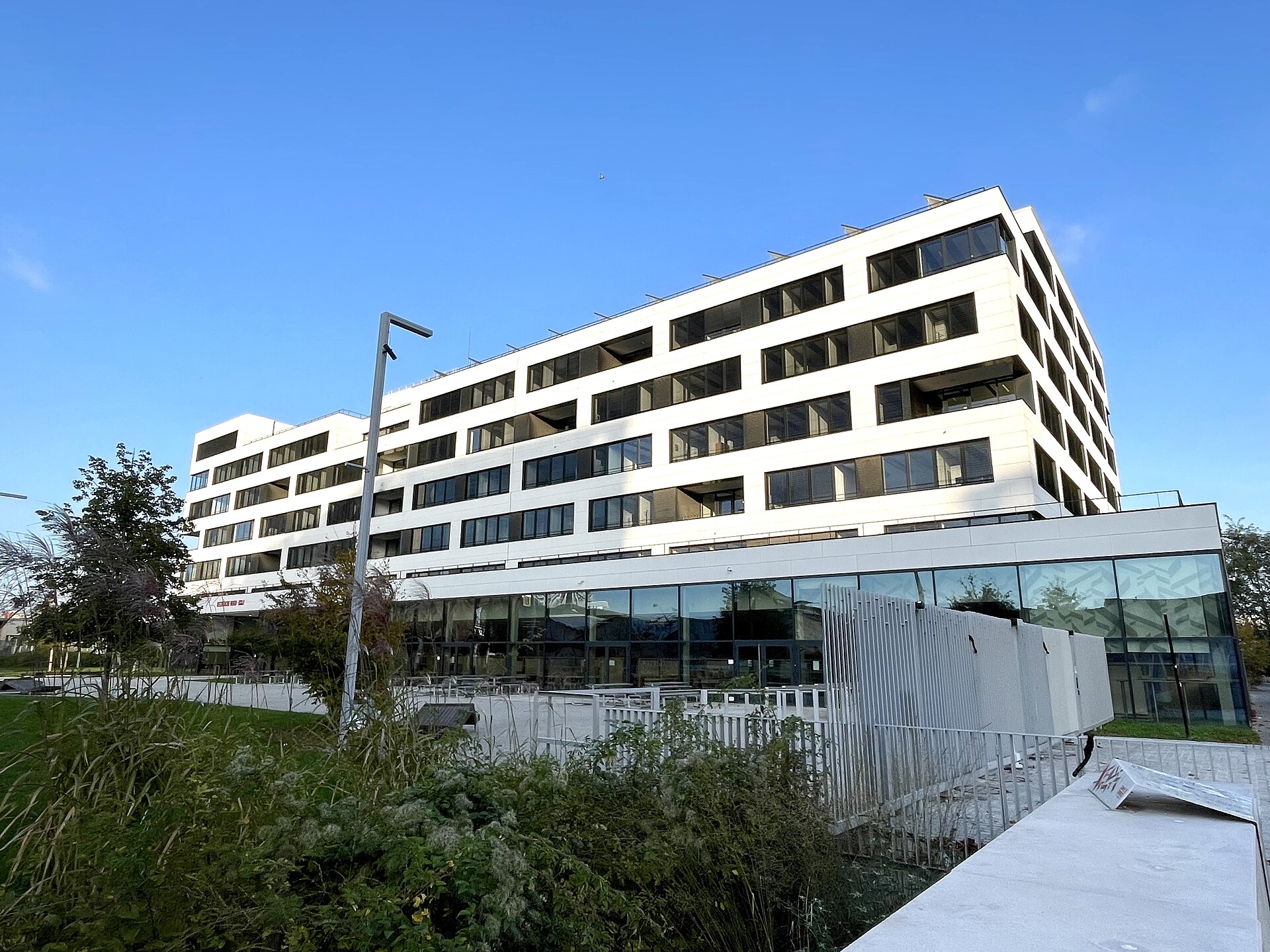
Université PSL (Paris Sciences et Lettres) — campus in pictures
Real, freely-licensed photographs of the campus (via Wikimedia Commons).




Why PSL — Elite Federation, Paris Address, Public Tuition
PSL is not a single campus but an ecosystem of France's most storied elite institutions unified under one research umbrella. Choosing PSL means accessing the best of French higher education alongside global networks, all at a fraction of the cost of comparable US or UK universities.
SELECTIVITY
Acceptance Rate & Admissions Profile
PSL is extremely selective. An acceptance rate of approximately 10% across its programmes masks even sharper competition at flagship tracks: ENS admission via competitive examination (concours) admits only a handful of candidates per discipline annually, while CPES and other elite bachelor's programmes on Parcoursup receive thousands of applications for a few hundred places.
AT A GLANCE
PSL Quick Facts
HOW YOU APPLY
What the Application Consists Of
Applying to PSL depends on your programme level and nationality. There is no single common application — each pathway has its own platform and document set. International students outside the EU apply either through Études en France (for eligible countries) or directly via Parcoursup and PSL's own portals.
ADMISSIONS CRITERIA
The Profile PSL Admits
For international students, PSL evaluates academic performance in the context of your national system: an IB score of 38 or above, a 3.5+ US GPA, or equivalent excellence in your home country's qualifications. English-taught programmes accept students without French, but evidence of intellectual seriousness — independent study, research exposure, academic competitions, or substantive extracurricular depth — distinguishes competitive applicants.
PSL's member institutions each curate their own cohort, but collectively they look for students with exceptional academic records, intellectual curiosity that extends beyond required coursework, and a clear sense of purpose for choosing the specific programme. Because France's grandes écoles tradition prizes disciplinary depth, the strongest applicants demonstrate mastery in their core subjects — not merely participation in them.
KEY DATES
Application Deadlines & Rounds
PSL does not operate US-style Early Decision / Regular Decision rounds. Deadlines vary by platform and programme. The dates below reflect the 2026 cycle; always verify on the official PSL admissions page each year.
All dates are indicative based on the 2025–2026 cycle. Confirm exact deadlines on psl.eu each year.
| Platform | Opens | Closes | Decision |
|---|---|---|---|
| Parcoursup (Bachelor's) | Mid-January | ~12 March | May–July (rolling) |
| Parcoursup — Final confirmation | March | ~1 April | Admission offer June |
| Études en France (Non-EU) | November–December | ~January–February | Varies by programme |
| Mon Master (Master's) | February–March | Varies by programme | April–June |
| ENS-PSL International Selection (Sciences) | October | ~15 December | January–February |
| ENS-PSL International Selection (Arts & Humanities) | October | ~3 December | January–February |
CAMPUS & CITY LIFE
Student Life at PSL
PSL students have access to over 200 student associations across its constituent schools, ranging from competitive debate and model UN to robotics, theatre, and classical music ensembles. Sport facilities are shared across schools via the SUAPS network. Paris itself provides an unparalleled cultural backdrop: world-class museums, an extraordinary restaurant and café culture, and an international professional ecosystem across finance, tech, diplomacy, and the arts — all reachable in minutes by Métro.
Housing is available through the CROUS (Centre Régional des Œuvres Universitaires et Scolaires) social housing network, which provides subsidised university residences. ENS students benefit from dormitory accommodation on campus. International students are encouraged to apply for CROUS housing as early as possible, as demand in Paris far exceeds supply. Private accommodation costs typically run €700–1,200 per month for a studio.
PSL is a distributed university: its constituent schools are scattered across Paris's most storied intellectual neighbourhoods — ENS on the Rue d'Ulm in the Latin Quarter, Dauphine at Porte Dauphine on the edge of the Bois de Boulogne, Mines Paris in the 6th arrondissement, and ESPCI on Rue Vauquelin steps from the Panthéon. This means student life at PSL is inseparable from life in Paris itself.
CAREERS & OUTCOMES
Career Outcomes
The ENS normalien pathway has produced an extraordinary proportion of France's leading mathematicians, physicists, and intellectuals — many of whom remain in academia. Mines Paris engineers are among the most sought-after recruits in French industry, consulting (McKinsey, BCG, Bain have strong PSL hiring), and the energy and tech sectors. Dauphine graduates are highly competitive for roles in finance, strategy, and data analytics across Europe.
PSL graduates are exceptionally well-positioned in the French and international job markets. With a 90% employment rate and an average starting salary of approximately $45,000 USD (roughly €40,000–45,000), graduates from PSL's constituent schools enter leading companies, government institutions, and academic positions across the world.
FREQUENTLY ASKED QUESTIONS
PSL — FAQs for International Students
Do I need to speak French to study at PSL?+
Not necessarily. Several PSL programmes are taught entirely in English, including the International Bachelor of Science in AI, selected Dauphine master's, ESPCI and Mines Paris international tracks, and PSL's PhD Tracks programme. However, daily life in Paris is greatly eased by at least basic French, and many programmes do require French proficiency. Always confirm the language of instruction on the specific programme page.
Is PSL the same as ENS (École Normale Supérieure)?+
ENS Paris is a founding member of PSL and one of its most prominent constituent schools, but PSL is broader: it federates ENS, Dauphine, Mines Paris, ESPCI, Chimie ParisTech, Observatoire de Paris, EPHE, ENC, and several other institutions. Degrees from PSL member schools may say 'PSL' and/or the specific school name on the diploma.
What is the CPES programme?+
CPES (Cycle Pluridisciplinaire d'Études Supérieures) is PSL's flagship multidisciplinary bachelor's programme, run jointly by ENS, Dauphine, and other member schools. It offers tracks in sciences, humanities, and social sciences with exceptional interdisciplinary breadth. It is highly competitive and admits students via Parcoursup.
How does the French grandes écoles system differ from universities in the UK or US?+
France has two parallel higher education tracks: universities (open admission) and grandes écoles (highly selective, often accessed via competitive entry exams called concours after two years of preparatory classes, or classes préparatoires). PSL bridges both worlds: it is a university in the modern sense but built on the traditions of elite grandes écoles. Unlike US universities, there is no 'holistic review' of extracurriculars; academic performance and disciplinary aptitude dominate.
Can I apply directly to PSL or must I apply to individual schools?+
For bachelor's, you apply via Parcoursup (or Études en France for non-EU students) to specific programmes — your programme is housed in a specific member school. For master's, you apply via Mon Master or the member school's own portal. There is no single PSL-level undergraduate application.
Is there need-based financial aid for international students?+
As a French public university, tuition is modest (~$3,000/year for all students). Need-based aid in the US sense is not broadly available. However, the France Excellence Eiffel Scholarship, ENS-PSL International Selection, and PSL PhD Tracks provide merit-based grants covering living expenses for exceptional international students.
What visa do I need to study at PSL?+
Non-EU students need a Long-Stay Student Visa (VLS-TS Étudiant). After receiving an offer, you complete the Études en France procedure (for eligible countries) or go through your French consulate directly. PSL's Welcome Desk provides guidance. PhD students need a Researcher-Talent Passport long-stay visa.
How competitive is the ENS-PSL International Selection?+
Extremely. The ENS-PSL International Selection is a competitive examination open to outstanding international undergraduates under 26. Only a small number of places are available globally in Sciences and Arts & Humanities. Winners receive €1,000/month for three years plus ENS campus accommodation — a fully funded route to studying at one of the world's most elite institutions.
ACADEMIC EXPECTATIONS
Academic Standards at PSL What International Students Must Know
PSL admits students who are already exceptional — and then demands more. The academic culture at PSL's constituent schools is characterised by intellectual intensity, independent thinking, and deep disciplinary rigour. For international students, understanding what PSL's programmes expect academically — and how your qualifications translate — is critical before you apply.
ADMISSIONS BENCHMARK
Academic Profile of Admitted Students
PSL does not publish a single admissions profile in the US sense — its programmes vary significantly in selectivity. ENS admission via concours is among the most competitive academic achievements in France; CPES and international bachelor's tracks admit a wider (though still highly selective) cohort. The benchmarks below apply broadly to competitive PSL admission.
TEST POLICY
Standardised Test Policy
If you have strong SAT or ACT scores, you may include them in international programme applications for context, but they carry no formal weight in the PSL admissions process. Language proficiency tests (IELTS, TOEFL, DELF/DALF) are required for programmes not taught in your native language.
PSL operates on a test-optional policy with respect to SAT and ACT scores — these US-format tests are not required or expected for admission to PSL programmes. The French system does not use these tests as admissions criteria. Academic performance in your national leaving certificate (IB, A-Levels, French Baccalaureate, Indian board exams, etc.) is the primary academic signal.
SAT / ACT
SAT & ACT at PSL
If you are a student from the United States or Canada applying to PSL, your high school transcript and any college-level work (AP, dual-enrollment) will be assessed alongside your motivation letter. Grades and subject rigor matter more than any standardised test score.
SAT and ACT scores are not used in PSL's admissions process. There are no published SAT or ACT bands for PSL programmes because these scores are not requested. International students from the US or countries that typically submit SAT/ACT results should focus instead on their IB scores, AP results, or national exam performance.
IB · A-LEVELS · AP
How IB, A-Levels & AP Are Read
A-Level students should typically hold three or more A-Level passes at A or A* grade in relevant subjects. AP scores of 4–5 in relevant subjects are viewed positively for US curriculum students but are not a substitute for strong overall GPA and transcript performance. In all cases, performance in subjects directly relevant to your intended programme matters most — a prospective chemistry student should have outstanding chemistry and mathematics credentials regardless of qualification type.
PSL and its member schools are experienced in evaluating international qualifications. The International Baccalaureate Diploma is well-recognised and respected across PSL; a score of 38 or above (out of 45) is a competitive benchmark for most programmes. Higher-level (HL) subjects are particularly important: programmes in sciences expect strong HL mathematics and science grades, while Dauphine programmes value HL economics and mathematics.
SUBJECT PREPARATION
Subject Rigour PSL Expects
PSL's academic culture values depth in the disciplines. Arriving underprepared in your core subjects is the most common avoidable mistake. Here is what each major area demands.
ENGLISH PROFICIENCY
English Language Requirements
English proficiency requirements apply to English-taught programmes at PSL and its member schools. French-taught programmes require DELF/DALF proficiency in French instead — typically B2 minimum, C1 for competitive entry. For English-medium programmes, the requirements below apply.
Language requirements vary by programme and constituent school. Always check the specific admissions page of your target programme.
| Test | Minimum | Note |
|---|---|---|
| IELTS Academic | 6.5 | No individual band below 6.0 typically accepted |
| TOEFL iBT | 90 | Accepted by English-taught PSL programmes |
| Duolingo English Test | 115 | Accepted by some programmes — verify per programme |
| French (DELF/DALF) | B2–C1 | Required for French-taught programmes; not English-test equivalent |
GRADE 9 → 12 ROADMAP
Building Your PSL Profile Year by Year
PSL values students who have built genuine academic depth over time. Here is a practical roadmap for international students targeting PSL from secondary school.
AVOID THESE
Academic Pitfalls to Avoid
- Applying without HL or advanced-level excellence in your intended field — PSL's standards assume you are already well ahead of your peers in your core subjects.
- Neglecting mathematics even for non-STEM tracks — quantitative reasoning is valued across Dauphine's social sciences and economics programmes.
- Assuming SAT/ACT scores substitute for strong national exam performance — they do not count in PSL admissions.
- Applying to French-taught programmes without adequate French proficiency — you will struggle academically regardless of how strong your application was.
- Underestimating the cost of living in Paris — university tuition is low, but housing and living costs in Paris are among the highest in France and Europe.
- Missing Parcoursup deadlines — the platform has hard closing dates; late applications are not accepted.
- Submitting uncertified or untranslated transcripts — PSL member schools may reject dossiers that do not meet document requirements.
ACADEMIC FAQs
Academic Questions — Answered
Is PSL hard to get into as an IB student?+
Yes, especially for flagship programmes. An IB score of 38+ is the competitive benchmark, and for the most selective tracks (ENS, CPES, Mines Paris), scores at or above 40 with exceptional HL performance are expected. However, PSL's international and English-taught tracks may be more accessible for students with strong profiles in the 36–38 range.
Are there English-taught programmes at PSL?+
Yes. The International Bachelor of Science in AI, the I-BE³ international engineering track at Mines Paris, several Dauphine master's programmes, and PSL PhD Tracks are delivered in English. ESPCI and Chimie ParisTech also offer international master's tracks in English. However, many flagship programmes remain French-medium.
Does PSL accept students directly from secondary school?+
Yes, for bachelor's programmes (CPES, International BSc in AI, Dauphine bachelor's, and others) via Parcoursup. ENS's normalien programmes, however, typically require students to have completed two years of classes préparatoires first — a highly intensive post-baccalaureate preparatory track taken in France. International students can bypass this via the ENS-PSL International Selection.
COST & AFFORDABILITY
The Cost Reality for International Students Low Tuition, Parisian Living
PSL is one of the most compelling financial propositions in world-class higher education: a top-25 global university at French public university tuition rates — approximately $3,000 per year for all students, regardless of nationality. The significant cost for international students is not tuition; it is the cost of living in Paris, one of Europe's most expensive cities.
ANNUAL COSTS
Cost Breakdown (Annual Estimates)
All figures are annual estimates. Tuition and cost of attendance figures are sourced from the university facts file. Living costs in Paris vary significantly depending on housing type.
Costs are in USD equivalents based on facts data. Exchange rate fluctuations affect actual EUR amounts. These are estimates — verify current tuition with PSL's admissions office.
| Component | Amount | Notes |
|---|---|---|
| Tuition & Registration Fees | ~$3,000 / year | All nationalities — French public university rates |
| Estimated Cost of Living | ~$16,000 / year | Housing, food, transport, personal expenses in Paris |
| Total Estimated Cost of Attendance | ~$19,000 / year | Tuition + living — significantly below comparable global peers |
| Application Fee | None listed | Parcoursup registration is free; verify per programme |
FINANCIAL AID
Financial Aid for International Students
International students may access: (1) merit-based scholarships from PSL's constituent schools; (2) French government scholarships (France Excellence Eiffel); (3) CROUS social grants if they meet French residency criteria; (4) home-country government scholarships or bilateral agreements. Students should also explore whether their home government or international organisations fund study in France.
PSL does not offer US-style need-based financial aid to international students in the form of institutional grants covering a percentage of tuition. As a French public institution, its primary affordability mechanism is the low tuition rate itself — available to all, including non-EU internationals.
NAMED SCHOLARSHIPS
Key Scholarships for International Students
The following scholarships are real, named awards. Always verify current eligibility and amounts on the official programme pages, as details change annually.
NET COST REALITY
Is PSL Affordable for International Students?
The main financial challenge is Paris's cost of living, particularly housing. CROUS university residences (available to students with means-tested eligibility) offer heavily subsidised rooms, but demand far exceeds supply. Most international students will rent privately, spending €700–1,200 per month on housing alone. Planning carefully for housing before arrival — ideally securing CROUS accommodation or a signed private lease — is one of the most important practical steps in the admissions process.
For most international students, PSL is significantly more affordable than comparable top-25 universities in the US or UK. The ~$3,000 annual tuition means that even without any scholarship, total annual costs are approximately $19,000 — a fraction of what Harvard, Oxford, or ETH Zurich cost for the same global ranking tier.
ACTION PLAN
How to Fund Your Studies at PSL
COST FAQs
Cost & Aid — Common Questions
Does PSL offer need-blind admission for international students?+
PSL does not operate a US-style need-blind admissions process. Admission is based on academic merit; financial need is not assessed as part of the admissions decision. However, financial support is available post-admission through the scholarships described above.
Are there higher fees for non-EU students?+
At most PSL public-university programmes, the standard French public university tuition (~$3,000/year equivalent) applies to all students. However, some Dauphine grande école programmes charge higher non-EU rates — verify on the specific programme page. French government policy on differentiated fees for non-EU students has evolved; always confirm current rates.
Is the ENS-PSL International Selection really fully funded?+
Yes. The €1,000/month stipend for 36 months (~€36,000 total) plus ENS on-campus housing makes it a genuinely fully funded opportunity. Competition is extremely high — it is an academic selection comparable in rigour to a competitive university examination.
How much does it cost to live in Paris as a student?+
Paris is expensive. As a student, you should budget approximately €800–1,200/month for housing, €300–400/month for food and daily expenses, and €100–150/month for transport. CROUS student housing reduces housing costs significantly if you qualify and secure a place.
Can I work while studying at PSL?+
Non-EU students holding a valid French student residence permit (titre de séjour étudiant) are legally permitted to work up to 964 hours per year (approximately 20 hours/week during term). This is a common way students supplement their income in Paris.
APPLICATION & STATEMENT
Applying to PSL: The Motivation Letter & French Admissions System
PSL operates in France's higher education system — not the US Common App or UK UCAS framework. There are no 'supplemental essays' in the American sense. The centrepiece of your written application is the motivation letter (lettre de motivation), submitted through Parcoursup or Études en France. Getting this letter right is your single most important written task in the entire application.
THE FRENCH SYSTEM
How Written Applications Work at PSL
For non-EU international students, the Études en France (Campus France) portal mirrors this structure: you create a dossier, upload transcripts and documents, and write a motivation statement. For master's programmes, Mon Master has a similar structure. In all cases, the motivation letter is the primary written statement — far shorter than a US personal statement but expected to be precise, structured, and specific to the programme. Vague, generic letters are filtered out quickly.
France's undergraduate admissions system is built around Parcoursup — a national platform where applicants rank programme choices and submit a dossier for each. For each programme they wish to be considered for, applicants write a short motivation letter (typically 1,500–2,000 characters on Parcoursup) explaining why they are applying to that specific programme.
PSL does not use the Common Application, Coalition App, UCAS, or any US/UK-style admissions system. There is no 650-word personal statement, no activities list, and no short-answer supplements in the American sense.
WRITTEN STATEMENT
The Motivation Letter — What You Are Writing
The following represents the type of written statement expected in the French application system. There is no single verbatim prompt in the US sense — admissions evaluators expect you to address these dimensions without being explicitly asked.
STRATEGY
Writing Your PSL Motivation Letter
A strong PSL motivation letter opens with the intellectual problem or question that draws you to the field — grounded in something specific you have studied, read, or worked on. It then maps that interest to the specific programme (its structure, faculty strengths, research environment, or interdisciplinary approach at PSL). It closes with a concise account of your trajectory — where you are heading and why this programme is the right next step. The letter should feel like it could only have been written by you, about this programme, at this moment in your academic development — not like a template with your name inserted.
The French motivation letter is the opposite of the US personal statement in almost every way. Where the US essay prizes personal narrative, emotional storytelling, and the revelation of character through anecdote, the French letter prizes intellectual content, clarity of purpose, and academic rigour. Admissions readers in France are evaluating: do you understand what this programme entails? Do you have the academic preparation for it? Do you have clear reasons — not just enthusiasm — for choosing it?
PROGRAMME-SPECIFIC
What to Emphasise by Programme
CHOOSING YOUR ANGLE
How to Frame Your PSL Application Statement
The specificity of your intellectual engagement is the signal admissions evaluators are looking for. It tells them you are not applying to PSL because of the rankings — you are applying because you have identified something specific that this programme offers that aligns with genuine intellectual work you are already doing.
The most common mistake in French application letters — from both domestic and international students — is writing about generic ambitions rather than specific intellectual content. Do not write: 'I have always been passionate about science and believe PSL will help me achieve my dreams.' Write instead: 'Studying thermodynamics in detail last year raised a question for me about the relationship between entropy and information that I couldn't fully answer with my high school materials. When I read [specific paper or concept], I realised that the intersection of physics and information theory was the field I wanted to study — and ESPCI's research group working on [area] is one of the few places doing this at the undergraduate level.'
PITFALLS
Common Application Mistakes to Avoid
- Writing a generic letter that could apply to any university — PSL's readers instantly recognise templates.
- Using US-style personal narrative as your primary approach — French admissions culture values intellectual content and clarity of purpose, not personal storytelling.
- Applying to French-taught programmes without DELF/DALF French proficiency — your letter will be in French and you will study in French.
- Listing activities and achievements without connecting them to your academic motivation — the French system cares about why you are academically drawn to this field, not what clubs you joined.
- Missing Parcoursup deadlines — the platform has hard close dates and cannot accommodate late submissions.
- Failing to specify which PSL member school and programme you are targeting — 'I want to study at PSL' is not sufficient; you must name and justify your specific programme choice.
- Treating the Études en France process as optional — for non-EU students in eligible countries, it is a mandatory pre-consular step, not just an application formality.
- Submitting uncertified or untranslated academic documents — incomplete dossiers are rejected without review.
- Writing a letter that is too long — the Parcoursup character limit is firm. Practice being precise within the constraint.
APPLICATION FAQs
Application & Statement — Common Questions
Does PSL use the Common Application?+
No. PSL uses France's national platforms: Parcoursup for bachelor's degrees, Mon Master for master's, and Études en France for non-EU international students. There is no Common App, Coalition App, or UCAS portal.
How long should my PSL motivation letter be?+
On Parcoursup, the motivation text is typically limited to approximately 1,500–2,000 characters (roughly 250–350 words). For programme-specific applications and Études en France, length varies — follow the instructions on the specific platform. In all cases, quality and precision matter more than length.
Should I write in French or English?+
For French-taught programmes, write in French. For English-taught programmes (International BSc in AI, English-medium master's tracks), you may write in English. When in doubt, write in the language of instruction of your target programme and check the specific admissions page for guidance.
Are letters of recommendation required?+
Requirements vary by programme. Some PSL master's and doctoral programmes require academic reference letters; Parcoursup for bachelor's typically does not require them but may allow supporting documents. Check the specific programme's admissions requirements.
What makes a PSL motivation letter stand out?+
Specificity and intellectual depth. A letter that names a specific academic question you are pursuing, maps it convincingly to the programme's actual content, and explains why PSL is the right place to pursue it — backed by real academic experience — will stand out. Generic letters about passion and ambition will not.
Is there an interview process?+
Some PSL programmes include an interview as part of their selection process, particularly at the master's and ENS International Selection level. Bachelor's programmes on Parcoursup typically do not include interviews. Check the specific programme admissions page.
Courses — schools, degrees & intake
21 degrees across 9 groupings.
Université PSL — College of Science, Humanities and Society · 6 degrees
CPES — Science Track (Cycle Pluridisciplinaire d'Études Supérieures)
CPES — Humanities & Society Track (Cycle Pluridisciplinaire d'Études Supérieures)
CPES — Economics, Society and Law Track (Cycle Pluridisciplinaire d'Études Supérieures)
CPES — Data Science, Arts and Cultures Track (Cycle Pluridisciplinaire d'Études Supérieures)
Licence Sciences pour un Monde Durable (Sustainability Sciences)
International Bachelor of Science in AI
Dauphine-PSL (Université Paris Dauphine) · 7 degrees
Licence Sciences des Organisations — Droit (Law)
Licence Sciences des Organisations — Gestion (Management)
Licence Sciences des Organisations — Économie Appliquée (Applied Economics)
Licence Sciences des Organisations — Sciences Sociales (Social Sciences)
Licence Mathématiques et Informatique — Mathématiques Appliquées (Applied Mathematics)
Licence Mathématiques et Informatique — Informatique des Organisations (Business IT / Organisational Computer Science)
Double Licence IA et Sciences des Organisations (AI & Organisational Sciences)
Mines Paris-PSL (École des Mines de Paris) · 1 degrees
International Bachelor of Environmentally Engaged Engineering (I-BE3)
ESPCI Paris-PSL (École Supérieure de Physique et de Chimie Industrielles) · 1 degrees
ESPCI Engineering Programme (Physics, Chemistry & Biology)
CNSAD-PSL (Conservatoire National Supérieur d'Art Dramatique) · 1 degrees
Diplôme National Supérieur Professionnel de Comédien (DNSPC) — Acting
ENSAD-PSL (École Nationale Supérieure des Arts Décoratifs) · 1 degrees
Diplôme des Arts Décoratifs (DNA) — Fine Arts & Design
École Nationale Supérieure d'Architecture Paris-Malaquais — PSL · 1 degrees
Diplôme d'État en Architecture — Licence Cycle (Architecture Studies)
École Normale Supérieure (ENS) — PSL · 2 degrees
ENS Undergraduate — Sciences Track (Mathematics, Physics, Chemistry, Biology, Computer Science, Geosciences, Cognitive Studies)
ENS Undergraduate — Lettres & Sciences Humaines Track (Philosophy, History, Literature, Economics, Social Sciences, Geography, Ancient Studies, Arts History)
Observatoire de Paris — PSL · 1 degrees
Licence Astronomie et Astrophysique (Astronomy & Astrophysics)
Want your real chances at Université PSL (Paris Sciences et Lettres)?
Create a free TYCHR account for your personalised admit-chance, a shortlist you can track, exact entry requirements, and essay + counselling help.