Université Paris-Saclay
Gif-sur-Yvette, France · Suburban
WORLD-CLASS RESEARCH UNIVERSITY · FRANCE
Université Paris-Saclay: A Global Science Powerhouse Near Paris
Ranked #71 globally by QS and #63 by Times Higher Education, Université Paris-Saclay is France's second-ranked university and one of the world's premier destinations for mathematics, physics, and the natural sciences. Home to Nobel and Fields Medal laureates and a dense cluster of national research laboratories, it offers ambitious international students an exceptional research environment at remarkably low public tuition — less than $3,000 per year. Located on the Plateau de Saclay, 25 km south of Paris, the university sits at the heart of one of Europe's largest science and technology clusters. Whether you're pursuing a cutting-edge Master's in quantum physics, AI, or life sciences, or entering through an internationally structured undergraduate track, Paris-Saclay offers academic depth that rivals the world's best at a fraction of the cost.
Campus
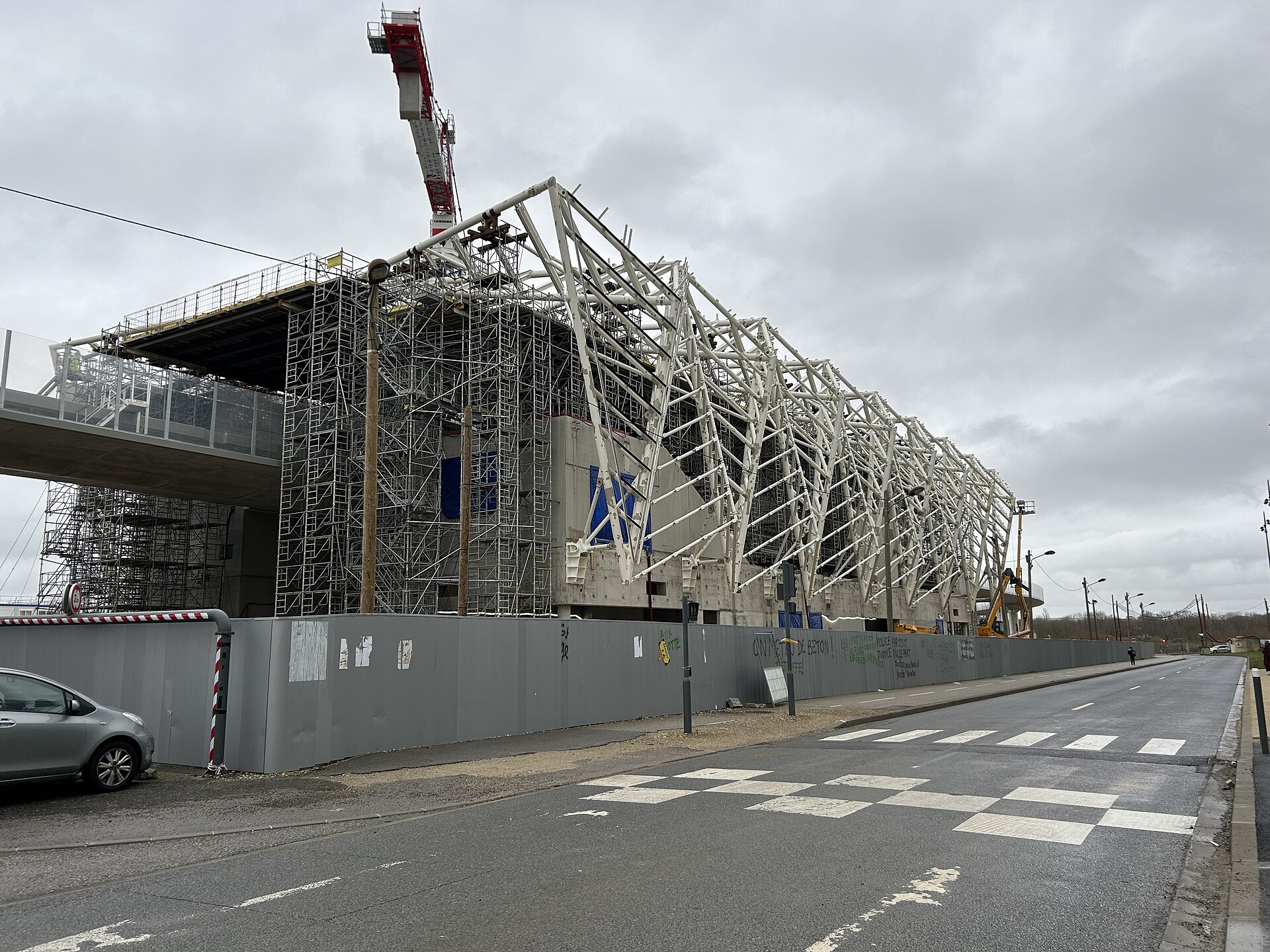
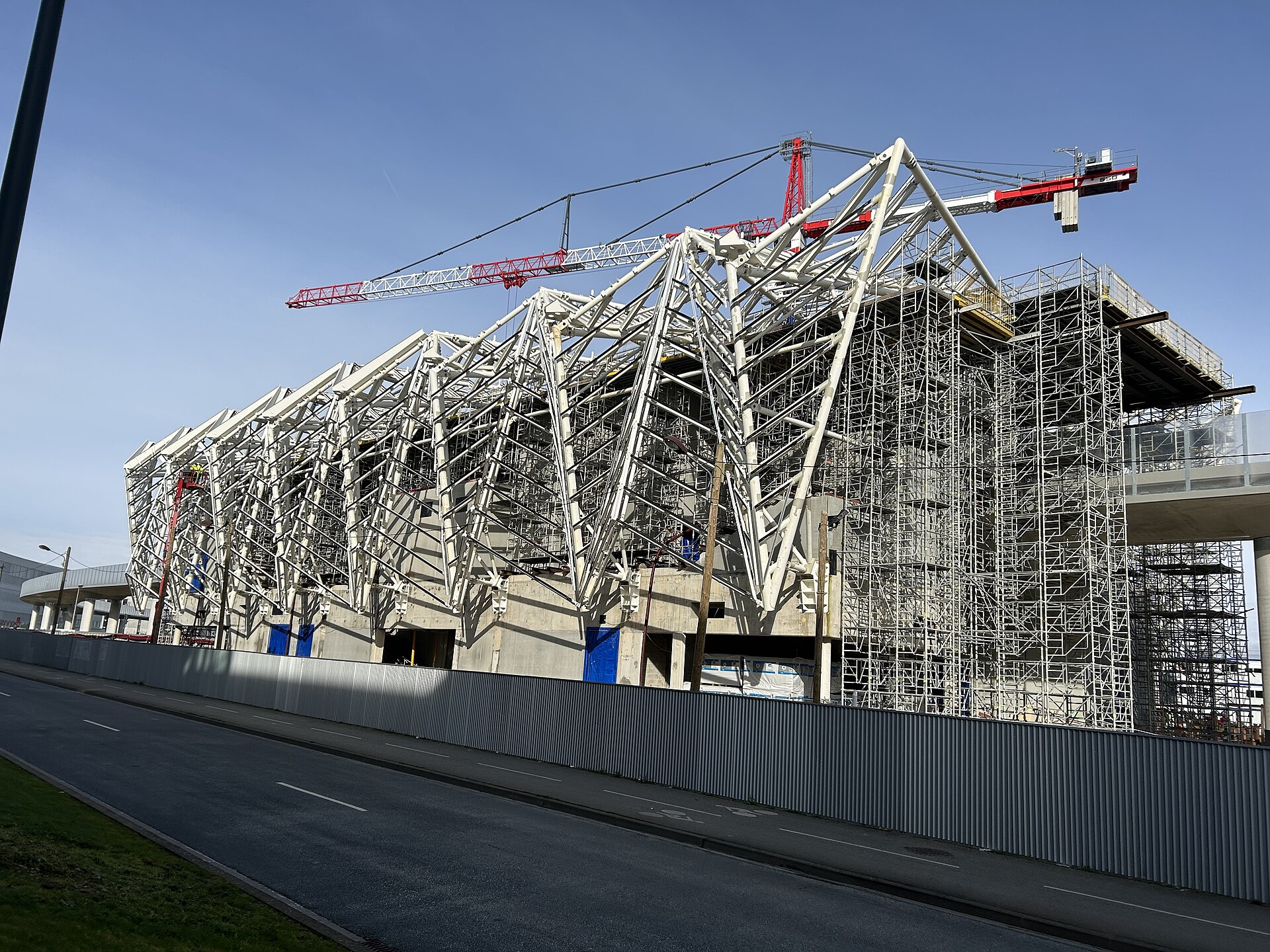
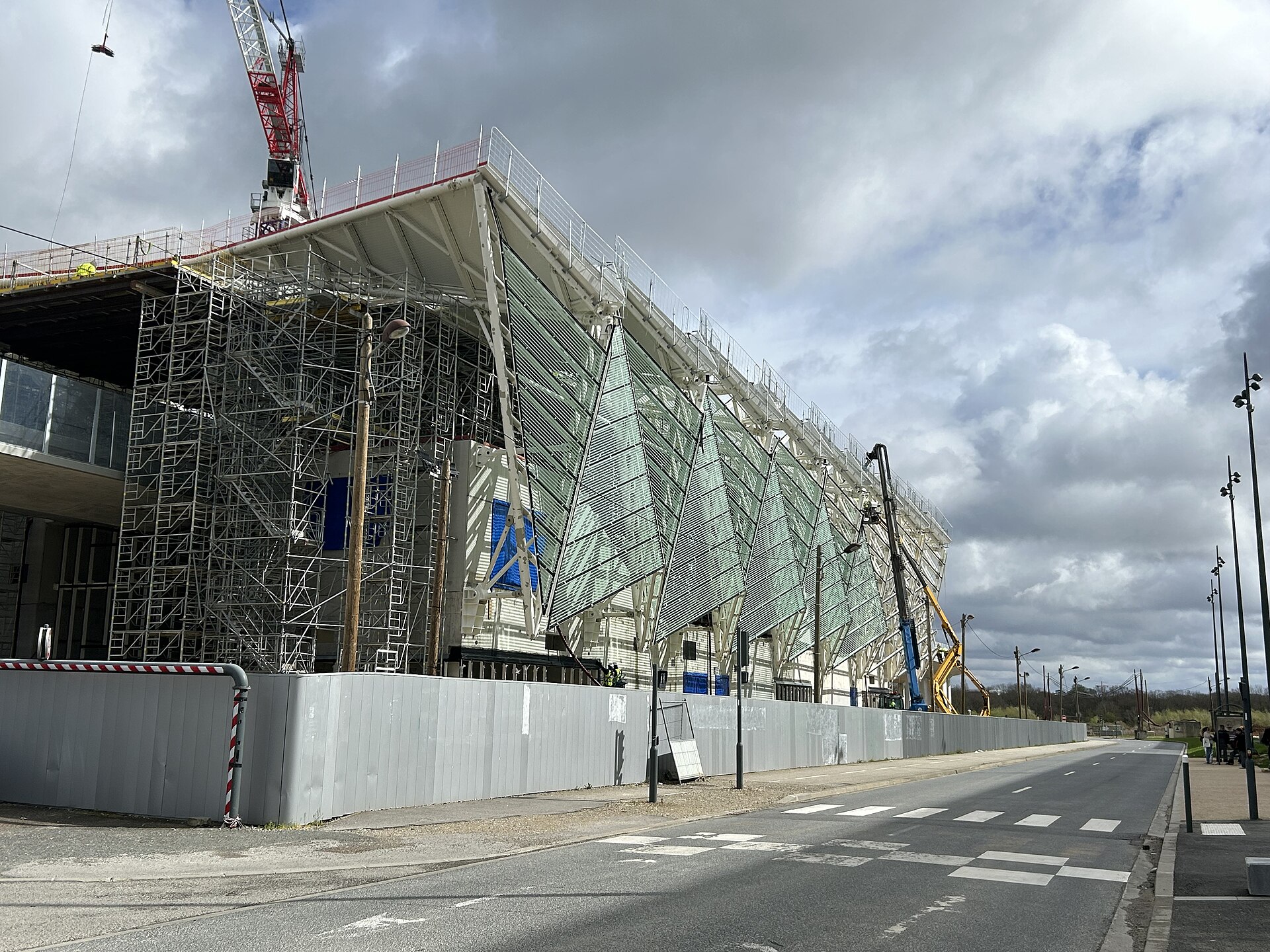
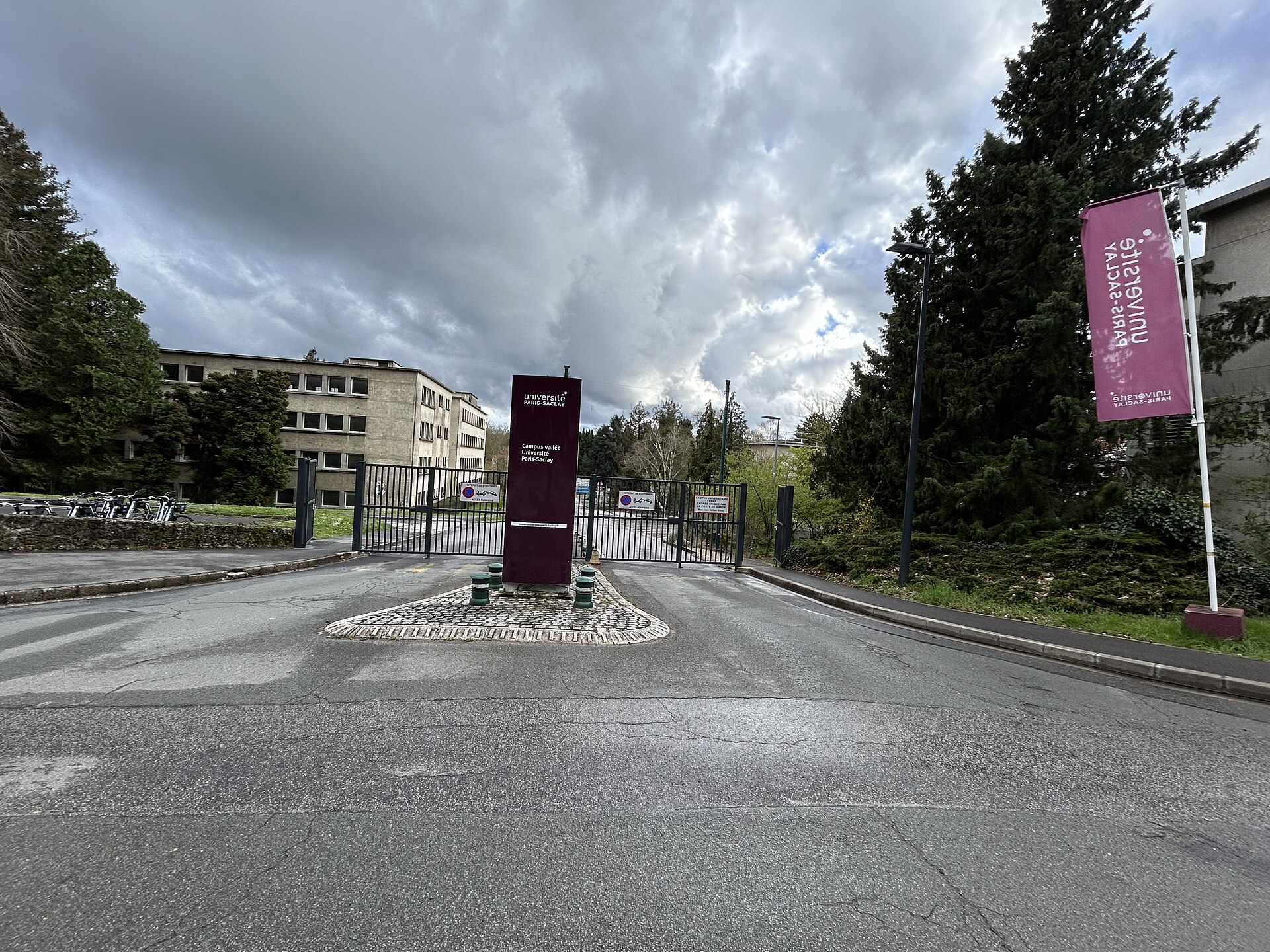
Université Paris-Saclay — campus in pictures
Real, freely-licensed photographs of the campus (via Wikimedia Commons).

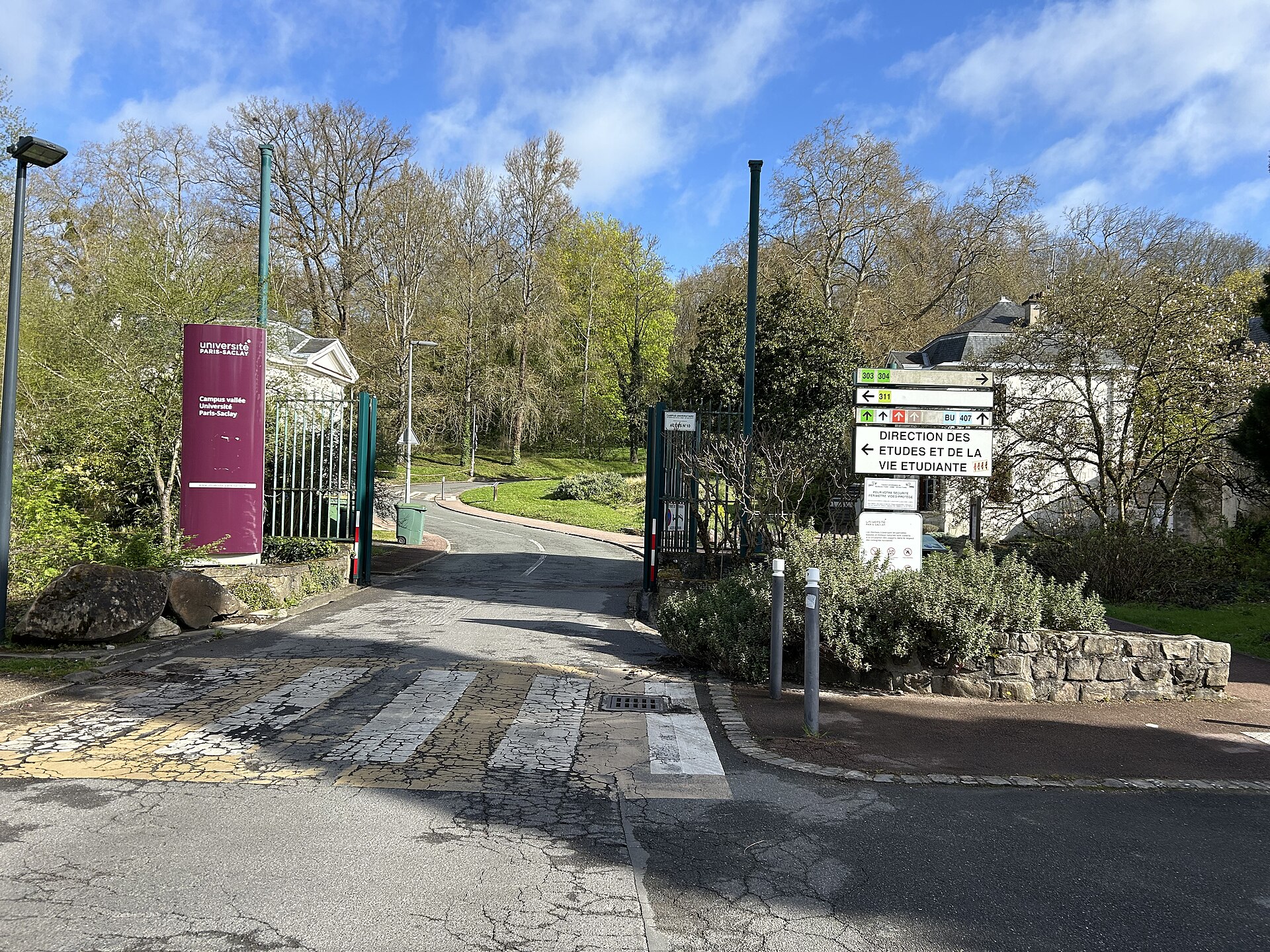
Why Université Paris-Saclay — Research, Prestige & Exceptional Value
Université Paris-Saclay is not a traditional campus university — it is a federation of elite French institutions and research bodies, created in 2019 to compete at the highest global level. For international students who care about academic excellence and research access, it offers an unparalleled proposition.
SELECTIVITY
How Selective Is Paris-Saclay?
Université Paris-Saclay has an overall acceptance rate of approximately 15%, but this figure masks significant variation by programme and level. Master's programmes in competitive fields — mathematics, physics, computer science, AI — can be highly selective, drawing applications from graduates of elite institutions worldwide. Admission is merit-based and academic record-driven.
AT A GLANCE
Quick Facts
HOW TO APPLY
What Your Application Consists Of
Unlike US universities, Paris-Saclay does not use a common application platform with personal essays and holistic review. The French system is primarily academic-merit driven. The exact platform depends on your level and country of origin.
ADMISSION PROFILE
The Profile Paris-Saclay Admits
Paris-Saclay selects primarily on academic merit and fit for research. Unlike holistic US admissions, there is no extracurricular score, no leadership narrative requirement. The admissions committee evaluates whether your academic foundation and stated goals align with the programme's rigour and direction. For top STEM programmes especially, the faculty are looking for students with strong mathematical grounding, evidence of independent thinking (research projects, thesis work, olympiad results), and a clear, specific research motivation. Students admitted to competitive programmes typically show academic performance well above the minimum thresholds.
KEY DATES
Application Deadlines & Rounds
Paris-Saclay does not have a single application deadline — deadlines vary significantly by programme and level. The following provides indicative windows; always verify on the specific programme page or INCEPTION platform.
Always verify exact dates on the official INCEPTION platform or programme page. Deadlines are strict — late applications are not accepted.
| Level | Window | Platform | Notes |
|---|---|---|---|
| Bachelor's — Non-EU (DAP) | November–January | Campus France / DAP portal | Dossier Blanc (abroad) or Dossier Vert (in France) |
| Bachelor's — EU students | January–March | Parcoursup | National platform for French higher education entry |
| Master's M1 — International | January–April (varies by programme) | INCEPTION / monmaster.gouv.fr | Then Études en France if applicable |
| Master's M2 — International | February–May (varies by programme) | INCEPTION platform | Check programme-specific page |
| PhD / Doctorate | Rolling — check lab/school | Direct to research school | Contact supervisor/lab directly |
CAMPUS & CITY
Student Life on the Plateau de Saclay
Université Paris-Saclay occupies the Plateau de Saclay, a suburban research campus 25 km south-west of central Paris. The setting is unlike a traditional city university — it is purpose-built for science, with modern laboratory complexes, research institutes, and a growing student-city infrastructure. The campus is well-connected to Paris by the RER B train line (Orsay-Ville and Le Guichet stations) and has a growing student village with housing, dining, sports, and cultural facilities. The proximity to Paris gives students access to one of the world's great cities — its culture, art, cuisine, and professional networks — while living in a quieter, more campus-like environment. Paris-Saclay has an active student association ecosystem, sports facilities, and an international student welcome programme including the Buddy Programme, which pairs incoming international students with current students for orientation and settling-in support.
OUTCOMES
Career & Graduate Outcomes
Paris-Saclay graduates are highly sought after in research, industry, and academia across France and internationally. With an employment rate of 85% and an average starting salary of $45,000, graduates typically enter roles in scientific research, technology, consulting, and the public sector. The Saclay ecosystem — with multinationals, deep-tech start-ups, and national research agencies all on or near campus — creates direct pathways to employment and internships. Many Master's students join research labs or start-ups in the cluster before graduating. Alumni move into positions at companies including Airbus, Thales, L'Oréal, BNP Paribas, and McKinsey, as well as into academic and government research careers.
FAQs
Frequently Asked Questions
Do I need to speak French to study at Paris-Saclay?+
Not necessarily. Paris-Saclay offers a growing number of Master's programmes taught entirely in English, particularly in STEM disciplines. However, for Bachelor's-level programmes, most instruction is in French. Even in English programmes, learning basic French greatly helps with daily life and integration. Check each programme's language of instruction on the official course catalogue.
Is Paris-Saclay the same as Paris-Sud or Orsay?+
Yes — Université Paris-Saclay was formed in 2019 from the merger of several institutions including the former Université Paris-Sud (Paris XI), along with engineering schools and research institutes. If you see references to Paris-Sud or Orsay, they refer to the predecessor institutions now unified under Paris-Saclay.
What is the actual tuition fee for international students?+
As a French public university, Paris-Saclay charges the nationally set harmonised tuition rate. For most international students outside the EU, this is approximately €2,770 per year at Master's level — roughly $3,000 USD — not the market-rate tuition you'd pay at a private university. This is one of the most compelling aspects of the university for international applicants.
How competitive are the top STEM programmes?+
Very competitive. The mathematics, physics, computer science, and AI Master's programmes attract applications from graduates of elite universities worldwide. An IB band of 34+ or equivalent strong academic record is a reference point, but for the most selective programmes, successful applicants typically exceed this significantly with research experience and strong references.
Do I apply through Campus France?+
It depends on your country. Students from countries participating in the Études en France (EEF) programme — which includes most of Africa, Asia, Latin America, and the Middle East — must use the Campus France / Études en France portal as part of their application and visa process. EU/EEA students use Parcoursup (undergraduate) or monmaster.gouv.fr / INCEPTION (Master's) directly.
Is a visa required to study in France?+
Non-EU/EEA students require a student visa (visa étudiant — VLS-TS) to study in France. Campus France manages part of this process for students in EEF countries. You should begin the visa process at least 3 months before your intended start date.
What makes Paris-Saclay different from Sciences Po or Sorbonne?+
Paris-Saclay is primarily a science, technology, and research university — its strengths lie in mathematics, physics, chemistry, biology, and engineering, not the humanities, law, or social sciences. If you're interested in those fields, Sciences Po or Sorbonne may be more appropriate. For STEM research ambitions, Paris-Saclay is arguably the premier destination in France.
Can I pursue a PhD at Paris-Saclay?+
Yes, and the PhD (Doctorat) is where Paris-Saclay truly shines. Doctoral students are integrated into one of the many affiliated research laboratories — CNRS, INRIA, CEA, etc. — and often receive funding through their research contract. Contact potential supervisors in your research area directly; PhD applications are managed at the lab and doctoral school level.
ACADEMIC EXPECTATIONS
Academic Preparation for Paris-Saclay Excellence in STEM Disciplines
Université Paris-Saclay is one of the most academically demanding institutions in the world for STEM students. Its programmes — especially at Master's level — assume a rigorous quantitative foundation and an appetite for independent research. International students who thrive here come with strong fundamentals in mathematics and sciences, the ability to work through complex problems independently, and genuine intellectual curiosity about their field. This guide helps you understand what academic preparation looks like for Paris-Saclay admissions, and how to position yourself for the programmes you're targeting.
ACADEMIC BENCHMARKS
Academic Profile — Key Reference Points
Paris-Saclay does not publish a single global cut-off; benchmarks vary by programme. The figures below are reference points drawn from the facts file and institutional context.
TEST POLICY
Standardised Tests at Paris-Saclay
Paris-Saclay is test-optional in the sense that SAT/ACT scores are not required or commonly submitted for admission to French programmes — the French system does not centre on these US-specific tests. Academic records and qualifications (IB, A-Levels, national board results, prior degree transcripts) are the primary credential. The main tests that matter at Paris-Saclay are language proficiency tests for English-taught programmes. If you are applying to a French-taught programme and French is not your mother tongue, you will need to demonstrate French language proficiency (typically DELF/DALF B2 or TCF at an appropriate level) — verify per programme.
SAT / ACT
SAT & ACT — Relevance for Paris-Saclay
SAT and ACT scores are not part of the French university admissions process and are neither required nor expected at Université Paris-Saclay. If you are an international student whose secondary education followed a US or IB curriculum, your GPA, class rank, and IB Diploma results (or AP scores) carry far more weight than SAT/ACT. If you have strong SAT/ACT scores, they may serve as supporting evidence of quantitative ability in the context of a motivation letter, but this is not standard practice and carries little formal weight in the selection process.
IB / A-LEVELS / AP
How IB, A-Levels & International Qualifications Are Read
Paris-Saclay evaluates international qualifications and converts them to a French equivalent for assessment purposes. The IB Diploma is well-understood and respected, with a band of 34+ used as a reference point for internationally admitted students. Strong scores in Higher Level (HL) mathematics, physics, chemistry, or biology are particularly valued for STEM programmes. A-Level students should aim for strong grades (typically A*–A range) in subjects relevant to their chosen programme. Students from India applying after secondary school should note that Paris-Saclay's English-taught programmes are primarily at Master's level — the most common entry point for Indian students is after completing a Bachelor's degree in India.
SUBJECT PREPARATION
Subject Rigour Expected
For Paris-Saclay's flagship STEM programmes, specific subject preparation is critical.
ENGLISH PROFICIENCY
English Language Requirements
For English-taught Master's programmes, you must demonstrate English proficiency through one of the accepted tests below. Native English speakers or those from countries where English is the sole medium of instruction may be exempt — check with the specific programme.
| Test | Minimum | Notes |
|---|---|---|
| IELTS Academic | 6.5 overall | No sub-score below 6.0 typically acceptable |
| TOEFL iBT | 80 | Institutional score reports accepted |
| Duolingo English Test | 110 | Increasingly accepted; verify per programme |
| French-taught programmes | DELF/DALF B2 minimum | Or TCF at equivalent level — verify per programme |
PREPARATION ROADMAP
Building Your Paris-Saclay Profile: Year by Year
COMMON PITFALLS
Academic Mistakes to Avoid
- Applying to French-taught programmes without sufficient French proficiency — verify language of instruction for every programme you apply to
- Underestimating the mathematical rigour: French STEM programmes, even at Master's level, are extremely demanding in analysis and algebra
- Submitting a generic motivation letter not tailored to the specific programme and research environment at Paris-Saclay
- Missing DAP or Campus France deadlines — November–January windows close strictly, and late applications are not accepted
- Not verifying whether your country requires Campus France / Études en France processing before applying directly
- Confusing Paris-Saclay with Paris-based universities like Sorbonne or Sciences Po — the campus is on the suburban Saclay Plateau, not in central Paris
- Overlooking the INCEPTION platform — most Master's applications require registration on this specific portal
- Not applying for scholarships at the same time as applying to programmes — the International Master's Scholarship deadline aligns with, not after, programme applications
COST & FINANCIAL AID
Cost of Studying at Paris-Saclay Exceptional Value for World-Class Research
Université Paris-Saclay is, by global standards, extraordinarily affordable for the academic prestige it offers. As a French public university, it charges the nationally regulated tuition rate — around $3,000 per year for most international students. Total annual cost including accommodation and living expenses is approximately $18,000 — less than many students pay in tuition alone at comparable institutions in the US, UK, or Australia. That said, Paris and its surrounding region (Île-de-France) is not an inexpensive place to live. Managing living costs carefully and securing one of the available scholarships can significantly reduce the financial burden.
ANNUAL COSTS
Estimated Annual Cost Breakdown
All figures are approximate annual estimates in USD. Tuition is fixed at the national French public university rate. Living costs vary significantly based on housing type and lifestyle.
Figures are approximate annual estimates. Tuition and living costs from the university's facts file. EUR/USD conversion is approximate; verify current rates.
| Component | Estimate | Notes |
|---|---|---|
| Tuition (annual) | ~$3,000 | National harmonised public university rate |
| Cost of Living (annual) | ~$14,000 | Housing, food, transport, personal expenses |
| Total Cost of Attendance | ~$18,000 | Tuition + living estimate combined |
| Application Fee | ~$100 | Campus France / application processing fee |
| Health Insurance | Included / ~€100/year | French Sécurité Sociale covers enrolled students |
| CROUS Housing (if secured) | €200–€400/month | Subsidised student residence — apply early |
FINANCIAL AID
Financial Aid for International Students
France does not operate the same need-based financial aid system as US universities. There is no institutional equivalent of a US 'financial aid package' covering demonstrated need for international students. However, several well-funded scholarship programmes are available, and the low tuition itself constitutes a significant financial benefit relative to alternatives. Some students from specific countries may benefit from bilateral agreements between France and their home country. Additionally, France's social support system (CAF housing allowance) is available to eligible foreign students — even non-EU students on a valid titre de séjour may qualify for APL (housing subsidy), which can reduce housing costs meaningfully.
SCHOLARSHIPS
Named Scholarships Available
NET PRICE REALITY
Understanding the True Cost
The headline tuition of ~$3,000 per year is genuinely the cost at Paris-Saclay — not a sticker price that few pay. This is set by the French government and applies to most international students (some EU-level programmes may differ; always verify with your programme). The real financial challenge is living costs in the Paris region. Île-de-France is one of Europe's most expensive areas to live in, and student accommodation near the Saclay Plateau is competitive. Securing CROUS housing early (apply as soon as you receive your admission) can substantially reduce this burden to €200–€400/month. Combined with CAF housing assistance (where eligible), France's social infrastructure can meaningfully supplement a student budget. For reference: a student receiving the Paris-Saclay International Master's Scholarship (€10,000/year) and housed in CROUS accommodation would have their total annual costs effectively covered or close to covered — making study at Paris-Saclay genuinely accessible.
Students without scholarship support should budget approximately $18,000 USD per year all-in — significantly less than comparable research universities in the US ($70,000+), UK ($40,000+), or Australia ($35,000+).
ACTION PLAN
Steps to Secure Funding
COST FAQs
Financial Aid & Cost FAQs
Is the tuition really only ~$3,000 per year?+
Yes. Université Paris-Saclay is a French public university and charges the nationally regulated harmonised tuition rate, which is approximately €2,770 for most international students at Master's level. This is the actual tuition — not a sticker price. It is one of the most significant financial advantages of studying in France.
Does Paris-Saclay offer need-based aid to international students?+
Not in the US sense. There is no institutional need-based aid package for international students. The primary financial support mechanisms are scholarships (merit-based), CROUS housing subsidies, and CAF housing allowances (for eligible enrolled students). The low public tuition is itself the main accessibility mechanism.
Can I work while studying in France?+
International students in France on a valid student visa (VLS-TS) are permitted to work up to 964 hours per year (equivalent to 60% of full-time work). This is a legal right — no separate work permit required. Working part-time can supplement living costs, particularly in the greater Paris area.
What is the deadline for the International Master's Scholarship?+
The application deadline is March 31 of the year the scholarship is to begin. For 2026 entry, the deadline was March 31, 2026, with results in mid-May 2026. Check the university's financial aid page for future cycle dates.
Is the Eiffel Scholarship competitive?+
Yes — the France Excellence Eiffel is among the most competitive scholarships offered for study in France. Paris-Saclay is one of the main host institutions, and nominations are made by the institution, not by applicants directly. Maintaining a strong academic record and expressing interest to programme coordinators early improves your chances of being nominated.
Are there scholarships available for undergraduate (Licence) students?+
The International Master's Scholarship is Master's level only. For undergraduates, campus France and bilateral agreements are the main routes. Some French government embassy scholarships cover undergraduate study — check with the French embassy or Cultural Institute in your country.
APPLICATION & MOTIVATION
Applying to Paris-Saclay: The Motivation Letter That Actually Matters
Université Paris-Saclay is a French public research university. It does not use the Common App, Coalition App, or UCAS. There are no supplemental essays, no short-answer prompts, and no 'personal statement' in the US/UK sense. What the French system does use — and what genuinely matters in your application — is the lettre de motivation: a focused, specific letter explaining who you are academically, what you want to do, and why this specific programme at this specific institution serves that goal. This tab guides you through writing a strong motivation letter for Paris-Saclay's competitive programmes, navigating the French application system, and presenting your academic story convincingly to a committee of researchers.
APPLICATION SYSTEM
The French Application System — What to Expect
France's higher education application system is different from both the US and UK models. Understanding the landscape is essential before you begin.
WHAT TO WRITE
The Motivation Letter: Structure & Content
Paris-Saclay does not publish a fixed prompt for the motivation letter. The letter is an open format document. However, the following structure reflects what French academic committees expect and what distinguishes successful applications. Write in formal, precise language — either French or English depending on the programme's language of instruction.
STRATEGY
The French Motivation Letter vs. US Personal Statement
If you have previously written US personal statements or UK UCAS statements, be aware that the French motivation letter is a different genre. The US personal statement rewards narrative, storytelling, and emotional resonance. The French lettre de motivation rewards precision, intellectual substance, and specificity. The committee reading your letter is almost certainly a researcher — a professor or lab director — not a generalist admissions officer. They are evaluating whether you know the field, whether your prior preparation is adequate, and whether your intellectual interests align with what the programme offers. They are not looking for your personal story or character arc. This means: cut the anecdotes. Lead with your academic substance. Show that you have engaged seriously with the literature in your field. Name the specific aspects of the programme that matter to your research trajectory.
Length: 1–2 pages is standard. Follow any specific length guidance given by the programme. Write in the language of instruction of the programme (French or English) unless instructed otherwise. Have the letter proofread by someone with strong language skills — grammatical errors reflect poorly in a French academic context.
ADDITIONAL DOCUMENTS
Supporting Documents: Strategy
LETTER APPROACH
What to Write About — and What to Avoid
Choosing what to emphasise in your motivation letter is the most consequential decision in your Paris-Saclay application.
PITFALLS
Common Application Mistakes to Avoid
- Treating the motivation letter like a US personal statement — narrative, emotional, and anecdote-driven rather than precise and academically focused
- Submitting a generic letter not tailored to the specific programme — references to 'your university' or interchangeable opening paragraphs are immediately obvious
- Applying to a French-taught programme without verifying your French language level — this results in rejection or an inability to succeed academically
- Missing the Campus France / DAP deadline (November–January for undergraduate entry) — this is non-recoverable
- Not registering on INCEPTION for Master's applications — this is the required platform for most Paris-Saclay Master's applications and is separate from monmaster.gouv.fr
- Providing references who cannot speak to your academic or research ability — select referees who know your work in relevant quantitative or scientific subjects
- Omitting the CV from your file — the academic CV is a standard and expected component of French Master's applications
- Not applying for the International Master's Scholarship at the same time as your programme application — the scholarship cycle runs parallel to admissions and cannot be applied for after admission alone
FAQs
Application & Motivation Letter FAQs
Does Paris-Saclay have a word limit for the motivation letter?+
There is no single university-wide word limit. Typical practice is 1–2 pages (roughly 400–800 words). Some programmes specify their own length requirements — check the programme's application page on INCEPTION or contact the programme coordinator.
Should I write the motivation letter in French or English?+
Write in the language of instruction of the programme you're applying to. English-taught Master's programmes expect an English letter. French-taught programmes expect French. Using the wrong language signals a mismatch and may negatively affect your application.
Do I need formal recommendation letters or just referee contacts?+
For most Master's applications, international students who haven't studied in France recently must provide referee contact details (not pre-written letters). The programme or institution may then contact referees if needed. Some programmes do request formal letters — check the specific programme requirements.
Can I apply to multiple programmes at Paris-Saclay?+
Yes, and the university advises applying to at least 5 M1 programmes across different institutions to increase chances of admission. You can apply to multiple programmes within Paris-Saclay on INCEPTION, as well as programmes at other French universities via monmaster.gouv.fr.
Is there an interview as part of the application?+
Some competitive programmes include an interview stage, particularly at the Master's level. This varies by programme — check the specific programme page. PhD admissions almost always involve direct discussion with the potential supervisor.
What is the INCEPTION platform?+
INCEPTION is Université Paris-Saclay's proprietary application management platform for Master's programmes. It is distinct from the national monmaster.gouv.fr platform. Most Paris-Saclay Master's applications are submitted through INCEPTION. Access it at candidatures.universite-paris-saclay.fr.
Can I apply if I'm currently completing my Bachelor's degree?+
Yes — you can apply to Master's programmes based on your expected results. You will typically need to provide your current transcripts, and final admission may be conditional on your Bachelor's degree being awarded. This is standard practice across French universities.
Courses — schools, degrees & intake
34 degrees across 9 groupings.
UFR Sciences d'Orsay (Faculty of Sciences) · 10 degrees
Licence Mathématiques
Licence Informatique
Licence Physique
Licence Chimie
Licence Sciences de la Vie (Biology / Life Sciences)
Licence Sciences de la Terre (Earth Sciences)
Licence Sciences pour l'Ingénieur (Engineering Sciences)
Licence Double Diplôme Mathématiques – Informatique
Licence Double Diplôme Mathématiques – Physique
PASS – Parcours Spécifique Accès Santé (Health Access Pathway)
UFR Droit Économie Management – Faculty Jean Monnet (Law, Economics & Management) · 5 degrees
Licence Droit (Law)
Licence Économie et Gestion (Economics & Management)
Licence Droit – Parcours Accès Professionnel
Licence Double Diplôme Droit, Sciences et Innovation
Licence Double Diplôme Économie et Mathématiques
UFR Médecine (Faculty of Medicine) · 1 degrees
Licence Accès Santé (LAS) – Majeure Biologie
UFR Pharmacie (Faculty of Pharmacy) · 1 degrees
Cursus des Études Pharmaceutiques (PharmD Pathway – First Cycle)
UFR Sciences du Sport (Faculty of Sports Sciences – STAPS) · 5 degrees
Licence STAPS – Activité Physique Adaptée et Santé (APA-S)
Licence STAPS – Éducation et Motricité (EM)
Licence STAPS – Entraînement Sportif (ES)
Licence STAPS – Management du Sport (MS)
Licence Double Diplôme STAPS – Sciences pour l'Ingénieur
IUT Cachan (University Institute of Technology – Cachan) · 2 degrees
BUT Génie Mécanique et Productique (Mechanical Engineering & Production)
BUT Génie Électrique et Informatique Industrielle (Electrical Engineering & Industrial Computing)
IUT d'Orsay (University Institute of Technology – Orsay) · 3 degrees
BUT Informatique (Computer Science Technology)
BUT Chimie (Chemistry Technology)
BUT Mesures Physiques (Physical Measurements Technology)
IUT de Sceaux (University Institute of Technology – Sceaux) · 2 degrees
BUT Techniques de Commercialisation (Business and Marketing Technology)
BUT Gestion des Entreprises et des Administrations (GEA – Business & Administrative Management Technology)
Polytech Paris-Saclay (University Engineering School) · 5 degrees
Cycle Préparatoire Polytech (PEIP – Preparatory Engineering Cycle)
Diplôme d'Ingénieur – Électronique et Informatique pour l'Embarqué (Embedded Electronics & Computing)
Diplôme d'Ingénieur – Informatique et Ingénierie Mathématique
Diplôme d'Ingénieur – Matériaux : Mécanique et Énergie
Diplôme d'Ingénieur – Photonique et Systèmes Optroniques
Want your real chances at Université Paris-Saclay?
Create a free TYCHR account for your personalised admit-chance, a shortlist you can track, exact entry requirements, and essay + counselling help.