Université Paris Cité
Paris, France · Urban
PARIS, FRANCE
Université Paris Cité Admissions Guide for International Students
Born from the merger of Paris Descartes and Paris Diderot in 2019, Université Paris Cité is one of France's most powerful research universities — ranked #152 in the world by Times Higher Education and consistently placed in the global top 250. Its 63,000-student community spans medicine, fundamental sciences, humanities, and law across multiple campuses in the heart of Paris. For international students drawn to world-class research, a uniquely French intellectual environment, and some of Europe's lowest tuition fees, UPC is a compelling destination that demands careful planning around France's distinctive application system.
This guide walks you through every step of gaining admission as an independent international student — from understanding France's Campus France procedure to crafting a compelling lettre de motivation and securing scholarships from the Eiffel Excellence Programme.
Campus
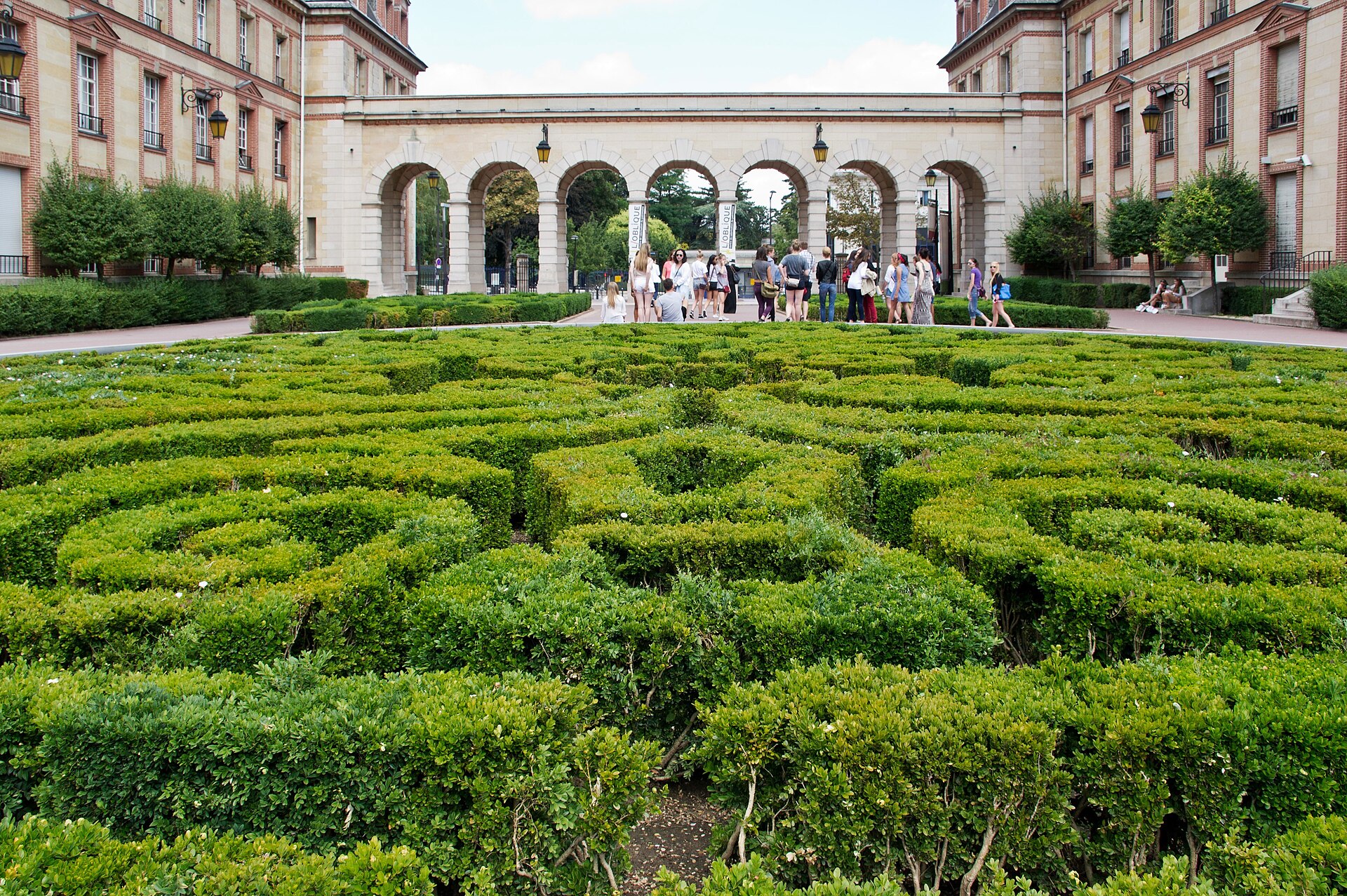
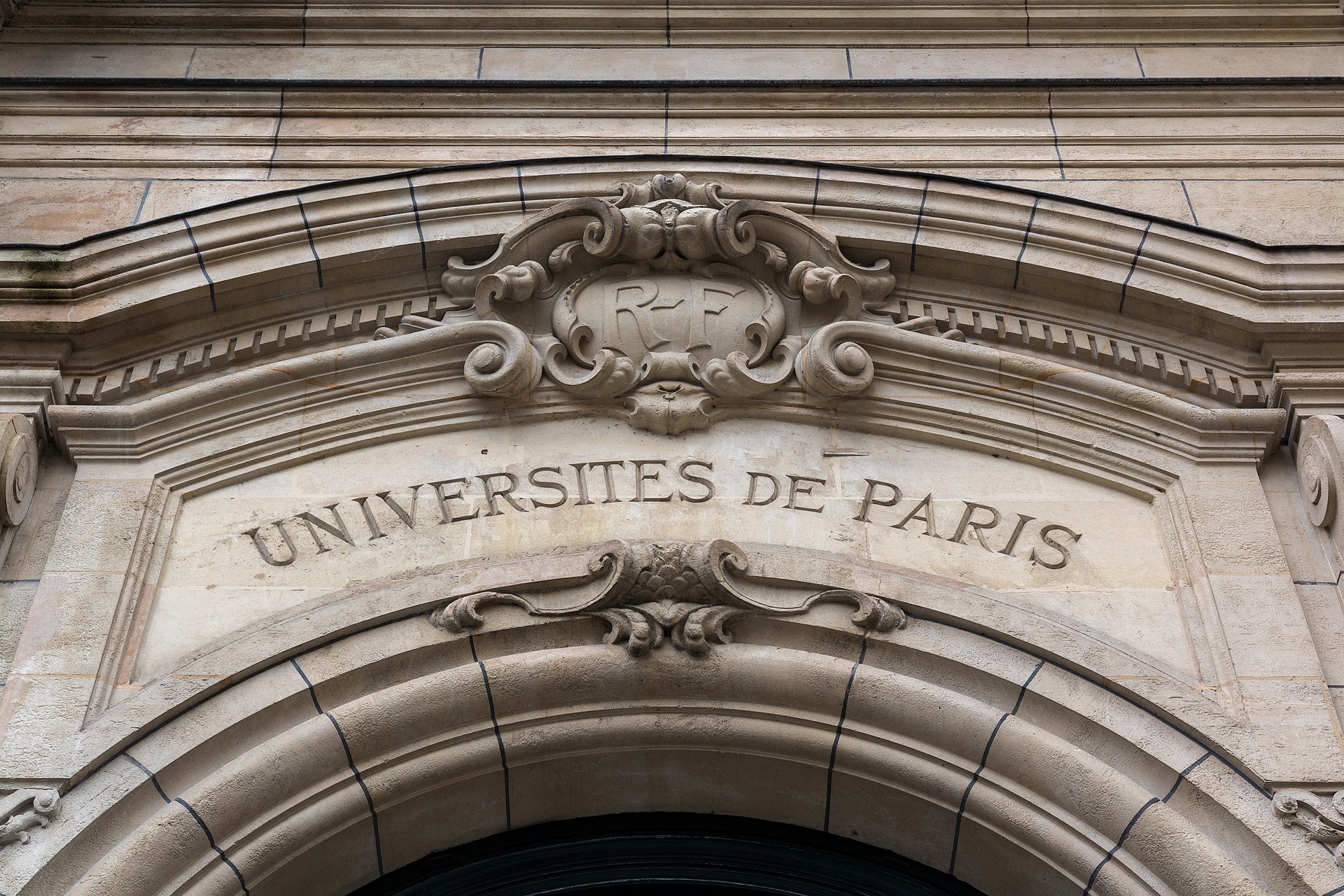
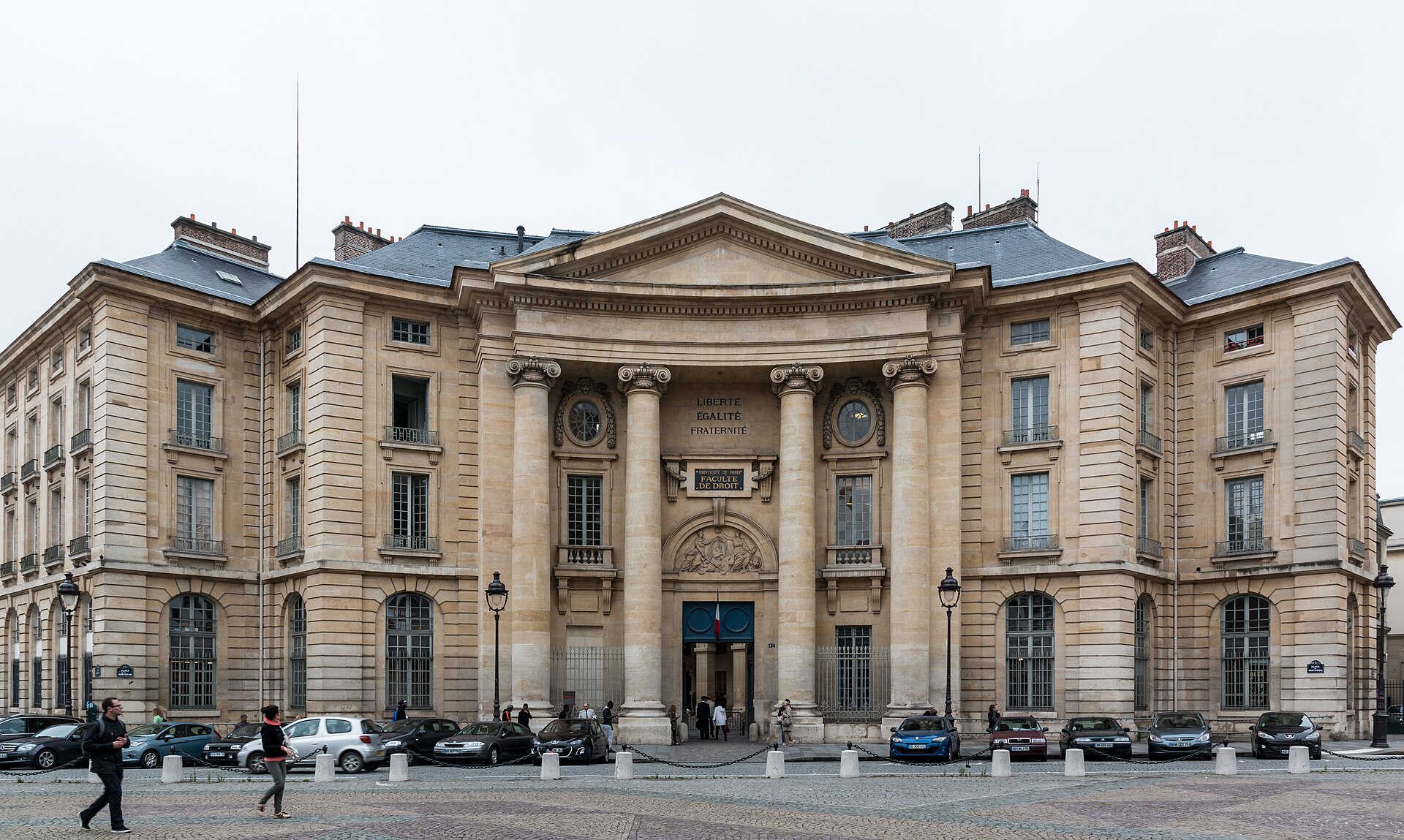
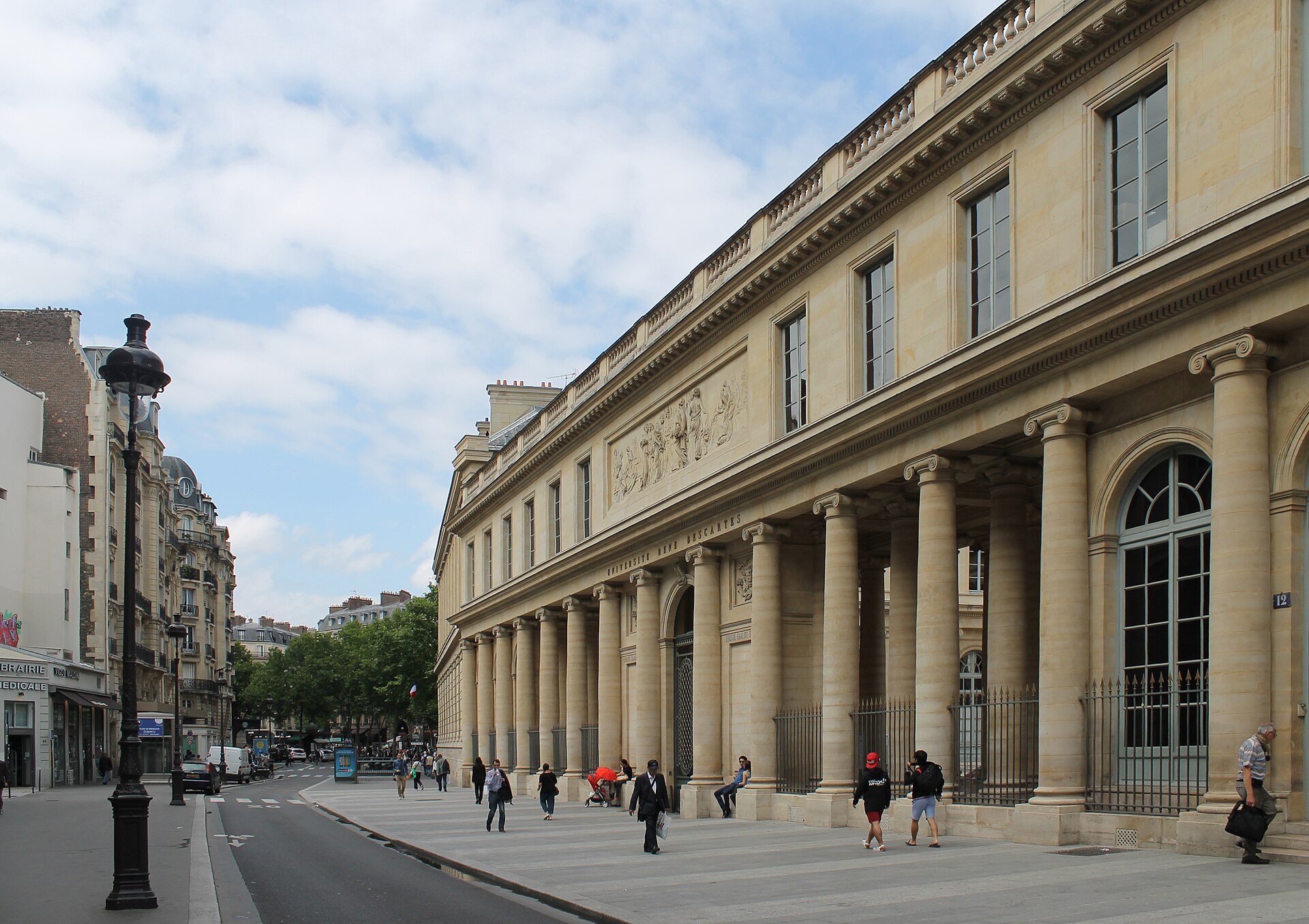
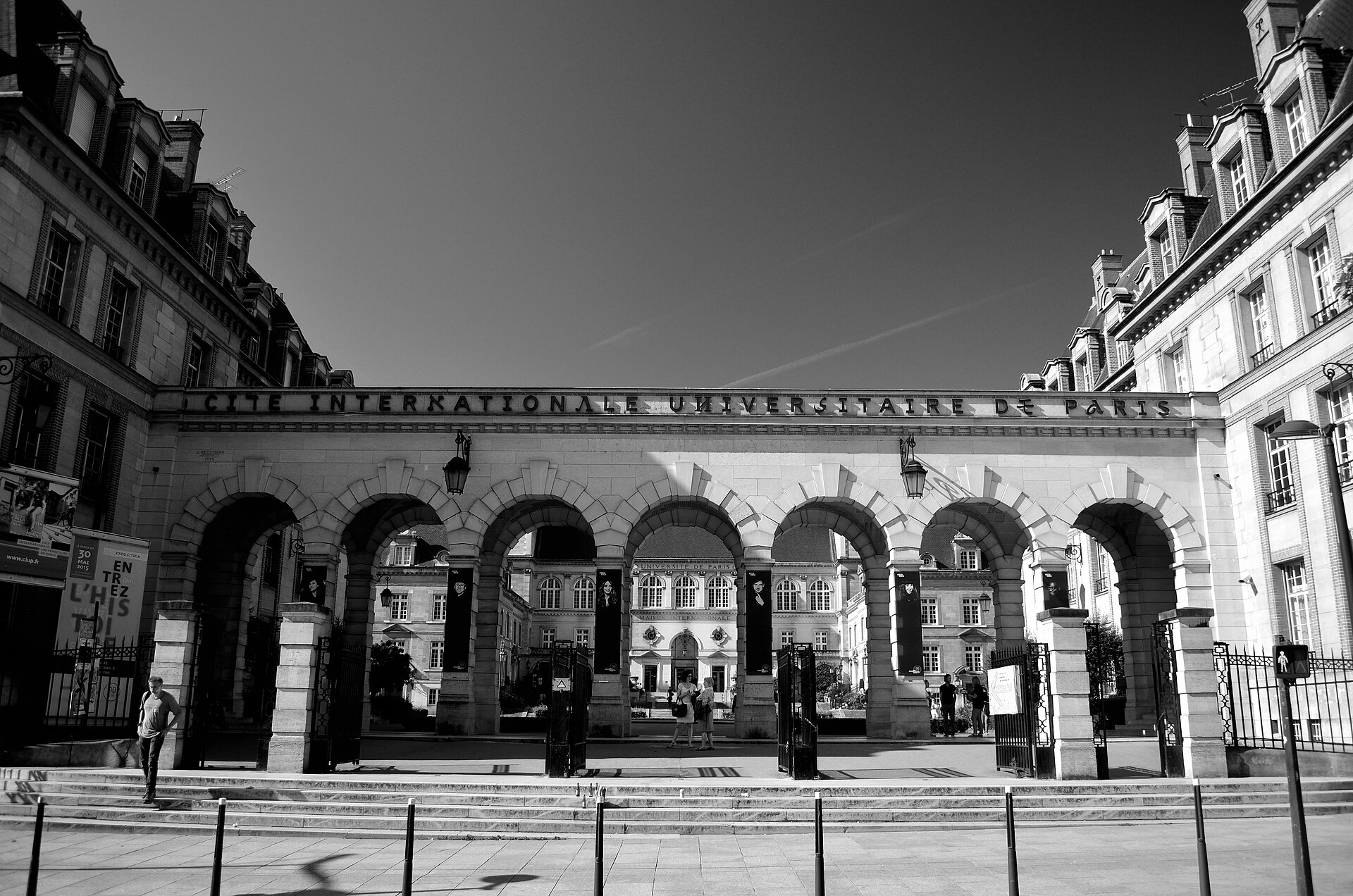
Université Paris Cité — campus in pictures
Real, freely-licensed photographs of the campus (via Wikimedia Commons).
WHY PARIS CITÉ
Five Reasons to Choose Université Paris Cité
Université Paris Cité occupies a rare position: the research intensity and global ranking of a world-class institution, combined with the open access and low tuition of the French public university system. It is particularly outstanding for students interested in health sciences, fundamental sciences, and interdisciplinary research at the intersection of these fields.
SELECTIVITY
How Selective Is Université Paris Cité?
As a French public research university, Université Paris Cité operates differently from highly selective US or UK institutions. Admission policies vary significantly by programme level and field. Understanding these distinctions is essential for international applicants.
At the Licence (bachelor's) level, many programmes are broadly accessible, particularly in science and humanities — though certain competitive programmes in health (PASS/L.AS tracks for medicine, pharmacy, dental studies) operate under strict national numerus clausus rules that make them among the most competitive entry points in France. At Master's level, selection is more programme-specific: research-intensive master's in sciences, mathematics, and health fields attract competitive pools and require strong academic dossiers. PhD admissions depend entirely on securing a supervisor and funding.
The ~55% acceptance rate reflects overall enrolment patterns. Health science tracks (PASS/L.AS) and competitive Master's programmes are considerably more selective than this figure suggests. International applicants should research acceptance norms for their specific programme.
QUICK FACTS
Université Paris Cité at a Glance
APPLICATION COMPONENTS
What Your Application Consists Of
Unlike US universities, Université Paris Cité does not use a Common App or a unified supplemental essay system. The application is a dossier-based process combining academic evidence and a written motivation, submitted through either the Campus France / Études en France portal (for non-EU nationals in most countries) or directly through the university's own platform.
WHAT THEY LOOK FOR
The Profile Université Paris Cité Admits
French public universities assess candidates primarily on academic merit rather than holistic extracurricular profiles. UPC looks for students who are genuinely intellectually serious, academically well-prepared for their chosen field, and motivated by research or professional training at a high level.
Strong applicants demonstrate a consistent record of achievement in subjects directly relevant to their intended programme. In sciences and health, this means high marks in mathematics, physics, chemistry, and biology. In humanities and social sciences, strong analytical writing, language skills, and subject knowledge are prioritised. Unlike US admissions, sports leadership or volunteer work rarely sways committee decisions — the dossier must be academically compelling first.
APPLICATIONS & DEADLINES
When and How to Apply
France's application system for international students differs from Anglo-Saxon models. Non-EU students must typically complete a Campus France ('Études en France') procedure in their home country before applying directly to universities. EU students may apply through the same channel or directly. Parcoursup (the French national platform) is used for Licence applications by French-resident applicants; independent international students typically apply through the Études en France portal or the university's own platform for Master's programmes.
Deadlines vary by programme level and faculty. The guidance below reflects typical patterns; always verify on the specific programme page at u-paris.fr as cycles update annually.
International students from countries covered by the Études en France procedure must complete their Campus France interview and dossier review before applying to the university. This adds 4–8 weeks to your timeline — factor this in early.
| Level | Platform | Opens | Deadline | Decision |
|---|---|---|---|---|
| Licence (Year 1 entry) | Études en France / Campus France | November–December | January–March (varies by country) | April–June |
| Master's (M1 / M2 entry) | University eCandidat / MonMaster | January–February | March–April | May–June |
| PhD | Direct contact + doctoral school portal | Year-round | Varies by doctoral school | Rolling |
| Exchange / Erasmus+ | Moveon portal via home university | October–November | December–January (spring), May–June (autumn) | Rolling after nomination |
STUDENT LIFE
Living and Studying in Paris
Université Paris Cité has no single residential campus — its buildings are distributed across several Paris arrondissements, and student life is embedded in the city itself. This means your classroom is Paris, and the city's extraordinary cultural, intellectual, and professional density becomes part of your education.
Housing is the most challenging aspect of student life in Paris. University-linked housing (CROUS residences) is limited and highly competitive; the 'Appart'Dating' events run by UPC help students connect with landlords for private rentals. The Cité Internationale Universitaire de Paris, a unique residential campus on the southern edge of the city, offers accommodation in themed houses representing different nationalities and is well worth applying to early. Monthly rent for a studio in Paris ranges from roughly €700–€1,200 depending on arrondissement — this is the dominant cost driver in any budget.
CAREER OUTCOMES
Where UPC Graduates Go
With an 88% employment rate and an average starting salary of approximately $42,000 (USD), Université Paris Cité graduates enter the workforce strongly — particularly given France's relatively lower cost of living compared to the US or UK.
The strongest career pipelines flow from UPC's three faculties. Health graduates enter France's world-class hospital system, pharmaceutical companies (Sanofi, Ipsen, Servier are nearby), and global health organisations. Science and mathematics graduates feed into research institutions (CNRS, INSERM, Institut Pasteur), engineering firms, and Paris's growing data science and AI sector. Humanities and social science graduates enter education, public administration, media, NGOs, and international organisations including UNESCO, which is headquartered in the 7th arrondissement.
Cards
Stats
FAQS
Frequently Asked Questions
Do I need to speak French to study at Université Paris Cité?+
It depends on your programme. Most Licence (bachelor's) programmes are taught in French and require B2–C1 level French. At Master's and doctoral level, there are a growing number of English-taught programmes, particularly in sciences, mathematics, and some health fields. Always verify the language of instruction on the specific programme page before applying.
What is the Campus France / Études en France procedure?+
Non-EU students from most countries must complete the 'Études en France' procedure through their local Campus France office before applying to French universities. This involves creating a profile, attaching your documents, completing a language assessment, and attending an interview at your local Campus France office. The procedure typically opens in November and closes in January–March depending on your country. Check campusfrance.org for your country-specific timeline.
Is UPC competitive for international students compared to French students?+
At the Licence level, places are allocated primarily through Parcoursup for French-resident applicants, and independently for international students. In practice, health science tracks (PASS/L.AS) are extremely competitive for everyone. At Master's level, international applicants compete on the same dossier criteria as domestic students — academic excellence and a strong motivation letter are the key differentiators.
Are there English-taught programmes available?+
Yes, particularly at Master's and doctoral level. UPC explicitly offers 'international joint programmes at the undergraduate and graduate levels as well as programmes taught in English.' These are most common in sciences, mathematics, and certain interdisciplinary fields. Check the programme catalogue at u-paris.fr/en/find-your-program/ for a current list.
Can I apply directly without going through Campus France?+
EU/EEA students and students already resident in France can typically apply directly. Non-EU students from countries covered by the Études en France procedure must go through that process. Some countries (mainly non-Francophone) may have slightly different procedures — verify at campusfrance.org/en.
What IB score does UPC expect?+
Based on available data, a total IB score of 34 or above is indicative of a competitive profile. Competitive science and health programmes will typically expect higher — in the 36–40+ range. The IB is well-recognised in France and is explicitly accepted as a qualification for university entry.
Is financial aid available for international students?+
The most prominent external scholarships are the Eiffel Excellence Programme (for Master's and PhD) and the SMARTS-UP programme (for Master's in EUR research schools). Campus France coordinates many bilateral government scholarships from various countries. Need-based aid from UPC itself is limited; France's public tuition system is designed to keep costs low for all students.
How does the French grading system compare to international standards?+
France uses a 20-point scale where 10/20 is the pass threshold, 14/20 is 'Bien' (good), and 16/20 or above is 'Très bien' (excellent). Scores above 14/20 are genuinely strong in French academia. When converting international grades, note that French averages tend to be lower by convention — a GPA of 3.0 or above is considered solid for entry-level applications.
ACADEMIC PROFILE
Academic Expectations at Université Paris Cité
As a leading French research university, UPC sets high academic standards — particularly in its most competitive programmes. The academic culture emphasises theoretical rigour, independent inquiry, and deep disciplinary knowledge. International students should understand how France evaluates international qualifications and what level of preparation is expected across different fields.
French higher education differs structurally from US and UK models. The Licence-Master-Doctorat (LMD) system means undergraduate programmes are three years, Master's two years. Teaching methods are lecture-intensive, with 'travaux dirigés' (TD) — smaller group sessions — complementing large lectures. Self-directed study is expected; the university provides the framework, but intellectual initiative is yours.
ACADEMIC BENCHMARKS
Academic Standards for Admission
The following benchmarks reflect the requirements and expectations based on available data. Programme-specific requirements vary considerably; always verify directly with the relevant faculty.
TEST POLICY
Standardised Tests: Not Required
Université Paris Cité is test-blind: SAT, ACT, and similar standardised tests are not part of the application and play no role in admissions decisions. This applies at all levels — Licence, Master's, and Doctorat. The French system evaluates students on their academic record (transcripts and diplomas), subject-specific achievement, and for competitive programmes, language proficiency tests and motivation letters.
The only standardised tests that matter in a UPC application are language proficiency tests: IELTS, TOEFL iBT, or DELF/DALF (for French-medium programmes). Your academic record — the quality of your grades across relevant subjects — is the primary signal.
WHAT COUNTS INSTEAD
What Replaces Standardised Tests
Since SAT/ACT are irrelevant to French university admissions, the 'standardised' signals UPC relies on are subject marks in internationally recognised qualification systems.
IB / A-LEVEL / AP
How International Qualifications Are Read
France has a long tradition of recognising international baccalaureate qualifications. The process is managed through the ENIC-NARIC network (recognition of foreign qualifications) and through Campus France's equivalence tables.
For the IB Diploma, French universities treat it as equivalent to the French Baccalauréat — a full secondary-school leaving qualification that grants access to university. An IB score of 34+ is generally competitive for general programmes; health science and competitive Master's tracks typically expect scores of 36–40+. Higher Level (HL) subjects are weighted more heavily, and choosing HLs that align with your programme (e.g., HL Mathematics for mathematics or computer science, HL Biology and Chemistry for health sciences) is strongly advisable. A-Levels with AAB–AAA, particularly in relevant subjects, are similarly well-regarded. AP exams may be considered supplementary evidence of subject depth but are not primary qualification documents in the French system.
The IB indicative band cited (34) reflects available data. Competitive programmes — particularly medicine and pharmacy access tracks (PASS/L.AS), and elite Master's programmes in sciences — will typically expect significantly higher scores.
SUBJECT PREPARATION
How to Prepare by Field
French universities are disciplinary in their admissions: they evaluate whether your subject preparation maps onto the curriculum you are applying to. Generic academic excellence matters less than targeted depth in the right subjects.
ENGLISH PROFICIENCY
English Language Requirements
For English-taught programmes at Université Paris Cité, the following minimum proficiency levels apply. Programme-specific requirements may be higher — always check the individual course page.
Native English speakers and students from English-medium secondary schools may be exempt from formal testing — check with the specific faculty. For French-medium programmes, French proficiency is non-negotiable and typically demonstrated through DELF/DALF B2 at minimum.
| Test | Minimum | Notes |
|---|---|---|
| IELTS Academic | 6.0 | Minimum for English-medium programmes; competitive programmes may require 6.5+ |
| TOEFL iBT | 80 | Internet-based; section minimums may also apply |
| Duolingo English Test | Not specified | Not listed as accepted; verify with faculty before applying |
| Cambridge (CAE/CPE) | C1 | Generally accepted; verify with specific programme |
| French DELF/DALF | B2 (Licence) / C1 (Master's) | Required for French-medium programmes; highly recommended for all students |
YEAR-BY-YEAR ROADMAP
Building Your Academic Profile for UPC
Because French admissions are primarily academic-dossier based, your preparation should front-load subject excellence and language acquisition.
COMMON PITFALLS
Academic Mistakes That Hurt International Applicants
- Applying to French-medium programmes without adequate French proficiency — the language barrier in lectures and TDs is severe and professors do not slow down for non-native speakers
- Underestimating how competitive PASS/L.AS medical access tracks are — these programmes have national elimination rates above 70% in the first year
- Submitting transcripts without certified translations — all non-French documents must be officially translated by a sworn translator (traducteur assermenté)
- Missing the Campus France procedure deadline — it is typically January/February and cannot be bypassed; missing it means reapplying next cycle
- Sending a generic lettre de motivation that doesn't reference specific UPC research teams, programmes, or faculty — generic letters are filtered out quickly
- Failing to apply for housing immediately after receiving admission — Paris housing is critically constrained and CROUS places go fast
- Assuming your home-country grading scale translates directly — French admissions readers use equivalence tables, and a 3.7 GPA may not map to a 'Very Good' in French terms; always clarify
- Not verifying whether your chosen programme is English- or French-medium before applying — many programmes listed on the main website are French-only at bachelor's level
COST & AID
The Real Cost of Studying at Université Paris Cité
Université Paris Cité is one of the most cost-efficient ways to access a top-250 global research university. France's public university system keeps tuition dramatically lower than comparable institutions in the US, UK, or Australia — non-EU international students pay differentiated fees that are still a fraction of Anglophone university costs.
The major cost driver in a UPC budget is not tuition — it's Paris itself. Accommodation, food, and transport in one of Europe's most expensive cities must be planned carefully. This guide will help you build a realistic budget and identify funding sources to reduce your out-of-pocket costs.
COST BREAKDOWN
Annual Cost Estimates (International Students)
The figures below are based on available data. Tuition rates reflect the differentiated fees introduced in 2019 for non-EU international students at French public universities (typically €2,770 for Licence, €3,770 for Master's, denominated in EUR but approximately USD equivalent). Living costs are Paris-specific and are the dominant expense.
EU/EEA students pay standard French public tuition rates (approximately €170/year for Licence, €243/year for Master's — significantly less than non-EU rates). The figures above apply to non-EU international students.
| Item | Annual | Notes |
|---|---|---|
| Tuition (non-EU students) | ~$3,000 | Public university rate; among lowest for a top-250 world university |
| Accommodation (Paris) | ~$9,000–$14,400 | €750–€1,200/month; CROUS residences cheaper but limited |
| Food and groceries | ~$3,600–$4,800 | Student restaurants (RU) from €1/meal with CROUS subsidy |
| Transport (Navigo pass) | ~$700–$900 | Monthly Navigo pass covers all Paris public transport |
| Health insurance (CVEC + top-up) | ~$400–$600 | CVEC contribution ~€103; complementary health coverage recommended |
| Application fee | ~$100 | One-time on application (may vary by faculty) |
| Total estimated annual cost | ~$20,000 | Dependent on accommodation choice and lifestyle |
FINANCIAL AID
Aid Policy for International Students
France's public university model means most financial support for international students comes through scholarship programmes rather than institution-administered need-based aid. Université Paris Cité itself has limited direct financial aid for international students; the primary funding routes are external scholarships and government programmes.
The French government's Eiffel Excellence Programme (managed by Campus France on behalf of the Ministry of Europe and Foreign Affairs) is the flagship merit scholarship for international Master's and PhD students in France. Bilateral government scholarships from your home country may also provide support. On average, scholarships or external funding cover approximately 15% of costs for the students who receive them — meaning proactive scholarship-hunting is essential for students who need financial support.
SCHOLARSHIPS
Scholarships for International Students
The following scholarships are the primary funding sources available to international students at Université Paris Cité. Always verify current eligibility criteria and amounts directly with the awarding body.
AFFORDABILITY REALITY
Is UPC Affordable for International Students?
In purely comparative terms, Université Paris Cité is one of the most affordable routes to a world-ranked research university available to international students. Tuition of approximately $3,000 per year contrasts sharply with $55,000–$65,000 at comparable-ranked US private universities or £30,000+ at UK equivalents.
The honest challenge is Paris's cost of living. Accommodation — which can range from €600/month in CROUS residences to €1,200+ in the private market — is the variable that most often strains student budgets. Students who secure CROUS housing or a Cité Internationale Universitaire place can live comfortably on €900–€1,100 per month total (including food, transport, and modest personal expenses). Those in the private market need €1,200–€1,500/month minimum. The combination of low tuition and subsidised student services (€1 meals at university restaurants for scholarship holders, subsidised transport passes for under-26s) means UPC offers genuine value — but it requires proactive planning, especially around housing.
EU/EEA students pay significantly lower tuition (~€170–€243/year) and may be eligible for the same French social welfare support as domestic students, making UPC exceptionally affordable for European applicants.
ACTION PLAN
How to Fund Your Studies at UPC
COST FAQs
Cost and Funding: Frequently Asked Questions
Why is tuition so low compared to UK or US universities of similar ranking?+
France's public universities are heavily subsidised by the French state. Even the 'differentiated fees' introduced in 2019 for non-EU students (~€2,770 for Licence, ~€3,770 for Master's) are far below full-cost tuition. The French government considers affordable higher education a public good — this is policy, not a sign of lower quality.
Are there no-loan policies or meet-need guarantees for international students?+
No — UPC is a public French university and does not operate US-style 'meet demonstrated need' financial aid. International students are responsible for funding their own studies, primarily through scholarships, family support, or part-time work (students on a student visa may work up to 964 hours per year in France).
Can international students work while studying in France?+
Yes. Non-EU students on a student visa ('visa étudiant' / VLS-TS étudiant) are permitted to work up to 964 hours per year (roughly 60% of full-time). France's minimum wage (SMIC) is approximately €11.65/hour (verify current rate). Part-time work can meaningfully supplement a student budget.
What is CVEC and do I have to pay it?+
CVEC (Contribution de Vie Étudiante et de Campus) is a mandatory annual contribution of approximately €103, paid by all students enrolled in French higher education. It funds student welfare services, sports, and cultural activities. Scholarship holders may be exempt — check eligibility at cvec.etudiant.gouv.fr.
Is the Eiffel scholarship enough to cover all costs?+
The Eiffel stipend (verify current amount at campusfrance.org) covers a monthly allowance, return airfare, and health insurance. Combined with low UPC tuition, it is designed to cover the cost of living in France for Master's/PhD students — though Paris's high housing costs mean budgeting carefully is still important.
APPLICATION & STATEMENT
Your Written Application to Université Paris Cité
France does not use the Common App, UCAS, or Coalition. There are no supplemental essays in the US sense. The key written component of your application to Université Paris Cité is the lettre de motivation — a focused, specific, academically grounded letter that explains why you are the right candidate for your chosen programme. Getting this right is one of the most important things you can do as an international applicant.
This guide explains the French application writing context — what is expected, what is different from US or UK personal statements, how to approach the lettre de motivation, and what supplementary written documents (CV, research project) may be required for graduate programmes.
THE FRENCH SYSTEM
How Written Applications Work in France
Unlike US universities where essays are a central admissions criterion, French university admissions are primarily grade-driven. The lettre de motivation is a required supporting document — important but secondary to your academic record. At bachelor's level, a strong transcript often matters more than a brilliant letter. At Master's and PhD level, the letter and research proposal become more significant relative to grades.
The application is typically submitted as a dossier through the Études en France portal (Campus France) for non-EU international students, or through the university's own platform (eCandidat for Licence, MonMaster for Master's). The dossier includes transcripts, diplomas, language certificate, CV, and the lettre de motivation. Some programmes additionally require a projet de recherche (research project statement).
THE CORE DOCUMENT
The Lettre de Motivation
The lettre de motivation is not a 'prompt' in the US essay sense — it is an open-form document you write independently. There is no official prompt text. The implicit question you are answering is: Why this programme, at this university, and why now? Below is strategic guidance for each level.
All written documents for French-medium programmes must be in French unless the specific programme specifies otherwise. For English-medium programmes, English is appropriate. Always verify the submission language requirement for your specific programme.
APPROACH
The French Letter vs. the US Personal Statement
If you have also been writing US personal statements or UK personal statements (UCAS), you will need to shift your register significantly when writing your lettre de motivation for UPC. The differences are substantive, not just stylistic.
The US Common App personal statement invites personal narrative — stories from your life, formative moments, character revelations. The UK UCAS statement (2026 three-question format) asks about your academic passion and preparation. The French lettre de motivation is closer to the UK model in its academic focus, but even more formal and concise. Personal anecdotes are not absent, but they are subordinate: they illustrate a point about your intellectual development rather than serving as the structural backbone. The register is formal throughout — 'Madame, Monsieur' rather than a first-name opener, and a formal close ('Je vous prie d'agréer, Madame, Monsieur, l'expression de mes salutations distinguées' for French letters). Think of it as an academic cover letter for your intellectual candidacy, not a personal essay.
SUPPORTING DOCUMENTS
Other Written Components by Programme Type
WHAT TO WRITE ABOUT
How to Choose Your Angle for the Lettre de Motivation
The French admissions committee reading your letter is asking one fundamental question: Is this person academically prepared and genuinely motivated for this specific programme? Your letter must answer yes — convincingly, specifically, and concisely.
COMMON MISTAKES
Errors That Weaken Your Application
- Writing in a US essay style — emotional personal narratives, childhood memories, or self-discovery arcs that don't serve an academic argument
- Submitting a letter in English for a French-medium programme — even if you write English fluently, it signals you have not engaged with the programme's language requirements
- Making the letter generic — any letter that could be sent to any French university without editing will be identified as low-effort
- Misspelling the programme name, faculty, or university — Université Paris Cité is commonly confused with older predecessor names (Paris Descartes / Paris Diderot); use the current name correctly
- Exceeding the expected length — French academic correspondence is concise by convention; two pages maximum for a Licence letter, three for a Master's letter
- Neglecting the CV — a poorly formatted, padded, or disorganised CV undermines a strong letter
- Failing to have French documents proofread by a native speaker — grammatical errors in a French-language letter are significantly more damaging than in an English one
- Omitting a research project when one is required — check the dossier requirements for your programme carefully; missing a required document typically results in an incomplete application that is not considered
APPLICATION FAQs
Frequently Asked Questions: Application & Written Documents
Is a lettre de motivation required for all programmes?+
Yes, a lettre de motivation is typically required for all independent international student applications. At Licence level, it is usually 1 page. At Master's level, a more detailed letter plus a research project statement is the norm. Check the specific dossier requirements for your programme.
Must the lettre de motivation be in French?+
For French-medium programmes, yes — the letter should be in French, and it will be read by French-speaking academics. For English-medium programmes, English is appropriate. When in doubt, check the programme's submission language. A letter in the wrong language signals lack of preparation.
How long should the lettre de motivation be?+
For Licence applications: 400–600 words (1 page). For Master's applications: 600–1,000 words (1–2 pages). For PhD: longer, often 1,500–2,000 words for the cover letter, plus a separate projet de thèse of 10–15 pages. Exceeding these norms without reason is seen as an inability to edit — a skill valued in French academia.
Do I need to contact a professor before applying for a Master's?+
Not required for most taught Master's (Masters à visée professionnelle or master's with a coursework component), but highly recommended for research Master's (masters recherche). For PhD, contacting your prospective supervisor before applying is essential — in France, the supervisor-candidate relationship is formed before admission.
Can I reuse a UCAS personal statement for my UPC application?+
Not advisable. The UCAS three-question format has a different structure and — even in the 'academic interest' section — is more narrative and contextual than a French lettre de motivation. Use your UCAS work as a source of material, but rewrite from scratch in the more formal, concise French register.
Is an interview part of the application process?+
Some competitive Master's programmes and most PhD applications involve an interview (entretien). For Licence applications, the Campus France procedure in your home country typically includes an interview about your academic background and motivations. Prepare for this by being able to discuss your lettre de motivation in depth.
What language should my CV be in?+
For French-medium programmes, French. For English-medium programmes, English. If applying to both types simultaneously, prepare separate CVs. It is also acceptable to submit a bilingual CV, though this can appear cluttered — a clean single-language version is usually preferable.
Where can I find the specific dossier requirements for my programme?+
Each programme publishes its dossier requirements on its own page within u-paris.fr. Navigate to 'Find your programme', select your programme, and look for the 'How to apply' or 'Candidature' section. Requirements vary significantly across faculties and levels — always check the programme-specific page, not just the general admissions guidance.
Courses — schools, degrees & intake
37 degrees across 6 groupings.
Faculté des Sciences (Faculty of Sciences) · 14 degrees
Licence Chimie (Chemistry)
Licence Physique (Physics)
Licence Mathématiques (Mathematics)
Licence Mathématiques et applications (Mathematics and Applications)
Licence Informatique (Computer Science)
Licence Informatique et applications (Computer Science and Applications)
Licence MIASHS (Mathematics and Computer Science Applied to Humanities and Social Sciences)
Licence Sciences biomédicales (Biomedical Sciences)
Licence Sciences de la vie (Life Sciences)
Licence Sciences de la vie et de la Terre (Life and Earth Sciences)
Licence Sciences de la Terre (Earth Sciences)
Licence Frontière du vivant (Frontiers of Life Sciences)
Licence Sciences et technologies (Sciences and Technology)
Licence Sciences pour la santé (Health Sciences)
Faculté de Santé (Faculty of Health) · 4 degrees
PASS — Parcours d'Accès Spécifique Santé (Specific Health Access Pathway)
Études de Médecine — Diplôme de Docteur en Médecine (Doctor of Medicine)
Études d'Odontologie — Diplôme de Chirurgien-Dentiste (Dentistry)
Études de Pharmacie — Diplôme d'État de Docteur en Pharmacie (Pharmacy)
Faculté Sociétés et Humanités (Faculty of Humanities and Social Sciences) · 10 degrees
Licence Psychologie (Psychology)
Licence Sociologie (Sociology)
Licence Sciences sociales (Social Sciences)
Licence Histoire (History)
Licence Géographie et aménagement (Geography and Urban Planning)
Licence Sciences du langage (Linguistics)
Licence Sciences de l'éducation et de la formation (Educational Sciences and Training)
Licence STAPS — Activités Physiques Adaptées – Santé (Adapted Physical Activities and Health)
Licence STAPS — Education Motricité (Motor Education)
Licence STAPS — Entraînement Sportif (Sports Training and Coaching)
Faculté Droit, Économie, Gestion (Faculty of Law, Economics and Management) · 3 degrees
Licence Droit (Law)
Licence Economie (Economics)
Licence Economie et Gestion (Economics and Management)
Faculté Arts, Lettres, Langues (Faculty of Arts, Letters and Languages) · 5 degrees
Licence Lettres (French Literature and Language)
Licence LLCER — Études anglophones (English Studies)
Licence LLCER — Langues et civilisations de l'Asie Orientale (East Asian Studies)
Licence Langues étrangères appliquées (Applied Foreign Languages)
Licence Arts du spectacle (Performing Arts)
École d'Ingénieurs Denis Diderot (EIDD — Engineering School) · 1 degrees
Diplôme d'Ingénieur (Master of Engineering — 5-year integrated programme)
Want your real chances at Université Paris Cité?
Create a free TYCHR account for your personalised admit-chance, a shortlist you can track, exact entry requirements, and essay + counselling help.