Université Grenoble Alpes
Grenoble, France · Urban
GRENOBLE, FRANCE · QS #240 · FOUNDED 1339
Université Grenoble Alpes Admissions Guide for International Students
Nestled at the foot of three mountain ranges and at the heart of Europe's most dynamic deep-tech ecosystem, Université Grenoble Alpes (UGA) is France's eighth-ranked university and one of its most internationally engaged research institutions. Founded in 1339 and today home to 55,000 students, UGA is the scientific anchor of a region that houses the CEA (French Atomic Energy Commission), CNRS laboratories, the European Synchrotron Radiation Facility (ESRF), and Minatec — Europe's leading micro- and nanotechnology campus.
For international students, UGA offers an extraordinary convergence: world-class research in physics, computer science, AI, and materials science; genuinely low public tuition fees; and a mountain city that consistently ranks among Europe's best for quality of life. This guide explains exactly how international students apply to UGA, what the French application system requires, and how to build a competitive profile for France's Alpine research powerhouse.
Campus
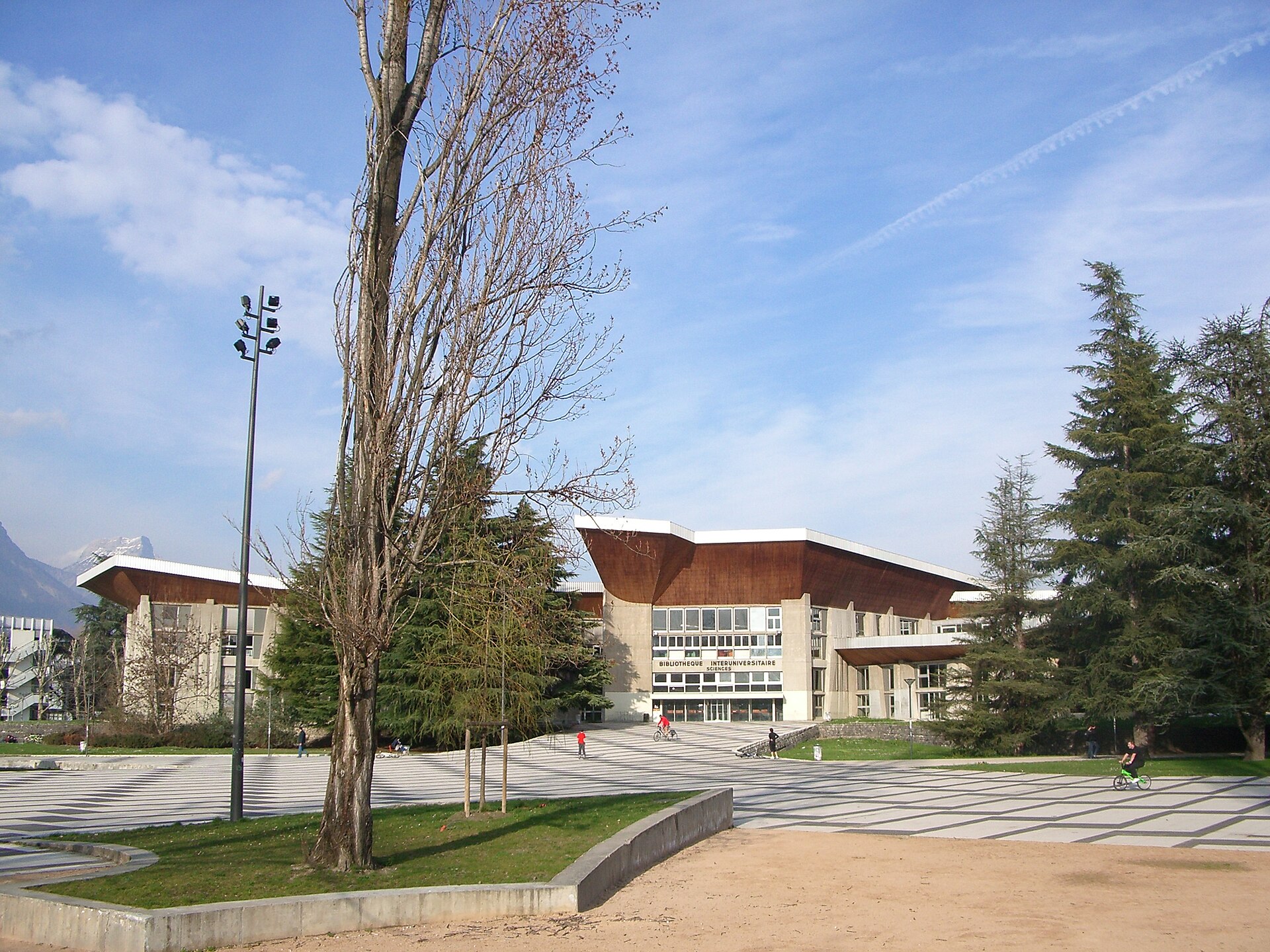
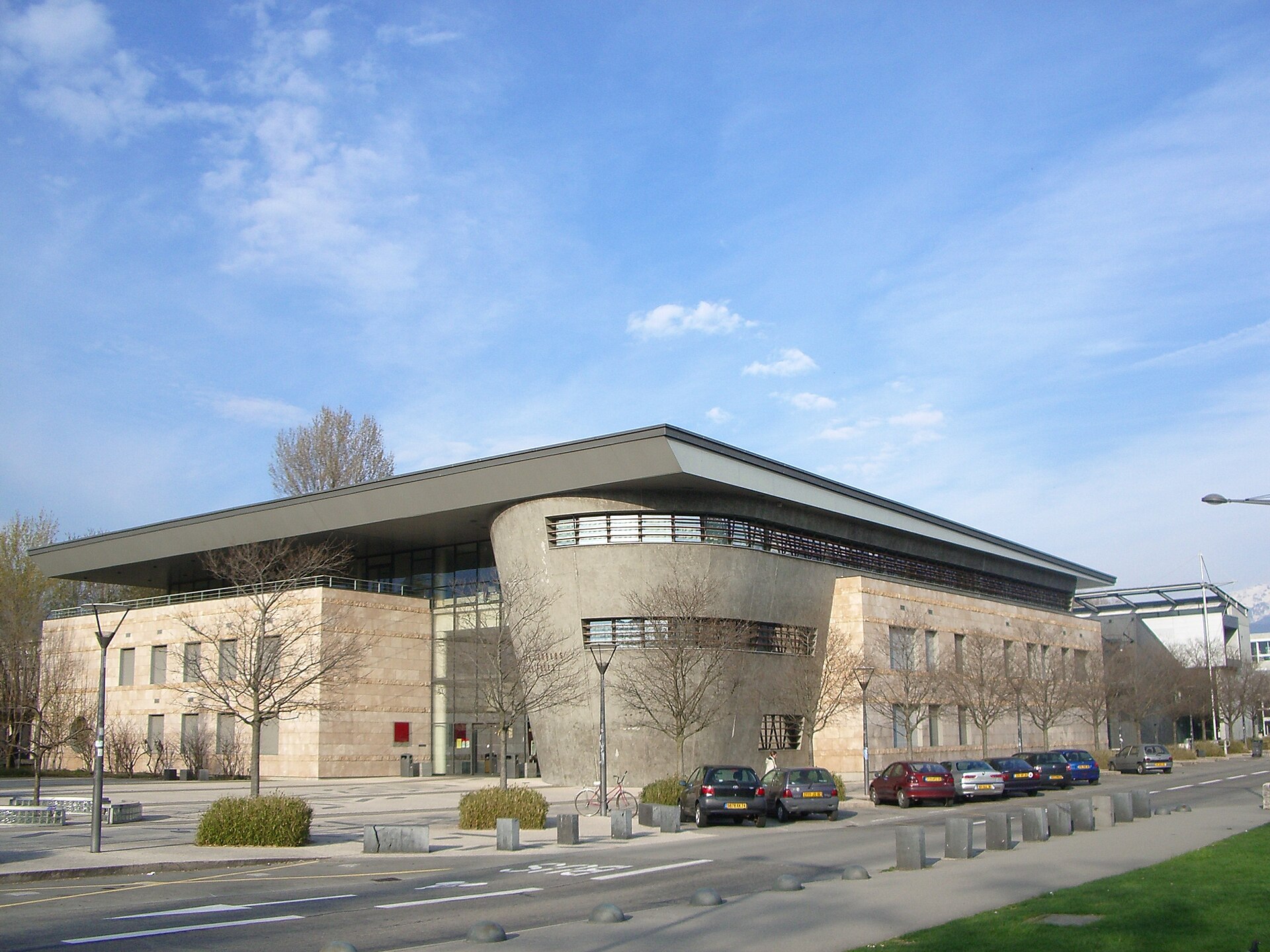
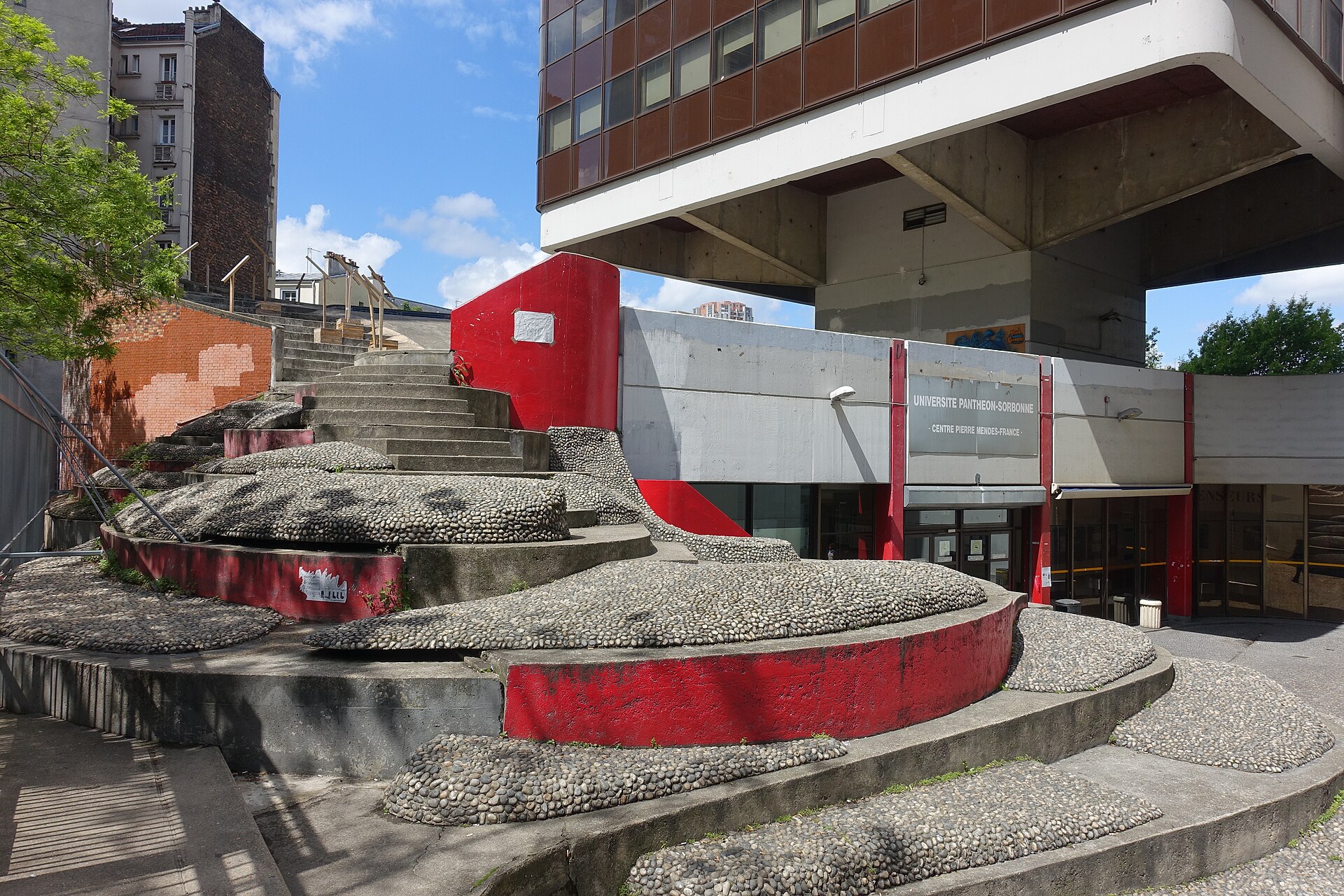
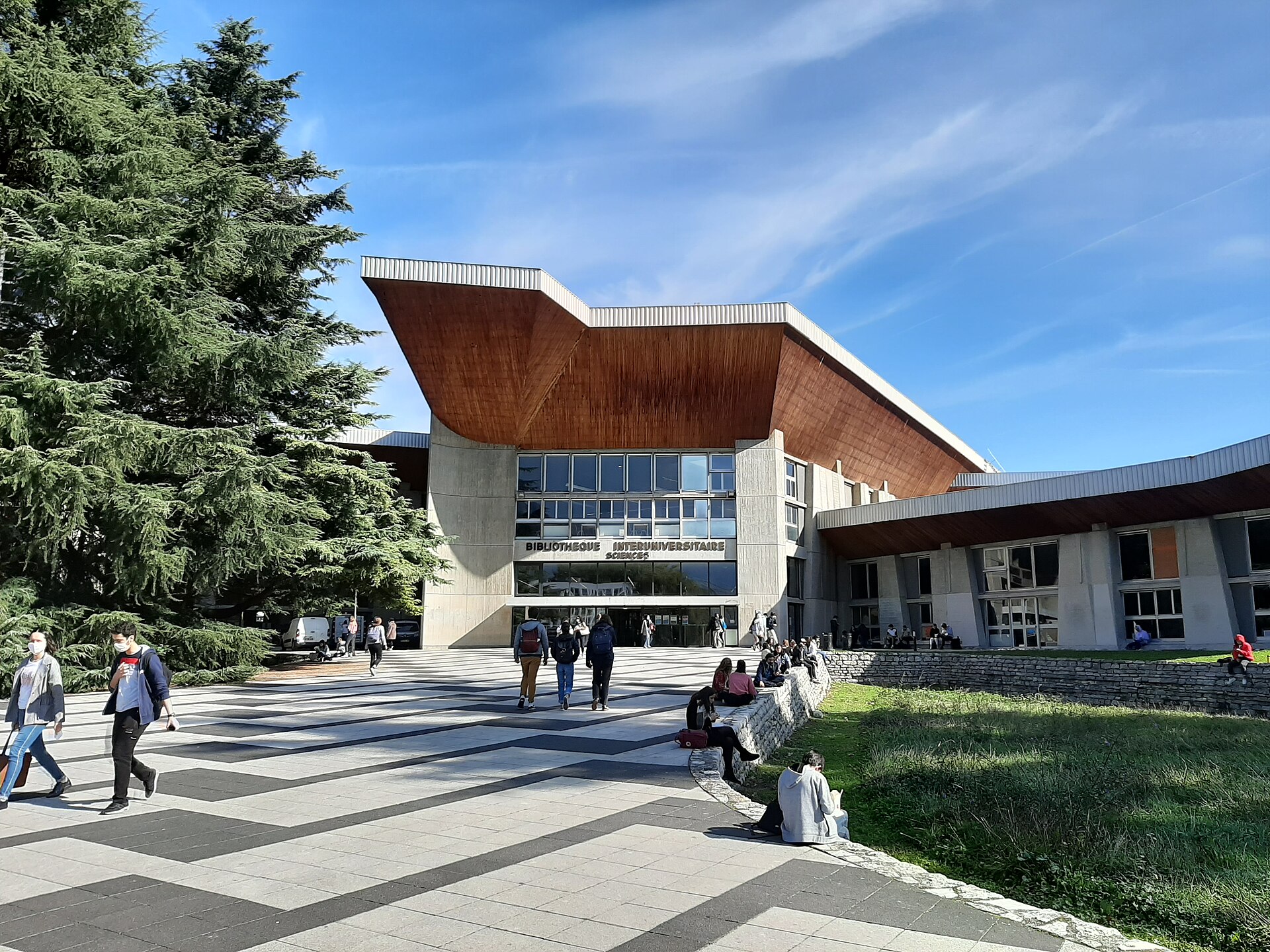
Université Grenoble Alpes — campus in pictures
Real, freely-licensed photographs of the campus (via Wikimedia Commons).


Why Université Grenoble Alpes — Alpine Science, Deep-Tech Ecosystem & Affordable Excellence
UGA is not merely a French regional university — it is a globally ranked research institution embedded in one of the world's densest concentrations of applied scientific research. Its combination of academic depth, public affordability, and mountain-city lifestyle makes it a genuinely distinctive choice for internationally ambitious students.
SELECTIVITY
UGA Acceptance Rate & Admissions Profile
Université Grenoble Alpes admits approximately 55% of applicants across all programmes and levels. However, selectivity varies significantly by programme: competitive STEM master's, the AI master's (MIAI), and engineering pathways can be substantially more selective. For non-EU international students, admission is competitive because the applicant pool is global and the number of international seats per programme is limited. Admission is primarily based on your secondary school or university academic record — standardised tests (SAT/ACT) play no role in the French system.
UGA does not use SAT, ACT, or similar standardised tests in its admissions process. The French system is grades-first: your baccalaureate or international secondary school results, and for Master's programmes your university transcript, are the primary admissions criteria alongside a motivation letter.
QUICK FACTS
Université Grenoble Alpes at a Glance
APPLICATION COMPONENTS
What a UGA Application Consists Of
The French admissions process for international students differs fundamentally from Anglo-American systems. There are no common application platforms shared across universities, no standardised test requirements, and no short-answer supplement essays. What matters is your academic record and — critically for international students — a well-crafted motivation letter that demonstrates your suitability for your chosen programme.
ADMISSIONS PROFILE
What UGA Looks For in International Applicants
Unlike holistic admissions in the US system, French university admissions are primarily academic. UGA evaluates international applicants on the following criteria, roughly in order of importance.
DEADLINES & APPLICATION SYSTEM
How to Apply: French System Explained
The French application system for international students depends on your status and your target level of study. Non-EU students must typically begin the process through Campus France in their home country. Deadlines are earlier than many students expect — the process for the following September intake typically opens in October and closes in December or January.
Deadlines vary by programme and change annually. Always verify dates on the official UGA admissions pages or your national Campus France office. Non-EU students require a student visa (VLS-TS) — begin visa procedures immediately after receiving an acceptance letter.
| Track | Platform | Opens | Deadline | Decision |
|---|---|---|---|---|
| Non-EU → Bachelor's (L1) | Études en France (Campus France) | October | December–January | March–May |
| EU → Bachelor's (L1) | Parcoursup | January | March | June |
| Master's (all students) | UGA eCandidat / direct | November–January | February–April (varies by programme) | April–June |
| PhD / Doctoral | Doctoral school direct application | Rolling, supervisor-dependent | Varies by doctoral school | Rolling |
STUDENT LIFE
Living & Studying in Grenoble
Grenoble is one of France's most liveable cities — compact, flat, easily navigable by bicycle, and surrounded by one of the most spectacular mountain environments in Europe. With a student population of over 60,000 in a city of 160,000, Grenoble has a genuinely youthful, international character shaped by its science and technology industries.
CAREERS & OUTCOMES
Graduate Employment & Career Prospects
UGA's location in France's leading science and technology hub gives its graduates direct access to a uniquely dense employer landscape. The Grenoble metropolitan area hosts more than 1,200 high-tech companies and over 25,000 researchers — making it one of the strongest graduate employment markets in France for STEM graduates.
Stats
Cards
FREQUENTLY ASKED QUESTIONS
Université Grenoble Alpes — International Students FAQ
Do I need to speak French to study at UGA?+
It depends on your programme. Many bachelor's programmes are taught in French, and DELF B2 or equivalent is typically required. However, UGA offers a growing number of master's programmes fully taught in English, particularly in computer science, AI, engineering, and some economics tracks. Always confirm the language of instruction for your specific programme before applying.
Is UGA's tuition really as low as it seems?+
Yes. As a French public university, UGA charges approximately $3,000 per year in tuition for most programmes — applicable to both EU and non-EU international students. Note that from the 2027-2028 academic year, non-EU tuition fees are scheduled to increase; a transition year applies in 2026-2027. Verify current fees on UGA's official pages, as policy may change.
What platform do I use to apply as a non-EU international student?+
Non-EU students applying for the first time from outside France must typically use the Études en France platform through their national Campus France office. The process opens in October for the following September intake and closes in December or January. If you are already living in France or applying for a master's programme, you may apply directly through UGA's eCandidat system.
What is the Études en France process, and how long does it take?+
The Études en France platform is managed by Campus France offices in your home country. You create a profile, list your programme choices, upload documents (transcripts, motivation letter, CV, language certificates), and pay a processing fee. A Campus France officer may interview you to verify your project. The full cycle — from application to visa — typically takes 4-6 months, so non-EU students should begin in October for a September start.
Does UGA require a motivation letter?+
Yes, a motivation letter is a standard and important component of applications, especially for competitive master's programmes. It should explain your academic background, why you have chosen UGA's specific programme, your professional or research goals, and how this programme fits your trajectory. One to two pages is typical. Generic letters are the most common reason for rejection in selective programmes.
What is the minimum IB score for admission?+
The facts file records a minimum IB band of 32. However, competitive programmes in physics, computer science, and the MIAI AI programme will expect higher scores — particularly strong results in Higher Level mathematics and science subjects. A score of 32 is the minimum threshold, not a guarantee of admission.
What scholarships are available for international students at UGA?+
UGA participates in several scholarship frameworks: the Eiffel Excellence Scholarship Programme (awarded by the French Ministry for Europe and Foreign Affairs for master's and PhD); Campus France grants; and some programme-specific awards. Scholarship candidates are strongly advised to apply at least a year before their intended enrolment, as selection timelines run parallel to (and sometimes earlier than) admissions.
Can I work while studying in Grenoble?+
Yes. Non-EU international students holding a French student visa (VLS-TS) are generally permitted to work up to 964 hours per year (approximately 60% of full-time). Grenoble's research and technology sector provides good opportunities for part-time work and paid internships (stages). French social benefits, including the CAF housing allowance, are also available to international students.
ACADEMICS
Academic Expectations at Université Grenoble Alpes for International Students
UGA is a serious research university. Academic expectations — particularly in science, engineering, and mathematics — are genuinely high, grounded in the rigorous French academic tradition (grandes écoles culture, CNRS research standards). International students should enter prepared for demanding coursework, especially in quantitative disciplines, and for a more independent study culture than many secondary schools prepare for.
This section covers the academic profile UGA expects, how it reads international qualifications, English language requirements, and how to build a competitive academic record in secondary school and beyond.
ACADEMIC PROFILE
Admitted Student Profile
UGA's admissions are grades-first. The French system does not use SAT or ACT scores — your secondary school results, and for master's your university grades, are the primary academic signal. The following profile reflects the competitive range for international students.
TEST POLICY
Standardised Tests: UGA is Test-Blind
Université Grenoble Alpes does not consider SAT, ACT, GRE, or GMAT scores in its admissions process. The French university system is test-blind with respect to Anglo-American standardised tests: your academic record (baccalaureate, IB diploma, A-Level results, or university transcripts) and your motivation letter are what matter. The only tests that carry weight at UGA are language proficiency tests (IELTS, TOEFL, DELF/DALF) — and these are required not as academic quality signals but to verify that you can study effectively in the language of instruction.
LANGUAGE TESTS
English & French Language Requirements
Language proficiency is the one area where test scores do matter at UGA. Requirements differ depending on whether your target programme is English-taught or French-taught.
Duolingo English Test is not currently listed among UGA's accepted English-proficiency tests. Always verify current requirements on the UGA admissions page for your specific programme, as requirements may differ between faculties.
| Test | Minimum | Notes |
|---|---|---|
| IELTS Academic | 6.0 overall | Required for English-taught programmes; no band minimum specified centrally — check programme |
| TOEFL iBT | 80 | Required for English-taught programmes |
| DELF B2 / DALF | B2 minimum | Required for French-taught programmes |
| TCF | B2 minimum | Alternative to DELF for French proficiency verification |
IB & A-LEVEL
How UGA Reads International Qualifications
France's university system accepts a wide range of international secondary school qualifications. Here is how the most common ones are evaluated.
SUBJECT PREPARATION
What to Study Before Arriving at UGA
The French academic tradition is rigorous and highly structured. Students who struggle at UGA typically do so not because of language barriers but because of gaps in foundational mathematical and analytical preparation. Here is what each major disciplinary area expects.
ENGLISH REQUIREMENTS
English Proficiency Requirements
For English-taught programmes, UGA requires documentary proof of English language proficiency. The following minimum scores apply.
Students who completed their secondary or university education in English-medium institutions may be eligible for an exemption — check with UGA's admissions office. Duolingo is not currently listed as an accepted test. Always confirm the requirements for your specific programme, as some programmes set higher minimums.
| Test | Minimum | Validity |
|---|---|---|
| IELTS Academic | 6.0 | 2 years |
| TOEFL iBT | 80 | 2 years |
BUILDING YOUR PROFILE
Year-by-Year Academic Preparation for UGA
COMMON MISTAKES
Academic Mistakes That Cost International Applicants at UGA
- Underestimating the importance of mathematics — French STEM programmes are highly quantitative from the first semester; weak mathematics preparation is the most common academic failure point for international students
- Applying to a French-taught programme without DELF B2 or higher — language requirements are strictly enforced and cannot be waived
- Sending a generic motivation letter not specific to UGA's programme — reviewers read hundreds of letters and immediately identify those written for any university
- Missing the Campus France / Études en France deadline — the non-EU application process closes in December or January, much earlier than many students expect
- Confusing Parcoursup (EU students only for L1) with Études en France (non-EU students) — using the wrong platform can result in a delayed or invalid application
- Not verifying whether the master's programme language of instruction is French or English before applying — many programmes listed on UGA's site are French-only
- Waiting until the final year to begin French language study — B2 French typically requires two to three years of consistent study
COST & AID
The Real Cost of Studying at Université Grenoble Alpes for International Students
UGA offers one of the most compelling cost profiles of any globally ranked university. Public French tuition fees are among the lowest in the developed world, and Grenoble's cost of living is significantly lower than Paris, London, or Zurich. For international students willing to engage with the French system, the value proposition is exceptional.
Note: From the 2027-2028 academic year, non-EU student tuition fees at French public universities are scheduled to change, with a transition arrangement in 2026-2027. Verify current fees on UGA's official admissions pages before applying.
COST BREAKDOWN
Annual Cost Estimates (All figures approximate, in USD)
Application fee: approximately $100. All figures are estimates in USD; actual costs in EUR will vary with exchange rates.
| Component | Annual U S D | Notes |
|---|---|---|
| Tuition fees | ~$3,000 | Public French university fees; applies to most programmes |
| CVEC student contribution | ~$100 | Mandatory annual student welfare levy (Contribution de Vie Étudiante et de Campus) |
| Housing (CROUS or private) | ~$5,000–$7,000 | CROUS subsidised residence significantly cheaper; private market varies |
| Food & groceries | ~$2,500 | CROUS canteens offer meals under €4; grocery costs moderate |
| Health insurance | ~$500 | French social security + compulsory top-up (mutuelle) |
| Personal & transport | ~$1,500 | Grenoble's tram network is low-cost; cycling infrastructure excellent |
| Total estimated annual CoA | ~$14,000 | Based on facts file; individual costs will vary |
FINANCIAL AID
Financial Aid for International Students at UGA
UGA is a French public university — it does not have a large endowment-funded aid programme of the kind found at elite US universities. However, several meaningful sources of financial support are available to international students, and approximately 12% of international students receive some form of scholarship or grant support.
SCHOLARSHIPS
Key Scholarship Programmes for UGA International Students
The following are the primary scholarship frameworks available to international students at UGA. Verify current award amounts and deadlines through the official sources listed.
We have not been able to verify current scholarship names, amounts, or deadlines for 2026-2027 from UGA's official sources at the time of writing. Treat these entries as a guide to the types of funding available, and confirm details at: https://www.univ-grenoble-alpes.fr/english/ or through your Campus France office.
AFFORDABILITY
How Affordable is UGA for International Students?
UGA is one of the highest-value propositions in global higher education. A QS top-250, nationally top-10 French research university with approximately $3,000 per year in tuition — the total annual cost of attendance of roughly $14,000 is comparable to living costs alone at many English-language universities. For students who are willing to learn French (or who qualify for English-taught master's programmes), this represents exceptional value. Grenoble's lower cost of living compared to Paris further improves affordability: housing, food, and transport are all cheaper in Grenoble than in the French capital. French student benefits — including the CAF housing allowance, subsidised CROUS canteens, and reduced public transport rates — are available to international students and can materially reduce actual out-of-pocket costs below the headline estimates.
FUNDING STEPS
How to Secure Funding for UGA
COST FAQs
Cost & Financial Aid FAQs
Are tuition fees really only $3,000 per year?+
Yes — as of the current academic year, French public university tuition fees are approximately €2,500-3,000 per year for both EU and non-EU students for most programmes. Note that there are plans to differentiate fees for non-EU students in future years; verify current policy at UGA's official website before applying.
Can I get the CAF housing benefit as an international student?+
Yes, most international students — including non-EU students — are eligible for the French housing benefit (APL or ALS) from the Caisse d'Allocations Familiales. The benefit depends on your income, housing type, and landlord situation. CROUS-managed residences and eligible private landlords both qualify.
How do I apply for the Eiffel Scholarship?+
You cannot apply for the Eiffel Scholarship directly — you must be nominated by UGA's international relations office. Contact UGA well in advance of January (approximately 12 months before your intended enrolment). Selection is based on academic excellence, professional project, and alignment with French strategic interests.
Is there a fee to apply to UGA?+
The application fee is approximately $100 (processed through Campus France for non-EU applicants). This is significantly lower than application fees at US, UK, or Australian universities.
What is the CVEC, and do I have to pay it?+
The CVEC (Contribution de Vie Étudiante et de Campus) is a mandatory annual student welfare levy of approximately €100, payable by all students registered at a French higher education institution. Payment is required before you can complete your administrative registration at UGA.
APPLICATION & MOTIVATION LETTER
The Motivation Letter: Your Key Application Document at UGA France's System Explained Honestly
Université Grenoble Alpes, like all French public universities, does not use the US Common App, UK UCAS, or any multi-essay supplement system. There is no personal statement equivalent in the UCAS sense. What France uses instead is the lettre de motivation — a targeted, professional, academic motivation letter specific to the programme you are applying for.
If you are accustomed to the US application essay system (Common App personal statement + supplements), the French approach will feel different: it is more direct, less narrative, more professionally focused, and more explicitly tied to your academic and career project. This tab explains the French motivation letter in full — how it works, what it must contain, how to write it well, and the most common mistakes international students make.
THE FRENCH APPLICATION SYSTEM
How French University Applications Actually Work
The French university application system for international students does not involve supplemental essays, short-answer questions, or personal reflections of the kind US colleges request. The written component is a single motivation letter — typically one to two pages — submitted as part of your dossier. Some competitive master's programmes may also request a research statement or a brief description of a prior research project. There are no essays about an extracurricular activity, a challenge you overcame, or a community you belong to. The French tradition values academic seriousness, intellectual clarity, and professional purpose over the kind of personal narrative that works in a Common App essay.
THE MOTIVATION LETTER
The Lettre de Motivation: What It Is and What It Must Contain
There is no standard 'prompt' for a French motivation letter — you write a professional letter addressed to the admissions committee of your target programme. While the structure is flexible, every strong motivation letter for a UGA programme must address four core questions:
PERSONAL STATEMENT vs. MOTIVATION LETTER
How the French Motivation Letter Differs from a US Personal Statement
If you are applying to UGA alongside US or UK universities, you need to mentally switch registers when writing the French motivation letter. The differences are significant.
PROGRAMME-SPECIFIC DOCUMENTS
Additional Documents for Competitive UGA Programmes
While most UGA programmes require only the motivation letter, some competitive programmes request additional written materials.
MOTIVATION LETTER STRATEGY
How to Write a Motivation Letter That Stands Out
The motivation letter is the only element of your UGA application that you control fully. Your grades are fixed; your language test score is fixed. The letter is where you can distinguish yourself — or eliminate yourself — from the competitive pool.
COMMON MISTAKES
Motivation Letter Mistakes to Avoid
- Opening with a narrative childhood story or generic passion statement — French admissions readers find this register inappropriate for an academic application
- Writing a letter that could be submitted to any university — failing to mention UGA, Grenoble, or the specific programme by name is an immediate disqualifier in competitive processes
- Submitting a letter in English for a French-taught programme — this signals either confusion about the application or inadequate French proficiency
- Being vague about your professional or academic goals — 'I hope to contribute to science' is not a credible project statement; specific goals (PhD, industry role, research track) are expected
- Exceeding two pages — length signals poor academic communication skills in the French context
- Copying from AI-generated templates without editing them to reflect your specific programme and situation — pattern-matched letters are identifiable and ineffective
- Forgetting to explain why France / Grenoble specifically — for the Campus France Études en France dossier, your 'étude en France project' must justify the geographic choice, not just the programme
- Submitting a motivation letter without getting it reviewed by a French speaker or academic advisor — grammatical errors in the language of instruction undermine your entire application
APPLICATION FAQs
Motivation Letter & Application FAQs
Does UGA require a motivation letter for all programmes?+
The motivation letter is a standard component of most applications to UGA, particularly for master's programmes and for non-EU students applying through the Campus France / Études en France procedure. For bachelor's (L1) applications through Parcoursup, the 'motivation letter' is embedded within the Parcoursup platform itself. Always check the specific requirements for your target programme.
Should my motivation letter be in French or English?+
Write your motivation letter in the language of instruction of your target programme. For French-taught programmes: write in French. For English-taught master's programmes: English is appropriate. If you are not sure, contact the programme coordinator directly.
How different is the French motivation letter from a US personal statement?+
Very different. The French motivation letter is a formal, professional document focused on your academic project — what you studied, why this programme, and where you are going. It is not a personal narrative. US-style essays that open with a story, explore your identity, or describe a formative experience will read as inappropriate in a French academic context.
Can I submit the same motivation letter to multiple French universities?+
In theory you can, but this is strongly inadvisable for competitive programmes. A letter that mentions UGA's specific research groups, Grenoble's ecosystem, and the particular curriculum of your target programme will always outperform a generic letter. Each competitive programme deserves a tailored letter.
Is there a word or character limit for the UGA motivation letter?+
There is no universally imposed word limit, but one to two pages (400-800 words) is the standard expectation. Longer letters are rarely read in full and signal poor academic communication. Shorter letters (under 300 words) may seem insufficiently substantive for a master's application.
What happens if my French is not strong enough for the motivation letter?+
If your French is not sufficiently strong to write a clear, professional motivation letter, this is a strong signal that you are not yet ready for a French-taught programme. Use this as diagnostic information: either improve your French before applying, or target English-taught programmes where the letter can be in English.
When should I start writing my motivation letter?+
At least six to eight weeks before the application deadline. For non-EU students applying through Campus France, the deadline is typically December or January. Begin research into UGA's specific programmes in October, draft in November, revise and have reviewed in November-December, and submit before the deadline.
Courses — schools, degrees & intake
33 degrees across 7 groupings.
Faculté des Sciences — DLST / UFR Chimie et Biologie / UFR PhITEM / UFR IM2AG · 10 degrees
Licence Physique
Licence Chimie
Licence Mathématiques
Licence Informatique
Licence Mathématiques et Informatique Appliquées aux Sciences Humaines et Sociales (MIASHS)
Licence Électronique, Énergie Électrique, Automatique (EEA)
Licence Mécanique
Licence Génie Civil
Licence Sciences de la Terre
Licence Sciences de la Vie (Biologie)
UFR Arts et Sciences Humaines (ARSH) — Faculté Humanités, Santé, Sport, Sociétés · 10 degrees
Licence Histoire
Licence Histoire de l'art et Archéologie
Licence Philosophie
Licence Musicologie
Licence Arts du Spectacle
Licence Sciences du Langage
Licence Sciences de l'Éducation et de la Formation
Licence Psychologie
Licence Lettres
Licence Professorat des Écoles (LPE)
UFR Langues et Cultures Étrangères (LCE) — Faculté Humanités, Santé, Sport, Sociétés · 5 degrees
Licence Langues Étrangères Appliquées (LEA)
Licence Langues, Littératures et Civilisations Étrangères et Régionales (LLCER) — Anglais
Licence Langues, Littératures et Civilisations Étrangères et Régionales (LLCER) — Allemand
Licence Langues, Littératures et Civilisations Étrangères et Régionales (LLCER) — Espagnol
Licence Langues, Littératures et Civilisations Étrangères et Régionales (LLCER) — Italien
UFR Sciences du Sport et de la Réadaptation (STAPS) · 4 degrees
Licence Sciences et Techniques des Activités Physiques et Sportives (STAPS) — Activité Physique Adaptée et Santé (APAS)
Licence STAPS — Éducation et Motricité
Licence STAPS — Entraînement Sportif
Licence STAPS — Management du Sport
UFR Droit (Faculty of Law) · 1 degrees
Licence Droit
UFR Économie — Grenoble IAE (Faculty of Economics & Management) · 2 degrees
Licence Économie et Gestion
Licence Information-Communication
Sciences Po Grenoble — UGA (Institute of Political Studies) · 1 degrees
Bachelor in Political Studies (Science Politique)
Want your real chances at Université Grenoble Alpes?
Create a free TYCHR account for your personalised admit-chance, a shortlist you can track, exact entry requirements, and essay + counselling help.