Université de Montréal
Montreal, Canada · Urban
CANADA'S AI CAPITAL
Université de Montréal Admissions Guide for International Students
Ranked #141 globally (QS) and 5th in Canada, Université de Montréal is the leading French-language research university in the world — and the academic home of Mila, the planet's largest academic AI research institute. For students willing to embrace French and an extraordinary multicultural city, UdeM offers world-class research access, affiliated schools of global repute, and a cost of attendance that is a fraction of comparable Anglo-American peers.
UdeM is not a back-up choice — it is a destination. Its medicine, law, AI, and life sciences faculties are among Canada's most competitive. With 45,000 students and 25% international enrolment, the campus is vibrantly global while remaining deeply rooted in Quebec's unique French-language culture. If you are an ambitious student who is serious about research, health sciences, or AI, and prepared to commit to French as your language of study, UdeM belongs near the top of your list.
Campus
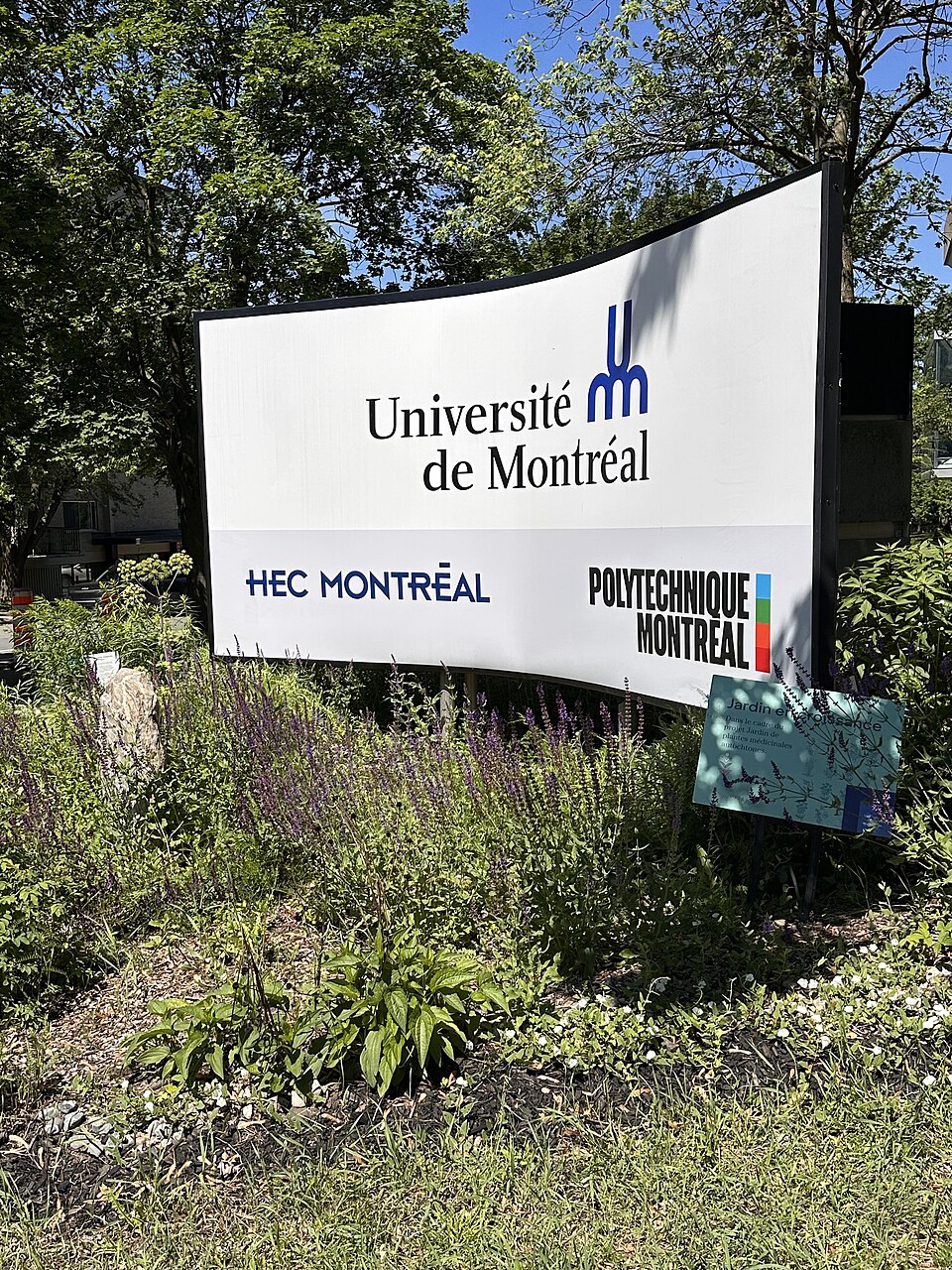
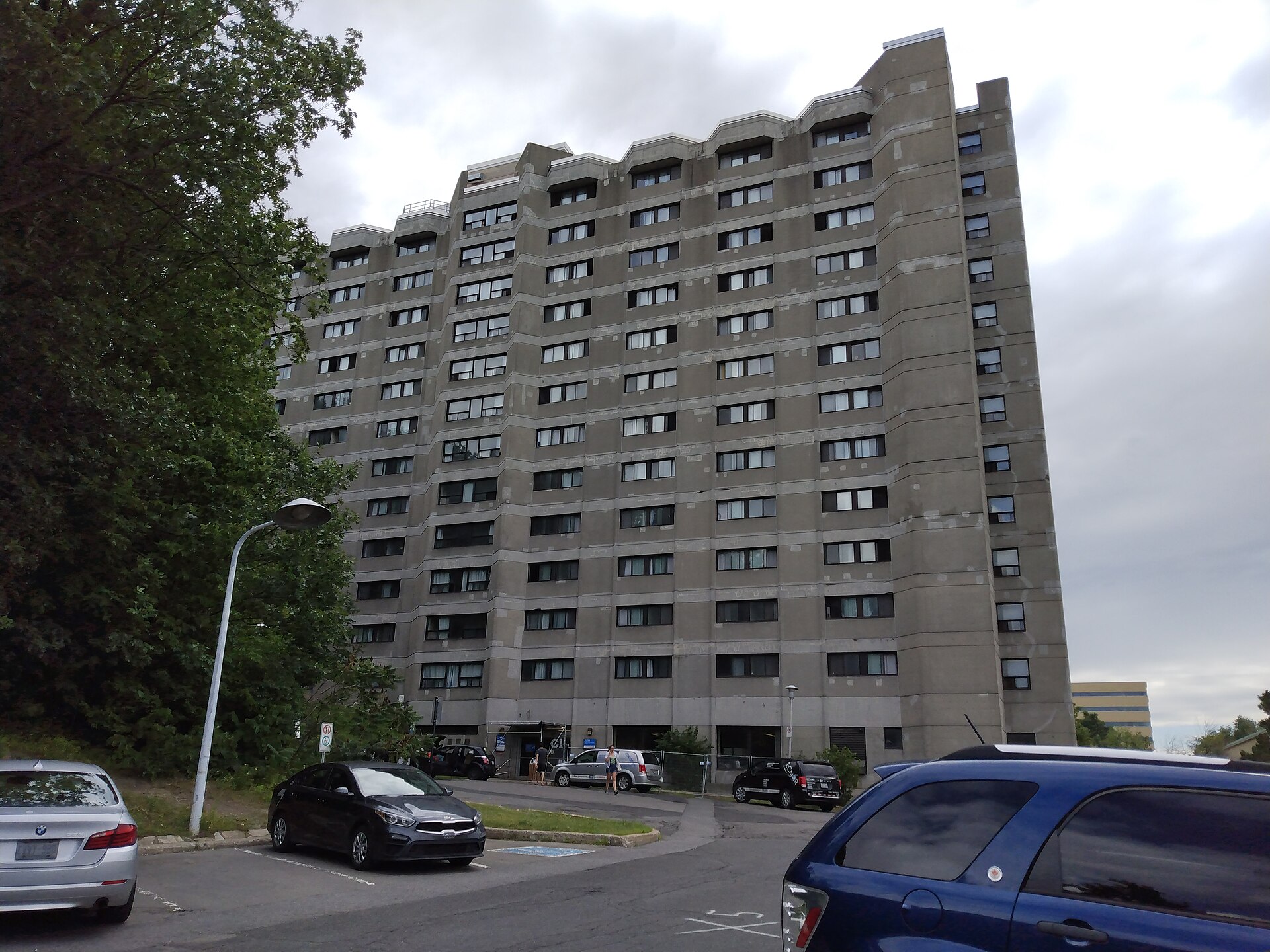
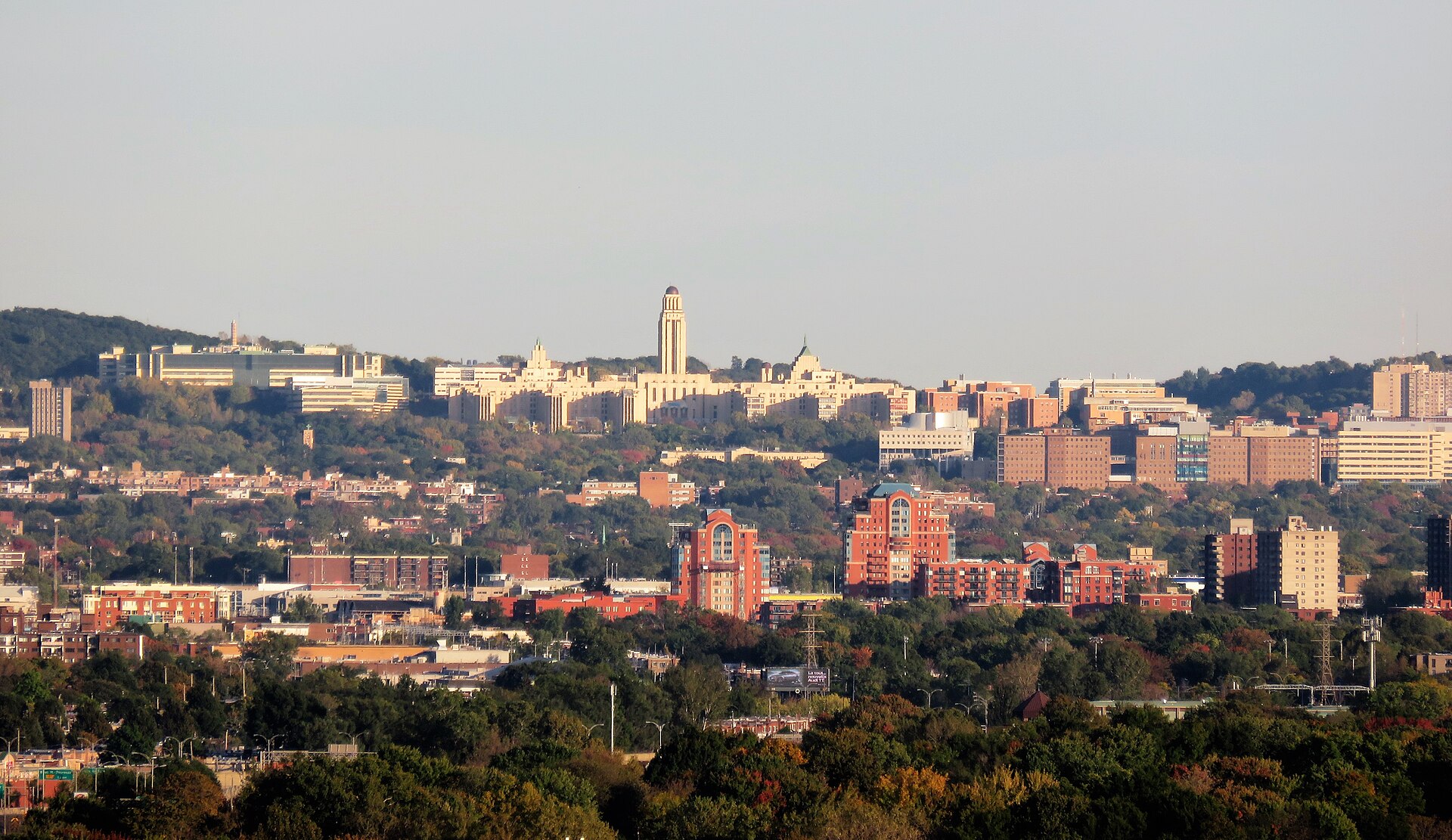
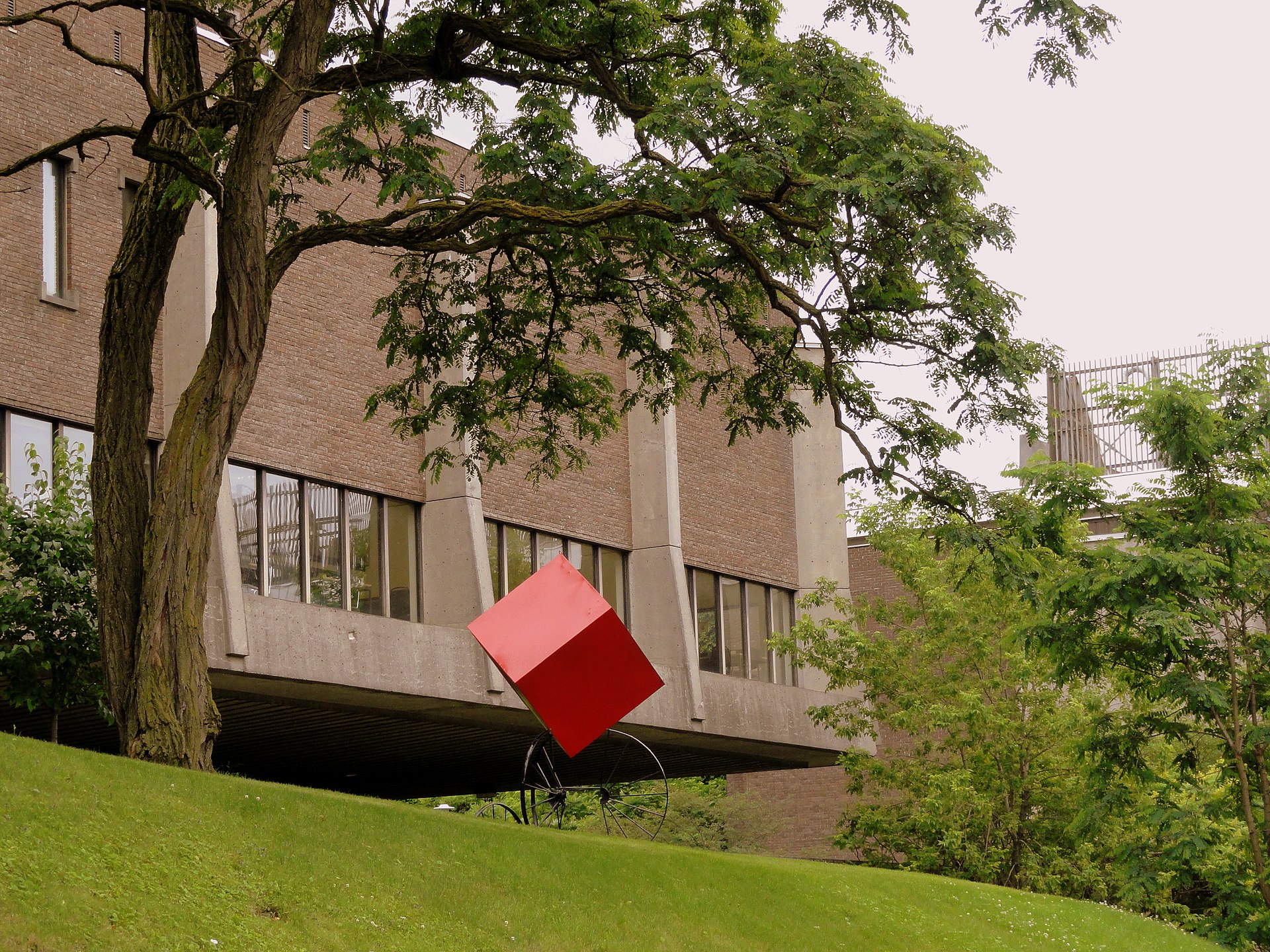
Université de Montréal — campus in pictures
Real, freely-licensed photographs of the campus (via Wikimedia Commons).

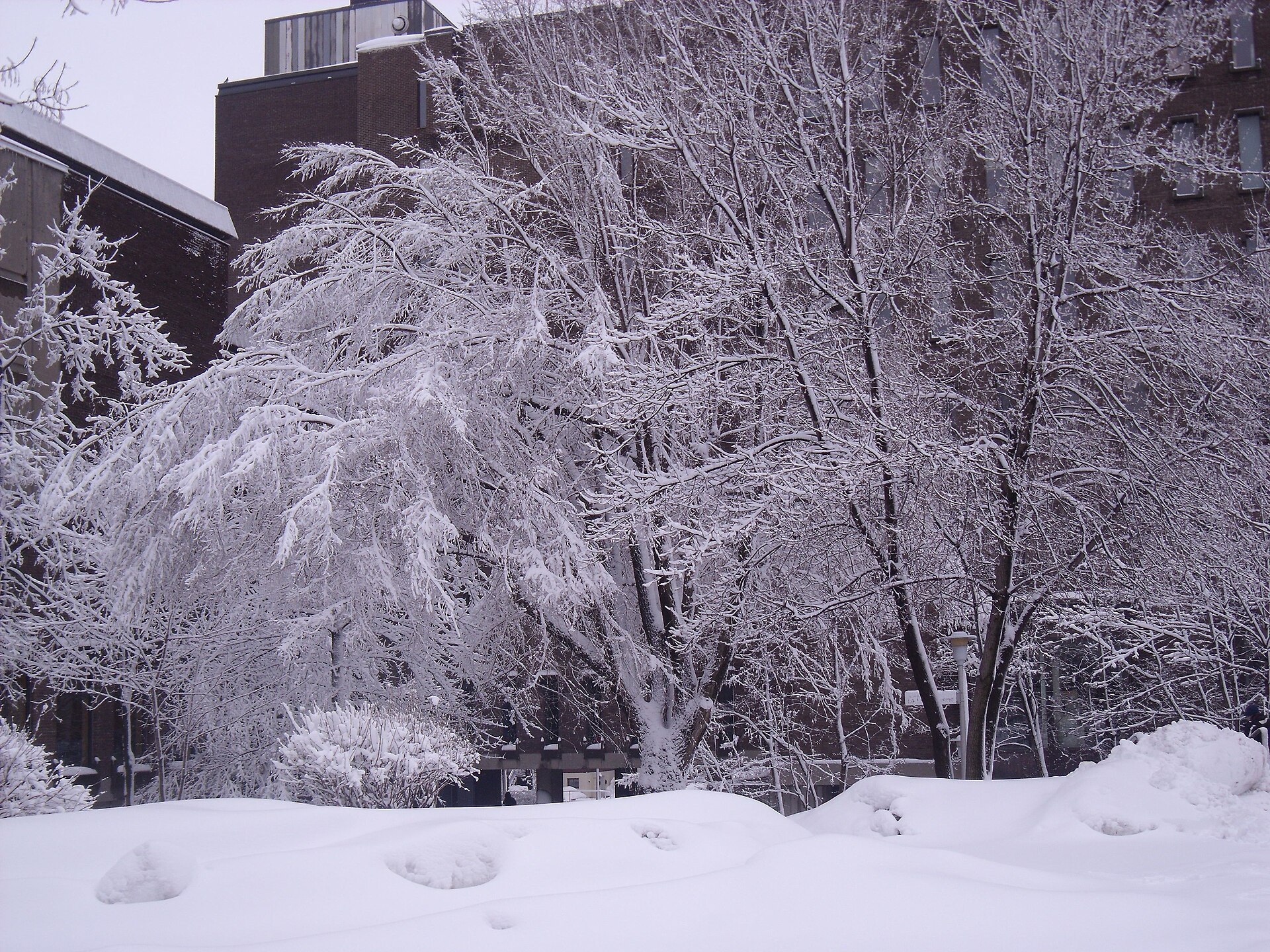
Why Université de Montréal — Research Power, AI Leadership & Montreal
UdeM sits at the intersection of world-class research, a legendary city, and an academically serious French-speaking culture. Here is why international students choose it over better-known Anglophone alternatives.
ADMISSIONS PROFILE
How Selective Is UdeM?
With an overall acceptance rate of 50%, UdeM is selective but accessible — the nuance is that selectivity varies sharply by faculty. Medicine, Law, Dentistry, and Computer Science are among the most competitive programmes in Canada; many arts and social science programmes are more accessible. International students should assess selectivity at the programme level, not the institution level.
UdeM admits primarily on the basis of academic performance. Your secondary school grades — assessed against Quebec's DEC (CEGEP) standard for Quebec students, and against equivalent international benchmarks for international students — are the primary factor. There is no standardised test requirement for most undergraduate programmes. IB Diploma holders are well-recognised and an IB score around 32 meets the general threshold, though competitive programmes expect higher.
QUICK FACTS
UdeM at a Glance
WHAT YOU SUBMIT
Application Components
UdeM uses a direct application system via its own Centre étudiant portal (admission.umontreal.ca). Unlike Ontario's OUAC, Quebec universities process applications independently. Here is what the typical undergraduate international application requires.
WHAT ADMISSIONS LOOKS FOR
The Profile UdeM Admits
UdeM's admissions philosophy is grades-centred and credential-based for most undergraduate programmes. There is no holistic review process analogous to US universities. What matters most:
Academic performance in your most recent studies is the primary — and often decisive — criterion. For international students, your secondary school grades are compared against equivalency tables that UdeM maintains for each country's education system. Preparation in the key prerequisite subjects for your target programme (mathematics for science/engineering, sciences for health, etc.) matters significantly. French language proficiency is non-negotiable for French-taught programmes — a B2 level is the minimum, and stronger French improves your prospects and day-to-day experience enormously.
APPLICATION DEADLINES
When to Apply
UdeM operates on three academic sessions. Most international students target Fall (September) intake. Deadlines vary by programme — always verify on the official admissions portal for your specific programme.
Deadlines listed here are indicative. Always confirm programme-specific deadlines at admission.umontreal.ca before applying.
| Session | Typical_deadline | Notes |
|---|---|---|
| Fall (September) | February–March | Main intake; most programmes available |
| Winter (January) | September–October | Select programmes only |
| Summer (April) | February | Limited programme selection |
CAMPUS & CITY LIFE
Life at UdeM and in Montreal
The UdeM campus sits on the northern slope of Mount Royal — a remarkable urban park — in the Côte-des-Neiges neighbourhood, one of the most ethnically diverse communities in all of Canada. The campus itself is compact and walkable, connected by metro (Université-de-Montréal station) to the rest of Montreal within minutes.
Montreal is one of the world's great student cities. It is bilingual by nature — you will hear French and English on any street — but the university operates in French, immersing you in Quebec culture from the first day. The cost of living (around US $14,000 annually) is low by North American standards, enabling a quality of life that Toronto or Vancouver cannot match at the same price point. Housing ranges from on-campus residences for first-year students to affordable off-campus apartments in Plateau-Mont-Royal, Mile-End, and Rosemont — neighbourhoods beloved by students globally.
UdeM's CEPSUM sports complex, libraries, student associations, and cultural events calendar make campus life rich. International students are supported by the Bureau des étudiants internationaux (BEI), which provides orientation, immigration advice, and integration programmes.
CAREERS & OUTCOMES
What Happens After UdeM
UdeM graduates benefit from the university's deep connections with Montreal's professional ecosystem — Canada's second-largest city, and a global hub for AI, video games, aerospace, film, finance, and life sciences.
Medicine, Dentistry, Law, and Pharmacy graduates from UdeM are among the most sought-after in Quebec, with near-universal professional employment rates. AI and Computer Science graduates from the Mila ecosystem are recruited globally by companies like Google, Meta, DeepMind, and Montreal's own AI unicorns. Business graduates from HEC Montréal (affiliated) rank among Canada's most employable. French proficiency opens the full Francophone world — France, Belgium, Switzerland, Africa, and Southeast Asia — alongside Quebec and Canada.
UdeM's international alumni network, while strongest in Quebec and French-speaking countries, has growing reach globally through Mila alumni who have dispersed to leading AI labs worldwide.
FREQUENTLY ASKED QUESTIONS
UdeM — International Student FAQs
Do I need to speak French to attend UdeM?+
For almost all undergraduate programmes, yes — B2-level French is required. Instruction, exams, and campus life are primarily in French. Some graduate programmes (especially in Computer Science, Law, and natural sciences) are offered in English. Always verify your specific programme's language of instruction before applying.
Is UdeM very different from Anglophone Canadian universities?+
Yes, in important ways. UdeM operates within Quebec's distinct educational and cultural tradition. The academic year aligns with the semester system, degrees follow a three-year (bachelor's) structure in some faculties (different from the Anglo-Canadian four-year norm), and campus culture is predominantly French-speaking. This is a strength for students who want genuine bilingualism and immersion.
Will my IB Diploma be recognised?+
Yes. UdeM formally recognises the IB Diploma for undergraduate admission. An overall score of 32 is a general minimum benchmark, but competitive programmes expect significantly higher. Subject-specific prerequisites must still be met through your IB Higher Level selections.
Are there scholarships for international students?+
Yes. Once you receive an offer of admission, your file is automatically evaluated for exemption scholarships that partially offset the international tuition premium. There are also merit scholarships through UdeM's scholarship portal at bourses.umontreal.ca. Verify current offerings directly on the official site.
Can I work in Canada after graduating from UdeM?+
Yes. UdeM is a Designated Learning Institution (DLI), which makes international graduates eligible for the Post-Graduation Work Permit (PGWP), allowing you to work in Canada for up to three years after graduation. Quebec also has its own immigration pathways (PEQ) that value French-language skills — a major advantage for UdeM graduates.
Is there on-campus housing?+
Yes. UdeM offers residence options for first-year students. Demand is high, so apply as early as possible after receiving your admission offer. The surrounding Côte-des-Neiges neighbourhood also has extensive affordable off-campus housing.
How does UdeM compare to McGill for international students?+
McGill is Anglophone and internationally more well-known; UdeM is Francophone and research-dominant in Quebec. UdeM ranks higher in certain disciplines (notably AI/CS via Mila, Medicine, Law) and has a cost advantage in some fee structures. If you are comfortable in French and are drawn to research or health sciences, UdeM is a genuinely competitive peer — not a consolation choice.
What is the application deadline for international students?+
Deadlines vary by programme and intake session. For Fall (September) intake — the main entry point — most international applications close between February and March. Always verify the exact deadline for your specific programme at admission.umontreal.ca, as some competitive programmes have earlier closing dates.
ACADEMIC EXCELLENCE
What UdeM Expects Academically From International Students
Université de Montréal is a research-intensive environment with rigorous academic expectations. For international students, admission is primarily grade-based — but success here demands genuine academic preparation, French-language fluency, and readiness to engage with a demanding research culture from early in your degree.
ADMITTED STUDENT PROFILE
The Academic Benchmark
UdeM does not publish standardised test requirements (SAT/ACT are not part of the Quebec admission culture). Assessment is based on secondary school results and equivalency calculations.
STANDARDISED TESTS
Test Policy: Not Required
UdeM does not require SAT or ACT scores for undergraduate admission. This is consistent with the Quebec university system, which assesses international students on the basis of secondary school academic records and their equivalency to Quebec's Diplôme d'études collégiales (DEC) standard.
If you have taken SAT or ACT tests, you may include them in your application, but they play no evaluative role in undergraduate admissions. For graduate programmes, some disciplines may request GRE or GMAT — check programme-specific requirements. The key credential for most international applicants is a strong, fully verified academic transcript.
Test policy verified as optional. UdeM's admissions are grades-first.
SAT / ACT
SAT & ACT — Not Part of UdeM Admissions
Unlike US universities, UdeM does not use SAT or ACT scores as part of its undergraduate admissions process. Quebec's higher education tradition is fundamentally grades-based.
Students who have taken the SAT or ACT should not spend energy optimising these scores for UdeM's benefit. Instead, focus your energy on maximising your secondary school GPA and IB results, and on demonstrating strong French proficiency. For students applying to competitive programmes like Medicine or Computer Science, your academic transcript is the decisive document.
IB, A-LEVELS & AP
How UdeM Reads International Qualifications
UdeM formally accepts the IB Diploma, A-Levels, and other recognised international qualifications for undergraduate admission. Each is evaluated against equivalency tables that convert your results into a score comparable to Quebec's DEC.
For IB Diploma holders: a total score of 32 is the general minimum threshold, but this is a floor, not a target. Competitive programmes such as Medicine, Dentistry, Law, Computer Science, and Engineering typically admit students with scores well above this level. Your Higher Level subject choices should align with the prerequisites of your target programme — advanced mathematics for CS and Engineering; biology and chemistry for health sciences.
A-Level and AP results are also accepted and evaluated through equivalency tables. Verify how your specific qualification maps to UdeM's requirements on the admissions portal.
SUBJECT PREPARATION
Subject Rigour by Programme Area
UdeM's strongest programmes have clear prerequisite subject requirements. Meeting them at the highest level available to you in your curriculum is essential.
LANGUAGE REQUIREMENTS
English & French Proficiency Requirements
Most UdeM programmes are taught in French and require demonstrated French proficiency (B2 level). A small number of graduate programmes are taught in English and require English proficiency. The table below covers English-language proficiency requirements for English-taught graduate programmes.
Duolingo English Test is not currently listed as an accepted test. Verify current accepted tests per programme at admission.umontreal.ca. French proficiency testing is separate and mandatory for most UdeM programmes.
| Test | Minimum | Notes |
|---|---|---|
| IELTS | 6.5 | Academic module; English-taught graduate programmes |
| TOEFL iBT | 90 | English-taught graduate programmes |
| French (DELF/TCF) | B2 | Required for most undergraduate and French-taught programmes |
GRADE 9 → 12 ROADMAP
Building Your UdeM Profile Year by Year
UdeM is grades-first. Your academic plan should prioritise academic rigour and language preparation above all else.
COMMON MISTAKES
Academic Pitfalls to Avoid
Items
- Applying to a French-language programme without genuine B2-level French — you will struggle academically and your application may be rejected outright.
- Underestimating the selectivity of specific programmes (Medicine, Law, CS) by looking only at the 50% overall acceptance rate.
- Failing to check subject prerequisites before applying — missing a required secondary course can disqualify you regardless of GPA.
- Assuming SAT/ACT scores will strengthen your application — they are irrelevant to undergraduate admission.
- Applying after the programme deadline — UdeM's deadlines are firm, and late applications are typically not considered.
- Submitting unofficial or un-translated transcripts — all documents must be certified and in French or English.
- Ignoring the equivalency evaluation — how your qualifications map to Quebec's DEC directly affects your admission score; understanding this helps you present your credentials clearly.
Faqs
Is the 50% acceptance rate misleading for competitive programmes?+
Yes. The institution-wide acceptance rate of 50% reflects the full range of programmes including many arts and social science streams. Medicine, Dentistry, Computer Science, and Law are substantially more selective. Research admission statistics for your specific programme rather than relying on the overall figure.
Can I transfer credits from my home country?+
Possibly, but this is evaluated case-by-case. UdeM does have credit recognition processes for prior studies, particularly for graduate applicants. At the undergraduate level, direct entry as a first-year student is the norm for most international applicants.
COST & FINANCIAL AID
Understanding the Cost of UdeM for International Students
At roughly US $22,000 per year in tuition, Université de Montréal is one of the most affordable QS Top-150 universities available to international students. Combined with Montreal's comparatively low cost of living, UdeM represents exceptional value — though the international tuition differential relative to Quebec residents remains significant. Automatic scholarship evaluation on admission partially offsets this gap.
ANNUAL COST BREAKDOWN
What It Costs to Study at UdeM
All figures are estimates from the university's facts profile, expressed in USD. Actual costs in Canadian dollars fluctuate with exchange rates; confirm precise tuition in CAD on the official registrar's site.
Quebec resident and domestic Canadian tuition is substantially lower. International students pay the international rate unless an exemption scholarship applies. All USD figures are approximate conversions.
| Item | Annual_usd | Notes |
|---|---|---|
| International Tuition (undergraduate) | ~$21,900 | Per academic year; varies by programme and credit load |
| Cost of Living (housing, food, transport) | ~$14,000 | Montreal — lower than Toronto, Vancouver |
| Total Cost of Attendance (estimated) | ~$34,000 | Tuition + living + ancillary fees |
| Application Fee | ~$75 | Non-refundable, per application |
FINANCIAL AID POLICY
Aid for International Students
UdeM operates an automatic exemption scholarship programme for international students. Upon receiving an offer of admission, your academic file is automatically reviewed for eligibility for these awards, which partially offset the differential between international and Quebec resident tuition fees.
There is no separate need-blind financial aid programme equivalent to US universities. Most international financial support at UdeM takes the form of merit-based exemption scholarships and tuition fee reductions rather than grant-based need aid. Graduate students may access research stipends and assistantships through their faculties. It is important to plan your finances based on the full international tuition rate and consider any scholarships as supplementary rather than guaranteed.
The average aid percentage for international students is not published. Verify current exemption scholarship criteria and amounts at the official scholarships portal (bourses.umontreal.ca).
SCHOLARSHIPS
Scholarships Available to International Students
UdeM offers several pathways for international students to access funding. Below are the main categories — verify current named awards and amounts at bourses.umontreal.ca, as specific details change annually.
NET PRICE REALITY
Is UdeM Affordable for International Students?
Relative to comparable research universities in the US, UK, or Australia, UdeM is genuinely affordable. A QS Top-150 institution at approximately US $34,000 total cost of attendance per year (before scholarships) is exceptional value by global standards.
Montreal's cost of living advantage is real — rent, food, and transport are substantially cheaper than Toronto, Vancouver, New York, London, or Sydney. Students living modestly can manage on around US $14,000 per year outside tuition. However, international students should not assume they will receive exemption scholarships — plan conservatively and treat any award as a welcome reduction rather than a guarantee. Quebec student healthcare coverage (RAMQ) is available to eligible international students, which reduces a major hidden cost.
There is no no-loan guarantee or need-blind financial aid policy for international students at UdeM. Students are encouraged to plan for the full cost and apply proactively for all available external awards.
HOW TO FUND YOUR DEGREE
Steps to Maximise Your Financial Support
COST & AID FAQS
Money Questions Answered
How much does it cost per year as an international student at UdeM?+
The estimated total annual cost of attendance is approximately US $34,000, comprising roughly US $21,900 in tuition and US $14,000 in living expenses (housing, food, transport, personal). Application fees add approximately US $75 once. Costs are actually incurred in Canadian dollars, so USD estimates fluctuate with exchange rates.
Do I have to apply separately for the exemption scholarship?+
No. The exemption scholarship evaluation is automatic once you receive an admission offer. You do not submit a separate application. However, you should verify the outcome in your Centre étudiant portal and note any renewal GPA conditions.
Are there any need-blind scholarships for international undergraduates?+
No. UdeM does not operate a need-blind or need-based grant programme for international undergraduates comparable to US universities like MIT or Harvard. Support is primarily merit-based through exemption scholarships and external awards.
Can graduate students at UdeM get fully funded?+
It is possible, particularly in research-intensive disciplines (AI, sciences, medicine). Research assistantships, supervisor funding, FRQ awards, and federal tri-agency scholarships (NSERC, SSHRC, CIHR) can collectively cover tuition and living costs. This requires proactive engagement with potential supervisors and early scholarship applications.
Is Montreal cheaper than other major Canadian cities?+
Yes, meaningfully so. Montreal's cost of living is significantly lower than Toronto and Vancouver — Canada's two most expensive cities — especially for rental housing. This real advantage makes UdeM more affordable in practice than its sticker price suggests compared to peers in those cities.
Do international students qualify for Quebec's public healthcare (RAMQ)?+
Students from countries with social security agreements with Quebec may qualify for RAMQ coverage. Others are required to enrol in the university's student health insurance plan. Confirm your eligibility status before arrival at ramq.gouv.qc.ca.
APPLICATION & STATEMENT
How to Apply to UdeM — Grades First, Statement Where Required
Université de Montréal uses a direct application system — not Common App, UCAS, or any centralised portal. For most undergraduate programmes, admission is grades-based and there is no personal statement or supplemental essay required. However, competitive professional programmes may require a motivational letter or additional documents. This guide explains what you actually need to submit and how to approach it strategically.
THE APPLICATION SYSTEM
UdeM's Application Process — What You Actually Write
Canada's admissions culture — particularly in Quebec — is fundamentally grades-first. Unlike US universities with holistic review and mandatory essays, or UK universities requiring the UCAS personal statement, the vast majority of UdeM undergraduate programmes evaluate you primarily on your academic transcript.
Applications are submitted directly through UdeM's own Centre étudiant portal at admission.umontreal.ca. There is no Common App, no Coalition App, and no OUAC (Ontario's centralised system). Quebec universities run their own admissions independently. For most undergraduate programmes, you upload your transcripts and proof of language proficiency, pay the application fee, and your admission decision is based almost entirely on your academic record.
Exceptions exist: some competitive and professional programmes (e.g. Medicine, Dentistry, Law, some applied arts) may require a personal statement, letter of motivation, portfolio, or supplementary questionnaire. Always check your specific programme's requirements on the official admissions site.
WRITTEN COMPONENTS
When a Written Statement Is Required
The following represents the types of written components that competitive UdeM programmes may request. Because UdeM's programmes each set their own supplementary requirements — and these change annually — no verbatim prompt text is reproduced here. Always verify the current requirements for your specific programme on the official admissions portal.
THE CANADIAN CONTEXT
Why There Is No 'Common App Essay' at UdeM
If you are coming from a US-centric admissions framework, the absence of a Common App personal statement at UdeM can feel disorienting — but it reflects a genuinely different philosophy.
Quebec's university system was designed around the DEC (CEGEP) — two years of pre-university college that all Quebec students complete before university, with grades and subject selection providing a rich academic signal. For international students, your secondary school GPA and subject choices serve the same function. The system trusts grades as the primary predictor of academic success, and does not require a written narrative to supplement them for most programmes.
This does not mean your written communication skills are irrelevant — they matter deeply once you arrive, and are tested constantly in French through exams, essays, and seminars. The difference is that you are not asked to perform them pre-admission.
STRATEGY BY PROGRAMME TYPE
How to Approach Each Application Type
WRITING IN FRENCH
The Most Important Writing Skill: Academic French
If your target UdeM programme requires any written component, it will almost certainly be in French. The quality of your written French in that document signals directly whether you are ready to succeed academically at a French-language research university.
Do not draft your lettre de motivation in English and translate it. Write it in French from the beginning. Have it reviewed by a native French speaker or a professional with academic French editing experience. The vocabulary, register, and rhetorical conventions of academic French are distinct from conversational French and from English academic writing. A letter that reads as translated, or that uses colloquial French, significantly weakens your application.
For programmes in English (some graduate CS, Law): write in clear, precise academic English. Avoid jargon, use concrete examples, and prioritise clarity over sophistication.
COMMON MISTAKES
Application & Statement Pitfalls to Avoid
- Writing a motivation letter in English for a French-language programme.
- Translating an English draft into French rather than writing originally in French.
- Using the same generic letter for multiple programmes without customising for each.
- Failing to research specific faculty, labs, or supervisors at UdeM before writing.
- Ignoring whether your target programme actually requires a written component (many don't — submitting an unsolicited letter wastes effort).
- Missing the application deadline by treating UdeM like a US rolling-admissions school — many programmes have firm cutoff dates.
- Submitting transcripts without certified translations — all documents must be in French or English.
- Assuming a strong motivation letter can compensate for a below-threshold GPA — at UdeM, grades are primary.
APPLICATION FAQS
Your Application Questions Answered
Does UdeM use Common App?+
No. UdeM uses its own direct application portal — admission.umontreal.ca (the Centre étudiant). There is no Common App, Coalition App, or OUAC involvement. You apply directly to UdeM through their own system.
Do I need to write a personal statement to apply to UdeM undergrad?+
For most undergraduate programmes, no — admission is grades-based and no personal statement is required. Competitive or professional programmes (Medicine, Law, some arts programmes) may require a lettre de motivation or supplementary materials. Always check the specific requirements for your programme at admission.umontreal.ca.
Must the motivation letter be written in French?+
For French-language programmes, yes — a motivation letter should be written in professional academic French. It is both a formal requirement and a signal of your readiness to study in French. For the small number of English-taught programmes, English is appropriate.
What is CASPer and do I need it?+
CASPer is a situational judgement test used by some health professional programmes in Canada to assess professional competencies. Some UdeM health programmes may require it. Confirm the current requirement for Medicine, Dentistry, or related health programmes on their specific admissions pages.
Can I apply to more than one UdeM programme?+
Yes. The Centre étudiant portal allows you to apply to multiple programmes at UdeM in the same cycle. Each programme is evaluated independently. You are typically asked to rank your preferences.
How competitive is getting into Computer Science at UdeM given the Mila connection?+
For graduate CS (M.Sc./Ph.D.) with a Mila research affiliation, it is highly competitive internationally. The admissions process involves supervisor matching in addition to the formal application — you need a professor willing to supervise your project. Identify your target supervisors, read their papers, and contact them proactively before applying. For undergraduate CS, standard UdeM admission criteria apply.
When should I submit my application?+
For Fall intake (September), most international programme deadlines fall between February and March. Some competitive programmes close earlier. Submit at least 4 weeks before the deadline to allow time for document certification, translation, and any queries from the admissions team. Never wait until the final week.
Courses — schools, degrees & intake
29 degrees across 7 groupings.
Faculté des arts et des sciences · 15 degrees
Baccalauréat en informatique
Baccalauréat en sciences biologiques
Baccalauréat en sciences économiques
Baccalauréat en mathématiques
Baccalauréat en chimie
Baccalauréat en physique
Baccalauréat en psychologie
Baccalauréat en criminologie
Baccalauréat en sociologie
Baccalauréat en anthropologie
Baccalauréat en science politique
Baccalauréat en linguistique
Baccalauréat en traduction
Baccalauréat en histoire
Baccalauréat en philosophie
Faculté de médecine · 6 degrees
Baccalauréat en kinésiologie
Baccalauréat en sciences biomédicales
Baccalauréat en biochimie et médecine moléculaire
Baccalauréat en nutrition
Baccalauréat en ergothérapie
Baccalauréat en physiothérapie
Faculté de droit · 1 degrees
Baccalauréat en droit
Faculté de musique · 1 degrees
Baccalauréat en musique
Faculté de l'aménagement · 3 degrees
Baccalauréat en architecture
Baccalauréat en urbanisme
Baccalauréat en architecture de paysage
Faculté des sciences de l'éducation · 2 degrees
Baccalauréat en éducation préscolaire et enseignement primaire
Baccalauréat en enseignement du français langue seconde
HEC Montréal (École affiliée) · 1 degrees
Baccalauréat en administration des affaires (B.A.A.)
Want your real chances at Université de Montréal?
Create a free TYCHR account for your personalised admit-chance, a shortlist you can track, exact entry requirements, and essay + counselling help.