Universitat Pompeu Fabra
Barcelona, Spain · Urban
BARCELONA · SPAIN · PUBLIC RESEARCH UNIVERSITY
Universitat Pompeu Fabra Admissions Guide for International Students
Universitat Pompeu Fabra (UPF) is one of Europe's most remarkable academic success stories — a compact, fiercely selective public university founded in 1990 on the seafront of Barcelona that has climbed into the global top 200 within a single generation. Ranked among the world's top 75 universities for Law and top 85 for Business & Economics, UPF punches far above its size and age. Its three urban campuses — Ciutadella, Mar, and Poblenou — place students in the heart of one of Europe's most vibrant, globally connected cities.
For ambitious international students who want elite-level research and teaching without the US price tag, UPF offers a genuinely extraordinary proposition: world-class economics, political science, biomedicine and law programmes in Barcelona, with tuition a fraction of the cost of comparable Anglo-American institutions. Most bachelor's programmes are taught in Catalan or Spanish; several flagship tracks offer significant English-language instruction. If you are serious about your subject and excited by a multicultural Mediterranean city, UPF belongs on your shortlist.
Campus
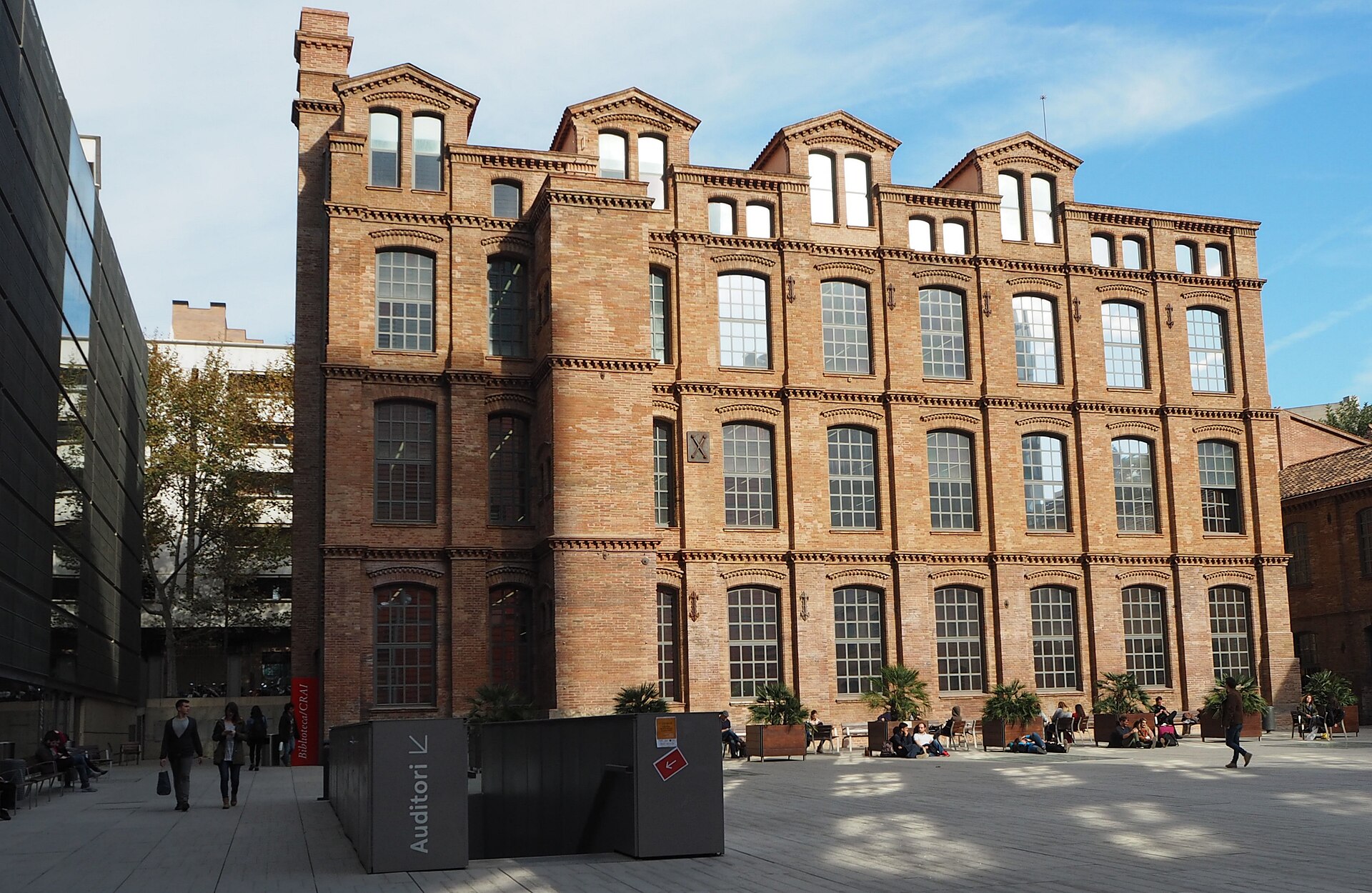
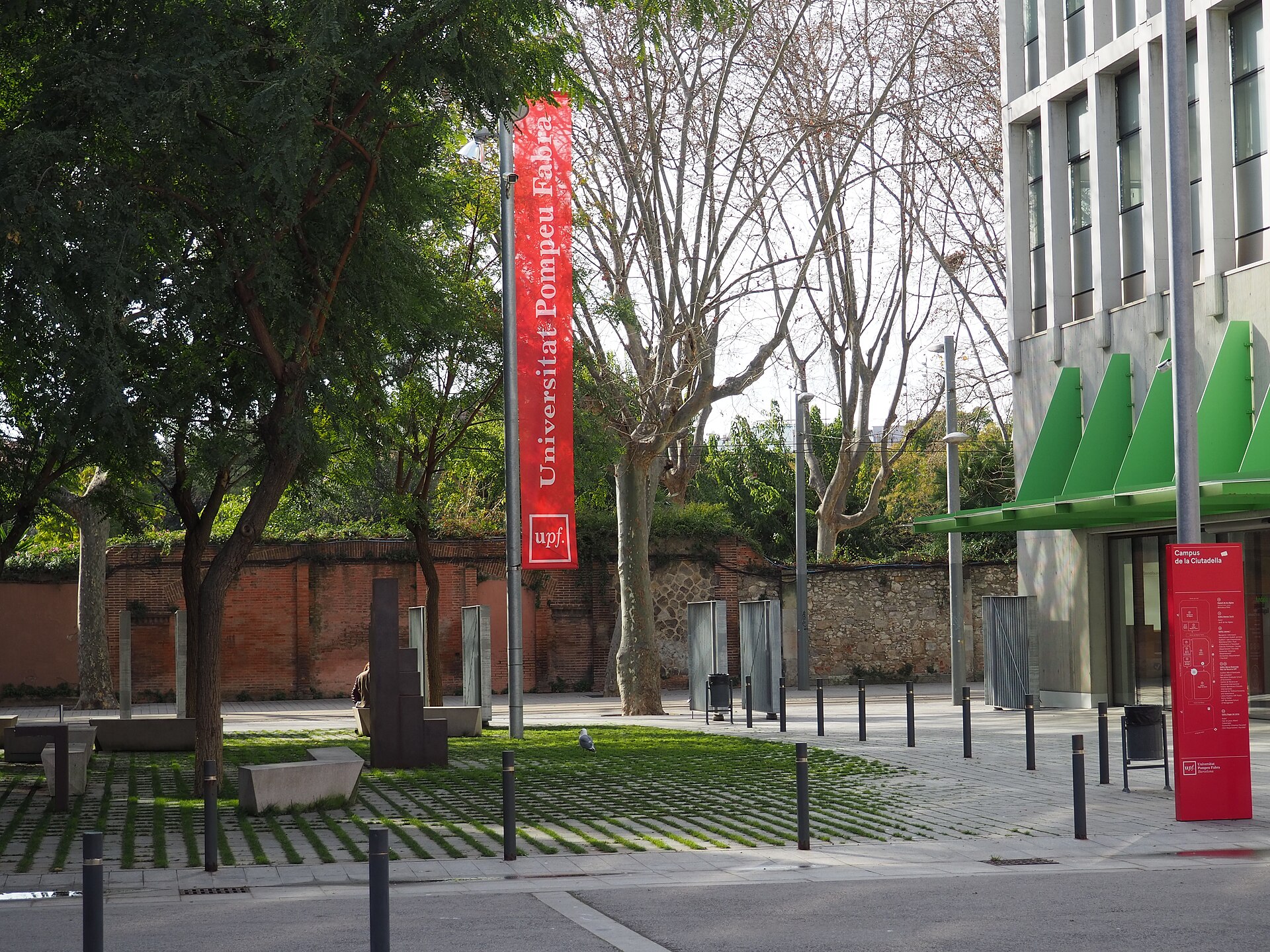
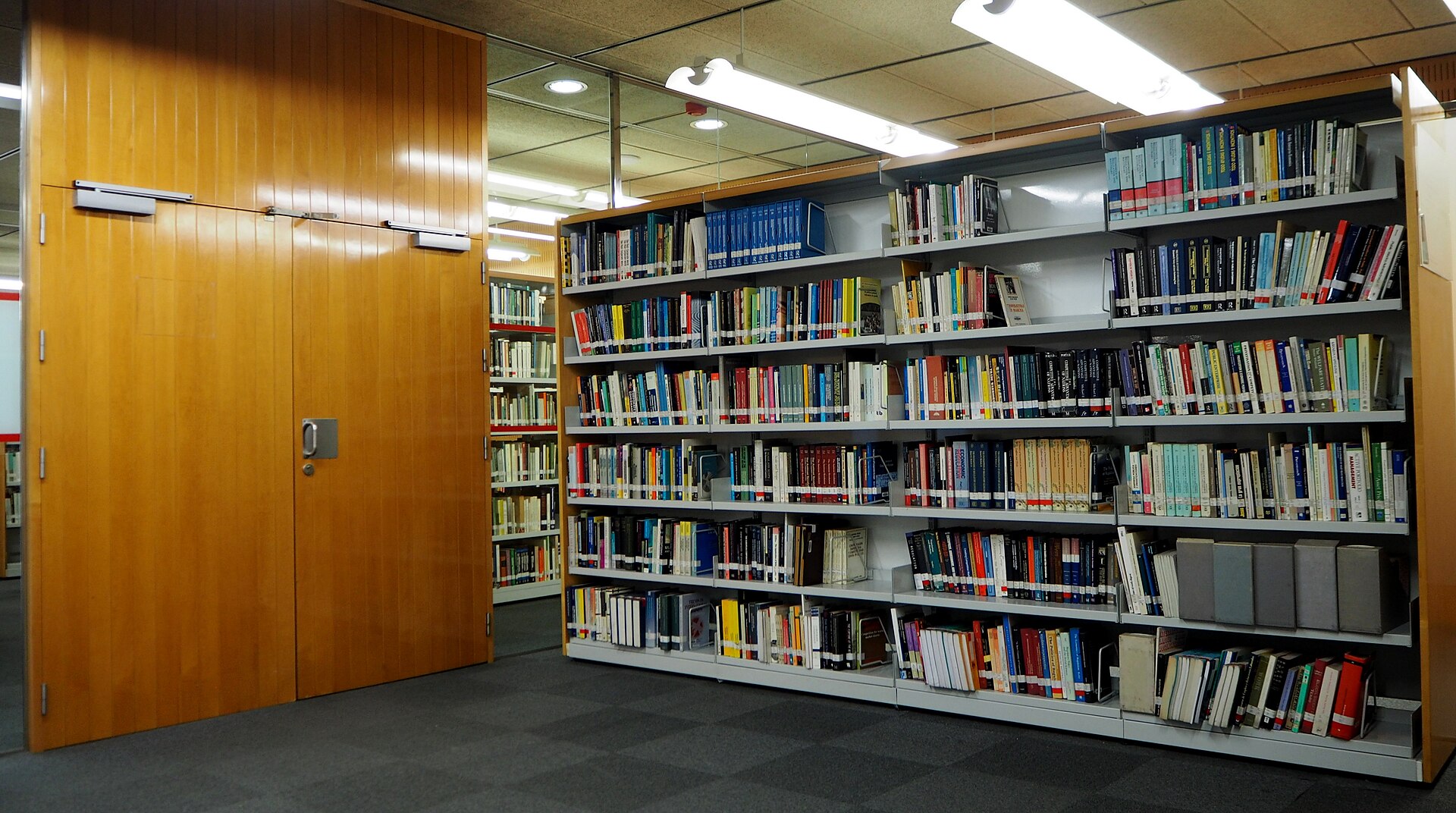
Universitat Pompeu Fabra — campus in pictures
Real, freely-licensed photographs of the campus (via Wikimedia Commons).


Why UPF — Young, Selective, and Exceptionally Productive
UPF has achieved in 35 years what most universities take a century to build. Here is what makes it a genuinely distinctive choice for international students.
SELECTIVITY
How Selective Is UPF?
UPF's overall acceptance rate of 45% reflects a university that is moderately to highly selective relative to its programme mix. Selectivity varies dramatically by programme — flagship tracks such as Medicine, Economics, and Law are among the most competitive entry points in Spain and attract students with top academic records from across Europe and beyond.
The IB Diploma benchmark of 34 points is a meaningful guide for international students: applicants with scores at or above this level are competitive for most programmes. Admission is primarily grades-driven — no standardised test (SAT/ACT) is considered, and there is no portfolio or audition requirement except for specific arts programmes. Your secondary school transcript is the primary signal the admissions office reads.
SNAPSHOT
UPF at a Glance
APPLICATION COMPONENTS
What Your Application Consists Of
UPF is a Spanish public university. International students apply directly through the university's admissions portal. There are no Common App or UCAS-style centralised applications. The core application package is grades-first, with supporting documentation.
STUDENT PROFILE
The Student UPF Admits
UPF selects students who have demonstrated exceptional academic rigour in their secondary education. The university is not looking for a 'well-rounded' student in the US sense — it is looking for intellectually focused, academically strong individuals who can thrive in a demanding, research-oriented environment.
The most important signal is your grade trajectory: consistent top performance in subjects relevant to your intended degree. Students who have taken demanding programmes (IB Diploma, A-Levels, Advanced Placement, rigorous national curricula) and performed at the highest levels are the natural fit. Evidence of genuine intellectual engagement — independent projects, academic competitions, research experience — adds meaningful weight to strong grades.
KEY DATES
Application Deadlines and Process
UPF operates a direct admissions process for international undergraduate students. Applications for the September intake typically open in January and close in spring. Verify exact dates on the official UPF admissions page each year, as deadlines shift annually.
Deadlines below are indicative based on prior cycles. Always confirm on the official UPF website (upf.edu) before applying — we recommend checking in October/November for the upcoming cycle.
| Phase | Period | Notes |
|---|---|---|
| Application portal opens | January – February | Non-EU international applicants |
| Main application deadline | April – May | Most bachelor's programmes |
| Credential homologation | Submit early | Allow 4–8 weeks for processing |
| Admission decisions | June – July | Rolling or batch decisions |
| Enrolment confirmation | July – August | Accept and pay deposit |
| Semester begins | Mid-September | Orientation week precedes classes |
CAMPUS LIFE
Student Life at UPF and in Barcelona
UPF's three urban campuses are woven into the fabric of Barcelona itself. The Ciutadella campus — the main hub for social sciences and humanities — sits in the Born neighbourhood, steps from Parc de la Ciutadella and the Gothic Quarter. The Mar campus hosts health and life sciences in the Barceloneta waterfront district. The Poblenou campus is embedded in Barcelona's innovation district (@22 tech hub).
Barcelona is one of Europe's most desirable student cities — a metropolis of 1.6 million with world-class food, culture, nightlife, beaches, and a booming tech economy. Students benefit from excellent public transport, a Mediterranean climate, and affordable living costs relative to other major European capitals. The cost of living — estimated at around $13,500 per year — is substantially lower than London, Zürich, or Paris while the quality of life is exceptional.
CAREER OUTCOMES
Life After UPF
UPF graduates have one of the strongest employment trajectories among Spanish universities, with an employment rate of 89% and an average starting salary of approximately $34,000 (USD equivalent). The university's location in Barcelona — Spain's most internationally connected business hub — creates direct pathways into consulting, finance, technology, media, and public policy.
UPF's reputation is strongest in economics, political science, law, and biomedical research. Economics graduates have entered academic careers at institutions including Harvard, MIT, and LSE (UPF's economics PhD is ranked among Europe's top programmes). Law graduates move into Spanish and EU practice, international arbitration, and policy roles. Biomedical engineering and genomics graduates enter research institutes across Europe and pharma sectors globally.
Cards
Stats
FREQUENTLY ASKED QUESTIONS
UPF Admissions: Your Questions Answered
Do I need to speak Spanish or Catalan to study at UPF?+
It depends on your programme. Most bachelor's degrees are taught primarily in Catalan and/or Spanish. Several programmes — including Global Studies and parts of International Business Economics and Data Science — offer significant English-language instruction. Check the language of instruction for your specific programme on the UPF website. Students are strongly encouraged to develop Catalan or Spanish proficiency during their time in Barcelona regardless of their programme language.
Is UPF a good choice for students from Asia, the Middle East, or Africa?+
Yes. UPF welcomes international applications from all regions. The 12% international student community includes a mix of European exchange students and degree-seeking students from outside the EU. The Barcelona location, EU credential value, and comparatively affordable cost of study make UPF particularly attractive for high-achieving international students who want European higher education at a manageable cost.
How does the IB Diploma fit into the Spanish admissions process?+
The IB Diploma is officially recognised in Spain. IB Diploma holders can obtain an equivalence certificate (equivalencia de bachillerato) from the Spanish Ministry of Education, which is then used to apply to UPF. A score of 34 or above on the IB Diploma is a competitive benchmark for most UPF programmes; highly selective tracks like Medicine may require higher scores.
Are SAT or ACT scores required or considered?+
No. UPF operates a test-blind admissions process — SAT and ACT scores are neither required nor considered for undergraduate admission. Admission is based on your secondary school qualifications and grades.
What is the language of instruction for the flagship Economics programme?+
The core Economics (Grau en Economia) programme is primarily taught in Spanish and Catalan. The International Business Economics track has a higher proportion of English-medium courses. Students considering Economics should be prepared to develop proficiency in the local languages, as this is genuinely part of the Barcelona and UPF experience.
Is financial aid available for international students?+
Need-based grant coverage for non-EU international students is limited compared to US institutions. On average, around 15% of aid costs are covered via aid mechanisms, which includes institutional grants and external scholarships. EU students are eligible for Spanish government grants (Becas del Ministerio). Non-EU students should research Erasmus Mundus, La Caixa Foundation scholarships, and government scholarships from their home countries.
How competitive is admission to Medicine at UPF?+
Medicine is among the most competitive programmes in Spain. Entry is grade-driven and extremely selective — only students with top secondary school records and high validated scores are admitted. Prospective medicine students should research the specific admission route thoroughly and verify requirements directly with UPF's Faculty of Health and Life Sciences.
What is campus life like? Does UPF have a traditional campus?+
UPF does not have a single enclosed campus. It is genuinely urban — spread across three locations in different Barcelona neighbourhoods. This is a feature, not a drawback: you study in one of Europe's most stimulating cities, and campus life extends naturally into the city itself. Students who thrive at UPF tend to love urban environments and the freedom of Barcelona living.
ACADEMIC STANDARDS
What UPF Expects Academically and How to Prepare
UPF is an academically demanding institution. Its research-intensive culture means faculty expectations are high, contact hours substantial, and the peer group competitive. For international students, understanding how Spanish academic culture works — and how your qualifications map onto the admission process — is essential preparation.
Teaching at UPF blends lecture formats with seminars, tutorials, and research-integrated coursework. Assessment is typically continuous (ongoing coursework, presentations) combined with final examinations. The European Credit Transfer System (ECTS) is used; most bachelor's degrees are 240 ECTS credits across four years, though some three-year programmes exist for certain entry paths.
ACADEMIC BENCHMARKS
Competitive Academic Profile
UPF does not publish precise band-by-band entry data the way US or UK universities do. The following benchmarks represent competitive entry standards for most programmes based on available information.
TEST POLICY
Standardised Tests: Not Required, Not Considered
UPF operates a test-blind admissions policy. Standardised tests such as the SAT and ACT are neither required nor considered at any stage of the undergraduate application process. This reflects the broader European tradition: admission is based on secondary school qualifications and grades, not on additional standardised assessments.
This is a genuine test-blind policy — not test-optional. There is no scenario in which submitting SAT/ACT scores would strengthen your application. Your effort and resources are better invested in achieving the highest possible grades in your secondary school programme and preparing any required language certifications.
NO SAT / ACT REQUIRED
Spanish University Admissions and Standardised Tests
Spain's university admission system does not use the US standardised testing framework. For Spanish-system students, the University Entrance Examination (EvAU / EBAU or PAU in Catalonia — Proves d'Accés a la Universitat) is the national qualification used for entry ranking. International students present their home-country qualifications through the credential recognition (equivalencia/homologación) pathway instead.
As an international student, your path to UPF bypasses the EvAU entirely. You apply with your IB Diploma, A-Levels, Advanced Placement results, or your home country's national secondary certificate — all subject to equivalence recognition. Concentrating your energy on achieving the best possible results in your existing qualification is the most productive strategy.
IB / A-LEVEL / INTERNATIONAL QUALIFICATIONS
How UPF Reads IB, A-Levels and International Credentials
UPF and the broader Spanish higher education system have well-established processes for converting international qualifications into the Spanish grading scale (0–14 for admission ranking purposes). The better your grades, the higher your ranking score — and the more competitive your application for oversubscribed programmes.
For IB Diploma students, a score of 34 points is the established competitive benchmark for most UPF programmes. Medicine, Economics, and Law may require higher scores in practice. Higher Level subjects in subjects directly relevant to your intended programme (e.g., Mathematics HL for Economics; Biology HL and Chemistry HL for Medicine; History or Politics HL for Political Science) carry particular weight. A-Level students should target A*-B grades across three subjects with Higher Level equivalents.
Always verify exact equivalence scores on the official Spanish Ministry of Education website (educacion.gob.es) and confirm programme-specific requirements directly with UPF's admissions office.
SUBJECT PREPARATION
Academic Preparation by Discipline
UPF is organised into focused, discipline-oriented faculties. Here is what strong preparation looks like for each major area.
ENGLISH LANGUAGE REQUIREMENTS
Language Proficiency Standards
English language certification requirements apply to English-taught programmes. Spanish/Catalan-taught programmes require demonstrated proficiency in those languages instead. Verify requirements for your specific degree on the UPF programme pages.
If your secondary schooling was conducted entirely in English, you may be exempt from language testing. Confirm exemption conditions with the UPF admissions office directly.
| Test | Minimum | Notes |
|---|---|---|
| IELTS Academic | 6.5 | No individual band below 6.0 typically accepted |
| TOEFL iBT | 85 | Internet-based test |
| Duolingo English Test | Verify with UPF | Check current programme page — policy may vary |
| Cambridge (FCE/CAE/CPE) | B2 minimum (FCE) | B2 First or above; confirm with UPF |
| Native English speakers | Exempt | Citizens of majority-English-speaking countries typically exempt |
YEAR-BY-YEAR ROADMAP
Building a Competitive Profile: Grade 9 to 12
COMMON PITFALLS
Mistakes International Students Make When Applying to UPF
- Leaving the credential equivalence (homologación) process too late — it takes 4–8 weeks and is a prerequisite for application.
- Assuming SAT/ACT scores will strengthen the application — UPF is test-blind; they are irrelevant.
- Applying without confirming the language of instruction for their specific programme — most programmes are NOT English-medium.
- Writing a generic motivation letter that could apply to any university — UPF's admissions readers spot generic applications immediately.
- Not verifying whether their qualification (e.g. Indian CBSE, US Diploma) is eligible for the specific equivalence pathway.
- Confusing exchange/Erasmus admission (handled separately) with degree programme admission.
- Underestimating the importance of mathematics preparation for Economics, Data Science, and Engineering programmes.
- Not researching which programmes require Spanish or Catalan language proficiency and arriving unprepared.
COST & FINANCIAL AID
The Cost of a UPF Education An Exceptional Value Proposition
UPF is a Spanish public university, and its tuition reflects that: significantly lower than comparable private institutions in the US or UK. For non-EU international students, fees are higher than for EU residents but remain substantially below the cost of an Anglo-American education of equivalent quality.
The honest framing: UPF is not a need-blind institution for international students, and significant merit-based financial aid for non-EU students is not as widely available as at US universities. However, the all-in cost — even without aid — is dramatically lower than attending a comparable-ranked private US university. A world-class education in Barcelona for approximately $22,000 per year total cost of attendance is a genuine opportunity.
ANNUAL COST ESTIMATE
Estimated Annual Costs
The figures below are annual estimates based on the university's facts data. Actual amounts vary depending on your nationality (EU vs. non-EU fees differ), programme, and living choices. All figures are in USD equivalent.
EU/EEA students pay lower tuition fees (aligned with domestic rates, typically €1,000–€2,500/year depending on programme). Non-EU international students pay higher fees; the $8,000 figure reflects the non-EU rate. Confirm exact fees for your programme and nationality on the UPF website.
| Component | Annual Usd | Notes |
|---|---|---|
| Tuition and Fees | $8,000 | Non-EU international student rate (estimate) |
| Cost of Living (Barcelona) | $13,500 | Accommodation, food, transport, personal |
| Total Cost of Attendance | $22,000 | Estimated all-in annual cost |
| Application Fee | $50 | One-time application fee |
FINANCIAL AID
Financial Aid for International Students
Financial aid availability at UPF differs significantly by student category. EU/EEA students are eligible for Spanish government grants (Becas del Ministerio de Educación) on a need-based assessment. Non-EU international students have more limited access to institutional need-based aid.
On average, approximately 15% of financial aid costs are offset through available mechanisms — a figure that reflects the mixed institutional and external aid landscape. Non-EU students should approach UPF as primarily a self-funding proposition and layer in external scholarships from their home country, bilateral agreements, and EU-funded programmes wherever possible.
SCHOLARSHIPS
Named Scholarships and Funding Opportunities
UPF has institutional scholarships and partners with external foundations to provide funding support. Availability and eligibility change annually — verify current offerings directly on the UPF scholarship page.
AFFORDABILITY
The Real Cost Picture for International Students
UPF's cost profile looks very different depending on your nationality. EU/EEA students pay domestic-rate tuition (often under €2,500/year) and are eligible for Spanish government grants — making UPF an exceptional value proposition. Non-EU international students pay fees closer to $8,000/year but still achieve a total cost of attendance of approximately $22,000/year — substantially below peer institutions in the UK, US, or Australia.
Barcelona's cost of living, while rising, remains competitive with other major European student cities. Students who share accommodation (the norm in Barcelona), cook at home, and use public transport can live well on $1,100–$1,300/month. The city's walkable neighbourhoods, beaches, and cultural richness make it an extraordinary place to spend four years — at a cost that represents genuinely good value for the academic quality delivered.
No-loan policies and need-blind international admissions of the kind offered by some US institutions do not exist at UPF. Plan your finances carefully before applying.
HOW TO FUND YOUR STUDIES
Steps to Secure Funding for UPF
COST FAQs
Cost and Aid: Common Questions
How much does it really cost to study at UPF as a non-EU international student?+
Approximately $22,000 per year all-in — covering tuition (around $8,000) and living costs in Barcelona (around $13,500). This is a significantly lower total cost than comparable-ranked UK or US universities and represents excellent value for the academic quality received.
Are there scholarships specifically for non-EU international students?+
UPF has limited institutional scholarships for non-EU international students compared to US institutions. The most reliable funding routes are: home government scholarships, bilateral agreements with Spain, La Caixa Foundation, and competitive external foundations. Apply early and research widely.
Is it cheaper for EU/EEA citizens?+
Yes, significantly. EU/EEA students pay domestic-rate tuition (often €1,000–€2,500/year depending on programme), are eligible for Spanish Ministry grants on a need-assessed basis, and benefit from the EU's student mobility infrastructure. The total cost for EU students can be substantially lower than the non-EU estimate.
Can I work while studying in Barcelona?+
EU/EEA students can work without restrictions. Non-EU students typically need a student visa with work authorisation — check Spain's visa regulations for your nationality. Many UPF students work part-time in Barcelona in hospitality, language teaching, or freelance roles. The labour market is competitive; Spanish or Catalan language skills open significantly more opportunities.
Are there on-campus housing options to reduce costs?+
UPF does not operate large residential halls. Students rent privately in Barcelona. Costs vary significantly by location and accommodation type — shared flats in the Eixample or Gràcia typically cost €400–€600/month per room. The UPF housing service (borsa d'habitatge) can help with connections to verified landlords.
APPLICATION & MOTIVATION LETTER
The Spanish Application Process No Supplemental Essays, But Your Motivation Still Matters
UPF is a Spanish public university operating within the European higher education framework. It does not use the Common App, UCAS, or any US/UK-style supplemental essay system. Understanding how the application really works — and what the motivation letter needs to achieve — is essential for international applicants.
The honest reality: admission to UPF is primarily grades-driven. Your secondary school transcript, properly recognised through the Spanish credential equivalence process, is the dominant factor. However, most programmes require a motivation letter (carta de motivación), and for highly competitive programmes and close-call applications, this document matters. This tab is your guide to the Spanish application narrative — what it is, what it is not, and how to write it well.
HOW THE APPLICATION WORKS
Understanding the UPF Application System
UPF uses a direct online application portal (not Common App or UCAS). International students submit their application directly to UPF's admissions office, along with certified academic documents and supporting materials.
The process has no rolling interview cycle, no supplemental essay prompts in the US style, and no demonstrated-interest calculation. What it does have is a motivation letter that you write specifically for the programme you are applying to. For most programmes, this is one document — not the 500-word here and 250-word there format of US applications. Its purpose is to confirm that your academic profile fits the programme and that you have a genuine, articulated reason for choosing this specific degree at this specific institution.
MOTIVATION LETTER
What the Motivation Letter Should Address
UPF does not publish standardised essay prompts in the way US universities do. The motivation letter is an open-format document, but effective letters address the following core questions. Treat these as structural prompts rather than required headings.
The following are guidance frameworks, not official UPF prompts. Always verify current motivation letter requirements on the official UPF programme page before you write.
MOTIVATION LETTER STRATEGY
Writing a Motivation Letter That Works for UPF
The motivation letter for a Spanish university is not the same as a US Common App personal statement. It is not a personal narrative or a story-driven reflective essay. It is a professional, academic document that argues, clearly and specifically, why you are a strong candidate for this programme at this institution.
Spanish academic culture values directness, intellectual specificity, and genuine engagement with the discipline. A well-written motivation letter for UPF opens with a clear statement of intent, develops two or three specific reasons — grounded in UPF's actual programme and your actual background — why the match makes sense, and closes with a brief, forward-looking articulation of your goals. It is typically 400–700 words. Longer is not better. Vague is not humble — it is unconvincing.
If you are applying from an English-speaking background and writing in English for an English-taught programme, ensure your writing is clear, precise, and professional. Avoid US-style personal essay conventions (narrative hooks, emotional storytelling, metaphors) — this is a European academic document.
LANGUAGE CONSIDERATION
Language of Your Application
UPF accepts motivation letters in Catalan, Spanish, or English (for English-taught programmes). Submitting in Catalan — even imperfect Catalan — signals genuine engagement with the university's identity and the Catalan context. For programmes taught in Catalan or Spanish, submitting in those languages is expected.
WHAT TO INCLUDE
Choosing the Right Content for Your Motivation Letter
The best motivation letters for UPF are built on specificity. Here is a framework for deciding what to include.
PITFALLS TO AVOID
Common Motivation Letter Mistakes for Spanish University Applications
- Writing a US-style personal statement with a narrative hook, dramatic backstory, or self-help arc — Spanish academic culture values directness, not storytelling performance.
- Being generic about why UPF: 'UPF is a prestigious university in a beautiful city' tells the reader nothing — be specific about programme, faculty, research, or ecosystem.
- Submitting the same letter to UPF as to other universities — motivation letters must be genuinely specific to each institution.
- Over-length: a 1,500-word letter will not be read in full. Aim for 400–700 words, well-structured and tightly argued.
- Failing to address language of instruction: if you're applying to a Spanish/Catalan-taught programme, do not write your letter in English without explanation.
- Neglecting to proofread in the language of the letter — grammatical errors in the motivation letter undermine the impression of academic seriousness.
- Making vague claims about passion or commitment without concrete evidence from your academic record.
- Confusing UPF with other Barcelona universities (UAB, UB, UPC) — know the institution you are applying to and its distinctive characteristics.
APPLICATION FAQs
Application and Motivation Letter: Common Questions
Does UPF use the Common App or UCAS?+
No. UPF uses a direct online application portal on its own website (upf.edu). There is no Common App, UCAS, or any other centralised application system involved.
How long should the motivation letter be?+
UPF does not always specify an exact word count. Aim for 400–700 words — long enough to be substantive and specific, short enough to be read carefully. Check the specific programme's application page for any stated guidelines.
Is the motivation letter required for all UPF programmes?+
Requirements vary by programme. Most degree programmes at UPF request a motivation letter as part of the international admissions process. Check the specific page for your intended programme on the UPF website to confirm exactly what is required.
Do I need to submit letters of recommendation?+
Recommendation letters are not a standard requirement for UPF undergraduate admissions. Some postgraduate or specialised programmes may request academic references. Confirm the requirements for your specific programme.
Can I apply to multiple UPF programmes?+
You should check UPF's policy on this directly. In general, Spanish university applications are programme-specific. If you are considering multiple programmes, research whether UPF allows multiple simultaneous applications and whether separate motivation letters are required for each.
What language should my motivation letter be in?+
For English-taught programmes, write in English. For programmes taught in Catalan or Spanish, write in the programme's language of instruction. This is not just a formality — it is a signal of your language readiness and cultural alignment with the programme.
Is there an interview component?+
Undergraduate admission to UPF does not typically include a formal interview for most programmes. Some highly competitive tracks or specialised programmes may include interviews or portfolio reviews — check the specific programme page. This is distinct from the credential equivalence process, which is purely administrative.
Courses — schools, degrees & intake
20 degrees across 10 groupings.
Faculty of Economics and Business · 2 degrees
Economics
International Business Economics
Faculty of Political and Social Sciences · 3 degrees
Political and Administrative Sciences
Sociology
Criminology
Faculty of Communication · 3 degrees
Audiovisual Communication
Journalism
Advertising and Public Relations
Faculty of Law · 1 degrees
Law
Faculty of Humanities · 1 degrees
Humanities
Faculty of Translation and Language Sciences · 1 degrees
Translation and Interpretation
Engineering School (Escola Superior Politècnica — ESUP/DTIC) · 5 degrees
Computer Engineering
Telecommunications Engineering
Audiovisual Systems Engineering
Biomedical Engineering
Data Science
Faculty of Health and Life Sciences · 2 degrees
Human Biology
Medicine
UPF Global Programs (English-Taught) · 1 degrees
Global Studies
ESCI-UPF (School of International Trade Business) · 1 degrees
International Business and Marketing
Want your real chances at Universitat Pompeu Fabra?
Create a free TYCHR account for your personalised admit-chance, a shortlist you can track, exact entry requirements, and essay + counselling help.