Universitat de Barcelona
Barcelona, Spain · Urban
SPAIN'S #1 UNIVERSITY · EST. 1450
Universitat de Barcelona — Guide for International Students
Spain's leading public research university, the Universitat de Barcelona (UB) sits in the heart of one of Europe's most celebrated cities. Founded in 1450, it is the country's highest-ranked institution and the only Spanish member of the League of European Research Universities (LERU). With 63,000 students, 74 undergraduate degrees, and world-class research across medicine, life sciences, and the humanities, UB offers international students an exceptional academic environment at a public-university price point. Most undergraduate instruction is delivered in Spanish and Catalan — language preparation is an integral part of your journey here.
Campus
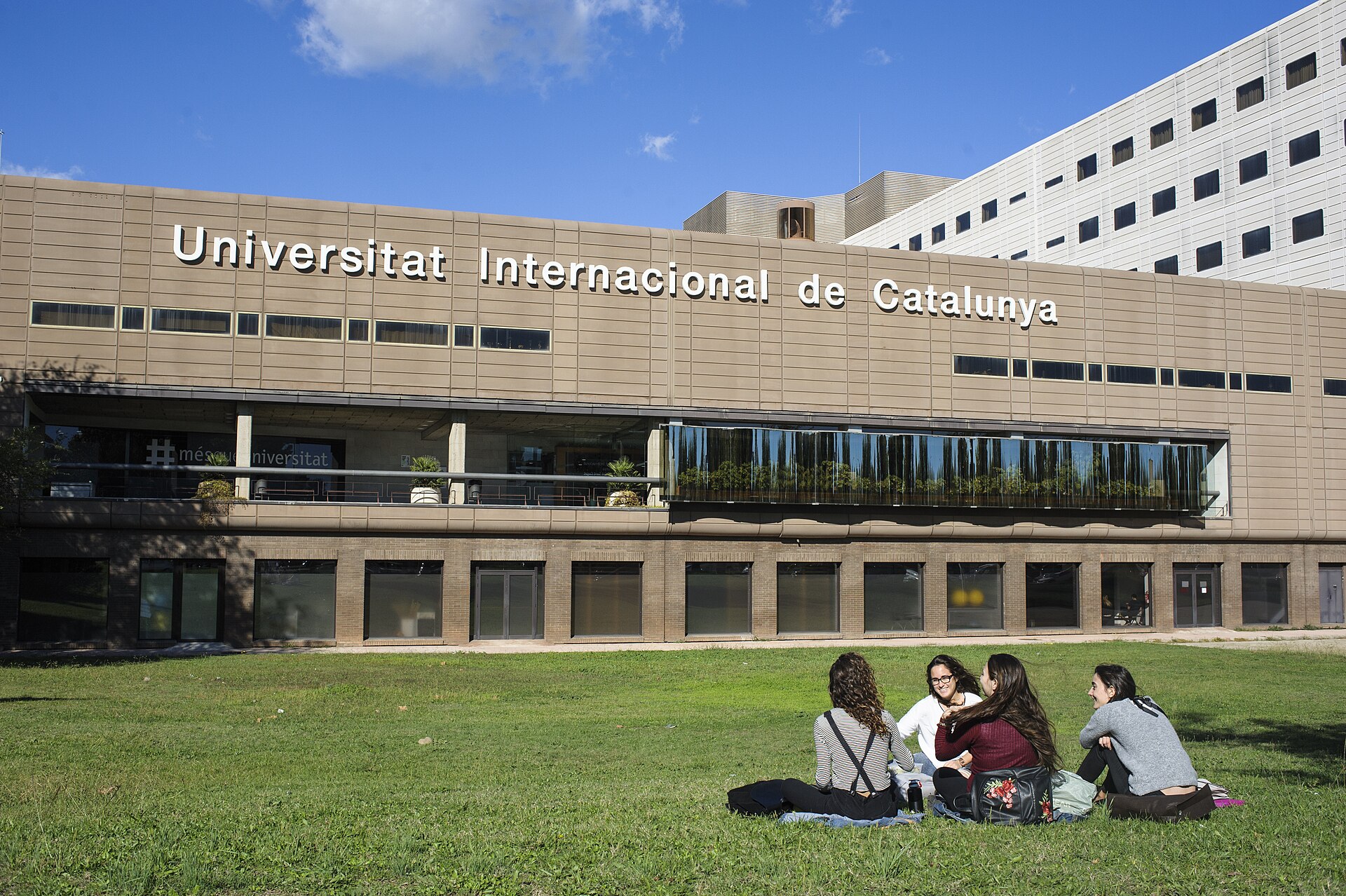
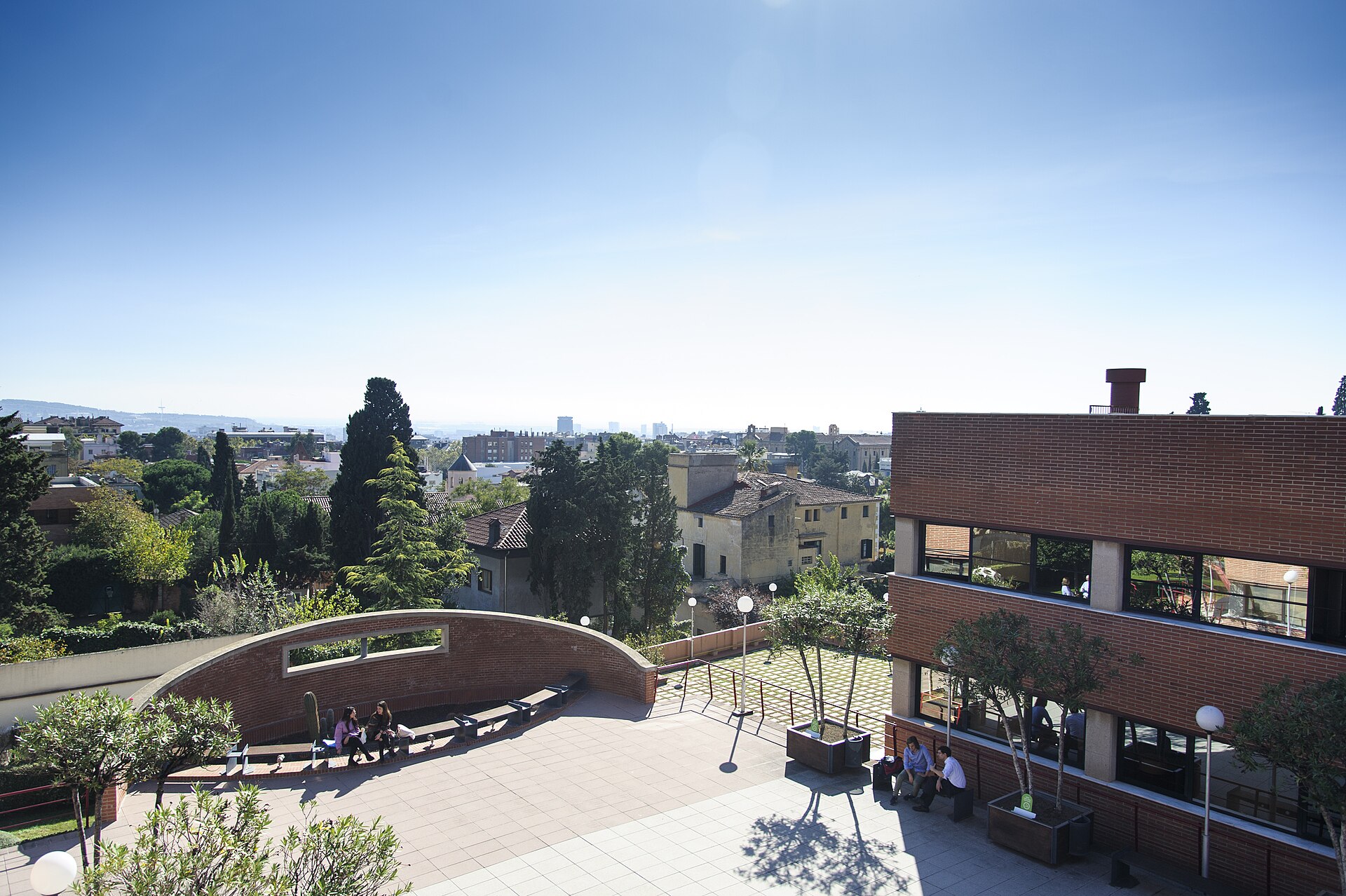
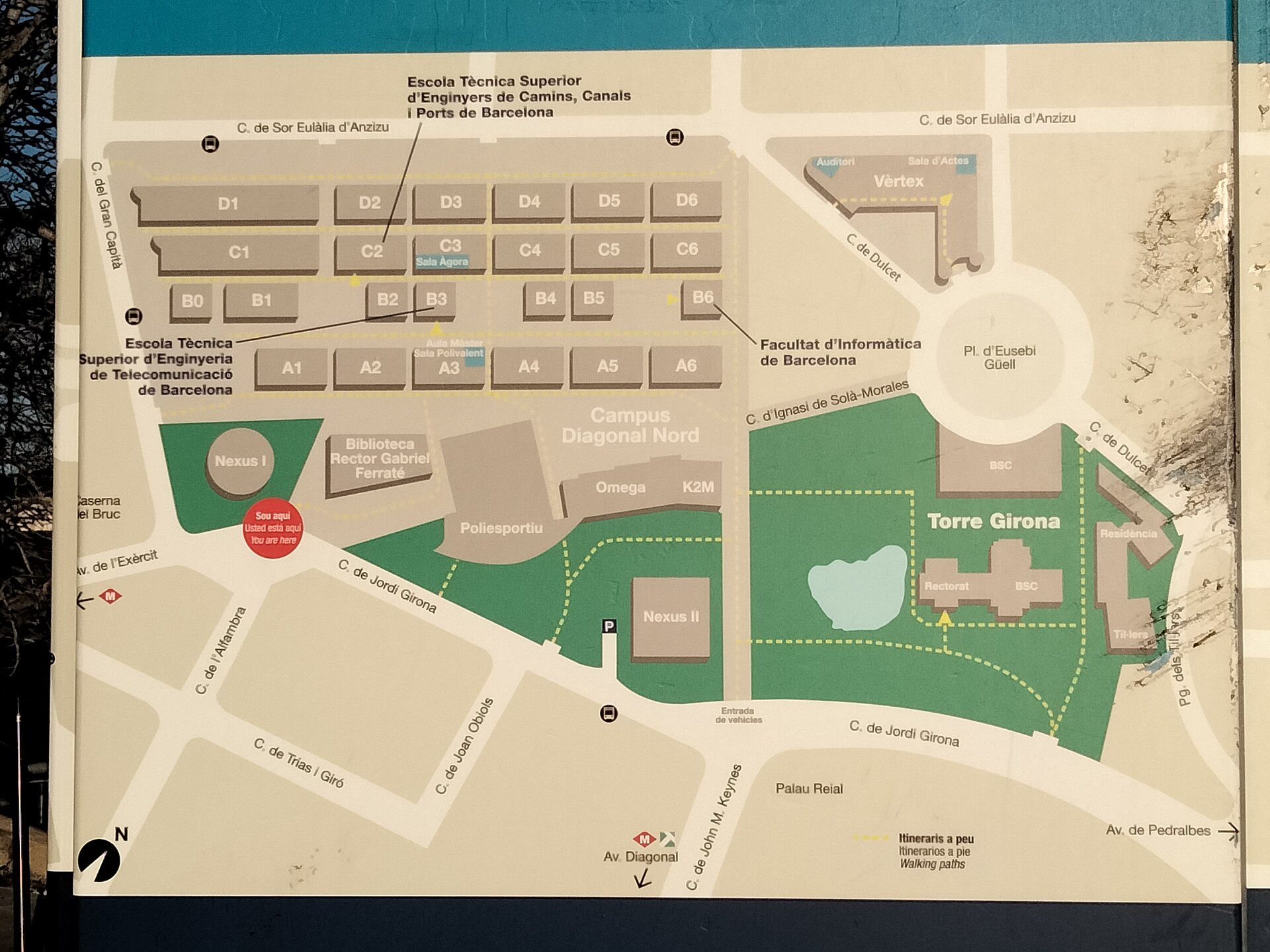
Universitat de Barcelona — campus in pictures
Real, freely-licensed photographs of the campus (via Wikimedia Commons).
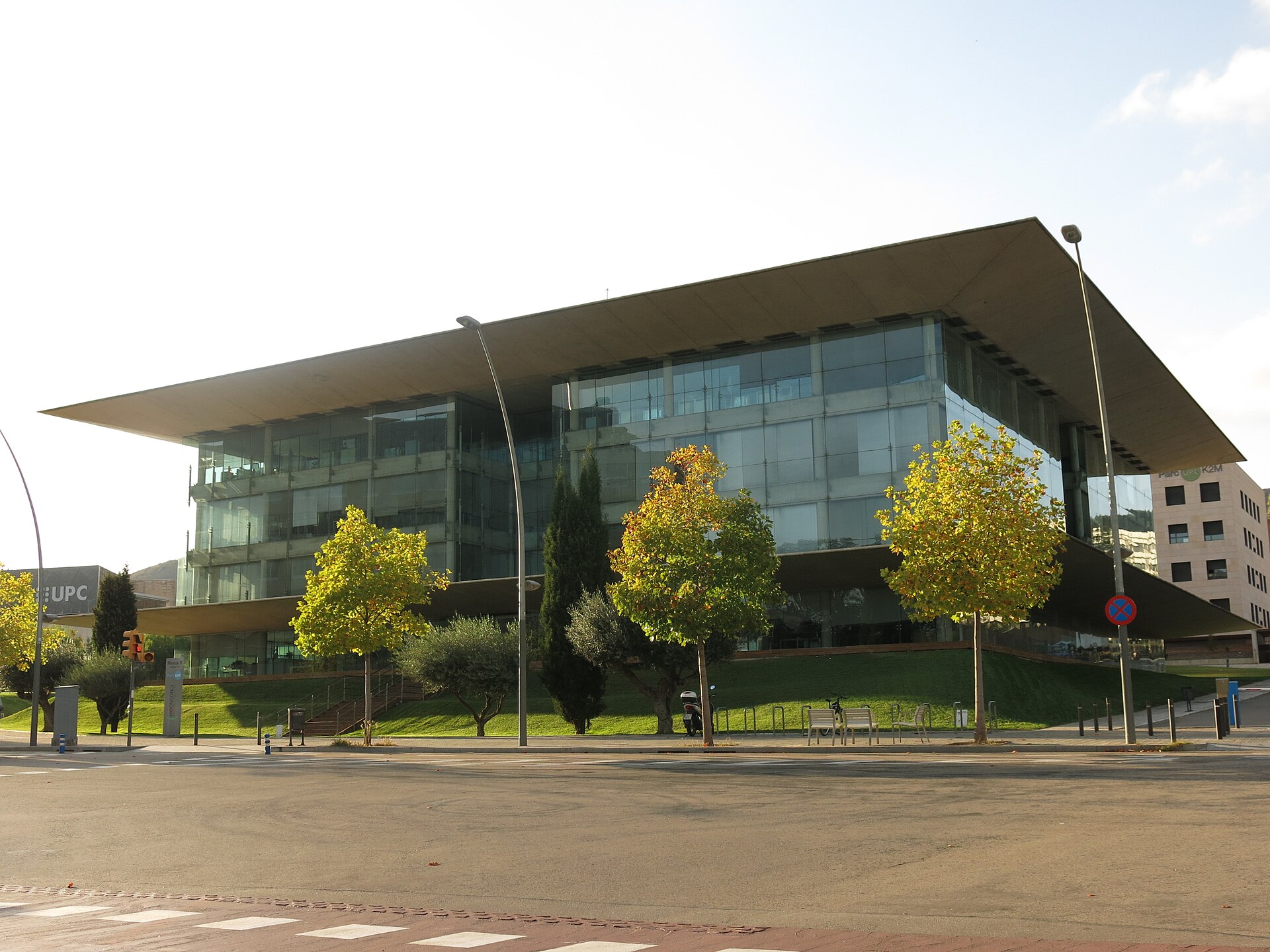
Why Choose UB — Research, City & European Prestige
The Universitat de Barcelona combines historic prestige with modern research output at one of the most affordable price points among Europe's top-100 universities. For international students willing to engage with Spanish and Catalan, it represents a rare combination of academic rigour, Mediterranean quality of life, and a globally respected degree.
Admissions Profile & Selectivity
With an overall acceptance rate of approximately 75%, UB is accessible compared to elite US or UK universities — but admission is competitive for popular programs like Medicine, Psychology, and Law, which may have lower effective entry rates. Selectivity for international applicants depends heavily on program and credential recognition.
Spain does not use SAT or ACT scores for admissions. Your IB Diploma, A-Level results, or national qualifications are the primary academic credential reviewed. For Medicine and other gated programs, the effective entry threshold is considerably higher than the university-wide rate suggests.
Quick Facts About UB
Stats
Items
What Your Application Consists Of — Key Components
UB uses a direct application process for international students — there is no Common App or UCAS equivalent. Applications are submitted online through UB's pre-enrolment system. The components below apply to non-EU international undergraduate applicants.
What UB Looks For in International Applicants
UB's evaluation is primarily academic — your grades, the rigour of your qualifications, and your track record in relevant subjects are the central criteria. For competitive programs like Medicine, Psychology, and Law, the bar is considerably higher than the university's overall acceptance rate suggests.
Application Windows & Key Deadlines
UB's academic year begins in September. International non-EU students apply during two pre-enrolment windows. The precise dates vary annually — always confirm on the official UB admissions site before applying.
Credential homologation by Spain's Ministry of Education should be initiated 6–12 months in advance of your intended start date. Verify all current deadlines on the official UB website before applying.
| Round | Opens | Closes | Decision |
|---|---|---|---|
| First Pre-Enrolment Window | Late February (approx.) | Late June (approx.) | July–August |
| Second Pre-Enrolment Window | July (approx.) | August (approx.) | August–September |
| Academic Year Begins | — | — | Mid-September |
Student Life in Barcelona
UB's student culture is energetic and international. The city hosts a thriving English-speaking expat community alongside a deep Catalan cultural identity. Students engage in over 200 university clubs and associations covering sport, music, debate, volunteering, and professional networking. Erasmus mobility is strongly embedded — UB sends and receives thousands of exchange students annually, creating a built-in international social network.
Barcelona's cost of living is lower than London, Paris, or Amsterdam, though it has risen in recent years. UB's campus residences (Colleges Majors) offer housing for a subset of students; the majority rent in the private market near campus. The city is compact and walkable, with an excellent metro network. Beach, mountains, and world-class food are all within easy reach.
Barcelona is consistently ranked among Europe's most liveable and vibrant cities — and for UB students, the city is an extension of the campus. From the Neo-Romanesque grandeur of UB's historic main building on Gran Via to the Pedralbes and Mundet campuses, the university spans four locations woven into the urban fabric.
Career Outcomes & Graduate Prospects
Barcelona has become one of Europe's leading technology and innovation hubs, home to major employers in biomedical research, fintech, design, and tourism. UB's research hospital affiliations — including Hospital Clínic de Barcelona — make it a pipeline for medical careers. The university's legal, economics, and social science faculties feed Spain's top law firms, consultancies, and public sector institutions. For graduates seeking postgraduate study, UB's doctoral programmes and European research networks open pathways to academic careers across the EU.
UB graduates benefit from strong employer recognition across Spain and a growing profile in European and international markets. The university's industry connections are particularly strong in Barcelona's booming biotech, pharma, and technology sectors.
International students should be aware that Spanish graduate employment statistics reflect a predominantly Spanish-speaking market. Fluency in Spanish is essential for most professional roles in Spain; Catalan is an advantage in the Catalan public and private sector.
Frequently Asked Questions — UB for International Students
Do I need to speak Spanish to study at UB?+
Yes — for the vast majority of undergraduate programs, which are taught in Spanish and/or Catalan. A minimum of B2-level Spanish is strongly recommended before arrival. There are some master's programs offered in English. Do not enrol expecting to study primarily in English at the undergraduate level.
Does UB accept IB Diplomas for undergraduate admission?+
Yes. UB accepts the IB Diploma. The minimum IB threshold is 30 points, though competitive programs may require stronger scores. Your IB results may need to be formally recognised or homologated by Spanish authorities before enrolment is completed.
What is credential homologation and how long does it take?+
Homologation is the official recognition of your foreign secondary qualification by Spain's Ministry of Education. For non-EU students, this is typically required before full enrolment. The process can take 3–12 months; initiate it well in advance of your intended start date.
Is Medicine hard to get into at UB?+
Yes. Medicine (Medicina) is one of UB's most competitive programs, with very limited places. Spanish domestic students compete via the PAU university entrance exam. International students with equivalent credentials are assessed on academic merit — IB scores significantly above the minimum threshold will be needed. Confirm current requirements directly with UB's admissions office.
What is the annual cost for international students?+
Total estimated annual cost is approximately USD 20,000, comprising approximately USD 6,500 in tuition fees and USD 13,000 in living costs (accommodation, food, transport, personal). This is considerably lower than equivalent-ranked universities in the US or UK.
Are there scholarships for non-EU international students?+
UB itself offers limited direct scholarships for non-EU international students. However, Erasmus+ and bilateral agreements support exchange students from partner institutions. National-level scholarships from your home country, as well as Spain's 'becas de excelencia' and La Caixa Foundation fellowships, are worth researching.
Does UB require standardised tests like the SAT or ACT?+
No. Spain does not use the SAT or ACT for university admissions. Your IB Diploma, A-Level results, or national upper-secondary qualification are the primary academic credential. Standardised tests are not part of UB's admission process.
Can I study in English at UB for my undergraduate degree?+
Very few undergraduate programs are offered fully in English. The university is actively expanding its English-taught master's portfolio, but at bachelor's level, Spanish and Catalan are the working languages. If you are not planning to learn Spanish, consider UB's English-taught postgraduate programs or look at other European institutions with broader English-medium undergraduate offerings.
ACADEMICS AT UB
Academic Expectations for International Students
UB is Spain's premier research university and a member of the League of European Research Universities. Academic standards are high, the curriculum is research-informed, and instruction is conducted in Spanish and Catalan. International students who thrive here come prepared linguistically, academically, and with the intellectual curiosity to engage with a distinctly European academic culture.
Academic Admission Profile — Key Benchmarks
UB evaluates international students primarily on the strength of their secondary qualifications. There are no SAT or ACT requirements. The benchmarks below come from the university's published facts data.
For programs like Medicine, Psychology, and Law, effective entry requirements are substantially higher than the university-wide minimums. Check program-specific requirements on the official UB website.
Standardised Test Policy — No SAT / ACT Required
International students applying with IB Diplomas, A-Levels, or other national qualifications will have those credentials formally assessed. The policy is best described as 'test optional' in the sense that no standardised admissions test is required — but this does not mean admissions are less rigorous; academic grades carry full weight.
The Universitat de Barcelona does not require or consider standardised tests such as the SAT, ACT, or AP examinations for undergraduate admissions. Spain's higher education system evaluates students on the basis of secondary school performance, national entrance exam results (for Spanish students), and credential equivalency processes for international applicants.
English-language proficiency tests (IELTS, TOEFL) are required separately for programs that specify an English requirement. Spanish language ability is the critical linguistic credential for most undergraduate programs.
Standardised Tests — Not Part of UB Admissions
Unlike US universities, UB does not factor SAT or ACT scores into its admissions decisions. There are no required admissions tests of this type. The assessment of your academic potential comes entirely from your official school record, your IB, A-Level, or equivalent qualification, and (where applicable) your Spanish language certification.
IB Diploma, A-Levels & International Qualifications — How UB Reads Them
For A-Level students, the equivalency depends on the number and level of subjects offered, and results are reviewed in the context of the intended program. Students with strong HL results in relevant subjects (e.g., Biology and Chemistry for Medicine; Mathematics for Engineering or Economics) are best positioned. IB subject choices that align with your intended UB faculty strengthen your application considerably.
UB formally accepts the IB Diploma, British A-Levels, French Baccalaureate, German Abitur, and other recognised international secondary qualifications. The minimum IB Diploma score accepted is 30 points. For more competitive programs — Medicine, Law, Psychology — successful applicants typically hold significantly stronger results.
Non-EU students may need to complete the credential homologation process through Spain's Ministry of Education. This is a formal step distinct from the UB application itself and can take months. Begin this process as early as possible.
Subject Preparation by Field of Study
Although UB does not publish rigid subject prerequisites the way UK universities do, strong performance in the following subjects at IB or A-Level significantly improves both your admission profile and your academic readiness.
English Language Requirements — Where They Apply
English proficiency tests are required specifically for English-taught programs (principally at master's level) and for certain courses with English-medium components. For the majority of UB's undergraduate programs — taught in Spanish and Catalan — the key language requirement is Spanish proficiency, not English.
If Spanish is not your first language, invest in a structured Spanish learning programme (DELE B2 target) at least 12 months before you intend to start your studies.
| Test | Minimum Score | Notes |
|---|---|---|
| IELTS | 6.0 | For English-medium programs; check if individual programs require higher |
| TOEFL iBT | 80 | For English-medium programs |
| Duolingo English Test | Not specified | Verify directly with UB — policy may vary by program |
| DELE (Spanish) | B2 recommended | Critical for most undergraduate programs; C1 for competitive programs |
| SIELE (Spanish) | B2 recommended | Accepted alternative to DELE for Spanish proficiency demonstration |
Building Your Academic Profile — Year-by-Year Plan
Preparing for UB as an international student requires a multi-year approach that combines academic excellence with serious language preparation.
Common Academic Mistakes to Avoid
- Underestimating the language barrier: most undergraduates who struggle at UB do so because of insufficient Spanish, not insufficient academic ability.
- Leaving credential homologation until the last minute — the process can take 6–12 months and delays enrolment.
- Applying to Medicine or Psychology with borderline IB scores (30–32) without researching program-specific cutoffs.
- Choosing IB or A-Level subjects that do not align with your intended UB faculty — subject mismatches can disqualify applications.
- Expecting a US-style application experience — there are no Common App essays, supplemental prompts, or early decision rounds.
- Not researching accommodation early — Barcelona's rental market is competitive and expensive; late arrivals face difficulty.
- Ignoring the Catalan dimension — Barcelona is a bilingual city, and Catalan is used in some courses and extensively in daily university life.
- Confusing UB (Universitat de Barcelona) with UAB (Universitat Autònoma de Barcelona) or UPF (Universitat Pompeu Fabra) — each is a separate institution with different programs and admissions processes.
COST & AID
What UB Really Costs for International Students
The Universitat de Barcelona offers one of Europe's best value propositions among top-200 global universities. Annual tuition for non-EU international students is approximately USD 6,500 — a fraction of the cost at comparable institutions in the US, UK, or Australia. Total annual costs including living in Barcelona are approximately USD 20,000. Financial aid for non-EU international students is limited; plan your funding strategy early.
Annual Cost Breakdown — Estimated Figures
The figures below are estimates for non-EU international students. Tuition varies slightly by faculty and program; living costs vary significantly by lifestyle and accommodation choice. All figures are approximate annual totals.
EU/EEA students pay substantially reduced tuition fees, comparable to Spanish domestic students. Non-EU fees are set at a higher rate. Confirm current fee schedules on the official UB website or with the admissions office.
| Item | Annual Est. ( U S D) | Notes |
|---|---|---|
| Tuition (non-EU international) | ~$6,500 | Varies by faculty; significantly lower for EU/EEA students |
| Cost of Living (Barcelona) | ~$13,000 | Accommodation, food, transport, personal expenses |
| Total Cost of Attendance | ~$20,000 | Estimated annual total for non-EU international students |
| Application Fee | ~$30 | One-time pre-enrolment application fee |
Financial Aid Policy for International Students
Exchange students arriving via Erasmus+ or bilateral partner agreements may receive Erasmus grants or home-institution scholarships. If you are coming as a full degree student from outside the EU, financial planning should assume full payment of tuition and living expenses. Explore scholarships from your home country's government, private foundations, and Spain's La Caixa Foundation before applying.
UB is a public university with low tuition by global standards, but it offers limited institutional financial aid for non-EU international students. The Spanish government's MEC (Ministry of Education) scholarship system is primarily available to Spanish residents and EU nationals. Non-EU international students should plan for full self-funding of tuition and living costs.
There is no published average aid percentage for non-EU international students at UB. Institutional need-based aid in the US sense is not available.
Scholarships & Funding Worth Researching
While UB does not offer a large menu of scholarships specifically for non-EU international undergraduates, several external funding routes are worth pursuing. Verify all scholarship details on official programme websites before applying.
The Affordability Reality — An Honest Assessment
That said, Barcelona has become significantly more expensive in recent years. Accommodation in particular has risen sharply. Budget carefully and do not underestimate rental costs. Students who live modestly, cook regularly, and use public transport can live comfortably on USD 1,000/month; those expecting a metropolitan social lifestyle will spend considerably more.
The Universitat de Barcelona is genuinely affordable by the standards of top-ranked global universities. At approximately USD 6,500/year in tuition, it compares favourably even to many public universities in the US, where out-of-state tuition at equivalent-ranked institutions can be USD 35,000–50,000. When combined with Barcelona's cost of living — roughly USD 1,000–1,200/month total — UB represents strong value for an internationally recognised degree.
Non-EU students do not have access to Spain's domestic student loan system. Self-funding or external scholarships are the realistic planning basis.
Steps to Fund Your UB Education — An Action Plan
Cost & Aid FAQs
How much does UB cost for non-EU international students?+
Annual tuition is approximately USD 6,500. Total annual cost of attendance including living in Barcelona is approximately USD 20,000. These are estimates — confirm current fee schedules with the UB admissions office.
Can I get financial aid from UB as an international student?+
Institutional need-based financial aid for non-EU international students is very limited. UB does not operate a need-blind or substantial aid programme for non-EU undergraduates in the way US universities do. Plan for self-funding or external scholarships.
Is the application fee refundable?+
The pre-enrolment application fee (approximately USD 30) is generally non-refundable. Confirm the current fee and refund policy on the UB admissions website.
What is the cheapest way to study at UB?+
Arriving as an Erasmus exchange student from a partner institution is typically the most affordable route — Erasmus grants subsidise costs and you benefit from your home institution's tuition. For direct-entry international students, living modestly (shared accommodation, cooking at home, public transport) keeps annual costs towards the lower end.
Are EU students charged the same as Spanish students?+
EU and EEA students typically pay fees comparable to Spanish domestic rates, which are significantly lower than non-EU international tuition. Confirm current EU student fee bands with UB directly.
APPLICATION & STATEMENT GUIDE
Applying to UB — Honest Guide for International Students
The Universitat de Barcelona does not use the Common App, UCAS, or a US-style supplemental essay process. Admission is primarily academic — your grades and qualifications are the decisive factor. This guide explains the actual application process, where personal statements and motivation letters genuinely matter, and how to present yourself compellingly to UB's faculty.
Spain falls outside the UK (UCAS) and US (Common App) systems. Do not approach this application expecting prompts like 'Why this university?' in a Common App supplement — read this guide for what the process actually looks like.
How the Application Really Works — No US-Style Essays
A personal statement or motivation letter is NOT universally required for undergraduate admission at UB. However, certain faculties — particularly in Arts, Architecture, Psychology, and some Science programs — may request a motivation letter as part of program-specific selection. Always check your specific program's requirements on the official UB website. At the postgraduate (master's and doctoral) level, a motivation letter is more commonly required and carries significant weight.
UB uses a direct pre-enrolment application system for international students. The application is administered through UB's own portal and is grades-first: your academic credentials, proof of Spanish language proficiency, and official identity documents form the core of your file.
If your program does require a motivation letter, it is an important opportunity — do not treat it as a formality. Write a specific, substantive letter that addresses your academic interests, your Spanish language preparation, and your reasons for choosing this program at UB in Barcelona specifically.
Motivation Letter — When and How It's Used
Where a motivation letter is required, UB provides the context through individual faculty pages — there are no standardised universal prompts. The following describes what effective motivation letters for UB typically address.
Writing Your Motivation Letter — Strategy & Approach
Write in the language of instruction of your program — Spanish for most undergraduate and many master's degrees, English only for English-taught programs. If your Spanish is not yet at a level where you can write a convincing academic letter, this is itself a signal to delay your application and invest more time in language preparation. A letter clearly written by someone without functional Spanish will not help a Spanish-medium application.
The motivation letter for a Spanish university is a professional, substantive document — not an introspective personal narrative in the US sense. UB faculty reading your letter are assessing academic fit and language capability, not personal growth stories. Aim for clarity, specificity, and evidence over emotional narrative.
For English-taught master's programs: an IELTS score of at least 6.0 or TOEFL 80 is required, and your written English in the motivation letter will be evaluated implicitly as well as formally.
What Matters Beyond the Letter — Portfolio, Interview & Selection
Some UB programs include additional selection elements beyond grades and a motivation letter. These vary by faculty.
What to Write About — Choosing the Right Focus
The most effective motivation letters for UB are specific, academic, and demonstrate genuine engagement with the institution. Admissions readers can immediately distinguish a letter that has been researched from one that is generic.
Common Application Mistakes to Avoid at UB
- Writing your motivation letter in English for a Spanish-medium program — submit in the language of instruction.
- Using a generic 'Why this university' essay that could apply to any European institution — UB readers notice and discount these.
- Applying to a competitive program (Medicine, Psychology, Law) without researching program-specific entry thresholds and selection procedures.
- Submitting your application before initiating credential homologation — the two processes must run in parallel.
- Omitting your Spanish language proficiency evidence when it's directly relevant to your academic readiness.
- For doctoral applications: submitting without identifying a supervisor first — cold-entry doctoral applications rarely succeed at European research universities.
- Expecting an Early Decision / Early Action dynamic — UB uses pre-enrolment windows, not rounds with strategic timing implications in the same sense.
- Providing translations of documents that are not notarised or officially certified — UB requires officially certified translations for credential recognition.
Application & Essay FAQs
Does UB require a personal statement or essays?+
Not universally. A motivation letter is required for some (not all) programs — particularly in Arts, selective Sciences, and most postgraduate programs. Check your specific program's requirements on the UB website. Do not assume either way.
Should I write my motivation letter in Spanish or English?+
Write in the language of instruction of your program. For Spanish or Catalan-medium programs, write in Spanish. For English-medium programs (primarily master's level), write in English. Writing in English for a Spanish-medium program signals linguistic unreadiness.
How long should a motivation letter for UB be?+
Typically one to two pages (400–800 words) for most undergraduate and master's programs. A doctoral research proposal may be longer (3–5 pages). Conciseness and specificity are valued over length.
Does UB conduct interviews as part of admissions?+
Some competitive programs do conduct interviews, generally in Spanish or Catalan. This varies by faculty and year. Check program-specific requirements and be prepared to discuss your academic background and language preparation in Spanish.
Is there an equivalent of Early Decision at UB?+
No. UB uses pre-enrolment windows (typically two per year for non-EU students), but there is no binding early decision mechanism. Applying in the first window is generally advisable as popular programs fill up.
Can I apply to multiple programs at UB simultaneously?+
Check UB's pre-enrolment system rules — typically you can indicate program preferences. Research specific faculty requirements and confirm the multi-program application rules for non-EU international students directly on the UB website.
What if I am not admitted to my first-choice program?+
Places in oversubscribed programs may not be available. Alternatives include applying to the second pre-enrolment window, exploring related programs at UB or other Catalan universities (UAB, UPF, UPC), or using the time to strengthen your credentials and Spanish proficiency for the following year.
Courses — schools, degrees & intake
64 degrees across 17 groupings.
Faculty of Biology · 7 degrees
Biology
Biochemistry and Molecular Biology
Biotechnology
Environmental Biology
Biomedicine
Genetics
Microbiology
Faculty of Chemistry · 2 degrees
Chemistry
Materials Science and Engineering
Faculty of Dentistry · 1 degrees
Dentistry
Faculty of Earth Sciences · 2 degrees
Geology
Meteorology
Faculty of Economics and Business · 4 degrees
Economics
Business Administration and Management
Statistics
Actuarial and Financial Sciences
Faculty of Education · 4 degrees
Early Childhood Education
Primary Education
Pedagogy
Social Education
Faculty of Fine Arts · 3 degrees
Fine Arts
Conservation and Restoration of Cultural Heritage
Design
Faculty of Geography and History · 5 degrees
History
Art History
Geography
Archaeology
Social and Cultural Anthropology
Faculty of Law · 5 degrees
Law
Political Science and Public Administration
Criminology
Labour Relations
Social Work
Faculty of Information and Audiovisual Media · 3 degrees
Information and Documentation
Journalism
Audiovisual Communication
Faculty of Mathematics and Computer Sciences · 3 degrees
Mathematics
Computer Engineering
Data Engineering
Faculty of Medicine and Health Sciences · 6 degrees
Medicine
Nursing
Physiotherapy
Occupational Therapy
Podiatry
Optics and Optometry
Faculty of Pharmacy and Food Sciences · 3 degrees
Pharmacy
Food Science and Technology
Human Nutrition and Dietetics
Faculty of Philology and Communication · 10 degrees
Catalan and Occitan Studies
Hispanic Studies
English Studies
French Studies
Classical Philology
Linguistics
Italian Studies
Arabic and Islamic Studies
East Asian Studies
Hebrew and Aramaic Studies
Faculty of Philosophy · 1 degrees
Philosophy
Faculty of Physics · 2 degrees
Physics
Electronic Engineering for Telecommunications
Faculty of Psychology · 3 degrees
Psychology
Speech Therapy
Cognitive Science and Language
Want your real chances at Universitat de Barcelona?
Create a free TYCHR account for your personalised admit-chance, a shortlist you can track, exact entry requirements, and essay + counselling help.