Universitat Autònoma de Barcelona
Bellaterra (Barcelona), Spain · Suburban
BARCELONA, SPAIN
Universitat Autònoma de Barcelona — Admissions Guide for International Students
Ranked #195 globally by QS and second nationally, UAB is Spain's leading research university outside Madrid — a self-contained campus in Bellaterra, 25 minutes by commuter rail from central Barcelona. If you are drawn to biosciences, veterinary medicine, psychology, or translation studies in one of Europe's most liveable cities, UAB offers world-class faculty, affordable public tuition, and a vibrant international community at scale.
With 37,000 students, a 60% acceptance rate, and strong English-taught pathways, UAB is genuinely accessible — but competitive programmes in Medicine, Veterinary Science, Psychology, and Biotechnology require strong academic credentials. This guide walks you through how the Spanish university admissions system works, what UAB looks for, and how to plan your application from outside Spain.
Campus
Universitat Autònoma de Barcelona — campus in pictures
Real, freely-licensed photographs of the campus (via Wikimedia Commons).
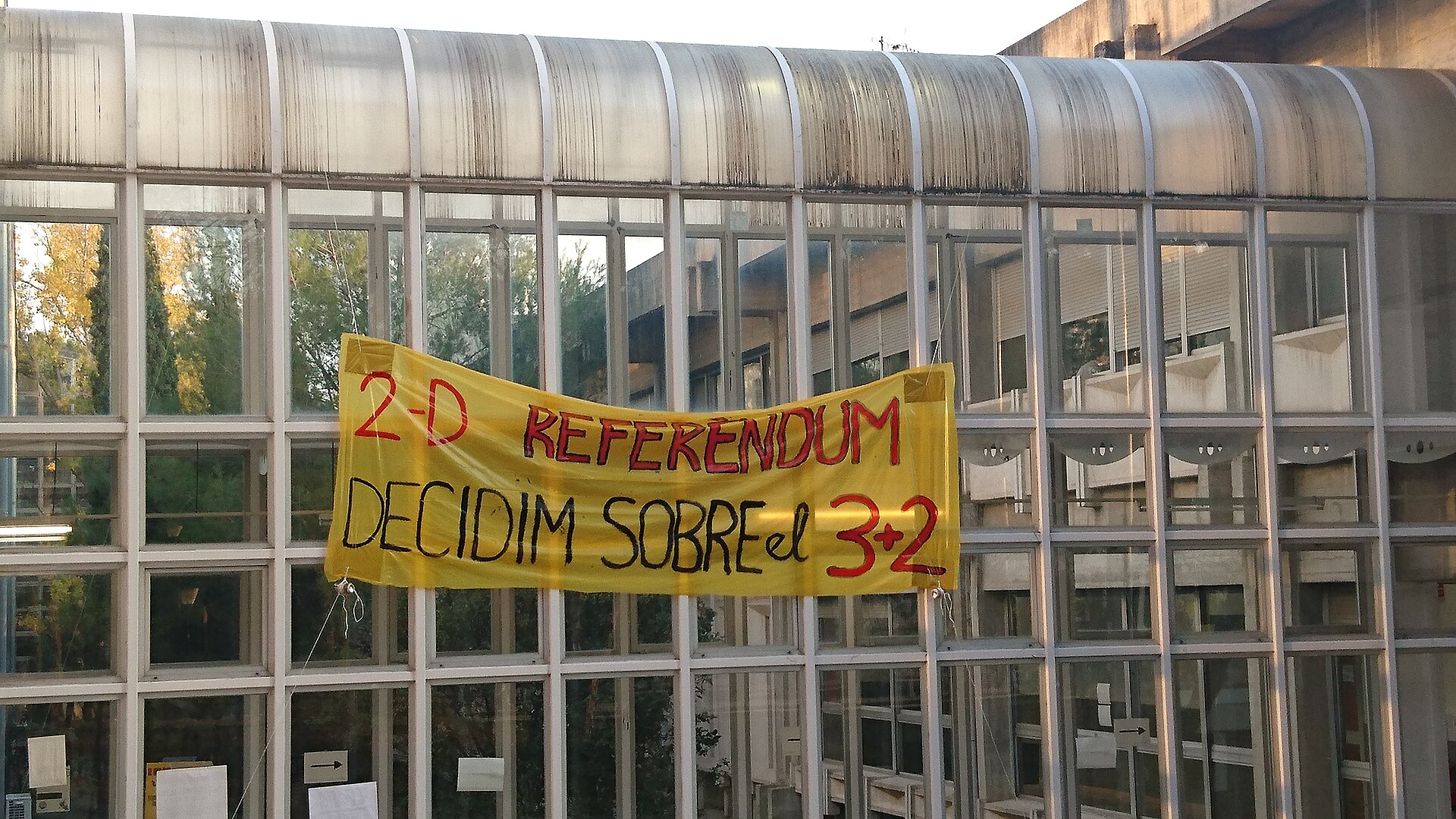
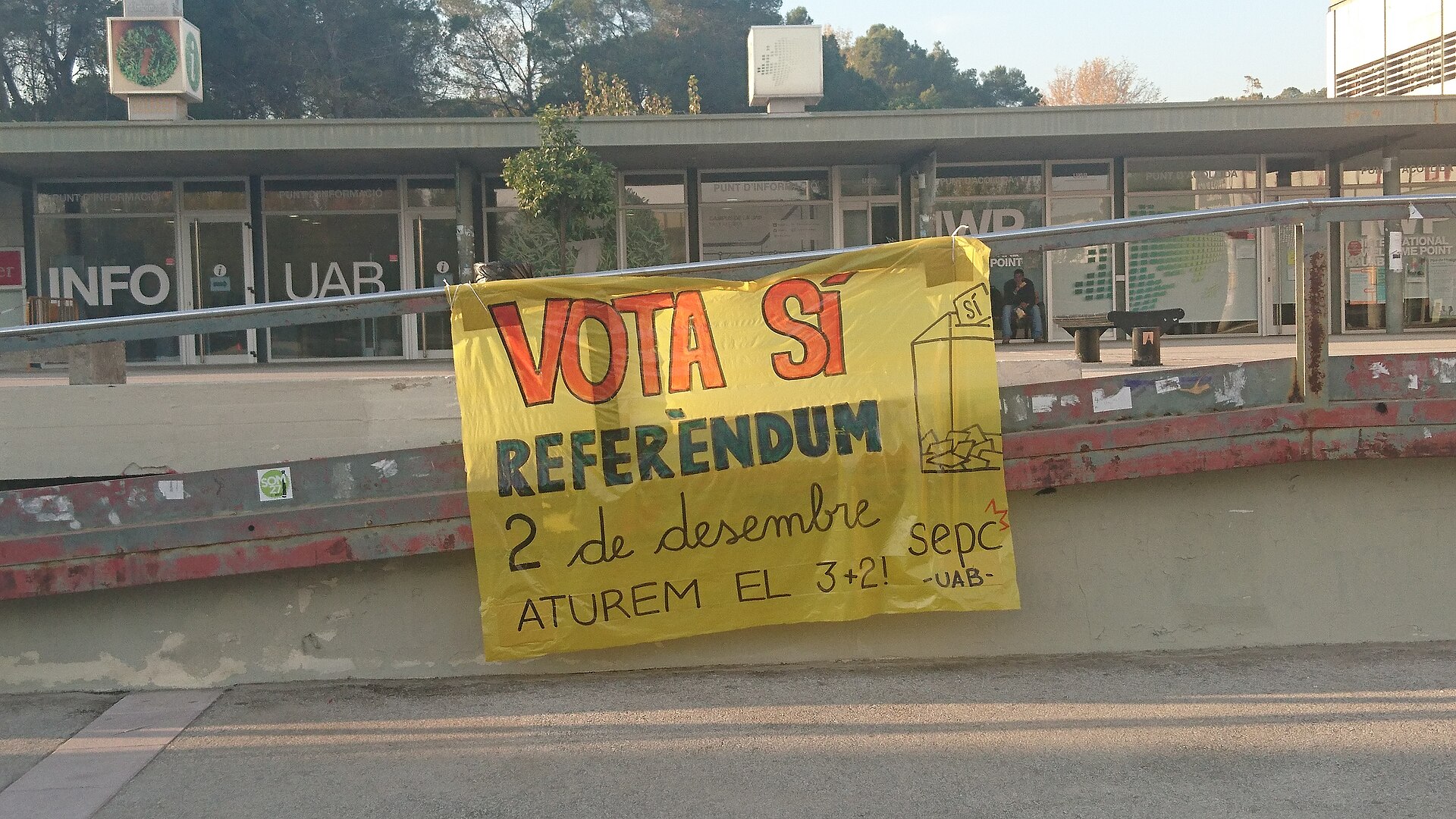
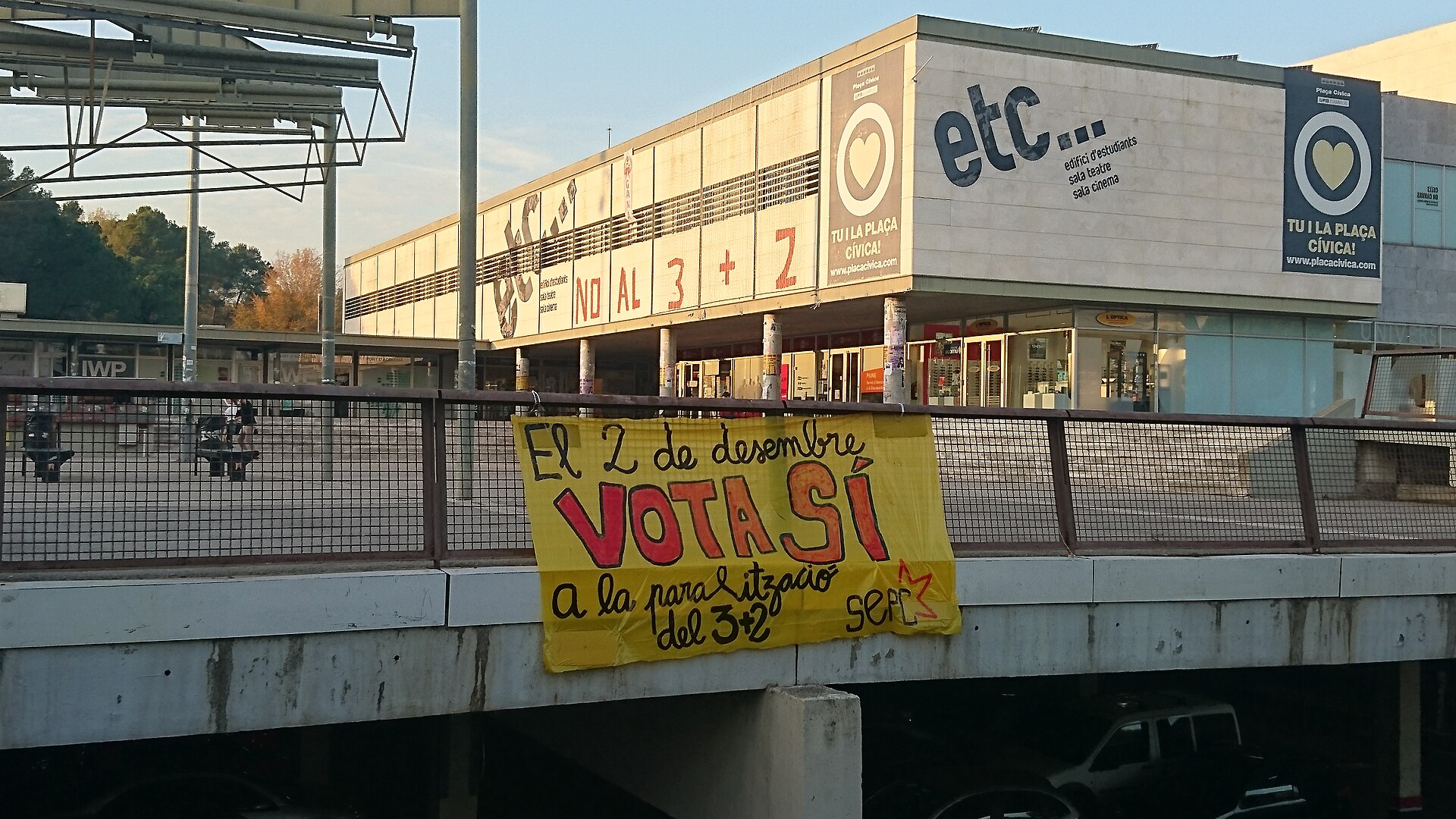
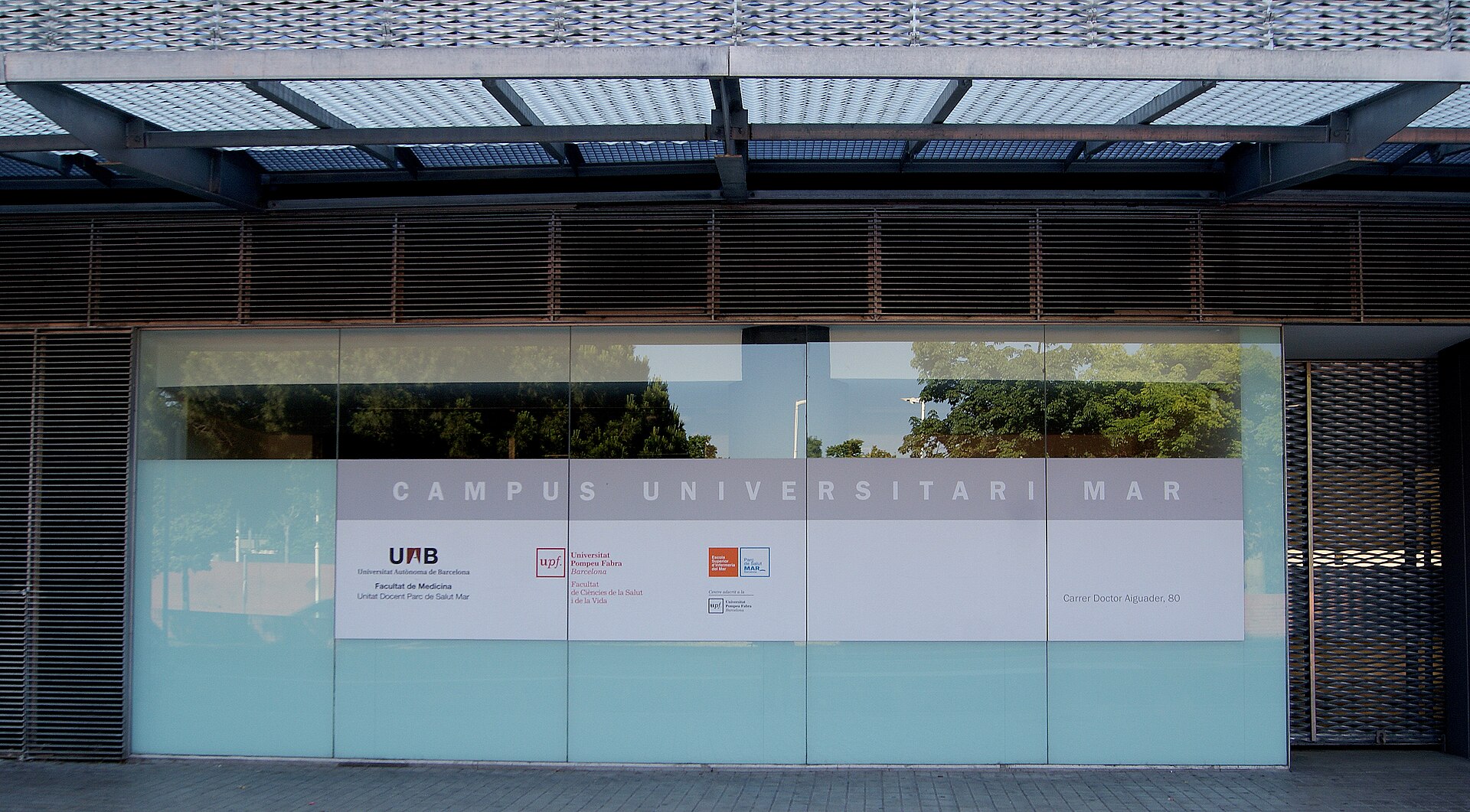
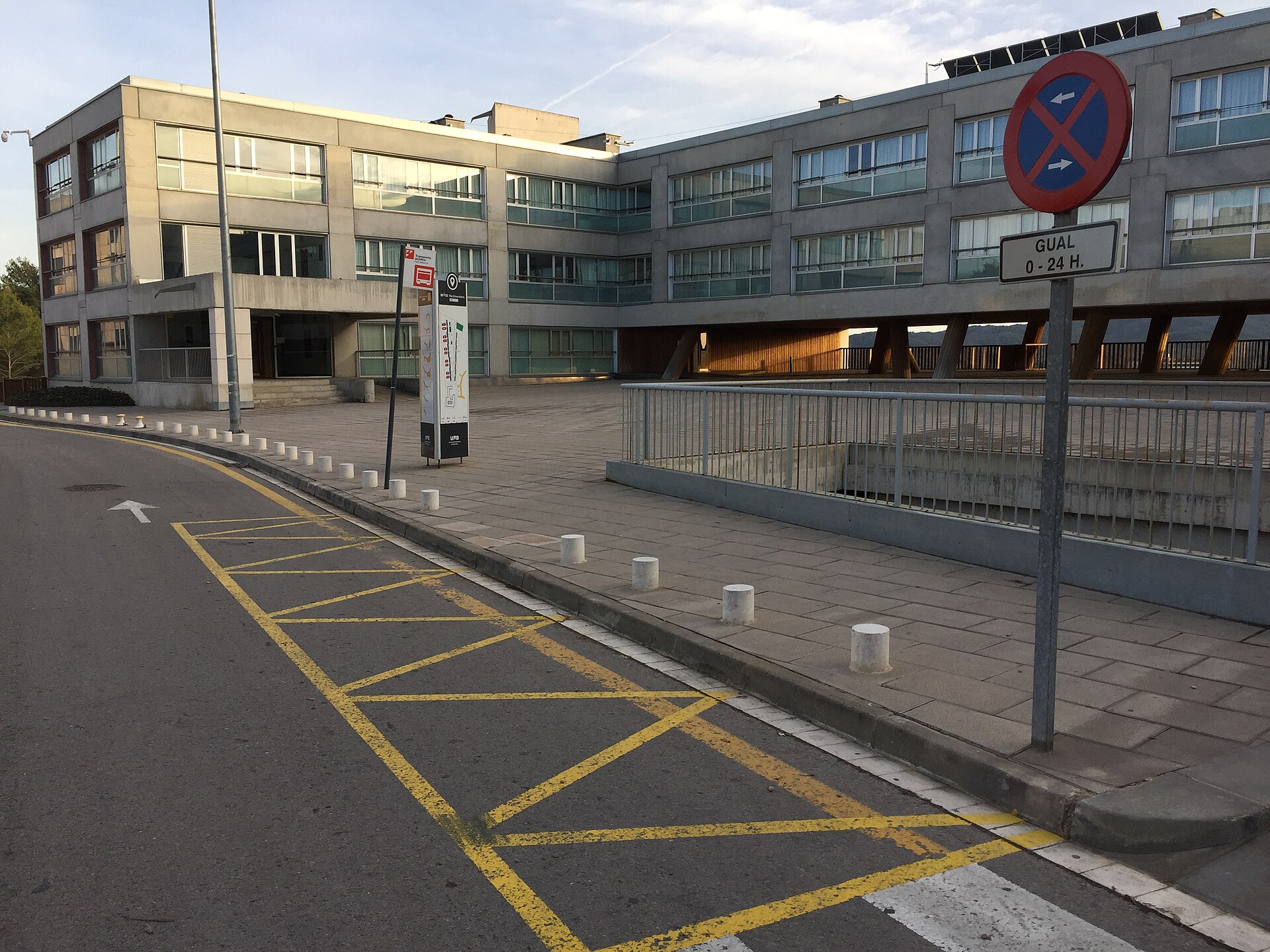
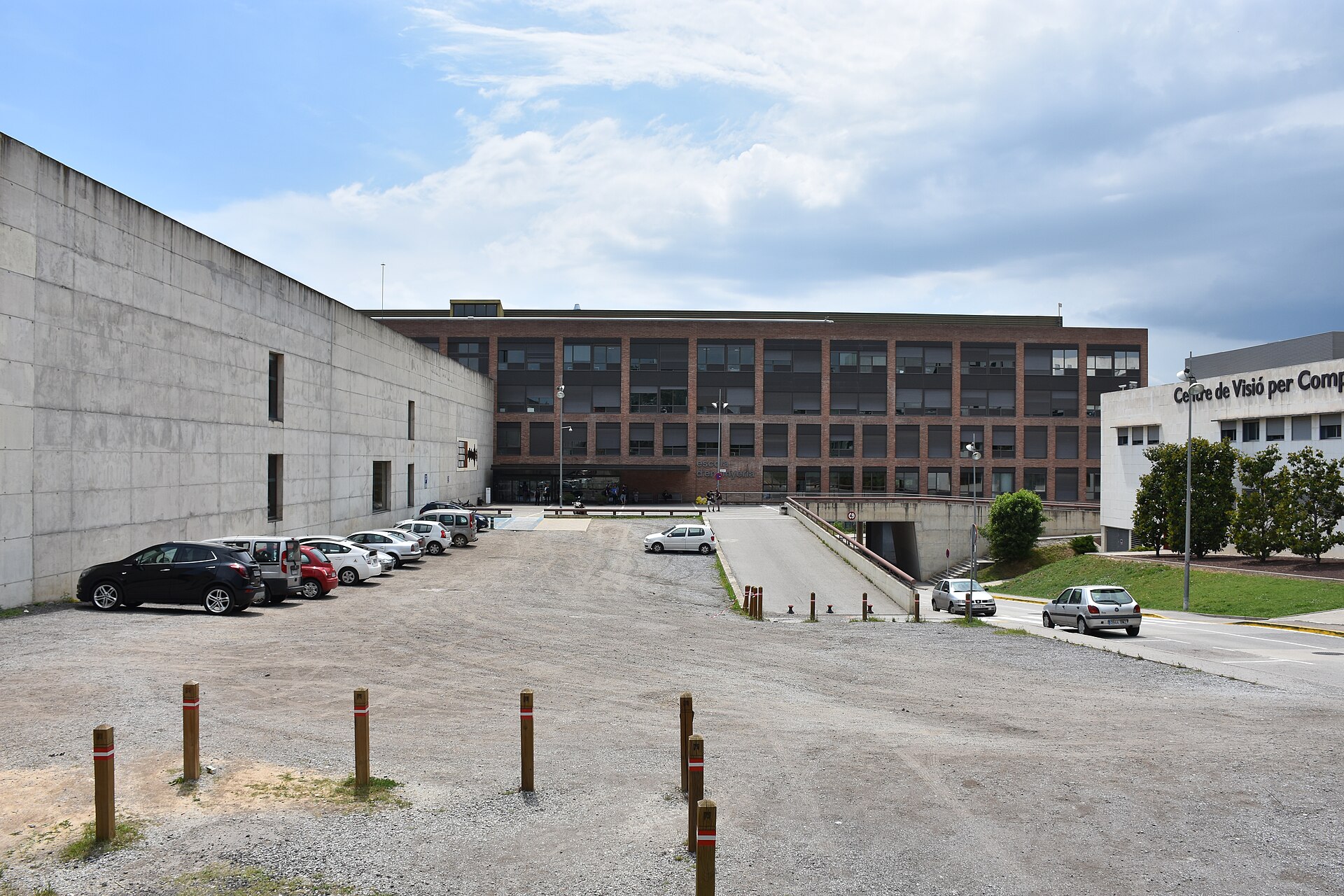
Why Choose UAB — Research Excellence in the Heart of Europe
UAB is a young public university (founded 1968) that has built an outsized research reputation. For international students, it combines rigorous academics, a genuine campus lifestyle, low public tuition, and direct access to Barcelona's cosmopolitan culture.
SELECTIVITY
UAB Acceptance Rate & Admissions Profile
UAB's overall acceptance rate across all programmes is approximately 60% — but this headline figure is misleading for competitive subjects. Entry to Medicine, Veterinary Medicine, Psychology, and Biotechnology is highly selective, with places allocated by the Spanish PAU/EBAU score (grades + university entrance exam) and IB equivalent. International students with strong IB or A-Level credentials are assessed on a comparative basis.
Acceptance rates for the most competitive programmes — Medicine, Veterinary Medicine, and Psychology — are significantly lower than the university average. IB students should aim well above the 31-point minimum for these courses. Non-competitive programmes in arts, humanities, and social sciences are genuinely open-entry by Spanish standards.
AT A GLANCE
UAB Quick Facts
APPLICATION COMPONENTS
What Your UAB Application Consists Of
UAB does not use the Common App or UCAS. The Spanish university system uses a credential verification route managed through UNED (Spain's national distance university) and pre-enrolment via the Catalan Government. Here is what you will need.
ADMISSIONS PHILOSOPHY
What UAB Looks For in International Applicants
As a Spanish public university, UAB does not conduct holistic admissions reviews. Undergraduate places — especially in competitive programmes — are allocated almost entirely on academic performance. Your UNED-verified grade point average and subject-specific results determine your ranking. There are no personal essays, extracurriculars scores, or teacher recommendations in the undergraduate selection process.
That said, academic strength matters enormously at the programme level. Veterinary Medicine is one of Spain's most competitive degrees; Psychology and Medicine close behind. For IB students, aiming for 36+ points with strong Higher Levels in relevant subjects (Biology, Chemistry for health sciences; Mathematics for engineering) is advisable for these programmes. For programmes in arts, humanities, social sciences, and most of engineering, an IB score of 31+ with solid subject spread is generally competitive.
KEY DATES
UAB Application Deadlines & Rounds
UAB follows the Catalan and Spanish university academic calendar. Pre-enrolment and UNED verification have specific windows — missing them means waiting until the next academic year. The dates below are indicative; always verify the exact dates for your intake year on the official UAB and UNED ASISS websites.
Always verify exact dates at www.uab.cat and http://unedasiss.uned.es. Dates shift year to year.
| Stage | Period | Notes |
|---|---|---|
| UNED ASISS credential verification | January – June (approx.) | Apply as early as possible; processing takes several weeks |
| Catalan pre-enrolment (1st period) | June (approx.) | Main intake — most places allocated here |
| Catalan pre-enrolment (2nd period) | July – August (approx.) | Places remaining after 1st period |
| Student visa application | At least 2 months before October start | Apply at Spanish consulate in your home country |
| Formal enrolment at UAB | September – October | After receiving place confirmation |
CAMPUS & CITY
Student Life at UAB
The UAB campus at Bellaterra is one of the few genuine residential university campuses in Spain — 260 hectares of green space housing faculties, student residences, sports facilities, cafeterias, and cultural spaces all in one place. Unlike many European universities dispersed across a city, UAB has the feel of a true campus university.
Barcelona itself needs little introduction. The city consistently ranks among Europe's top student destinations: vibrant cultural life, Mediterranean beaches, a thriving tech and startup scene, world-class gastronomy, and a uniquely bilingual (Spanish/Catalan) urban culture. The FGC commuter rail connects Bellaterra to central Barcelona in 25 minutes, making the campus-city balance genuinely seamless.
GRADUATE OUTCOMES
Career Outcomes for UAB Graduates
UAB's graduate employment rate of 85% within a year of graduation reflects strong professional placement across its signature disciplines. The university's 10,500 professional internship agreements connect students to industry, research institutions, and public services throughout Spain and internationally.
For international students, UAB offers a launchpad into Spanish and European career markets. Graduates in biosciences and health sciences find strong demand from the Barcelona biotech cluster (one of Europe's largest), pharmaceutical companies, and the Spanish national health system. Psychology graduates enter a growing sector for mental health professionals. Translators and interpreters from UAB — which runs one of the world's most respected translation programmes — are sought by EU institutions, international organisations, and multinational firms.
Non-EU graduates need to navigate Spanish work visa requirements after graduation. UAB's careers service and ISS provide guidance; EU graduates are fully unrestricted in the Spanish and European labour market.
FREQUENTLY ASKED QUESTIONS
International Students at UAB — FAQs
Do I need to speak Spanish or Catalan to study at UAB?+
Most UAB degrees are taught in Catalan and/or Spanish. However, UAB offers over 300 subjects in English and specific English-medium bachelor's and master's programmes. If you apply to an English-taught programme, you need IELTS 6.0 / TOEFL 80; if applying to a Spanish/Catalan-medium programme, proficiency in Spanish is expected. The university also offers Spanish and Catalan language courses to help international students integrate.
Is UAB's 60% acceptance rate representative for competitive programmes?+
No. The 60% rate is a university-wide average across all faculties. Programmes such as Medicine, Veterinary Medicine, and Psychology admit a much smaller fraction of applicants. These are allocated by merit score (PAU/EBAU equivalent for internationals) and places are genuinely limited. Always check the specific programme's minimum access grade (nota de tall) for the relevant year.
How do non-EU students apply to UAB?+
Non-EU students must first have their qualifications verified by UNED (Spain's national distance university) through the ASISS platform at http://unedasiss.uned.es. Once UNED confirms eligibility, you apply for pre-enrolment through the Catalan Government's University Admissions Office. A student visa is then required and should be obtained from the Spanish consulate in your country at least two months before the academic year starts.
Does UAB charge higher tuition for international students?+
EU/EEA students and students from countries with bilateral agreements pay the same subsidised public tuition as Spanish students (approximately $4,500 USD per year). Non-EU international students typically pay higher tuition, though UAB remains significantly cheaper than comparable universities in English-speaking countries. Confirm exact non-EU rates with UAB's academic management office.
Is there financial aid or scholarships for international students?+
UAB offers grants, scholarships, and mobility funding through its Financial Aids portal. International mobility scholarships (Erasmus+, bilateral exchange grants) are available for students participating in exchange. Direct-entry international students should explore Spanish government grants, Erasmus Mundus scholarships for postgraduate programmes, and the UAB scholarship office. See www.uab.cat/web/financial-aids-grants-and-calls-1345808144576.html.
Can I live on campus?+
Yes. UAB operates student residences (col·legis majors) directly on the Bellaterra campus. Demand is high and places limited; apply as early as possible after receiving your admission offer. Alternatively, many students rent in nearby towns (Cerdanyola del Vallès, Sant Cugat) and commute by FGC rail.
Does UAB offer joint or double degrees with other European universities?+
Yes. UAB is a signatory to several Erasmus Mundus Joint Master's programmes, which are funded European consortia degrees spanning two or more universities. Undergraduate students can also participate in Erasmus+ exchanges at hundreds of partner universities across Europe.
What IB score is competitive for Medicine or Veterinary Science?+
The IB minimum for university access is 31 points, but competitive programmes such as Medicine and Veterinary Medicine require significantly higher scores. IB equivalence to Spanish PAU scores is calculated by UNED; students with 38+ points and strong HL results in Biology and Chemistry are in the competitive range. These requirements change each year — check the current nota de tall for the specific programme.
ACADEMICS
Academic Expectations for International Students at UAB
UAB is a research-intensive public university. Academic standards are rigorous and grading is typically on a Spanish 0–10 scale. Understanding how your international qualifications translate into Spanish entry requirements is the first and most important step.
Unlike US universities where holistic factors shape admissions, UAB undergraduate entry is almost entirely grade-based. Your credential — IB Diploma, A-Levels, or national equivalent — must be verified through UNED, which converts it to a 0–14 Spanish access score. Programme places are then allocated competitively by this score. Graduate programmes often add language requirements, portfolio submissions, or interviews depending on the faculty.
ACADEMIC BENCHMARKS
What Academic Profile Competitive UAB Applicants Hold
Spain's university access score (PAU/EBAU) runs from 0 to 14 — a 10-point base from grades plus up to 4 extra points from specific subject exams. UNED converts international qualifications to this scale. For highly competitive programmes, even small differences in this score determine who gets a place.
STANDARDISED TESTS
UAB Test Policy — Test Blind
UAB does not require or consider SAT or ACT scores. The admissions process for undergraduate entry is based entirely on your secondary school qualification and the UNED credential verification process. SAT/ACT results play no role in Spanish university admissions.
For graduate and doctoral programmes, some disciplines may require GRE/GMAT — always check with the specific programme. English language tests (IELTS/TOEFL) are required for English-medium programmes only.
TESTS THAT MATTER
Which Standardised Tests Matter for UAB
Unlike the US admissions system, UAB's undergraduate admissions is test-blind for SAT and ACT. The tests that matter are:
IB & A-LEVELS
How UAB Reads IB, A-Level, and International Qualifications
UAB recognises a wide range of international qualifications, all processed through UNED's ASISS (Acceso y Admisión al Sistema de Información de Selectividad para Estudiantes de Secundaria) platform.
The IB Diploma is one of the most commonly recognised qualifications. UNED converts your total IB score to a Spanish access score. A score of 31 clears the minimum threshold; however, for competitive programmes, a higher IB result translates directly to a better access score and thus a greater chance of securing a place in limited-capacity degrees. Higher Level subjects in relevant fields (HL Biology and Chemistry for Medicine/Vet; HL Mathematics for engineering) carry weight in the conversion.
SUBJECT PREPARATION
Subject Rigour Expected by UAB's Key Programmes
While UAB does not score extracurriculars, the subjects you take and the grades you earn in them directly affect your UNED score and your competitiveness. Choose your IB/A-Level subjects strategically.
ENGLISH REQUIREMENTS
English Language Requirements for UAB
English language tests are required only for English-medium programmes. Spanish/Catalan-medium programmes require demonstrated Spanish proficiency (which is typically verified through your educational background, not a formal test at admission stage).
| Test | Minimum | Notes |
|---|---|---|
| IELTS Academic | 6.0 overall | No subscore minimum published; check individual programme |
| TOEFL iBT | 80 | For English-taught degree programmes |
| Duolingo English Test | Not published | Verify with UAB admissions directly |
| Exemption | Subject to review | Students from English-medium secondary schools may be exempt — confirm with the programme |
YEAR-BY-YEAR PLAN
Building a Competitive Profile for UAB — Grade 9 to 12
In the Spanish system, the grade that matters is your final credential score. But strategic subject choices and consistent academic performance from early in secondary school form the foundation.
COMMON PITFALLS
Academic Mistakes International Applicants Make
- Starting the UNED verification too late — processing takes months and missing the window means waiting a full year.
- Choosing IB subjects without considering UNED's phase-subject bonus for competitive programmes.
- Assuming the 60% acceptance rate means any programme is easy to enter — Medicine, Vet Science, and Psychology are among Spain's most competitive degrees.
- Applying for a Spanish/Catalan-taught programme without sufficient Spanish language skills — failing language-medium courses damages your academic record.
- Not researching the nota de tall (historical minimum access score) for your specific programme before applying.
- Overlooking English-taught options if your Spanish is not yet strong — UAB offers substantial English-medium provision as an entry pathway.
- Underestimating the Catalan dimension — while Spanish is sufficient for most purposes, Catalan is the primary language of instruction in many faculties and immersion in Catalan culture enriches the campus experience.
COST & AID
The Real Cost of Studying at UAB for International Students
UAB is one of the most affordable university experiences among globally ranked institutions — but only if you understand how Spanish public tuition pricing works and plan for Barcelona's cost of living.
As a Spanish public university, UAB's tuition is heavily subsidised. EU/EEA students and students from bilateral-agreement countries pay approximately $4,500 USD per year. Non-EU international students pay higher rates set by the Catalan government, but still far below equivalent-ranked UK or US universities. The main cost driver for international students is Barcelona's living costs, which — while high by Spanish standards — remain moderate by global city standards.
ANNUAL COST ESTIMATE
UAB Cost of Attendance — Annual Estimates
All figures are annual estimates in USD. Tuition is the university figure from our data; living costs reflect Barcelona/campus costs and are indicative.
Non-EU international students pay higher tuition than the EU/subsidised rate. Confirm current non-EU tuition directly with UAB's academic management office before budgeting.
| Item | Annual Usd | Notes |
|---|---|---|
| Tuition (approx. subsidised / EU rate) | ~$4,500 | Public university rate; non-EU rates higher — verify with UAB |
| Campus/city accommodation | ~$7,000–9,000 | Campus residences or shared flat near Bellaterra |
| Food & daily expenses | ~$3,000–4,000 | Meals on campus + groceries; Barcelona has affordable options |
| Transport | ~$600–900 | FGC rail pass (Bellaterra–Barcelona) + local transit |
| Books & materials | ~$300–500 | Varies by programme; biosciences/medicine may be higher |
| Application fee | ~$50 | One-time fee; UNED verification has separate fees |
| Total estimated cost of attendance | ~$18,000 | Per UAB data; actual varies by lifestyle and programme |
FINANCIAL AID
Financial Aid for International Students at UAB
As a Spanish public university, UAB's financial aid landscape is different from US need-blind/need-aware models. Aid for international students is available but largely comes through specific grant schemes and mobility programmes rather than institutionally determined financial aid packages.
Approximately 20% of students receive some form of financial support (avgAidPct: 20%). For international students, the most significant sources are: Spanish government MEC grants (primarily for EU residents with Spanish study ties), Erasmus+ mobility funding for exchange students, Erasmus Mundus scholarships for specific joint postgraduate degrees, and bilateral government scholarships from students' home countries. UAB administers its own limited scholarship fund; direct-entry international students should explore all avenues early.
SCHOLARSHIPS
Scholarships and Funding Available to UAB International Students
Named, sourced scholarship options for UAB international students. Always verify current availability and deadlines on the official websites listed below.
AFFORDABILITY REALITY
Putting UAB's Costs in Perspective
For a QS #195-ranked university in one of Europe's most desirable cities, UAB represents exceptional value. EU/EEA students paying the subsidised tuition of approximately $4,500 per year with a total cost of attendance around $18,000 are receiving a world-class education at a fraction of what comparable-ranked UK or Australian institutions charge.
Non-EU students pay more, but even at non-EU rates UAB's total cost is typically below €15,000–20,000 per year — compare this with $60,000+ at US private universities or £35,000+ at leading UK institutions for international students. Barcelona's cost of living, while the highest of Spain's major cities, remains below London, Amsterdam, or Zurich. Students who live on campus, use the FGC student rail pass, and cook at home can manage comfortably within the $18,000 estimate.
The biggest financial unknown is non-EU tuition. Catalan public tuition fees for non-EU students are set annually by regional government. Always confirm the exact current figure directly with UAB before finalising your financial plan.
HOW TO FUND YOUR DEGREE
Steps to Secure Funding for UAB
COST FAQs
Cost & Aid FAQs for UAB International Students
Do EU students really pay the same tuition as Spanish students?+
Yes. EU/EEA citizens and students from bilateral-agreement countries are entitled to the same subsidised public tuition as Spanish nationals, approximately $4,500 USD per year (exact figure varies by programme and year). This is one of the most significant financial advantages of studying in Spain as an EU citizen.
How much do non-EU students pay?+
Non-EU international students pay higher tuition fees set by the Catalan regional government. The exact amount varies by programme and academic year. Consult UAB's academic management office directly for the current non-EU fee schedule before budgeting.
Is Barcelona expensive to live in?+
By Spanish standards, yes — Barcelona is the most expensive city in Spain. However, by international standards it is very manageable: $13,000 per year (approximately $1,100/month) covers shared accommodation, food, transport, and typical student expenses. Campus housing in Bellaterra is generally cheaper than renting in central Barcelona.
Are there scholarships specifically for non-EU international students?+
Dedicated institutional scholarships for non-EU direct-entry undergraduates are limited at UAB. The most accessible funding routes are: home-government scholarships, bilateral country agreements, Erasmus Mundus for postgraduates, and the UAB grants portal. Planning early (12–18 months ahead) is essential.
Does UAB offer any no-loan or full financial aid packages?+
No. As a European public university, UAB does not operate the US-style need-blind/meet-full-need model. Financial support is grant-based rather than loan-based, but coverage is not comprehensive for international students. External funding from home governments and foundations is the primary mechanism for full funding.
APPLICATION & STATEMENT
The UAB Application — Spain Does Not Use a Common App
UAB admission is not driven by personal essays in the US sense. Understanding the actual application system — UNED credential verification, Catalan pre-enrolment, and how motivation letters fit into graduate applications — is what this tab covers.
Spain's public university admissions system is almost entirely grade-based at the undergraduate level. There is no Common App, no personalised essays scored by admissions officers, and no holistic review. For undergraduate entry, your academic credential score determines your admission. For graduate programmes, many faculties do request a motivation letter (carta de motivació) or research statement — and this is where a compelling personal narrative genuinely matters.
HOW IT WORKS
The UAB Application System: A Honest Overview
UAB is a Spanish public university operating within the Spanish/Catalan higher education system. Here is what the application process actually looks like:
WRITTEN MATERIALS
What Written Materials UAB May Ask For
Since UAB does not use US-style supplemental essays, this section addresses the actual written documents that matter in different application contexts.
UNDERGRADUATE REALITY
What Actually Gets You Into a UAB Bachelor's Degree
For undergraduate admissions, stop thinking about essays and start thinking about grades. The Spanish university access system is meritocratic in the most literal sense: the highest scores get the places in competitive programmes. Here is what to focus on instead of essay-writing.
Your IB/A-Level final grade is your application. Specifically, your UNED-verified access score (converted to a 0–14 scale) is compared against all other applicants for the same programme. For Medicine, Veterinary Medicine, and Psychology — three of UAB's most sought-after programmes — the historical minimum score (nota de tall) has been above 12 out of 14, corresponding to very high IB equivalents. Your essay cannot compensate for a weaker grade. Conversely, a strong grade almost guarantees a place in less competitive programmes. Direct your preparation energy accordingly.
If you are applying to a programme that includes a portfolio component (e.g., Fine Arts, Architecture) or a personal aptitude test, those programme-specific requirements are separate from the grade-based admissions and are communicated directly by the faculty.
GRADUATE STRATEGY
Master's Application Strategy at UAB
For those applying to UAB's master's or graduate programmes, the motivation letter is a genuine differentiator. Here is how to approach each common type of master's application.
WHAT TO WRITE ABOUT
What to Cover in a UAB Motivation Letter
For graduate applicants writing a carta de motivació for a UAB master's, here is the essential structure that Spanish and Catalan academic committees expect.
WHAT NOT TO DO
Common Mistakes in the UAB Application Process
- Writing a personal essay for undergraduate admissions when none is required — spending time here takes energy away from maximising your grades.
- Starting the UNED ASISS credential verification late — this is an administrative process with fixed windows and can delay your entry by a full year if missed.
- Writing a generic motivation letter not tailored to the specific UAB programme — committees read many applications and generic letters are easily identified.
- Applying to a Spanish/Catalan-medium programme without functional Spanish — you will struggle academically regardless of your admission outcome.
- Not contacting potential PhD supervisors before applying — in the Spanish academic system, a supervisor's agreement to take you on is often an informal prerequisite.
- Assuming that a strong motivation letter can compensate for below-threshold grades — at undergraduate level in Spain, it cannot.
- Applying for postgraduate Erasmus Mundus programmes without reading the requirements of all consortium universities — UAB is one node in a multi-institution programme and the evaluation is joint.
- Not confirming the exact language of the motivation letter or research proposal — submitting in the wrong language is an immediate disqualifier in some programmes.
FAQs
Application Writing FAQs for UAB
Do I need to write a personal statement for a UAB bachelor's degree?+
For most bachelor's programmes, no. UAB undergraduate admission is grade-based, processed through UNED credential verification and Catalan pre-enrolment. There is no personal statement scored by an admissions committee. A small number of programmes (e.g., certain arts or portfolio-based degrees) may have specific requirements — check the individual programme page.
How long should a UAB master's motivation letter be?+
Unless the programme specifies a length, aim for 500–800 words. Quality and specificity matter far more than length. A focused 600-word letter tailored to UAB's specific research context outperforms a meandering 1,200-word generic essay.
Should I write my motivation letter in Spanish, Catalan, or English?+
Write in the language of instruction of the programme. English-medium programmes expect English. Spanish-medium programmes: Spanish. Catalan-medium: ideally Catalan, though Spanish is generally accepted. Research the specific programme's instruction language before writing.
Can I contact UAB faculty directly before applying?+
For master's and especially PhD applications, yes — and it is strongly encouraged. Emailing a potential supervisor to introduce yourself and gauge interest in your research proposal is standard practice in Spanish academia. Faculty responsiveness to such contact varies; don't be deterred by delayed replies.
Are there interviews for UAB undergraduate programmes?+
Interviews are not standard for undergraduate admissions at UAB. Some health science programmes may include personal aptitude tests or specific entry exams as part of the UNED pathway — check the specific programme requirements.
Do I need a recommendation letter for UAB?+
Recommendation letters are not required for undergraduate admissions. For master's programmes, some faculties request one or two academic references — check each programme's admissions requirements. PhD applications almost always require letters of reference.
Courses — schools, degrees & intake
80 degrees across 6 groupings.
Facultat de Biociències (Faculty of Biosciences) · 7 degrees
Bioinformatics (UAB/UPC/UB/UPF)
Biology
Environmental Biology
Biochemistry
Biotechnology
Genetics
Microbiology
Facultat de Ciències (Faculty of Sciences) · 12 degrees
Environmental Sciences
Environmental Sciences + Geology
Applied Statistics
Applied Statistics + Sociology
Physics
Physics + Mathematics
Physics + Chemistry
Geology
Computational Mathematics and Data Analytics
Mathematics
Nanoscience and Nanotechnology
Chemistry
Facultat de Medicina / Facultat de Veterinària / Facultat de Psicologia i de Logopèdia (Health Sciences) · 9 degrees
Food Science and Technology
Biomedical Sciences
Physiotherapy
Nursing
Speech and Language Pathology
Medicine
Psychology
Psychology + Criminology
Veterinary Medicine
Facultat de Filosofia i Lletres / Facultat de Traducció i d'Interpretació (Arts and Humanities) · 16 degrees
Archaeology
Classical Studies
English Studies
English and Catalan Studies
English and Spanish Studies
English and French Studies
East Asian Studies
Philosophy
History
Art History
Contemporary History, Politics and Economics
Humanities and Cultural Management
Spanish Language and Literature
Musicology
Translation and Interpreting
Sociocultural Gender Studies
Facultat d'Economia i Empresa / Facultat de Dret / Facultat de Ciències de la Comunicació / Facultat de Ciències Polítiques i de Sociologia / Facultat de Ciències de l'Educació (Social and Legal Scien · 29 degrees
Business Administration and Management
Business Administration and Management (English)
Business Administration and Management + Law
Social and Cultural Anthropology
Political Science and Public Management
Accounting and Finance
Audiovisual Communication
Organizational Communication
Interactive Communication
Criminology
Law
Law + International Relations
Economics
Economics (English)
Early Childhood Education
Primary Education
Social Education
Pedagogy
Journalism
Public Relations and Advertising
International Relations
Labour Relations
Sociology
Geography, Environment and Territorial Planning
Business and Technology
Smart and Sustainable Cities Management
Aeronautical Management
Philosophy, Politics and Economy (UAB/UPF/UAM/UC3M)
Economics + Computational Mathematics and Data Analytics
Escola d'Enginyeria (School of Engineering) · 7 degrees
Data Engineering
Telecommunications Systems Engineering
Telecommunications Electronics Engineering
Computer Engineering
Chemical Engineering
Artificial Intelligence
Computer Engineering + Telecommunications Systems Engineering
Want your real chances at Universitat Autònoma de Barcelona?
Create a free TYCHR account for your personalised admit-chance, a shortlist you can track, exact entry requirements, and essay + counselling help.