Universitas Gadjah Mada
Yogyakarta, Indonesia · Urban
INDONESIA'S PREMIER RESEARCH UNIVERSITY
Universitas Gadjah Mada Admissions Guide for International Students
Universitas Gadjah Mada — known as UGM — is Indonesia's first national public university, founded in 1949 in the royal city of Yogyakarta. Ranked #239 globally (QS 2025) and second in Indonesia, UGM blends a century of academic tradition with ambitious research output and a vibrant, deeply affordable campus life. For internationally-schooled students, the English-taught International Undergraduate Programs (IUP) in medicine, law, economics, engineering, and beyond offer a rare opportunity: a rigorous, globally-connected education at a fraction of the cost of Western alternatives.
Campus
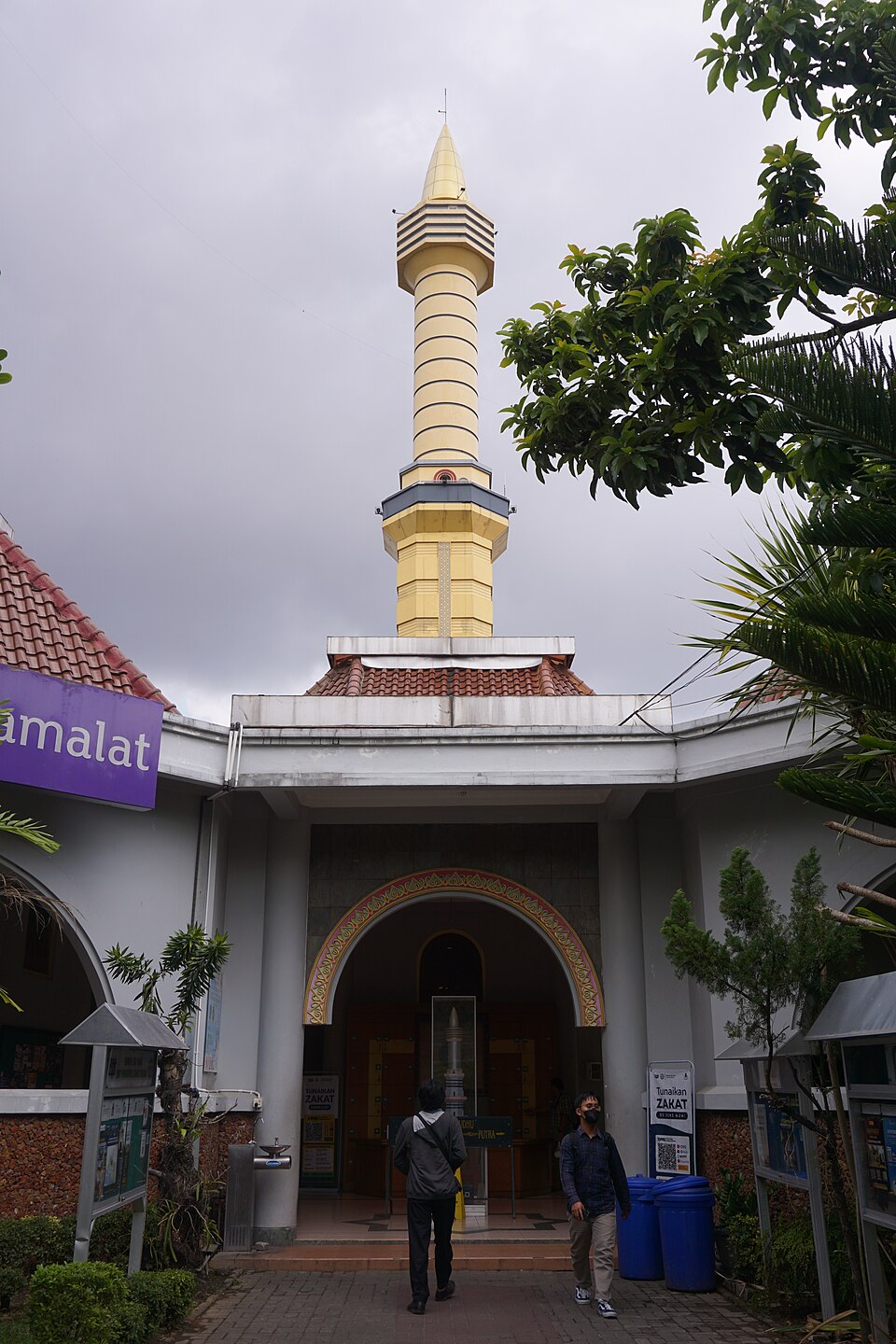
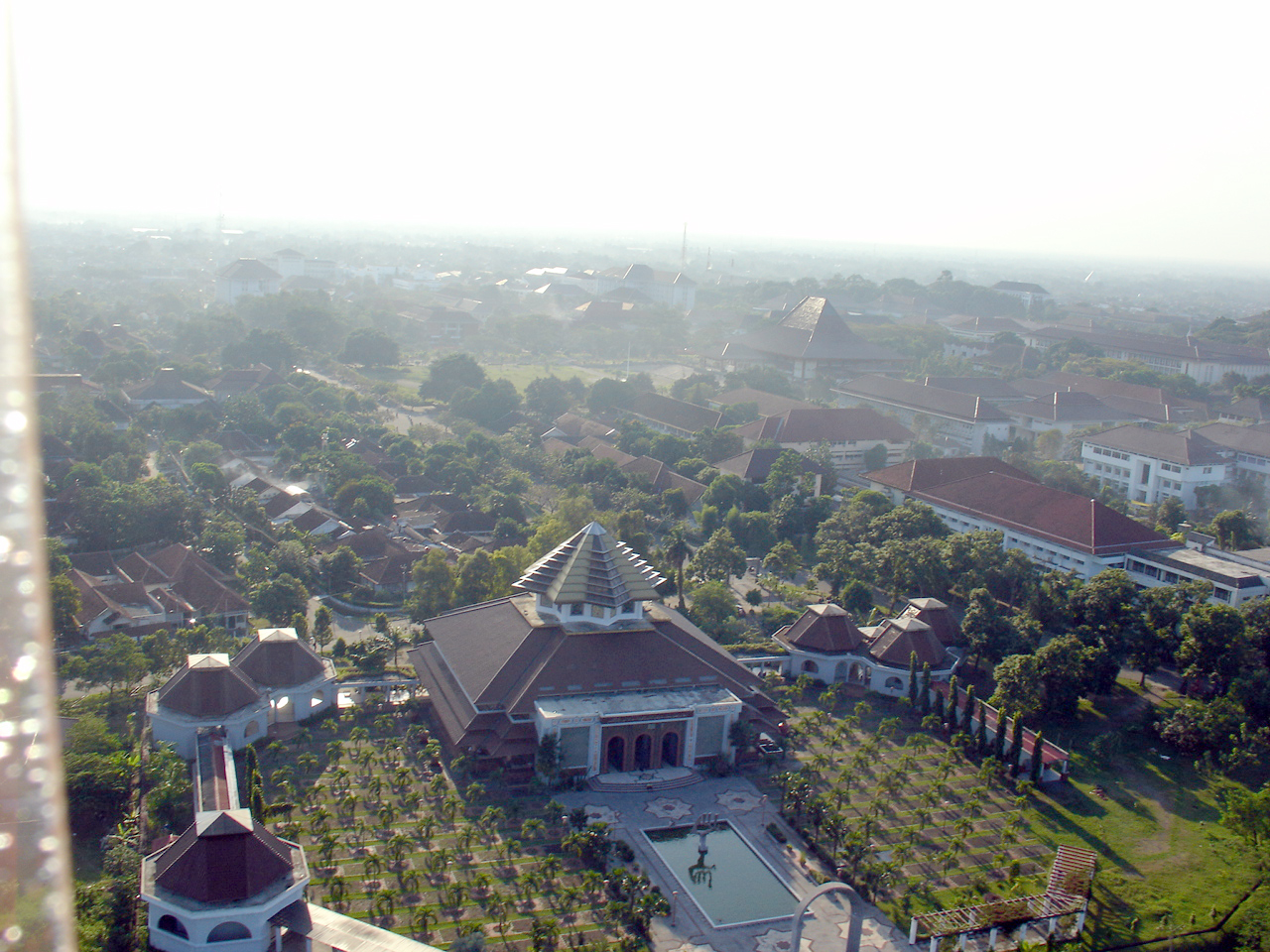
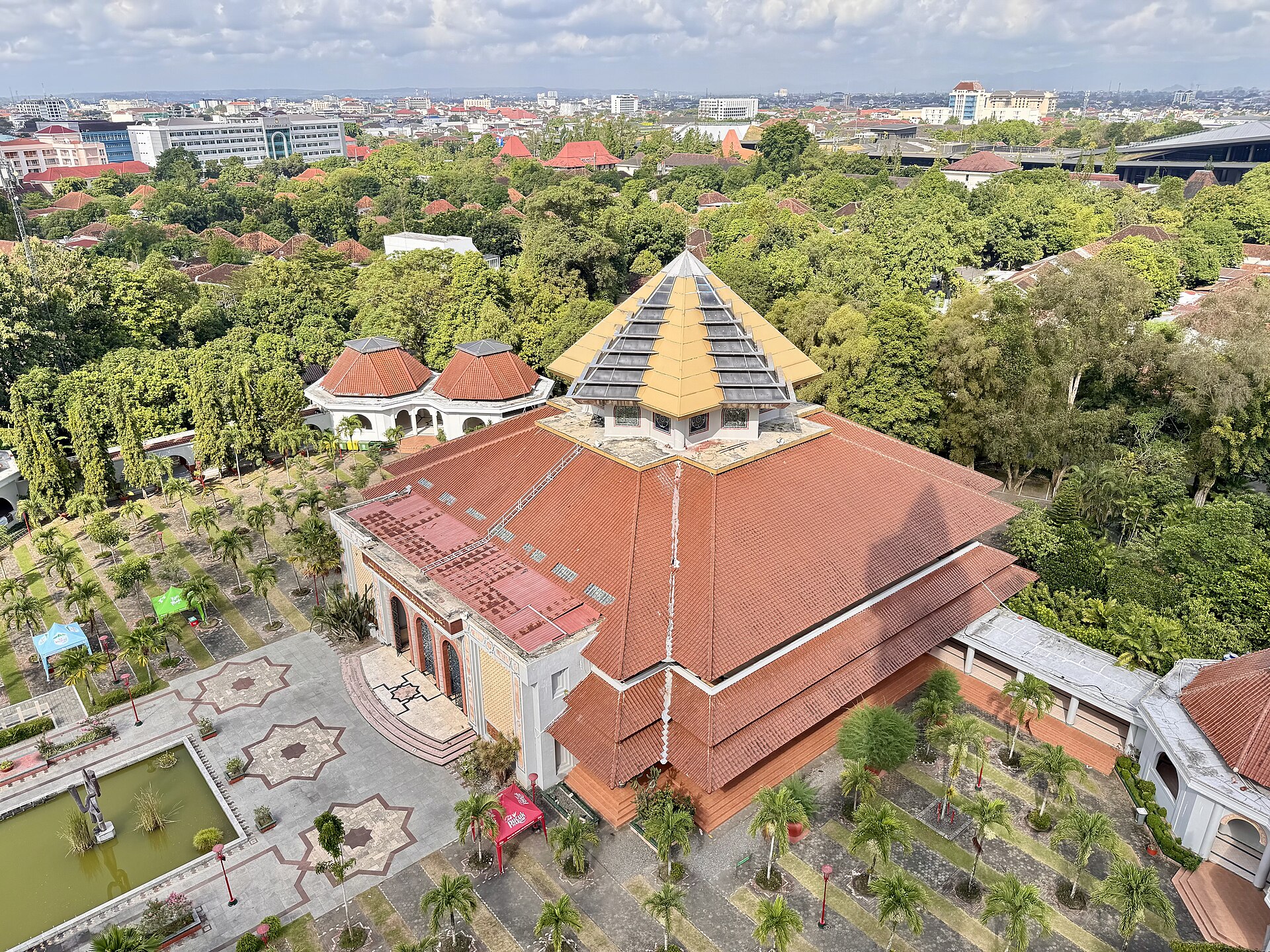
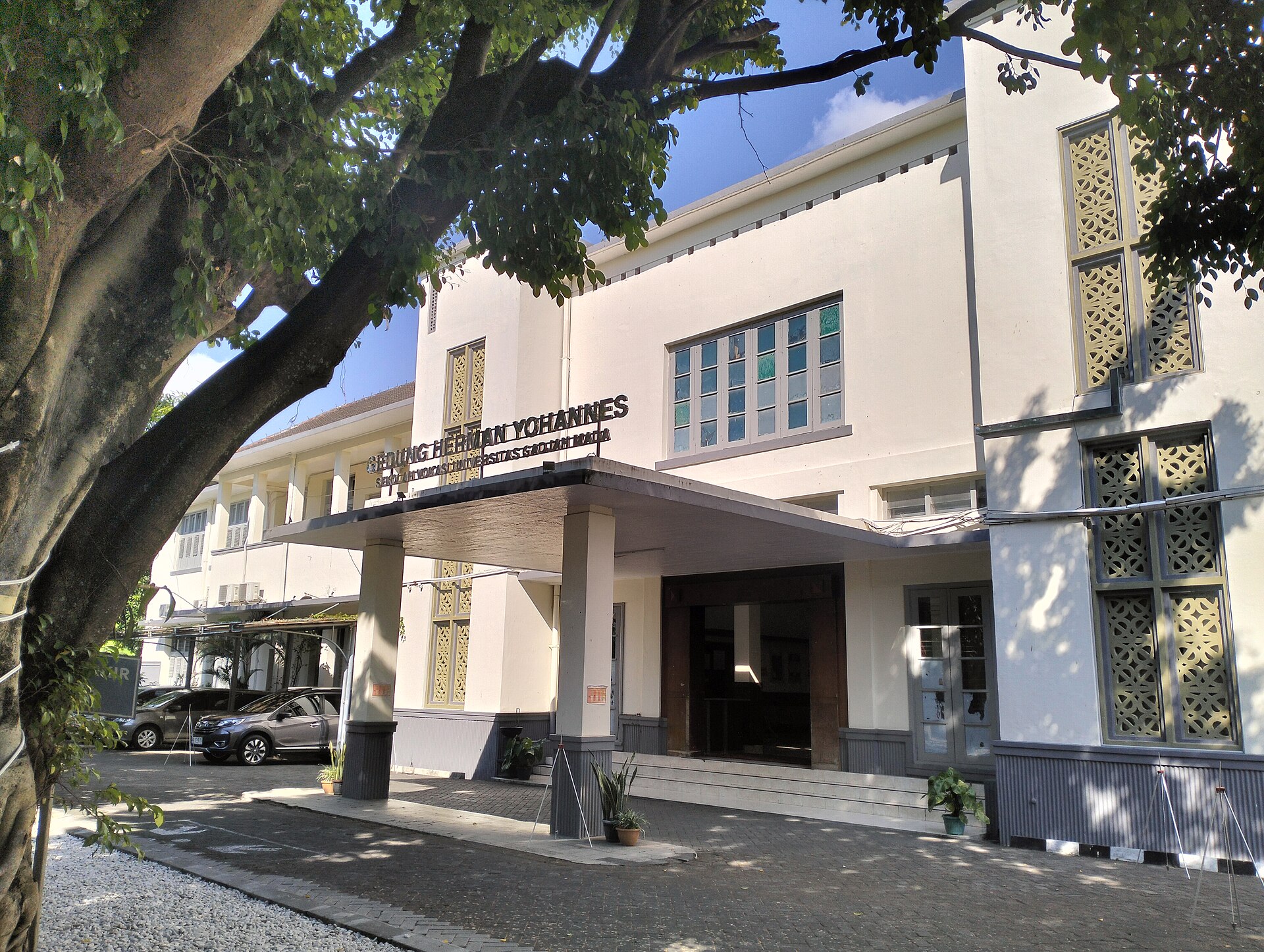
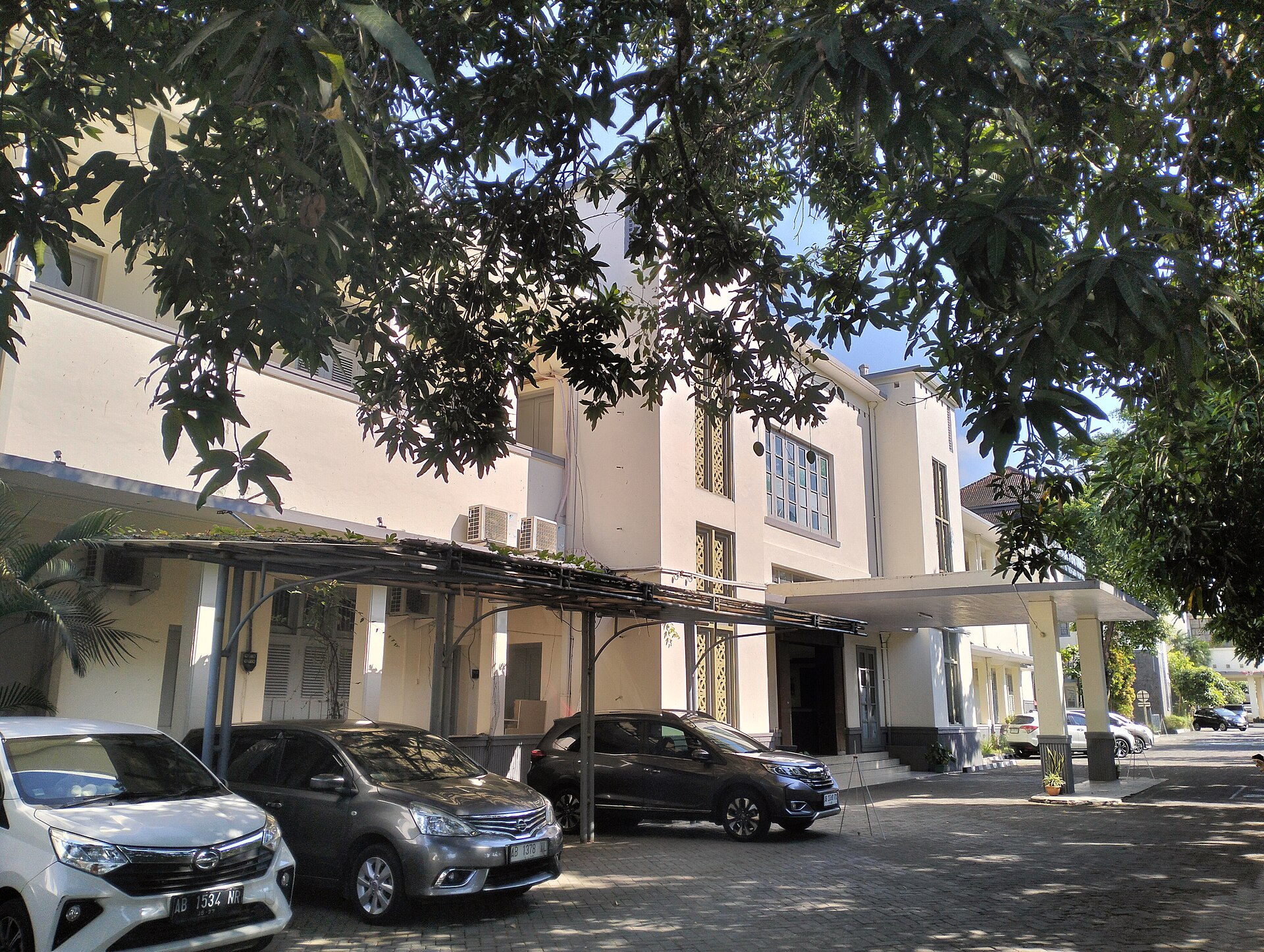
Universitas Gadjah Mada — campus in pictures
Real, freely-licensed photographs of the campus (via Wikimedia Commons).

WHY UGM
Why Choose Universitas Gadjah Mada
UGM is not just Indonesia's oldest national university — it is the intellectual and civic heart of the country. For internationally-schooled students seeking an immersive, affordable, and genuinely prestigious Southeast Asian education, UGM offers a combination of academic depth, research infrastructure, and cultural richness that few universities in the region can match.
SELECTIVITY
How Selective Is UGM?
UGM is a highly competitive institution by Indonesian standards. The university-wide acceptance rate for all applicants — including Indonesian domestic students competing through national entrance examinations — sits at approximately 15%. For International Undergraduate Program (IUP) seats specifically, competition among internationally-schooled applicants is significant, though the applicant pool is far smaller than domestic intake. A strong IB or A-Level result (UGM's IB benchmark is around 31 points), a compelling motivation letter, and evidence of academic consistency are the decisive factors for international applicants.
AT A GLANCE
UGM Quick Facts
APPLICATION COMPONENTS
What Your UGM Application Consists Of
International students apply directly to UGM via the dedicated international admissions portal. There is no common application system; each faculty or IUP programme may have slightly different requirements, but the core components for International Undergraduate Programs are consistent. Confirm the current cycle's specific requirements at admissions.ugm.ac.id before you apply.
ADMISSIONS PROFILE
The Profile UGM Admits
UGM's International Undergraduate Programs are looking for academically strong, globally-minded students who can contribute to a campus community that bridges Indonesian and international intellectual traditions. Because the IUP intake is relatively small, each place is genuinely competitive.
Academic performance is the primary criterion. UGM looks for consistent grades across your senior secondary years — erratic performance or a single strong year following poor ones will raise questions. Your motivation letter is evaluated seriously: it should demonstrate that you have researched your faculty, understand the Indonesian context of your field of study, and have a clear sense of how a UGM education connects to your long-term goals.
APPLICATION TIMELINE
When to Apply
UGM's International Undergraduate Programs typically open applications in the first quarter of the calendar year, with an intake in July or August for the academic year beginning in September. Exact opening and closing dates vary by faculty and year — always verify the current cycle's deadlines at the official admissions portal. There are no Early Decision or Early Action rounds; admission is rolling within the advertised window.
Deadlines below are indicative based on historical patterns. Confirm exact dates for the current cycle at admissions.ugm.ac.id before applying.
| Stage | Timing | Notes |
|---|---|---|
| Application portal opens | Typically January – February | Varies by faculty and academic year |
| Application deadline | Typically April – May | Some faculties have earlier cut-offs |
| Selection results announced | Typically May – June | May include aptitude test for some programmes |
| Enrolment confirmation | Typically June – July | Tuition payment and document submission |
| Academic year begins | Typically August – September | Orientation for international students |
CAMPUS & CITY LIFE
Life at UGM and in Yogyakarta
The UGM campus in Bulaksumur, Yogyakarta is one of the most distinctive university settings in Southeast Asia — a sprawling green campus of over 360 hectares designed in Javanese architectural style, with lecture halls, museums, sports facilities, and student residential areas all within walking or cycling distance.
Yogyakarta ('Jogja') is Indonesia's cultural soul. The city is home to the Kraton (Royal Palace), the batik markets of Malioboro, world-class wayang (shadow puppet) performances, and the extraordinary Buddhist and Hindu temple complexes of Borobudur and Prambanan just an hour's drive away. The city runs on a student economy — food, transport, and accommodation are extraordinarily affordable, and the social scene mixes Indonesian students from every province with an international community from across Asia, Europe, and beyond.
UGM operates student dormitories (Wisma Kagama and other facilities). International students are strongly encouraged to apply for on-campus housing early, as spaces are limited. The Office of International Affairs (OIA) provides dedicated support for incoming international students including orientation, visa guidance, and buddy programmes.
OUTCOMES
Career Outcomes After UGM
UGM's graduate employment rate stands at 86% — a strong figure for a comprehensive public university with a large graduating class. Average starting salaries for graduates working in Indonesia are modest by Western standards (approximately USD 7,500 annually), reflecting Indonesian salary structures, but graduates who move into international or multinational roles command significantly higher compensation.
UGM's true career asset is its position at the centre of Indonesia's professional establishment. No other university's alumni network is as embedded in Indonesian government, law, medicine, agriculture, and corporate leadership. For internationally-schooled students who want a career in Indonesia or the broader ASEAN region — in sectors from extractive industries to banking to development work — a UGM degree carries weight that few international institutions can replicate from outside.
Cards
Stats
FREQUENTLY ASKED
UGM International Admissions — FAQs
Do I need to speak Bahasa Indonesia to study at UGM?+
No — International Undergraduate Programs (IUPs) are fully taught in English and you can complete your degree without Bahasa Indonesia proficiency. That said, learning some Indonesian massively enriches your campus and city experience, and UGM offers Bahasa Indonesia classes for international students through INCULS.
Is UGM recognised outside Indonesia?+
Yes. UGM is ranked #239 globally by QS and is a member of the ASEAN University Network (AUN). Its degrees are recognised across ASEAN, in the UK, Australia, the Netherlands, and many other countries. Graduates regularly proceed to postgraduate study at leading international institutions.
What English-taught programmes are available at UGM for undergraduates?+
IUP programmes exist across multiple faculties — including Economics and Business, Law, Medicine (Public Health track), Engineering, Social and Political Sciences, and others. The specific availability of IUP tracks within each faculty should be confirmed directly with admissions, as offerings evolve. Visit admissions.ugm.ac.id for the current list.
Does UGM require SAT or ACT scores?+
No. UGM's test policy for international students is optional regarding SAT/ACT — the university does not require these for IUP admission. Academic credentials (IB, A-Level, national secondary certificates) and English language test results (IELTS/TOEFL) are the standard requirements.
How does the visa process work for international students?+
After receiving your offer, UGM's Office of International Affairs (OIA) will guide you through obtaining a student visa (Limited Stay Visa / KITAS). This requires your admission letter, financial proof, and passport documentation. Allow ample time — Indonesian student visas can take several weeks to process.
Are there scholarships available for international students at UGM?+
Scholarship options for international students exist but are limited compared to European or North American universities. Available funding includes the Indonesian government's KNB (Kemitraan Negara Berkembang) scholarship for students from developing countries, and occasional faculty-specific or external foundation scholarships. Contact scholarship@ugm.ac.id for current opportunities.
Can I transfer to UGM from another university?+
Transfer admissions for international students into IUP programmes are uncommon and limited. Most international students enter in the first year. If you are interested in transfer, contact admissions.ugm.ac.id directly to enquire about your specific situation.
What is campus accommodation like for international students?+
UGM has on-campus dormitories, but spaces are limited and competitive. International students are advised to apply for housing as soon as their admission is confirmed. Many international students rent privately in the Sleman and Bulaksumur area near campus, where accommodation is extremely affordable.
ACADEMIC EXPECTATIONS
Academic Standards for International Students at UGM
UGM's International Undergraduate Programs are genuinely demanding — these are not 'easier tracks' for international students. You will be studying alongside some of Indonesia's most ambitious young minds, in a university that prizes rigorous scholarship and expects consistent academic performance across a full four-year degree. For internationally-schooled students, preparation means arriving with strong subject foundations, good academic English, and intellectual curiosity rather than passive note-taking habits.
ACADEMIC PROFILE
What a Competitive Applicant Looks Like
UGM evaluates international students primarily on secondary school academic results. The benchmarks below represent the minimum thresholds from the facts file — competitive IUP programmes such as Medicine and Law will typically require performance above these floors.
TEST POLICY
Standardised Test Policy
UGM's policy for international student admissions is test-optional with respect to SAT and ACT. These US-format standardised tests are not required, and not submitting them will not disadvantage your application. English language tests (IELTS or TOEFL), however, are required for all non-native English speakers applying to IUP programmes.
This reflects Indonesia's broader direct-admission model: UGM relies on your secondary school credential (IB Diploma, A-Levels, national secondary certificate, or equivalent) as the primary academic signal, supplemented by English proficiency evidence. If you have strong SAT or ACT scores, you may optionally submit them, but they are not a standard part of the IUP evaluation process.
Confirm the test submission policy for your specific faculty at admissions.ugm.ac.id, as individual programme requirements may differ.
IB / A-LEVEL / AP
How UGM Reads International Qualifications
UGM explicitly recognises the International Baccalaureate (IB) Diploma, Cambridge A-Levels, and equivalent international secondary credentials for IUP admission. Here is how each is typically evaluated:
ENGLISH PROFICIENCY
English Language Requirements for IUP
All International Undergraduate Program courses at UGM are conducted in English. Non-native English speakers must submit a valid English proficiency test result. Test results must typically be no more than two years old at the time of application. Students from recognised English-medium secondary schools may apply for an exemption — check with your specific faculty.
| Test | Minimum Score | Notes |
|---|---|---|
| IELTS Academic | 6.0 overall | No sub-band minimum specified at university level; check faculty |
| TOEFL iBT | 70 total | Internet-based; paper-based scores not accepted |
| Duolingo English Test | Not specified | Acceptance varies by faculty — verify directly |
| TOEFL ITP | Not accepted | UGM IUP requires TOEFL iBT, not the institutional version |
SUBJECT PREPARATION
Academic Subject Preparation by Programme Area
UGM's IUP programmes have distinct academic demands. Prepare your subject background to align with your intended faculty:
YEAR-BY-YEAR GUIDE
Building Your Academic Profile: Year 9 to Year 12
COMMON PITFALLS
Academic Mistakes to Avoid
Items
- Submitting an English proficiency score below the minimum threshold — applications may be disqualified outright
- Applying with subject choices misaligned to your programme (e.g. no sciences for Medicine, no maths for Engineering)
- Relying on a GPA or result at exactly the minimum 3.2 threshold for a highly competitive programme like Medicine or Law — the floor is not the average
- Assuming UGM evaluates you primarily on test scores — your transcript consistency and motivation letter matter more than SAT/ACT
- Waiting too long to start your application — some IUP programmes have earlier faculty deadlines that do not match the general university timeline
- Neglecting to get transcripts officially certified or translated — uncertified documents cause delays or rejections
- Underestimating the difficulty of the curriculum — IUP programmes are taught to the same standard as domestic programmes; there is no 'easier' international track
Faqs
Can I apply with predicted IB grades rather than final results?+
Yes — UGM's application window for August intake typically opens before IB results are released in July. You may apply with predicted grades and official results will be required before enrolment is confirmed.
Is the IB Extended Essay or Theory of Knowledge relevant to my UGM application?+
Not directly evaluated in the way some UK universities consider the EE. Focus on your total IB points and your motivation letter — these are the decisive factors for UGM IUP applications.
COST & FINANCIAL AID
The Real Cost of Studying at UGM as an International Student
UGM offers one of the most compelling cost propositions in global higher education. Annual tuition for international IUP students is approximately USD 4,500 — with Yogyakarta's extraordinarily low cost of living, a full year at UGM including housing, food, and transport can come in around USD 8,200. For internationally-schooled students from high-cost-of-living countries, this represents exceptional value for a genuinely ranked, English-taught degree from Southeast Asia's most prestigious university.
ANNUAL COSTS
Cost Breakdown — Annual Estimates
All figures below are annual estimates in USD. Living costs in Yogyakarta are among the lowest of any major university city in Asia. Exact tuition rates vary by faculty and may be adjusted each academic year — confirm current rates with the UGM admissions office.
| Component | Estimate Usd | Notes |
|---|---|---|
| IUP Tuition (international) | ~USD 4,500 | Annual; varies by faculty and programme |
| On-campus accommodation | ~USD 800 – 1,200 | Annual; limited availability — apply early |
| Off-campus accommodation (Yogyakarta) | ~USD 1,200 – 2,400 | Annual; abundant options near campus |
| Food & daily living | ~USD 1,000 – 1,800 | Annual; Yogyakarta food costs are very low |
| Transport (local) | ~USD 200 – 400 | Annual; public transport + motorcycle rental |
| Books & materials | ~USD 200 – 400 | Annual estimate |
| Application fee | USD 60 | One-time, non-refundable |
| Total estimated cost of attendance | ~USD 8,200 | Annual estimate; varies by lifestyle and programme |
FINANCIAL AID
Financial Aid for International Students
Financial aid for international students at UGM is more limited than at wealthy Western private universities. The university does not offer large-scale need-blind or need-based grants comparable to US Ivy League institutions. However, the absolute cost of attendance is so low that UGM remains affordable for many international students even without scholarship support.
The university estimates that approximately 10% of students receive some form of financial assistance. For international students, the main financial support pathways are government-to-government scholarships and selected external foundation awards. The UGM Office of International Affairs (OIA) maintains information on current scholarship availability. Contact scholarship@ugm.ac.id for current opportunities.
Always verify current scholarship availability directly with UGM's OIA before factoring scholarship income into your financial plans.
SCHOLARSHIPS
Scholarship Opportunities for International Students
The following are known or historically available scholarship pathways for international students at UGM. Availability, amounts, and eligibility change annually — verify all details through official sources before applying.
THE REAL PICTURE
Affordability: The Honest Assessment
UGM's cost proposition is genuinely unusual in global higher education. At approximately USD 4,500 per year in tuition and USD 8,200 total cost of attendance, a four-year UGM IUP degree costs roughly the same as a single year at a mid-tier US university or less than two years in the UK.
Yogyakarta amplifies this advantage. Food, accommodation, and transport in the city are among the cheapest in any major Asian university town. A student budget of USD 300–400 per month covers comfortable living. For families or students from price-sensitive backgrounds, or for those willing to prioritise value per dollar in education, UGM represents a genuinely exceptional proposition — a ranked, English-taught, internationally-connected degree at a cost that most comparable institutions cannot match.
UGM does not offer a no-loan guarantee or meet-demonstrated-need policy equivalent to the US model. Financial planning should account for tuition, living costs, flights, and health insurance without assuming scholarship coverage unless a specific award has been confirmed.
HOW TO FUND YOUR DEGREE
Steps to Secure Funding for UGM
COST FAQs
Cost & Aid — Frequently Asked Questions
Is UGM's tuition the same across all IUP programmes?+
No — tuition rates vary by faculty and programme. Medicine is typically the highest; Social Sciences and Humanities are lower. Confirm your specific programme's fee with the admissions office or faculty before planning your budget.
Can international students work part-time in Indonesia to supplement income?+
Indonesian student visas (KITAS) do not automatically permit paid employment. The legal and practical options for student work are very limited compared to countries like Australia or the UK. Plan your budget assuming no part-time income during study.
Does the KNB scholarship cover everything?+
The KNB scholarship is designed to be comprehensive — covering tuition, accommodation, monthly living allowance, health insurance, and airfare for eligible recipients. However, the number of awards is limited and competition is significant. Do not count on receiving it before you have confirmed receipt.
Are there payment instalment options for tuition?+
UGM may offer tuition payment in instalments within the academic year. Confirm the current payment schedule and any interest or fee implications directly with the Finance or Bursar office after your admission.
How does UGM's cost compare to other top ASEAN universities?+
UGM is substantially cheaper than comparable-ranked institutions in Singapore (NUS, NTU: USD 20,000+ per year) and Hong Kong (USD 15,000+), and broadly comparable to or cheaper than top Malaysian public universities for international students. Its combination of rank, English-taught programmes, and low total cost is among the best in Southeast Asia.
APPLICATION & STATEMENT
How to Apply to UGM: Your Motivation Letter & Application Guide
UGM does not use a Common App, UCAS, or Coalition application system. International students apply directly through UGM's admissions portal with academic credentials, English proficiency evidence, and — critically — a motivation letter (surat motivasi). Unlike US supplemental essays, UGM's written component is a single, purposeful document that explains who you are academically, why you have chosen this programme, and what you intend to do with your degree. Getting it right is your single biggest lever in a competitive IUP application.
WRITTEN COMPONENTS
What Writing Is Required to Apply to UGM IUP?
The application system for UGM International Undergraduate Programs is direct — no centralised platform, no supplemental essay portal. The written components are straightforward but carry significant weight because the international applicant pool is small and personal documents help distinguish candidates.
The primary written document is the Motivation Letter (sometimes called a personal statement or statement of purpose depending on the faculty). This is a 400–800 word document explaining your academic background, reasons for choosing your programme, and future goals. Some competitive faculties (Law, Medicine) may request additional documentation or a brief written assessment as part of their selection process — verify with your specific faculty.
There is no publicly posted 'prompt' equivalent to Common App or UCAS questions. The motivation letter is open-format — you structure it yourself. This is both an opportunity and a responsibility: there is no guardrail question to anchor you, so many applicants default to generic statements. The students who stand out are those who are specific, honest, and clearly informed about UGM and Indonesia.
THE MOTIVATION LETTER
UGM Motivation Letter: What to Write
UGM does not publish a set of essay prompts in the way US universities do. The motivation letter is an open-format personal statement. Think of it as answering three implicit questions in one coherent document:
HOW TO APPLY
The UGM Direct Application Process
Because UGM uses a direct application system, the process is more straightforward than navigating Common App or UCAS — but you are solely responsible for tracking deadlines, preparing documents, and following up. There is no platform to walk you through each step.
STRATEGY BY PROGRAMME
How to Frame Your Statement by Programme
CHOOSING YOUR ANGLE
How to Choose What to Write About
With an open-format motivation letter and no prescribed prompts, the most common mistake is choosing the same angle as every other applicant: 'I have always been interested in [field]. I chose UGM because it is the best university in Indonesia.' This reads as generic because it is generic.
The most effective motivation letters are built around a specific experience, observation, or question that is genuinely yours. Ask yourself: What is the one thing I know about my field that most students my age don't? What have I done — in school, outside it, or in my own country — that connects to why I want to study this in Indonesia? What is the specific aspect of UGM's programme or Yogyakarta's environment that I cannot get at a university closer to home?
Honesty is more valuable than polish. Admissions readers at UGM read motivation letters from students across dozens of countries. A modestly-written but genuinely specific and honest letter almost always outperforms a perfectly polished but generic one. Write as yourself, not as who you think they want.
WHAT TO AVOID
Common Motivation Letter Mistakes at UGM
- Writing a generic statement that could apply to any university in any country — UGM and Indonesia must be specifically addressed
- Failing to demonstrate any knowledge of the specific IUP programme you are applying to
- Plagiarising or over-relying on AI-generated prose — admissions staff at competitive IUP programmes are experienced readers
- Exceeding the suggested length with repetitive content — clarity and specificity are more valued than word count
- Writing in overly formal or stilted English that obscures your personality — academic clarity does not mean stiffness
- Neglecting to proofread — grammatical errors undermine your application to a programme taught in English
- Using the motivation letter to explain a poor grade without owning it — if a grade needs explanation, be brief and clear, then move forward
- Treating the motivation letter as an afterthought after your transcript and IELTS are ready — it carries significant weight in the selection of competitive IUP places
APPLICATION FAQs
Application & Statement — Frequently Asked Questions
Is there a specific word limit for the UGM motivation letter?+
UGM does not publish a universal word limit for the motivation letter. A standard range is 400–800 words. Some faculties may specify a limit on their application portal — always check. Err on the side of concision: a tight 500-word letter is stronger than a rambling 900-word one.
Should I write my motivation letter in English or Indonesian?+
For IUP (English-taught) programmes, write in English. This also serves as implicit evidence of your writing ability in the language of instruction.
Does UGM conduct interviews for IUP applicants?+
Some faculties — particularly Medicine — conduct additional selection steps that may include interviews or aptitude assessments. The majority of IUP programmes select primarily on academic credentials and the motivation letter. Confirm with your target faculty whether an interview is part of their process.
Can I apply to multiple IUP programmes or faculties simultaneously?+
Application procedures for applying to multiple programmes simultaneously vary — check the UGM admissions portal for current guidance. If you do apply to multiple faculties, tailor your motivation letter to each one; a generic letter submitted to multiple programmes is immediately apparent to readers.
What makes a UGM motivation letter stand out?+
Specificity, honesty, and evidence of genuine research into UGM and Indonesia. The students who are admitted over equally-qualified academic competitors are those whose motivation letter gives the admissions reader a compelling reason to believe they will contribute to the IUP programme and succeed in Yogyakarta.
What happens after I submit my application?+
After submission, you will typically receive a confirmation from the UGM admissions system. The review timeline varies by faculty. Some programmes notify candidates in batches; others are rolling. Monitor your email and the application portal. If you receive an offer, you will have a stated period to confirm acceptance and begin the enrolment and visa process.
Courses — schools, degrees & intake
69 degrees across 18 groupings.
Faculty of Engineering · 15 degrees
Architecture
Regional and Urban Planning
Biomedical Engineering
Electrical Engineering
Engineering Physics
Geodetic Engineering
Geological Engineering
Industrial Engineering
Chemical Engineering
Mechanical Engineering
Nuclear Engineering
Civil Engineering
Information Technology
Environmental Infrastructure Engineering
Water Resources Engineering
Faculty of Economics and Business · 3 degrees
Economics
Management
Accounting
Faculty of Social and Political Science · 6 degrees
International Relations
Politics and Government
Communication Studies
Sociology
Public Policy and Management
Social Development and Welfare
Faculty of Medicine, Public Health and Nursing · 3 degrees
Medicine
Nursing
Nutrition
Faculty of Agriculture · 9 degrees
Agronomy
Plant Protection
Agricultural Microbiology
Aquaculture
Aquatic Resource Management
Fisheries Product Technology
Agricultural Economics and Agribusiness
Agricultural Extension and Communication
Soil Science
Faculty of Mathematics and Natural Sciences · 6 degrees
Computer Science
Electronics and Instrumentation
Chemistry
Industrial Physics
Industrial Mathematics
Statistics and Data Science
Faculty of Cultural Science · 11 degrees
Cultural Anthropology
Archaeology
History
Tourism
Korean Language and Culture
Indonesian Language and Culture
English Language and Literature
Arabic Language and Literature
Japanese Language and Culture
Javanese Language, Literature and Culture
French Language and Literature
Faculty of Geography · 3 degrees
Environmental Geography
Cartography and Remote Sensing
Regional Development
Faculty of Law · 1 degrees
Law
Faculty of Psychology · 1 degrees
Psychology
Faculty of Pharmacy · 1 degrees
Pharmacy
Faculty of Dentistry · 2 degrees
Dentistry
Dental Hygiene
Faculty of Biology · 1 degrees
Biology
Faculty of Agricultural Technology · 3 degrees
Food and Agricultural Product Technology
Agricultural and Biosystems Engineering
Agro-Industrial Technology
Faculty of Animal Science · 1 degrees
Animal Science
Faculty of Forestry · 1 degrees
Forestry
Faculty of Veterinary Medicine · 1 degrees
Veterinary Medicine
Faculty of Philosophy · 1 degrees
Philosophy
Want your real chances at Universitas Gadjah Mada?
Create a free TYCHR account for your personalised admit-chance, a shortlist you can track, exact entry requirements, and essay + counselling help.